
Can Some People Naturally Not Produce CA 19-9?
Yes — roughly 5% to 10% of people are genetically unable to make CA 19-9 at all, no matter what's happening inside their body. This isn't a rare fluke or a lab error; it's a fixed trait written into their DNA, tied to a gene most people have never heard of. For most patients, that fact is irrelevant. But for this smaller group, it creates a real and important blind spot: their CA 19-9 can stay flat and "normal" even in the presence of advanced pancreatic cancer, because the biological machinery needed to produce the marker in the first place was simply never built. Here's what actually determines who can make CA 19-9, why a normal number doesn't mean the same thing for everyone, and what it means for how this test should — and shouldn't — be trusted.
Curious what your own lab results are really telling you? Upload them and get a complete, plain-language breakdown in under 15 minutes.
Analyze My ResultsA Quick Refresher: What CA 19-9 Actually Is
CA 19-9 is a sugar-based molecule — technically a carbohydrate antigen — that sits on the surface of cells lining the pancreas, bile ducts, and parts of the digestive tract, and gets shed into the bloodstream in small amounts as those cells naturally turn over. Doctors track it as a tumor marker because pancreatic cancer cells typically produce far more of it than healthy tissue, making a rising or very high number a useful red flag. But making CA 19-9 in the first place isn't automatic — it requires a specific piece of cellular machinery to be present and working. That machinery is exactly what a meaningful slice of the population is missing, entirely apart from anything related to cancer.
The Lewis Gene: The Switch That Turns CA 19-9 Production On or Off
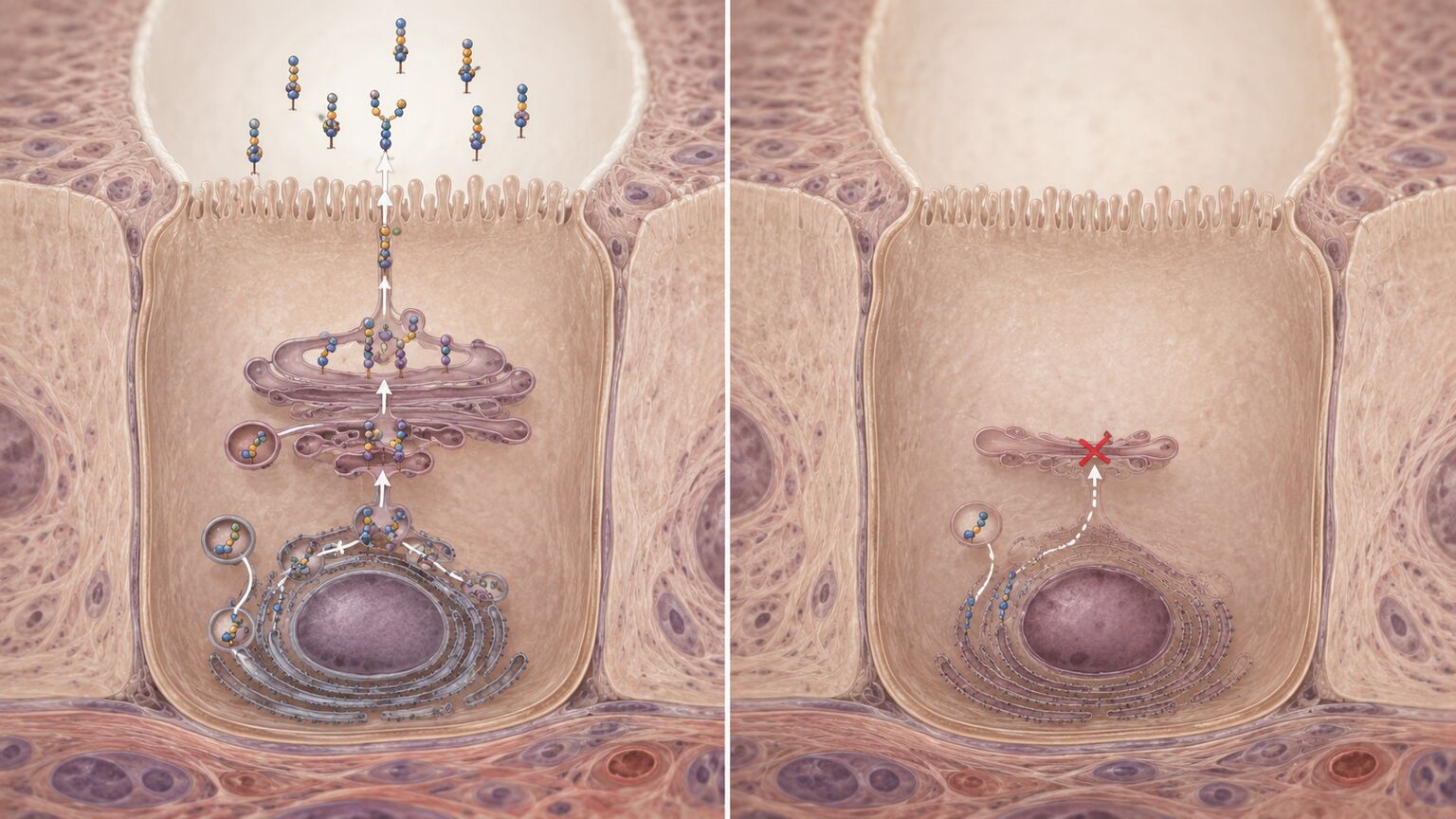
The molecule your body uses to build CA 19-9 is assembled step by step, and the final step depends on an enzyme controlled by a gene called FUT3 — part of what's known as the Lewis blood group system, the same system responsible for certain antigens found on red blood cells and in body secretions. Most people inherit at least one working copy of this gene, which means their cells can complete the chemical assembly line and produce CA 19-9 normally. But people who inherit two non-functioning copies — one from each parent — are what's known as Lewis-negative. Without a working FUT3 enzyme, the assembly line simply stops partway through, and CA 19-9 is never fully built, regardless of how much raw material the cell tries to push through it. It's less like a faulty gauge misreading a real number, and more like a factory that was never wired up to produce the part being measured at all.

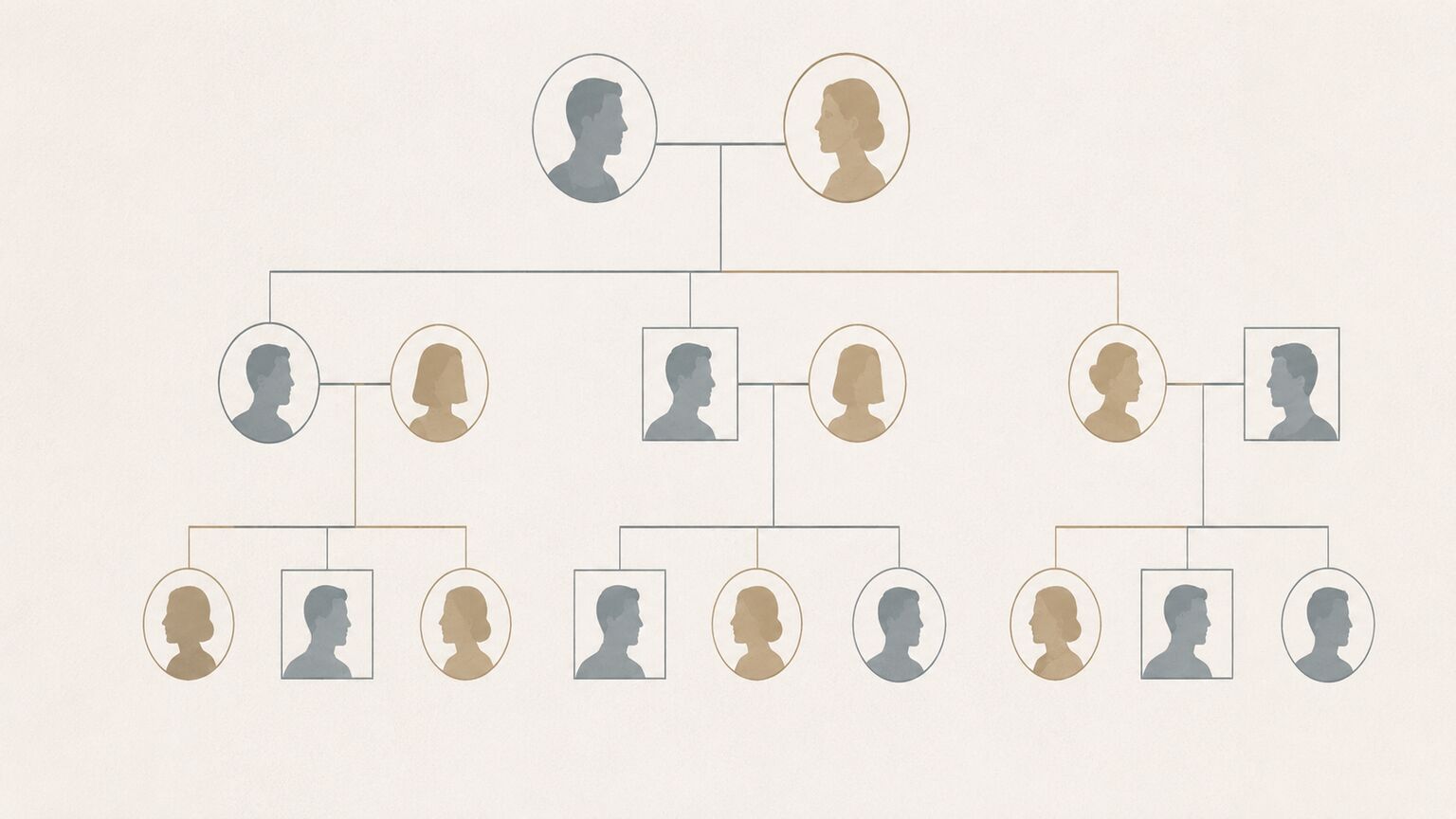
Roughly 5% to 10% of people fall into this Lewis-negative category, though the exact share varies somewhat between populations. It has nothing to do with diet, health status, or anything a person did or didn't do — it's simply how their particular combination of inherited genes happened to line up, fixed from birth and unchanging for life. Someone can be otherwise completely healthy, or seriously ill, and their Lewis status never changes either way.
Why This Matters More Than It Sounds Like It Should
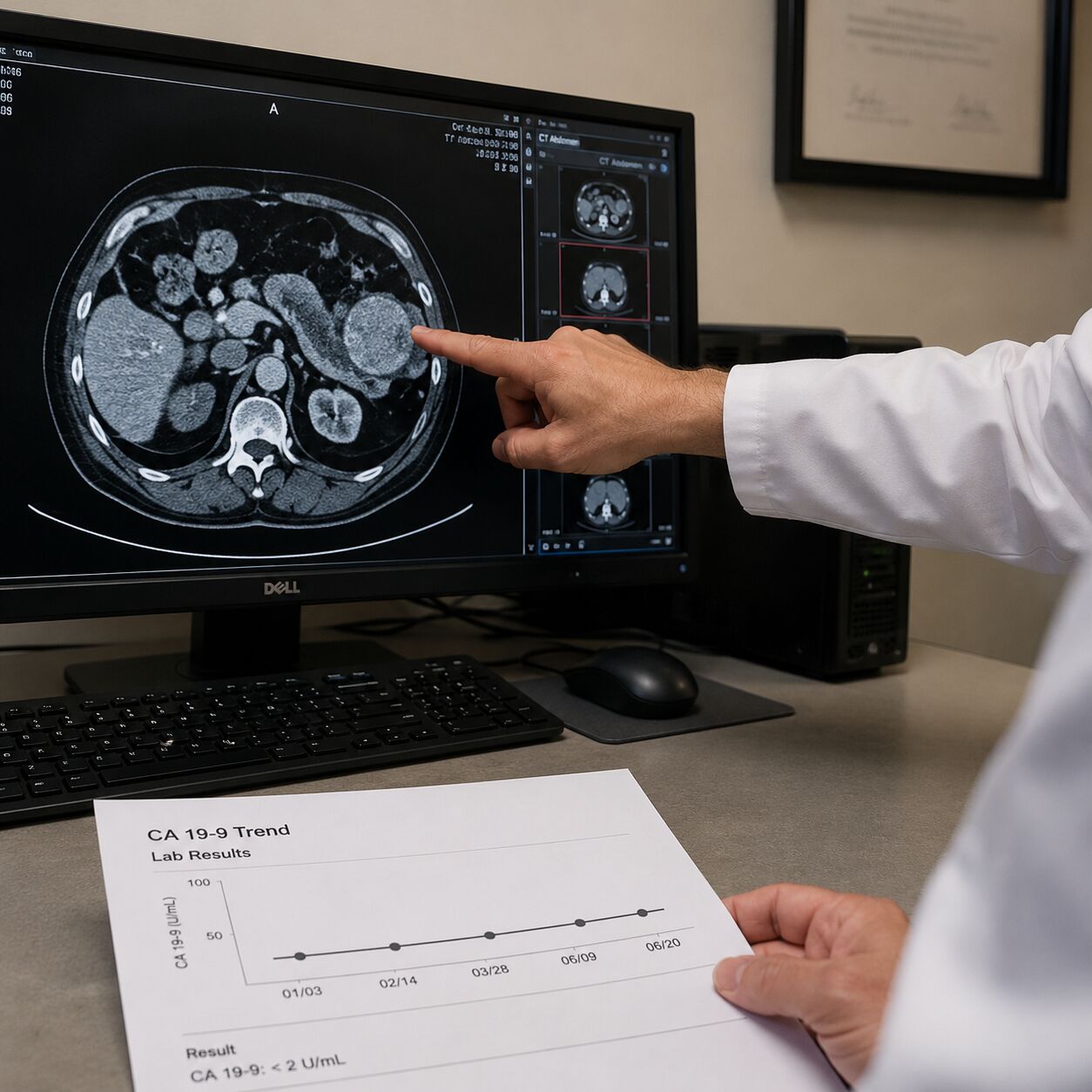
Here's where the genetics stops being a curiosity and starts being clinically important. If a person is Lewis-negative and develops pancreatic cancer, their tumor cells face the exact same missing machinery as the rest of their body — they cannot produce CA 19-9 either, no matter how large the tumor grows or how aggressively it spreads. That means a Lewis-negative patient with a substantial, imaging-confirmed pancreatic tumor can still have a CA 19-9 result that reads as low or completely undetectable. For a marker doctors often lean on to help gauge how advanced a cancer is or how well treatment is working, this is a significant blind spot — not because the test malfunctioned, but because the test was never capable of reflecting that particular person's cancer in the first place.
This is precisely why an experienced oncologist won't treat a reassuring CA 19-9 number as the final word, especially when it conflicts with what imaging or symptoms are showing. A CT scan revealing a clear mass, combined with a CA 19-9 that never budges from near-zero, is itself a recognizable pattern — one that should prompt consideration of Lewis-negative status rather than simple reassurance that "the marker looks fine." The number and the picture need to agree before either one is trusted on its own.
How Do Doctors Actually Find Out Someone Is a Non-Producer?
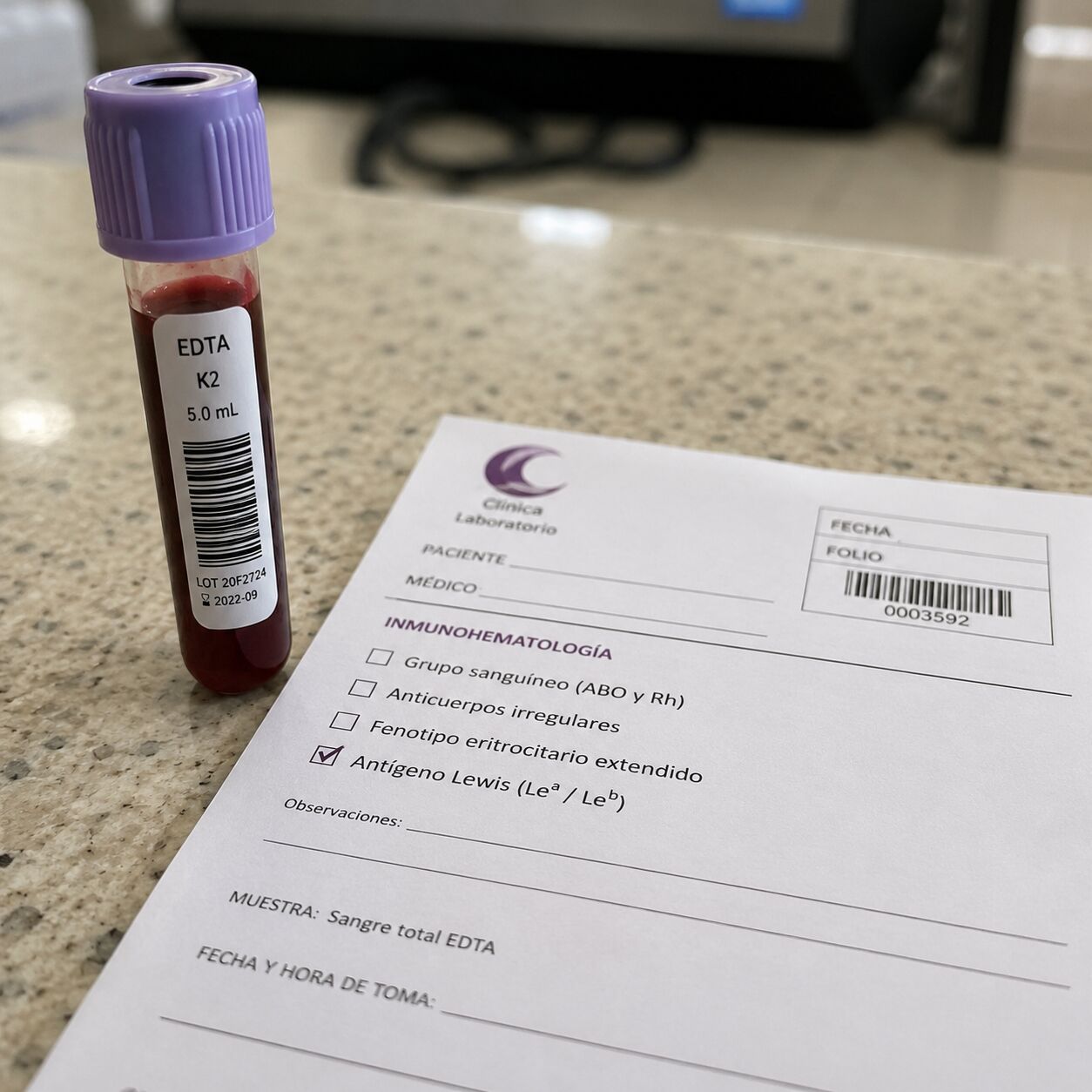
In everyday practice, Lewis status is rarely tested directly up front — there's no routine blood draw that says "produces CA 19-9: yes or no" before cancer ever enters the conversation. Instead, it's usually inferred from a mismatch: a patient with solid clinical or imaging evidence of pancreatic cancer whose CA 19-9 stays persistently and implausibly low throughout their entire course of treatment. When that pattern shows up, that combination itself becomes the clue, and some laboratories can confirm Lewis blood group status directly through specialized antigen typing, similar in concept to determining someone's ABO blood type. In research and some specialized clinical settings, this typing is done proactively for patients being considered for CA 19-9-based monitoring, precisely to avoid the blind spot described above before it causes a missed signal.
Is This the Same as CA 19-9 Being "Falsely Low"?
Not quite, and the distinction matters. A falsely low CA 19-9 in a Lewis-positive person might happen because a tumor is very small, hasn't yet grown enough to shed much antigen, or is a rarer subtype that simply doesn't produce much CA 19-9 even with normal Lewis genetics — these are biological quirks of the specific tumor, not the person's underlying machinery. Lewis-negative status is different: it's a permanent, whole-body ceiling that applies regardless of tumor size, stage, or subtype, present from birth and never changing. A Lewis-positive person's low CA 19-9 might rise later as their tumor grows; a Lewis-negative person's CA 19-9 will not, no matter how far the disease progresses. Recognizing which situation applies changes how much weight a doctor puts on future CA 19-9 results going forward.
What Should You Do If You Suspect This Applies to You?
Most people will never need to think about their Lewis status, and there's no reason to request this testing without a specific clinical reason. But if you or a family member has a personal or strong family history of pancreatic cancer, or if a doctor has ever mentioned that your CA 19-9 doesn't seem to match your imaging or symptoms, it's a reasonable and specific question to bring to that conversation. In practice, this usually shifts the monitoring approach rather than replacing it entirely — doctors lean more heavily on imaging, other available tumor markers, and symptom tracking, rather than treating a single flat CA 19-9 line as reassurance on its own.
Frequently Asked Questions
How common is it to be genetically unable to produce CA 19-9?
Roughly 5% to 10% of people are Lewis-negative, meaning they cannot produce CA 19-9 regardless of their health status. The exact proportion varies somewhat by population and ethnic background, but it's common enough that clinicians are trained to recognize the pattern when it shows up.
Can a Lewis-negative person still get pancreatic cancer?
Yes. Lewis status has no bearing on cancer risk itself — it only affects whether the tumor, if one develops, is capable of producing CA 19-9. A Lewis-negative person can develop pancreatic cancer just like anyone else; their CA 19-9 simply won't reflect it.
Should everyone get tested for Lewis status before relying on a CA 19-9 test?
No, routine testing isn't standard practice for the general population. It becomes clinically relevant mainly when a CA 19-9 result doesn't match imaging findings or symptoms, or in specific research and monitoring contexts where confirming Lewis status upfront helps interpret future results correctly.
Conclusion
CA 19-9 is a genuinely useful tool, but it depends on a piece of cellular machinery that a meaningful share of the population simply doesn't have, through no fault of their health or habits. For the roughly 1 in 10 to 1 in 20 people who are Lewis-negative, a "normal" CA 19-9 can mean the test was never able to speak to their situation at all — not that everything is fine. Knowing this distinction matters most when a lab number and the rest of the clinical picture seem to disagree, and it's exactly the kind of nuance worth raising directly with a healthcare provider rather than assuming a single reassuring number tells the whole story.
Still Not Sure What Your Results Mean?
Upload your labs and get a complete, visual, plain-language interpretation of every biomarker — delivered to your inbox in under 15 minutes.
Get My ReportThis article is for educational purposes only and does not constitute medical advice. Always consult your healthcare provider regarding your specific lab results.