
What Causes CA 19-9 Levels to Rise in Benign Conditions
Our related article on why an elevated CA 19-9 doesn't always mean cancer covers the reassurance side of this question — the statistics, the guidelines, the reasons doctors don't panic over a single flagged number. This article picks up where that one leaves off, and goes a level deeper: not just that pancreatitis, diabetes, or liver disease can raise CA 19-9, but exactly how, at the level of individual cells and biological pathways. Understanding the actual mechanism behind each cause makes the whole picture feel far less arbitrary, and it turns out nearly every benign cause on the list traces back to one of just two underlying processes.
It's worth being upfront about why this distinction matters practically, not just academically. A benign cause with a clear, understood mechanism is fundamentally different from an unexplained abnormal result — it means the number is doing exactly what biology predicts it should do, given what else is happening in that person's body. Several of the case reports referenced throughout this article describe CA 19-9 climbing into the thousands from a benign cause and then returning to normal once the underlying condition was treated, which is itself strong evidence that these mechanisms are real, measurable, and reversible rather than theoretical.
The Two Biological Pathways Behind Every Benign Elevation
Before getting into individual conditions, it helps to understand where CA 19-9 actually comes from in a healthy body in the first place. It's produced by the ductal cells of the pancreas and biliary tract, and secreted at baseline levels by acinar cells of the pancreas along with epithelial tissue in the stomach, colon, endometrium, and salivary glands. In someone with no disease at all, small, steady amounts of it are made by these tissues and cleared out of the bloodstream, mainly through the liver and bile, keeping the resting level low and stable.
Every benign cause of an elevated CA 19-9 disrupts that balance in one of exactly two ways: either the body starts producing more of it than usual, or it stops clearing out what's already being produced at the normal rate. Pancreatitis, lung disease, autoimmune conditions, and endometriosis are, at their core, production problems — inflamed, damaged, or ectopic tissue making more of the molecule than healthy tissue would. Cholestasis, cirrhosis, and kidney dysfunction are clearance problems — the plumbing that normally removes CA 19-9 from the blood is working less efficiently, so it backs up even though production hasn't necessarily changed. Diabetes, unusually, involves elements of both. Keeping this production-versus-clearance framework in mind makes every specific cause below easier to understand, because you're really only learning two mechanisms, applied across several different tissues.
It's also worth understanding why CA 19-9 exists in the body at all, biologically speaking, since that context makes the "production" side of this equation feel less arbitrary. It's a component of mucin, the thick, protective secretion that lines and lubricates the ducts and glandular surfaces of several organ systems — the pancreatic and bile ducts, the digestive tract lining, the airways, and the reproductive tract among them. Mucin production naturally increases whenever the tissue making it is irritated, inflamed, or actively regenerating, since mucin plays a genuine protective and repair-supporting role at the tissue level. CA 19-9 essentially rides along as a measurable byproduct of that broader, biologically purposeful mucin response — which is exactly why so many seemingly unrelated conditions, from pancreatitis to lung fibrosis to endometriosis, can all trigger the same underlying signal.
Pancreatitis: When the Ductal Lining Itself Reacts
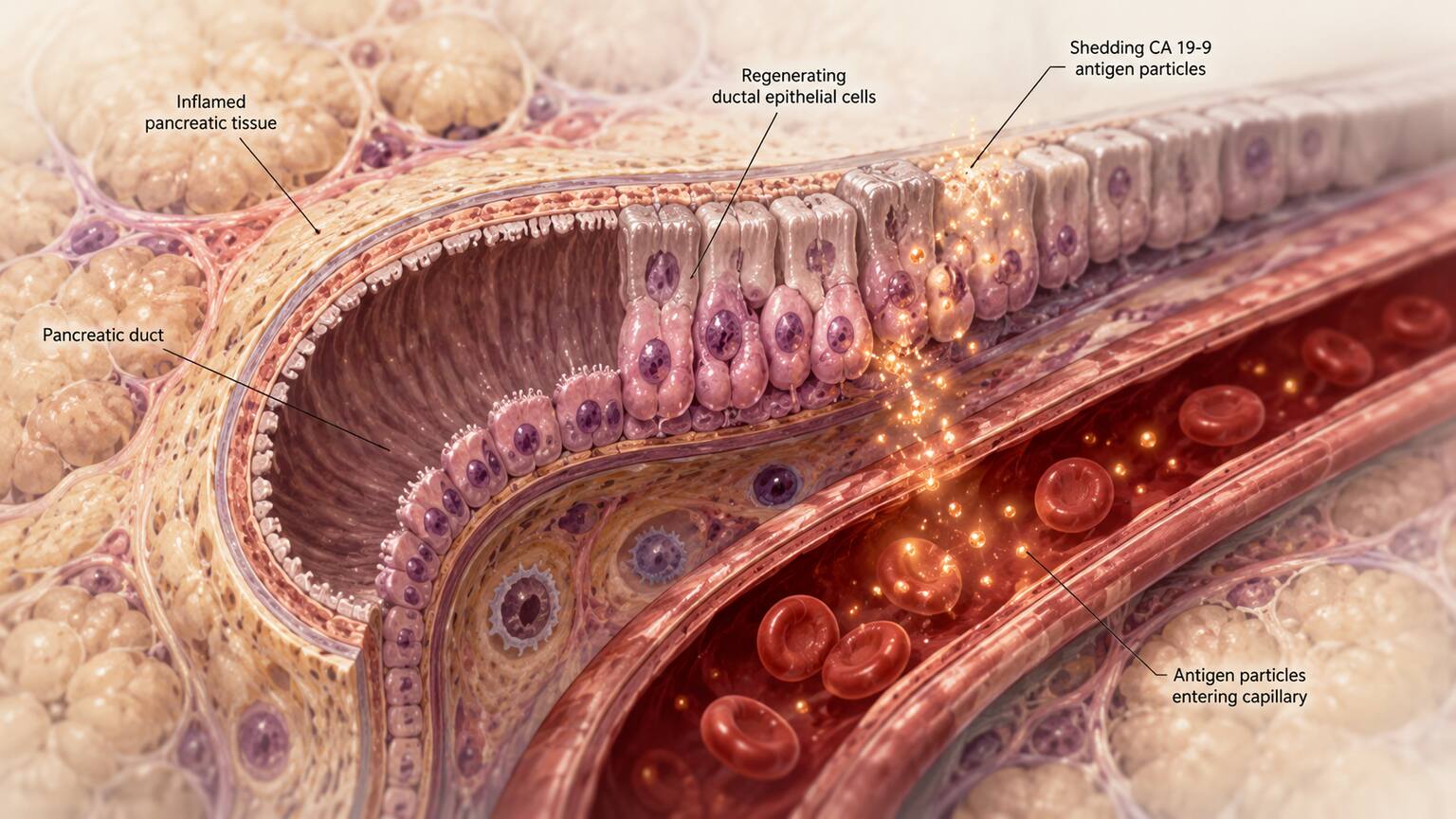
Chronic pancreatitis is one of the clearest examples of the production side of this equation. Studies staining pancreatic tissue directly have found that CA 19-9 lights up strongly in the epithelium lining the pancreatic ducts specifically in chronic pancreatitis, far more than in a healthy pancreas. The ducts in a chronically inflamed pancreas are in a near-constant state of injury and repair, and the regenerating epithelial cells doing that repair work appear to produce and shed more CA 19-9 than quiet, undamaged tissue does. Acute pancreatitis follows a similar logic on a faster timeline — a sudden inflammatory flare irritates the same ductal and acinar tissue that makes CA 19-9 at baseline, and the number can spike accordingly before settling back down as the inflammation resolves.
A particularly instructive edge case here is IgG4-related autoimmune pancreatitis, a less common form of pancreatitis driven by the immune system rather than a typical trigger like gallstones or alcohol. Case reports describe this condition causing CA 19-9 elevations significant enough to create a genuine diagnostic dilemma, closely mimicking what a pancreatic tumor might produce, precisely because the underlying ductal inflammation is severe even though the process is autoimmune, not malignant. It's a useful reminder that "inflamed pancreatic tissue" is really the operative phrase behind this mechanism — the specific reason the tissue became inflamed matters less to CA 19-9 production than the fact that it is.
This also explains why CA 19-9 tends to track reasonably well with how severe a given pancreatitis flare actually is. A mild, self-limited episode of acute pancreatitis generally produces a more modest bump, while a severe or prolonged flare — or repeated flares layering on top of each other in chronic pancreatitis — tends to produce a more substantial and more persistent elevation, simply because a larger volume of ductal tissue is caught up in the inflammatory and regenerative process at any given time. This dose-response relationship, where more tissue involvement produces a bigger number, is itself a helpful diagnostic clue: a CA 19-9 elevation that scales sensibly with how sick a patient with known pancreatitis actually appears is far more reassuring than one that seems disproportionate to the clinical picture in front of a doctor.
Diabetes: A Mechanism Involving Both Sides of the Equation
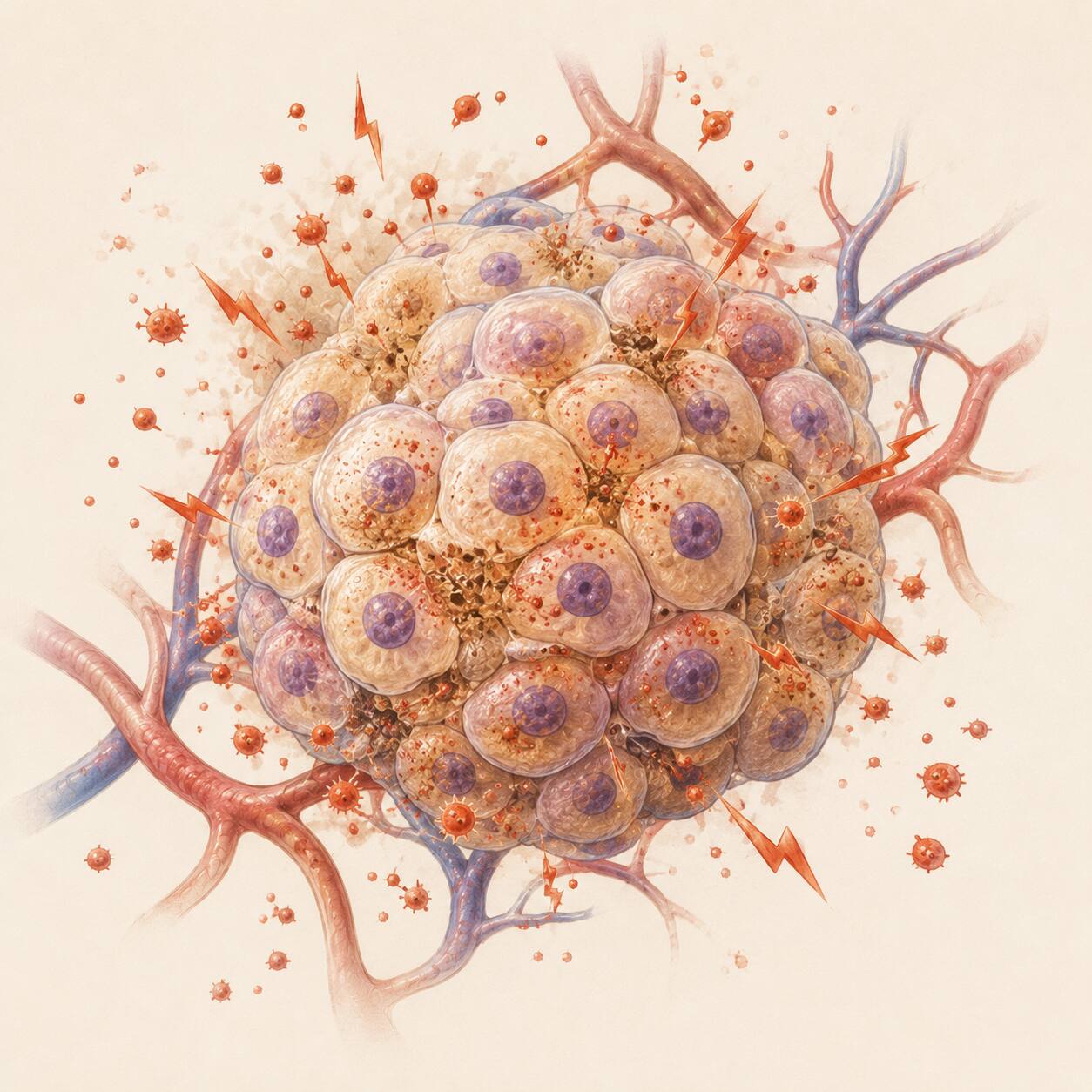
Diabetes is genuinely one of the more interesting entries on this list, because research suggests it involves both production and clearance simultaneously, and the exact mechanism is still being actively studied. On the production side, chronically high blood sugar appears to injure the pancreas at the cellular level through what researchers call glycotoxicity and lipotoxicity — sustained high glucose and elevated cholesterol both driving oxidative stress that damages the insulin-producing beta cells clustered in the pancreatic islets. That ongoing low-grade injury to pancreatic tissue is thought to trigger the same kind of reactive CA 19-9 production seen in pancreatitis, just through a slower, metabolic route rather than acute inflammation. One study specifically identified total cholesterol as an independent contributor to elevated CA 19-9 in diabetic patients, separate from blood sugar itself.
On the clearance side, research has found that CA 19-9's half-life — how long it persists in the bloodstream before being cleared — is actually longer in diabetic patients than in cancer patients, suggesting the body is also removing it more slowly, not just producing more of it. Put together, poorly controlled diabetes seems to nudge the number upward from both directions at once. This helps explain a specific, clinically documented pattern: roughly 14% of diabetic patients with an HbA1c of 9% or higher — a marker of poor long-term blood sugar control — show an elevated CA 19-9, and some research has found that intensively improving glucose control brings the number back down, which is itself a useful clue that hyperglycemia, not something more serious, was driving it in the first place.
There's also a genuinely interesting overlap worth flagging here: research has specifically noted that some patients with type 2 diabetes and an elevated CA 19-9 turn out, on closer investigation, to have coexisting interstitial lung disease rather than pancreatic pathology — a reminder that in a person with multiple chronic conditions, more than one benign mechanism can plausibly be contributing to the same elevated number at once, and untangling which one (or ones) actually explains a given result sometimes takes a broader clinical picture than the diabetes diagnosis alone would suggest.
Cholestasis and Liver Disease: A Clearance Problem More Than a Production One
Where pancreatitis is mainly a story about overproduction, cholestasis and liver disease sit almost entirely on the clearance side of the equation. CA 19-9 is normally excreted from the body largely through bile, and extremely high concentrations have been documented specifically in cases of extrahepatic biliary obstruction — a blocked bile duct essentially trapping CA 19-9 in a system it can no longer exit through, the same way any substance the liver normally excretes will accumulate during cholestasis. Cirrhosis and other forms of chronic liver disease compound this further: damaged liver tissue clears and degrades circulating CA 19-9 less efficiently even when bile flow itself isn't fully blocked, so the number rises simply because the liver's usual disposal system isn't running at full capacity.
This is a meaningfully different mechanism than pancreatitis, even though both conditions can produce a similarly high number on a lab report. In pancreatitis, more CA 19-9 is being made; in cholestasis, roughly the normal amount is being made but far less of it is leaving the bloodstream. The end result on a single lab value looks the same, but the underlying biology — and, often, the treatment that will bring the number back down — is genuinely different in each case.
The clearance mechanism also explains why some of the single highest benign CA 19-9 values ever documented in the medical literature come specifically from bile duct obstruction rather than any of the production-side causes covered elsewhere in this article. When a blockage is complete or near-complete, CA 19-9 has essentially nowhere to go, and case reports describe values reaching into the tens of thousands of U/mL — numbers that would be genuinely alarming without the context of a visibly obstructed duct on imaging, but that make straightforward sense once you understand the excretion route has simply been shut off rather than assuming overproduction alone could ever account for a number that extreme.
Infections: When the Body's Own Response Drives the Number
Infection deserves its own category here, because it can push CA 19-9 to genuinely extreme levels through a combination of the mechanisms already described, depending on exactly where the infection is located. Pyogenic liver abscess is one of the most dramatic documented examples: case reports describe patients with liver abscesses whose CA 19-9 climbed steadily over successive weeks — one case rose from 747 to 922 and then to 1,198 U/mL before treatment began — driven by a mix of local inflammation irritating nearby biliary tissue and the abscess itself physically compressing small bile ducts, layering a production problem on top of a clearance one. In documented cases where the abscess was successfully drained and treated, CA 19-9 fell all the way back to a normal level within roughly two months, offering a clean before-and-after picture of the same mechanism in reverse. At least eight similar cases of hepatic abscess driving a dramatic CA 19-9 elevation have been described in the medical literature, making this a genuinely recurring, recognized pattern rather than a one-off curiosity.
Acute cholecystitis — inflammation of the gallbladder itself, most often triggered by a blocked cystic duct — has been documented causing significant CA 19-9 elevation through a similar combination of local inflammation and impaired local bile flow. And as covered in more detail below, chronic infections affecting the lungs can drive the same pattern through airway tissue rather than biliary tissue. The common denominator across every infectious cause is that active infection reliably generates exactly the kind of tissue inflammation and, often, localized bile flow disruption that this article's two core mechanisms predict will raise CA 19-9 — which is precisely why it does, so consistently and so predictably that resolving the infection is one of the most reliable ways to watch the number fall back down again.
The Kidneys' Overlooked Role in Clearing CA 19-9
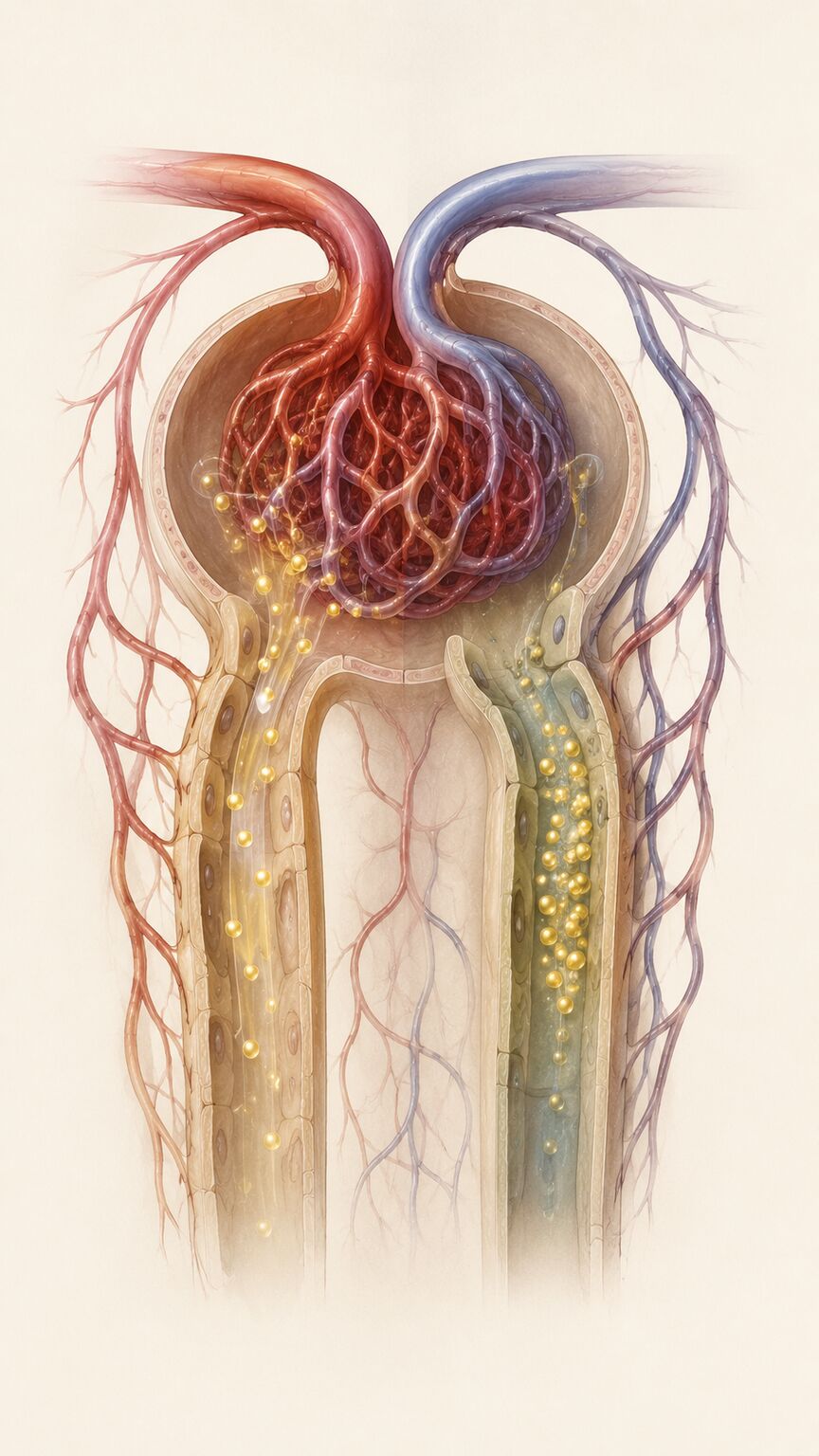
The liver and bile duct system gets most of the attention when clearance comes up, but research has also identified a measurable relationship between serum creatinine — the standard marker of kidney function — and CA 19-9 levels, suggesting the kidneys play a real, if smaller, supporting role in removing this antigen from circulation as well. When kidney function declines, whether from chronic kidney disease or an acute illness affecting the kidneys, that secondary clearance pathway becomes less effective too, compounding whatever else might already be pushing the number up.
This is a genuinely underappreciated piece of the picture, and it's part of why a full metabolic panel showing both kidney and liver function is often drawn alongside CA 19-9 rather than the marker being interpreted in isolation. A mildly elevated CA 19-9 paired with reduced kidney function on the same panel is a meaningfully different situation than the same CA 19-9 number in someone with completely normal kidney and liver function, even though the CA 19-9 value itself might be identical on paper.
The kidneys' role also helps explain why elderly patients and people with multiple overlapping chronic conditions sometimes show mildly elevated CA 19-9 without any single, dominant explanation standing out. Kidney function naturally declines somewhat with age even without a specific diagnosed kidney disease, and a modest, gradual reduction in clearance capacity across several organ systems at once — kidneys included — can add up to a mildly elevated number that doesn't trace back to one clean, singular cause, but rather to several small clearance and production effects overlapping.
Lung Disease: Regenerating Airway Cells Making the Same Molecule
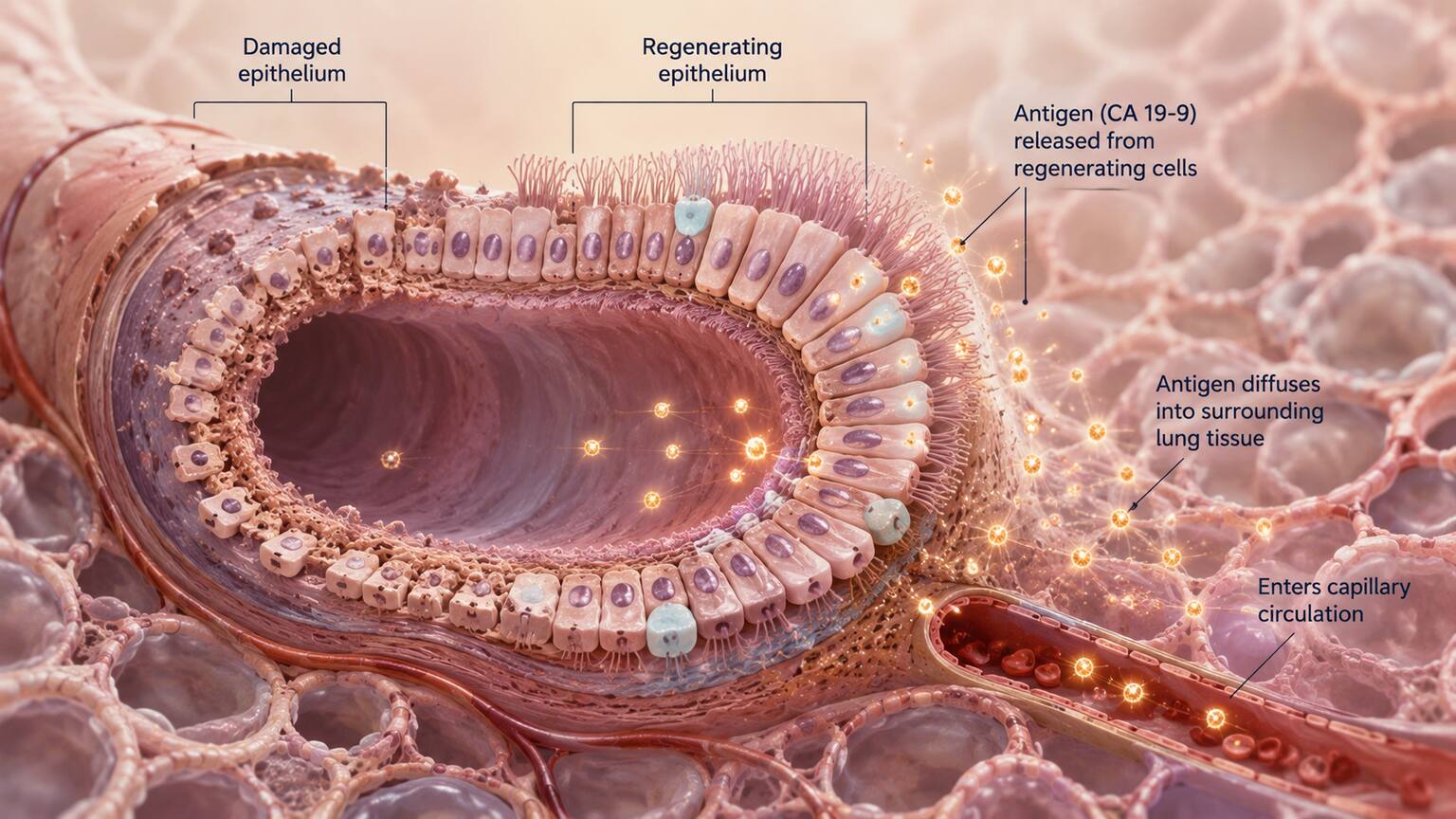
It's one of the more surprising entries on this list precisely because the lungs seem so anatomically unrelated to the pancreas and bile ducts, but CA 19-9 is genuinely expressed by cells of the bronchial glands and the epithelium lining the bronchioles, and immunohistochemistry studies have confirmed this directly in tissue samples. The mechanism mirrors what happens in chronic pancreatitis almost exactly: when lung tissue is damaged, whether by idiopathic pulmonary fibrosis, chronic infection, bronchiectasis, or collagen vascular disease affecting the lungs, the regenerating epithelial cells doing the repair work appear to be the source of the excess CA 19-9, the same "damaged tissue trying to heal itself" pattern seen in the pancreas. In one study of patients with idiopathic pulmonary fibrosis, over 81% showed a positive CA 19-9 result — a striking figure for a marker most people associate exclusively with abdominal organs.
Interestingly, research has found that CA 19-9 levels in these lung conditions track more closely with the overall extent of tissue damage and disease progression than with how actively inflamed the lungs are at any given moment — a subtle but useful distinction. There are also documented cases of dramatic CA 19-9 spikes tied specifically to chronic lung infections, including one case report describing a patient with Mycobacterium abscessus lung disease whose markedly elevated CA 19-9 normalized only after the underlying infection was successfully treated — about as clean a demonstration as exists that resolving the tissue damage resolves the number, without any cancer ever being involved.
Curious what your own lab results are really telling you? Upload them and get a complete, plain-language breakdown in under 15 minutes.
Analyze My ResultsAutoimmune and Collagen Vascular Disease
Autoimmune and collagen vascular conditions — a category that includes diseases like lupus and rheumatoid arthritis, along with the autoimmune lung and pancreatic conditions already mentioned above — share a common thread with the other production-side causes on this list: chronic, low-grade inflammation activates and irritates glandular and epithelial tissue throughout the body, and some of that irritated tissue happens to be exactly the kind that produces CA 19-9 at baseline. Thyroiditis, an inflammatory condition of the thyroid gland, is frequently grouped alongside these autoimmune causes for a similar reason, even though the thyroid itself isn't one of CA 19-9's primary production sites — the broader systemic inflammatory state that accompanies autoimmune thyroid disease appears sufficient to nudge levels upward in some patients.
What ties this entire category together, and connects it back to pancreatitis and lung disease, is that the immune system doesn't distinguish between "inflammation worth making a tumor marker about" and "inflammation that happens to occur near CA 19-9-producing tissue." Any sufficiently active autoimmune or inflammatory process has a reasonable chance of nudging this particular number upward, simply because inflammation and tissue turnover are the shared biological currency behind nearly every production-side cause covered in this article.
This category is also where CA 19-9's elevation tends to be the most modest and the least likely to trigger real diagnostic concern, compared to a bile duct obstruction or a liver abscess. Systemic autoimmune inflammation is diffuse rather than concentrated in one organ, so the resulting bump in CA 19-9 tends to be gradual and mild rather than dramatic, and it typically rises and falls in step with how active the underlying autoimmune condition is at any given time — improving during a period of good disease control and creeping back up during a flare, much like other inflammatory markers a rheumatologist might already be tracking in the same patient.
Endometriosis and Ovarian Cysts: Ectopic Tissue That Makes Its Own Supply
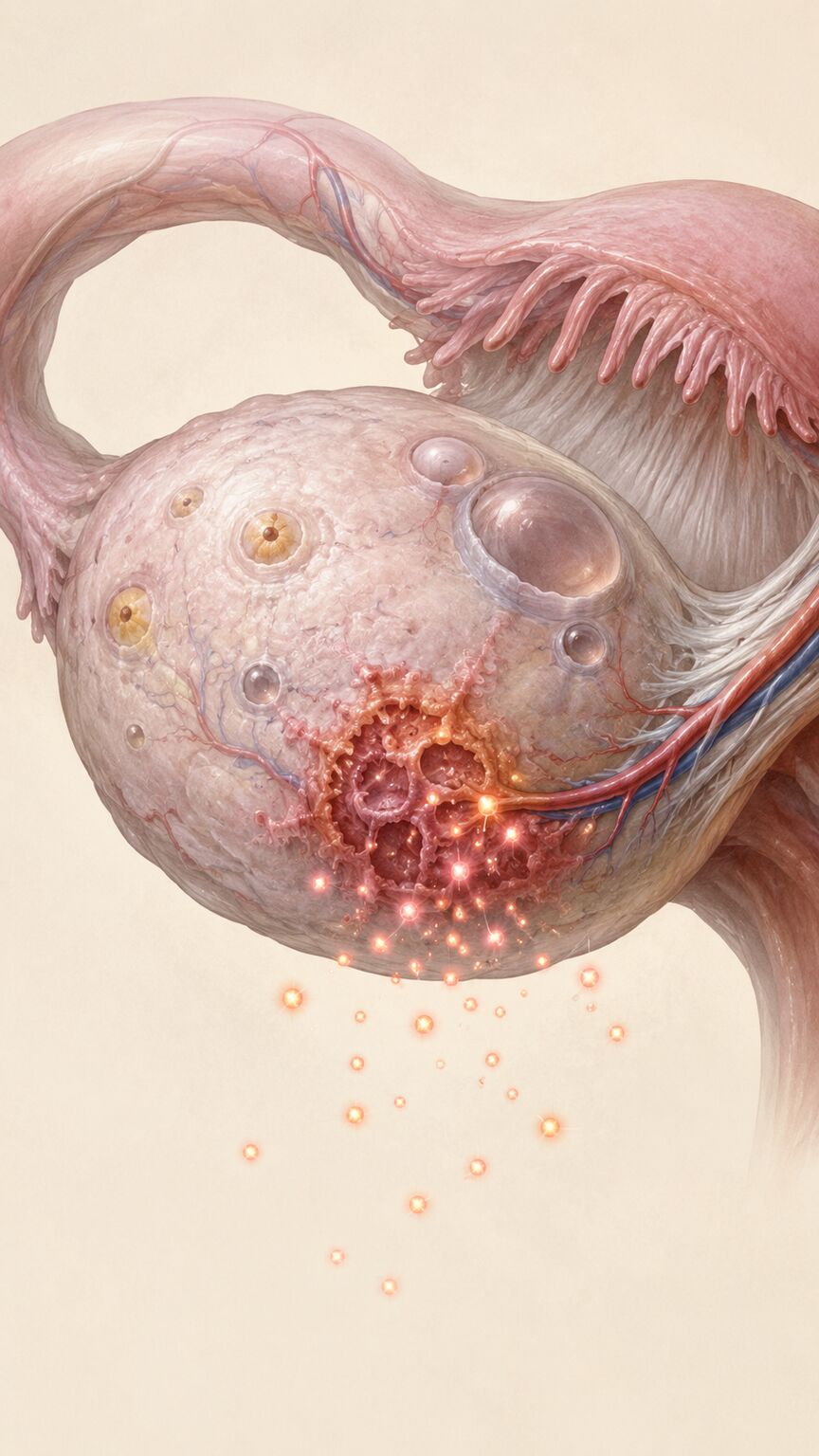
Endometriosis and certain benign ovarian growths, including mucinous cystadenomas and dermoid cysts, represent a slightly different flavor of the production mechanism — one where the tissue making CA 19-9 isn't inflamed or damaged so much as simply present somewhere it doesn't normally belong. The endometrium, the tissue lining the uterus, is one of CA 19-9's baseline production sites even under completely normal circumstances. In endometriosis, tissue resembling the endometrium grows outside the uterus, and tissue staining studies have shown that the glandular cells in these ectopic growths bind strongly to CA 19-9 antibodies, meaning they're actively manufacturing the antigen in their new, misplaced location just as the endometrium would inside the uterus. Because this ectopic tissue can be substantial in extent, particularly with large ovarian endometriomas, the resulting CA 19-9 elevation can occasionally be dramatic, entirely independent of any malignancy.
This same "displaced tissue, same job" logic also explains mucinous ovarian cystadenomas and dermoid cysts (teratomas), which can contain a mix of mature tissue types, occasionally including cells with the same mucin-producing character found in the pancreas or bile ducts. When that specific tissue type shows up inside an otherwise entirely benign ovarian cyst, it can produce meaningful amounts of CA 19-9 for the same underlying reason the pancreas normally does, with no connection to malignancy whatsoever. In every one of these gynecologic cases, the story is fundamentally about location rather than disease — perfectly normal, healthy tissue simply doing its usual job from an unusual address.
Why the Same Two Mechanisms Explain Nearly Every Benign Cause
Looking back across every condition covered above, a clear pattern holds: pancreatitis, lung disease, autoimmune conditions, and endometriosis all fall on the production side, where irritated, regenerating, or misplaced tissue simply makes more CA 19-9 than healthy tissue would. Cholestasis, cirrhosis, and reduced kidney function fall on the clearance side, where the normal amount is being made but the body's disposal systems aren't removing it efficiently. Diabetes and infection sit in the middle, each contributing to both sides at once. This isn't a coincidence or a loose pattern — it reflects the actual, limited number of ways any circulating protein's blood level can change at all: you're either making more of it, or removing less of it, and everything on this list traces back to one or both.
What This Means for Interpreting Your Own Result
Understanding the mechanism behind your own situation, if you know it, can be genuinely useful context beyond just knowing that "benign causes exist." If you have a known history of chronic pancreatitis, poorly controlled diabetes, cirrhosis, reduced kidney function, an autoimmune condition, or endometriosis, that specific history gives your doctor a concrete, biologically plausible explanation to weigh against the number in front of them, rather than a vague reassurance that "sometimes this happens for no clear reason." It's worth mentioning any of these conditions directly and explicitly when a flagged CA 19-9 comes up, even if it feels obvious or already documented elsewhere in your chart, since connecting the specific mechanism to the specific number is exactly the kind of reasoning that turns an alarming lab value into an explainable one.
It's also worth asking, if a benign explanation seems likely, whether treating or better controlling that underlying condition is expected to bring the number down, and over roughly what timeframe. As the case reports throughout this article illustrate, that answer is often measurable — weeks for an infection to clear and a number to normalize, months for glycemic control to show up in a repeat CA 19-9, and a documented, resolvable pattern rather than an open-ended mystery. Having that expectation set in advance turns the follow-up test into confirmation of a plan already in motion, rather than another moment of uncertainty.
Frequently Asked Questions
Is CA 19-9 elevated by too much production, or by the body failing to clear it out?
Both mechanisms exist, depending on the cause. Pancreatitis, lung disease, autoimmune conditions, and endometriosis mainly increase production, while cholestasis, cirrhosis, and reduced kidney function mainly reduce clearance. Diabetes appears to involve elements of both.
Can improving a benign condition actually lower an elevated CA 19-9?
Yes, in several documented cases. Treating an underlying lung infection, improving blood sugar control in diabetes, and resolving a bile duct obstruction have all been associated with CA 19-9 returning toward normal, which itself supports a benign explanation.
Why would a lung condition affect a marker associated with the pancreas?
CA 19-9 is produced by more tissue types than just the pancreas, including bronchial gland and airway epithelial cells. Damaged, regenerating lung tissue can produce it through essentially the same mechanism as damaged pancreatic ductal tissue.
Does kidney function really affect CA 19-9 levels?
Research has found a measurable relationship between kidney function markers like creatinine and CA 19-9, suggesting the kidneys contribute to clearing it from the bloodstream alongside the liver, though this role is smaller and less studied than hepatic clearance.
Is the mechanism behind an elevated CA 19-9 important for my doctor to know?
It can be genuinely useful context. Knowing whether a benign condition is likely driving the number through increased production or reduced clearance can help a doctor decide how closely to monitor it and what, if anything, might bring it back down.
Can a bile duct blockage really cause an extremely high CA 19-9, in the tens of thousands?
Yes. When bile flow is completely or near-completely blocked, CA 19-9 has essentially no route out of the bloodstream, and case reports document values reaching into the tens of thousands of U/mL from this mechanism alone, with no cancer present.
Can more than one benign cause be contributing to an elevated CA 19-9 at the same time?
Yes, and this is more common than people expect in patients with several chronic conditions at once. Research has specifically noted diabetic patients whose elevated CA 19-9 was actually being driven by coexisting lung disease, illustrating how overlapping mechanisms can combine in the same person.
Conclusion
An elevated CA 19-9 in a benign condition isn't a mysterious glitch — it's the predictable result of one of two well-understood biological processes, playing out in tissue that happens to produce or clear this particular antigen. Inflamed or regenerating tissue in the pancreas, lungs, or elsewhere makes more of it; a liver, bile duct, or kidney system that isn't clearing efficiently lets more of it accumulate; and diabetes and infection each manage to involve a version of both mechanisms at once. Knowing which mechanism applies to your own situation, when it's known, is what turns an unexplained flagged number into one with a real, biologically grounded, often reversible story behind it.
Still Not Sure What Your Results Mean?
Upload your labs and get a complete, visual, plain-language interpretation of every biomarker — delivered to your inbox in under 15 minutes.
Get My ReportThis article is for educational purposes only and does not constitute medical advice. Always consult your healthcare provider regarding your specific lab results.