
What Does a Mildly Elevated CA 19-9 Result Mean?
Seeing a CA 19-9 result that's just a little above the reference range — say, in the 40s, 50s, or low 100s, rather than in the thousands — tends to trigger a very specific kind of worry: not the panic of a clearly alarming number, but the nagging uncertainty of "is this the beginning of something?" It's a completely reasonable reaction, since CA 19-9 is best known as a marker doctors watch in pancreatic and certain other gastrointestinal cancers. But a mild elevation is a genuinely different situation from a sharply high one, both in how likely it is to reflect cancer and in how your doctor will actually respond to it. Research on this exact scenario is reassuring: a large share of people with a slightly elevated CA 19-9 turn out to have a completely benign, often unrelated explanation, and the number itself frequently settles back down once that explanation is addressed. This article walks through what "mildly elevated" actually means in practical terms, why it happens so often, the ordinary conditions responsible for most of these cases, and exactly what your doctor is likely to do next.

Curious what the rest of your bloodwork is telling you? Upload your results and get a complete, plain-language breakdown in under 15 minutes.
Analyze My ResultsWhat "Mildly Elevated" Actually Means on the Page
Most labs set the upper limit of a normal CA 19-9 result somewhere around 37 units per milliliter (U/mL), though the exact cutoff can shift slightly depending on which lab ran your blood and which testing method they used. There's no single, universally agreed-upon line that separates "mild" from "marked" elevation the way there is for the normal range itself, but in everyday clinical practice, doctors generally think about results very differently depending on where they fall. A result in the 40s, 50s, or even low hundreds is typically discussed as a mild or borderline elevation — enough to be flagged, but well within a range where benign explanations are common. A result in the many hundreds or thousands is a different conversation entirely, since numbers that high are far more specific for an active cancer process, particularly pancreatic cancer. This article focuses squarely on that first, more common scenario: a number that's technically above the line, but not dramatically so.
Why the Same Test Behaves So Differently Close to the Cutoff
One of the more useful things to understand about CA 19-9 is that it isn't a simple yes-or-no cancer switch — it's a continuous number, and how meaningful any given value is depends heavily on how far above the cutoff it sits. Research examining CA 19-9 in people with jaundice, for example, found that at the standard 37 U/mL cutoff, the test's specificity — its ability to correctly rule out cancer in people who don't have it — was only around 48.6%, meaning roughly half of the "abnormal" results in that group came from something other than cancer. When researchers raised the cutoff to around 180 U/mL, specificity improved to about 68.6%, which illustrates the core idea clearly: the closer a result sits to the standard cutoff, the more likely it is to represent ordinary biological noise or a benign condition rather than malignancy, and the further above it climbs, the more that balance shifts. A mild elevation, by definition, sits in exactly the zone where this overlap between benign and concerning causes is largest. This is exactly why a single mildly elevated CA 19-9 result, on its own, rarely tells a doctor very much. Context matters enormously: your symptoms, your medical history, your other lab values, and whether this is a one-time finding or part of an established pattern all shape how seriously a mild elevation gets taken. A 45-year-old with no symptoms and a first-ever mildly elevated result is in a very different position than someone with the same number who also has unexplained weight loss or a family history of pancreatic cancer. The number is a starting point for a conversation, not a verdict delivered on its own.
The Everyday, Benign Reasons This Number Creeps Up
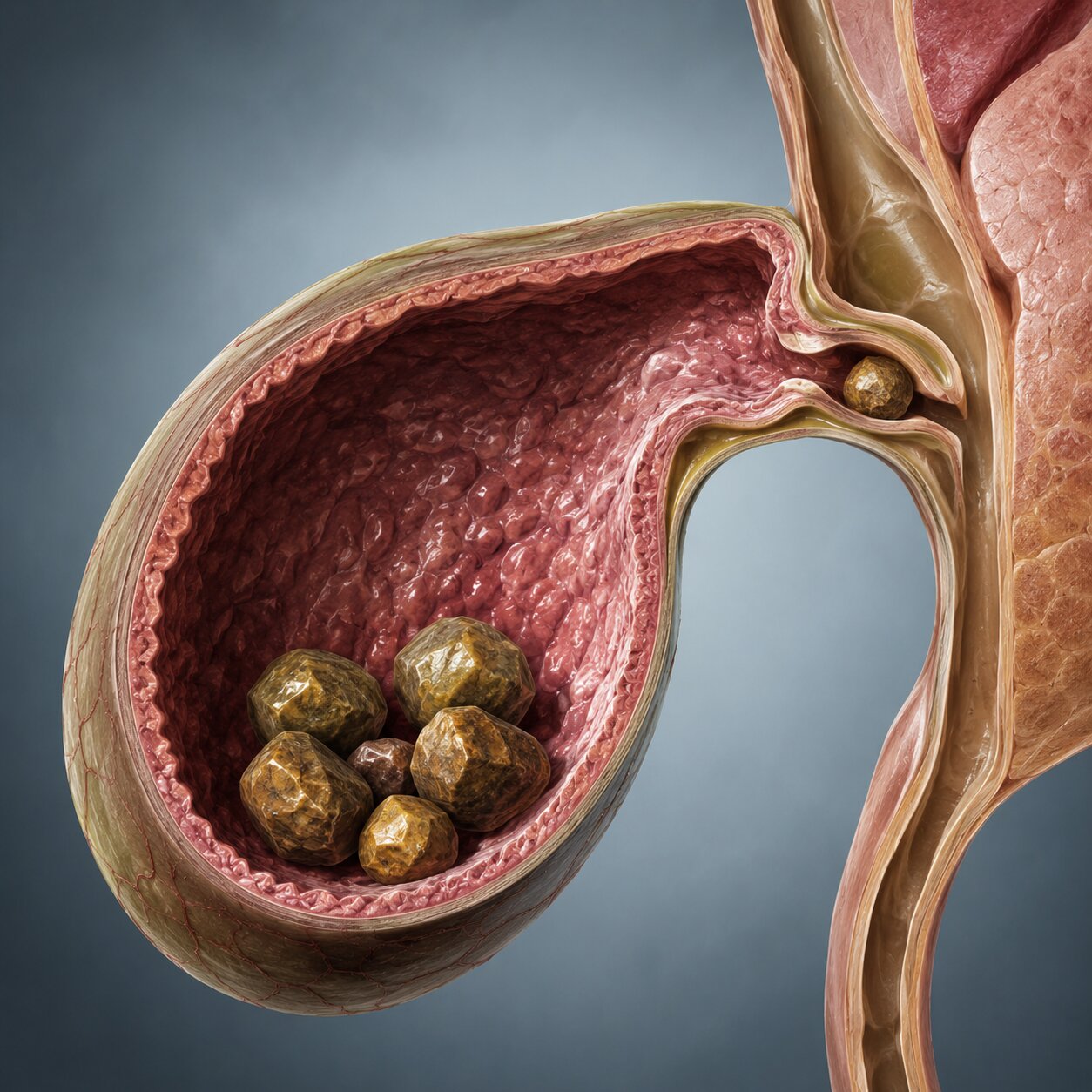
CA 19-9 is produced by cells lining the ducts of the pancreas, bile ducts, and several other organs, and quite a few common, non-cancerous conditions can nudge its production upward without any malignancy involved at all. One of the most frequent culprits is anything that partially blocks or irritates the bile ducts — gallstones being the classic example. A fatty, heavy meal is a well-known trigger for gallbladder symptoms specifically because it prompts the gallbladder to contract and push a stone toward the duct opening. When a gallstone sits in or near the bile duct, bile can back up, ducts become mildly inflamed, and CA 19-9 rises as a side effect of that irritation rather than because of cancer.

This is common enough that studies looking specifically at people with elevated CA 19-9 and no evidence of malignant or pancreatobiliary disease have traced the cause, when one could be identified, to hepatic (liver-related) conditions in the largest share of cases, with pulmonary, gynecologic, and endocrine conditions such as diabetes accounting for most of the rest. Beyond gallstones themselves, ordinary liver conditions like fatty liver disease or mild cirrhosis can raise CA 19-9 simply because a stressed liver processes bile less efficiently, and chronic or acute pancreatitis, even when it's mild and unrelated to any tumor, inflames the same ducts that produce CA 19-9.
Diabetes has a documented, independent association with modestly elevated CA 19-9 in some people, for reasons that aren't entirely settled but likely relate to how the condition affects duct-lining cells over time. Even conditions with no obvious connection to the pancreas or bile ducts at all — certain lung conditions, some gynecologic conditions, kidney impairment, and general inflammatory states — have been documented as occasional causes. There are even genuinely mundane, almost surprising contributors on record in the medical literature, including case reports linking unusually heavy tea consumption to a mild CA 19-9 bump, which is less a rule to worry about and more a useful reminder of just how many ordinary, non-cancerous things can move this particular number a little.
Why Magnitude and Trend Matter More Than a Single Number
If there's one idea worth taking away from all of this, it's that the size of the elevation and what happens to it over time carry more diagnostic weight than the single value on the page in front of you. A result that climbs steadily on repeat testing, especially if it keeps climbing after any obvious benign cause has been treated, is taken far more seriously than a one-time mild bump that never repeats or that resolves once, say, a gallstone is addressed. Doctors think about this less like a single photograph and more like a short video: one frame in isolation is hard to interpret, but watching how the number moves over a few weeks or months tells a much clearer story. This is also where the size of the original number matters on its own. A result of 45 U/mL and a result of 4,500 U/mL are both technically "elevated," but they don't behave the same way statistically, and they don't get the same response from a doctor. Very high values are uncommon in benign disease and are one of several findings that meaningfully raise concern for an active cancer, especially when paired with symptoms or an abnormal scan. Mild elevations, by contrast, sit in a zone crowded with benign explanations, which is exactly why doctors are generally not alarmed by a first mildly elevated result and instead lean toward monitoring and addressing any obvious contributing condition before assuming the worst.
What Your Doctor Actually Does With a Mild Result
When a mildly elevated CA 19-9 shows up, the response is usually deliberate rather than urgent. Your doctor will typically start by reviewing your history and symptoms for anything that points toward a specific, treatable cause — recent gallbladder symptoms, known liver disease, diabetes, or a recent respiratory illness, for instance. If something like gallstones or mild pancreatitis seems like the likely explanation, treating that condition and rechecking CA 19-9 afterward is a common next step, since the number often normalizes once the underlying irritation resolves. If nothing obvious explains it, a repeat test after some weeks is a very standard approach, simply to see whether the number holds steady, rises, or falls on its own.

Imaging, such as an abdominal ultrasound or CT scan, may also be used, less because a mild elevation alone is considered highly suspicious and more because it's a reasonable, low-risk way to rule out a structural cause like a gallstone or duct blockage that wouldn't necessarily show up through symptoms alone.
When a Mild Elevation Deserves a Closer Look
None of this means a mild elevation should simply be ignored. Certain factors shift a doctor's threshold for looking more closely, even when the number itself is only modestly high. A mild elevation that keeps rising on repeat testing, rather than staying flat or falling, is treated with more concern than a one-off finding. The same is true for a mild elevation that shows up alongside symptoms like unexplained weight loss, new-onset diabetes in someone older with no other risk factors for it, persistent abdominal or back pain, or jaundice — none of which are things a mild CA 19-9 number should be evaluated in isolation from. A strong family history of pancreatic cancer, or a personal history of chronic pancreatitis, also lowers the bar for pursuing imaging or specialist referral sooner rather than waiting through a longer observation period. The number itself is simply one input among several, and it's the combination of findings — not the CA 19-9 result by itself — that actually drives what happens next.
Frequently Asked Questions
How much above normal counts as "mildly" elevated?
There's no single official cutoff, but results in the 40s up through roughly the low hundreds (U/mL) are generally discussed as mild or borderline elevations in everyday clinical practice, especially compared to values in the many hundreds or thousands, which are treated very differently and carry a much stronger association with active cancer.
Does a mildly elevated CA 19-9 mean I probably have cancer?
No. Research on people with elevated CA 19-9 and no evidence of malignancy has traced the cause to benign conditions — commonly liver, lung, gynecologic, or endocrine issues — in the large majority of cases where a cause could be identified. A mild elevation on its own is far more often explained by something benign than by cancer.
Should I get retested if my CA 19-9 is only mildly elevated?
Often, yes. Repeat testing after several weeks, sometimes alongside treating a suspected benign cause like gallstones, is a standard way to see whether the number resolves on its own. A result that normalizes on its own supports a benign explanation, while one that keeps climbing warrants further evaluation.
What symptoms should make me take a mild elevation more seriously?
Unexplained weight loss, persistent abdominal or back pain, jaundice, or new-onset diabetes without other typical risk factors are all reasons to discuss a mild elevation more urgently with your doctor, since these combinations shift the picture more than the number alone ever would.
Conclusion
A CA 19-9 result that's only mildly above normal is a common finding with a reassuring track record — the overwhelming majority of the time, it traces back to something ordinary and treatable, like gallstones, mild liver strain, diabetes, or a passing inflammatory condition, rather than cancer. What actually matters most is not the single number itself, but the broader picture around it: your symptoms, your history, and whether the result holds steady, resolves, or keeps climbing on a repeat test. If you've received a mildly elevated result, the most useful next step is a calm, unhurried conversation with your doctor about what might be contributing to it and whether a recheck or imaging makes sense — not assuming the worst from one number seen in isolation.
Still Not Sure What Your Results Mean?
Upload your labs and get a complete, visual, plain-language interpretation of every biomarker — delivered to your inbox in under 15 minutes.
Get My ReportThis article is for educational purposes only and does not constitute medical advice. Always consult your healthcare provider regarding your specific lab results.