
Elevated CEA Doesn't Always Indicate Cancer
A 39-year-old woman went in for a routine health screening with no cancer symptoms at all. Her CEA came back at 45.89 ng/mL — more than fourteen times the upper limit of normal. What followed was a colonoscopy, an upper endoscopy, a CT scan, an ultrasound, and three separate stool tests, all looking for a cancer that wasn't there. The real cause turned out to be an inflamed, stone-filled gallbladder. Once it was removed, her CEA fell to 2.1 ng/mL within three months. Her story is a genuinely useful one to know, because it captures something true about this test that gets lost the moment someone sees the word "elevated" next to it: CEA is produced by ordinary tissue all over the body, not just by tumors, and a long list of everyday, treatable conditions can push it up with no cancer involved anywhere.
That doesn't mean an elevated CEA should be shrugged off — it's a real signal worth understanding, not ignoring. But understanding it means knowing the full cast of characters capable of triggering it, how high each of them can realistically push the number, and why doctors have never treated this test as a yes-or-no cancer switch.
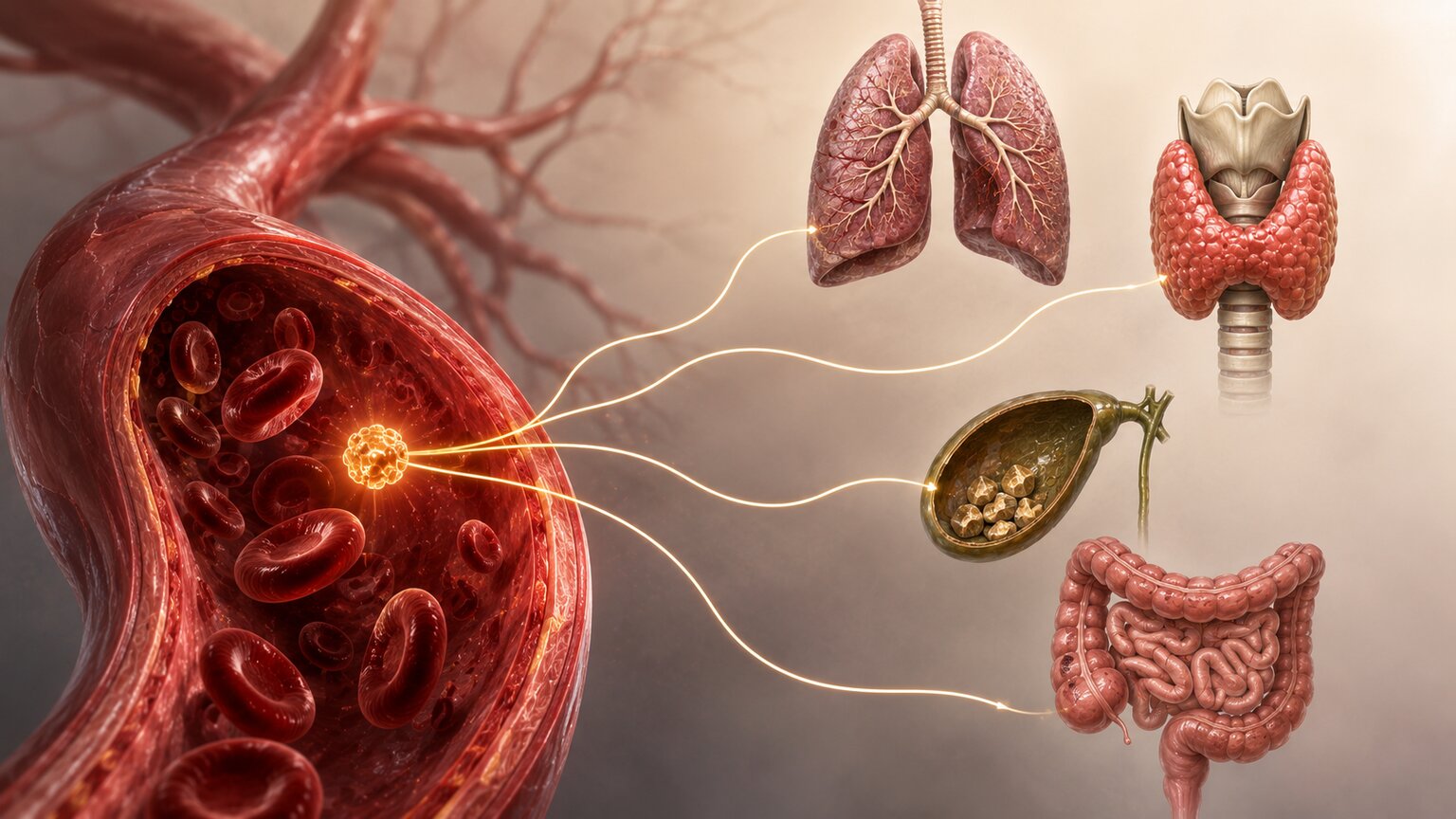
What CEA Actually Measures, and Why It's an Imperfect Cancer Test
CEA stands for carcinoembryonic antigen, a glycoprotein normally produced in large amounts before birth and then mostly switched off, though small amounts continue to be shed throughout life by the lining of the digestive tract and several other tissues. Most labs consider a result under roughly 3 to 5 ng/mL normal for someone who doesn't smoke, with a somewhat higher ceiling — often 5 to 10 ng/mL — treated as normal for smokers, for reasons this article covers in detail shortly. Doctors mainly use CEA to monitor people already diagnosed with colorectal cancer, tracking whether the number rises or falls as a clue about how treatment is going.
At the commonly used 2.5 ng/mL threshold, research pooling multiple studies has found CEA correctly identifies about 82% of true colorectal cancer cases (its sensitivity) while correctly clearing about 80% of people who don't have it (its specificity). Raise the threshold to 5 ng/mL and specificity improves to about 88%, but sensitivity drops to around 71%; at 10 ng/mL, specificity climbs to about 97% while sensitivity falls further, to roughly 68%. Every threshold is a trade-off between catching real cases and avoiding false alarms, and none of them, at any cutoff, is anywhere close to perfect in either direction.
Those percentages become far more meaningful with real numbers behind them. Roughly 1.48 million people are currently living with colorectal cancer in the United States, out of a population of about 335 million — meaning somewhere around 44 out of every 10,000 average-risk adults actually has the disease at any given time. Picture running all 10,000 of those people through a CEA test at the 2.5 ng/mL threshold, with no other information to work from. At 82% sensitivity, the test would correctly flag about 36 of the roughly 44 true cases. But at 80% specificity, out of the 9,956 people who don't have cancer, about 1,991 of them would still test positive anyway. Add those two groups together, and out of roughly 2,027 total positive results, only about 36 — under 2% — would actually belong to someone with cancer. That single calculation is the entire reason CEA has never been recommended as a general screening test, a point this article returns to later.
The Long List of Non-Cancer Reasons This Number Can Rise
Because CEA is produced by ordinary, healthy tissue turnover in multiple organs, almost anything that irritates, inflames, or obstructs those tissues can push the number up. Documented benign causes include:
- Cigarette smoking — the single most common everyday cause of a mildly-to-moderately elevated result in an otherwise healthy person.
- Gallbladder disease, including cholecystitis and gallstones — capable of producing surprisingly high numbers, as the case above illustrates.
- Peptic ulcer disease, diverticulitis, and inflammatory bowel disease — ordinary digestive-tract inflammation that shares tissue origin with CEA production.
- Pancreatitis — inflammation of the pancreas, independent of any tumor.
- Liver disease, including cirrhosis and hepatitis — the liver plays a major role in clearing CEA from the blood, and when it's not working at full capacity, levels back up. Our related article covers exactly how liver disease affects CEA in far more depth.
- Chronic lung conditions — including COPD, interstitial lung disease, asthma, and pulmonary alveolar proteinosis, all of which involve tissue CEA also happens to be expressed in.
- Chronic kidney failure, particularly in people on dialysis — reduced clearance again plays a central role.
- Hypothyroidism — a genuinely underappreciated cause, covered in its own section below.
None of this means an elevated result should be dismissed — it means the number, on its own, is the start of a conversation rather than the end of one.
Curious what your own lab results are really telling you? Upload them and get a complete, plain-language breakdown in under 15 minutes.
Analyze My ResultsSmoking: The Most Common Everyday Cause

Of every benign cause on the list above, smoking is the one doctors encounter the most often, and its effect on CEA has been documented since the 1970s. A classic early study of 276 healthy volunteers found a mean CEA of 2.7 ng/mL in smokers versus 1.9 ng/mL in nonsmokers. More recent research examining cigarette smokers specifically has found an even larger gap: one study measured a mean CEA of 9.19 ng/mL among smokers compared with 2.15 ng/mL in nonsmokers. A separate large-scale study of over 1,300 people found the effect was strongest in men — 3.11 ng/mL in male smokers versus 2.14 ng/mL in male nonsmokers — while women showed no statistically significant difference between smokers and nonsmokers in that particular dataset.
The effect is also dose-dependent: CEA rises in step with how many cigarettes a person smokes per day, with the highest levels seen in people smoking more than 31 cigarettes daily. The genuinely encouraging part of this story is how reversible it is. Within roughly three months of quitting smoking entirely, elevated CEA levels decline back down into the normal, nonsmoker range. That timeline matters practically: if a smoker's CEA is only modestly elevated and everything else about their workup looks reassuring, a doctor may reasonably suggest quitting and rechecking the number in a few months before pursuing anything more invasive.
Lung Conditions and CEA
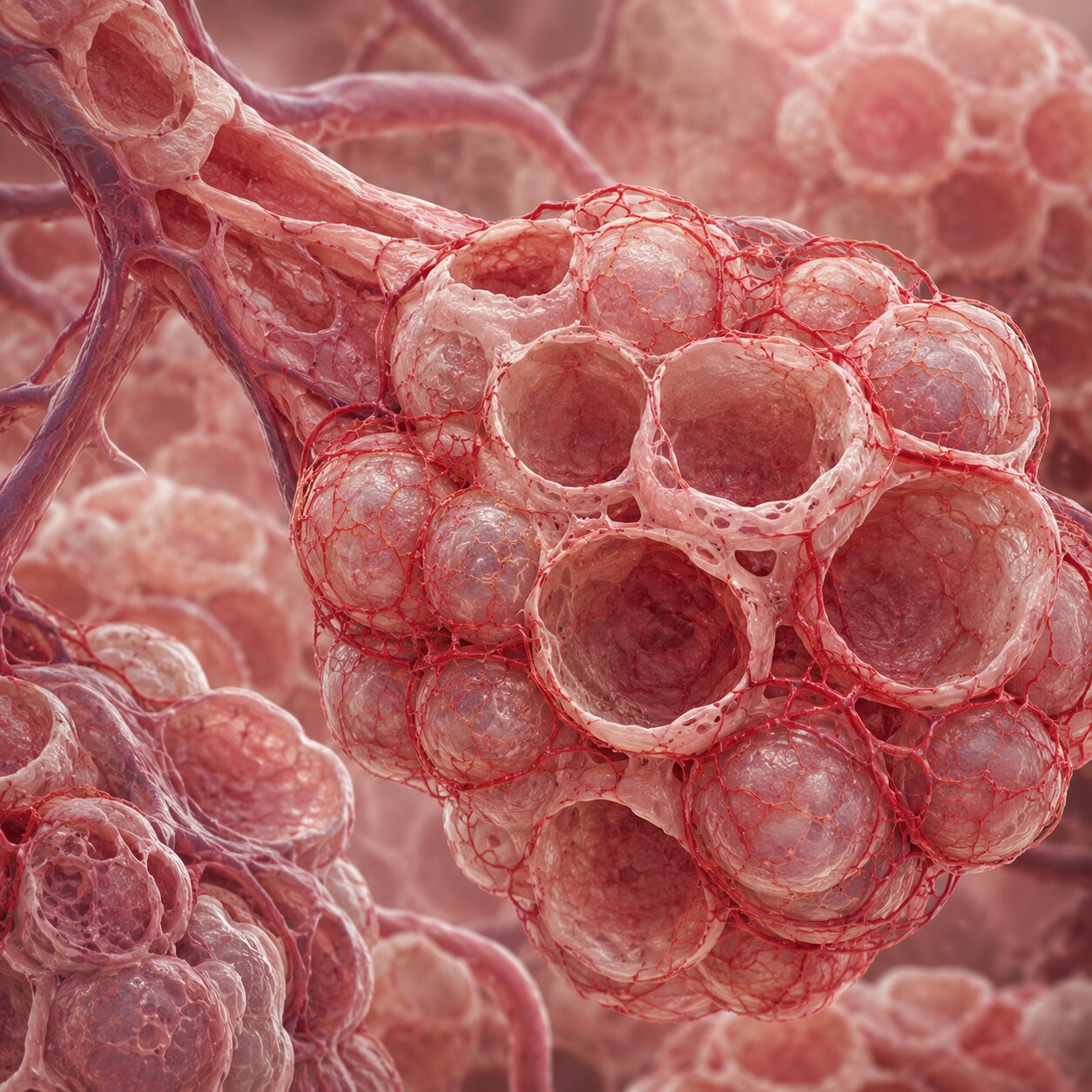
A large study following 4,796 patients with confirmed benign lung diseases, and no cancer anywhere, found CEA elevation across nearly every category examined, just at different rates. Pulmonary alveolar proteinosis, a rare condition where a fatty substance builds up in the air sacs, showed the highest rate at 22.22%. Interstitial lung disease came in at 16.52%, asthma at 10.87%, COPD at 4.8%, pneumonitis and cryptogenic organizing pneumonia at 4.75%, and bronchiectasis at 4.54%. Pulmonary tuberculosis, interestingly, showed the lowest rate of all at just 0.53%.
What matters just as much as which conditions raise CEA is how far they typically push it. Across that entire study population of nearly 4,800 people with confirmed benign lung disease, only 3.11% had a CEA above 5 ng/mL, only 0.58% climbed above 10 ng/mL, and a mere 0.06% — three people out of thousands — exceeded 20 ng/mL. The researchers' own conclusion was direct: once CEA climbs past 20 ng/mL in this context, malignancy should be strongly suspected rather than assumed to be another benign lung finding. That's a genuinely useful practical marker for anyone with a known chronic lung condition and a mildly elevated CEA — the vast majority of benign lung disease simply doesn't produce a number that high.
Gastrointestinal and Gallbladder Causes
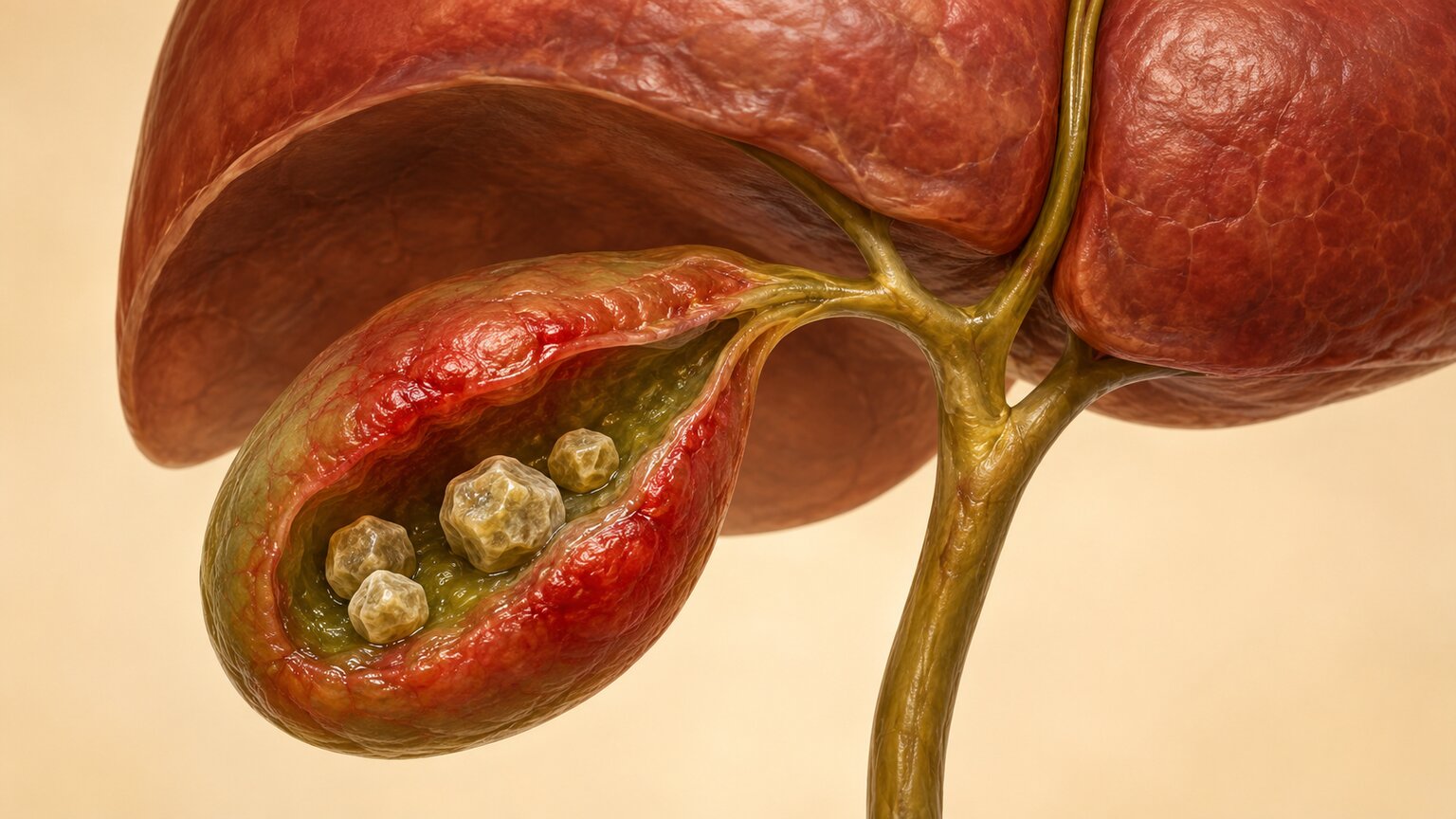
The digestive tract is where CEA is produced under normal, healthy circumstances in the first place, so it's not surprising that inflammation anywhere along it can nudge production upward. Peptic ulcer disease, diverticulitis, and inflammatory bowel disease — Crohn's disease and ulcerative colitis — are all well-documented, ordinary triggers, and pancreatitis works through a similar route.
The gallbladder deserves special attention, because it illustrates just how far a benign cause can push this number when the case above wasn't presented in isolation. That 39-year-old patient's CEA of 45.89 ng/mL — later confirmed at 49.02 ng/mL on repeat testing, against a normal range of 0 to 3.2 ng/mL — came from chronic calculous cholecystitis: a gallbladder chronically inflamed around a collection of gallstones, compounded in her case by H. pylori gastritis and nutritional deficiencies left over from earlier bariatric surgery. Despite a genuinely extensive workup covering both upper and lower endoscopy, cross-sectional imaging, ultrasound, and three separate stool tests for occult blood, no malignancy was ever found. Once the gallbladder was surgically removed, the number dropped to 2.1 ng/mL within three months — a clean, complete resolution that itself became part of the evidence that no cancer had ever been present.
Hypothyroidism: The Overlooked Endocrine Cause

Of every cause on this list, hypothyroidism is probably the one most likely to be missed entirely, precisely because it doesn't announce itself the way a gallbladder attack or a smoking history does. Research has found that CEA levels run inversely to a person's T4 level and directly with their TSH level — meaning the more underactive the thyroid, the higher CEA tends to climb — and that the degree of elevation tracks with how long the hypothyroidism has gone untreated, not with antibody levels or whether a visibly enlarged thyroid (a goiter) is present at all. The leading explanation is that an underactive thyroid slows the body's overall rate of breaking down and clearing circulating proteins, CEA included, letting it accumulate the same way it does when the liver's clearance function is impaired.
Two documented cases make this concrete. A 62-year-old woman referred for mild liver dysfunction, with lower leg swelling as her only real symptom, was found to have a CEA of 21.3 ng/mL against a normal range under 5.0, alongside severe hypothyroidism — a TSH of 146 and a free T4 of just 0.172, with no palpable goiter at all. Levothyroxine replacement therapy alone brought her CEA down to 4.2 ng/mL as her thyroid function normalized. A second case, a 65-year-old woman found to have a chest shadow on routine screening, had a CEA of 26.9 ng/mL with a TSH of 170.2 and an undetectable free T3. Her CEA fell after starting levothyroxine too, but didn't fully normalize — her physicians attributed the incomplete drop to the fact that she continued smoking throughout treatment, a reminder that these benign causes frequently stack on top of one another rather than acting in isolation.
Kidney Disease and Dialysis
Chronic kidney failure, particularly in people who require dialysis, is another well-documented cause of a mildly elevated CEA, working through a broadly similar clearance-based mechanism to liver disease and hypothyroidism: when the body's filtering and clearance systems aren't operating at full capacity, circulating proteins that would normally be removed steadily from the blood build up instead. The elevation in this context tends to be mild rather than dramatic, but it's worth mentioning to a doctor if you're on dialysis and see a modestly elevated CEA on routine bloodwork, since it may simply reflect your kidney status rather than anything new.
How High Can Benign Causes Push the Number?

As a general rule, benign conditions rarely push CEA above about 10 ng/mL — but as both the gallbladder and hypothyroidism cases above make clear, "rarely" isn't "never," and a handful of benign causes are capable of reaching well into the 20s, 40s, or even higher when they're severe or layered on top of each other. What consistently separates these benign outliers from cancer, even at these unusually high benign readings, is what happens next: they resolve. The gallbladder case fell from 49 ng/mL to 2.1 ng/mL within three months of the gallbladder's removal. The hypothyroid cases fell substantially with thyroid hormone replacement alone. That pattern of a sharp, sustained drop tracking a specific treatment is something a genuine, untreated malignancy essentially never does on its own.
Cancer that has progressed to the point of spreading, by contrast, tends to produce numbers on an entirely different scale — often in the hundreds, and in documented case reports, considerably higher still. The gap between what benign disease can produce and what advanced malignancy typically produces isn't subtle once you're looking at the two side by side, which is exactly why doctors weigh magnitude as one meaningful piece of the picture, alongside trend and imaging, rather than treating any single elevated number as self-explanatory.
Why This Was Never Designed to Be a Screening Test
Every major medical guideline is explicit that CEA should not be used to screen the general, symptom-free population for cancer, and the Bayesian math worked through earlier in this article is exactly why. When a condition is relatively uncommon in a population — as colorectal cancer is, even accounting for how common it is compared to rarer cancers — even a reasonably accurate test generates far more false alarms than true detections once it's applied broadly to people with no symptoms and no elevated risk. The gallbladder case that opened this article is a textbook illustration of exactly what that looks like in practice: a CEA test ordered as part of a routine screening panel, in someone with no cancer symptoms, triggered weeks of invasive workup for a problem that had nothing to do with cancer at all. The authors of that case report were blunt about the lesson, writing that indiscriminate tumor marker testing in asymptomatic people can lead to unnecessary anxiety and extensive investigation that a more targeted approach would have avoided entirely.
This is also precisely why CEA doesn't appear on routine annual bloodwork panels the way cholesterol or blood glucose typically do. It earns its place in a narrower set of situations instead: monitoring someone already diagnosed with colorectal or another digestive-tract cancer to track how treatment is working, helping characterize a mass already found on imaging, or investigating a specific, already-present symptom a doctor is actively trying to explain. Used in one of those more targeted contexts, where the odds of cancer are already meaningfully higher than in the general population, the same test performs far more usefully than it ever could as a blind, population-wide screen.
How Doctors Read This Number in Practice
Given how many benign explanations exist, no single CEA result is ever read in isolation by anyone who understands the test well. A doctor seeing a moderately elevated number will typically start by asking the questions this article has walked through: does this person smoke, do they have a known thyroid, liver, kidney, lung, or digestive condition, and does the magnitude of the elevation actually fit one of those explanations, or does it look disproportionate. A repeat test, drawn after addressing an obvious candidate cause — quitting smoking, treating a thyroid problem, resolving a gallbladder issue — often does more to clarify the picture than any amount of additional imaging ordered in response to the first number alone.
What to Ask Your Doctor If Your CEA Came Back High
A short, specific set of questions tends to be more useful than a long, anxious one. It's worth asking directly whether anything else in your history — smoking, a thyroid condition, gallbladder problems, lung disease, kidney function — could plausibly explain the number by itself. Ask whether a repeat test is planned and on what timeline, since a second value gives your doctor something to actually compare against rather than one isolated point in time. If you smoke, ask whether quitting and rechecking in a few months is a reasonable first step before anything more invasive. And if your thyroid hasn't been checked recently, it's entirely reasonable to ask whether a TSH and free T4 should be added to the workup, given how easily hypothyroidism gets overlooked as a cause.
When an Elevated CEA Does Warrant a Closer Look
None of this is meant to suggest an elevated CEA should be waved away. Several patterns genuinely do raise the level of concern and typically prompt further workup: a number that keeps climbing across repeat tests rather than settling or falling once an obvious benign cause has been addressed, a genuinely high result — well above 20 ng/mL — with no plausible benign explanation on history or basic bloodwork, and, most importantly, an elevated CEA that lines up with a suspicious finding on colonoscopy or imaging. New or worsening symptoms alongside the number matter too: unexplained weight loss, a genuine change in bowel habits, rectal bleeding, or persistent abdominal pain all shift the picture meaningfully, even at a moderately elevated result. It's the combination of the number, the trend, the history, and the symptom picture together that carries real diagnostic weight — which is exactly why a thorough doctor looks at all four before drawing a conclusion from any one of them alone.
Frequently Asked Questions
Can CEA be elevated without any cancer at all?
Yes, and it's genuinely common. Smoking, gallbladder disease, thyroid problems, liver disease, chronic lung conditions, kidney failure, and ordinary digestive inflammation have all been documented to raise CEA with no cancer present anywhere.
What's considered a normal CEA level?
Most labs consider under about 3 to 5 ng/mL normal for non-smokers, with a somewhat higher ceiling, often 5 to 10 ng/mL, treated as normal for smokers, since smoking itself reliably raises the baseline.
Does smoking really raise CEA, and by how much?
Yes. Studies have found mean CEA levels roughly 1.4 to 4 times higher in smokers than nonsmokers, depending on the study, with the effect increasing alongside how many cigarettes are smoked per day. Levels typically return to normal within about three months of quitting.
Can thyroid problems cause a high CEA?
Yes, particularly hypothyroidism. Documented cases have shown CEA levels above 20 ng/mL in people with severe, untreated hypothyroidism, which then dropped substantially or fully normalized once thyroid hormone levels were corrected with treatment.
Why isn't CEA used to screen everyone for cancer?
Because in a population where cancer is relatively uncommon, even an accurate test produces far more false positives than true detections. In a hypothetical group of 10,000 average-risk adults, roughly 2,027 would test positive at a standard threshold, but only about 36 of those would actually have cancer.
How high can a benign condition push CEA?
Most benign conditions keep CEA under about 10 ng/mL, but severe cases of gallbladder disease or hypothyroidism have documented levels reaching into the 20s, 40s, and beyond. What distinguishes them from cancer is that the number falls sharply once the underlying condition is treated.
Can lung conditions like COPD raise CEA?
Yes. Studies have found elevated CEA in a meaningful share of people with COPD, asthma, and interstitial lung disease, though only a very small percentage of benign lung disease patients ever climb above 20 ng/mL, a level researchers consider suggestive of malignancy instead.
What should I do if my CEA is elevated and I have no cancer symptoms?
Talk to your doctor about whether smoking, thyroid function, gallbladder health, liver function, kidney function, or a lung condition could explain it, and ask about rechecking the number after addressing any obvious candidate cause before pursuing more invasive testing.
Conclusion
An elevated CEA is a real signal, but it was never a signal with only one possible source. Smoking, gallbladder disease, hypothyroidism, chronic lung and kidney conditions, liver disease, and ordinary digestive-tract inflammation can all send it upward, sometimes dramatically, with no cancer anywhere in the picture — and the case that opened this article, a benign gallbladder pushing CEA past 45 ng/mL, is proof that "dramatically" doesn't automatically mean "malignant." The number only becomes genuinely useful once it's read alongside your history, a repeat test to establish a trend, and imaging where it's actually warranted — which is exactly the kind of full-picture interpretation worth asking your doctor for directly, rather than searching a single number in isolation and assuming the worst before that fuller picture exists.
Still Not Sure What Your Results Mean?
Upload your labs and get a complete, visual, plain-language interpretation of every biomarker — delivered to your inbox in under 15 minutes.
Get My ReportThis article is for educational purposes only and does not constitute medical advice. Always consult your healthcare provider regarding your specific lab results.