
Understanding How CEA Is Used After Cancer Treatment
Once colorectal cancer treatment ends, CEA stops being a single number you get once and starts being something closer to a compass you check again and again, for years. The same blood test that may have first raised the alarm becomes a quiet, ongoing companion — drawn every few months at first, then gradually less often, tracked not for what it says on any one visit but for the shape of the line it traces over time. That shift, from a one-time result to a years-long pattern, is genuinely confusing if nobody ever explains it, and it's exactly what this article walks through: why doctors check CEA before treatment even begins, what's supposed to happen to it in the weeks right after surgery, the actual schedule guidelines call for, how a rising number gets investigated, and where this whole system has real, documented blind spots.

Why Doctors Check CEA Before Treatment Even Starts
The surveillance story actually begins before surgery, not after it. Doctors draw a baseline CEA before treatment starts specifically so they have something real to compare every future result against — without that starting point, a later number would be floating with no context at all. That baseline also carries information of its own: research has found that a preoperative CEA level helps predict how a patient is likely to do afterward, and it shapes how doctors interpret the postoperative numbers that follow. Someone whose CEA was very high before surgery is expected to take longer for it to fall, since the biological half-life of CEA in the blood — the time it takes for half of the circulating amount to naturally clear — has been measured at roughly 3 to 13 days, with longer half-lives showing up in patients whose preoperative levels were higher to begin with. In other words, a bigger starting number takes proportionally longer to drain out of the system, purely as a matter of blood chemistry, before anyone can even begin judging whether the drop reflects successful treatment.
There's a reasonably intuitive explanation for why a high preoperative CEA tends to track with a tougher road ahead, beyond the pure chemistry of clearance time. A tumor shedding large amounts of CEA into the bloodstream before it's ever removed is often, though not always, a larger or more biologically active tumor — one with more cells actively producing the antigen, and sometimes one that has already had more opportunity to seed cells elsewhere in the body before surgery ever happens. That's part of why a high starting number doesn't just mean "watch this number for longer after surgery" — it can also nudge a doctor toward closer imaging follow-up or a more cautious overall risk assessment for that specific patient, independent of what stage the tumor was formally assigned on pathology alone.
Why CEA Specifically, and Not a Newer Test
It's a fair question to ask why a molecule discovered decades ago, with the real limitations covered throughout this article, is still the default surveillance tool rather than something newer. The honest answer is mostly practical: CEA remains the most widely used tumor marker for colorectal cancer worldwide because it's inexpensive, fast to run, and available at essentially any standard clinical laboratory, which matters enormously when a test needs to be repeated every few months for years on end across an entire healthcare system. Newer technologies are actively being studied as potential additions to this picture — circulating tumor DNA testing, which looks for actual fragments of tumor genetic material shed into the blood, is one of the more actively researched candidates, alongside approaches that combine multiple signals using machine learning to try to catch recurrence even earlier or more reliably than CEA alone. None of that has replaced CEA in standard guidelines yet, and this article won't overstate how settled that research is — but it's a useful thing to know if your own care team ever mentions one of these newer tests being added alongside your regular CEA draws, since it reflects a genuinely active area of ongoing improvement rather than dissatisfaction with the tool you're currently using.
What Happens to CEA in the Weeks Right After Surgery
For most people who've had a successful, complete surgical removal of their cancer, CEA drops fast. Research tracking this closely has found that a large share of patients see their CEA fall into the normal range within about 4 to 6 weeks, and one study found levels had already normalized in 74.4% of patients within just 2 weeks of surgery. That quick decline makes sense given the short half-life mentioned above — once the tumor tissue that was producing the excess CEA is physically removed, the existing antigen already circulating in the blood clears out on its own timeline, without needing anything more to happen.
The flip side of that expectation is what makes a slow decline meaningful. If CEA hasn't returned to normal within about 4 months of surgery, that's considered a warning sign that something more than simple postoperative clearance is going on — most often, residual cancer that wasn't fully removed, or disease that had already spread microscopically before surgery ever happened, too small to see on any scan at the time. That 4-month marker isn't an arbitrary round number; it's roughly the point where the math of a 3-to-13-day half-life should have long since finished working through even a fairly high starting value, so a level that's still elevated well past that point is no longer explainable by normal clearance alone.
Curious what your own lab results are really telling you? Upload them and get a complete, plain-language breakdown in under 15 minutes.
Analyze My ResultsThe Actual Surveillance Schedule Guidelines Call For
Once that initial post-surgery window has passed, CEA testing settles into a set, repeating rhythm laid out by major cancer guidelines. Current guidance from the National Comprehensive Cancer Network calls for clinical exams and CEA testing every 3 to 6 months for the first 2 years after treatment, then every 6 months out to the 5-year mark, for people treated for stage II or III colorectal cancer. The American Society of Clinical Oncology's guidance is similar in spirit, recommending CEA testing every 3 months for at least 3 years in stage II or III patients who are candidates for further surgery or systemic therapy if a recurrence is found. Both sets of guidelines pair this blood testing with periodic CT scans of the chest, abdomen, and pelvis, and with a colonoscopy roughly a year after surgery, followed by additional colonoscopies on a schedule that depends on what that first one finds.
People treated for stage IV disease who have no evidence of remaining cancer after treatment generally follow that same overall framework, though with CT imaging often scheduled more frequently — every 3 to 6 months — during the first 2 years specifically, reflecting the higher baseline risk in that group. Stage I disease is the exception: because the risk of recurrence is low enough that blood-based surveillance hasn't been shown to add meaningful benefit, guidelines generally call for colonoscopy monitoring alone, without routine CEA testing built into the schedule.
Why This Particular Schedule, and Not Some Other One
The heavier testing frequency packed into the first two years isn't arbitrary — it directly reflects when recurrence is statistically most likely to happen. The overwhelming majority of colorectal cancer recurrences show up within that early window, which is exactly why guidelines concentrate the most intensive monitoring there rather than spreading it evenly across five years. By the time a patient reaches the later end of that five-year stretch, the math shifts again: continuing CEA surveillance much beyond five years hasn't been shown to meaningfully improve outcomes, since recurrence risk drops off substantially by that point, and that's the actual reasoning behind guidelines stopping routine CEA surveillance around the five-year mark rather than continuing it indefinitely.
How Doctors Read a Rising Number: Doubling Time and Velocity

One of the more genuinely useful things researchers have figured out is that not all rising CEA trends behave the same way, and how fast the number climbs — its "doubling time" — carries real information about where a recurrence might actually be. Recurrences involving the liver tend to produce the fastest doubling times of all, ranging from about 10 to 102 days. Visceral metastasis elsewhere in the body, not counting the liver, tends to double more slowly, somewhere between 47 and 231 days. Local recurrence at the original surgery site, or a completely separate second primary cancer, tends to be the slowest of all, with doubling times stretching from 142 days out to as long as 868 days — well over two years. Bone metastases sit in a narrower, faster band of roughly 54 to 60 days. A steeply, rapidly climbing CEA and a slowly, gradually climbing CEA aren't just different in degree — they're statistically different in kind, hinting at genuinely different underlying situations before a single scan has even been ordered.
Researchers have also studied the raw speed of the climb directly, independent of any specific doubling-time calculation. One measure, called CEA velocity, looks at how much the number rises over a fixed window — specifically, a rise of 1.36 ng/mL or more over 3 months has been shown to predict subsequent relapse with about 80% sensitivity and 70.6% specificity. That kind of velocity-based reading becomes especially useful in exactly the tricky situation covered later in this article: when CEA is climbing but a scan hasn't found anything yet.
The Lead-Time Advantage — and Its Real Limits
One of the main reasons doctors bother with frequent CEA testing at all is that, in many cases, it catches trouble before imaging does. Research has found CEA elevation can precede a recurrence actually being visible on a scan by a median of roughly 4.5 to 8 months in some analyses, giving doctors a genuine head start — in one specific study, a rising CEA led the surveillance team to move imaging forward by about 2 months compared to the originally scheduled date. That's the entire premise behind checking this number so often: catching a problem's earliest chemical signature before it grows large enough to show up on a picture.
But the honest, sometimes deflating part of this story is that a head start doesn't automatically translate into a better outcome. The same body of research looking at this lead-time effect found no meaningful difference in the rate of successful metastasis removal, or in overall survival, between patients whose recurrence was caught with a longer lead time and those caught with a shorter one. That doesn't mean the surveillance is pointless — catching recurrence at all, and catching it in a form that's still treatable, still matters enormously — but it's an important, evidence-based reason not to treat "we found it a few months earlier" as automatically equivalent to "this changed how the story ends." The value of early detection depends heavily on what can actually be done once it's found, not just on how early the finding happened.
That last point is really the crux of it: what matters most isn't the calendar date a recurrence was first suspected, but whether it's still in a form a surgeon can physically remove once it's found. A single, isolated deposit of cancer in the liver, caught while it's still small and confined, is often still surgically removable — what doctors call resectable — with a real chance at long-term remission. The same recurrence caught later, after it's grown or spread to multiple sites, may no longer be a candidate for that kind of surgery at all, shifting treatment toward systemic therapy instead. Lead time matters most as a proxy for "was this still small and contained when we found it," rather than mattering in some abstract sense on its own — which is a subtler, more useful way to think about why the surveillance schedule is built the way it is.
What Happens When CEA Rises During Surveillance
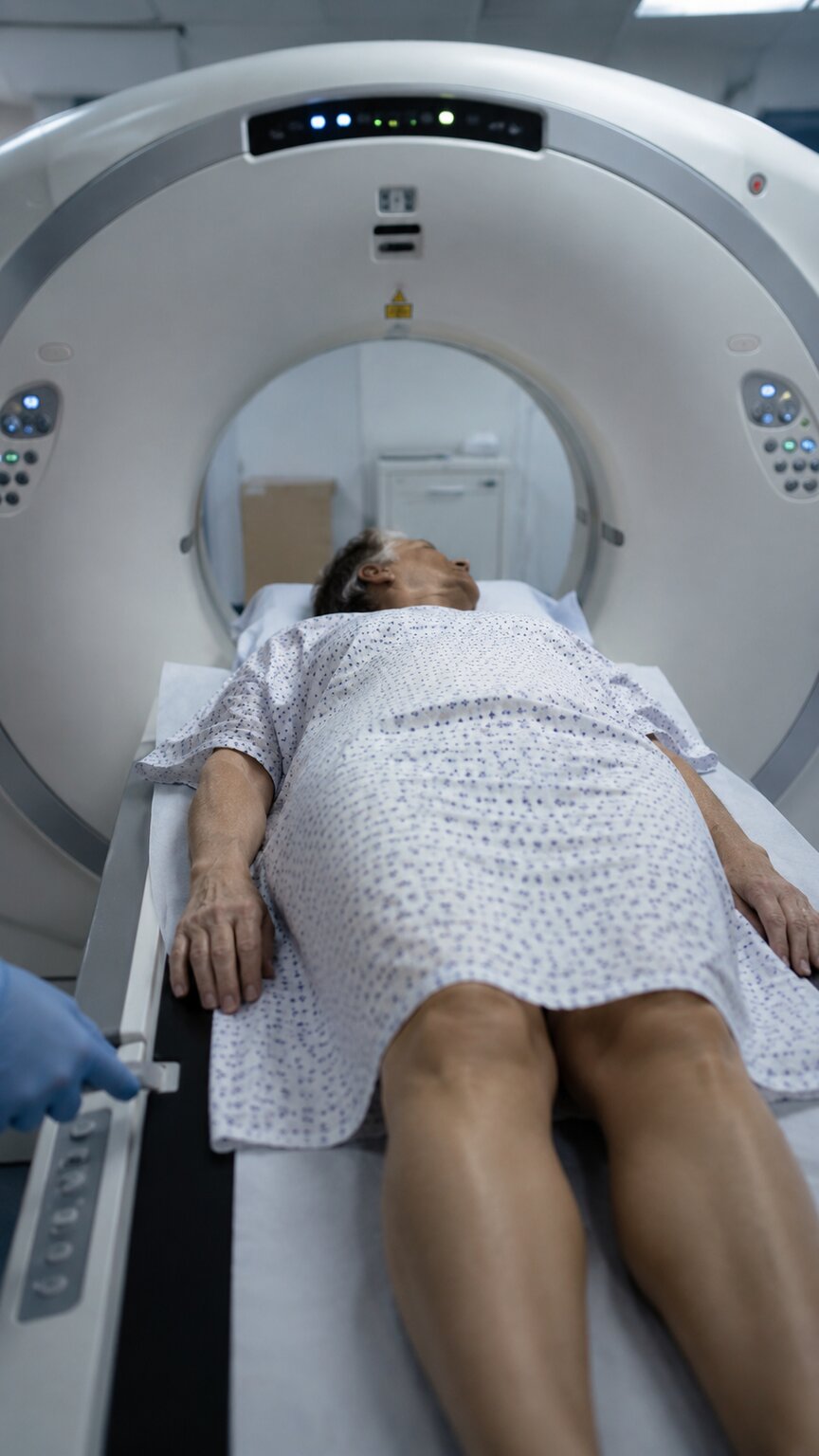
When a surveillance CEA comes back elevated or has been steadily climbing, the standard next step is cross-sectional imaging — typically a CT scan of the chest, abdomen, and pelvis — rather than jumping straight to a colonoscopy. That ordering is deliberate: CEA is cleared through what's called first-pass metabolism, largely by the liver, which means the places recurrent disease is statistically most likely to be caught first with imaging are the organs that number actually reflects, not necessarily the original surgical site inside the colon itself. If that initial CT comes back clean, current guidelines from both British and American oncology groups support moving on to a PET-CT scan next, rather than ordering it as the very first test. PET-CT has shown genuinely strong accuracy in this specific role, with one analysis reporting a sensitivity of 85.7% and specificity of 94.7% for detecting a true recurrence — meaning it correctly identifies the large majority of real recurrences while also correctly clearing the large majority of people who don't actually have one.
When CEA Keeps Rising But Every Scan Stays Clear
This is one of the more genuinely stressful scenarios in the entire surveillance process, and it's common enough that it has its own body of dedicated research: a CEA that's clearly elevated or climbing, paired with a PET-CT that comes back completely normal. When this happens, current guidance generally recommends against further immediate imaging and instead calls for a repeat CEA with clinical review in about 3 months, essentially watching the trend a little longer rather than escalating straight to more scans that already came back clean once. This is precisely the situation where CEA kinetics — the doubling time and velocity concepts covered earlier — earn their keep: a CEA that's rising quickly, following a pattern consistent with a fast-doubling site like the liver, carries more weight toward eventually finding something than one that's crept up slowly and gently, even when both scenarios currently show the same "elevated, imaging negative" status on paper.
Using CEA During Chemotherapy, Not Just After Treatment Ends
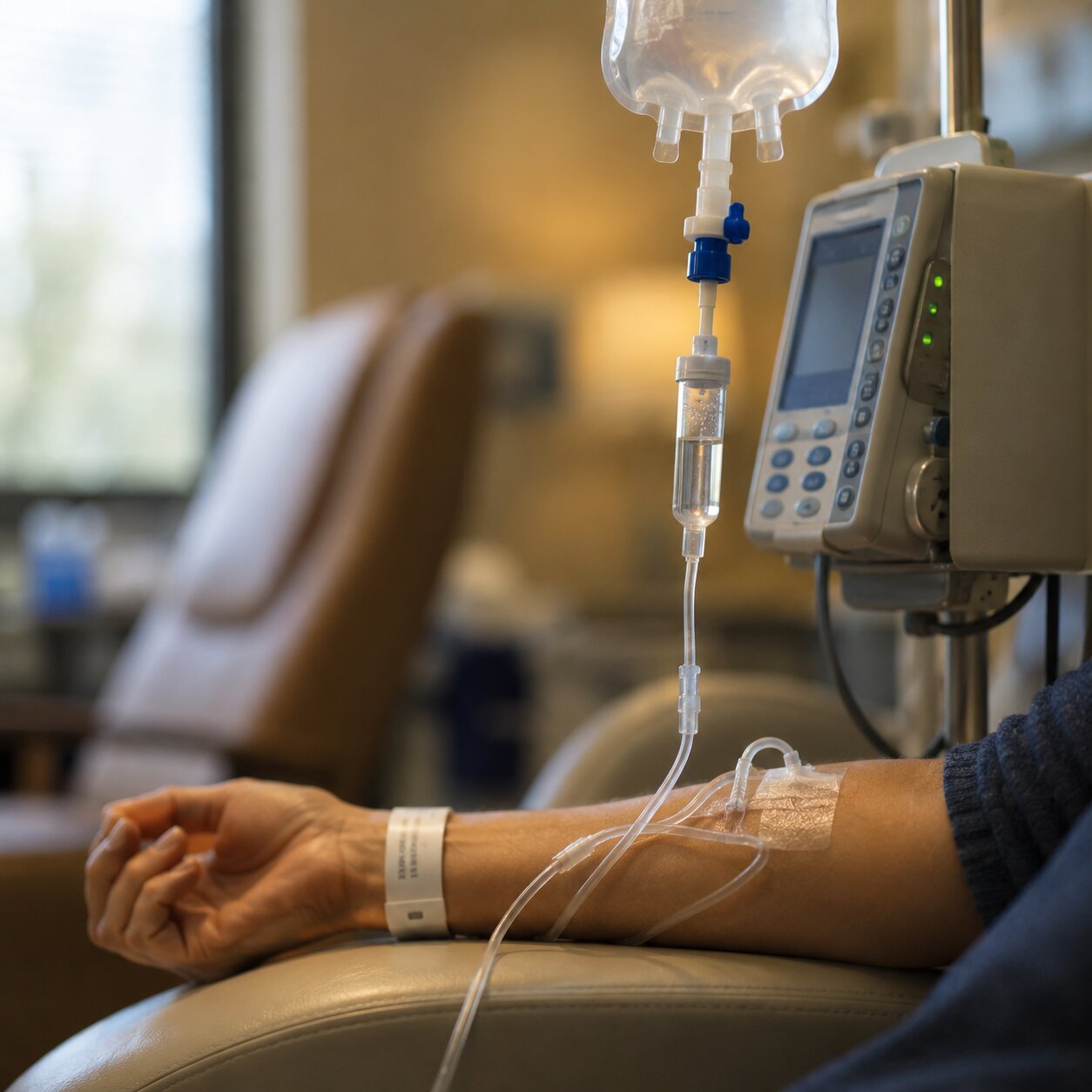
Everything covered so far describes surveillance after treatment has finished, but CEA also plays a genuinely active role for people who are actively receiving chemotherapy for metastatic colorectal cancer, tracking how well that treatment is working in something close to real time. Research comparing CEA trends against CT scan results found the marker correlated strongly with how the disease was actually behaving — a falling CEA had a 54% positive predictive value for a partial response confirmed on imaging, rising to 77% when minor and partial responses were combined, and a rising CEA had essentially a 100% positive predictive value for genuine disease progression. In practical terms, that last figure is the one oncologists lean on hardest: when CEA is climbing during chemotherapy, it reliably means the disease is progressing, sometimes showing that signal up to 16 weeks before the same progression becomes visible on a scan.
There's one important twist worth knowing if you're actively in treatment and watching your own numbers: a small, temporary bump in CEA shortly after starting a new chemotherapy regimen doesn't always mean bad news. Researchers have documented what's sometimes called a "flare" or "surge" phenomenon, where CEA briefly rises right after treatment begins in patients who go on to actually respond well to that treatment — a pattern thought to reflect the initial breakdown of tumor tissue releasing stored antigen into the bloodstream, rather than the tumor actually growing. Because that flare can look identical to bad news on paper, this is exactly the kind of context where you shouldn't try to interpret a single number change on your own — a brand-new bump right after starting treatment means something genuinely different from the same bump appearing months into an otherwise stable course, and your oncology team is reading it with that full context in mind.
It's also worth knowing that CEA doesn't track every type of treatment with equal reliability. Research has found it performs as a genuinely useful surrogate marker for predicting disease progression and survival in patients receiving standard chemotherapy alone, or chemotherapy combined with anti-EGFR antibody drugs, a newer class of targeted therapy. Its performance has been reported as weaker, however, in patients receiving anti-VEGF antibody therapy, a different class of targeted drug that works through a different biological mechanism. If you're on one of these newer combination regimens, that's a reasonable detail to ask your oncologist about directly — namely, how much weight your specific treatment plan puts on CEA trends versus imaging, since the answer genuinely depends on which drugs are actually in your regimen.
The People This Tool Doesn't Work For
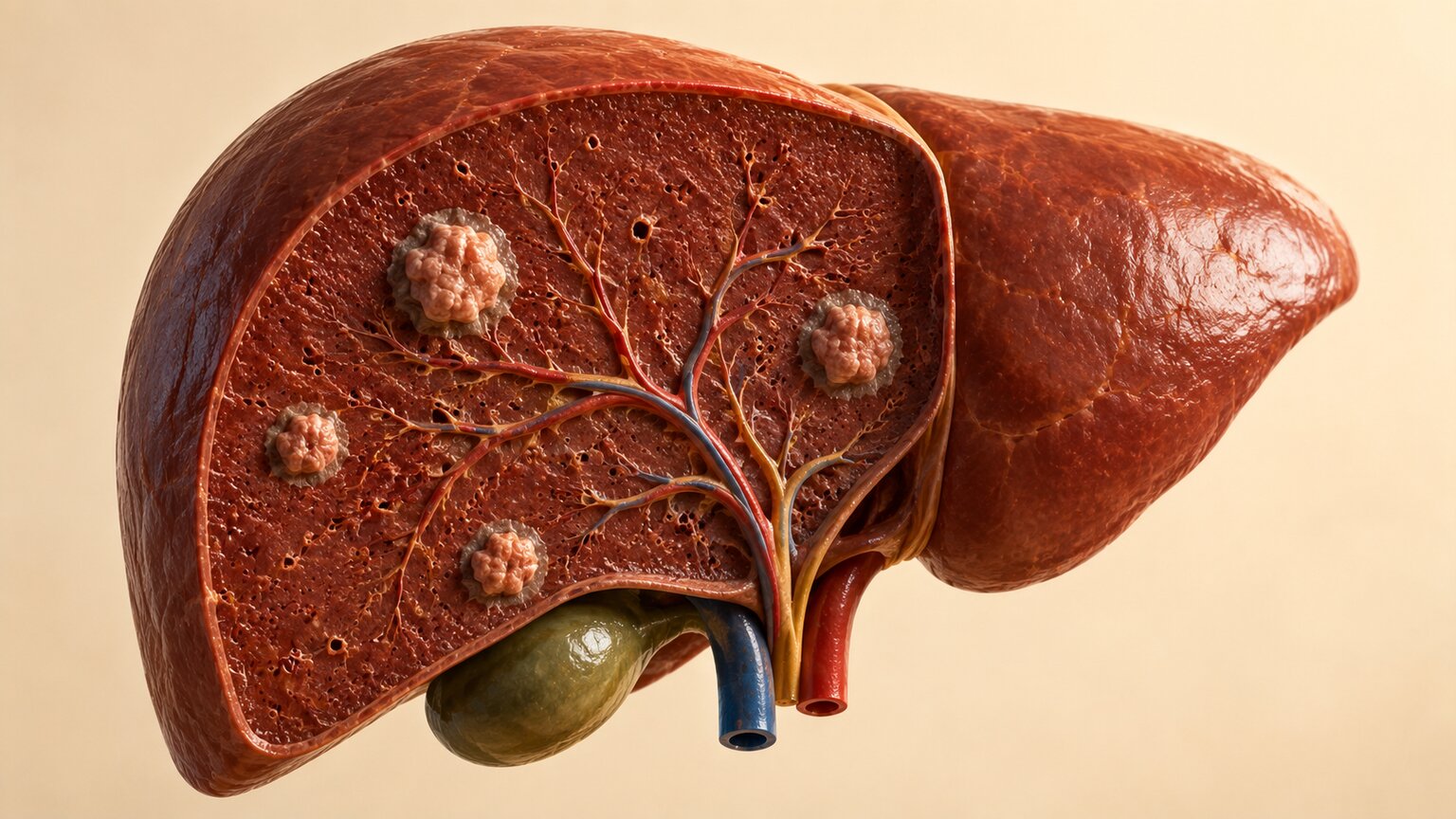
Every strength described in this article comes with a genuine blind spot: a meaningful share of people simply never produce enough CEA for the surveillance system to work as designed, even with real, growing cancer present. These are sometimes called CEA non-secretors — people whose CEA was normal before treatment and stays that way even if cancer eventually returns. Research looking specifically at this group has found the numbers vary depending on the population studied, but they're not small: in one analysis, only about 23.4% of non-secretor patients showed an elevated CEA at the time of an actual confirmed recurrence, meaning roughly three out of every four recurrences in that group happened with no warning from this particular blood test at all. A separate study focused on a specific, more aggressive tumor type found a somewhat higher detection rate, with elevated CEA showing up in 67.7% of non-secretors at recurrence — still leaving close to a third of recurrences invisible to CEA testing even in that group.
This is precisely why CEA has never been treated as the only surveillance tool in the toolbox, and why the CT scans and colonoscopies built into the standard schedule aren't optional extras — for a meaningful minority of patients, those imaging and endoscopic checks are the only thing that will actually catch a recurrence, since the blood test itself may simply never sound the alarm. If your CEA has stayed reassuringly normal through your entire surveillance journey, that's genuinely good news most of the time, but it's not, on its own, complete proof that nothing else needs watching — which is exactly why your care team keeps the imaging and colonoscopy schedule running alongside the blood draws rather than replacing them with it.
Coping With the Emotional Side of Ongoing Monitoring

There's a real, well-documented emotional cost to living inside a testing schedule like this one, and it has an actual name in the survivorship research: scanxiety, the fear, dread, and intrusive worry that builds in the days surrounding a follow-up test or scan. A systematic review covering more than 8,600 patients across 22 studies found this kind of surveillance-related anxiety is close to universal among people being monitored after cancer treatment, and that it tends to peak specifically during the waiting period between having the test done and actually getting the results back — not necessarily during the blood draw or scan itself, but in the open, uncertain stretch of time afterward. The same body of research found this anxiety, while nearly universal, is generally transient and tends to fade as more time passes since the original surgery, and that people already prone to anxiety, or those with lower confidence in their own ability to cope, tend to feel it most intensely.
Knowing that this reaction is normal, common, and shared by the overwhelming majority of people in exactly your situation doesn't make the waiting period painless, but it can make it less isolating. Practical strategies that show up repeatedly in survivorship guidance include scheduling something genuinely engaging for the specific days you know you'll be waiting on results, being explicit with your care team about how and when you'll actually be told your number rather than being left to wonder, and giving yourself permission to feel anxious about a real, legitimate medical situation without treating that anxiety itself as a problem to be ashamed of or hide from the people around you.
What to Ask Your Doctor About Your Own Surveillance Plan
A few specific questions can help you understand exactly where you stand in this process. Ask what your CEA level was at diagnosis and right after surgery, since that pair of numbers is the baseline everything else gets measured against. Ask specifically what testing schedule you're on and why, since stage, risk factors, and individual circumstances can shift the exact frequency guidelines recommend. If a result ever comes back elevated, ask directly whether it's being read as a single value or as part of a trend, and whether your care team is tracking velocity or doubling time as part of that read. And if your CEA has never been elevated, even at diagnosis, it's entirely reasonable to ask whether you fall into the non-secretor group covered above, since that changes how much weight this particular blood test should carry in your own personal surveillance picture.
Frequently Asked Questions
How often is CEA checked after colorectal cancer treatment?
Major guidelines generally call for testing every 3 to 6 months for the first 2 years after treatment, then every 6 months out to the 5-year mark, for people treated for stage II or III disease, paired with periodic CT scans and colonoscopy.
How long should it take for CEA to return to normal after surgery?
Most people see CEA normalize within about 4 to 6 weeks after a complete surgical removal, with some studies finding levels already normal in nearly three-quarters of patients within just 2 weeks. Failing to normalize by about 4 months is considered concerning for residual disease.
Does a rising CEA always mean the cancer is back?
Not automatically, but it's taken seriously. A rising trend typically prompts CT and, if needed, PET-CT imaging. If imaging stays clear, doctors often recommend a repeat CEA and clinical review in about 3 months rather than immediately assuming recurrence.
Can CEA catch a recurrence before it shows up on a scan?
Often, yes — research has found CEA elevation can precede a recurrence becoming visible on imaging by a median of roughly 4.5 to 8 months in some analyses. However, studies haven't found this earlier detection alone to reliably translate into a survival benefit.
What is a CEA "non-secretor," and why does it matter?
A non-secretor is someone whose CEA stays normal even when cancer is present or recurs. Studies have found anywhere from roughly a quarter to two-thirds of non-secretors show elevated CEA at the time of actual recurrence, meaning a meaningful share never get a warning from this test at all.
Can CEA go up temporarily during chemotherapy without meaning the treatment failed?
Yes. A brief "flare" or "surge" in CEA shortly after starting a new chemotherapy regimen has been documented in patients who go on to respond well to treatment, thought to reflect tumor tissue breaking down rather than the cancer growing.
Is it normal to feel anxious before every CEA test?
Yes, extremely. This is a well-documented phenomenon sometimes called scanxiety, found to be nearly universal among people in cancer surveillance, most intense during the wait for results, and generally easing over time as more surveillance visits pass without incident.
Conclusion
CEA's real value after cancer treatment was never in any single number — it's in the shape of the line those numbers draw over months and years: a baseline set before treatment, a fast drop expected in the weeks after surgery, a steady rhythm of repeat testing that concentrates its attention on the highest-risk early years, and a set of well-studied rules for reading a rise if one ever appears. It's a genuinely powerful system, capable of catching real trouble months before it becomes visible on a scan, but it isn't infallible — a meaningful share of patients never get a signal from it at all, and even a real head start doesn't guarantee a different outcome. Understanding both halves of that picture, what this test can do and where it quietly can't, is what turns years of routine blood draws from a source of unexplained dread into a process you can actually understand and ask informed questions about.
Still Not Sure What Your Results Mean?
Upload your labs and get a complete, visual, plain-language interpretation of every biomarker — delivered to your inbox in under 15 minutes.
Get My ReportThis article is for educational purposes only and does not constitute medical advice. Always consult your healthcare provider regarding your specific lab results.