
CEA By the Numbers: How Magnitude Changes What a Result Predicts
Picture two patients with an oncologist reading the same word off two different lab reports: "elevated." One patient's CEA reads 8 ng/mL, the other's reads 8,000. Same word, same flagged status — and yet the two situations have almost nothing in common clinically. This article isn't about whether CEA is high or normal, a question our other CEA articles already cover from several angles — it's specifically about what happens once a result is already known to be elevated, and a doctor has to figure out what the actual size of that number is telling them. Where do the real, research-backed thresholds sit along the scale, and what changes clinically as a result climbs from mildly elevated into the thousands, or even the tens of thousands?
Treat CEA less like a binary alarm and more like a scale with genuinely distinct bands marked along it, each backed by its own body of published research and its own specific clinical response. A result sitting at 6 ng/mL, one sitting at 60, and one sitting at 6,000 are three different clinical situations entirely, not three shades of the same finding — and knowing which band a given number falls into is what turns an unfamiliar figure on a lab report into something you can actually reason through with your own doctor.

The Reference Range Is Just the Starting Line
Most labs generally treat roughly 3 to 5 ng/mL as the upper edge of normal for someone who doesn't smoke, with a somewhat higher ceiling considered normal for smokers, a distinction covered in detail in our companion article on smoking and CEA. Crossing that particular line is genuinely all it takes to earn a result the simple label "elevated" in the first place — but exactly like the reference range itself, that single line does very little to describe what happens as the number keeps climbing past it. Everything that follows in this article is really about that climb: what each individual stretch of it has been shown to mean in real published research, and precisely where the genuinely meaningful turning points sit along the entire way up.
5 to 15 ng/mL: The Zone Where Benign Causes Still Dominate
This is the most common range for a flagged CEA to land in, and it's also the range where the benign causes covered elsewhere on this site — smoking, liver disease, inflammatory bowel disease, diabetes, and the rest — are most likely to be the actual explanation. Research specifically studying false-positive CEA elevations in people previously treated for colorectal cancer found that of 247 confirmed false-positive results, only about 2% climbed above 15 ng/mL. In plain terms, the overwhelming majority of benign, non-cancer elevations stay under that ceiling, which is exactly why a result in this band, especially a mild and isolated one, is rarely treated as an emergency on its own.
This is also the range where a repeat test does the most good for the least anxiety. Because so many temporary, benign factors can nudge a result from, say, 4 to 9 ng/mL — a brief illness, a flare of an unrelated inflammatory condition, mild dehydration on the day of the draw — a single mildly elevated result is often best treated as a prompt to simply retest in a few weeks rather than an immediate trigger for extensive imaging. If a repeat draw settles back down, that alone is meaningful reassurance; if it holds steady or climbs further, that pattern is what actually starts to justify a closer look, not the original single number in isolation.
15 to 35 ng/mL: Where the Odds Shift Decisively
Crossing 15 ng/mL is a meaningful statistical turning point, at least in patients already being monitored after colorectal cancer treatment. That same false-positive research found elevations above 15 ng/mL are unlikely to reflect anything other than disease recurrence in that specific surveillance context — a sharp shift from the range just below it, where benign explanations still comfortably dominate. It's worth being precise about why the context matters here: this statistic describes people already known to have had colorectal cancer, being watched for its return, not a general population being screened out of the blue. The same number can carry different weight depending on who's being tested and why, a theme this article returns to more than once.
In practice, a result landing in this band typically prompts the kind of imaging workup described in our companion article on how CEA is used after cancer treatment — usually a CT scan of the chest, abdomen, and pelvis, with PET-CT reserved for cases where that initial imaging comes back unclear. A number in this range rarely gets waved off with a simple "let's recheck it later" the way a result under 15 often does, precisely because the statistics behind it have shifted so firmly away from benign explanations by this point on the scale.
Above 35 ng/mL: Essentially Never a False Positive
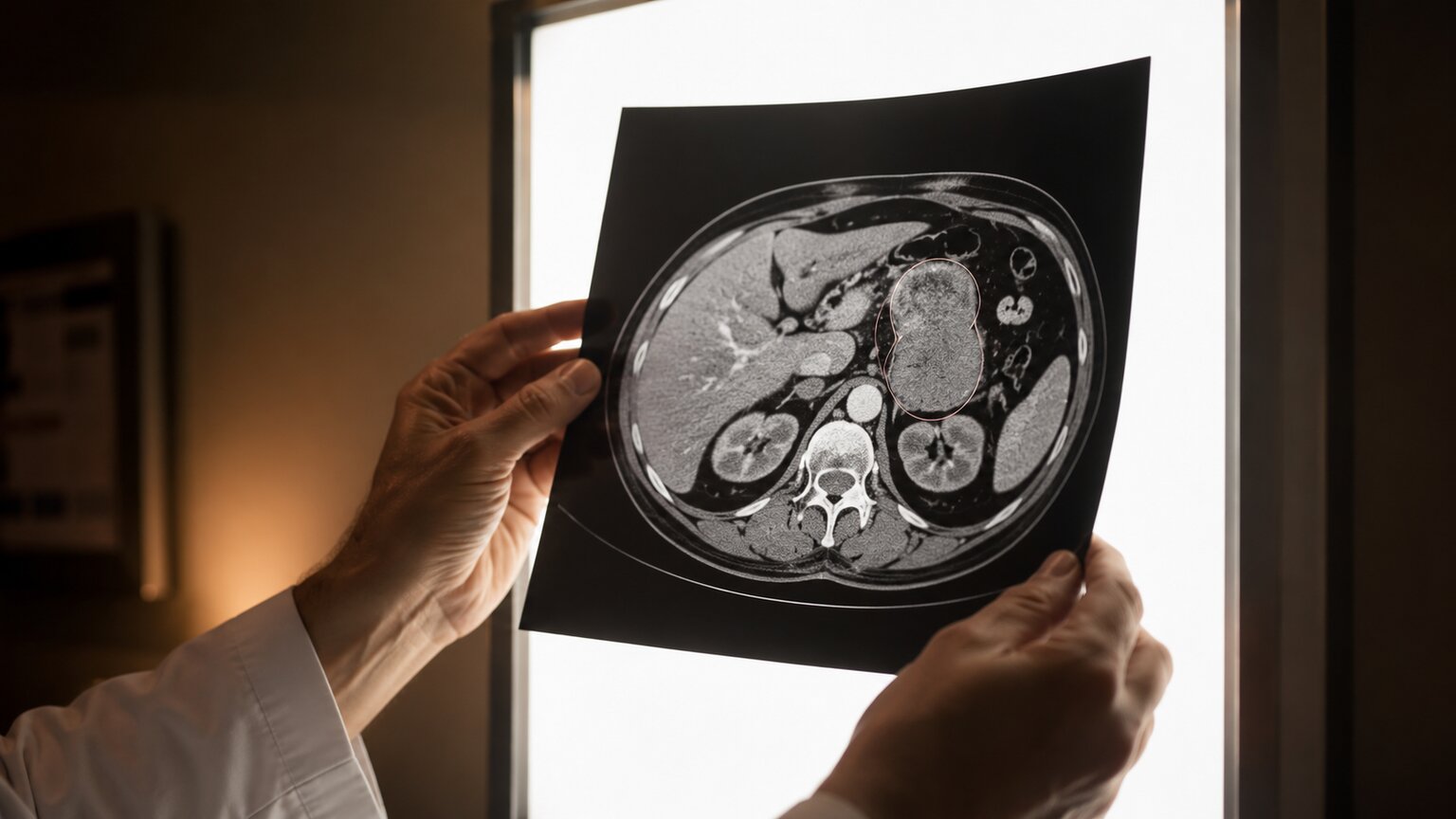
The same research that established the 15 ng/mL threshold found an even firmer line further up the scale: among the 247 confirmed false-positive elevations in that dataset, not a single one climbed above 35 ng/mL. That's a genuinely strong statistical statement — in that specific population, a result above 35 essentially always reflected real disease, not a benign mimic. It's exactly the kind of number that turns a vague sense of "this seems high" into something a care team can act on with real confidence, moving from watchful monitoring into more active investigation.
Why the "High" Cutoff Changes Depending on the Question Being Asked
By this point in the article, a reader paying close attention may have noticed something that looks like an inconsistency: this article cites 15 ng/mL as a meaningful turning point, 2.35 to 2.5 ng/mL as prognostically significant, and 3.66 ng/mL as outperforming tumor stage after surgery. These aren't contradictory findings — they're different cutoffs for genuinely different questions, each one optimized by researchers for the specific clinical decision it's meant to inform. The 15 and 35 ng/mL thresholds come from research asking "how likely is this specific result to be a false positive during cancer surveillance." The 2.35 to 3.66 ng/mL range comes from research asking an entirely different question: "does this value, however modest, predict long-term outcome." A single number can be simultaneously unremarkable by one standard and meaningful by another, simply because the two standards were built to answer different things.
This is genuinely useful to understand rather than memorize as a list of disconnected figures, because it explains why your own doctor might describe the exact same CEA result differently depending on what they're currently trying to determine. A postoperative CEA of 4 ng/mL might be described as "essentially normal" when the conversation is about ruling out an immediate false alarm, and described as "elevated and worth tracking closely" when the conversation shifts to long-term prognosis — both statements can be true about the identical number, read through two different clinical lenses.
Why Even a Mildly High Number Can Matter More Than You'd Expect
Here's a detail that surprises people used to thinking of "mildly elevated" as automatically reassuring: research has found that a preoperative CEA as low as 2.35 to 2.5 ng/mL — barely above some labs' cutoff for normal — already carries independent prognostic weight in colorectal cancer, even after researchers statistically accounted for the tumor's official stage. In other words, unlike some lab values where only a dramatic elevation matters, CEA appears to carry real prognostic information even at levels most people would consider only marginally abnormal. That doesn't mean a mildly elevated CEA is something to panic over — it means this particular marker doesn't have a hard "safe zone" the way some people assume, and doctors genuinely do pay attention to values other tests might wave off as noise.
Curious what your own lab results are really telling you? Upload them and get a complete, plain-language breakdown in under 15 minutes.
Analyze My ResultsWhat Magnitude Says About Tumor Stage and Burden
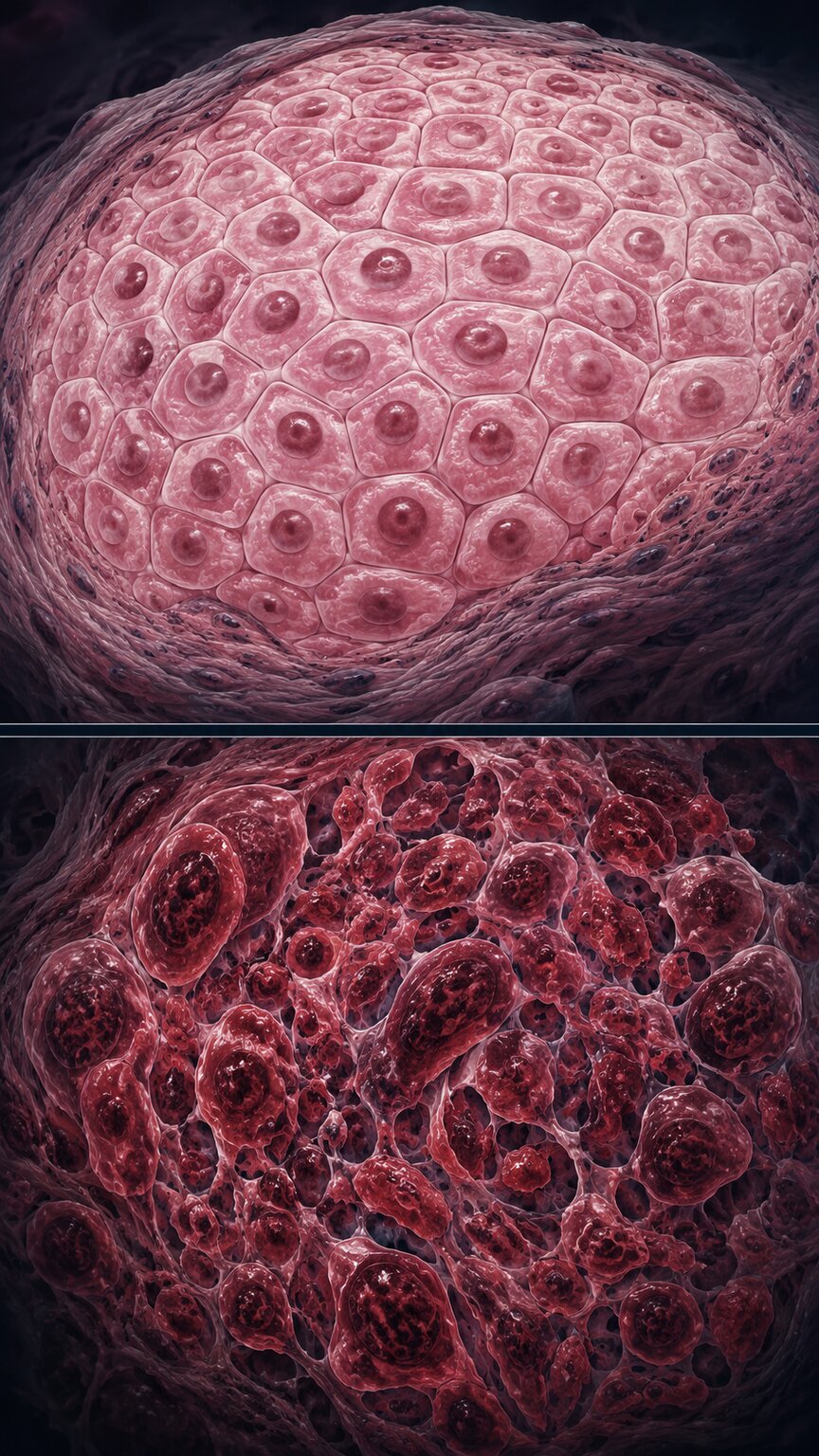
Research tracking large groups of colorectal cancer patients has found that elevated preoperative CEA correlates with a real cluster of higher-risk tumor features: larger tumor size, more advanced AJCC stage, a higher likelihood of liver metastasis, and specific aggressive subtypes including signet ring cell and poorly differentiated tumors. Put simply, on average, higher CEA does track with a bigger, more advanced disease burden — which is exactly the intuitive relationship most people already assume this number has. The important nuance, covered in more depth further down this article, is that this relationship holds up as a population-level trend without being reliable enough in any single patient to substitute for actual imaging and staging.
This tumor-burden relationship is also part of why CEA carries genuine weight as an independent prognostic factor across every stage of colorectal cancer, not just the most advanced ones — research has found elevated CEA associated with worse overall survival even in early-stage disease, with one large analysis calculating roughly a 61% increase in risk associated with elevation, after adjusting for stage. That's a meaningful reason doctors don't treat a "good stage, bad CEA" combination as a contradiction to be dismissed — both pieces of information are considered together.
It's worth being clear about what "independent" means in this context, since the word gets used loosely elsewhere but carries real statistical weight here. When researchers say CEA remained a significant prognostic factor "after adjusting for stage," it means they specifically tested whether CEA's relationship with survival could be fully explained away by stage alone, and found that it couldn't — the marker was still adding real, distinct information about a patient's likely outcome beyond what the stage number alone captured. That's exactly why oncologists treat CEA as a genuine companion to staging rather than a redundant echo of it.
Postoperative CEA: A Number That Can Outweigh the Tumor's Own Stage
One of the more genuinely surprising findings in this entire area of research involves CEA measured shortly after surgery, rather than before it. A study focused specifically on stage II colorectal cancer — a stage generally considered lower-risk, without lymph node involvement — found that an early postoperative CEA above just 3.66 ng/mL outperformed both the tumor's own T-stage and the preoperative CEA value as a predictor of outcome. The difference in outcomes tied to that single postoperative number was dramatic: patients with an elevated postoperative CEA had a 5-year overall survival of 53.62%, compared with 84.16% for patients whose postoperative CEA came back normal. Disease-free survival showed a similarly steep gap, at 50.03% versus 86.75%.
The statistical strength behind that finding is worth naming directly, since it's unusually robust for a single lab value: elevated postoperative CEA carried a hazard ratio of 2.59 for overall survival and 4.505 for disease-free survival, meaning patients with that elevated postoperative result faced roughly four and a half times the risk of recurrence or progression compared with those whose number normalized after surgery. The researchers behind this study went as far as to conclude that this postoperative number was a better prognostic tool than T-stage itself for this specific patient group — a genuinely notable claim, given that staging is usually treated as the primary framework doctors build a prognosis around. It's a clear, concrete example of why the timing of a CEA draw, not just its size, is part of what gives a specific result its meaning.
The 3,000 ng/mL Threshold: When the Number Itself Predicts Survival
At the far end of the scale, research has identified a specific point where the raw magnitude of CEA becomes directly predictive of survival on its own: values above 3,000 ng/mL. One study found the numerical CEA value only became independently predictive of shortened survival once it crossed that threshold — and specifically noted that such extreme values were seen in only a minority of patients studied, about 12%. That combination of facts is worth sitting with for a moment: reaching this level is genuinely uncommon, but for the roughly one in eight patients whose disease produces it, the number itself becomes a meaningful part of the prognostic picture, not just a symptom of disease that's already visible everywhere else.
An Extreme Case: When CEA Climbs Into the Tens of Thousands

A documented case published in the medical literature illustrates just how high this number can climb, and how closely it can track a real clinical course over time. A 69-year-old man was diagnosed with a neuroendocrine carcinoma of the ileum — a rare cancer type where CEA elevation is considered unusual to begin with — after presenting with anemia-related symptoms. His CEA at diagnosis was already markedly elevated at 3,625.4 ng/mL. Over the following two and a half years, that number told the story of his disease with remarkable precision: it climbed to 13,898.1 ng/mL as initial chemotherapy failed, then to 21,410.7 ng/mL as a second round of treatment also lost ground. When his care team switched to a targeted oral therapy called everolimus, his CEA dropped dramatically, all the way down to 3,147.2 ng/mL — a real, measurable response visible in his bloodwork. But the improvement didn't last. His disease eventually progressed again, and his CEA climbed to a final recorded level of 36,643 ng/mL before he passed away.
What makes this case genuinely instructive isn't just the extreme numbers — it's how closely each shift in CEA lined up with what was actually happening to his cancer, treatment by treatment, almost like a running transcript of the disease's response. That's the clearest real-world illustration available of a theme this entire article keeps returning to: magnitude isn't just a snapshot, it's a signal that moves in step with the disease itself, for better or worse, across months and years rather than a single moment in time.
Why Magnitude Doesn't Perfectly Track Tumor Size
It's tempting to assume a bigger tumor always means a bigger number, and on average, as covered above, that relationship does hold. But it isn't reliable enough to trust in any individual case, and the case above hints at exactly why: CEA elevation in that specific cancer type was explicitly described as "unusually expressed," meaning the tumor's underlying biology, not simply its size, determined how much of this marker it actually produced. Some tumors, depending on how differentiated their cells remain and which genes stay active as they grow, shed comparatively little CEA even at a large size, while others shed disproportionately large amounts relative to how much visible disease is actually present. This is part of why doctors have never treated CEA as a stand-in for a tumor's measured size on a scan — the two pieces of information are related on average, but neither one reliably predicts the other in any single patient, which is exactly why both get checked together rather than either one standing in for the other.
This decoupling between size and secretion actually makes CEA more clinically useful in one specific way, not less: it means the marker is capturing something a ruler or a volume measurement on a CT scan genuinely cannot see on its own — a signal closer to how biologically active a tumor's cells are, rather than simply how much physical space they occupy. Two tumors of identical size, staged identically on imaging, can carry meaningfully different outlooks if one is producing far more CEA than the other, which is exactly the kind of complementary information imaging and bloodwork are meant to provide together rather than either one duplicating the other. It's also part of the reasoning behind the postoperative CEA finding covered earlier in this article — a number measured directly from the patient's own biology, after the visible tumor has already been removed, can sometimes say more about what's left behind microscopically than a pathology report describing what was seen under a microscope in the specimen itself.
How Doctors Actually Use the Number in Practice
In real clinical decision-making, the raw magnitude covered throughout this article is almost always read alongside the trend across repeat tests, a topic our companion article on how CEA is used after cancer treatment covers in much greater depth. A single very high number carries real weight, as this article has shown, but a number that's climbing steadily, even from a modest starting point, often tells a care team more than one dramatic isolated reading does. The magnitude bands described above are best understood as context for interpreting that trend — a number climbing from 40 to 60 ng/mL over a few months means something different from one climbing from 4,000 to 6,000 over the same window, even though the percentage increase is identical, simply because of where each trajectory started and where it's likely headed next.
Doctors also weigh magnitude against the specific clinical question in front of them at that moment, rather than treating it as a fixed, standalone verdict. Early in a workup, a very high number might justify moving straight to advanced imaging rather than starting with a more conservative first step. Later, during active treatment, the same kind of number might instead prompt a conversation about whether a current therapy is actually working, exactly as it did in the extreme case described above, where the number tracked treatment response almost like a real-time transcript. And during long-term surveillance after successful treatment, magnitude mostly matters as a baseline against which every future number gets measured, rather than as a value judged in isolation against the general population's reference range.
What a High Number Doesn't Tell You
Magnitude has real, documented limits worth naming plainly. Even within the 5 to 15 ng/mL range where benign causes dominate statistically, a small share of genuine cancers can and do produce numbers that low, particularly in earlier stages before a tumor has grown large enough to shed much of the antigen. On the opposite side, a small percentage of people are genetically unable to produce CEA at all regardless of how much cancer is present, a scenario covered in more detail in our companion article on the mechanisms behind CEA elevation. Neither limitation erases everything this article has covered — it simply means magnitude is one genuinely informative piece of a larger picture, never the entire picture on its own.
Age and overall health add a third, subtler layer worth mentioning as well. Older patients and those with multiple coexisting chronic conditions are statistically more likely to have at least one of the benign contributors covered in our companion articles already present in the background, which can shift a given magnitude reading upward slightly even before any new disease process enters the picture at all. None of this means magnitude is unreliable or not worth paying attention to — it means it's most accurately read by someone who also knows the rest of a patient's health picture, not as an isolated figure judged purely against a generic population-wide reference range.
What to Ask Your Doctor When Your Number Is High

A specific, magnitude-aware question tends to get a more useful answer than a general one. It's worth asking directly which of the bands covered in this article your own result falls into, since the exact cutoffs your care team uses can vary slightly by lab and clinical context. Ask whether your number is being read as an isolated value or as part of an established trend, since a rising pattern across several tests carries more weight than any single reading. If your result is genuinely extreme, it's entirely reasonable to ask what that specific magnitude has been shown to correlate with in research, and what it does and doesn't change about your treatment plan. And if you're early in a diagnosis with a mildly elevated number, it's worth asking directly whether that mild elevation is being factored into your prognosis at all, given how much weight even modest elevations have been shown to carry.
Frequently Asked Questions
What CEA level is considered high enough to worry about?
There's no single cutoff, but research has found elevations above 15 ng/mL are unlikely to reflect anything other than recurrence in people already treated for colorectal cancer, and no confirmed benign elevation was found above 35 ng/mL in one large dataset.
Does a higher CEA always mean a bigger or more advanced tumor?
On average, yes — elevated CEA correlates with larger tumor size, higher stage, and more aggressive subtypes. But it isn't reliable enough in any single patient to substitute for imaging, since a tumor's underlying biology, not just its size, determines how much CEA it produces.
Can even a mildly elevated CEA matter for prognosis?
Yes. Research has found preoperative CEA levels as low as 2.35 to 2.5 ng/mL carry independent prognostic significance in colorectal cancer, even after accounting for the tumor's official stage.
How high can CEA actually get in real cases?
Extremely high. One documented case saw CEA climb to 36,643 ng/mL before a patient's death from neuroendocrine carcinoma, after tracking closely with each stage of treatment response and disease progression over more than two years.
Is there a specific number where CEA itself predicts survival?
Research has identified 3,000 ng/mL as a threshold above which the raw CEA value becomes independently predictive of shortened survival, though this level was reached in only about 12% of patients studied.
Can a low or normal CEA rule out cancer?
No. A meaningful share of genuine cancers, particularly earlier-stage ones, produce little or no CEA elevation, and a small percentage of people are genetically unable to produce this marker at all regardless of disease status.
Why do different sources give different CEA cutoffs?
Because they're answering different clinical questions. A cutoff built to flag likely false positives during surveillance, such as 15 ng/mL, is different from a cutoff built to detect long-term prognostic risk, such as 2.5 ng/mL, even though both describe the same underlying test.
Does CEA measured right after surgery matter more than CEA measured before it?
It can. One study found early postoperative CEA outperformed both preoperative CEA and the tumor's own T-stage as a predictor of long-term outcome in stage II colorectal cancer, with elevated postoperative levels linked to substantially lower 5-year survival.
Conclusion
A CEA result truly isn't one single thing — it's a number that means genuinely different things depending on where it sits along a wide scale, from a mildly elevated value still dominated by benign explanations, to a five-figure result that tracked a real patient's disease almost like a running transcript. Higher numbers do, on average, correlate with more advanced disease and carry real prognostic weight, sometimes even at levels most people would assume were too mild to matter — and, as the postoperative research covered in this article shows, sometimes the timing of the draw matters just as much as the size of the number itself. But magnitude was never meant to stand alone — it's read alongside trend, imaging, timing, and a tumor's own underlying biology, which is exactly why the specific number on your own report deserves a specific, informed conversation with your care team rather than a quick glance and a guess at what it might mean.
Still Not Sure What Your Results Mean?
Upload your labs and get a complete, visual, plain-language interpretation of every biomarker — delivered to your inbox in under 15 minutes.
Get My ReportThis article is for educational purposes only and does not constitute medical advice. Always consult your healthcare provider regarding your specific lab results.