
What Is Considered a Normal CEA Range?
For most non-smoking adults, a "normal" CEA (carcinoembryonic antigen) result is anything below 3.0 nanograms per milliliter (ng/mL), while people who smoke are typically given a higher normal ceiling of about 5.0 ng/mL. Those two numbers are the closest thing this test has to an official cutoff, and if your report shows a value under the reference range printed next to your result, it's genuinely fair to feel some relief. But CEA is one of the more misunderstood numbers in all of lab medicine, because "normal" here does not mean "safe" and "elevated" does not mean "cancer" — it means something much narrower and more specific than most people assume, and understanding exactly what that narrower meaning is will do more for your peace of mind than staring at the number alone ever could.
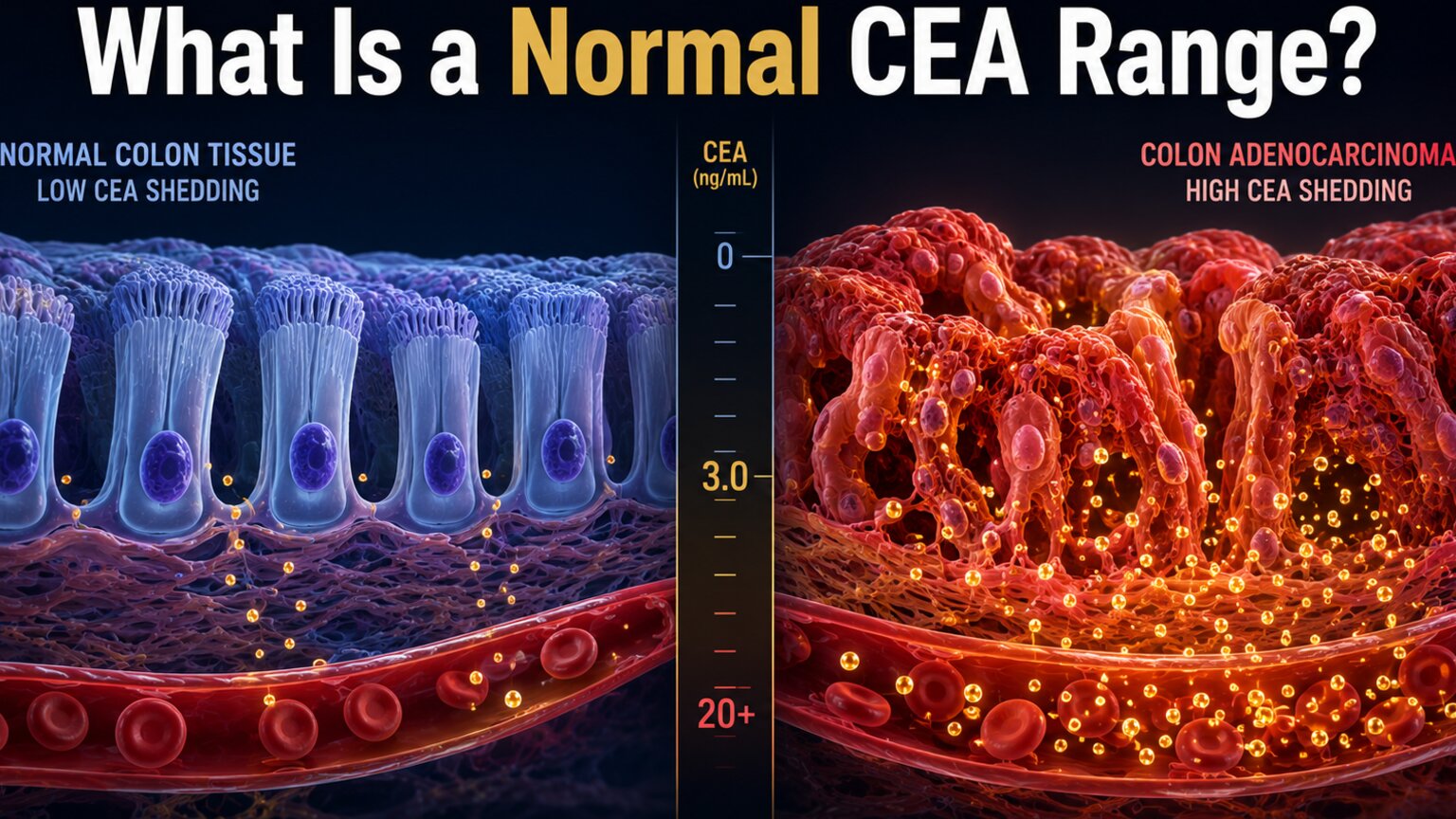
What CEA Actually Is, in Plain Terms
CEA stands for carcinoembryonic antigen, and despite the intimidating name, it's simply a protein that sits on the surface of certain cells lining the inside of your digestive tract, especially the colon, and gets shed in small amounts into your bloodstream as part of totally normal, everyday cell turnover. Think of it like the skin on your body: cells at the surface of your gut lining are constantly wearing off and being replaced, and CEA is one of the surface markers that comes off with them, drifting into the blood in trace quantities. Everyone has some CEA circulating — it isn't a marker that's supposed to read zero. The test measures how much of this protein is floating in a small sample of your blood serum, the clear liquid part of blood left after the cells and clotting factors are removed.
The name itself is a historical leftover. CEA was first discovered in fetal digestive tissue, which is where the "embryonic" comes from, and researchers originally hoped it might be a highly specific cancer signal because it seemed to reappear at high levels in some adult cancers. Decades of further research have made the picture far messier and far more useful in a narrower way: CEA turns out to be produced, at low levels, by healthy mucosal cells throughout adulthood too, and it can rise for dozens of reasons that have nothing to do with malignancy. That's exactly why the "normal range" question has a real, defensible answer, but the deeper question — what does a result inside or outside that range actually tell you — needs more than one number to answer honestly.
Curious what your own lab results are really telling you? Upload them and get a complete, plain-language breakdown in under 15 minutes.
Analyze My ResultsThe Actual Numbers: Reference Ranges by Lab and Smoking Status
There isn't a single universal cutoff etched in stone the way there is for something like body temperature. CEA reference ranges vary slightly from lab to lab depending on the specific testing method (assay) each one uses, but the values below reflect the ranges you'll see on the overwhelming majority of standard lab reports in the United States.
| Population | Typical Normal Range | Notes |
|---|---|---|
| Non-smoking adults | 0 – 3.0 ng/mL | Most common reference ceiling used nationally |
| Current smokers | 0 – 5.0 ng/mL | Smoking alone can push baseline CEA higher |
| Post-treatment surveillance target | Ideally < 2.5 ng/mL | Some oncologists use a tighter target after colorectal cancer treatment |
Two things are worth underlining about this table. First, the smoker range isn't a courtesy adjustment — it reflects a real, repeatedly documented biological effect, which the next section covers in detail. Second, because different labs use different antibody-based assay platforms (the specific chemical method used to detect and quantify the protein), a result of, say, 3.4 ng/mL from one lab and 3.4 ng/mL from another aren't guaranteed to be perfectly interchangeable if you switch labs over time — which is exactly why your own report's printed reference range, not a number you found online, is the one that actually applies to your result.

Figure 1. Chronic smoking raises baseline carcinoembryonic antigen levels independent of any cancer, which is why labs use a higher normal ceiling for smokers.
Why Smoking Moves the Goalposts
Cigarette smoke doesn't touch the colon directly, so it might seem strange that it changes a marker tied to gut-lining cells. The mechanism is actually about the lungs and airway lining, not the colon: chronic exposure to tobacco smoke causes ongoing low-grade irritation and inflammation in the cells lining your airways, and those cells — like the ones in your gut — also produce some baseline CEA as part of normal tissue turnover. Irritated, regenerating tissue tends to produce more of these surface markers than calm, undisturbed tissue, which is why long-term smokers commonly run somewhere in the 3 to 5 ng/mL range even with no disease anywhere in the body. This is well-established enough that most labs simply build it into the reference range rather than treating it as a one-off oddity, and it means a smoker's 4.2 ng/mL result carries very different weight than the same number in a lifelong non-smoker.
This also cuts both directions in practice. Someone who used to smoke heavily but quit years ago will typically see their baseline CEA drift back down toward the non-smoker range over time, though the timeline varies by person. And it's part of why, if you're a smoker being monitored for any reason, it's worth explicitly mentioning your smoking history to whoever is interpreting your result — a number that looks borderline in isolation might be entirely explained by this one well-documented factor.
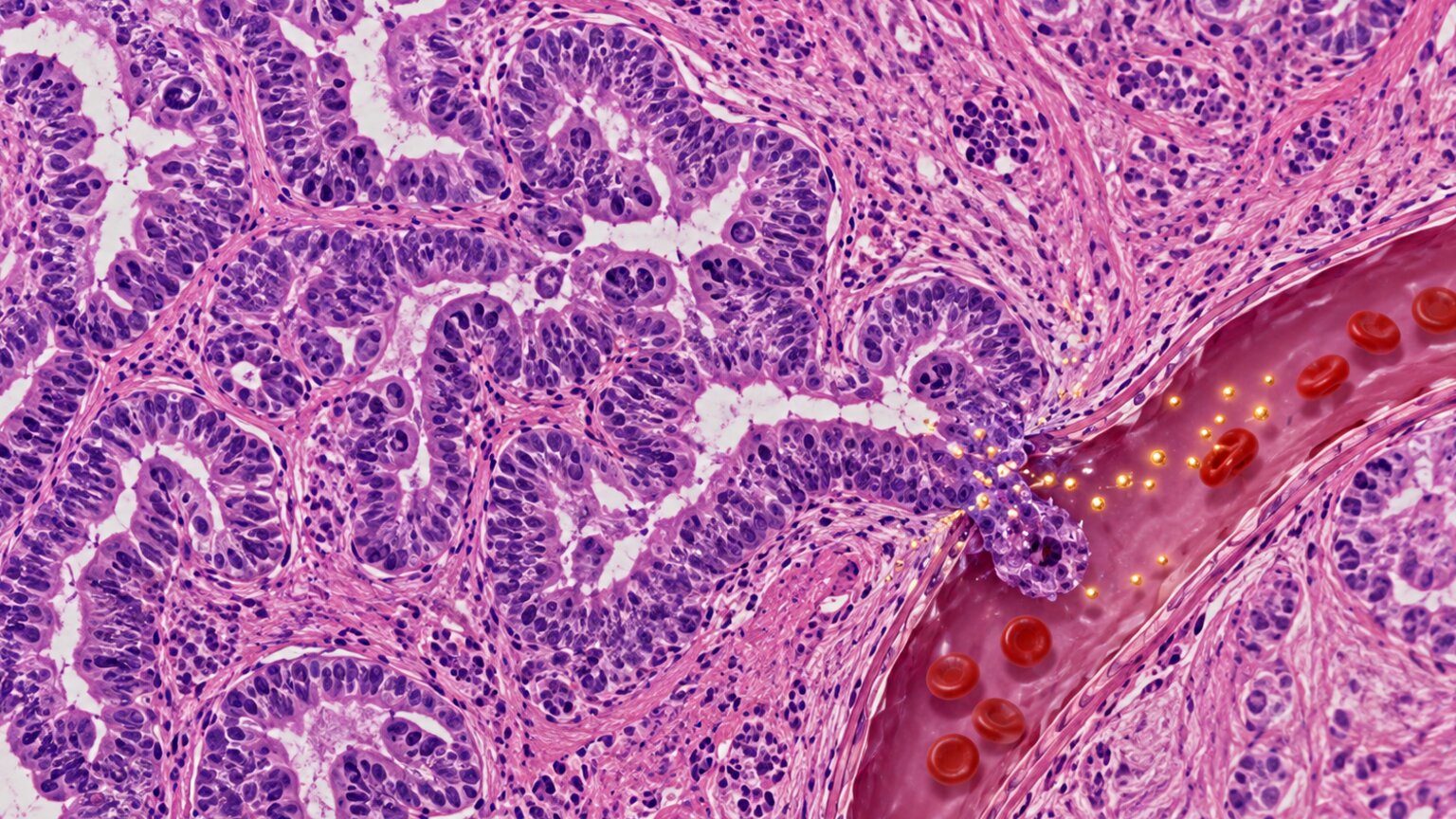
Figure 2. Colorectal adenocarcinoma cells retain the glandular structure that produces CEA, but at a volume and disorganization far beyond healthy tissue turnover.
Why "Above Normal" Doesn't Automatically Mean Cancer
This is the single most important thing to understand about this test: CEA was never designed or approved as a cancer screening tool, and the U.S. Preventive Services Task Force does not recommend it for detecting cancer in people without symptoms or a prior diagnosis. It fails as a screening test for a simple statistical reason — cancer is relatively uncommon in the general population, while dozens of common, mostly harmless conditions can nudge CEA above 3.0 or 5.0 ng/mL. That combination means that if you tested every healthy adult's CEA, far more of the "elevated" results would come from something other than cancer than would come from cancer itself, which is exactly the kind of test that creates unnecessary alarm and unnecessary follow-up procedures if used the wrong way.
Conditions that can raise CEA with no cancer involved include smoking (covered above), inflammatory bowel disease, diverticulitis, peptic ulcers, gallbladder inflammation, pancreatitis, liver disease including cirrhosis, chronic obstructive pulmonary disease, and even some benign lung infections. In many of these cases, the underlying tissue is inflamed or regenerating in a way that mirrors, on a smaller scale, what happens with a tumor — more cell turnover, more shedding of surface markers like CEA, without anything malignant present.
Where CEA Actually Earns Its Keep: Monitoring, Not Diagnosing
CEA's real, well-supported clinical role is almost the opposite of screening — it's most useful in people who already have a confirmed colorectal cancer diagnosis, where it serves two specific jobs. Before treatment, a baseline CEA gives doctors a starting number; tumors that produce a lot of CEA tend to keep producing it in a way that roughly tracks with how much tumor tissue is present, so a very high pre-treatment number can offer some prognostic information. After treatment — surgery, chemotherapy, or both — doctors recheck CEA on a regular schedule specifically to watch the trend over time, because a level that drops toward normal after treatment and then starts climbing again, well before any scan or symptom would reveal a problem, is one of the earliest available warning signs of cancer recurrence. This is a fundamentally different use case from asking "is this one number normal," and it's the context in which CEA has genuinely proven itself valuable in modern oncology.

Figure 3. A chemiluminescent immunoassay platform detects the CEA protein in a blood serum sample, the specific method behind the number printed on your report.
That means the single most useful version of a CEA result usually isn't one isolated number at all — it's a series of numbers plotted over months or years, ideally measured on the same testing platform at the same lab each time for consistency. A gradual, sustained rise across three or four consecutive tests carries far more clinical weight than any single value, elevated or not, measured once. This is also why doctors monitoring someone after cancer treatment aren't alarmed by small fluctuations — a bump from 1.8 to 2.4 ng/mL and back down is well within normal test-to-test variability (sometimes called biological or analytical variation) and doesn't represent a meaningful trend on its own.
What a Result Just Slightly Over the Line Usually Means
A CEA of 3.4 or 4.1 ng/mL in a non-smoker, sitting just barely above the 3.0 cutoff, is one of the most common and most over-interpreted results in this entire category. Reference ranges are statistical constructs, typically built so that about 95% of a healthy reference population falls inside them — which, by definition, means roughly 1 in 20 completely healthy people will land just outside the range purely by chance, with nothing wrong at all. A mildly elevated result like this, especially with no symptoms and no cancer history, is far more likely to reflect this statistical reality, a minor and temporary irritation somewhere in the digestive tract, or lab-to-lab variability than it is to signal disease. The standard, sensible next step in this situation is usually simply to repeat the test in a few weeks to a couple of months, rather than immediately pursuing invasive imaging or procedures — if the number settles back down or stays flat, that's reassuring; if it keeps climbing across repeat tests, that trend is what actually prompts further investigation.
Already have a CEA number from a recent test but not sure what your own lab's reference range means for you? Upload your full results and get a complete, plain-language breakdown in under 15 minutes.
Analyze My ResultsWhat a Significantly High Result Usually Prompts
Results well above the normal range — think double digits, or numbers in the tens to hundreds of ng/mL — carry more weight, though even here, context still matters enormously. A markedly high CEA in someone with no cancer history typically prompts a more thorough workup: a careful review of smoking history, a check of liver and kidney function (since both organs help clear CEA from the blood, and impaired clearance alone can raise the number), and consideration of colonoscopy or imaging if there are any accompanying symptoms like unexplained weight loss, changes in bowel habits, or persistent abdominal pain. In someone already diagnosed with colorectal cancer, a high or rising CEA after treatment usually prompts imaging — CT scans are common — specifically aimed at finding where a recurrence might be located, since CEA itself can't say which organ or region is involved, only that something is producing more of the protein than expected.
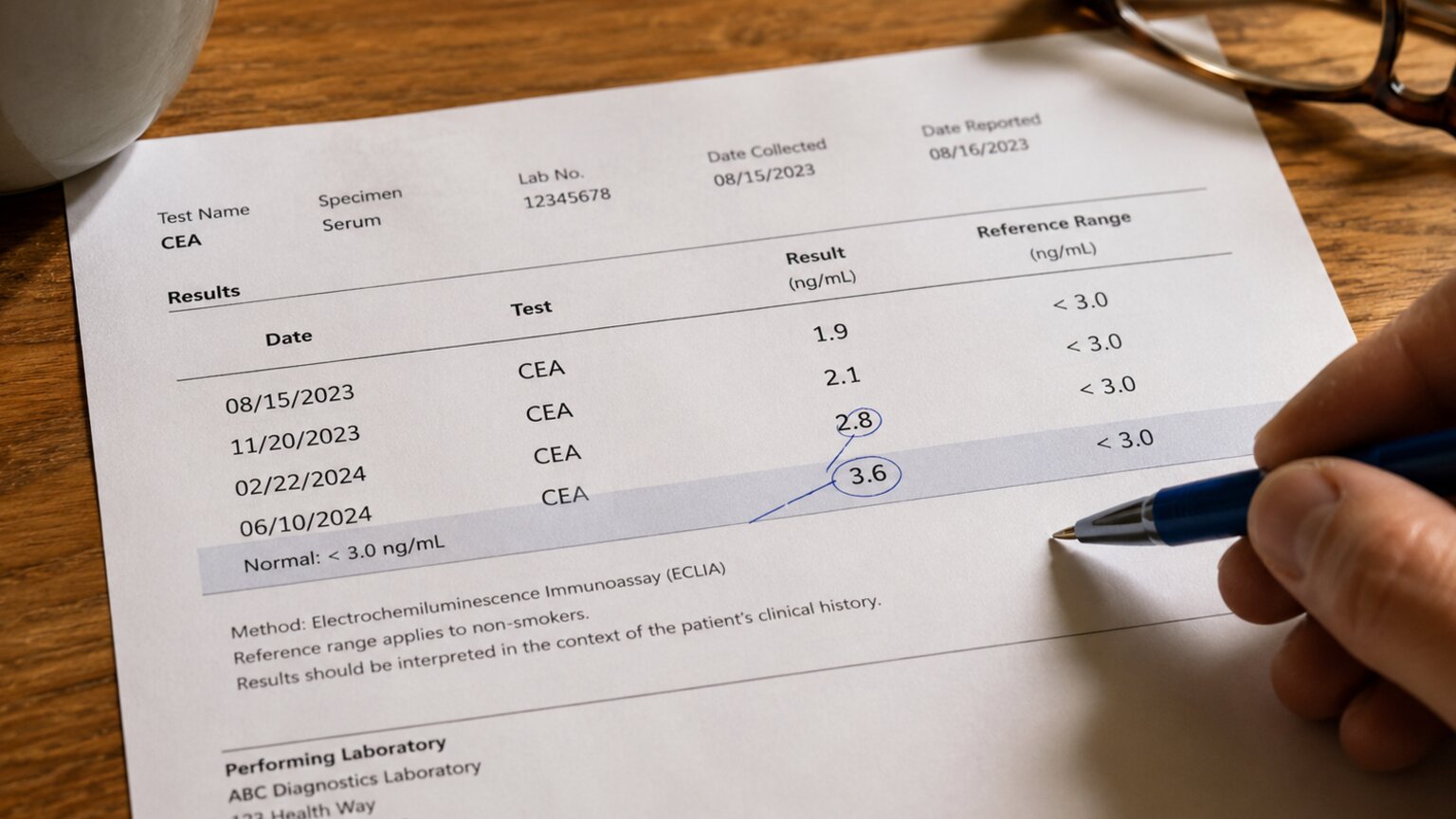
Figure 4. Because a single CEA value is easily thrown off by temporary factors, the trend across several consecutive tests over time is what carries the most diagnostic weight.
Frequently Asked Questions
Is a CEA of 3.2 ng/mL in a non-smoker something to worry about?
On its own, generally not. It's only slightly above the common 3.0 ng/mL cutoff, and reference ranges are built so a small fraction of healthy people naturally fall just outside them. The typical next step is a repeat test in a few weeks rather than immediate concern.
Why do smokers get a higher normal range for CEA?
Chronic exposure to tobacco smoke irritates the cells lining the airways, and those irritated, regenerating cells shed more CEA into the bloodstream as part of normal turnover — with no cancer involved. This well-documented effect is why labs use roughly 5.0 ng/mL, instead of 3.0 ng/mL, as the smoker cutoff.
Can CEA be used to screen for cancer if I have no symptoms?
No. Major medical guidelines do not recommend CEA as a screening test for people without a cancer diagnosis or symptoms, because too many common, benign conditions can raise it, making it unreliable for detecting cancer in the general population. Its proven value is in monitoring people who already have a confirmed diagnosis.
My CEA has been slowly rising over several tests even though each result is still "in range." Does that matter?
Potentially, yes, particularly if you have a history of colorectal cancer. A gradual, sustained upward trend across several consecutive tests can be clinically meaningful even before it crosses the reference line, which is exactly why doctors monitoring cancer survivors track the pattern over time rather than judging any single result in isolation.
Conclusion
The normal range itself is straightforward — under 3.0 ng/mL for non-smokers, under 5.0 ng/mL for smokers, on most standard lab platforms. What takes more explaining is that CEA was never built to answer the question "do I have cancer," and treating it that way is where most of the unnecessary worry around this test comes from. It's a marker of ordinary tissue turnover that can rise for dozens of benign reasons, and its real, well-earned clinical value shows up almost entirely in monitoring people who already have a diagnosis, where a trend across repeated tests says far more than any single number ever could. If your result sits outside the printed reference range on your own report, the most useful next move is a conversation with your doctor about your specific history and, often, a simple repeat test — not a search for the worst-case explanation of one number in isolation.
Still Not Sure What Your Results Mean?
Upload your labs and get a complete, visual, plain-language interpretation of every biomarker — delivered to your inbox in under 15 minutes.
Get My ReportThis article is for educational purposes only and does not constitute medical advice. Always consult your healthcare provider regarding your specific lab results.