
Why Did My Doctor Order a PSA Test?
A PSA order can mean several genuinely different things depending entirely on the context surrounding it, and it isn't automatically a cancer screening test in the way many people assume. PSA is ordered for at least four distinct clinical reasons: routine, individualized screening after a specific age or based on personal risk factors; investigating urinary symptoms that could stem from several different prostate conditions, not just cancer; monitoring an already-known condition like an enlarged prostate or prostatitis over time; and tracking someone's status for years after prostate cancer treatment, where the goal and the numbers that matter look completely different from screening. This article walks through each of these reasons in turn, in enough real clinical detail to explain why the same blood test can mean such different things in different situations, explains why PSA screening specifically became a personal, shared decision rather than an automatic annual test the way it once was, and covers the age and risk-factor guidelines that actually determine when and how often it gets ordered in practice.

Figure 1. PSA circulates in blood in two forms — free, unbound molecules and complexed molecules attached to a protein inhibitor — and the ratio between them is one of the details a clinician weighs when deciding whether an elevated result warrants further testing.
What PSA Actually Measures — A Protein That's Supposed to Stay Out of Your Blood
Prostate-specific antigen is a protein manufactured almost exclusively by cells in the prostate gland, and under normal circumstances, its job has nothing to do with the bloodstream at all — it's secreted into semen, where it helps liquefy it after ejaculation. The prostate's normal glandular architecture keeps PSA largely contained within that duct system, with only a small, steady, and predictable amount making its way into general circulation, which is why healthy men still have a measurable, low baseline PSA level in their blood.
This is also why PSA is a genuinely unusual biomarker compared to most others discussed elsewhere on this site: it isn't tied to a disease process by definition, and it isn't inherently dangerous or abnormal at any level a healthy prostate would normally produce. It's simply a tissue-specific marker — a protein that happens to be made almost nowhere else in the body in any meaningful quantity, which is exactly what makes it useful for tracking prostate-related changes in the first place, and exactly why women, who don't have a prostate gland, don't have this test as part of their routine bloodwork at all. That tissue specificity is PSA's real strength; its lack of disease specificity, meaning it can't distinguish cancer from enlargement from inflammation on its own, is its real limitation, and understanding both halves of that tradeoff is what makes the rest of this article make sense.
Anything that disrupts the normal architecture of the prostate — cancer cells growing in a disorganized pattern that breaks down the normal duct barriers, benign enlargement that stretches and distorts glandular tissue, or inflammation that makes tissue more permeable — allows more PSA than usual to leak into nearby blood vessels, which is exactly what a blood test picks up as an elevated result. This single fact explains almost everything confusing about PSA as a test: it's genuinely sensitive to disruption in the prostate, but it has no way of distinguishing what kind of disruption is actually happening, which is precisely why the reason a doctor orders it in the first place — screening, symptom workup, monitoring, or post-treatment surveillance — shapes what the resulting number actually needs to be compared against.
This lack of specificity is also why PSA doesn't circulate in the blood entirely on its own. Once it escapes into the bloodstream, most PSA quickly binds to certain blood proteins, forming what's called complexed PSA, while a smaller fraction remains unbound, referred to as free PSA. This distinction turns out to be clinically useful in its own right: research has found that cancer tends to produce a higher proportion of the bound, complexed form relative to free PSA, while benign prostate enlargement tends to produce relatively more free PSA. Comparing the ratio of free to total PSA is a separate, more specialized test some men have done specifically to help refine risk when a total PSA result alone sits in an ambiguous range — a good early example of how understanding PSA's actual biology, rather than treating it as a single undifferentiated number, opens up more nuanced ways of interpreting it.
Routine Screening — Why This Became a Personal Decision Rather Than an Automatic Test
For much of the 1990s and 2000s, PSA screening was recommended broadly and applied close to automatically in routine care for men past a certain age, driven by genuine early enthusiasm that catching prostate cancer earlier would reliably save lives. Over the following two decades, however, large, well-designed studies revealed a genuinely complicated picture: PSA screening does catch some prostate cancers earlier, but it also detects a substantial number of slow-growing cancers that would likely never have caused symptoms or shortened a man's life if left entirely undetected — a phenomenon called overdiagnosis. Because a cancer diagnosis often leads to treatment, and prostate cancer treatments carry real risks of side effects including urinary incontinence and erectile dysfunction, this meant a meaningful number of men were experiencing significant treatment-related harm for cancers that, statistically, might never have needed treatment at all.

Figure 2. A documented family history of prostate cancer is one of the specific factors that can shift PSA screening recommendations to start earlier than the general guideline.
This is exactly why major medical organizations shifted their guidance away from automatic, universal screening and toward what's called shared decision-making: a conversation between a patient and their provider that weighs the real, individual benefits and harms of screening based on that specific person's age, health status, life expectancy, and personal values around the tradeoffs involved, rather than applying one blanket recommendation to everyone. Current general guidance suggests this conversation should typically start around age 55 to 69 for average-risk men, with screening generally not recommended past age 70 for most men given the longer timeline prostate cancer typically takes to become dangerous relative to remaining life expectancy — though this, too, is individualized based on a specific person's overall health and life expectancy rather than applied as a rigid cutoff.
The specific pendulum swing in guidance over the past two decades is worth understanding in a bit more detail, since it explains why some men recall being screened automatically every year in the past while younger men today are more likely to encounter an actual conversation about whether to screen at all. In 2012, following the accumulation of trial data showing the overdiagnosis problem in stark terms, a major U.S. guidelines body recommended against routine PSA screening for essentially all men, a recommendation that led to a real, measurable drop in screening rates nationally. That recommendation itself proved controversial, since some data suggested it may have coincided with an increase in men presenting with more advanced prostate cancer at diagnosis, prompting the same body to revise its position again in 2018 toward the individualized, shared-decision-making approach that remains the standard today. This back-and-forth wasn't indecisiveness so much as evidence accumulating and being reweighed in real time — a genuinely instructive example of how cancer screening guidelines evolve as longer-term outcome data becomes available, rather than being fixed once and never revisited.
It's also worth understanding what actually happens after a screening PSA comes back elevated, since screening itself is only the first step in a longer pathway, not a diagnosis on its own. An elevated screening PSA typically leads to a conversation about repeat testing, additional blood-based risk assessment tools, and, depending on the overall picture, either an MRI of the prostate or a referral for a biopsy — each of these additional steps carrying its own smaller set of risks and benefits that factor into the same shared decision-making framework used to decide whether to screen in the first place. Understanding that an elevated PSA is a prompt for further evaluation, not a diagnosis, is part of what makes the initial screening decision less fraught than it might otherwise feel, since an unexpected result doesn't automatically mean invasive treatment is coming — it means a further, similarly individualized conversation about next steps.
Prostate MRI in particular has meaningfully changed this follow-up pathway in recent years, offering a genuinely useful additional step between an elevated screening PSA and a decision about biopsy. A specific imaging technique called multiparametric MRI can often identify whether a suspicious area within the prostate is actually present and, if so, roughly how concerning it looks, which helps some men with a mildly elevated PSA avoid an unnecessary biopsy altogether when imaging looks reassuringly normal, while helping guide the biopsy needle more precisely toward the specific area of concern for men who do need one. This additional imaging step is part of a broader trend in prostate cancer screening toward reducing the harms of overdiagnosis and unnecessary procedures without giving up the genuine benefits of catching aggressive cancers early — exactly the kind of incremental improvement that continues to reshape how thoughtfully PSA screening gets applied in practice.
Risk Factors That Push the Screening Conversation Earlier
For men with specific risk factors, this shared-decision conversation is generally recommended to start earlier than the average-risk timeline, since these factors meaningfully change the underlying probability of developing clinically significant prostate cancer. A first-degree relative — a father or brother — diagnosed with prostate cancer, particularly at a younger age, roughly doubles an individual's own lifetime risk, and having multiple affected relatives raises that risk further still, which is why documented family history is one of the first things asked about when this conversation comes up.
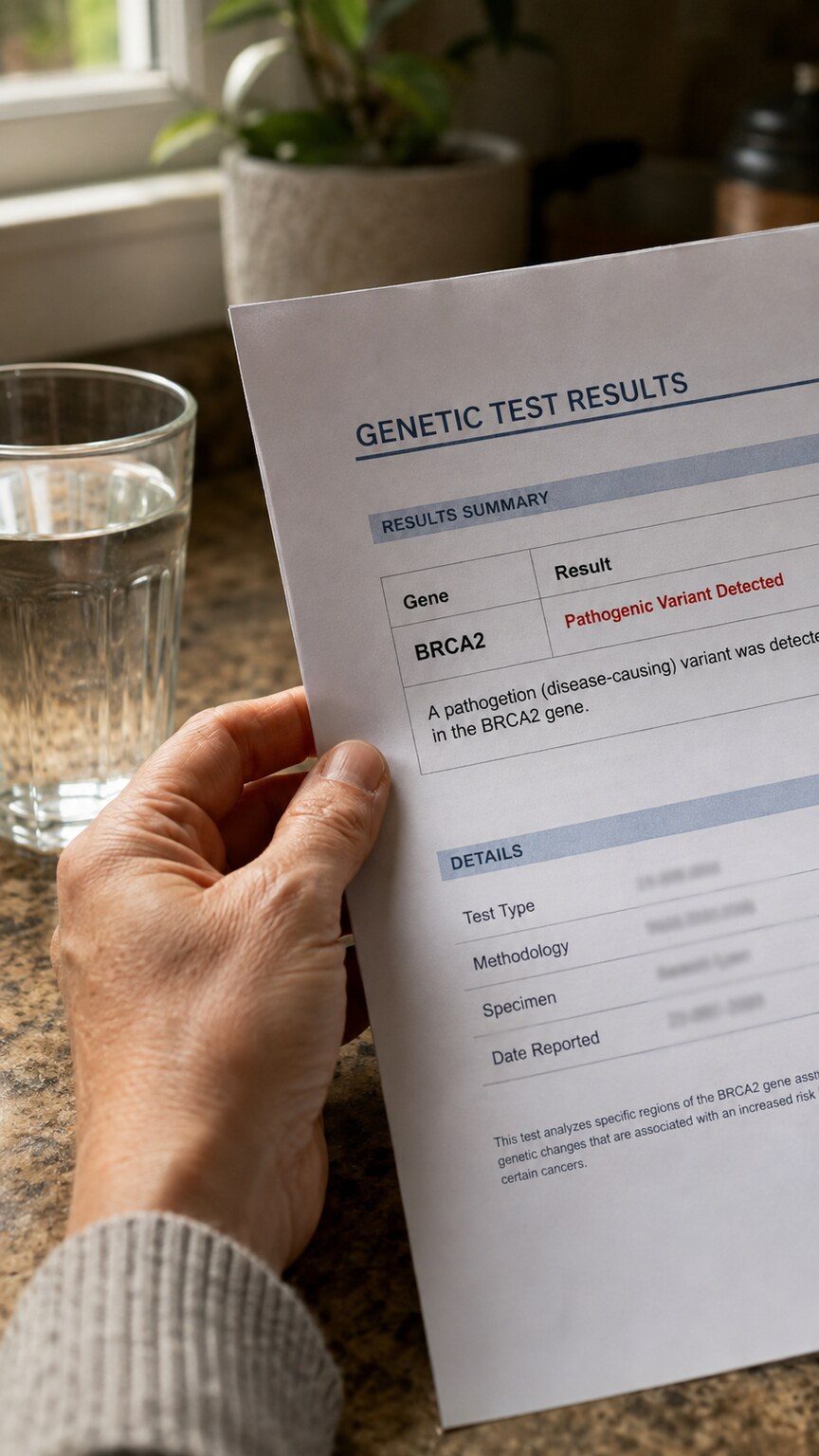
Figure 3. Inherited genetic mutations, including BRCA1 and BRCA2, are associated with a meaningfully higher risk of aggressive prostate cancer and can prompt genetic counseling alongside earlier PSA screening.
Specific inherited genetic mutations carry their own independent weight in this conversation. Mutations in BRCA1 and BRCA2 — more widely known for their association with breast and ovarian cancer — also meaningfully raise the risk of prostate cancer, and BRCA2 mutations specifically are associated with a higher likelihood of more aggressive disease, which is part of why men with a known family history of these mutations, or a strong family history of breast, ovarian, or prostate cancer suggestive of a hereditary pattern, are often referred for genetic counseling alongside a conversation about earlier PSA screening. Race and ethnicity also factor into individual risk assessment, since population-level data has consistently shown a higher incidence of prostate cancer, including more aggressive forms diagnosed at a younger age, in some populations compared to others — a pattern current guidelines take into account when discussing an appropriate age to begin the screening conversation for any individual patient.
When one or more of these risk factors are present, the general recommendation shifts the starting point for the screening conversation earlier than the average-risk timeline — commonly discussed around age 40 to 45 rather than the mid-50s starting point used for average-risk men, sometimes even earlier for men with a known BRCA2 mutation and a family history of aggressive disease. This earlier starting point doesn't mean screening automatically begins at that age; it means the shared decision-making conversation itself starts earlier, giving a higher-risk individual and their provider more time to think through the tradeoffs and settle on an approach that fits their specific situation, rather than waiting until the same age recommended for someone with no elevated risk at all. A detailed family history — not just whether a relative had prostate cancer, but at what age they were diagnosed and how aggressive it turned out to be — is genuinely one of the more useful, low-cost pieces of information a patient can bring into this conversation, since it directly shapes how that starting point gets calculated for any individual person.
A baseline PSA obtained in a man's 40s, even before any formal screening program has begun in earnest, has also drawn research interest as a potentially useful risk-stratification tool in its own right. Some research has suggested that a man's PSA level at this relatively young age may help predict his longer-term future risk of developing clinically significant prostate cancer decades later, potentially allowing lower-risk men to safely space out future screening intervals more widely while focusing closer attention on those whose early baseline already looks less reassuring. This remains a more specialized, still-evolving application compared to the core screening framework described throughout this article, but it illustrates the same underlying principle running through the entire topic: even a single number gains most of its real value from the surrounding context it's measured against, not from being read in isolation.
Already have a PSA number from a recent test, but not sure if it's actually good or bad for you? Just plug it in and see instantly.
🧮 Try the Free CalculatorWhen PSA Is Ordered Because of Symptoms, Not Screening
A meaningful share of PSA tests are ordered not as part of any screening conversation at all, but in direct response to symptoms a patient is already experiencing — a fundamentally different clinical situation with different implications. Urinary symptoms like a weakened stream, difficulty starting urination, a sense of incomplete emptying, increased frequency, or waking multiple times overnight to urinate can stem from several different prostate conditions, and PSA is typically one of several tests ordered together to help sort out which is actually responsible.

Figure 4. Waking repeatedly overnight to urinate, along with a weakened stream or difficulty starting, is one of the urinary symptom patterns that prompts a symptom-driven PSA order rather than routine screening.
In this context, PSA is being used less as a cancer screening tool in isolation and more as one piece of a broader diagnostic picture that typically also includes a physical exam of the prostate and a detailed discussion of exactly how the symptoms developed and progressed. A markedly elevated PSA in someone with these symptoms carries different weight than the same result in someone with no symptoms at all, since the underlying probability of the result reflecting something clinically significant is shaped by that entire surrounding picture, not the number in isolation. This distinction — symptom-driven testing versus screening in someone who feels completely well — is one of the more important pieces of context for understanding why a PSA order happened in the first place, since the two situations lead down genuinely different diagnostic paths from that point forward.
The specific pattern and timeline of urinary symptoms often does considerable work in narrowing down the likely explanation even before any test results come back. Symptoms that have developed gradually over years, tend to fluctuate somewhat, and improve with certain medications are far more typical of straightforward BPH, the benign enlargement discussed in the next section. Symptoms accompanied by pain, burning during urination, or fever point more toward an infectious or inflammatory cause like prostatitis. Symptoms that develop and progress unusually quickly, or that come alongside other findings like unexplained weight loss, bone pain, or blood in the urine, are taken more seriously as potentially reflecting a more significant underlying process, prompting a more urgent and thorough workup than the standard, unhurried pace typical of routine BPH management. None of this means PSA becomes unnecessary in any of these scenarios — it remains one useful piece of the puzzle throughout — but the symptom pattern itself meaningfully shapes how quickly and how extensively that puzzle gets worked through.
A digital rectal exam is generally performed alongside a symptom-driven PSA test as well, since a physical exam can directly detect certain physical characteristics of the prostate — its size, texture, and whether any firm or irregular areas are present — that a blood test alone simply can't provide. The two pieces of information complement each other in a genuinely useful way: a prostate that feels smooth and uniformly enlarged on exam, paired with a PSA elevation that's proportional to that size, supports a benign explanation, while a firm, irregular area on exam paired with an elevated PSA raises more specific concern regardless of how the number alone might have looked in isolation. This combination of a physical exam and a blood test working together, rather than either one being relied upon exclusively, is a good example of how symptom-driven prostate evaluation differs meaningfully from a pure screening blood draw in someone with no symptoms at all.
Monitoring an Enlarged Prostate or Prostatitis Rather Than Screening for Cancer
Benign prostatic hyperplasia, or BPH, a common, non-cancerous enlargement of the prostate that becomes increasingly frequent with age, is itself capable of raising PSA simply through the mechanical stretching and distortion of glandular tissue described earlier, entirely independent of any cancer being present. Someone already diagnosed with BPH may have PSA checked periodically not to screen for a new cancer, but specifically to track how their known condition is behaving over time — a PSA that stays relatively stable is reassuring in this context, while one that rises more quickly than expected for straightforward BPH can prompt a closer look at whether something else might be contributing.
Prostatitis, inflammation of the prostate gland most often caused by a bacterial infection, though sometimes without any identifiable infectious cause at all, can produce dramatic, sometimes very high PSA elevations during an active flare, since inflamed tissue is especially permeable to protein leakage into the bloodstream. This is precisely why PSA testing is generally deferred, or interpreted with significant caution, during or shortly after an active prostatitis episode or even after a recent prostate exam or certain other procedures — the resulting number can be dramatically elevated for reasons that have nothing to do with cancer and everything to do with active, resolving inflammation, and repeating the test after adequate time has passed is standard practice specifically to avoid mistaking this temporary elevation for something more concerning.
BPH management itself illustrates how differently PSA gets used once a benign cause is already established, compared to how it's used during an initial screening decision. Rather than asking "does this number suggest cancer might be present," the question becomes "is this pattern consistent with what we'd expect from BPH alone, or has something changed." Because prostate size and PSA level tend to correlate fairly predictably in straightforward BPH, some clinicians use PSA as a rough proxy for prostate volume when deciding between different BPH treatment approaches, including which medications are likely to be most effective for a given prostate size. This is a genuinely different, more practical application of the same test — using it to guide treatment of an already-diagnosed benign condition rather than to investigate whether cancer might be present in the first place — and it's part of why someone with long-standing, well-managed BPH might have PSA checked regularly for reasons that have very little to do with cancer screening at all.
It's worth noting that BPH and prostate cancer aren't mutually exclusive, and having one doesn't rule out the other — a genuinely important nuance for anyone with an existing BPH diagnosis wondering whether an elevated PSA can simply be attributed to their known condition without further thought. Because both conditions become more common with age and can, in principle, occur together in the same prostate, an unexpectedly sharp rise in PSA in someone with previously stable, well-explained BPH is still evaluated on its own merits rather than being automatically dismissed as "just the BPH," which is exactly why the trend and rate of change in PSA over time, not simply the presence of a known benign explanation, continues to matter throughout ongoing BPH management.
Post-Treatment Monitoring — Why PSA Is Ordered for Years After Prostate Cancer Treatment
For someone who has already been treated for prostate cancer, PSA testing takes on an entirely different purpose and an entirely different set of expectations than screening ever had. Following a radical prostatectomy — complete surgical removal of the prostate gland — essentially all of the tissue capable of producing PSA has been removed, meaning the expected result on any future test is undetectable, at or near zero. A PSA that becomes detectable again after surgery, even at a level that would look unremarkably low or normal on a standard screening scale, is considered a meaningful finding in this specific context, since there should be essentially no PSA-producing tissue left to explain it.

Figure 5. After prostate cancer treatment, PSA is drawn on a regular follow-up schedule for years, tracking a completely different expected pattern than screening ever did.
For men treated with radiation therapy instead of surgery, some healthy prostate tissue typically remains, so PSA doesn't drop to zero the same way — instead, clinicians watch for the level to fall to its lowest point, called the nadir, and then track it for any subsequent, sustained rise above that nadir, using a specific, well-defined threshold (commonly a rise of 2 ng/mL above the nadir) to define what's considered a meaningful recurrence signal after radiation specifically, a genuinely different standard than the "any detectable level" threshold used after surgery. In both scenarios, PSA testing typically continues on a regular schedule for years following treatment, since prostate cancer recurrence, when it happens, is generally detected through this kind of PSA trend monitoring well before it would produce any symptoms or show up on imaging, making this ongoing surveillance one of the more genuinely high-value, well-established uses of the test across its entire range of applications.
The typical monitoring schedule itself generally follows a pattern of gradually lengthening intervals as more time passes without any concerning change — commonly every three to six months for the first several years after treatment, since recurrence risk is highest during this window, tapering to annual testing after five years or so of consistently reassuring results for many men. This isn't an arbitrary schedule; it reflects the well-documented pattern of when prostate cancer recurrence, if it's going to happen at all, is statistically most likely to show up, front-loading the closer monitoring during the years it matters most and easing off once a sustained period of stability has meaningfully lowered the ongoing risk. For men whose PSA does rise during this surveillance period, the specific pattern of that rise — how quickly it's climbing, called PSA doubling time — becomes its own important piece of information, since a slowly rising PSA generally points toward a different level of urgency and a different set of next steps than one climbing rapidly over a short period.
This same post-treatment monitoring framework also applies, with its own adaptations, to men managing their prostate cancer through active surveillance rather than immediate treatment — a deliberate strategy, appropriate for certain low-risk cancers, of closely watching the disease with regular PSA testing, periodic imaging, and repeat biopsies rather than treating it right away. In this scenario, PSA serves a genuinely different purpose than either screening or post-treatment surveillance: it's one of several tools used to confirm that a known, already-diagnosed low-risk cancer is continuing to behave the way low-risk cancers typically do, staying slow-growing and stable, rather than looking for cancer's presence in the first place. A rising PSA during active surveillance doesn't necessarily mean treatment becomes mandatory, but it does typically prompt a closer look through additional imaging or biopsy to confirm the cancer hasn't become more aggressive than initially assessed.
Why the Decision to Screen Is Personal — Weighing Overdiagnosis Against Early Detection
Returning to the original screening question with the full context now in view, the shared decision-making conversation that shapes whether and when an average-risk man gets his first PSA test genuinely comes down to weighing two real, competing considerations against each other. Early detection through screening can catch aggressive, genuinely dangerous prostate cancers at a stage when treatment is far more likely to be curative, which is a real and meaningful benefit, particularly for men with higher-risk factors. At the same time, screening also reliably detects slower-growing cancers that may never have caused a problem, and the resulting biopsies, treatments, and their associated side effects carry real costs and real risks of their own, which is the overdiagnosis and overtreatment concern that reshaped screening guidelines over the past two decades.

Figure 6. Modern PSA screening guidelines call for an individualized conversation weighing personal risk factors and values, rather than an automatic test applied uniformly to every man past a certain age.
This is exactly why two men of the same age, with the same general health, can reasonably arrive at different decisions about whether to start PSA screening at all, and why the conversation genuinely does belong to the individual patient rather than following one fixed rule for everyone. Understanding your own personal risk factors — family history, genetic background, race and ethnicity, and overall health and life expectancy — alongside an honest sense of how you'd personally want to handle an ambiguous result if one came back, is what makes this decision a genuinely informed one rather than either an automatic yes or an automatic no.
A genuinely useful way to prepare for this conversation, rather than walking into it cold, is to think through a few questions in advance: How would you personally feel about undergoing a biopsy for an elevated result that later turns out not to reflect cancer at all, given that biopsies themselves carry a small risk of complications? If a slow-growing, low-risk cancer were found, would you be comfortable with active surveillance — closely monitoring it rather than immediately pursuing treatment — or would the diagnosis itself feel intolerable to simply watch? These aren't questions with objectively correct answers; they're genuinely personal values that a good shared decision-making conversation is specifically designed to surface and work through, which is part of why this decision resists being reduced to a simple checklist or a single universal recommendation applied the same way to everyone.
Frequently Asked Questions
Is a PSA test always about checking for prostate cancer?
Not always. While cancer screening is one common reason, PSA is also ordered to investigate urinary symptoms, monitor known conditions like an enlarged prostate or prostatitis, and track status for years after prostate cancer treatment — each with a different expected result and a different way the number should be interpreted.
At what age should PSA screening typically start?
For average-risk men, the shared decision-making conversation typically begins around age 55, though this varies by guideline and individual health status. Men with specific risk factors, including a strong family history or certain genetic mutations, are often advised to start this conversation earlier, sometimes in their 40s.
Can a recent infection or procedure affect a PSA result ordered for an unrelated reason?
Yes. Prostatitis, a recent prostate exam, certain procedures, and even recent ejaculation can temporarily raise PSA independent of cancer. This is why testing is often deferred or repeated after enough time has passed if a recent event like this could plausibly explain an unexpected result.
Why does PSA testing continue for years after prostate cancer treatment if the cancer was already removed or treated?
Because PSA is one of the most sensitive, earliest available signals of recurrence, often detecting it well before symptoms appear or imaging would show anything. Regular monitoring lets clinicians catch a potential recurrence at the earliest possible point, when treatment options are typically most effective.
Does taking certain medications affect PSA results?
Yes, certain medications used to treat BPH, particularly a class called 5-alpha reductase inhibitors, can lower PSA by roughly half over time, meaning a result needs to be interpreted with that medication use factored in. It's important to mention any medications like this to whoever is ordering or interpreting a PSA test.
If I decide not to be screened now, can I change my mind later?
Yes, absolutely. Shared decision-making isn't a one-time, permanent choice — it's meant to be revisited as circumstances change, including new family history information, changes in overall health, or simply a change in how you feel about the tradeoffs involved. Bringing it up again at a future visit is always a reasonable option.
Conclusion
A PSA order reflects one of several genuinely distinct clinical situations, each with its own purpose and its own standard for what counts as a meaningful result: an individualized screening decision weighed against personal risk factors, a symptom-driven workup trying to sort out what's causing urinary changes, ongoing monitoring of an already-known benign condition, or years of careful surveillance following prostate cancer treatment. Knowing which of these situations actually applies to your own PSA order is the single most useful piece of context for understanding what the resulting number does and doesn't mean, and it's always a reasonable, worthwhile question to ask directly — because the same test, the same protein, and the same blood draw can mean genuinely different things depending entirely on why it was ordered in the first place.
What ties all four of these scenarios together, ultimately, is that none of them treat the raw PSA number as a self-contained answer. Screening weighs it against age and personal risk factors before deciding what to do next; symptom-driven testing weighs it against the specific pattern of symptoms already present; monitoring weighs it against a person's own established baseline over time; and post-treatment surveillance weighs it against a completely different expected value depending on whether surgery or radiation was used. That consistent theme — context always doing as much interpretive work as the number itself — is really the most transferable lesson this particular biomarker has to offer, and it's worth carrying into how any lab result gets read, not just this one.
Still Not Sure What Your Results Mean?
Upload your labs and get a complete, visual, plain-language interpretation of every biomarker — delivered to your inbox in under 15 minutes.
Get My ReportThis article is for educational purposes only and does not constitute medical advice. Always consult your healthcare provider regarding your specific lab results.