
What Does a High BNP Level Mean?
A high BNP level means the muscle walls of your heart's chambers are being stretched harder than they should be as they fill with blood between heartbeats — and in response, your heart is releasing a hormone meant to relieve that pressure. BNP stands for B-type natriuretic peptide, and it isn't a marker your body makes randomly; it's built and released almost exclusively by heart muscle cells that are being physically overstretched, most commonly because the heart isn't pumping as forcefully or as efficiently as it needs to. Think of it less like a general "something's wrong" signal and more like a strain gauge bolted directly onto the wall of your heart: the more the wall bulges outward under pressure, the more of this hormone gets manufactured and dumped into your bloodstream. A high number on a lab report is your heart, quite literally, reporting on its own workload. That doesn't automatically mean heart failure — plenty of other things can raise it, and this article walks through exactly which ones, how doctors decide what counts as "high," and what a high result actually leads to next.

Figure 1. When ventricular muscle cells are stretched beyond their normal range, they cleave stored proBNP into active BNP and release it directly into the bloodstream.
Curious what the rest of your bloodwork is telling you? Upload your results and get a complete, plain-language breakdown in under 15 minutes.
Analyze My ResultsWhat BNP Actually Is, and Why Your Heart Makes It
BNP belongs to a small family of hormones called natriuretic peptides, and the name itself is a clue to what they do: "natriuretic" means "sodium-releasing," and these hormones exist specifically to help your body get rid of excess sodium and fluid when blood pressure or blood volume climbs too high. BNP was first isolated from pig brain tissue in 1988, which is where the "B" in its name comes from — but it turns out the far more important source in humans is the heart itself, specifically the muscular walls of the ventricles, the two lower chambers that do the heavy lifting of pumping blood out to the lungs and the rest of the body.
Here's the mechanism in plain terms. Heart muscle cells, like a rubber band, have a normal range of stretch they're built to handle every time the heart fills with blood before a beat. When the walls of the ventricle are pushed to stretch further than that — because there's too much fluid to pump, because the muscle is too weak to empty the chamber fully, or because the walls have become stiff and resistant to filling in the first place — the muscle cells respond by ramping up production of a precursor molecule called proBNP. That precursor sits ready inside the cell, and when the stretch signal is strong enough, an enzyme slices it into two pieces: the active hormone BNP, and an inactive leftover fragment called NT-proBNP, which gets released into the bloodstream in equal amounts alongside it. Once in circulation, active BNP does exactly what its name promises — it prompts the kidneys to excrete more sodium and water, it relaxes and widens blood vessels to lower the pressure the heart has to pump against, and it works against several of the hormone systems (like the renin-angiotensin-aldosterone system) that would otherwise cause the body to retain even more fluid. In short: BNP is your heart's own emergency pressure-release valve, and a high level on your lab report is direct evidence that valve has been working overtime.
A Brief History of How BNP Became a Heart Failure Test
Understanding where this test came from helps explain why it's used the way it is today. In 1988, a team of Japanese researchers led by Hisayuki Matsuo and Kenji Kangawa were studying pig brain tissue in search of new peptide hormones, using purification techniques that isolated small protein fragments based on their biological activity. They found a previously unknown 32-amino-acid peptide with powerful effects on blood pressure and sodium excretion, and because it was first found in brain tissue, they named it brain natriuretic peptide — the origin of the "B" that still labels the test today, even though the heart, not the brain, turned out to be its real home in humans. Within just a few years, follow-up research established that the ventricles of the heart, not the brain, were the dominant source of BNP in circulation, and that levels rose sharply and specifically in people with heart failure — a discovery that quickly reoriented the entire direction of BNP research away from neuroscience and toward cardiology.
The test didn't become a routine clinical tool overnight. Through the 1990s, researchers worked to establish reliable assays — the specific lab methods used to measure BNP accurately and consistently — and to figure out exactly how the number should be interpreted alongside symptoms and other findings. The breakthrough that cemented BNP's place in everyday medicine came from a landmark study published in 2002 in the New England Journal of Medicine, which tested BNP in patients arriving at the emergency room with shortness of breath and found it dramatically improved doctors' ability to correctly distinguish heart failure from other causes of breathlessness, like pneumonia or asthma, compared to clinical judgment alone. The U.S. Food and Drug Administration had already cleared the first BNP blood test for clinical use in 2000, and within a few years afterward, rapid BNP testing became a standard part of emergency department protocols for anyone presenting with unexplained shortness of breath — the exact role it still plays today, nearly a quarter-century later.
What Actually Counts as "High" on a BNP Test
Unlike a cholesterol panel, BNP doesn't have one single universal cutoff that applies to everyone in every situation — the number that counts as concerning shifts depending on why the test was ordered and how it's being used. Broadly, most labs report a general reference range where a result under 100 pg/mL is considered normal in someone without acute symptoms. But BNP is most heavily relied on in one very specific, high-stakes scenario: someone arriving at an emergency room short of breath, where the real question is whether that shortness of breath is coming from the heart (acute heart failure) or from something else entirely, like a lung infection or asthma flare.
In that emergency setting, BNP is used almost like a two-sided gate. A result below roughly 100 pg/mL makes heart failure quite unlikely as the cause of the symptoms — its negative predictive value at that threshold is around 90%, meaning a low number is genuinely reassuring and lets a physician confidently look elsewhere for the cause of the breathlessness. A result above roughly 400–500 pg/mL, on the other hand, makes heart failure quite likely, with a positive predictive value in a similar range. The uncomfortable part is what falls in between: values roughly between 100 and 400 pg/mL sit in a genuine "gray zone," where the test can't rule heart failure in or out on its own, and a physician has to lean more heavily on the physical exam, imaging, and the full clinical picture. Age matters too — older adults, even without heart disease, tend to run higher baseline BNP levels than younger people, which is part of why some emergency protocols use age-adjusted cutoffs rather than one flat number for every patient who walks through the door.
Outside the emergency setting — for example, when BNP is checked as part of monitoring someone with an existing, stable heart failure diagnosis — the number that matters most isn't a fixed threshold at all. It's the trend against that specific person's own baseline. A patient whose stable "normal for them" BNP runs at 300 pg/mL isn't in the same situation as someone whose baseline is 40 pg/mL and who suddenly jumps to 300 — even though both numbers are identical on paper, the second scenario represents a much more significant, acute change and would prompt a much faster response.
The Most Common Cause: Heart Failure and Ventricular Strain

Figure 2. New or worsening breathlessness with everyday exertion, like climbing stairs, is one of the most common symptoms that prompts a BNP test in the first place.
By far the most common reason a BNP level comes back elevated is heart failure — a broad term that doesn't mean the heart has stopped working, but that it isn't pumping or filling efficiently enough to keep up with the body's needs. There are two general patterns. In one, called heart failure with reduced ejection fraction, the heart muscle has weakened and can't squeeze out a normal percentage of the blood it holds with each beat, so blood backs up behind it, and the ventricle stretches under that backed-up volume. In the other, called heart failure with preserved ejection fraction, the squeezing function is actually normal, but the heart muscle has become thickened or stiff and can't relax and fill properly between beats, so pressure builds up during filling instead. Both patterns stretch the ventricular wall in ways that trigger BNP release — which is exactly why BNP doesn't distinguish between these two types on its own; a high number tells you the heart is under strain, not which specific mechanism is causing it.
This is also why BNP tends to track fairly well with how symptomatic someone feels. People with more advanced heart failure — more swelling in the legs, more breathlessness lying flat, more fatigue with ordinary activity — tend to run higher BNP levels than people with milder, better-compensated disease, and a rising BNP over time in someone with known heart failure is often one of the earliest warning signs of decompensation, sometimes showing up before swelling or breathlessness becomes obvious enough for the patient to notice on their own.
Beyond Heart Failure: Other Conditions That Raise BNP
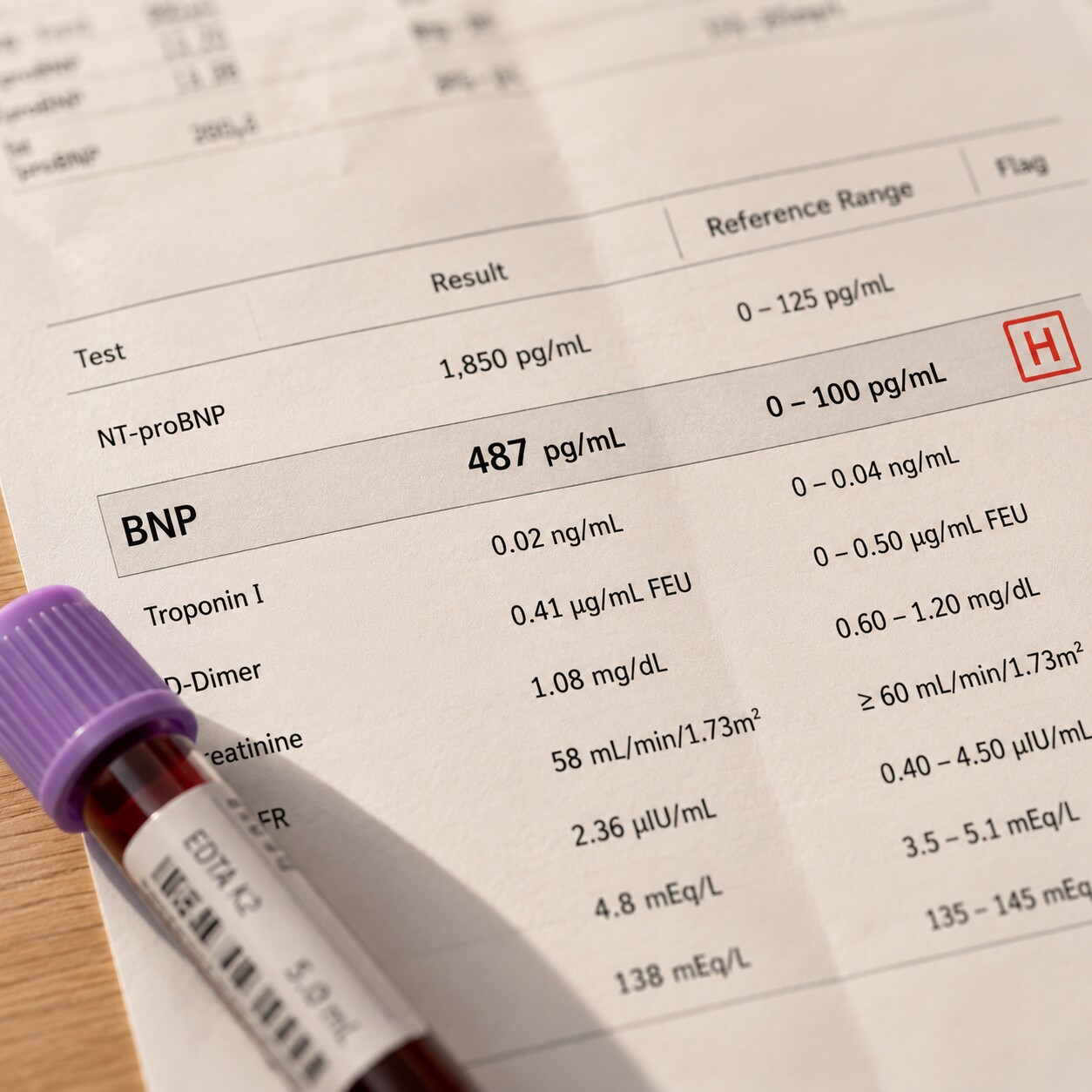
Figure 3. Because BNP rises with several conditions beyond heart failure, a single elevated number is always read against the reference range in the context of the full clinical picture.
Because BNP is a marker of pressure and stretch rather than a marker of heart failure specifically, several other conditions can drive it up even when the ventricular muscle itself isn't weak. Atrial fibrillation, an irregular and often rapid heart rhythm, is one of the most common — the chaotic electrical activity and loss of a coordinated atrial contraction increase pressure and stretch in the heart's chambers independent of any underlying pump failure, and BNP can rise significantly during an active episode even in someone with an otherwise normal heart. Pulmonary hypertension, a condition where blood pressure in the arteries of the lungs is abnormally high, forces the heart's right ventricle to pump against much greater resistance than normal, which stretches that chamber's walls and raises BNP even when the left side of the heart is functioning fine. Acute pulmonary embolism, a blood clot that suddenly blocks blood flow through the lungs, produces a similar sudden strain on the right ventricle and is a well-recognized cause of a BNP spike in someone who otherwise has no history of heart disease at all.
Severe sepsis and critical illness more broadly can also elevate BNP, through a combination of direct stress on heart muscle, fluid shifts, and inflammatory signaling that isn't fully understood but is well documented in intensive-care research. Valve disease — particularly conditions like significant mitral or aortic regurgitation, where blood leaks backward through a faulty valve — creates the same kind of volume overload and chamber stretch that drives BNP up in classic heart failure, even when the heart muscle itself started out completely healthy. And simple aging plays a role too: as people get older, BNP tends to trend upward gradually even in the absence of any diagnosed heart condition, which is part of why a "high" result in an 80-year-old and the same number in a 40-year-old don't carry quite the same weight.
Certain medications and even some heart procedures can influence the number as well, and it's worth a physician knowing your full history before interpreting a result. Drugs from a class called ARNIs (angiotensin receptor-neprilysin inhibitors), commonly prescribed for heart failure itself, work partly by blocking the enzyme that normally breaks down active BNP — which means people taking this specific medication can show a paradoxically higher BNP reading even as their heart failure is genuinely improving on treatment, since more of the hormone is sticking around in circulation rather than being cleared as quickly as it normally would be. For that reason, physicians managing patients on an ARNI often lean more heavily on NT-proBNP instead, since that fragment's clearance isn't affected by the same medication. A recent cardioversion (an electrical procedure used to reset an irregular heart rhythm back to normal) and recent coronary procedures can also cause a short-lived bump in BNP as the heart tissue involved reacts to the intervention itself, separate from any change in the person's underlying heart function.
Why Kidney Function Changes How a BNP Result Should Be Read

Figure 4. Reduced kidney function slows how quickly BNP is cleared from the bloodstream, which can raise the measured level independent of how much cardiac strain is actually present.
Once BNP is released into the bloodstream, it doesn't stay there indefinitely — the body clears it out through two separate routes: specific receptors on cells throughout the body that bind and break it down, and, to a smaller but still meaningful degree, filtration through the kidneys. This is where kidney function becomes an important piece of the puzzle. When the kidneys aren't clearing waste products efficiently — a condition called chronic kidney disease, measured through markers like creatinine and eGFR — BNP tends to accumulate in the blood at a higher level than the heart's actual workload alone would produce. In practical terms, this means someone with significant kidney disease can show an elevated BNP even with relatively mild cardiac strain, simply because clearance has slowed down rather than because production has ramped up so dramatically.
This is exactly why physicians rarely interpret a BNP result in isolation from kidney function. When both a BNP test and a basic metabolic panel come back together, a high BNP alongside clearly reduced kidney function gets read differently than the same BNP number in someone with completely normal kidneys — the kidney disease doesn't make the BNP result meaningless, but it does mean part of that elevation may be explained by slower clearance rather than purely by how hard the heart is straining. This overlapping relationship between heart and kidney function, where dysfunction in one organ makes it harder to interpret and even harder to treat the other, has its own name in medicine: cardiorenal syndrome, and it's one of the more common reasons a "straightforward" high BNP result actually needs a more careful, individualized conversation with a doctor rather than a one-size-fits-all interpretation.
BNP vs. NT-proBNP: Why You Might See Either Number on Your Report
If you've looked at lab reports from different hospitals or providers, you may have noticed the test isn't always labeled "BNP" — sometimes it's labeled "NT-proBNP" instead, and the reference ranges and units look completely different between the two. This isn't a different test measuring something unrelated; remember from earlier that when heart muscle cells cleave the proBNP precursor, they release active BNP and its inactive counterpart, NT-proBNP, into the bloodstream in equal molar amounts at the same time. The two tests are simply measuring two different fragments that started as the same original molecule.
The practical difference between them comes down to how long each one sticks around in the blood before being cleared. Active BNP has a short half-life, on the order of about 20 minutes, meaning it's broken down and removed from circulation quickly. NT-proBNP, the inactive fragment, has a much longer half-life — closer to one to two hours — because it's cleared almost entirely through the kidneys rather than through the faster receptor-based breakdown pathway that clears active BNP. This makes NT-proBNP levels noticeably higher in absolute numbers than BNP levels even when they're reflecting the exact same underlying degree of cardiac strain, and it also makes NT-proBNP more sensitive to kidney function specifically, since a larger share of its clearance depends on the kidneys working normally. Because the two tests use entirely different reference ranges and cutoffs, a result from one can never be directly compared to a result from the other — what matters is knowing which specific test your report is showing, and tracking that same test consistently over time if your doctor is watching a trend.
What Happens After a High BNP Result: the Echocardiogram

Figure 5. Because BNP can't distinguish between the different causes and types of heart strain, an echocardiogram is almost always the next step after a clearly elevated result.
Because a high BNP level tells a physician that the heart is under strain, but not exactly why, the natural next step after a clearly elevated result is almost always an echocardiogram — an ultrasound of the heart that produces a real-time, moving image of the heart's chambers, valves, and muscle in action. This is a painless, non-invasive test: a technician moves a handheld probe across the chest, and sound waves bouncing off the moving heart structures are translated into video on a monitor. An echocardiogram can directly answer the questions BNP can only hint at: how well is the left ventricle squeezing (its ejection fraction), are the walls thickened or stiff, are any of the four valves leaking or narrowed, and is there evidence of elevated pressure in the chambers or the blood vessels feeding into them.
Depending on what the echocardiogram shows and what the overall clinical picture looks like, a physician might also order additional tests — a chest X-ray to look for fluid in the lungs, blood tests to check kidney function and electrolytes, or in some cases a cardiac MRI or stress test if the diagnosis remains unclear after the initial workup. The point of this entire sequence is to move from "the heart is under strain" (what BNP tells you) to "here's specifically what's causing that strain, and here's what we can do about it" (what the follow-up imaging and testing tell you) — which is also why a high BNP result, on its own, is rarely treated as a final diagnosis. It's the signal that starts the investigation, not the conclusion of it.
Confounders That Can Make a BNP Result Misleading
A handful of individual factors can shift BNP levels in ways that have nothing to do with how the heart is actually functioning, and understanding them helps explain why the same number can mean something different from one person to the next. Body weight is one of the more surprising ones: multiple studies have consistently found that people with obesity tend to run lower BNP levels than people of normal weight, even when heart function is identical between them. The leading explanation involves BNP receptors present in fat tissue itself, which appear to clear the hormone from circulation at a higher rate in people carrying more body fat — meaning a person with obesity and genuine heart strain can, misleadingly, show a BNP level that looks closer to normal than the underlying problem would suggest, which is part of why physicians are cautious about using a "reassuringly normal" BNP to fully rule out heart failure in patients with a higher body weight.
Sex and age also shift the picture. Women tend to have somewhat higher baseline BNP levels than men across most age groups, for reasons that aren't completely settled but may relate to hormonal influences on the heart and blood vessels. As mentioned earlier, BNP also rises gradually with normal aging, independent of any diagnosed heart disease, which is why some clinical decision tools use different cutoffs for different age brackets rather than one flat number applied to everyone equally. None of these factors mean the test is unreliable — they mean it has to be read the way any lab value should be read: alongside a person's full context, not as an isolated number compared to a single universal line.
Smoking status and certain thyroid conditions round out the list of common confounders worth knowing about. Hyperthyroidism, an overactive thyroid gland, speeds up the heart rate and increases the heart's overall workload, which can push BNP upward even without any structural heart disease behind it — one more reason a thorough workup for an unexplained elevated BNP often includes a check of thyroid function alongside the heart-focused tests already discussed. On the other end, current smokers have been observed in some studies to run slightly lower BNP levels than non-smokers of similar age and health status, an effect that's modest compared to factors like obesity or kidney function but is still sometimes factored in when a result sits close to a borderline cutoff. None of these smaller influences override the big picture factors — heart function, kidney function, age, and body weight remain the dominant forces behind any given BNP number — but a careful clinician keeps the fuller list in mind when a result doesn't seem to match the rest of a person's clinical picture.
How BNP Is Used to Guide Ongoing Heart Failure Management

Figure 6. For people already living with heart failure, BNP trends are tracked alongside daily habits like weight checks to catch fluid buildup before it becomes a hospitalization.
For people who already carry a heart failure diagnosis, BNP doesn't stop mattering once the initial workup is complete — it becomes part of ongoing management. Falling BNP levels after starting or adjusting heart failure medications are one of the signals doctors use to confirm that treatment is actually working, alongside how a patient reports feeling and what shows up on physical exam. A rising trend, on the other hand, can flag early decompensation — fluid building back up, or the heart coming under renewed strain — sometimes before a patient notices classic symptoms like ankle swelling or increasing breathlessness, giving a window to adjust medication before the situation escalates into a hospital admission.
This is also why many people managing heart failure are asked to track something as simple as their weight every morning at home, at the same time and under the same conditions each day. A sudden gain of a few pounds over just two or three days is often a sign of fluid retention happening well before it would show up as a dramatic BNP spike or an emergency room visit, and catching that pattern early — through a scale, a symptom diary, and periodic BNP checks together — is one of the more effective, low-tech tools available for keeping heart failure stable and avoiding repeated hospital stays.
BNP in Special Situations: Pregnancy, Athletes, and After Heart Surgery
A handful of specific life circumstances and events can shift BNP in ways worth knowing about, since they fall outside the usual "elevated means strain" framework most people picture when they hear about the test. Pregnancy is one: the dramatic increase in blood volume that occurs to support a growing fetus places extra volume load on the heart, and research has found that BNP levels rise modestly across a normal pregnancy, particularly in the third trimester, even in people with no underlying heart disease. This becomes clinically important in a specific and serious condition called peripartum cardiomyopathy, a form of heart failure that can develop in the last month of pregnancy or in the months after delivery — in that setting, a markedly elevated BNP well beyond what normal pregnancy alone would explain is one of the tools used to help distinguish true cardiac strain from the ordinary breathlessness and swelling that many pregnancies produce on their own.
At the opposite end of the physiology spectrum, competitive endurance athletes can also show temporarily elevated BNP levels after prolonged, intense exercise — a phenomenon documented after events like marathons and triathlons, where levels can rise well above the normal resting range in the hours immediately following the race. This isn't a sign of heart damage or failure in most cases; it reflects the very real, if temporary, mechanical stretch and hemodynamic stress that sustained maximal exertion places on the heart, and levels typically return to baseline within a day or two of rest. It's a useful reminder that BNP is fundamentally a marker of mechanical stretch on heart muscle, not a marker of disease specifically — disease is simply the most common reason that stretch becomes chronic and clinically significant rather than temporary and reversible.
BNP also predictably rises after open-heart surgery, including coronary artery bypass grafting and valve repair or replacement, as a normal physiological response to the direct manipulation of heart tissue and the fluid shifts involved in the procedure and recovery. Surgical teams expect and account for this expected postoperative elevation, generally watching the trend over the following days and weeks rather than treating an early post-surgical BNP number the way they would an unexpected result in someone who hasn't just had heart surgery. In every one of these situations — pregnancy, endurance exercise, and cardiac surgery — the same underlying principle from earlier in this article applies: a BNP number only means something once it's read in its proper context, alongside the specific circumstances that could plausibly explain it.
Frequently Asked Questions
Does a high BNP level always mean I have heart failure?
No. Heart failure is the most common cause of an elevated BNP, but atrial fibrillation, pulmonary hypertension, pulmonary embolism, significant valve disease, reduced kidney function, and even normal aging can all raise the number. A high BNP is a signal that the heart is under strain — the specific cause still needs to be worked out through further evaluation, usually starting with an echocardiogram.
What BNP number is considered dangerously high?
There's no single fixed danger threshold, since interpretation depends on age, kidney function, and clinical context. In the emergency setting, values above roughly 400–500 pg/mL make acute heart failure quite likely, and values in the thousands are generally associated with more severe, decompensated disease. For someone already living with heart failure, the more meaningful number is often the change from their own personal baseline rather than a fixed cutoff.
Why did my report say NT-proBNP instead of BNP?
They come from the same original precursor molecule and are released together, but they're cleared from the body differently, so they use entirely different reference ranges and units. NT-proBNP numbers are typically much higher than BNP numbers for the same degree of cardiac strain. The two results can't be directly compared to each other, only tracked consistently within the same test type over time.
Can BNP be falsely low in someone who actually has heart failure?
Yes, most notably in people with obesity, where BNP receptors in fat tissue clear the hormone from the blood more quickly and can make the level look lower than the true degree of heart strain would suggest. This is one reason a "normal" BNP doesn't completely rule out heart failure in every patient, and why doctors weigh it alongside symptoms and imaging rather than as a stand-alone test.
If my kidneys aren't working well, does that affect my BNP result?
Yes. BNP is partly cleared from the bloodstream through the kidneys, so reduced kidney function can cause it to build up and read higher than the heart's actual workload alone would produce, especially for NT-proBNP, which relies more heavily on kidney clearance. This overlap between heart and kidney function is a well-recognized pattern in medicine, and it's part of why a high result is always interpreted alongside kidney labs, not on its own.
Will a high BNP level go back down once treatment starts?
In many cases, yes, and a falling trend is one of the ways doctors confirm that heart failure treatment is working. How much and how quickly it drops depends on the underlying cause, how well it responds to treatment, and factors like kidney function that affect how fast BNP clears from the blood in general. Some people on ARNI medications specifically may see their BNP stay elevated even while genuinely improving, since that drug class slows how quickly active BNP is broken down — which is one reason NT-proBNP is often tracked instead in that situation.
Conclusion
A high BNP level is your heart's own report on how much mechanical strain its chambers are under, released directly by ventricular muscle cells that are being stretched beyond their normal range. Most of the time, that strain comes from heart failure — either a weakened pump or a stiff chamber that can't fill properly — but rhythm problems, lung and valve disease, critical illness, reduced kidney clearance, and simple aging can all push the number up as well. Because the test signals that something is straining the heart without specifying exactly what, a clearly elevated result is almost always followed by an echocardiogram and a closer look at the full clinical picture, not treated as a diagnosis on its own. Understanding what's genuinely driving your own number — and how factors like your kidney function, body weight, and age shape how that number should be read — turns an intimidating result into a specific, answerable question you can bring directly to your doctor. If you have a BNP or NT-proBNP result sitting in front of you right now and you're not sure how it fits into the rest of your bloodwork, that broader context — not the single number in isolation — is usually where the real answer lives.
Still Not Sure What Your Results Mean?
Upload your labs and get a complete, visual, plain-language interpretation of every biomarker — delivered to your inbox in under 15 minutes.
Get My ReportThis article is for educational purposes only and does not constitute medical advice. Always consult your healthcare provider regarding your specific lab results.