
What Does a Very High BNP Level Suggest?
A BNP result that comes back not just "elevated" but dramatically high — several times above the normal cutoff — is one of the more urgent numbers in routine blood work, and for good reason. BNP, short for B-type natriuretic peptide, is a hormone released by the heart itself when its walls are being stretched harder than they should be, usually because there's too much fluid or pressure inside the heart's pumping chambers. A very high result most often points to heart failure that has become acutely decompensated, meaning the heart has lost the battle against fluid buildup, at least for the moment. But heart failure isn't the only explanation. Kidney disease, blood clots that strain the right side of the heart, severe infections, and even irregular heart rhythms can all push BNP into strikingly high territory without a weakened heart muscle being the root cause. This article walks through what "very high" actually means numerically, why the heart releases this hormone in the first place, and the full range of conditions that can drive it there — so a frightening number on a lab report becomes something you can actually make sense of.
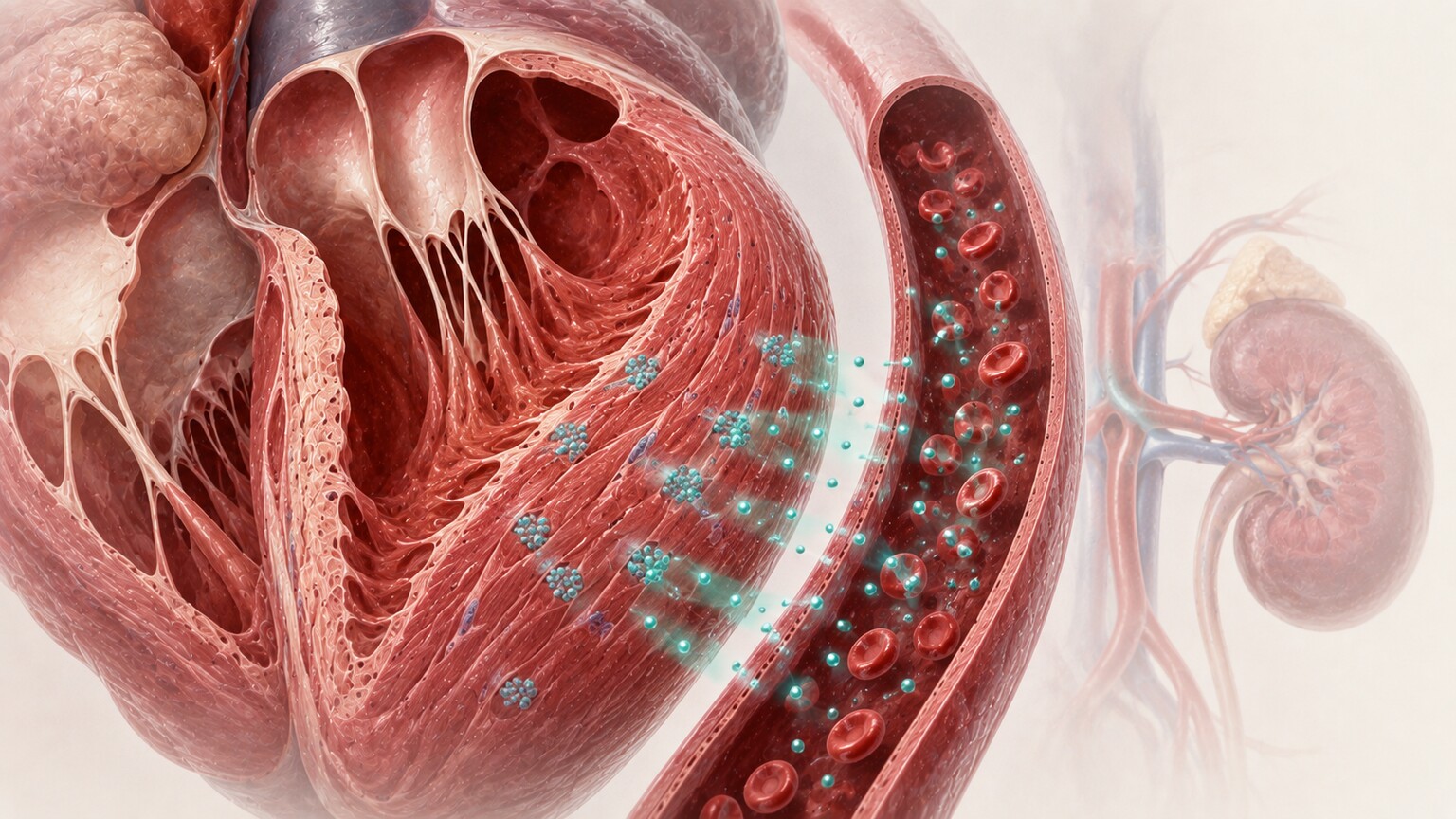
Figure 1. Stretching of the ventricular wall from excess volume or pressure triggers heart muscle cells to release BNP directly into the bloodstream.
Curious what the rest of your cardiac panel is telling you? Upload your results and get a complete, plain-language breakdown in under 15 minutes.
Analyze My ResultsWhat BNP Actually Is, and Why the Heart Releases It
BNP was first identified in pig brain tissue in the late 1980s, which is why it's called "B-type" rather than "cardiac-type" — an accident of discovery history that stuck even after researchers realized the heart, not the brain, is overwhelmingly where it's actually made in humans. Specifically, it's produced by muscle cells in the ventricles, the heart's two main pumping chambers, in direct response to a very physical trigger: stretch. When the ventricle wall is pulled tighter than normal — because there's too much blood volume filling the chamber, or because the heart is straining against too much resistance while trying to pump — the muscle cells respond by ramping up production of a precursor molecule and releasing it into the blood.
That precursor is called proBNP, and once it's released, an enzyme splits it into two separate pieces in a fixed one-to-one ratio: the active BNP hormone itself, and a second, inactive fragment called NT-proBNP (N-terminal pro-BNP). Only the BNP half is biologically active — meaning it actually does something once it's in circulation. And what it does is essentially the opposite of what's straining the heart in the first place: it signals the kidneys to excrete more sodium and water (a process called natriuresis), it relaxes and widens blood vessels to lower resistance, and it dials down two hormone systems, the sympathetic nervous system and the renin-angiotensin-aldosterone system, that would otherwise cause the body to retain even more fluid. In other words, BNP is the heart's own emergency brake — a hormone released specifically to fight back against the fluid overload that's stressing it in the first place. A very high BNP level is really a very high volume alarm from that emergency brake system, and the louder the alarm, the harder the heart is working to compensate.
It's worth appreciating just how quickly this system can respond, because that speed is part of why BNP is such a clinically useful number. Unlike some hormones that the body stockpiles in advance and releases from storage, heart muscle cells keep only a small reserve of pre-made BNP on hand. Most of what appears in the blood during a genuine cardiac strain event comes from rapid, fresh gene activity inside the stressed muscle cells themselves — the cells essentially switch on the manufacturing process in real time as the stretch signal arrives, rather than simply dumping a pre-existing stockpile. That's different from BNP's close chemical cousin, atrial natriuretic peptide (ANP), which the heart's upper chambers do keep pre-packaged in storage granules for instant release. This distinction explains why a BNP level can climb meaningfully within hours of an acute cardiac event and, just as importantly, why it can also fall relatively quickly once the underlying strain is relieved — the body isn't waiting to deplete some large stored reserve in either direction, it's actively adjusting production to match the current level of mechanical stress on the heart wall.
How High Is "Very High"? Putting a Number on the Scale
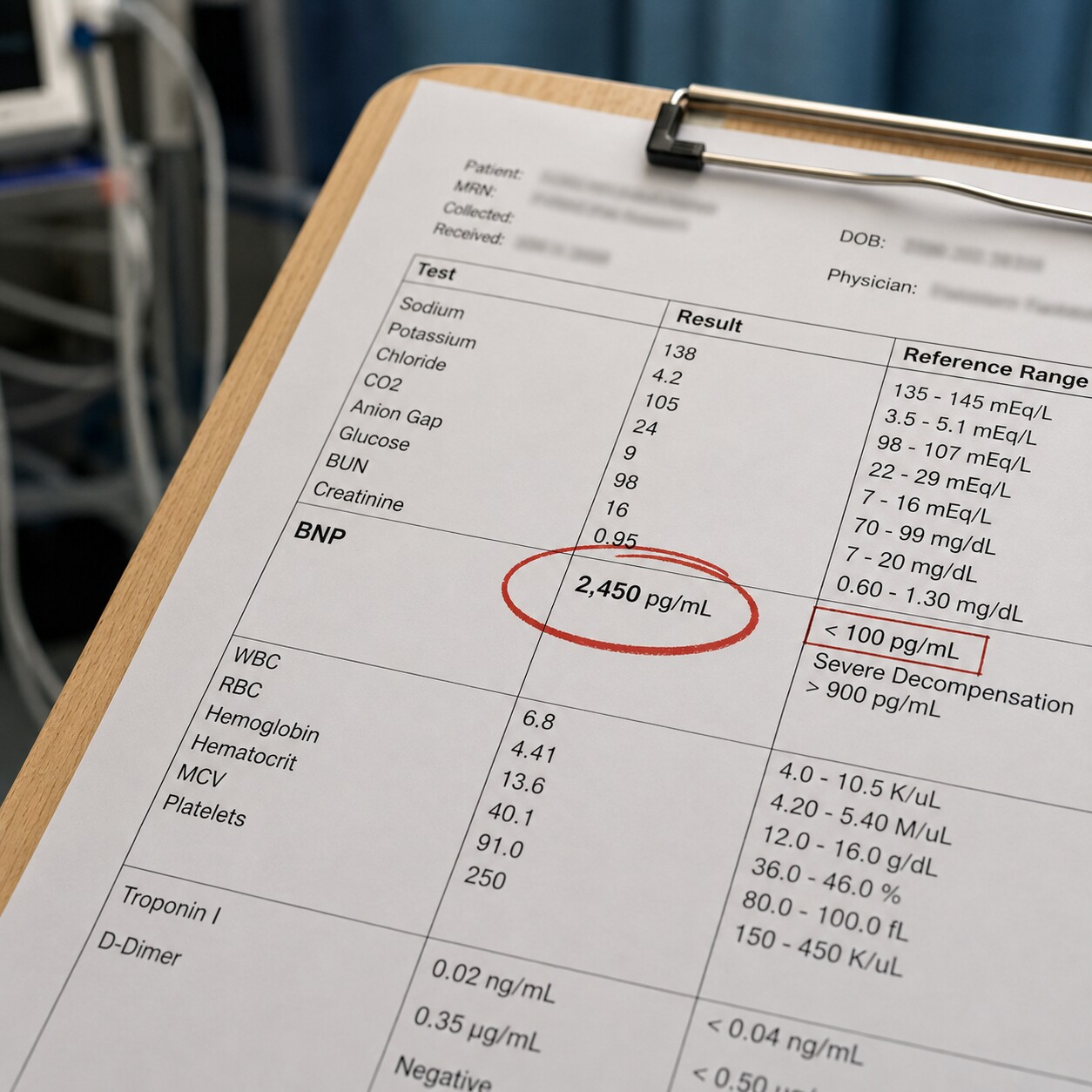
Figure 2. A BNP result climbing past roughly 900 pg/mL is generally treated as a marker of severe cardiac decompensation rather than mild strain.
BNP is measured in picograms per milliliter (pg/mL), an extremely small unit of concentration — a picogram is a trillionth of a gram — which reflects just how potent this hormone is even in tiny amounts. For an otherwise healthy adult with no shortness of breath, a BNP under roughly 35 pg/mL is generally considered reassuring, effectively arguing against heart failure as an explanation for any symptoms. In someone who shows up to an emergency room short of breath, the numbers used shift slightly: a result under about 100 pg/mL makes heart failure unlikely to be the cause, while values above 400 pg/mL are, per commonly used clinical references including Mayo Clinic's laboratory standards, considered suggestive of heart failure. Results that fall between those two numbers, roughly 100 to 400 pg/mL, land in a genuinely ambiguous middle zone where the number alone isn't decisive.
"Very high" starts well beyond that middle zone. Many cardiology references treat a BNP above approximately 900 pg/mL as a marker of severe cardiac decompensation — a heart that isn't just struggling, but losing the fight against fluid overload in a meaningful way. At this level, the finding is rarely subtle and is almost always accompanied by real symptoms: significant shortness of breath, difficulty lying flat, visible swelling in the legs or abdomen. Values that climb into the thousands are associated with the poorest short-term outlook and typically prompt hospital admission, often with close monitoring, since research has consistently linked the very highest natriuretic peptide readings to a meaningfully higher risk of complications and death in the following weeks to months if not addressed urgently.
One more number worth knowing about is age, because BNP reference ranges aren't perfectly flat across a person's lifespan the way some lab tests are. Even in people with no heart disease at all, BNP tends to drift gradually upward with advancing age, likely reflecting the normal, gradual stiffening of heart tissue that happens over decades of use even without a specific disease process driving it. Because of this, some heart failure guidelines use age-banded thresholds when deciding whether a result should be treated as diagnostic — for example, a lower bar for a patient under 50 than for a patient over 75, on the reasoning that the same absolute number carries a different weight in a 40-year-old than it does in someone in their eighties. This doesn't mean a high BNP in an older adult should be dismissed as "just aging" — it means the threshold used to interpret it is adjusted slightly, not eliminated, and any BNP that clears even the age-adjusted bar still warrants the same careful follow-up.
Recognizing the Symptoms That Usually Accompany a Very High Result
A BNP this high rarely shows up as a silent, incidental finding — it's almost always paired with symptoms a person would already have noticed, which is one reason doctors treat a very high, symptom-free BNP as worth double-checking rather than taking entirely at face value. The most common and most specific symptom is shortness of breath, particularly breathlessness that worsens when lying flat and improves when sitting upright, a pattern with its own medical name, orthopnea, that reflects fluid redistributing toward the lungs once gravity stops helping keep it in the legs. Some people describe waking up suddenly in the middle of the night gasping for air, a related phenomenon called paroxysmal nocturnal dyspnea, caused by the same fluid shift happening gradually over a few hours of lying down.
Visible swelling is another common companion finding, typically starting in the ankles and lower legs and, in more severe cases, extending upward into the thighs and abdomen as the body retains fluid it can no longer effectively circulate and excrete. Rapid, unexplained weight gain over just a few days — sometimes several pounds in less than a week — often reflects this same fluid retention process and is one of the reasons people already being treated for heart failure are frequently advised to weigh themselves daily as an early warning system. Fatigue and a reduced ability to exercise or exert oneself without becoming winded are common as well, though they're far less specific to heart failure on their own, since dozens of unrelated conditions can produce similar tiredness. It's the combination — breathlessness, swelling, and rapid weight gain, layered on top of a very high BNP — that paints the clearest picture, rather than any one symptom in isolation.
What a Very High BNP Most Often Means: Acute Decompensated Heart Failure

Figure 3. In acute decompensated heart failure, blood backs up behind the struggling left ventricle and forces fluid into the lung tissue, producing pulmonary edema.
The single most common explanation for a very high BNP is acute decompensated heart failure — a sudden or worsening episode in which the heart can no longer pump forcefully enough, or fill properly enough, to keep up with the body's demands. When the left side of the heart in particular struggles to move blood forward efficiently, pressure backs up behind it, into the lungs' blood vessels. That rising pressure eventually forces fluid out of those vessels and into the surrounding lung tissue itself, a condition called pulmonary edema, which is what produces the hallmark symptom of heart failure: severe shortness of breath, often worse when lying flat and improved somewhat by sitting upright.
Heart failure isn't one single disease with one single cause — it's the end result of many different underlying problems that all impair the heart's pumping or filling ability. Long-term high blood pressure, a prior heart attack that left scarred, non-functional muscle tissue, damaged or leaky heart valves, viral infections of the heart muscle, and chronic heavy alcohol use can all eventually lead to the same final pathway: a heart that can no longer keep pace, and a BNP level that climbs as a direct, physical consequence of the resulting wall stretch. Whether the underlying pump problem has been building for years or arrived suddenly, as in a major heart attack, the immediate reason BNP spikes is the same — the ventricle walls are being stretched harder than they're built to tolerate, right now, and the heart's hormonal alarm system is responding accordingly.
Other Causes of a Very High BNP Besides Heart Failure
Because BNP responds to stretch and strain on heart tissue rather than to heart failure specifically, several conditions that place stress on the heart without necessarily involving a chronically weakened pump can also drive it into very high territory. Recognizing these is part of why doctors never interpret a single BNP number in a vacuum.
A large blood clot that travels to the lungs, known as a pulmonary embolism, is one important example. A big enough clot creates a sudden wall of resistance in the lungs' blood vessels, and the heart's right ventricle — which has to push blood through that newly obstructed circuit — can become acutely strained trying to force blood past the blockage. That acute right-sided strain releases BNP through the same stretch-triggered mechanism as left-sided heart failure, even though the underlying problem is a clot, not a weak heart muscle. Chronic lung diseases that raise pressure in the lung's blood vessels over the long term, a condition called pulmonary hypertension, produce a similar right-heart strain pattern, just more gradually.
Kidney disease is another major contributor, and it works through a different mechanism entirely: rather than causing more BNP to be produced, impaired kidneys simply clear less of it out of the bloodstream. Natriuretic peptides are partly cleared by the kidneys, so as kidney function declines, BNP tends to accumulate to higher baseline levels even without any worsening of heart function at all — a distinction that matters enormously for anyone with both heart and kidney disease at once, which is a common combination.
Severe systemic illness can raise BNP too. Sepsis, a body-wide inflammatory response to infection, places significant strain on the cardiovascular system as a whole, sometimes temporarily depressing heart muscle function even in someone with no prior heart disease — a phenomenon sometimes called septic cardiomyopathy. Critically ill patients more broadly, even without a specific infection driving things, frequently show elevated BNP simply as a byproduct of the intense physiological stress that comes with conditions like major surgery, severe trauma, or respiratory failure requiring a ventilator — all situations that place real, if often temporary, strain on the heart's workload.
Similarly, atrial fibrillation, a common irregular heart rhythm in which the heart's upper chambers quiver rapidly and chaotically instead of beating in a coordinated way, stretches those upper chambers even when the ventricles themselves are working normally, which alone can meaningfully raise BNP independent of any underlying pump problem. This matters clinically because atrial fibrillation is extremely common, especially in older adults, and it frequently coexists with heart failure rather than standing in as a clean alternative explanation — a patient can have both conditions contributing to the same elevated number at once, which is part of why an EKG showing heart rhythm is one of the routine tests run alongside BNP.
A major heart attack, medically termed acute myocardial infarction, produces the same wall-stress trigger through yet another route: by abruptly cutting off blood flow to a section of heart muscle, it damages that tissue and impairs the heart's overall pumping ability, sometimes within minutes. The surviving, healthy portions of the heart wall often end up working harder to compensate, stretching more than they normally would, which is enough on its own to drive BNP upward even before any lasting heart failure has fully developed. Severe heart valve disease — a valve that has become too narrow (stenotic) or too leaky (regurgitant) to direct blood flow efficiently — creates a comparable mechanical burden, forcing the heart to generate more pressure or move more volume than it's designed for, again culminating in the same stretch-triggered release. The common thread across every one of these causes is mechanical or physiological stress on heart tissue — the hormone doesn't distinguish between the many different reasons that stress might be happening, which is exactly why a very high number is a starting point for investigation rather than a finished diagnosis on its own.
BNP vs. NT-proBNP: Same Origin, Different Number Scale
It's worth understanding that BNP and NT-proBNP, though they come from splitting the exact same precursor molecule, are reported on entirely different numerical scales, and confusing the two is a common source of unnecessary panic. NT-proBNP, the inactive fragment, tends to circulate longer in the blood than active BNP does, and different labs and different testing platforms produce meaningfully different absolute numbers for it. A result that would be alarmingly high on a BNP scale — say, several thousand pg/mL — is a very different situation than the same numeric value on an NT-proBNP scale, where thresholds for concern run considerably higher, sometimes into the tens of thousands in severe cases. If your report says "NT-proBNP" rather than "BNP," the specific cutoffs discussed throughout this article for BNP itself do not directly apply; always check which of the two tests was actually performed, since it's printed clearly on the report, and interpret the number against the reference range provided by that specific lab rather than a number you may have seen quoted elsewhere for the other test.
Clinically, the two tests are used somewhat interchangeably for diagnosing and monitoring heart failure, and most hospitals and outpatient labs use one or the other, not both, as a matter of institutional preference and equipment availability. Neither is considered more accurate than the other overall; they simply behave a little differently in specific situations. NT-proBNP tends to rise somewhat more with declining kidney function than BNP does, for instance, which is a detail specialists factor in when a patient has significant kidney disease alongside a suspected heart problem.
There's also a practical, real-world reason the distinction matters beyond the numbers themselves: certain heart failure medications, most notably a newer class called ARNIs (angiotensin receptor-neprilysin inhibitors), work partly by blocking the enzyme that normally breaks BNP down, which deliberately raises BNP levels in the blood as an intended effect of the drug rather than a sign the heart is getting worse. NT-proBNP isn't affected by this particular mechanism, since it's cleared through different pathways, which is why doctors managing a patient on this type of medication typically prefer to track NT-proBNP over time instead of BNP — using BNP in that specific situation could make a genuinely improving heart look artificially worse on paper. This is a good example of why knowing which of the two tests you actually had, and why, matters more than memorizing a single universal cutoff number.
Why Body Size and Kidney Function Change How "High" Is Interpreted
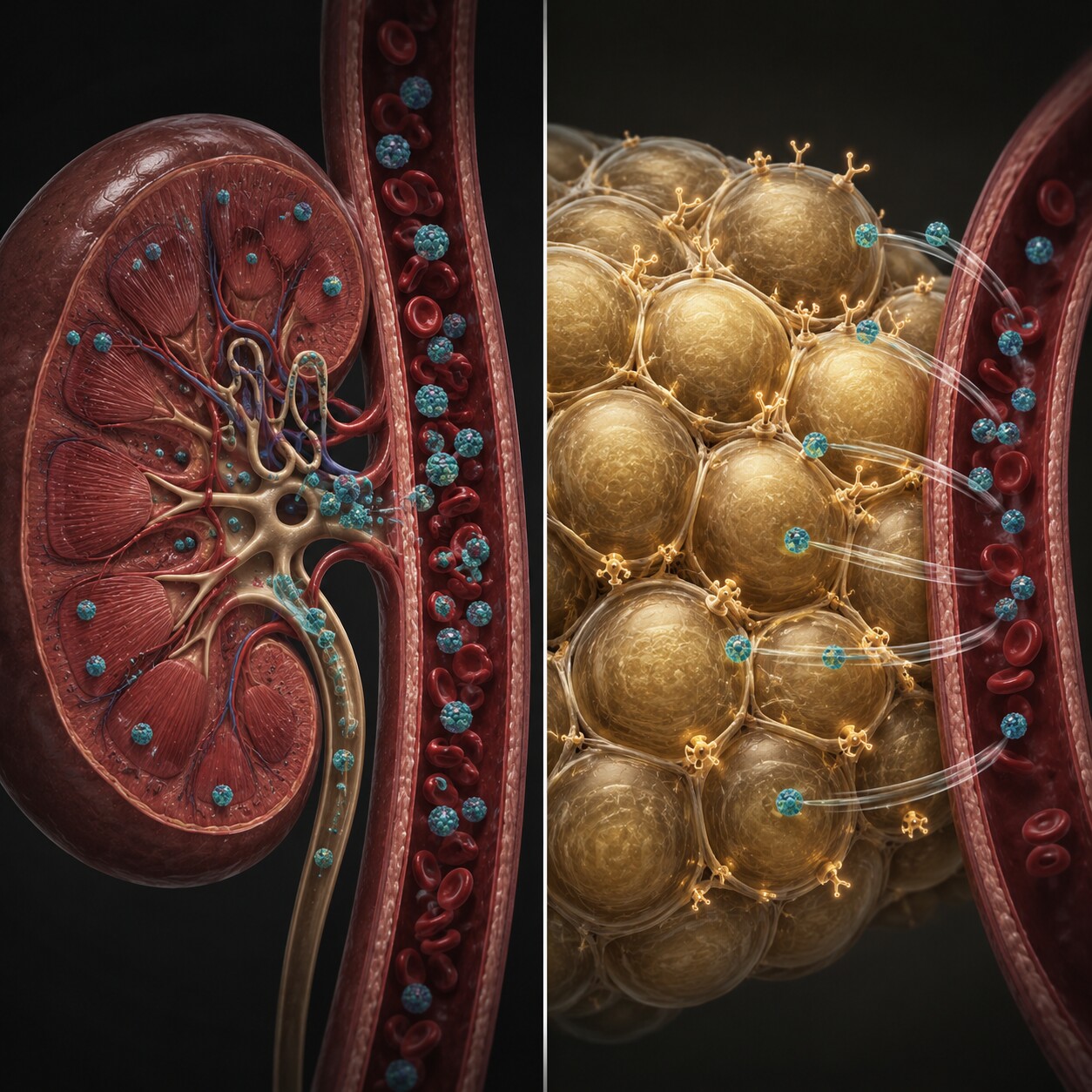
Figure 4. Impaired kidneys clear BNP more slowly, raising baseline levels, while adipose tissue expresses clearance receptors that actively remove BNP from circulation.
Two very common conditions — obesity and kidney disease — pull a given BNP reading in opposite directions, and doctors have to mentally correct for both when deciding what a number really means. Kidney disease, as discussed above, tends to push BNP artificially higher than the heart's actual condition alone would produce, since impaired kidneys clear less of the hormone out of the bloodstream over time. In people with significant chronic kidney disease, clinicians often apply a higher threshold before treating an elevated BNP as clear evidence of heart strain, precisely to account for this clearance effect.
Obesity works in the opposite direction. Fat tissue, it turns out, isn't just a passive energy store — it expresses its own natriuretic peptide clearance receptors, actively pulling BNP out of circulation at a higher rate than typically happens in someone at a lower body weight. The practical consequence is that a person with obesity and genuinely significant heart strain can still produce a BNP reading that looks only mildly elevated, or even normal, understating how much trouble the heart is actually in. Because of this, some heart failure guidelines suggest using a somewhat lower diagnostic threshold in patients with a higher body mass index, so that real heart strain isn't dismissed simply because the raw number didn't clear the standard bar. Neither of these adjustments is something to calculate at home — they're exactly the kind of nuance a treating physician weighs alongside the number itself, which is part of why the same BNP result can lead to different next steps in different patients.
Sex is a smaller but still recognized factor in how BNP is interpreted. On average, women tend to run somewhat higher baseline BNP levels than men do, even without heart disease present, a pattern researchers have linked in part to differences in body composition and hormonal influences on the cardiovascular system. Most standard reference ranges used in practice don't split thresholds by sex the way some guidelines do for age or kidney function, but it's one more reason two people with a similar clinical picture can show meaningfully different raw numbers, and why a physician weighing your specific result considers who you are, not just what the number says in isolation.
What a Very High Number Means for Prognosis
Beyond diagnosis, BNP carries real prognostic weight — meaning the number itself, independent of what's causing it, tracks fairly closely with how sick a patient is and how they're likely to fare in the near term. Research following patients with heart failure has repeatedly found that higher BNP values at the time of hospital admission correlate with a greater risk of complications, longer hospital stays, and a higher chance of being readmitted or dying within the following months. Some studies have identified levels above roughly 377 pg/mL as a meaningful threshold associated with a distinctly worse outlook, and the risk continues climbing from there — values in the thousands, particularly on the related NT-proBNP scale where concentrations above 5,000 pg/mL have been specifically linked to poor short-term prognosis, are treated as signals that warrant urgent, closely supervised care rather than routine outpatient follow-up.
This prognostic value is also why BNP gets checked more than once during a heart failure hospitalization rather than just at admission. A BNP level that falls substantially after treatment — as diuretics remove excess fluid and the heart's workload eases — is a genuinely reassuring sign that the underlying strain is resolving, even before symptoms have fully caught up. Conversely, a BNP that stays stubbornly high despite treatment, or continues climbing, tells the care team that whatever is driving the strain hasn't yet been brought under control, prompting a closer look at the treatment plan rather than assuming the initial approach is working.
It's worth being clear-eyed about the limits of this prognostic information, too. BNP is a strong, well-validated signal at a population level — meaning that, across large groups of patients, higher numbers reliably track with worse average outcomes — but it's an imperfect predictor for any single individual. Two people with an identical very-high BNP reading can have meaningfully different outlooks depending on their overall health, how quickly they receive treatment, what specifically is driving the number, and how their body responds to that treatment. Researchers have also studied using BNP trends to actively guide treatment decisions in real time, an approach sometimes called BNP-guided therapy, adjusting medication doses based on where the number lands rather than symptoms alone — the evidence for this specific strategy has been mixed across different trials, and it isn't universally adopted, which is one reason your own doctor's clinical judgment, not a single BNP number in isolation, remains the central factor in how your treatment plan gets built and adjusted over time.
What Happens Next After a Very High BNP Result

Figure 5. A very high BNP result is almost always paired with real symptoms, most commonly significant shortness of breath that worsens when lying flat.
A very high BNP is rarely, on its own, the end of the diagnostic process — it's usually the finding that sets the next several steps in motion. The most important follow-up test is typically an echocardiogram, an ultrasound of the heart that lets doctors directly see how well the heart's chambers are squeezing and filling, measure a key number called ejection fraction (the percentage of blood the left ventricle pumps out with each beat), and check for valve problems or structural abnormalities that might explain the strain. A chest X-ray is often done alongside it to look for visible signs of fluid in and around the lungs. A careful physical exam — checking for swelling in the legs, listening for crackling sounds in the lungs, and looking at the neck veins for signs of elevated pressure — adds further real-world confirmation of what the number is suggesting.
Treatment, when heart failure is confirmed, usually starts with removing excess fluid, most commonly through diuretic medications that prompt the kidneys to excrete more sodium and water — directly assisting the very process BNP itself was already trying, less successfully, to trigger on its own. Depending on the severity of symptoms and the BNP level itself, this might happen as an outpatient or require hospital admission for closer monitoring and faster fluid removal. Longer-term management typically involves a combination of medications specifically shown to improve heart failure outcomes over time, along with addressing whatever underlying condition, such as long-standing high blood pressure or coronary artery disease, originally set the process in motion. A cardiology referral is standard for any newly identified, significantly elevated BNP, since ongoing specialist involvement meaningfully improves outcomes in heart failure management.
If the workup instead points toward one of the non-heart-failure causes discussed earlier — a pulmonary embolism, a severe infection, a new arrhythmia, or kidney disease driving the number up through reduced clearance rather than the heart itself failing — the treatment path shifts accordingly, targeting that specific underlying problem rather than defaulting to heart failure protocols. This is exactly why the evaluation doesn't stop at the BNP result itself: blood clots in the lungs are typically confirmed with a CT scan of the chest and treated with blood thinners, an irregular heart rhythm is confirmed with an EKG and managed with rhythm- or rate-controlling medications, and a suspected infection prompts its own set of cultures and targeted antibiotics. A single BNP result can be the first domino in several very different diagnostic paths, which is exactly why it's designed to prompt a broader evaluation rather than to stand alone as a final answer.
Frequently Asked Questions
Can a very high BNP be a lab error rather than a real finding?
It's uncommon, but not impossible. Because BNP results this high are almost always accompanied by clear symptoms like significant shortness of breath, a very high number with no symptoms at all is unusual enough that a doctor may reasonably repeat the test or investigate further before assuming it's inaccurate. In most cases, though, a very high BNP reflects something real happening in the body.
Does a very high BNP always mean I need to go to the hospital?
Not automatically, but it very often does prompt urgent evaluation, especially if it's paired with symptoms like severe shortness of breath, chest discomfort, or significant swelling. The decision depends on the full clinical picture — your symptoms, physical exam findings, and how the number compares to any previous results — which is exactly why this finding should be discussed with a doctor promptly rather than interpreted alone.
If I have kidney disease, does that mean my high BNP isn't really about my heart?
Not necessarily — it means the number needs to be interpreted with extra care rather than dismissed. Kidney disease does raise baseline BNP by slowing its clearance from the blood, but people with kidney disease can also have genuine heart strain at the same time, since the two conditions frequently occur together. A doctor familiar with both conditions is best positioned to sort out how much of the number reflects each factor.
Can BNP go back down to normal after treatment?
Yes, and a falling BNP is generally a good sign that treatment is working. As excess fluid is removed and the heart's workload eases, BNP levels typically decline, sometimes substantially, though the exact pace and how close it gets to a fully normal range depends on the underlying cause and how completely it can be treated.
Is a very high BNP the same thing as a heart attack?
No. BNP reflects strain on the heart's pumping chambers from stretch, which can happen for many reasons, while a heart attack specifically refers to blocked blood flow damaging heart muscle. A heart attack can raise BNP as one of its downstream effects, but a very high BNP by itself does not mean a heart attack has occurred — it's evaluated with different tests, such as troponin, which is more specific to heart muscle injury.
Why does my BNP result list a different reference range than what I've read online?
Reference ranges for BNP can vary somewhat between laboratories depending on the specific testing platform and assay used, even though the underlying hormone being measured is the same. Age, sex, and body weight can also shift what counts as a typical baseline for a given individual. Always interpret your result against the reference range printed directly on your own report rather than a number quoted in a general article, and bring any questions about the range itself to the ordering physician.
Will I need repeat BNP testing after a very high result?
Very likely, yes, especially if heart failure treatment is started. Repeat testing over the following days lets doctors track whether the number is falling in response to treatment, which is a genuinely useful sign that the underlying strain is easing, even before symptoms have fully resolved. How often it's rechecked depends on the severity of the initial result and whether you're being monitored in the hospital or as an outpatient.
Can stress or anxiety alone cause a very high BNP?
Ordinary emotional stress or anxiety does not raise BNP into the "very high" range discussed in this article. BNP responds specifically to mechanical stretch on the heart's pumping chambers, not to psychological stress on its own. That said, severe physical stress on the body — such as a major illness, surgery, or a genuine cardiac event — absolutely can, which is different from everyday anxiety and is why a very high result is taken seriously as a physical finding rather than dismissed as a stress response.
Conclusion
A very high BNP is the heart's own hormonal alarm, sounding as loudly as it does because the ventricle walls are being stretched well beyond what they're built to tolerate. Most often, that points to acute decompensated heart failure, but kidney disease, blood clots in the lungs, severe infection, irregular heart rhythms, and even the normal effects of aging can all set off the same alarm through their own paths to the same physical trigger. The number alone doesn't diagnose the cause — it's the starting point for the echocardiogram, physical exam, and clinical context that fill in the rest of the picture. What it does reliably tell you is that the heart is under real, measurable strain right now, and that the strain is significant enough to deserve a prompt, thorough look rather than a wait-and-see approach. If you're looking at a very high BNP result, the most useful next step isn't trying to work out the cause from the number alone; it's getting that number in front of a doctor promptly, so the actual underlying reason can be identified and treated.
Still Not Sure What Your Results Mean?
Upload your labs and get a complete, visual, plain-language interpretation of every biomarker — delivered to your inbox in under 15 minutes.
Get My ReportThis article is for educational purposes only and does not constitute medical advice. Always consult your healthcare provider regarding your specific lab results.