
What's the Link Between MTHFR Gene Variants and Homocysteine?
If you've ever uploaded your raw 23andMe or AncestryDNA file into one of the many third-party interpretation tools online, there's a good chance you've seen the letters "MTHFR" flash back at you in red, sometimes labeled a "mutation," sometimes paired with alarming warnings about blood clots, miscarriage, or heart disease. It's one of the most searched, most feared, and most misunderstood findings in consumer genetics — and yet if you ask the doctor who actually ordered your homocysteine blood test about it, there's a good chance they'll tell you the MTHFR result barely changes how they interpret your number. Both of those things are true at the same time, and understanding why is the key to making sense of this entire topic. MTHFR variants are genuinely common — depending on ancestry, somewhere between roughly 1 in 10 and 1 in 4 people carry a double copy of the most-studied version — and they genuinely can influence how efficiently the body clears homocysteine, an amino acid byproduct of everyday protein metabolism that matters for cardiovascular and neurological health. But "can influence" is a long way from "always causes," and the gap between those two ideas is exactly where most of the internet-driven anxiety about MTHFR lives. This article walks through what the MTHFR gene actually does, what its two most common variants really mean for your homocysteine number, why folate, vitamin B12, and a less-discussed vitamin called riboflavin matter more in practice than the genotype itself, and why nearly every major U.S. medical organization — including the American College of Medical Genetics and the American Heart Association — now actively advises against routine MTHFR testing in the first place.
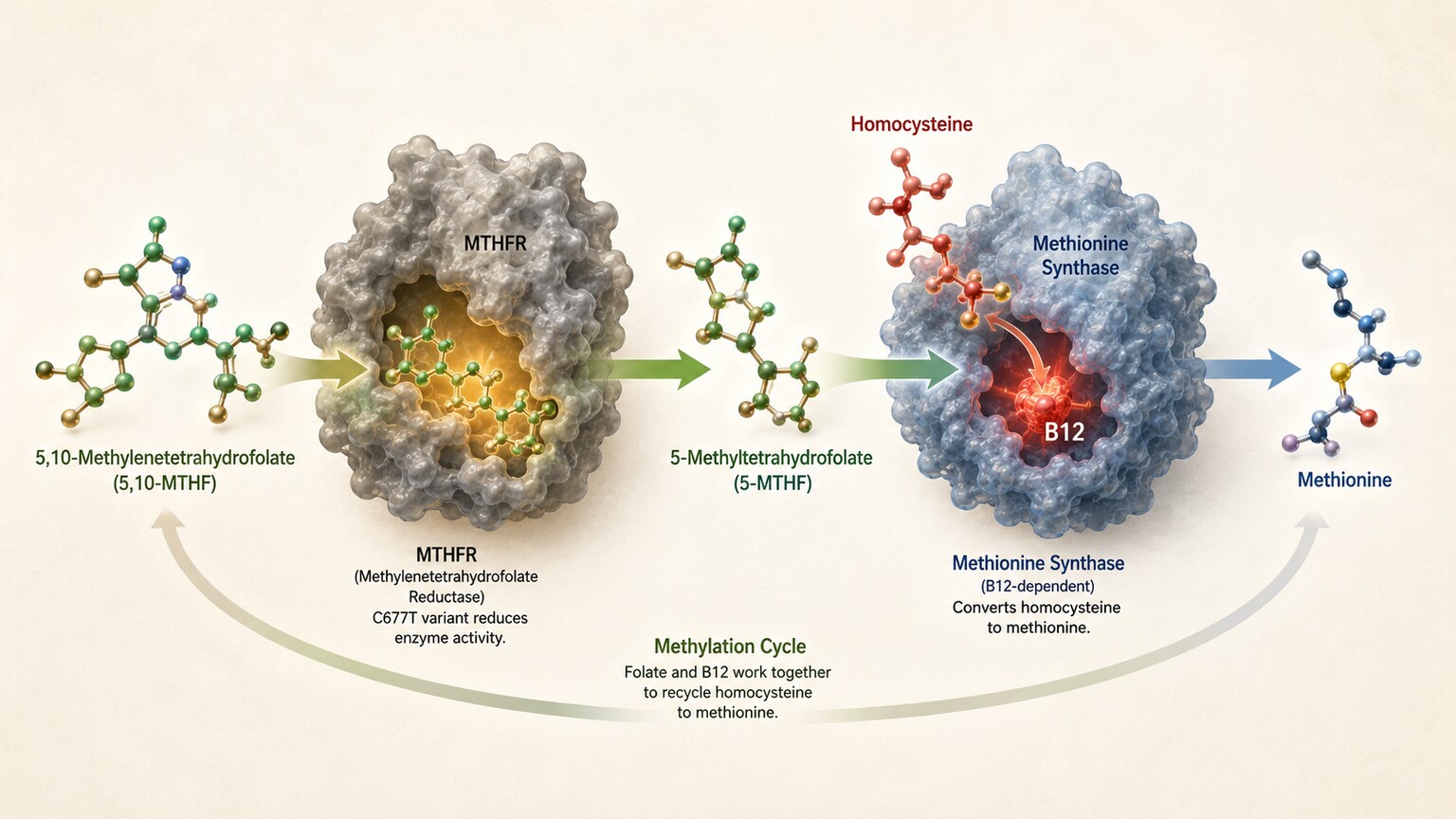
Figure 1. The MTHFR enzyme converts 5,10-methylenetetrahydrofolate into 5-methyltetrahydrofolate, the specific form of folate needed to remethylate homocysteine back into methionine.
Already have a homocysteine number from a recent test, but not sure if it's actually good or bad for you? Just plug it in and see instantly.
🧮 Try the Free CalculatorWhat MTHFR Actually Is and What the Enzyme Does
MTHFR is shorthand for methylenetetrahydrofolate reductase, both the name of a specific gene located on chromosome 1 and the name of the enzyme that gene's instructions build. Think of a gene as a recipe card stored in a cellular filing cabinet, and the enzyme as the actual kitchen tool built from following that recipe — most of the time, the tool works exactly as intended, but small typos in the recipe can occasionally produce a tool that still functions, just less efficiently than the standard version. The MTHFR enzyme's specific job is to take a form of folate called 5,10-methylenetetrahydrofolate and convert it into 5-methyltetrahydrofolate, sometimes shortened to methylfolate — the one specific, "active" form of folate that a second enzyme, methionine synthase, is able to actually use. Methionine synthase's job, in turn, is to take that active folate and use it to convert homocysteine back into methionine, an essential amino acid the body needs for building proteins and for a chemical process called methylation that affects everything from gene expression to neurotransmitter production. This entire sequence is sometimes called the methylation cycle, and homocysteine sits right at its center: it's constantly being produced as a normal byproduct of protein metabolism, and it's constantly being recycled back into methionine so it doesn't accumulate in the bloodstream.
MTHFR is the rate-limiting step in this recycling process, meaning it's effectively the narrowest point in the entire pipeline — if MTHFR is working slowly, it doesn't matter how much folate a person eats or how well methionine synthase itself is functioning, because the active form of folate that methionine synthase actually needs simply isn't being produced fast enough to keep up. This is the direct mechanical link between MTHFR and homocysteine: any change to the MTHFR gene that slows the enzyme down has the potential to slow the entire recycling pathway, and a slower recycling pathway means homocysteine has more opportunity to build up in the blood before it gets cleared. Whether that potential actually turns into a measurably higher homocysteine number in any one specific person, however, depends on several other variables working alongside the gene itself — which is exactly what the rest of this article is about.
The enzyme was first isolated and characterized by researchers in the early-to-mid 1990s, and the specific gene variant most people now associate with MTHFR, C677T, was identified and linked to reduced enzyme activity in a landmark 1995 paper. That single piece of research quietly kicked off three decades of scientific interest in exactly how much this one gene actually matters for human health — interest that has swung from early, sometimes overstated enthusiasm, through a wave of more careful, better-controlled research, to the more measured, evidence-based picture described throughout the rest of this article. It's worth sitting with the recycling-plant analogy a bit longer, because it explains something that trips a lot of people up: having a "slower" version of an enzyme is not the same as having a "broken" one. A thermolabile enzyme still works — it's simply less efficient and somewhat more easily thrown off by conditions like inadequate raw material supply, which in this case means folate. A slower recycling truck making fewer trips per hour can still keep a small, well-stocked warehouse fully cleared out; it only becomes a visible backlog once the incoming volume starts to outpace what that slower truck can realistically handle.
The Two Variants That Matter: C677T and A1298C

Figure 2. The MTHFR gene sits on the short arm of chromosome 1; the C677T variant is a single-letter substitution within its DNA sequence.
Out of the many small variations that have been documented within the MTHFR gene, two specific ones account for almost everything discussed in both the medical literature and the DNA-testing world: C677T and A1298C. Both are what geneticists call single nucleotide polymorphisms, or SNPs — a somewhat intimidating term for something fairly simple, which is a single-letter spelling difference at one specific position in an otherwise identical stretch of DNA, similar to how "color" and "colour" are the same word with one letter changed depending on which version you're reading. Everyone inherits two copies of the MTHFR gene, one from each parent, and each copy can independently carry the standard spelling or the variant spelling at these positions.
The C677T variant swaps a cytosine for a thymine at a specific position in the gene, which changes one amino acid in the finished enzyme — a valine gets swapped for an alanine at position 222 of the protein chain. That single substitution makes the enzyme "thermolabile," a term that simply means it loses its shape and function more easily than normal at body temperature, similar to how an egg white becomes permanently different once it's been heated. People who inherit this variant from only one parent, written as CT, typically retain somewhere around 65% of normal enzyme activity — a modest reduction most people never notice. People who inherit it from both parents, written as TT, see enzyme activity drop more substantially, down to roughly 30% to 40% of normal in most studies — a meaningfully bigger reduction, and the genotype most consistently linked to any measurable rise in homocysteine under the wrong conditions.
The A1298C variant is a different substitution at a different position in the gene, swapping a glutamine for an alanine at position 429 of the protein. Unlike C677T, this change doesn't make the enzyme thermolabile, and laboratory studies have found it doesn't meaningfully affect how well the enzyme actually performs its core methylation reaction. People homozygous for A1298C — meaning both copies carry it — generally retain about 65% to 70% of normal enzyme activity, and on its own, this variant tends not to raise homocysteine even in that homozygous form. Where A1298C becomes more relevant is in combination: someone who inherits one copy of C677T and one copy of A1298C, a pattern called compound heterozygosity, ends up with a combined effect roughly comparable to being homozygous for C677T alone, since each variant chips away at the enzyme's efficiency from a slightly different angle.
Why a Positive MTHFR Result Doesn't Automatically Mean High Homocysteine
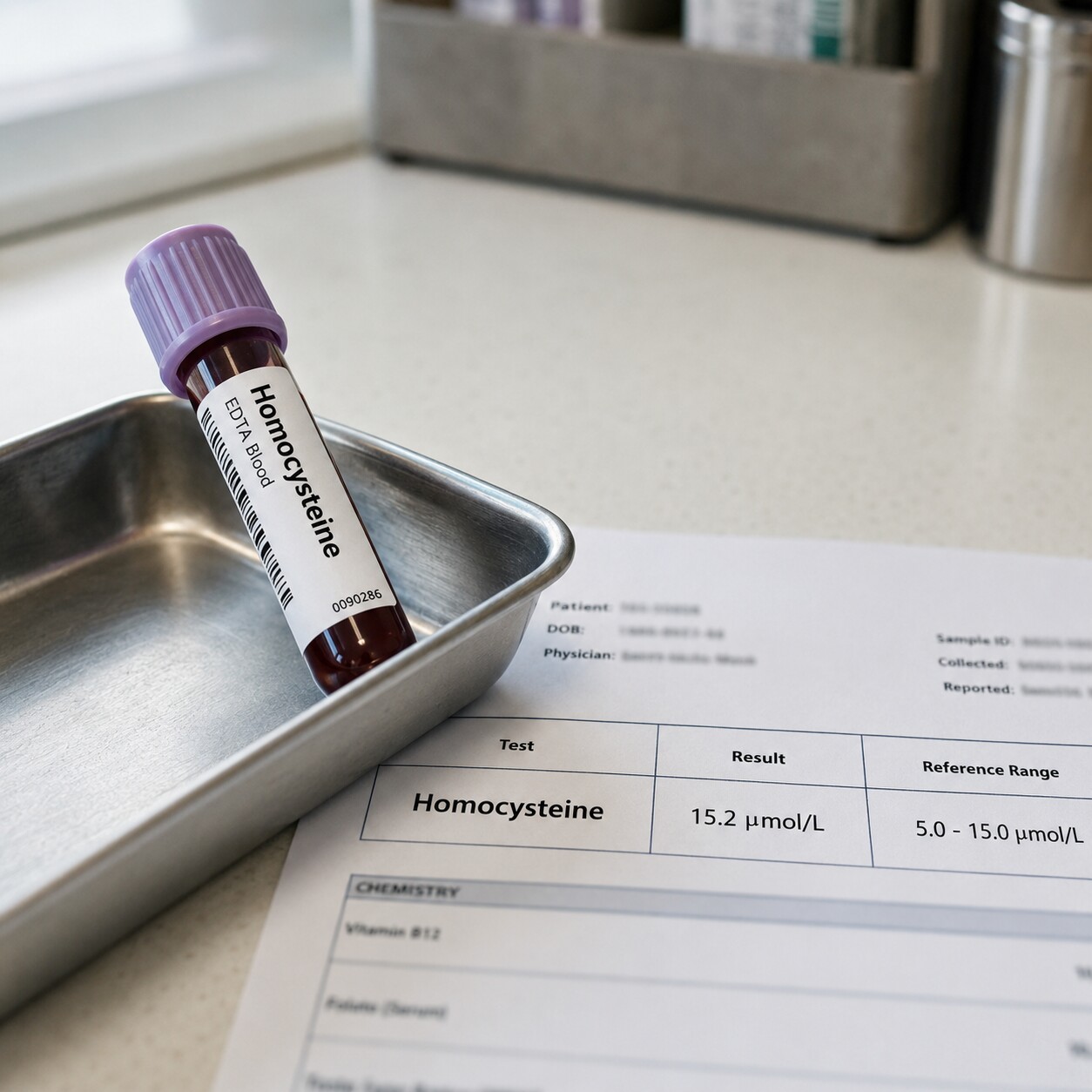
Figure 3. A homocysteine blood test measures the actual outcome of the methylation cycle, which is what clinically matters — not the underlying MTHFR genotype on its own.
Here is the single most important point in this entire article: genotype is not the same thing as outcome. Having a genetic predisposition toward a slower enzyme is not the same as actually having high homocysteine, and the U.S. Centers for Disease Control and Prevention states plainly that finding an MTHFR variant "has no clinical implications for the patient" in the vast majority of cases. Most people who are homozygous TT for C677T, carrying the more significant of the two variants in its most significant form, walk around with completely normal homocysteine levels and no related health problems whatsoever.
The biggest reason for this is a public health measure most people have never heard of. In 1998, the U.S. Food and Drug Administration mandated that folic acid, the synthetic, highly stable form of folate, be added to enriched grain products like bread, pasta, rice, and breakfast cereal, specifically to reduce the rate of neural tube birth defects in babies whose mothers might not otherwise get enough folate during early pregnancy. An unplanned but well-documented side effect of that fortification program was a measurable, population-wide drop in average homocysteine levels across the entire country, essentially because folic acid intake rose across the board regardless of anyone's individual genetics. Because MTHFR's slowdown only really becomes a problem when the folate supply feeding into it is already marginal — like a narrow doorway that only causes a backup when there's already a crowd trying to get through — the fortified food supply effectively flooded that doorway with enough traffic-easing supply to keep most people's homocysteine in a normal range regardless of how efficiently their particular copy of the enzyme was working.
This is exactly why the useful number to focus on is the homocysteine blood test itself, not the genotype sitting behind it. A genotype is a piece of background information about potential vulnerability; a homocysteine result is a direct measurement of what's actually happening in your bloodstream right now, shaped by that genetic vulnerability alongside diet, absorption, kidney function, and several other variables all acting together. It's a similar relationship to how a family history of high cholesterol doesn't tell you your actual cholesterol number — it tells you it might be worth checking, but only the test itself tells you where you actually stand.
The Role of Folate and B12 in Determining the Real-World Effect
Because MTHFR's practical impact depends so heavily on how much raw folate is available for it to work with, researchers describe the relationship between the C677T variant and homocysteine as a gene-nutrient interaction — a case where the same genetic starting point can lead to noticeably different real-world outcomes depending entirely on someone's nutritional status. One well-cited study following participants across different quartiles of blood folate found that among people homozygous for C677T, those in the lowest folate quartile had homocysteine levels roughly 5.4 micromoles per liter higher than those in the highest folate quartile — a substantial difference driven entirely by nutrition, not genetics, even though every person in that comparison shared the exact same TT genotype. In other words, two people with an identical MTHFR result can land in completely different places on a homocysteine test depending on what's actually in their diet, which is precisely why genotype alone was never going to be a reliable predictor on its own.
The same logic applies to vitamin B12, which methionine synthase needs as a cofactor to actually carry out the final step of converting homocysteine back into methionine using the active folate MTHFR produces. A person with a fully normal MTHFR genotype but a genuine B12 deficiency, whether from a plant-based diet lacking reliable B12 sources, an absorption problem, or long-term use of certain medications like metformin or acid-reducing drugs, can end up with elevated homocysteine despite having no MTHFR-related vulnerability at all — while a person homozygous for C677T with excellent B12 and folate status may never see a meaningful rise. One persistent piece of online misinformation worth directly correcting here: MTHFR variants do not prevent the body from processing folic acid, the everyday synthetic folate used in fortified foods and standard prenatal vitamins. The enzymatic step affected by MTHFR happens further down the metabolic pathway than the point at which folic acid first enters it, so regular folic acid still gets converted and used effectively by the overwhelming majority of people carrying these variants, methylfolate supplements included on store shelves notwithstanding.
The Overlooked Third Piece: Why Riboflavin (B2) Matters Too
Folate and B12 get most of the attention in conversations about homocysteine, but a third vitamin plays a specific and often-overlooked role for people who carry the C677T variant in particular: riboflavin, also known as vitamin B2. The MTHFR enzyme requires a cofactor called FAD to function, and FAD is built directly from riboflavin — meaning the raw materials for the enzyme's own machinery, not just the folate it processes, depend on adequate riboflavin status. Research specifically comparing riboflavin's effect on homocysteine across different MTHFR genotypes has found that people with the TT genotype are disproportionately sensitive to their riboflavin levels compared to people with the standard CC genotype — in one well-known study, homocysteine differed by roughly 4.1 micromoles per liter between the lowest and highest riboflavin quartiles specifically within the TT group, a gap nearly as large as the one driven by folate status in the same population.
This matters practically because riboflavin isn't part of most people's mental checklist when they think about homocysteine, even though it's genuinely one of the more actionable, overlooked levers available to someone carrying the C677T variant. Good dietary sources include eggs, dairy products, lean meats, almonds, mushrooms, and many fortified breakfast cereals — foods that, notably, are already part of a fairly standard varied diet, meaning most people already get adequate riboflavin without ever having to think about it deliberately. For someone who has been told they carry a homozygous C677T result and wants to understand what genuinely moves the needle beyond folate and B12, riboflavin status is a legitimate, evidence-backed piece of the picture that's frequently left out of the more sensationalized online explanations of MTHFR.
Homozygous vs. Heterozygous: What Your Genotype Combination Actually Means
DNA test reports often list MTHFR results using letter pairs that can look confusing without context, so it's worth translating the terminology plainly. Every person carries two copies of the MTHFR gene, one inherited from each biological parent. If both copies carry the standard version of the DNA at a given position, that's referred to as "wild type" — for C677T, this is written as CC, and it means no reduction in enzyme function from this particular variant at all. If only one copy carries the variant and the other is standard, that's called heterozygous, written CT for C677T or AC for A1298C — carrying a single copy generally produces only a modest, often clinically negligible reduction in enzyme activity. If both copies carry the same variant, that's called homozygous, written TT for C677T or CC for A1298C — this is the combination associated with the more substantial drop in enzyme activity, and specifically for C677T, it's the genotype most consistently tied to any measurable homocysteine elevation, and even then, primarily under conditions of inadequate folate or riboflavin intake rather than as an automatic outcome.
Putting the two variants together, a person's full MTHFR profile falls into a few broad categories: someone who is CC/AA carries neither variant and has no MTHFR-related vulnerability to consider. Someone who is heterozygous for just one variant, such as CT/AA or CC/AC, typically has minimal practical impact. Someone homozygous for C677T alone, TT/AA, carries the most-studied and most functionally significant reduction in enzyme activity. Someone homozygous for A1298C alone, CC/CC, generally sees little to no measurable effect on homocysteine even in this form. And someone who is compound heterozygous, carrying one copy each of C677T and A1298C, written CT/AC, tends to show a combined effect roughly comparable to being homozygous TT for C677T on its own. Prevalence varies meaningfully by ancestry: the homozygous TT genotype for C677T is found in roughly 10% to 15% of the general U.S. population, but that figure climbs considerably higher, sometimes above 20%, in people of Hispanic and certain Southern European backgrounds, and tends to run lower in people of Sub-Saharan African ancestry — a reminder that this is an extremely common, ordinary piece of human genetic variation, not a rare abnormality.
Why Major Medical Organizations No Longer Recommend Routine MTHFR Testing
Given how much circulates online about MTHFR, it can be genuinely surprising to learn that mainstream medicine has moved firmly in the opposite direction. The American College of Medical Genetics and Genomics published a formal practice guideline concluding there was insufficient evidence to support routine clinical testing of MTHFR polymorphisms, and organizations including the American College of Obstetricians and Gynecologists, the American Academy of Family Physicians, the College of American Pathologists, and the American Heart Association have each separately discouraged the test's routine use. The reasoning is consistent across all of them: once researchers controlled for the many confounding variables in earlier, smaller studies, more rigorous and better-designed research failed to replicate the strong disease associations that had initially made MTHFR testing seem promising, and hyperhomocysteinemia — elevated homocysteine itself — turned out to be a multifactorial condition whose risk is largely independent of MTHFR genotype, even in people who are homozygous for the variant.
In practice, this means MTHFR genotype has not held up as a reliable, independently useful predictor of cardiovascular disease, blood clotting disorders, or the other conditions it's frequently associated with in less rigorous or non-clinical sources. The clinically meaningful, actionable measurement remains the homocysteine level itself, checked with an ordinary blood test, precisely because that number already reflects the combined real-world influence of genetics, diet, absorption, and kidney function, rather than isolating just one input among several and treating it as though it tells the whole story on its own. It's also worth understanding why so many people encounter this topic in the first place without a doctor ever bringing it up: direct-to-consumer DNA testing services report raw genetic variant data without clinical interpretation attached, and a cottage industry of third-party websites has grown up around reinterpreting that raw data — sometimes rigorously, but often in exaggerated, alarmist language clearly designed to drive engagement toward supplement sales rather than to reflect the actual weight of the underlying evidence.
How MTHFR Became One of the Internet's Most Searched Genes
It's worth understanding how a fairly narrow, technical piece of biochemistry ended up as a household term for so many people, because that history explains a lot about why the online conversation and the clinical consensus have drifted so far apart. Through the 2000s, MTHFR remained mostly confined to specialized medical and genetics literature, discussed in the context of specific, well-defined research questions about homocysteine and cardiovascular risk. That changed over the following decade, as functional and integrative medicine practitioners began popularizing MTHFR testing as a purported explanation for a strikingly broad range of unrelated symptoms — fatigue, anxiety, migraines, recurrent miscarriage, autism, and dozens of other conditions were, at various points, attributed to MTHFR variants in books, blogs, and practitioner marketing aimed directly at consumers. The rise of affordable direct-to-consumer DNA testing in the same period made this framework easy to act on: a person could order a saliva kit, upload the raw data to a free third-party interpretation tool, and receive a report flagging their MTHFR status without ever involving a physician or genetic counselor trained to weigh that single data point against the rest of their actual health picture.
The problem with this broader "MTHFR as root cause" framing is that it was never built on the same kind of rigorous, replicated evidence that the earlier, narrower homocysteine-and-cardiovascular research was based on. As genetics researchers have pointed out directly, the leap from "this gene affects one specific enzyme in one specific metabolic pathway" to "this gene explains this long and varied list of seemingly unrelated conditions" was made largely without the kind of controlled clinical trials that would be needed to actually support it. This is part of why the professional guidance covered in the previous section reads as such a sharp course correction — it isn't medicine suddenly dismissing MTHFR, it's medicine returning to what the evidence has actually shown all along, after a period in which consumer-facing wellness marketing outpaced the underlying science by a considerable margin.
What to Do If You Already Have an MTHFR Result From a DNA Test

Figure 4. A raw MTHFR variant call from a consumer DNA test carries far less clinical weight on its own than an actual homocysteine blood test result.
Raw DNA files from consumer testing services don't actually use the letters "MTHFR C677T" directly — they identify variants by a reference SNP number, and third-party interpretation tools translate that number back into the more familiar name. C677T corresponds to reference number rs1801133, and A1298C corresponds to rs1801131; if you're looking at a raw data file yourself rather than a pre-built report, searching for those two identifiers is how you'd find your own genotype at each position. If you've already seen an MTHFR flag come up in a 23andMe or AncestryDNA raw-data interpretation, the most useful next step isn't more genetic testing — it's a straightforward, fasting homocysteine blood test, which will tell you what's actually happening rather than what might theoretically be possible. If that number comes back within the normal range, which it does for most people carrying these variants thanks to modern dietary folate intake, there is generally nothing further to act on regarding MTHFR specifically, regardless of which genotype combination you carry. If the number comes back elevated, the appropriate workup is exactly the same one a doctor would pursue for anyone else with high homocysteine and no known MTHFR result at all: checking vitamin B12 and folate status directly, reviewing kidney function, and considering thyroid function and lifestyle factors like smoking — the genotype doesn't change which tests come next, because it was never going to be the determining factor in the first place.
It's also worth being cautious about the specific supplement protocols marketed heavily to people who discover an MTHFR result online, often bundling high-dose methylfolate, methylcobalamin, and trimethylglycine together under branding that implies they're specifically necessary for "MTHFR support." For most people, standard folic acid and standard forms of B12 work perfectly well regardless of genotype, and there's limited clinical evidence that the more expensive methylated forms provide meaningfully better outcomes for the average carrier. These products are generally not dangerous at typical doses, but megadosing B12 in particular can mask the blood-count changes that would otherwise be an early warning sign of a genuine underlying B12 deficiency, which is one more reason a conversation with an actual healthcare provider, grounded in your real homocysteine number, is a better starting point than a self-directed supplement stack built around a DNA report alone.
MTHFR, Pregnancy, and Miscarriage Claims — Separating Fact From Internet Fear
Few corners of the MTHFR conversation generate more anxiety than pregnancy, where online claims frequently link the variant to recurrent miscarriage, blood clotting disorders, and a perceived need for specialized anticoagulant treatment during pregnancy. This is an area where the professional consensus is unusually clear and unusually reassuring: the American College of Obstetricians and Gynecologists explicitly recommends against testing for MTHFR variants as part of a recurrent pregnancy loss workup, and more rigorously designed studies attempting to confirm an independent link between MTHFR genotype and miscarriage risk have largely failed to replicate the earlier, smaller studies that originally raised the concern. Being homozygous for C677T or A1298C, on its own, is not currently considered by major reproductive medicine organizations to be a cause of recurrent pregnancy loss, and it does not, by itself, indicate a need for blood-thinning medication during pregnancy.
What genuinely does matter during pregnancy, independent of any MTHFR result, is adequate folate intake — and this recommendation applies universally to every pregnant person, regardless of genotype, because it's specifically about preventing neural tube defects like spina bifida, a risk driven by insufficient folate exposure during the earliest weeks of fetal development, often before a pregnancy is even confirmed. A standard prenatal vitamin containing folic acid, taken as recommended before conception and through early pregnancy, adequately covers this need for the overwhelming majority of people, MTHFR carriers included; those who specifically prefer a methylfolate-containing prenatal for personal reasons can reasonably choose one, but the clinical evidence does not currently show it to be necessary based on MTHFR status alone. Anyone who has been told they need specialized anticoagulant treatment specifically and solely because of an MTHFR result, absent any other diagnosed clotting disorder or personal history of blood clots, has good reason to seek a second opinion grounded in current professional guidelines.
How to Actually Lower Homocysteine, Genotype Aside

Figure 5. Dietary folate, along with adequate B12 and riboflavin, addresses the practical inputs that most strongly influence homocysteine — regardless of MTHFR genotype.
Whether or not MTHFR is part of the picture, the practical strategy for keeping homocysteine in a healthy range looks largely the same for almost everyone, because the same handful of inputs — folate, B12, B6, riboflavin, kidney health, and a few lifestyle factors — drive the vast majority of real-world variation in this number. On the dietary side, folate-rich foods include leafy greens like spinach and romaine, legumes such as lentils and black beans, asparagus, and avocado, alongside the folic acid already present in fortified grain products; B12 is found almost exclusively in animal-based foods like meat, fish, eggs, and dairy, which is why vegans, vegetarians, and older adults with reduced stomach acid production are more likely to need a direct supplement rather than relying on food alone; and riboflavin, as covered earlier, comes from eggs, dairy, lean meats, almonds, and mushrooms. Vitamin B6, needed for the separate pathway that permanently breaks down homocysteine rather than recycling it, is found in poultry, fish, potatoes, and non-citrus fruits like bananas.
Beyond diet, a few lifestyle factors independently affect homocysteine regardless of genetics: smoking is consistently associated with higher levels, plausibly because nicotine and its byproducts interfere with normal B-vitamin metabolism; heavy alcohol intake can impair folate absorption and increase losses through the kidneys; and because the kidneys are responsible for clearing homocysteine from the blood, general kidney health — adequate hydration, blood pressure control, and avoiding unnecessary strain from certain medications — plays a supporting role as well. It's worth setting realistic expectations here too: while B-vitamin supplementation reliably and predictably lowers homocysteine itself, large randomized controlled trials have found inconclusive results when it comes to whether that alone prevents heart attacks or overall cardiovascular disease, with a clearer protective signal found specifically for stroke risk. That doesn't make correcting an actual vitamin deficiency pointless — treating a real deficiency has genuine, well-established benefits for energy, cognitive function, and blood cell production on its own — but it does mean homocysteine and its underlying drivers, MTHFR included, are best treated as one honestly-weighted piece of a much bigger cardiovascular and nutritional picture, not a single number to chase down in isolation.
Frequently Asked Questions
If I'm homozygous for MTHFR C677T, will my homocysteine definitely be high?
No. Most people with this genotype have completely normal homocysteine levels, largely because of adequate folate intake from fortified foods. The genotype represents a potential vulnerability, not a guaranteed outcome — the only way to know your actual homocysteine status is a blood test.
Should I ask my doctor to test me for MTHFR?
Most major medical organizations, including the American College of Medical Genetics and the American Heart Association, now advise against routine MTHFR testing because it doesn't reliably predict disease risk on its own. A fasting homocysteine blood test is generally more clinically useful.
Can MTHFR variants prevent my body from using folic acid?
No, this is a common misconception. The step affected by MTHFR variants occurs further along the metabolic pathway than where folic acid first enters it, so regular folic acid is still processed and used effectively by the large majority of MTHFR carriers.
Does having an MTHFR variant mean I'm at risk for miscarriage or need blood thinners during pregnancy?
Current evidence does not support this. The American College of Obstetricians and Gynecologists recommends against MTHFR testing as part of a recurrent pregnancy loss workup, and more rigorous studies have not confirmed an independent link between MTHFR genotype and miscarriage risk.
Is A1298C as significant as C677T?
Generally, no. A1298C causes a smaller reduction in enzyme activity and, on its own, typically doesn't raise homocysteine meaningfully, even in its homozygous form. It becomes more relevant when combined with one copy of C677T.
Does taking a methylfolate supplement work better than folic acid for MTHFR carriers?
For most carriers, no meaningful clinical advantage has been demonstrated. Standard folic acid is still converted and used effectively by the majority of people with MTHFR variants, since the step MTHFR affects sits further along the pathway than where folic acid first enters it.
Why does MTHFR get blamed for so many unrelated symptoms online?
Starting in the 2010s, functional and integrative medicine marketing popularized MTHFR as an explanation for a wide range of unrelated symptoms, well beyond what the underlying research on homocysteine and cardiovascular risk actually supports. Mainstream medical organizations have since moved away from that broader framing.
Conclusion
MTHFR variants are common, biologically real, and genuinely capable of slowing down one specific step in how the body recycles homocysteine — none of that is internet exaggeration. What gets lost in most of the alarming language attached to these results online is that the gene is only one input among several, and for most people, adequate folate, B12, and riboflavin intake is more than enough to keep that single narrowed step from ever translating into an actual elevated number on a blood test. That's precisely why the medical organizations closest to this evidence have moved toward discouraging routine genetic testing altogether, in favor of the more direct, more clinically meaningful measurement: an actual homocysteine result, interpreted in the context of your real diet, kidney function, and overall health, rather than a raw genotype pulled from a consumer DNA file and run through an algorithm designed to flag every possible variant regardless of how much it actually matters. If you already know your MTHFR status and it's been sitting in the back of your mind, the most productive next step isn't more genetic testing — it's simply checking the number the gene was always meant to influence in the first place.
Still Not Sure What Your Results Mean?
Upload your labs and get a complete, visual, plain-language interpretation of every biomarker — delivered to your inbox in under 15 minutes.
Get My ReportThis article is for educational purposes only and does not constitute medical advice. Always consult your healthcare provider regarding your specific lab results.