
Why Is My Homocysteine High With Normal B12 and Folate?
It's a genuinely confusing moment: your homocysteine came back high, so the natural next step is to check the two vitamins everyone associates with it — vitamin B12 and folate — and both of them come back squarely normal. If anything, that should feel reassuring, since B12 and folate deficiency are the textbook explanation for elevated homocysteine. Instead it usually raises more questions than it answers, because the one explanation you were braced for has just been ruled out, and nobody handed you a second one on the way out the door. The truth is that B12 and folate are only two of at least half a dozen separate things that can push homocysteine upward, and in a meaningful share of people with a high result, those two vitamins are exactly where the trail runs cold — because the real driver was never a B12 or folate shortage in the first place. This article walks through what actually happens to homocysteine when the two most obvious suspects are cleared: the overlooked role of vitamin B6, why your kidneys matter more than most people realize, how an underactive thyroid quietly nudges the number up, which everyday medications are known culprits, and what genuinely warrants a closer look from your doctor versus what's simply a normal, explainable variation.
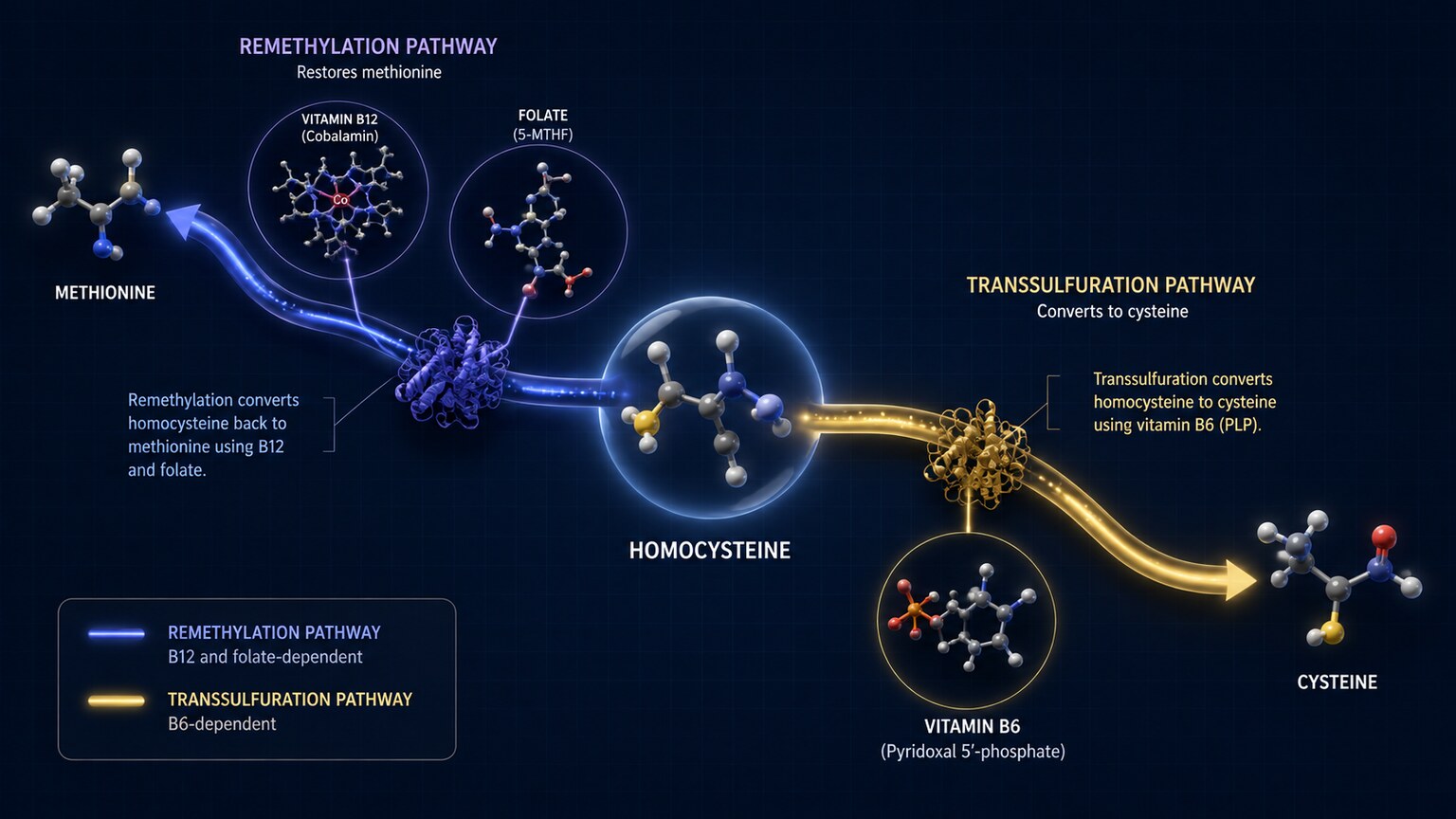
Figure 1. Homocysteine is cleared through two independent routes — remethylation, which needs B12 and folate, and transsulfuration, which needs vitamin B6 — so a normal result in one pair of vitamins doesn't rule out a problem in the other.
Already have a homocysteine number from a recent test, but not sure if it's actually good or bad for you? Just plug it in and see instantly.
🧮 Try the Free CalculatorThe Two Separate Roads Out of Homocysteine — and Why B12/Folate Only Cover One
To understand why a high homocysteine result can survive a completely normal B12 and folate panel, it helps to picture homocysteine not as a dead end that needs one specific fix, but as a busy intersection with two separate roads leading away from it. The first road is called remethylation, and it's the one almost everyone has heard of: an enzyme uses an active form of folate, handed off with the help of vitamin B12, to convert homocysteine back into methionine, the amino acid it originally came from. This is the pathway most doctors think of first, it's the one measured by the standard "check your B12 and folate" reflex, and it's the one most patient-facing explanations of homocysteine stop at — which is exactly why so many people assume that ruling it out should have solved the mystery.
The second road is called transsulfuration, and it runs in a completely different direction. Instead of recycling homocysteine back into methionine, this pathway permanently breaks it down into a different amino acid, cysteine, through a two-step process that depends on an enzyme called cystathionine beta-synthase — and that enzyme, unlike the remethylation pathway, needs vitamin B6 as its essential helper, not B12 or folate. In a healthy adult who isn't fasting, this transsulfuration road typically clears a substantial share of the day's homocysteine load, particularly after meals when protein intake temporarily raises the amount of homocysteine being produced. If B6 status is poor, this entire second road effectively narrows, and the body is left leaning almost exclusively on the B12/folate pathway to keep up — a pathway that may be functioning perfectly well but was never built to handle the full volume on its own. This is the single most important mental model for this whole topic: B12 and folate protect one road, B6 protects the other, and a normal result on the first pair says nothing at all about the condition of the second.
How the Homocysteine Test Itself Works, and Why the Number Can Shift Between Draws
Before chasing down causes, it's worth understanding what the test is actually measuring and why two homocysteine draws taken a few weeks apart can sometimes land in noticeably different places even when nothing meaningful has changed health-wise. Homocysteine is measured from a simple blood draw, typically processed from plasma, and most labs ask that the sample be drawn after an overnight fast — not because homocysteine itself is dramatically food-sensitive the way blood glucose is, but because a recent high-protein meal temporarily raises the amount of homocysteine being produced as protein is broken down into its component amino acids, including methionine, homocysteine's direct precursor. A non-fasting sample drawn shortly after a large steak dinner can run measurably higher than the same person's fasting result the next morning, which is exactly the kind of variable that gets ruled out first whenever a result looks unexpectedly high.
Beyond fasting state, homocysteine has a reasonable amount of natural day-to-day biological variability even in a perfectly healthy person — repeat-testing studies have found that a single measurement can swing by a meaningful percentage from one week to the next without any real change in underlying health, simply due to normal fluctuation in metabolism, hydration, recent activity, and minor variations in diet. This is one of the main reasons clinicians are generally reluctant to draw firm conclusions from a single mildly elevated result and will often ask for a repeat test, ideally drawn under similar conditions — fasting, similar time of day, without a recent illness or unusually heavy exercise session beforehand — before deciding how seriously to investigate further. It's also why the specific units and reference range printed on your lab report matter: results are reported in micromoles per liter (µmol/L), and while reference ranges vary slightly between labs, a commonly used cutoff for "normal" sits around 15 µmol/L, with levels above that considered mildly, moderately, or severely elevated depending on how far above the cutoff the number falls.
Vitamin B6: The Overlooked Third Vitamin That Rarely Gets Ordered

Figure 2. Chickpeas, poultry, fish, and bananas are among the richest dietary sources of vitamin B6, the cofactor the transsulfuration pathway depends on to clear homocysteine.
Vitamin B6, chemically known as pyridoxine and used by the body in its active form pyridoxal-5'-phosphate, or PLP, almost never makes it onto a standard metabolic or vitamin panel the way B12 and folate reliably do. Part of the reason is practical: B6 testing is less standardized, more expensive to run accurately, and isn't bundled into the routine blood work most primary care visits order. Part of the reason is historical: early homocysteine research focused heavily on the B12/folate story because folic acid fortification of the food supply made that pathway an easy, population-level lever to study, and B6's role in the quieter transsulfuration pathway simply attracted less attention for decades. The practical result is that a huge number of people walk around with borderline or outright low B6 status that nobody has ever measured, simply because nobody thought to ask.
B6 deficiency isn't rare, either. It shows up disproportionately in people who drink alcohol regularly, since alcohol both displaces PLP from its protein-binding sites in the blood and speeds up its breakdown in the liver. It's common in older adults, whose overall dietary intake and absorption of B6 tend to decline with age alongside other B vitamins. Long-term use of certain medications lowers B6 status directly — isoniazid, used to treat tuberculosis, and the seizure medication valproate are two well-documented examples, and some research has also linked long-term oral contraceptive use to modestly reduced B6 levels. Chronic kidney disease depletes B6 as well, partly through direct nutrient losses and partly because of the inflammatory changes that come with reduced kidney function. If a homocysteine result is elevated and B12 and folate are both normal, a direct B6 (PLP) blood test — not a symptom checklist, since B6 deficiency rarely produces symptoms specific enough to self-diagnose — is one of the most useful next requests to make of a doctor, precisely because it's the vitamin most likely to have been skipped the first time around.
Good dietary sources of B6 include chickpeas, poultry, fish like salmon and tuna, potatoes, fortified cereals, and bananas — foods that overlap only partially with the classic folate-rich list of leafy greens and legumes, which is part of why someone can eat what looks like a nutritionally solid diet and still come up short specifically on B6 if their meals lean heavily on foods from the folate side of the list without much from the B6 side.
How Kidney Function Quietly Shapes Homocysteine, Independent of Any Vitamin
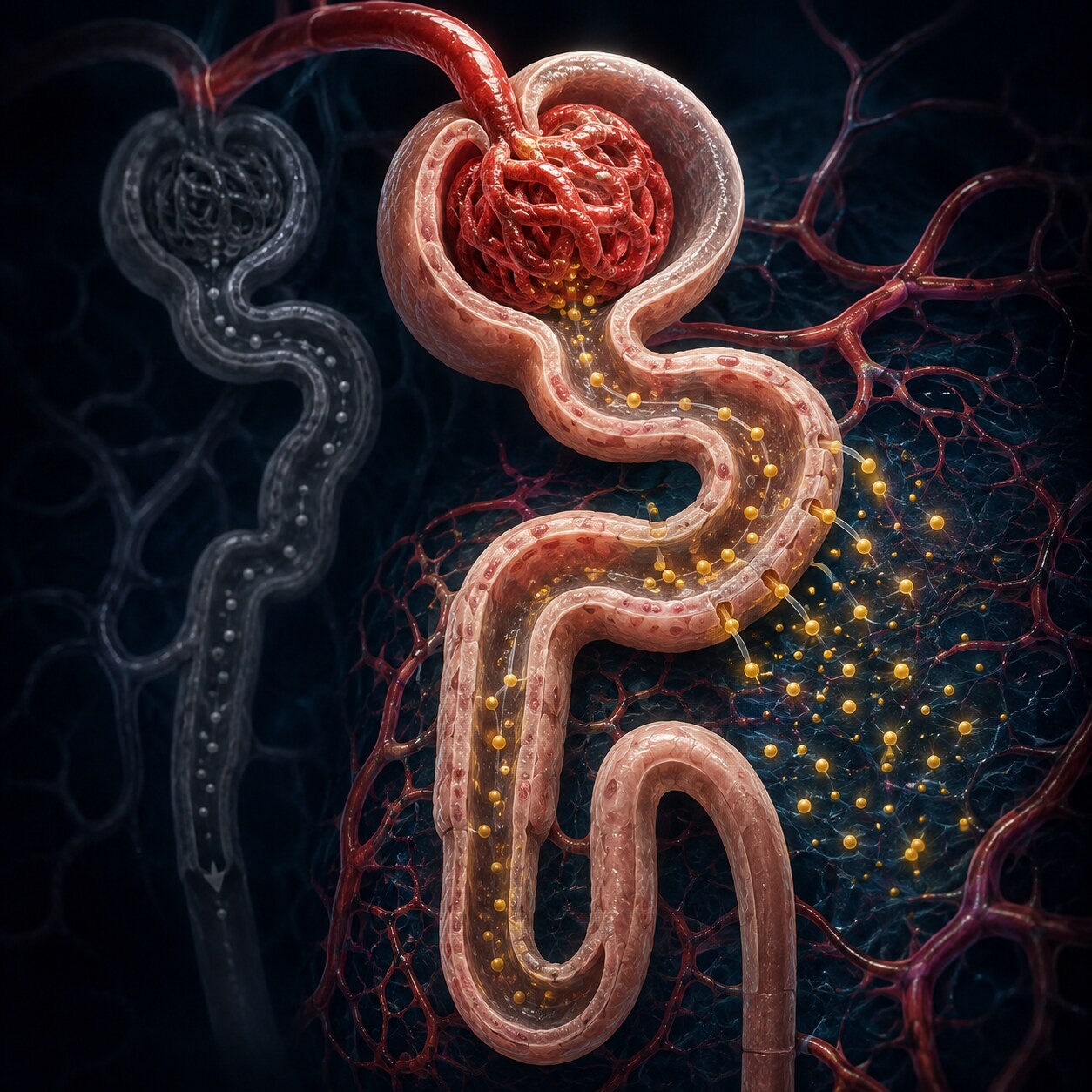
Figure 3. Even mild, otherwise unnoticed reductions in kidney filtration rate slow how efficiently homocysteine is cleared and metabolized, raising blood levels independent of vitamin status.
Of everything covered in this article, kidney function may be the single strongest driver of elevated homocysteine that has nothing to do with vitamins at all. The kidneys aren't just a filter that homocysteine passes through on its way out of the body — a meaningful share of the body's day-to-day homocysteine metabolism, including both the remethylation and transsulfuration reactions described earlier, actually takes place inside kidney tissue itself. When kidney function declines, that local metabolic capacity declines right along with it, on top of whatever reduced filtration is happening. The relationship is strikingly consistent and dose-dependent: research tracking people across the full range of kidney function has found that homocysteine climbs in a fairly predictable, stepwise way as estimated glomerular filtration rate (eGFR) — the standard measure of how well the kidneys are filtering blood — falls, well before kidney function drops low enough to be labeled overt kidney disease. In people with more advanced chronic kidney disease, homocysteine elevation is close to universal, and it's one of the most consistent lab abnormalities seen at that stage of illness.
What makes this especially relevant to the "normal B12 and folate" scenario is that reduced kidney function is common, frequently mild, and very easy to overlook, particularly in people who feel completely well and have no other symptoms. A creatinine result sitting at the upper edge of normal, or an eGFR in the 70s or 80s rather than the 90s and above, can be enough to nudge homocysteine upward on its own, especially layered on top of age or a diet that's merely adequate rather than optimal in B-vitamin intake. This is one of the clearest reasons a doctor evaluating an unexplained high homocysteine result will typically pull creatinine and eGFR alongside any additional vitamin testing — not because kidney disease is expected, but because even subclinical, asymptomatic reductions in kidney function are common enough, and influential enough, to be worth ruling out as a matter of routine.
There's also a chicken-and-egg quality to the kidney-homocysteine relationship that's worth understanding, because it explains why doctors take it seriously rather than treating it as a minor footnote. Elevated homocysteine is itself thought to contribute to vascular stress on the small blood vessels that keep the kidneys' filtering units healthy, which means reduced kidney function and elevated homocysteine can end up reinforcing each other over time — declining filtration raises homocysteine, and the resulting elevation may, over years, add a small additional burden back onto the same blood vessels responsible for that filtration. This doesn't mean a single mildly elevated result is actively damaging anyone's kidneys in real time, but it's part of why an unexplained elevation, once kidney function is confirmed to be the driver, is treated as a genuine data point about cardiovascular and renal health going forward, not just an isolated number to file away and forget.
The Thyroid Connection Almost Nobody Mentions

Figure 4. An underactive thyroid slows the overall metabolic rate at which cells clear homocysteine, raising blood levels even when both B12 and folate are fully adequate.
Thyroid hormone sets the pace for how quickly cells throughout the body carry out their everyday chemical reactions, and the enzymes responsible for clearing homocysteine are no exception to that rule. In hypothyroidism, where the thyroid produces too little hormone and the body's overall metabolic rate slows down, the reactions that process and clear homocysteine slow down right along with everything else — not because there's anything wrong with B12, folate, or B6 specifically, but because the entire cellular machinery is simply running at a reduced pace. Multiple studies have documented meaningfully higher average homocysteine levels in people with untreated hypothyroidism compared to people with normal thyroid function, and the relationship tends to correct itself once thyroid hormone replacement brings TSH back into a normal range — a reasonably clean, mechanistic before-and-after that supports the thyroid's role as a genuine, independent driver rather than a coincidental association.
This connection matters practically because hypothyroidism, especially in its milder or earlier "subclinical" form, produces a notoriously vague set of symptoms — fatigue, weight gain, feeling cold, dry skin, sluggishness — that are easy to attribute to stress, aging, or simply a busy season of life. Someone can have a thyroid that's quietly underperforming for months or years before it's ever tested, particularly if annual physicals happen to skip a TSH check. Because hypothyroidism is common, especially in women and in people over 60, and because a simple TSH blood test is inexpensive and routinely available, it's one of the more efficient explanations to check when B12 and folate haven't accounted for an elevated homocysteine result — efficient in the sense that a single test can meaningfully move the picture forward one way or the other.
Genetics Beyond MTHFR — What a Normal Vitamin Panel Can't Rule Out
The MTHFR gene tends to dominate conversations about homocysteine genetics, largely because of how widely consumer DNA testing has popularized it, but it isn't the only genetic factor capable of raising homocysteine, and it isn't even the most severe one. A separate, much rarer condition called classic homocystinuria results from a significant deficiency in the same cystathionine beta-synthase enzyme responsible for the B6-dependent transsulfuration pathway described earlier — but where an MTHFR variant produces a modest, often nutrient-correctable dip in enzyme efficiency, a CBS deficiency severe enough to cause classic homocystinuria produces dramatically elevated homocysteine, often many times above the normal range, along with a distinct set of physical findings that usually surface in childhood: lens dislocation in the eye, skeletal changes, developmental effects, and a significantly elevated risk of dangerous blood clots at a young age. This condition is included in newborn screening programs in the United States specifically because catching it early changes outcomes substantially, which means most adults reading this were already screened for the most severe form of it at birth, even if they never knew it.
For the much more common scenario — an adult with a moderately elevated homocysteine result and no history suggesting a severe genetic disorder — genetic testing beyond MTHFR is rarely the right next step, and mainstream guidance generally reserves it for situations with red flags like an unusually young age at diagnosis, homocysteine levels far outside the typical mildly-to-moderately elevated range, a personal or family history of unexplained blood clots at a young age, or the kind of physical findings associated with classic homocystinuria. For nearly everyone else, the practical path forward runs through the nutrient, kidney, thyroid, and lifestyle factors covered throughout this article, since those explain the overwhelming majority of real-world cases far more often than a rare enzyme disorder does. If MTHFR specifically is something you're curious about — how it works, what the two main variants mean, and why a positive genetic result doesn't automatically translate into a high homocysteine number — that mechanism is covered in detail in a separate, dedicated article linked at the bottom of this page.
Medications That Quietly Push Homocysteine Upward

Figure 5. Several everyday medications, including metformin and niacin, are established causes of elevated homocysteine independent of a person's underlying vitamin status.
A short list of genuinely common medications carry well-documented effects on homocysteine, and reviewing your own medication list is a reasonable step before assuming the cause must be something more obscure. Metformin, one of the most widely prescribed medications in the world for type 2 diabetes, reduces B12 absorption in the gut with long-term use, and while this shows up on a standard B12 test eventually, it can take time to develop and may not yet be reflected in a B12 level drawn earlier in that process — meaning a technically "normal" B12 result in a long-term metformin user doesn't fully rule out a B12-related contribution the way it would in someone not taking the drug. Niacin, particularly at the higher prescription doses once used to manage cholesterol, has its own separate, dose-related effect on raising homocysteine that isn't primarily about B12 or folate depletion at all.
Several anticonvulsant medications used for seizure disorders, including phenytoin and carbamazepine, are associated with elevated homocysteine, thought to involve their effects on folate metabolism over long-term use. Methotrexate, used both at high doses for certain cancers and at much lower doses for autoimmune conditions like rheumatoid arthritis and psoriasis, works in part by directly interfering with folate metabolism, which is precisely why patients on methotrexate are often prescribed a folic acid or folinic acid supplement alongside it. Cholestyramine and other bile acid-binding cholesterol medications can interfere with the absorption of fat-soluble nutrients broadly and have been linked to modest homocysteine increases in some studies. None of this means these medications should be stopped or are inherently dangerous — most are prescribed because their benefits clearly outweigh this particular side effect — but it does mean a doctor reviewing an unexplained high homocysteine result will typically want a full, current medication list, since one of these fairly common prescriptions is sometimes the missing piece.
It's worth adding that this is never a reason to stop or adjust any prescription medication on your own based on a homocysteine result. In every one of the cases above, the medication's primary benefit — controlling blood sugar, preventing seizures, managing autoimmune disease, or lowering cholesterol — is well established and generally outweighs a modest homocysteine effect that can often be managed alongside the medication rather than instead of it, frequently with nothing more than a targeted B-vitamin supplement chosen in coordination with the prescribing doctor. The goal of reviewing the medication list isn't to find something to eliminate; it's simply to identify whether one of these known interactions explains part or all of an otherwise puzzling lab result, so the conversation with your provider can be specific instead of open-ended.
Everyday Habits: Smoking, Alcohol, Caffeine, and How Much You Move
Beyond specific nutrients, organs, and medications, a handful of ordinary lifestyle factors have a measurable, independent effect on homocysteine that shows up consistently across large population studies. Smoking is one of the most consistent: multiple large studies have found meaningfully higher average homocysteine levels in smokers compared to non-smokers, with heavier smoking associated with a larger effect, plausibly related to how the byproducts of tobacco combustion interfere with normal B-vitamin metabolism and increase oxidative stress throughout the body. The effect appears to fade gradually after quitting, which is one more concrete, measurable benefit to add to the long list of reasons to stop.
Alcohol has a more nuanced relationship with homocysteine than smoking does. Heavy, chronic alcohol use raises homocysteine through several routes covered elsewhere in this article — impaired B6 status, reduced folate absorption, and added strain on liver metabolism — but some research on lighter, moderate alcohol consumption has found smaller or even mixed effects, which is part of why alcohol's contribution to any one person's homocysteine level really depends on how much and how consistently they're drinking, not just whether they drink at all. Caffeine has been studied specifically as well, with several trials finding that regular, heavier coffee intake is associated with modestly higher homocysteine, an effect that appears at least partly independent of caffeine's other cardiovascular effects and seems to involve compounds in coffee beyond caffeine itself. And physical inactivity has its own documented association, with several studies linking a more sedentary lifestyle to higher homocysteine and, conversely, regular aerobic exercise to modest reductions — though the size of that effect tends to be smaller than the vitamin, kidney, or thyroid factors covered earlier in this article, so it's best understood as one contributing piece rather than a primary explanation on its own.
Body weight and diet quality more broadly round out this category. Some research has found a modest association between higher body weight and elevated homocysteine, though the relationship is less consistent and less well understood than the other lifestyle factors discussed here, and it likely reflects a mix of dietary patterns, activity level, and metabolic differences rather than excess weight directly raising homocysteine through any single clear mechanism. What's more consistently useful is thinking about overall diet quality rather than any one nutrient in isolation: a pattern built around vegetables, legumes, whole grains, lean protein, and fish — broadly similar to what's often described as a Mediterranean-style eating pattern — tends to supply folate, B6, and B12 together, which is a more realistic day-to-day target than trying to track each vitamin separately against its own recommended intake.
Age, Sex, and Menopause — Why the "Normal" Number Isn't the Same for Everyone
One of the more subtle reasons a homocysteine result can look high relative to a general reference range, without anything actually being wrong, is that the number naturally shifts with age and sex in ways many standard lab reports don't fully account for. Homocysteine tends to rise gradually through adulthood, a trend explained by several of the factors already covered in this article compounding together over time: kidney function edges downward on average with each decade, dietary intake and absorption of B vitamins tend to decline somewhat in older adults, and the cumulative odds of an underlying issue like mild kidney impairment or hypothyroidism naturally increase with age as well. This is part of why a homocysteine level that would be unremarkable in someone in their 70s might be worth a closer look in someone in their 30s, even if both results technically fall within the same lab-printed reference range.
Sex differences add another layer. Men typically run somewhat higher homocysteine levels than premenopausal women, an effect at least partly attributed to estrogen, which appears to support more efficient homocysteine clearance. That advantage narrows substantially after menopause, when estrogen production drops — which is one reason postmenopausal women sometimes see a rise in homocysteine that isn't explained by any new vitamin deficiency, kidney problem, or thyroid issue at all, simply reflecting the loss of a hormonal effect that had been quietly helping keep the number lower for decades. Pregnancy moves homocysteine in the opposite direction, with levels typically dropping due to the significant increase in blood plasma volume and the heightened metabolic demand for methionine that pregnancy creates — a pattern that reverses again after delivery.
Putting It Together: A Practical Order for Working Through the Possibilities
With eight or more potential contributors on the table, it helps to have a rough sense of the order in which a thorough workup typically proceeds, rather than treating every possibility as equally likely to apply. The most efficient starting point is usually the cheapest, most routine tests: a repeat fasting homocysteine to confirm the original result wasn't a one-off fluctuation, alongside creatinine and eGFR to check kidney function and TSH to check thyroid function, since both are inexpensive, widely available, and — as covered above — genuinely common, frequently silent contributors. If those come back clear, a direct vitamin B6 (PLP) test is the next logical step, precisely because it's the vitamin most likely to have been skipped in the original round of testing that only checked B12 and folate.
Alongside the lab work, a careful review of the full medication list and recent habits rounds out the picture: has metformin, niacin, an anticonvulsant, or methotrexate been part of the regimen for months or years, has alcohol intake increased, has smoking status changed, and has activity level dropped meaningfully compared to a year or two ago. For most people with a mild-to-moderate elevation, working through this list with a healthcare provider identifies a clear, correctable explanation well before genetic testing or more specialized workups ever need to be considered. Genetic testing beyond MTHFR, evaluation for rarer causes, and hematology referral are generally reserved for the smaller subset of cases with the red flags discussed below — not the default first step for the much more common scenario of a mildly elevated number in an otherwise healthy adult.
When an Unexplained High Homocysteine Actually Needs Follow-Up
With so many possible contributors on the table, it helps to have a clear sense of what actually warrants a more thorough workup versus what a doctor might reasonably watch rather than chase. A mild elevation — generally in the range of roughly 15 to 30 micromoles per liter — found in someone with normal B12, normal folate, normal kidney function, and normal thyroid function, and no other red flags, is common enough that it's often reasonable to address through the practical, modifiable factors covered in this article: confirming B6 status directly, reviewing smoking and alcohol habits, and revisiting the full medication list, rather than immediately escalating to more specialized or invasive testing.
A more substantial elevation, a result that keeps climbing on repeat testing despite addressing the obvious contributors, or an elevation appearing in someone notably young with a personal or family history of unexplained blood clots, is a different situation, and one where it's reasonable for a doctor to widen the workup — testing B6 directly if it hasn't already been checked, confirming kidney function with both creatinine and eGFR, checking TSH if it hasn't been done recently, and, in the specific context of a young patient with a strong personal or family clotting history, considering referral to a genetics specialist for evaluation beyond standard MTHFR testing. The practical message either way is the same: a normal B12 and folate result is a genuinely useful piece of information, but it's the beginning of the workup for an unexplained high homocysteine, not the end of it.
Frequently Asked Questions
If my B12 and folate are both normal, could the homocysteine result just be wrong?
It's possible but not the most likely explanation. Lab error happens occasionally with any test, and a fasting sample drawn correctly is generally reliable, so a repeat test is a reasonable first step. In most cases, though, a persistently elevated result with normal B12 and folate points toward one of the other factors in this article rather than a lab mistake.
Should I ask specifically for a vitamin B6 test?
Yes, this is one of the most useful and most commonly overlooked next steps. B6 isn't part of most standard panels, and because it drives an entirely separate clearance pathway from B12 and folate, a normal B12/folate result doesn't provide any information about B6 status at all.
Can stress or a recent illness temporarily raise homocysteine?
Acute illness and significant physiological stress can cause modest, temporary shifts in many metabolic markers, homocysteine included, though the evidence here is less extensive than for the factors covered in this article. If a high result coincided with being sick or under unusual strain, a repeat test once things have settled is a reasonable way to see whether the number was a temporary blip.
Does taking a B-complex supplement make sense even before more testing?
For many people, a standard B-complex covering B6, B12, and folate together is a low-risk, reasonable step, since it addresses the full set of relevant vitamins at once rather than guessing which one might be low. It's still worth discussing with a healthcare provider first, particularly if kidney function or thyroid status hasn't been checked, since a supplement won't correct those underlying causes.
How much can kidney function alone raise homocysteine if everything else is normal?
Meaningfully. Research tracking homocysteine against kidney filtration rate has found a fairly consistent, stepwise rise as filtration declines, even at levels of kidney function still considered within a broadly normal range. This is why creatinine and eGFR are commonly checked alongside vitamin levels when homocysteine is unexpectedly high.
Is a slightly high homocysteine with normal B12 and folate dangerous on its own?
A mild elevation by itself is not typically treated as an emergency, but it's a reasonable prompt to look for an underlying, correctable cause rather than something to ignore indefinitely. Working through the possibilities in this article with a healthcare provider is the appropriate next step, rather than assuming the number is meaningless simply because the two most obvious vitamins checked out fine.
Conclusion
A normal B12 and folate result feels like it should close the case on a high homocysteine reading, but it really only closes one branch of a much larger set of possibilities. Homocysteine is cleared through two separate biochemical pathways, influenced by kidney and thyroid function, sensitive to a handful of common medications, and shaped by everyday habits like smoking and alcohol — which means ruling out B12 and folate genuinely narrows things down, but it doesn't finish the job on its own. If that's the situation you're in right now, the most useful next move isn't to write the number off as unexplained; it's to bring this exact list — B6, kidney function, thyroid function, current medications, and lifestyle factors — into your next conversation with a healthcare provider, so the workup can move directly to the possibilities that actually fit your situation instead of starting over from scratch.
Still Not Sure What Your Results Mean?
Upload your labs and get a complete, visual, plain-language interpretation of every biomarker — delivered to your inbox in under 15 minutes.
Get My ReportThis article is for educational purposes only and does not constitute medical advice. Always consult your healthcare provider regarding your specific lab results.