
Can Viral Infections Cause Temporary Troponin Elevation?
Yes — a viral infection can raise troponin, the protein doctors measure to check for heart muscle damage, even when there is no heart attack anywhere in the picture. This surprises a lot of people, because troponin has a reputation as "the heart attack test," and seeing it flagged high on a lab report while you're mostly just fighting off a bad flu or a stomach bug can feel alarming. But viruses can touch the heart in several distinct ways — some direct, some indirect — and in most cases, a virus-related troponin bump turns out to be temporary and self-limited, resolving as the infection clears, though a smaller subset of cases involve more significant heart muscle inflammation that needs closer medical attention. Understanding why this happens, which viruses are most often responsible, and how doctors tell a viral bump apart from a true cardiac emergency can turn a frightening lab result into something far more manageable.

Figure 1 — When a virus damages the outer membrane of a heart muscle cell, troponin trapped inside can leak directly into the bloodstream.
Curious what the rest of your labs are telling you beyond troponin? Upload your results and get a complete, plain-language breakdown in under 15 minutes.
Analyze My ResultsWhat Troponin Actually Measures — And Why a Virus Can Reach It
To understand why a virus would show up on a heart test at all, it helps to know exactly what troponin is and where it lives. Troponin isn't something that floats freely in your blood under normal circumstances — it's a structural protein tucked inside the working machinery of your heart muscle cells, where it helps regulate the way those cells contract with every heartbeat. Think of it less like a warning light and more like a component bolted deep inside an engine: it's not supposed to be visible from the outside at all. Troponin only shows up in a blood test when heart muscle cells are damaged badly enough that their outer membrane — the thin wall that normally keeps everything inside the cell contained — becomes leaky or ruptures, spilling that internal protein out into the bloodstream where a lab can detect it.
For decades, the dominant reason cardiologists ordered this test was to catch exactly one scenario: a blocked coronary artery cutting off blood flow to part of the heart, the event most people know as a heart attack. But as testing technology became dramatically more sensitive — modern "high-sensitivity" troponin assays can detect concentrations thousands of times smaller than older tests could — doctors began noticing that all sorts of conditions besides blocked arteries could cause the same kind of cell-membrane leak. A racing heart from a fever, a strained heart from severe pneumonia, kidney disease that slows how quickly troponin clears out of the blood, and yes, viral infections that directly attack heart tissue, can all produce a positive troponin result. The test got so good at detecting small amounts of leaked protein that it started picking up damage from causes far more common — and far less dangerous — than a classic heart attack.
A Number That Used to Mean Only One Thing
It's worth pausing on just how recently this broader understanding of troponin developed, because it explains why so many people are caught off guard by a viral connection to a "heart" test. When troponin testing was first introduced into routine clinical practice in the 1990s, it was framed almost entirely around one job: confirming or ruling out a heart attack in someone with chest pain. Earlier tests used for that same purpose, like an enzyme called CK-MB, were far less specific and could be thrown off by all sorts of unrelated muscle injury elsewhere in the body. Troponin, by contrast, is found almost exclusively in heart muscle, which made it a genuinely superior marker for detecting cardiac injury specifically. That reputation as a laser-focused, heart-attack-specific test stuck, and for a long time it was reasonably accurate, because older troponin assays simply weren't sensitive enough to pick up the smaller, more diffuse kinds of injury that infections and inflammation can cause.
The rollout of high-sensitivity troponin assays over the past decade and a half changed that equation considerably. These newer tests can measure troponin concentrations in the single-digit nanogram range, orders of magnitude below what older assays could reliably detect. That extra sensitivity is genuinely valuable — it allows heart attacks to be ruled in or ruled out faster and with more confidence than ever before — but it came with a side effect: doctors started seeing small, previously invisible troponin elevations in patients who clearly weren't having heart attacks at all, including a meaningful share who were simply fighting off a viral infection. Large studies conducted during the COVID-19 pandemic brought this phenomenon into particularly sharp focus, since so many hospitalized patients had troponin measured as a matter of routine, and elevated results turned out to be common even in people with no prior heart disease and no coronary blockage on further testing. That body of research is a large part of why the connection between viral illness and troponin elevation is now a well-established, mainstream part of how doctors interpret this test, rather than a rare footnote.
The Direct Mechanism — When a Virus Actually Infects the Heart

The most direct route by which a virus raises troponin is a condition called myocarditis — inflammation of the heart muscle itself, caused by the immune system's response to a viral invader that has made its way into cardiac tissue. When certain viruses enter heart muscle cells, either by infecting them directly or by triggering a strong immune reaction against them, the resulting inflammation can injure or kill some of those cells outright. As those cells break down, the troponin they contain spills into circulation, and a blood test drawn at that point will show an elevated result — sometimes only mildly elevated, sometimes dramatically so, depending on how much tissue is affected.
Myocarditis from a virus can happen at almost any age, but it's disproportionately noticed in younger, otherwise healthy people, partly because there's no other obvious explanation like longstanding heart disease to point to. Someone in their twenties or thirties might come down with what feels like an ordinary case of the flu or a stomach virus, then a few days later notice chest discomfort, unusual fatigue, or a fluttering, irregular heartbeat. That combination of symptoms is often what prompts a doctor to check troponin in the first place, and when it comes back elevated in someone with no cardiac risk factors and a recent viral illness, myocarditis moves to the top of the list of explanations. In most cases the inflammation is mild, the immune system clears the virus, the heart muscle heals, and troponin gradually returns to normal over days to weeks. In a small minority of cases, the inflammation is severe enough to temporarily or even permanently weaken the heart's pumping ability, which is why any suspicion of myocarditis is taken seriously and typically evaluated further with an electrocardiogram, an echocardiogram, and sometimes cardiac MRI.
Who Is More Likely to Develop a Virus-Related Troponin Rise
Not everyone who catches a virus faces the same odds of seeing it show up on a troponin test, and understanding who's more susceptible helps put an individual result into better context. Older adults tend to be at higher risk, partly because age itself is associated with less cardiac reserve — a heart that has less extra capacity to absorb the added workload of fever and a faster pulse without some degree of measurable strain. People with pre-existing heart disease, even mild or previously unnoticed coronary narrowing, are more vulnerable as well, since a heart already operating closer to its supply limit has less room to tolerate the added demand a serious infection creates before that mismatch becomes detectable on a blood test. Diabetes, chronic kidney disease, and obesity are all independently associated with a higher likelihood of troponin elevation during an infection, both because they're linked to underlying cardiovascular changes and, in the case of kidney disease specifically, because troponin is partly cleared from the blood by the kidneys — when that clearance slows down, troponin can accumulate to higher levels for the same amount of underlying cardiac stress.
On the other end of the spectrum, viral myocarditis specifically — the direct infection-driven inflammation described in the next section — actually skews toward younger patients rather than older ones, which can seem counterintuitive at first. The leading theory is that a younger, more vigorous immune system mounts a more forceful inflammatory response against an invading virus, and it's often that immune response itself, not the virus directly, that does the bulk of the damage to heart tissue. This is part of why myocarditis is something doctors specifically watch for in younger patients, including athletes, who develop chest symptoms during or after a viral illness, even though those same patients would otherwise be considered very low risk for a classic, artery-blockage type of heart problem.
Beyond Myocarditis — The Indirect Ways an Infection Stresses the Heart
Not every virus-related troponin elevation means the virus actually infected the heart. Far more often, the heart is an innocent bystander caught up in the physical stress of being sick, a pattern doctors sometimes call "type 2" troponin elevation to distinguish it from the classic blocked-artery scenario. Fever itself raises your metabolic rate and pushes your heart to beat faster and work harder just to keep up with the body's increased demand for oxygen. A heart rate of 110 or 120 beats per minute sustained for hours during a bad fever is a very different workload than the heart's normal resting pace, and in people whose heart already has less reserve capacity — often due to age or an unrelated underlying condition they may not even know about — that sustained extra workload can be enough to cause a small, transient mismatch between how much oxygen the heart muscle needs and how much it's actually getting.
Severe respiratory infections add another layer to this. Viral pneumonia or a bad case of influenza or COVID-19 can lower blood oxygen levels throughout the body, including in the heart's own blood supply. A heart working overtime due to fever and a fast pulse, combined with less oxygen available in the blood delivering that supply, creates exactly the kind of supply-and-demand imbalance that can nudge some heart muscle cells into mild, reversible distress — enough to leak a small amount of troponin without any of the plaque rupture or artery blockage that defines a true heart attack. Widespread inflammation from a serious infection, sometimes described loosely as a "cytokine" response, can also directly irritate heart tissue and blood vessel linings throughout the body, contributing to the same kind of low-grade troponin leak. None of this means the heart is being permanently damaged — it means it's temporarily working under more strain than usual, in the same way muscles anywhere in the body can show signs of stress under an unusual load, and it typically settles down once the underlying infection resolves and the fever breaks.
Which Viruses Are Most Often Behind an Elevated Troponin
Certain viral families come up again and again in medical research on troponin elevation and viral myocarditis. Coxsackievirus and other enteroviruses have historically been considered among the classic causes of viral myocarditis, particularly in younger patients, and were the viruses most strongly associated with this condition before more recent viruses entered the picture. Adenovirus and parvovirus B19 are also well documented causes, sometimes identified through biopsy or specialized testing when a case of myocarditis is being investigated in detail.
SARS-CoV-2, the virus responsible for COVID-19, brought a huge amount of new attention to this topic starting in 2020, because troponin elevation turned out to be strikingly common in people hospitalized with COVID-19 — and elevated troponin during that illness was consistently associated with a more severe overall course. Some of that elevation reflected direct viral myocarditis, but a large share reflected the indirect mechanisms described above: fever, low oxygen levels, a racing heart, and intense systemic inflammation all acting together during a serious respiratory infection. Influenza has a long history of being linked to cardiac strain as well, and it's part of why doctors have observed an uptick in heart attacks and other cardiac events during bad flu seasons — the infection itself appears to destabilize the cardiovascular system in ways that go beyond respiratory symptoms alone. Epstein-Barr virus, herpesviruses, and even common cold-causing viruses have all been reported in individual cases of myocarditis, though far less frequently than the viruses above. In everyday clinical practice, the specific virus responsible is often never formally identified — it typically isn't necessary for guiding treatment, since the approach to viral myocarditis is largely supportive regardless of which virus triggered it.
What Happens Inside the Immune System During Viral Myocarditis
It helps to understand myocarditis not as the virus itself directly destroying heart tissue in most cases, but as a more complicated two-stage process involving the body's own defenses. In the first stage, a virus reaches heart muscle cells, either by traveling there through the bloodstream during a more widespread infection or, in some cases, by having a particular biological affinity for cardiac tissue specifically. Once inside those cells, the virus can cause some direct injury on its own, but the second and often larger stage comes from the immune system's response to that invasion. White blood cells flood into the heart tissue to fight off the infection, releasing inflammatory chemical signals as part of that fight. This immune response is necessary and, in the vast majority of cases, ultimately successful at clearing the virus — but the same inflammation that clears the infection can also injure nearby healthy heart muscle cells as collateral damage, in much the same way that a strong immune reaction anywhere in the body — swelling around a sprained ankle, for example — is protective and healing in intent but still produces real, measurable tissue disruption along the way.
This two-stage picture explains a few things that might otherwise seem puzzling. It explains why myocarditis symptoms often lag a few days behind the initial viral symptoms, since it takes time for the immune response to fully ramp up. It explains why myocarditis can, in rare cases, continue or even worsen briefly after the original infection has technically cleared, since the immune reaction can outlast the virus itself. And it explains why researchers have looked closely at whether modulating the immune response — rather than only targeting the virus — might help in more severe cases, an area of ongoing study in cardiology and immunology.
How Doctors Tell a Viral Bump Apart From an Actual Heart Attack
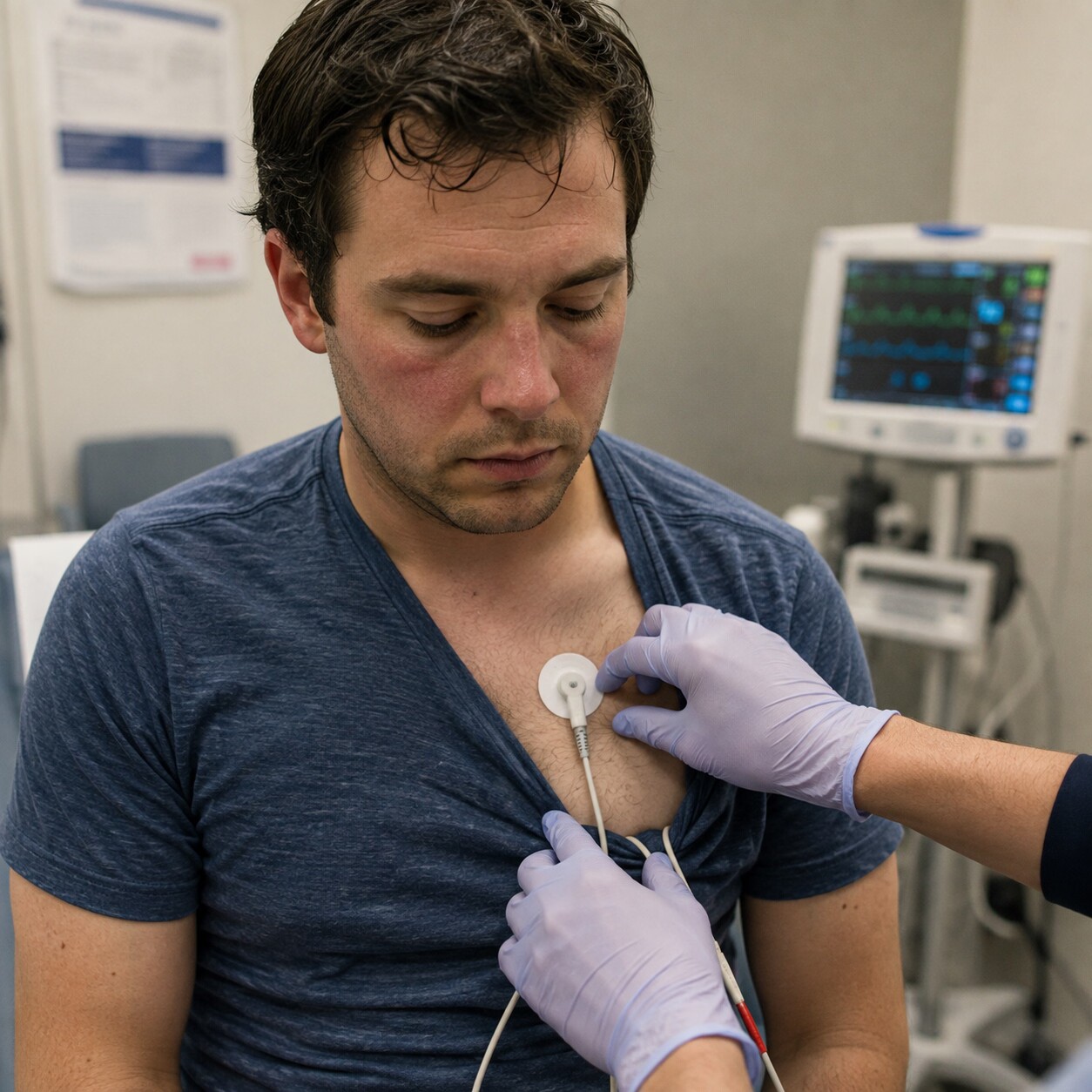
Because troponin alone can't distinguish between a blocked artery and a virus-stressed heart, doctors lean on a combination of tools to sort out what's really going on. The pattern of the troponin number itself over time is one of the most useful clues, which is why a single result is rarely the whole story — this is covered in more detail in the next section. An electrocardiogram, the test that records the heart's electrical activity through small sticky patches on the chest, can show telltale patterns specific to a blocked artery that generally look different from the more diffuse, patchy changes sometimes seen with myocarditis. An echocardiogram, which uses sound waves to create a moving picture of the heart, can show whether one specific region of heart muscle isn't contracting well — suggestive of a blocked artery feeding that exact region — versus a more generalized weakness spread more evenly across the heart, which points more toward inflammation from an infection.
The story a person tells also matters enormously. Someone whose troponin rises in the middle of a documented viral illness, with fever, body aches, and typical infection symptoms preceding any chest discomfort, paints a very different picture than someone with longstanding risk factors like high cholesterol, smoking, diabetes, or a family history of early heart disease who develops sudden, severe, crushing chest pain with no preceding illness at all. Age matters too, since a blocked-artery heart attack becomes statistically far more likely as people get older, while viral myocarditis is disproportionately seen in younger people without traditional cardiac risk factors. When the clinical picture remains unclear after these initial tools, cardiac MRI has become an increasingly valuable next step, since it can directly visualize patterns of inflammation and scarring in the heart muscle that are fairly specific to myocarditis and distinct from the scarring pattern left behind by a blocked artery.
Why a Single Troponin Number Rarely Tells the Whole Story
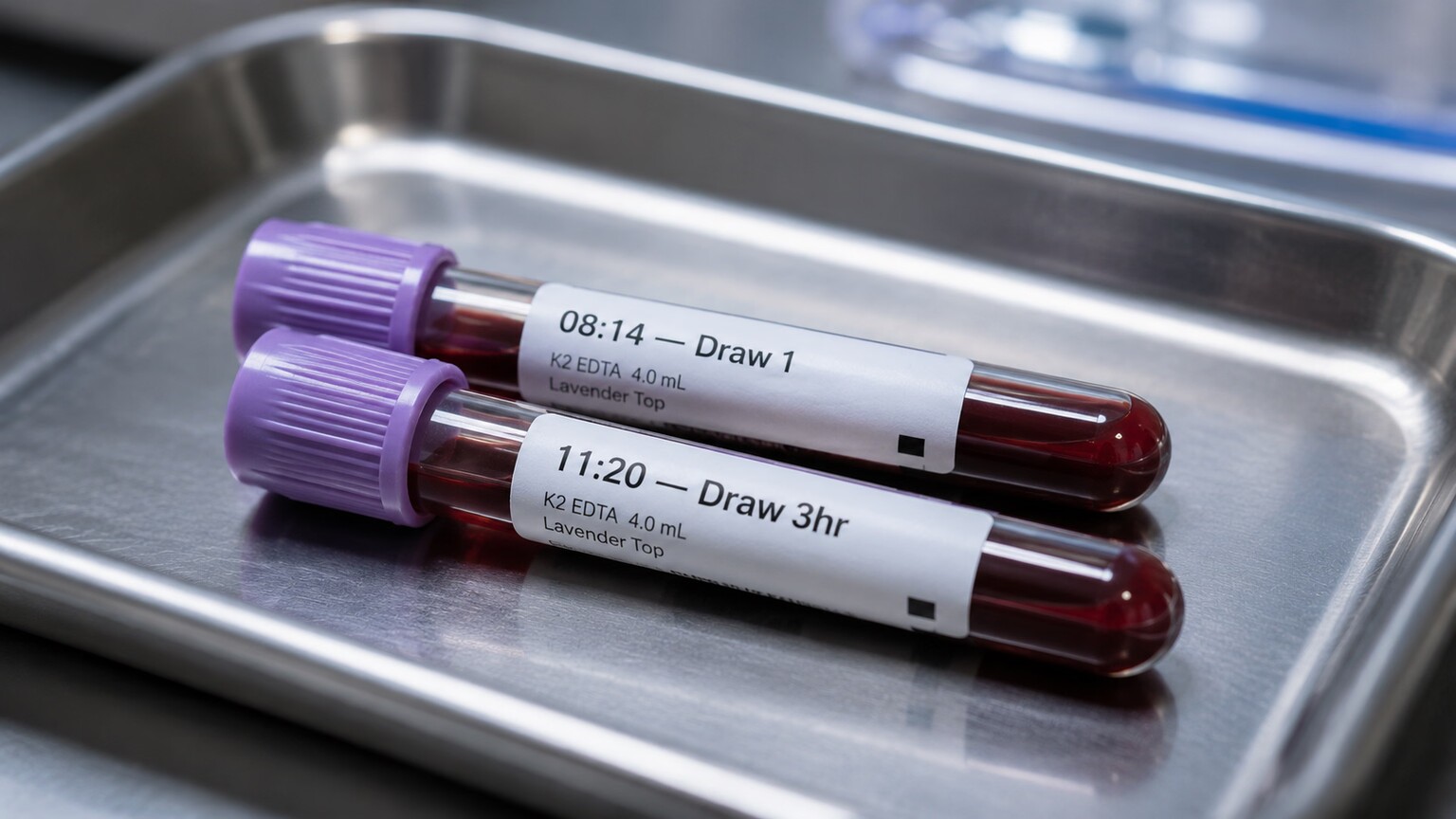
One of the most important things to understand about troponin testing, viral illness or not, is that doctors almost never rely on just one measurement. Because troponin behaves differently over time depending on its cause, drawing blood more than once — typically a few hours apart — and watching whether the number is rising, falling, or holding steady gives far more diagnostic information than any single value in isolation. In a genuine heart attack from a blocked artery, troponin usually shows a sharp, unmistakable rise over the first several hours as active tissue damage continues, followed by a gradual, predictable decline over the following days as the damaged area stabilizes. In viral myocarditis or the indirect stress mechanisms described earlier, troponin is more likely to be mildly elevated but relatively stable between two measurements taken a few hours apart, without the same dramatic upward trajectory.
This is exactly why a person might see one elevated troponin result on a lab report from an urgent care visit or an emergency room stay and feel immediate panic, without realizing that the number by itself, disconnected from its trend over time and the surrounding clinical picture, isn't something even a cardiologist would try to interpret in isolation. If your report shows a single troponin value, especially in the context of a known recent viral illness, the far more useful question to bring to a follow-up conversation with your doctor is whether that value was trending up, down, or flat compared to any other measurements taken — and whether the overall clinical picture supported a benign, self-limited explanation.
Is a Virus-Related Troponin Rise Actually Dangerous?

Figure — In most cases of viral myocarditis, inflammation is patchy and mild, and the heart muscle heals fully once the underlying infection resolves.
For the overwhelming majority of people, a temporary troponin rise during or after a viral illness resolves completely and leaves no lasting mark on the heart. Mild viral myocarditis, which is by far the most common presentation, tends to behave like a bruise: uncomfortable and sometimes worrying in the moment, but something the body repairs on its own with rest and time, usually over one to several weeks. Most people recover fully, and follow-up heart function testing typically returns to completely normal.
There is, however, a smaller and more serious end of the spectrum that's worth naming honestly rather than glossing over: a minority of viral myocarditis cases, sometimes called fulminant myocarditis, involve inflammation severe enough to significantly weaken the heart's pumping function in a short period of time, occasionally requiring hospitalization, medication to support the heart, or in rare instances mechanical support devices while the body fights off the underlying infection. This is uncommon, but it's precisely why doctors don't dismiss chest pain, shortness of breath, or an irregular heartbeat that develops during or shortly after a viral illness, and why any suspected case of myocarditis warrants proper medical evaluation rather than being assumed automatically benign. The reassuring reality is that even among people diagnosed with myocarditis, most have mild disease and excellent long-term outcomes — the rare severe cases simply explain why the condition is taken seriously as a category, even though any individual case is statistically much more likely to be mild.
How Long Does It Take Troponin to Return to Normal?
The timeline for troponin to normalize after a viral illness depends heavily on which mechanism caused the elevation in the first place. When the cause is purely indirect — a fast heart rate and fever pushing troponin up slightly during an acute illness — levels typically fall back toward baseline within a few days of the fever breaking and the heart rate returning to normal, tracking closely with overall recovery from the infection itself. When the cause is genuine viral myocarditis, the timeline stretches longer, since it depends on how much heart muscle inflammation occurred and how quickly the body's immune response resolves it. Many people with mild myocarditis see troponin trend downward over one to two weeks, with full normalization sometimes taking three to four weeks or occasionally longer in more significant cases. Doctors managing a case of viral myocarditis will often recheck troponin periodically during recovery, alongside repeat heart function imaging, specifically to confirm that the trend is moving in the right direction rather than assuming recovery based on symptoms alone, since how someone feels doesn't always track precisely with what's happening at the level of the heart muscle itself.
When to Seek Emergency Care
Being sick with a virus is never a reason to dismiss new chest symptoms — quite the opposite, since a viral illness is exactly the scenario in which the heart deserves closer attention, not less. New or worsening chest pain or pressure, chest discomfort that spreads to the arm, jaw, or back, shortness of breath that's out of proportion to your usual breathing pattern during the illness, a racing or irregular heartbeat that feels distinctly different from ordinary fever-related quickening, fainting, or swelling in the legs or abdomen during or shortly after a viral illness are all reasons to seek prompt medical evaluation rather than waiting it out at home. None of these symptoms guarantee something serious is happening, and most people who experience them during a viral illness turn out to have a straightforward, self-limited explanation — but the only way to know that with confidence is to be evaluated, since the tools described earlier in this article, from an ECG to a troponin trend to an echocardiogram, are specifically designed to sort out which explanation actually applies to a given person's situation.
It's also worth saying plainly that most people who get the flu, a cold, COVID-19, or a stomach virus never develop any troponin elevation at all, and routine troponin testing isn't something doctors order for every viral illness — it's reserved for situations where cardiac symptoms specifically raise a flag. Waking up with body aches and a fever from a common virus is not, on its own, a reason to worry about your heart.
How This Compares to Other "Non-Cardiac" Causes of Elevated Troponin
Viral infection is just one entry on a longer list of conditions that can push troponin above normal without a blocked coronary artery being involved, and seeing where it fits on that list can be reassuring in its own right. Kidney disease is one of the most common non-cardiac causes, since impaired kidneys clear troponin from the bloodstream more slowly, allowing it to build up to higher baseline levels even without any new heart injury at all. Sepsis and other severe systemic infections — bacterial as well as viral — produce a similar pattern to what's described throughout this article, since the underlying mechanisms of fever, a fast heart rate, and widespread inflammation aren't unique to viruses specifically. Strenuous endurance exercise, particularly marathon-distance running or similar extreme exertion, is well documented to cause a temporary troponin rise in otherwise healthy athletes, illustrating the same basic principle that any form of significant physical stress on the heart, whether from a virus or a 26.2-mile run, can produce a detectable but ultimately benign bump. Pulmonary embolism, a blood clot in the lungs, and even severe anxiety or panic attacks with a very rapid heart rate have all been documented to elevate troponin in some patients. Seeing viral illness situated among this broader group of recognized, usually benign explanations helps underscore that an elevated troponin result is a starting point for further evaluation, not an automatic verdict of serious heart disease.
What an Elevated Troponin on Your Report Means If You've Recently Been Sick
If you're looking at a lab report showing an elevated troponin and you know you've had a viral illness recently — whether that's a documented case of COVID-19, a bad flu, or another infection — that context genuinely matters and is worth bringing directly to whoever ordered the test. A troponin result never exists in a vacuum; the same number can mean something quite different in a 68-year-old with chest pain and no recent illness versus a 24-year-old with a mildly elevated result two days into recovering from a stomach bug and some unusual fatigue. Sharing your recent health history, the timeline of your symptoms relative to your illness, and whether you've had any repeat measurements gives a much fuller picture than the isolated number itself. In most cases, especially when the elevation is mild and there's a clear recent viral illness in the picture, the explanation is a temporary, self-resolving one — but that conclusion should come from a clinician weighing your specific situation, not from the number on the page alone.
What the Research Consensus Says About Long-Term Outlook
Longer-term follow-up studies, several of them conducted in the years following large COVID-19 case series, have offered some reassurance about outcomes after a virus-related troponin elevation, while also reinforcing why the initial evaluation matters. People who had only mild, indirect troponin elevation during an infection — without imaging evidence of myocarditis — generally show no lasting difference in heart function on follow-up testing compared to people who never had elevated troponin at all. People diagnosed with confirmed myocarditis, particularly when caught and managed appropriately, also show largely favorable outcomes in aggregate, with the majority regaining normal heart function within months. The subset of outcomes that draws ongoing research attention involves the smaller group with more severe initial presentations or larger amounts of scarring seen on cardiac MRI, since this group appears to carry a somewhat higher chance of longer-term follow-up needs, including monitoring for heart rhythm issues. None of this changes the practical takeaway for most readers: the great majority of virus-related troponin elevations, evaluated appropriately, resolve without lasting consequence, and the purpose of testing and follow-up is precisely to identify the smaller group who might benefit from closer monitoring, rather than to suggest that a scary outcome is the likely path for anyone who sees this pattern on a lab report.
Frequently Asked Questions
Can a mild cold or common flu really raise troponin, or is it only serious infections?
It's usually the more significant infections — influenza, COVID-19, and other illnesses that cause high fever, a notably fast heart rate, or low oxygen levels — that are most likely to produce a measurable troponin rise. A routine mild cold typically doesn't push the heart hard enough to cause this. When troponin is elevated during a seemingly mild illness, doctors will usually look a little closer to see whether something like early myocarditis might be at play rather than simply attributing it to a minor cold.
Does an elevated troponin during a viral illness mean I have myocarditis?
Not necessarily. Elevated troponin during a viral illness can come from direct heart muscle inflammation (myocarditis) or from the indirect stress of fever, a fast heart rate, and lower oxygen levels — both can produce the same lab finding. Doctors distinguish between them using the troponin trend over repeat measurements, an ECG, an echocardiogram, and your symptoms, rather than relying on the troponin number by itself.
Should I get my heart checked after every viral illness just to be safe?
It depends on your symptoms, and that's a decision for your doctor rather than a blanket rule. Most people who get an ordinary viral illness without any new cardiac symptoms don't need heart testing. But if you develop chest pain, unusual shortness of breath, an irregular heartbeat, or fainting during or after being sick, that combination is worth bringing to a doctor promptly so they can decide whether an evaluation is warranted in your specific case.
How is viral myocarditis actually treated?
Treatment for mild viral myocarditis is largely supportive: rest, avoiding strenuous exercise while the heart heals, and monitoring with follow-up testing to confirm recovery. Standard heart-failure medications may be used temporarily if pumping function is affected. Severe or fulminant cases require hospital-level care, sometimes including medications or devices to support heart function while the inflammation resolves.
Can I safely exercise again once I've recovered from a viral illness with elevated troponin?
Most cardiologists recommend a period of restricted exercise — often several weeks to a few months, depending on severity — after a confirmed episode of viral myocarditis, since intense exertion on inflamed heart tissue has been linked to worse outcomes in some cases. The right timeline depends on repeat testing showing the heart has fully recovered, so this should be guided by your own physician rather than a fixed general rule.
Conclusion
Troponin's reputation as "the heart attack test" is well earned, but it's an incomplete picture — this small protein can also rise in response to the very real physical stress a viral infection places on the heart, whether through direct inflammation in myocarditis or through the indirect burden of fever, a racing pulse, and reduced oxygen delivery during a serious illness. In the great majority of cases, this kind of elevation is temporary, resolves on its own as the infection clears, and leaves the heart none the worse for the experience. What matters most isn't panicking over a single number, but making sure the right context — your recent illness, your symptoms, and how the number behaves over repeat testing — gets factored into the interpretation, ideally with a clinician who can put it all together and confirm that recovery is on track.
Still Not Sure What Your Results Mean?
Upload your labs and get a complete, visual, plain-language interpretation of every biomarker — delivered to your inbox in under 15 minutes.
Get My ReportThis article is for educational purposes only and does not constitute medical advice. Always consult your healthcare provider regarding your specific lab results.