
Kidney Disease Can Cause Chronically Elevated Troponin Levels
Most people encounter troponin for the first time in an emergency room, where a rising number alongside chest pain points toward a heart attack. But there's an entirely different, much quieter way this same lab value shows up: as a persistently elevated number on a routine blood panel, in someone with chronic kidney disease, who has no chest pain, no shortness of breath, and no acute event happening at all. For people living with reduced kidney function — whether that's stage 3 chronic kidney disease managed by a primary care doctor or end-stage kidney disease requiring dialysis three times a week — a mildly to moderately elevated troponin can simply be part of their ongoing lab picture, present today, present six months ago, and likely to still be present six months from now. Understanding why kidney disease does this, how it's different from the sudden, dramatic troponin spike of a heart attack, and how doctors actually use troponin in someone whose kidneys already keep the number elevated is the focus of this article — because a number that would trigger an emergency workup in most contexts requires an entirely different frame of reference in this specific population.
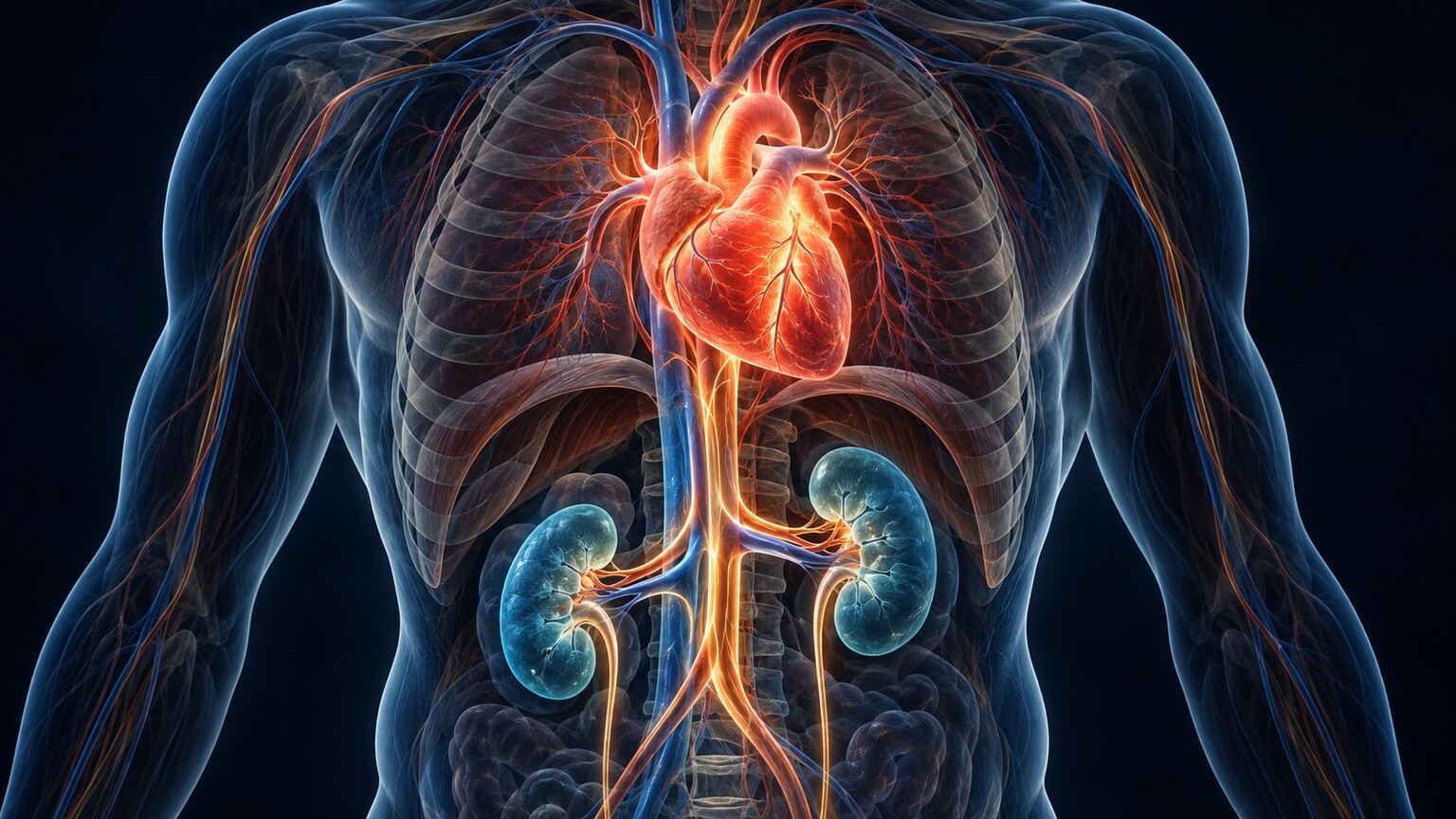
Figure 1. The kidneys and heart are physiologically linked in both directions — kidney function affects how long troponin circulates, while heart function affects how well the kidneys are perfused.
Troponin Doesn't Just Appear — It Also Has to Leave
Most discussions of troponin focus entirely on how it gets into the blood: heart muscle cells release it when they're injured or dying, and the amount released tracks roughly with the extent of that injury. What gets discussed far less often, outside of nephrology and cardiology circles, is the other half of the equation — how troponin gets cleared out of the blood once it's there, and what happens when that clearance process slows down. Troponin, or at least fragments of it, is cleared from circulation partly through the kidneys, alongside other clearance pathways involving the reticuloendothelial system and proteolytic breakdown in the bloodstream itself. The exact proportion of clearance attributable to the kidneys has been debated in the research literature and likely varies somewhat by which specific troponin assay is used, but the practical, clinically observed pattern is consistent regardless of the precise mechanism: as kidney function declines, measured troponin levels tend to rise, even in people with no evidence of active heart muscle injury on any other test.
This single fact reframes the entire relationship between kidney disease and troponin. A number that would suggest ongoing cell death in someone with normal kidney function might, in someone with advanced chronic kidney disease, simply reflect the fact that troponin fragments are lingering in circulation longer than they would in a person whose kidneys are filtering normally — not because more troponin is being produced, but because less is being removed. It's a distinction with an analogy many people find intuitive: a bathtub with the faucet barely dripping can still end up full if the drain is clogged. A modestly elevated troponin in someone with severe kidney disease can reflect a slow, ongoing "drip" of baseline troponin turnover from normal cardiac cell processes, sitting at a higher steady-state level simply because the "drain" — renal clearance — isn't working as efficiently as it should.
It's worth being precise about what this does and doesn't mean, because the clearance explanation is sometimes misunderstood as meaning kidney disease produces a falsely elevated result that can simply be dismissed. That's not accurate. The troponin genuinely is elevated — the assay is correctly detecting real troponin protein circulating at a higher-than-typical concentration. What's different is the reason behind the elevation and what it implies about what's happening inside the heart muscle itself. A high troponin from reduced clearance reflects a change in how long normally circulating troponin sticks around, not necessarily a change in how much heart muscle is actively being damaged — which is a fundamentally different clinical situation than a high troponin from a blocked coronary artery, even though the exact same assay, measuring the exact same protein, produced both numbers.

Figure 2. Troponin fragments are cleared from the blood partly through the kidneys; as filtering capacity declines, these fragments circulate longer and accumulate to a higher steady-state level.
This is also why the relationship between kidney function and baseline troponin isn't an on-off switch but a gradient. Someone with mild, early chronic kidney disease — stage 1 or 2, where filtering capacity is only slightly reduced — usually shows little to no measurable effect on baseline troponin. As kidney function declines further, through stage 3 and especially stage 4 and 5, the proportion of people with a mildly elevated baseline troponin, even when perfectly stable and free of any cardiac symptoms, climbs substantially. By the time someone reaches end-stage kidney disease requiring dialysis, a meaningfully elevated baseline troponin — sometimes several times above the standard upper reference limit used for the general population — is common enough that some nephrology and cardiology groups have proposed dialysis-specific reference ranges, though this hasn't been universally adopted into standard lab reporting.
Managing chronic kidney disease alongside cardiac risk factors means a lot of overlapping lab values to track. Upload your latest panel and get a complete, plain-language breakdown of what's changed and what hasn't.
Analyze My ResultsUremic Cardiomyopathy — A Second, Independent Mechanism
Reduced clearance is only part of the story. Chronic kidney disease also drives a set of structural changes to the heart muscle itself, sometimes grouped under the term uremic cardiomyopathy, that can independently contribute to a chronically elevated troponin through actual, ongoing low-grade cellular stress rather than clearance alone. Long-standing kidney disease is strongly associated with left ventricular hypertrophy — a thickening of the heart's main pumping chamber wall — driven by a combination of chronic high blood pressure, fluid overload between dialysis sessions, anemia forcing the heart to work harder to deliver oxygen, and imbalances in calcium, phosphate, and parathyroid hormone that promote both vascular calcification and structural remodeling of heart tissue.

Figure 3. Long-standing kidney disease promotes thickening and fibrosis of the heart muscle wall, a structural change that can itself contribute to low-level, ongoing troponin release.
A thickened, fibrotic heart muscle wall behaves differently at the cellular level than a normal one. Individual heart muscle cells in a hypertrophied, fibrotic heart are subjected to more mechanical strain per contraction, often have a relatively reduced blood supply relative to their increased size and workload, and exist within a stiffer, less compliant tissue matrix overall. This combination is thought to produce a slow, ongoing rate of subtle cell membrane stress and microscopic cell turnover — well below the scale of an acute heart attack, but enough to release small amounts of troponin on a continuous basis, contributing an actual physiological elevation on top of whatever elevation is separately caused by reduced renal clearance. Researchers sometimes describe this as "subclinical myocardial injury," a state where measurable damage is occurring at a slow, low-grade pace without producing any of the symptoms or acute findings associated with a heart attack.
Anemia, extremely common in chronic kidney disease because the kidneys produce the hormone erythropoietin that stimulates red blood cell production, compounds this mechanism directly. When red blood cell counts are low, the heart has to pump more blood per minute to deliver the same amount of oxygen to the body's tissues, effectively working harder at every single heartbeat over the long term. Combined with high blood pressure — also extremely common in chronic kidney disease, both as a cause and a consequence of the kidney disease itself — the heart in this population is frequently working under a persistently elevated demand, a state that, sustained for years, is a recognized contributor to the ongoing low-level cellular stress behind uremic cardiomyopathy's troponin signature.
Fluid status adds another layer specific to people on dialysis. Between dialysis sessions, fluid and waste products that a functioning kidney would continuously remove instead accumulate, and the heart has to manage a fluctuating volume load that rises through the days between treatments and then falls again once dialysis removes the excess fluid. This repeated cycle of volume expansion and contraction places the heart under a rhythmic mechanical stress pattern that isn't present in someone with normally functioning kidneys and stable fluid balance, and some research has specifically linked the degree of interdialytic fluid gain to small, measurable troponin fluctuations around dialysis sessions — an effect layered on top of the chronic baseline elevation already present from clearance and structural remodeling.
Disordered mineral metabolism is a further, less widely known contributor worth mentioning. Healthy kidneys help regulate the balance of calcium, phosphate, and vitamin D, and they're also the site where parathyroid hormone exerts much of its downstream effect. As kidney function declines, phosphate tends to accumulate, vitamin D activation falls, and parathyroid hormone rises in a compensatory pattern that, left unchecked over years, promotes calcification not just in blood vessels but within the heart valves and, in some cases, the small vessels supplying the heart muscle itself. This vascular and valvular calcification can subtly reduce blood supply to portions of the heart muscle even in the absence of a classic, discrete coronary blockage, adding yet another slow, low-grade contributor to the chronic troponin elevation seen in this population — one more reason clinicians managing advanced kidney disease pay close attention to calcium, phosphate, and parathyroid hormone levels as part of overall cardiovascular risk management, not just bone health.
Why a Single Chronic Kidney Disease Troponin Doesn't Mean What It Would in Someone Else
Given these two independent mechanisms — reduced clearance and genuine, low-grade structural cardiac stress — it becomes clear why the standard reference ranges used for troponin, developed primarily from studies of people with normal kidney function, don't translate cleanly to someone with significant chronic kidney disease. Applying a general-population cutoff to this group produces a well-documented problem: a large proportion of people with advanced kidney disease would be flagged as having an abnormal, injury-level troponin on a test that, for them, isn't signaling anything acutely wrong at all — it's simply their new, stable, chronic baseline.

Figure 4. People on long-term dialysis frequently have a stable, chronically elevated troponin baseline that reflects their kidney disease rather than an active cardiac emergency.
This is why clinicians who regularly manage patients with kidney disease learn to treat a single troponin value in this population very differently from how they'd treat the same number in someone with normal kidney function walking into an emergency room for the first time. Instead of asking "is this number above the cutoff," the more useful question becomes "is this number different from what it usually is for this specific person" — a shift from an absolute threshold to a personalized, trend-based framework. A patient on dialysis whose troponin has quietly sat around three or four times the standard upper reference limit for the past two years, checked periodically as part of routine cardiac risk monitoring, is in a completely different situation from a patient whose troponin was normal a month ago and has now jumped to that same level over the course of a single day.
This distinction places a lot of practical weight on having a documented baseline. When it's available, a patient's own prior troponin values, ideally drawn when they were stable and asymptomatic, become the single most useful piece of context for interpreting a new result — arguably more useful than the general population reference range itself. Nephrology and cardiology practices that manage a lot of dialysis patients increasingly try to establish and document this kind of individual baseline explicitly, precisely because it allows a new result to be judged against "is this higher than usual for you" rather than against a cutoff that was never designed with reduced kidney function in mind.
The Delta — Why Change Over Time Matters More Than the Number Itself
Because chronic kidney disease raises the floor, clinicians rely heavily on what's called the troponin "delta" — the change between two measurements, typically drawn a few hours apart — to distinguish a genuine acute cardiac event from a chronically elevated baseline in someone presenting with chest discomfort or another possible cardiac symptom. A large, rapid rise between two closely spaced measurements is far more specific for acute heart muscle injury than the absolute value of either measurement on its own, and this delta-based approach becomes especially important, not less important, in people whose baseline troponin already sits well above the general-population cutoff.

Figure 5. Comparing a new troponin result to a documented personal baseline, rather than a general-population cutoff, is central to interpreting the number correctly in someone with chronic kidney disease.
Clinical guidelines addressing this exact scenario generally recommend a proportionally larger delta threshold in populations known to have elevated baselines, since a rise that would be diagnostically meaningful in someone with a low baseline could simply represent ordinary measurement variability when scaled against a baseline that's already several times higher. In practice, this means an emergency physician evaluating a dialysis patient with chest pain will typically want at least two troponin measurements, spaced a few hours apart, and will interpret a significant upward change between them — rather than the absolute peak value — as the more reliable signal of an actual new cardiac event layered on top of that person's usual chronic elevation.
This approach isn't a workaround invented to compensate for a flawed test — it reflects a broader principle that applies to troponin interpretation generally, just more visibly in this population. Troponin was never meant to be read as a single isolated snapshot; even in people with normal kidney function, serial measurements and trends carry more diagnostic weight than any single number. Chronic kidney disease simply makes this principle unavoidable and central to correct interpretation, rather than a secondary refinement layered on top of an otherwise-simple single-number test.
Cardiorenal Syndrome — When the Relationship Runs Both Directions
The connection between kidney and heart health described so far focuses on how kidney disease affects troponin readings, but the relationship between these two organ systems runs in both directions, a concept broadly captured under the term cardiorenal syndrome. Poor heart function can reduce blood flow to the kidneys and cause kidney function to decline; conversely, kidney disease can drive the structural and hemodynamic changes in the heart described above. In practice, many patients seen by nephrologists and cardiologists together have some degree of dysfunction in both organ systems simultaneously, each one having contributed to and been worsened by the other over months or years.

Figure 6. Because kidney and heart function influence each other in both directions, patients with significant kidney disease often benefit from coordinated cardiology and nephrology follow-up.
This bidirectional relationship is part of why an elevated troponin in someone with chronic kidney disease, even a stable, chronic one, still carries genuine long-term prognostic weight — it isn't simply a lab curiosity to be explained away and ignored. Multiple large studies following dialysis and chronic kidney disease populations over time have found that a higher baseline troponin, even in people with no acute symptoms at the time it was measured, is statistically associated with a higher long-term risk of cardiovascular events and mortality compared to people with kidney disease of similar severity but a lower baseline troponin. The number appears to be capturing something real about the cumulative burden that reduced kidney function places on the heart, even when it isn't signaling an active emergency in the moment it's drawn.
This is a genuinely important nuance to hold alongside everything discussed above: understanding why chronic kidney disease raises troponin, and why a chronically elevated number shouldn't automatically trigger the same emergency pathway it would in someone with normal kidney function, doesn't mean the number is meaningless or safe to dismiss entirely. It means the number needs to be interpreted through a different lens — one that treats a stable, chronic elevation as a marker of cumulative cardiovascular risk worth discussing at a routine follow-up, while reserving the acute emergency response specifically for a meaningful, unexplained rise above that person's own established baseline.
Which Stage of Kidney Disease Tends to Move the Number
Chronic kidney disease is typically staged from 1 through 5 based on estimated glomerular filtration rate (eGFR), a calculated measure of how efficiently the kidneys are filtering blood, with stage 1 representing normal or near-normal filtering capacity and stage 5 representing kidney failure requiring dialysis or transplantation. The effect on baseline troponin tracks fairly closely with this staging, though not in a perfectly linear way. In stages 1 and 2, where eGFR remains above roughly 60 milliliters per minute, most people show no clinically meaningful troponin elevation attributable to kidney function alone — if a troponin is elevated at this stage, it's usually worth investigating on its own merits rather than attributing it reflexively to the kidney disease.
Stage 3, often the point at which many people are first told they have chronic kidney disease during a routine check-up, is something of a transition zone. Some people at this stage show a mild, measurable troponin elevation above the general-population reference range, while others with similar eGFR values show none at all — a variability that likely reflects differences in how much of that specific person's remaining kidney disease is affecting troponin clearance specifically versus other factors, along with genuine differences in cardiovascular health between individuals at the same kidney function stage. This variability is itself a useful reminder that eGFR and troponin, while correlated at a population level, don't move together in lockstep for every individual.
By stage 4 and especially stage 5, including everyone on chronic dialysis, a meaningfully elevated baseline troponin becomes common enough that many nephrologists treat it as an expected, unremarkable finding in an asymptomatic patient rather than something requiring explanation each time it appears. This is also the population in which the delta-based, personal-baseline approach to interpretation described earlier becomes most clinically important, precisely because the general-population reference range has essentially stopped being a useful tool for this group on its own.
How This Differs From Other Non-Cardiac Causes of Elevated Troponin
Kidney disease isn't the only condition capable of producing a troponin elevation without an acute heart attack behind it, and it's worth placing it in context alongside some of the other, better-known non-cardiac causes to understand what makes it distinct. A fast, sustained abnormal heart rhythm, severe sepsis, and strenuous endurance exercise can all raise troponin without a blocked coronary artery, but these causes typically produce a temporary elevation tied to a specific triggering event, one that rises and then falls back toward baseline over hours to days once the trigger resolves. Kidney disease is different in kind, not just degree — the elevation it produces is generally persistent and stable for as long as the underlying kidney function remains reduced, rather than a transient spike tied to a discrete episode.
This distinction matters practically because it changes what a clinician looks for when trying to explain an elevated troponin. In someone with normal kidney function, an unexplained elevated troponin usually prompts a search for a specific triggering event — a recent illness, an arrhythmia caught on a heart monitor, an unusually intense workout. In someone with significant chronic kidney disease, a stable, chronically elevated troponin often doesn't require that same search for a discrete trigger at all, since the ongoing reduced kidney function itself is a sufficient, already-identified explanation — provided, again, that the number is stable and the person has no symptoms suggesting anything acute is happening in addition to their baseline kidney-related elevation.
Heart failure represents an interesting middle case worth mentioning separately, since it frequently coexists with kidney disease as part of the same cardiorenal picture described earlier. Chronic heart failure, independent of kidney function, is also associated with a persistently elevated troponin baseline through mechanisms that partly overlap with those driving uremic cardiomyopathy — chronic strain on heart muscle, relative reductions in blood supply to a stretched or thickened heart wall, and ongoing low-grade cellular turnover. When someone has both chronic kidney disease and heart failure together, which is common, disentangling exactly how much of their baseline troponin elevation comes from each condition individually usually isn't possible or clinically necessary — the practical approach remains the same regardless: track the person's own trend over time, and treat a significant deviation from that established pattern as the signal worth acting on.
What This Means in Practice for Someone With Kidney Disease
For someone managing chronic kidney disease who has noticed a mildly or moderately elevated troponin on a routine panel, without any chest pain, shortness of breath, or other acute symptoms, the practical takeaway is generally reassuring, provided the finding is discussed with the clinician managing their kidney disease. An isolated, asymptomatic troponin elevation in this context, especially one that has been present and roughly stable across multiple prior tests, is a recognized and expected feature of reduced kidney function rather than evidence of a silent, ongoing heart attack. What matters most is establishing whether this represents a new finding or a longstanding one, and whether it fits the pattern of gradual, proportional elevation typically seen with declining kidney function, or instead represents a newer, sharper change that would warrant closer cardiac evaluation regardless of the kidney disease.

Figure 7. Tracking troponin across multiple routine visits over time lets a clinician establish a personal baseline — the single most useful reference point for interpreting future results in chronic kidney disease.
This is exactly the kind of situation where keeping a personal record of past lab results, rather than only looking at the most recent one in isolation, becomes genuinely valuable rather than just a nice-to-have habit. A troponin result sitting at, say, four times the standard upper reference limit means something very different if the last three tests over the past year all sat in that same range compared to a first-ever elevated result appearing out of nowhere. Bringing that history to a follow-up conversation with a nephrologist, cardiologist, or primary care doctor gives them the exact context needed to interpret the newest number correctly, rather than reacting to it as an isolated, alarming data point disconnected from everything that came before it.
It's also worth noting what this article isn't saying: it isn't suggesting that chest pain, shortness of breath, or other classic warning signs of a heart attack should be treated any less seriously in someone with chronic kidney disease. The clearance-based explanation for chronic troponin elevation applies specifically to stable, asymptomatic results found on routine testing — it does not change how urgently new, concerning symptoms should be evaluated. If anything, because chronic kidney disease itself substantially raises cardiovascular risk through the mechanisms discussed above, someone in this population presenting with genuine cardiac symptoms deserves the same urgent evaluation as anyone else, interpreted using the delta-based, baseline-aware approach clinicians rely on specifically for this reason.
For people newly diagnosed with chronic kidney disease who are seeing an elevated troponin for the first time, it can help to think of this lab value the same way a diabetic patient learns to think of an A1c that runs a little differently than a non-diabetic person's would — not as a broken or unreliable number, but as one that needs to be read with the underlying condition factored in. Bringing up the specific question directly with a nephrologist or primary care doctor — "given my kidney function, is this troponin level expected, and do we have a baseline to compare future results against" — tends to be a more productive conversation than simply noting the number is above the printed reference range on a lab report and assuming the worst. Most labs still print the general-population reference range regardless of a patient's kidney function, since adjusting reporting ranges by kidney status hasn't become standard practice industry-wide, which means the burden of correct interpretation currently falls on the ordering clinician's clinical judgment rather than on the report itself.
People managing both chronic kidney disease and known cardiovascular risk factors — high blood pressure, diabetes, a family history of heart disease, or a prior cardiac event — often benefit from a coordinated care approach where nephrology and cardiology communicate directly about lab trends rather than each specialist reviewing the number in isolation. In practices where this kind of coordination happens well, a stable, chronically elevated troponin tends to generate far less unnecessary repeat testing, urgent referrals, or anxiety-inducing phone calls than it does in settings where each new lab result is reviewed without access to the full history or the kidney-function context behind it. This is one of the more practical, tangible benefits of keeping a personal, portable record of prior lab values that can travel with a patient between different providers and different care settings, rather than existing only within one clinic's internal system.
Frequently Asked Questions
Does dialysis lower troponin back to normal?
Not reliably or completely. While dialysis removes some waste products and excess fluid, it isn't specifically designed to filter troponin the way healthy kidneys would, and most people on long-term dialysis continue to have a chronically elevated baseline troponin even with regular treatment. Some studies have found small, measurable dips immediately after a dialysis session, but the overall chronic elevation generally persists.
How much can chronic kidney disease raise troponin?
It varies widely depending on the stage of kidney disease and the individual, but it's common for people with advanced chronic kidney disease or those on dialysis to have a baseline troponin two to five times the standard upper reference limit, and some individuals run even higher, all without any acute cardiac event happening.
If my troponin is chronically elevated from kidney disease, can it still detect a real heart attack?
Yes. Clinicians rely on the change between two closely spaced measurements — the "delta" — rather than the absolute value alone, and a meaningful rise above a person's own established baseline remains a reliable signal of a new cardiac event even when that baseline already sits above the general-population cutoff.
Should I ask my doctor to establish a baseline troponin if I have kidney disease?
It can be genuinely useful, especially with more advanced chronic kidney disease. Having one or more troponin results on file from a stable, symptom-free period gives your care team a personal reference point, which is generally more useful for interpreting a future result than a general-population reference range that wasn't developed with reduced kidney function in mind.
Does a chronically elevated troponin in kidney disease mean I'm at higher risk for heart problems?
Research following people with chronic kidney disease over time has generally found that a higher baseline troponin is associated with a higher long-term cardiovascular risk, even when it isn't signaling an active event in the moment. It's worth discussing with your care team as part of overall cardiovascular risk management, even when it reflects a stable, expected pattern rather than an emergency.
Does earlier-stage kidney disease, before dialysis, also affect troponin?
It can, though the effect is generally smaller and less consistent than in advanced disease. Stage 1 and 2 chronic kidney disease usually shows little measurable impact on baseline troponin, while stage 3 is a variable transition zone and stage 4 through kidney failure is where a meaningfully elevated baseline becomes common. If a troponin is elevated at an earlier stage, it's often still worth evaluating on its own merits rather than assuming the kidney disease fully explains it.
Conclusion
A chronically elevated troponin in someone with kidney disease tells a fundamentally different story than the same number would in someone with normal kidney function walking into an emergency room with chest pain. Reduced renal clearance allows troponin to circulate longer and accumulate to a higher steady-state level, while the structural changes that long-standing kidney disease drives in the heart muscle itself — thickening, fibrosis, and the effects of anemia, high blood pressure, and fluctuating fluid status — can independently contribute a genuine, low-grade, ongoing release of the protein. Neither of these mechanisms means the number is meaningless; it means the number needs to be read against the right reference point, which for someone with significant kidney disease is usually their own documented baseline rather than a general-population cutoff.
None of this changes the seriousness of the bidirectional relationship between these two organ systems. Cardiorenal syndrome is a reminder that a chronically elevated troponin, even when it isn't signaling an emergency today, still reflects a heart working under real, cumulative strain — strain worth managing proactively through blood pressure control, anemia treatment, careful fluid management, and the same cardiovascular risk-factor reduction that benefits anyone with elevated long-term cardiac risk, kidney disease or not. Understanding the lab value correctly is the first step toward using it productively, rather than either dismissing it entirely or reacting to it as if every routine result were a fresh emergency.
For anyone managing chronic kidney disease, the most useful habit is simple: keep track of troponin results over time, note when they're stable and asymptomatic, and bring that history into every conversation about a new result. That single piece of context — is this different from what's usual for me — is what allows a chronically elevated number to be understood correctly as part of a known, ongoing pattern, while still leaving room for a genuinely new, unexplained rise to be caught and evaluated with the urgency it deserves.
Managing Kidney Disease and Cardiac Risk Together?
Upload your labs and get a complete, visual, plain-language interpretation of every biomarker — including how they relate to each other — delivered to your inbox in under 15 minutes.
Get My ReportThis article is for educational purposes only and does not constitute medical advice. If you are experiencing chest pain, shortness of breath, or other symptoms of a possible heart emergency, call 911 or your local emergency number immediately. Always consult your healthcare provider regarding your specific lab results.