
Why Is My Troponin Level Slightly Elevated?
Seeing the word "elevated" next to a heart test result is enough to make anyone's stomach drop, especially when that test is troponin — the biomarker most closely associated with heart attacks. But a troponin result that's only slightly above the reference line is a very different situation from the dramatically high numbers seen during an actual heart attack, and the distance between "detectable" and "dangerous" is far larger than most people realize. Modern lab testing has become so sensitive that it can now pick up amounts of troponin so small they were completely invisible to the previous generation of tests — meaning a "positive" or "elevated" result today can reflect a tiny, often harmless trickle rather than the flood associated with significant heart damage. This article explains exactly what troponin is and why even a trace amount shows up on a test at all, why the modern high-sensitivity assay changed what "elevated" even means, why the cutoff line itself is more of a statistical judgment call than a hard biological boundary, the specific non-emergency conditions that commonly produce a mild but persistent elevation, how doctors actually distinguish a chronic low-grade elevation from an acute rising event, why repeat testing (both same-day and over the long term) matters more than any single number, when a mildly elevated result is genuinely reassuring, and the specific red flags that would change the picture entirely.
What Troponin Actually Is, and Why Even a Trace Amount Shows Up at All

Figure 1. Troponin is a structural protein locked tightly inside heart muscle cells; even mild, non-destructive cellular stress can let a small amount leak into the bloodstream without the cell actually dying.
Troponin isn't something that's normally found floating around in your blood at all. It's a set of proteins built directly into the contracting machinery of your heart muscle cells, where its job is to help regulate the precise, coordinated squeeze that pushes blood out of your heart with every beat. Under completely normal circumstances, troponin stays locked inside those cells, doing its structural job and never touching the bloodstream. The reason a blood test can measure it at all is that heart muscle cells, when they're injured, become slightly "leaky," releasing some of their internal troponin out through the damaged cell membrane and into circulation, where a lab test can detect it.
For years, the tests used to measure troponin simply weren't sensitive enough to detect anything less than a fairly substantial release — the kind associated with real, significant heart muscle injury, like a heart attack. If your troponin came back "positive" on an older-generation test, it meant something clinically serious was very likely happening. But laboratory technology has advanced considerably since then, and today's standard test — called a high-sensitivity troponin assay — can detect levels of troponin roughly 10 to 100 times smaller than what older tests could ever pick up. That leap in sensitivity is exactly why a "slightly elevated" result exists as its own distinct category today: modern tests are now sensitive enough to detect the ordinary, low-level cellular turnover that happens even in a basically healthy heart, or the mild stress response from conditions that have nothing to do with a heart attack at all.
Why "Slightly Elevated" Is a Fundamentally Different Question Than "High"
It's worth being explicit about why this distinction matters so much clinically, because the two scenarios point doctors toward almost entirely different explanations and levels of urgency. A dramatically high troponin level — often many multiples above the upper reference limit — is the signature of a large, acute event: a substantial blockage cutting off blood flow to part of the heart muscle, causing a meaningful number of cells to actually rupture and dump their full troponin content into the blood all at once. That kind of result demands immediate emergency evaluation, and there's rarely much ambiguity about what it means.
A slightly elevated result sits in an entirely different physiological category. It typically reflects either a small, ongoing degree of cellular stress or turnover (cells under strain, adjusting, or naturally recycling components without dying outright) or a mild reduction in how efficiently the body clears troponin from the blood once it's released, rather than any dramatic, acute injury event. High-sensitivity assays are precise enough to draw a real, measurable line between these two situations, but that precision also means more people than ever before are seeing a technically "abnormal" number that would have been read as completely unremarkable — or simply never been detectable at all — on the older tests still in use less than two decades ago.
The 99th Percentile Cutoff: Why the Line Itself Is a Statistical Judgment Call
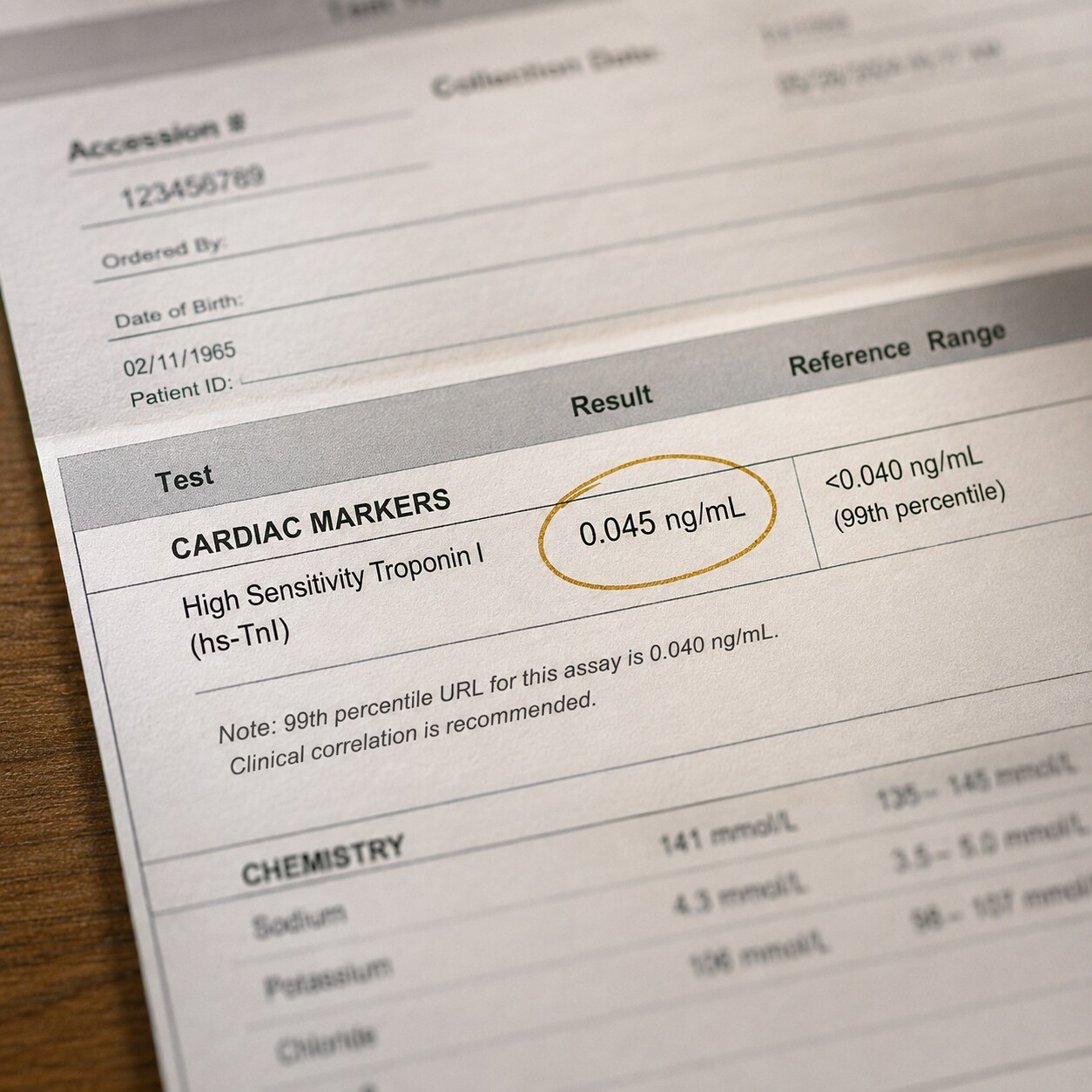
Figure 2. The upper reference limit printed on a troponin report marks the 99th percentile of a healthy reference population — a statistical boundary, not a biological line between "safe" and "dangerous."
Every troponin report lists a specific upper reference limit, and it's easy to assume that number represents some kind of hard biological ceiling — cross it and something has gone wrong, stay under it and everything is fine. In reality, that cutoff is set using a statistical method: labs test troponin in a large group of people believed to be free of heart disease, and the cutoff is set at the 99th percentile of the results from that healthy reference group. By definition, that means roughly 1 in 100 people with genuinely normal, healthy hearts will have a troponin level above that line purely due to ordinary biological variation, with nothing wrong with them at all.
This statistical reality matters enormously for interpreting a result that sits only modestly above that line. A value sitting just barely over the 99th percentile cutoff carries a very different weight than a value five or ten times higher, even though both technically get flagged as "elevated" on a lab report. Doctors interpreting a borderline troponin result are weighing exactly this: how far above the statistical cutoff the number actually sits, not simply whether it crossed the line at all. A result 5% above the cutoff and a result 500% above the cutoff are both "positive," but they are not remotely the same finding, and treating them identically would miss the entire point of why the assay was designed to be this sensitive in the first place.
Common Non-Emergency Causes of a Mild, Persistent Elevation

Figure 3. Many people with a chronically, mildly elevated troponin feel entirely well and have no symptoms at all — the elevation reflects an underlying chronic condition, not an acute event.
Several genuinely common, non-emergency conditions can produce a mild but persistent troponin elevation that has nothing to do with an active heart attack. Chronic kidney disease is one of the most frequent — troponin is normally cleared from the blood partly by the kidneys, and when kidney function is reduced, that clearance slows down, allowing a small, steady baseline amount of troponin to accumulate in the blood even without any new cardiac injury happening at all. This is common enough that doctors routinely factor in kidney function whenever they're interpreting a borderline troponin result in someone with any degree of chronic kidney impairment, and a basic kidney function panel is often ordered alongside a repeat troponin for exactly this reason.
Longstanding structural heart conditions are another common driver. Conditions like chronic, stable heart failure, longstanding high blood pressure that has caused the heart's main pumping chamber to thicken, or persistent abnormal heart rhythms such as atrial fibrillation can all produce a low-grade, ongoing degree of cellular stress in the heart muscle that shows up as a mildly elevated but stable troponin over time, rather than a rising, acute pattern. Age itself also plays a measurable role: population studies consistently show that the proportion of people with a detectable, low-level troponin elevation rises steadily with age, even among people with no diagnosed heart disease at all, likely reflecting the cumulative effect of decades of ordinary cardiovascular wear.
Diabetes, particularly when it has been present for many years or hasn't been consistently well-controlled, is another condition doctors watch for when interpreting a mildly elevated troponin, since long-term diabetes is associated with subtle, cumulative changes to small blood vessels throughout the body, including the tiny vessels feeding the heart muscle itself. This kind of microvascular change can produce a low-level, chronic degree of cellular strain similar in character to what's seen with longstanding high blood pressure, without representing any single, identifiable acute event. Severe or poorly controlled sleep apnea has also been associated with mildly elevated baseline troponin in some studies, thought to relate to the repeated drops in blood oxygen and the associated strain those episodes place on the heart across thousands of nights over time — one more reason a thorough medical history, not just the number itself, is central to interpreting any borderline result correctly.
How Doctors Tell a Chronic Baseline Elevation From an Acute Rising Event
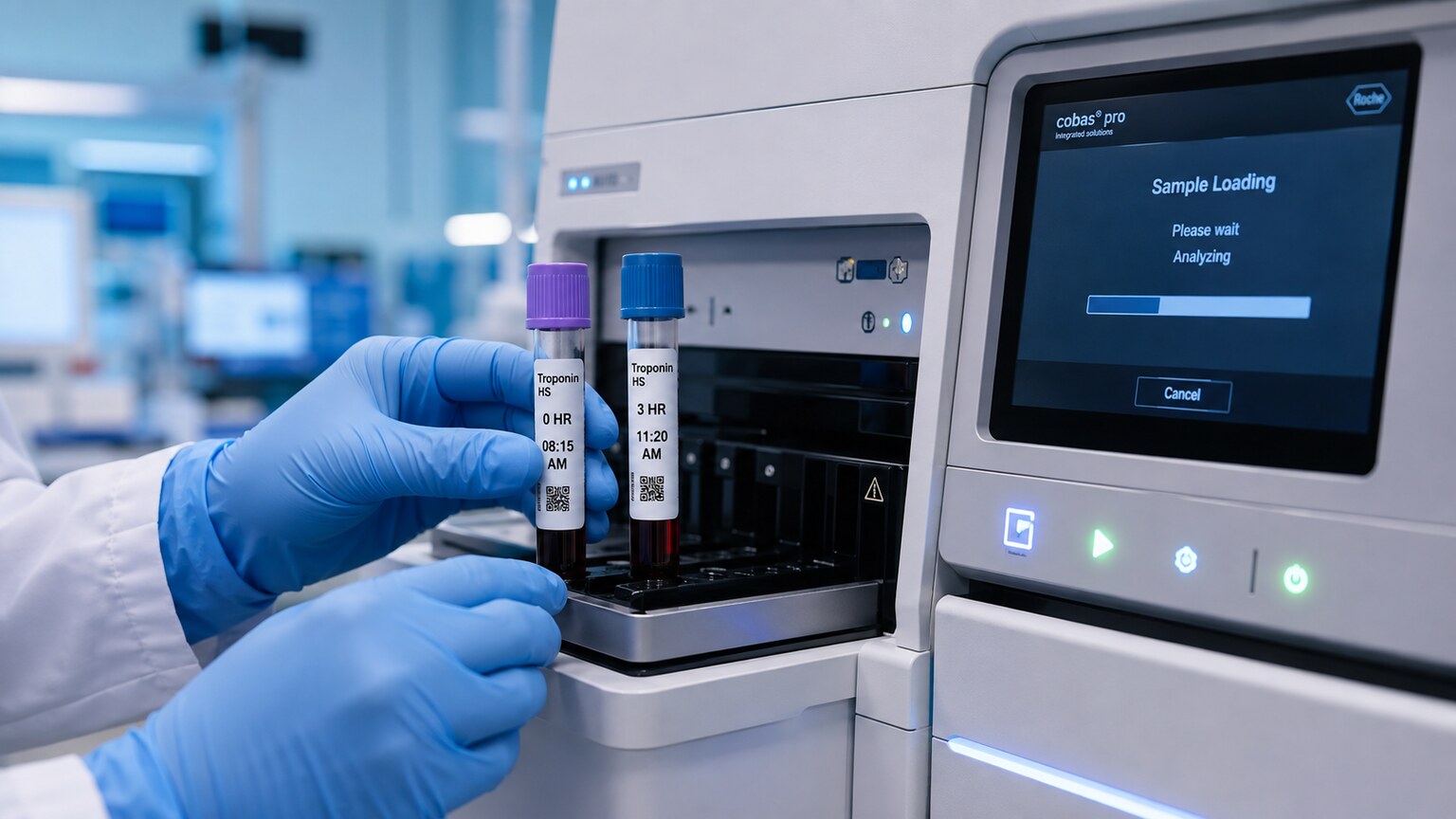
Figure 4. Comparing two troponin results drawn a few hours apart — rather than judging a single number alone — is what actually separates a stable chronic elevation from an acute, evolving injury.
The single most useful piece of information in interpreting a borderline troponin isn't the number itself — it's whether that number is changing. A chronic, non-acute elevation from a condition like kidney disease or longstanding heart failure tends to stay remarkably flat when it's checked again a few hours later: the second value lands close to the first, often within the test's normal measurement variability, because whatever is producing the trace elevation is a steady-state process rather than an active, evolving one. An acute event, by contrast, produces a clear rising pattern — a meaningful, defined increase between draws — because cell injury is actively accumulating in real time as the underlying event continues to unfold.
This is exactly why doctors evaluating a borderline troponin will almost always order a repeat measurement, typically within one to three hours of the first, rather than making a judgment off a single value alone. Clinical guidelines define specific thresholds for what counts as a meaningful "delta," or change, between two troponin measurements taken this closely together — a change large enough to exceed ordinary test variability and blood-draw-to-blood-draw noise. A flat delta strongly favors a chronic, stable explanation; a delta that clears the defined threshold points toward an active, evolving process that needs urgent attention regardless of how modest the very first number looked in isolation.
Curious what your own troponin result and lipid panel actually mean for your specific situation? Upload your results and get a complete, plain-language breakdown in under 15 minutes.
Analyze My ResultsStructural Heart Conditions Behind a Stable, Chronic Elevation
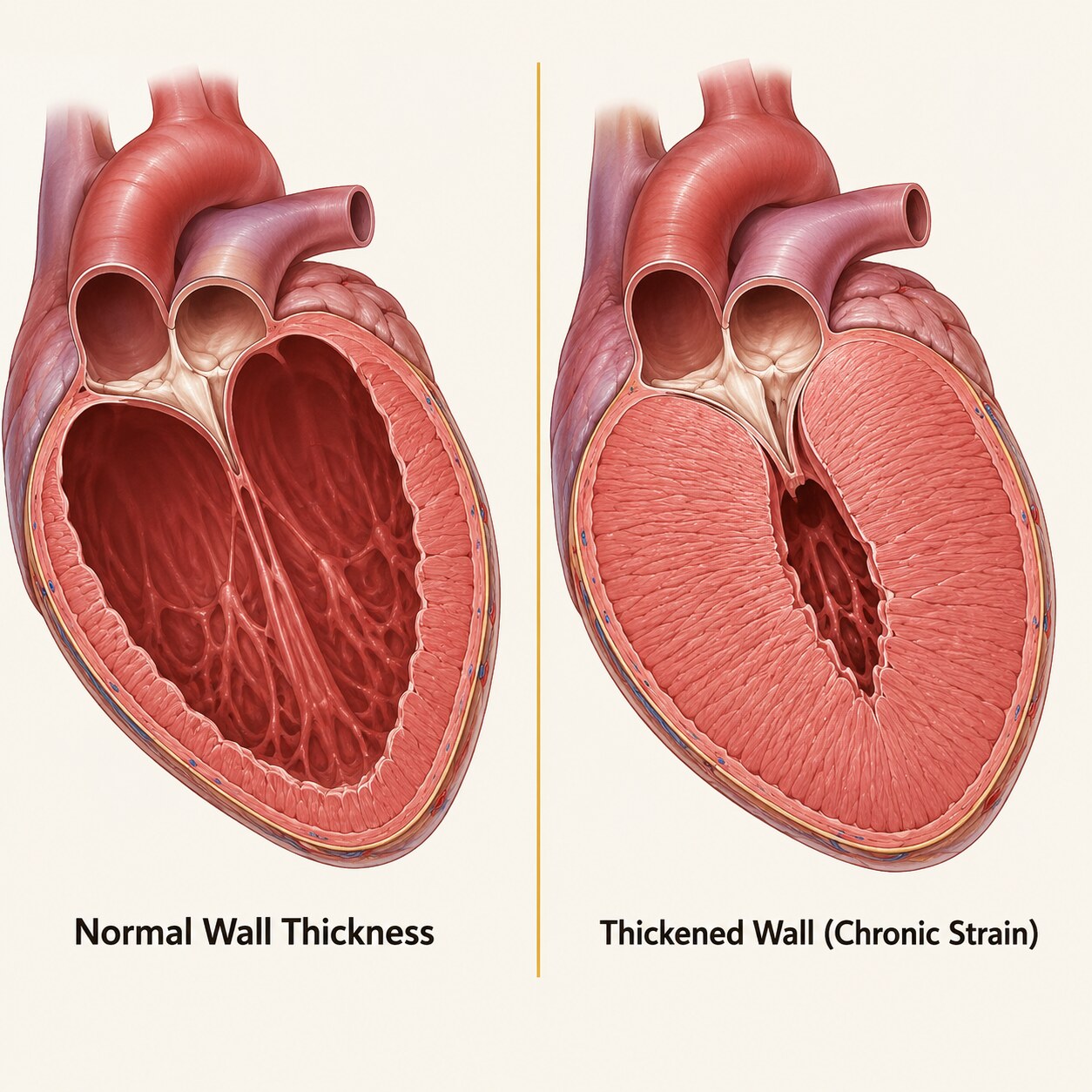
Figure 5. A thickened left ventricular wall from years of poorly controlled blood pressure places chronic mechanical strain on heart muscle cells, which can produce a low-grade, stable troponin elevation.
It's worth looking a little closer at exactly how a structural, non-acute heart condition produces this kind of steady elevation, because the mechanism is genuinely different from the sudden rupture seen in a heart attack. When the heart's main pumping chamber has to work harder than normal for years at a time — most commonly because of long-standing high blood pressure forcing the muscle wall to thicken and stiffen, or because of chronic heart failure forcing the chamber to stretch and dilate — the individual muscle cells inside that wall are placed under constant mechanical strain. That ongoing strain can cause a small, continuous degree of cellular stress and turnover, releasing trace amounts of troponin steadily over time rather than in one acute burst.
This is part of why doctors managing someone with known, longstanding structural heart disease often come to expect and essentially "discount" a stable, mildly elevated troponin baseline for that specific patient, so long as it stays flat over time and isn't accompanied by any new symptoms. The number itself stops being alarming once its source and its stability have both been established — what would trigger concern isn't the baseline value staying where it's always been, but any new, meaningful upward departure from that person's own established baseline.
Why Repeat Testing Matters More Than Any Single Number
All of this points toward the same central idea: a single troponin value, taken entirely on its own, is genuinely limited in what it can tell anyone — including a doctor — about what's actually happening. The number needs context to be interpretable: how it compares to the statistical cutoff, whether it's changing over repeat measurements, what else is known about that person's kidney function and heart history, and whether any symptoms accompany it. A slightly elevated single value, with no other information available, is deliberately treated by clinical guidelines as inconclusive rather than either reassuring or alarming on its own — which is precisely why the standard clinical response to a borderline result is almost never "wait and see" with no further testing, but rather a structured, time-bound repeat measurement designed specifically to resolve that ambiguity quickly.
This layered approach — one number, a repeat number, a clinical picture including symptoms and risk factors, and known chronic conditions — is what allows doctors to responsibly separate the large majority of mildly elevated results, which turn out to reflect something chronic and non-urgent, from the smaller minority that represent the early, still-modest signal of something that is actively evolving and does need urgent attention. Neither extreme — dismissing every borderline result as automatically fine, nor treating every borderline result as an emergency — matches how this test is actually designed to be used.
When a Mildly Elevated Troponin Is Genuinely Reassuring News
It's worth stating plainly: in a person who feels completely well, has no chest pain, shortness of breath, or other cardiac symptoms, and whose repeat troponin measurement comes back flat rather than rising, a mildly elevated result is generally good news relative to the alternative it's being weighed against. It typically means the high-sensitivity assay has simply detected a small, stable, explainable degree of background cellular activity — often tied to a known chronic condition like reduced kidney function or a longstanding, already-managed heart condition — rather than an active injury in progress. In many of these cases, the finding doesn't require any change to an existing treatment plan at all; it becomes simply one more data point that gets factored into that person's ongoing care and future comparisons, rather than a standalone crisis, and many people go on to live for years, in good health, with a known, stable, mildly elevated baseline that never develops into anything more concerning at all.
This is also why it's genuinely unhelpful to fixate on the word "elevated" in isolation without the surrounding context this article has walked through. A result that's technically above a statistical 99th-percentile line, in someone who is symptom-free and whose number holds steady on a repeat draw, is a fundamentally different clinical story than the same word attached to a dramatically higher, rapidly rising number in someone actively experiencing chest pain. Both get described with the same word on a lab report, but they represent close to opposite ends of the same test's clinical spectrum, which is exactly why the raw word "elevated" printed on a report should never be read as a self-contained verdict.
Red Flags That Change the Picture Entirely
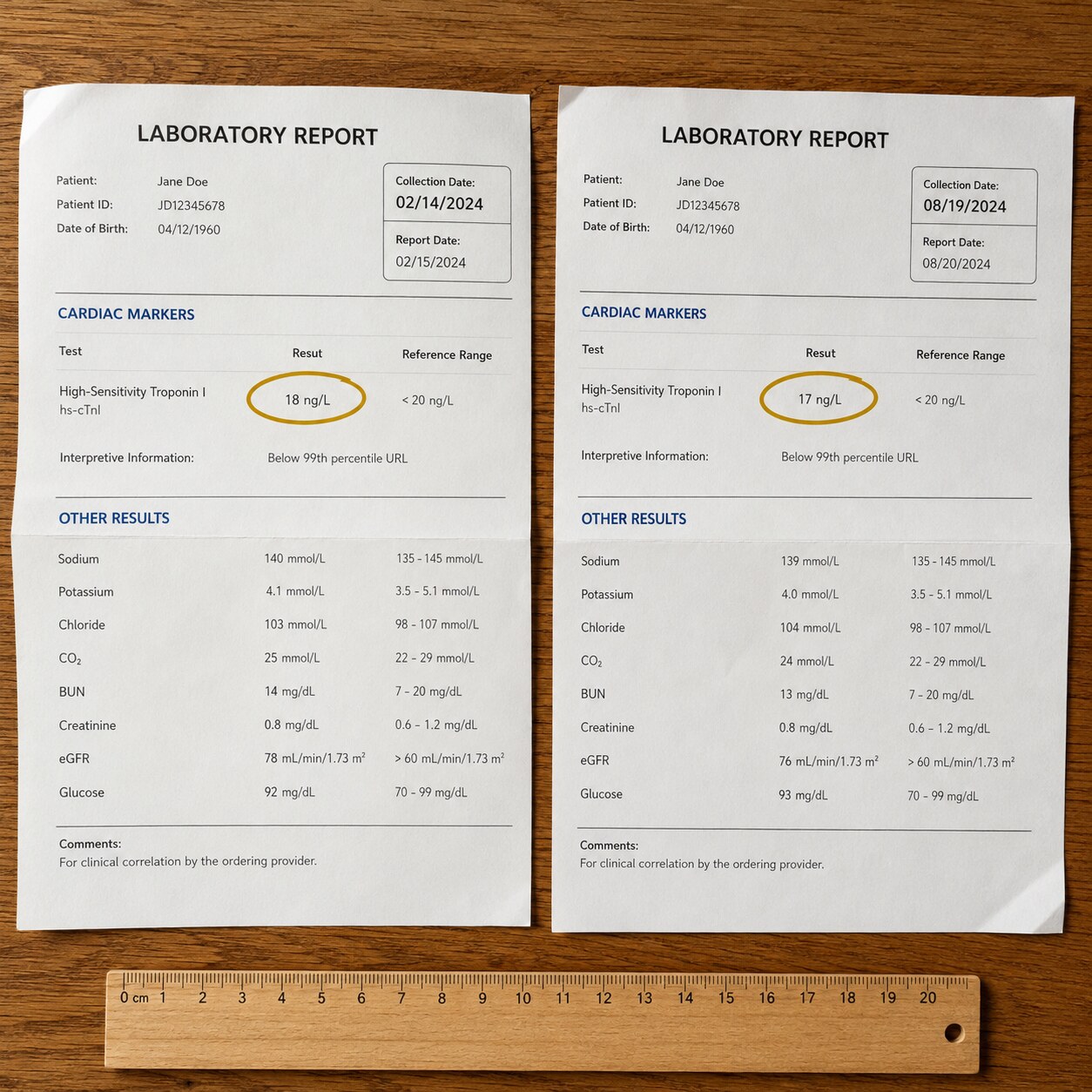
Figure 6. A flat trend between two dated troponin reports, with values that stay essentially unchanged, is one of the clearest signals that a mild elevation reflects a stable chronic process rather than an active event.
None of this means a mildly elevated troponin should ever simply be ignored without appropriate evaluation, and there are specific circumstances where the calculus changes regardless of how modest the number itself looks. New or ongoing chest pain, pressure, or tightness — especially pain that spreads to the arm, jaw, or back — always warrants urgent evaluation regardless of the exact troponin value, since symptoms carry independent diagnostic weight of their own. Shortness of breath that's new or worsening, especially at rest or with mild exertion that wouldn't normally cause it, is another symptom that should prompt prompt medical attention rather than a wait-and-see approach.
A troponin result that's rising meaningfully between two repeat draws, even if both individual values remain only modestly elevated in absolute terms, is treated with real urgency, because the trend itself is the signal — a genuine upward trajectory suggests an active, evolving process rather than a stable baseline, regardless of how "mild" either single number looks on its own, and this trend-based reasoning is precisely why a doctor may still order urgent follow-up even when a single value, taken in isolation, would not have raised much concern. Similarly, a mildly elevated troponin in someone with new risk factors, a concerning family history, or other abnormal cardiac testing results happening at the same time deserves a more thorough workup than the same isolated number in someone with none of those additional factors present.
How High-Sensitivity Testing Changed What Doctors Even Look For
It's worth understanding a little of the history here, because it explains why this entire conversation about "slightly elevated" troponin is a genuinely recent development in medicine, not a longstanding source of confusion that simply went unaddressed for decades. Older troponin assays, still in limited use in some settings as recently as the 2010s, had a detection floor high enough that anything they picked up as "positive" was almost always clinically significant — the test essentially couldn't see the small, ambiguous range at all, so there was no borderline category to worry about in the first place. A result was either flatly normal or clearly abnormal, with very little space in between.
High-sensitivity assays, which have become the clinical standard across most hospitals and labs over roughly the past decade, fundamentally changed that picture by pushing the detection floor down by one to two orders of magnitude. This was a deliberate, valuable clinical advance — it allows doctors to rule out a heart attack faster and more confidently in someone with chest pain, often within just one to three hours instead of requiring the much longer observation windows older assays demanded, because a genuinely low, stable, non-rising result can now be trusted with much greater precision. The tradeoff that came bundled with that benefit is exactly the phenomenon this article is about: a much larger group of people now receive a technically "detectable" or "elevated" result who would have simply tested negative, full stop, on the previous generation of assays. Understanding this tradeoff is what allows the modern borderline result to be read correctly — not as a flaw in the newer test, but as a direct and expected consequence of the same sensitivity improvement that makes the test so much more useful in genuine emergencies.
Sex-Specific Reference Ranges and Why They Matter for Borderline Results
One detail that surprises many people learning about troponin for the first time is that a meaningful number of labs now use separate upper reference limits for men and women, rather than a single shared cutoff for everyone. This isn't an arbitrary distinction — population studies consistently show that healthy women, on average, have somewhat lower baseline troponin levels than healthy men, likely related to differences in average heart muscle mass between the sexes. A single, unified cutoff calibrated primarily against a male reference population can under-flag genuinely important elevations in women, since a result that would stand out as unusual relative to a typical woman's baseline might still fall under a cutoff set higher to accommodate typical male baselines.
Because of this, some borderline results that look only marginally elevated against an older-style unified reference range can look more meaningfully elevated once interpreted against a sex-specific range, and vice versa. This is one more reason a single isolated number, read without the full context of which reference range was actually applied, can be misleading on its own. When reviewing a borderline troponin report, it's worth checking whether the lab used sex-specific cutoffs, and if so, confirming which one was applied — a detail that's easy to overlook but genuinely changes how "close to the line" a given result actually is.
What to Actually Do With a Borderline Troponin Result
If a troponin result comes back only mildly elevated, the most useful next step is a direct conversation with the ordering provider about the specific context behind that number: what prompted the test in the first place, whether a repeat measurement is planned or already available, and whether any known chronic conditions — kidney function, longstanding heart disease, blood pressure history — could reasonably explain it. Bringing up any symptoms honestly and completely, even ones that feel minor, unrelated, or embarrassing to mention, gives a provider the fullest possible picture to work from rather than an isolated number stripped of its clinical context.
For someone with a known chronic condition already established as the likely explanation, it's also reasonable to ask whether this result represents a new baseline worth tracking going forward, so that any future test can be compared against it rather than against a generic population reference range alone. Over time, an individual's own stable baseline becomes considerably more informative than the population-wide cutoff by itself — which is exactly the layered, comparative approach this entire test was designed around from the start.
It's also reasonable to ask directly which specific reference range and assay generation was used to flag the result, since different labs and different hospital systems don't always run identical assays or apply identical cutoffs. A result flagged as borderline at one facility could, in principle, read as unremarkable on a slightly different assay platform elsewhere — not because either lab made an error, but because high-sensitivity assays from different manufacturers are calibrated somewhat differently. Knowing which specific test generated a given number is a small but genuinely useful detail to have on hand, particularly if results are ever being compared across visits to different providers or facilities over time, since a change in assay platform alone can sometimes explain an apparent shift that has nothing to do with any real change in heart health, and this small clarifying detail can prevent a genuinely unnecessary round of worry for everyone involved.

Figure 7. Reviewing the full context behind a borderline troponin result together with a provider — prior history, kidney function, and repeat values — is what actually resolves what an isolated number cannot.
Long-Term Tracking: Why Your Own History Becomes the Real Reference Range
Everything discussed so far focuses on the short window immediately around a single elevated result — the same-day repeat draw used to check for a rising or flat pattern. But for people with an established chronic condition known to produce a persistent low-grade elevation, like reduced kidney function or longstanding structural heart disease, tracking troponin over a much longer timeframe — months to years, across routine visits — adds a second, complementary layer of interpretation on top of that short-term check. Once a person's own stable baseline has been established through a few consistent readings over time, that personal baseline becomes a considerably more sensitive and specific reference point than the general population's 99th-percentile cutoff ever could be for that individual, since it reflects that person's actual physiology rather than an average drawn from thousands of unrelated people.
This matters because a value that would look unremarkable compared to the general population cutoff might actually represent a meaningful change for one specific person if it sits well above where their own readings have consistently landed for years. Conversely, a value that technically crosses the population cutoff but matches exactly where that same person's results have sat, stable, across several previous visits, carries much less new information than the same number would in someone being tested for the very first time. This is part of why maintaining a personal record of past lab results — or working with a provider's office that keeps this history easily accessible — genuinely improves the quality of interpretation available the next time a borderline number shows up, turning what would otherwise be an isolated, context-free data point into part of a much more informative individual pattern.
Other Everyday Factors That Can Nudge a Borderline Result
Beyond the major chronic conditions already covered, a handful of more transient, everyday factors can also push a troponin value modestly above a person's usual baseline without indicating anything acutely dangerous. A recent, unusually strenuous bout of physical exertion — a first attempt at a long-distance run, an intense session well beyond someone's normal fitness routine, or a physically demanding day of manual labor — can produce a temporary, mild rise that typically resolves within a day or two as the heart muscle recovers from the unaccustomed workload, especially in someone who isn't regularly conditioned for that level of exertion. This is distinct from the more dramatic, well-studied troponin elevations seen in trained endurance athletes after extreme events like marathons, but it reflects a related, generally benign underlying mechanism.
Significant emotional or physiological stress unrelated to the heart directly — a severe infection elsewhere in the body, a major surgical procedure, or an episode of acutely elevated blood pressure — can also produce a modest, usually self-limited troponin rise as part of the body's broader stress response, without representing a primary cardiac event. Recent COVID-19 infection and other significant viral illnesses have also been associated with temporary, mild troponin elevations during and shortly after the acute illness in some people, even without evidence of the heart muscle inflammation seen in more severe viral cardiac involvement, and these post-illness elevations typically settle back toward a person's usual baseline over the following weeks as full recovery takes place. In all of these scenarios, the same core evaluation approach applies: context, trend, and symptoms — not the isolated number — determine whether the finding needs anything more than simple awareness and, where appropriate, a follow-up recheck once the triggering factor has resolved.
Can dehydration or a recent illness cause a falsely elevated troponin?
Significant illness or physiological stress can produce a genuine, if mild and temporary, troponin rise rather than a lab error — it isn't a "false" result in the sense of being inaccurate, but it does reflect a transient, usually self-resolving process rather than a primary heart problem, and typically settles once the underlying illness resolves.
Do men and women have different troponin cutoffs?
Many modern labs do use sex-specific upper reference limits, since healthy women on average have somewhat lower baseline troponin than healthy men. It's worth confirming which reference range was applied to a given result, since this can change how "borderline" a value actually looks.
Frequently Asked Questions
Can a slightly elevated troponin ever go back to completely normal?
Yes, particularly if the underlying cause was temporary — a brief period of physical stress, a short-lived illness, or a passing arrhythmia. In cases tied to a chronic, ongoing condition like reduced kidney function, the elevation may persist as a stable baseline rather than fully normalizing, which isn't itself a cause for alarm once that pattern is understood, explained, and confirmed as stable over more than one visit.
How soon does a doctor usually repeat a borderline troponin test?
Most clinical protocols call for a repeat measurement within one to three hours of the first draw when the result is borderline, specifically to check whether the value is rising, falling, or holding flat, since that pattern carries more diagnostic weight than either single number alone.
Does age alone explain a mildly elevated troponin?
Age can be a contributing factor — population studies show detectable low-level troponin becomes more common with advancing age, even without diagnosed heart disease — but age alone is rarely treated as a complete standalone explanation; kidney function, known heart conditions, and symptoms are still reviewed carefully alongside it.
Should I be worried if my troponin is elevated but I have no symptoms at all?
Being symptom-free is a genuinely reassuring sign, especially when paired with a repeat result that stays flat rather than rising. It doesn't eliminate the need to understand why the number is elevated, but it meaningfully shifts the likely explanation away from an acute event and toward a chronic, stable cause.
Conclusion
A troponin result that's only slightly above the reference line is not the same finding as the dramatically elevated numbers associated with a large heart attack, and modern high-sensitivity testing was specifically built to be able to tell the two apart. The statistical nature of the 99th-percentile cutoff, the wide range of non-emergency conditions that can produce a stable, low-grade elevation, and the far greater diagnostic value of a repeat measurement over any single number all point toward the same conclusion: context is what actually determines whether a borderline troponin is reassuring or concerning, not the word "elevated" sitting alone on a printed report. Understanding that distinction is what allows a genuinely useful, calm, well-informed conversation with a healthcare provider about what a specific borderline number actually means for one specific person's own situation.
The broader takeaway worth carrying forward is that a modern troponin test communicates far more nuance than the older generation of "positive or negative" testing ever could, and that nuance is a genuine clinical improvement, not a source of confusion to be feared. A borderline result is an invitation to gather a little more information — a repeat draw, a look at known chronic conditions, an honest inventory of symptoms, and a check of one's own personal testing history over time — rather than a verdict delivered in a single number. Approached that way, the vast majority of mildly elevated troponin results resolve into a clear, well-understood, and often entirely unworrying explanation, rather than lingering unnecessarily as an open, unresolved source of anxiety.
Still Not Sure What Your Results Mean?
Upload your labs and get a complete, visual, plain-language interpretation of every biomarker — delivered to your inbox in under 15 minutes.
Get My ReportThis article is for educational purposes only and does not constitute medical advice. Always consult your healthcare provider regarding your specific lab results.