
Understanding How Genetic Testing Differs From Standard Lab Work
If you've ever gotten a genetic test result back and been surprised by how different it looked from a routine blood panel, you're not imagining things. A basic metabolic panel and a genetic test might both start with a sample drawn from your body, but from that point forward, nearly everything about them diverges: what's actually being measured, how the result should be read, how long it stays relevant, who else it might matter to, and even the legal protections surrounding it. Treating a genetic test like "just another lab test, but for DNA" is one of the most common sources of confusion people bring into a genetic counseling appointment, and understanding the real differences up front makes the entire process, from ordering to interpreting results, considerably less confusing. This article walks through what a genetic test is actually measuring compared to a routine lab value, why a genetic result doesn't expire the way a cholesterol number does, why fasting and timing don't matter for DNA the way they do for bloodwork, why a genetic sample doesn't always require blood at all, why genetic results take so much longer to come back, why genetic testing is so often paired with counseling in a way routine labs never are, the more involved consent process genetic testing requires, why a genetic result can matter to your relatives in a way no cholesterol number ever could, how results get reported in a completely different format, and the unique legal protections that exist specifically for genetic information.
What Each Test Is Actually Measuring

Figure 1. A genetic test reads a fixed sequence written once at conception, while a standard blood test measures substances whose levels shift constantly based on diet, hydration, hormones, and time of day.
A standard lab test — a metabolic panel, a lipid panel, a thyroid test — measures the current concentration of some substance floating in your blood at the exact moment the sample was drawn: glucose, cholesterol, a hormone, an enzyme. These substances are in constant flux, rising and falling in response to what you ate, how well you slept, how hydrated you are, and dozens of other everyday variables, which is precisely why these tests come with instructions like fasting beforehand or drawing at a specific time of day. A genetic test measures something categorically different: the actual sequence of your DNA, the fixed set of instructions written into essentially every cell in your body at the moment of conception and never altered by what you ate for breakfast.
This one distinction is genuinely the root cause behind almost every other single difference covered anywhere in this article. A routine blood test is essentially a snapshot of a constantly moving target, genuinely valid only for the exact physiological conditions present at that one specific draw. A genetic test, in sharp contrast, is a readout of something that, with rare and quite specific exceptions like certain cancers, simply doesn't change at all during the entire course of your lifetime — which is exactly why the two types of tests are ordered differently, interpreted differently, and carry completely different practical implications once the result is in hand.
Why a Genetic Result Doesn't Expire

Figure 2. Routine blood values are rechecked repeatedly over a lifetime to track change, while a genetic test result generally only needs to be run once, since the underlying sequence doesn't shift.
Because routine lab values genuinely change over time — cholesterol responds to diet, thyroid hormone responds to medication dosing, kidney function changes with age — doctors reasonably order the same panels again and again over the course of your life, sometimes annually, sometimes more often when actively managing a condition. A genetic test breaks this pattern entirely. Once your DNA sequence has been read at a specific position, that result is generally considered permanently valid; there's no clinical reason to repeat the identical test next year the way there is for a cholesterol panel, because the sequence at that position isn't expected to be any different.
This is a genuinely practical, real-world distinction that many people simply don't always anticipate going in: a genetic test result from a decade ago is still just as relevant today as it was the day it was drawn, whereas a decade-old cholesterol number, by comparison, tells you almost nothing meaningful about your actual current levels today. The main exception involves certain cancers, where tumor tissue itself can acquire new genetic changes over time that differ from the DNA you were born with — but that's testing tumor DNA specifically, a meaningfully different category from the inherited genetic testing this article focuses on.
Why Fasting and Timing Don't Matter for a DNA Test
Anyone who's had to skip breakfast before a blood draw knows how seriously timing and preparation matter for routine labs — glucose, triglycerides, and even some hormone levels can shift meaningfully based on when you last ate, how recently you exercised, or what time of day the sample was drawn. None of this applies to genetic testing in any way. Because DNA sequence doesn't fluctuate with meals, sleep, stress, or the time of day, a genetic sample can be collected at literally any moment without any preparation requirement changing the result whatsoever.
This is a small but genuinely reassuring detail for anyone nervous about "doing it wrong" before a genetic test — there's no fasting window to miscalculate, no ideal time of day to hit, and no risk that a recent meal, workout, or poor night's sleep will skew the result in either direction, which removes an entire category of anxiety that often surrounds routine bloodwork.
Curious what your own routine bloodwork is actually telling you? Upload your results and get a complete, plain-language breakdown in under 15 minutes.
Analyze My ResultsThe Sample Itself: Why Genetic Testing Doesn't Always Need Blood

Figure 3. Because DNA is present in nearly every cell, a genetic sample can often be collected through a simple cheek swab or saliva kit rather than the venous blood draw routine lab panels require.
Standard lab panels almost always require a venous blood draw, since the substances being measured — glucose, hormones, enzymes, electrolytes — circulate specifically in the bloodstream. Genetic material, by clear contrast, is present in nearly every single nucleated cell throughout your body, which means DNA can realistically be collected from a much wider range of sample types altogether, including a simple cheek swab, a saliva sample, or, when a blood draw is already happening anyway for another unrelated reason, straight from that same blood tube.
This flexibility is a genuinely meaningful part of why so many at-home and direct-to-consumer genetic tests rely on a simple cheek swab or saliva kit rather than requiring any in-person clinic visit at all — the underlying DNA sequence reads identically no matter which of these easily accessible tissue sources it happens to be collected from, since virtually every nucleated cell in the body carries the exact same genome. Clinical genetic testing ordered directly through a doctor sometimes still uses a blood draw purely for laboratory convenience and a somewhat higher DNA yield, but the underlying flexibility of the sample type itself remains a genuine, structural difference from routine bloodwork, which simply has no real equivalent alternative to an actual venous blood draw.
Turnaround Time: Why Genetic Results Take Weeks, Not Hours
A basic metabolic panel or complete blood count is often processed by an automated analyzer within hours, sometimes returning a result the same day the sample was collected. Genetic testing operates on an entirely different timeline, typically taking anywhere from one to several weeks, and sometimes longer for more complex panels. This isn't a difference in lab efficiency — it reflects a genuinely more involved underlying process: sequencing millions of DNA base pairs, comparing the result against reference databases, and, critically, having a trained specialist review any unusual or ambiguous findings before a report goes out.
That careful review step matters absolutely enormously for overall accuracy in a way that genuinely has no real parallel anywhere in routine chemistry testing as it's typically practiced today. A glucose level is simply a number compared against a reference range. A DNA variant, by clear contrast, very often requires genuine expert interpretation to determine whether it's a well-established, disease-causing change, a harmless normal variation, or something meaningfully in between the two — a category discussed in more depth later in this article — which is exactly why genetic labs deliberately build in real human review time that a fully automated, same-day chemistry panel simply doesn't require at all.
Why Genetic Testing Is So Often Paired With Counseling

Figure 4. Genetic counseling before and after testing helps map family history into a formal pedigree, since a result's meaning often depends heavily on the pattern of conditions already present in relatives.
Almost nobody receives formal counseling before or after a routine cholesterol test. Genetic testing, by contrast, very often involves a session with a genetic counselor both before testing, to map out family history into a structured pedigree and set realistic expectations about what the test can and can't answer, and after testing, to walk through what the actual result means in the context of that family history. This is genuinely not bureaucratic overhead of any kind — a genetic result's true meaning frequently depends heavily on the specific pattern of conditions already present in a person's relatives, information a routine chemistry panel never needs and a counselor is specifically trained to gather and interpret correctly.
This counseling step also exists because genetic results can carry a different kind of emotional weight than most routine lab values. Learning that you personally carry a variant linked to a serious, potentially untreatable future condition is a genuinely different emotional experience than simply learning your cholesterol happens to be mildly elevated, and genetic counselors are specifically, carefully trained to help patients process that meaningful emotional difference, discuss what a result genuinely does and doesn't mean for symptoms and timeline, and think through decisions the result might eventually raise long before those decisions become urgent or pressing.
Why Genetic Panels Often Test for Many Things at Once
A routine lab order is usually built around a specific, narrow question: is this person's thyroid function normal, is their kidney function normal, is their cholesterol in range. Genetic testing frequently takes a broader approach by comparison, since sequencing technology has made it nearly as efficient to analyze dozens or even hundreds of genes at once as it is to analyze just one specific gene tied to the original reason for testing. This means a genetic panel ordered for one particular concern can sometimes surface findings related to a completely different, unrelated condition — a possibility routine bloodwork essentially never presents, since a cholesterol panel simply doesn't have the capacity to accidentally reveal information about, say, an unrelated cardiac rhythm condition.
This broader scanning capability is exactly why the informed consent conversation described earlier in this article specifically and deliberately addresses incidental or secondary findings — results genuinely unrelated to the original reason for testing that the lab or the ordering physician may nonetheless discover along the way during the analysis. Deciding in advance whether you want to know about these kinds of unrelated findings, should they turn up, is a genuinely unique part of the genetic testing conversation that a routine metabolic panel never requires, precisely because a metabolic panel doesn't have this same broad-scanning structure in the first place.
The More Involved Consent Process
Routine bloodwork typically requires only a brief, general consent, often bundled into paperwork signed once at a new patient visit and rarely revisited test by test. Genetic testing generally requires its own specific, detailed informed consent process, covering points that simply don't apply to a cholesterol panel: what specific conditions the test screens for, what a positive, negative, or uncertain result would actually mean, whether incidental findings unrelated to the original reason for testing might be disclosed, how the sample and data will be stored, and whether results might ever be shared with insurers, employers, or research databases.
This more thorough consent process exists because a genetic result is fundamentally different in scope and permanence from a routine lab value — it can reveal information about future disease risk, about relatives who never personally consented to testing, and about facts that, once known, can't be un-known the way a temporarily elevated liver enzyme eventually normalizes and fades from relevance. Taking the extra time to make sure a patient genuinely understands all of this before testing begins is a safeguard specific to genetic information, not an arbitrary extra step.
Why a Genetic Result Can Matter to Your Relatives Too
A routine cholesterol result belongs entirely, exclusively, to the one specific person who was actually tested — it says essentially nothing definitive or reliable about a sibling's or a parent's own separate cholesterol level. A genetic result works differently, because close biological relatives share a substantial portion of the same DNA. Finding a disease-linked variant in one family member can mean a parent, sibling, or child has a meaningfully elevated chance of carrying that same variant, sometimes prompting a doctor or genetic counselor to specifically recommend that relatives consider testing of their own.
This family-wide relevance is one of the most practically significant differences covered in this entire article, since it means a single genetic test result can ripple outward to affect decisions well beyond the person who was originally tested — a dynamic that simply doesn't exist for the overwhelming majority of routine lab values, which stay relevant only to the individual whose blood was actually drawn.
Why Age at Testing Matters Differently Too
Routine lab testing in children generally follows the same logic as it does in adults, just with age-adjusted reference ranges — a child's cholesterol or thyroid level is compared against a range appropriate for their age group, but the underlying reasoning behind the test doesn't fundamentally change. Genetic testing in children raises a genuinely different set of considerations, particularly for conditions that wouldn't develop or become clinically relevant until adulthood. Many genetics professional organizations specifically recommend against testing a child for adult-onset conditions unless there's a direct, immediate medical benefit to knowing that information during childhood, deferring the decision until the child is old enough to decide for themselves whether they want that knowledge.
This age-related ethical consideration genuinely has no real parallel in routine bloodwork, since there's essentially no meaningful ongoing debate in medicine about whether a child should be allowed to decide entirely for themselves, once older, whether their own routine cholesterol gets checked at any given visit. It's really just one more concrete example of how the sheer permanence and future-relevance of a genetic result — the same underlying property responsible for so many of the other differences already covered in this article — introduces entirely new categories of ethical and practical consideration that simply never arise with a routine, temporary, easily repeatable blood value.
How Results Get Reported Differently

Figure 5. A routine chemistry report lists numeric values against a reference range, while a genetic report classifies findings by category — pathogenic, benign, or uncertain — rather than by a number at all.
A routine lab report is built around numbers and reference ranges: your glucose is 95, and the normal range is 70 to 99. A genetic report is structured completely differently, since there's no equivalent numeric scale for a DNA sequence. Instead, findings are reported by classification — pathogenic (known to cause disease), likely pathogenic, benign (a normal, harmless variation), likely benign, or a variant of uncertain significance, meaning the available evidence isn't yet sufficient to classify it confidently in either direction.
This classification-based format, rather than a number-against-a-range format, is one of the more disorienting differences for people used to reading routine labs, since there's no simple "high" or "low" arrow to glance at. Understanding that a genetic report is answering a fundamentally different kind of question — not "how much of this substance is present" but "what category does this specific finding belong to" — is often the single biggest adjustment in learning to read a genetic result correctly.
Legal Protections Unique to Genetic Information

Figure 6. In the United States, a federal law called GINA specifically restricts how health insurers and employers can use genetic test results, a legal protection with no direct equivalent for routine bloodwork.
In the United States, a federal law called the Genetic Information Nondiscrimination Act, or GINA, specifically prohibits health insurers and employers from using genetic test results to make coverage or employment decisions. There is no equivalent federal law protecting routine lab values in this specific way — a cholesterol result doesn't carry the same category of dedicated legal shield, largely because a genetic result was seen as carrying a unique risk of being used to discriminate against someone for a health condition they might never actually develop.
It's genuinely worth knowing that GINA, despite being a meaningful protection, has real, specific, well-documented limits: it doesn't cover life insurance, disability insurance, or long-term care insurance at all, and on the employment side it only applies to employers with 15 or more employees on staff. Even accounting for those specific limits, the mere existence of a dedicated federal law built around this one particular category of test result underscores just how differently the broader legal system, not merely the medical system alone, ends up treating genetic information compared to the ordinary routine bloodwork most people are already far more familiar with day to day.
The Gray Zone Routine Labs Almost Never Have: Uncertain Results
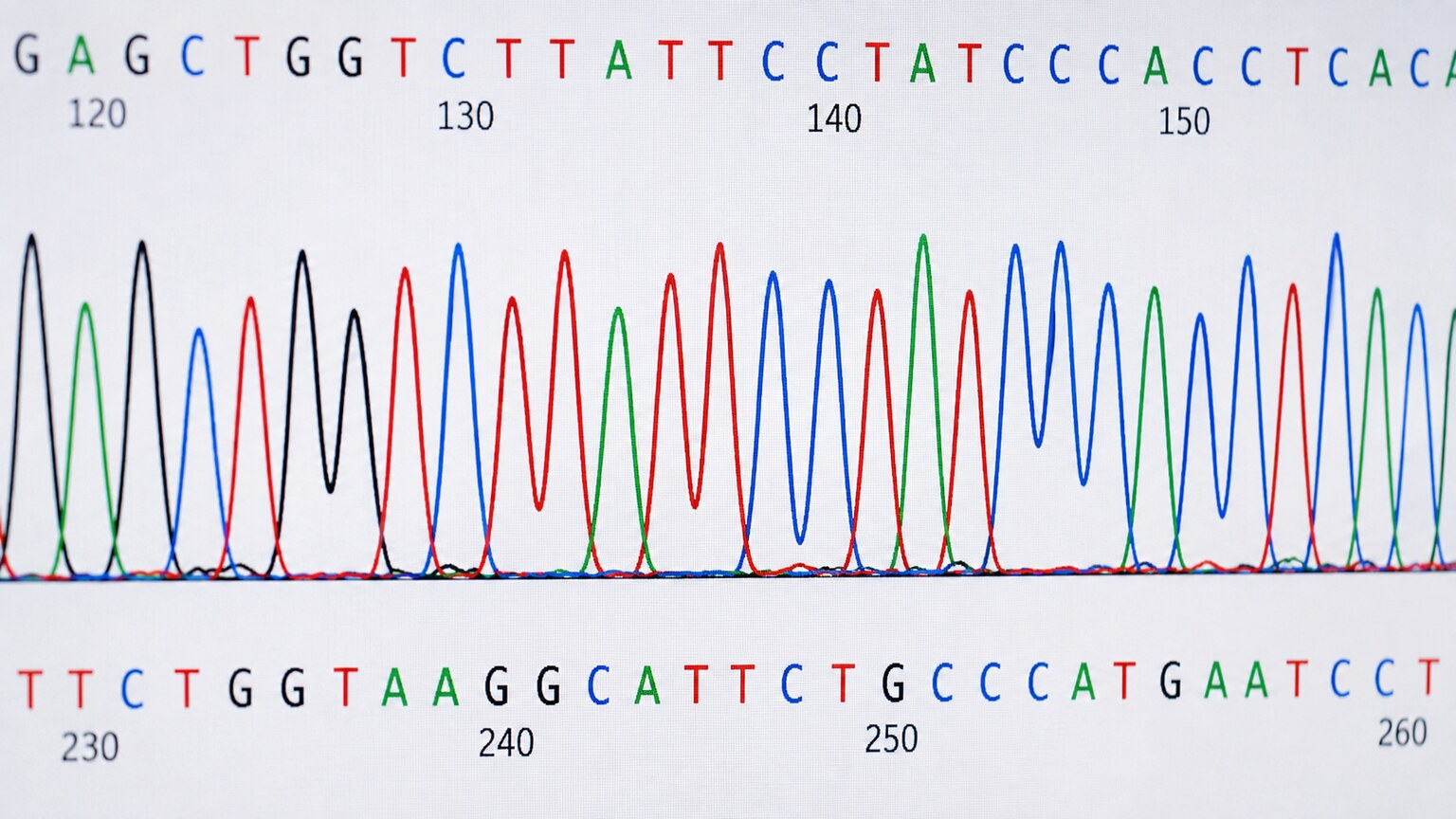
Figure 7. A DNA sequencing readout like this one is what a lab analyst actually reviews when classifying a variant, a manual interpretation step with no real equivalent in routine chemistry testing.
Routine lab values almost always resolve cleanly into "normal" or "abnormal" based on a printed reference range, with very little true ambiguity in how a number gets classified. Genetic testing has an entire middle category that routine labs essentially never encounter: the variant of uncertain significance, a genetic change the lab can clearly identify in the sequencing data but doesn't yet have enough evidence to confidently classify as either disease-causing or harmless. This is not, in any way, a lab error or a sign of poor or careless testing on the lab's part — it genuinely reflects the honest, current limits of medical knowledge surrounding one specific, and sometimes genuinely very rare, genetic change.
This uncertain category is a direct, natural consequence of the careful manual review process described earlier in this article, and it represents a source of genuine result-interpretation ambiguity that routine bloodwork essentially never produces or has to grapple with at all. A glucose level of 105 is unambiguously classified as prediabetic range; there's no equivalent "we're not yet sure what this specific glucose reading means" category in routine chemistry testing. Understanding that this uncertain middle ground exists specifically within genetic testing, and specifically because DNA analysis works so fundamentally differently from simply measuring a substance's concentration in blood, helps make sense of why a genetic report might reasonably come back without the clean, definitive answer a routine lab result almost always reliably provides.
Common Misconceptions About These Two Types of Testing
One common misconception is that a genetic test can simply be added onto a routine blood panel the same way an extra chemistry marker might be, with results coming back on the same timeline. As covered throughout this article, the underlying sample handling, review process, and reporting format are different enough that genetic results virtually always take significantly longer, even when both types of testing happen to use the same blood draw.
A second misconception is that a "normal" genetic result works the same way a normal blood test does — as a clean, reassuring all-clear. A negative genetic test typically only ever rules out the one specific condition or variant it was actually designed and validated to look for in the first place, not every possible genetic or non-genetic explanation for a person's symptoms or documented family history, which is a meaningfully narrower guarantee overall than a broad, normal routine lab panel often reasonably provides.
A third misconception is that genetic testing results, once received, are private in the same limited way routine lab results are. While both categories are technically classified as protected health information under existing privacy law, genetic results still carry the additional, dedicated legal considerations already described above, plus the unique family-relevance dimension that together give them a genuinely different, more complicated privacy landscape than a routine cholesterol panel ever has to navigate.
When the Two Types of Testing Actually Get Ordered Together
Despite all these differences, genetic testing and routine lab work aren't mutually exclusive, and doctors frequently order both as part of the same broader evaluation. Someone being worked up for a suspected inherited metabolic condition, for instance, might have routine chemistry panels drawn to look at current organ function and enzyme levels, alongside a genetic test to look for the specific underlying variant responsible. In this kind of situation, the two test types genuinely complement each other: the routine labs show what's happening right now, while the genetic test explains why it's happening and whether it's likely to keep happening in a predictable, inherited pattern.
Understanding that these are two fundamentally different, genuinely complementary tools rather than interchangeable versions of the same underlying test is exactly what helps make sense of why a doctor might reasonably order both together in the same visit, and why the results from each one ultimately need to be read through a different interpretive lens once they both come back.
Why Routine Labs and Genetic Tests Are Regulated Somewhat Differently
Beyond the specific patient-facing protections like GINA, the broader regulatory landscape around these two categories of testing also differs in ways worth understanding. Routine clinical lab testing in the United States operates under a well-established federal framework called CLIA (the Clinical Laboratory Improvement Amendments), which sets quality and accuracy standards essentially every clinical lab, genetic or otherwise, must meet. Genetic testing sits within that same broad framework but has developed additional layers of oversight and professional guidance specific to it, including standardized variant classification systems developed by professional genetics organizations, precisely because interpreting a DNA sequence involves judgment calls that a straightforward chemistry assay simply doesn't require.
This isn't a case of genetic testing being somehow less rigorously regulated than routine labs — if anything, the genuine interpretive complexity described throughout this article has actively pushed the genetics field to develop far more detailed, specialized professional standards for exactly how a given finding gets classified and reported, layered carefully on top of the same baseline quality requirements every clinical lab, regardless of specialty, already has to meet under federal law.
How the Cost and Insurance Picture Differs
Routine lab panels are typically inexpensive and near-universally covered by insurance, especially when tied to a specific symptom or an annual physical, making the financial side of ordering one rarely a significant consideration for either doctor or patient. Genetic testing has historically carried a more variable cost picture: prices have dropped substantially over the past decade as sequencing technology has improved, but a comprehensive genetic panel can still cost meaningfully more out of pocket than a routine metabolic panel, and insurance coverage depends heavily on the specific test, the documented medical necessity behind it, and the particular insurer's own policies.
This cost variability is a meaningful part of why genetic counseling sessions so often include a direct, upfront conversation about insurance coverage and expected out-of-pocket cost well before testing even actually begins — a financial planning conversation that essentially never needs to happen before a routine cholesterol check at a regular physical, since the cost and coverage picture for standard bloodwork is so much more predictable and consistent across nearly every insurance plan.
Why a Single Genetic Test Can Sometimes Answer What Would Take Years of Routine Monitoring
One underappreciated practical advantage of genetic testing, once its differences from routine labs are understood, is how much diagnostic ground a single well-chosen test can cover. For certain inherited conditions, years of periodic routine bloodwork monitoring for early warning signs can sometimes be meaningfully shortened, or made far more targeted, by a single genetic test that either confirms someone carries a specific inherited risk or rules it out entirely. This doesn't fully replace routine monitoring in situations where it's still genuinely clinically appropriate, but it absolutely can change how that monitoring gets approached and scheduled going forward — someone confirmed not to actually carry a known familial variant, for instance, may reasonably be able to step down entirely from an intensive surveillance schedule originally designed for someone at genuinely elevated inherited risk.
This forward-looking, risk-stratifying role is a genuine use case that simply doesn't exist in any real form for routine chemistry testing, which by its very nature only ever reports faithfully on the present moment rather than reliably informing a multi-year monitoring strategy the way a single, permanently valid genetic result realistically can.
Frequently Asked Questions
Do I need to fast before a genetic test the way I do for some blood tests?
No. Because DNA sequence doesn't change based on diet, hydration, or time of day, there's no fasting or timing requirement for genetic testing, unlike many routine blood panels.
Why does a genetic test take so much longer than a routine blood test?
Genetic testing involves sequencing DNA and having a trained specialist review any unusual findings before the report is finalized, a more involved process than an automated chemistry analyzer producing a same-day numeric result.
Will I need to repeat a genetic test the way I repeat routine bloodwork?
Generally no. Since your DNA sequence doesn't change over your lifetime (with specific exceptions like tumor DNA in certain cancers), a genetic result from years ago is still just as valid today.
Does a genetic test always require a blood draw?
No. Because DNA is present in nearly every cell, genetic samples are often collected through a cheek swab or saliva kit instead of a venous blood draw, though clinical testing sometimes still uses blood for lab convenience.
Are genetic test results protected differently than routine lab results?
Yes, in specific ways. In the U.S., the Genetic Information Nondiscrimination Act (GINA) restricts how health insurers and employers can use genetic results, a dedicated federal protection that doesn't have a direct equivalent for routine bloodwork.
What does it mean if my genetic result comes back as a "variant of uncertain significance"?
It means the lab identified a genuine DNA change but doesn't yet have enough evidence to classify it as disease-causing or harmless. This reflects a real limit in current medical knowledge, not a testing error, and such variants are sometimes reclassified later as more research accumulates.
Does genetic testing cost more than routine bloodwork?
Often, yes, though prices have dropped substantially in recent years. Coverage depends heavily on the specific test and documented medical necessity, which is why genetic counseling sessions frequently include a direct conversation about expected cost and insurance coverage.
If my genetic test is negative, does that rule out everything a doctor was worried about?
Not necessarily. A negative genetic test typically only rules out the specific condition or variant it was designed to detect, not every possible explanation for a person's symptoms or family history.
Putting the Full Picture Together
Taken together, the differences covered throughout this article all trace back to the same root distinction: a genetic test reads something fixed and permanent, while a routine lab test measures something dynamic and constantly changing. That one single structural difference cascades outward into essentially everything else covered in this article — how the sample itself gets collected, how long the results genuinely take to come back, how they end up being reported, who else beyond the tested person they might realistically matter to, what specific legal protections apply, and even, in the end, how much the whole process actually costs. None of these many differences make one type of testing inherently more valuable, more sophisticated, or more important than the other in any absolute sense; they simply reflect two genuinely different, purpose-built medical tools designed from the ground up to answer two genuinely different kinds of clinical questions.
For anyone about to undergo either type of testing for the very first time, the most genuinely useful mental shift is simply this: stop expecting a genetic report to behave like a familiar, numeric chemistry panel, and equally stop expecting an ordinary routine blood panel to carry the same lifelong, family-wide relevance that a genetic result realistically can. Approaching each type of test on its own distinct terms, with its own expected timeline, its own collection method, and its own reporting format kept firmly in mind from the start, is genuinely what makes both categories of results so much easier to properly understand once they finally arrive.
Conclusion
A genetic test and a routine blood panel might both begin with a simple sample, but from there they diverge in nearly every meaningful way: what's being measured, how long the result stays valid, how it's collected, how long it takes to come back, how it's reported, who else it might matter to, and even what legal protections apply to it. Understanding these differences going in — rather than expecting a genetic report to behave like a familiar chemistry panel — makes the entire testing experience considerably easier to navigate, and makes the eventual result far easier to interpret correctly once it arrives.
Still Not Sure What Your Results Mean?
Upload your labs and get a complete, visual, plain-language interpretation of every biomarker — delivered to your inbox in under 15 minutes.
Get My ReportThis article is for educational purposes only and does not constitute medical advice. Always consult your healthcare provider regarding your specific lab results.