
What Causes Genetic Test Results to Show Variants of Uncertain Significance?
A variant of uncertain significance shows up on a genetic test not because the laboratory did anything wrong in reading your DNA, but because your genome genuinely contains a specific, real, correctly-detected change that the broader scientific community simply hasn't gathered enough collective evidence about yet to confidently label as either harmful or harmless, one way or the other. The underlying sequencing process itself is genuinely accurate — the actual uncertainty lives entirely within the interpretation step, never in the raw detection itself. This particular gap happens for several distinct, well-understood reasons: the variant might genuinely be exceedingly rare, far too rare for anyone to have properly studied its real-world effects across a sufficiently large group of people; the various computer models used to predict its likely impact might simply disagree with one another; or perhaps nobody has yet run the specific kind of family or laboratory studies that would definitively settle the underlying question either way. This article walks through exactly why this specific gap in scientific knowledge exists, precisely what determines whether a given variant ever eventually gets reclassified, and why any VUS result is genuinely neither something worth dismissing outright nor something worth panicking over.
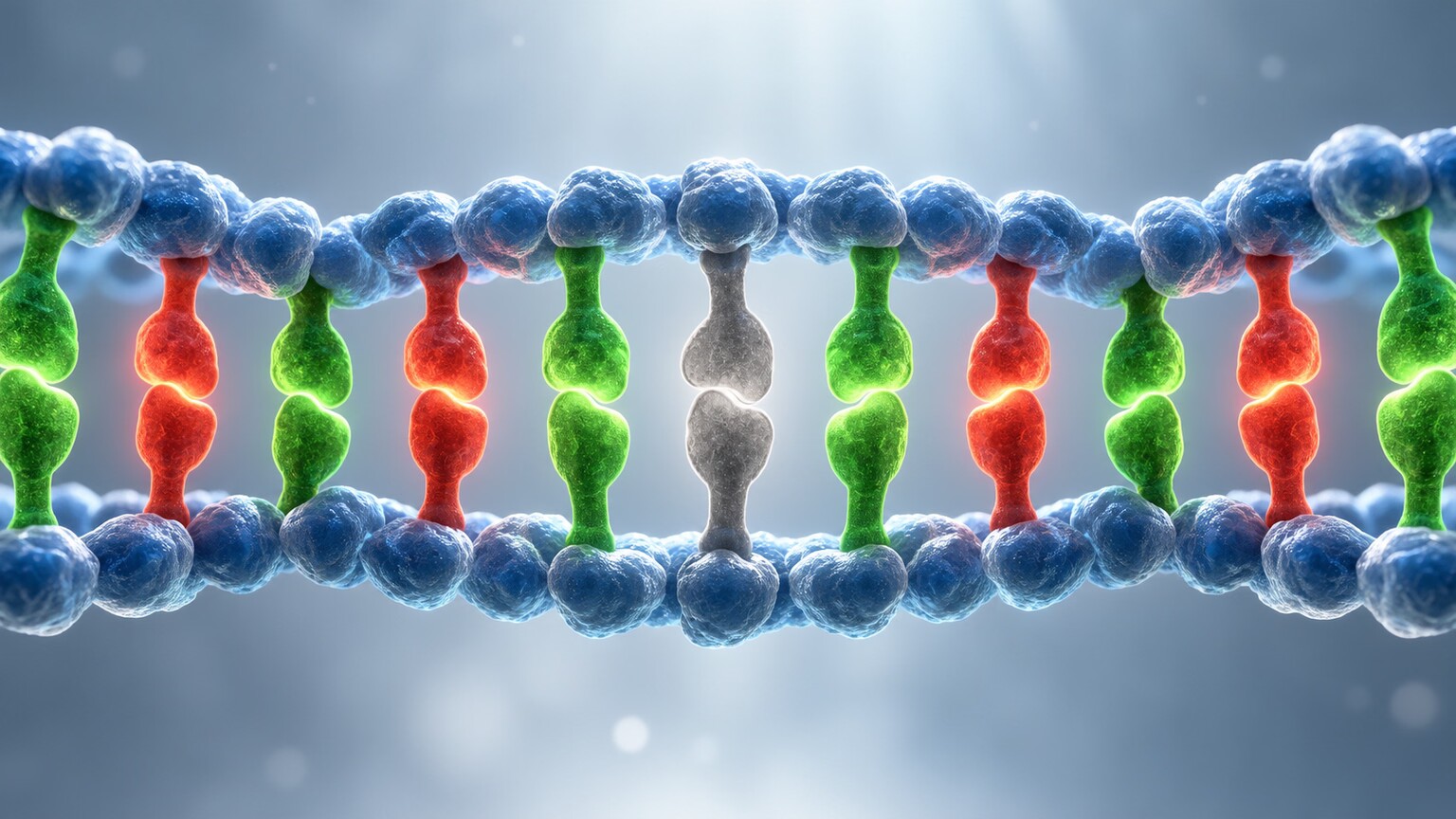
Figure 1. Within a DNA sequence where most detected variants have already been confidently classified, a variant of uncertain significance is one specific position where the evidence simply hasn't accumulated yet.
The Five-Tier System Behind Every Genetic Classification
Every single variant identified during a genetic test gets carefully sorted into one of five official categories, using formal classification guidelines developed jointly by the American College of Medical Genetics and Genomics and the Association for Molecular Pathology: pathogenic, likely pathogenic, variant of uncertain significance, likely benign, and benign. This system exists because DNA doesn't come with a built-in answer key — a lab can read your genetic code with extremely high accuracy, but translating that raw sequence into "this causes disease" or "this is harmless" requires a separate, evidence-based judgment call, built by weighing multiple independent lines of evidence against each other.
A variant of uncertain significance sits deliberately in the middle of this five-tier scale, and it's the category assigned specifically when the evidence gathered so far doesn't clearly point toward either end. This isn't a failure of the classification system — it's the system working honestly, refusing to force a confident answer where the actual scientific evidence doesn't yet support one. Understanding why that evidence is sometimes missing is really the heart of this entire article.
The classification framework itself functions by carefully scoring several genuinely independent categories of evidence and then combining those scores according to a formal, publicly published set of rules, rather than ever relying on any single expert's own subjective, personal judgment call alone. Population frequency data, computational predictions, segregation patterns within families, functional laboratory evidence, and the specific type and location of the change within the gene are each weighed as separate evidence categories, and a variant needs a certain combined strength of evidence pointing consistently in one direction before it can be confidently classified as pathogenic or benign. A VUS is what results when the available evidence across these categories is either too sparse, too weak individually, or genuinely conflicting between categories.
This carefully standardized approach matters enormously for overall consistency across the field, since it genuinely means two entirely different laboratories independently evaluating the very same variant, working from the same published evidence, should generally reach essentially the same classification — though in practice, occasional discrepancies between labs do happen, usually because one lab has access to internal data (such as its own prior patients carrying the same variant) that another lab doesn't. This is part of why a second opinion or a repeat evaluation at a different laboratory occasionally does shift a variant's classification, even without any brand-new scientific evidence entering the picture at all — sometimes it's simply a matter of which lab has seen the variant before.
The Most Common Reason: The Variant Is Simply Too Rare to Have Been Studied

Figure 2. Large population reference databases contain genetic data from hundreds of thousands of people, but an extremely rare variant may appear in only a handful of them, leaving too little data to classify confidently.
Classifying a variant as either pathogenic or benign relies heavily on carefully comparing it against enormous population reference databases containing pooled genetic data from hundreds of thousands of unrelated people, systematically checking how often that exact variant shows up specifically in people who have the condition in question versus people who clearly don't. The single biggest driver of VUS results is that a huge number of genetic variants are individually extremely rare — sometimes seen in only one or two families ever documented — meaning there simply isn't enough real-world data yet to establish a reliable statistical pattern in either direction.
This scarcity problem compounds itself the more specific a gene or condition becomes. A well-studied gene tied to a common condition might have accumulated data from tens of thousands of tested patients over decades, giving most of its possible variants a real chance at classification. A newly discovered gene, or one tied to a genuinely rare condition, might have only a few hundred documented cases worldwide, meaning many of its variants remain in permanent, or at least long-term, uncertainty simply because the sample size needed to resolve them hasn't been reached yet.
It genuinely helps here to fully appreciate just how enormous the raw total number of theoretically possible genetic variants actually turns out to be. A single human gene can be altered at thousands of different individual positions along its sequence, and each of those positions can typically change in several different ways, meaning even one moderately sized gene can theoretically harbor many thousands of distinct possible variants. Multiply that across the roughly twenty thousand genes in the human genome, and the total universe of possible genetic variation dwarfs, by a truly enormous margin, the total number of variants that have actually been observed and carefully studied in real patients to date. Classification is fundamentally a catch-up process, working through an almost unimaginably large space of possible DNA changes one documented case at a time.
This underlying reality is also precisely why the specific gene being tested matters so enormously for how likely a VUS result actually is to come back in the first place. Testing a single, extremely well-characterized gene tied to a common hereditary condition, one that's been studied intensively for decades across huge patient cohorts, carries a meaningfully lower chance of returning a VUS than testing a large panel covering dozens of genes simultaneously, many of which are individually rare and comparatively under-studied. Broader testing panels, while valuable for casting a wide diagnostic net, mathematically increase the overall odds that at least one flagged variant somewhere on that panel will land in the uncertain category, purely as a consequence of covering more genetic ground with less accumulated data behind each individual gene.
Curious what your own genetic panel or lab results are really telling you? Upload your results and get a complete, plain-language breakdown in under 15 minutes.
Analyze My ResultsComputational Prediction Tools: Useful Clues, Never Proof on Their Own
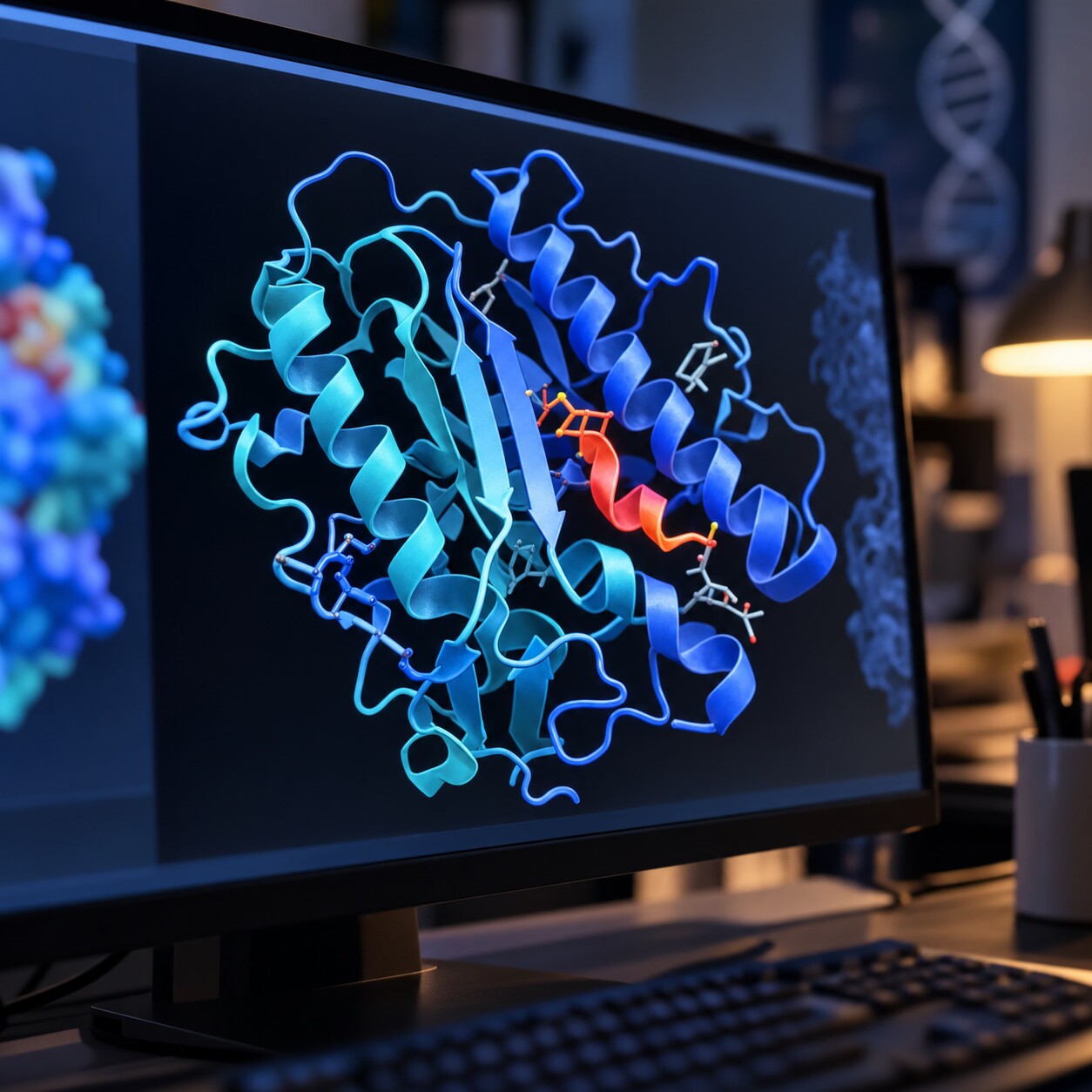
Figure 3. Computational prediction tools model how a variant might change a protein's shape or function, offering supportive evidence for classification, but never enough on their own to confirm pathogenicity.
When population data alone isn't enough to settle a variant's classification, labs turn to computational prediction tools — software algorithms that estimate how a specific DNA change is likely to affect the resulting protein's structure and function, based on patterns learned from thousands of previously classified variants. Several of these tools exist, each built with a somewhat different underlying model, and they don't always agree with each other on the same variant.
These predictions carry real, documented value as one supporting piece of evidence, but official classification guidelines are explicit that computational predictions alone can never be strong enough evidence to classify a variant as pathogenic or benign on their own — they can only nudge a classification in one direction when combined with other independent evidence. A variant where every prediction tool agrees it's likely damaging, but where no other supporting evidence exists yet, often still lands as a VUS rather than being upgraded to likely pathogenic, precisely because computational modeling is treated as suggestive, not conclusive.
The underlying reason these particular computational tools are treated with this specific kind of professional caution actually comes down to precisely how they're built and trained in the first place. Most prediction algorithms are trained by learning patterns from the very same set of already-classified variants that classification guidelines rely on for other evidence, meaning their predictions are, in a sense, an extrapolation from existing knowledge rather than an entirely independent source of truth. When a genuinely novel type of variant appears — one unlike anything the algorithm was trained on — its prediction becomes considerably less reliable, even though the tool will still confidently output a numeric score either way. This is exactly why classification guidelines cap how much weight any single computational prediction can contribute, regardless of how strongly worded that prediction happens to be.
Different specific types of genetic changes also genuinely lend themselves to noticeably more or considerably less confident computational prediction, right from the very start. A variant that changes a single amino acid within a protein (called a missense variant) is comparatively difficult to predict with confidence, since the real-world effect depends heavily on exactly which amino acid was swapped for which, and precisely where within the protein's three-dimensional structure that change occurred. A variant that introduces a premature stop signal, cutting a protein badly short partway through its sequence, is generally far easier to predict confidently as damaging, since a severely truncated protein is much more reliably disruptive across nearly every gene studied so far. This is one of several reasons missense variants make up a disproportionate share of all VUS results specifically — they're simply the harder category to predict confidently using computational tools alone.
Segregation Analysis: Testing Whether a Variant Actually Tracks With Disease in a Family
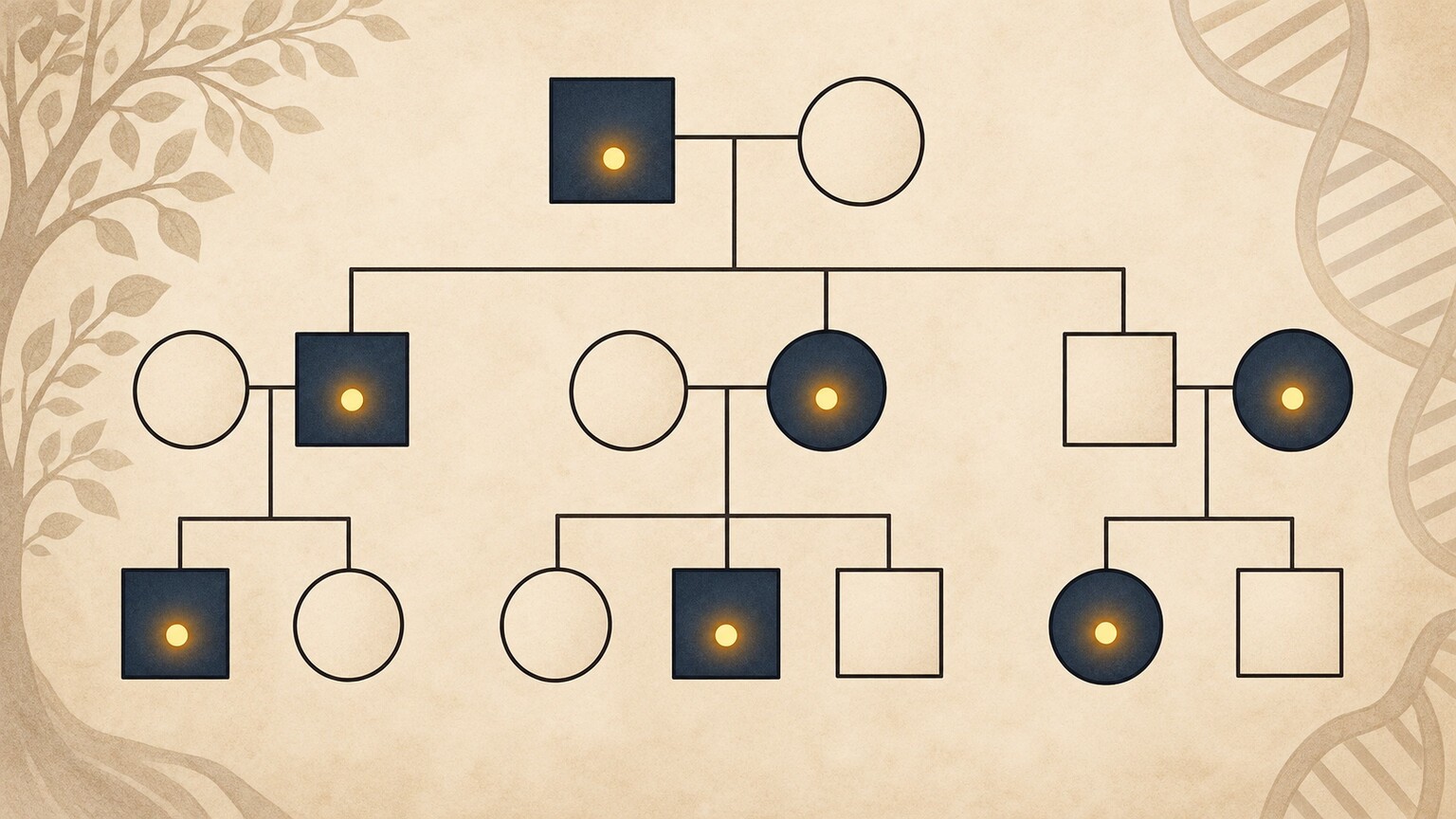
Figure 4. Segregation analysis checks whether a variant consistently appears in family members who have a condition and is absent in those who don't, providing strong supporting evidence when the pattern is clear.
One of the most genuinely powerful ways to resolve a lingering VUS is segregation analysis: carefully testing multiple family members spanning several generations to see whether the variant in question consistently shows up specifically in relatives who actually have the condition, and is just as consistently absent in relatives who clearly don't. If a variant reliably "segregates" with disease across a large enough family — present in every affected relative and absent in every unaffected one — that pattern provides genuinely strong evidence toward a pathogenic classification.
The catch is that this kind of analysis requires a family large enough, and willing enough, to provide multiple samples across generations, which isn't always available. A variant identified in someone with few living relatives, a small family, or relatives who decline testing simply can't be resolved through this particular route, regardless of how informative it might have been in a larger family. This is one of several reasons genetic counselors sometimes specifically ask about testing additional family members after a VUS result — not out of idle curiosity, but because that additional data is one of the few realistic paths toward eventually resolving the uncertainty.
Genuine segregation evidence also isn't ever simply a matter of casually counting how many relatives happen to carry the variant or not — the statistical strength of that evidence depends heavily on exactly how the condition itself behaves genetically. For conditions with highly predictable, strong inheritance patterns, a relatively small number of informative family members showing a clean segregation pattern can already provide meaningfully strong evidence. For conditions where the same underlying genetic variant can produce wildly different symptoms, or none at all, in different family members — a phenomenon called variable expressivity, covered in more depth elsewhere on this site — segregation analysis becomes considerably murkier to interpret, since an unaffected relative carrying the variant doesn't necessarily rule out that variant's involvement the way it would for a more predictably behaving condition.
There's also a genuinely important ethical dimension to this entire process that's worth acknowledging directly and honestly here: asking extended family members to participate in genetic testing, sometimes people the original patient hasn't spoken with in years, raises real questions about privacy, family dynamics, and each individual relative's own right to decide whether they want this information about themselves at all. Genetic counselors are specifically trained to navigate this process thoughtfully, and it's entirely reasonable, and genuinely common, for some family members to decline participation, which simply means that particular avenue toward resolving the VUS remains unavailable rather than being treated as an obstacle to push past.
Functional Studies: Testing the Variant Directly in a Laboratory Setting

Figure 5. Functional studies deliberately introduce a specific variant into laboratory cell models to directly observe whether it disrupts the protein's normal behavior, providing some of the strongest classification evidence available.
By far the most direct way to genuinely resolve lingering uncertainty is a functional study: researchers deliberately and precisely introduce the exact variant in question into a laboratory cell model, or, somewhat less commonly, into an animal model, then carefully and directly observe whether the resulting protein continues behaving entirely normally or instead shows a clear, measurable functional defect. Unlike computational prediction, which estimates an effect, a well-designed functional study actually demonstrates one, which is why this type of evidence carries substantially more classification weight when it's available.
The genuine obstacle here is almost entirely resource availability and sheer time. Designing, running, and validating a functional study for one specific variant is expensive and can take months or years, and researchers understandably prioritize variants that are either already suspected of being significant or that affect genes with a large enough number of affected patients to justify the investment. A rare variant in a less-studied gene may simply never receive this level of dedicated laboratory attention, leaving it without one of the strongest possible paths toward resolution.
A genuinely promising and relatively recent development well worth understanding here is a specific laboratory technique called multiplexed assays of variant effect, commonly abbreviated as MAVE, which represents a genuine shift in how efficiently functional evidence can be generated. Rather than testing one variant at a time, this approach uses modern laboratory techniques to simultaneously test thousands of possible variants within a single gene all at once, in a single coordinated experiment, dramatically increasing the pace at which functional data can be generated compared to the traditional one-variant-at-a-time approach. Several dedicated research groups have already successfully applied this technique to specific, well-known disease genes, generating functional evidence for a large fraction of that gene's possible variants in one coordinated project rather than waiting years for individual studies to trickle in one at a time.
This particular kind of large-scale, coordinated functional testing genuinely represents one of the single most promising available paths toward meaningfully reducing the overall VUS burden across the entire field of genetic medicine in the coming years, precisely because it directly addresses the resource bottleneck that has traditionally limited functional studies to only the highest-priority variants. As this specific technique continues to steadily expand to cover more genes, a genuinely meaningful number of variants currently sitting as VUS results today are expected to gain the kind of direct functional evidence needed to finally resolve their classification one way or the other.
Why Certain Ancestries Are Disproportionately Affected by VUS Results
One of the genuinely more important, and considerably less widely discussed, reasons behind the overall VUS problem is a real, well-documented gap in exactly whose DNA has historically been studied and included in reference data. The large population reference databases used to classify variants were built predominantly from research participants of European ancestry, meaning genetic variation common in other ancestral populations is comparatively underrepresented in the very databases used to determine whether a given variant is common enough to be considered harmless.
The practical consequence, confirmed across multiple published studies, is that people of African, Asian, Hispanic, and other non-European ancestries receive VUS results at meaningfully higher rates than people of European ancestry undergoing the exact same genetic test for the exact same condition — not because their DNA is inherently more prone to uncertain variants, but because the reference data needed to confidently classify their specific genetic variation simply hasn't been gathered at the same scale yet. This disparity is an active area of ongoing research and diversity-focused data collection specifically aimed at closing this gap, since resolving it directly reduces VUS rates for the populations currently most affected by it.
This particular disparity carries genuinely real, well-documented clinical consequences that extend well beyond simply receiving a somewhat more ambiguous report back. Research specifically examining hereditary cancer genes has found that patients of non-European ancestry are not only more likely to receive a VUS result in the first place, but their variants also tend to remain classified as uncertain for a longer average period of time before eventual resolution, compared to variants found predominantly in patients of European ancestry. This gap means the practical benefits of genetic testing — clearer answers, more confident preventive decisions — have historically been distributed unevenly across different populations, a finding that has drawn significant attention within the genetics research community over the past decade.
Meaningfully addressing this specific gap directly requires deliberately, and quite specifically, expanding existing genetic reference databases to include a much broader range of global ancestral populations, and several major research consortiums have launched dedicated initiatives specifically aimed at this goal over the past several years, recruiting research participants from historically underrepresented populations around the world. Progress has been real but gradual, since building population-scale reference data takes considerable time, funding, and sustained community trust and partnership — trust that, in some cases, has to be rebuilt given historical instances of genetic research being conducted in underrepresented communities without adequate consent or benefit-sharing. Closing this gap is now widely recognized within the field as one of the most important, tractable steps toward reducing VUS rates broadly and equitably across all patient populations, rather than only for those whose ancestry happens to already be well-represented in existing databases.
How a VUS Eventually Gets Reclassified

Figure 6. Laboratories worldwide submit variant evidence to shared public databases, allowing a variant's classification to be updated as new segregation data or functional studies accumulate over time.
A variant of uncertain significance is genuinely never intended to function as a permanent, fixed label — it's really more of a temporary snapshot of the current available evidence, one that gets actively revisited as fresh new evidence continues accumulating over time. Laboratories and researchers submit variant classifications to shared public databases, most notably ClinVar, allowing new segregation data, new functional studies, or simply a larger population sample size collected over subsequent years to eventually tip a variant's classification toward pathogenic, benign, or occasionally remain uncertain indefinitely if the necessary evidence never accumulates.
Because of this ongoing process, some labs and genetic counseling programs proactively reach back out to patients years after an initial VUS result specifically to update them once new classification data has emerged, though this practice varies considerably between institutions and isn't universally guaranteed. This is exactly why patients with a VUS result are generally encouraged to periodically check back with whoever ordered their test, or with the testing laboratory directly, rather than assuming silence means nothing has changed.
The typical, realistic timeline for eventual reclassification genuinely varies enormously, depending heavily on precisely how much ongoing research attention a given gene happens to receive at any point. Variants in genes tied to common, well-studied hereditary conditions are sometimes reclassified within a year or two, simply because so many other patients are also being tested for the same gene, continuously adding new data points to the shared pool of evidence. Variants in less commonly tested genes can remain uncertain for a decade or longer, not because anyone is neglecting them, but because the sheer volume of new testing needed to generate enough fresh data accumulates far more slowly for rarer conditions.
It's genuinely worth clearly understanding that reclassification can, in certain rarer cases, actually move in a direction that initially feels somewhat counterintuitive at first glance: a variant initially classified as likely pathogenic based on early, limited evidence can occasionally be downgraded back to a VUS, or even to likely benign, once a larger body of subsequent evidence emerges suggesting the earlier classification was too confident given what was actually known at the time. This kind of downgrade isn't a sign that genetic testing is unreliable — it's the classification system doing exactly what it's designed to do, correcting itself as better evidence becomes available, in either direction, rather than treating any classification as permanently fixed the moment it's first assigned.
What a VUS Actually Means for Medical Decisions Right Now
Current, widely accepted genetic counseling guidelines are remarkably explicit and entirely consistent on this one particular central point: a variant of uncertain significance should never, by itself, be used to guide major medical decisions — not preventive surgery, not starting or stopping a medication, not decisions about future pregnancies — precisely because acting on a VUS as though it were confirmed pathogenic risks real harm if that variant is later reclassified as benign, and doing nothing based on it while treating it as confirmed benign risks missing something real if it's later reclassified as pathogenic.
The practical, current-day approach for most VUS results is to make medical decisions based on other established factors — personal symptoms, family history, and any other confirmed test results — while keeping the VUS on file for future reference, rather than letting an unresolved variant drive decisions on its own. This is a large part of why genetic counseling is so strongly recommended alongside genetic testing: interpreting exactly what weight, if any, a specific VUS should carry in a specific person's overall clinical picture requires expertise well beyond simply reading the classification label on the report.
This guidance applies with particular force to a specific, well-documented cautionary pattern that genetics professional societies have explicitly warned against: using a VUS result found in a cancer-predisposition gene to decide on preventive, risk-reducing surgery, such as a prophylactic mastectomy or oophorectomy. Multiple published position statements from major genetics and oncology organizations specifically caution against this practice, precisely because a meaningful number of VUS results in these particular genes are eventually reclassified as benign, meaning a person could undergo a major, irreversible surgical procedure based on a genetic finding that later turns out to have never actually carried elevated risk in the first place. This specific scenario is exactly why thorough genetic counseling before acting on any VUS-related concern is treated as a non-negotiable step, not an optional add-on.
None of what's been said here means a VUS result should ever simply be entirely dismissed or completely ignored either — the genuinely appropriate middle ground, as most genetic counselors frame it, is treating the specific finding as one piece of ongoing information to monitor and revisit, rather than either a call to immediate action or something to file away and forget about entirely. Continuing with recommended screening based on personal and family history, staying in touch with the ordering provider about potential reclassification, and revisiting the conversation if new symptoms or a new family diagnosis emerge are all reasonable, proportionate responses that avoid the twin pitfalls of overreacting and underreacting to a result that, by definition, doesn't yet have a confirmed answer either way.
A Worked Example: One Variant, Three Different Paths to Resolution
Consider a specific variant identified in an important cardiac-related gene during a young adult's routine genetic workup for a newly noticed irregular heart rhythm, initially classified as a VUS since it had never been documented before anywhere in the shared scientific literature. Her cardiologist and genetic counselor recommend a specific, targeted next step: testing her parents and two siblings to check for segregation. Testing reveals that her father and one sibling, both of whom carry that exact same variant, have also had documented, though previously unexplained and never fully investigated, heart rhythm abnormalities of their own, while her mother and her unaffected sibling don't carry the variant at all. This clean, consistent segregation pattern, once properly documented and submitted to the shared ClinVar database, becomes genuinely strong evidence supporting reclassification to likely pathogenic within just several months.
Now consider a genuinely different scenario entirely: a variant identified in a metabolic gene during a newborn screening follow-up test, found in a baby with no living extended family members available for any kind of segregation testing. Here, genuine resolution instead depends entirely on a functional study, conducted eighteen months later by a research lab specifically studying that gene, which demonstrates the variant meaningfully impairs the relevant enzyme's activity in a cell model — ultimately supporting reclassification as likely pathogenic through laboratory evidence rather than family data.
A third variant, discovered in a person of an underrepresented ancestry with a small family and no active research interest in that particular gene, may simply remain a VUS for years, illustrating exactly the disparity discussed earlier in this article — not every variant has an equally realistic path toward resolution. For this specific third person, the realistic practical path forward looks noticeably, meaningfully different from the other two people described above: rather than waiting on a single decisive piece of evidence, their genetic counselor recommends periodic check-ins every one to two years specifically to review whether the variant's classification has changed in the shared public databases, while continuing to base any actual medical decisions on their personal symptoms and family history rather than on the still-unresolved genetic finding itself.
These three genuinely distinct outcomes, all originally beginning from that exact same identical starting point of one ambiguous VUS result, illustrate the same central theme running through this entire article: resolution isn't a matter of time passing on its own, but of the right kind of evidence — family data, laboratory data, or simply enough accumulated population data — actually becoming available for that one specific variant. Some variants get genuinely lucky, resolved through an especially large and informative family. Others get resolved instead through dedicated laboratory research carried out over months or years. And some, through absolutely no fault of the patient or of the underlying science itself, simply have to wait considerably longer than others before their final answer eventually arrives.
Frequently Asked Questions
Is a variant of uncertain significance the same as a genetic mutation causing disease?
No. A VUS is a real, detected DNA change, but current evidence isn't sufficient to classify it as either disease-causing or harmless. It sits deliberately in the middle of the classification scale, not on the disease-causing end.
Will a VUS result always eventually get resolved?
Not always. Resolution depends on new evidence accumulating — additional family testing, functional studies, or larger population data — which isn't guaranteed for every variant, particularly very rare ones in less-studied genes.
Why do people of certain ancestries get more VUS results?
Because the large population databases used for classification were built predominantly from research participants of European ancestry, genetic variation common in other populations is comparatively underrepresented, making classification harder for those variants.
Should I make medical decisions based on a VUS result?
Current guidelines advise against it. A VUS shouldn't independently drive major decisions like preventive surgery or medication changes, since it could later be reclassified in either direction.
Can testing family members help resolve my own VUS?
Often, yes. Segregation analysis, which checks whether a variant consistently appears in affected relatives and is absent in unaffected ones, is one of the more reliable ways to gather additional classification evidence.
Conclusion
A variant of uncertain significance exists because genetic classification depends on accumulated evidence — population frequency data, computational predictions, family segregation patterns, and laboratory functional studies — and for a specific variant, at a specific point in time, that evidence simply hasn't reached a confident threshold yet. It's not a flaw in your DNA, and it's not a flaw in the testing. It's an honest reflection of where scientific knowledge currently stands, with a real, if sometimes slow, path toward eventual resolution as more data accumulates. Understanding exactly why that gap exists turns an unsettling, ambiguous result into a specific, well-defined scientific question — one that continues to get answered, variant by variant, as research catches up.
Genetic science as an entire field of medicine is still remarkably young, and the sheer overwhelming scale of human genetic variation means the ongoing work of carefully classifying every single meaningful variant will almost certainly continue for many more decades to come. A VUS result received today is, in a very genuine and literal sense, simply a snapshot of the current edge of that ongoing, ever-advancing scientific frontier — not a dead end, but a marker of exactly where collective knowledge currently stops and where future research, quite possibly involving your own family's data, is likely to push that frontier forward next.
Still Not Sure What Your Results Mean?
Upload your labs and get a complete, visual, plain-language interpretation of every biomarker — delivered to your inbox in under 15 minutes.
Get My ReportThis article is for educational purposes only and does not constitute medical advice. Always consult your healthcare provider regarding your specific lab results.