
What Is the Difference Between Diagnostic and Predictive Genetic Testing?
The short answer is that diagnostic genetic testing looks for an answer to a problem that's already happening, while predictive genetic testing looks for a risk that hasn't happened yet — and may never happen at all. A diagnostic test is ordered when someone already has symptoms, a suspicious scan, or an unusual physical finding, and a doctor wants to know whether a specific gene is the reason behind it. A predictive test, on the other hand, is ordered for someone who feels completely healthy but who has a reason — almost always a strong family history — to wonder whether they're carrying a gene change that could cause a disease down the road. Both use the same basic laboratory tools: blood or saliva, DNA extraction, and sequencing machines that read the genetic code letter by letter. But the question each test is trying to answer, the way the result gets interpreted, and the emotional weight of receiving that result are almost entirely different from one another.
This distinction matters more than it might seem, because the label attached to a genetic test shapes nearly everything about how the whole experience unfolds — how the test gets ordered in the first place, how quickly a lab returns an answer, whether insurance treats it as medically necessary, how a genetic counselor prepares you beforehand, and how much the actual result changes about your day-to-day life once you have it. Two people can give a saliva sample to the exact same laboratory and have their DNA read by the exact same sequencing machine, yet walk away from the experience with almost nothing else in common, simply because one of them was confirming a diagnosis and the other was estimating a risk.
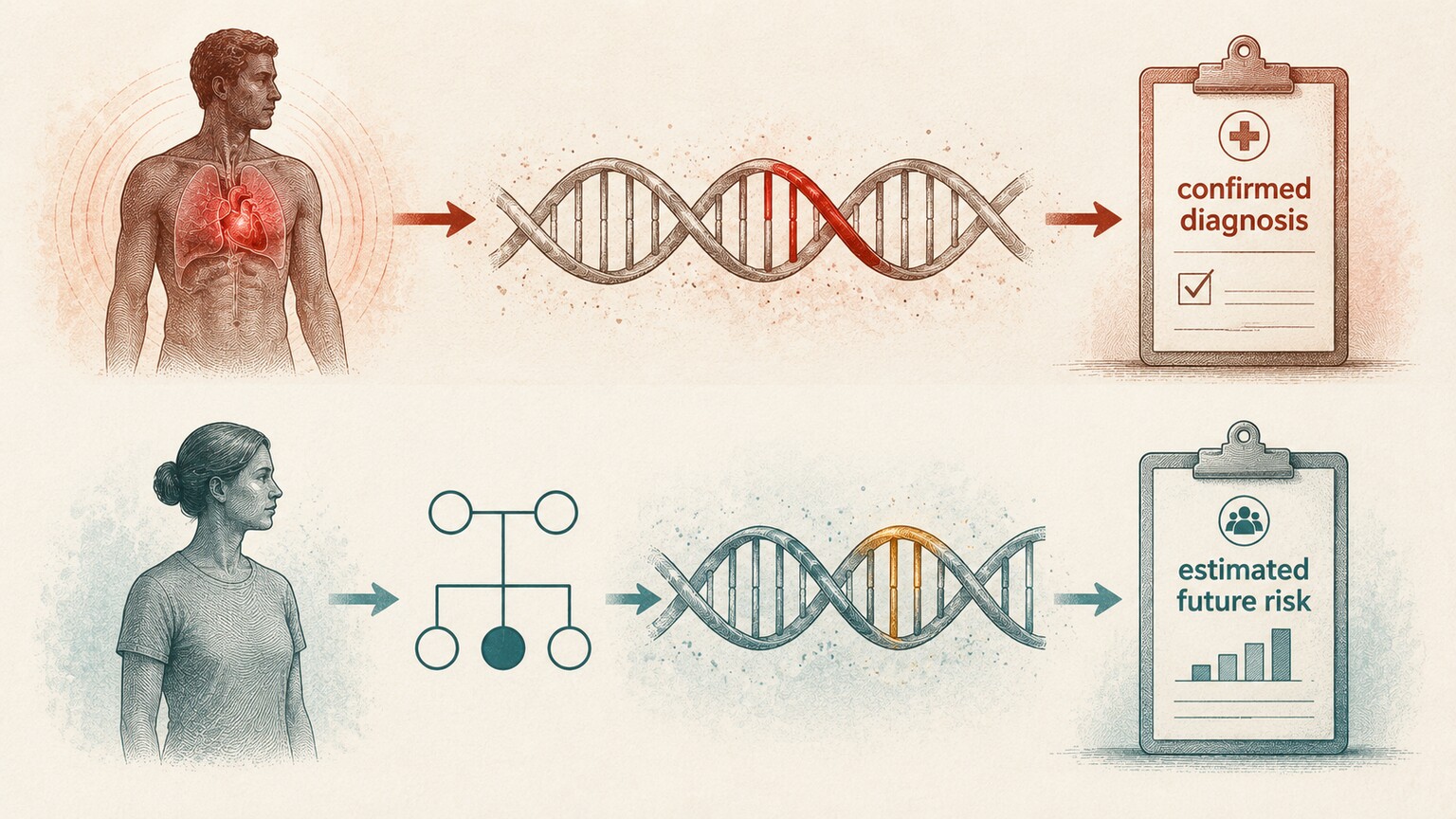
Figure 1. Diagnostic testing confirms a suspected cause behind existing symptoms; predictive testing estimates future risk in someone who has none yet.
Curious what the rest of your lab results are actually telling you? Upload your results and get a complete, plain-language breakdown in under 15 minutes.
Analyze My ResultsWhat Is Diagnostic Genetic Testing, Exactly?

Figure 2. A diagnostic test is drawn only after a clinical clue — here, muscle weakness — already points toward a specific gene.
Diagnostic genetic testing is reactive by design — it exists to explain something that's already visibly wrong. A pediatrician notices that a two-year-old isn't hitting motor milestones the way other children do, or a cardiologist sees an unusual pattern on an echocardiogram, or a dermatologist spots a skin finding that doesn't fit any common explanation. In each case, the clinician has a specific hypothesis in mind — often a short list of two or three possible genetic conditions — and the test is ordered to confirm or rule out that hypothesis. This is fundamentally different from a screening test, which looks broadly for anything that might be wrong in someone with no particular symptom pointing the way. A diagnostic genetic test is targeted: the lab knows which gene, or which small panel of genes, it's looking at, because the patient's actual physical presentation has already narrowed the search.
The classic examples are conditions with a very recognizable symptom pattern. A boy who begins falling frequently and struggles to climb stairs around age three or four might be tested for changes in the dystrophin gene to confirm Duchenne muscular dystrophy. An infant with recurrent lung infections and poor weight gain might have the CFTR gene sequenced to confirm cystic fibrosis, often after an abnormal sweat chloride test has already raised suspicion. A person with a family history of unusually tall stature, long limbs, and a dilated aorta on imaging might be tested for a mutation in the FBN1 gene to confirm Marfan syndrome. In every one of these situations, the test isn't guessing at the future — it's explaining the present. The result is typically binary and fairly definitive: either the expected gene variant is found, in which case the clinical picture now has a molecular explanation, or it isn't found, which sends the medical team looking elsewhere for the cause.
The practical mechanics of ordering a diagnostic test also reflect this urgency. Rather than testing one gene at a time, labs frequently run what's called a targeted gene panel — a curated list of, say, twenty to a hundred genes already known to cause conditions that look like the patient's presentation. If a child has unexplained seizures alongside developmental delay, a neurologist might order an epilepsy panel covering dozens of relevant genes simultaneously rather than guessing at a single one, since many different genetic causes can produce a nearly identical clinical picture. When a panel doesn't turn up an answer, the next step is often exome sequencing, which reads the protein-coding portion of essentially every gene in the body at once — a broader net used specifically because the initial, narrower search came up empty while the symptoms remained unexplained. Turnaround time for a diagnostic panel is typically measured in one to several weeks, a pace that reflects how directly the result is tied to decisions about treatment, monitoring, or referral that a family may already be waiting on.
What Is Predictive Genetic Testing, Exactly?

Figure 3. Predictive testing is typically requested by people with no current symptoms, prompted instead by a known hereditary pattern in the family.
Predictive genetic testing flips the entire premise. The person being tested usually feels completely fine. There's no symptom prompting the test — instead, there's a family tree. Maybe a mother, an aunt, and a grandmother were all diagnosed with breast cancer in their forties, and a genetic counselor has identified a specific BRCA1 mutation running through the family. Maybe a parent was diagnosed with Huntington's disease, an inherited neurological condition, and their adult child now wants to know whether they inherited the same mutation before it ever produces a single symptom. In both scenarios, the test isn't confirming an existing problem — it's trying to answer a question about a future that hasn't unfolded yet.
This category actually splits into two related but distinct ideas that genetics professionals sometimes separate out: presymptomatic testing and predisposition (or susceptibility) testing. Presymptomatic testing applies to conditions where, if you carry the disease-causing variant, you will develop the condition with very high certainty — Huntington's disease is the textbook example, since an expanded CAG repeat in the HTT gene leads to the disease in essentially everyone who lives long enough. Predisposition testing, by contrast, applies to conditions where carrying the variant raises your risk substantially but doesn't guarantee the outcome — a BRCA1 mutation, for instance, raises a woman's lifetime breast cancer risk to somewhere around 55–72%, which is dramatically higher than the general population's roughly 13%, but it still isn't a certainty. Both fall under the predictive umbrella because both are performed before any disease is present, purely to inform decisions about surveillance, prevention, or family planning.
It's worth separating predictive testing from two other things it sometimes gets confused with: carrier testing and newborn screening. Carrier testing looks for recessive conditions, like cystic fibrosis or spinal muscular atrophy, in someone who has no personal risk of developing the disease themselves but who could pass a copy of the gene to a future child if their partner also carries a variant in the same gene — it's about reproductive planning, not personal future health. Newborn screening, on the other hand, is a public health program that tests every baby shortly after birth for a defined list of treatable metabolic and genetic conditions, regardless of family history, precisely because early treatment can prevent serious harm. Predictive testing is neither of these — it's specifically aimed at an individual, prompted by a known pattern already identified in their own family, and it's asking a question about that specific person's own future, not a partner's compatibility or a newborn's immediate treatability.
The Fundamental Difference: Confirming What's Already Suspected vs. Forecasting What Might Come
A useful way to hold onto the distinction is to think of a diagnostic test like a detective confirming the identity of a suspect who's already been caught at the scene — the crime happened, there's physical evidence, and the lab work is there to put a name to what's already occurred. A predictive test is closer to a meteorologist studying atmospheric pressure and humidity to estimate the odds of a storm forming next week — nothing has happened yet, and depending on the condition, it might never happen, or it might be a virtual certainty on the horizon. Both the detective and the meteorologist are using scientific tools and careful analysis, but one is explaining a fixed event in the past and the other is estimating a probability about the future.
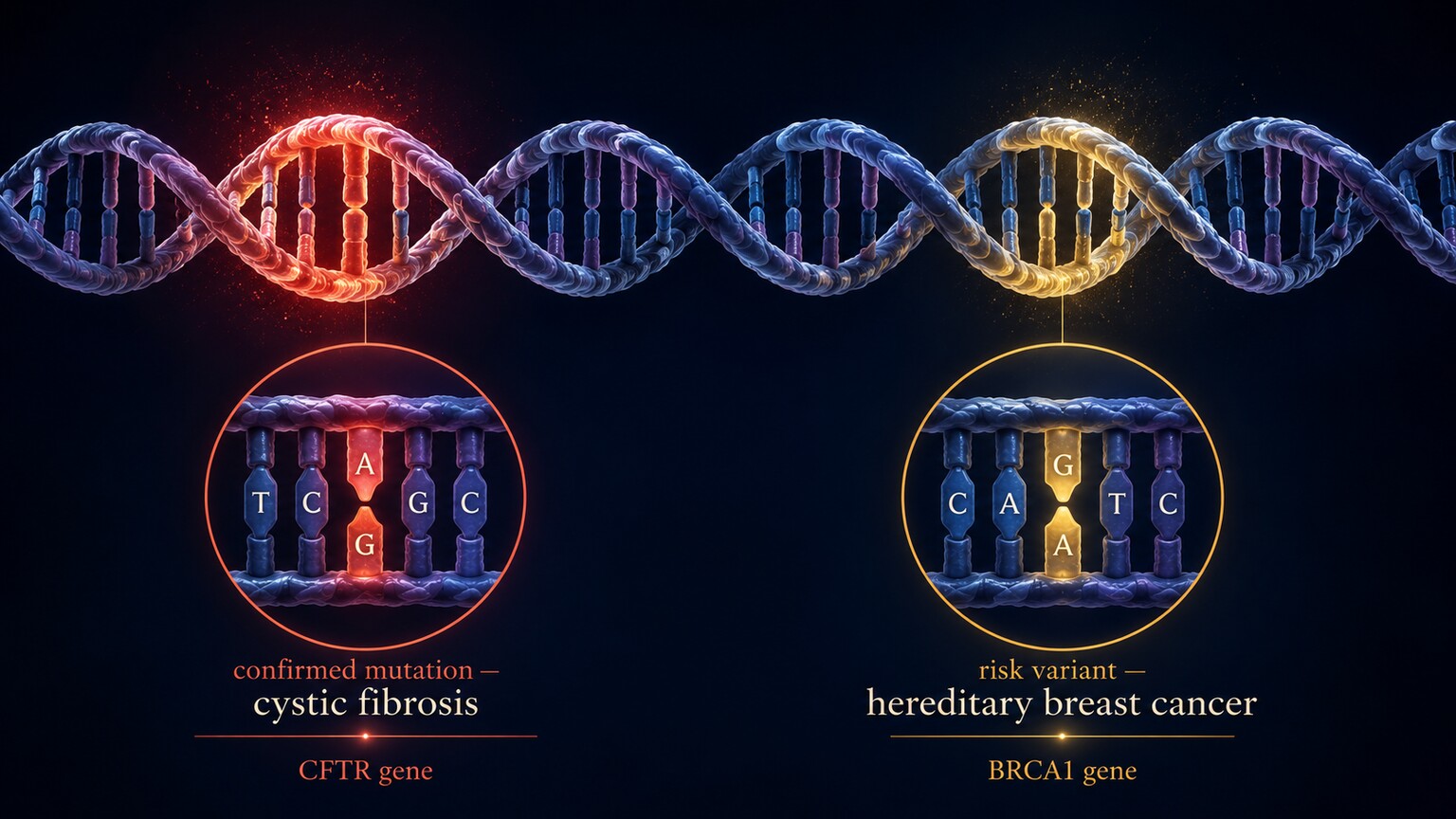
Figure 4. The same sequencing technology reads very different kinds of genetic information depending on whether the goal is diagnosis or risk prediction.
This difference in purpose changes almost everything downstream. It changes how urgently the test gets ordered (diagnostic tests are often time-sensitive, especially in a sick newborn, while predictive tests are almost never medical emergencies). It changes who initiates the conversation (a diagnostic test is usually recommended by the treating physician who's already worried about a specific problem, while a predictive test is frequently requested by the patient themselves, prompted by a relative's diagnosis). And it changes what a "positive" result actually means for the person holding it, which is the piece most people find hardest to prepare for emotionally.
There's also a difference in who actually orders each type of test and how long the answer takes to come back. Diagnostic testing is almost always initiated by a specialist who is directly managing the symptom in front of them — a pediatric neurologist, a cardiologist, a geneticist consulting on an unusual case — and results typically return within one to a few weeks, since a family or care team is often waiting on the answer to guide an active treatment decision. Predictive testing is more often initiated through a dedicated genetic counseling clinic, sometimes reached through a referral and sometimes sought out directly by the patient after a relative's diagnosis, and while the lab turnaround itself is similar, the overall timeline is usually longer because it's deliberately paced around one or more counseling sessions rather than rushed toward an urgent clinical decision. Neither pathway is "faster" or "slower" in a way that reflects better or worse care — the pacing simply matches how time-sensitive the underlying question actually is.
Real Diseases Diagnosed Through Diagnostic Genetic Testing
Diagnostic genetic testing is used across nearly every field of medicine once a specific gene is suspected. In pediatrics, it confirms conditions like Duchenne and Becker muscular dystrophy, spinal muscular atrophy, and many of the inherited metabolic disorders that get flagged on newborn screening panels. In hematology, it confirms sickle cell disease and thalassemia through mutations in the hemoglobin genes. In cardiology, it can confirm hypertrophic cardiomyopathy or long QT syndrome in someone who's had an abnormal heart rhythm or a worrying family history combined with symptoms. In a chromosomal context, it's also used to confirm a clinical suspicion of Down syndrome in a newborn with characteristic features, using a karyotype to count and examine the chromosomes directly rather than sequencing a single gene.
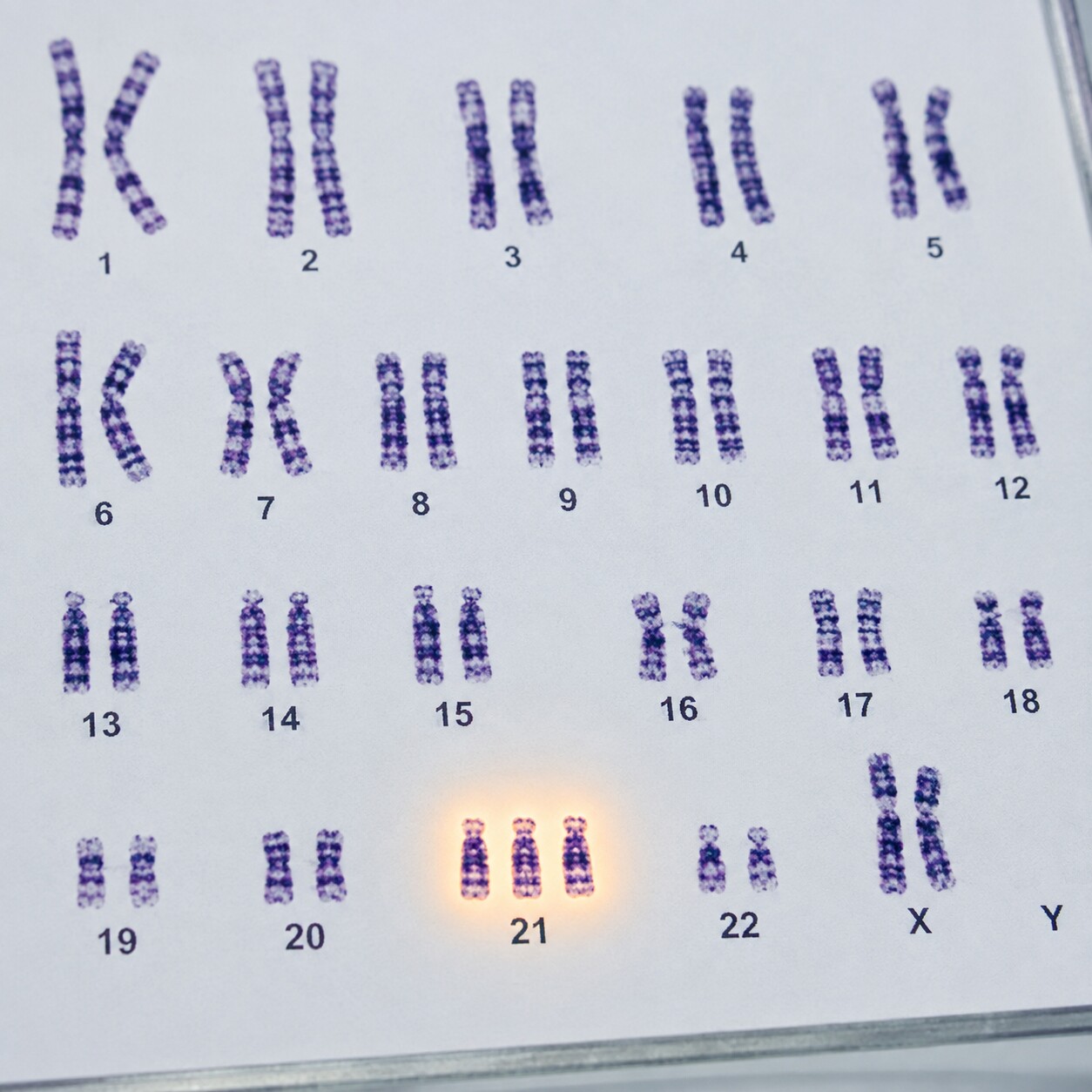
Figure 5. A karyotype showing an extra copy of chromosome 21 confirms, rather than predicts, a diagnosis already suggested by a newborn's physical features.
What ties all of these together is that in every case, a clinical sign came first: floppy muscle tone, a pattern of anemia on a blood smear, an irregular heartbeat caught on an EKG, or distinctive facial features noted at birth. The genetic test is the final confirmatory step in a diagnostic process that started with something a doctor or parent could actually see or measure. This is also why diagnostic genetic tests are almost always covered by health insurance without much friction — they're tied directly to an existing medical problem that needs an explanation and, often, a treatment plan.
A confirmed diagnostic result can also open the door to treatments that are only available once the specific gene involved is known, which is one of the clearest practical reasons families pursue this kind of testing as quickly as possible. Spinal muscular atrophy is a striking example: confirming a mutation in the SMN1 gene doesn't just explain a baby's low muscle tone — it makes that baby eligible for gene-targeted therapies like nusinersen or onasemnogene abeparvovec, treatments that work specifically because they address the exact genetic mechanism the diagnostic test identified. Similarly, confirming a specific type of inherited epilepsy through gene panel testing can steer a neurologist away from medications that are known to worsen certain genetic epilepsy syndromes and toward ones shown to work well for that exact genetic cause. In cases like these, the diagnostic test isn't just a label — it's the key that unlocks a specific, gene-matched course of treatment that wouldn't have been considered otherwise.
Because the starting point is a real, present-tense symptom, diagnostic testing also tends to move faster through the healthcare system. A geneticist or specialist typically orders a focused panel or single-gene test rather than broad screening, insurance approval is usually more straightforward since there's clear medical necessity, and results directly shape what happens next — whether that's starting a specific treatment, adjusting a medication, or connecting the family with a specialist who manages that exact condition long-term.
Diagnostic testing also plays a quiet but important role in inherited metabolic disorders first flagged by newborn screening, such as phenylketonuria (PKU) or medium-chain acyl-CoA dehydrogenase (MCAD) deficiency. A newborn screening result is only a preliminary flag, not a diagnosis — it identifies babies who need a closer look. The diagnostic gene test that follows is what actually confirms the condition, distinguishes it from a false alarm, and gives the family a definitive answer before treatment, like a specialized diet or closer metabolic monitoring, gets started. This sequence — a broad screen followed by a narrow, confirmatory diagnostic test — shows up again and again across genetic medicine, precisely because a symptom or an abnormal screening flag is what earns a condition the right to a targeted, diagnostic-level workup in the first place.
Real-World Examples of Predictive Genetic Testing
Predictive testing shows up most often in families where a hereditary condition has already been identified in a relative. BRCA1 and BRCA2 testing for hereditary breast and ovarian cancer is probably the most widely recognized example, but it's far from the only one. Lynch syndrome, caused by mutations in genes like MLH1, MSH2, MSH6, or PMS2, raises the lifetime risk of colorectal and endometrial cancer and is typically tested for predictively once a family member's tumor testing has identified the specific gene involved. Familial hypercholesterolemia, driven by mutations in the LDLR, APOB, or PCSK9 genes, causes dangerously high LDL cholesterol from birth and is often picked up through predictive testing in the relatives of someone who had a heart attack at an unusually young age.
Huntington's disease deserves special mention because it represents the most emotionally weighted end of predictive testing. Unlike BRCA1 or Lynch syndrome, where carrying the mutation raises risk but leaves real uncertainty, an expanded CAG repeat in the HTT gene means the person will, with very few exceptions, eventually develop the disease if they live long enough — there is currently no way to prevent or cure it. This is precisely why predictive testing for Huntington's disease follows one of the most carefully structured counseling protocols in all of genetic medicine, built specifically around the reality that a positive result cannot be treated away, only prepared for.
Other examples sit somewhere between these two ends of the spectrum. Hereditary hemochromatosis, caused by mutations in the HFE gene, raises the risk of dangerous iron buildup in the liver, heart, and joints, but many people who carry two copies of the most common variant never develop serious organ damage — a phenomenon called incomplete penetrance, where having the gene change doesn't automatically mean having the disease. Alpha-1 antitrypsin deficiency works similarly: predictive testing in the relative of someone diagnosed with early lung or liver disease can identify a shared genetic risk, but how severely that risk plays out often depends heavily on other factors, like whether the person smokes. These in-between examples are a useful reminder that "predictive" doesn't always mean "certain" — it exists on a spectrum from near-certainty, as with Huntington's disease, down to a meaningfully elevated but far from guaranteed risk.
Why the Testing Process Itself Looks Different

Figure 6. Presymptomatic testing for conditions like Huntington's disease follows a structured, multi-session counseling protocol before any blood is drawn.
Because a diagnostic test is confirming something a doctor already strongly suspects, it can often be ordered in a single visit, with results discussed as soon as they're available, much like any other blood test. Predictive testing, especially for serious adult-onset conditions with no cure, is handled with considerably more structure. Professional guidelines from organizations like the National Society of Genetic Counselors recommend a pre-test counseling session that covers the disease itself, the meaning of a positive versus negative result, the limits of what the test can and can't tell you, and the potential impact on insurance, employment, and family relationships — all before a sample is ever collected.
This isn't bureaucratic caution for its own sake. A predictive test result for something like Huntington's disease can't be treated, delayed, or undone once it's known, and it also reveals information about biological parents and siblings whether they wanted to know it or not. A diagnostic test rarely carries that same weight, since it's explaining a condition that's already visibly present rather than opening a door that can't be closed again.
The support doesn't stop once a predictive result is delivered, either. Established protocols for conditions like Huntington's disease typically include a post-test counseling session shortly after the result is disclosed, along with a follow-up check-in weeks later, specifically because the emotional impact of a result — positive or negative — often shifts once the initial shock settles and daily life resumes. Some clinics also connect patients with support groups made up of others who've gone through predictive testing for the same condition, since the experience of carrying that kind of knowledge is different enough from an ordinary medical result that peer support tends to help in ways a single counseling appointment can't fully cover.
Mapping Family History Before a Predictive Test

Figure 7. A three-generation pedigree chart helps identify the inheritance pattern before deciding which gene, if any, is worth testing predictively.
Before a predictive test is even offered, a genetic counselor typically builds a detailed family tree — a pedigree — going back at least three generations. This isn't a formality; it's how the inheritance pattern gets identified in the first place. A condition that keeps appearing in every generation, affecting roughly half of each generation's children, points toward an autosomal dominant pattern like Huntington's disease or many hereditary cancer syndromes. A condition that skips generations or clusters among siblings of unaffected parents suggests a recessive pattern instead, which changes both the odds being discussed and, often, which specific gene gets ordered.
This pedigree work also determines whether predictive testing is even medically appropriate for a given person. If a relative with cancer hasn't been tested yet to identify the actual mutation involved, testing an unaffected family member first is usually far less informative — a negative result in that scenario doesn't rule much out, because no one yet knows which specific gene change to look for. Ideally, the affected relative is tested first, and if a clear disease-causing variant is found, other family members can then be tested specifically for that exact change.
The pedigree also lets a counselor estimate a rough starting risk before any lab work happens at all, simply from the pattern of who in the family has been affected and how closely related they are to the person considering testing. A child of someone with a confirmed autosomal dominant condition like Huntington's disease starts, mathematically, at a 50% chance of having inherited the same mutation, purely from the inheritance pattern itself — a number that then becomes either 0% or effectively 100% once the actual test result comes back. Laying this out on paper before testing begins is part of what helps a person decide, clearly and without pressure, whether they actually want to trade that 50/50 uncertainty for a definite answer.
How Results Are Interpreted Differently
A diagnostic test result tends to be read in fairly absolute terms. If the expected mutation is found in a child with the matching symptoms, that's the answer — the disease has a molecular name now, and management can proceed accordingly. If it isn't found, the medical team typically keeps looking, because the symptoms are still there and still need an explanation. A predictive test result, by contrast, is read as a probability rather than a verdict. A positive BRCA1 result doesn't mean a woman has breast cancer or definitely will — it means her lifetime risk has shifted from roughly 13% to somewhere in the 55–72% range, information that reshapes screening frequency and prevention options without predicting a certain outcome.
Both testing categories can also produce a result called a variant of uncertain significance, or VUS — a genetic change that's real and detectable but whose effect on health simply isn't well understood yet based on current scientific evidence. A VUS is genuinely unsatisfying in either context, but it carries slightly different weight: in a diagnostic setting, it means the search for an explanation continues; in a predictive setting, it means a family often has to wait, sometimes years, for enough new research data to reclassify that variant as either harmless or disease-causing.
It also helps to separate relative risk from absolute risk when a predictive result comes back positive, since the two numbers can sound alarming together but mean something more measured apart. Saying a mutation "doubles" or "triples" a person's risk is a relative-risk statement, and it can sound frightening in isolation — but if the starting, general-population risk for that condition is only 2%, doubling it still only reaches 4%, which is a very different picture than doubling a starting risk of 40%. Genetic counselors are trained to walk through both numbers together specifically because relative risk alone, without the baseline it's built on, tends to sound far more dramatic than the actual absolute chance of developing the condition turns out to be.
The Emotional and Practical Weight Can Be Very Different
Receiving a diagnostic result, even a difficult one, often comes with a strange kind of relief — a name for something that's already been disrupting daily life, along with a clearer path toward treatment, therapy, or specialist care. Receiving a predictive result works differently, because it can turn a person who felt completely healthy that morning into someone carrying a new, invisible risk they now have to live alongside, sometimes for decades, before anything ever happens — if it happens at all. This is sometimes called the "Damocles syndrome" in genetic counseling literature, after the sword hanging by a thread, and it's a well-documented psychological experience among people who test positive for adult-onset conditions.
There are also real practical considerations that differ between the two. In the United States, the Genetic Information Nondiscrimination Act, or GINA, protects people from having a predictive genetic test result used against them by health insurers or employers — but that protection notably doesn't extend to life insurance, disability insurance, or long-term care insurance, which is a detail genetic counselors routinely walk through before predictive testing takes place. Diagnostic testing rarely raises this same set of questions, since the condition being tested for is already clinically apparent and already part of the person's existing medical record.
Family dynamics can also shift in ways that are easy to underestimate going in. A positive predictive result in one sibling can leave another sibling who tested negative carrying an unexpected sense of guilt, sometimes described as survivor guilt, simply for not inheriting the same risk their brother or sister now lives with. Parents can also feel a heavy sense of responsibility once a hereditary mutation is confirmed in the family, even though passing along a gene is never something anyone chooses or controls. None of this makes predictive testing the wrong choice — for many people, replacing years of uncertainty with a clear answer is genuinely relieving, whatever that answer turns out to be — but it's part of why the counseling conversation covers family impact and not just the individual result.
Predictive results also frequently ripple into reproductive planning in a way diagnostic results usually don't. Someone who learns they carry a BRCA1 mutation, or a mutation for a serious recessive condition identified through a relative, may factor that information into decisions about future pregnancies — whether that means pursuing preimplantation genetic testing alongside IVF, arranging prenatal testing during a pregnancy already underway, or simply wanting a partner tested for the same gene before trying to conceive. This forward-looking, family-planning dimension is another thread that separates predictive testing from diagnostic testing: a diagnostic result explains a child or adult who already exists, while a predictive result can shape decisions about children who don't exist yet, which is part of why the counseling conversation so often extends beyond the person sitting in the room.
Frequently Asked Questions
Can the same gene be tested both diagnostically and predictively?
Yes. The same gene, like BRCA1 or LDLR, can be tested diagnostically in someone who already has the associated condition (breast cancer, very high LDL cholesterol) or predictively in an unaffected relative who wants to know their risk before anything develops. What changes is the reason the test is ordered, not necessarily the lab work itself.
Is predictive genetic testing ever wrong?
The lab result itself — whether a specific variant is present or absent — is generally highly accurate, since modern sequencing technology can detect the presence or absence of a known variant with a very high degree of confidence. What can be uncertain is the interpretation of what that variant actually means for a given person's future, particularly with variants of uncertain significance or with conditions that don't have complete penetrance, meaning not everyone who carries the variant goes on to develop the condition at all.
Do I need genetic counseling before a predictive test, or can I just order one myself?
Direct-to-consumer kits can provide some predictive information, but professional pre-test counseling is strongly recommended for medically significant conditions like hereditary cancer syndromes or Huntington's disease, since a counselor can explain what a result would actually mean for you and your family before you decide whether you want to know.
If my diagnostic test comes back negative, does that rule out a genetic cause?
Not entirely. A negative result usually rules out the specific gene or panel that was tested, but genetics is a rapidly evolving field, and some conditions are caused by genes that haven't been identified yet or by combinations of variants that current tests aren't designed to detect. A negative diagnostic result often leads to a broader test, such as exome sequencing, rather than the end of the search for an explanation.
Can a predictive result be updated later as science advances?
Sometimes. A result for a well-established, previously identified familial variant typically doesn't change, since that variant either is or isn't present in your DNA. A variant of uncertain significance, however, can be reclassified over time as more research data accumulates, which is why some labs and genetic counselors periodically reach back out to patients years later to update a VUS once it's been reclassified as harmless or disease-causing.
What to Ask Before Agreeing to Either Type of Test
Whether a genetic test is being offered because of symptoms already present or because of a family history that's raised a question, a short list of questions tends to clarify what's actually about to happen. What exact gene or genes are being tested, and why was that specific target chosen over others? Is this test meant to explain something already happening, or to estimate a risk for something that hasn't happened yet — in other words, is this diagnostic or predictive, using the very distinction this article has walked through? What would a positive result actually mean in practical terms, and what would a negative result rule out versus simply leave unanswered? And critically, for any predictive test involving a serious, currently untreatable adult-onset condition: has pre-test counseling been offered, and is there a plan in place for how and when the result will be delivered and discussed?
None of these questions require a background in genetics to ask, and a good clinician or genetic counselor should be able to answer every one of them clearly before a single sample is collected. Genetic testing, whether diagnostic or predictive, is ultimately a tool for making better-informed decisions — about treatment, about monitoring, about family planning, or simply about understanding a body that's been asking questions of its own. Knowing which category a given test falls into is the first and most useful step toward understanding exactly what kind of answer is actually on its way.
Conclusion
Diagnostic and predictive genetic testing use the same underlying science but exist to answer two very different kinds of questions. Diagnostic testing looks backward and inward, confirming the cause of a problem that's already made itself known through symptoms. Predictive testing looks forward, estimating risk for something that hasn't happened and, depending on the condition, may never happen at all. Understanding which category a test falls into — and what a result from that category can and can't actually tell you — makes it much easier to walk into that conversation with a doctor or genetic counselor prepared, rather than caught off guard by what the number on the page really means.
Still Not Sure What Your Results Mean?
Upload your labs and get a complete, visual, plain-language interpretation of every biomarker — delivered to your inbox in under 15 minutes.
Get My ReportThis article is for educational purposes only and does not constitute medical advice. Always consult your healthcare provider regarding your specific lab results.