
Why Do Some Genetic Conditions Have Variable Symptom Severity?
Two people can carry the exact same disease-causing genetic variant — sometimes even two siblings from the same family — and end up with wildly different outcomes. One might have severe, life-altering symptoms, while the other lives an entire lifetime with no symptoms at all, discovering the shared variant only when a relative's diagnosis prompts family testing. This isn't a testing error or a fluke; it's one of the most well-studied and genuinely fascinating areas of modern genetics. Identical DNA doesn't guarantee an identical outcome, because a genetic variant is only the starting instruction, not the entire story. This article walks through the specific biological mechanisms — penetrance, variable expressivity, modifier genes, mosaicism, X-chromosome inactivation, and the environment itself — that together explain why the same genetic change can look so different from one person to the next.

Figure 1. Penetrance describes the percentage of people carrying a specific disease-causing variant who actually go on to develop any symptoms at all — incomplete penetrance means some carriers remain entirely symptom-free their whole lives.
The Assumption This Article Is Actually Correcting
Most people's intuitive mental model of genetics is simple and deterministic: a specific gene variant causes a specific disease, so anyone carrying that variant should have that disease, presumably to a similar degree. This mental model works reasonably well for a small number of genetic conditions, but for a large and clinically important share of inherited conditions, it's simply not how the biology actually works. The real relationship between a genetic variant and a person's actual health outcome runs through several additional layers of biology that this simple model leaves out entirely.
Understanding these additional layers isn't just an academic exercise — it directly shapes how genetic test results should be interpreted, what kind of conversations a genetic counselor has with a patient and their family, and why two people with an identical lab report showing the same variant can walk away with very different expectations about their own future health.
It also matters for something more personal: how a person makes sense of their own diagnosis, or a family member's diagnosis, without falling into either of two unhelpful extremes — assuming the worst possible outcome simply because a variant is present, or dismissing a real risk entirely because a relative with the same variant happened to have a mild experience. The biology described in the rest of this article offers a considerably more accurate, and often considerably more reassuring, middle ground than either extreme.
Penetrance: Carrying the Variant Doesn't Guarantee Symptoms
The first and most fundamental concept here is called penetrance, which describes the percentage of people who carry a specific disease-causing genetic variant and actually go on to develop any detectable symptoms of the associated condition at all. A variant with 100% penetrance means everyone who carries it will eventually show some sign of the condition. Many disease-causing variants, however, show what's called incomplete penetrance, meaning only a portion — sometimes a large majority, sometimes well under half — of carriers ever develop noticeable symptoms, while the remaining carriers live entirely symptom-free despite having the identical genetic change.
This is precisely why genetic testing within a family can uncover carriers who have no idea they carry a given variant — a parent might test positive for the same variant that caused a serious condition in their child, despite the parent themselves never having shown a single symptom across an entire lifetime. Incomplete penetrance is also age-dependent for many conditions, meaning the percentage of carriers who've developed symptoms by a certain age keeps climbing the longer those carriers are followed, so a currently symptom-free carrier isn't necessarily guaranteed to remain that way forever — they may simply not have reached the age at which symptoms most commonly appear yet.
This age-dependent pattern is described using what's called a penetrance curve, plotting the cumulative percentage of carriers who've developed symptoms against age. Some conditions show a penetrance curve that rises steeply in early childhood and then flattens out, meaning most carriers who are ever going to show symptoms will have done so by a relatively young age. Other conditions show a penetrance curve that keeps climbing gradually well into middle age or later, meaning a carrier in their thirties who's remained symptom-free genuinely can't be reassured with the same confidence as a carrier of a different, early-onset condition who's reached the same symptom-free age. Genetic counselors rely heavily on these established penetrance curves, built from studying large numbers of confirmed carriers over time, to give a specific carrier a realistic, age-adjusted sense of their own remaining risk.
It's also worth understanding why incomplete penetrance exists at all from a biological standpoint, rather than treating it as an unexplained statistical quirk. In most cases, incomplete penetrance reflects exactly the same additional layers of biology covered throughout the rest of this article — modifier genes, environmental triggers, epigenetic differences, and in some cases mosaicism — all acting together to determine whether a given carrier's underlying vulnerability ever actually crosses the threshold into detectable symptoms. Penetrance isn't a separate, mysterious phenomenon sitting apart from these other mechanisms; it's the visible, population-level summary of all of them acting together in a large group of carriers.
Curious what your own genetic or lab results are telling you? Upload your results and get a complete, plain-language breakdown in under 15 minutes.
Analyze My ResultsVariable Expressivity: Among Those Who Do Get Symptoms, Severity Still Differs
Penetrance answers the question of whether symptoms appear at all; a separate concept called variable expressivity answers a different question entirely — among the people who do go on to develop symptoms, how severe or how extensive those symptoms actually turn out to be. Many genetic conditions show enormous variable expressivity, where one affected person might have a mild, barely noticeable version of a condition, while another affected person with the exact same underlying variant has a severe, significantly life-altering version, and a third falls somewhere in between.
Neurofibromatosis type 1 is a frequently cited, well-documented example of dramatic variable expressivity: some people with the causative variant have little more than a handful of light brown skin spots and small benign skin growths over their lifetime, while others develop numerous larger tumors, skeletal abnormalities, and other significant complications — all stemming from mutations in the exact same gene. This kind of wide-ranging variability within a single condition is part of why genetic counselors are careful never to promise a specific severity outcome purely based on knowing which gene is involved, since the gene alone often doesn't determine where on that spectrum a given person will land.
Variable expressivity also frequently shows up as differences in which specific body systems are affected, not just how severely any single system is affected. Some genetic conditions involve multiple organ systems potentially being impacted, and different carriers of the same variant can end up with a different combination of which systems actually show problems — one carrier might have primarily skeletal involvement, another primarily cardiac involvement, and a third might have a milder combination touching several systems lightly rather than one system heavily. This pattern, sometimes called variable organ involvement, adds yet another dimension of unpredictability beyond simple mild-versus-severe overall grading, since it means even ranking two people's overall severity on a single scale can be an oversimplification of what's actually a multi-dimensional difference in presentation.
Researchers studying variable expressivity have found that, for many conditions, severity doesn't cluster into a small number of discrete categories (mild, moderate, severe) so much as it spreads across something closer to a genuine continuous spectrum, with individual cases falling at every point along that range rather than neatly sorting into a handful of buckets. This continuous-spectrum reality is part of why clinical descriptions of a given genetic condition increasingly emphasize a described range of possible presentations rather than a single canonical picture, since the canonical picture often represents just one point along a much broader spectrum that real patients actually occupy.
Modifier Genes: Other Parts of the Genome Can Turn the Volume Up or Down

Figure 2. Modifier genes are separate genetic locations, distinct from the primary disease-causing variant, that can amplify or dampen its effects — inheriting a particular combination of modifier genes is part of why severity varies even among relatives who share the primary variant.
One of the biggest drivers of both incomplete penetrance and variable expressivity is the presence of modifier genes — separate genetic locations, entirely distinct from the primary disease-causing variant itself, whose own variation can meaningfully influence how that primary variant's effects actually play out in a given person's body. A modifier gene might code for a protein that helps compensate for the primary variant's disruption, effectively dampening its impact, or it might code for a protein that worsens the disruption, amplifying the primary variant's effects instead.
Because modifier genes are inherited independently from the primary disease-causing variant, following the ordinary rules of genetic inheritance, two relatives who both inherited the same primary variant from a shared parent can easily have inherited very different combinations of modifier genes from their other parent, or through the random reshuffling that happens during the formation of egg and sperm cells. This is a major reason why severity can differ meaningfully even between siblings who share the identical primary disease-causing variant — their genomes aren't otherwise identical, and the modifier genes each of them happened to inherit can push the same starting variant toward a substantially different outcome.
One of the clearest, most extensively studied examples of a modifier gene's effect involves sickle cell disease, where a person's level of a specific alternate form of hemoglobin, normally only prominent before birth and largely switched off afterward, can vary based on separate genetic variants entirely distinct from the sickle cell mutation itself. People who happen to carry genetic variants that keep this alternate hemoglobin form elevated into adulthood tend to have a meaningfully milder disease course than people with the identical sickle cell mutation but without these modifying variants, because this alternate hemoglobin form partially interferes with the specific molecular process that causes red blood cells to sickle in the first place. This example is frequently cited specifically because it illustrates the modifier gene concept with unusually clear, well-quantified biological detail, and it has directly informed treatment approaches that deliberately try to boost this same protective alternate hemoglobin form in patients who don't naturally have elevated levels of it.
Modifier genes don't have to work through such a specific, well-characterized mechanism to matter clinically. Many modifier effects are identified statistically first — researchers notice that carriers with a certain unrelated genetic variant elsewhere in the genome consistently show milder or more severe disease, well before the exact biological mechanism connecting that modifier variant to the primary condition is fully worked out. This is an active, ongoing area of genetics research for many conditions, where identifying new modifier genes remains a priority specifically because each newly identified modifier represents a potential new angle for developing treatments.
Mosaicism: When Not Every Cell in the Body Carries the Variant
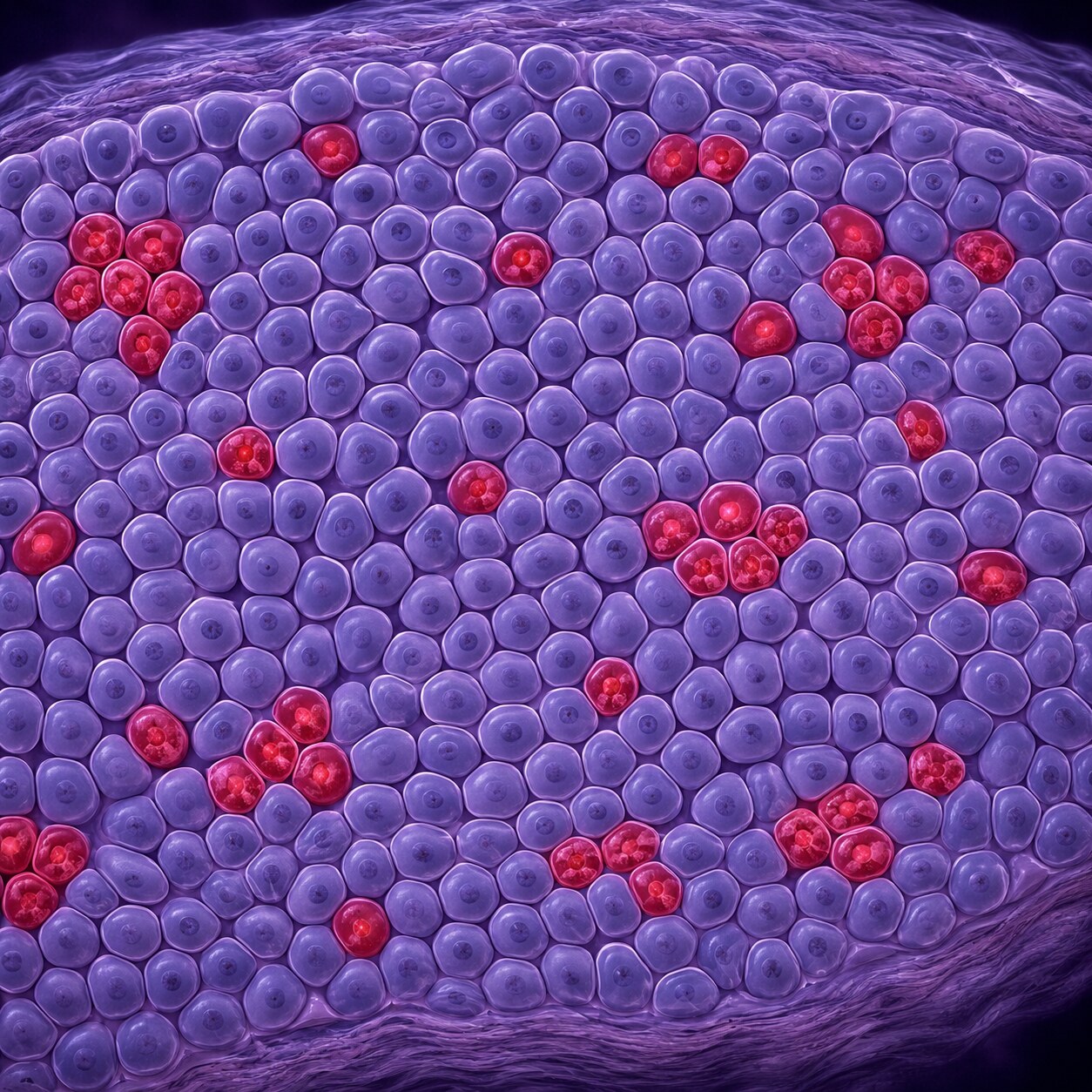
Figure 3. Mosaicism occurs when a genetic variant arises after conception, meaning only a portion of the body's cells carry it — the resulting patchwork of affected and unaffected tissue can produce a milder or more localized presentation than someone whose every cell carries the variant.
Most inherited genetic variants are present in literally every cell of the body, having been carried in the original egg or sperm cell that formed the person. Sometimes, however, a genetic variant arises later, after conception, during the early rounds of cell division that build the developing embryo. When this happens, only the cells descended from the one cell where the mutation first occurred will carry it, while the rest of the body's cells remain unaffected — a state called mosaicism.
Depending on exactly when during early development the variant first arose, a mosaic individual might have anywhere from a small, localized patch of affected tissue to a large proportion of their entire body carrying the variant, with everything in between also possible. This is part of why some people show a milder, more localized, or unusually patterned version of a condition compared to someone who inherited the same variant in every single cell from the very beginning — the mosaic person's unaffected cells can, in some tissues, continue functioning normally and partially compensate for the affected ones nearby.
The timing principle behind mosaicism is fairly intuitive once laid out directly: a variant arising in the single-cell embryo, right at the very earliest possible moment, will end up present in essentially all of that person's cells, since every subsequent cell in the body descends from that one early cell — this is functionally indistinguishable from an inherited variant present from conception. A variant arising slightly later, once the embryo has already divided into a handful of cells, will only be present in the descendants of whichever one of those early cells happened to acquire it, producing a meaningfully smaller affected fraction. A variant arising later still, once specific tissues have already begun forming, might end up confined to just one organ system or even one small region of the body, producing an even more localized, sometimes barely noticeable presentation.
Mosaicism can also complicate genetic testing itself in a practical, clinically important way. Because a standard genetic test typically samples blood or another easily accessible tissue, a mosaic variant that's present in a different tissue (say, primarily in skin or a specific internal organ) but largely absent from blood cells can be difficult or impossible to detect through routine testing, even though it's genuinely present and contributing to symptoms elsewhere in the body. This is one of the more challenging diagnostic scenarios in clinical genetics, sometimes requiring a biopsy of the specifically affected tissue rather than a standard blood-based genetic test to actually confirm the underlying cause of a person's symptoms.
Germline vs. Somatic Mosaicism: Why the Distinction Matters for Future Children
A further, practically important distinction within mosaicism involves which cell lineages actually carry the variant. Somatic mosaicism refers to a variant present in some of the body's regular tissue cells but not in the reproductive cells (eggs or sperm), meaning the affected person's own symptoms may reflect the mosaic variant, but they won't pass that specific variant on to children through the ordinary process of reproduction, since their reproductive cells never carried it in the first place. Germline mosaicism, by contrast, refers to a variant present in some or all of a person's reproductive cells, even in a parent who shows no symptoms themselves at all, because the variant happens to be largely or entirely absent from their other body tissues.
Germline mosaicism is a well-documented and clinically important explanation for situations that otherwise seem to defy typical inheritance patterns — a completely unaffected parent, who tests negative for a condition using a standard blood sample, can still have more than one child affected by a genetic condition that's usually described as needing to come from an affected parent, because the parent's reproductive cells, sampled indirectly through the pattern of affected children rather than directly tested, actually carry the variant even though the parent's own blood and body tissue do not. This specific scenario is part of why genetic counselors discuss recurrence risk carefully with families who've had one affected child from apparently unaffected parents, since germline mosaicism means the risk of a second affected child isn't necessarily as low as it would be if the condition had simply arisen fresh, for the first time, in that one child alone.
X-Chromosome Inactivation: A Built-In Source of Mosaicism in Women
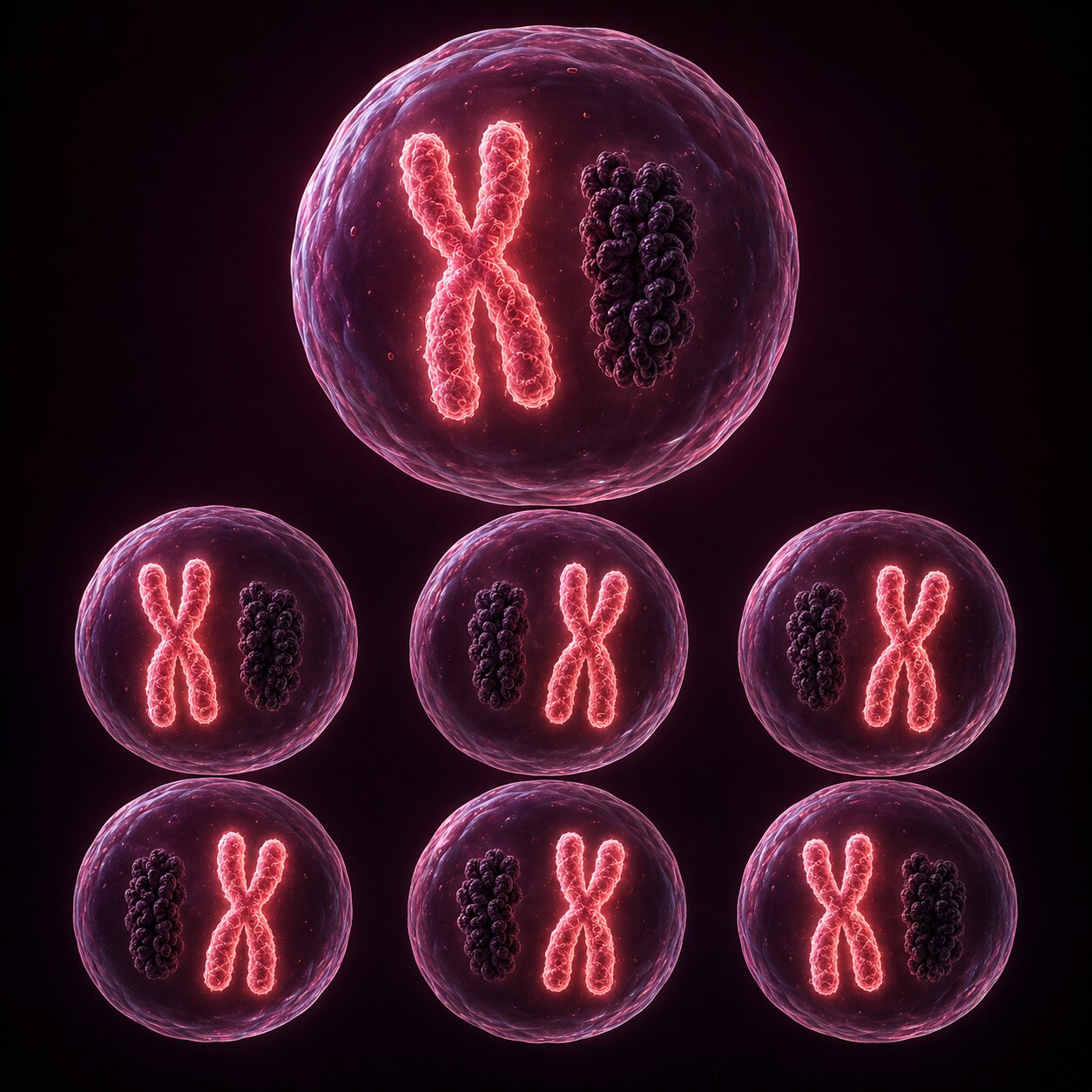
Figure 4. In every cell of a female body, one of the two X chromosomes is randomly and permanently switched off early in development — for X-linked conditions, this creates a natural mosaic where the proportion of cells expressing the healthy versus the variant-carrying X chromosome varies from person to person.
For genetic conditions caused by variants on the X chromosome, an entirely separate mechanism adds yet another layer of variability specifically in women, who carry two X chromosomes rather than one. Early in embryonic development, each of a female embryo's cells randomly and permanently switches off, or inactivates, one of its two X chromosomes — a process called X-inactivation, or lyonization, named after the scientist who first described it. Once a given cell makes this random choice, that same X chromosome stays switched off in all of that cell's future descendants.
This means a woman who carries a disease-causing variant on one of her two X chromosomes ends up as a natural, built-in mosaic: in roughly half her cells, on average, the X chromosome carrying the variant is switched off and the healthy copy is active, while in the other half, the variant-carrying X chromosome is the one actively being used. Because this X-inactivation ratio is randomly determined and can skew meaningfully away from a perfect 50/50 split purely by chance, two women carrying the exact same X-linked variant can end up with very different proportions of their cells actively expressing it — which is a major, well-documented reason women carrying X-linked conditions show such a wide range of severity, from no noticeable symptoms at all to a presentation nearly as pronounced as what's typically seen in affected men, who only carry a single X chromosome to begin with.
This skewed inactivation ratio is sometimes specifically measured in a laboratory test called an X-inactivation study, particularly useful when a woman's clinical picture doesn't clearly match what would be expected purely from knowing she carries a particular X-linked variant. A woman found to have a heavily skewed pattern, where the large majority of her cells happen to actively use the variant-carrying X chromosome rather than the healthy one, would be expected to show a more pronounced presentation than a woman with a more even, balanced split, even though both women carry the identical underlying genetic variant. This test is one of the more direct, quantifiable ways clinicians can actually measure one specific source of variability described throughout this article, rather than simply inferring it indirectly from symptom severity alone.
It's worth adding that X-inactivation isn't a single, body-wide decision — it happens independently in each individual cell, early in that cell's own developmental history, meaning the resulting pattern can also vary somewhat between different tissues and organs within the same woman, not just between different women. A woman's skin might show a noticeably different inactivation ratio than her liver or her blood cells, simply because the specific early cells that eventually formed each of those tissues happened to make somewhat different random choices. This tissue-specific variation adds yet another layer of complexity specifically relevant to X-linked conditions that affect multiple organ systems, since the severity in any one particular organ can depend partly on that organ's own local inactivation pattern.
The Environment and Lifestyle: Genetics Loads the Gun, Environment Pulls the Trigger
Beyond the genome itself, external factors — diet, environmental exposures, infections, physical activity, and countless other lifestyle variables — can meaningfully influence whether and how severely a genetic predisposition actually manifests. This interaction, often summarized with the saying "genetics loads the gun, environment pulls the trigger," is especially well documented in conditions where a genetic variant creates vulnerability to a specific external trigger, rather than guaranteeing disease outright on its own.
Certain inherited metabolic conditions are a particularly clear illustration of this principle: a person can carry a variant that impairs how their body processes a specific dietary substance, yet remain essentially symptom-free for years on a diet that happens to avoid triggering the vulnerability, only to develop clear symptoms once a change in diet, an illness, or another environmental shift exposes the underlying genetic weakness. In these cases, the same genetic variant can produce a dramatically different clinical picture purely based on external circumstances that have nothing to do with the DNA sequence itself.
This gene-environment interaction also runs in the opposite, protective direction for some conditions, where a specific environmental or lifestyle factor can meaningfully soften the impact of an underlying genetic vulnerability rather than trigger it. Regular physical activity, for instance, has been shown in research to favorably influence outcomes in some inherited conditions affecting muscle or metabolic function, essentially providing a kind of external compensation that partially offsets the underlying genetic disadvantage. This protective direction of gene-environment interaction is part of why lifestyle counseling is sometimes a meaningful component of managing certain genetic conditions, not as a cure for the underlying variant, but as a genuine way of shifting where a person lands along that condition's severity spectrum.
Illness and physiological stress more broadly can also act as an environmental trigger in their own right, independent of diet or activity specifically. A person with an underlying genetic vulnerability affecting how their body handles a particular kind of physiological stress can remain entirely symptom-free during ordinary daily life, only to have that vulnerability exposed for the first time during a seemingly unrelated illness, surgery, or other significant physical stressor, when the body's normal reserves are already being taxed by something else entirely. This pattern is part of why a first symptomatic episode of some genetic conditions can seem to appear "out of nowhere" during an unrelated medical event, when in fact the underlying genetic vulnerability had been present, silently, the entire time.
Epigenetics: Chemical Switches Layered on Top of the DNA Sequence
A further, more recently understood layer of this puzzle involves epigenetics — chemical modifications that attach to DNA or to the proteins DNA is wrapped around, influencing how actively a given gene is read and used without changing the underlying genetic sequence itself. These epigenetic marks can differ between individuals, between different tissues in the same person, and even change over the course of a single person's lifetime in response to age, environment, and other factors.
Because epigenetic marks can effectively turn a gene's activity up or down without altering its actual sequence, two people with an identical disease-causing variant can end up with meaningfully different amounts of that gene's product being made, simply because their epigenetic patterns at that specific genetic location differ. This is an active and rapidly evolving area of genetics research, and it's increasingly recognized as one of the pieces helping explain variability that penetrance, expressivity, and modifier genes alone don't fully account for.
One particularly well-studied category of epigenetic influence involves a phenomenon called genomic imprinting, where a small subset of genes are epigenetically marked differently depending on whether they were inherited from the mother or the father, resulting in only one parent's copy of that specific gene being actively used regardless of whether both copies carry a variant. For genes affected by imprinting, whether a disease-causing variant was inherited from the mother or the father can meaningfully change whether and how severely it manifests, since the parent-of-origin determines which copy of the gene is actually active in the first place. This is a genuinely unusual exception to the general rule that both copies of most genes contribute more or less equally, and it's specifically relevant to a defined, well-characterized set of imprinted genetic regions rather than being a universal phenomenon across the entire genome.
What This Looks Like Within a Real Family

Figure 5. Siblings who inherit the exact same disease-causing variant from a shared parent can still end up with meaningfully different symptom severity, since modifier genes, X-inactivation patterns, mosaicism, and environmental exposures are all inherited or experienced independently of the shared variant itself.
Putting all of these mechanisms together explains a pattern that comes up constantly in real families: a genetic counselor reviewing test results for two siblings who both carry the same disease-causing variant, inherited from the same parent, has no reliable way to promise those two siblings will experience the condition identically. Between the two of them, differences in modifier genes inherited from their other parent, potential mosaicism if either variant arose partly after conception, X-inactivation patterns if the condition is X-linked, environmental exposures across their different lives, and epigenetic differences can all combine to push their individual outcomes in different directions, even starting from the exact same DNA sequence at the specific location that matters most.
This is exactly why genetic counseling conversations tend to focus on ranges and probabilities rather than certainties, and why a genetic test result is best understood as identifying a real, meaningful risk or vulnerability rather than a fixed, guaranteed script for exactly how someone's life with a given condition will unfold.
Families sometimes find this uncertainty frustrating at first, particularly after receiving a definitive-sounding genetic diagnosis that seems, on the surface, like it should come with an equally definitive prognosis. Part of a genetic counselor's role is helping families sit with this genuine biological uncertainty productively, framing it not as a gap in medical knowledge to be impatient with, but as an accurate reflection of how complex, multi-layered biology actually determines outcomes — a reframing that, for many families, ultimately proves more useful than a falsely precise prediction would have been.
How Doctors and Researchers Use This Understanding Today

Figure 6. Genetic counselors map out a family's full pedigree, noting which relatives are affected and how severely, since this pattern of variability across a real family provides practical context that a single genetic test result alone cannot.
Understanding these mechanisms has real, practical value beyond pure scientific interest. When a genetic counselor maps out a family's pedigree, noting who is affected and how severely across multiple generations, that pattern of variability itself becomes useful clinical information, sometimes hinting at which of these mechanisms is most likely contributing in that specific family. Researchers, meanwhile, actively study modifier genes and epigenetic patterns specifically because identifying what makes one carrier's outcome milder than another's opens the door to new treatment approaches that mimic whatever protective factor the milder carriers happen to have, rather than only targeting the primary disease-causing variant itself.
This research direction has already produced real results in a handful of conditions, where identifying a specific protective modifier gene has led directly to new therapeutic approaches designed to boost that same protective effect in patients who don't naturally have it — a genuinely encouraging example of how understanding severity variability isn't just an academic curiosity, but an active pathway toward better treatment. This same logic extends to environmental and epigenetic findings as well: identifying a specific protective lifestyle factor or epigenetic pattern in milder cases gives researchers a concrete target to try replicating deliberately in patients who don't have that protective factor naturally.
Frequently Asked Questions
If my parent has a genetic condition, does that mean I'll have the exact same severity?
Not necessarily. Even if you inherit the exact same disease-causing variant, modifier genes, X-inactivation patterns (for X-linked conditions), mosaicism, and environmental factors can all differ between you and your parent, meaning your own severity, or whether you develop symptoms at all, can be quite different.
Can a genetic test predict exactly how severe my symptoms will be?
Generally not with precision. A genetic test can confirm you carry a specific variant, but the eventual severity depends on multiple additional factors beyond the sequence itself, which is why genetic counselors typically discuss a range of possible outcomes rather than a single predicted severity.
Why can two women with the same X-linked variant have such different symptoms?
Because of random X-chromosome inactivation. Each woman's cells randomly and permanently switch off one of her two X chromosomes early in development, so the proportion of her cells actively using the variant-carrying X chromosome versus the healthy one can differ substantially between individuals, even with the identical variant.
Does this variability mean genetic testing is unreliable?
No. Genetic testing reliably identifies whether a specific variant is present, which is a different question from predicting exact severity. The variability described in this article explains why a positive result confirms risk or vulnerability rather than dictating a fixed outcome, not that the test itself is inaccurate.
What is a modifier gene, in simple terms?
A modifier gene is a separate genetic location, distinct from the main disease-causing variant, whose own variation can make that primary variant's effects milder or more severe. Modifier genes are inherited independently, which is part of why relatives who share a primary variant can still have different modifier gene combinations and different outcomes.
Can lifestyle changes actually influence how a genetic condition turns out?
For some conditions, yes. Diet, physical activity, and avoiding specific known environmental triggers can meaningfully shift where a person lands along a condition's severity spectrum, particularly for conditions where an environmental factor interacts directly with the underlying genetic vulnerability.
Conclusion
The same genetic variant can produce dramatically different outcomes because a DNA sequence is only one input among several that ultimately determine a person's symptoms. Incomplete penetrance explains why some carriers develop no symptoms at all; variable expressivity explains why affected carriers can still differ enormously in severity; modifier genes, mosaicism, X-chromosome inactivation, environmental exposures, and epigenetic differences each add their own additional layer of variability on top. Together, these mechanisms explain why even close relatives who share an identical disease-causing variant can experience genuinely different lives with the same underlying genetic change — and why a genetic test result is best understood as one important piece of a much larger picture, not a complete forecast on its own — a distinction worth holding onto the next time a genetic result raises more questions than it answers.
Still Not Sure What Your Results Mean?
Upload your labs and get a complete, visual, plain-language interpretation of every biomarker — delivered to your inbox in under 15 minutes.
Get My ReportThis article is for educational purposes only and does not constitute medical advice. Always consult your healthcare provider regarding your specific lab results.