
What Does a High Eosinophil Count Suggest?
Seeing "eosinophils" flagged as high on a complete blood count is a strange kind of unfamiliar for most people — everyone's heard of white blood cells fighting infection in general, but this specific subtype rarely gets mentioned outside a lab report itself, which makes the result feel harder to make sense of than it actually is. Most white blood cells on a lab report exist to fight bacteria or generally coordinate the immune system, but eosinophils are built for a much narrower, more specific job — they're the cell type your body evolved specifically to fight parasites too large for a single immune cell to swallow, and, almost as a side effect of that same weaponry, the cell type most directly responsible for allergic reactions, asthma flares, and eczema. When an eosinophil count comes back elevated, it isn't a generic sign that "something is wrong" the way a broad marker might be — it's a fairly specific clue pointing toward one of a genuinely short list of categories: something the body is treating as parasite-sized, something the immune system is misreading as a threat when it isn't (an allergy), a medication reaction, or, less commonly, an inflammatory or blood disorder involving this one particular cell type. Understanding what eosinophils are actually built to do is the fastest way to make sense of why yours might be elevated.
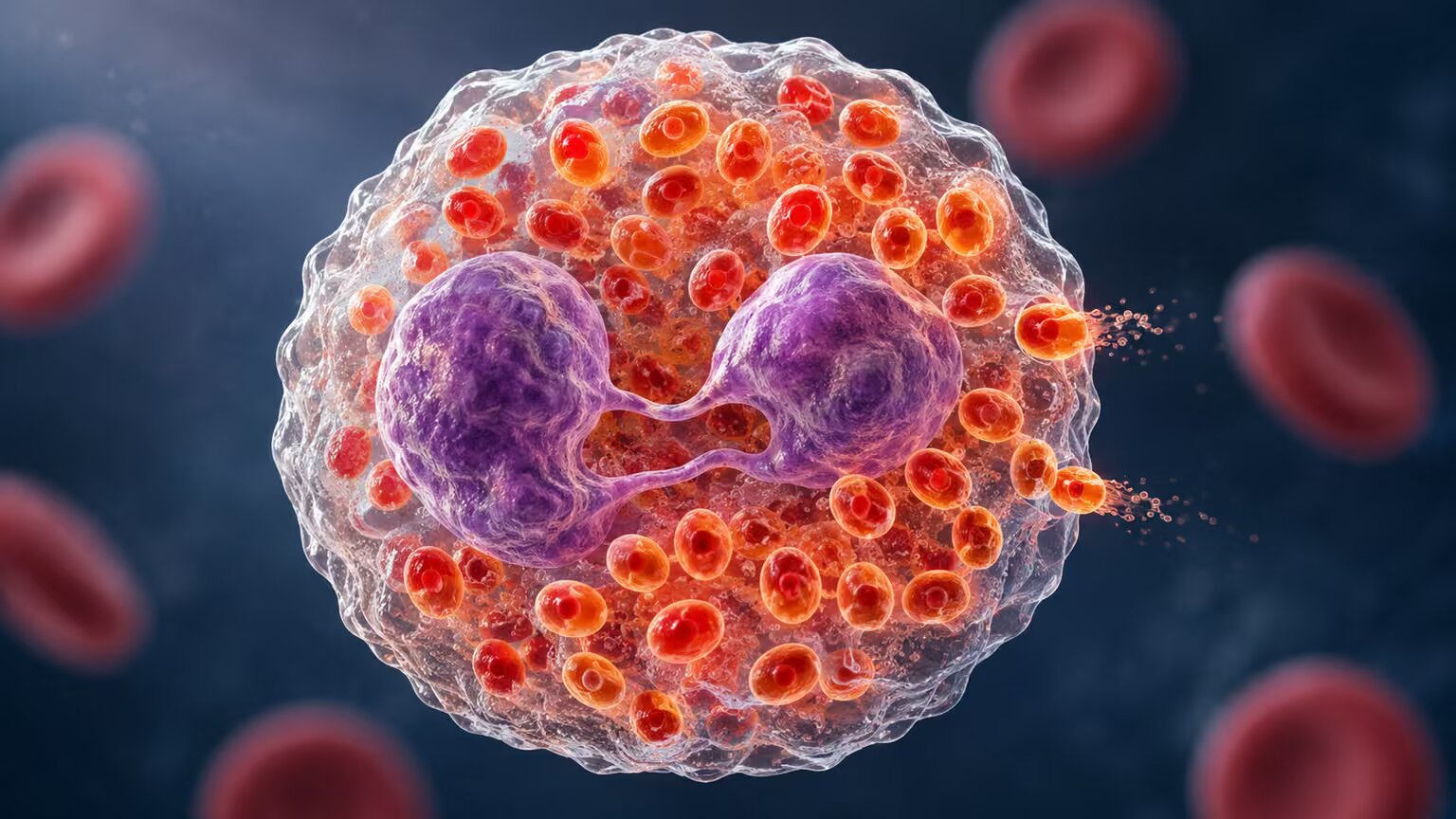
Figure 1. Eosinophils get their name from the reddish-orange dye their granules absorb under a microscope — those granules are packed with proteins toxic enough to kill a parasite too large to engulf.
Curious what your own lab results are really telling you? Upload them and get a complete, plain-language breakdown in under 15 minutes.
Analyze My ResultsWhat Eosinophils Actually Are — and What Makes Them Different
Eosinophils make up a small slice of your total white blood cells, typically somewhere around 1 to 4 percent, which is exactly why even a modest-looking increase can represent a meaningful multiple of your normal baseline — a jump that would barely register for a more abundant cell type like neutrophils can look dramatic here. Under the microscope, eosinophils are easy to spot: their nucleus is split into two connected lobes, and their cytoplasm is packed with granules that stain a distinctive reddish-orange with the acidic dye eosin, which is where the cell gets its name. Those granules aren't just a visual quirk — they're the whole point of the cell. Each one is loaded with a set of proteins, including one called major basic protein, that are directly toxic to the outer membrane of parasites and, in smaller doses, to the cells lining your own airways and skin during an allergic reaction. Unlike neutrophils, which patrol constantly and respond to almost anything, eosinophils are comparatively specialized — they get recruited and activated by a narrower set of signals, chiefly a messenger molecule called interleukin-5, which is exactly why an elevated count tends to point toward a shorter, more specific list of causes than a generic rise in white blood cells overall.
It's also worth understanding where eosinophils actually spend most of their time, since it isn't primarily in the bloodstream at all. Eosinophils are produced in the bone marrow, circulate in the blood for only a matter of hours, and then migrate out into tissue — particularly the lining of the gut, the lungs, and the skin — where they can persist for days to weeks. This means the number on a blood test is really only a snapshot of eosinophils actively in transit at that exact moment, not a complete accounting of the body's total eosinophil activity, which is part of why a blood count and a person's actual symptom severity don't always move in perfect lockstep. A tissue biopsy, when one is taken, can sometimes reveal significant local eosinophil accumulation even when a same-day blood count looks only mildly elevated, since most of the actively engaged cells have already left the bloodstream and settled into the tissue where the reaction is actually happening.
The Parasite Connection — Eosinophils' Original Evolutionary Job
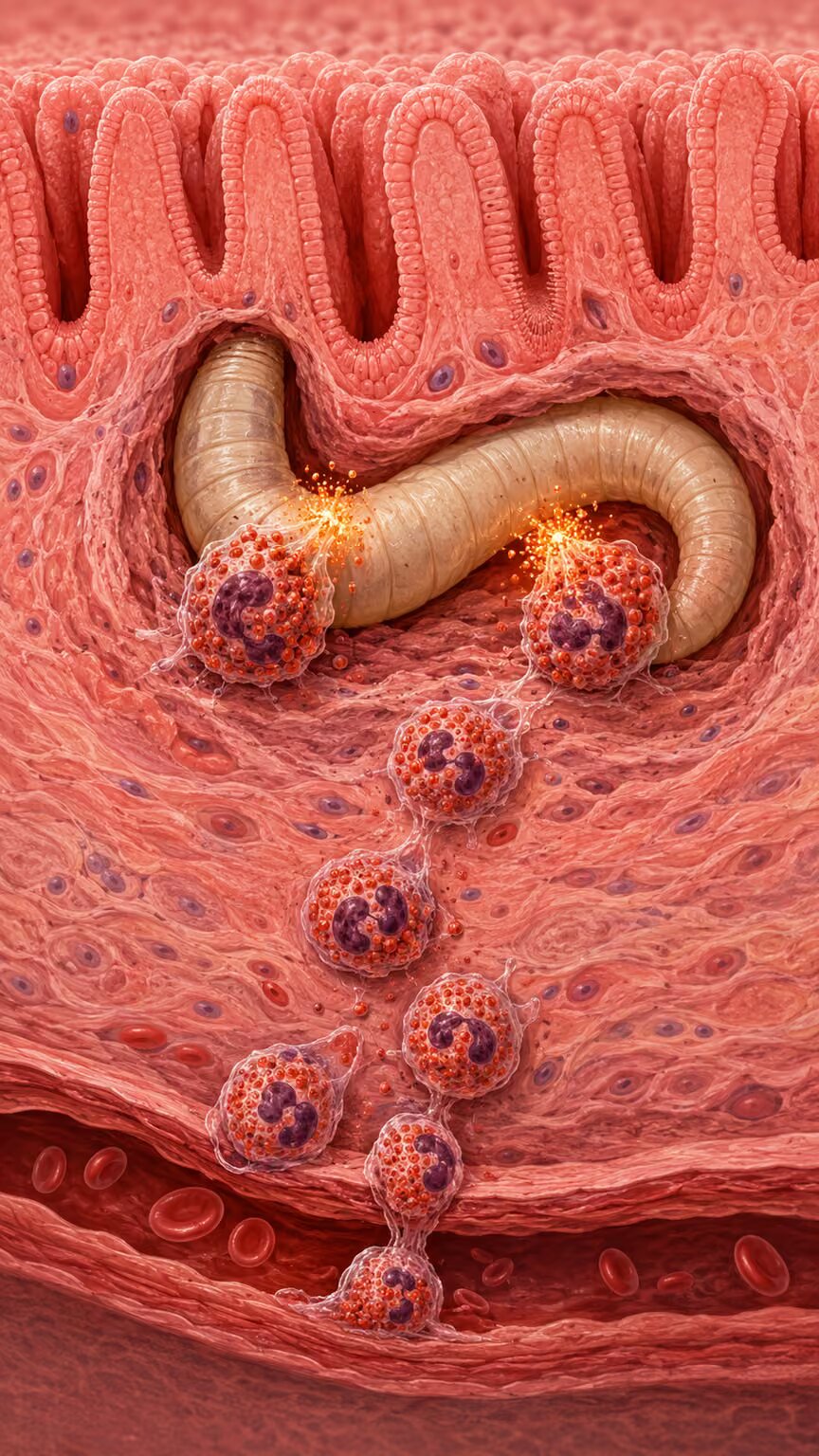
Figure 2. Because a parasitic worm is far too large for one immune cell to engulf, eosinophils instead surround it and release their toxic granule contents directly onto its surface.
To understand why eosinophils behave the way they do, it helps to understand the specific engineering problem they evolved to solve. Most immune cells, like neutrophils and macrophages, defend the body by literally swallowing whatever they're attacking — a process called phagocytosis, which works fine against something microscopic like a bacterium but is physically impossible against a parasitic worm that can be centimeters long. Eosinophils solve this by taking the opposite approach: rather than engulfing the target, they cluster around its outer surface and discharge their toxic granules directly onto it, essentially dissolving the parasite's protective membrane from the outside. This is still the single most reliable trigger for a genuinely high eosinophil count worldwide, particularly with intestinal parasites like hookworm, roundworm, and Strongyloides, or tissue-invading parasites like Toxocara, the roundworm carried by dogs and cats that can cause a notable eosinophil spike in people, especially children, after accidental ingestion of contaminated soil. In regions where parasitic infection is uncommon, doctors sometimes forget to consider it, but a specific travel history, exposure to unfiltered water, or a pet-related exposure alongside an elevated eosinophil count is enough for most clinicians to at least order a stool exam for parasites before assuming the cause lies elsewhere.
Allergies and Eosinophils — The Same Weapon, Turned on the Wrong Target
By far the most common reason for an elevated eosinophil count in a country where parasitic infection is rare is allergic disease, and the mechanism is a genuinely fascinating case of the same defense system misfiring rather than malfunctioning outright. In a true allergy, the immune system mistakenly tags a harmless substance — pollen, a specific food protein, pet dander, dust mite waste — as if it were dangerous, in much the same category as a parasite. That misclassification triggers the same interleukin-5 signal that would normally summon eosinophils to fight a genuine parasitic threat, and the eosinophils respond exactly as designed: releasing the same toxic granule contents, only this time onto the lining of the airways, the skin, or the nasal passages instead of onto a worm. This is precisely why the same cell type shows up elevated in such a wide range of allergic conditions — seasonal allergic rhinitis, chronic hives, atopic dermatitis (eczema), and drug allergies all share this same underlying eosinophil-driven pathway, even though they look completely different on the outside. A mildly to moderately elevated eosinophil count in someone with a personal or family history of allergic conditions is, statistically, far more likely to reflect this everyday allergic mechanism than anything more serious.
It's worth noting how uneven parasitic infection risk actually is depending on where someone lives and how they spend time outdoors, since this shapes how seriously a doctor takes the possibility. In regions with reliable sanitation and treated water, intestinal parasites capable of raising eosinophils meaningfully are genuinely uncommon in someone without a specific exposure — meaning a doctor practicing in that setting isn't being dismissive by not immediately testing for parasites, they're correctly weighing probability. That calculation shifts substantially with recent international travel to a region where these infections are endemic, with unfiltered well or stream water exposure, with walking barefoot on soil in warm climates (the classic route for hookworm larvae to penetrate the skin), or in children who spend time in sandboxes or soil that could be contaminated with cat or dog feces carrying Toxocara eggs. A useful pattern doctors watch for with tissue-invading parasites like Toxocara specifically is a combination of high eosinophils alongside vague symptoms like abdominal pain, cough, or low-grade fever in a young child with a known history of playing outdoors — a presentation distinctive enough that it has its own name, visceral larva migrans.
Asthma and the Allergic Triad

Figure 3. Eosinophilic asthma, one recognized subtype of the condition, involves eosinophils directly infiltrating and inflaming the airway lining — a pattern doctors can now target with specific biologic medications.
Asthma deserves its own mention within the broader allergy category because eosinophils don't just correlate with it — in a specific, well-recognized subtype called eosinophilic asthma, they're a direct driver of the airway inflammation itself, not just a bystander marker. In this form of asthma, elevated eosinophils infiltrate the lining of the airways, and their granule contents contribute directly to the swelling, excess mucus production, and airway twitchiness that make breathing difficult during a flare. This distinction has become genuinely important in modern treatment, since a newer class of biologic medications now works by directly blocking interleukin-5, the same signal responsible for summoning eosinophils in the first place, giving doctors a way to treat this specific inflammatory pathway rather than airway inflammation in general. A blood eosinophil count is now a standard part of deciding whether a person with difficult-to-control asthma is a good candidate for one of these medications, which is a clear, practical example of how a single number on a routine blood test can directly shape a treatment decision months or years later.
Skin Conditions Tied to Eosinophils
Because eosinophils migrate so readily into tissue rather than staying confined to the bloodstream, the skin — a large, easily observed organ — often shows the clearest visible evidence of eosinophil activity anywhere in the body. The skin is one of the tissues eosinophils infiltrate most visibly, which is why several dermatologic conditions carry a direct connection to elevated eosinophil counts and why a dermatologist and the underlying blood work often end up telling closely related stories. Atopic dermatitis, the chronic itchy, inflamed skin condition more commonly known as eczema, is driven substantially by the same interleukin-5-triggered eosinophil pathway responsible for allergic asthma and allergic rhinitis, which is part of why the three conditions — eczema, asthma, and allergic rhinitis — are frequently described together as the "atopic triad" and so often run in the same individual or the same family across multiple generations. Chronic hives, technically called chronic urticaria, can likewise show a mild eosinophil elevation during active flares, particularly when a specific trigger like a medication or food is involved rather than the more common idiopathic (no identifiable cause) form. A rarer but distinctive skin-specific condition, eosinophilic cellulitis (also called Wells syndrome), causes swollen, red patches on the skin that can look like a bacterial skin infection but fail to respond to antibiotics — a mismatch that itself becomes a clue pointing back toward an eosinophil-driven cause rather than an infectious one, often only fully confirmed once a skin biopsy shows a dense eosinophil infiltrate rather than the bacteria a true cellulitis would show.
Medications That Can Raise Eosinophils

Figure 4. Certain antibiotics, anti-seizure drugs, and NSAIDs are well-documented triggers for drug-induced eosinophilia, sometimes appearing weeks after a medication was started.
A genuinely common and easily overlooked cause of an elevated eosinophil count is a reaction to a medication, since the immune system can treat a drug molecule the same way it treats an allergen — as a foreign substance worth mounting a defense against. Certain antibiotics, particularly penicillins and sulfa-based drugs, are among the most frequently implicated triggers, along with certain anti-seizure medications, allopurinol (used for gout), and even common over-the-counter NSAIDs in susceptible people. What makes drug-induced eosinophilia tricky to catch is timing: it doesn't always appear the day a medication is started, and can instead show up one to several weeks into a course of treatment, well after most people would think to connect a new symptom or an odd lab result back to something they started taking a while ago. In its most serious form, drug-induced eosinophilia can be part of a broader reaction called DRESS syndrome (drug reaction with eosinophilia and systemic symptoms), which also involves fever, rash, and potential involvement of internal organs like the liver — a genuine medical emergency that requires immediately stopping the responsible medication. This is exactly why a doctor reviewing an unexplained high eosinophil count will always ask for a complete list of every medication and supplement started in the preceding several weeks, not just what's being taken right now.
Eosinophils in Children Compared to Adults
The overall logic connecting eosinophils to allergy, parasites, and medication reactions holds true across every age group, but the relative weight of each cause shifts meaningfully in children versus adults, which is worth understanding since pediatric and adult eosinophil results don't get read the exact same way. Children are, on average, more likely than adults to have a genuinely elevated eosinophil count from a parasitic exposure, simply because young children explore their environment with their hands and mouths in ways adults generally don't, making accidental ingestion of contaminated soil or exposure to a pet's intestinal parasites more likely. At the same time, allergic conditions often first announce themselves in early childhood, meaning a child's first meaningfully elevated eosinophil count is frequently the earliest lab clue toward an eczema, food allergy, or asthma diagnosis that hasn't yet been formally made. Newborns and infants also tend to run a slightly different baseline reference range than older children and adults, so a pediatric lab report is generally interpreted against age-specific ranges rather than the adult standard, and a pediatrician or pediatric allergist is typically better positioned than a general reference range to say whether a specific child's result is genuinely outside normal for their age.
Eosinophilic Esophagitis and Organ-Specific Eosinophilic Conditions

Figure 5. Eosinophilic esophagitis, in which eosinophils infiltrate the lining of the esophagus, often presents first as food repeatedly feeling like it's getting stuck while swallowing.
Beyond the blood, eosinophils can also concentrate in a specific organ or tissue and cause problems that are more localized than systemic — a category of conditions sometimes grouped under the umbrella term "eosinophilic gastrointestinal disorders." The best-recognized of these is eosinophilic esophagitis, a condition in which eosinophils infiltrate the lining of the esophagus, the tube connecting the throat to the stomach, causing inflammation and, over time, a narrowing that makes swallowing difficult. It often shows up first as a strange, specific symptom: solid food, particularly bread or meat, repeatedly feeling like it's caught partway down, sometimes bad enough to require a trip to the emergency room to have a stuck piece of food removed. Eosinophilic esophagitis is now understood to be closely linked to food allergies, and many people with the condition see meaningful improvement by eliminating specific trigger foods — most commonly dairy, wheat, egg, and soy — identified through a structured elimination process. Similar eosinophil-driven inflammation can occur elsewhere in the digestive tract as eosinophilic gastritis or eosinophilic colitis, producing symptoms like abdominal pain, nausea, or diarrhea depending on which section of the gut is involved, and in these localized forms, the blood eosinophil count is sometimes only mildly elevated or even normal, since the eosinophils are concentrated in the affected tissue rather than circulating broadly.
Beyond the Standard Blood Count — Related Tests Worth Knowing
A standard complete blood count is almost always just the opening move rather than the whole investigation once eosinophils come back elevated for an unclear reason. Once a standard complete blood count flags an elevated eosinophil count, a doctor working through the possible causes sometimes reaches for a small set of related, more specific tests rather than jumping straight to imaging or a biopsy. Total serum IgE, an antibody strongly associated with allergic and parasitic responses, is often checked alongside eosinophils since a combination of both being elevated strengthens the case for an allergic or parasitic cause over one of the rarer alternatives. Specific IgE testing, sometimes still informally called RAST testing, can identify exactly which allergen — a particular food, pollen, or animal dander — is driving the reaction, which is considerably more actionable than simply knowing "eosinophils are up" without knowing why. Tryptase, a different marker released by a related immune cell called the mast cell, is sometimes checked in parallel when a severe or unusual allergic-type reaction is suspected, since mast cells and eosinophils frequently act as partners in the same allergic cascade. For suspected hypereosinophilic syndrome specifically, genetic testing looking for a mutation called FIP1L1-PDGFRA has become a standard part of the workup, since finding it points directly toward a specific, highly effective targeted medication rather than a more generalized immune-suppressing approach.
When Eosinophils Get Very High — Hypereosinophilic Syndrome
Everything covered so far describes the common, usually reassuring end of the spectrum — but it's worth being clear about what sits at the far, rarer end of it too. Most causes of an elevated eosinophil count are the relatively common, explainable ones already described — allergy, a medication, or a parasite — but a small minority of cases involve counts that climb dramatically higher and stay elevated for an extended period without an obvious trigger, a pattern that warrants a different level of concern. When the absolute eosinophil count remains above roughly 1,500 cells per microliter for at least a month, with no identifiable allergic, parasitic, or drug-related explanation, doctors begin considering a group of conditions grouped under the term hypereosinophilic syndrome. In this scenario, sustained high numbers of eosinophils can begin causing direct tissue damage in organs they weren't ever meant to accumulate in — most seriously the heart, where eosinophil granule contents can injure heart muscle and its lining over time, but also the lungs, nervous system, and skin. Some cases of hypereosinophilic syndrome are linked to a specific, identifiable genetic mutation affecting how certain bone marrow cells develop, which matters clinically because it opens the door to a very targeted medication that can control the condition effectively once identified. This is a genuinely uncommon outcome relative to the far more frequent allergy- or parasite-driven causes described earlier, but it's precisely why a persistently and significantly elevated count, rather than a single mildly high reading, is what prompts this deeper level of investigation.
Why the Reference Range Alone Doesn't Tell the Whole Story
Not every lab value on a complete blood count carries this much built-in nuance, but eosinophils genuinely do. It's worth pausing on why eosinophils, more than many other values on a complete blood count, resist being reduced to a single simple "normal versus abnormal" cutoff. Because, unlike a marker that mainly reflects general inflammation, this cell's entire job is to respond specifically to whatever the immune system flags as parasite-like, its baseline level is genuinely influenced by things that have nothing to do with disease at all — geographic region, historical parasite exposure even from years earlier, and even broader patterns like urban versus rural living, since rural populations with more soil and animal contact tend to run measurably higher baseline eosinophil levels than urban populations with less of that exposure. Seasonal variation is real too, with eosinophil counts in people with pollen allergies often running measurably higher during their specific allergy season and settling back down once it passes, which is why a result drawn in the middle of a bad pollen season carries different weight than the same number drawn in the dead of winter for the same person. None of this means the standard reference range printed on a lab report is useless — it remains a genuinely useful first filter — but it does mean two people can have meaningfully different "normal" baselines, and a good clinician reading an eosinophil result weighs it against the individual person's own context rather than treating the printed range as an absolute, universal line.
Autoimmune and Inflammatory Conditions Linked to Eosinophilia
Beyond allergy, parasites, and medication reactions sits a smaller, less common group of causes worth knowing about even though they account for a minority of real-world elevated results. A smaller but clinically important category of causes involves autoimmune and inflammatory conditions in which eosinophils become part of a broader dysregulated immune response rather than being triggered by an external allergen or parasite. Eosinophilic granulomatosis with polyangiitis, formerly known as Churg-Strauss syndrome, is a rare condition in which eosinophils contribute to inflammation of small and medium blood vessels throughout the body, frequently developing in someone with a pre-existing history of asthma and nasal polyps, and often announcing itself first through very high eosinophil counts well before the vasculitis itself becomes clinically apparent. Certain skin conditions, some inflammatory bowel disease presentations, and specific adrenal gland problems (since cortisol normally helps suppress eosinophil numbers, a deficiency can allow them to rise) round out this less common category. What ties these conditions together, and what distinguishes them from the more everyday allergic causes, is that eosinophils here are typically just one visible piece of a larger, more complex inflammatory picture — accompanied by other specific symptoms, other abnormal lab findings, and often a course that doesn't resolve the way a simple allergy would with an antihistamine or by removing a trigger.
Tracking Eosinophils Over Time, Not Just a Single Reading
One of the most practically useful habits when interpreting an eosinophil result is resisting the urge to treat a single number, in isolation, as a final verdict. Because eosinophils rise and fall in response to a genuinely wide range of everyday triggers — a passing cold, seasonal pollen exposure, a few days of a new supplement — a single result sitting just above the reference range often matters far less than the trend a repeat test reveals a few weeks later. A count that was mildly elevated once and comes back completely normal on a follow-up test, with no intervention beyond time passing, is generally reassuring and consistent with a transient trigger that's already resolved on its own. A count that stays persistently elevated across multiple tests, or one that keeps climbing rather than settling, carries meaningfully more diagnostic weight and is what actually prompts the more specialized workup described elsewhere in this article. This is part of why a doctor faced with one isolated mildly elevated eosinophil result in an otherwise healthy, asymptomatic person will often simply recommend rechecking it in a month rather than immediately ordering an extensive panel of specialized tests — the trend line, not the single data point, is usually what actually changes the clinical picture.
How Doctors Work Up an Unexplained High Eosinophil Count
Once a genuinely persistent or substantial elevation has been established rather than a one-off reading, the actual investigative process a doctor follows is fairly systematic. When an elevated eosinophil count doesn't have an obvious explanation already sitting in a person's history — no known allergies, no recent new medication, no relevant travel or exposure — the workup generally follows a logical, stepwise order rather than jumping straight to the rarest possibilities. The first and most common starting point is a thorough symptom and exposure history: recent travel, pets, well water, outdoor activity involving soil contact, any new medication or supplement in the past several weeks, and a personal or family history of allergic conditions like eczema, asthma, or seasonal allergies. Depending on what that history turns up, a stool examination for ova and parasites, specific allergy testing, or simply stopping a suspected medication and rechecking the count afterward are often enough to identify the cause. If the count is only mildly elevated and the person feels well, doctors will frequently simply repeat the complete blood count some weeks later, since a transient, resolving elevation tied to a passing viral illness, mild allergy flare, or already-clearing medication reaction needs no further workup at all. It's really only when the count is substantially elevated, persistent over repeat testing, or accompanied by other concerning symptoms — unexplained weight loss, night sweats, new rashes, breathing difficulty, or signs suggesting organ involvement — that more specialized testing, such as a genetic marker panel or bone marrow evaluation, enters the conversation.
Absolute Eosinophil Count vs. Percentage — Why the Distinction Matters
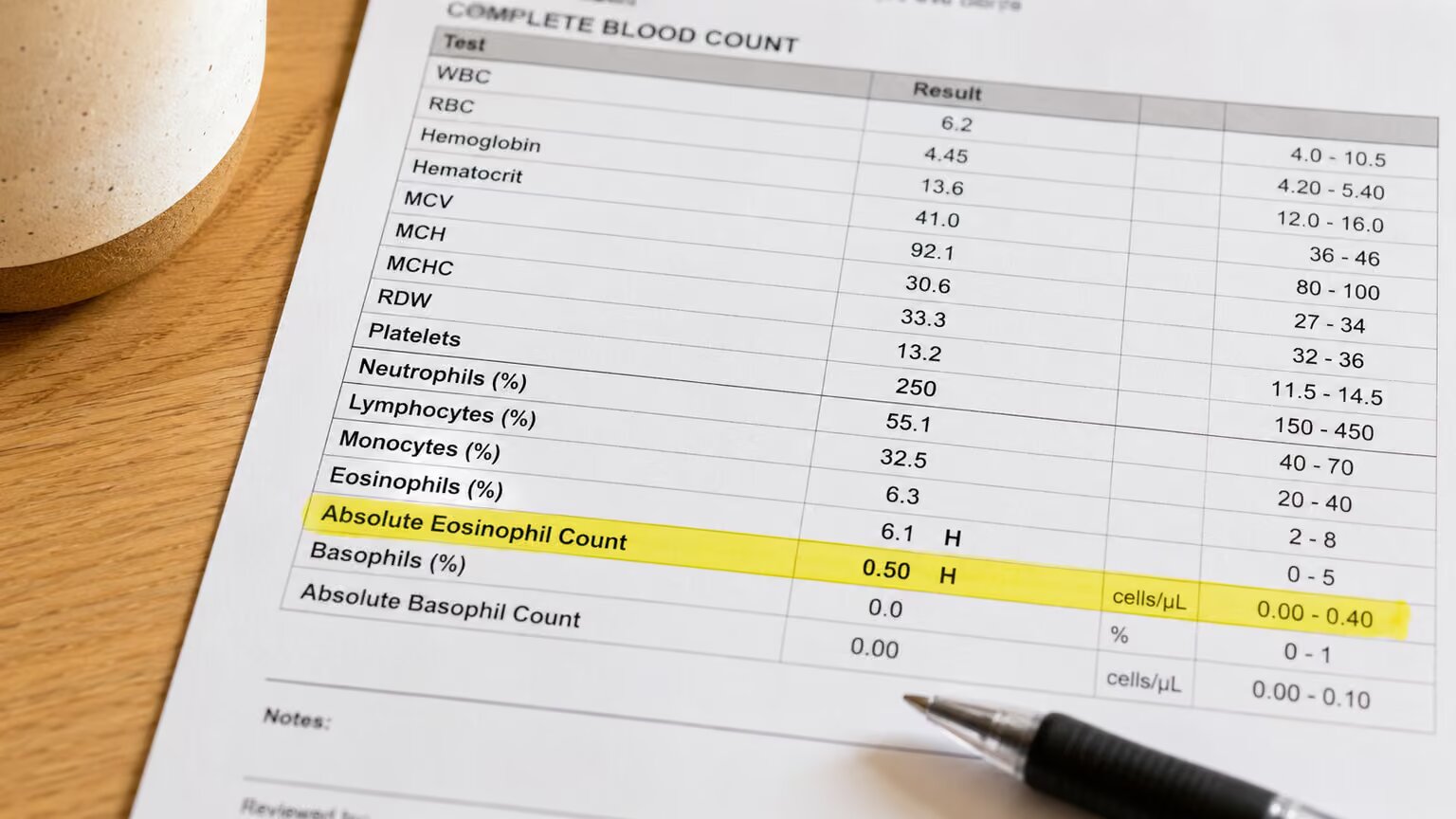
Figure 6. A complete blood count reports eosinophils two ways — as a percentage of total white cells and as an absolute count — and the two can tell genuinely different stories.
One detail that trips up a lot of people reading their own lab report is that eosinophils are actually reported in two different ways on a standard complete blood count, and the two numbers don't always move in the same direction. The eosinophil percentage reflects what share of your total white blood cells are eosinophils, while the absolute eosinophil count multiplies that percentage against your total white blood cell count to give an actual number of cells per microliter of blood — and this second figure is generally the more clinically meaningful one. Here's why the distinction matters in practice: if a viral infection temporarily drives your total white blood cell count way up, the percentage of eosinophils within that larger pool can look artificially low even though the absolute number of eosinophils hasn't actually changed at all, and the reverse is just as possible — a normal-looking percentage can hide a genuinely elevated absolute count if the total white blood cell count is running low for an unrelated reason. Because of this, most specialists specifically ask for or calculate the absolute eosinophil count rather than relying on the percentage alone, particularly when deciding whether a result is truly abnormal or just an artifact of what else was happening with the rest of the white blood cell count on the same day.
It's also worth mentioning what an elevated eosinophil count does not, on its own, tell a doctor: it doesn't distinguish between mild and severe versions of whatever underlying condition is responsible, and it doesn't reliably predict how someone will respond to treatment on its own, independent of the rest of the clinical picture. Two people with nearly identical eosinophil counts, drawn on the same day at the same lab, can have very different underlying situations — one a well-controlled seasonal allergy needing nothing more than an antihistamine, another an early, still-asymptomatic case of a more significant eosinophilic condition that simply hasn't produced other findings yet. This is exactly why the number is treated as a starting clue rather than a self-contained diagnosis in its own right, and why the specific combination of symptoms, exposure history, and how the count behaves on repeat testing collectively carries more diagnostic weight than the isolated number ever could by itself.
Frequently Asked Questions
What is considered a high eosinophil count?
Most labs consider an absolute eosinophil count above roughly 500 cells per microliter to be elevated, with counts above 1,500 cells per microliter sustained over time raising the possibility of hypereosinophilic syndrome. Reference ranges vary slightly by lab, so it's worth checking the specific range printed on your own report.
Can a mild eosinophil elevation just be from a passing allergy?
Yes, this is genuinely the most common explanation. A mild, transient rise tied to seasonal allergies, a new food sensitivity, or a recently started medication is far more common than any of the rarer causes, and often resolves on its own once the trigger passes or is identified.
Do I need a stool test if my eosinophils are high?
It depends on your history. A stool exam for parasites is typically ordered when there's a relevant exposure — recent travel, unfiltered water, contact with soil or pets — rather than automatically for every elevated result, since parasitic infection is uncommon without one of these risk factors.
Why do I have trouble swallowing along with a high eosinophil count?
This specific combination can point toward eosinophilic esophagitis, a condition where eosinophils inflame the lining of the esophagus. It's frequently linked to food allergies and is worth mentioning specifically to a doctor, since it's diagnosed differently than a general allergy workup.
Can stress or exercise raise eosinophils temporarily?
Eosinophils are far less reactive to everyday stress or exercise than markers like cortisol or white blood cells overall — they respond specifically to the interleukin-5 pathway rather than general physiologic stress, so a temporary spike from a hard workout or a stressful week is uncommon and not typically the explanation for an elevated result — a genuinely useful thing to rule out mentally before assuming a recent busy or physically demanding stretch is the reason behind an unexpected number.
Conclusion
Of all the cell types counted on a routine complete blood count, few are as narrowly purpose-built as this one. Eosinophils are one of the more purpose-built cells in the entire immune system, and that specialization is exactly what makes an elevated count so genuinely informative once you understand what the cell is actually for. Whether the trigger is a parasite the body correctly identified, an allergen it mistakenly treated the same way, a medication reaction, or one of the rarer inflammatory conditions further down the list, a high eosinophil count is rarely a vague or uninterpretable finding — it's a fairly specific pointer toward a short, logical set of possibilities, most of which are common, explainable, and manageable once identified. Reading the number alongside your own recent history — new medications, allergy symptoms, travel, or digestive complaints — is often enough to make a reasonable guess at the cause before a doctor even orders the next test, and that context is exactly what turns a single unfamiliar lab value into something genuinely useful to act on — and a repeat test a few weeks later, watched for a trend rather than judged as one isolated snapshot, is often what finally settles the question either way.
Still Not Sure What Your Results Mean?
Upload your labs and get a complete, visual, plain-language interpretation of every biomarker — delivered to your inbox in under 15 minutes.
Get My ReportThis article is for educational purposes only and does not constitute medical advice. Always consult your healthcare provider regarding your specific lab results.