
Chronic Stress Can Quietly Elevate Your Cortisol Results
Cortisol doesn't just rise and fall in response to a single stressful moment — it follows a precise, predictable daily rhythm that researchers can map hour by hour with real accuracy, peaking sharply within the first half hour after waking and gradually declining across the rest of the day to its lowest point somewhere around midnight, before quietly climbing again ahead of the next morning's wake time. Chronic, ongoing stress doesn't necessarily push this rhythm's overall average dramatically higher in any single, obvious way that would jump out on a routine test. What it more often does, subtly and over time, is quietly reshape the rhythm itself from the inside out: flattening the natural rise and fall into something closer to a flat line, elevating cortisol specifically in the evening hours when it should be at its lowest, or blunting the sharp morning peak the body normally relies on to properly start the day. This article explains exactly how chronic stress changes the underlying pattern of cortisol secretion at a mechanistic level, what happens inside cells once cortisol has been elevated for an extended stretch of time, why a single test result can miss all of this entirely, and what the research says about testing methods actually built specifically to catch it.
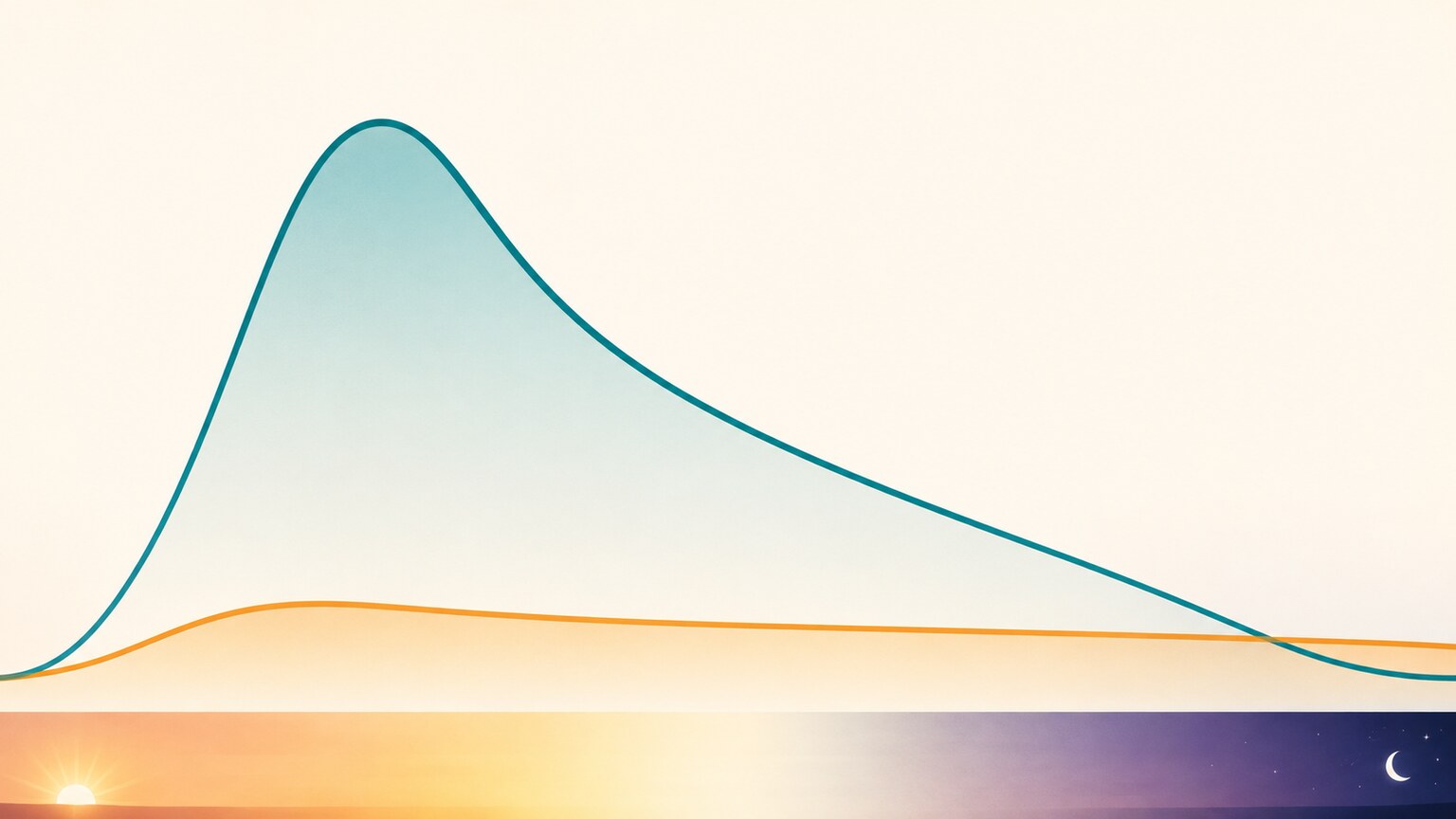
Cortisol's Normal Daily Rhythm, and What "Elevated" Really Means
It's worth pausing on why this daily rhythm exists at all before getting into how it breaks down under chronic stress. Cortisol's morning peak isn't an arbitrary quirk of biology — it evolved as a genuinely functional mechanism to mobilize glucose and energy reserves right when the body needs them most, at the start of an active day, while the low overnight trough allows tissue repair, immune regulation, and restorative processes to proceed without the disruptive metabolic effects that sustained high cortisol would otherwise produce. This rhythm is governed by the body's central circadian clock, located in a small region of the brain called the suprachiasmatic nucleus, which coordinates cortisol release alongside dozens of other biological processes on a shared roughly 24-hour cycle. Because this rhythm is so tightly linked to the broader circadian system rather than existing as an isolated, standalone hormonal pattern, disruptions to cortisol specifically often signal, or actively contribute to, disruptions in this larger coordinated system as well — a connection that becomes directly relevant later in this article when discussing shift work as a concrete, real-world example.
Before understanding how chronic stress disrupts cortisol, it helps to know what a genuinely healthy pattern actually looks like across an ordinary day. Cortisol rises sharply within the first 30 to 40 minutes after waking, a well-studied phenomenon called the cortisol awakening response, believed to help mobilize energy and prepare the body for the demands of the day ahead, before gradually declining across the rest of the day to its lowest point somewhere around bedtime. This isn't a minor fluctuation worth glossing over — the difference between morning and evening cortisol in a genuinely healthy person is substantial, often several-fold, representing one of the most reliable and well-documented daily hormonal rhythms found anywhere in the body. Because of this steep natural curve, the word "elevated" means something very different depending on exactly when a sample happened to be taken. A cortisol level that would be completely normal and unremarkable at eight in the morning could represent a genuinely elevated, clinically abnormal reading if that exact same number showed up instead on a test drawn at ten at night, since the two time points are being judged against entirely different reference expectations. This single fact is the foundation for understanding everything chronic stress actually does to cortisol: it's rarely a simple, one-dimensional story of "too much cortisol" circulating overall, and much more often a subtler story of cortisol showing up in the wrong place along an otherwise recognizable daily curve.
How Chronic Stress Flattens the Curve
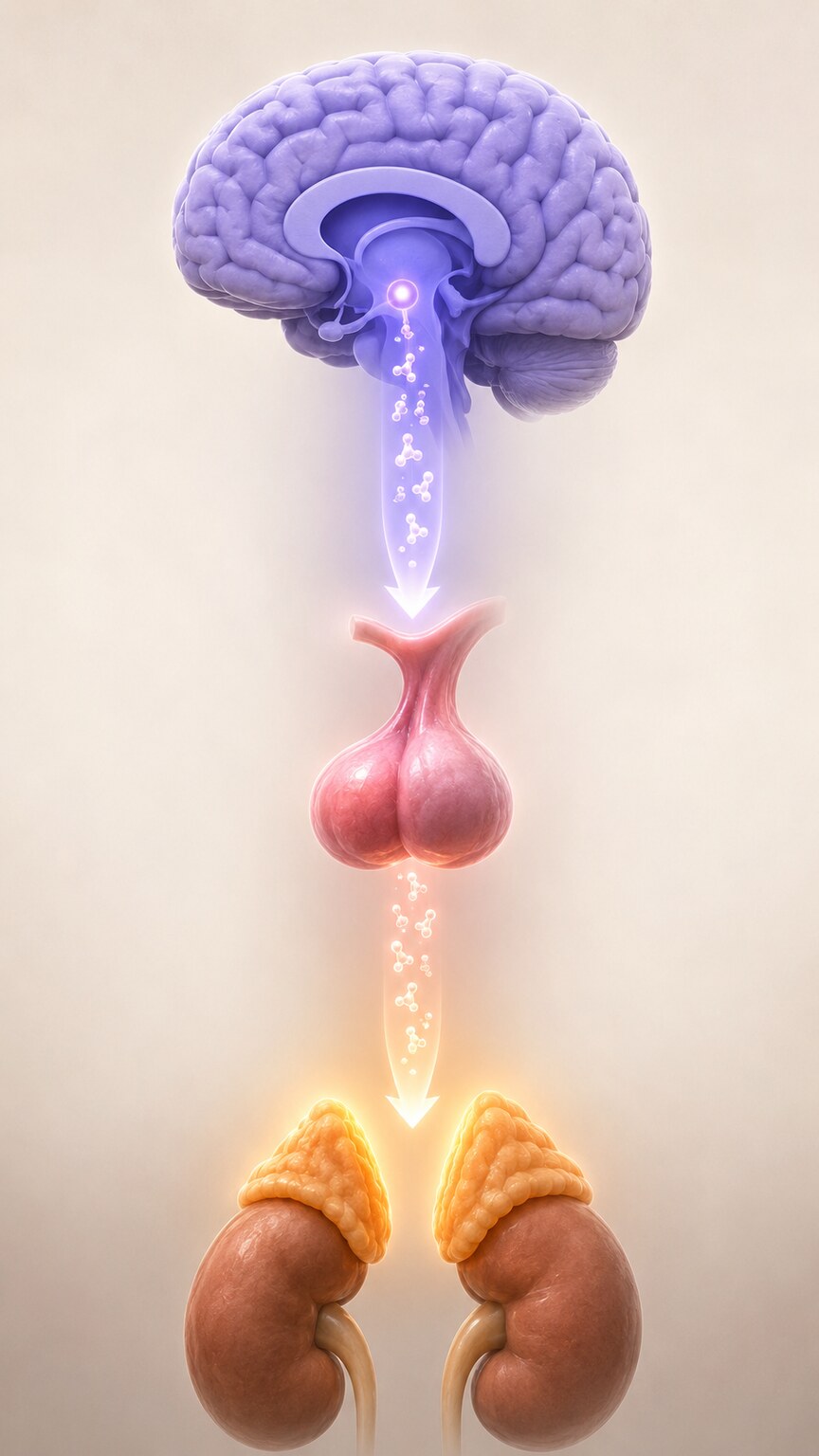
Research measuring cortisol at multiple points throughout the day in people under sustained psychological stress has consistently found a flattened diurnal cortisol rhythm compared to people without ongoing stress in their lives, alongside measurable elevations in inflammatory markers like IL-6, TNF-alpha, and CRP running in parallel with that flattened pattern rather than as an unrelated, separate finding. Rather than the sharp morning peak and steep, reliable evening decline seen in a healthy pattern, the curve under chronic stress compresses toward a smaller overall range, sometimes with cortisol remaining stubbornly elevated later into the evening than it should be, or with the cortisol awakening response itself becoming noticeably blunted and weaker than what would be expected from a well-regulated system. This flattening reflects a genuine, measurable disruption to the hypothalamic-pituitary-adrenal axis, commonly shortened to the HPA axis — the hypothalamus, pituitary gland, and adrenal glands operating together in a coordinated signaling chain that governs cortisol release from start to finish. Under chronic, sustained activation, this system's normal rhythmic signaling becomes progressively disorganized, producing a pattern that's measurably different from ordinary day-to-day variation rather than simply representing the high end of a normal range, and research has directly linked these specific disrupted patterns — flattened rhythms, elevated evening cortisol, abnormal or blunted awakening responses — to outcomes spanning psychiatric symptoms, elevated cardiovascular risk, and measurable cognitive decline over time.
Wondering what your own cortisol or hormone panel actually shows? Upload your labs and get a complete, plain-language breakdown in under 15 minutes.
Analyze My ResultsWhy the Body's Own Cells Stop Listening to Cortisol
This dynamic adds an important, often overlooked layer of nuance to any conversation about "high cortisol" as though it were a single, uniformly bad outcome to avoid at all costs — the more complete picture involves not just how much cortisol is circulating, but how effectively the body's own tissue is still able to respond to it. This receptor-level breakdown doesn't happen instantly, and it isn't triggered by a single stressful day or even a single stressful week — it develops gradually, over sustained exposure, as cells throughout the body essentially adjust their own sensitivity in response to how much cortisol signal they've been receiving on an ongoing basis. This kind of adaptive downregulation is a fairly common biological pattern seen with other hormone systems too, where persistently high signaling eventually prompts the receiving cells to scale back their own responsiveness rather than remaining maximally sensitive indefinitely, and cortisol appears to be no exception to that broader principle once exposure becomes genuinely sustained rather than occasional.
One of the more genuinely counterintuitive findings in chronic stress research involves what happens at the cellular level once cortisol has been elevated, or dysregulated, for an extended stretch of time rather than just briefly. Cortisol normally works by binding to glucocorticoid receptors found on cells throughout nearly every tissue in the body, and one of its key jobs once bound is to help dial down inflammation, essentially acting as a natural brake on the immune system's inflammatory response once a threat has passed. Chronic stress has been shown to produce a state called glucocorticoid receptor resistance, in which cells become progressively less responsive to cortisol's signal over time despite cortisol itself remaining present in circulation, and sometimes even remaining elevated well above what would be expected. Research has identified this resistance as involving altered receptor expression on the cell surface and changes to how the receptor's signal actually gets processed once it reaches the inside of the cell, ultimately failing to properly restrain a key inflammatory signaling pathway called NF-kB that would otherwise be kept in check. The result is a strange, genuinely paradoxical situation that can be difficult to reconcile at first: circulating cortisol can be elevated on paper while its actual anti-inflammatory effect on tissue throughout the body is simultaneously diminished, precisely because the tissue itself has become measurably less able to respond to the hormone's signal no matter how much of it is present. This is a meaningful part of why chronic stress and chronic low-grade inflammation are so consistently found together in the same people, and why simply looking at a single cortisol number in isolation doesn't come close to capturing what's actually happening at the level of the body's individual cells.
The Allostatic Load Concept: A Cost for Constant Adaptation
Both the receptor resistance described above and the phenomenon described next are, in a genuine sense, two different expressions of the exact same broader underlying biological problem: a regulatory system straining under a demand it was never really designed to sustain indefinitely without any real, meaningful break. The term itself comes from a broader concept called allostasis, which describes the body's general strategy of achieving stability not by staying perfectly static, but by actively adjusting itself in response to changing demands — a genuinely useful and adaptive strategy for handling occasional, temporary stress, but one that starts to accumulate real physiological cost when the demands themselves never let up long enough for the system to return to its resting state in between.
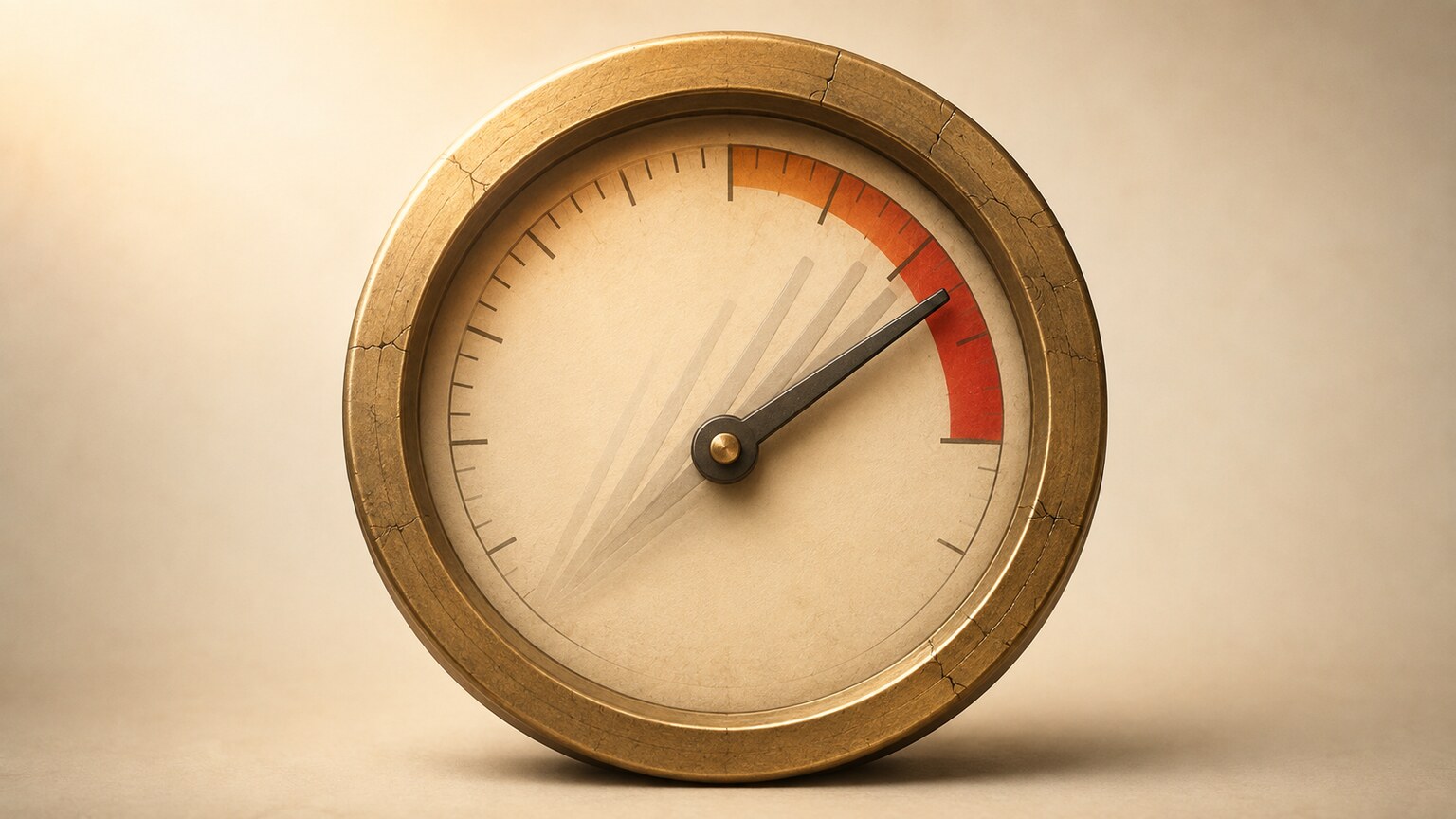
Researchers use the term allostatic load to describe the cumulative physiological cost of the body constantly adapting to ongoing demands rather than ever being able to fully return to a genuine resting baseline between them. In the context of the HPA axis specifically, the body can initially maintain what looks, on paper, like a roughly normal average cortisol level even under real chronic stress, through a kind of physiological habituation that keeps overall glucocorticoid levels within a seemingly acceptable, unremarkable range despite the ongoing demand being placed on the system. But this apparent surface-level stability comes at a genuine underlying physiological cost, since the regulatory machinery doing the actual work to maintain that stability is itself being taxed continuously and repeatedly, rather than getting the genuine rest and recovery time it would normally have between isolated stressors. Over time, this ongoing cumulative cost can impair the HPA axis's ability to respond appropriately when new, genuine stress actually arrives, or to properly and fully wind back down once a given stressor has passed and conditions have otherwise returned to normal — meaning the system's overall flexibility and responsiveness, not just its raw average output measured at any single point, is what quietly and gradually erodes under sustained chronic conditions, even while a single snapshot cortisol test drawn at one arbitrary moment might not obviously reveal any of this underlying strain at all.
A Real-World Example: What Shift Work Does to This Rhythm
While ordinary psychological stress from work pressure, relationship strain, or ongoing financial worry is genuinely harder to measure objectively in a research setting, shift work provides researchers with something far more concrete and directly quantifiable to work with: an exact, precisely known schedule that can be directly compared against a person's actual cortisol measurements gathered over time.

Night-shift and rotating-shift work offers one of the clearest, most concretely studied real-world examples of chronic stress reshaping the cortisol rhythm described throughout this article, precisely because it involves a defined, objectively measurable mismatch between a person's imposed daily work schedule and their body's own internal biological clock, rather than a vaguer, harder-to-quantify psychological stressor. Research has found that the cortisol rhythm is profoundly and measurably disrupted by night-shift work specifically, contributing to broader dysregulation of the HPA axis as a whole and producing downstream effects on metabolic health, cardiovascular risk, and cognitive function that researchers have documented across large groups of shift workers over time. Notably, the body's central circadian timing system, which governs both cortisol and melatonin release on a roughly 24-hour cycle, has been shown to be genuinely and stubbornly resistant to fully adapting even after extended, sustained periods of night work spanning months or years, meaning many long-term shift workers never fully shift their internal cortisol rhythm to properly match their inverted sleep-wake schedule, no matter how long they've actually worked that particular pattern or how consistently they've tried to maintain it. Interestingly, and somewhat counterintuitively, research findings on shift workers' actual measured cortisol levels have been genuinely mixed across different studies, with some finding reduced overall cortisol secretion and others finding increased levels instead — a genuinely useful illustration of the broader point this entire article has been building toward: the presence or specific direction of change in cortisol under chronic stress isn't always simple, uniform, or consistent from person to person, but the disruption to the underlying daily rhythm itself, and its coordination with the rest of the body's interconnected systems, is the far more consistent and better-documented finding running across this body of research as a whole.
Why a Single Blood Test Often Misses the Full Picture
Understanding clearly why this measurement gap exists in the first place makes the alternative testing strategies described next feel far less like unnecessary extra steps and far more like a genuinely sensible response to a real, well-documented limitation. This limitation isn't a flaw specific to cortisol testing alone — it's a fundamental challenge shared by nearly any hormone or biomarker that follows a meaningful daily or cyclical pattern rather than staying essentially flat around the clock, and cortisol happens to be one of the more extreme, dramatic examples of this general problem given just how steep its normal daily swing actually is compared to many other commonly tested hormones.
Standard cortisol testing, whether through a blood draw or a single saliva sample collected at one point in time, captures cortisol activity over roughly the prior hour or two at most, since cortisol has a relatively short half-life of about 90 minutes in circulation and fluctuates considerably depending on the exact time of day, recent physical activity, and even what was eaten in the hours beforehand. This makes a single test genuinely well-suited to catching an acute, momentary abnormality at that specific point in time, but fundamentally poorly suited to capturing the broader pattern of chronic elevation, chronic flattening, or chronic dysregulation that actually plays out gradually across weeks or months of ongoing stress. Because of this inherent limitation, researchers studying chronic stress specifically tend to rely instead on multi-point sampling across a single day — measuring cortisol at the moment of waking, again thirty minutes later to capture the awakening response, once more around midday, and a final time at bedtime — specifically to reconstruct the actual shape of the diurnal curve as a whole, rather than drawing conclusions from any single isolated data point.
Hair Cortisol: A Test Built Specifically to Catch the Long-Term Pattern
Several alternative testing approaches exist specifically to address this measurement gap, each carrying its own particular strengths and limitations worth understanding. Urine-based cortisol testing collected over a full 24-hour period offers one partial solution to the snapshot problem, capturing total cortisol output across an entire day rather than a single moment, though it still requires careful, consistent collection and doesn't preserve the specific shape of the daily curve the way multi-point sampling does, and it still only reflects a single day's exposure rather than the sustained, months-long pattern that chronic stress research is often most interested in capturing.

One of the more genuinely clever, purpose-built solutions to this specific measurement problem is hair cortisol testing, a method that takes clever advantage of the simple biological fact that cortisol circulating in the bloodstream gets steadily incorporated directly into growing hair as it forms strand by strand. Because human scalp hair grows at a fairly predictable and well-studied average rate, each centimeter of hair closest to the scalp roughly corresponds to about one month of past cortisol exposure, meaning a few centimeters of hair, easily collected in a single quick sample, can provide a genuine month-by-month timeline of a person's cortisol history rather than a single momentary snapshot frozen at one arbitrary point in time. Research has found meaningfully elevated hair cortisol levels specifically associated with a documented history of cardiovascular events and broader elevated cardiovascular risk in large population studies tracking this marker over time, lending real support to hair cortisol as a genuinely useful, validated marker of sustained, long-term exposure rather than simply reflecting momentary, short-lived fluctuation. Unlike blood or saliva testing, hair cortisol isn't meaningfully affected by the exact time of day it happens to be collected, recent meals, or a single unusually stressful morning right before the sample is taken, making it specifically and deliberately well-suited to answering the exact question a standard test often can't: not "what is cortisol doing right now, at this precise moment," but rather "what has cortisol actually been doing, on average, over the last several months of someone's life."
Why Chronic Cortisol Elevation Can Ripple Into Other Hormone Results
This kind of ripple effect is precisely why endocrinologists and functional-medicine practitioners alike tend to think about the body's hormone systems as an interconnected network rather than a collection of entirely separate, independently regulated panels, even when a person's presenting complaint seems, at first glance, to point toward just one specific gland or hormone in isolation from everything else going on in the body.
Chronic HPA axis activation doesn't necessarily stay neatly contained to cortisol alone — it can measurably ripple outward and influence other, seemingly unrelated hormone panels too, which is part of why a person investigating unrelated hormonal symptoms through an entirely different lab panel sometimes ends up tracing the underlying root cause back to chronic stress after all. High cortisol has been shown to inhibit the conversion of T4 into T3, the active, usable form of thyroid hormone that tissues throughout the body actually rely on for normal metabolic function, meaning chronic stress can genuinely produce thyroid-related symptoms even when the thyroid gland itself is functioning perfectly normally and its own hormone output looks entirely unremarkable, simply because less of that output is successfully being converted into a usable, active form once it reaches peripheral tissue. Chronic cortisol elevation has also been shown to suppress luteinizing hormone, a pituitary signal directly involved in regulating downstream reproductive hormone production in both men and women, and research has found measurably lower progesterone levels specifically in women experiencing chronic stress compared to women without ongoing chronic stress in their lives. Some functional-medicine sources describe this overall pattern using an informal, popularized term, the "pregnenolone steal," suggesting that a single shared hormonal precursor molecule gets preferentially redirected toward cortisol production at the direct expense of sex hormone production during periods of sustained stress; it's genuinely worth noting that this specific terminology and the precise mechanism it describes remain debated within the broader academic research community, even though the underlying clinical observation itself — that sustained stress reliably correlates with lower reproductive hormone output — is independently supported by research regardless of which specific mechanistic label ultimately gets used to describe why it happens.
What This Means If Your Own Results Look Confusing
Bringing everything covered throughout this article back down to a practical, individual level is ultimately the whole point of walking through it. None of this is meant to suggest that every case of fatigue or unexplained symptoms traces back to chronic stress and HPA axis dysregulation — plenty of other genuine medical explanations exist and deserve careful, equal consideration too — but chronic stress belongs firmly on the list of possibilities worth ruling in or out, particularly when standard single-point testing has already come back reassuringly normal without actually fully resolving the underlying question a person originally set out to answer.
If a cortisol test comes back within a technically normal range but symptoms consistent with chronic stress — persistent fatigue that doesn't meaningfully improve with rest, disrupted or unrefreshing sleep, difficulty concentrating, or a general, hard-to-shake sense of being "wired but tired" at the same time — are still clearly present, that specific combination is genuinely worth taking seriously rather than dismissing outright simply because a single number happened to look acceptable on paper. Given everything described throughout this article, a single test drawn at one arbitrary point in time genuinely cannot rule out a flattened rhythm, an elevated evening pattern, or underlying glucocorticoid receptor resistance, any of which can coexist quietly alongside an individual cortisol value that still technically falls within a standard reference range when viewed in isolation. If chronic stress is genuinely suspected as a contributing factor behind unexplained symptoms, discussing multi-point testing spread across a single day, or hair cortisol testing specifically pursued for a longer-term historical picture, is a reasonable and entirely legitimate next step to raise directly with a healthcare provider, rather than simply assuming that one normal-looking result has fully and permanently closed the question.
Frequently Asked Questions
Does chronic stress always raise the average cortisol level?
Not necessarily in a simple, obvious way. Chronic stress more often flattens the natural rise-and-fall pattern of cortisol across the day, or shifts elevation into the evening, rather than uniformly raising every single measurement.
What is the cortisol awakening response?
It's the sharp rise in cortisol that normally occurs within 30 to 40 minutes of waking up. Chronic stress can blunt or exaggerate this response, and its disruption is considered a marker of HPA axis dysfunction.
Can cortisol be elevated while still causing inflammation problems?
Yes. Chronic stress can produce glucocorticoid receptor resistance, where cells become less responsive to cortisol's anti-inflammatory signal even while cortisol itself remains present or elevated.
Why might a single cortisol blood test look normal despite ongoing chronic stress?
Because a single test only captures roughly the prior hour or two of activity. Chronic dysregulation often shows up as a disrupted daily pattern rather than a single abnormal value at any one moment.
How does hair cortisol testing differ from blood or saliva testing?
Hair cortisol reflects roughly one month of cortisol exposure per centimeter of hair, providing a long-term average unaffected by time of day, recent meals, or a single stressful moment.
Does shift work actually disrupt cortisol's daily rhythm?
Yes. Research shows night-shift work profoundly disrupts the cortisol rhythm, and the body's internal clock often never fully adapts to an inverted schedule even after extended periods of night work.
Can chronic stress affect thyroid or reproductive hormone results too?
Yes. High cortisol has been shown to inhibit T4-to-T3 conversion and suppress luteinizing hormone, with research linking chronic stress to lower progesterone levels and a higher risk of thyroid dysfunction.
Conclusion
Chronic stress rarely announces itself as a single, dramatically elevated cortisol number sitting clearly outside a reference range for anyone to easily spot. More often, it works quietly and gradually, reshaping the entire daily rhythm cortisol is supposed to follow — flattening the normal morning peak and evening decline into something far subtler, shifting meaningful elevation into hours when cortisol should be at its lowest, and eventually producing glucocorticoid receptor resistance that measurably decouples circulating cortisol from its actual, intended effect on tissue throughout the body. Real-world examples like shift work demonstrate just how concretely and measurably this disruption plays out, and the same underlying HPA axis changes can ripple outward into thyroid and reproductive hormone results that, on the surface, appear to have nothing to do with cortisol at all. A single snapshot test can miss essentially all of this nuance, which is exactly why multi-point daily sampling and longer-term methods like hair cortisol testing exist as genuine, purpose-built alternatives rather than unnecessary extra steps. Understanding this distinction turns a confusing "normal" result into a more useful, informed starting point for asking the right follow-up questions, rather than treating it as the definitive end of the conversation.
Still Not Sure What Your Results Mean?
Upload your labs and get a complete, visual, plain-language interpretation of every biomarker — delivered to your inbox in under 15 minutes.
Get My ReportThis article is for educational purposes only and does not constitute medical advice. Always consult your healthcare provider regarding your specific lab results.