
What Does an Abnormal Dexamethasone Suppression Result Mean?
Most everyday cortisol tests simply measure how much of the hormone genuinely happens to be circulating in your blood at one particular given moment in time. The dexamethasone suppression test does something more clever: rather than just observing your cortisol level, it actually gives your body a specific command — take a synthetic steroid, and your own cortisol production should shut down in response — and then checks whether that command was actually obeyed. A normal result means your body followed the instruction the way it's supposed to. An abnormal result means it didn't, and that failure to obey is itself a genuinely meaningful clue pointing toward a specific category of problem. This article walks through exactly how this test works, the different versions of it used for different purposes, the real reasons a result can come back abnormal, and what typically happens once it does.
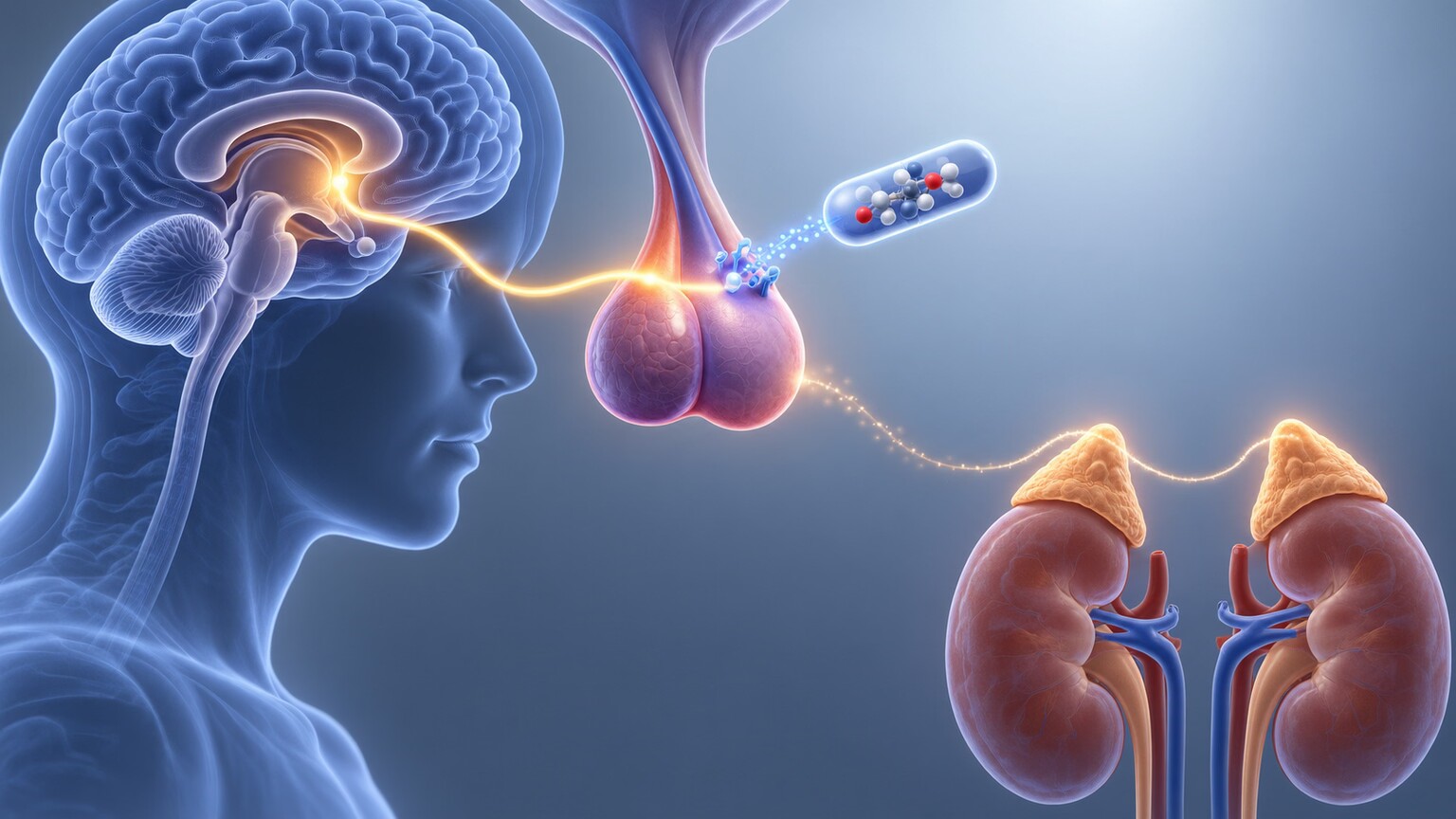
Figure 1. Dexamethasone mimics cortisol closely enough that the pituitary gland recognizes it and responds by reducing ACTH output, which should in turn lower the adrenal glands' own cortisol production.
How the Test Actually Works: Hijacking a Natural Feedback Loop
Your body's own cortisol production runs on a carefully regulated feedback system called the hypothalamic-pituitary-adrenal, or HPA, axis. The brain's hypothalamus signals the pituitary gland, the pituitary in turn releases a hormone called ACTH, and that ACTH travels through the bloodstream to specifically instruct the adrenal glands to go ahead and produce cortisol. Critically, this system also polices itself: when cortisol levels rise high enough, the brain and pituitary sense that rise and pull back on ACTH production, which in turn lowers cortisol output — a classic negative feedback loop, similar in concept to a thermostat cutting off a furnace once a room reaches its target temperature.
Dexamethasone is a synthetic corticosteroid that closely resembles cortisol from the pituitary's point of view, close enough that the brain's feedback sensors register it as if it were cortisol itself. When a person takes a dose of dexamethasone, a healthy, properly functioning HPA axis detects what looks like plenty of cortisol already circulating and responds by suppressing its own ACTH output, which in turn suppresses the adrenal glands' own natural cortisol production. A blood test drawn the next morning should then show a cortisol level that has dropped significantly compared to what it would have been without the dexamethasone dose — a "suppressed" result, meaning the feedback system responded exactly the way it's supposed to.
One particular detail that genuinely makes this test elegant is that dexamethasone itself simply doesn't show up on a standard cortisol blood test result at all, since the lab assay used to measure cortisol is specifically designed to detect cortisol and doesn't meaningfully cross-react with the synthetic steroid. This means the morning cortisol value obtained after a dexamethasone dose is measuring only the body's own remaining natural production, not some combination of cortisol and leftover dexamethasone muddying the picture — an important technical detail that's part of why this particular synthetic steroid was chosen for this specific test in the first place, rather than a more commonly prescribed steroid that might interfere with the measurement itself.
It also genuinely helps to understand precisely why dexamethasone specifically, rather than some other available steroid, became the accepted standard choice for this particular test many decades ago. Dexamethasone is considerably more potent than natural cortisol on a milligram-for-milligram basis, meaning a very small, precisely measured dose can produce a strong, reliable suppressive signal at the pituitary level without needing to give a large volume of medication. It also has a relatively predictable duration of action in the body, long enough to still be actively suppressing the HPA axis by the time the following morning's blood draw happens, but not so long that it would meaningfully complicate interpreting results from any follow-up testing done shortly afterward.
Low-Dose vs. High-Dose Testing: Two Different Questions
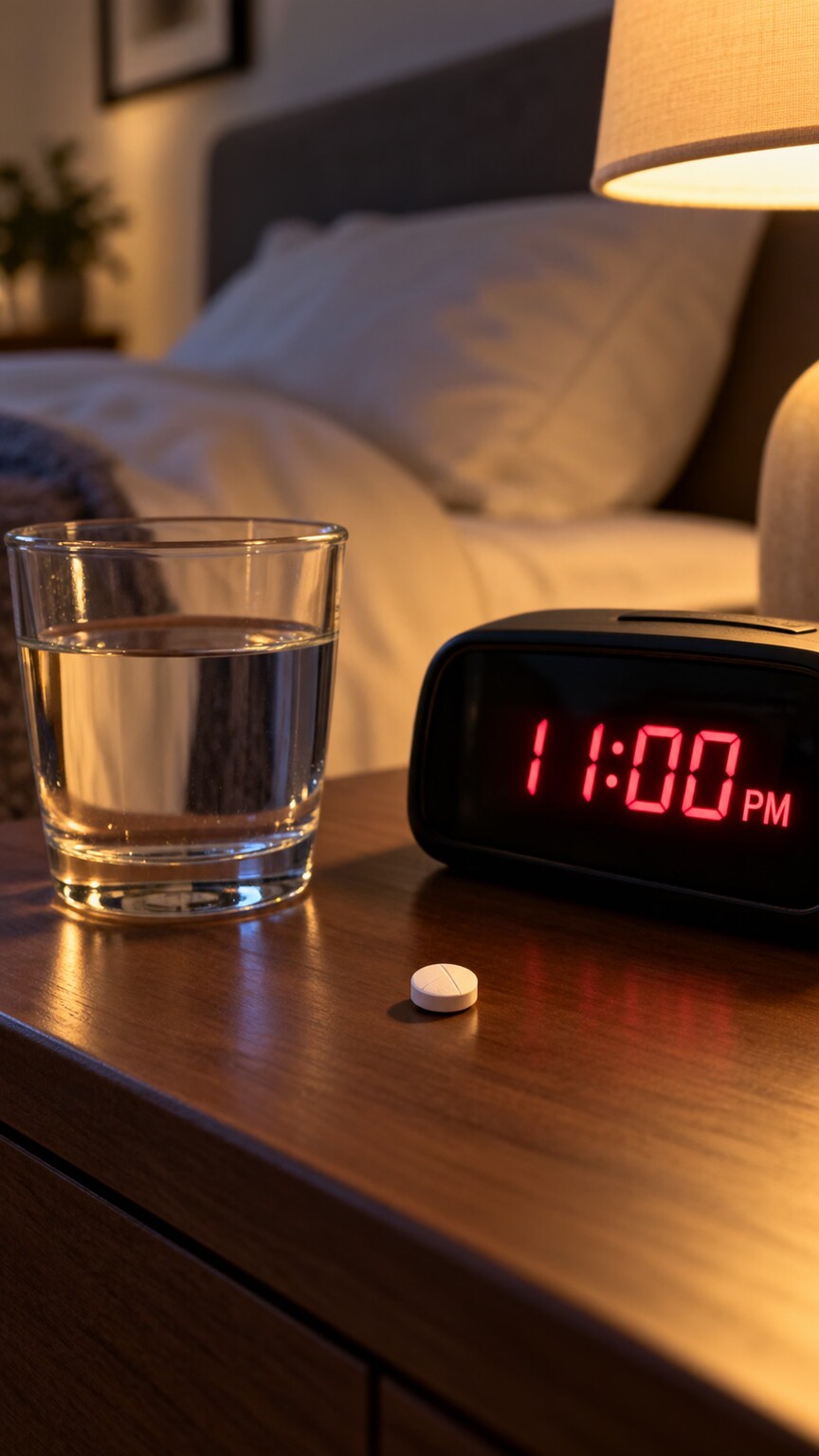
Figure 2. The standard low-dose overnight test requires taking dexamethasone at a specific late-night hour, with blood drawn the following morning to measure how much cortisol suppression actually occurred.
The most common version of this test, the low-dose overnight suppression test, is used specifically as an initial screening tool when Cushing's syndrome — a condition caused by prolonged excess cortisol — is suspected. It involves taking a small dose of dexamethasone around 11 p.m., then having blood drawn the following morning to measure cortisol. This version answers a fairly simple yes-or-no question: does this person's HPA axis suppress normally at all, or is there evidence of excess, poorly regulated cortisol production somewhere in the system?
The specific reason this test is done overnight rather than during the day connects directly to cortisol's own natural rhythm, which naturally peaks in the early morning hours and gradually declines throughout the rest of the day. Giving dexamethasone late at night allows it to actively suppress the pituitary right at the point in the cycle when cortisol production would otherwise be ramping back up toward its natural morning peak, making any failure of that suppression especially easy to detect against what would normally be a clearly rising signal at that exact time of day.
A high-dose version of the same basic test exists for a different, more specific purpose: once Cushing's syndrome has already been confirmed by other testing, the high-dose test helps determine where the excess cortisol is actually coming from. This version uses a considerably larger dose of dexamethasone, based on the reasoning that a pituitary tumor causing Cushing's disease, while abnormal, often retains at least some residual sensitivity to very high doses of steroid and may partially suppress in response, while cortisol-producing adrenal tumors and certain non-pituitary ("ectopic") sources of ACTH tend to be almost completely unresponsive to suppression at any dose, low or high.
There's also a genuine third, considerably less commonly used variant worth briefly knowing about here: the two-day low-dose suppression test, sometimes preferred over the single overnight version in certain clinical situations, particularly when there's reason to suspect the overnight test might produce a misleading result — for instance, in someone with significant anxiety about medical testing, whose stress response alone could plausibly interfere with a single-night measurement. This version spreads a lower total dose across two full days, with cortisol measured at set intervals throughout, providing a somewhat more gradual and, in some clinical situations, a more reliable picture of the feedback response than a single overnight snapshot can offer.
Regardless of which specific testing protocol ultimately ends up being used, the underlying core logic connecting every single version of this test remains fundamentally exactly the same: give the HPA axis a synthetic signal it should recognize and respond to, then measure whether that response actually happened as expected. The variations in dose and duration exist purely to answer slightly different clinical questions — screening for the presence of excess cortisol versus localizing where that excess is actually coming from — rather than reflecting any fundamentally different testing principle.
Curious what your cortisol results or the rest of your labs are really telling you? Upload your results and get a complete, plain-language breakdown in under 15 minutes.
Analyze My ResultsWhat "Failure to Suppress" Actually Means

Figure 3. A morning cortisol level that remains elevated despite the prior night's dexamethasone dose is interpreted as a failure to suppress, the specific finding that defines an abnormal result.
An abnormal, or "non-suppressed," result simply means the morning cortisol level didn't drop as much as it should have after the dexamethasone dose — the feedback system that's supposed to recognize the synthetic steroid and pull back cortisol production failed to do its job properly. This is the specific finding most closely associated with Cushing's syndrome, since the underlying problem in that condition, whatever its exact source, is a piece of the HPA axis that has become effectively deaf to the normal feedback signal telling it to slow down.
The exact numeric cutoff used to define "suppressed" versus "non-suppressed" has itself evolved over time as testing technology has improved. Older, less sensitive cortisol assays used a comparatively generous cutoff, while modern, more sensitive laboratory methods have allowed for a stricter, lower threshold that improves the test's ability to catch genuinely mild or early cases of excess cortisol production that older testing generations would have missed entirely. This evolution mirrors a broader pattern seen across several other hormone tests, where improving laboratory technology has repeatedly pushed clinical practice toward earlier, more sensitive detection over time.
It's worth being precise about what this failure represents biologically. In Cushing's disease, a pituitary tumor is secreting ACTH somewhat autonomously, largely independent of the usual feedback controls, which is exactly why even a fairly potent synthetic steroid signal often can't fully talk it down. In an ectopic ACTH-producing tumor — a tumor located somewhere outside the normal pituitary-adrenal axis entirely, most classically certain lung tumors — the ACTH production has nothing to do with the pituitary's feedback receptors at all, so dexamethasone has essentially no mechanism through which to influence it. In a cortisol-producing adrenal tumor, the adrenal gland itself is generating cortisol autonomously, without waiting for ACTH instruction in the first place, meaning suppressing ACTH through dexamethasone does nothing to slow down an adrenal gland that was never following that signal to begin with.
Cushing's disease, specifically referring to the pituitary-driven form of this condition, is by quite a wide margin the single most common cause of genuinely endogenous — meaning body-produced, as opposed to medication-induced — Cushing's syndrome, accounting overall for the clear, decisive majority of all confirmed cases identified through this specific kind of diagnostic workup. The overwhelming majority of these particular pituitary tumors are small, benign growths called microadenomas, some measuring only a few scant millimeters across in total, which is part of why they can be genuinely difficult to visualize even on a dedicated pituitary MRI, and why a percentage of confirmed pituitary Cushing's cases proceed to treatment without ever having a tumor definitively seen on imaging, based instead on the strength of the hormonal evidence pointing toward a pituitary source.
Ectopic ACTH-producing tumors, while genuinely considerably less common overall than pituitary-driven Cushing's disease, tend to produce a notably more severe and rapidly progressing clinical picture whenever they do actually occur, since these tumors often secrete ACTH in much larger, less regulated quantities than a typical pituitary microadenoma does. Small cell lung cancer and certain other rarer neuroendocrine tumors are by far the most frequently implicated culprits behind this specific pattern, and the severity and speed of onset in ectopic cases is actually one of several clinical clues, beyond the dexamethasone and ACTH testing itself, that can raise suspicion for this specific source even before imaging is obtained.
Adrenal causes of Cushing's syndrome, meanwhile, are generally and typically divided into two fairly broad categories: benign adrenal adenomas, which are considerably more common overall, and adrenal carcinomas, which are genuinely rare but tend to produce especially high cortisol levels and frequently additional hormone abnormalities beyond cortisol alone, since these particular tumors often secrete a broader, less selective mix of adrenal hormones rather than cortisol in true isolation.
Using the High-Dose Test to Narrow Down the Source
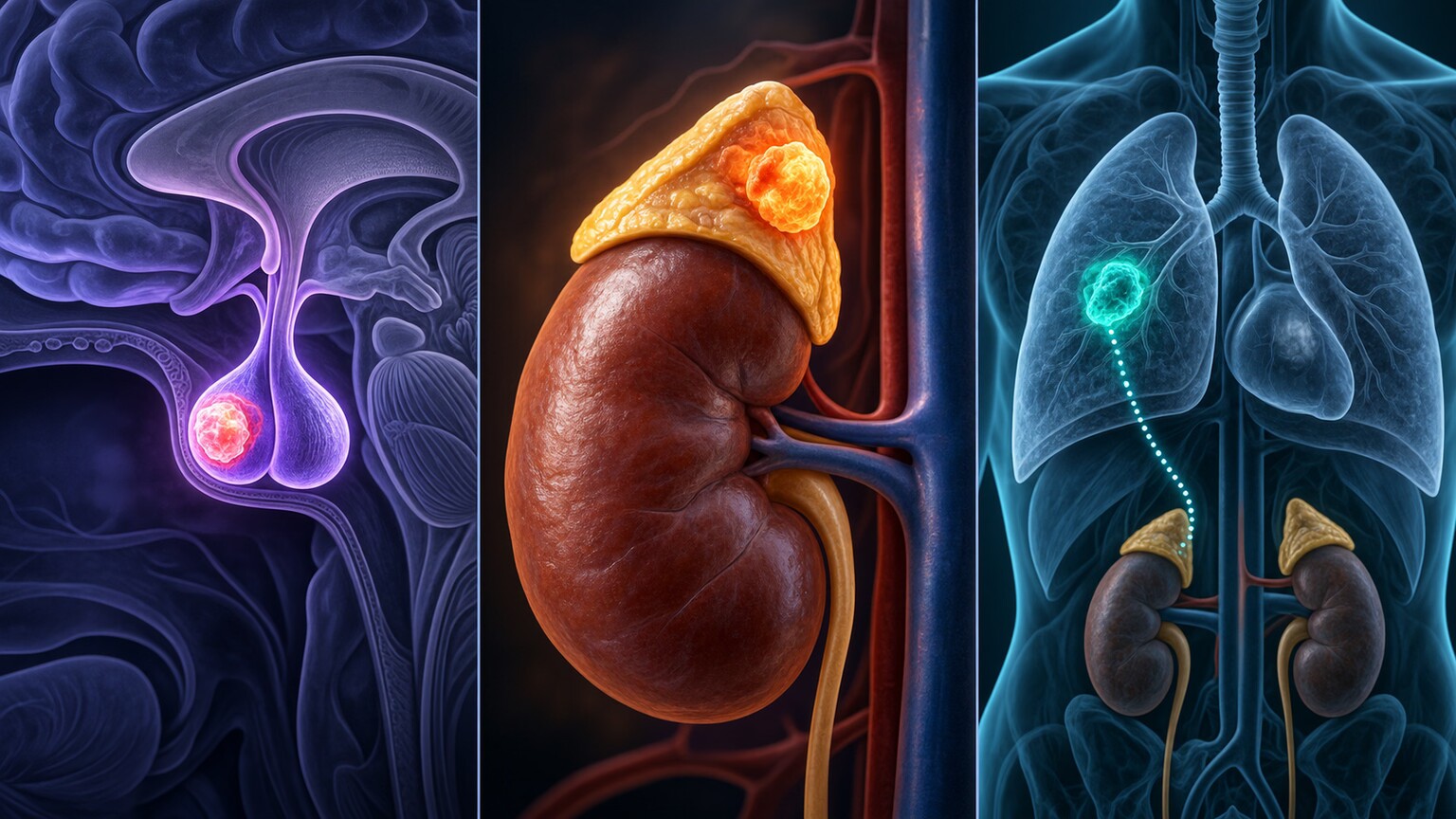
Figure 4. Once Cushing's syndrome is confirmed, the high-dose suppression test helps distinguish a pituitary source from an adrenal tumor or an ectopic ACTH-producing tumor located elsewhere in the body.
Once the low-dose test has confirmed that Cushing's syndrome is genuinely present, the high-dose test becomes a useful, if imperfect, tool for narrowing down which of these three anatomical sources is actually responsible, based on the specific pattern of response. Partial suppression with the high dose, even if incomplete, leans toward Cushing's disease, the pituitary-driven form, since a pituitary tumor's ACTH-producing cells, however dysregulated, are often still built from the same underlying cell type that normally responds to steroid feedback, just at a considerably higher threshold than usual.
Complete failure to suppress even at the high dose leans more heavily toward either an adrenal tumor or an ectopic ACTH-producing source, since neither of these has any meaningful feedback relationship to dexamethasone's mechanism of action in the first place. Distinguishing between these two remaining possibilities typically requires additional testing beyond the dexamethasone test itself — most notably measuring ACTH directly, since a cortisol-producing adrenal tumor characteristically suppresses the body's own ACTH to very low levels (because the excess cortisol from the tumor is still successfully triggering the feedback response, just from an autonomous adrenal source the pituitary itself has nothing to do with), while an ectopic ACTH-secreting tumor produces ACTH levels that remain high or even markedly elevated, since that ACTH is coming from a source entirely outside the normal regulatory system.
It's worth acknowledging directly that the high-dose test, despite decades of clinical use, is genuinely imperfect as a localizing tool — research following patients through to a confirmed final diagnosis has found meaningful overlap between the response patterns of pituitary and ectopic sources, meaning a partial suppression result doesn't guarantee a pituitary cause, and a complete non-suppression doesn't guarantee an ectopic or adrenal one. This overlap is exactly why the high-dose test result is treated as one contributing piece of evidence within a broader diagnostic strategy rather than a standalone, definitive answer, and why more specialized procedures have been developed for the genuinely difficult cases where the standard workup doesn't produce a clear, confident answer on its own.
One such specialized procedure, inferior petrosal sinus sampling, is reserved specifically for situations where imaging and standard hormonal testing still leave meaningful ambiguity about whether a small, pituitary Cushing's disease is truly the cause, particularly when pituitary MRI fails to clearly identify a tumor despite hormonal testing suggesting a pituitary source. This procedure involves threading thin catheters through blood vessels to sample blood directly from the veins draining the pituitary gland itself, comparing ACTH levels measured there against levels measured from a more distant vein elsewhere in the body — a meaningfully higher concentration at the pituitary-draining site provides strong, direct evidence that the excess ACTH is genuinely originating from the pituitary, even when imaging alone couldn't confirm it.
False Positives: When the Result Is Abnormal for a Non-Cushing's Reason

Figure 5. Certain medications speed up how quickly the liver breaks down dexamethasone, leaving less of the active drug available to suppress cortisol and producing a falsely abnormal result unrelated to Cushing's syndrome.
This test is genuinely useful, but it isn't perfectly specific to Cushing's syndrome, and a meaningful number of abnormal results turn out to reflect something else entirely — a fact worth knowing before assuming an abnormal result automatically confirms the diagnosis it's screening for. Certain medications, including several anti-seizure drugs and some antibiotics, speed up how quickly the liver metabolizes and clears dexamethasone from the body, meaning less active drug remains in circulation to actually trigger suppression, regardless of how healthy the underlying HPA axis truly is — producing a falsely abnormal result driven entirely by drug interaction rather than genuine disease.
This particular drug-interaction effect works through a specific set of liver enzymes responsible for breaking down a wide range of medications, dexamethasone included. Drugs that activate or accelerate these enzymes cause dexamethasone to clear from the bloodstream faster than the standard test protocol assumes, meaning meaningfully less active dexamethasone remains by the time the following morning's cortisol is drawn than a standard dose would normally provide at that time point. Because this is a purely pharmacokinetic issue rather than anything reflecting true HPA axis function, a clinician aware of a relevant medication interaction beforehand may choose to use a higher starting dose specifically to compensate, or interpret a borderline result with that specific interaction explicitly in mind, rather than mistaking a pharmacological quirk for genuine disease.
Oral estrogen, including certain forms of hormonal birth control and hormone replacement therapy, raises a blood protein called cortisol-binding globulin, which increases the total measured cortisol level in a blood test without necessarily reflecting a genuine increase in the biologically active, unbound cortisol actually driving symptoms — this can produce a technically abnormal-looking suppression result that doesn't reflect true HPA axis dysfunction. Depression, chronic alcohol use, poorly controlled diabetes, and significant obesity have all also been associated with a real, though generally milder, tendency toward abnormal or borderline suppression results even in the absence of Cushing's syndrome, a phenomenon sometimes referred to as pseudo-Cushing's, reflecting genuine but non-tumor-driven disruption of the HPA axis.
Because oral estrogen's effect works specifically through raising cortisol-binding globulin rather than through any change in actual HPA axis regulation, this particular false-positive cause is usually straightforward to account for once identified: many clinicians simply ask a patient to discontinue oral estrogen-containing medications for a period of several weeks before repeating the test, if that's medically reasonable to do, allowing cortisol-binding globulin levels to normalize before a cleaner, more interpretable measurement is attempted. This is a good illustration of how understanding the specific mechanism behind a false-positive cause often points directly toward the practical fix for it, rather than leaving the ambiguity unresolved indefinitely.
Acute physical or psychological stress at the time of testing — recent hospitalization, a severe illness, major surgery, or even significant emotional distress — can similarly produce a temporarily abnormal result, since the body's stress response genuinely does activate the same HPA axis this test is designed to probe, independent of any underlying tumor. This is exactly why an abnormal dexamethasone suppression result obtained during an unrelated acute illness or major life stressor is generally interpreted cautiously and often repeated once that acute situation has resolved, rather than being treated as immediately conclusive.
Reliably distinguishing genuine, confirmed Cushing's syndrome from this broader category of stress-driven, non-tumor HPA axis disruption, sometimes grouped together clinically under the umbrella term pseudo-Cushing's states, is one of the more genuinely challenging areas within all of endocrine diagnosis, since the two conditions can produce overlapping symptoms — weight gain, fatigue, mood changes, even some physical features — alongside overlapping laboratory abnormalities. A combination of tests, rather than any single result, along with careful attention to the broader clinical picture and, when needed, a period of reassessment after addressing the suspected underlying driver (treating depression, improving alcohol use, achieving better glucose control), often helps clarify which category a genuinely ambiguous case actually falls into.
A specific, specialized laboratory technique called the dexamethasone-CRH test was developed specifically to help sharpen this particular diagnostic distinction in genuinely difficult, ambiguous cases like these. This combined test administers low-dose dexamethasone as usual, but then also gives a dose of corticotropin-releasing hormone (CRH), the hypothalamic hormone that normally stimulates the pituitary to release ACTH in the first place. In pseudo-Cushing's states, the prior dexamethasone dose generally succeeds in keeping cortisol suppressed even after this additional CRH stimulation. In true Cushing's syndrome, the underlying autonomous or poorly regulated ACTH production tends to respond to the CRH stimulus with a rise in cortisol despite the dexamethasone already on board, helping separate genuine disease from a stress-driven mimic in situations where standard testing alone left real uncertainty.
What Happens After an Abnormal Result
Because of these various false-positive possibilities, a single abnormal dexamethasone suppression result is rarely treated as a final diagnosis on its own. Genuine confirmatory testing typically and reliably follows next, often specifically including a late-night salivary cortisol measurement (since cortisol should be at its lowest natural point late at night, and a level that stays inappropriately high at that hour is a second, independent piece of evidence pointing toward genuine excess production) and a 24-hour urine free cortisol collection, which captures total cortisol output across an entire day rather than relying on a single snapshot moment. When two or more of these independent tests agree in pointing toward genuine excess cortisol, the diagnosis of Cushing's syndrome becomes considerably more secure than any single test could establish alone.
Current, widely followed diagnostic guidelines specifically and explicitly recommend this multi-test approach rather than ever relying on any single isolated screening result precisely because each of the three main screening tests — the dexamethasone suppression test, late-night salivary cortisol, and 24-hour urine cortisol — has its own distinct pattern of false positives and false negatives, largely driven by different underlying mechanisms. A result affected by a medication interaction with dexamethasone metabolism, for instance, wouldn't be expected to also produce a falsely abnormal late-night salivary cortisol, since that test doesn't depend on dexamethasone at all. When results across multiple, mechanistically independent tests all point the same direction, the chance that they're all being fooled by unrelated, coincidental interference drops considerably, which is exactly the logic behind requiring this kind of confirmatory agreement before finalizing a diagnosis.
The 24-hour urine collection specifically deserves a good bit more explanation here, since it genuinely works on a fundamentally different principle than either of the two blood-based tests already described. Rather than capturing cortisol at one single moment, it requires collecting every drop of urine produced over a full 24-hour period, allowing the lab to calculate total cortisol excreted across that entire day. This approach smooths out the natural minute-to-minute and hour-to-hour fluctuations that affect any single blood draw, providing a genuinely different kind of data point — an integrated daily total rather than a snapshot — that adds real, independent diagnostic value to the overall clinical picture rather than simply repeating the same basic kind of measurement a second time over.
Once Cushing's syndrome is confirmed through this combination of testing, the workup shifts toward imaging — an MRI of the pituitary gland if a pituitary source is suspected based on the high-dose suppression pattern and ACTH level, or CT imaging of the adrenal glands and chest if an adrenal tumor or ectopic ACTH-producing tumor is suspected instead. The dexamethasone suppression test's role throughout this entire process is best understood as a directional signpost rather than a final destination — it doesn't identify the exact source on its own, but it meaningfully narrows down which direction the rest of the workup should actually head.
Once a specific source is identified through this combination of hormonal testing and imaging, treatment decisions naturally follow from whichever category the case falls into, though the general guiding principle across all three sources is broadly similar in spirit: removing or otherwise directly controlling the specific source of excess cortisol production, whenever that's genuinely feasible, resolves the underlying problem most directly and durably. Pituitary Cushing's disease is typically treated with surgical removal of the identified tumor through a minimally invasive approach accessed through the nasal cavity, an approach that has become increasingly refined and successful over recent decades. Adrenal tumors causing Cushing's syndrome are similarly managed with surgical removal of the affected gland, while ectopic ACTH-producing tumors are treated according to whatever that specific tumor type generally requires, since these can arise from a variety of different underlying cancers with correspondingly different standard treatment approaches.
In situations where surgery isn't immediately feasible, or while awaiting a planned procedure, medications that directly block cortisol production or its effects at the tissue level can provide meaningful symptom control and reduce the health risks of prolonged severe cortisol excess in the interim. These medications generally aren't considered a substitute for addressing the actual underlying source when that's achievable, but they play a genuinely useful bridging role in appropriately selected patients, particularly those who are acutely unwell from the effects of very high cortisol and need some degree of control established before undergoing a more definitive procedure.
Regular, scheduled follow-up testing after any of these treatments, often specifically including a repeat dexamethasone suppression test itself, genuinely helps confirm that the chosen intervention actually succeeded in fully restoring normal HPA axis feedback function, rather than simply assuming success purely based on symptom improvement alone. A properly suppressing result obtained after treatment is a genuinely reassuring sign that the underlying source of excess cortisol has truly, fully been addressed, closing the loop neatly on the exact same test that originally first identified the problem in the first place.
A Worked Example: Following One Abnormal Result Through the Workup
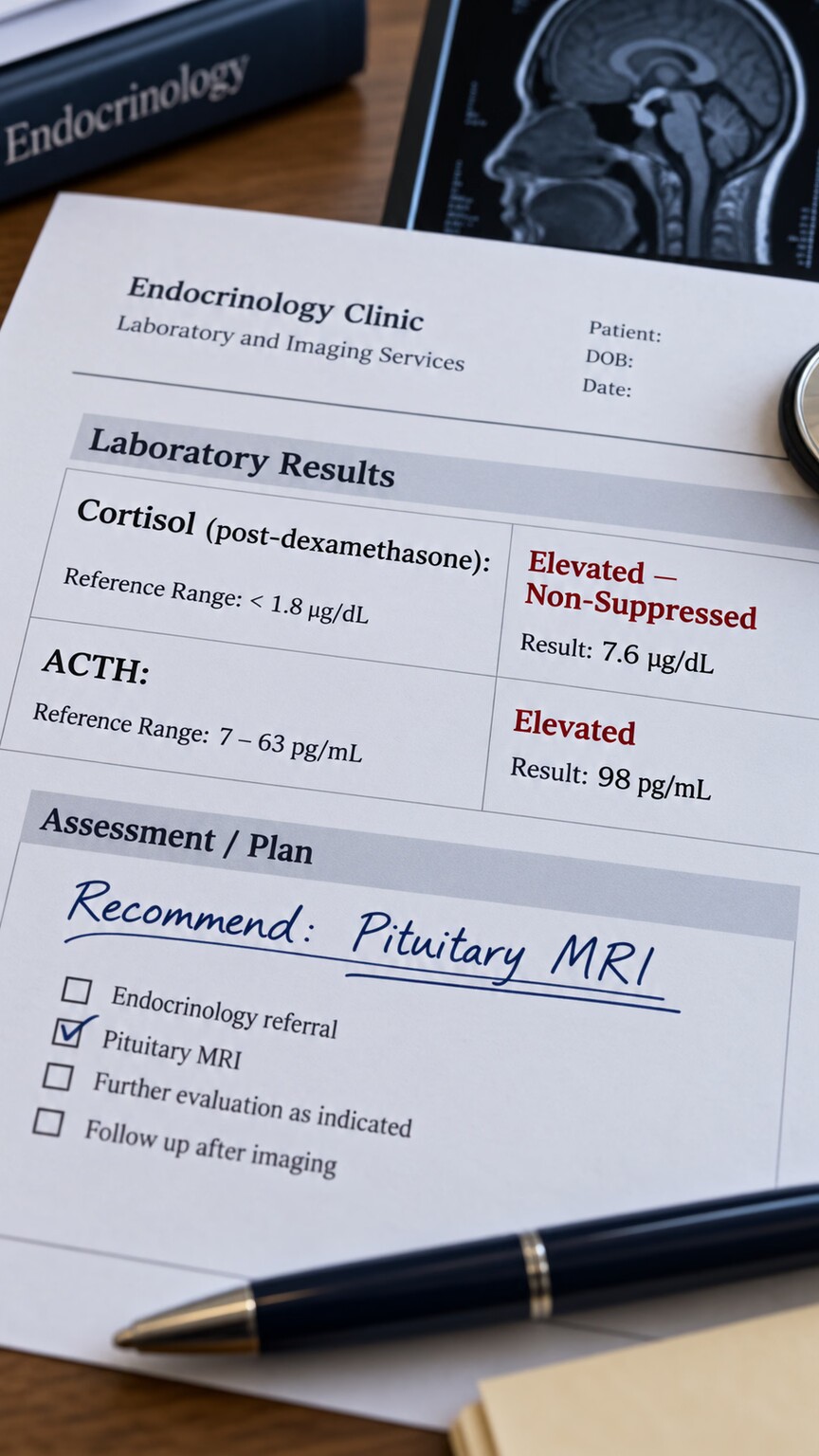
Figure 6. Confirmed excess cortisol combined with an elevated ACTH level typically leads directly to pituitary imaging, since this specific combination points toward a pituitary source rather than an adrenal or ectopic one.
Consider a 42-year-old with several months of unexplained weight gain concentrated around the midsection, new-onset high blood pressure, and easy bruising, who undergoes a low-dose overnight dexamethasone suppression test as part of an evaluation for Cushing's syndrome. Her morning cortisol comes back clearly non-suppressed, well above the expected cutoff. A late-night salivary cortisol and a 24-hour urine cortisol collection, obtained as confirmatory follow-up, both independently support genuine cortisol excess, establishing the Cushing's syndrome diagnosis with reasonable confidence.
Moving to the high-dose test to localize the source, her cortisol shows partial, though incomplete, suppression, and her ACTH level comes back measurably elevated rather than suppressed. Together, this pattern points toward Cushing's disease specifically — a pituitary source — rather than an adrenal tumor or an ectopic source, since a fully autonomous adrenal tumor would have suppressed her own ACTH to very low levels, and an ectopic tumor would typically show no meaningful suppression at all even at the high dose. A pituitary MRI is ordered next, specifically looking for a small ACTH-secreting tumor consistent with this pattern, moving the workup from "cortisol excess confirmed" to "likely anatomical source identified" in a stepwise, logical sequence built directly on top of the original dexamethasone test result.
The pituitary MRI performed in this particular case identifies a small, well-defined mass measuring just a few millimeters across, genuinely consistent with the microadenoma pattern typical of Cushing's disease, and she is subsequently referred to a neurosurgeon experienced specifically in this exact type of pituitary surgery for further evaluation and treatment planning going forward. Her case illustrates, from start to finish, exactly the kind of stepwise reasoning this article has walked through: an initial screening test flags a real abnormality, independent confirmatory testing establishes that the abnormality is genuine rather than a false alarm, a more targeted follow-up test narrows down the likely anatomical source, and imaging finally confirms a specific, treatable finding consistent with everything the hormonal testing had already suggested along the way.
It's genuinely worth pausing here to appreciate just how much diagnostic groundwork this single, seemingly simple overnight test ultimately set in motion. What began as nothing more than a small dose of a synthetic steroid taken at bedtime, followed by one ordinary blood draw the following morning, ultimately guided a full multi-step evaluation that identified a specific, surgically treatable tumor — a genuinely striking example of how a cleverly designed hormonal challenge test can extract far more diagnostic information than a single static measurement of a hormone level ever could on its own.
Frequently Asked Questions
Does an abnormal dexamethasone suppression test always mean Cushing's syndrome?
Not always. Certain medications, oral estrogen, depression, alcohol use, obesity, and acute illness can all produce a falsely abnormal result, which is why confirmatory testing typically follows before a diagnosis is finalized.
What's the difference between the low-dose and high-dose versions of this test?
The low-dose test screens for whether Cushing's syndrome is present at all. The high-dose test, used afterward, helps determine whether the excess cortisol is coming from the pituitary, an adrenal tumor, or an ectopic source.
Why does a pituitary tumor sometimes partially suppress but an adrenal tumor doesn't?
A pituitary tumor often retains some residual sensitivity to very high steroid doses since it originates from cells that normally respond to feedback. Adrenal tumors produce cortisol autonomously, independent of the ACTH signal dexamethasone works through.
Why is ACTH measured alongside the high-dose test?
ACTH helps distinguish an adrenal tumor from an ectopic source. Adrenal tumors typically suppress the body's own ACTH to very low levels, while ectopic ACTH-producing tumors keep ACTH high or elevated.
Can birth control affect this test result?
Yes. Oral estrogen raises cortisol-binding globulin, which increases total measured cortisol without necessarily reflecting true HPA axis dysfunction, sometimes producing a misleadingly abnormal result.
Conclusion
The dexamethasone suppression test asks a specific, pointed question — can your body's cortisol-producing system respond appropriately to a clear feedback signal — and an abnormal result means the answer was no. That failure is one of the more clinically meaningful findings in endocrine testing, but it's also not immune to false positives from medications, hormones, mood, and acute stress, which is exactly why it's rarely interpreted alone. Understanding both what a failed suppression genuinely represents and how it's confirmed helps turn an intimidating-sounding "abnormal" result into a clear, logical next step rather than an immediate cause for alarm.
Perhaps the most useful mental model to carry away from this entire topic is the idea of a test that asks a question rather than one that simply reports a number. Most everyday lab values answer "how much" — how much sodium, how much glucose, how much of a given hormone happens to be circulating right now. The dexamethasone suppression test instead answers "does this system still respond the way it's supposed to," and it's precisely that behavioral, functional framing that makes an abnormal result so much more informative than a single elevated cortisol number ever could be on its own — it doesn't just say something is high, it reveals something specific about why the regulatory system controlling it has stopped working correctly.
Still Not Sure What Your Results Mean?
Upload your labs and get a complete, visual, plain-language interpretation of every biomarker — delivered to your inbox in under 15 minutes.
Get My ReportThis article is for educational purposes only and does not constitute medical advice. Always consult your healthcare provider regarding your specific lab results.