
Why Do Cortisol Levels Spike With Poor Sleep?
Poor sleep genuinely raises cortisol, and the relationship runs in both directions at once. Losing sleep, whether from a single rough night or from weeks of shortened, fragmented rest, disrupts the tightly timed release schedule your body normally follows for this hormone, pushing levels higher than they should be at moments when they're supposed to be winding down. At the same time, once cortisol is already elevated, it makes falling back into deep, restorative sleep considerably harder, which is exactly how a single bad night can quietly turn into a week of them. This isn't a vague mind-body connection dressed up in wellness language; it's a documented interaction between your circadian clock and your hypothalamic-pituitary-adrenal axis, the communication system that governs how much of this hormone your adrenal glands release and when. Understanding the actual mechanism behind it, rather than just being told "stress raises cortisol," is what makes a cortisol lab result meaningful instead of just another confusing number on a printed page.
A Quick Primer: What Cortisol Is Actually Doing All Day
Before getting into what poor sleep does to cortisol, it helps to know what cortisol is doing on an ordinary, uneventful day, because the disruption only makes sense in contrast to the normal pattern. Cortisol is produced by the adrenal cortex, the outer layer of two small glands that sit on top of each kidney, and its release is directed by a chain of command that starts in the brain: the hypothalamus signals the pituitary gland, the pituitary gland signals the adrenal glands, and the adrenal glands respond by releasing cortisol into the bloodstream. This entire chain is called the hypothalamic-pituitary-adrenal axis, usually shortened to the HPA axis, and it doesn't just react to stress; it also runs on a built-in daily clock.
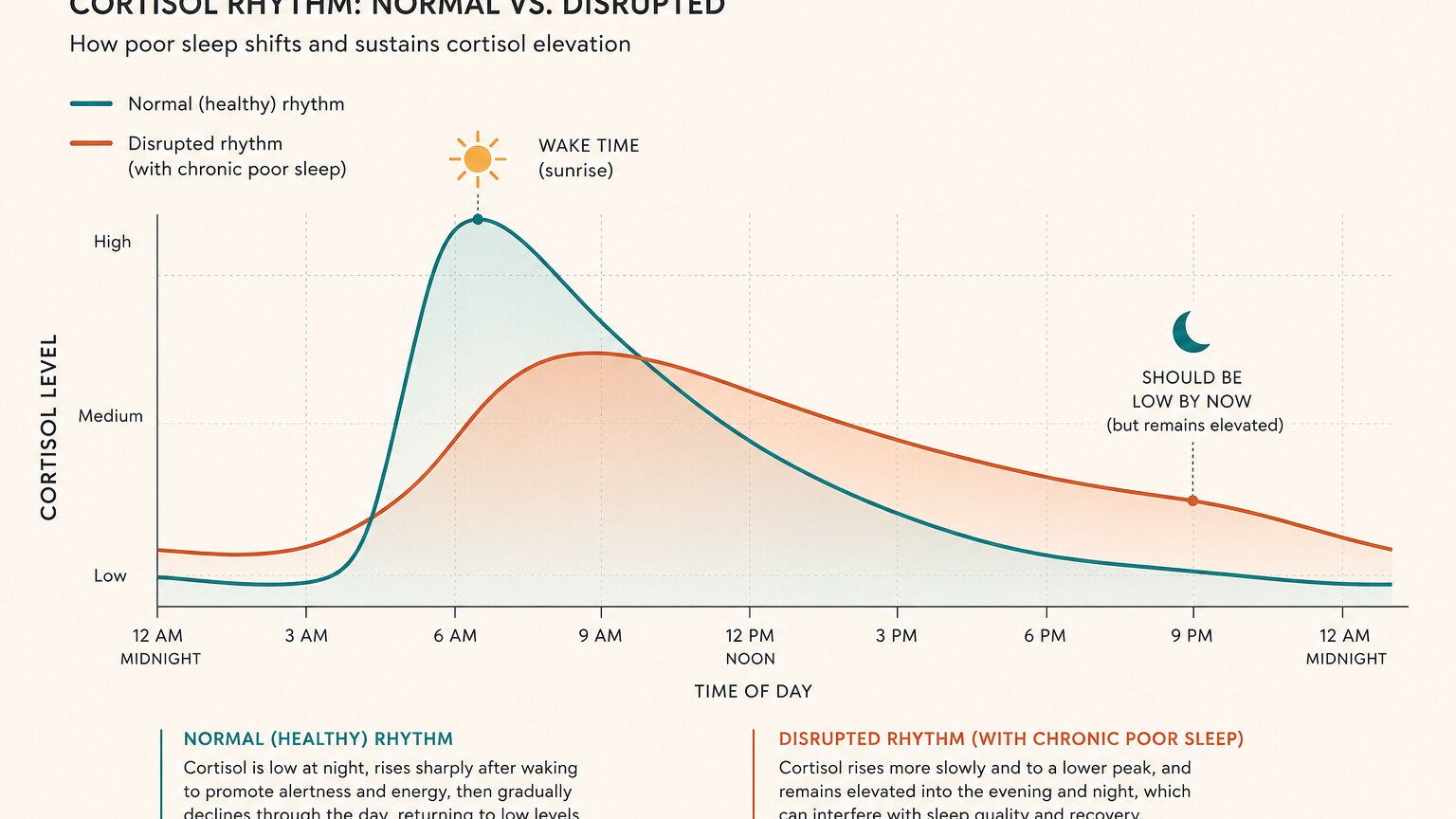
In a person with a typical sleep schedule, cortisol is deliberately kept low for the first half of the night, allowing the body to enter and stay in deep, slow-wave sleep without hormonal interference. It then begins rising in the last few hours before waking, reaches its highest point of the entire day within the first thirty to forty-five minutes after opening your eyes, and spends the rest of the day gradually declining toward its lowest point again around midnight. This shape, high in the morning and low at night, is called the diurnal cortisol rhythm, and it's precisely why a single cortisol number, drawn without knowing the time of day, tells a lab technician far less than a number paired with a timestamp does.
The Cortisol Awakening Response, and Why Poor Sleep Throws It Off
That sharp morning rise has its own name in sleep research: the cortisol awakening response, often abbreviated CAR. It's a real, measurable surge, typically fifty to one hundred fifty percent above the levels seen just before waking, and its job is to help mobilize glucose and sharpen alertness so you can actually get up and function. Researchers studying this response have found that it isn't simply tied to what time your alarm goes off; it's tied to sleep architecture itself, meaning how much time you spent in each stage of sleep and how smoothly you moved between them. When sleep is shortened, interrupted, or shifted to unusual hours, the cortisol awakening response doesn't just shift along with it politely. It becomes exaggerated, blunted, or poorly timed, depending on the specific type of disruption involved, and any of those outcomes represents a system that is no longer running on its intended schedule.
Sleep restriction studies, in which healthy volunteers are deliberately limited to four or five hours of sleep for several consecutive nights under controlled laboratory conditions, consistently show elevated evening cortisol compared to nights of full sleep, even though the participants' schedules and stress levels are otherwise identical. This matters because evening is exactly when cortisol is supposed to be at its lowest, clearing the way for melatonin to rise and sleep to begin smoothly. An evening cortisol level that refuses to drop is, in effect, a hormonal signal telling the body to stay alert precisely when it should be preparing to rest, which is one of the more direct ways a rough week of sleep can leave someone feeling simultaneously exhausted and unable to properly wind down at night.
Already have a cortisol number from a recent test, but not sure if it's actually high, low, or right where it should be for you? Just plug it in and see instantly.
🧮 Try the Free CalculatorWhat a Single Night of Poor Sleep Does to Your Cortisol, Hour by Hour
It's worth walking through what actually happens after just one night of poor sleep, because the effect is faster than most people assume. Within the first twenty-four hours following a night of significant sleep loss, several controlled studies have measured a rise in circulating cortisol the following evening, alongside changes in the timing and size of the cortisol awakening response the next morning. The body appears to interpret insufficient sleep as a physiological stressor in its own right, activating the same HPA axis pathway that responds to psychological stress, physical injury, or illness. This is part of why a night of poor sleep can leave someone feeling physically wired despite being exhausted: cortisol's job includes raising blood sugar and increasing alertness, and it does exactly that, just at a moment when the goal should have been recovery instead.
Sleep researchers have also identified that not all sleep loss affects cortisol identically. Losing sleep by staying up later than usual tends to produce a different cortisol pattern than losing the same number of hours by waking up too early, and losing sleep to fragmented, interrupted rest, waking up repeatedly throughout the night rather than sleeping through it, appears to affect the system differently still. What ties these variations together is that the HPA axis seems to be sensitive not just to total sleep duration but to the structure and continuity of sleep, meaning two people who both slept five hours can end up with meaningfully different cortisol responses depending on how those five hours were distributed and how deeply they slept during them.
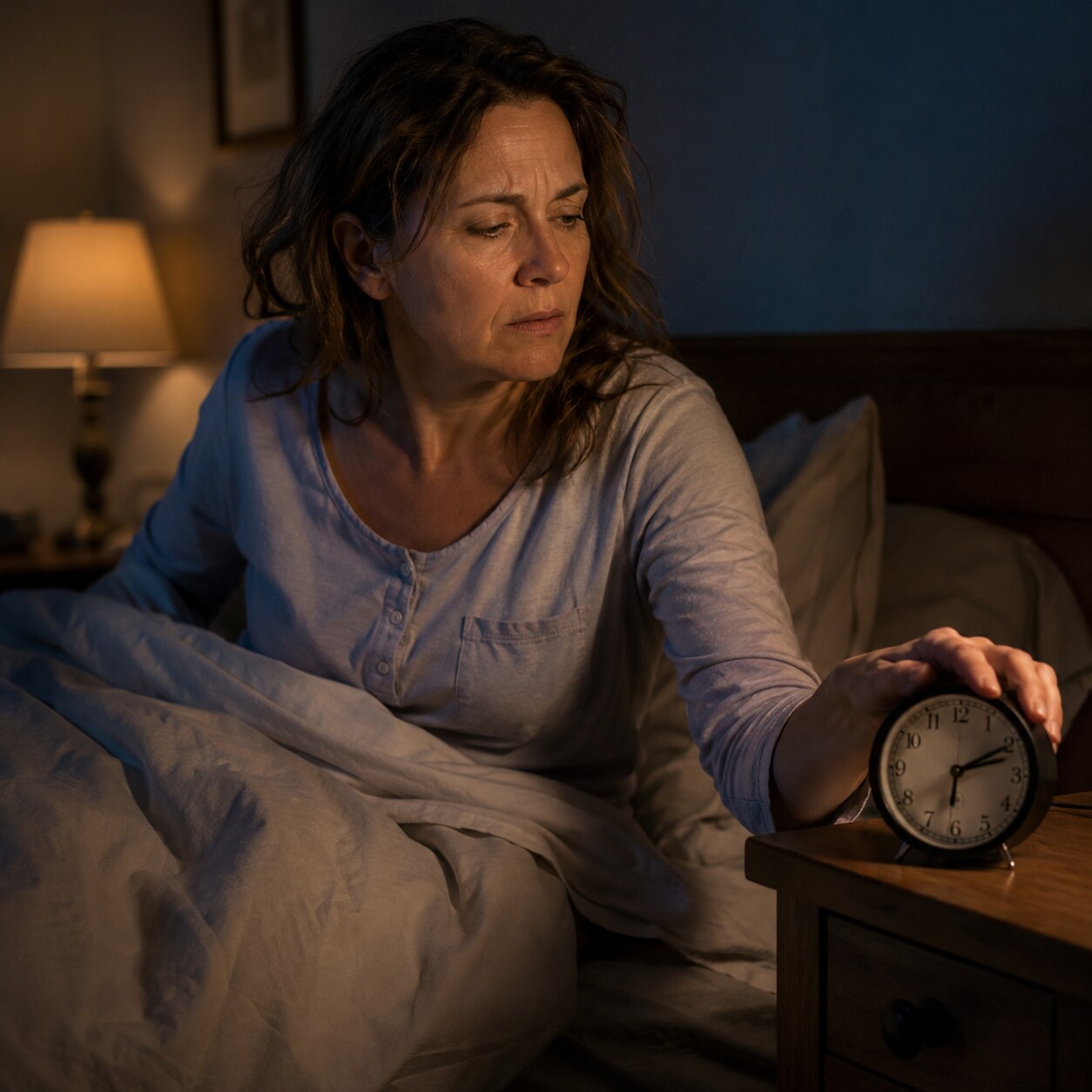
Anyone who has woken at three in the morning with their mind suddenly, unmistakably alert, heart beating a little faster, thoughts already racing toward tomorrow's obligations, has experienced a real-time version of this mechanism, not just a psychological quirk of a busy mind. That specific flavor of wide-awake alertness, arriving uninvited in the middle of the night, is consistent with a cortisol pulse arriving outside its normal schedule. It's also part of why sleep specialists tend to discourage checking the time repeatedly during a middle-of-the-night waking; the anxious calculation of "how many hours do I have left" is itself a mild psychological stressor, and stress signals feed directly back into the very same HPA axis that's already somewhat destabilized by the interrupted sleep in the first place.
This single-night effect is usually reversible. Most healthy people who return to a full night of sleep will see their cortisol pattern normalize within a day or two, which is one reason occasional poor sleep, a late flight, a sick child, a stressful evening, isn't something to be alarmed about on its own. The concern research has focused on is what happens when this pattern repeats often enough that the system doesn't get a chance to reset before the next disruption arrives.
The Two-Way Feedback Loop: How High Cortisol Then Wrecks the Next Night
The relationship between sleep and cortisol isn't a one-way street where poor sleep simply raises cortisol and the story ends there. Elevated cortisol, once present, actively interferes with the ability to fall and stay asleep, which is what turns an isolated bad night into a self-sustaining pattern. Cortisol and melatonin, the hormone that signals to the body that it's time to sleep, generally move in opposite directions across the day; melatonin needs cortisol to be low in order to rise properly in the evening. When cortisol stays elevated later into the evening than it should, it can blunt or delay the melatonin rise, making the process of feeling sleepy at a normal bedtime measurably harder, not just subjectively harder.
There's also a more immediate physiological reason elevated evening cortisol interferes with sleep onset: cortisol promotes wakefulness by increasing blood glucose availability and stimulating parts of the brain involved in alertness, which is precisely the opposite of what the body needs in the hour before bed. People experiencing chronically elevated evening cortisol frequently describe feeling "tired but wired," a specific and fairly common complaint in which physical exhaustion is present alongside a nervous system that won't settle down, and this exact combination is one of the clearest subjective signs that the cortisol-sleep loop has been running for a while rather than starting fresh each night.
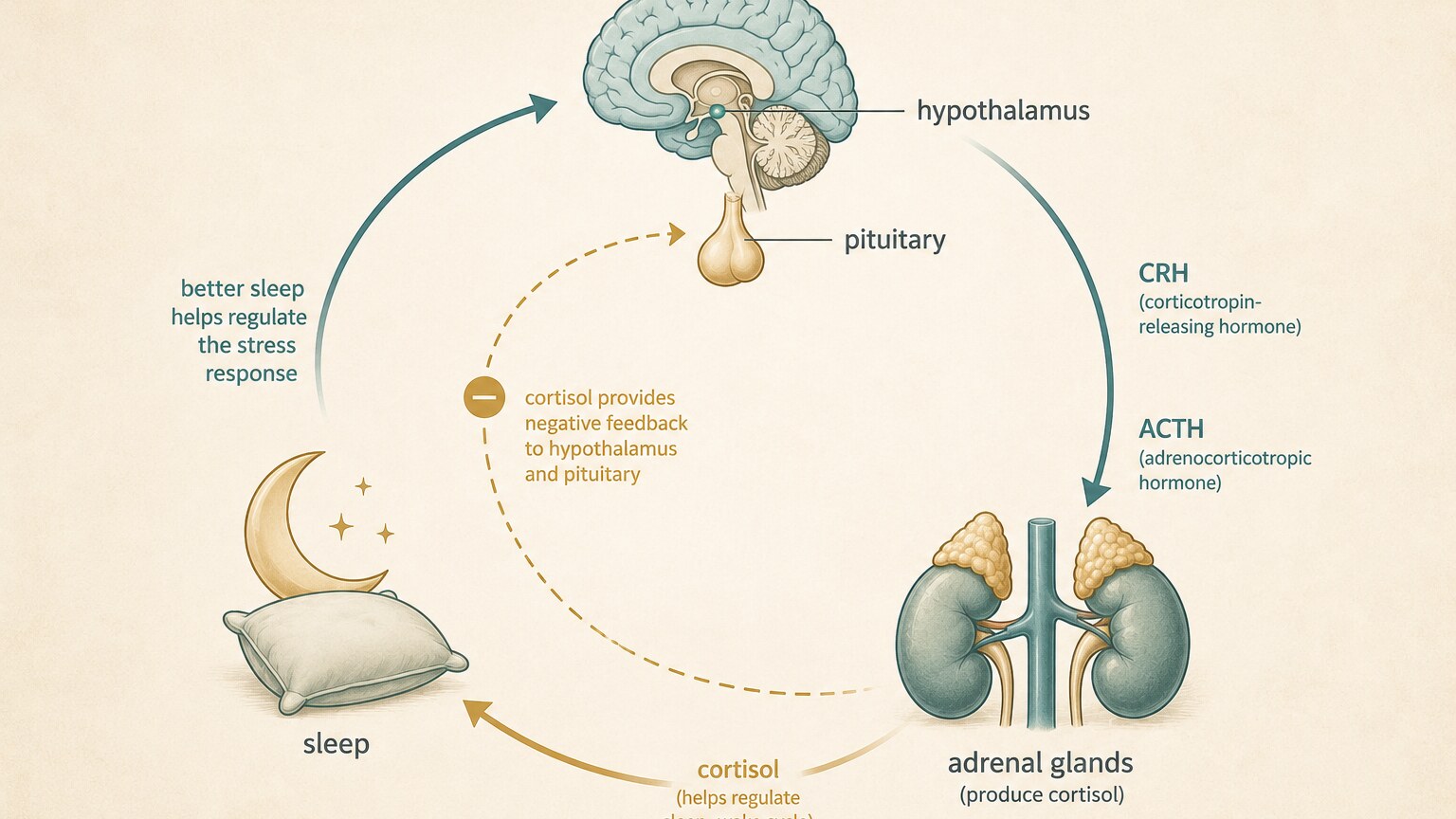
Once this loop is running, each side reinforces the other in a way that's difficult to interrupt by addressing only one piece of it. A person under real daytime stress produces more cortisol during the day and often carries some of that elevation into the evening; the elevated evening cortisol then delays sleep onset and fragments the sleep that does occur; the resulting poor sleep then produces its own independent cortisol elevation the following evening, on top of whatever daytime stress is still present; and the cycle repeats. This is why sleep researchers and endocrinologists increasingly treat sleep quality and stress management as inseparable when either one shows up as a persistent problem, rather than treating a sleep complaint and a stress complaint as two unrelated issues that happen to coexist in the same person.
It's also worth noting that this feedback loop doesn't require dramatic, obvious stress to get started. Something as ordinary as an irregular bedtime, frequent late nights scrolling on a phone, or a demanding stretch at work with no single catastrophic event attached to it can be enough to nudge evening cortisol upward slightly, and slight elevations, repeated often enough, are exactly what sustain a long-running loop rather than a single acute spike that resolves on its own.
One Bad Night vs. Chronic Sleep Debt: Why the Timeline Changes Everything
The distinction between a single poor night and an accumulated pattern of insufficient sleep matters enormously for what's actually happening to cortisol, and conflating the two is one of the more common misunderstandings people bring to their own lab results. A single bad night produces a transient cortisol elevation that typically resolves once normal sleep resumes, as covered earlier. Chronic sleep restriction, generally defined in research as consistently sleeping less than six hours a night over an extended period, produces something different: a sustained shift in the baseline cortisol rhythm itself, not just an occasional spike layered on top of an otherwise normal pattern.
Some of the more revealing sleep-restriction research has tracked cortisol changes across a full week rather than after a single night, finding that the pattern often continues shifting throughout the week rather than plateauing after the first night or two. This matters because it suggests the body doesn't simply adapt to insufficient sleep and settle into a new stable state; the HPA axis appears to keep responding to the ongoing sleep debt as it accumulates, which is consistent with the real-world experience many people describe of feeling progressively worse across a demanding week rather than adjusting to it as the days go by.

This is also the piece of the puzzle that explains why two people with what looks, on paper, like a similarly stressful week can end up with very different cortisol test results. Someone who had one genuinely rough night in an otherwise normal sleep week is likely to show a pattern much closer to their true baseline than someone who has been quietly running on five or six broken hours a night for the past month, even if the second person doesn't consciously think of themselves as "sleep deprived," because the accumulation happened gradually enough to feel like a new normal rather than a departure from one.
Shift Work, Jet Lag, and Circadian Misalignment
Not every sleep-cortisol disruption comes from simply sleeping too few hours. An entire category of disruption comes from sleeping the right number of hours at the wrong time relative to the body's internal clock, a situation called circadian misalignment. Night-shift workers are the most heavily studied example: even when they manage to get a full seven or eight hours of daytime sleep, their cortisol awakening response and overall diurnal rhythm frequently remain only partially adjusted to their inverted schedule, sometimes for years into a night-shift career, because the body's central circadian clock, located in a small region of the brain called the suprachiasmatic nucleus, is driven primarily by light exposure and adjusts slowly and incompletely to an inverted schedule.
Jet lag operates on the same underlying principle over a shorter timeframe. Crossing several time zones leaves the internal circadian clock temporarily out of sync with the local light-dark cycle, and cortisol, being one of the hormones most tightly governed by that circadian clock, shows measurable disruption to its normal rise-and-fall pattern until the body fully re-entrains to the new time zone, a process that research suggests takes roughly one day per time zone crossed for most people.
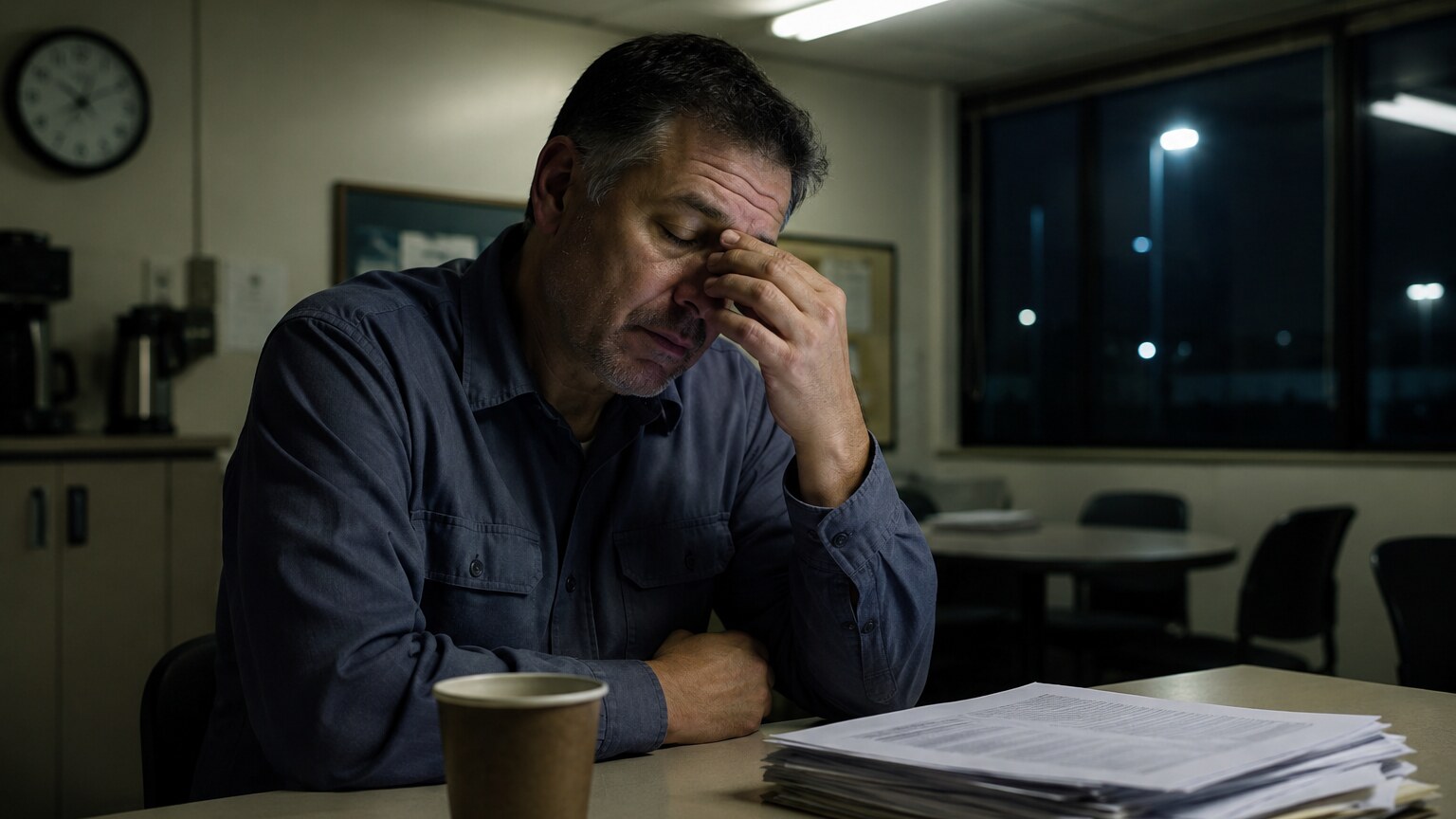
What makes circadian misalignment particularly relevant to lab testing is that a cortisol sample drawn from a night-shift worker at what their employer calls "morning," but what is actually the middle of their personal biological night, can look abnormal purely because of timing, even if their adrenal glands themselves are functioning perfectly normally. This is exactly why any cortisol test result needs to be interpreted alongside an honest account of a person's actual sleep-wake schedule, not just the clock time printed on the lab requisition form, and it's a detail that's easy for a standard lab report to omit entirely since the form typically has no field for "what your body considers morning."
Sleep Apnea and Fragmented Sleep: A Different Route to the Same Result
Total sleep time isn't the only variable that matters; sleep continuity, meaning how often sleep is interrupted throughout the night, has its own independent effect on cortisol, and obstructive sleep apnea is the clearest real-world example of this. In obstructive sleep apnea, the airway repeatedly narrows or closes during sleep, causing brief drops in blood oxygen and micro-arousals that the sleeper is often completely unaware of, sometimes dozens or even over a hundred times in a single night. Even when total time in bed looks perfectly adequate on paper, this repeated fragmentation prevents the deep, uninterrupted sleep stages that the body relies on to keep the HPA axis properly regulated.
Research on people with moderate to severe obstructive sleep apnea has found altered cortisol rhythms compared to people without the condition, including blunted or irregular cortisol awakening responses, and some studies have found that treating the sleep apnea itself, most commonly with continuous positive airway pressure therapy, is associated with improvement in these cortisol patterns over time. This is a useful example of why "poor sleep" as a category covers more than simply staying up too late; a person sleeping a full eight hours with untreated apnea may be dealing with a version of sleep-related cortisol disruption that looks, from the outside, nothing like classic sleep deprivation, since their reported sleep duration seems entirely normal.
Age, Sex, and Why the Same Bad Night Doesn't Affect Everyone Equally
The magnitude of the sleep-cortisol relationship isn't identical across every person, and two demographic factors show up consistently in the research: age and the hormonal changes associated with the menopause transition. Aging is associated with a flattening of the diurnal cortisol rhythm in general, meaning a smaller rise in the morning and a higher, less complete decline in the evening, independent of sleep quality. Layered on top of poor sleep, this age-related flattening appears to make older adults somewhat more susceptible to sustained cortisol elevation from a given amount of sleep disruption compared to a younger adult experiencing the exact same disrupted week.
For women moving through perimenopause and into menopause, declining and fluctuating estrogen levels are independently associated with more fragmented sleep and a higher prevalence of hot flashes and night sweats that directly interrupt sleep continuity, creating a situation where the sleep disruption and the hormonal shift are happening simultaneously and are difficult to fully separate from one another. Some research in this population has also found that estrogen itself has a modulating effect on cortisol-binding globulin, the protein that carries cortisol through the bloodstream, meaning that both the amount of cortisol produced and the amount that's biologically active can shift during this transition for reasons that have nothing to do with sleep at all, on top of whatever sleep-related changes are also occurring. This overlapping picture is part of why cortisol testing during perimenopause benefits from careful interpretation rather than being read against a single generic reference range.
Reading Your Own Cortisol Result in Light of How You've Actually Been Sleeping
All of this mechanism matters most at the exact moment someone is looking at their own printed lab report, trying to make sense of a cortisol number that came back higher, lower, or simply different than they expected. A cortisol result exists inside a specific context: what time of day the blood was drawn, how many hours of sleep the person got the night before, whether that night was representative of their usual sleep or an outlier in either direction, and whether any medications, illnesses, or major stressors were present around the same time. A single elevated evening cortisol value in someone who happened to have a terrible night's sleep the day before their blood draw tells a very different story than the same number in someone who slept normally and has no clear explanation for the elevation.
This is exactly the kind of context that a lab report's raw number, sitting next to a generic reference range, was never designed to communicate on its own. The reference range printed on a standard lab slip typically reflects a broad population of people tested at a standard morning time, under no specific instruction about their prior night's sleep, which means it's built to catch dramatic abnormalities rather than to help a specific person understand whether their particular result fits their particular circumstances. Two people can receive numerically identical cortisol results and be looking at entirely different underlying situations, one explained by a rough week of travel and short nights, the other potentially worth a closer conversation with a healthcare provider about other causes entirely.
This is also why tracking a cortisol result as a single isolated snapshot tends to be less useful than most people expect, and why some healthcare providers prefer repeat testing, or testing paired with a symptom and sleep diary, over relying on one draw to explain a pattern that has clearly been building for a while. A number pulled from one particularly rough week, viewed without that surrounding context, can lead someone to worry about an adrenal problem that isn't actually present, while the opposite can also happen: a technically normal-looking result during an unusually calm, well-rested stretch can miss a pattern that reliably reappears whenever that same person's sleep falls apart again a few weeks later. Neither scenario means the lab work was wrong; it means a single data point was being asked to answer a question that really requires a pattern observed over time.
What the Research Says Might Help Break the Cycle
Because the sleep-cortisol relationship runs in both directions, interventions that improve either side of the loop tend to show benefits for the other side as well, at least in the research literature. Consistent sleep and wake times, even on weekends, are one of the more frequently cited factors associated with a healthier, more clearly defined diurnal cortisol rhythm, likely because a stable schedule gives the circadian clock a consistent signal to entrain to, rather than asking it to re-adjust every few days. Morning light exposure shortly after waking has also been studied for its role in reinforcing that same circadian signal, since the suprachiasmatic nucleus relies heavily on light as its primary timing cue.
Reducing light exposure, particularly the blue-wavelength light emitted by phone and computer screens, in the hour or two before bed has been studied for its role in supporting a timely melatonin rise, which, as covered earlier, tends to move more smoothly when evening cortisol is already declining rather than staying elevated. For sleep disruption caused by an underlying condition such as obstructive sleep apnea, treating that condition directly, rather than attempting to manage sleep hygiene alone, is what the research associates with actual improvement in cortisol patterns, since no amount of consistent bedtime routine resolves a physically obstructed airway. None of this replaces an individualized conversation with a healthcare provider about a specific set of symptoms or results, but it does explain why sleep-focused interventions show up so consistently in cortisol research, alongside more traditional stress-management approaches.
Frequently Asked Questions
Can one bad night of sleep really show up in a cortisol blood test the next day?
Yes. Controlled sleep-restriction studies have measured changes in cortisol, particularly elevated evening cortisol and an altered morning awakening response, within twenty-four hours of a single night of significantly shortened or fragmented sleep. The effect is usually temporary and tends to resolve once normal sleep resumes, but it is real and measurable, not just a subjective feeling of tiredness.
If I sleep eight hours but keep waking up during the night, does that still count as poor sleep for cortisol purposes?
It can. Research suggests the HPA axis responds to sleep continuity, not just total duration, so fragmented sleep, waking up repeatedly even if the total hours add up to a full night, can independently affect cortisol regulation. This is part of why conditions like obstructive sleep apnea, which fragment sleep without necessarily shortening it, are associated with altered cortisol rhythms.
Does high cortisol from poor sleep look the same on a lab test as high cortisol from other causes?
Not necessarily. Sleep-related cortisol elevation tends to show up as a disrupted rhythm, elevated evening values or a blunted morning response, rather than a uniformly high number at every time of day. Other causes of elevated cortisol, including certain medications and underlying adrenal or pituitary conditions, can produce different patterns, which is exactly why timing, symptoms, and sleep history all matter alongside the raw number when interpreting a result.
How long does it take for cortisol to return to normal after a period of poor sleep?
For an isolated bad night, most healthy people see their cortisol pattern move back toward baseline within a day or two of resuming normal sleep. For sustained sleep restriction lasting weeks or longer, or for circadian misalignment from shift work, research suggests the adjustment period can take considerably longer, sometimes weeks even after the sleep schedule itself has been corrected, since the underlying circadian rhythm re-entrains gradually rather than resetting instantly.
Conclusion
Poor sleep and elevated cortisol aren't two separate problems that happen to occur together; they're two halves of a single feedback loop, each capable of triggering and sustaining the other. A single rough night nudges cortisol upward temporarily and usually resolves on its own, while sustained sleep restriction, circadian misalignment from shift work or travel, and sleep-fragmenting conditions like obstructive sleep apnea can each shift the underlying rhythm in ways that don't correct themselves without addressing the sleep disruption directly. None of this makes a cortisol number less useful, but it does mean the number means very little in isolation, without an honest picture of how someone has actually been sleeping in the days and weeks before their blood was drawn. Anyone looking at a cortisol result that doesn't match how they feel, or that arrived during a genuinely difficult stretch of sleep, has good reason to bring that full context into the conversation with whoever is helping them interpret it.
Still Not Sure What Your Results Mean?
Upload your labs and get a complete, visual, plain-language interpretation of every biomarker — delivered to your inbox in under 15 minutes.
Get My ReportThis article is for educational purposes only and does not constitute medical advice. Always consult your healthcare provider regarding your specific lab results.