
Why Is My Cortisol High Despite Feeling Exhausted?
It feels like it shouldn't be possible: your cortisol test comes back high, and cortisol is supposed to be the hormone that gives you energy, sharpens your focus, and gets you out of bed — yet you're running on fumes. This isn't a contradiction, and it isn't a lab error. A high cortisol number and profound exhaustion coexist for very specific, well-documented biological reasons: the cells your cortisol is supposed to energize can stop responding to it properly, the natural rise-and-fall rhythm that's supposed to hand you a burst of morning energy can flatten out into a dull, unhelpful plateau, and chronic stress itself can rewire the entire system that produces and uses cortisol in the first place. None of this means "high cortisol equals high energy" the way a lot of wellness content implies. Here's the actual science behind why you can be flooded with cortisol and still feel like you're running on empty.

Figure 1. In glucocorticoid receptor resistance, cortisol molecules are present in abundance around the cell, but the receptors they need to bind no longer transmit the signal normally into the nucleus.
A High Number Doesn't Automatically Mean a Strong Signal
The mistake most people make when they see a high cortisol result is assuming that more circulating hormone must mean more of its effect — more alertness, more energy, more drive. That assumption works for some hormones some of the time, but it breaks down the moment you understand that a hormone only does anything once it locks onto a receptor, a specialized docking site on or inside a cell that reads the hormone's signal and tells the cell how to respond. Cortisol is no exception: it travels through your bloodstream and needs to bind to something called a glucocorticoid receptor, found in nearly every cell type in your body, before it can influence anything — your energy, your immune system, your blood sugar, your mood. The blood test measures how much cortisol is floating around. It does not measure how well your cells are actually listening to it.
This distinction matters enormously, because those two things — the amount of hormone present and the strength of its effect — can move in completely opposite directions. It's a bit like turning up the volume on a radio that has a damaged speaker: cranking the volume knob (more cortisol) doesn't produce louder sound if the speaker itself (the receptor) can't properly convert that signal into something you can hear. People experiencing this mismatch often describe feeling simultaneously "wired and tired" — a jittery, on-edge physical sensation paired with bone-deep fatigue — which makes intuitive sense once you realize the hormone is present but its message isn't landing where it's supposed to.
Glucocorticoid Receptor Resistance: When Your Cells Stop Listening to Cortisol
The clinical term for cells becoming less responsive to cortisol despite its presence is glucocorticoid receptor resistance, and it works through a mechanism that will sound familiar if you've ever heard of insulin resistance, a much more widely known condition. In insulin resistance, the pancreas pumps out plenty of insulin, but muscle and fat cells stop responding to it properly, so blood sugar stays elevated even though the hormone meant to lower it is present in large amounts — sometimes in even larger amounts than usual, because the body is trying to compensate for the weak response by making more. Glucocorticoid receptor resistance follows the same logic with cortisol: the hypothalamic-pituitary-adrenal axis, the communication chain between your brain and adrenal glands that controls cortisol production, senses that cortisol isn't doing its job properly at the cellular level and responds by producing even more of it, which is part of why chronically stressed or fatigued people can show cortisol numbers on the higher end even while feeling like the hormone isn't giving them anything back.
What causes the receptors themselves to become less responsive? Research points to several overlapping mechanisms. Prolonged, chronically elevated cortisol exposure can reduce the actual number of glucocorticoid receptors a cell keeps on its surface and in its nucleus, a process called receptor downregulation — essentially, the cell turns down its own sensitivity to protect itself from being overstimulated indefinitely, the same protective logic your ears use when they gradually adjust to a persistently loud room. Genetic variation in the glucocorticoid receptor gene also plays a role, meaning some people are simply built with receptors that respond less efficiently to begin with, independent of anything they're doing or experiencing. And critically, inflammation — which is covered in more detail further down — actively interferes with how well the receptor can do its job once cortisol does manage to bind to it, adding a second layer of resistance on top of any reduction in receptor numbers.
Why a Single Cortisol Number Can Hide a Flattened Rhythm
Cortisol isn't supposed to sit at one constant level throughout the day — it's designed to rise and fall on a predictable 24-hour schedule called the diurnal rhythm. In a healthy pattern, cortisol surges sharply within the first 30 to 45 minutes after waking, a spike researchers call the cortisol awakening response, typically rising by roughly 50% or more above your levels the moment you opened your eyes. That surge is what's supposed to hand you the alertness to actually get up and function. From there, cortisol is meant to decline steadily across the day, reaching its lowest point around midnight, clearing the way for melatonin and sleep. This shape — a sharp morning peak followed by a long, gentle taper — is just as important as the total amount of cortisol your body makes over 24 hours.
Chronic stress, poor sleep, and the receptor resistance described above can flatten this curve instead of simply raising or lowering it. A flattened rhythm can look like a blunted, weak morning rise — so you don't get the jolt of alertness that's supposed to launch your day — combined with cortisol that fails to drop properly in the afternoon and evening, when it's supposed to be winding down. The result is a pattern where your total or random cortisol level can test as "high," because the numbers never fall as low as they should later in the day, while the specific surge your body actually depends on for morning energy essentially never shows up in a useful way. A single blood draw, taken at one moment in time, can't distinguish between "healthy cortisol that happens to be elevated right now" and "a flattened rhythm where the shape itself is the problem" — which is exactly why the pattern across a day often matters more than any one number.
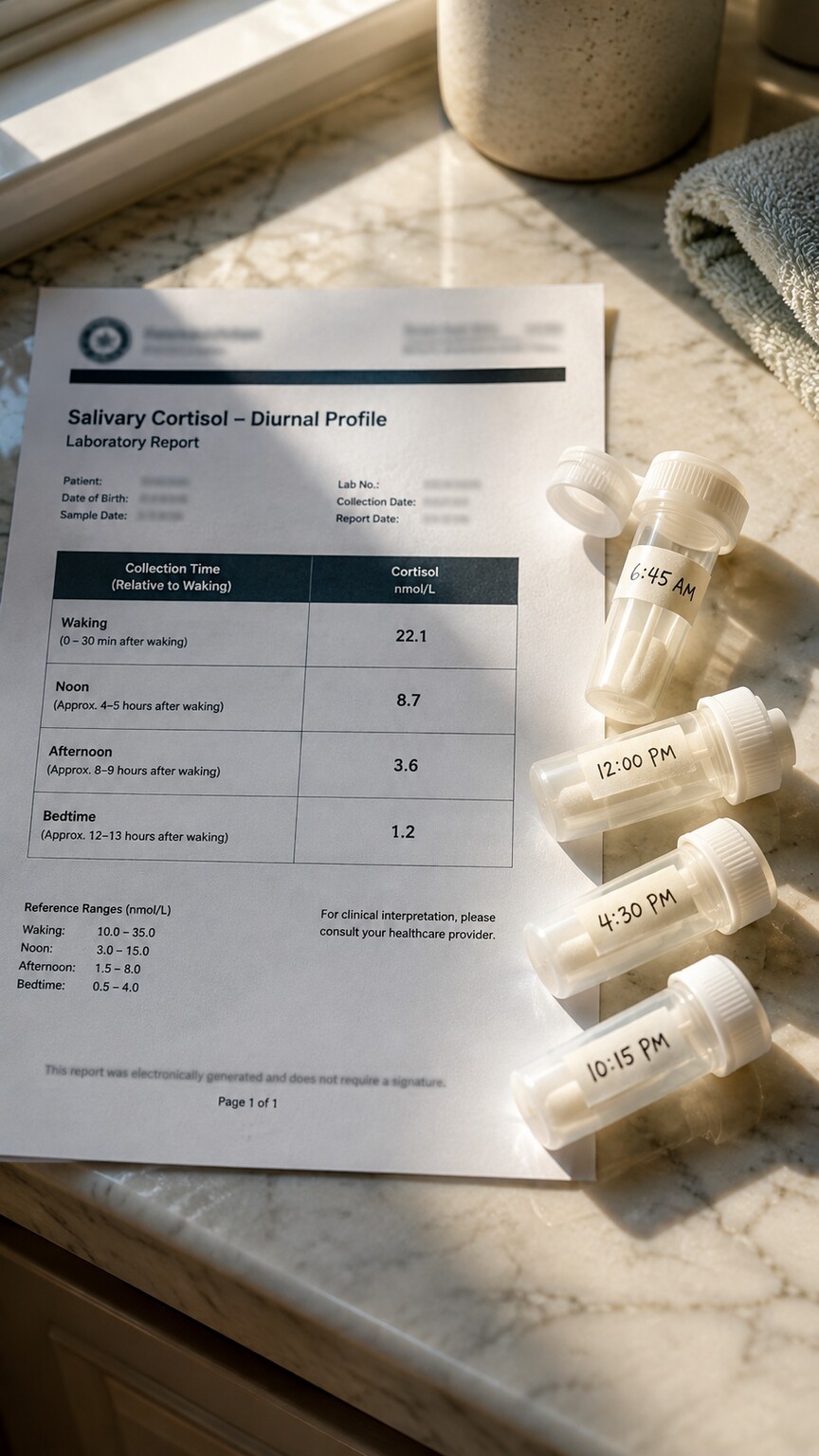
Figure 2. A four-point diurnal saliva cortisol test, sampled at waking, noon, late afternoon, and bedtime, can reveal a flattened rhythm that a single random blood draw would miss entirely.
This is exactly why some clinicians move away from a single blood draw and toward a four-point diurnal salivary cortisol test when someone reports this "high but exhausted" pattern — samples collected at waking, around noon, in the late afternoon, and right before bed, plotted together to see the actual shape of the curve rather than a single snapshot. A healthy result shows a steep drop from morning to night. A flattened result shows levels that stay stubbornly similar across all four time points, or that fail to rise properly in the morning while staying inappropriately elevated at night — the exact pattern that leaves someone feeling keyed up at 11 p.m. when they should be winding down, and groggy at 7 a.m. when they should be waking up sharp.
It's also worth understanding what "high" actually meant on your specific report. Reference ranges for cortisol are typically built around morning blood draws, since that's the standard collection time in most clinics. If your blood was drawn later in the day, or if you were unusually stressed, in pain, sleep-deprived, or anxious about the blood draw itself at the moment of collection, a single value can look elevated for reasons that have nothing to do with a chronic pattern at all — cortisol responds within minutes to acute stress, including the stress of having a needle in your arm. This is one of the most overlooked reasons a "high" result and ongoing exhaustion don't automatically mean the same thing is happening: the number might reflect a brief, situational spike, not the underlying rhythm your body runs on day to day.
Curious what the rest of your hormone panel is telling you? Upload your results and get a complete, plain-language breakdown in under 15 minutes.
Analyze My ResultsHow Chronic Stress Rewires the System That Makes Cortisol
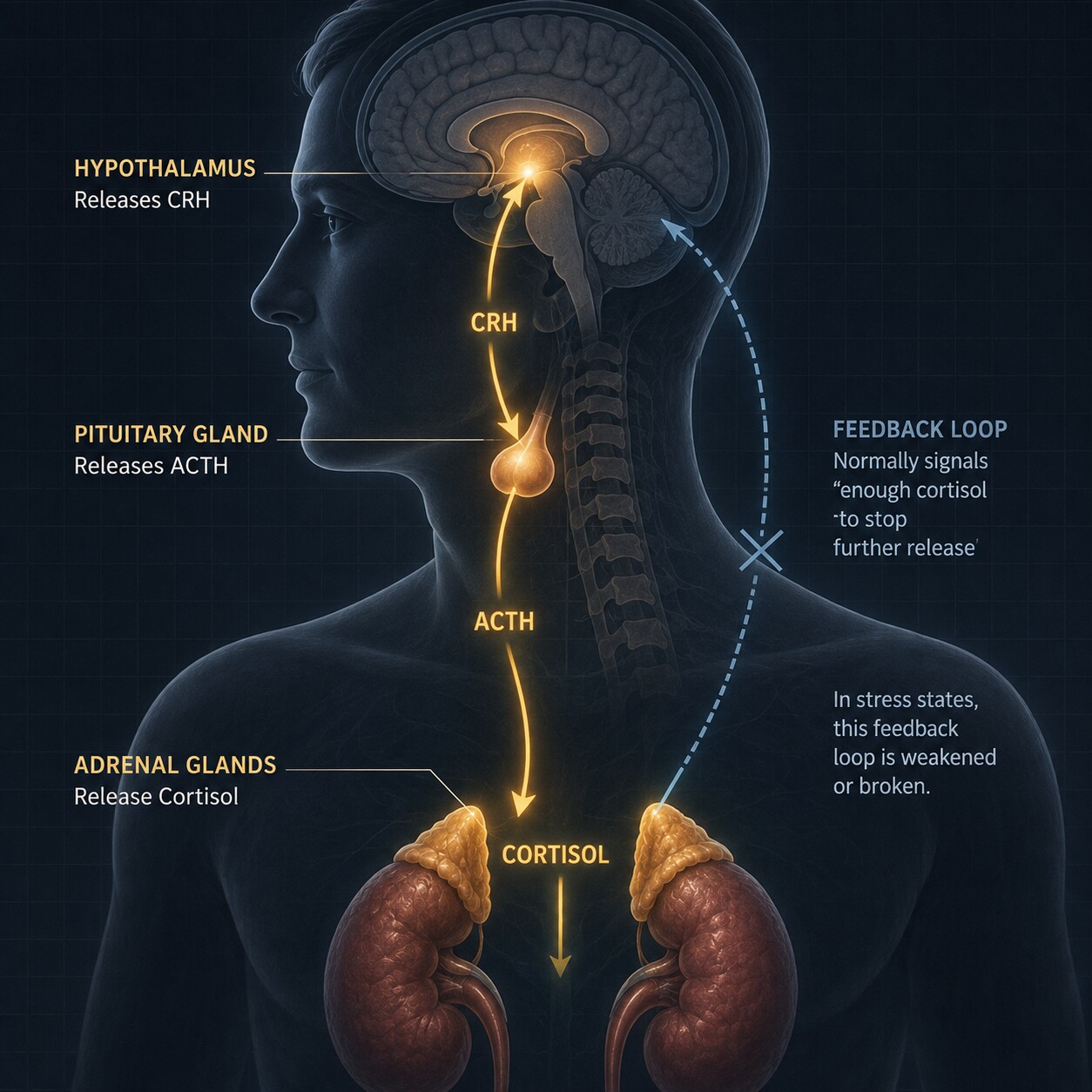
Figure 3. The hypothalamic-pituitary-adrenal axis is a feedback loop: the hypothalamus signals the pituitary, the pituitary signals the adrenal glands to release cortisol, and rising cortisol is supposed to signal the hypothalamus to quiet back down.
Cortisol production isn't controlled by your adrenal glands acting alone — it runs through a three-part chain called the hypothalamic-pituitary-adrenal axis, or HPA axis for short. Your hypothalamus, a small structure deep in the brain, detects a stressor and releases a signaling hormone that tells your pituitary gland to release a second signaling hormone, which travels to your adrenal glands — two small glands that sit right on top of your kidneys — and instructs them to release cortisol into your bloodstream. Under normal circumstances, this is a self-correcting loop: rising cortisol eventually signals back to the hypothalamus and pituitary that enough has been released, and both scale back their signaling, allowing levels to fall. Researchers call this negative feedback, and it's the mechanism responsible for keeping the whole system in balance.
Under sustained, chronic stress — the kind that doesn't resolve in days but drags on for months, whether from a demanding job, a difficult relationship, financial strain, caregiving, or unprocessed grief — this feedback loop can become less efficient at shutting itself off. Researchers describe this using a concept called allostatic load: the cumulative wear on the body's stress-response systems from being activated too often, for too long, without enough recovery time in between. Rather than the HPA axis smoothly ramping up and back down in response to specific stressors the way it's designed to, it can settle into a state of chronically elevated activity, with less capacity to fully quiet down even once a particular stressor has passed. This is a major part of why people can feel like their body is "stuck" in overdrive — physically tense, mentally on alert, unable to relax — even during moments that should feel calm, and why that state produces exhaustion rather than useful energy: a body running its stress-response system continuously, rather than in short, purposeful bursts, is burning through resources without the recovery period that normally lets those systems reset.
The Role of Inflammation: Why Your Immune System Can Make Cortisol "Deaf"

Figure 4. Inflammatory signaling molecules called cytokines, released by immune cells, can directly interfere with how well the glucocorticoid receptor transmits cortisol's signal once it's bound.
One of the more surprising pieces of this puzzle is that your immune system and your cortisol system are in constant conversation, and when that conversation goes wrong, it can independently produce both high cortisol and profound fatigue. Cortisol's main job with respect to the immune system is to act as a brake — it's a naturally anti-inflammatory hormone, which is why synthetic versions of it, like prednisone, are prescribed to calm down inflammatory conditions. But that relationship runs in both directions: inflammatory signaling molecules called cytokines, released by immune cells during illness, chronic low-grade inflammation, or ongoing stress, can directly interfere with how effectively the glucocorticoid receptor does its job once cortisol has bound to it. In effect, inflammation doesn't just fail to respond to cortisol's braking signal — it actively jams the machinery that receptor is supposed to use.
This creates a frustrating loop: the brain senses that cortisol isn't successfully reining in inflammation, so it signals the adrenal glands to produce more cortisol to compensate, pushing blood levels higher, while the inflammation itself continues largely unchecked because the receptors needed to respond to that extra cortisol are the very thing being interfered with. Researchers studying this pattern in conditions involving chronic, low-grade inflammation — including obesity, chronic pain conditions, and persistent psychological stress — have described a state sometimes called "sickness behavior," a cluster of symptoms including profound fatigue, low mood, reduced motivation, and difficulty concentrating that's driven by cytokine signaling in the brain itself, largely independent of how much cortisol is circulating in the blood. In other words, the exhaustion you're feeling may be coming directly from inflammatory signaling in the brain, running on a completely separate track from whatever your cortisol number says, which is part of why treating the number alone rarely resolves the fatigue on its own.
Sleep, Cortisol, and the "Wired-but-Tired" Cycle
Sleep and cortisol have a deeply reciprocal relationship, and disrupted sleep is one of the most common, most fixable contributors to this exact symptom pattern. Under normal conditions, cortisol is supposed to be at its lowest right around the time you fall asleep, allowing melatonin and other sleep-promoting signals to take over uninterrupted. Even a single night of shortened or fragmented sleep has been shown in research to raise evening cortisol levels the following day and blunt the size of the next morning's cortisol awakening response — the exact surge you need to feel genuinely alert. String together weeks or months of poor sleep, whether from insomnia, an irregular schedule, shift work, or simply staying up too late scrolling a phone, and you get a self-reinforcing loop: elevated evening cortisol makes it harder to fall into deep, restorative sleep, poor sleep further blunts the next day's healthy morning cortisol response, and the resulting daytime fatigue often gets misread by the body as an additional stressor, prompting yet more cortisol release later that same evening.

Figure 5. Fragmented or shortened sleep raises evening cortisol and blunts the next morning's cortisol awakening response, the surge the body normally relies on for alertness.
This is where the phrase "wired but tired" earns its keep as a genuinely useful description rather than just a catchy phrase. The "wired" half comes from cortisol staying inappropriately elevated in the evening, keeping your nervous system in a low-grade state of alertness that makes it hard to fully unwind even when you're exhausted — racing thoughts at bedtime, difficulty settling down despite feeling drained all day. The "tired" half comes from everything covered above: a blunted morning surge that never delivers real alertness, receptors that are less responsive even when cortisol is present, and inflammatory signaling pulling on the fatigue lever through its own separate pathway. None of these mechanisms cancel each other out — they stack, which is exactly why the combination of "objectively high cortisol" and "subjectively exhausted" can feel so much worse than either problem would on its own.
The Blood Sugar Connection: How Glucose Swings Feed the Same Cycle
One of cortisol's core jobs, alongside managing stress and inflammation, is keeping blood sugar available for your brain and muscles to use as fuel. It does this by signaling your liver to release stored glucose and by making your cells somewhat more resistant to insulin, the hormone that normally pulls sugar out of the bloodstream and into cells — a temporary, useful adjustment during a genuine emergency, since it keeps extra fuel circulating in the blood for immediate use rather than tucked away in storage. The problem is that this mechanism doesn't distinguish between a real physical threat and the more mundane stressors of modern life, and it also doesn't distinguish between "stress" and "skipping lunch."
When blood sugar drops too low or too abruptly — from delayed meals, a diet heavy in refined carbohydrates that spike and then crash glucose, or excessive caffeine on an empty stomach — your body registers that drop as a genuine physiological stressor and responds with a burst of cortisol to help correct it, the same emergency-fuel response it would trigger for any other threat. If this happens repeatedly across a day, whether from erratic eating patterns or from underlying insulin resistance that makes blood sugar harder to keep stable in the first place, it adds several additional, unplanned cortisol spikes on top of whatever your baseline rhythm is already doing. Each of these spikes produces a short burst of jittery, artificial alertness followed by a crash — a pattern that closely mimics, and can meaningfully worsen, the wired-but-tired sensation described throughout this article, since the nervous system is being repeatedly jolted and then let down rather than running on a steady, predictable supply of energy.
This is part of why stabilizing meal timing and the composition of meals — pairing carbohydrates with protein, fiber, and fat rather than eating them alone, and avoiding long stretches without eating — shows up so consistently in guidance for this exact symptom pattern. It isn't a weight-loss or blood-sugar-diagnosis recommendation; it's a way of removing one of the more avoidable triggers that keeps prompting extra cortisol release throughout the day, on top of whatever the underlying rhythm and receptor issues are already doing. For anyone whose fatigue is punctuated by specific, recognizable energy crashes a few hours after meals — rather than a flat, constant tiredness all day — this glucose-driven piece of the puzzle is often the most immediately fixable one.
Other Real Medical Causes Worth Ruling Out
While receptor resistance, a flattened rhythm, chronic stress, inflammation, and poor sleep explain the large majority of cases where high cortisol and exhaustion coexist, a smaller number of cases involve a distinct, diagnosable medical condition, and it's worth understanding these so you know when this pattern deserves more urgent medical attention rather than lifestyle troubleshooting. Cushing's syndrome is the clearest example: a genuine, sustained overproduction of cortisol, most often caused by a small, usually benign tumor on the pituitary gland or an adrenal gland, or in some cases by long-term use of steroid medications like prednisone for an unrelated condition. Cushing's syndrome is uncommon — estimated at somewhere around 40 to 70 new cases per million people each year — but it produces a fairly recognizable cluster of features beyond fatigue alone, including weight gain concentrated around the face, neck, and midsection while the arms and legs stay comparatively thin, easy bruising, thinning skin, muscle weakness particularly in the thighs and upper arms, and, in many cases, elevated blood pressure and blood sugar. Fatigue is part of the picture in Cushing's syndrome, but it's rarely the only symptom, which is one of the more useful clues in telling it apart from the far more common explanations above.
Depression is another condition worth mentioning specifically, because it has a well-documented, two-way relationship with cortisol. A significant portion of people with major depressive disorder show elevated cortisol and a flattened diurnal rhythm strikingly similar to the pattern described throughout this article, and profound fatigue is itself one of the core diagnostic symptoms of depression, independent of anything happening hormonally. Obesity, particularly excess fat carried around the abdomen, is associated with altered cortisol metabolism and can independently blunt how effectively cortisol's signal gets through at the cellular level. Regular heavy alcohol use raises cortisol directly and disrupts the sleep architecture needed for a healthy overnight decline. And several medications beyond corticosteroids — including some forms of hormonal birth control, which raise a cortisol-binding protein and can elevate total cortisol measurements without necessarily reflecting a change in how much active hormone is reaching your cells — can shift a lab result in ways that have nothing to do with your adrenal glands overproducing anything at all.
Why "Adrenal Fatigue" Isn't the Right Explanation
You may have come across the term "adrenal fatigue" — the idea that overworked adrenal glands eventually run out of cortisol-producing capacity, leaving you exhausted because your body can no longer make enough of the hormone. It's an appealing, simple story, but it isn't supported by the endocrinology research, and it's not a diagnosis recognized by the Endocrine Society or any major medical body. The adrenal glands themselves are remarkably resilient and don't simply "wear out" from everyday stress the way this theory suggests; true adrenal hormone deficiency, a condition called adrenal insufficiency, is a distinct and well-defined medical diagnosis with its own specific lab findings, confirmed through dedicated stimulation testing, not a vague sense of tiredness alone.
The exhaustion that gets attributed to "adrenal fatigue" is almost always better explained by one or more of the mechanisms already covered in this article — receptor resistance, a flattened rhythm, chronic HPA axis dysregulation, inflammation, or poor sleep — none of which involve the adrenal glands failing to produce enough cortisol. If anything, most of the research in this area points the opposite direction: chronically stressed, exhausted people tend to show cortisol that's elevated or dysregulated in its rhythm, not simply low. Understanding this distinction matters practically, because the supplement industry built around "adrenal support" and "adrenal fatigue" is large, and products marketed this way are addressing a mechanism that the evidence doesn't actually support, which is one reason it's worth bringing your actual test results to a healthcare provider rather than a symptom checklist alone.
How to Actually Read Your Own Cortisol Test Result
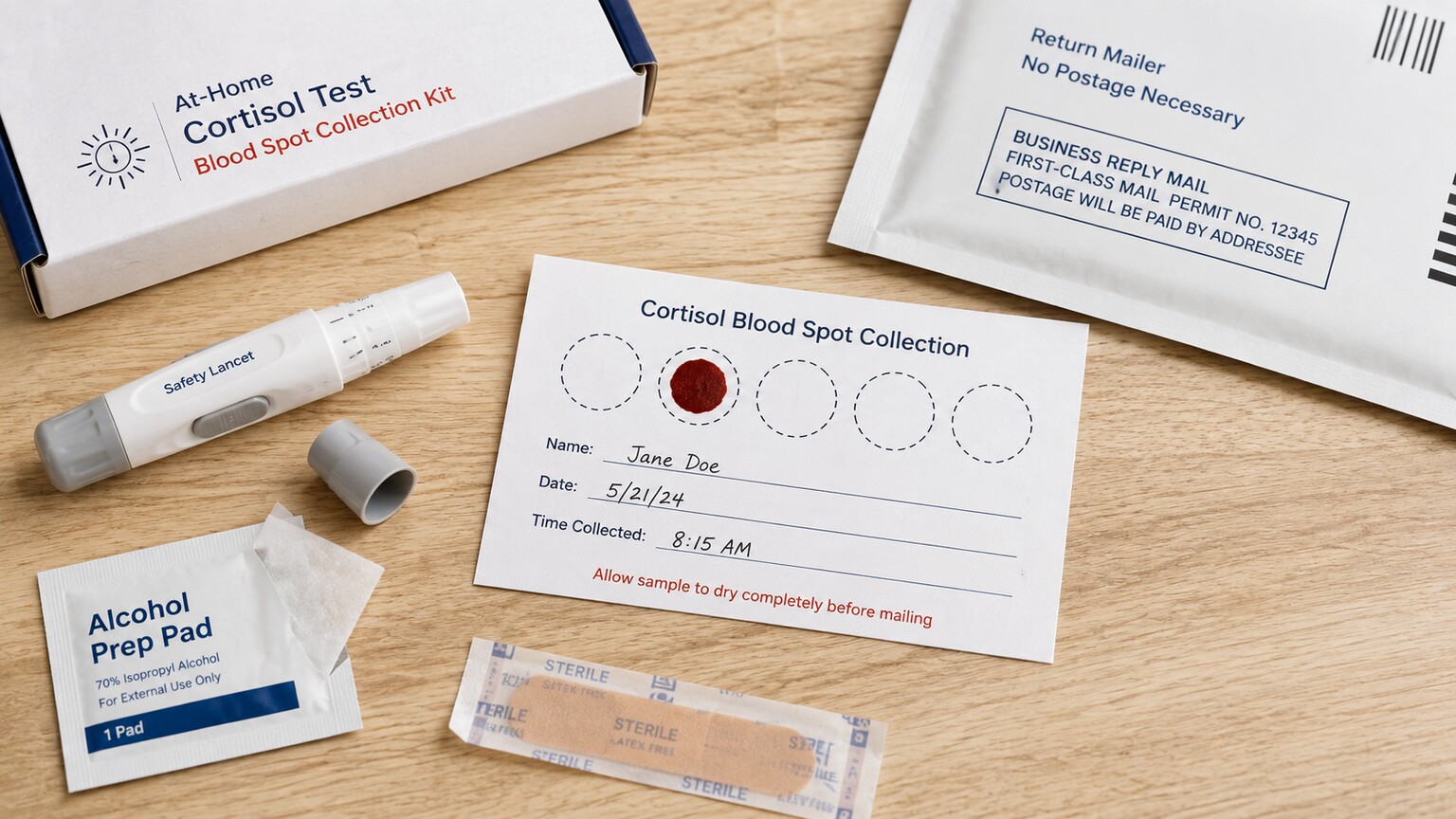
Figure 6. Cortisol can be measured through blood, saliva, urine, or hair, and each method captures a different window of time — a single blood value reflects only that exact moment.
Getting real clarity from a cortisol result starts with knowing exactly what was measured and when. Blood cortisol reflects the exact moment the sample was drawn, which is why timing is listed on your report and why a morning draw and an afternoon draw from the same person can look completely different even though nothing is actually wrong. Saliva testing, especially the four-point diurnal version mentioned earlier, captures the shape of your rhythm across the day rather than a single point, which makes it far more useful for exactly the "high but exhausted" pattern this article is about. A 24-hour urine collection adds up total cortisol output across an entire day, smoothing out momentary spikes but also losing the shape of the rhythm in the process. Hair cortisol testing, a newer and less widely used method, reflects average cortisol exposure over roughly the past one to three months, since cortisol gets incorporated into hair as it grows — useful for looking at longer-term patterns but not for pinpointing what's happening on any single day.
Beyond the test type, a few practical details change how a result should be interpreted: whether the sample was drawn fasting or fed, how much sleep you got the night before, whether you were unusually stressed, anxious, or in pain at the moment of collection, and — for menstruating women — where you were in your cycle, since cortisol and reproductive hormones interact. A single result that comes back high without any of this context attached tells you less than it might seem to. This is exactly why the most useful move, once you have a number in hand, is rarely to interpret it alone — it's to bring it, along with a description of how you're actually feeling and when the sample was collected, to a healthcare provider who can weigh it against the fuller picture, and who may recommend repeat testing at a specific time of day, or a diurnal panel, before drawing any conclusions.
What Can Help While You Sort This Out
Because this pattern usually involves several overlapping mechanisms rather than one single cause, the most effective response tends to combine several approaches rather than chasing a single fix. Prioritizing consistent sleep timing — going to bed and waking up at roughly the same time daily, including on weekends — helps re-anchor the HPA axis's natural rhythm more effectively than almost anything else, since the sleep-wake cycle is one of the primary signals your body uses to time its cortisol release in the first place. Morning light exposure, ideally within the first hour of waking, has been shown to help strengthen a healthy cortisol awakening response, essentially giving your body a clear, reliable cue that the day has started. Reducing caffeine intake in the afternoon and evening matters more than most people expect, since caffeine itself triggers cortisol release, and a stimulant taken in the hours before bed can compound an already elevated evening level.
Regular, moderate physical activity — as opposed to intense exercise late in the day, which can itself raise evening cortisol in some people — has consistently been shown to improve HPA axis regulation over time, and practices that directly engage the body's relaxation response, including slow diaphragmatic breathing, progressive muscle relaxation, or mindfulness-based practices, have research support specifically for lowering cortisol and improving the diurnal rhythm rather than just making someone feel calmer in the moment. Reducing alcohol, particularly in the evening, removes one of the more direct chemical disruptors of both cortisol and sleep architecture at once. Staying adequately hydrated and eating regular, protein-containing meals throughout the day, in line with the blood sugar mechanism described earlier, removes another avoidable trigger for extra cortisol release, since dehydration and prolonged gaps between meals both register in the body as low-grade physiological stressors. It's worth being cautious with supplements marketed specifically for "cortisol balance" or "adrenal support," since — as covered above — that framing rests on a mechanism the evidence doesn't support, and some of these products interact with medications or have effects that aren't well studied; discussing any supplement with a healthcare provider before starting it is a reasonable, low-risk step.
When to See a Doctor
Most cases of this "high but exhausted" pattern reflect the reversible, lifestyle-connected mechanisms covered throughout this article, and they tend to improve — gradually, not overnight — with consistent changes to sleep, stress, and daily rhythm. That said, certain signs warrant a more urgent conversation with a healthcare provider rather than waiting to see if things improve on their own: unexplained weight gain concentrated in the face, neck, or midsection alongside thinning arms and legs, easy bruising or noticeably thinning skin, new or worsening muscle weakness, purple stretch marks, new-onset high blood pressure or blood sugar, or fatigue severe enough to interfere significantly with daily functioning. These can point toward Cushing's syndrome or another distinct medical condition that needs its own specific workup, separate from the more common mechanisms this article focuses on.
It's also entirely reasonable to see a doctor simply because you're exhausted and confused by a lab number that doesn't seem to match how you feel, even without any of those specific red flags. A provider can order the right follow-up test for your situation — often a repeat morning draw, a diurnal saliva panel, or additional bloodwork to rule out thyroid dysfunction, anemia, or other common fatigue contributors that can coexist with cortisol dysregulation — and can help you understand your specific result in the context of your sleep, your stress load, and your symptoms, rather than in isolation. A single number rarely tells the whole story, and that's precisely the point this entire article has been building toward.
Frequently Asked Questions
Can cortisol be high and cause fatigue at the same time, or is this always a lab error?
It's a real and well-documented physiological pattern, not a lab error. High circulating cortisol combined with exhaustion typically reflects glucocorticoid receptor resistance, a flattened diurnal rhythm, chronic HPA axis dysregulation, or inflammation interfering with how the receptor responds — not a problem with the test itself.
Is "adrenal fatigue" the cause of feeling tired with high cortisol?
No. "Adrenal fatigue" isn't a diagnosis recognized by the Endocrine Society or supported by current research. The exhaustion in this pattern is far better explained by receptor resistance, a blunted morning rise, chronic stress, or inflammation — mechanisms where cortisol is elevated or dysregulated, not deficient.
Should I get a saliva test instead of a blood test if this sounds like my situation?
A four-point diurnal saliva test, which samples cortisol at waking, noon, late afternoon, and bedtime, is specifically designed to reveal a flattened rhythm that a single blood draw would miss. It's worth discussing with a healthcare provider, especially if a single blood result hasn't explained your symptoms.
How long does it take for cortisol patterns to improve with better sleep and stress management?
Meaningful improvement in the diurnal rhythm typically takes weeks of consistent changes, not days, since the HPA axis is re-anchoring itself to a new, steadier daily rhythm. Sleep timing and morning light exposure tend to show the earliest measurable effects, often within two to four weeks of consistent practice.
What symptoms suggest this could be Cushing's syndrome rather than everyday stress-related fatigue?
Cushing's syndrome typically involves more than fatigue alone — look for weight gain concentrated in the face, neck, and midsection with comparatively thin limbs, easy bruising, thinning skin, muscle weakness, purple stretch marks, or new high blood pressure or blood sugar. Any of these alongside fatigue warrants a prompt medical evaluation.
Can skipping meals or blood sugar crashes really affect cortisol levels?
Yes. A significant drop in blood sugar registers in the body as a genuine physiological stressor, prompting an extra burst of cortisol to help release stored glucose. Repeated glucose swings from delayed meals, refined carbohydrates, or caffeine on an empty stomach can add several unplanned spikes to your daily cortisol pattern on top of your baseline rhythm.
Still Not Sure What Your Results Mean?
Upload your labs and get a complete, visual, plain-language interpretation of every biomarker — delivered to your inbox in under 15 minutes.
Get My ReportThis article is for educational purposes only and does not constitute medical advice. Always consult your healthcare provider regarding your specific lab results.