
What Does High Estrogen Mean for Weight and Mood?
If you've noticed weight settling stubbornly around your hips, thighs, or belly no matter what you do, alongside mood swings, irritability, or a short fuse that doesn't feel like "you," elevated estrogen is one of the more overlooked explanations worth ruling out. Estrogen isn't just the hormone behind the menstrual cycle and pregnancy — it's a signaling molecule with receptors in fat tissue, the brain, the liver, and dozens of other places in the body, which means when levels run too high relative to your other hormones, the ripple effects show up in places that don't obviously look "hormonal" at first glance. This article walks through exactly how excess estrogen changes where your body stores fat, why it can leave you feeling emotionally raw or anxious, what causes estrogen to climb too high in the first place, how it can masquerade as thyroid problems or plain stress, and how to make sense of a lab result that comes back elevated.
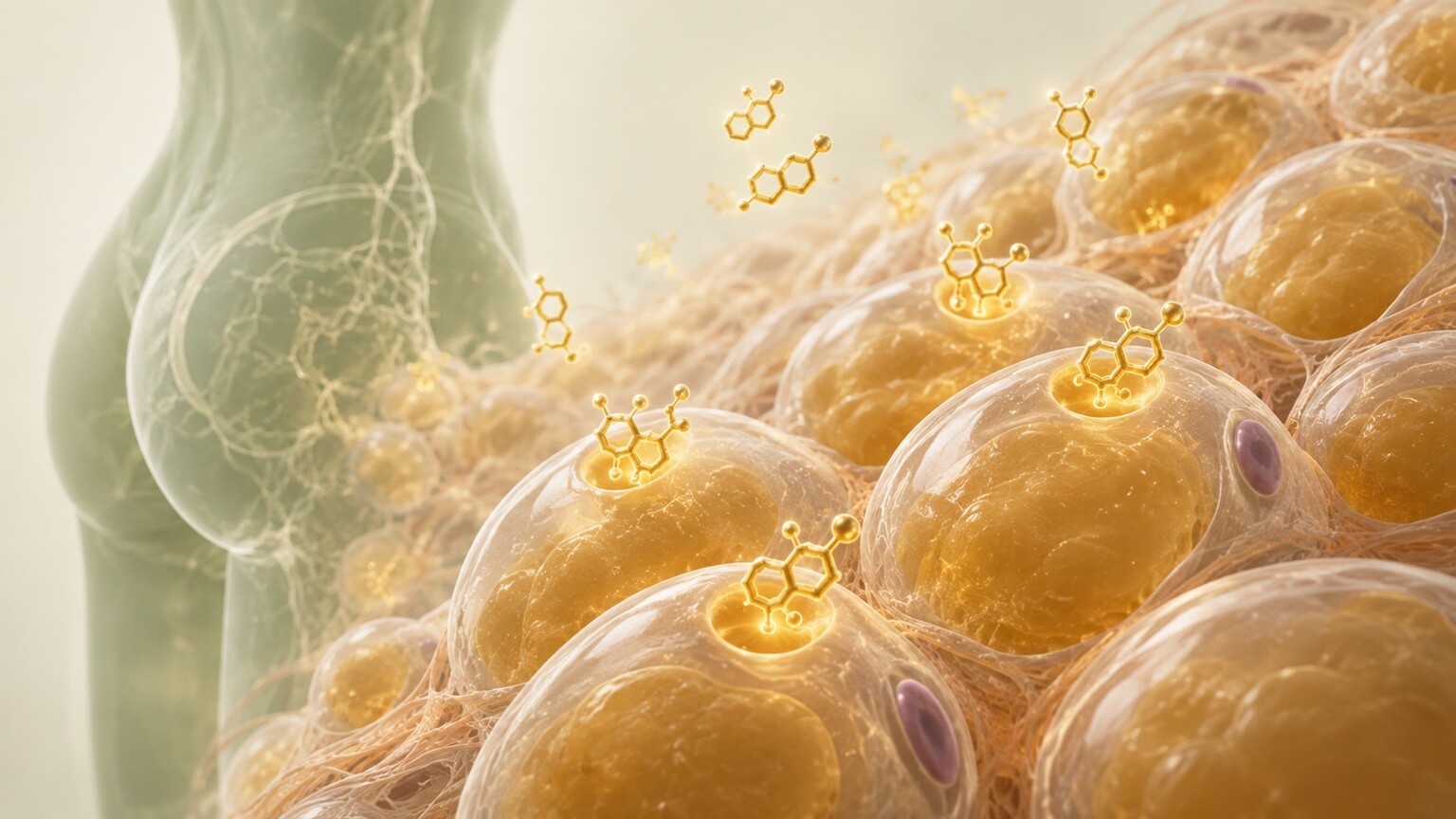
Figure 1. Estrogen molecules docking onto receptor sites on subcutaneous fat cells in the hip and thigh region, the mechanism behind hormone-driven fat storage in these areas.
Why Estrogen Changes Where Your Body Stores Fat
To understand why high estrogen shows up on the scale and in the mirror before it shows up anywhere else, it helps to think of estrogen as a set of instructions your fat cells are constantly listening to. Fat tissue isn't a passive storage container — it's studded with estrogen receptors, docking stations that estrogen molecules lock into, and depending on how strongly and how often those docking stations get activated, fat cells behave differently. Estrogen's default instruction, at normal levels, favors storing fat in the hips, thighs, and buttocks rather than the abdomen — this is part of why premenopausal women typically carry weight in a "pear" pattern while men, who have much lower estrogen relative to testosterone, tend toward an "apple" pattern concentrated around the belly. When estrogen rises above what's typical for a person's age, sex, and cycle phase, that instruction doesn't just get stronger in a proportional way — it can also promote fat cells to enlarge and multiply more readily in these hormone-sensitive zones, which is a big part of why estrogen-driven weight gain often feels so disproportionate and so resistant to diet changes that would normally move the needle.
There's a second, less intuitive piece to this mechanism: fat tissue itself produces estrogen, through an enzyme called aromatase that converts testosterone and other precursor hormones into estrogen. This means that once someone gains weight — for any reason, hormonal or not — the new fat tissue starts manufacturing more estrogen on its own, which can then drive further fat storage in estrogen-sensitive areas. Clinicians sometimes describe this as a feedback loop rather than a one-way cause, because the elevated estrogen and the weight gain can each reinforce the other over months or years.
It's worth being specific about which kind of fat this actually affects, because not all body fat behaves the same way hormonally. Subcutaneous fat — the layer just under the skin that you can pinch, concentrated in the hips, thighs, and upper arms — is the tissue most strongly influenced by estrogen's receptor activity, which is why estrogen-driven weight gain characteristically shows up in these areas rather than deep in the abdomen. Visceral fat, the fat that wraps around internal organs and drives most of the metabolic health risk associated with weight gain, tends to respond more to declining rather than rising estrogen, which is part of why body composition often shifts from a hip-and-thigh pattern toward a midsection pattern specifically around perimenopause and menopause, when estrogen falls rather than rises. Someone experiencing symptoms of estrogen excess earlier in life, then, is more likely to notice the change concentrated in the subcutaneous, lower-body areas than around the waistline, which can itself be a useful clue in sorting out what's actually happening hormonally without needing a lab result in hand, especially when that pattern represents a genuine shift from how their body has always distributed weight before. This is one reason why estrogen dominance — an informal term some clinicians use to describe estrogen that's too high relative to progesterone, not necessarily too high in absolute terms — becomes more common with age and with weight gain that happens for unrelated reasons, like reduced activity or a change in diet, and then gets compounded by the hormonal shift it triggers.
It's also worth separating two things that get lumped together under "estrogen weight gain": actual fat storage and fluid retention. Estrogen influences how the kidneys handle sodium and water, and at elevated levels it can promote the body holding onto more fluid than usual, which shows up as puffiness, breast tenderness, and a snug feeling in rings or waistbands that has nothing to do with fat tissue at all. This distinction matters because the two respond to completely different interventions — water retention typically improves within days once estrogen and sodium balance shift, while true fat gain driven by estrogen's receptor activity in fat cells takes weeks to months to reverse, even with consistent effort. Many people track a "5-pound swing" over the course of a month and assume it reflects fat gain and loss, when in a large share of cases it's almost entirely water shifting in response to hormone fluctuation, particularly in the days leading up to a period.
The Direct Link Between Estrogen and Mood
Estrogen's effect on mood runs through some of the same chemical messengers that antidepressant medications are designed to influence, which is part of why the mood symptoms of high estrogen can feel disproportionately intense compared to what most people expect from a "hormone thing." Estrogen receptors are present throughout brain regions involved in emotional regulation, and estrogen directly influences the availability of serotonin, the neurotransmitter most associated with feelings of calm and stability, as well as dopamine, which is tied to motivation and reward. At stable, moderate levels, estrogen tends to support serotonin activity, which is one reason many women report feeling emotionally steadiest during the mid-cycle window when estrogen is elevated but not erratic. The problem isn't simply "more estrogen equals worse mood" — it's that both unusually high levels and, just as often, sharp swings up and down destabilize the serotonin and dopamine systems in ways that can produce irritability, anxiety, tearfulness, or a sense of being emotionally "wired but fragile" that doesn't match anything going on in a person's actual life circumstances.

Figure 2. Emotional volatility and anxiety are common presentations of elevated or unstable estrogen, driven by its effect on serotonin, dopamine, and GABA activity in the brain.
This is also why high estrogen and premenstrual mood symptoms overlap so heavily, even though they're technically distinct situations. In the days before a period, estrogen and progesterone both drop from their peak, and it's that drop — not the earlier peak itself — that tends to trigger the classic premenstrual mood symptoms. But when estrogen runs chronically elevated relative to progesterone across the whole cycle, a pattern called estrogen dominance, the emotional volatility isn't confined to a predictable pre-period window anymore; it can show up unpredictably, feel harder to explain to a partner or employer, and get mistaken for a primary mood disorder rather than a hormonal one. Sleep is frequently swept into this picture as well — elevated estrogen can interfere with the body's ability to fall into and stay in deep sleep, and poor sleep is itself one of the most reliable amplifiers of irritability and anxiety that exists, so the mood symptoms of high estrogen are often really two problems layered on top of each other.
Anxiety in particular deserves a specific mention, because it tends to be the symptom people are least likely to connect back to a hormone test. Estrogen influences the activity of GABA, the brain's primary calming neurotransmitter, and also affects cortisol regulation — the body's main stress hormone. When estrogen is elevated and unstable, this combination can produce a physical sensation of restlessness or a racing mind that feels indistinguishable from generalized anxiety, right down to a faster heart rate or a tight chest, even though the root cause has nothing to do with life stress and everything to do with hormone signaling in the brain.
Cognitive symptoms tend to travel alongside the mood changes, though they're rarely mentioned in the same breath. Many people with elevated or fluctuating estrogen describe a specific kind of mental fog — trouble finding words mid-sentence, losing a train of thought in a meeting, or forgetting why they walked into a room — that feels different from ordinary tiredness. Estrogen receptors are dense in the hippocampus, the brain region central to forming and retrieving memories, and estrogen also affects blood flow to the brain and how efficiently brain cells use glucose for energy. When estrogen signaling becomes erratic rather than steady, this region doesn't get the consistent input it relies on, and the result is a day-to-day inconsistency in mental sharpness that can feel alarming precisely because it comes and goes rather than following a predictable pattern a person could plan around.
Curious what the rest of your hormone panel is telling you? Upload your results and get a complete, plain-language breakdown in under 15 minutes.
Analyze My ResultsWhat Actually Causes Estrogen to Run High
High estrogen rarely has a single cause, and understanding which pathway applies to your situation matters for figuring out what to actually do about it — treating a liver clearance problem as though it were a weight problem, or treating an external exposure issue as though it were an ovarian one, tends to produce disappointing results even when the effort put in is genuine, simply because the intervention doesn't match the actual mechanism at play. The most common driver, especially in adults who weren't dealing with hormone symptoms in their twenties, is the aromatase pathway described above: excess body fat converts other hormones into estrogen, so weight gain from any source can itself become a source of rising estrogen over time, independent of ovarian or testicular hormone production. A second major pathway is impaired estrogen clearance by the liver. Estrogen isn't just produced — it also has to be broken down and eliminated, primarily through the liver and then the gut, and anything that slows that clearance process, including certain medications, alcohol use, or liver conditions, allows estrogen to accumulate in circulation even if production hasn't changed at all.
A third pathway is external estrogen exposure, sometimes called xenoestrogens — compounds from the outside environment that mimic estrogen's chemical shape closely enough to activate the same receptors. These are found in some plastics, certain personal care products, and specific pesticide residues, and while any single exposure is small, cumulative daily contact has been studied as a contributor to overall estrogenic load in the body. Fourth, hormonal medications and treatments — birth control containing estrogen, hormone replacement therapy, or certain fertility medications — directly raise circulating estrogen by design, and levels that would be considered "high" outside that context may simply reflect the treatment working as intended, which is exactly why lab results always need to be interpreted alongside a full medication history. Finally, in less common cases, persistently and significantly elevated estrogen can signal an underlying medical issue such as an ovarian cyst, certain tumors of the adrenal glands or ovaries, or liver disease severe enough to meaningfully impair hormone clearance — which is part of why unexplained, significantly elevated results are worth bringing to a doctor rather than self-managing.
Chronic stress deserves its own mention, because it acts on estrogen balance through a route most people don't expect: competition for shared hormonal building blocks. Progesterone and cortisol are both produced from the same upstream precursor molecule, and under sustained stress, the body tends to prioritize cortisol production — sometimes described informally as "pregnenolone steal" — which can leave less precursor available for progesterone. Since estrogen dominance is frequently about the estrogen-to-progesterone ratio rather than estrogen alone, a progesterone shortfall driven by chronic stress can produce the exact same symptom picture as an actual rise in estrogen, even when estrogen production itself never changed. Insulin resistance follows a related logic: elevated insulin has been shown to increase ovarian estrogen production and, in men, to boost aromatase activity, which is part of why estrogen imbalance and blood sugar problems so often show up in the same person at the same time rather than as two coincidental, unrelated issues.
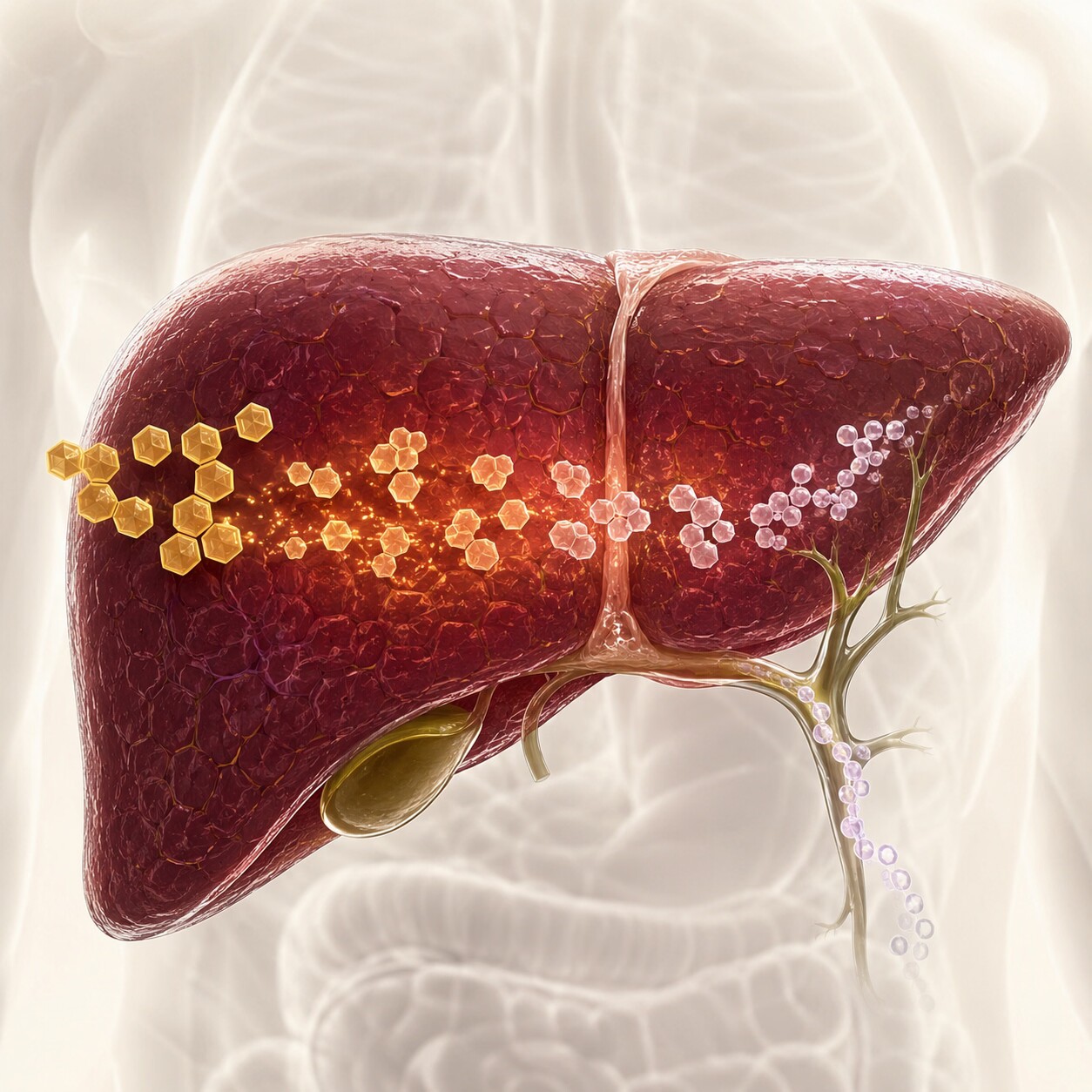
Figure 3. The liver metabolizes estrogen in two phases before it can be excreted; when this clearance process slows, estrogen accumulates in circulation even without any rise in production.
It's worth being specific about that liver clearance pathway, because it's frequently the most modifiable one and the least understood. Estrogen metabolism in the liver happens in two phases: first the hormone gets chemically modified into intermediate compounds, some of which are actually more biologically active than the original estrogen, and then those intermediates get bound to other molecules in a process called conjugation, which makes them water-soluble enough to be excreted through bile and urine. If that second phase is sluggish — due to nutrient deficiencies, alcohol intake, certain genetic variations, or gut health issues that allow already-cleared estrogen to be reabsorbed back into circulation through a process called deconjugation — total estrogen exposure over the course of a day or week rises even without any change in how much estrogen the ovaries or fat tissue are producing. This is why two people with identical estrogen production can end up with meaningfully different blood estrogen levels: one clears it efficiently, the other doesn't.
Estrogen Dominance vs. Simply High Estrogen — Why the Difference Matters
One of the most common points of confusion in this topic is the assumption that "high estrogen" always means an absolute number above the top of a lab's reference range. In practice, many of the symptoms described above — the weight redistribution, the mood volatility, the sleep disruption — are driven less by the absolute estrogen number and more by the ratio between estrogen and progesterone, the hormone that normally balances and counteracts many of estrogen's effects. Estrogen dominance describes a state where estrogen is high relative to progesterone, and this can happen in three distinct ways: estrogen itself is elevated while progesterone stays normal, progesterone drops while estrogen stays exactly the same, or both hormones fall but progesterone falls faster and further, leaving estrogen "relatively" dominant even though its absolute number never left the normal range. This last pattern is extremely common during perimenopause, when progesterone production declines earlier and more steeply than estrogen production does, which is why perimenopausal women frequently report estrogen-dominance symptoms — weight gain around the midsection, breast tenderness, mood swings, heavier or irregular periods — even when a standalone estrogen test comes back looking unremarkable.
This matters practically because it changes what a "normal" lab result actually tells you. A single estrogen (typically estradiol) value in isolation, without context on cycle timing, progesterone levels, and symptoms, can be technically normal and still miss the full picture. A useful comparison is thinking about salt in a recipe: the amount of salt matters, but so does how much of everything else is in the pot — a small amount of salt in a recipe with almost nothing else can taste overwhelmingly salty, while a much larger amount in a fuller recipe can taste perfectly balanced. Estrogen works similarly against progesterone: the absolute number is only half the story. For this reason, when estrogen dominance is suspected, providers often ask for progesterone to be drawn roughly seven days after ovulation — the point in the cycle when progesterone should be at its highest — since a progesterone level drawn at the wrong cycle day will look artificially low no matter how healthy someone's cycle actually is, leading to a false impression of dominance that a correctly timed draw would not show.
Conditions That Can Look Like High Estrogen but Aren't
Part of what makes this topic frustrating for a lot of people is that several unrelated conditions produce an almost identical symptom list — weight gain, fatigue, mood changes, irregular cycles — which means a rise on the scale and a short temper are not, by themselves, reliable evidence that estrogen specifically is the culprit. Hypothyroidism is the most common look-alike: an underactive thyroid slows metabolism broadly, causes fluid retention, and independently affects serotonin activity, producing weight gain and low mood that can be mistaken for a hormone-dominance picture even though the fix — thyroid hormone replacement — is entirely different from anything that addresses estrogen. Making this more complicated, thyroid hormone and estrogen also interact directly: estrogen increases the level of a carrier protein called thyroid-binding globulin, which can make less active thyroid hormone available to tissues even when standard thyroid blood tests look normal, so an estrogen problem can genuinely create a mild functional thyroid problem on top of itself.
Polycystic ovary syndrome (PCOS) is another frequent point of confusion, though the hormone pattern runs in a different direction — PCOS is typically driven by elevated androgens (testosterone-family hormones) and insulin resistance rather than high estrogen directly, even though the visible symptoms, including central weight gain and mood disturbance, can overlap substantially. Cortisol dysregulation from chronic stress or, in rarer cases, a condition called Cushing's syndrome, can likewise produce central weight gain and mood volatility through its own separate pathway. None of this is meant to make self-diagnosis feel hopeless — it's the opposite point: because these conditions share so much surface-level overlap but require different treatments, a full panel rather than a single estrogen number is what actually resolves the ambiguity, and it's the difference between guessing and knowing. Iron-deficiency anemia and vitamin D insufficiency are two more unglamorous but common contributors to fatigue and low mood that get overlooked in this conversation simply because they're not hormonal in the traditional sense, and both are inexpensive, easy additions to a broader panel that can rule out — or confirm — a second contributing factor sitting alongside whatever estrogen turns out to be doing.
Reading Your Own Estrogen Test Results
When a lab report lists "estrogen," it's almost always referring specifically to estradiol, the most potent and clinically significant of the three main estrogens the body produces (the other two, estrone and estriol, matter mainly in postmenopausal women and during pregnancy, respectively). Estradiol reference ranges are wide and change dramatically depending on where someone is in their menstrual cycle, which is precisely why the number alone, without knowing the cycle day it was drawn, can be almost impossible to interpret correctly. A level that would be alarmingly high on cycle day 3 might be completely expected and healthy right before ovulation, when estradiol naturally surges to its highest point of the month. This cycle-day dependency is the single most common reason people misread their own estrogen results as abnormal when they're actually within a perfectly normal range for that specific day.
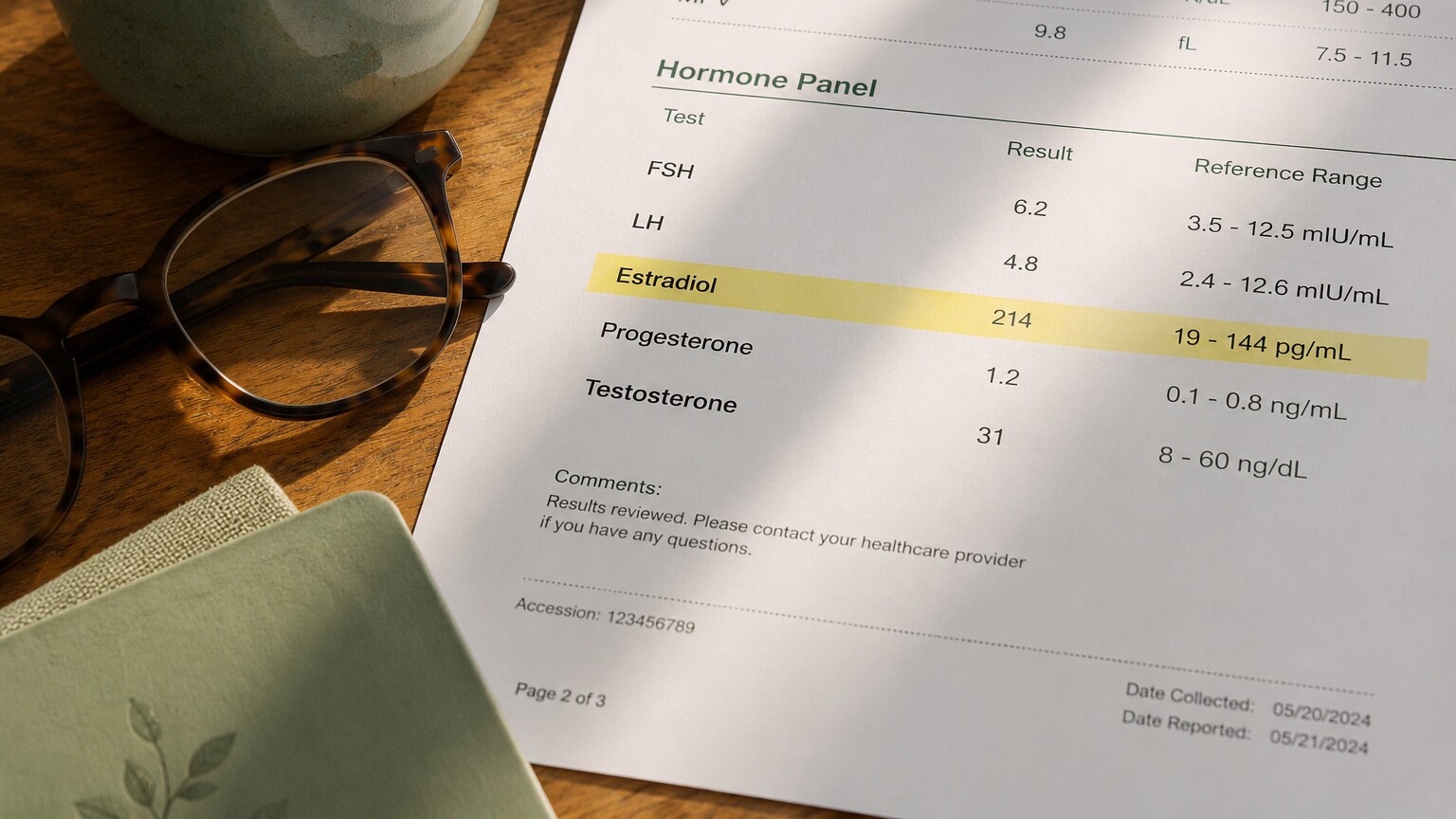
Figure 4. Estradiol reference ranges shift dramatically by menstrual cycle day, sex, and life stage, which is why a single number is meaningless without that context.
For men, the interpretation is more straightforward since there's no cycle to account for, but the stakes of an elevated result are arguably higher, since normal male estradiol levels are much lower than female levels to begin with, and a significant elevation is more likely to point toward excess body fat, liver dysfunction, or in rarer cases a testicular or adrenal issue affecting hormone production. In postmenopausal women, the calculus shifts again: baseline estradiol is expected to be low after the ovaries stop producing significant hormone output, so a postmenopausal estradiol level that looks "normal" by premenopausal standards is often actually elevated for that life stage, and this specific pattern is one of the reasons postmenopausal women are advised to discuss unexpected bleeding or breast symptoms with a doctor rather than assuming a "normal-looking" number rules out a hormonal cause.
It also helps to know that estradiol results are typically reported in picograms per milliliter (pg/mL), a unit that simply describes an extremely small mass of hormone per milliliter of blood — estrogen is active in the body at tiny concentrations, so this unit isn't a red flag by itself, it's just how a hormone this potent is measured. Labs also differ in the specific assay method they use to measure estradiol, and highly sensitive assays designed to pick up the very low levels seen in children or postmenopausal women can report different absolute numbers than a standard assay used for a premenopausal adult, even from the same blood draw. This is one of several reasons that comparing results across two different labs, or against a number a friend mentions, can be misleading — the reference range printed directly on your own report, from the lab that ran your specific test, is always the one that applies, not a range pulled from a different lab's chart or a general internet search.
What Helps Bring Elevated Estrogen Back Into Balance
Because high estrogen has several possible root causes, the most effective response depends heavily on which pathway is driving it in a given person — but several approaches show up consistently across the research regardless of the underlying cause. Supporting liver clearance through adequate intake of cruciferous vegetables like broccoli, cauliflower, and Brussels sprouts has been studied for its effect on estrogen metabolism, since compounds in these vegetables support the liver's ability to process estrogen into its less active, more easily excreted forms. Fiber intake matters for a related reason: dietary fiber binds to estrogen metabolites in the gut and helps carry them out of the body before they can be reabsorbed back into circulation, which directly addresses the deconjugation problem described earlier. Reducing alcohol intake is one of the more consistently supported interventions, since alcohol both burdens the liver's capacity to clear estrogen and has been shown in research to acutely raise circulating estrogen levels.
Weight management deserves particular emphasis given the aromatase pathway discussed earlier — because excess fat tissue actively produces estrogen, even modest, sustainable weight loss can measurably lower circulating estrogen levels in people whose elevation is primarily weight-driven, which also tends to be one of the more encouraging findings in this area, since it means the fat gain and the hormone imbalance aren't a one-way trap, even though breaking the cycle initially can understandably feel like the hardest part. Regular physical activity supports this independent of weight change as well, since exercise improves insulin sensitivity, lowers the elevated insulin levels that themselves promote estrogen production, and has direct effects on hormone metabolism through pathways separate from weight loss alone — which is part of why people sometimes notice symptom improvement from a new exercise routine before the number on the scale has moved at all. For xenoestrogen exposure, reducing contact with certain plastics — particularly avoiding heating food in plastic containers — and choosing personal care products without certain preservatives associated with estrogenic activity are reasonable, low-cost steps, though the research on how much individual exposure reduction actually moves the needle on blood hormone levels is still developing — the value of these changes is best understood as reducing one contributing input among several, not as a standalone fix for an already-elevated result. None of these lifestyle measures replace a medical evaluation when estrogen is significantly elevated or when symptoms are severe — they're meaningful supportive steps, not a substitute for identifying and addressing the underlying cause with a healthcare provider.
Sleep and stress management belong in this list too, and are easy to underestimate. Deep sleep is when much of the body's hormone regulation and detoxification work gets done overnight, so chronically shortened or fragmented sleep can blunt the benefit of every other change on this list. Similarly, because chronic stress can suppress progesterone through the shared-precursor pathway described earlier, stress management isn't a soft, secondary recommendation here — it's addressing one of the direct mechanical routes to estrogen dominance, not just a general wellness suggestion. One caution worth stating plainly: over-the-counter supplements marketed for "hormone balance" vary enormously in quality and evidence, and some, including certain herbal formulas, can interact with hormonal medications or have effects on estrogen metabolism that aren't fully predictable outside of a clinical setting — starting any of them is worth discussing with a provider first, particularly for anyone on birth control, hormone therapy, or with a history of hormone-sensitive conditions.
Tracking Your Own Symptoms Before Your Next Blood Draw
Because a single estradiol number is only meaningful in context, one of the most useful things you can do before your next appointment is build that context yourself, and it doesn't require anything more sophisticated than a notes app. For roughly one full cycle, tracking the day mood symptoms, bloating, breast tenderness, and any weight change appear, alongside the day your period starts, turns a vague sense of "I feel off lately" into a pattern a clinician can actually act on. If irritability and bloating consistently show up in the same week relative to your period, that's much more likely to reflect the expected pre-menstrual hormone shift than a true dominance problem. If symptoms are unpredictable, spread across the whole month with no clear relationship to cycle timing, or have progressively worsened over several months, that pattern points more toward a sustained imbalance worth formally testing rather than a normal monthly rhythm.
This kind of tracking is especially useful for anyone in their late 30s to mid-40s, since perimenopause often begins years before periods become noticeably irregular, and the earliest changes are frequently mood and weight-distribution shifts rather than changes to the cycle itself. A pattern that's new — meaning it wasn't part of your baseline in your 20s or early 30s — carries more diagnostic weight than a symptom that's simply always been part of how your body responds to its cycle. Bringing two or three cycles of tracked data to an appointment also shortens the diagnostic process considerably, since it gives a provider a reason to order progesterone alongside estradiol from the start, rather than starting with estradiol alone and adding progesterone only after an inconclusive first result — a delay that can add weeks or months to getting a real answer.
When to See a Doctor
Most fluctuations in estrogen are a normal part of the menstrual cycle, weight changes, or the perimenopausal transition, and don't require urgent evaluation. That said, certain patterns warrant a conversation with a healthcare provider rather than waiting it out: significantly abnormal uterine bleeding, especially any bleeding after menopause; breast tenderness or lumps that are new or worsening; symptoms severe enough to disrupt daily functioning, work, or relationships; or a lab result that comes back dramatically outside the expected range for your age, sex, and cycle timing. A doctor can order a fuller hormone panel — typically including progesterone, testosterone, and thyroid markers alongside estradiol — because, as covered above, estrogen almost never tells the full story on its own, and interpreting it in isolation is one of the most common ways people either dismiss a real problem or worry unnecessarily about a result that's actually completely normal for their specific situation.
It's also reasonable to see a doctor simply because the symptoms are affecting your quality of life, even without any of the specific red flags above. You don't need to already suspect a rare tumor or a serious liver condition to justify asking for bloodwork — persistent mood symptoms that are wearing you down, or weight changes that feel disconnected from anything you're doing, are valid reasons on their own. Framing the conversation around the pattern you've tracked ("my mood and bloating are worst during these specific weeks, and this has been consistent for the last three cycles") tends to lead to a more targeted workup than a general description of feeling "off," since it gives the provider concrete timing to test against rather than a single snapshot result with no context around it, and it signals that you've already ruled out the possibility that what you're experiencing is simply an isolated bad week.
Frequently Asked Questions
Can high estrogen cause weight gain even with a healthy diet and regular exercise?
Yes. Estrogen changes where fat is stored and can promote fat cell growth in hormone-sensitive areas like the hips and thighs regardless of overall calorie balance, which is why some people experience stubborn weight gain in specific areas even while maintaining habits that would normally prevent it. Addressing the underlying estrogen elevation, not just diet and exercise alone, is often necessary to see change in these areas.
Is it normal for estrogen-related mood swings to feel like anxiety rather than sadness?
Very much so. Estrogen affects GABA and cortisol regulation in the brain, which govern the body's calming and stress-response systems, so elevated or unstable estrogen frequently produces symptoms that feel like restlessness, a racing mind, or physical anxiety rather than classic low mood. This is one of the most under-recognized presentations of hormonal imbalance.
Does a normal estradiol test rule out estrogen dominance?
No. Estrogen dominance is about the ratio between estrogen and progesterone, not the absolute estrogen number in isolation. A person can have a completely normal estradiol result while still experiencing estrogen-dominance symptoms if their progesterone has dropped further or faster, which is common during perimenopause. A full panel including progesterone gives a much clearer picture.
Can men have high estrogen, and does it cause the same weight and mood symptoms?
Yes. In men, elevated estrogen most commonly stems from excess body fat converting testosterone into estrogen through the aromatase enzyme, or from liver conditions that slow estrogen clearance. It can produce central weight gain, mood changes, reduced motivation, and in more pronounced cases, breast tissue development, since normal male estradiol levels are much lower than female levels to begin with.
How is high estrogen different from hypothyroidism if the symptoms overlap so much?
The two are distinguished with different blood tests — thyroid-stimulating hormone (TSH) and free thyroxine (T4) for thyroid function, versus estradiol and progesterone for estrogen balance — and they sometimes occur together, since estrogen can raise thyroid-binding globulin and reduce how much active thyroid hormone reaches tissues. A provider ordering both panels at once is the most reliable way to tell which one, or both, is driving the symptoms.
Still Not Sure What Your Results Mean?
Upload your labs and get a complete, visual, plain-language interpretation of every biomarker — delivered to your inbox in under 15 minutes.
Get My ReportThis article is for educational purposes only and does not constitute medical advice. Always consult your healthcare provider regarding your specific lab results.