
What Does Insulin's Role in PCOS Actually Look Like?
Polycystic ovary syndrome is usually explained as a hormone imbalance affecting the ovaries — irregular periods, acne, excess hair growth, and small follicles that never quite mature. That description is accurate as far as it goes, but it skips over the specific mechanical driver actually sitting behind most of it: insulin resistance, working through a pathway most people have never heard connected to their ovaries at all. In the large majority of people diagnosed with PCOS, insulin itself is acting directly on the ovary — not indirectly through blood sugar levels, but as its own genuinely separate, distinct hormonal signal — disrupting the exact biological process that would otherwise normally select and release one single mature egg each cycle. This article traces that specific underlying mechanism in detail, step by step: how insulin resistance interferes with ovulation at the level of a single developing follicle, why this looks different across PCOS's recognized subtypes, and how it connects to the androgen and metabolic symptoms most people already associate with the condition.
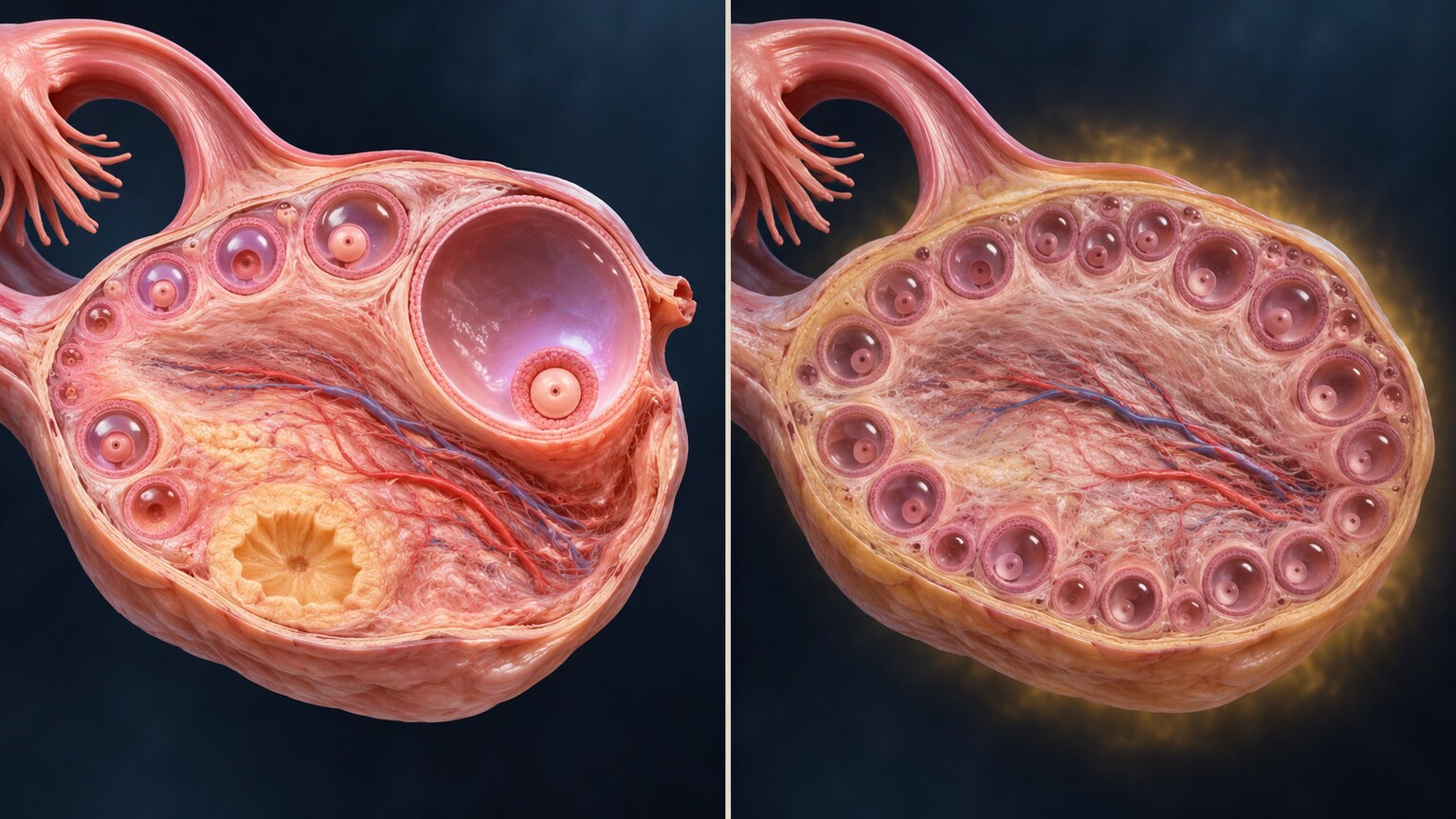
Figure 1. In a PCOS-affected ovary, many small follicles begin developing each cycle but repeatedly stall before any one reaches maturity, rather than the normal pattern of one follicle dominating and releasing an egg.
What "Polycystic" Actually Refers To
The name is somewhat misleading, and clearing it up matters for understanding the mechanism that follows. The "cysts" in polycystic ovary syndrome aren't cysts in the usual sense of a fluid-filled growth requiring treatment — they're actually a large number of small, immature ovarian follicles, each one a tiny fluid-filled sac containing a developing egg, that have started growing but stalled partway through the process. A normal ovulatory cycle involves several follicles beginning to grow each month, with one eventually out-competing the others to become the single dominant follicle that matures fully and releases its egg. In a PCOS-affected ovary, this competition never resolves the way it should — many follicles start, but none consistently wins, leaving the ovary with a visible collection of small, arrested follicles on ultrasound, which is where the name originates.
Where Insulin Enters the Picture: A Direct Signal, Not Just a Fuel Regulator
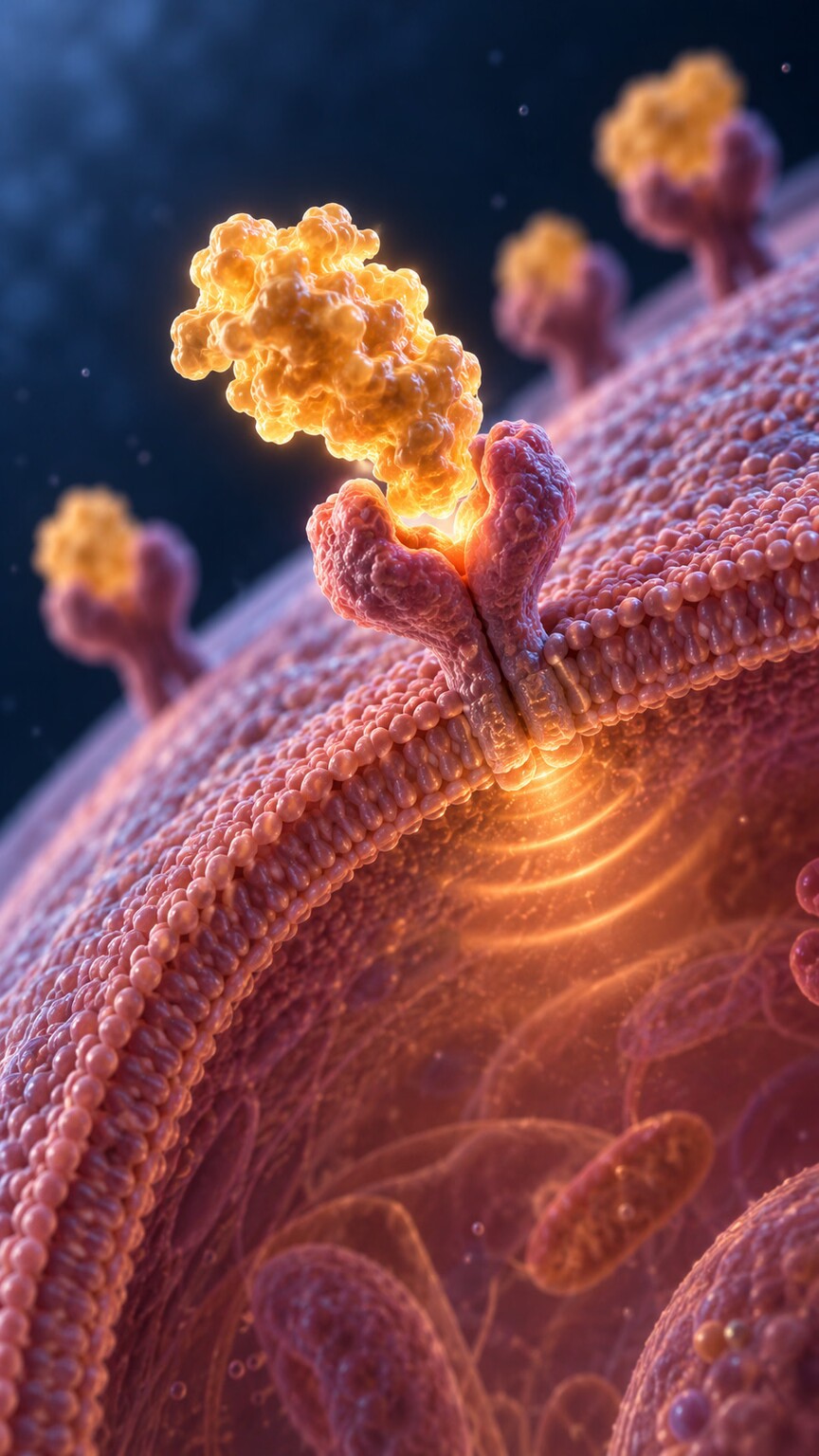
Figure 2. Theca cells inside the ovary carry insulin receptors of their own, meaning elevated insulin acts directly on ovarian tissue as a distinct signal, entirely separate from its role in regulating blood sugar.
Most people think of insulin purely as the hormone that moves sugar out of the bloodstream and into cells. But insulin receptors — the docking sites insulin binds to in order to deliver its signal — exist on many tissues throughout the body that have nothing to do with blood sugar management, and the ovary is one of them. Specifically, theca cells, a layer of hormone-producing cells that surround each developing follicle, carry insulin receptors of their own. This means that when insulin resistance causes the pancreas to compensate with chronically elevated insulin levels — the same hyperinsulinemia that drives most of metabolic syndrome — that excess insulin doesn't just sit in the bloodstream waiting to move glucose. It also reaches the ovary directly and binds to these theca cell receptors, delivering a signal the ovary was never designed to receive at that volume.
This dual-signal design isn't unique to insulin or the ovary — many hormones evolved to influence multiple, seemingly unrelated tissues, and the ovary in particular carries receptors for a wide range of metabolic signals beyond insulin, since reproductive capacity in most species is naturally linked to the body having adequate energy reserves available to support a pregnancy. Under ordinary circumstances, this connection is a reasonable evolutionary safeguard: insulin at normal levels provides the ovary with a small, appropriate piece of information about the body's overall energy status. The problem in PCOS is one of degree, not of the connection existing at all — chronically elevated insulin, present at levels the ovary's receptors were never calibrated to handle, turns what should be a subtle, background signal into a persistent, disruptive one.
Curious what your own insulin, LH, or testosterone results actually mean together? Upload your results and get a complete, plain-language breakdown in under 15 minutes.
Analyze My ResultsThe Insulin-LH Synergy: Why the Ovary Overreacts
On its own, elevated insulin reaching the ovary would be a problem. What makes it considerably worse in PCOS specifically is a synergistic effect with luteinizing hormone (LH), a pituitary hormone that normally rises and falls at specific points in the menstrual cycle to help trigger ovulation. Theca cells respond to LH under normal circumstances, but insulin, acting on its own receptor at the same cell, amplifies how strongly that cell responds to any given amount of LH — essentially turning up the volume on the ovary's sensitivity to a hormone signal it would otherwise handle in a controlled, moderate way.
Many people with PCOS also have a disrupted LH-to-FSH ratio, with LH running persistently higher relative to FSH (follicle-stimulating hormone, the other pituitary hormone responsible for follicle growth), for reasons connected to this same disrupted signaling environment. The combination — persistently elevated LH, amplified by insulin's synergistic effect on the theca cell's response to it — pushes those cells into significant androgen overproduction, since androgen synthesis is one of the theca cell's normal jobs, just at a dramatically exaggerated volume under this combined signal.
How Excess Androgen Locally Disrupts Follicle Development
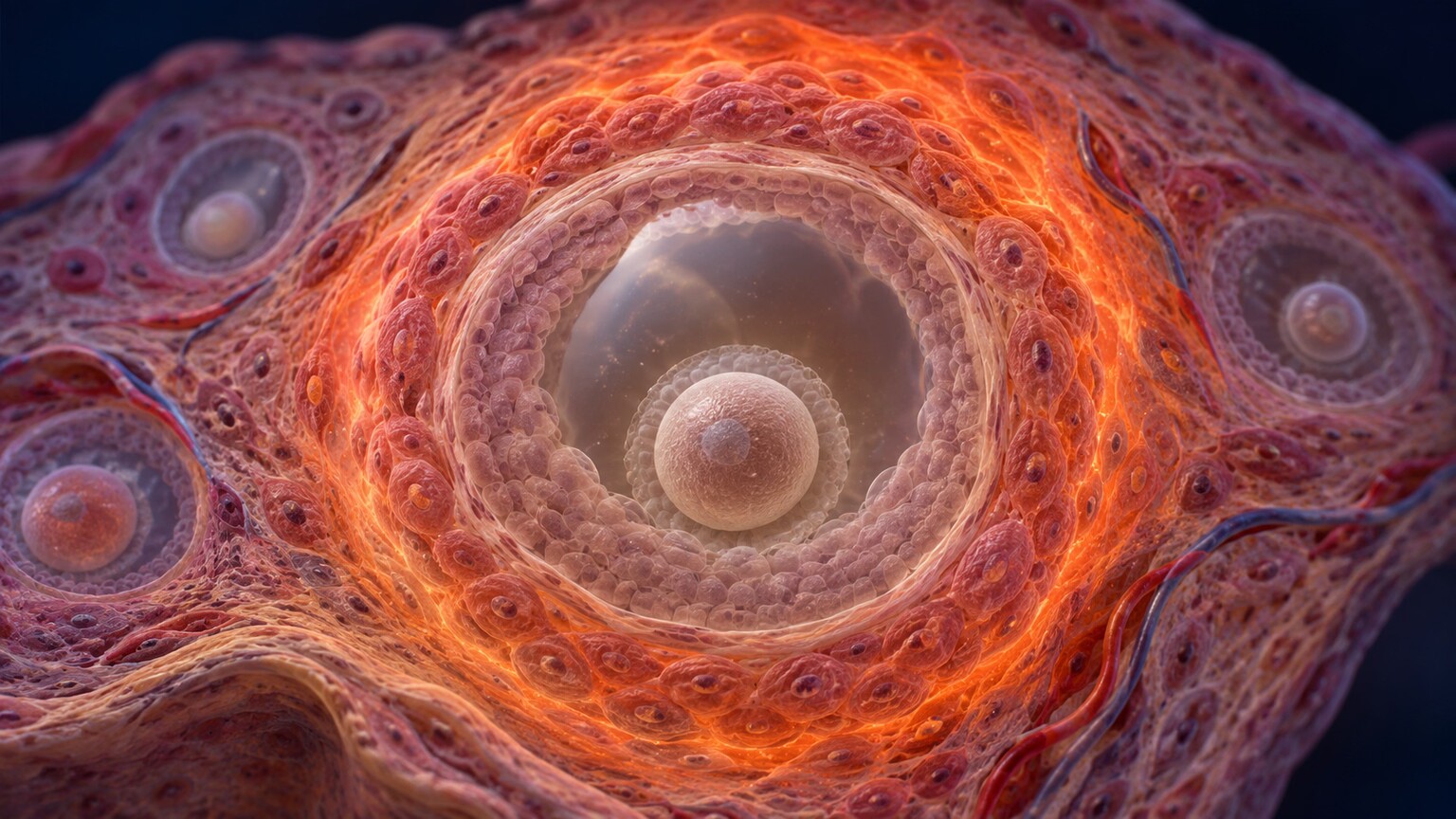
Figure 3. The androgen concentration immediately surrounding each follicle, not just the level measured in a blood test, directly interferes with the follicle's ability to progress past an early stage of development.
This is the specific mechanical link between excess androgen and the arrested follicle pattern that gives the syndrome its name. The theca cell's androgen overproduction doesn't just raise androgen levels measured on a blood test elsewhere in the body — it creates a locally concentrated, androgen-rich microenvironment immediately surrounding the follicle itself, since the theca cell layer sits right beside the cells actually responsible for the egg's development. This local excess directly interferes with the normal maturation process at exactly the stage where a follicle would otherwise be selected to become dominant, effectively halting its progress before it can grow large enough to ovulate. Specifically, this local androgen excess disrupts the normal signaling a follicle needs from FSH to continue maturing — high local androgen levels reduce how effectively a follicle's cells respond to FSH's growth signal, which is precisely the mechanism behind the arrest, not simply "too much androgen everywhere" as a vague, non-specific effect. Because FSH responsiveness is the specific thing being blunted, follicles at this stage remain small and undeveloped rather than growing further, then stall indefinitely rather than either progressing or naturally dying off and being reabsorbed the way an unselected follicle normally would in an ovulatory cycle. Multiply this across the many follicles beginning development each cycle, all exposed to this same disrupted local environment, and the result is the pattern seen on ultrasound: numerous small, arrested follicles, none of them able to complete the process, which is also the direct mechanical reason ovulation becomes irregular or absent — not because the ovary lacks eggs to work with, but because the local hormonal environment repeatedly stops development before any follicle can finish.
This is also precisely why PCOS is not, despite the common assumption implied by its name, a disorder of having too few eggs or a diminished ovarian reserve — if anything, the opposite is closer to true. Because so many follicles begin development each cycle without one ever being selected to complete it, someone with PCOS often has a demonstrably higher-than-average ovarian reserve, reflected in an elevated anti-Müllerian hormone (AMH) level, a separate hormone produced by these same small, developing follicles in proportion to how many are present. This is one of the more genuinely counterintuitive aspects of the condition for newly diagnosed patients to fully absorb and make sense of: an elevated AMH result, which in most other fertility contexts would be interpreted as a reassuring sign of an abundant remaining egg supply, is instead, in the specific context of PCOS, itself simply a reflection of this same underlying developmental arrest — abundant follicles, certainly, but stalled ones, not a supply of eggs actively progressing toward ovulation.
Why This Explains Irregular or Absent Periods
Menstrual irregularity in PCOS follows directly from this mechanism rather than being a separate, unrelated symptom. A period, in a typical ovulatory cycle, is the natural consequence of a dominant follicle maturing, releasing its egg, and the resulting hormonal shift eventually triggering the uterine lining to shed on a predictable schedule. When follicle development is repeatedly arrested before that process can complete, ovulation doesn't happen that cycle, and without it, the hormonal sequence that would normally trigger a period on schedule never occurs either. This is exactly why menstrual cycles in PCOS are often unpredictable in length, sometimes stretching well beyond a typical cycle, or occasionally skipping altogether — the underlying cause isn't the uterus or the menstrual mechanism itself, but the ovary's follicles failing to complete the developmental process that would normally set that mechanism in motion.
This absence of ovulation carries a consequence beyond irregular timing that's worth understanding on its own, since it explains why doctors take chronic anovulation seriously even for someone with no interest in becoming pregnant. Progesterone, the hormone responsible for stabilizing and eventually triggering a controlled, complete shedding of the uterine lining, is normally produced by the structure left behind after a follicle successfully ovulates. Without ovulation, this progesterone production never happens, which means the uterine lining, still being built up under the influence of estrogen alone, is deprived of the signal that would normally organize and time its eventual shedding. Over months without ovulation, this unopposed estrogen exposure allows the lining to continue thickening well beyond what a single, well-timed period would normally produce, and this same thickened lining, when it eventually does shed (often unpredictably and sometimes quite heavily), is part of why PCOS-related bleeding patterns can range from complete absence of periods for months to occasional heavy, prolonged bleeding once the lining does finally shed. This same chronic unopposed estrogen exposure, sustained over years without intervention, is also the specific reason chronic anovulation carries a modestly elevated long-term risk for endometrial changes, which is a core part of why doctors recommend some form of regular progesterone exposure — whether through a cyclic medication, combined hormonal contraception, or restored spontaneous ovulation via the insulin-sensitivity-focused treatments discussed later in this article — even for someone with PCOS who has no current interest in fertility.
The Four Recognized PCOS Phenotypes and Where Insulin Fits Each One

Figure 4. PCOS is diagnosed under the Rotterdam criteria when a person meets at least two of three findings — androgen excess, ovulatory dysfunction, or polycystic ovarian morphology — producing several distinct diagnostic combinations.
Under the widely used and internationally recognized Rotterdam diagnostic criteria, PCOS is formally diagnosed when a person meets at least two of three specific findings: clinical or biochemical androgen excess, ovulatory dysfunction (meaning irregular or entirely absent periods), and polycystic ovarian morphology visible on a pelvic ultrasound. Because only two of the three criteria are strictly required for a diagnosis, this framework produces four distinct possible combinations, or recognized phenotypes, and insulin resistance plays a somewhat different, though consistently central, role in the underlying biology of each one.
The classic phenotype — all three findings present together — reflects the fullest, most complete expression of the entire mechanism described above and is, across most published research on the topic, most strongly and consistently associated with measurable, significant insulin resistance compared to the other three phenotypes. The ovulatory-dysfunction-plus-androgen-excess phenotype (present without the characteristic polycystic ovarian appearance actually showing up on ultrasound) still involves this exact same underlying theca cell mechanism described throughout this article, just without follicles visibly accumulating in the specific pattern that ultrasound imaging is able to detect, for reasons that aren't yet fully understood and remain an area of active investigation. The androgen-excess-plus-polycystic-morphology phenotype, somewhat notably, can occur alongside otherwise normal, regular ovulation, and this particular phenotype tends to show a somewhat milder average degree of insulin resistance compared to the classic phenotype described above, though it's still frequently present and worth actively screening for regardless. The mildest of the four recognized phenotypes — ovulatory dysfunction combined with polycystic morphology, but without significant clinical androgen excess — is the one most variably associated with measurable insulin resistance from one affected individual to the next, and ongoing research continues investigating exactly why this particular combination sometimes occurs without the prominent androgen findings seen in the other three phenotypes.
It's worth being explicit about why the Rotterdam framework allows this much variability in the first place, rather than requiring all three findings for every diagnosis. Earlier diagnostic criteria, used before Rotterdam's 2003 revision, required both androgen excess and ovulatory dysfunction together, which meant a meaningful subset of people whose ovaries showed the characteristic polycystic pattern and who had irregular cycles, but without a clearly elevated androgen level on standard bloodwork, went undiagnosed and untreated despite genuinely having the underlying condition. The broadened Rotterdam framework was specifically designed to capture this wider range of presentations, reflecting a growing recognition that PCOS represents a spectrum of related presentations sharing a common underlying mechanism, rather than a single uniform disease that looks identical in every affected person. This is also why some clinicians and more recent international guidelines have proposed further refinements to the criteria over time, an ongoing area of genuine debate in reproductive endocrinology, though Rotterdam remains the most widely used framework in clinical practice as of this writing.
The Self-Reinforcing Loop With Weight and Fat Distribution
Insulin resistance and PCOS interact with body weight in a bidirectional way that can make the whole picture feel like a closed loop. Central, visceral fat accumulation — for the same reasons described in broader discussions of insulin resistance and metabolic syndrome — worsens insulin resistance, which then worsens the ovarian mechanism described throughout this article. But PCOS itself, through this same excess insulin and androgen environment, also promotes further central fat storage and can make weight management genuinely more physiologically difficult than it would be for someone without the condition, not simply a matter of willpower or effort. This is exactly why weight-focused interventions for PCOS, when they do help, tend to work specifically by improving insulin sensitivity rather than through weight loss as an end in itself — and why a meaningful minority of people with PCOS, generally described as the "lean PCOS" phenotype, have a normal body weight and no obvious visceral fat accumulation, yet still show measurable insulin resistance detectable specifically through more sensitive testing, demonstrating that visible body weight is a common contributing factor to this mechanism, not a required one.
Sleep quality feeds into this same loop in a way that's often overlooked entirely. Poor sleep, and specifically obstructive sleep apnea — which occurs at a meaningfully higher rate in people with PCOS than in the general population, independent of body weight — worsens insulin sensitivity through the same cortisol and counter-regulatory hormone pathways that affect anyone with chronic poor sleep, adding yet another contributing input into the same central mechanism this article has been describing. This is part of why a thorough evaluation for PCOS-related insulin resistance sometimes includes screening questions about sleep quality and snoring, since treating an underlying, undiagnosed sleep disorder can measurably improve the broader insulin-resistance picture in a way that's easy to miss if the focus stays narrowly on diet and exercise alone.
Why Diagnosis Is Genuinely Harder in Adolescents

Figure 6. Irregular cycles are a normal, expected part of the first one to two years after a first period, which is exactly why a formal PCOS diagnosis is generally deferred in adolescents until that window has passed.
Everything described in this article gets genuinely more complicated to diagnose confidently in teenagers, for reasons rooted in normal adolescent development rather than any flaw in the underlying mechanism. Irregular cycles are expected and normal during the first one to two years after a first period, since the hypothalamic-pituitary-ovarian signaling axis is still maturing during this window regardless of whether PCOS is present at all — meaning irregular cycles alone, the exact finding used as one of the three Rotterdam criteria in adults, isn't considered a reliable diagnostic sign yet in this specific age group. Similarly, some degree of insulin resistance is a normal, temporary feature of puberty itself in all adolescents, driven by growth-hormone-related changes, not a sign of anything abnormal — which means the fasting insulin and HOMA-IR testing described below carries less diagnostic weight in this age group than in adults, since some elevation is expected regardless of PCOS status.
Because of this overlap between normal puberty and the actual disease process, most current clinical guidelines recommend a more cautious, watch-and-wait approach in adolescents — tracking symptoms over time, generally waiting until at least two years post-first-period before applying the full Rotterdam criteria, and placing somewhat less diagnostic weight on ultrasound-detected polycystic ovarian morphology specifically, since a multi-follicle ovarian appearance is also common in normally developing teenagers who don't have PCOS at all — a distinction that matters enormously in practice, since a multi-follicle ovary reflects a normal, transient stage of adolescent ovarian development, while true polycystic morphology reflects the arrested-development pattern described throughout this article, and the two can look genuinely similar on a routine ultrasound to anyone without specific training in distinguishing them. This more conservative approach is specifically designed to avoid a premature diagnosis and unnecessary long-term treatment in someone whose irregular cycles and mildly elevated insulin will most likely resolve on their own as normal pubertal development completes.
That said, a genuinely elevated diagnostic risk still deserves attention during this window rather than being dismissed outright, since a small but real subset of adolescents do have true, persistent PCOS starting from adolescence itself rather than developing it later. The features that carry more diagnostic weight even during this uncertain early period include persistent, significant acne that doesn't respond to standard treatment, clear clinical signs of androgen excess such as significant excess hair growth in a male-pattern distribution, and a family history of PCOS in a mother or sister, since the condition has a meaningful heritable component. A teenager presenting with several of these more specific findings together, rather than irregular cycles alone, is more likely to be flagged for closer monitoring and earlier consideration of the mechanism this article describes, even while formal diagnostic criteria are deliberately held back until enough time has passed to distinguish genuine PCOS from ordinary adolescent variability.
How Doctors Actually Test for This Underlying Piece

Figure 5. Confirming PCOS's underlying insulin-resistance component typically involves a fasting insulin or glucose tolerance test alongside LH and FSH measurements, interpreted together rather than as isolated numbers.
Standard PCOS diagnosis relies on the Rotterdam criteria described above, but confirming the underlying insulin-resistance component specifically — genuinely useful for guiding treatment, even though it isn't formally one of the three diagnostic criteria itself — typically involves fasting insulin or a two-hour oral glucose tolerance test with insulin measured alongside glucose, since fasting glucose alone can remain normal for years even in significant insulin resistance, for exactly the same reasons discussed in broader articles about insulin resistance generally. A calculated HOMA-IR score, derived from fasting glucose and fasting insulin together, is frequently used for this same purpose, offering a single quantifiable number that can be tracked over time as someone makes changes specifically aimed at improving their overall insulin sensitivity — genuinely useful precisely because a single fasting insulin value on its own can be harder to interpret consistently across different labs and assay methods than a calculated ratio incorporating both values together. An LH-to-FSH ratio, while less relied upon today as a standalone diagnostic tool than it once was, can still support the clinical picture when elevated, consistent with the amplified ovarian signaling environment described earlier in this article.
Ultrasound plays a distinct, complementary role alongside this bloodwork, specifically evaluating the polycystic ovarian morphology criterion described earlier — a transvaginal ultrasound (or, when not appropriate, an abdominal ultrasound with somewhat lower accuracy) counts the number of small follicles present in each ovary and measures overall ovarian volume, both of which tend to run higher in PCOS due to the accumulated arrested follicles this article has described in detail. It's worth noting that ultrasound alone, without the accompanying androgen and ovulatory findings, is never sufficient for diagnosis on its own, precisely because a polycystic-appearing ovary can occur in people without PCOS at all, particularly, as discussed above, in adolescents and in some people simply due to normal individual variation in ovarian anatomy.
What Treatments Actually Target This Specific Mechanism
Understanding that insulin resistance sits mechanically upstream of the follicle-arrest process explains why several PCOS treatments that don't obviously look hormonal on the surface still meaningfully improve ovulation. Metformin, most widely known and commonly prescribed as a standard diabetes medication, is frequently prescribed for PCOS specifically because meaningfully improving insulin sensitivity in this way directly reduces the excess insulin reaching the ovary's theca cells, which can allow the LH-insulin synergy driving androgen overproduction described earlier in this article to settle back down toward a more typical, healthier range and, in a meaningful number of people, restore regular spontaneous ovulation as a direct downstream effect of that improvement. Inositol supplements, increasingly used for PCOS, are thought to work through a related improvement in how cells respond to insulin's signal, though research into their exact optimal dosing, formulation, and appropriate long-term use in this specific context remains actively ongoing across multiple research groups. Weight loss, in the cases where it genuinely helps, does so specifically through this same insulin-sensitivity pathway described throughout this article rather than through some entirely separate, independent mechanism unrelated to everything discussed so far — even a relatively modest reduction in visceral fat can meaningfully calm this entire cascade for some people, which is consistent with everything described above about the bidirectional relationship between weight and insulin resistance in PCOS specifically.
Letrozole and clomiphene, two medications more directly aimed at ovulation itself rather than insulin sensitivity, work through a genuinely different mechanism worth distinguishing clearly from the insulin-focused treatments above — both act on the hypothalamic-pituitary signaling that governs FSH release, essentially overriding the local follicle-arrest environment by providing a stronger, more direct push toward ovulation rather than correcting the underlying insulin and androgen imbalance that caused the arrest in the first place. This distinction matters practically: someone specifically trying to conceive is often prescribed one of these ovulation-induction medications directly, sometimes alongside metformin rather than instead of it, since the two work through complementary rather than competing mechanisms — metformin gradually improving the underlying hormonal environment, letrozole or clomiphene providing a more immediate, targeted push for that specific treatment cycle. Someone not currently trying to conceive, by contrast, generally has less reason to use an ovulation-induction medication specifically, since its main clinical purpose is achieving ovulation for that cycle rather than correcting the broader hormonal pattern over time, which is exactly what metformin, weight-focused interventions, or combined hormonal contraception (used for progesterone-related endometrial protection rather than ovulation induction) are more suited to addressing instead.
A Worked Example: Tracing One Diagnosis Back to the Mechanism
Consider a 26-year-old with cycles that have run anywhere from 45 to 60 days apart for several years now, along with new-onset acne over the past year and some excess facial hair growth that started gradually and has become more noticeable to her over the past several months. An ultrasound shows numerous small follicles in both ovaries without one clearly dominant, and bloodwork shows an elevated total testosterone along with a mildly elevated LH-to-FSH ratio. She meets all three Rotterdam criteria — androgen excess, ovulatory dysfunction, and polycystic ovarian morphology — placing her in the classic phenotype.
Her doctor also orders a fasting insulin level and calculates her HOMA-IR score, which comes back meaningfully elevated despite an entirely normal fasting glucose reading and a normal overall body weight, revealing a genuine underlying insulin resistance that would have gone completely unnoticed if her workup had relied on fasting glucose alone, exactly the scenario this article's earlier discussion of testing methods was specifically describing. Understanding the mechanism this article has described reframes her entire clinical picture: her elevated insulin has been reaching her ovaries' theca cells directly, amplifying their response to her own LH and driving the androgen overproduction responsible for both her irregular cycles (through the local follicle-arrest mechanism) and her acne and facial hair growth (through the same androgen excess reaching tissues elsewhere in her body). Her treatment plan targets this shared upstream driver directly — metformin to improve insulin sensitivity — rather than treating her irregular cycles, her acne, and her excess hair growth as three separate problems each requiring its own independent explanation and its own separate treatment.
Six months into metformin treatment, her cycles have shortened to roughly 35 days, still somewhat longer than a typical cycle but a meaningful improvement, and a repeat HOMA-IR score shows measurable improvement in her insulin sensitivity, giving her and her doctor an objective way to track whether the underlying mechanism is genuinely responding rather than relying solely on symptom improvement, which can be slower and less consistent to notice month to month. Her acne has also improved modestly over this same period, consistent with the shared mechanism described throughout this article — since her androgen overproduction was always downstream of the same insulin-driven signal, improving that signal produces gradual, parallel improvement across the different symptoms it was driving, rather than one symptom resolving in isolation while the others remain unchanged. Her doctor sets expectations accordingly at this six-month check-in: hair growth, being a slower-changing tissue response than acne or cycle length, typically takes considerably longer — often six months to a year or more of sustained improvement in the underlying signal — before any noticeable change appears, which is worth knowing in advance so that particular symptom's slower timeline doesn't get mistaken for the treatment simply not working at all.
Frequently Asked Questions
Does everyone with PCOS have insulin resistance?
Not universally, though it's present in a large majority of cases, particularly the classic phenotype. Some people, including those with the "lean PCOS" presentation, have a milder or more subtle degree of insulin resistance detectable mainly through more sensitive testing.
Can PCOS be diagnosed without a blood test for insulin?
Yes. The Rotterdam diagnostic criteria don't formally require an insulin test, relying instead on androgen excess, ovulatory dysfunction, and ovarian ultrasound findings, though insulin testing is often recommended afterward to guide treatment.
If I'm not trying to get pregnant, does the ovulation piece still matter?
Yes. Chronic anovulation affects more than fertility — the hormonal pattern involved is also linked to endometrial health and long-term metabolic risk, which is part of why irregular cycles in PCOS are addressed even outside a fertility context.
Why do some people with PCOS have normal testosterone levels?
This corresponds to the ovulatory-dysfunction-plus-polycystic-morphology phenotype under the Rotterdam criteria, where the underlying insulin and LH signaling disruption is present without producing clinically significant androgen excess.
Does treating insulin resistance cure PCOS?
Not in the sense of eliminating an underlying predisposition, but improving insulin sensitivity can meaningfully calm the cascade described in this article, often restoring more regular ovulation and reducing androgen-related symptoms for many people.
Is PCOS a sign of low egg supply or infertility?
No — quite the opposite in most cases. Because so many follicles begin developing without one being selected to complete the process, ovarian reserve (reflected in AMH levels) is often higher than average, and fertility challenges stem from irregular ovulation, not a shortage of eggs.
Should someone with PCOS avoid all forms of hormonal contraception?
No. Combined hormonal contraception is frequently used specifically to provide the progesterone exposure otherwise missing from chronic anovulation, protecting the uterine lining even though it doesn't address the underlying insulin-resistance mechanism directly.
Conclusion
Insulin's role in PCOS isn't a side effect of the condition — for most people diagnosed with it, insulin resistance is the mechanical starting point the rest of the picture follows from. Excess insulin reaches the ovary directly through its own receptors, amplifies the ovary's response to LH, drives local androgen overproduction that arrests follicle development, and that same arrest is what produces irregular ovulation, unpredictable cycles, and the small-follicle pattern that gives the syndrome its name. Seeing PCOS through this lens changes what treatment is actually aiming at — not managing three or four separate symptoms independently, but addressing the shared upstream signal responsible for producing all of them together.
This reframing matters beyond simply organizing a treatment plan more efficiently. It also changes how someone newly diagnosed with PCOS might reasonably think about their own body going forward: irregular cycles, acne, and unwanted hair growth aren't three unrelated inconveniences that happen to coexist, and they aren't a sign that something is broadly, vaguely "off" without any real explanation. They're the visible, connected output of one specific, well-understood biological signal reaching the ovary more strongly and more persistently than it normally would, and understanding that connection is often the genuinely useful first step toward finding a treatment approach that addresses the actual underlying cause rather than chasing each symptom separately as it happens to appear.
Still Not Sure What Your Results Mean?
Upload your labs and get a complete, visual, plain-language interpretation of every biomarker — delivered to your inbox in under 15 minutes.
Get My ReportThis article is for educational purposes only and does not constitute medical advice. Always consult your healthcare provider regarding your specific lab results.