
What Does a High Testosterone Level in Women Indicate?
Testosterone gets talked about almost exclusively as a male hormone in everyday conversation, which makes it genuinely disorienting the first time you actually see it flagged high on your own personal lab report. But every woman's body produces testosterone continuously, in small but biologically important amounts, made by the ovaries and adrenal glands working together as part of a much larger hormonal system. When that amount climbs meaningfully above the normal female range, it's rarely random — it almost always traces back to one of a fairly short, well-understood list of specific causes, ranging from an extremely common condition affecting roughly one in ten women to, far more rarely, something that genuinely needs prompt attention. This article walks through exactly where a woman's testosterone actually comes from, the full range of conditions that can push it upward, the physical signs that tend to accompany each one, and — importantly — the specific pattern that separates "worth discussing at your next appointment" from "worth calling about this week."
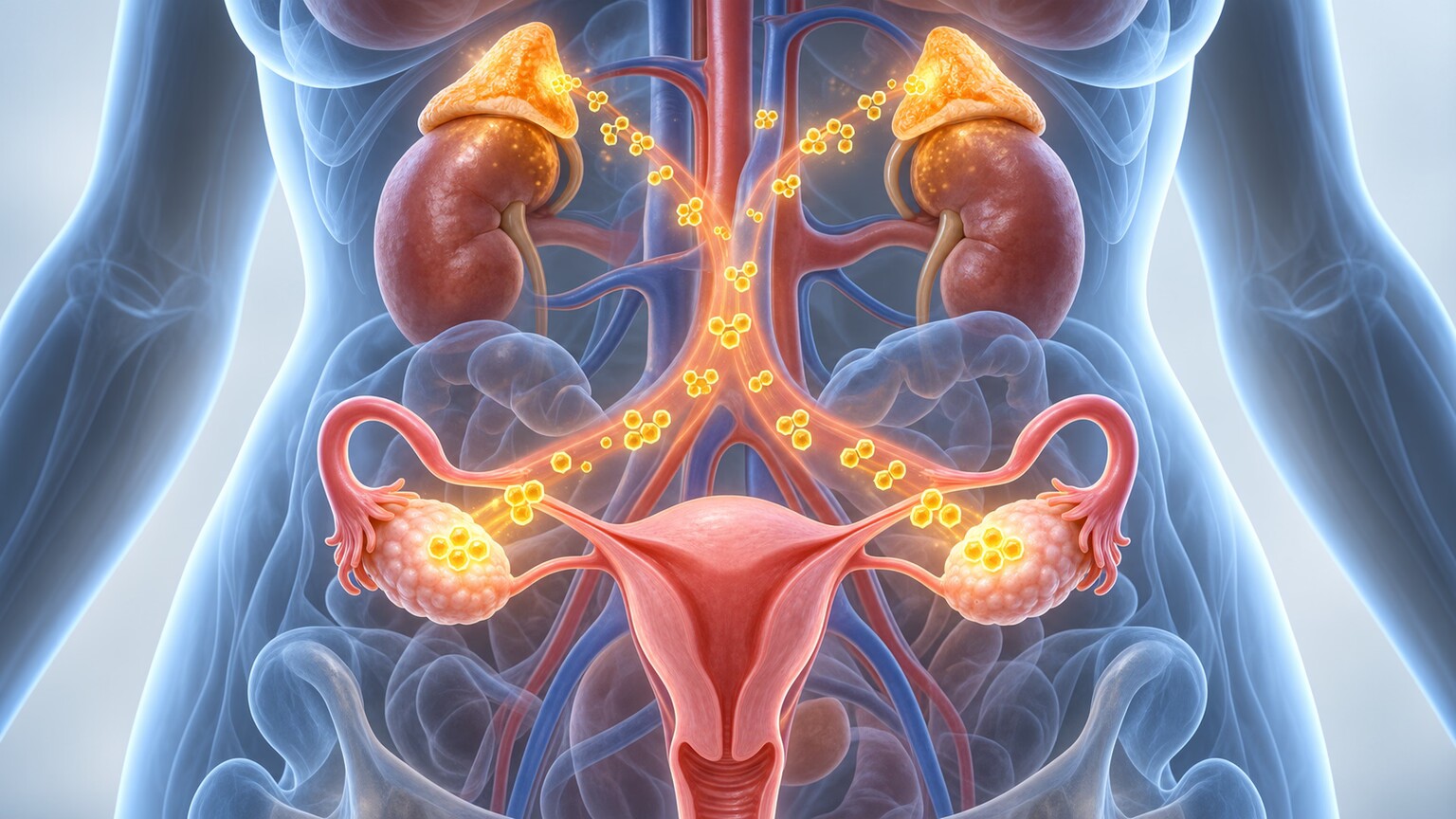
Figure 1. In women, testosterone is produced jointly by the ovaries and the adrenal glands, together contributing roughly equal shares under normal circumstances.
Where a Woman's Testosterone Actually Comes From
In a woman's body, testosterone isn't a byproduct or an accident — it's manufactured deliberately, by two separate glands working in tandem. The ovaries produce roughly half of it, as part of the same hormonal machinery that also produces estrogen, since testosterone is actually a direct chemical precursor that gets converted into estrogen further along the pathway. The adrenal glands, two small structures sitting atop each kidney, produce the other half, largely in the form of a related compound called DHEA that the body further converts into testosterone in various tissues throughout the body.
A smaller but genuinely meaningful third contribution comes from peripheral conversion — a process where fat tissue, skin, and other tissues throughout the body convert weaker circulating androgens, like DHEA and androstenedione, into active testosterone locally, outside of the ovaries and adrenal glands entirely. This peripheral pathway becomes increasingly relevant in women carrying excess body fat, since fat tissue itself is metabolically active and capable of this conversion, which is part of why body composition and testosterone levels are so frequently intertwined in ways that go beyond simple cause and effect in either direction.
This dual-source system matters enormously for understanding a high result, because it immediately splits the diagnostic question into two separate directions: is the excess coming from the ovaries, or is it coming from the adrenal glands? Nearly every condition covered in this article falls cleanly into one category or the other, and figuring out which one is usually the very first step any evaluation takes.
It also helps to understand what testosterone is actually doing in a woman's body under normal circumstances, since it's easy to assume it serves no real purpose outside of being an estrogen precursor. In reality, testosterone plays a direct, independent role in a woman's bone density, muscle maintenance, and libido, and contributes to overall energy and sense of wellbeing. This is exactly why testosterone that's too low, not just too high, is its own legitimate area of concern in women's health — the hormone exists on a genuine spectrum where both extremes carry consequences, and "high" is only half of a much bigger picture.
Normal ranges for total testosterone in adult women typically fall somewhere between about 15 and 70 nanograms per deciliter, though the exact cutoffs vary meaningfully between labs and testing methods — a detail worth keeping in mind before comparing two results drawn at different facilities. Because testosterone circulates partly bound to proteins (mostly SHBG, the same binding protein discussed later in this article) and partly free and biologically active, some labs also report a free or bioavailable testosterone value alongside the total, which can occasionally tell a more complete story than the total number alone, particularly in borderline cases.
PCOS: By Far the Most Common Cause
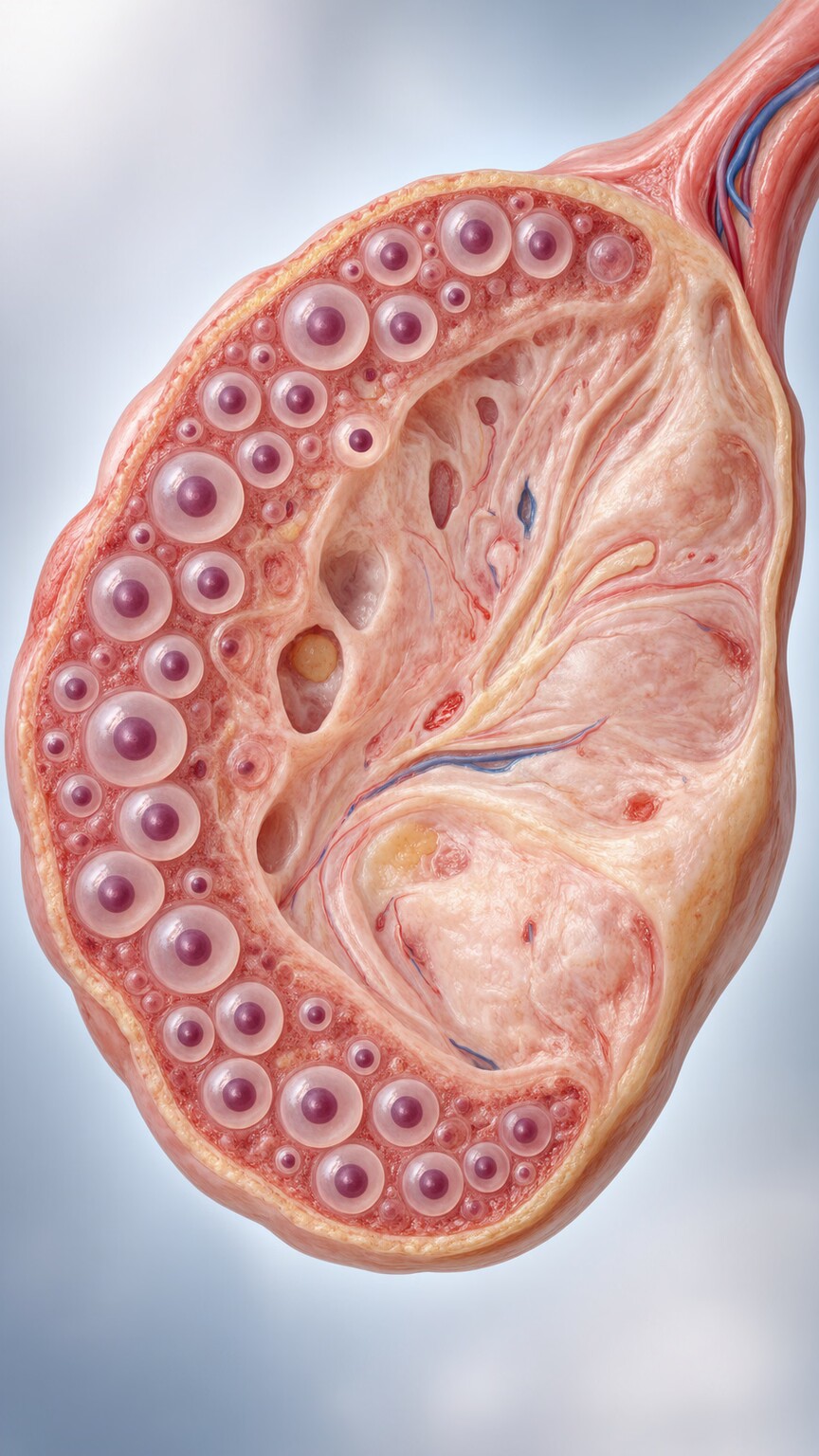
Figure 2. In PCOS, ovaries frequently develop numerous small, immature follicles along their outer edge, associated with disrupted ovulation and elevated androgen production.
Polycystic ovary syndrome, or PCOS, is responsible for the overwhelming majority of all elevated testosterone cases seen in women, affecting somewhere between roughly 8 and 13 percent of women of reproductive age worldwide, depending on which specific diagnostic criteria happen to be used. Despite the name, PCOS isn't really about ovarian "cysts" in the traditional sense — it's a broader hormonal and metabolic condition where the ovaries produce excess androgens (the hormone category testosterone belongs to), ovulation becomes irregular or stops happening consistently, and, in many but not all cases, small immature follicles accumulate along the ovaries' outer edge.
The excess testosterone in PCOS is driven by a specific hormonal feedback disruption: elevated luteinizing hormone (LH) relative to follicle-stimulating hormone (FSH) overstimulates the ovarian cells responsible for androgen production, while insulin resistance, present in a majority of women with PCOS regardless of body weight, independently amplifies that same androgen output and simultaneously lowers a liver-produced protein called SHBG that would otherwise bind up and neutralize much of the circulating testosterone. The combined effect is both more testosterone being made and less of it being safely bound, which is why PCOS-related elevations tend to be more pronounced than what diet or lifestyle changes alone typically fully resolve.
PCOS is also formally diagnosed using a specific set of criteria — most commonly the Rotterdam criteria — that requires at least two of three features to be present: irregular or absent ovulation, clinical or lab evidence of excess androgens (which is where an elevated testosterone comes in), and the polycystic-appearing ovaries visible on ultrasound. This three-part structure matters because it means a woman can be diagnosed with PCOS even with a testosterone level that's only mildly elevated, or occasionally even normal, as long as the other two criteria are clearly present — testosterone is an important supporting piece of the diagnosis, not the sole determining factor.
It's also worth understanding why PCOS symptoms and severity vary so widely between different women carrying the same diagnosis. Genetics play a substantial role in how sensitive a given person's hair follicles and skin are to circulating androgens, meaning two women with nearly identical testosterone levels can present with dramatically different amounts of visible hirsutism or acne. This variability is part of why PCOS management is generally tailored to the specific symptoms bothering an individual patient most, rather than applying a single uniform treatment plan based on the lab number alone.
Already have a testosterone number from a recent test, but not sure what it actually means for you? Enter it and see exactly where it falls in seconds.
🧮 Try the Free CalculatorNon-Classic Congenital Adrenal Hyperplasia: A Less Common Adrenal Cause
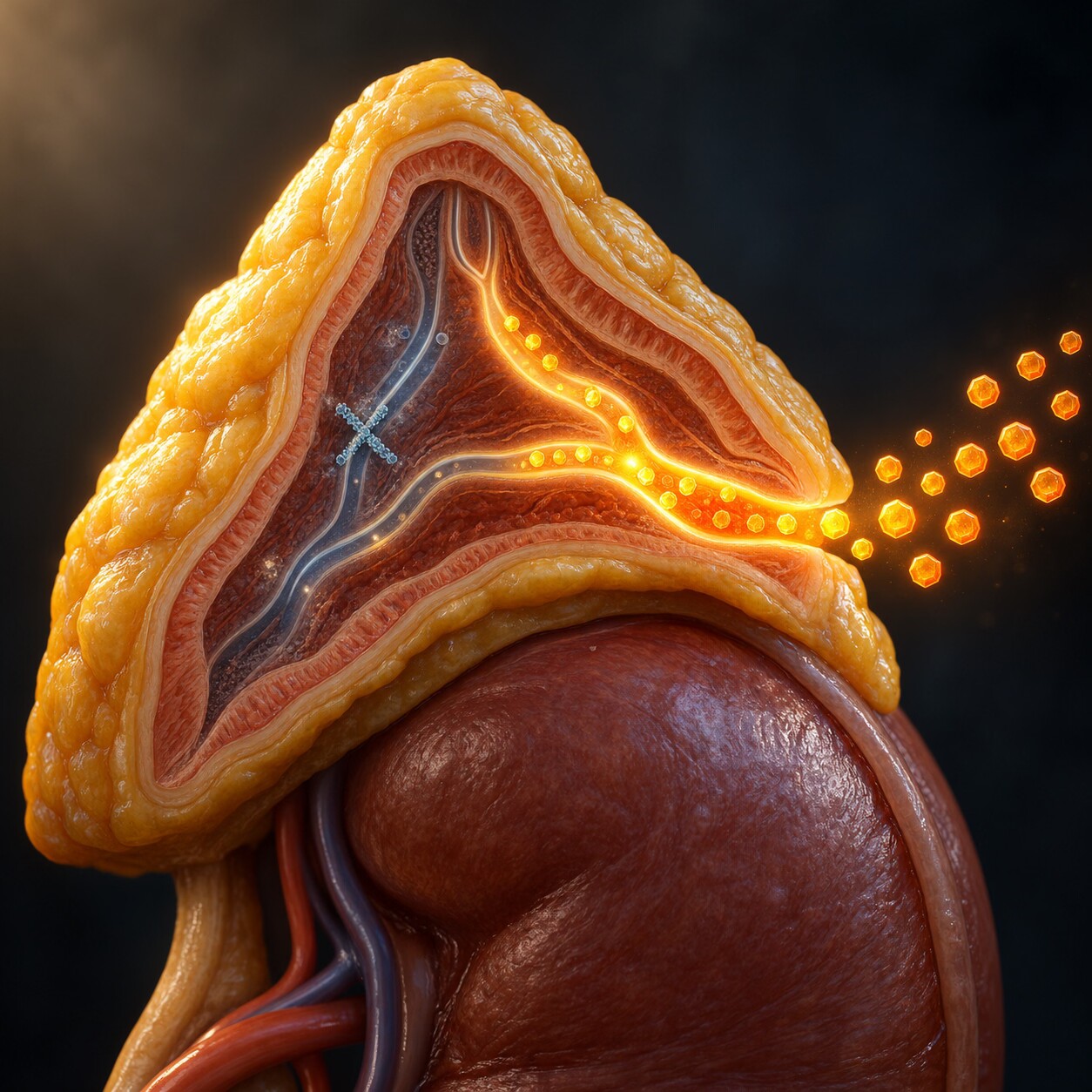
Figure 3. In non-classic congenital adrenal hyperplasia, a partial enzyme deficiency in the adrenal gland's cortisol-production pathway redirects hormone precursors toward excess androgen output instead.
Congenital adrenal hyperplasia, or CAH, is a genetic condition involving an inherited deficiency in one of the specific enzymes the adrenal glands genuinely need in order to manufacture cortisol properly and reliably. The "classic" severe form is usually caught in infancy, but a milder version — non-classic CAH — can go completely undetected until adolescence or adulthood, when it surfaces as exactly the kind of elevated testosterone and related symptoms this article is about. Because the enzyme deficiency partially blocks the normal cortisol-production pathway, hormone precursors that would otherwise become cortisol get redirected instead toward androgen production, including testosterone.
Non-classic CAH is far less common than PCOS but is specifically worth knowing about because its outward symptoms — irregular periods, excess facial or body hair, acne — can look nearly identical to PCOS on the surface, while the underlying cause and the most effective long-term management differ. This is one of the main reasons a specific blood test called 17-hydroxyprogesterone is often included when working up unexplained high testosterone, since it's the most direct way to distinguish this adrenal enzyme condition from ovarian-driven PCOS.
The specific enzyme most commonly involved in non-classic CAH is called 21-hydroxylase, and a partial deficiency in it is estimated to affect somewhere between 1 and 2 percent of the general population, with the prevalence considerably higher within certain ethnic groups, including Ashkenazi Jewish populations, where it may affect as many as 1 in 27 individuals. Because the condition is genetic and inherited, a family history of similar symptoms — unexplained infertility, early-onset severe acne, or a relative diagnosed with classic CAH in infancy — can be a meaningful clue pointing an evaluation in this direction rather than toward PCOS.
Distinguishing between PCOS and non-classic CAH matters clinically for a specific reason: because CAH involves a genuine enzyme deficiency rather than the more complex hormonal feedback disruption seen in PCOS, treatment approaches can differ meaningfully. Some cases of non-classic CAH respond well to low-dose corticosteroid treatment, which works by directly replacing the missing downstream hormone and, in turn, reducing the compensatory overproduction of androgens — an approach that wouldn't make sense as a primary treatment for typical PCOS. This is exactly the kind of distinction that makes getting an accurate underlying diagnosis worth the extra testing, rather than assuming any woman with hirsutism and irregular periods automatically has PCOS.
Androgen-Secreting Tumors: Rare, but the Reason Rapid Symptoms Get Taken Seriously
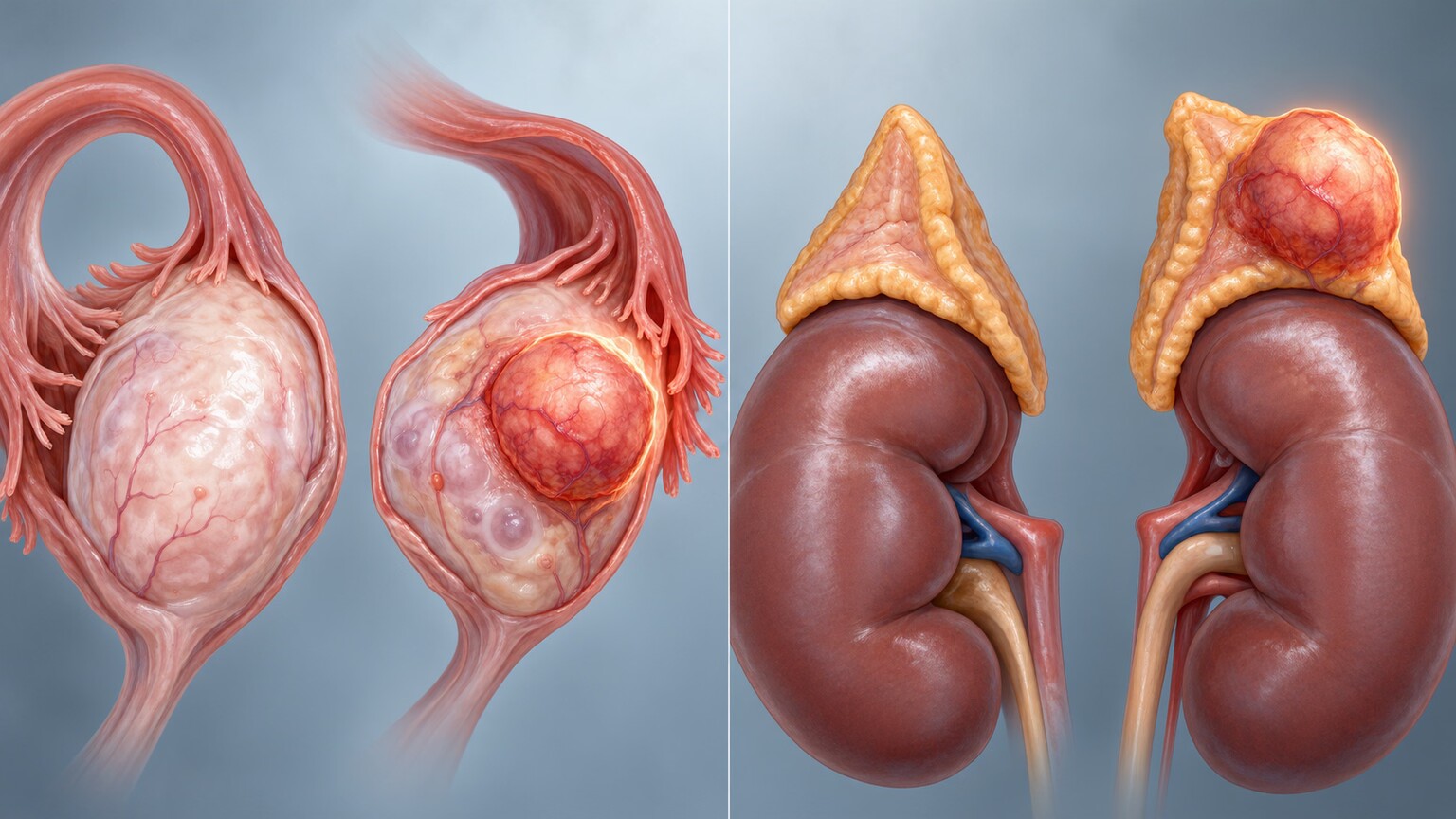
Figure 4. Androgen-secreting tumors of the ovary or adrenal gland are rare but produce testosterone independently of the body's normal hormonal feedback controls, often resulting in unusually high levels and rapid symptom onset.
The single rarest cause covered anywhere on this list, but also the one single most important one to genuinely recognize quickly, is a hormone-secreting tumor of either the ovary or the adrenal gland. These growths are almost always benign but produce testosterone completely outside the body's normal regulatory feedback loop, which is why the resulting testosterone elevations tend to be substantially higher than anything seen with PCOS or CAH — often several times above the normal range rather than modestly elevated.
The clinical pattern that distinguishes a tumor from the more common causes is speed and severity of onset. PCOS and CAH both tend to develop gradually, often over years, with symptoms building slowly enough that they can be hard to pinpoint to a specific starting point. A hormone-secreting tumor, by contrast, classically produces virilization — a specific cluster of changes including a noticeably deepened voice, significant enlargement of the clitoris, rapidly progressing hair growth in a male-pattern distribution, and worsening male-pattern scalp hair loss — that develops over a matter of months rather than years. This rapid timeline, especially when it starts in a woman with previously normal menstrual cycles and no prior history of androgen-related symptoms, is exactly the pattern that prompts urgent imaging to look for a tumor directly.
Ovarian androgen-secreting tumors, including specific types called Sertoli-Leydig cell tumors and hilus cell tumors, tend to occur most often in women in their twenties through forties, while adrenal androgen-secreting tumors, including adrenocortical tumors, can occur across a broader age range and are somewhat more likely to be identified incidentally on imaging performed for an unrelated reason. Both types are, fortunately, rare — androgen-secreting tumors overall account for a very small fraction of all hirsutism and elevated testosterone cases seen in clinical practice — but their rarity is exactly why the specific virilization symptom pattern described above carries so much diagnostic weight when it does appear.
Once a tumor is suspected based on the severity and speed of symptoms combined with a dramatically elevated testosterone level, the imaging workup typically starts with a pelvic ultrasound to examine the ovaries directly, and a CT or MRI scan of the adrenal glands if the ovarian imaging comes back unremarkable or if DHEA-S, the adrenal-specific hormone marker, is also significantly elevated. Because these tumors are usually benign and often successfully treated with surgical removal, catching one promptly through this kind of urgent evaluation generally leads to a very good outcome — which is precisely why recognizing the rapid-onset symptom pattern early, rather than dismissing it as "just PCOS getting worse," matters so much.
Medications and Supplements That Introduce Testosterone Directly

Figure 5. DHEA, sold openly as an over-the-counter supplement, is a direct testosterone precursor that the body converts into testosterone, meaning regular supplementation can measurably raise blood levels.
Not every high testosterone result reflects an underlying medical condition at all — sometimes the explanation is sitting in a supplement cabinet. DHEA, widely sold over the counter and marketed for anti-aging, libido, and energy, is a direct testosterone precursor, and regular use can measurably raise a woman's testosterone level, sometimes without her fully realizing the supplement was doing anything hormonally significant. Anabolic steroids, whether taken for athletic performance or muscle-building purposes, work even more directly, since they either are synthetic testosterone or convert into it in the body.
What makes this category particularly easy to overlook is that many of these products are marketed using wellness-adjacent language — "hormone balance," "vitality," "natural energy support" — that doesn't obviously signal "this contains a hormone precursor" to someone browsing a supplement aisle or an online wellness store. A woman taking a multi-ingredient supplement blend for an unrelated reason, like sleep or stress, may not realize DHEA was even one of its listed ingredients unless she specifically checks the label, which is exactly why bringing the actual supplement bottles, or at minimum a full ingredient list, to an appointment can be more useful than trying to recall product names from memory alone.
Certain prescription medications carry a smaller version of this same effect, including some medications used for endometriosis that work partly by shifting the body's hormonal balance toward androgens as part of their mechanism. Testosterone replacement therapy itself, whether prescribed off-label for low libido or other symptoms, is an obvious and often overlooked cause when a testosterone level comes back unexpectedly high in someone already using it. In every one of these cases, a careful medication and supplement history — including things a person might not think to mention because they don't consider them "medication" — is one of the fastest ways to explain an otherwise puzzling result.
Danazol, an older medication that is occasionally still used for endometriosis and certain blood disorders today, is a particularly notable example because it's a synthetic androgen derivative by design, meaning elevated testosterone-like effects are an expected and well-documented consequence of taking it rather than a surprising side effect. Certain topical testosterone or DHEA creams and gels, sometimes prescribed for localized symptoms like vaginal dryness or low libido, can also be absorbed into general circulation more than intended, particularly with frequent or heavy application, occasionally producing a measurably elevated blood level even though the product was intended for localized, not systemic, effect.
It's worth noting that compounded hormone preparations — custom-mixed hormone formulations sometimes marketed as more "natural" alternatives to standard prescriptions — carry their own specific risk in this context, since dosing consistency in compounded products isn't held to the same standardized manufacturing requirements as FDA-approved medications. A woman using a compounded testosterone or DHEA product may be receiving a meaningfully higher dose than intended without any clear way to know it from the product label alone, which is one of several genuinely important reasons a full, honest, and complete accounting of every supplement and prescription remains such a critical first step whenever an unexplained high testosterone result actually needs explaining.
Insulin Resistance: A Contributor Even Outside of Formal PCOS
Insulin resistance deserves its own mention separate from PCOS, because its effect on testosterone doesn't require a formal PCOS diagnosis to matter. Excess insulin directly stimulates ovarian androgen production and independently suppresses SHBG, the same binding protein discussed earlier, meaning a woman with significant insulin resistance from any cause — not just PCOS — can show elevated free testosterone even if she doesn't meet the full diagnostic criteria for PCOS itself. This is part of why weight-related insulin resistance, type 2 diabetes, and metabolic syndrome are all independently associated with mildly elevated testosterone in women, and why addressing insulin resistance directly, through diet, activity, or medication, often meaningfully improves testosterone levels regardless of the specific underlying label attached to the case.
This underlying mechanism also helps explain a pattern that can otherwise seem genuinely confusing on the surface: two women with nearly identical body weight, activity level, and outward appearance can still end up with meaningfully different testosterone levels, precisely because insulin resistance doesn't track perfectly or predictably with body weight alone. Some women carry insulin resistance despite a body weight generally considered healthy — sometimes called "lean PCOS" or "lean insulin resistance" — while some women with a higher body weight have entirely normal insulin sensitivity and correspondingly normal testosterone. This is exactly why any evaluation of elevated testosterone typically includes some assessment of insulin resistance directly, through fasting insulin or glucose testing, rather than relying on body weight or BMI as a stand-in proxy for it.
Metformin, a medication most commonly associated with type 2 diabetes treatment, is frequently used specifically to address this insulin-driven component of elevated testosterone, even in women who don't have diabetes themselves. By improving how effectively the body's cells respond to insulin, metformin indirectly reduces the excess ovarian androgen stimulation and helps restore SHBG toward its normal binding capacity, which is why it's such a commonly prescribed first-line option for the insulin-resistance component of PCOS specifically, alongside or sometimes instead of hormonal medications that work more directly on the androgens themselves.
Combined oral contraceptives represent another commonly used approach that works through a genuinely different mechanism than metformin: rather than targeting insulin resistance directly, they increase liver production of SHBG substantially, binding up more of the circulating testosterone and reducing the free, biologically active fraction responsible for symptoms. This is part of why hormonal birth control is so frequently the first treatment offered for PCOS-related hirsutism and acne specifically, independent of whether insulin resistance is also present or being separately addressed.
Recognizing the Symptoms: From Mild Androgen Excess to True Virilization

Figure 6. Androgenic alopecia — thinning concentrated along the central part line rather than the hairline — is one of the more visible, gradual signs of chronic excess androgen exposure.
The physical signs of elevated testosterone in women exist on a real, continuous spectrum rather than a simple yes-or-no checklist, and understanding roughly where a particular symptom set falls along that spectrum is genuinely useful for gauging how urgently it deserves attention. On the milder, far more common end sit hirsutism (coarse, dark hair growth in a male-pattern distribution — upper lip, chin, chest, lower abdomen), persistent acne that doesn't respond to typical treatments, and androgenic alopecia, a specific pattern of scalp hair thinning concentrated along the central part line rather than a receding hairline. These symptoms typically develop gradually and are the ones most commonly associated with PCOS and non-classic CAH.
Irregular or absent menstrual cycles sit in the middle of this spectrum — extremely common in PCOS specifically, since disrupted ovulation is part of the condition's core definition, but also a nonspecific symptom that can accompany several of the other causes covered in this article. On the far end of the spectrum sits true virilization: a deepening voice, significant clitoral enlargement, and rapid-onset, aggressive hair growth and hair loss developing within months. This end of the spectrum is what specifically raises concern for an androgen-secreting tumor rather than a far more common hormonal condition, precisely because of both its severity and its speed.
Hirsutism itself is formally assessed using a standardized scoring system called the Ferriman-Gallwey scale, which rates hair growth density across nine specific body areas — the upper lip, chin, chest, upper and lower abdomen, upper arms, thighs, upper back, and lower back — assigning each area a score based on how much coarse, dark terminal hair is present compared to fine, light vellus hair that's normal and unrelated to androgen levels. This standardized approach exists because "excess hair growth" is inherently somewhat subjective and varies enormously by ethnicity and individual baseline hair patterns even without any hormonal abnormality at all, so a formal scoring tool helps separate a genuine androgen-driven pattern from normal individual variation.
Acne that's specifically related to elevated androgens also tends to have a somewhat recognizable pattern distinct from ordinary, typical adolescent acne: it's more likely to be concentrated specifically along the jawline and lower face, tends to be noticeably deeper, more cystic, and more stubbornly resistant to standard topical treatments, and often persists or even worsens into a person's late twenties and thirties, rather than following the more typical adolescent timeline of improving with age. This pattern, especially when combined with irregular cycles, is often what first prompts a clinician to check testosterone and related hormones in the first place, even before any hair growth symptoms have become noticeable.
Androgenic alopecia, the hair thinning pattern illustrated earlier, deserves its own specific mention because it's frequently the symptom women notice last and take most seriously, precisely because hair loss carries a different emotional weight than acne or unwanted hair growth. Unlike male-pattern baldness, which typically involves a receding hairline, androgenic alopecia in women more often produces diffuse thinning concentrated along the central part, sometimes making the part line itself appear progressively wider over time. This pattern is driven by the same androgen mechanism as hirsutism and acne, just acting on scalp hair follicles instead of body hair follicles or oil glands, which is exactly why all three symptoms so often cluster together in the same person.
How Testing Actually Works Through These Possibilities
A high testosterone result rarely gets interpreted in isolation — it's almost always evaluated alongside a small panel of related hormones designed specifically to narrow down which of these causes is actually responsible. DHEA-S, produced almost exclusively by the adrenal glands, helps distinguish an adrenal source from an ovarian one, since a disproportionately elevated DHEA-S points toward the adrenal glands, including CAH or an adrenal tumor, rather than the ovaries. LH and FSH levels, along with their ratio to each other, help support or challenge a PCOS diagnosis. The 17-hydroxyprogesterone test mentioned earlier specifically checks for non-classic CAH. And when the overall picture — the severity of the elevation, the speed of symptom onset, or a specific pattern on these supporting tests — raises concern for a tumor, pelvic ultrasound and adrenal imaging become the next logical step to look for a mass directly.
SHBG itself is typically measured alongside total testosterone in this same panel for one very specific, genuinely important reason: because SHBG determines how much of the total testosterone is actually free and biologically active versus safely bound and inactive, two women with identical total testosterone results can have meaningfully different free testosterone, and therefore meaningfully different symptoms, depending on their individual SHBG level. A woman with low SHBG, common in PCOS and insulin resistance, will generally experience more symptomatic effect from a given total testosterone number than a woman with higher SHBG carrying that same total result — which is part of why free or calculated bioavailable testosterone is often considered a more clinically meaningful number than total testosterone alone, particularly in borderline cases.
This layered approach exists precisely because testosterone alone, as a single isolated number, genuinely can't distinguish between "extremely common and manageable" and "rare and urgent" on its own — the supporting tests and the clinical picture surrounding the number are what actually do that work.
Timing and technique also genuinely matter when a testosterone test is drawn, in ways that can meaningfully affect the result. Testosterone in women, like in men, follows a mild circadian pattern, tending to run somewhat higher in the morning, which is why testing is typically recommended before roughly ten or eleven in the morning rather than later in the day. For women who are still menstruating, the specific point in the menstrual cycle can also influence the result somewhat, since androgen production fluctuates alongside the broader hormonal cycle — this is one of several reasons a single borderline result is often repeated before drawing firm conclusions, rather than treated as definitively conclusive on the first draw.
Pelvic ultrasound, when used specifically to evaluate for PCOS-pattern ovaries or to look for a mass, is most informative when performed transvaginally rather than through the abdomen, since this approach provides considerably clearer visualization of ovarian structure. For women who haven't been sexually active or who prefer not to have a transvaginal exam, abdominal ultrasound remains a reasonable alternative, though it may be somewhat less sensitive for detecting the specific follicle pattern associated with PCOS or a small early-stage tumor.
A Worked Example: Two Different Paths From the Same Starting Point
Consider a 27-year-old who comes in with irregular periods over the past three years, gradually worsening acne along the jawline, and some new dark hair growth on her chin that she's been tweezing for over a year. Her total testosterone comes back moderately elevated. Given the gradual multi-year timeline, the specific symptom pattern, and her age, PCOS is the leading consideration, and her workup includes an LH/FSH ratio and a pelvic ultrasound, both of which support that diagnosis. Management focuses on addressing insulin resistance and the specific symptoms bothering her most, not urgent intervention.
Now consider a different 27-year-old whose periods, previously completely regular, stopped four months ago, whose voice has noticeably deepened over roughly the same window according to people close to her, and who has developed rapid, coarse hair growth on her chest that wasn't present six months earlier. Her testosterone comes back dramatically elevated — several times higher than the top of the normal range. Here, despite being the same age with a superficially similar complaint, the rapid timeline and the presence of true virilization signs shift this case entirely toward an urgent tumor workup, with imaging typically ordered within days rather than as a routine follow-up. Same hormone, same sex, radically different urgency, driven entirely by timeline and symptom severity rather than the raw number alone.
A third, less dramatic version of this same scenario is worth including because it's genuinely the most common of all: a 34-year-old on no medications, with completely regular cycles and no hirsutism, acne, or hair changes of any kind, who has a testosterone result flagged as mildly above the reference range on a routine hormone panel ordered for an unrelated reason, such as fatigue or low libido being investigated. Here, with no supporting symptoms pointing toward PCOS, CAH, or anything more concerning, the most likely explanation is often simply normal individual variation, a lab reporting difference, or a mild, clinically insignificant fluctuation — and the reasonable next step is frequently nothing more than a single repeat test to confirm the finding, rather than an extensive workup chasing a number that, on its own, isn't actually causing any problem.
Frequently Asked Questions
Is a high testosterone level in women always a sign of PCOS?
No, though PCOS is by far the most common cause. Non-classic congenital adrenal hyperplasia, insulin resistance independent of PCOS, medications and supplements, and, rarely, hormone-secreting tumors can all elevate testosterone as well.
What symptoms should prompt urgent evaluation rather than a routine appointment?
Rapid onset (weeks to months) of voice deepening, significant clitoral enlargement, or aggressive new hair growth and hair loss — especially in someone with previously normal cycles — warrants prompt evaluation for an androgen-secreting tumor.
Can supplements really raise testosterone enough to show up on a blood test?
Yes. DHEA supplements are a direct testosterone precursor and can measurably raise levels with regular use, which is why a full supplement history is an important part of interpreting an unexplained high result.
Does losing weight lower testosterone in women with PCOS?
Often, yes, at least partially. Because insulin resistance drives a meaningful portion of PCOS-related testosterone elevation, improving insulin sensitivity through weight loss, diet, or activity frequently lowers testosterone alongside other PCOS symptoms.
What's the difference between hirsutism and true virilization?
Hirsutism refers to excess coarse hair growth alone, common with PCOS and generally gradual. Virilization is a more severe cluster including voice deepening and clitoral enlargement, usually developing faster, and is more specifically associated with tumors.
Conclusion
A high testosterone result in a woman is rarely mysterious once it's placed in context. The overwhelming majority of cases trace back to PCOS, a common and manageable hormonal condition, with a shorter list of less common explanations — an adrenal enzyme condition, insulin resistance, a supplement or medication, and, rarely, a hormone-secreting tumor — rounding out the picture. What separates a routine follow-up from an urgent one isn't the number itself, but how quickly the accompanying symptoms developed and how severe they've become. Understanding that distinction turns a confusing, unexplained lab flag into a specific, actionable next step.
It's also worth remembering, closing out this article the same way it began, that testosterone in a woman's body isn't an intruder or a mistake whenever it shows up on a lab report — it's a hormone your body is supposed to have, working alongside estrogen and everything else in your hormonal system. An elevated result is simply a signal that something in that system has shifted, and in the great majority of cases, that shift has a clear name, a clear explanation, and a genuinely manageable path forward once it's properly identified.
Still Not Sure What Your Results Mean?
Upload your labs and get a complete, visual, plain-language interpretation of every biomarker — delivered to your inbox in under 15 minutes.
Get My ReportThis article is for educational purposes only and does not constitute medical advice. Always consult your healthcare provider regarding your specific lab results.