
Understanding the Difference Between Skin and Blood Allergy Testing
If your doctor has mentioned allergy testing, you may have noticed there isn't just one kind. Some people get a grid of tiny pricks on their forearm or back and watch for bumps to appear within twenty minutes. Others simply have blood drawn and wait several days for a report listing numbers next to allergen names. Both are legitimate, well-studied ways of investigating the same underlying question — does your immune system overreact to a specific substance — but they get there through completely different biology, and each has situations where it clearly outperforms the other. Neither one is simply the "better" test in every case; they're closer to two different tools that a clinician reaches for depending on your skin, your medications, your symptoms, and even your age. Understanding what each test is actually doing, cell by cell, makes it much easier to understand why your doctor chose the one they did, and why the two methods don't always agree with each other on the exact same allergen. It also makes the resulting report far less intimidating — a skin test wheal measured in millimeters and a blood IgE value measured in kilo-units per liter look like they belong to two unrelated systems, but once you understand what each number is actually tracking underneath, they turn out to be describing the same underlying immune story from two different vantage points.
What Happens During a Skin Prick Test
A skin prick test, sometimes called a percutaneous test, is built around provoking a small, controlled, visible version of an allergic reaction directly on your skin. A clinician places a drop of liquid allergen extract — ragweed pollen, cat dander, peanut protein, whatever is being investigated — onto the surface of your forearm or upper back, then uses a small plastic or metal lancet to gently prick through that drop into the very top layer of skin. This isn't a needle stick that draws blood; it barely breaks the skin's surface, just enough to let a trace amount of the allergen extract come into contact with immune cells sitting just beneath it. A technician typically tests ten to forty allergens at once in neat rows, along with two control spots: a histamine control, which should always produce a bump (confirming your skin is capable of reacting at all), and a saline control, which should produce nothing (confirming you're not simply reactive to being poked).
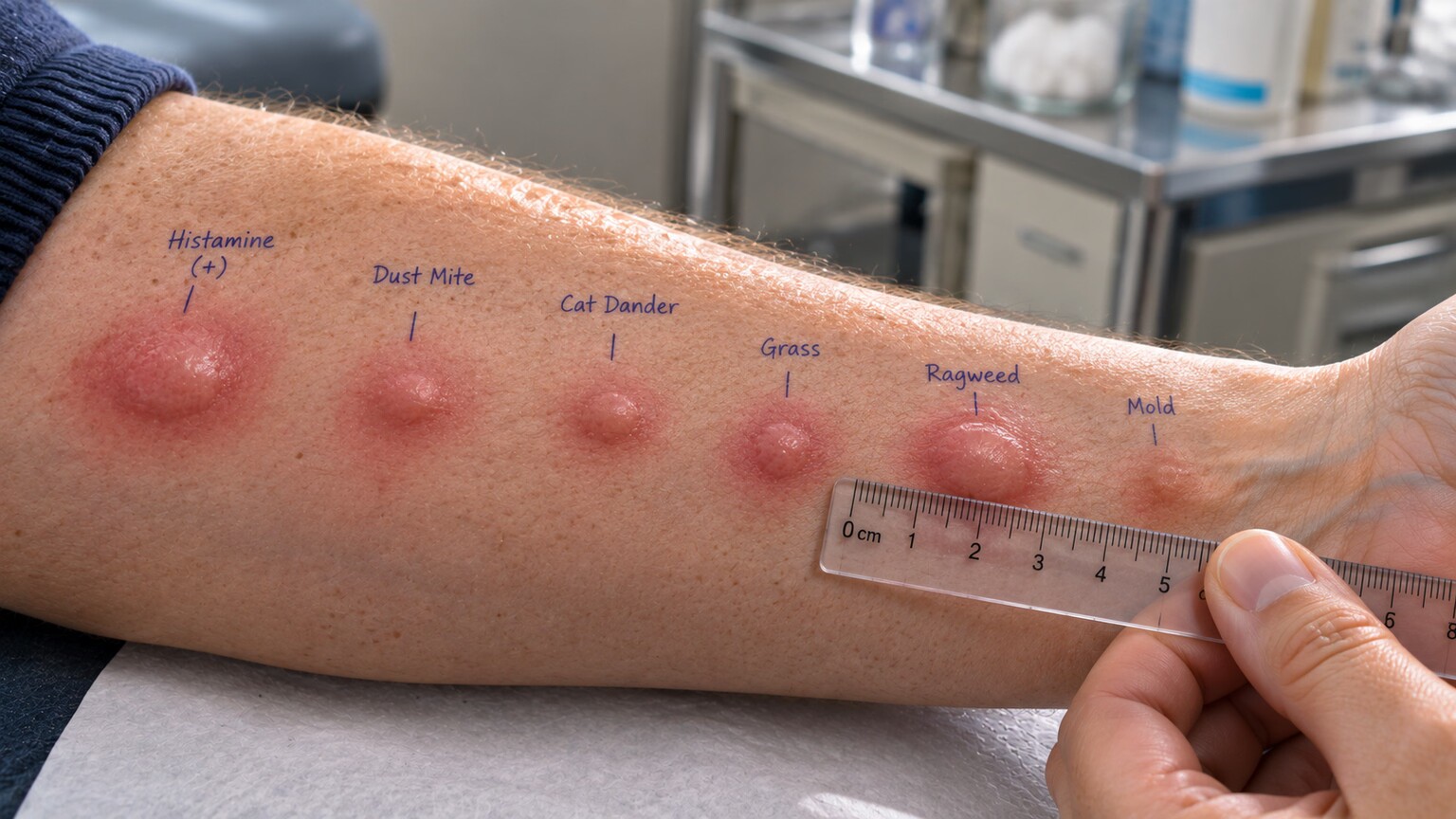
Figure 1. A wheal-and-flare reaction forming at a skin prick test site, the visible swelling and redness triggered by histamine released from mast cells.
Underneath each drop of allergen sits a population of mast cells, immune cells that live in your skin specifically to guard against foreign invaders. If you've been previously sensitized to that allergen — meaning your immune system has already met it and built a defense against it — those mast cells are coated in specific antibodies primed to recognize it. The moment the allergen extract touches them, it cross-links those antibodies on the mast cell surface, and within seconds the mast cell ruptures open, dumping histamine and other inflammatory chemicals into the surrounding tissue. This is what produces the raised, itchy, pale-centered bump called a wheal, surrounded by a ring of redness called a flare — the technician measures the wheal's diameter in millimeters roughly fifteen to twenty minutes later, and a wheal several millimeters larger than the saline control is generally read as a positive result. It's fast because it's happening with cells that are already sitting in place, pre-loaded and ready to fire, rather than something that has to be manufactured or transported anywhere.
What a Blood Test Actually Measures: Specific IgE
A blood allergy test works from an entirely different starting point. Instead of provoking a reaction and watching it happen in real time, it measures a quantity that's already circulating in your bloodstream: allergen-specific Immunoglobulin E, or specific IgE. IgE is the antibody class your immune system produces when it decides a particular substance is a threat worth remembering, and once your body has built IgE against, say, tree pollen, some of it circulates freely in your blood in addition to sitting on the surface of mast cells and basophils throughout your body. A blood draw captures a sample of that circulating antibody, and a laboratory can then measure, in a very targeted way, how much IgE in that sample is specifically shaped to recognize one allergen at a time.
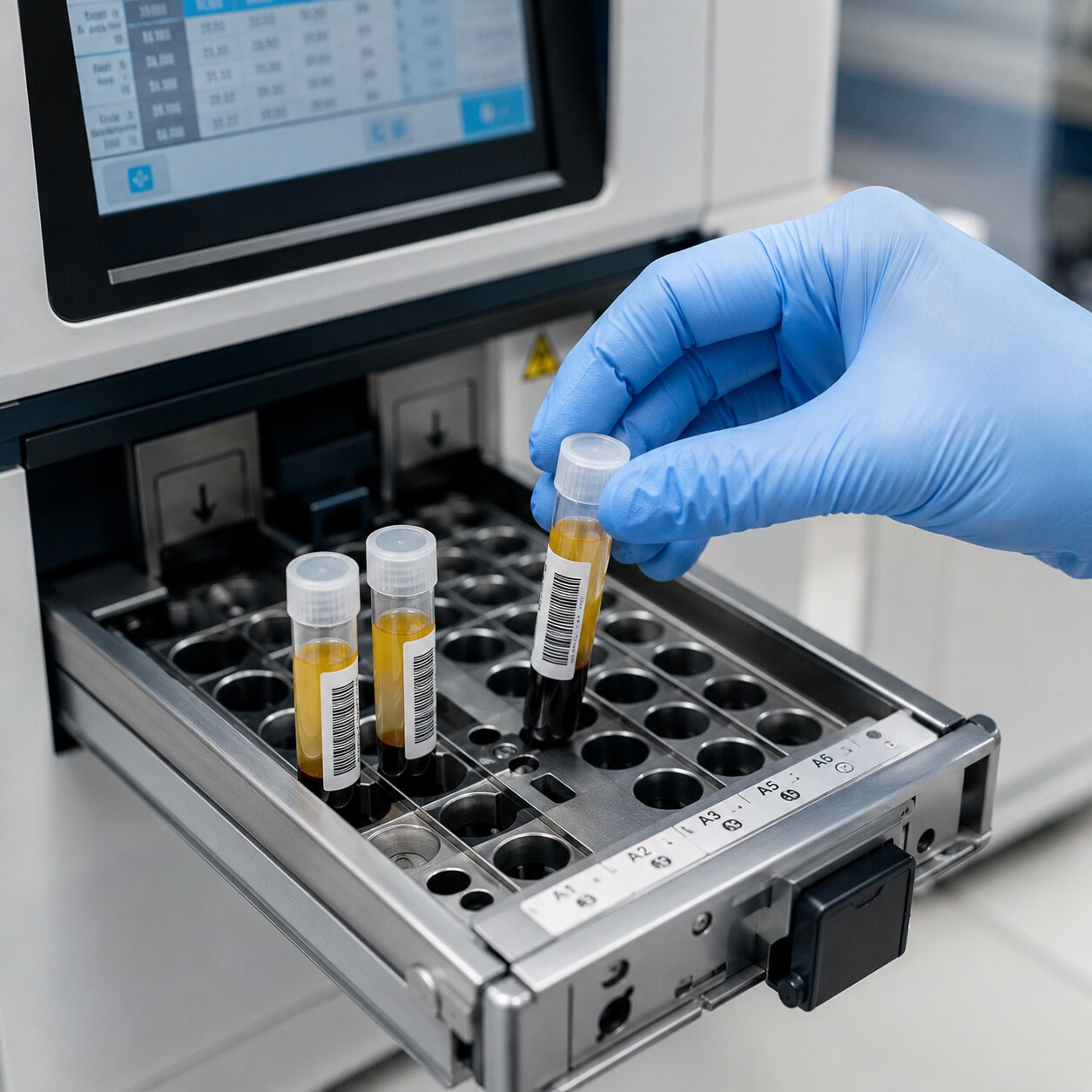
Figure 2. Serum samples being loaded into an automated immunoassay analyzer that measures allergen-specific IgE antibody levels in the blood.
The lab technology behind this is called an immunoassay, and the most common modern version works roughly like this: a solid surface, often tiny beads or the inside of a test well, is coated with a specific allergen — say, purified peanut protein. Your blood serum, the liquid part of your blood left after the cells and clotting factors are removed, is added to that surface. If your blood contains IgE shaped to recognize peanut protein, it binds to the coated allergen and stays put when everything else is rinsed away. A second, labeled antibody is then added that specifically detects human IgE, producing a signal — usually fluorescent or enzymatic — whose strength is directly proportional to how much peanut-specific IgE was present in your original sample. That signal gets converted into a number, typically reported in kUA/L (kilo-units of allergen-specific antibody per liter), which is what shows up on your lab report next to each allergen tested. Because this process involves multiple chemical steps, incubation periods, and often batch processing at a reference lab, results usually take anywhere from one to several business days rather than the twenty minutes a skin test takes.
Curious what the rest of your allergy panel is telling you? Upload your results and get a complete, plain-language breakdown in under 15 minutes.
Analyze My ResultsThe Mechanism Behind the Wheal-and-Flare Reaction
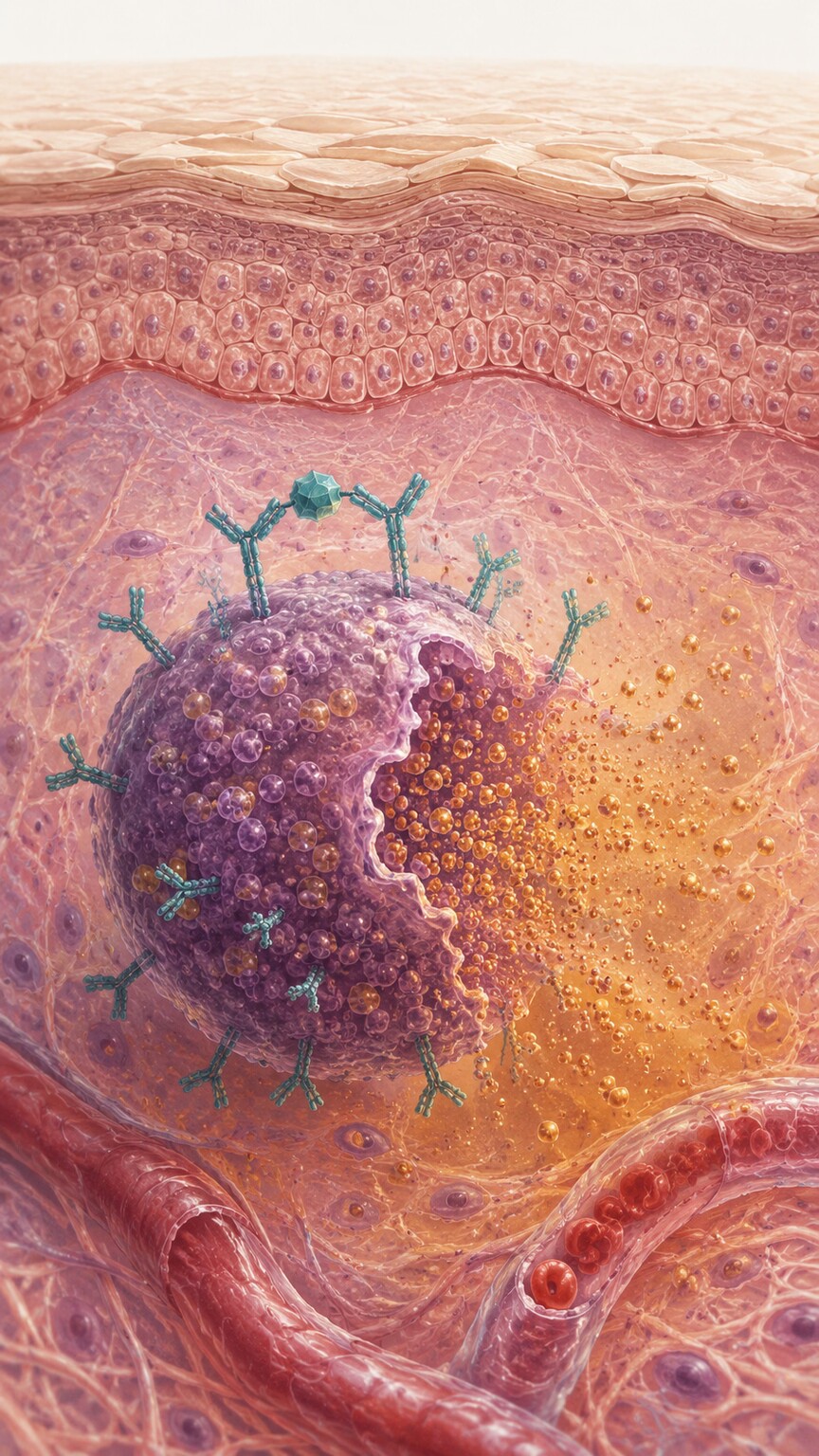
Figure 3. A mast cell degranulating and releasing histamine granules, the cellular event responsible for the itching and swelling seen in a positive skin test.
It helps to understand why the skin test reaction looks and feels the way it does, because that same biology is what a blood test is indirectly trying to predict without ever provoking it. Mast cells are essentially small sacs packed full of pre-made granules of histamine, tryptase, and other chemical messengers, sitting dormant until triggered. Their surface is studded with receptors that grab onto IgE antibodies, so a mast cell that has already been sensitized to ragweed is, in effect, wearing thousands of ragweed-shaped antibody "hooks" all over its outer membrane. When ragweed allergen touches two or more of those hooks at once and bridges them together, it sends a signal through the cell membrane that causes the mast cell to degranulate within seconds — its stored granules fuse with the outer membrane and dump their contents into the surrounding tissue almost instantly. Histamine then does several things simultaneously: it makes small blood vessels leakier, letting fluid seep into the tissue and cause the raised wheal; it dilates blood vessels, producing the surrounding red flare; and it irritates nearby nerve endings, which is what makes the spot itch. The entire visible reaction, from prick to measurable wheal, plays out in the same window of time it takes histamine to diffuse a few millimeters through skin tissue — which is also why it fades on its own within an hour or two, as the histamine gets broken down and cleared.
A blood test never triggers this cascade at all. It simply counts the antibody that would be capable of triggering it if it were sitting on a mast cell in your skin. That distinction matters more than it might sound, because it means the two tests are measuring related but not identical things — one measures a live functional response, the other measures the raw material for a response that never actually happens in the lab. In a sense, a skin test asks your body to perform the reaction live, in miniature, while a blood test asks the lab to infer, from the ammunition already stockpiled in your bloodstream, how likely that same performance would be to happen if it were ever staged.
Accuracy: Sensitivity, Specificity, and What the Numbers Really Mean
Neither test is perfectly accurate, and the two don't fail in the same way. Skin prick testing is generally considered to have excellent sensitivity for many common inhalant and food allergens, meaning it's very good at correctly flagging a reaction when a true allergy exists — research consistently places its sensitivity in the range of roughly 68% to 100% depending on the specific allergen and extract quality used, with somewhat more variable specificity, commonly cited between about 51% and 96%. Specificity is the test's ability to correctly stay negative when there's genuinely no allergy, and skin testing's lower specificity reflects a real phenomenon: a positive wheal shows your immune system has produced IgE against that allergen — meaning you're sensitized — but sensitization and having actual clinical symptoms when exposed are not the same thing. A meaningful share of people who show a positive skin test to a given allergen never experience symptoms when they encounter it in daily life.
Blood IgE testing shows a broadly similar pattern from the opposite direction. Its specificity tends to run somewhat higher than skin testing for many allergens, since a lab measurement is less influenced by technique, skin reactivity, or medications than a live skin reaction is, but studies have found its sensitivity can lag behind skin testing for certain allergens, meaning it occasionally reports a low or negative IgE level in someone who does, in fact, react clinically to that substance. Because of this trade-off, allergists frequently describe the two tests as complementary rather than interchangeable — when results from a patient's history don't line up cleanly with one test, the other is sometimes used to clarify the picture, and in ambiguous or high-stakes cases (particularly with food allergens where accidental exposure carries real risk), a supervised oral food challenge remains the actual gold standard that both tests are ultimately trying to predict.
It's also worth understanding how heavily both tests depend on something outside the lab entirely: the pretest probability that a person is actually allergic in the first place, based on their symptom history. A positive result of any kind is far more likely to reflect a genuine clinical allergy in someone who already has a clear story of reacting to that specific substance — hives within minutes of eating shrimp, for example — than the identical positive result found incidentally on a broad screening panel run on someone with no relevant symptoms at all. This is a basic feature of how diagnostic testing works in general, not unique to allergy testing, but it matters enormously here because both skin and blood panels are frequently ordered as wide screens covering dozens of allergens at once. The math works against you the more allergens you test without a specific reason to suspect each one: even a test that's individually quite accurate will still generate a meaningful number of false positives once it's applied allergen by allergen across a long list, simply because of how many independent chances there are for a fluke result to appear somewhere on the panel.
Timing: Why One Takes Minutes and the Other Takes Days
The turnaround time difference between these two tests isn't a matter of convenience or clinic scheduling — it's a direct consequence of what each test is physically doing. A skin test reads out the reaction of cells that are already stationed in your skin, primed and ready; there's no sample to transport, no reagents to incubate, no batch of specimens waiting for a lab run. The clinician places the allergen, waits for the biology to unfold in real time in front of them, and measures the result before you leave the room. A blood test, by contrast, has to travel through an entire logistical chain: your blood is drawn, spun down in a centrifuge to separate the serum, often shipped or transported to a reference laboratory, loaded into an automated immunoassay platform, incubated through multiple binding and detection steps that each take time to reach chemical equilibrium, and then interpreted and formatted into a report before a result is ever generated. Even with modern automated analyzers, that full sequence realistically takes at least a day, and turnaround of three to seven days is common depending on the lab and how many allergens are on the panel. This is simply the nature of measuring a molecule in isolation in a laboratory versus watching a live biological reaction happen on the spot.
When Skin Conditions or Medications Rule Out Skin Testing
Skin testing depends entirely on your skin behaving predictably — reacting when it should and staying quiet when it shouldn't — and several common, everyday factors interfere with that in ways a blood test simply isn't affected by. Any antihistamine, including many over-the-counter allergy and cold medications, blocks histamine receptors and can suppress a true positive wheal for anywhere from three days to two weeks depending on the specific drug, which is why patients are typically asked to stop these medications well before a scheduled skin test. Certain antidepressants and other medications can have a similar suppressive effect. Skin conditions themselves can also distort results in the other direction: dermatographism, a condition in which the skin reacts to almost any firm stroke or pressure by raising a hive-like welt, can produce a false positive wheal at every single test site, including the saline control, making the whole panel uninterpretable. Widespread eczema or active hives leave too little clear, unaffected skin to safely place a full panel of test sites, and in rare cases a person's history includes a severe systemic reaction to the very allergen being tested, where deliberately provoking even a small skin reaction carries a risk clinicians would rather avoid entirely. In every one of these situations, blood testing sidesteps the problem completely, since it never requires clear, reactive, medication-free skin in the first place — only a blood draw.

Figure 4. Dermatographism and eczema can distort skin test results, one reason clinicians often turn to blood testing for patients with active skin conditions.
This is also why blood testing is often the default starting point for infants and very young children. Skin testing is technically possible in babies, but young infants can have a naturally muted skin reactivity that produces smaller wheals than their actual sensitization would suggest, and holding a squirming infant still for a multi-site prick test is its own practical challenge. A single blood draw, however small, avoids both problems and still gives a clinician quantifiable specific IgE values to work with. Pregnant patients and anyone whose care team wants to avoid even the small, controlled risk of a skin reaction — including in the rare instance where a patient has a history of a severe reaction to the skin-test process itself — are managed the same way.
Broken or irritated skin from a recent sunburn, a flare of contact dermatitis, or even a fresh tattoo in the testing area can also make a spot temporarily unsuitable for skin testing, simply because inflamed skin doesn't respond to allergen exposure the same predictable way healthy skin does. Extensive scarring, such as from prior burns or surgery, can similarly leave too little normal, testable skin surface in the areas typically used. None of these situations make a person untestable overall — they simply shift the practical answer toward a blood draw, which only ever needs one small, healthy patch of vein regardless of what the rest of the skin looks like.
When Skin Testing Is Preferred Over Blood Testing
Blood testing isn't automatically the safer or more convenient default in every situation, and there are real reasons allergists still reach for a skin prick test as their first choice for most otherwise-healthy patients. Skin testing is generally less expensive per allergen than a comparable blood panel, since it doesn't require laboratory processing, reagents, or courier shipping — a clinician can test dozens of allergens in a single fifteen-minute office visit for a fraction of what an equivalent blood panel typically costs. It also gives an immediate result, which matters clinically: if a patient and their allergist are trying to make a same-visit decision about starting immunotherapy or adjusting a treatment plan, waiting several days for a lab report can genuinely delay care. Skin testing's generally higher sensitivity for many common allergens also means it's less likely to miss a true allergy in a patient with a strongly suggestive history, which matters when a false negative could mean under-treating a real risk. For most people without a skin condition, without recent antihistamine use, and without a history of severe systemic reactions, skin testing remains the standard first-line approach precisely because of this combination of speed, cost, and sensitivity.
Cost, Convenience, and Access
Beyond the clinical trade-offs, practical logistics genuinely shape which test a person ends up getting. Skin testing requires an in-person visit to an allergist's office equipped with the full panel of allergen extracts, appropriate emergency equipment on hand in case of a rare severe reaction, and staff trained to place and read the test — meaning it isn't something available at a general blood-draw lab or urgent care center. Blood testing, by contrast, can be ordered by a primary care physician and drawn at nearly any standard lab or clinic, then sent out for processing, which makes it considerably more accessible for patients who live far from an allergy specialist or who can't easily take a half-day off work for a supervised in-office procedure. Insurance coverage and out-of-pocket cost structures also vary by test type and by plan, and because skin testing typically involves a specialist visit while blood testing can sometimes be billed as a standard lab panel, the actual cost a patient sees can differ significantly depending on their specific coverage — which is worth confirming with an insurance provider before scheduling either one.
Geography plays a bigger role in this decision than many people realize. Board-certified allergists are concentrated in urban and suburban areas, and a meaningful share of the country — particularly rural counties — has no allergy specialist practicing within a reasonable driving distance. For someone in one of those areas, a primary care doctor ordering a blood panel at the local clinic and sending it to a reference lab may be the only realistically available option without a multi-hour trip, even if skin testing would otherwise have been the preferred first step on clinical grounds alone. This access gap is part of why blood testing volumes have grown steadily over the past two decades even in situations where skin testing remains the textbook first choice — the "better" test on paper isn't useful if it isn't reachable.
Sensitization vs. True Clinical Allergy: Why a Positive Result Isn't the Full Story
Perhaps the single most important thing to understand about either test — skin or blood — is that a positive result measures sensitization, not necessarily a real-world allergy. Sensitization means your immune system has produced IgE against a substance and will react to it under the specific, concentrated conditions of a test. It does not automatically mean that eating a trace amount of that food or brushing against that plant in daily life will produce noticeable symptoms. Research following broad populations has found that a substantial proportion of people with a positive skin or blood test to a given allergen — sometimes describes as being sensitized without being clinically allergic — never experience real symptoms when exposed to it under normal circumstances. This is part of why allergists lean so heavily on a patient's actual symptom history alongside the test result rather than the number alone: a strongly positive IgE level paired with a clear history of reacting to that food is treated very differently from the same strongly positive level in someone who eats that food regularly with no problem at all.
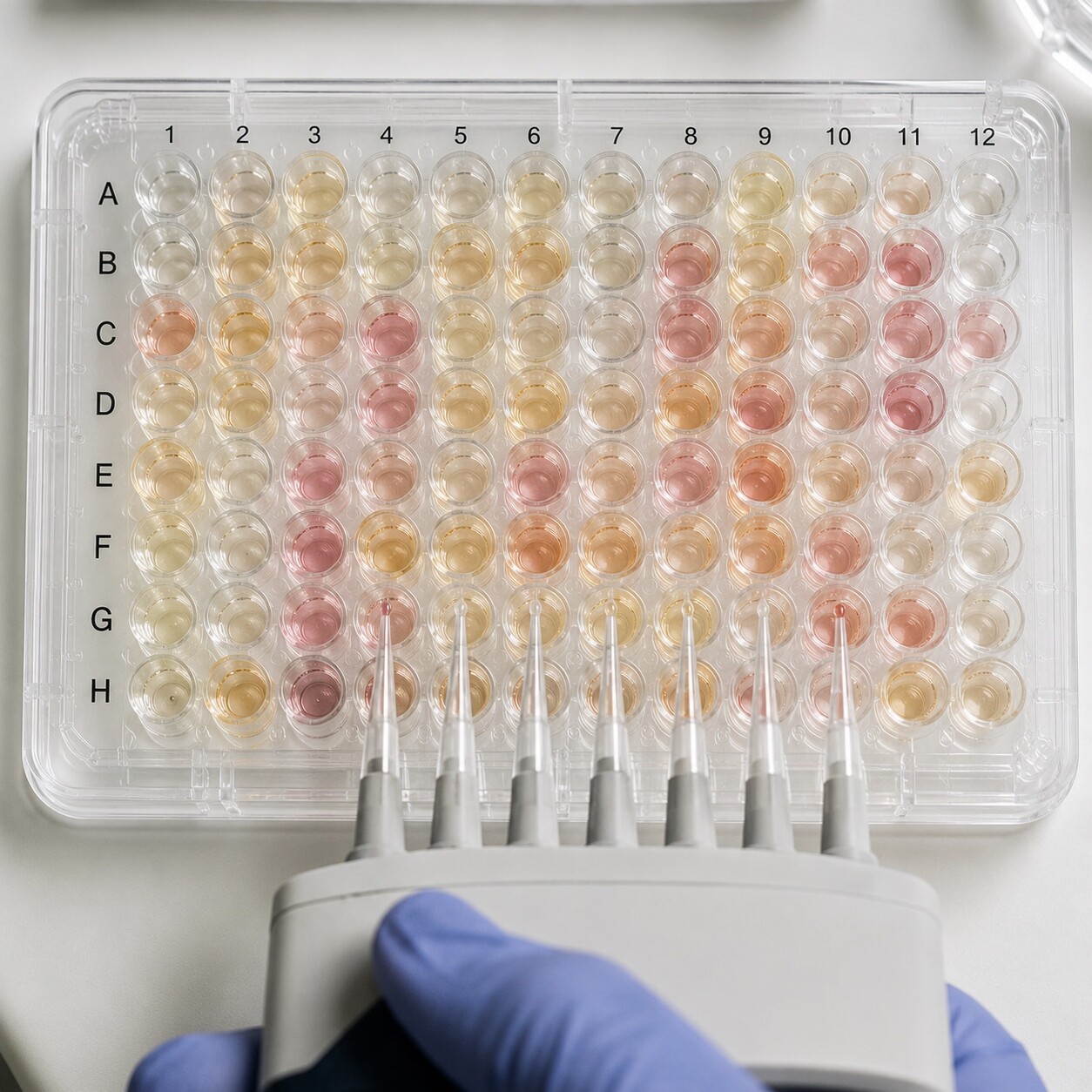
Figure 5. A multiplex allergen panel plate allows a single blood draw to screen for antibody responses to dozens of allergens simultaneously.
This is also why broad, untargeted "screen everything" panels — whether skin or blood — can sometimes create more confusion than clarity. Testing dozens of allergens a person has no reason to suspect increases the statistical chance of at least one false positive turning up simply by chance, which can lead to unnecessary food avoidance or worry over a substance that was never actually causing symptoms. Most allergists prefer to select which allergens to test for based on a detailed conversation about a patient's actual symptoms, timing, and suspected triggers first, using either test as a tool to confirm or rule out a specific suspicion rather than as a blind fishing expedition. Read in that context — alongside a real symptom history, not in isolation — both skin and blood testing become considerably more useful and considerably less likely to mislead.
This is also the reasoning behind why major allergy societies generally advise against ordering large, unfocused IgE panels on patients with no relevant symptom history at all, even though the technology to test fifty or a hundred allergens from a single blood draw exists and is sometimes marketed directly to consumers. A test result is only as useful as the question it's being asked to answer, and a panel run without a specific clinical question in mind tends to generate exactly the kind of low-value, hard-to-interpret positives described above — numbers that create anxiety and prompt unnecessary avoidance diets without ever being anchored to a real-world reaction anyone actually experienced.
Component-Resolved Diagnostics: A Refinement Only Blood Testing Offers
One capability blood testing has that skin testing generally doesn't is the ability to break a single allergen source down into its individual molecular components — a technique called component-resolved diagnostics. A whole peanut extract, for instance, actually contains more than a dozen distinct proteins that your immune system can react to, and not all of them carry the same clinical weight. Ara h 2 is one of several peanut storage proteins that has been repeatedly linked in research to a much higher likelihood of a genuine, potentially severe clinical reaction, while IgE directed at a different peanut protein called Ara h 8 — which closely resembles a protein found in birch pollen — is far more often associated with mild, localized mouth or throat itching rather than a systemic reaction, a pattern sometimes called pollen-food cross-reactivity. A standard whole-extract test, whether skin or blood, simply reports "positive for peanut" without distinguishing which of these proteins is actually driving that result; component testing can isolate the antibody response to Ara h 2 specifically from the response to Ara h 8, giving a much sharper picture of real-world risk than a whole-extract number alone.
This distinction has become clinically important enough that allergists increasingly use component testing to help decide whether a food genuinely needs to be avoided entirely or whether a supervised food challenge is reasonable to consider. It's also useful for untangling cross-reactivity between related allergen sources — someone who tests positive to both birch pollen and several tree nuts, for example, may be reacting to a shared structural protein family rather than being independently allergic to every tree nut on the list, and component testing can help clarify which is actually happening. Because this level of molecular detail requires isolating and testing against individually purified proteins rather than a crude mixed extract, it's currently only practical through blood-based immunoassays, not through standard skin prick testing — one of the clearest examples of a situation where the two test types aren't just redundant alternatives to each other, but genuinely different tools suited to different diagnostic questions.
Reading Your Own Report: What the Numbers and Grades Actually Mean
Skin test results and blood test results are reported using entirely different scales, which is part of why comparing them side by side can feel confusing. A skin test result is usually recorded as the wheal's diameter in millimeters, sometimes alongside a simple grading system from 0 to 4+ that factors in both the wheal size and the surrounding flare — a 0 means no reaction beyond the saline control, while a 4+ typically reflects a large wheal with pseudopods, small finger-like extensions radiating outward, generally considered a strongly positive reaction. There's no single universal cutoff used everywhere; different clinics and different allergen extracts use slightly different thresholds for what counts as clinically meaningful, which is one reason the same person can occasionally get a borderline reading called differently at two different offices.
Blood test reports work differently. The actual measured value is typically expressed in kUA/L, and many labs additionally translate that number into a class system ranging from 0 to 6, where class 0 represents an undetectable or absent response and class 6 represents a very high antibody level. It's worth being direct about a common misunderstanding here: a higher class number reflects a greater probability that a real clinical allergy is present, not a prediction of how severe a reaction would be if exposure occurred. Someone with a class 2 result and someone with a class 5 result to the same food could both, in theory, experience anything from mild itching to a serious reaction — the antibody level correlates with likelihood, not with the intensity of what happens if the reaction does occur. This is exactly why a lab report with numbers or classes on it isn't something to interpret alone against a general chart; the values only become meaningful once someone familiar with your actual exposure history and symptoms puts them in context.
One more distinction worth understanding when you're reading a report: allergen-specific IgE is not the same measurement as total IgE, even though both sometimes appear on the same panel. Total IgE adds up every IgE antibody circulating in your blood, regardless of what it's shaped to recognize, and it can run high for reasons that have nothing to do with allergies at all — certain parasitic infections and some immune conditions also elevate it. A high total IgE on its own doesn't identify what, if anything, you're actually allergic to; it's the individual specific-IgE values, tested one allergen at a time, that do that job. Seeing both numbers on the same report is normal, but they answer different questions, and only the specific values next to each named allergen tell you anything about that particular substance.
Frequently Asked Questions
Can I just ask for a blood test instead of a skin test to avoid the pricks?
You can discuss this with your doctor, and for many people it's a reasonable option. But because skin testing generally has higher sensitivity for common allergens and gives same-visit results, an allergist may still recommend it as the first step unless you have a specific reason — like a skin condition, medication you can't pause, or a needle-averse young child — that favors blood testing instead.
Why did my skin test and blood test give different results for the same allergen?
This happens more often than people expect, because the two tests measure related but distinct things — a live cellular reaction versus a circulating antibody level — and each has different sensitivity and specificity for different allergens. When results disagree, allergists typically weigh them against your actual symptom history rather than treating either number as automatically correct.
Do I need to stop taking antihistamines before either test?
Yes, for skin testing specifically — antihistamines block the exact histamine response the test relies on and can mask a true allergy, so most clinicians ask patients to stop them for three days to two weeks beforehand depending on the medication. Blood testing measures antibody levels directly and isn't affected by antihistamines, so no pause is needed before a blood draw.
Does a high IgE number mean my allergy is more severe?
Not reliably on its own. Higher specific IgE levels are generally associated with a greater likelihood of a clinical reaction occurring, but the level doesn't precisely predict how severe that reaction will be for a given person. Severity depends on many factors beyond the antibody level alone, which is why the number is interpreted alongside your history rather than as a standalone severity score.
Can both tests be wrong, and how would I know?
Yes — no allergy test is perfectly accurate, and both can produce false positives (a positive result with no real clinical allergy) or, less commonly, false negatives (a negative result despite a real allergy). This is why a result that doesn't match your actual symptom history is worth discussing rather than accepting at face value, and why an oral food challenge, done under medical supervision, remains the definitive way to resolve a genuinely unclear case.
Conclusion
Skin prick testing and blood IgE testing are answering the same basic clinical question from two different biological angles — one watches your own mast cells react to an allergen in real time, the other counts the antibody your immune system has already built against it. Skin testing tends to be faster, cheaper, and somewhat more sensitive for many common allergens, while blood testing sidesteps the interference of medications and skin conditions, offers the added precision of component-resolved diagnostics for certain foods, and is easier to access outside a specialist's office or a major city. Neither result exists in a vacuum — a positive test on either one shows sensitization, not automatically a real-world allergy, which is why your own symptom history stays just as important as whichever numbers, classes, or wheals come back on the report. If you're looking at a results page from either kind of test and aren't sure what the specific values actually mean for you, that's exactly the kind of question worth bringing directly to the person who ordered it — and having the raw numbers explained in plain language first can make that conversation a great deal more productive.
Still Not Sure What Your Results Mean?
Upload your labs and get a complete, visual, plain-language interpretation of every biomarker — delivered to your inbox in under 15 minutes.
Get My ReportThis article is for educational purposes only and does not constitute medical advice. Always consult your healthcare provider regarding your specific lab results.