
Why Is My CRP High After a Minor Infection?
Getting a lab report back with a strikingly high inflammatory marker attached to what you assumed was nothing more than a passing cold or a small skin scrape can feel like the numbers and the reality of the situation don't match up. A sore throat, a small skin infection, a routine sinus infection — none of these feel like an emergency, which is exactly why a CRP result that comes back sharply elevated after one of them can feel confusing, even alarming. C-reactive protein, or CRP, isn't measuring how the infection feels to you, and it was never designed to; instead, it's measuring a whole-body chemical alarm your liver sounds in direct response to a specific signal released at the infection site, and that alarm system was built, over a very long evolutionary history, to respond forcefully to even a genuinely small, localized problem. A tiny abscess, a minor bacterial skin infection, or an ordinary urinary tract infection can trigger a CRP rise into a range that looks, on paper, disproportionate to how sick you actually feel — and understanding why reveals something useful about how your immune system actually decides how hard to respond, rather than being cause for alarm on its own.
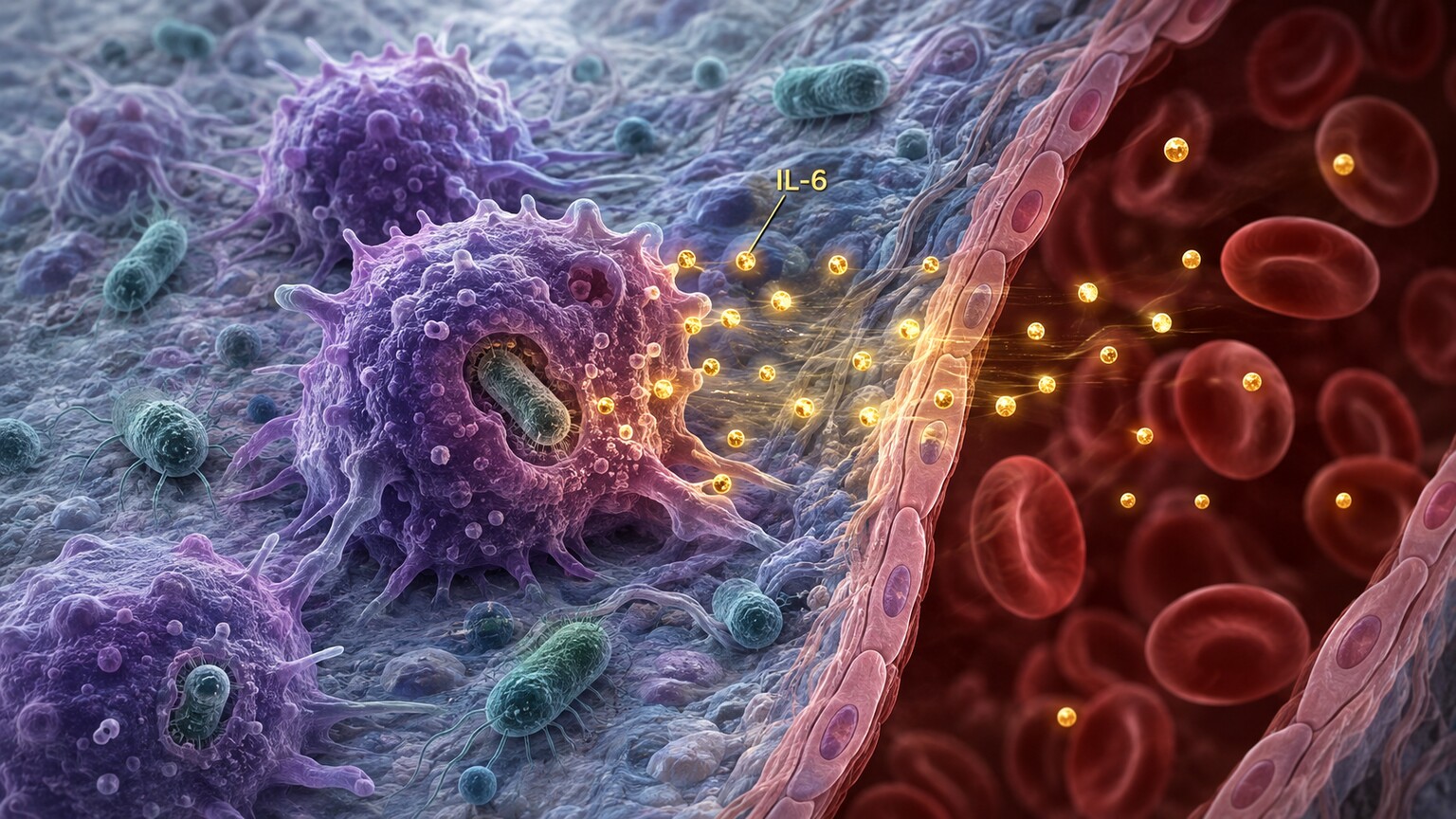
Figure 1. Immune cells at even a small infection site release interleukin-6 into the bloodstream, the specific signal that tells the liver to start producing CRP.
Curious what your own lab results are really telling you? Upload them and get a complete, plain-language breakdown in under 15 minutes.
Analyze My ResultsWhat CRP Actually Is — the Liver's Emergency Response Signal
CRP isn't made at the site of an infection at all — it's made almost entirely in the liver, which makes it fundamentally different from a local inflammatory marker that would only reflect what's happening at one specific spot in the body. It belongs to a category of proteins called acute phase reactants, a group of substances the liver rapidly ramps up production of whenever it receives a specific chemical signal indicating that inflammation or tissue injury is happening somewhere in the body, regardless of exactly where. Under normal, healthy circumstances, the liver produces only a small, steady trickle of CRP, keeping baseline blood levels low. But the liver has the capacity to increase CRP output dramatically and quickly once triggered — production can rise by a factor of a thousand or more within roughly 24 to 48 hours of a triggering event, which is an extraordinarily fast and forceful response compared to how most other proteins in the body are regulated. This isn't a subtle, graded dial that turns up proportionally to how "serious" an event feels from the outside; it's closer to an all-or-nothing alarm that, once triggered by a genuine signal, tends to respond at near-full volume regardless of how minor the underlying event might seem to the person experiencing it.
CRP itself has a genuinely useful, well-understood job once it reaches the bloodstream, which helps explain why the body invests so heavily in ramping its production up so quickly. It functions as a kind of molecular tag, binding to the surface of certain bacteria and to damaged or dying cells, and in doing so it flags those targets for destruction by other parts of the immune system, including a group of proteins called the complement system and the phagocytic cells responsible for physically clearing debris and pathogens from the blood. This tagging function is part of what's called the innate immune system — the body's fast, non-specific first line of defense, active within hours rather than the days it takes the more precisely targeted adaptive immune system to fully engage. Because CRP plays this direct, functional role in helping clear an infection rather than simply serving as a passive bystander marker, a forceful CRP response to even a small infection isn't wasted effort — it's a genuinely useful contribution to fighting off that infection, which is part of why the body doesn't appear to hold back the response simply because the triggering infection happens to be small.
The IL-6 Alarm — How a Local Infection Talks to the Liver
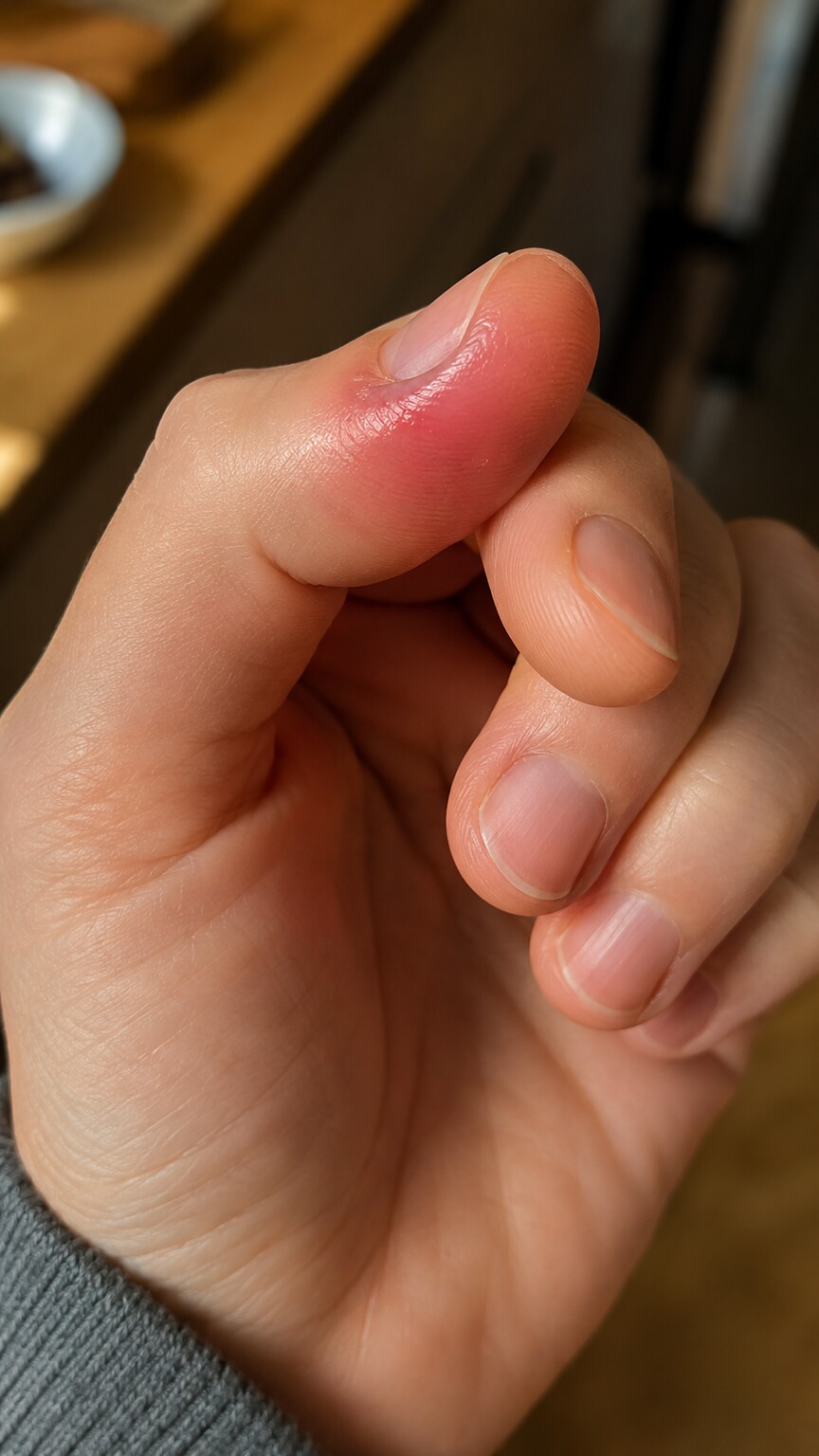
Figure 2. A small localized infection like this one is often enough on its own to trigger a whole-body IL-6 signal and a correspondingly large CRP response.
The specific messenger responsible for connecting a small, local infection to a large, whole-body liver response is a signaling molecule called interleukin-6, or IL-6. When immune cells — particularly macrophages, the immune system's local first responders — encounter bacteria or damaged tissue anywhere in the body, they release IL-6 directly into nearby blood vessels as one of their earliest actions, well before an infection has had any chance to spread or become clinically obvious. IL-6 then travels through the bloodstream to the liver, where it binds to receptors on liver cells and directly switches on the genetic machinery responsible for CRP production. Crucially, the size of this signal doesn't scale neatly with the physical size of the infection generating it — a small collection of bacteria in a tiny abscess can provoke roughly the same intensity of local immune activation, and therefore roughly the same IL-6 release, as a larger infection would, simply because the immune cells responding to it are reacting to the presence and type of bacteria they've encountered, not measuring out a response proportional to square millimeters of infected tissue. This is the central reason a "minor" infection, in terms of how it feels or how much tissue it involves, can still generate a genuinely large CRP response: the liver is responding to the strength of a chemical signal, not to your own subjective read on how serious the problem is.
It's also worth understanding that IL-6 itself isn't a single-purpose infection alarm — it's a broader signaling molecule the body uses across a range of inflammatory situations, and CRP responds to all of them the same way, without distinguishing what specifically triggered the signal. This is precisely why CRP isn't, on its own, capable of telling a doctor what kind of problem is happening, only that some kind of inflammatory or infectious process is generating an IL-6 signal somewhere in the body. Surgery, significant physical trauma, autoimmune flares, and certain cancers can all raise IL-6 and, in turn, CRP, through the same basic pathway a minor bacterial infection uses. This shared final common pathway is efficient from an evolutionary standpoint — the liver only needs to build and maintain one alarm-response system rather than a separate one for every possible trigger — but it does mean CRP always needs to be interpreted alongside the broader clinical picture, symptoms, and, when needed, more specific testing, rather than read as a self-explanatory number on its own.
Why "Minor" Doesn't Mean "Small Response" — CRP Isn't Graded on How You Feel
It's worth sitting with this distinction because it resolves most of the confusion behind an unexpectedly high CRP result. Your own sense of how sick you feel is shaped by a mix of factors — fever, fatigue, pain, how much the infection interferes with daily function — that don't map directly onto the intensity of the underlying immune and inflammatory response happening at a molecular level. A small dental abscess, for instance, might cause only mild, localized discomfort that a person could reasonably describe as minor, while still harboring a genuinely active bacterial infection that immune cells are responding to aggressively, generating a strong IL-6 signal and, in turn, a strong CRP response. Conversely, some infections that feel miserable — many common viral illnesses, for example — provoke a comparatively modest CRP response, since the type of immune activity most viruses trigger relies less heavily on the same IL-6-driven pathway than bacterial infections typically do. In other words, CRP is measuring a specific biological signal, not validating or invalidating how unwell you feel, and the two frequently diverge in ways that catch people off guard when they finally see the number on a lab report.
There's also meaningful person-to-person variation in how forcefully any individual's liver responds to a given IL-6 signal, which adds another layer to why two people with seemingly similar minor infections can end up with noticeably different CRP results. Genetic variation in the specific gene that codes for CRP production affects baseline levels and how sharply a person's liver ramps output up in response to a given signal, meaning some of the difference between one person's CRP response and another's isn't about the infection at all, but about built-in individual variability in how the liver itself is wired to respond. Body composition plays a role too — fat tissue, particularly visceral fat, is itself a source of low-grade IL-6 production even outside of any active infection, which is part of why people with higher amounts of visceral fat tend to run somewhat higher baseline CRP levels and can sometimes show a more pronounced spike on top of that already-elevated baseline once a genuine infection is added into the mix. None of this changes the underlying explanation for a high CRP after a minor infection, but it does mean the exact number two different people produce from a similar infection isn't expected to match precisely, and that variation on its own isn't a red flag.
The Timeline — How Fast CRP Rises and How Fast It Falls
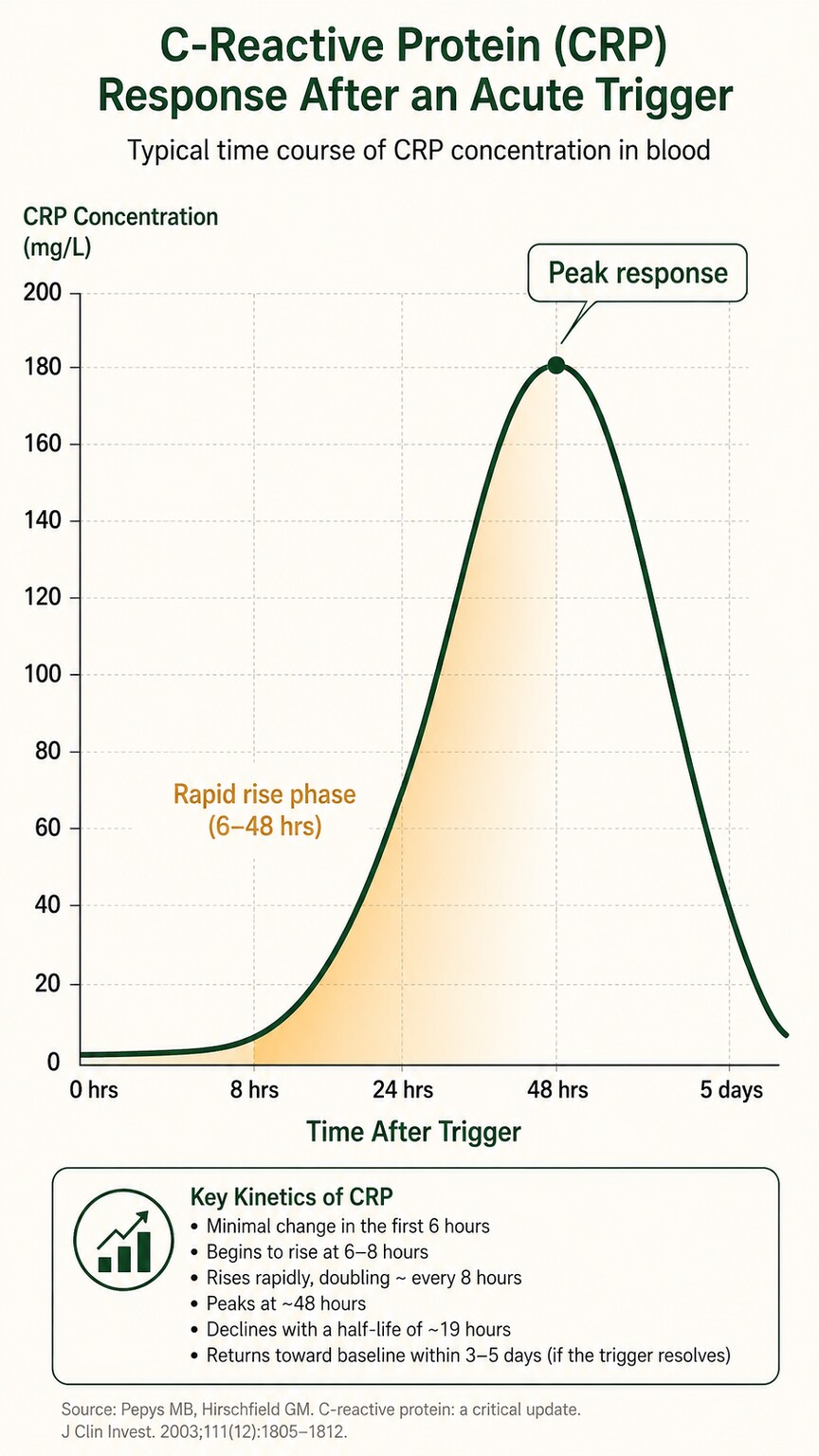
Figure 3. CRP begins climbing within 6 to 8 hours of a triggering signal, roughly doubles every 8 hours in the early phase, and typically peaks around 48 hours before falling steadily.
Part of what makes CRP such a genuinely useful marker, despite how forcefully it can respond to a small trigger, is how predictable and well-mapped its timeline is. Levels begin rising within about 6 to 8 hours of the initial triggering signal, roughly doubling every 8 hours during that early climb, and typically reach a peak around 48 hours after the triggering event began — a remarkably fast and steep trajectory compared to most other lab values, which is part of why CRP can already be substantially elevated by the time a person feels sick enough to seek care and get tested. Just as importantly, CRP has a short half-life in the blood, roughly 19 hours, meaning that once the underlying trigger resolves and IL-6 signaling drops off, CRP falls steadily and relatively quickly rather than lingering elevated for weeks the way some other markers do. This rapid rise-and-fall pattern is exactly what makes CRP useful for tracking whether an infection is actively resolving, since a level that's falling on a repeat test is a meaningfully reassuring sign, while a level that stays stubbornly high or climbs further despite treatment is a legitimate reason to look more closely at whether the original infection has actually been adequately addressed.
Bacterial vs. Viral — Why the Type of Infection Changes the Number More Than the Size
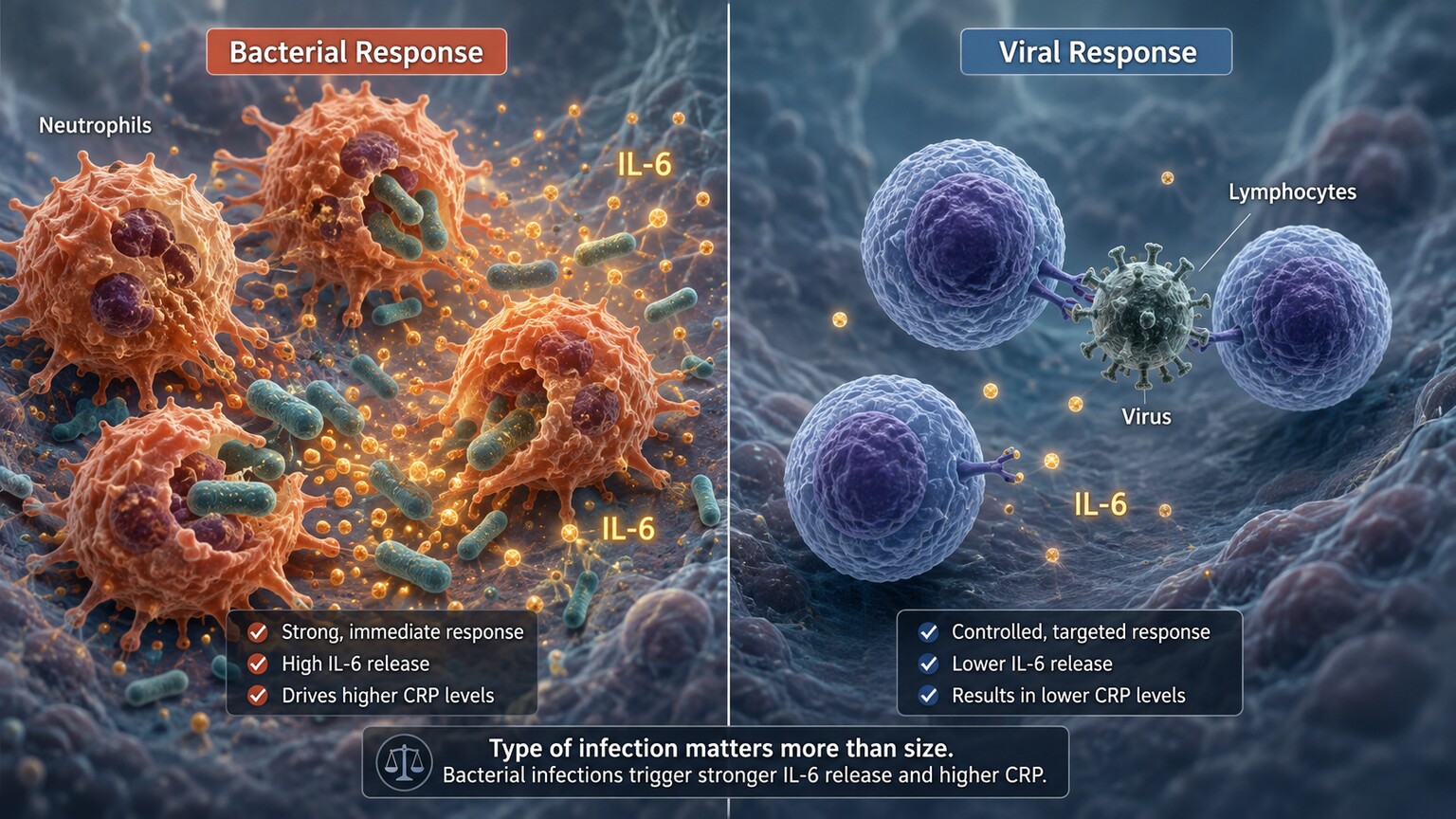
Figure 4. Bacterial infections typically drive a stronger IL-6 and CRP response than viral infections of similar physical size, because of how differently the two trigger the immune system.
One of the more clinically useful patterns in CRP behavior is that the type of pathogen involved tends to matter more than how extensive or how "minor" the infection feels. Bacterial infections generally provoke a markedly stronger CRP response than viral infections of comparable size, and the reason traces back to which immune cells respond and how they respond. Bacteria are typically met by neutrophils, a type of white blood cell that mounts an aggressive, fast-acting attack and, in the process, releases IL-6 in substantial quantities as part of that response. Most viral infections, by contrast, are handled initially by a different branch of the immune system relying more heavily on cells called lymphocytes and a different set of signaling molecules, generating comparatively less IL-6 and, correspondingly, a milder CRP rise even when the illness itself feels significant. This pattern is genuinely useful in clinical practice — a markedly high CRP in someone with a seemingly mild, viral-sounding illness is one of several clues that can prompt a doctor to reconsider whether a bacterial infection, rather than a virus, might actually be the underlying cause, since the number itself is behaving in a way more typical of bacterial activation than viral activation. It's not a perfect or standalone diagnostic tool on its own, but it adds real, useful information to the overall clinical picture, particularly in situations where symptoms alone leave real ambiguity about whether antibiotics are actually warranted.
CRP vs. ESR — Two Different Ways of Measuring the Same General Idea
CRP is often ordered alongside, or sometimes in place of, a different, older inflammatory marker called erythrocyte sedimentation rate, or ESR, and understanding how the two differ helps explain why a doctor might specifically want one over the other, or both together, when evaluating a minor-seeming infection. ESR measures something entirely indirect: how quickly red blood cells settle to the bottom of a vertical tube over the course of an hour, a process that speeds up when certain inflammatory proteins in the blood cause red blood cells to clump together and fall faster than they normally would. CRP, by contrast, is a direct measurement of the specific protein itself, which gives it two practical advantages that matter in the context of a minor, evolving infection: it rises and falls considerably faster than ESR, which can lag behind the actual course of inflammation by several days in both directions, and it's less affected by unrelated factors like age, sex, and red blood cell shape that can independently skew an ESR result regardless of what's actually happening with inflammation. This is a meaningful part of why CRP has become the more commonly used marker for tracking an active, fast-moving process like a minor infection, while ESR still retains real clinical value for tracking more chronic, slowly evolving inflammatory conditions where its slower-moving nature is less of a drawback.
Exercise, Minor Trauma, and Other Everyday Triggers That Can Mimic an Infection's CRP Rise
Because CRP responds to the same general IL-6 signal regardless of what specifically caused it, it's worth knowing that infection isn't the only everyday, non-alarming reason CRP can come back elevated — a detail that matters if a CRP test happens to be drawn shortly after something unrelated to the infection being evaluated. Intense or unaccustomed physical exercise, particularly activities involving a lot of eccentric muscle contraction like long-distance running or heavy resistance training, causes small amounts of muscle tissue damage that triggers a genuine, measurable IL-6 and CRP response, sometimes persisting for a day or two afterward. Minor physical trauma — a bruise, a sprain, even a recent vaccination — can produce a similar, modest bump through the same basic tissue-damage-triggers-IL-6 pathway. Dental work, including a routine cleaning in some people, can transiently affect the number too. None of these triggers typically produce the kind of sustained, substantial elevation seen with a genuine bacterial infection, and they tend to resolve within a day or two rather than persisting, but they're worth mentioning to a doctor if any apply around the time of testing, since they can occasionally muddy the interpretation of an otherwise straightforward result, particularly when the number is only mildly elevated rather than dramatically so.
Common "Minor" Infections That Can Push CRP Surprisingly High
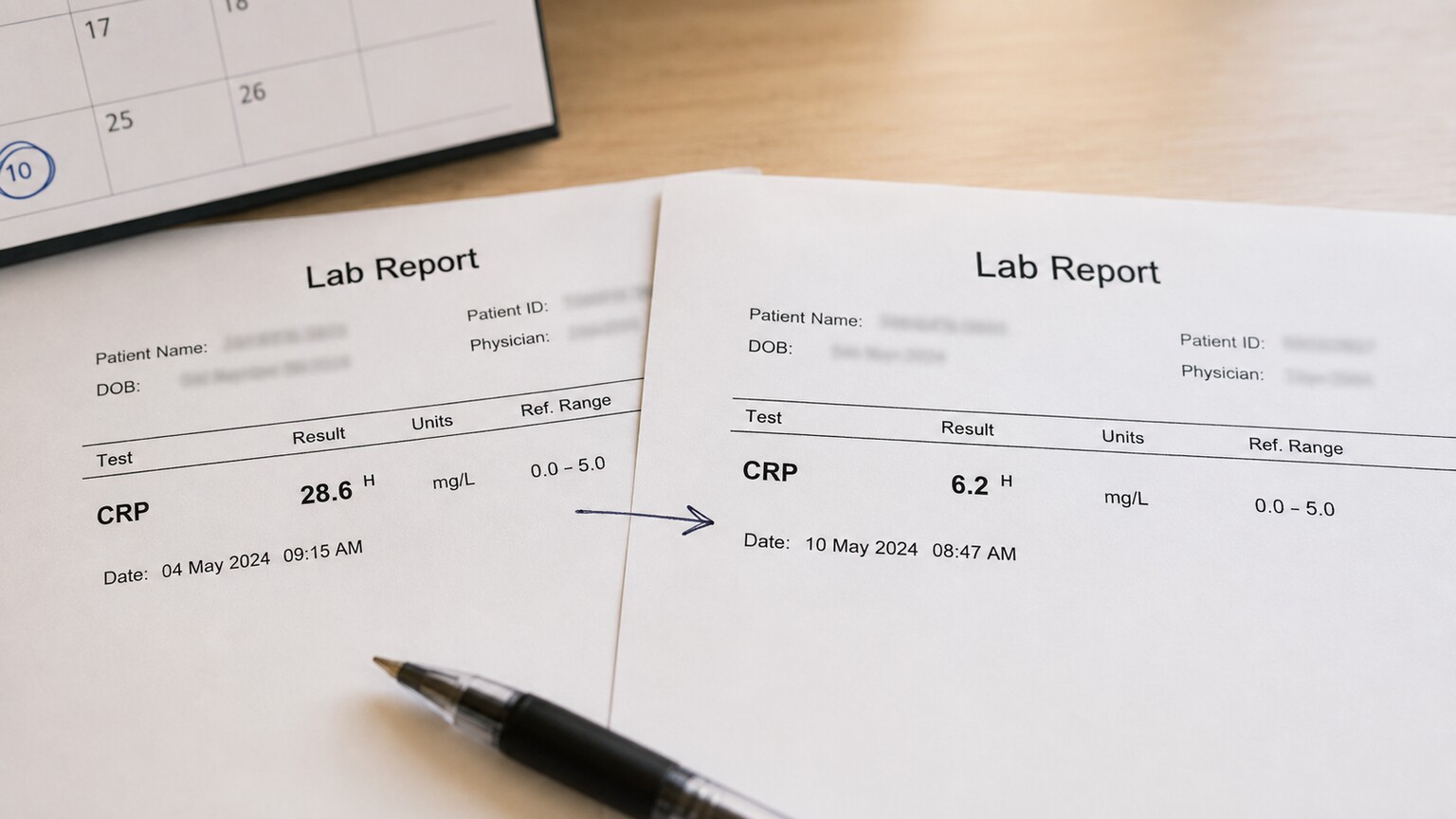
Figure 5. A dental abscess, even one that feels like ordinary tooth discomfort, is a classic example of a small, localized bacterial infection capable of raising CRP substantially.
A handful of everyday infections come up repeatedly as examples of exactly this pattern — small in physical extent, mild in how they present, yet genuinely capable of pushing CRP well above baseline. A dental abscess is one of the clearest examples: confined to a small area around a single tooth, it can still generate a robust CRP elevation because the bacterial infection itself is genuinely active, even if the discomfort is limited to a localized ache most people wouldn't describe as severe. An uncomplicated urinary tract infection, similarly, is often felt as nothing more than irritation and urinary frequency, yet the bacterial activity in the bladder lining is enough to drive a real, sometimes sizable CRP response. Skin and soft tissue infections — an infected cut, an ingrown hair that's become infected, a small area of cellulitis — follow the same pattern, since bacteria multiplying in even a small area of skin can trigger a disproportionately large systemic signal. Sinus infections and other upper respiratory infections with a bacterial component behave similarly. What links all of these is that each one involves genuine, active bacterial replication somewhere in the body, which is the trigger the immune system responds to most forcefully — the physical size and subjective severity of the infection are almost secondary to that basic fact. An ingrown toenail that's become infected, a small abscessed gland, or even a minor infected insect bite can follow this exact same pattern, which is part of why patients are sometimes genuinely surprised to learn that the source of a notably high CRP turned out to be something they'd been managing at home for days without much concern.
CRP vs. hs-CRP — Why This Isn't the Same Test Used for Heart Risk
It's worth clarifying a common point of confusion, since CRP shows up in two genuinely different clinical contexts that use the same underlying molecule but very different measurement ranges and purposes. Standard CRP testing, the kind ordered when evaluating a suspected infection, is designed to accurately measure a wide range of values, including the very high levels — sometimes into the hundreds of mg/L — that infections and significant inflammation can produce. High-sensitivity CRP, or hs-CRP, is a different assay designed instead to precisely measure much lower concentrations, generally under 10 mg/L, and is used specifically for cardiovascular risk assessment in people without an active infection, since even small, chronic elevations within that lower range have been linked to increased cardiovascular risk over time. If a person has a genuine active infection, an hs-CRP result would simply report as very high without adding useful precision, which is why doctors order standard CRP rather than hs-CRP whenever an infection is the concern — the two tests are measuring the same molecule but are built, and interpreted, for entirely different clinical questions, and a "high" hs-CRP result during a cold or minor infection doesn't carry the same cardiovascular implications it would if measured during a period of genuine baseline health.
CRP in Children Compared to Adults
The same basic biology drives CRP in children as in adults, but the clinical context around interpreting it shifts somewhat, largely because children's immune systems tend to respond to infections with particular enthusiasm, and because minor-seeming infections in young children carry a somewhat different risk calculus than they do in otherwise healthy adults. Young children, especially infants and toddlers, are prone to a wide range of common infections — ear infections, minor respiratory infections, small skin infections — many of which are genuinely minor and self-limited, yet can still generate a robust CRP response for exactly the same IL-6-driven reasons already described. Because young children can't always reliably communicate how they're feeling, and because certain serious infections in this age group can progress unusually quickly, CRP is sometimes used somewhat more liberally in pediatric settings as one piece of a broader risk assessment when a young child has a fever without an obvious source, helping clinicians decide how urgently to look for a more significant underlying infection versus reasonably attributing symptoms to a common, self-resolving illness. A moderately elevated CRP in this context doesn't automatically mean something serious is happening — many minor pediatric infections produce meaningful elevations — but the threshold for taking a notably high result seriously, and looking further, tends to be somewhat lower in young children than it would be for a similar number in a healthy adult with a clearly identified, minor source.
When a High CRP After a "Minor" Infection Is Worth a Second Look
While a high CRP following what seems like a small infection is usually explained entirely by the mechanisms described throughout this article, there are situations where it's reasonable for a doctor to look a little more closely rather than simply accepting the "minor infection" explanation at face value. A CRP level climbing into the very high range, generally above 100 mg/L, raises the question of whether the infection is genuinely as contained as it appears, since numbers in this range are more typically associated with more extensive bacterial infections, abscesses that may need drainage rather than antibiotics alone, or a bloodstream infection rather than a purely local one. A CRP that fails to fall, or that continues rising, on a repeat test taken after a reasonable course of treatment is another meaningful signal, since it suggests the underlying trigger hasn't actually been resolved yet, even if symptoms have partially improved. And a CRP that seems disproportionately high relative to a truly trivial-sounding complaint occasionally prompts a doctor to look for a source that hasn't yet become clinically obvious — an early abscess, a low-grade bloodstream infection, or a different, more significant infection hiding behind a milder presenting symptom. None of this means every elevated CRP after a minor-feeling infection needs an extensive workup; it simply means the number is one useful piece of information a clinician weighs alongside the full clinical picture, not a replacement for it.
Using CRP to Track Whether Treatment Is Working

Figure 6. A falling CRP on a repeat test is one of the more reassuring signs that an infection is genuinely responding to treatment, thanks to the molecule's short half-life in the blood.
This tracking function is arguably where CRP earns its keep most clearly in everyday clinical practice, beyond simply flagging that inflammation exists in the first place. Because CRP rises quickly and, just as importantly, falls quickly once its trigger is resolved, it's a genuinely useful tool for tracking whether a treatment is actually working rather than only diagnosing that something is wrong in the first place. A repeat CRP drawn a few days into antibiotic treatment for a bacterial infection that's falling substantially from its initial peak is a reassuring sign that the infection is responding as expected, often visible before symptoms have fully resolved, since the biological signal tends to shift before a person's overall sense of feeling better catches up. This is particularly useful in situations where clinical improvement is hard to judge by symptoms alone, such as in young children, in people with certain chronic conditions that make typical infection symptoms harder to interpret, or in monitoring more serious infections in a hospital setting, where a clinician needs an objective marker rather than relying only on how a patient reports feeling. A CRP that plateaus or rises again after an initial decline can also be one of the earlier signals that an infection has recurred or that a treatment course needs to be reassessed, sometimes flagging a problem before it becomes obvious through symptoms alone.
Underlying Conditions That Can Change How Your Body Responds
Certain existing health conditions can shift how a person's CRP responds to a minor infection in ways worth understanding, since they can push the interpretation in either direction. People with certain chronic autoimmune or inflammatory conditions may already be running an elevated baseline CRP even before a new infection is added into the picture, since the same IL-6 pathway that responds to infection is often chronically active, at a lower level, in these conditions — meaning a "high" result during a minor infection might represent a smaller relative jump than the same absolute number would in someone starting from a normal baseline. On the other end, people taking medications that specifically block IL-6 signaling, a class of drugs used for certain autoimmune and inflammatory conditions, can have a blunted CRP response even during a genuine, active infection, since the exact pathway responsible for triggering CRP production has been intentionally suppressed by the medication — in this situation, a normal or only mildly elevated CRP doesn't reliably rule out a significant infection the way it typically would in someone not on this kind of therapy, and clinicians managing these patients generally know to weigh symptoms and other findings more heavily rather than relying on CRP as the primary signal. People with significant liver disease can also show a blunted CRP response regardless of infection severity, simply because the organ responsible for producing CRP in the first place isn't functioning at full capacity. None of these scenarios are common in an otherwise healthy person evaluating a straightforward minor infection, but they're part of why a treating clinician always considers a person's broader medical history alongside the raw number itself.
Frequently Asked Questions
Should I get a repeat CRP test to see if things are improving?
It depends on the clinical situation and is worth discussing with the provider managing the infection. Because CRP falls relatively quickly once a trigger resolves, a repeat test a few days after starting treatment can be a genuinely useful way to confirm things are moving in the right direction, especially if symptoms are improving slowly or are hard to judge.
How high can CRP go from a truly minor infection?
It varies, but localized bacterial infections like a dental abscess or a urinary tract infection can push CRP into the tens or even low hundreds of mg/L, well above a normal baseline under 10 mg/L. The number reflects the strength of the immune signal, not the physical size of the infection.
Why did my CRP stay high even after I started feeling better?
CRP typically lags slightly behind clinical improvement, and its roughly 19-hour half-life means it takes a bit of time to fall even after the underlying trigger has resolved. A repeat test a few days later showing a clear downward trend is generally more informative than a single value.
Is standard CRP the same test used to check heart disease risk?
No. Standard CRP is designed to measure the wide range seen during infection, while high-sensitivity CRP (hs-CRP) is a separate assay built to precisely measure the much lower levels used for cardiovascular risk assessment. They measure the same molecule but serve different clinical purposes.
Does a high CRP always mean a bacterial infection rather than a virus?
Not always, but a markedly elevated CRP is more typical of bacterial infections, since they tend to trigger a stronger IL-6 response than most viral infections. It's one useful clue among several a doctor considers alongside symptoms and exam findings, not a definitive, standalone test on its own.
Putting a Single CRP Number Into Perspective
Stepping back from all the individual mechanisms described throughout this article, it's worth landing on a practical, grounded way to think about a single elevated CRP result following what felt like a minor infection. The number itself, in isolation, is genuinely difficult to interpret with confidence — the same value could represent a small, self-limited bacterial infection well on its way to resolving on its own, or it could represent something that genuinely warrants closer attention, and distinguishing between those two possibilities depends far more on the surrounding clinical context than on the raw number alone. A CRP drawn once, at a single point in time, without any symptoms, trend, or exam findings to accompany it, tells a clinician relatively little on its own; a CRP interpreted alongside a clear symptom timeline, a physical exam, and — when the situation calls for it — a repeat test showing the number moving in a particular direction tells a much more complete and genuinely useful story. This is really the same broader principle that applies to nearly every lab value discussed on this site: a single number is a data point, not a verdict, and its real value comes from being read in context rather than in isolation, ideally together with a healthcare provider who can weigh it against everything else known about the situation.
Conclusion
There's a certain reassurance in recognizing that a startling lab number doesn't automatically mean something has gone badly wrong — sometimes it simply means the body is doing exactly what it evolved to do, at exactly the intensity it was built to do it at. An unexpectedly high CRP after an infection that felt minor isn't a contradiction — it's a fairly direct, well-documented reflection of how the CRP system was actually built to work in the first place. The liver responds to a specific chemical signal, IL-6, released by immune cells actively fighting an infection, and that signal doesn't scale down just because the infection is physically small or subjectively mild. A tiny abscess or an uncomplicated urinary tract infection can generate genuine, forceful bacterial-immune activation, producing a CRP response every bit as strong as, or occasionally stronger than, a larger infection might. Understanding this timeline and mechanism turns a confusing, seemingly disproportionate lab result into something genuinely explainable, grounded in real, well-studied biology rather than left as an unresolved worry, — and, when tracked over a few repeat tests, into a useful window into whether an infection is actually resolving the way it should — which, in the end, is exactly the kind of practical, actionable information a lab value is supposed to provide to both the patient and the clinician managing their care.
Still Not Sure What Your Results Mean?
Upload your labs and get a complete, visual, plain-language interpretation of every biomarker — delivered to your inbox in under 15 minutes.
Get My ReportThis article is for educational purposes only and does not constitute medical advice. Always consult your healthcare provider regarding your specific lab results.