
Why Do ESR Levels Rise With Chronic Infections?
Erythrocyte sedimentation rate — ESR, or "sed rate" for short — is one of the oldest lab tests still in routine use, and it has a peculiar personality compared to most modern blood work: it doesn't react to trouble in hours, the way some other inflammation markers do. It reacts over days to weeks, which makes it a poor tool for catching a sudden cold but an unusually good one for tracking something that's been quietly smoldering in the body for a long time — an infection tucked inside a bone, growing on a heart valve, or lodged deep in lung tissue where it's hard to see and even harder to feel. When ESR climbs and stays climbed, especially into the high double digits or beyond, chronic infection is one of the first explanations a clinician reaches for, precisely because of how this test is built. Understanding why ESR behaves this way — and why it takes weeks rather than hours to rise and fall — is the key to understanding what a persistently elevated result is actually telling you.
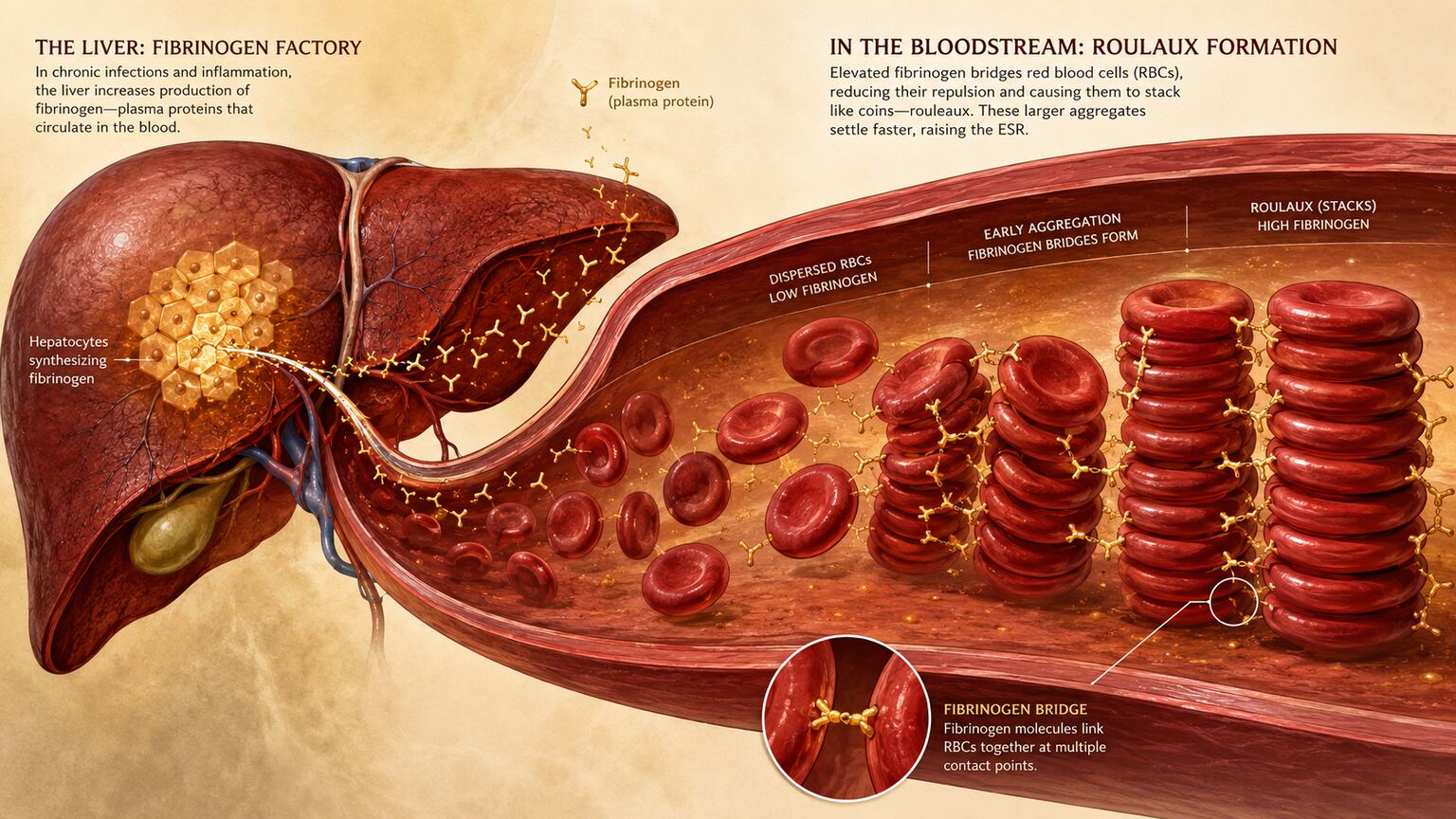
Figure 1. Fibrinogen released by the liver coats red blood cells and causes them to stack into rouleaux, the physical basis of a rising ESR.
The 100-Year-Old Test That Still Works: What ESR Physically Measures
To understand why chronic infection drives ESR up, it helps to know exactly what the test is measuring, because unlike most modern lab work, ESR isn't measuring a chemical concentration at all — it's measuring physics. The classic method, called the Westergren method, involves drawing blood into a thin, calibrated glass tube exactly 200 millimeters tall, standing that tube perfectly upright, and then simply waiting one hour to see how far the red blood cells — the disc-shaped cells that carry oxygen through the bloodstream — sink toward the bottom under gravity, leaving a column of clear, pale-yellow plasma (the liquid part of blood, once the cells are removed) above them. The result is reported in millimeters per hour, or mm/hr, and that number is nothing more than how far the cells fell in sixty minutes.
In a healthy person, red blood cells resist settling more than you might expect, because they carry a slight negative electrical charge on their surface, and cells with the same charge repel each other the same way two magnets pushed together the wrong way push apart. This repulsion keeps the cells spread out somewhat evenly through the plasma, like grains of sand suspended in slightly cloudy water, so they fall slowly, one by one, and a normal ESR in a healthy adult is typically under 20 millimeters in that hour. But when the body is fighting something — especially something that has been active for more than a few days — the composition of the plasma itself changes in a way that overwhelms that natural repulsion, and the cells start falling dramatically faster, sometimes settling 50, 80, or even more than 100 millimeters in the same sixty minutes.
The test itself dates back to the 1920s, developed by the Swedish physician Robert Fåhraeus and later standardized into the method still used today by his colleague Alf Westergren, which is why it's still called the Westergren method more than a century later. What's remarkable is that, despite decades of newer, faster, chemically specific inflammation tests being invented since then, ESR has never been fully replaced — it's simply too useful for the specific job of tracking something that unfolds slowly, and the equipment required is little more than a calibrated tube, a stand, and a clock, which keeps it inexpensive and widely available even in settings without access to more sophisticated lab machinery. A modern automated ESR analyzer can now read the result in a few minutes using optical or centrifugal methods rather than a literal hour-long wait, but it's calibrated to reproduce the exact same physical principle the original glass-tube method measured: how readily red blood cells clump and fall.
That change in the plasma is the whole story, and it comes down to a specific group of proteins the liver manufactures during what's called the acute-phase response — the body's general-purpose alarm reaction to infection, injury, or ongoing inflammation anywhere at all. The most important of these proteins for ESR, by a wide margin, is fibrinogen, a large, sticky protein that's normally best known for its role in blood clotting. During chronic inflammation or infection, fibrinogen concentration in the blood can climb well above its usual level, and once there's enough of it circulating, it acts almost like a molecular glue, coating the surface of red blood cells and neutralizing the negative charge that would otherwise keep them apart.
Why Rouleaux Formation Happens — Fibrinogen's Role
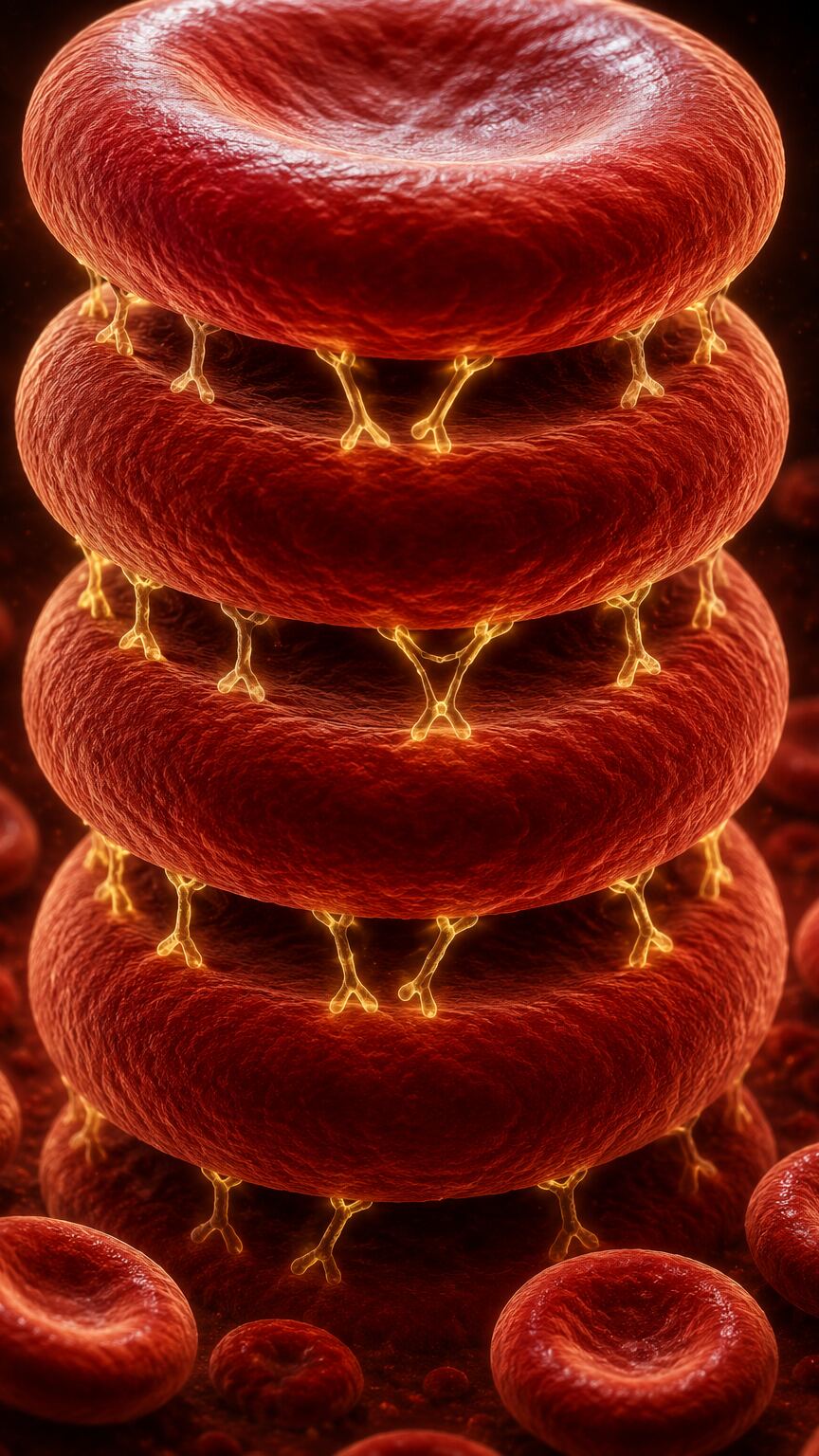
Figure 2. Fibrinogen molecules bridge across neighboring red blood cell surfaces, neutralizing their natural repulsion and pulling them into stacks.
Once fibrinogen — and, to a lesser extent, other acute-phase proteins like immunoglobulins — coats enough red blood cells, something visually striking happens under a microscope: instead of drifting apart like separate grains of sand, the cells start stacking flat-face to flat-face, one on top of another, forming long chains that look remarkably like a stack of coins on a table. This phenomenon has an actual name in hematology — rouleaux formation — and it's the entire mechanical reason ESR rises. A single red blood cell, falling alone through plasma, has a lot of relative surface area compared to its weight, and that surface drag from the surrounding fluid slows its descent considerably, the same way a flat sheet of paper falls slowly and unpredictably through air. But a stack of twenty or thirty cells fused into one rouleaux column behaves completely differently: it's heavier, more compact, and far more aerodynamic in shape, so it slices through the plasma and sinks much faster, the same way a paper airplane folded into a dense, narrow shape falls faster and straighter than a loose, flat sheet.
This is why ESR is sometimes described as an indirect marker rather than a direct one — the test never measures fibrinogen itself, or any inflammatory protein by name. It measures the downstream physical consequence of those proteins being present in higher-than-normal amounts: cells that stack into rouleaux and fall fast. That indirectness is also exactly why ESR responds to so many different kinds of chronic infection rather than being specific to any one of them. Tuberculosis, a bone infection, and a heart valve infection have almost nothing in common biologically, but all three keep the liver's fibrinogen production elevated for weeks at a stretch, and all three will produce the same visual result in a Westergren tube: cells sinking fast because they've clumped together, regardless of what specifically triggered the clumping.
Why This Takes Days, Not Hours — ESR's Slow Kinetics Compared to CRP
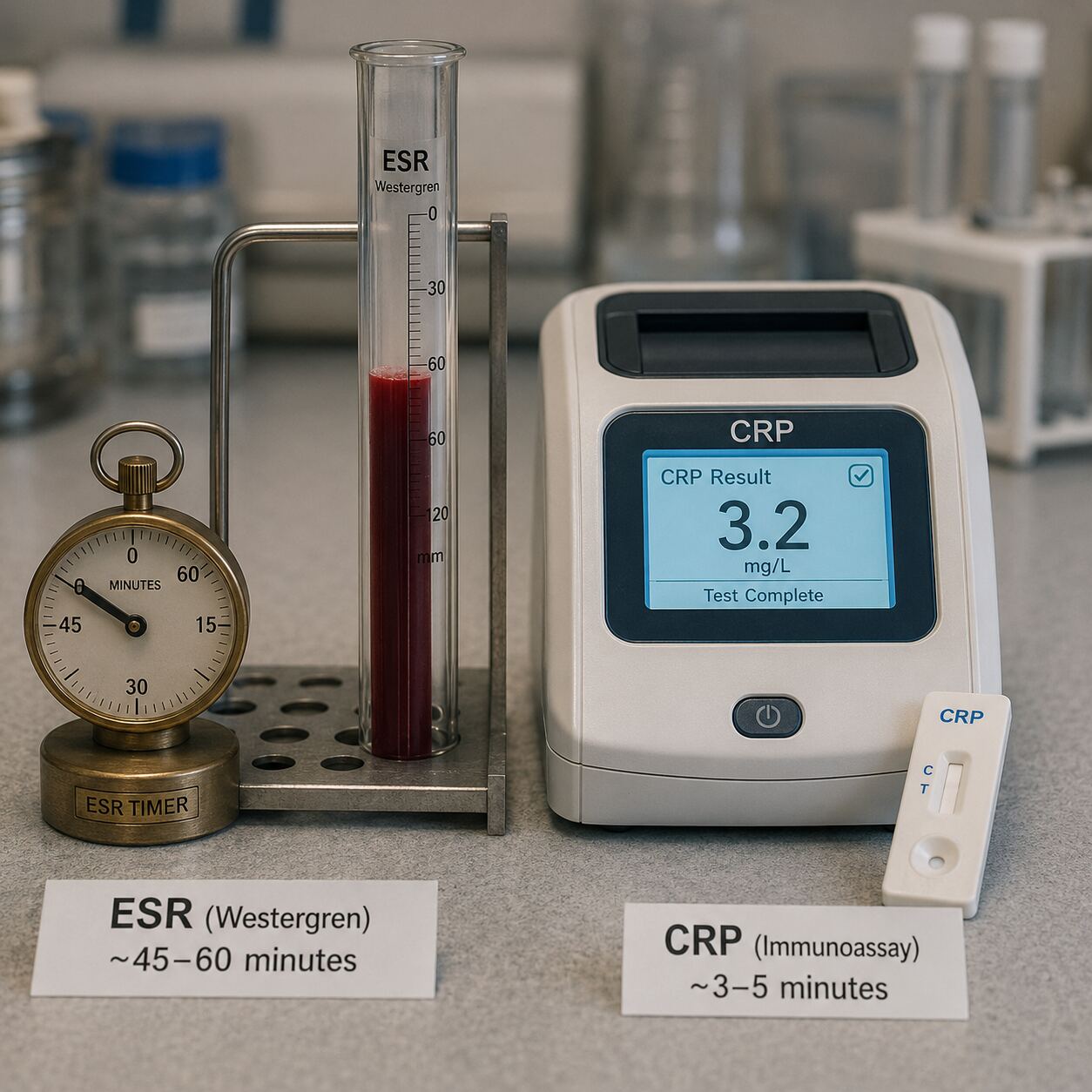
Figure 3. ESR requires a full hour just to physically measure, and fibrinogen itself takes days to accumulate — a slower process at every step than CRP's rapid production.
If you've read about C-reactive protein, or CRP, another common inflammation marker, you may already know it can double every eight hours and largely resolve within a couple of weeks of a trigger passing. ESR moves on an entirely different, much slower clock, and the reason lies in the biology of fibrinogen itself. Fibrinogen has a much longer half-life in the bloodstream than CRP does — roughly four days, compared to CRP's roughly 19 hours — meaning it takes considerably longer both to build up to a high level and to clear back out once the underlying trigger resolves. On top of that biological lag, fibrinogen levels usually don't even start rising until 24 to 48 hours after inflammation begins, and it can take anywhere from several days to two full weeks for fibrinogen, and therefore ESR, to reach its peak.
This built-in delay is precisely why ESR is a poor tool for catching something like a same-day cold — by the time ESR would even begin to notice a two-day virus, the virus is often already resolving — but an excellent tool for something that has been active for weeks, like an infection walled off deep inside a bone or growing slowly on a heart valve. A short-lived trigger simply doesn't stick around long enough to push fibrinogen very far before it resolves on its own; a chronic infection, by definition, does. Doctors sometimes describe this difference by saying CRP tells you what's happening right now, while ESR tells you what's been happening for the last several weeks — and when the two tests are ordered together, which they frequently are, a pattern of ESR climbing high while CRP stays only moderately elevated (or vice versa) can itself be a useful clue about how long a problem has actually been brewing beneath the surface.
Curious what your inflammation panel and the rest of your labs are really telling you? Upload your results and get a complete, plain-language breakdown in under 15 minutes.
Analyze My ResultsOsteomyelitis — When a Bone Infection Keeps ESR Elevated for Months
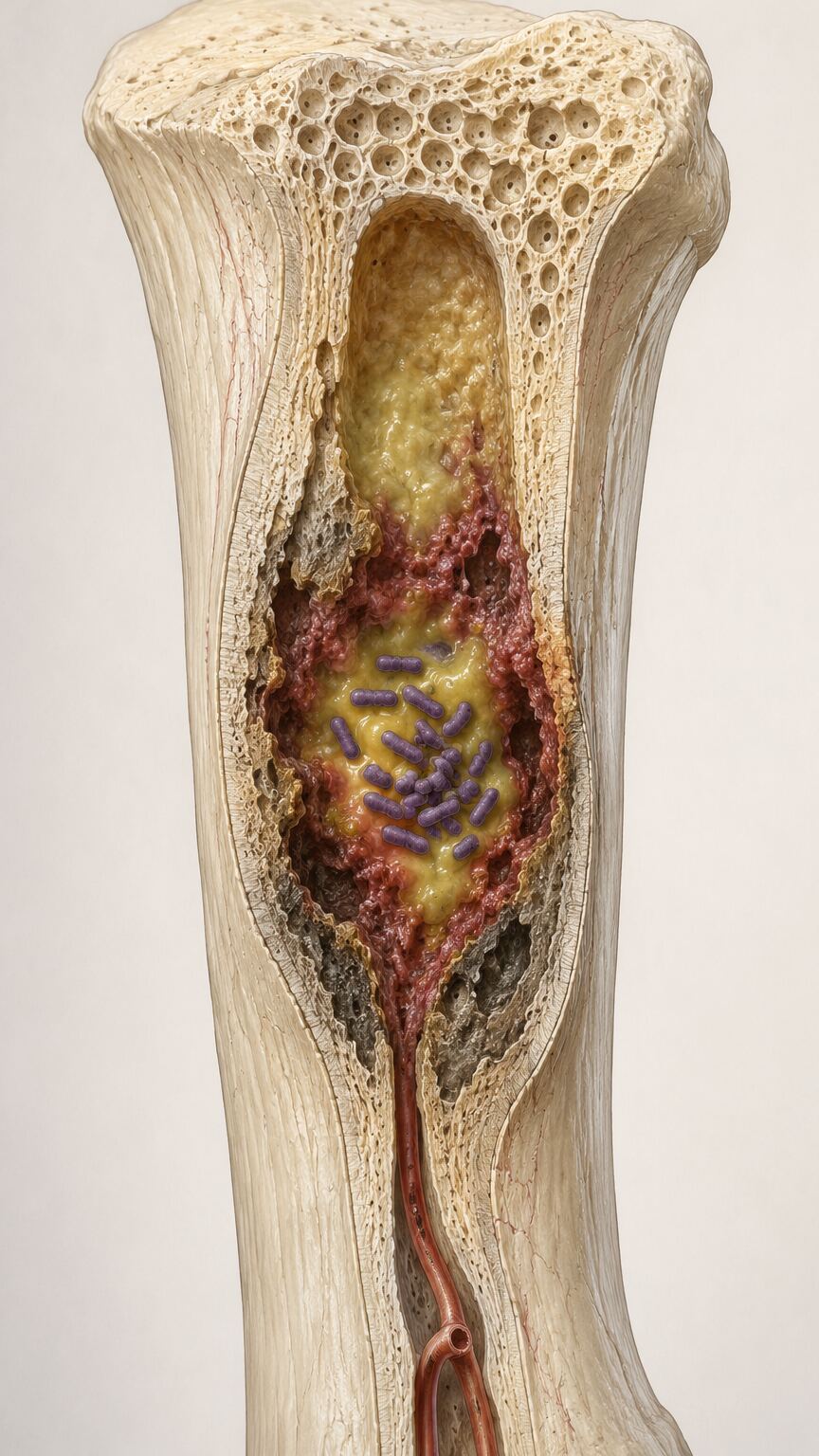
Figure 4. In osteomyelitis, bacteria establish themselves inside bone marrow, an environment antibiotics and immune cells struggle to fully clear, sustaining fibrinogen production for months.
Osteomyelitis — an infection inside the bone itself, most often caused by the bacterium Staphylococcus aureus — is one of the clearest textbook examples of why ESR became a favorite of orthopedic medicine. Bone is a difficult place for both bacteria and the immune system to operate, and paradoxically, that difficulty cuts against the patient: bone's blood supply is more limited than that of soft tissue, which means antibiotics have a harder time penetrating it in high concentrations, and immune cells have a harder time flooding the area the way they can in a skin infection. The result is often a slow-burning, deeply entrenched infection that can smolder inside the marrow cavity for weeks or months, sometimes forming pockets of dead bone tissue called sequestra that further shield the bacteria from clearance.
Because this infection persists rather than resolving in a few days, it keeps the acute-phase response — and fibrinogen production — running continuously rather than in the single short burst you'd see with a passing cold. Clinical studies have consistently found ESR elevated in the large majority of confirmed osteomyelitis cases, frequently climbing above 60 or even 100 mm/hr in more extensive infections, and it's long been used alongside CRP and imaging (X-rays, MRI, or bone scans) to help build the diagnosis. Just as importantly, ESR is also used to track whether treatment is working: after surgical debridement (removal of infected or dead tissue) and a prolonged course of antibiotics — sometimes six weeks or longer, reflecting how stubborn bone infections can be — a steadily falling ESR over repeat testing is one of the reassuring signs that the infection is finally being brought under control, while a level that plateaus or climbs back up can be an early warning that the infection hasn't been fully cleared.
Infective Endocarditis — An Infection That Rewrites the Blood From Inside the Heart
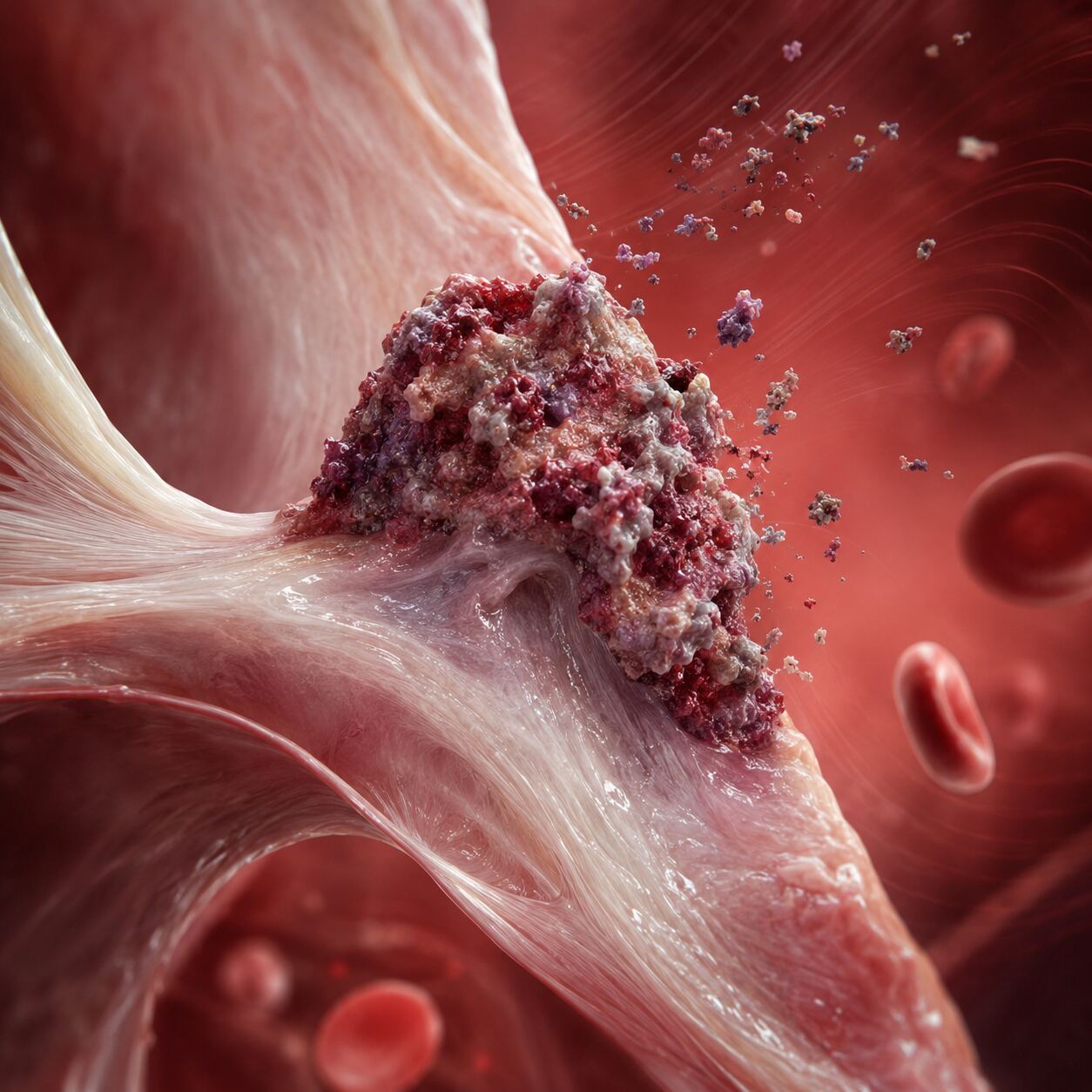
Figure 5. Bacterial vegetations clinging to a heart valve leaflet continuously shed bacteria and immune debris into the bloodstream, driving a sustained inflammatory response.
Infective endocarditis is an infection of the heart's inner lining, most commonly involving one of the heart valves, where bacteria — often entering the bloodstream through the skin, the mouth, or a medical device like an IV catheter or artificial valve — attach to the valve surface and build up a tangled mass of bacteria, platelets, and clotting protein called a vegetation. Because that vegetation sits directly in the bloodstream, bathed continuously by blood flowing through the heart with every single heartbeat, it functions almost like a permanent, self-sustaining infection source that the immune system can see and react to constantly but frequently cannot fully clear on its own, since antibiotics have to penetrate the dense, poorly vascularized structure of the vegetation itself to reach the bacteria hiding inside it.
This constant low-grade shedding of bacteria and immune-triggering debris into the circulation is exactly the kind of prolonged, unrelenting stimulus that keeps fibrinogen production running at a high level for as long as the infection remains untreated — which, for endocarditis, is often many weeks, since standard treatment typically requires four to six weeks of intravenous antibiotics. It's well documented that ESR is elevated in the overwhelming majority of endocarditis cases, and markedly so, with values above 100 mm/hr being reported often enough that a very high ESR in someone with unexplained fevers, new heart murmur, or known risk factors like injection drug use or a prosthetic heart valve is one of the findings that pushes clinicians toward ordering blood cultures and an echocardiogram — an ultrasound of the heart — to look specifically for endocarditis. The fever in endocarditis can be subtle, sometimes low-grade and easy to dismiss as "just being run down," which is part of why an unexpectedly sky-high ESR sometimes turns out to be the thread that unravels a diagnosis that symptoms alone hadn't yet made obvious.
Prosthetic Joint and Hardware Infections — A Modern Chronic Infection Source
A steadily growing share of chronic infections seen in orthopedic and infectious disease clinics today doesn't involve a person's own bone or heart valve at all, but rather the metal and plastic implants now used to replace them. A prosthetic joint infection — bacteria colonizing an artificial hip or knee, sometimes years after the original surgery — behaves in a way that's mechanically similar to osteomyelitis but with an added complication: many bacteria are capable of forming a biofilm, a slimy, self-produced protective layer that coats the implant's surface and shields the bacteria inside it from both antibiotics and the immune system almost as effectively as bone itself does. Once a biofilm is established, the infection can persist indefinitely without ever fully resolving on its own, continuously feeding the same acute-phase signaling that keeps fibrinogen — and therefore ESR — elevated.
Because prosthetic joint infections can present subtly, sometimes with little more than persistent joint pain, mild swelling, or a implant that simply never feels quite right after surgery, ESR and CRP together have become a standard part of the diagnostic workup, often obtained before more invasive steps like joint fluid aspiration are pursued. A normal ESR doesn't fully rule out a prosthetic joint infection, since biofilm-protected bacteria can sometimes produce a surprisingly muted systemic inflammatory signal, but a persistently elevated ESR in someone with a painful joint replacement is taken seriously enough that it routinely triggers further testing. The same logic extends to other implanted hardware — spinal rods and screws, vascular grafts, pacemaker leads, and dialysis catheters can all become sites of this same low-grade, biofilm-protected infection, and in each case, a chronically elevated ESR that doesn't have an obvious alternative explanation is one of the clues that points clinicians back toward the hardware itself as the likely source.
Tuberculosis and Other Slow-Burning Infections
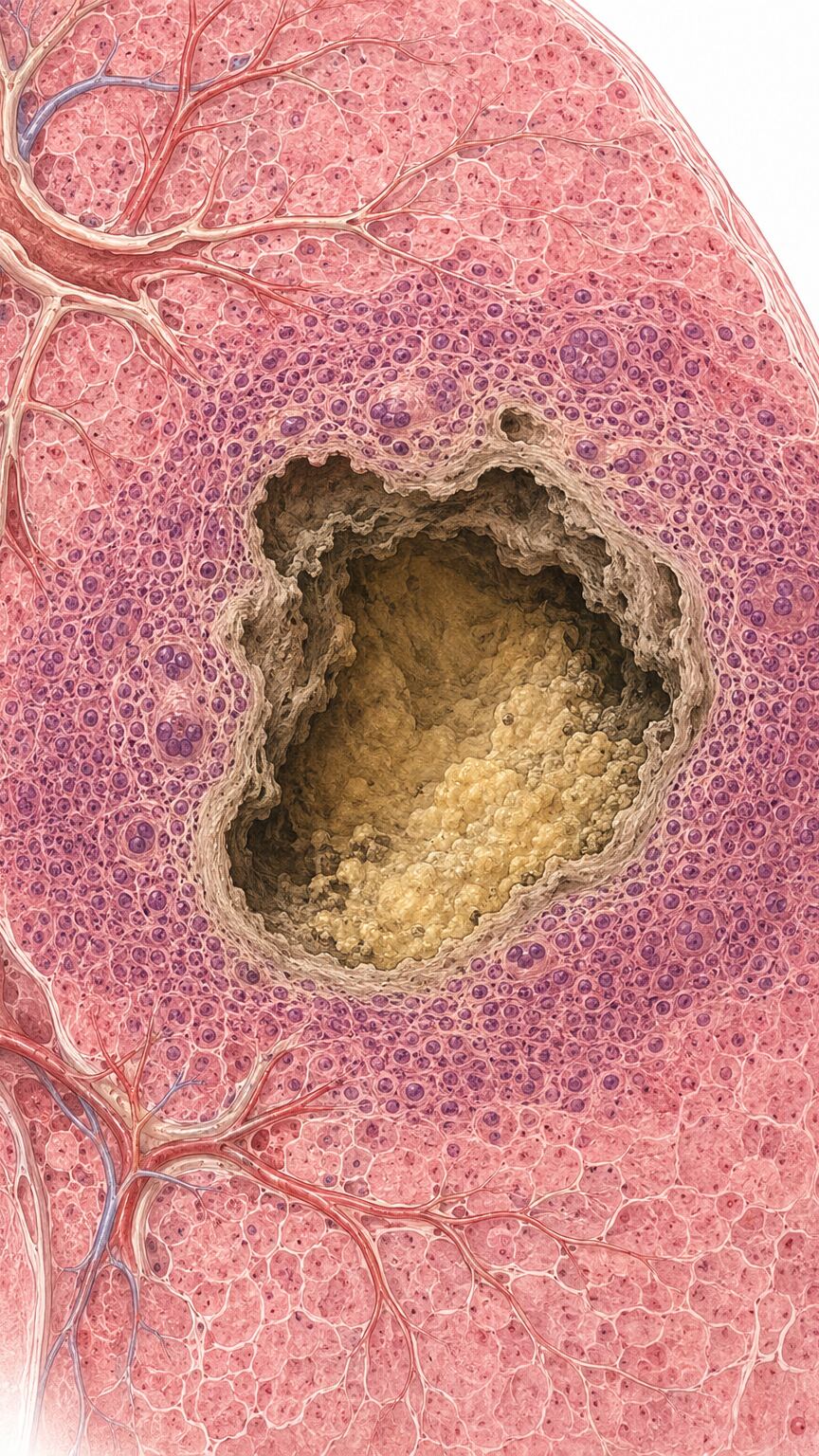
Figure 6. Pulmonary tuberculosis forms walled-off granulomas that can persist for months, keeping the acute-phase response — and ESR — elevated the entire time.
Tuberculosis, caused by the bacterium Mycobacterium tuberculosis, is in many ways the archetype of a "chronic" infection — it's specifically built to evade the immune system over long stretches of time rather than provoking one dramatic, short battle the way a strep infection does. The bacteria are engulfed by immune cells but frequently survive inside them, prompting the body to wall off the infected area into a dense cluster of immune cells called a granuloma in an attempt at containment. This standoff can last for months in active disease, and sometimes for years in latent infection, with the granuloma essentially functioning as a long-term, low-level source of ongoing immune stimulation. Active pulmonary tuberculosis — the form that affects the lungs and can present with a persistent cough, night sweats, unintended weight loss, and fatigue lasting weeks — is well known to produce significantly elevated ESR, often in the range of 50 to 100 mm/hr or higher in more extensive disease, tracking reasonably well with how much lung tissue is involved.
Beyond TB, a handful of other infections share this same slow-burning quality and produce the same durable ESR elevation for the same underlying reason: they simply don't resolve on their own within days. Chronic osteomyelitis aside, this category includes deep abscesses — pockets of pus walled off somewhere in the body, such as inside the abdomen or around the spine, that the immune system struggles to fully drain or clear without medical intervention — chronic pyelonephritis (a kidney infection that has been smoldering rather than treated promptly), certain fungal infections, and HIV, which produces chronic, ongoing immune activation for as long as it remains untreated, frequently driving ESR into a mildly-to-moderately elevated range for years. In every one of these cases, the common thread is duration: the infection simply persists long enough for fibrinogen to build up to a high steady-state level, rather than spiking briefly and clearing.
How High Is "High"? Interpreting an Elevated ESR Number
ESR reference ranges are not identical for everyone, because age and biological sex both genuinely change the baseline. A commonly used rule of thumb, derived from population studies, estimates a normal upper limit for men as roughly their age divided by two, and for women as their age plus ten, divided by two — meaning a normal ceiling that naturally climbs a little higher for someone in their seventies than for someone in their twenties, even with no illness present at all, largely because fibrinogen and other plasma proteins tend to drift gradually upward with age on their own. As a very rough general guide, values under about 20 mm/hr are typically considered normal in younger adults, the 20s and 30s often represent a mild elevation, the 40s through 60s a moderate one, and anything consistently above 100 mm/hr is considered markedly, often dramatically, elevated.
A triple-digit ESR — sometimes informally called a "sky-high" sed rate in clinical shorthand — narrows the list of likely explanations considerably, because relatively few conditions are capable of pushing fibrinogen production that high and keeping it there. Chronic infections like the ones already discussed sit near the top of that shortlist, alongside a small number of other serious conditions: certain cancers, particularly multiple myeloma (a cancer of plasma cells that produces abnormal proteins that clump red cells even more powerfully than fibrinogen does) and lymphoma; autoimmune and rheumatologic diseases such as giant cell arteritis and polymyalgia rheumatica, both of which classically present with a very high ESR in older adults; and severe, active connective tissue diseases like lupus. Because this shortlist includes conditions that genuinely require urgent attention, a markedly elevated ESR — especially one paired with fevers, unexplained weight loss, night sweats, or new or unusual pain — is one of the lab findings that reliably prompts a more thorough workup rather than a wait-and-see approach.
Between these two extremes, a mildly-to-moderately elevated ESR — roughly in the 20s through 50s for most working-age adults — is a much less dramatic finding and, on its own, is genuinely nonspecific. It can reflect a smoldering chronic infection in its earlier stages, but it can just as easily reflect something as mundane as a recent minor illness, ongoing dental inflammation, obesity (fat tissue itself produces a modest amount of inflammatory signaling), or simply the normal variation that comes with being an older adult. This is exactly why a moderate ESR elevation, found incidentally on a routine panel with no accompanying symptoms, doesn't automatically launch an infectious workup the way a triple-digit result does — context, trend, and the rest of the clinical picture carry as much weight as the number itself at this middle range.
ESR in Children and Older Adults
Age changes both the baseline ESR a person is likely to have and how forcefully it responds to chronic infection, which is part of why a single fixed reference range doesn't serve every patient equally well. In children, ESR tends to run lower at baseline than in adults, so even a modest elevation can carry more diagnostic weight, and it's used as one supporting piece of evidence when a child has a suspected bone or joint infection, since children with osteomyelitis or septic arthritis don't always describe their pain clearly and may simply refuse to bear weight on an affected limb. Because a young, otherwise healthy immune system tends to mount a vigorous acute-phase response, ESR in pediatric bone and joint infections often climbs quickly and dramatically, which is one of the reasons it remains a routinely ordered test in pediatric orthopedic and infectious disease evaluations despite the array of newer tests now available.
At the other end of life, ESR naturally drifts higher with advancing age even in the complete absence of any illness, which is why the age-based reference formulas exist in the first place — without adjusting for age, a healthy 80-year-old could be flagged as having an abnormal result simply for being 80. This upward drift is thought to reflect a mild, cumulative increase in background inflammatory activity and plasma protein levels that tends to accompany aging generally, sometimes referred to as "inflammaging." The practical consequence is that a moderately elevated ESR in an older adult carries somewhat less alarm on its own than the same number would in a healthy 25-year-old, but a very high value — particularly above 100 mm/hr — remains significant at any age and, in adults over 50, is specifically associated with the autoimmune conditions giant cell arteritis and polymyalgia rheumatica in addition to the chronic infections covered throughout this article, which is why clinicians evaluating a sky-high ESR in an older patient typically consider both possibilities side by side rather than assuming infection by default.
What Else Can Push ESR Up or Down Besides Infection
Because ESR is a physical measurement rather than a specific chemical test, several things unrelated to infection can shift it in either direction, which is exactly why doctors interpret it alongside symptoms and other tests rather than in isolation. Anemia — a lower-than-normal red blood cell count — is one of the most important of these confounders, and it pushes ESR upward on its own, independent of any inflammation at all. With fewer cells competing for space and crowding each other in the tube, individual rouleaux stacks have more room to fall unimpeded, so they sink faster purely due to the mechanics of a less crowded column, even without any extra fibrinogen involved. This matters clinically because chronic infection and anemia frequently occur together — ongoing inflammation itself can suppress red blood cell production — which means the two effects can compound each other in someone with a long-standing infection, producing an ESR that overstates inflammation alone unless anemia is also accounted for.
Pregnancy raises ESR substantially for entirely normal, expected physiological reasons tied to increased plasma proteins and blood volume, which is why pregnant patients need their own separate frame of reference rather than being judged against a standard adult range. On the opposite side, certain blood conditions can artificially lower ESR even in the presence of real inflammation: sickle cell disease distorts red blood cells into a shape that resists stacking into rouleaux at all, and polycythemia — an abnormally high red blood cell count — creates such a crowded, viscous column that cells simply can't settle quickly regardless of how much fibrinogen is present, sometimes masking a genuine infection that would otherwise show up clearly. Extremely low fibrinogen from liver disease or a bleeding disorder, and heart failure with very high protein congestion, are among the rarer conditions that can also skew results in one direction or the other.
A handful of medications can shift ESR as well, which is worth mentioning to whoever orders the test if it comes back unexpectedly abnormal. Corticosteroids like prednisone, commonly prescribed for a wide range of inflammatory and autoimmune conditions, can substantially suppress ESR by damping down the acute-phase response itself, which means someone on a steroid taper could have a real, ongoing chronic infection while their ESR reads deceptively close to normal — a scenario clinicians specifically watch for in patients who are immunosuppressed for other reasons and therefore may not mount a typical inflammatory response to infection at all. Statins, some nonsteroidal anti-inflammatory drugs, and certain chemotherapy agents have also been associated with modest reductions in ESR in various studies. This is exactly why an isolated ESR number is never read in a vacuum by an experienced clinician — the full blood count, the clinical picture, current medications, and often a same-day CRP are considered together before drawing any conclusion.
Why Doctors Track ESR Over Time, Not Just Once

Figure 7. Because fibrinogen clears slowly, a single ESR reading matters less than the trend across several weeks of treatment for a chronic infection.
Given fibrinogen's roughly four-day half-life and the one-to-two-week lag before ESR even peaks after a trigger begins, a single ESR value is genuinely difficult to interpret in isolation when someone is being treated for a chronic infection like osteomyelitis or endocarditis. A number that's still elevated one week into a six-week antibiotic course doesn't necessarily mean the treatment isn't working — it may simply mean fibrinogen hasn't had time to fully clear yet, since the biology behind the number moves on its own slow schedule regardless of how quickly the underlying infection is actually improving. This is precisely why clinicians managing these conditions typically order ESR every one to two weeks rather than once, watching for a clear downward trend across several consecutive measurements rather than judging success or failure from any single data point.
A steadily falling ESR across repeat testing is one of the most reassuring signs available that a chronic infection is genuinely responding to treatment, particularly in situations like osteomyelitis where repeat imaging can be difficult to interpret cleanly or endocarditis where the infected valve itself may take a long time to visibly change on an echocardiogram even after the bacteria are gone. Conversely, an ESR that plateaus, stalls, or ticks back upward partway through a treatment course is often one of the earliest lab signals that prompts a doctor to reassess — checking whether the antibiotic choice needs to change, whether surgical drainage or debridement might be needed, or whether the infection has proven more stubborn than the initial treatment plan accounted for. In this sense, ESR functions less like a single diagnostic answer and more like a slow-moving barometer, most useful not for the number it reports on any one day, but for the shape of the line it traces over the following weeks.
Frequently Asked Questions
How high can ESR get with a chronic infection like osteomyelitis or endocarditis?
Values above 60 mm/hr are common with these conditions, and it isn't unusual to see ESR climb above 100 mm/hr in more extensive or longer-standing infections. Very high values, especially paired with fevers or unexplained weight loss, are taken seriously and typically prompt further imaging and blood cultures.
Why doesn't ESR react quickly to a short-term infection the way CRP does?
ESR depends on fibrinogen, a protein with a roughly four-day half-life that can take one to two weeks to peak after a trigger begins — much slower than CRP, which can double within hours. This slow clock is exactly what makes ESR better suited to detecting infections that have been active for weeks rather than days.
Can ESR be elevated without any infection at all?
Yes. Anemia, pregnancy, older age, autoimmune conditions like giant cell arteritis, and certain cancers such as multiple myeloma can all raise ESR independent of infection. This is why doctors interpret ESR alongside symptoms, a full blood count, and often CRP rather than on its own.
Why do doctors repeat ESR testing during antibiotic treatment instead of checking it once?
Because fibrinogen clears slowly, a single ESR reading during treatment can lag behind how well the infection is actually responding. Repeat testing every one to two weeks lets a doctor watch for a genuine downward trend, which is a far more reliable signal than any one number alone.
Can a normal ESR rule out a chronic infection like a prosthetic joint infection?
Not completely. Bacteria protected inside a biofilm on an implant, or infections in someone taking corticosteroids or other immune-suppressing medications, can sometimes produce a surprisingly muted ESR response. A normal result lowers the likelihood of infection but isn't considered definitive on its own, which is why it's interpreted alongside CRP, imaging, and clinical symptoms.
Conclusion
ESR rises with chronic infection because of a chain of biology that starts in the liver and ends with red blood cells physically clumping together and sinking faster in a glass tube — a mechanism built around fibrinogen, a protein that takes days to accumulate and days to clear, which is exactly why the test is slow to react but well suited to catching infections that refuse to resolve quickly on their own. Bone infections, heart valve infections, prosthetic joint and hardware infections, tuberculosis, and other conditions that persist for weeks rather than days all share this same durable stimulus, which is why they show up so reliably as sustained, sometimes dramatic ESR elevations rather than brief spikes. Because so many other factors — anemia, age, pregnancy, medications, autoimmune disease — can also move this number in either direction, a single elevated ESR is rarely the whole story on its own; it's the trend over repeated testing, read alongside symptoms and other lab work, that tells the fuller story a doctor actually needs. A century-old test built on nothing more sophisticated than gravity and a glass tube still earns its place on modern lab panels precisely because so few other tools capture that slow, cumulative story as reliably.
Still Not Sure What Your Results Mean?
Upload your labs and get a complete, visual, plain-language interpretation of every biomarker — delivered to your inbox in under 15 minutes.
Get My ReportThis article is for educational purposes only and does not constitute medical advice. Always consult your healthcare provider regarding your specific lab results.