
Understanding the Link Between Ferritin and Fatigue
If you've felt exhausted for months, gotten a full blood panel back, and been told everything looks "normal" — ferritin is one of the first places worth looking again, and one of the most commonly misread. Ferritin is the protein your body uses to store iron, and it's the earliest, most sensitive marker of your body's iron reserves — it tends to fall long before red blood cells shrink, before hemoglobin drops, before anything shows up as textbook anemia on a standard blood count. That timing gap matters enormously, because iron isn't just a raw material for making red blood cells; it's a direct, physical requirement for how your cells generate energy and how your brain produces some of its core signaling chemicals. That means a ferritin level that's technically inside the reference range, but sitting near the low end, can leave someone feeling persistently drained, foggy, and depleted — while every other number on their panel looks unremarkable. This article walks through exactly how ferritin connects to fatigue at a mechanistic level, why "normal" doesn't always mean "adequate," and what else can distort this number in ways that hide what's really going on.
Curious what the rest of your iron panel is telling you? Upload your results and get a complete, plain-language breakdown in under 15 minutes.
Analyze My ResultsWhat Ferritin Actually Is, and Why It's Different From "Iron" on a Blood Test
Ferritin is often confused with iron itself, but they're not the same measurement, and the difference matters. Serum iron reflects how much iron is circulating in your blood at that exact moment — a number that swings throughout the day, changes with meals, and isn't a reliable indicator of your body's overall reserves. Ferritin, by contrast, is a protein whose entire job is to store iron safely inside your cells, mainly in the liver, spleen, and bone marrow, and a small amount of it leaks into the bloodstream in rough proportion to how much iron is sitting in those internal stores. That relationship is what makes ferritin the go-to marker for assessing total-body iron status: it's less a snapshot of iron passing through and more a readout of the reserve tank itself. When ferritin is low, it means those internal iron stores have been drawn down — the body has been spending more iron than it's been replacing, sometimes for months, before the deficit becomes severe enough to show up anywhere else on a standard blood count.
Why the Body Has No Real Way to Get Rid of Excess Iron
One detail that makes iron unusual among nutrients, and that explains a lot about why both deficiency and overload are such persistent clinical problems, is that the human body has essentially no active mechanism for excreting iron once it's absorbed. Unlike sodium, calcium, or most vitamins, which the kidneys can flush out in excess through urine, iron that enters the body largely stays in the body — the only meaningful routes of loss are through blood (menstruation, injury, gastrointestinal bleeding, blood donation) and the small, steady loss of iron contained in skin cells and the lining of the gut as they naturally shed and get replaced. Because of this, the body regulates iron almost entirely at the point of absorption in the small intestine, using a hormone called hepcidin, produced by the liver, that acts like a gatekeeper — when iron stores are adequate or high, hepcidin rises and blocks further absorption from food; when stores run low, hepcidin drops and the intestine absorbs iron more aggressively from whatever is eaten. This single-gate system works reasonably well under stable conditions, but it also means that once a real, ongoing source of iron loss is present — heavy periods, silent gastrointestinal bleeding, frequent blood donation — the body has limited ability to compensate purely through better absorption, especially since the same hepcidin system gets suppressed by inflammation in a way that can further blunt how much iron actually gets absorbed from the diet at exactly the moment more is needed. This is also the flip side of why iron overload conditions like hemochromatosis are so consequential: without an excretion valve, a genetic defect that keeps hepcidin abnormally low leads to steady, years-long iron accumulation with essentially nothing to stop it until it's identified and actively treated.
Why Low Iron Drains Energy at the Cellular Level, Not Just in Red Blood Cells
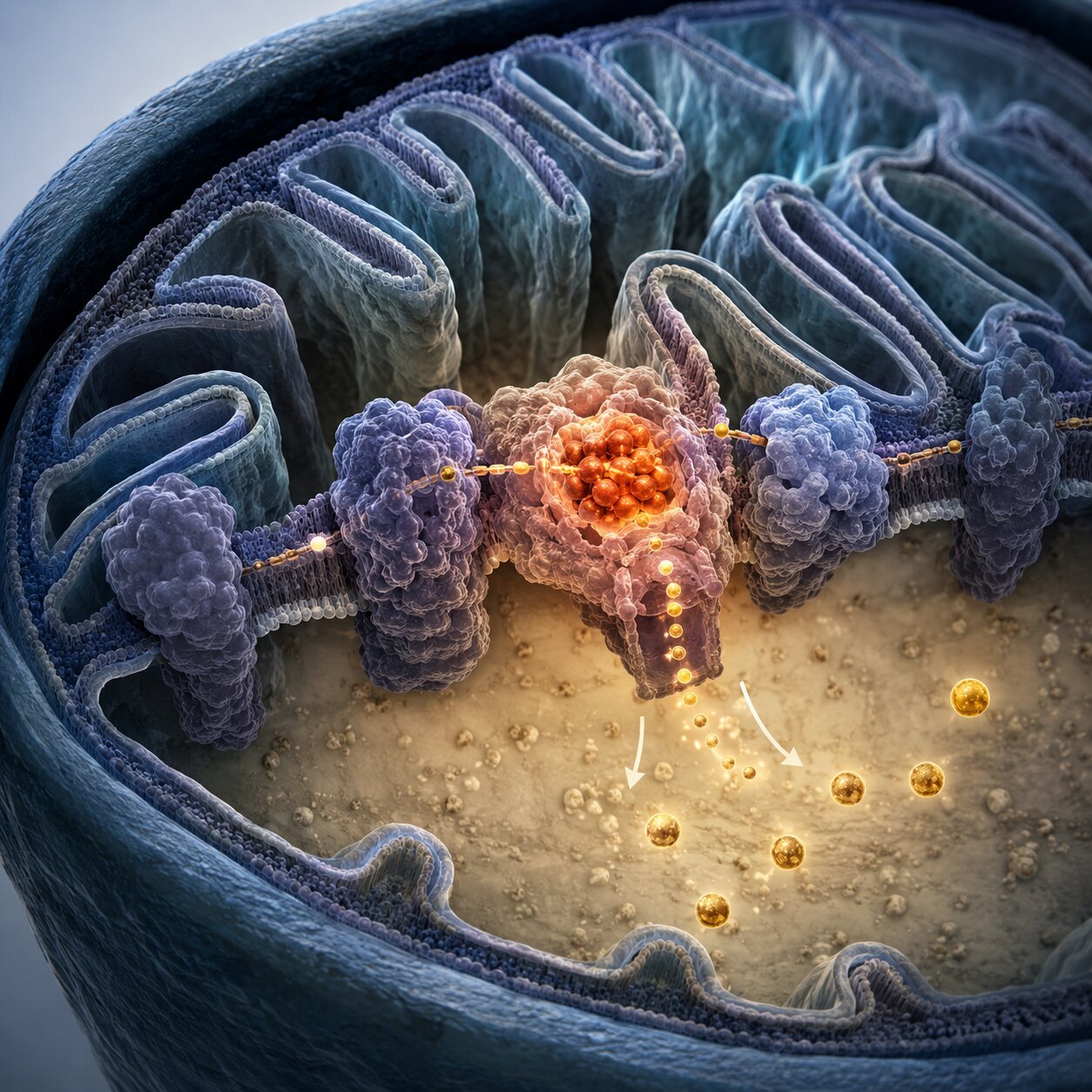
The most familiar explanation for iron-deficiency fatigue involves hemoglobin — the iron-containing protein inside red blood cells that carries oxygen from your lungs to the rest of your body. When iron runs low enough to affect hemoglobin production, oxygen delivery to your tissues drops, and fatigue is an entirely expected consequence. But this explanation, while true, only tells part of the story, and it's the part that shows up latest. Iron is also a direct structural component of several enzymes inside the mitochondria — the small structures inside nearly every cell in your body responsible for converting food into usable energy (ATP). Specifically, iron-sulfur clusters form the core of several proteins in the electron transport chain, the assembly line of reactions mitochondria use to generate energy efficiently. When iron stores run low, these enzymes can be built and function less efficiently even while hemoglobin is still holding steady in the normal range, meaning your cells' actual capacity to produce energy can decline before your blood count ever reflects a problem. This is the central reason iron deficiency can cause profound, hard-to-explain fatigue even in someone who isn't technically anemic by standard lab criteria — the oxygen-carrying system may still be intact, but the cellular machinery converting that oxygen into usable energy is already running short on a key ingredient.
The Iron-Brain Connection: Dopamine, Cognitive Fog, and Restless Legs
Iron's role in energy production is only part of why low ferritin so often shows up as brain fog and heaviness rather than pure physical tiredness. Iron is a required cofactor for tyrosine hydroxylase, the enzyme that carries out the rate-limiting step in producing dopamine, one of the brain's primary signaling chemicals involved in motivation, focus, and motor control. When brain iron stores decline — which can happen even before iron deficiency is severe enough to affect the rest of the body — dopamine synthesis can become measurably less efficient, and this has a specific, well-documented consequence: restless legs syndrome, an uncomfortable, hard-to-describe urge to move the legs that intensifies in the evening and disrupts sleep. Restless legs syndrome is one of the more distinctive symptoms linked to low ferritin, and it's often one of the first clues that points a clinician toward checking iron studies, since the connection between brain iron and dopamine regulation in this specific condition is unusually well established compared with some of the vaguer, harder-to-pin-down cognitive symptoms of low iron, like difficulty concentrating, low motivation, or a persistent sense of mental heaviness that doesn't lift with sleep.

The Problem With "Normal": Why the Reference Range and the Symptom Threshold Don't Match
Most labs define a "normal" ferritin range somewhere between roughly 15 and 200 nanograms per milliliter for women, and 20 to 300 for men — a range built primarily around detecting frank iron-deficiency anemia and iron overload, the two extremes. But that range wasn't designed around the question of when someone starts to feel the effects of low iron stores, and a growing body of clinical research and practical experience suggests those two thresholds — "not anemic" and "not symptomatic" — sit in noticeably different places. Multiple studies looking specifically at fatigue in non-anemic women with low-normal ferritin have found that raising ferritin levels well above the lab's minimum cutoff, often into the 50 to 100 nanogram range, corresponds with meaningful improvement in fatigue and quality of life, even though every ferritin value involved would have been read as "normal" on a standard report. This is a genuinely important gap for anyone who's been told their iron is "fine" based solely on falling inside the reference range: fine enough to not be anemic is a different bar than fine enough to feel well, and a great deal of unexplained fatigue lives in the space between those two thresholds.
Latent Iron Deficiency: Fatigue Before Anemia Ever Shows Up
The technical term for this in-between state is latent, or non-anemic, iron deficiency: iron stores (ferritin) are measurably low, but hemoglobin and red blood cell indices are still within the normal range, because the body prioritizes maintaining adequate hemoglobin production for as long as possible, drawing down storage iron first to compensate. This means a standard complete blood count can look entirely unremarkable — normal hemoglobin, normal red cell size, no anemia flagged anywhere — while ferritin, if it's checked at all, tells a very different story. This is precisely why ferritin needs to be ordered specifically rather than assumed to be covered by a routine CBC; the two tests are frequently bundled together in people's minds, but a CBC alone will not reliably catch iron depletion at this earlier, non-anemic stage. Because latent iron deficiency doesn't produce the more dramatic, easily recognized signs of anemia — pale skin, a rapid heartbeat, visible shortness of breath — it's disproportionately likely to be missed or dismissed, particularly in people (often young women with heavy periods, frequent blood donors, endurance athletes, and those eating primarily plant-based diets) who are already at elevated risk for it in the first place.
Why Ferritin Can Be Falsely Normal, or Even High, During Inflammation
Complicating all of this is a separate and equally important fact about ferritin: it isn't only a marker of iron storage — it's also what's known as an acute phase reactant, meaning your liver increases its production specifically in response to inflammation, infection, or tissue damage, independent of how much iron you actually have stored. This dual identity means ferritin can rise during a cold, a flare of an autoimmune condition, recent surgery, obesity-related low-grade inflammation, or even just from being generally unwell, and that inflammatory bump can be large enough to push a genuinely iron-deficient person's ferritin up into the "normal" range on paper, effectively masking a real deficiency underneath. This is one of the more clinically important nuances in interpreting ferritin, and it's why a "normal" ferritin result in someone with unexplained fatigue and other risk factors for iron deficiency (heavy periods, a plant-based diet, a known inflammatory condition) shouldn't necessarily be taken at face value without also checking a marker of inflammation, like C-reactive protein (CRP), alongside it.
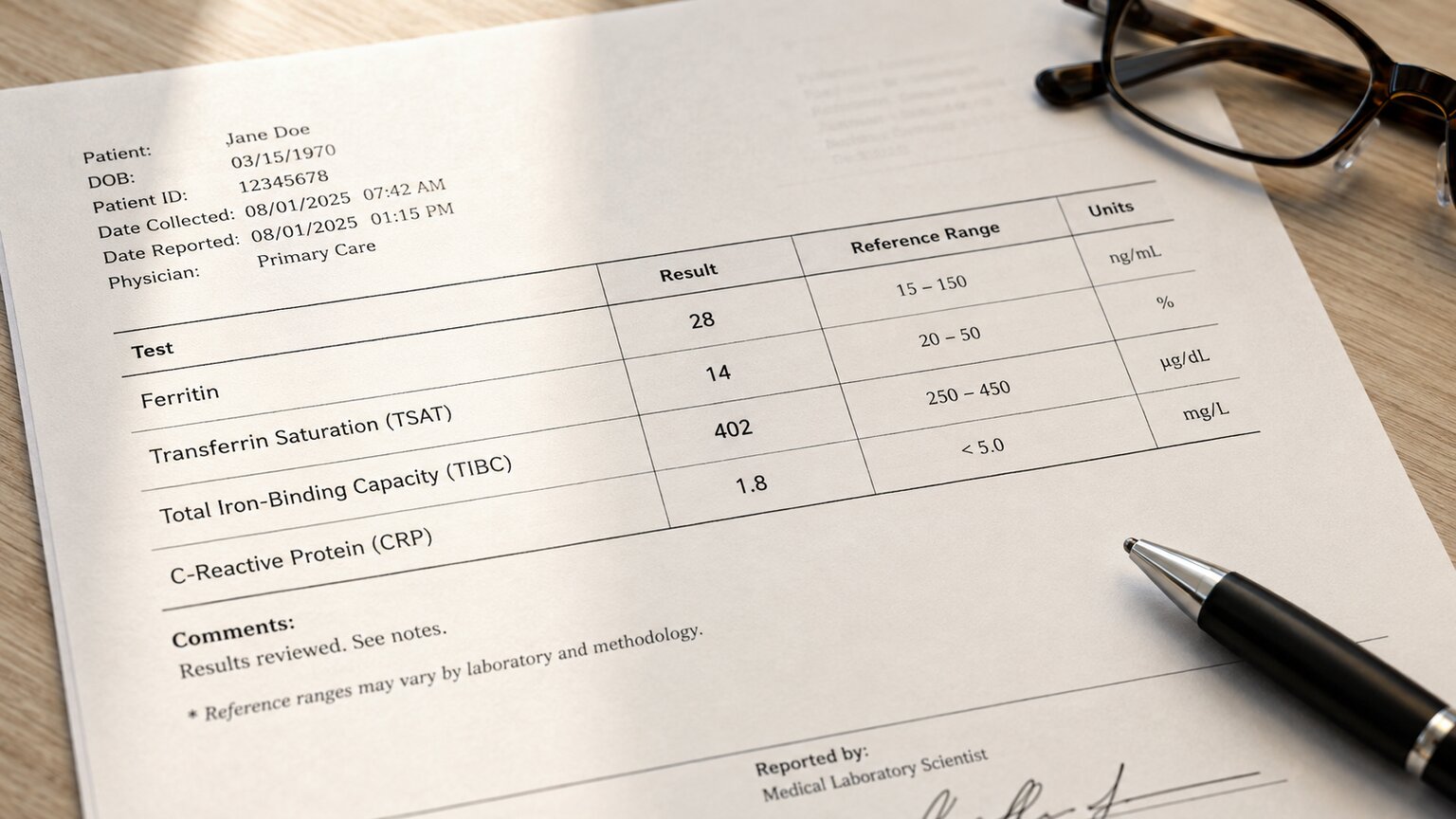
Because of this, doctors who suspect iron deficiency despite a seemingly normal ferritin will often order a fuller iron panel, including serum iron, total iron-binding capacity (TIBC), and transferrin saturation (TSAT) — the percentage of iron-carrying protein that's actually loaded with iron. A low TSAT alongside a "normal" ferritin, especially with an elevated CRP suggesting active inflammation, is a strong signal that real iron deficiency is present underneath an artificially inflated ferritin number. This combined interpretation — rather than any single value in isolation — is what allows a clinician to separate someone whose iron stores are genuinely adequate from someone whose iron deficiency is simply being hidden by an unrelated inflammatory process happening at the same time.
Common, Overlooked Causes of Low Ferritin
Several everyday, easily overlooked sources of ongoing iron loss or inadequate iron intake account for the majority of low ferritin cases seen in otherwise healthy people. Heavy menstrual bleeding is among the most common and most underrecognized, since many women have no independent point of comparison for what counts as unusually heavy blood loss, and a pattern that's been normal for someone since adolescence can still be steadily depleting their iron stores year after year. Plant-based diets are another significant factor — the iron found in plant foods (non-heme iron) is absorbed far less efficiently by the body than the iron in meat, fish, and poultry (heme iron), meaning vegetarians and vegans need to consciously plan for meaningfully higher iron intake to maintain the same stores as someone eating an omnivorous diet. Frequent blood donation, chronic low-grade gastrointestinal blood loss (from ulcers, hemorrhoids, or, less commonly, more serious causes that warrant their own evaluation), and pregnancy — which dramatically increases the body's iron requirements to support the growing fetus and expanding blood volume — round out the most frequent explanations. Endurance athletes represent a less obvious but well-documented group at risk, for a specific mechanical reason: repetitive, high-impact footstrike during running can cause small amounts of mechanical destruction of red blood cells in the capillaries of the feet, a phenomenon called footstrike hemolysis, which combines with iron losses through sweat and gastrointestinal changes during intense training to place endurance runners at meaningfully elevated risk of depleted iron stores compared with the general population.

None of these causes is dangerous in itself, and all of them are correctable once identified — but they're also exactly the kind of everyday, easy-to-explain-away pattern that keeps low ferritin from being investigated. Someone training for a marathon who feels perpetually drained may reasonably chalk that up to training load alone, when a depleted iron reserve is compounding it. The same is true of heavy periods being dismissed as "just how my body is," when the cumulative iron loss over years is the more relevant clinical fact. Even something as simple as regular blood donation, a genuinely valuable and low-risk act on its own, can measurably lower ferritin over repeated donations if enough time isn't given between them for iron stores to fully rebuild, which is why frequent donors are increasingly encouraged to have their ferritin checked periodically rather than relying solely on the basic hemoglobin finger-stick screening done at the donation center itself.
How Much Iron You Actually Need, and Why Deficiency Is So Widespread
Part of why low ferritin is one of the most common nutrient-related findings in medicine comes down to simple arithmetic: the recommended daily iron intake is meaningfully higher for menstruating women (around 18 milligrams per day) than for men or postmenopausal women (around 8 milligrams per day), a gap that exists specifically to offset the iron lost through monthly menstrual blood loss — yet dietary surveys consistently find that a substantial share of menstruating women fall short of that higher target on a typical day. Compounding this, the efficiency of iron absorption from food is low even under ideal conditions: heme iron, from animal sources, is absorbed at roughly 15 to 35%, while non-heme iron, from plant sources like lentils, spinach, and fortified grains, is typically absorbed at only 2 to 20%, and that absorption is further reduced by common dietary companions like coffee, tea, and calcium-rich foods eaten in the same meal, all of which bind iron in the gut and make it harder to take up. Vitamin C, by contrast, meaningfully enhances non-heme iron absorption when eaten in the same meal, which is why a common, practical recommendation for anyone actively rebuilding iron stores is to pair iron-rich foods or supplements with a source of vitamin C, and to avoid coffee or tea within roughly an hour of an iron-containing meal. Pregnancy adds another layer entirely, nearly doubling iron requirements to support the expanding blood volume and the iron needs of the developing fetus, which is exactly why iron studies are checked routinely during prenatal care and why iron supplementation is so frequently recommended during pregnancy even in people who entered it with adequate stores.
Malabsorption: When the Gut Itself Is the Bottleneck
Beyond blood loss and inadequate dietary intake, a less commonly recognized but clinically important cause of low ferritin is malabsorption — a problem with the intestine's ability to take up iron at all, regardless of how much is being eaten or lost. Celiac disease, an autoimmune reaction to gluten that damages the lining of the small intestine, is one of the more significant causes in this category, and unexplained iron-deficiency fatigue with a low ferritin is, in some cases, the first and only clue that leads to a celiac diagnosis, well before any digestive symptoms are noticed. Infection with Helicobacter pylori, a bacterium that colonizes the stomach and is best known for causing ulcers, has also been independently linked to impaired iron absorption and unexplained iron-deficiency anemia, even in people without any obvious stomach symptoms, through mechanisms that include reduced stomach acid production and low-grade chronic inflammation of the stomach lining. Prior gastric bypass or other weight-loss surgery that reduces or bypasses the section of the small intestine primarily responsible for iron absorption is another well-recognized cause, which is why lifelong iron monitoring is a standard part of follow-up care after these procedures. This is exactly why an iron deficiency that doesn't respond to oral supplementation as expected, discussed in the next section, often prompts a look at the gut itself as the underlying bottleneck, rather than simply assuming the supplement dose needs to be increased further.
When High Ferritin Is the Real Story, and Why It Has a Different Fatigue Mechanism
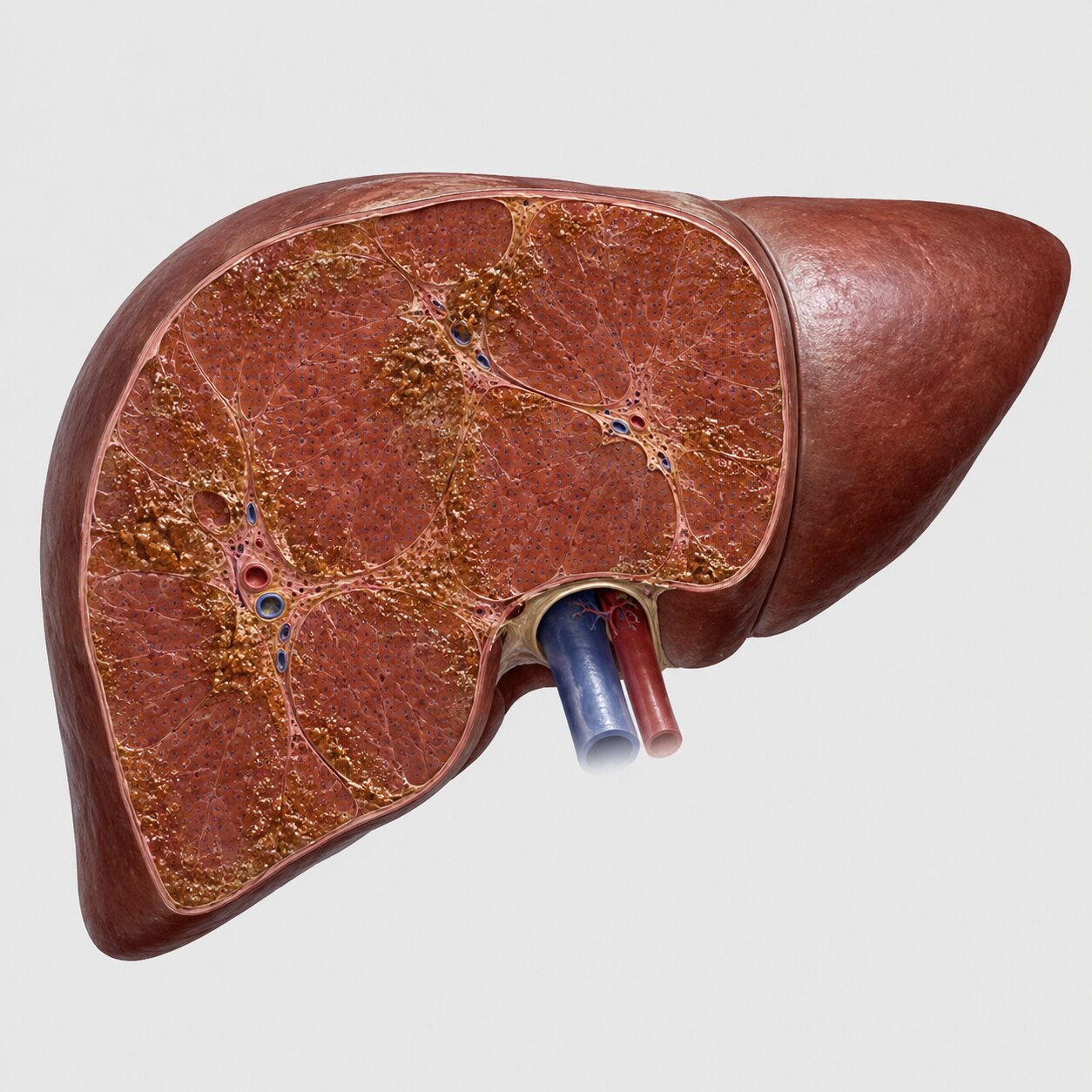
Ferritin can also run too high, and while that's a separate topic from iron-deficiency fatigue, it deserves its own mention here because elevated ferritin has its own, distinct relationship with tiredness. The most well-known cause of significantly elevated ferritin is hereditary hemochromatosis, a genetic condition that causes the body to absorb far more iron from food than it needs, leading to progressive iron accumulation in the liver, heart, pancreas, and joints over years to decades. Left unaddressed, this iron overload can cause genuine organ damage, and fatigue is frequently one of the earliest symptoms reported by people with hemochromatosis — not because of any energy-production deficit like in iron-deficiency fatigue, but likely related to early, low-grade iron-related tissue damage and the metabolic strain of an organ system working around a toxic excess. But hemochromatosis is far from the only, or even the most common, cause of a high ferritin result: because ferritin is an acute phase reactant, elevated levels are seen just as often, if not more often, in the context of obesity, fatty liver disease (now more commonly called metabolic dysfunction-associated steatotic liver disease), heavy alcohol use, and general chronic low-grade inflammation — none of which reflect true iron overload at all. Distinguishing between these possibilities is exactly why an elevated ferritin, just like an unexpectedly normal one, is never interpreted alone; a high TSAT alongside high ferritin points toward true iron overload and warrants further genetic and organ-specific evaluation, while a normal TSAT with high ferritin points toward an inflammatory or metabolic explanation rather than an iron problem at all.
Hypothyroidism's Two-Way Relationship With Ferritin and Fatigue
Thyroid function and iron status are more entangled than most people realize, and this connection is particularly relevant to anyone investigating fatigue, since both an underactive thyroid and low ferritin cause remarkably similar symptoms on their own. Hypothyroidism can reduce stomach acid production, and stomach acid is required to convert dietary iron into a form the intestine can actually absorb — meaning an underactive thyroid can directly contribute to developing iron deficiency over time, independent of diet or blood loss. The relationship also runs the other way: adequate iron is required for thyroid peroxidase, an enzyme essential to producing thyroid hormone in the first place, so iron deficiency can itself impair thyroid function and blunt how well thyroid hormone replacement works in someone already being treated for hypothyroidism. This bidirectional relationship is exactly why unexplained fatigue investigations often check both a full thyroid panel and iron studies together rather than one or the other — treating a low thyroid hormone level without addressing an underlying iron deficiency can leave someone only partially improved, still fatigued despite a thyroid panel that looks well-controlled on paper.
Testing Pitfalls: Why a Single Ferritin Reading Isn't Always the Final Word
Getting an accurate, interpretable ferritin result depends on a few practical details that are easy to overlook but can meaningfully change what a result actually means, and overlooking them is a common, avoidable reason a lab report ends up misread. Because ferritin behaves as an acute phase reactant, drawing the test during or immediately after any acute illness — even something as minor as a cold — can temporarily elevate it enough to obscure an underlying deficiency, which is why clinicians generally prefer to check ferritin when someone is at their baseline state of health rather than in the middle of being sick. Recent iron supplementation can also complicate the picture in the other direction: taking iron for even a few days before a blood draw can nudge ferritin upward, though this effect is far smaller and slower than the swings seen with serum iron, which can shift substantially within hours of a single iron-containing meal or supplement dose. This is exactly why serum iron alone is considered a poor stand-alone marker of overall iron status — it's simply too reactive to whatever was eaten most recently — while ferritin, precisely because it reflects stored reserves rather than what's momentarily circulating, is far more stable and far more useful as the primary screening test, provided the inflammation caveat above is kept in mind. When a single ferritin result doesn't seem to match the clinical picture — someone with clear risk factors for iron deficiency and a "normal" ferritin, or someone with no apparent reason for elevated iron and a high result — repeating the test on a different day, ideally when free of any acute illness, alongside a fuller iron panel, is a reasonable and common next step before drawing firm conclusions either way.
How Ferritin Needs and Norms Shift Across Life Stages
The "right" ferritin level to aim for isn't static across a person's life, and understanding how it shifts helps explain why the same number can mean different things for different people. Adolescents going through growth spurts have substantially increased iron requirements to support expanding blood volume and muscle mass, and teenage girls who have recently started menstruating are at particularly high risk of developing low ferritin before anyone thinks to check for it, since fatigue and difficulty concentrating in that age group are often attributed reflexively to school stress or normal teenage tiredness. Premenopausal women, as discussed throughout this article, carry an ongoing elevated risk due to monthly blood loss, while that specific risk factor disappears after menopause — which is one of the reasons a new finding of low ferritin in a postmenopausal woman is taken seriously and often prompts a look at the gastrointestinal tract for a possible source of slow, silent blood loss, since the most common explanation for iron deficiency in younger women no longer applies. Older adults overall are a group where both extremes deserve attention for different reasons: undiagnosed iron deficiency can be quietly contributing to the fatigue and reduced stamina often chalked up to "just getting older," while elevated ferritin in this age group is disproportionately likely to reflect chronic inflammation, kidney disease, or metabolic conditions that become more common with age, rather than true iron overload. Athletes, particularly those in endurance sports, represent their own distinct risk category for the mechanical and dietary reasons described earlier, and some sports medicine programs now check ferritin as a routine part of periodic health monitoring for exactly this reason, rather than waiting for fatigue or a performance decline to prompt testing.
What a Trial of Iron Supplementation Can — and Can't — Tell You
Once low ferritin has been identified as a plausible contributor to fatigue, the standard next step is a trial of iron supplementation, typically over eight to twelve weeks, with a repeat ferritin check afterward to confirm the level has actually risen. This deliberate, monitored approach matters for two reasons. First, iron supplementation isn't harmless in unlimited amounts — taking iron without an actual deficiency can cause gastrointestinal side effects and, over a long enough period, contribute to iron overload in people who don't need it, which is exactly why supplementation should follow a confirmed low ferritin result rather than being started speculatively based on fatigue alone. Second, the response to supplementation is itself diagnostically useful: if ferritin rises appropriately and fatigue meaningfully improves, that's strong confirmation that iron deficiency was indeed a real, contributing factor. If ferritin fails to rise despite consistent supplementation, that points toward either poor absorption (sometimes from an underlying gastrointestinal condition like celiac disease that impairs iron uptake) or ongoing, unaddressed blood loss that's outpacing the extra iron being taken in — both of which warrant their own further investigation rather than simply increasing the supplement dose indefinitely.

Ruling Out Fatigue Look-Alikes: Sleep Apnea, Depression, and Other Overlapping Causes
Because fatigue is such a nonspecific symptom, it's worth being clear that low ferritin is one plausible explanation among several that commonly overlap, and a thorough workup usually considers more than iron status alone. Obstructive sleep apnea, in which breathing repeatedly stops and starts during sleep, produces a very similar pattern of unrefreshing sleep, daytime exhaustion, and difficulty concentrating, and it's common enough — particularly in people with excess weight, though it also occurs in people who don't fit that profile — that it's frequently checked alongside iron studies when fatigue doesn't have an obvious explanation. Depression and anxiety can produce profound physical fatigue that's sometimes the most prominent symptom a person notices, well before or even in the absence of the mood changes typically associated with those conditions. Hypothyroidism, discussed earlier for its direct connection to iron absorption, also causes fatigue through its own separate mechanism — a generalized slowing of metabolism — independent of any effect on iron status. And a subset of people with persistent, unexplained fatigue that doesn't trace back to any single identifiable cause on standard testing may eventually receive a diagnosis of chronic fatigue syndrome (myalgic encephalomyelitis), a complex condition that remains an active area of ongoing research. None of this means iron deficiency should be dismissed as a possibility — it remains one of the more common, and most correctable, contributors to fatigue precisely because it's inexpensive to test for and straightforward to treat once confirmed — but it does mean that a low-normal ferritin found alongside persistent, severe fatigue doesn't automatically close the investigation. If correcting a confirmed iron deficiency doesn't resolve the fatigue as expected, that's a meaningful signal to keep looking rather than to assume the iron findings were a red herring.
Frequently Asked Questions
What ferritin level is actually considered too low to feel your best, even if it's technically "normal"?
There's no single universally agreed number, but several studies on fatigue in non-anemic people have found meaningful symptom improvement when ferritin is raised above roughly 50 nanograms per milliliter, even though most labs list their lower cutoff around 15 to 20. If your ferritin sits in that lower range and you have unexplained fatigue, it's worth discussing with your provider rather than assuming the number alone rules out a role for iron.
Can I just start taking iron supplements if I'm tired, without getting tested first?
It's not recommended. Iron supplementation without a confirmed deficiency can cause digestive side effects and, over time, contribute to excess iron buildup in people who don't need extra iron. Getting ferritin (and ideally a full iron panel) checked first ensures supplementation is actually addressing the right problem.
Why did my doctor order CRP along with my ferritin test?
Because ferritin rises during inflammation independent of iron status, a CRP test helps confirm whether a normal or elevated ferritin result is trustworthy or potentially masking an underlying iron deficiency. This combination gives a clearer picture than ferritin checked on its own.
I've been supplementing with iron for weeks and my ferritin still hasn't moved. What does that mean?
It suggests either ongoing blood loss outpacing what you're taking in, or a malabsorption issue preventing the iron from being absorbed in the first place — celiac disease, H. pylori infection, or prior gastric surgery are recognized culprits. This pattern is a reasonable prompt to ask your provider about further gastrointestinal evaluation rather than simply increasing the supplement dose.
Conclusion
Ferritin sits at an unusually important intersection in fatigue evaluations: it's sensitive enough to catch iron depletion long before anemia develops, but it's also influenced by inflammation in ways that can hide a real deficiency behind a reassuring-looking number. Iron itself isn't just about oxygen-carrying red blood cells — it's a direct requirement for how your mitochondria generate energy and how your brain produces dopamine, which is exactly why low iron stores can leave someone feeling deeply fatigued, foggy, or restless at night well before a standard blood count ever flags a problem. Because the body has no real way to actively excrete excess iron, and because absorption itself can be blocked by anything from a busy coffee habit to an undiagnosed gut condition, the path between "eating enough iron" and "having adequate iron stores" is less direct than it might seem, and fatigue is often the first and only signal that something along that path has gone wrong. If you've been told your labs are "normal" but you still don't feel like yourself, ferritin — read in the right context, alongside a fuller iron panel and a marker of inflammation, and interpreted with your age, sex, and life stage in mind — is one of the more informative places to look again, and one of the more fixable causes of fatigue once it's properly identified.
Still Not Sure What Your Results Mean?
Upload your labs and get a complete, visual, plain-language interpretation of every biomarker — delivered to your inbox in under 15 minutes.
Get My ReportThis article is for educational purposes only and does not constitute medical advice. Always consult your healthcare provider regarding your specific lab results.