
Understanding How Creatinine Reflects Kidney Function
Creatinine is one of the strangest success stories in medicine: a completely useless waste product, made constantly by your muscles for no functional purpose whatsoever, that happens to have become one of the single most useful numbers a blood test can produce. Doctors have relied on it to gauge kidney health for over a century, and it still anchors nearly every kidney function panel drawn today. But very few patients — and honestly, not that many clinicians in a rushed visit — ever get a plain explanation of why a number about muscle waste tells you anything at all about your kidneys. Once you see the actual mechanism, it clicks fast, and it changes how you read every future lab report with "creatinine" or "eGFR" printed on it.
The name itself even gives away part of the story: "creatine" and "creatinine" both trace back to the Greek word kreas, meaning flesh or muscle tissue — a fitting root for a molecule that exists purely because muscle is constantly, quietly wearing down and rebuilding itself. Keeping that muscle origin in mind from the start makes the rest of the mechanism far easier to follow, because everything that makes creatinine clinically useful flows directly from that one fact: it comes from muscle, at a steady rate, and leaves almost exclusively through the kidneys.
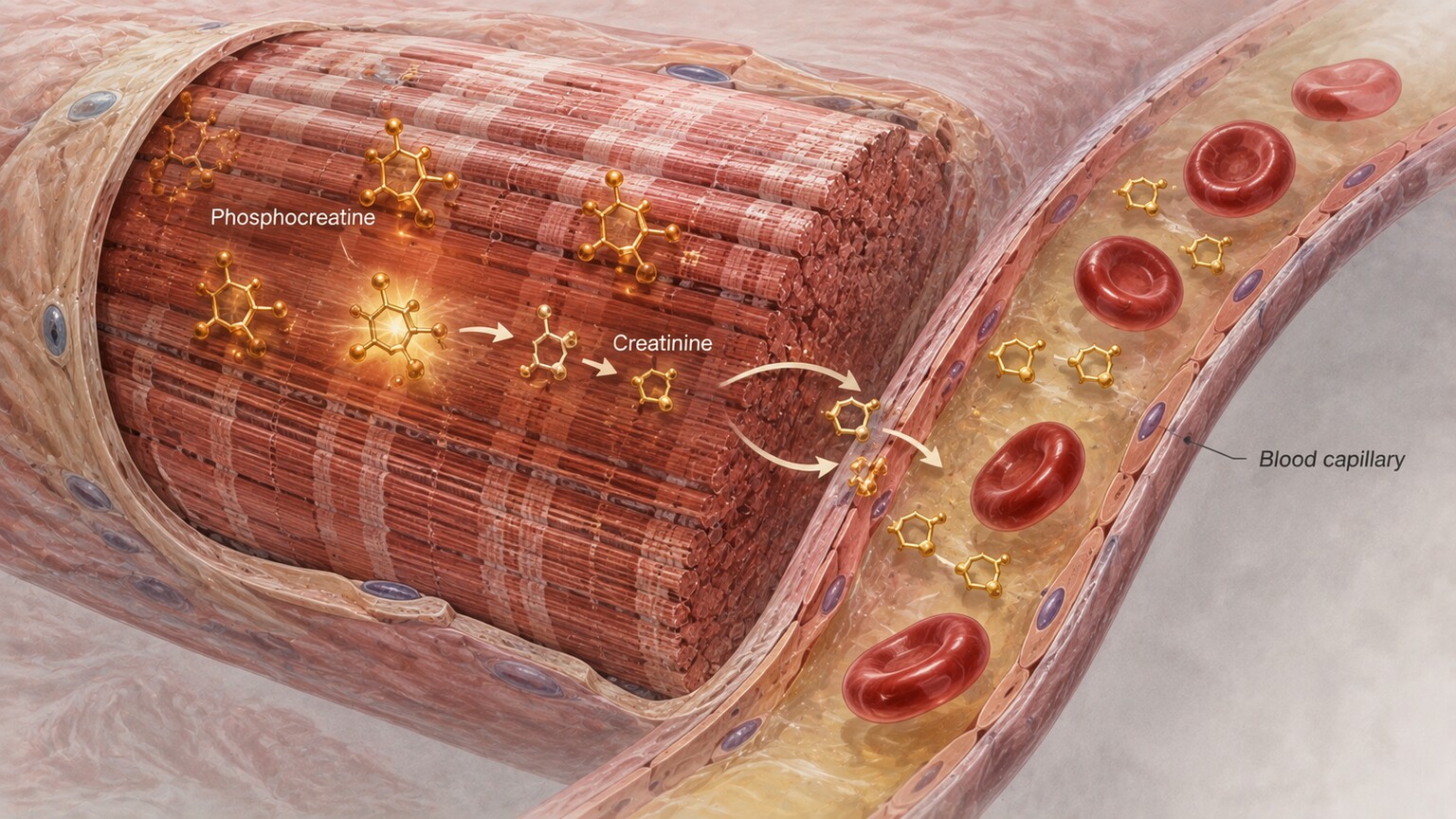
Figure 1. Creatinine is produced continuously by muscle tissue as phosphocreatine breaks down, entering the bloodstream at a remarkably steady rate.
What Creatine and Creatinine Actually Are, and Where They Come From
To understand creatinine, you first have to understand creatine — a completely different, and far more useful, substance that most people only recognize as a gym supplement. Creatine is a small molecule your body makes naturally in the liver, kidneys, and pancreas, built from three amino acids (the building blocks of protein): arginine, glycine, and methionine. Roughly 95% of your body's creatine gets stored in skeletal muscle, where it's converted into a high-energy form called phosphocreatine. Think of phosphocreatine as a muscle's emergency battery pack — when a muscle fiber needs a sudden burst of energy faster than its normal metabolic machinery can supply it, phosphocreatine instantly donates its stored energy to regenerate ATP, the universal energy currency every cell runs on. This is exactly why creatine supplements are popular among athletes: more phosphocreatine on hand means a slightly bigger, faster-refilling energy reserve for short, intense efforts.
Creatinine enters the picture as the exhaust from this process. As phosphocreatine breaks down to release its energy, a small, fixed percentage of it — roughly 1% to 2% of your body's total creatine pool each day — degrades irreversibly into creatinine, a molecule your body has no further use for. Unlike glucose or sodium, which your body actively regulates and recycles, creatinine is simply waste, generated continuously as a byproduct of ordinary muscle activity, whether you're sprinting, sitting at a desk, or asleep. Because muscle mass is relatively stable from day to day in most adults, and because this conversion happens at a fairly constant fractional rate, creatinine production turns out to be one of the most metabolically steady, predictable processes in the entire body — and that steadiness is the entire reason it became useful for something completely unrelated to muscle.
To put a number on that steadiness: a typical adult produces somewhere in the range of 1 to 2 grams of creatinine per day, and that daily total barely fluctuates from one day to the next in the same person, even as diet, activity, and stress levels change throughout a normal week. This is actually a property clinicians can put to direct use — collecting every drop of urine a person produces over a full 24-hour period and measuring the total creatinine in it gives a highly reliable estimate of that person's muscle mass and, when compared against a same-day blood creatinine level, an even more precise calculation of kidney clearance than a single blood draw alone can offer. A 24-hour urine collection is inconvenient enough that it's reserved for specific clinical situations rather than routine screening, but its accuracy comes from exactly the same underlying principle this whole article is built on: creatinine production is so metabolically stable that measuring it over a full day essentially cancels out hour-to-hour noise, leaving a clean signal behind.
Why the Kidneys Are the Only Real Way Creatinine Leaves the Body
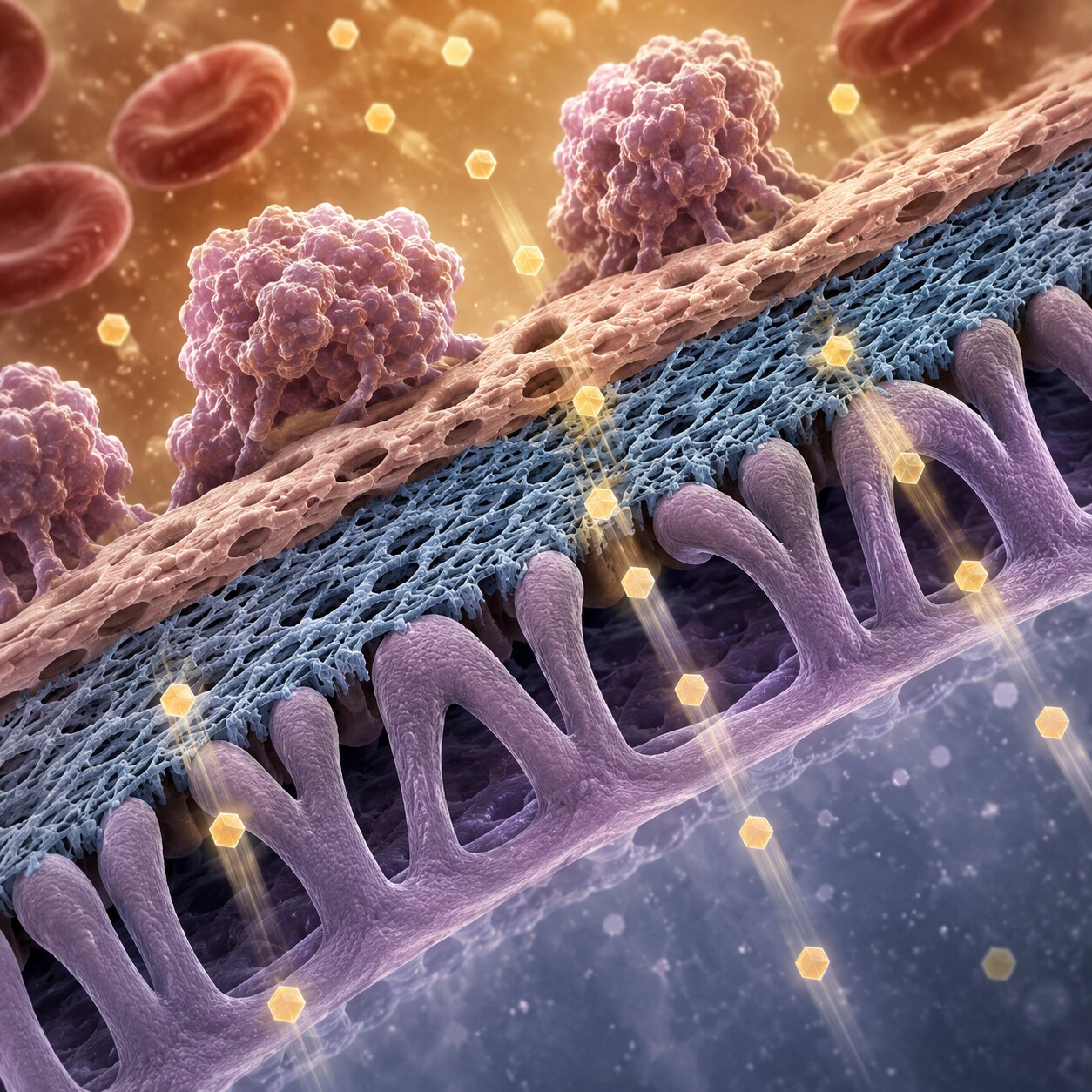
Figure 2. The glomerular filtration membrane is selective by size — small molecules like creatinine pass through freely, while larger proteins are held back in the blood.
Once creatinine is released into your bloodstream, it travels wherever blood goes, but there's really only one exit door: your kidneys. Each kidney contains roughly a million tiny filtering units called nephrons, and at the start of every nephron sits a glomerulus — a dense tangle of capillaries that acts as the first-pass sieve for your entire blood supply. Blood pressure pushes plasma (the fluid part of blood) through the walls of these capillaries, and the wall itself is a remarkably precise size-based filter. Small molecules like water, electrolytes, and creatinine slip through easily, while larger structures like red blood cells and most proteins are held back and stay circulating in the blood, exactly the way a coffee filter lets liquid through but holds back the grounds.
What makes creatinine especially useful, compared to almost anything else that gets filtered, is what happens next: almost none of it gets reabsorbed. Further down the nephron, the kidney tubules do enormous amounts of reabsorption work, pulling back roughly 99% of the water and the vast majority of the glucose, sodium, and other useful substances that were just filtered out, so the body doesn't waste them. Creatinine mostly skips this reclaiming process entirely — once it's filtered, it's essentially committed to leaving the body in urine. That combination — a steady, predictable production rate, paired with a clearance pathway that runs almost exclusively through kidney filtration with minimal reabsorption — is precisely what makes creatinine such a clean, interpretable signal of how well your kidneys are doing their job.
Already have a creatinine number from a recent test, but not sure if it's actually good or bad for you? Just plug it in and see instantly.
🧮 Try the Free CalculatorThe Bathtub Model — How a Constant Production Rate Becomes a Kidney Signal
Here's the mental model that makes the whole system click: imagine a bathtub with the faucet running at a fixed, unchanging rate, and a drain at the bottom that can be wide open or partially blocked. The water level in the tub at any moment isn't determined by the faucet alone — it's determined by the balance between how fast water flows in and how fast it can flow out. If the drain is fully open, the water level settles low and stays there, no matter how long the faucet keeps running, because outflow keeps pace with inflow. But if something narrows the drain, water starts backing up and the level in the tub rises — even though nothing about the faucet ever changed.
Your bloodstream is the bathtub. Muscle tissue is the faucet, continuously adding creatinine at a nearly constant rate. Your kidneys are the drain, and the "width" of that drain is your glomerular filtration rate, or GFR — the actual, physiologically meaningful measurement of how many milliliters of blood your kidneys can fully clear of a substance like creatinine each minute. When your kidneys are filtering normally, they clear creatinine out of the blood about as fast as your muscles add it, so your blood creatinine level settles into a low, stable "water level" and stays there. When kidney filtration slows down for any reason — from a temporary issue like dehydration to a lasting one like chronic kidney disease — the drain narrows, creatinine can't leave the blood as quickly as muscle keeps producing it, and the level in the "tub" (your blood creatinine result) rises to a new, higher steady state. This is the entire mechanism in one image: your creatinine number isn't measuring your kidneys directly, it's measuring the backup that happens when a nearly constant faucet meets a variable drain.
One more piece completes the picture: this "new water level" doesn't appear instantly the moment filtration changes — it takes time to build up or settle back down, following a pattern similar to how a medication gradually clears from your system. When kidney function drops, creatinine typically takes somewhere in the range of 24 to 48 hours to climb most of the way to its new, higher steady-state level, and a similar window applies in reverse once normal filtration returns. This delay is a direct, practical consequence of the bathtub model: a level only fully reflects a new drain width after enough time has passed for inflow and outflow to re-balance, which is exactly why a single creatinine value always describes where your kidneys' filtration has recently settled, not necessarily where it stands in the current moment.
Why the Relationship Isn't a Straight Line — The Creatinine Blind Spot
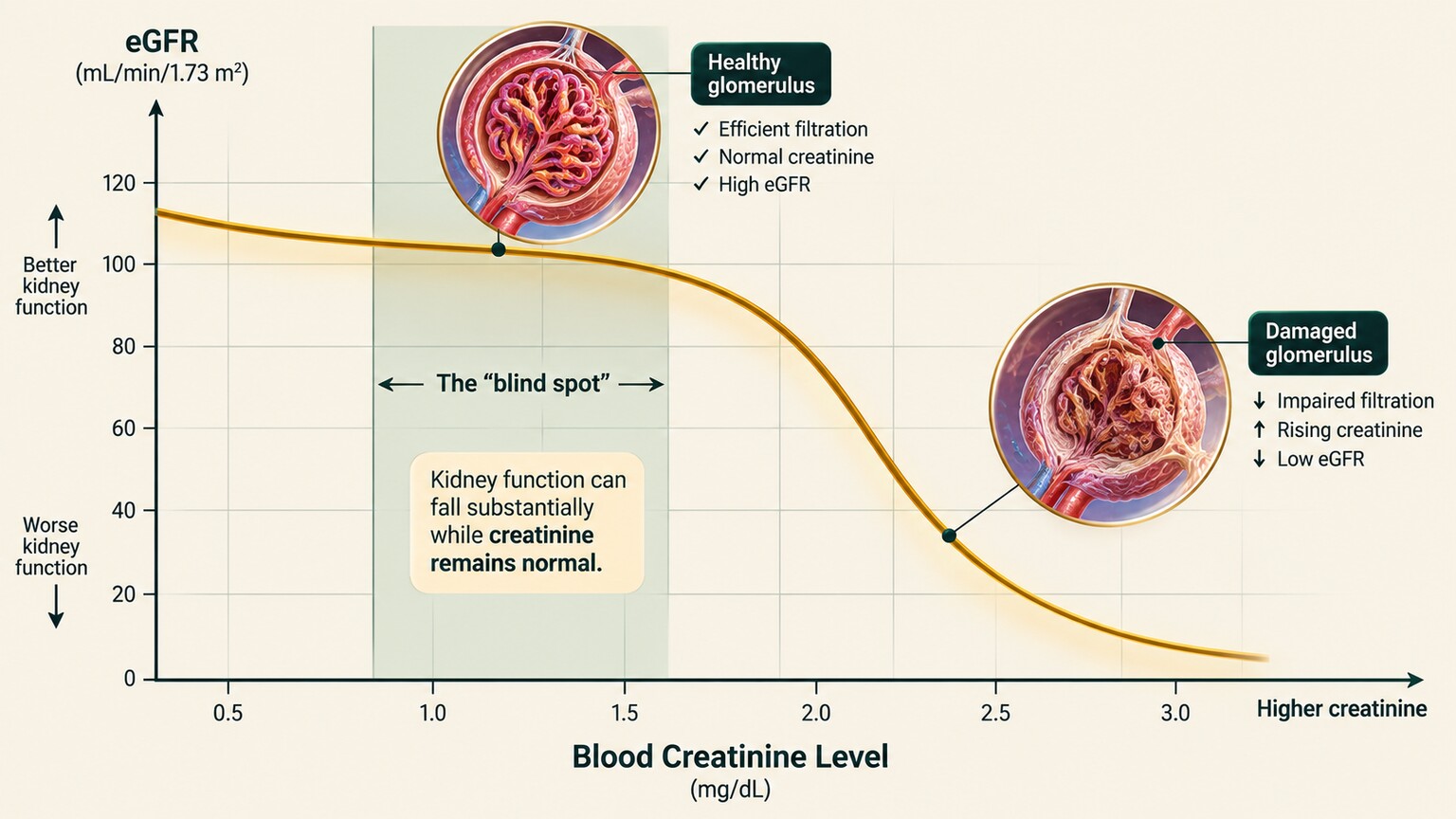
Figure 3. Blood creatinine and glomerular filtration rate move in opposite directions along a curve, not a straight line — early kidney function loss barely moves the number.
One detail catches almost everyone off guard the first time they learn it: the relationship between creatinine and actual kidney filtration isn't a straight line, it's a curve — and a fairly dramatic one. Because of the underlying math connecting filtration rate to blood concentration, a kidney that's still filtering at 60% or even 50% of normal capacity can produce a blood creatinine result that still looks unremarkable, sitting comfortably inside or just barely outside the standard reference range. It's only once filtration drops further, into roughly the 30% to 40% range and below, that creatinine starts climbing steeply and unmistakably.
This nonlinear pattern is sometimes informally called the "creatinine blind spot," and it has real clinical consequences. It means a single, mildly elevated or even normal-looking creatinine value doesn't rule out meaningful kidney function loss — someone can lose close to half their kidney filtering capacity while their creatinine result still looks close to normal. This is exactly why doctors don't just glance at a creatinine number in isolation; they run it through an equation (covered in the next section) to estimate the actual filtration rate, and they pay close attention to trends over time rather than any single value, since a creatinine that's crept upward across several tests — even while staying "in range" — can be an earlier warning sign than waiting for the number to cross a reference line.
From Creatinine to eGFR — Turning One Number Into an Estimate of Actual Filtration
Because a raw creatinine number is hard to interpret on its own — it's shaped not just by kidney filtration but by how much muscle mass a person has to begin with — clinicians rarely stop at the raw value. Instead, they plug your creatinine result into a validated mathematical formula, along with your age and sex, to calculate an estimated glomerular filtration rate, or eGFR. This is the number that most directly answers the question "how well are my kidneys actually filtering," expressed in milliliters of blood cleared per minute, adjusted to a standardized body size (written as mL/min/1.73m²).
The formula in most common clinical use today is the 2021 CKD-EPI creatinine equation, developed and refined specifically to estimate filtration rate as accurately as possible across diverse populations. Earlier versions of this kind of equation included a race-based adjustment factor, which has since been removed from current clinical guidelines after research found it didn't hold up as a reliable, biologically justified correction and could contribute to disparities in care — the modern formula relies only on creatinine, age, and sex. An eGFR above 90 is generally considered normal in a healthy adult, values in the 60s to 80s can be normal or reflect mild reduction depending on other findings, and values consistently below 60 for three months or more are one of the defining criteria used to diagnose chronic kidney disease. Because eGFR does the work of translating a muscle-dependent number into a standardized filtration estimate, it's the figure worth focusing on when a report shows both, rather than the raw creatinine value alone.
The Older Method — Timed Urine Creatinine Clearance
Before the current generation of creatinine-based equations became standard, and still in specific situations today, doctors relied on a more hands-on measurement called creatinine clearance, calculated from a timed urine collection — most often over 24 hours, though shorter timed collections exist too. The logic is refreshingly direct: if you collect every drop of urine a person produces over an exact, known period of time, measure the total creatinine in it, and also measure the creatinine concentration in a blood sample drawn during that same window, you can calculate almost exactly how many milliliters of blood the kidneys managed to fully clear of creatinine per minute — which is, definitionally, a very close real-world approximation of glomerular filtration rate.
This method has some genuine advantages over the equation-based eGFR approach: it doesn't rely on population-average assumptions baked into a formula, so it can be more accurate for people whose body composition falls well outside the typical range the standard equations were built and validated on — including pregnant women, people with amputations, individuals with unusually high or low muscle mass, and some people who are severely underweight or overweight. The tradeoff is practicality: a 24-hour urine collection is genuinely inconvenient, requires careful, complete collection of every void across a full day, and is prone to real-world collection errors (a single missed void can throw off the whole calculation). Because of this, it's reserved for situations where the added accuracy specifically matters, rather than used as a routine screening tool — for the overwhelming majority of people, a blood creatinine level plugged into the modern eGFR equation gives a close enough estimate without the hassle of a full-day collection.
The Tubular Secretion Wrinkle — Why the System Isn't Quite Perfect
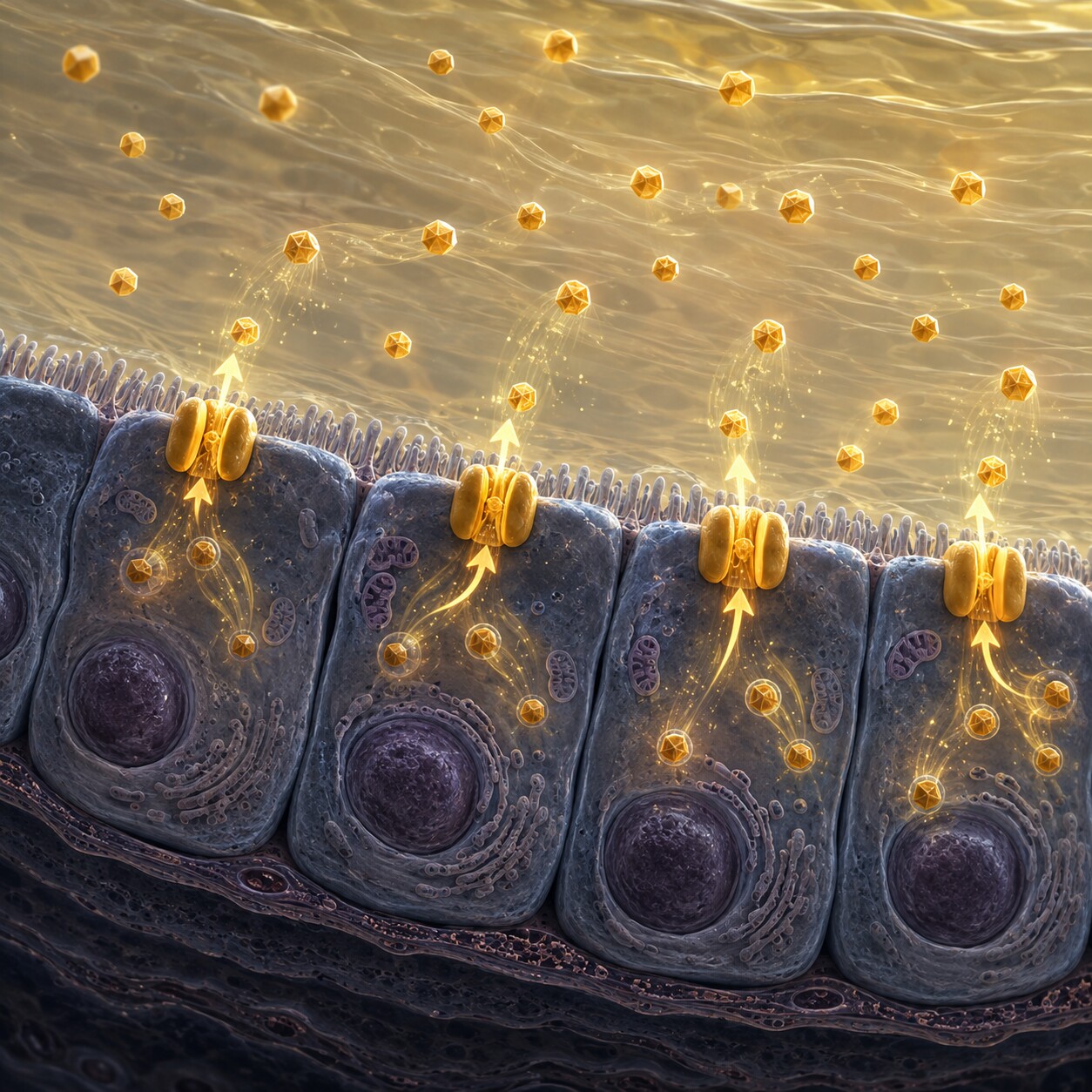
Figure 4. Kidney tubules actively add a small extra amount of creatinine into urine beyond what was filtered, a quirk that causes creatinine-based estimates to run slightly higher than true filtration.
The model described so far — creatinine gets filtered and essentially none of it comes back — is very close to true, but not perfectly true, and the exception matters. In addition to being filtered at the glomerulus, a small extra amount of creatinine gets actively pumped directly into urine by the cells lining the kidney's tubules, through a process called tubular secretion. In someone with healthy kidneys, this extra contribution is small, typically adding around 10% to 20% on top of what was filtered, and it doesn't meaningfully distort the picture.
The problem is that this secreted fraction doesn't stay proportionally small as kidney function declines — as filtration drops, tubular secretion tends to make up a larger relative share of total creatinine clearance, since the tubules keep working even as filtration slows. The practical effect is that creatinine-based measurements of kidney clearance always run a little higher than the true glomerular filtration rate, and this gap tends to widen in more advanced kidney disease, meaning creatinine can make failing kidneys look slightly better than they actually are. This is a well-recognized, quantifiable limitation, not a flaw that invalidates the test — it's simply one reason nephrologists sometimes reach for additional, more precise measurements in specific clinical situations, such as directly timed urine collections or alternative filtration markers, rather than relying on creatinine alone when a decision genuinely hinges on getting the number exactly right.
Why Creatinine Lags Behind in Sudden, Acute Kidney Injury
Everything described so far assumes a steady state — a situation where production and clearance have had time to reach a new balance and the blood level has settled. That assumption breaks down during a sudden, acute drop in kidney function, such as from a severe infection, a major surgery, a period of very low blood pressure, or a toxic reaction to a medication. Because creatinine has to physically accumulate in the blood before a rising level becomes detectable, and because that accumulation takes time to build to a measurable degree, a single creatinine test drawn in the first several hours of a sudden kidney injury can still look deceptively normal, even though filtration has already dropped sharply.
This lag is exactly why hospitals monitoring someone at risk for acute kidney injury don't rely on one creatinine value — they track it serially, drawing repeated measurements over hours or days and watching the trajectory, since a rising trend reveals the injury well before any single number would cross an alarming threshold on its own. It's a helpful reminder that creatinine, for all its usefulness, is fundamentally a trailing indicator: it tells you what's already happened to filtration over the preceding hours, not what's happening in the kidney at this exact instant.

Figure 5. A sudden illness severe enough to cause dehydration can drop kidney filtration quickly, but blood creatinine typically takes hours to catch up and reflect that change.
How the Lab Actually Measures Creatinine in a Tube of Blood
It's worth knowing, at least in broad strokes, how a lab turns a vial of your blood into the specific number printed on your report, because the method itself has a history of quirks worth understanding. The classic technique, called the Jaffe reaction, was first described all the way back in 1886 and is still used, in modernized form, in many labs today. It works by mixing your blood sample with an alkaline picrate solution; creatinine reacts with this solution to form an orange-red compound, and the intensity of that color, measured by a machine called a spectrophotometer, is directly proportional to how much creatinine is present. It's an elegant, inexpensive, and fast method, which is a big part of why it became the standard for over a century.
The Jaffe reaction does have a well-documented weakness: it isn't perfectly specific to creatinine. Other substances that can be present in blood — including glucose, certain proteins, bilirubin, and some medications — can also react with alkaline picrate to some degree, nudging the measured result slightly higher than the true creatinine level, an effect chemists call positive interference. To get around this, many modern labs now use an enzymatic assay instead, which relies on a series of enzymes that react specifically with the creatinine molecule itself, producing a much more chemically specific and interference-resistant result. Enzymatic methods tend to cost a bit more to run than the classic Jaffe reaction, which is why some labs still use a modified, interference-corrected version of the older method rather than switching entirely — but both approaches, when run on a properly calibrated, quality-controlled instrument, are considered clinically reliable, and the difference rarely changes how a result is interpreted in practice. If you've ever wondered why two different labs occasionally report a slightly different creatinine value for blood drawn on the same day, a difference in assay method — Jaffe versus enzymatic — is one of the more common, benign explanations.
Cystatin C — the Alternative Marker That Doesn't Depend on Muscle
Because creatinine's baseline depends so heavily on muscle mass — a detail covered in more depth in a companion article on this site — researchers have developed an alternative filtration marker called cystatin C. Unlike creatinine, cystatin C isn't a muscle byproduct at all; it's a small protein produced at a fairly constant rate by essentially every nucleated cell in the body, which makes its production far less sensitive to someone's muscle mass, diet, or activity level. Like creatinine, it's freely filtered by the glomerulus and cleared largely through the kidneys, which makes it useful for the same basic purpose: estimating filtration rate from a blood level.
Cystatin C isn't used to replace creatinine in routine testing — it's more expensive to run and isn't as universally standardized across labs — but it's become a valuable second opinion in specific situations where creatinine's muscle-mass dependence makes it less trustworthy on its own: people with unusually low muscle mass, such as frail older adults or those with certain chronic illnesses, and people with unusually high muscle mass, such as bodybuilders, where creatinine can run persistently elevated for reasons that have nothing to do with kidney health. In these situations, a combined creatinine-cystatin C equation, also refined and released in 2021, can produce a meaningfully more accurate eGFR than creatinine alone.
It's also worth understanding why cystatin C isn't simply used for everyone, given that it sidesteps creatinine's biggest weakness. Beyond cost and standardization concerns, cystatin C has its own, different set of factors that can subtly shift its levels independent of kidney function — including thyroid function, certain inflammatory states, and smoking status — so it isn't a flawless substitute, just a marker with a different set of blind spots than creatinine's. This is exactly why the two are often most powerful used together rather than as competitors: when creatinine and cystatin C point to a similar filtration estimate, that agreement gives a provider real confidence in the number; when they diverge noticeably, that disagreement itself is a useful clue that something about the person's muscle mass, inflammation status, or another factor is distorting one marker more than the other.
Why Creatinine Gets Checked Before a CT Scan With Contrast Dye
One of the most common places people encounter a surprise creatinine test is right before a CT scan or angiogram that requires injected contrast dye, and understanding the mechanism explained throughout this article makes that requirement make immediate sense. Iodinated contrast dye, used to make blood vessels and certain tissues show up clearly on imaging, is cleared from the body almost entirely by the kidneys, in a manner similar to creatinine itself. In someone whose kidneys are already filtering poorly, that dye lingers in the bloodstream and kidney tissue far longer than it should, and in a meaningful minority of cases, this can trigger a temporary further decline in kidney function called contrast-induced nephropathy, a form of acute kidney injury tied directly to the dye's own toxicity toward kidney tubule cells.
Because of this risk, imaging centers and radiologists check a recent creatinine value (and calculate the corresponding eGFR) before administering contrast dye whenever there's reasonable concern about kidney function — commonly for anyone over a certain age, anyone with diabetes, or anyone with a known history of kidney issues. If the calculated eGFR falls below a facility's threshold, providers may switch to a lower dose of contrast, choose an imaging approach that doesn't require contrast at all, or ensure the patient is well-hydrated beforehand to help protect the kidneys during and after the dye clears. This entire screening step exists only because creatinine offers a fast, cheap, same-day window into current filtration capacity — a direct, practical application of the exact mechanism this article has walked through, used to prevent one kidney problem from being made worse by an otherwise routine diagnostic tool.
What This Actually Means for Reading Your Own Creatinine Result
Understanding this mechanism changes how you should read your own lab report in a few concrete, practical ways rather than leaving it as abstract biology. First, the raw creatinine number by itself is only half the story — the eGFR calculated from it is generally the more clinically meaningful figure, since it accounts for the muscle-mass dependence that makes raw creatinine hard to interpret in isolation. Second, because of the nonlinear "blind spot" described earlier, a creatinine result sitting comfortably in the normal range doesn't guarantee your kidneys are filtering at 100%; it mostly rules out significant, advanced loss of function, which is reassuring but not the same as a perfect bill of health. Third, trends matter more than any single value — a creatinine that's gradually risen across your last several annual checkups, even while staying technically "in range" each time, is worth a conversation with your provider, since that trajectory can be the earliest visible sign of a slow decline the blind spot would otherwise hide.
Finally, context always matters: a single elevated creatinine reading after a hard workout, a period of dehydration, or a high-protein meal the night before a blood draw isn't the same as a persistently elevated value on a well-hydrated, rested day. That's exactly why providers often repeat a borderline creatinine result under more controlled conditions before drawing any real conclusions, rather than reacting to one number pulled from one moment in time. It's also worth remembering that "normal range" itself is a population-level statistical construct, not a personalized target — the right comparison for your own trend is always your own prior results, not just whether today's value happens to fall inside a printed reference interval built from a broad, general population.
Put together, these four points — eGFR over raw creatinine, normal-range results not being an absolute guarantee, trends mattering more than single values, and everyday context shaping any one reading — are exactly the kind of nuance a busy office visit rarely has time to walk through, even though they're the difference between correctly and incorrectly interpreting the exact same printed number.
Frequently Asked Questions
Does eating meat before a blood test raise creatinine?
Yes, temporarily. Cooked meat contains creatinine directly (since it's present in muscle tissue), and a large meat-heavy meal shortly before a blood draw can cause a small, short-lived bump in your measured level. This isn't a change in kidney function — it's simply extra creatinine entering the bloodstream from digestion — which is why providers often suggest avoiding a very large meat meal the night before a fasting kidney panel if precision matters. Cooking method and doneness also play a role, since well-done and grilled meats generate more creatinine breakdown products than rare or lightly cooked cuts, though this effect is modest compared to the impact of overall portion size.
If my creatinine is normal, does that mean my kidneys are perfectly healthy?
Not necessarily. Because of the nonlinear relationship between creatinine and filtration rate, a normal result reliably rules out severe kidney function loss, but it doesn't guarantee 100% filtration — a kidney filtering at somewhat reduced capacity can still produce a creatinine value inside the standard reference range. This is exactly why eGFR trends over time, not a single normal-looking number, give the fuller picture.
Why do men typically have higher normal creatinine ranges than women?
Because creatinine production is tied to muscle mass, and men on average carry more skeletal muscle than women, men's bodies typically generate somewhat more creatinine at baseline even with identical kidney function. This is exactly why the equation used to calculate eGFR factors in sex — it corrects for this production difference so the resulting filtration estimate is comparable and fair across both.
Can dehydration make my creatinine look worse than my kidneys actually are?
Yes, and this is one of the most common everyday causes of a falsely elevated result. Significant dehydration reduces blood flow to the kidneys, which temporarily lowers the actual filtration rate and lets creatinine build up in the blood, even though the underlying kidney tissue itself is healthy. Rehydrating and repeating the test is a standard, reasonable next step before assuming a dehydration-related elevation reflects lasting kidney damage.
Is cystatin C better than creatinine for everyone?
Not for most people — creatinine remains the standard, well-validated, inexpensive first-line marker for the general population. Cystatin C becomes genuinely more useful in specific situations where muscle mass is unusual enough to distort creatinine's accuracy, such as very frail, low-muscle-mass individuals or people with very high muscle mass, where a combined creatinine-cystatin C estimate tends to be more reliable than either marker alone.
Why did two different labs give me slightly different creatinine results on the same day?
This is most often explained by a difference in assay method — one lab may use the classic Jaffe reaction while another uses a newer enzymatic assay, and the two methods can produce modestly different numbers on the exact same blood sample due to how specifically each one reacts with creatinine versus other interfering substances. Small differences like this rarely change the clinical picture, but if you're closely tracking a trend, it's most reliable to use the same lab consistently.
Can supplements like creatine monohydrate raise my creatinine test result?
Yes. Taking a creatine supplement increases the total size of your body's creatine pool, which in turn increases the amount that naturally breaks down into creatinine each day, raising your baseline blood level somewhat even though your actual kidney filtration hasn't changed. This is a well-documented, benign effect, but it's worth mentioning creatine supplement use to your provider if you're being evaluated for a kidney concern, since it can otherwise make a completely healthy result look mildly elevated.
Conclusion
Creatinine's entire usefulness comes down to one elegant coincidence: your muscles produce it at a remarkably steady rate, and your kidneys are essentially the only exit door it has. That combination turns a byproduct nobody's muscles are trying to make into one of the most practical, non-invasive windows medicine has into how well the kidneys are filtering blood. It isn't a flawless measurement — the relationship is curved rather than linear, tubular secretion adds a small bias, and acute changes take time to show up — but understanding those mechanics doesn't undermine the test, it makes you a sharper reader of your own results. The next time a lab report shows your creatinine and eGFR side by side, you'll know exactly what that pairing is actually measuring, and why doctors have trusted a simple muscle byproduct to do this job for over a hundred years.
None of this requires you to become your own nephrologist. The goal of understanding the mechanism isn't to second-guess your provider's interpretation — it's to walk into that conversation, or read that portal message, already understanding what the number represents, so the follow-up questions you ask are the ones that actually matter for your specific situation.
Still Not Sure What Your Results Mean?
Upload your labs and get a complete, visual, plain-language interpretation of every biomarker — delivered to your inbox in under 15 minutes.
Get My ReportThis article is for educational purposes only and does not constitute medical advice. Always consult your healthcare provider regarding your specific lab results.