
Understanding What Your Creatinine and eGFR Results Really Mean
Creatinine and eGFR are two of the most common numbers pulled from a routine blood panel, and together they're the closest thing medicine has to a report card for how well your kidneys are filtering your blood. Creatinine, on its own, is simply a waste product — a byproduct of ordinary muscle activity that healthy kidneys are supposed to clear out with every pass of blood through them. eGFR, short for estimated glomerular filtration rate, takes that same creatinine number and runs it through a formula that also factors in your age and sex, turning a fairly abstract waste-product measurement into an actual estimate of how many milliliters of blood your kidneys are filtering each minute. Neither number tells the full story on its own, and both can be pushed around by things that have nothing to do with kidney disease — a hard workout, a big steak dinner, even pregnancy. Here's what these two numbers actually measure, why they're almost always reported side by side, and how to tell a result that genuinely deserves attention from one that's just noise.
Already have a creatinine or eGFR number from a recent test, but not sure if it's actually good or bad for you? Just plug it in and see instantly.
🧮 Try the Free CalculatorWhat Creatinine Actually Is — and Why Your Body Makes It Nonstop
Every muscle cell in your body keeps a small reserve of a molecule called creatine phosphate, which acts like a backup battery for quick bursts of energy — the kind you use standing up from a chair or climbing a flight of stairs. As that reserve gets used and regenerated, a small, steady fraction of it breaks down on its own into a waste molecule called creatinine, at a rate of roughly one to two percent of the body's total creatine pool per day. This isn't a process your body actively controls or can speed up or slow down on demand; it happens continuously, at a pace set almost entirely by how much muscle tissue you have. A smaller amount of creatinine also comes from the meat you eat, since cooked muscle tissue already contains creatine and creatinine of its own. Once creatinine is made, your body has essentially no use for it — it isn't recycled or broken down further, it's simply filtered out of the blood by the kidneys and eliminated in urine.
This steady, predictable production rate is exactly what makes creatinine useful as a lab test in the first place. Unlike glucose, which can swing significantly within a single hour depending on when you last ate, or cortisol, which follows its own rhythm through the day, creatinine production for any given person stays remarkably constant from one day to the next, as long as muscle mass and diet don't change dramatically. That stability means that when a creatinine level does shift meaningfully, the most likely explanation is a change in how efficiently the kidneys are clearing it out — not a change in how much is being produced. It's this reliability that turned a fairly unremarkable metabolic waste product into one of the most heavily relied-upon numbers in all of medicine.
How the Kidneys Turn a Waste Product Into a Filtration Report
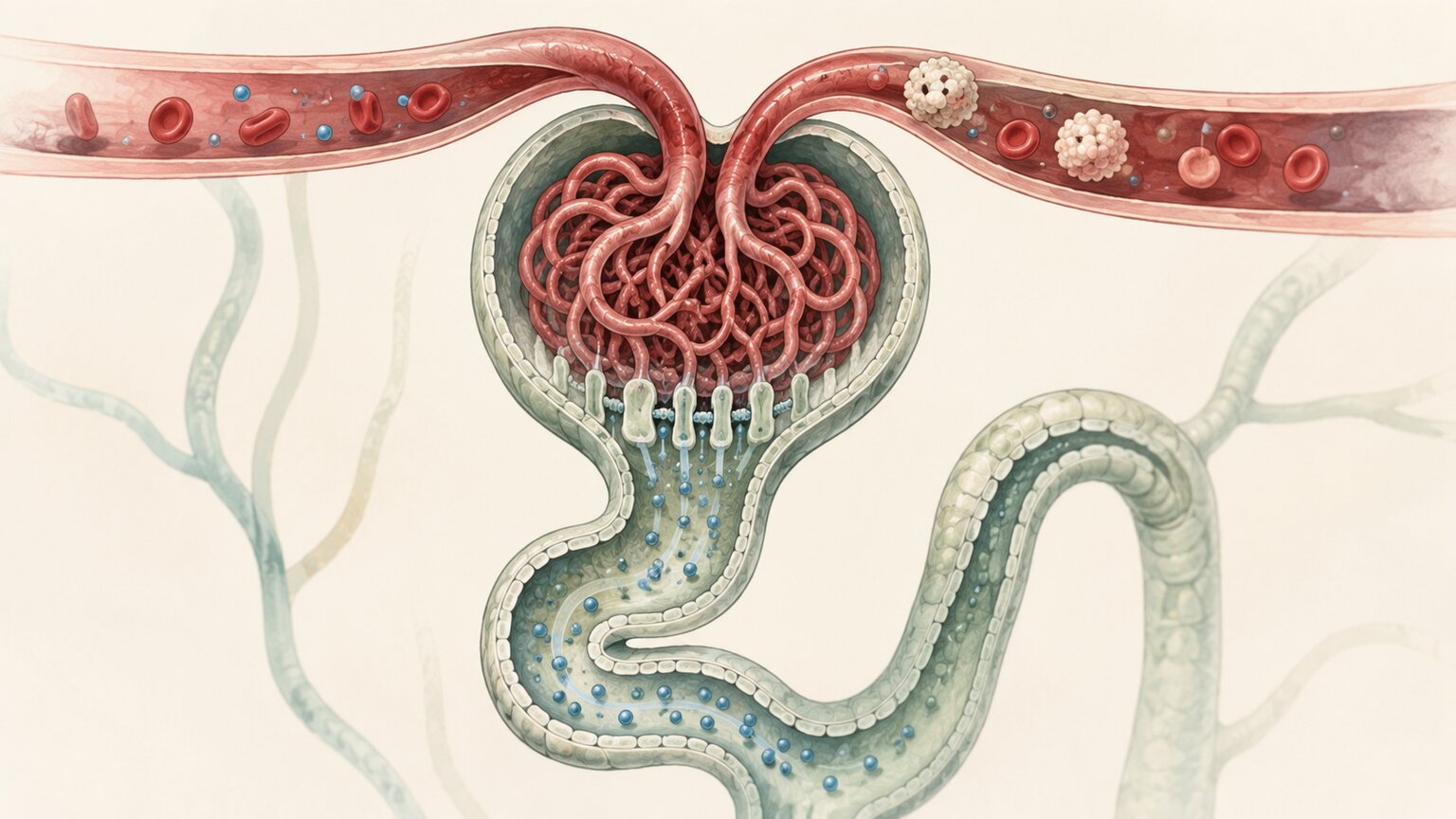
Each kidney contains roughly a million microscopic filtering units called nephrons, and at the start of each one sits a tiny tangle of blood vessels called the glomerulus. As blood pressure pushes plasma through the glomerulus's tightly woven capillary walls, small molecules like creatinine pass freely into the filtrate, while larger molecules like proteins and blood cells are held back. Creatinine is small enough, and inert enough, that it crosses this filter almost completely unimpeded — which is exactly why it makes such a convenient stand-in for measuring how well the whole filtration system is working. A small additional amount of creatinine is also actively pushed into the urine further down the nephron, in a structure called the proximal tubule, through a process called tubular secretion.
That secretion step matters more than it might seem, because it means blood creatinine doesn't rise in perfect lockstep with a decline in true kidney function. In the earlier stages of kidney impairment, the tubules can partially compensate by secreting a bit more creatinine per nephron, which keeps the blood level looking closer to normal than the underlying damage would suggest. Research and clinical experience have shown that a person can lose a significant share of their kidney function — sometimes approaching half — before blood creatinine rises high enough to clearly cross out of the standard reference range. This delayed, non-linear relationship is sometimes referred to informally as creatinine's "blind spot," and it's the single biggest reason doctors don't rely on the raw creatinine number alone.
Why Your Result Always Comes Paired With an eGFR Number
Because raw creatinine is such an imperfect messenger on its own, labs convert it into an estimated glomerular filtration rate, or eGFR, using a formula that also accounts for age and sex — two factors that heavily influence how much muscle mass a person carries, and therefore how much creatinine they'd be expected to produce at any given level of true kidney function. The equation in current use, adopted following a 2021 joint task force from the National Kidney Foundation and the American Society of Nephrology, deliberately removed race as a variable from the calculation, a change made to correct for a longstanding inaccuracy in how the formula had been applied across different patient populations. The resulting number is reported in milliliters per minute per 1.73 square meters of body surface area — a standardized unit that lets your result be compared fairly against a general population average, regardless of your actual body size.
It's worth being clear that eGFR is an estimate, not a direct measurement. Truly measuring GFR requires injecting a substance like inulin or iohexol and tracking exactly how fast the kidneys clear it from the blood — an accurate but impractical test for routine use, reserved mostly for research or very specific clinical questions. eGFR is the practical substitute nearly every doctor relies on instead, and for most people, it's accurate enough to guide real decisions. In adults, a normal eGFR is generally considered to be 90 or above. Because the formula becomes proportionally less precise at higher values, many labs will simply report a result above that threshold as ">60" or ">90" rather than printing an exact number — which is completely normal and not a sign anything was left out of your testing.
Before creatinine-based equations became standard, the more direct way to estimate filtration was a 24-hour urine creatinine clearance test, which required collecting every drop of urine produced over a full day alongside a single blood draw, then comparing the two. That approach can still be useful in specific situations — very large or very small body types, unusual muscle mass, or certain drug-dosing decisions — but it's cumbersome, easy to collect incorrectly, and has largely been replaced in routine practice by the equation-based eGFR calculated from a single blood sample. An older formula called the Cockcroft-Gault equation, which factors in body weight directly, still occasionally shows up in specific dosing calculations for certain medications, even though CKD-EPI is now the standard for diagnosing and staging kidney disease itself.
What Counts as a Normal Range — and Why It's Different for Everyone
According to reference ranges published by Mayo Clinic Laboratories, normal serum creatinine typically falls between about 0.74 and 1.35 mg/dL for adult men, and between about 0.59 and 1.04 mg/dL for adult women. That gap between the sexes isn't arbitrary — it reflects the fact that, on average, men carry more skeletal muscle mass than women, and therefore produce more creatinine at any given level of kidney function. It's also why a creatinine value that would be unremarkable for a large, muscular man could genuinely be worth a second look in a smaller-framed woman with the same number, and vice versa. Individual labs may report slightly different reference ranges depending on the exact assay method they use, which is one reason it's worth comparing your result to the range printed on your own report rather than a number you found online.
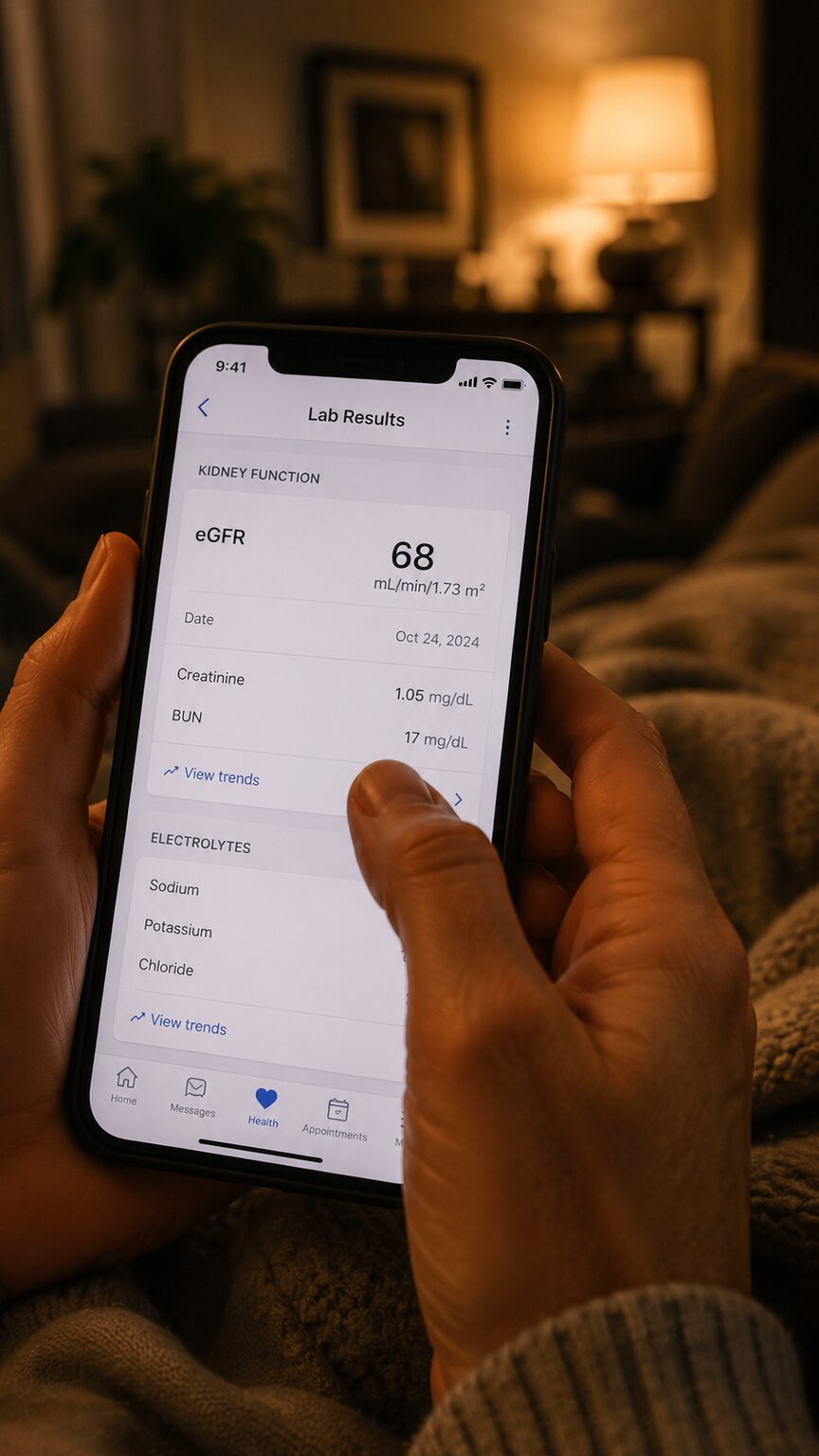
Age adds another layer on top of sex. Kidney function naturally, gradually declines over a normal lifespan, even in people with no kidney disease at all, and eGFR reference data reflects that reality directly. Published population averages put typical eGFR at roughly 116 for people in their 20s, dropping to around 107 in the 30s, 99 in the 40s, 93 in the 50s, 85 in the 60s, and about 75 for adults 70 and older. That means a healthy 72-year-old with an eGFR in the mid-70s isn't necessarily showing signs of kidney disease — they're simply tracking close to the expected curve for their age. This is exactly why eGFR is calculated rather than judged against one flat cutoff for every adult: a number that would be concerning at 30 can be entirely unremarkable at 75, and treating every age the same way would either miss real problems in younger people or cause needless alarm in older ones.
The Five Stages of Kidney Function, and Why Doctors Also Check Your Urine
When eGFR is used to describe the severity of kidney disease, it's grouped into stages defined by the international KDIGO (Kidney Disease: Improving Global Outcomes) guidelines. Stage G1 covers an eGFR of 90 or above, representing normal or high kidney function. Stage G2 covers 60 to 89, a mild reduction. Stage G3 is split into two bands — G3a from 45 to 59, and G3b from 30 to 44 — representing a moderate decline. Stage G4 spans 15 to 29, a severe reduction, and Stage G5, below 15, is classified as kidney failure. It's worth stressing that stage G3a, the mildest of the "moderate" categories, is common enough in older adults that it doesn't automatically mean disease is progressing — plenty of people spend years at G3a without ever advancing further.
Crucially, eGFR is only half of how kidney disease is actually staged. The other half is a urine test measuring the ratio of albumin — a protein — to creatinine in a urine sample, abbreviated UACR. Healthy kidneys keep albumin, a relatively large protein, from leaking into urine in any meaningful quantity; when the filtering barrier is damaged, albumin starts to slip through. UACR results are grouped into three categories: A1 for less than 30 mg/g, considered normal to mildly increased; A2 for 30 to 300 mg/g, moderately increased; and A3 for anything above 300 mg/g, severely increased. KDIGO combines the eGFR stage and the albuminuria category into a single risk grid, color-coded from green through yellow, orange, and red, and this combined picture predicts a person's actual risk of kidney disease progression far better than either number alone. Two people can share the exact same eGFR of 55 and land in completely different risk categories depending on whether their UACR is normal or significantly elevated — which is exactly why a thorough kidney workup nearly always includes both a blood draw and a urine sample.
Common, Everyday Reasons Your Creatinine Can Run High Without Kidney Disease
Because creatinine production tracks muscle mass so closely, anything that increases muscle bulk or its recent breakdown can nudge the number upward independent of kidney function. People with naturally high muscle mass, including bodybuilders and other serious strength athletes, often run creatinine values at or slightly above the standard reference range simply because they're generating more of it — a pattern that's been specifically documented in research on competitive bodybuilders, whose creatinine can sit near the upper edge of normal or modestly above it even with completely healthy kidneys. A single large meal of cooked meat shortly before a blood draw can do something similar on a smaller scale, since the cooking process converts some of the meat's own creatine into creatinine that then gets absorbed through digestion. Creatine supplements, popular among people who lift weights, work the same way by directly adding to the body's creatine pool.

Intense exercise completed shortly before testing has a similar, temporary effect, since vigorous muscle activity accelerates the breakdown of creatine phosphate. A handful of common medications interfere in a different way — not by increasing how much creatinine is made, but by partially blocking the tubular secretion step described earlier, so less creatinine gets pushed into urine and more stays in the blood. Cimetidine, trimethoprim, fenofibrate, and certain HIV medications including cobicistat, dolutegravir, and ritonavir are among the better-documented examples. None of these actually reduce true glomerular filtration; they create what's sometimes called a "pseudo" rise in creatinine, and the effect typically reverses once the medication is stopped or adjusted. Dehydration is another frequent, easily overlooked cause — when blood volume drops, the kidneys respond by conserving water and reabsorbing more of it back into circulation, which concentrates whatever creatinine remains in the shrunken blood volume, pushing the measured level up even though the kidneys themselves may be filtering normally once fluid balance is restored. This is part of why a single glass of water and a few hours can sometimes be the difference between a mildly flagged result and a completely unremarkable one.
Reasons Your Creatinine Might Be Lower Than Expected
Low creatinine gets far less attention than high creatinine, but it's just as directly tied to the same underlying logic: less muscle mass or less creatine intake means less creatinine produced, regardless of how well the kidneys are working. This is especially common in older adults experiencing age-related muscle loss, a condition known as sarcopenia, and in people who have had a limb amputated or who live with muscle-wasting conditions. People following vegan or vegetarian diets also tend to run slightly lower creatinine on average, simply because they aren't consuming the dietary creatine and creatinine found in meat.

Pregnancy is one of the more striking examples. A healthy pregnancy causes blood flow to the kidneys to increase substantially, driving true GFR up by roughly 30 to 50 percent above pre-pregnancy levels — a phenomenon called hyperfiltration. As a direct result, creatinine that would be entirely normal outside of pregnancy, such as 0.9 mg/dL, can actually represent a meaningful decline in kidney function during pregnancy, since the expected baseline drops to somewhere around 0.4 to 0.7 mg/dL. Advanced liver disease is another, less common cause of low creatinine: a severely damaged liver produces less of the creatine that eventually becomes creatinine, and cirrhosis is frequently accompanied by muscle wasting as well, compounding the effect. None of these situations reflect a problem with the kidneys themselves — they reflect a change in how much creatinine is being made in the first place.
One Elevated Result vs. a Real Trend — Why Timing Changes Everything
A single high creatinine reading and a genuinely concerning kidney trend are not the same thing, and the distinction hinges almost entirely on timing. Acute kidney injury, or AKI, is formally defined by international KDIGO criteria as a rise in creatinine of at least 0.3 mg/dL within 48 hours, or a rise to at least 1.5 times a person's baseline within 7 days, or a sustained drop in urine output. AKI is staged from 1 to 3 by severity, with Stage 3 representing creatinine at least three times baseline or an absolute level above 4.0 mg/dL. The important thing about AKI is that it's frequently reversible — common triggers include a bad stomach bug with vomiting and diarrhea, a course of certain antibiotics or anti-inflammatory painkillers, a hospital stay involving contrast dye for imaging, or a period of low blood pressure, and creatinine often returns to baseline once the underlying cause resolves.
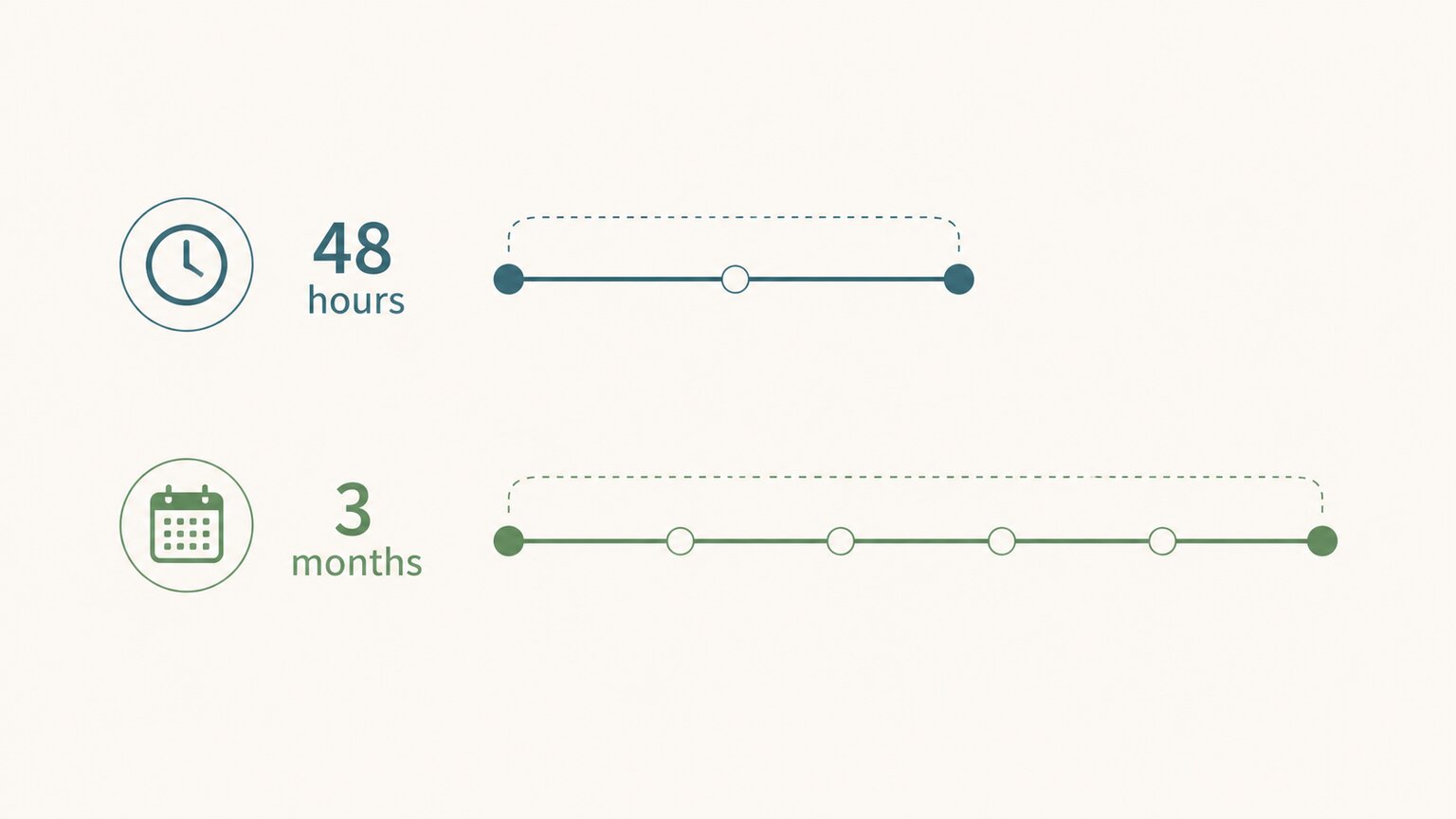
Chronic kidney disease, by contrast, is specifically defined as abnormal kidney function or structure that has been present for three months or longer. That three-month window isn't a formality — it's the mechanism that separates a temporary dip from a true, sustained decline, and it's exactly why a doctor will almost always order a repeat test before attaching a CKD diagnosis to a single abnormal number. If you get one unexpectedly high creatinine result, especially after an illness, an intense workout, or a period of poor fluid intake, the most useful next step is usually a straightforward repeat test under normal conditions, not immediate alarm.
Reading Creatinine Alongside BUN
Creatinine is almost never reported completely alone — it's typically printed next to another kidney-related value called blood urea nitrogen, or BUN, and the relationship between the two, expressed as a ratio, carries its own diagnostic clue. In healthy adults, the BUN-to-creatinine ratio typically falls somewhere between 10:1 and 20:1. A ratio climbing above roughly 20:1 often points toward what's called a prerenal pattern — a situation where blood flow reaching the kidneys is reduced, such as from dehydration, blood loss, heart failure, or a diet very high in protein, causing urea to be reabsorbed more aggressively than creatinine. A ratio sitting closer to 10:1, especially alongside a creatinine level that's clearly elevated, points more toward direct, intrinsic damage to the kidney tissue itself.
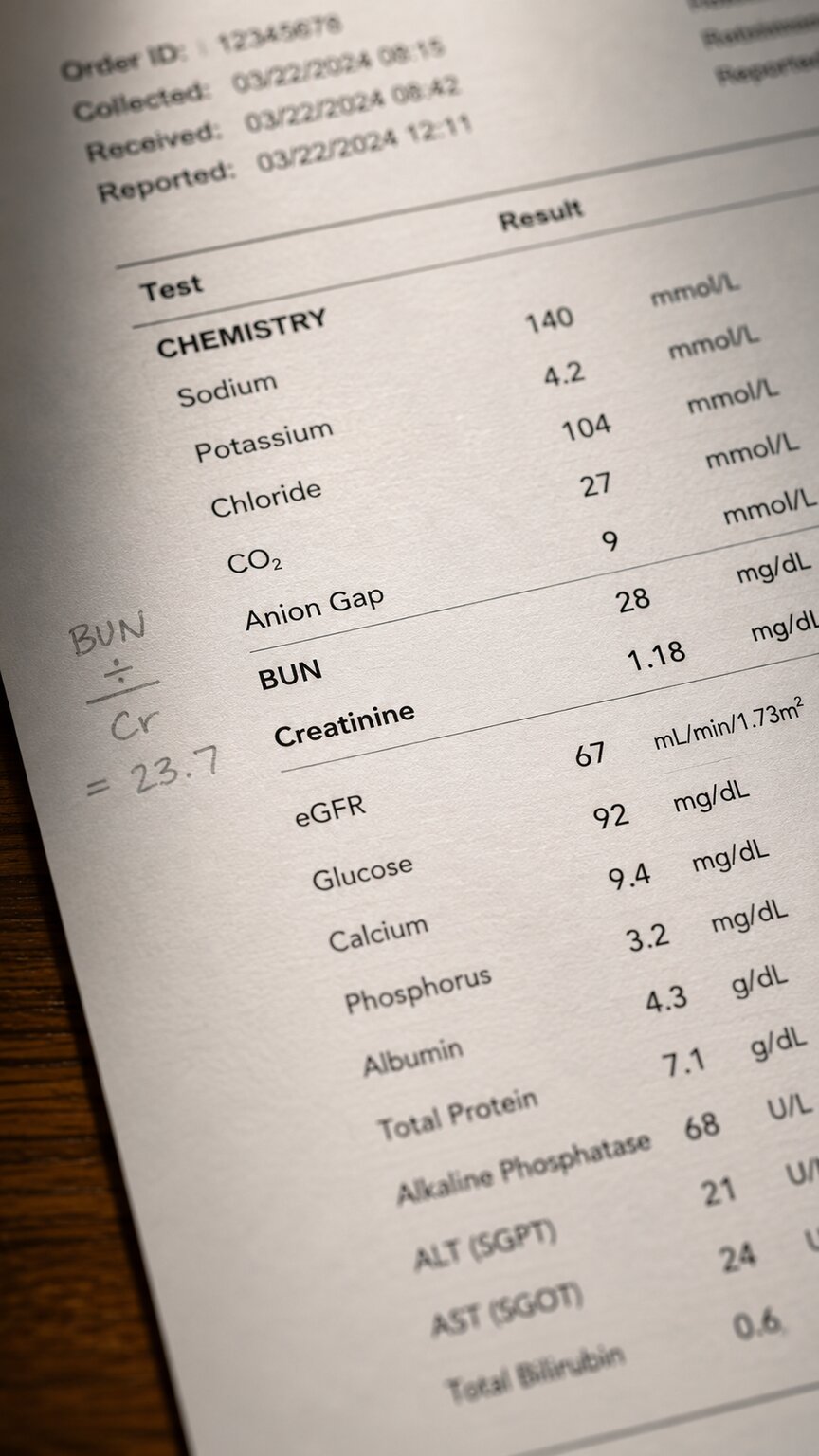
Neither of these patterns is a diagnosis by itself — the ratio is a clue that helps point a clinician toward the right next question, not an answer on its own. A mildly unusual ratio when both BUN and creatinine sit comfortably within their normal ranges typically isn't something to worry about, since small shifts in the ratio matter far more when the underlying numbers are already abnormal. This is one more reason kidney-related lab values are almost always interpreted as a set, rather than any single number being read in isolation.
When Creatinine Alone Isn't Reliable — Cystatin C and Other Tools
Because creatinine is so closely tied to muscle mass, it can genuinely mislead in people whose muscle mass sits far outside the average the equations were built around — very muscular athletes, people with limb loss or significant muscle wasting, and frail older adults are the most common examples. For these situations, a different marker called cystatin C offers a useful alternative. Cystatin C is a small protein produced by essentially all the body's cells at a fairly constant rate, largely independent of muscle mass, which makes it far less sensitive to the same confounders that affect creatinine. Current eGFR equations can incorporate cystatin C either on its own or combined with creatinine, and the combined creatinine–cystatin C equation is generally considered the most accurate estimate available for routine clinical use. Cystatin C isn't ordered as a first-line test for most people, largely due to cost and availability, but it's a reasonable option to discuss with a doctor when a creatinine-based result doesn't seem to match the rest of the clinical picture.
What to Actually Do With Your Number
A single mildly abnormal creatinine or eGFR result, especially in the absence of any other symptoms, is rarely a reason for immediate alarm — it's a reason to look more closely and, in many cases, simply repeat the test under better conditions. If you know a blood draw is coming up and want the most representative baseline possible, it generally helps to avoid intense exercise and stay normally hydrated in the 24 hours beforehand, since both dehydration and hard workouts can temporarily push the number in the wrong direction. It's also worth reviewing your current medications with whoever ordered the test, particularly if you take any of the drugs known to interfere with tubular secretion, since a medication effect can look identical to a kidney problem on paper without being one.

If your eGFR does come back persistently below 60, it's reasonable to ask a few specific questions: whether the lab used the current race-free CKD-EPI equation, whether a urine albumin-to-creatinine ratio has been checked alongside it, and whether the result has been confirmed on a repeat test roughly three months later before anything is labeled chronic. Referral to a kidney specialist, called a nephrologist, is generally considered for an eGFR persistently under 30, a rapidly falling trend over time, or significant, confirmed albuminuria. Because high blood pressure and diabetes together account for the large majority of chronic kidney disease cases, keeping both well controlled remains the single most effective thing most people can do to protect long-term kidney function — and for people who already have reduced eGFR or significant albuminuria, a doctor may also discuss medications such as ACE inhibitors, ARBs, or SGLT2 inhibitors, which have been shown to help slow further decline.
It's also worth knowing that eGFR isn't only a diagnostic number — it directly shapes real medical decisions elsewhere. Many common medications, from certain antibiotics to some diabetes drugs, are dosed differently depending on eGFR, and the contrast dye used in some CT scans is generally used more cautiously in people with a significantly reduced eGFR because of a small added risk to kidney function. That's part of why keeping a recent creatinine or eGFR result on hand, or accessible through a patient portal, can genuinely speed up care during an unrelated hospital visit or a new prescription, rather than mattering only in a kidney-focused appointment.
Frequently Asked Questions
Does one high creatinine reading mean I have kidney disease?
Not on its own. A single elevated result is often caused by dehydration, recent intense exercise, a large meat-heavy meal, or a temporary illness, and frequently returns to normal on a repeat test. Chronic kidney disease specifically requires abnormal kidney function or structure to be present for three months or longer, which is why doctors typically confirm an unexpected result before treating it as a long-term diagnosis.
Can working out before a blood draw really change my result?
Yes. Intense exercise accelerates the normal breakdown of creatine phosphate in muscle, which can temporarily raise blood creatinine and make eGFR look modestly lower than your true baseline. If you're trying to get the most accurate picture of your kidney function, it's reasonable to avoid strenuous exercise for about 24 hours before testing and to stay normally hydrated.
Why do I need both creatinine and eGFR — isn't one enough?
Creatinine is a raw waste-product measurement that's affected by muscle mass, diet, and hydration, independent of kidney function. eGFR takes that same number and adjusts it for age and sex, turning it into a more meaningful estimate of actual filtration. Reporting both together gives a fuller picture than either number could provide alone, which is why they're almost never shown separately on a lab report.
Conclusion
Creatinine and eGFR aren't two competing numbers — they're two views of the same underlying question, and reading them together is what makes either one genuinely useful. Creatinine tells you how much waste your muscles are producing and how efficiently your kidneys are clearing it, while eGFR translates that raw number into an age- and sex-adjusted estimate of actual filtration. Both can be nudged by things that have nothing to do with kidney disease — muscle mass, diet, hydration, medications, even pregnancy — which is exactly why context matters as much as the number itself, and why a trend over time, backed up by a urine albumin test, tells a far more complete story than any single result in isolation. If your numbers ever look unexpected, the most useful next step is rarely panic — it's a conversation with a healthcare provider who can weigh your specific result against your specific circumstances.
Still Not Sure What Your Results Mean?
Upload your labs and get a complete, visual, plain-language interpretation of every biomarker — delivered to your inbox in under 15 minutes.
Get My ReportThis article is for educational purposes only and does not constitute medical advice. Always consult your healthcare provider regarding your specific lab results.