
What's the Link Between Dehydration and Creatinine Results?
Yes — dehydration can raise your creatinine number on a blood test, sometimes by a meaningful amount, without your kidneys actually being damaged at all. Creatinine is a waste product that your kidneys filter out of your blood every minute of every day, and the concentration your lab report shows is a ratio: how much creatinine is floating around compared to how much liquid (plasma) it's floating in. When you're dehydrated, the liquid part of that ratio shrinks. Less water in your bloodstream means the same amount of creatinine gets packed into a smaller volume, so the number goes up — the same way a spoonful of salt tastes far saltier stirred into a small glass of water than into a full pitcher. On top of that concentrating effect, dehydration also genuinely slows blood flow to the kidneys, which can cause them to filter a little less efficiently for as long as the dehydration lasts. Both of these effects are usually temporary and reverse once you're properly rehydrated — but a single dehydrated blood draw, taken in isolation, can look enough like early kidney trouble to worry someone who doesn't know what's actually driving the number.
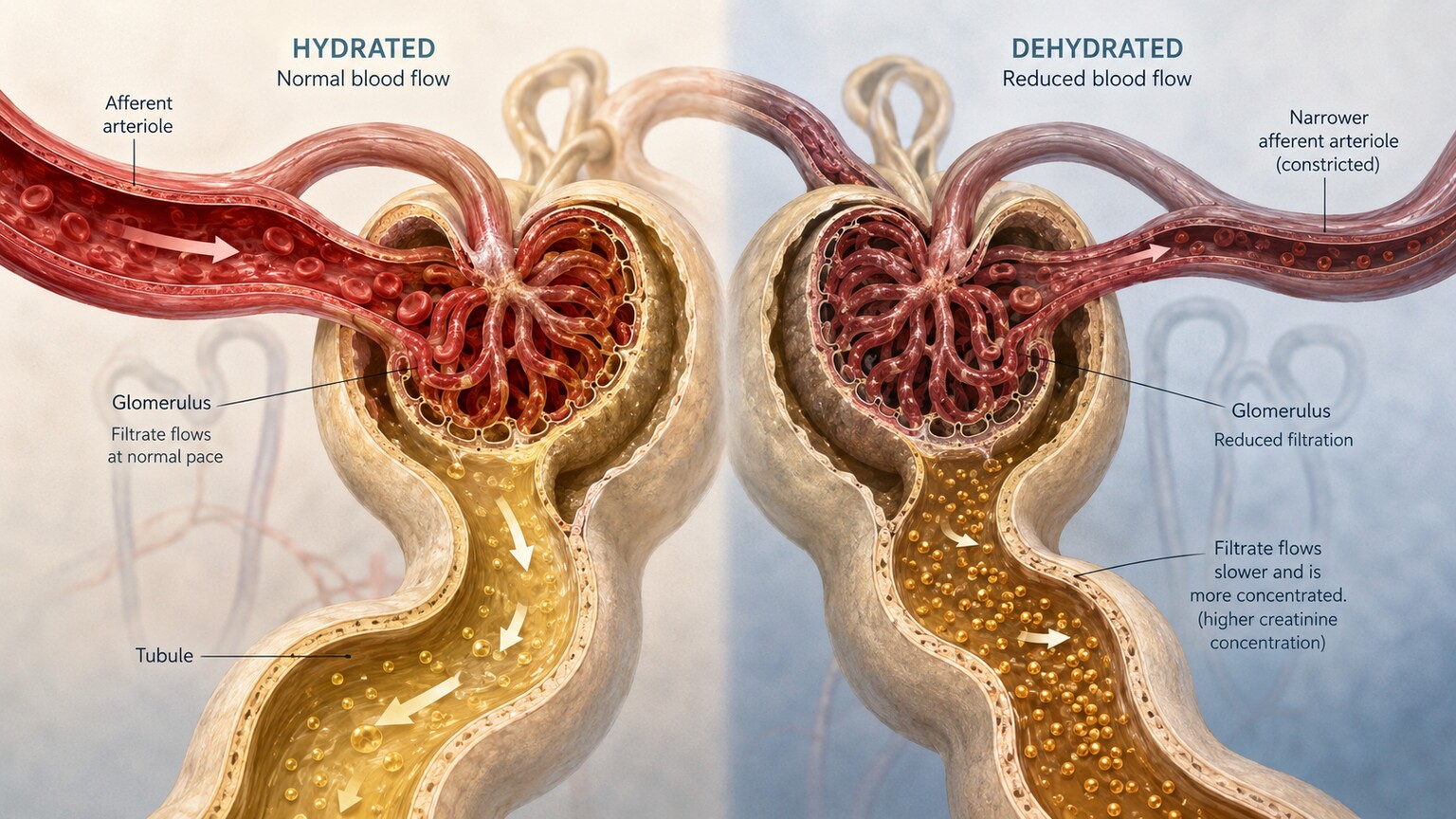
Figure 1. When blood volume drops during dehydration, less fluid flows through the kidney's filtering units, concentrating creatinine in a smaller amount of plasma.
What Creatinine Actually Measures — and Why It's a Ratio, Not a Straight Count
To understand why dehydration moves this number, it helps to understand what creatinine actually is in the first place. Every time your muscles contract, they burn through a small stockpile of an energy-storage compound called creatine. As creatine gets used up, a portion of it breaks down into a byproduct called creatinine — think of it as ash left over after a fire. Your body produces this ash at a remarkably steady rate day to day, because it's tied directly to how much muscle you have, not to what you ate or how you're feeling. Your kidneys' job is to pull that ash out of your bloodstream continuously and flush it out in urine, which is why creatinine is one of the most trusted everyday markers of how well your kidneys are filtering.
But here's the part that matters for dehydration: the number on your lab report isn't "grams of creatinine total." It's a concentration — milligrams of creatinine per deciliter of blood plasma (mg/dL). A concentration always has two parts: how much of the substance there is, and how much liquid it's dissolved in. Dehydration doesn't usually change how much creatinine your muscles are producing in the short term. What it changes is the second part of that ratio — the amount of liquid your creatinine is floating in. Shrink the water, and the same amount of creatinine reads as a higher concentration, exactly the way orange juice concentrate tastes stronger before you add the water back in.
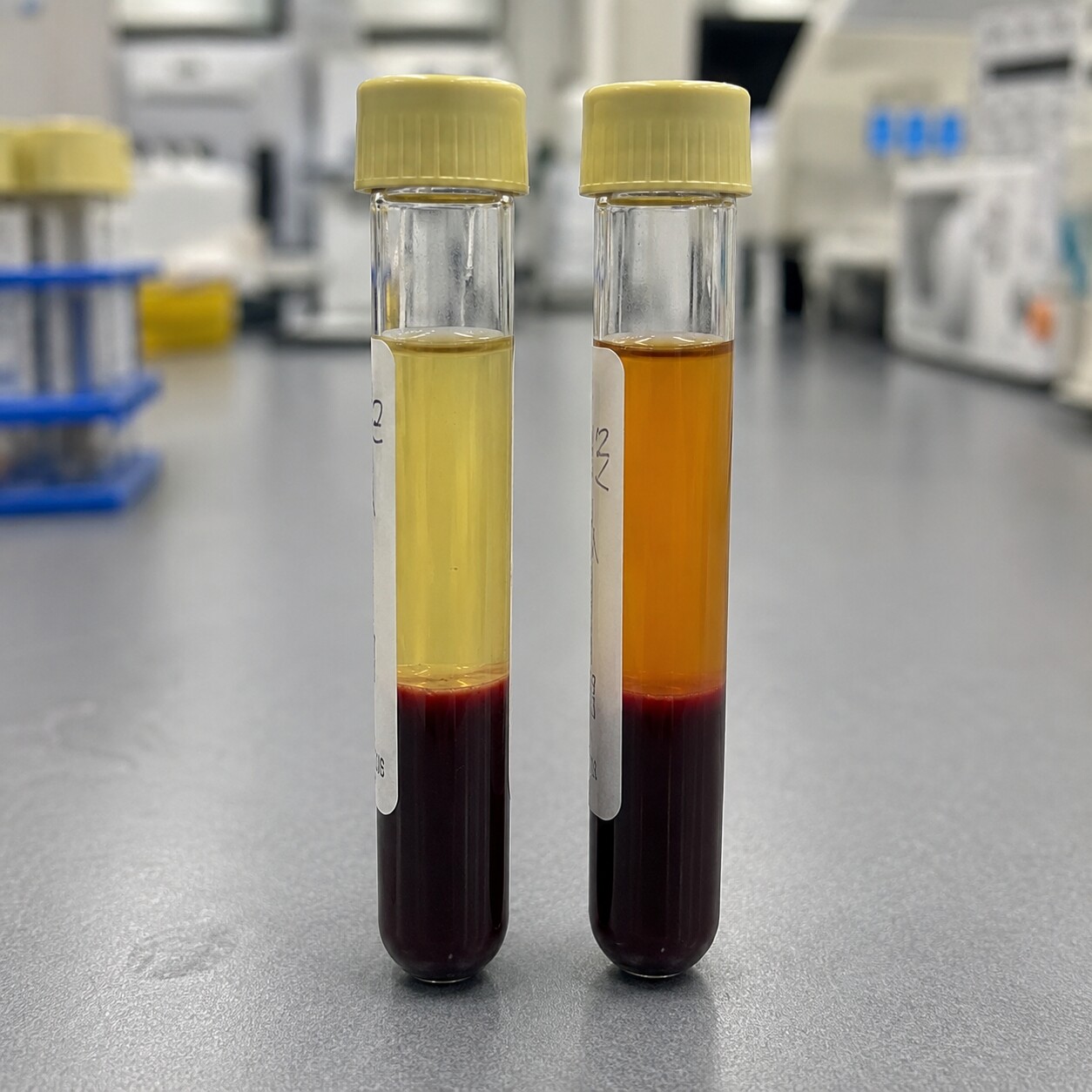
Figure 2. Creatinine concentration is a ratio of waste product to plasma volume — less plasma water means a higher reading even if creatinine production hasn't changed.
This is exactly why doctors and lab scientists describe creatinine as "volume-dependent" — it moves not just with kidney function, but with how much fluid is in your bloodstream at the moment of the draw. It's part of why a single number, pulled from a single blood draw on a single day, is never meant to be read in a vacuum. Context — how much water you drank that morning, whether you were sick with vomiting or diarrhea, whether you'd just finished a hard workout — genuinely changes what a given creatinine number means, and dehydration is one of the single most common pieces of that context.
It's worth being specific about what "dehydration" means in this context, because the word gets used loosely. Clinically, it refers to a real deficit in total body water — not just feeling thirsty, but having measurably less fluid circulating than your body needs. This can happen gradually, from simply not drinking enough over a hot day, or quickly, from vomiting, diarrhea, heavy sweating, fever, or reduced fluid intake during an illness. The magnitude matters: mild, everyday under-hydration might nudge creatinine up by a small, often clinically insignificant amount, while more severe fluid loss — the kind that also causes dizziness, a dry mouth, and dark urine — can produce a change large enough to cross from a "normal" reading into a flagged, "high" one on a lab report.
It also helps to know roughly how much water actually makes up the ratio being discussed. In a typical adult, water accounts for somewhere around 50 to 60 percent of total body weight, and blood plasma — the specific fluid compartment creatinine is measured in — makes up only a small slice of that total, roughly 5 percent of body weight. Because plasma is such a comparatively small reservoir, it doesn't take an enormous absolute loss of body water to noticeably shrink it in percentage terms. A loss of fluid that might seem modest when described in cups or liters can represent a meaningfully larger percentage change specifically within the plasma compartment, which is exactly where the creatinine concentration is actually being measured. This is part of the reason even a day of noticeably reduced drinking — not a dramatic illness, just an off day where fluid intake was well below normal — can sometimes be enough to nudge a creatinine reading upward by a small but measurable amount on a follow-up test.
How Dehydration Physically Changes What the Kidneys See
The concentration effect described above is only half the story, and it's the simpler half. The second mechanism is more mechanical: dehydration reduces the total volume of blood circulating through your body, and your kidneys are exquisitely sensitive to that. Roughly a fifth of the blood your heart pumps with every beat is normally routed straight to the kidneys, because filtering blood is such a continuous, high-priority job. When total blood volume drops, the body triggers a cascade of hormonal signals — largely through the renin-angiotensin-aldosterone system, a chain of hormones that regulate blood pressure and fluid balance — that prioritize keeping blood pressure up in vital organs like the brain and heart. One of the ways the body does this is by narrowing blood vessels leading into the kidneys, which reduces how much blood actually reaches the filtering units inside them.
Less blood flow into the kidney translates directly into a lower glomerular filtration rate, or GFR — the technical term for how fast the kidneys are actually clearing waste from the blood. Think of GFR as the flow rate through a series of extremely fine coffee filters; if you reduce the pressure pushing liquid through the filter, less liquid passes through per minute, even though the filter paper itself is completely intact and undamaged. This is the crux of what clinicians call prerenal azotemia — a rise in waste products like creatinine and BUN (blood urea nitrogen) that originates "before the kidney" (that's what "prerenal" means), caused by reduced blood flow reaching it, rather than by any actual injury to kidney tissue itself. It's a functional slowdown, not structural damage — and importantly, it's almost always reversible once normal blood flow and hydration are restored.
Already have a creatinine number from a recent test, but not sure if it's actually a red flag or just a dehydrated draw? Plug it in along with your age and sex and see instantly.
🧮 Try the Free CalculatorThe BUN-to-Creatinine Ratio: The Clue That Separates Dehydration From Real Kidney Trouble
One of the most useful tools clinicians have for telling dehydration apart from genuine kidney injury doesn't come from creatinine alone — it comes from comparing creatinine to a second waste product called BUN, or blood urea nitrogen. Urea is a byproduct of protein breakdown, filtered out by the kidneys much like creatinine is, but with one crucial difference: as urea passes through the kidney's tubules, a portion of it gets reabsorbed back into the bloodstream, and how much gets reabsorbed depends heavily on how slowly fluid is moving through those tubules. When you're dehydrated, fluid moves through the kidneys more sluggishly, giving the tubules more time and opportunity to reabsorb urea back into circulation. Creatinine, by contrast, is barely reabsorbed at all under normal circumstances — it mostly just gets excreted regardless of flow speed.
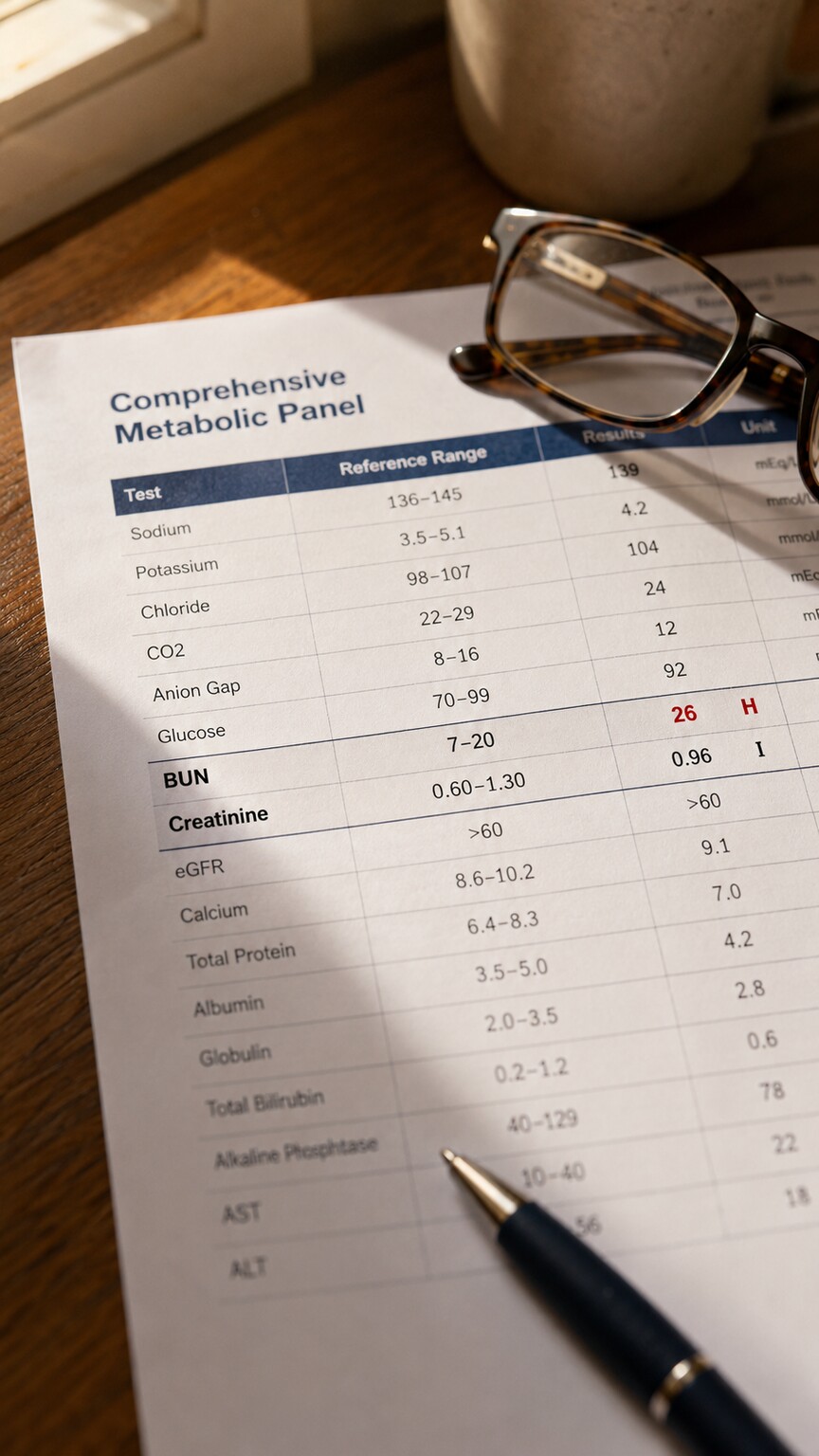
Figure 3. A BUN-to-creatinine ratio above roughly 20:1 is a classic pattern suggesting reduced blood flow to the kidneys rather than direct kidney tissue damage.
This mismatch in reabsorption is exactly what shows up on paper. In dehydration, BUN tends to rise disproportionately more than creatinine, because more of it is getting pulled back into the blood instead of leaving in urine. Clinicians express this as a ratio — BUN divided by creatinine — and a healthy ratio typically sits somewhere between about 10:1 and 20:1. When dehydration is the main driver, that ratio commonly climbs above 20:1, sometimes considerably higher, even while creatinine itself has only risen modestly. This pattern — a BUN that's shot up much more than creatinine — is one of the strongest clues on a routine metabolic panel that reduced fluid, not kidney damage, is behind an elevated creatinine reading. A more even rise in both BUN and creatinine together, without that skewed ratio, points doctors toward looking more carefully at the kidney tissue itself rather than simply hydration status.
It's this ratio — alongside the trend of a creatinine value over repeat testing, and alongside a look at eGFR (estimated glomerular filtration rate, a calculated number derived from creatinine, age, and sex that approximates overall kidney filtering capacity) — that gives a fuller picture than any single creatinine number ever could on its own. A creatinine that spikes after a bout of vomiting and then drops right back to baseline within a day or two of rehydrating tells a very different story than one that climbs and stays elevated across weeks of retesting, regardless of fluid intake.
It's worth pausing on why urea behaves so differently from creatinine in the first place, because the distinction is the entire reason this ratio works as a diagnostic clue. Urea is a small, water-soluble molecule that can move fairly freely across the walls of the kidney's tubules — the long, thin, coiled tubes where filtered fluid is fine-tuned before becoming urine. When fluid is moving quickly through those tubules, as it does when you're well hydrated, urea doesn't have much time to diffuse back out of the tubule and into the bloodstream, so more of it simply continues onward and gets excreted. When fluid slows down, as it does during dehydration, urea has far more time to leak back across that tubule wall and re-enter circulation, so blood levels rise even though the kidneys aren't malfunctioning — they're just processing fluid more slowly, on purpose, as part of a normal water-conservation response. Creatinine, being a larger, less freely diffusible molecule, isn't nearly as susceptible to this same reabsorption effect, so it doesn't get pulled back into the blood the same way — it mostly just accumulates a bit because filtration itself has slowed. That structural difference between the two molecules is the entire biological reason a skewed BUN-to-creatinine ratio can point so reliably toward volume status rather than tissue injury.
It's also worth noting that this ratio isn't perfectly specific to dehydration alone — a handful of other situations can skew it in the same direction, which is exactly why doctors weigh it alongside the rest of the clinical picture rather than treating it as a standalone verdict. A diet unusually high in protein can raise urea production somewhat independent of hydration status, since protein breakdown is the ultimate source of urea in the first place. Gastrointestinal bleeding is another classic cause of a high BUN-to-creatinine ratio, because digested blood sitting in the intestines is itself a large protein load that gets absorbed and broken down into extra urea. Certain medications, including corticosteroids, can also nudge urea production upward. None of these possibilities make the ratio useless — they simply mean a clinician interpreting an elevated ratio will typically ask a few quick questions (recent diet, any dark or bloody stools, current medications, recent fluid intake) before settling confidently on dehydration as the explanation.
How Much Can Dehydration Actually Move a Creatinine Number?
The size of the effect scales with how dehydrated a person actually is, and it isn't the same for everyone. Mild, everyday under-hydration — the kind that comes from simply not drinking much water before a routine morning blood draw — typically produces only a small nudge, often within the margin most labs would still consider unremarkable. More significant fluid loss tells a different story. Research and clinical observation around conditions like acute gastroenteritis (the vomiting-and-diarrhea illness often loosely called a "stomach bug"), heatstroke, and prolonged intense exercise without adequate fluid replacement has repeatedly documented creatinine values rising well above a person's normal baseline — sometimes climbing from a comfortably normal reading into a range flagged as abnormal on a standard lab report — purely as a consequence of volume depletion, with values returning to baseline within a day or two once fluids are restored.
Severity matters more than most people expect. A person who's mildly under-hydrated because they skipped their morning coffee and water might see essentially no meaningful shift. A person who has been vomiting for twenty-four hours, running a fever, and hasn't been able to keep fluids down, on the other hand, can show a genuinely elevated creatinine that looks concerning on paper — reflecting real, if temporary, reduced blood flow to the kidneys rather than any lasting injury. This is one of the reasons emergency departments and urgent care clinics routinely see creatinine values normalize dramatically after a patient receives intravenous fluids; restoring blood volume restores kidney blood flow almost immediately, and the number follows.
It also helps to think about this in terms of what percentage of total body water has actually been lost, since that's the underlying variable driving everything else. Losing around 1 to 2 percent of body water — the kind of deficit that comes from a few missed glasses of water over a warm afternoon — is considered mild and usually produces symptoms so subtle most people don't even notice them, let alone see a meaningful lab change. Losing 3 to 5 percent, which can happen during a long run without water breaks, a day of heavy manual labor in the heat, or the early hours of a stomach virus, starts to produce noticeable symptoms: thirst, a dry mouth, dark yellow urine, and mild fatigue, alongside a creatinine that's more likely to tick upward into a flagged range. Beyond that — 6 percent or more, which is genuinely significant and typically comes with dizziness, a rapid heartbeat, confusion, or very dark, minimal urine output — the kidneys' compensatory blood-vessel narrowing becomes more aggressive, and creatinine elevations become both larger and more consistent. This is also the range where dehydration stops being a minor lab curiosity and becomes a genuine medical situation that benefits from prompt fluid replacement, sometimes requiring an intravenous line rather than just drinking water, particularly if vomiting is preventing oral fluids from staying down.
Body size and baseline muscle mass also shape how visible the effect is on paper. Because creatinine production scales with muscle mass, someone who is naturally more muscular tends to have a higher baseline creatinine to begin with, and the same absolute rise from dehydration may represent a smaller percentage change for them than for someone with less muscle mass and a lower baseline. This is one of several reasons lab reports increasingly emphasize trends over time — comparing today's number to your own prior results — rather than judging a single value purely against a generic population reference range that wasn't built around your particular body composition.

Figure 4. Prolonged sweating without adequate fluid replacement is one of the most common everyday causes of a temporarily elevated creatinine reading.
Prerenal Azotemia in Everyday Situations, Not Just the Emergency Room
Prerenal azotemia — the reduced-blood-flow pattern described above — sounds like a hospital-only phenomenon, but the everyday versions of it are far more common than the dramatic ones. A stomach virus that keeps you from holding down fluids for a day, a bout of food poisoning, a long summer hike where you underestimated how much water you'd need, an intense workout in a hot gym without a water bottle nearby, or even a hangover after a night of alcohol — which is itself a diuretic that increases fluid loss — can all produce the same underlying mechanism: less circulating blood volume, reduced blood flow to the kidneys, and a creatinine that ticks upward as a downstream consequence.
Older adults are particularly prone to this pattern for a few compounding reasons. The sensation of thirst tends to become less reliable with age, meaning older people often don't feel thirsty even when their body genuinely needs fluid, so mild dehydration can develop without an obvious prompt to drink. Many older adults also take diuretic medications for blood pressure or heart conditions, which intentionally increase fluid loss through urine and can tip someone into dehydration more easily, especially during illness, hot weather, or reduced food and drink intake. And because kidney filtration capacity naturally declines somewhat with age even in healthy people, the same degree of dehydration can produce a larger relative change in creatinine in an older adult than in a younger one with more filtering reserve to spare.

Figure 5. Diuretic medications, reduced thirst sensation, and lower baseline filtration reserve combine to make dehydration-driven creatinine changes more pronounced in older adults.
Illness itself compounds the risk further. Fever increases fluid loss through sweat and faster breathing, and being sick often reduces appetite and fluid intake at exactly the moment the body needs more of both. This is part of why a creatinine drawn during an active illness — a flu, a urinary tract infection with fever, a bad cold — can look mildly elevated compared to a person's usual baseline, and why doctors will often simply recheck the number after the illness resolves and hydration is back to normal rather than immediately assuming a kidney problem. Certain medications add another layer: NSAIDs like ibuprofen, some blood pressure medications called ACE inhibitors or ARBs, and a few other drug classes can each independently reduce blood flow to the kidneys, and their effect becomes more pronounced when combined with even mild dehydration — a combination worth mentioning to a healthcare provider if it comes up.
Why Standard Reference Ranges Don't Account for Hydration on Their Own
When a lab report prints a "normal range" next to your creatinine value, that range was built from population data — a large sample of people, tested under fairly typical, unremarkable conditions, without any special effort to standardize everyone's hydration status beforehand. That's a reasonable approach for a marker like creatinine, since most people getting routine blood work aren't severely dehydrated at the moment of the draw. But it also means the range itself has no built-in mechanism for flagging "this specific result might be inflated by fluid status" — it simply tells you whether a number falls inside or outside the range most people fall into. This is part of why context matters so much in interpreting any single lab value: the number is real, but what it means depends on the circumstances it was measured in, and a reference range alone can't supply that context.
This is also why a single test result is generally considered less informative than a trend. A creatinine of 1.3 mg/dL might sit just above a lab's stated upper limit and look alarming in isolation, but if that same person's creatinine has read 1.2 to 1.3 mg/dL consistently across the past three years of annual physicals, it's probably just their personal baseline — some people naturally run slightly above or below the population-wide range without anything being wrong, often because of muscle mass, ethnicity-related differences in average muscle composition, or simply individual variation in kidney filtering capacity that has nothing to do with disease. On the other hand, a creatinine of 1.3 mg/dL in someone whose last three tests read 0.8, 0.8, and 0.9 mg/dL is a meaningfully different situation, even though the absolute number might be the same — the trend itself is informative in a way a single snapshot never can be, dehydration or not. This is exactly the kind of pattern-over-time thinking that makes repeat testing, rather than a single alarming number, the standard way clinicians actually work through an unexpected result.
It's also worth understanding that labs occasionally report a second, complementary number alongside creatinine called eGFR, which attempts to translate the raw creatinine value into an estimate of actual kidney filtering capacity by factoring in age, sex, and sometimes race or body size, since these variables affect how much creatinine a "normal" person of a given profile would be expected to produce. eGFR is calculated directly from creatinine, so it inherits the exact same hydration sensitivity — a dehydration-inflated creatinine will produce an artificially lowered eGFR, since the formula has no way of distinguishing a truly reduced filtration rate from a temporarily concentrated blood sample. This is precisely why a single low eGFR reading, especially one that shows up unexpectedly with no prior history of kidney concerns, is so often followed by a request to simply repeat the test under normal, well-hydrated conditions before anything further is pursued.
How to Tell If an Elevated Creatinine Is "Just" Dehydration or Something More
No single blood test can definitively answer this question on its own, but there are patterns that make dehydration the more likely explanation, and patterns that push a clinician to look further. A creatinine that's mildly elevated, paired with an elevated BUN-to-creatinine ratio above roughly 20:1, in someone who has a clear, recent reason to be dehydrated — vomiting, a hot day without much water, an intense workout, a fever — and who feels noticeably better with symptoms like a dry mouth, dark urine, dizziness when standing, or reduced urination, fits the dehydration story well. The single most useful confirmation is simply repeating the test after rehydrating: if the number drops back toward a person's normal baseline within a day or two of drinking normally again, that's strong evidence the original elevation was fluid-related rather than a sign of ongoing kidney injury.
Signs that point toward something beyond simple dehydration include a creatinine that stays elevated across repeat testing despite clearly adequate hydration, a BUN-to-creatinine ratio that's close to the normal range rather than skewed high (suggesting both waste products are rising together, which is more typical of direct kidney tissue involvement), swelling in the legs or around the eyes, a significant and unexplained drop in how much urine a person is producing, or an elevation that shows up with no dehydration trigger at all. Any of these warrants a more thorough follow-up conversation with a healthcare provider rather than an assumption that more water will fix it.

Figure 6. Repeating a creatinine test after a day or two of normal fluid intake is often the simplest way to confirm whether dehydration, rather than kidney injury, drove the original result.
Practical Ways to Avoid a Dehydration-Skewed Result Before Your Next Test
Because so much of this comes down to timing and circumstance, a few simple habits before a scheduled blood draw can meaningfully reduce the odds of an inflated creatinine reading that has nothing to do with your actual kidney health. Drinking a normal amount of water in the twenty-four hours leading up to the appointment — not an excessive amount, just your usual daily intake — helps ensure your blood volume is at a typical baseline rather than contracted from a day of under-drinking. If the test doesn't require fasting, having a normal breakfast and beverages as usual, rather than skipping meals and fluids out of an abundance of caution, keeps conditions closer to what the reference range was built around. If you've been sick with vomiting or diarrhea in the day or two before a scheduled test, it's reasonable to mention this to your provider or even ask whether rescheduling makes sense, particularly if the test is being used to establish a new kidney-function baseline rather than to monitor an already-known condition.
Exercise timing matters too. Because intense physical activity both dehydrates you through sweat and temporarily increases creatinine production from muscle breakdown, avoiding a hard workout in the few hours directly before a blood draw — particularly if it's hot out or the workout was unusually strenuous — helps avoid a result that reflects yesterday's gym session more than your baseline kidney function. This doesn't mean avoiding exercise generally, which is unambiguously good for long-term kidney and cardiovascular health; it simply means being thoughtful about the timing relative to a lab appointment, the same way people are already used to being thoughtful about fasting before a cholesterol panel.
For people managing a chronic condition where creatinine is tracked regularly — chronic kidney disease, heart failure, or diabetes, for example — some clinicians recommend trying to keep hydration status reasonably consistent from one test to the next, simply so that trend comparisons stay meaningful. If one test was drawn after a dehydrated morning and the next after a well-hydrated one, the apparent "change" between the two numbers may say more about that difference in circumstances than about any real shift in kidney function. Mentioning relevant context — an illness, a hard workout, unusually low fluid intake — when reviewing results with a provider helps them weigh a given number correctly rather than reacting to it in isolation.
What to Actually Do If Your Creatinine Comes Back High
The most useful first step is rarely panic — it's context. Think back over the day or two before the blood draw: Were you sick? Did you sweat through an intense workout without replacing fluids? Did you fast or avoid drinking water beforehand, as some tests require? Were you taking a diuretic, an NSAID, or a new blood pressure medication? Any of these can plausibly explain a one-time bump. From there, the most reliable next move is usually a simple retest after a day or two of normal, adequate hydration — many primary care providers will suggest exactly this before pursuing anything more involved, especially in someone with no other symptoms and no prior history of kidney issues.
If the number normalizes, that's generally reassuring and confirms the dehydration explanation. If it stays elevated, or if there are other symptoms alongside it — swelling, changes in urination, fatigue, nausea unrelated to the original illness — further evaluation is the right next step, which might include additional blood work, a urine test, or imaging depending on what a clinician's evaluation suggests. Either way, a single high creatinine reading, especially one drawn under circumstances where dehydration was plausible, is a starting point for a conversation, not a diagnosis on its own.
It's also worth remembering that the relationship between dehydration and creatinine runs in one direction that's easy to overlook: while dehydration can raise creatinine, having genuinely impaired kidney function can also make a person more vulnerable to the effects of dehydration in the first place, since kidneys that are already working with less reserve have less room to compensate for reduced blood flow. This is part of why people with existing kidney disease are often given more specific guidance from their care team about fluid intake, especially during illness or hot weather, rather than being left to figure out hydration on general instinct alone. If you have a known kidney condition, the safest approach is always to follow your own provider's specific fluid recommendations rather than general population advice, since the right amount of fluid can vary considerably depending on the underlying condition and its stage.
Frequently Asked Questions
How much water do I need to drink before a creatinine or kidney panel blood test?
There's no special hydration protocol required for a standard creatinine test the way there is for some fasting tests — normal, adequate daily water intake is generally sufficient. What matters most is simply not being unusually dehydrated at the time of the draw. If you're sick, have been sweating heavily, or haven't had much to drink that day, mentioning it to whoever is drawing your blood, or to your provider when reviewing results, gives useful context for interpreting the number.
How quickly does creatinine return to normal after rehydrating?
Often surprisingly quickly. Because the concentration effect and the reduced-blood-flow effect are both directly tied to blood volume, creatinine frequently starts trending back toward baseline within hours of adequate fluid intake and is commonly back to normal within a day or two, assuming the elevation truly was dehydration-driven and not reflecting an underlying kidney issue.
Can dehydration alone push creatinine high enough to suggest kidney disease?
It can push a number into the "high" range flagged on a lab report, but this reflects a temporary, reversible reduction in blood flow to the kidneys — not the kind of structural damage seen in chronic kidney disease. The distinction usually becomes clear with a repeat test after rehydration and by looking at the BUN-to-creatinine ratio and eGFR trend over time rather than relying on one isolated number.
Still Not Sure What Your Results Mean?
Upload your labs and get a complete, visual, plain-language interpretation of every biomarker — delivered to your inbox in under 15 minutes.
Get My ReportThis article is for educational purposes only and does not constitute medical advice. Always consult your healthcare provider regarding your specific lab results.