
Understanding What Your BUN (Blood Urea Nitrogen) Level Really Means
BUN, short for blood urea nitrogen, measures a waste product your liver makes every time your body breaks down protein — and it's one of the most easily misread numbers on a standard lab panel, precisely because so many ordinary things can move it. Where creatinine is produced at a steady, almost boring pace set by muscle mass, urea production rises and falls with what you ate for dinner, how much water you drank, how your liver is functioning, and even whether there's bleeding happening somewhere inside your digestive tract that you don't yet know about. None of that makes BUN a lesser test — if anything, its sensitivity to the rest of the body is what makes it clinically useful in situations creatinine alone would miss entirely. Here's what urea actually is, why the kidneys treat it so differently from other waste products, and what your specific number is actually trying to tell you.
Already have a BUN number from a recent test, but not sure if it's actually good or bad for you? Just plug it in and see instantly.
🧮 Try the Free CalculatorWhat Urea Actually Is — and the Journey From a Dangerous Gas to a Safe Waste Product
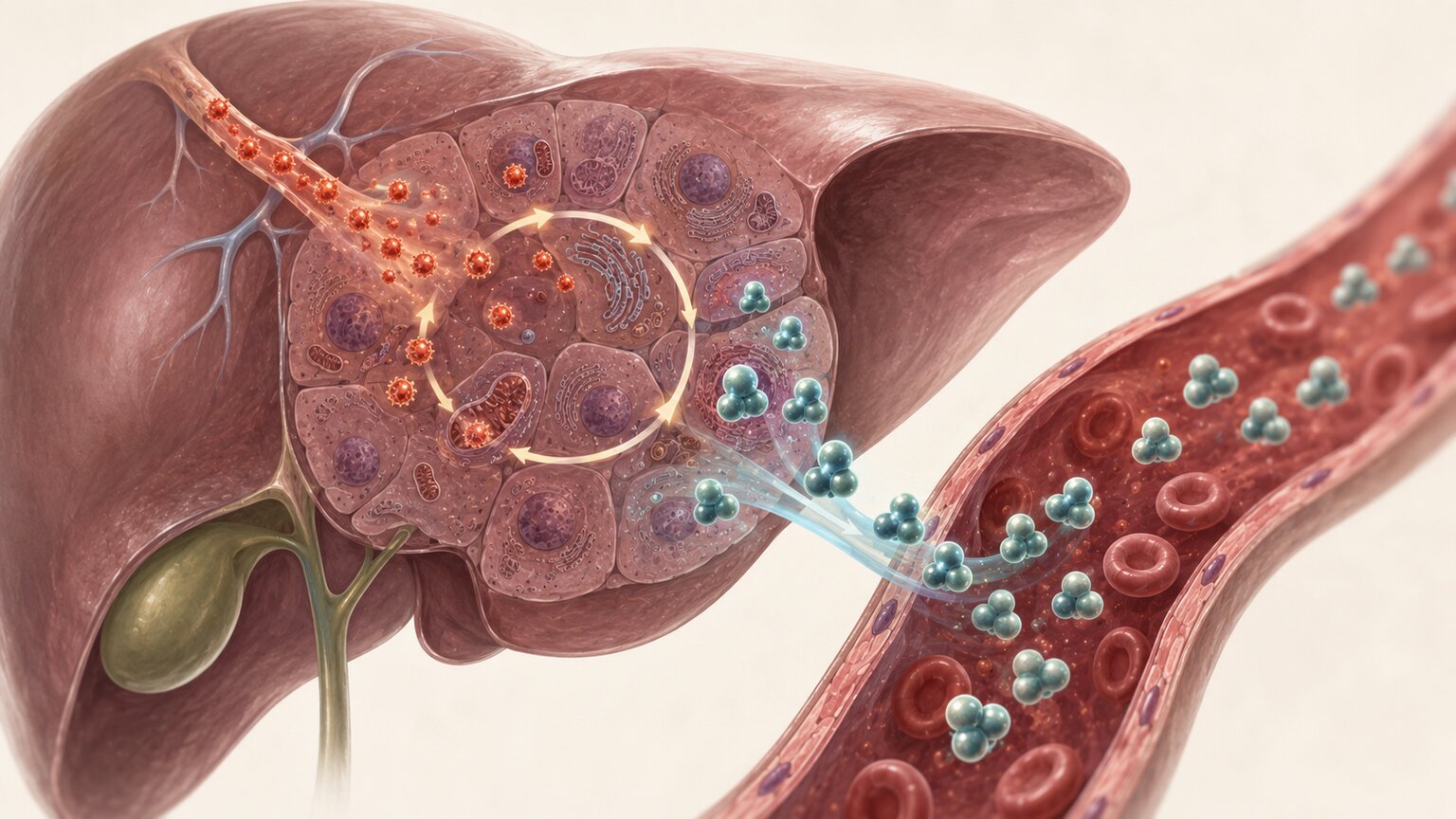
Every time you eat protein, or your body breaks down its own tissue for energy, the amino acids involved get stripped of a nitrogen-containing piece in a process called deamination. What's left over from that step is ammonia — a small, simple molecule that happens to be highly toxic to the nervous system in anything more than trace amounts. Your body can't just let ammonia accumulate, so it sends it straight to the liver, where a sequence of chemical reactions called the urea cycle converts it into something far safer: urea. This cycle was first mapped out in 1932 by Hans Krebs, the same biochemist who later became famous for describing the citric acid cycle, and it remains one of the clearest examples in human physiology of the body converting a genuine hazard into a harmless, water-soluble molecule it can simply flush away.
Once formed, urea is released into the bloodstream and travels to the kidneys, where it's filtered out and eventually leaves the body in urine. The BUN test doesn't measure urea directly — it measures the nitrogen component of that urea molecule specifically, which is where the "nitrogen" in blood urea nitrogen comes from. In practice, this distinction rarely matters for interpreting your own result; what matters is that the number rises and falls in step with how much protein your body is processing and how efficiently your kidneys are clearing the byproduct.
How BUN Is Actually Measured — and Why Other Countries Report a Different Number
In the lab, BUN is typically measured using an enzyme called urease, which breaks urea down into ammonia and carbon dioxide. That ammonia is then run through a second reaction that produces a measurable change in light absorbance, and the size of that change tells the lab exactly how much urea nitrogen was in the original sample. It's an elegant, well-established method that's been in routine use for decades and is considered highly reliable.
One detail that trips people up when comparing results internationally is that the United States reports this value as BUN, in milligrams per deciliter of nitrogen, while many other countries report the full urea molecule instead, typically in millimoles per liter. Because urea's molecular weight is roughly 2.14 times that of just its nitrogen portion, a BUN of 10 mg/dL corresponds to a urea value of about 21.4 mg/dL, though the more common international unit conversion works out to roughly 3.6 mmol/L for that same result. If you've ever had labs drawn in another country and the units look completely unfamiliar, this is almost always why — it's the same underlying test, just expressed through a different piece of the same molecule.
Why the Kidneys Don't Just Dump All the Urea You Make
Creatinine, once filtered by the kidneys, stays almost entirely in the urine on its way out. Urea behaves very differently. As filtered fluid moves through the kidney's tubules, a meaningful portion of that urea gets pulled back into the bloodstream rather than excreted — a process called reabsorption. Some of this happens passively, but a significant share is actively controlled by a hormone called vasopressin, also known as antidiuretic hormone or ADH, which is the same hormone your body releases when it senses you're dehydrated. Vasopressin doesn't just tell the kidneys to conserve water — it also activates specific transport proteins deep in the kidney's collecting ducts that specifically pull more urea back into the body, as part of the kidney's broader mechanism for concentrating urine.
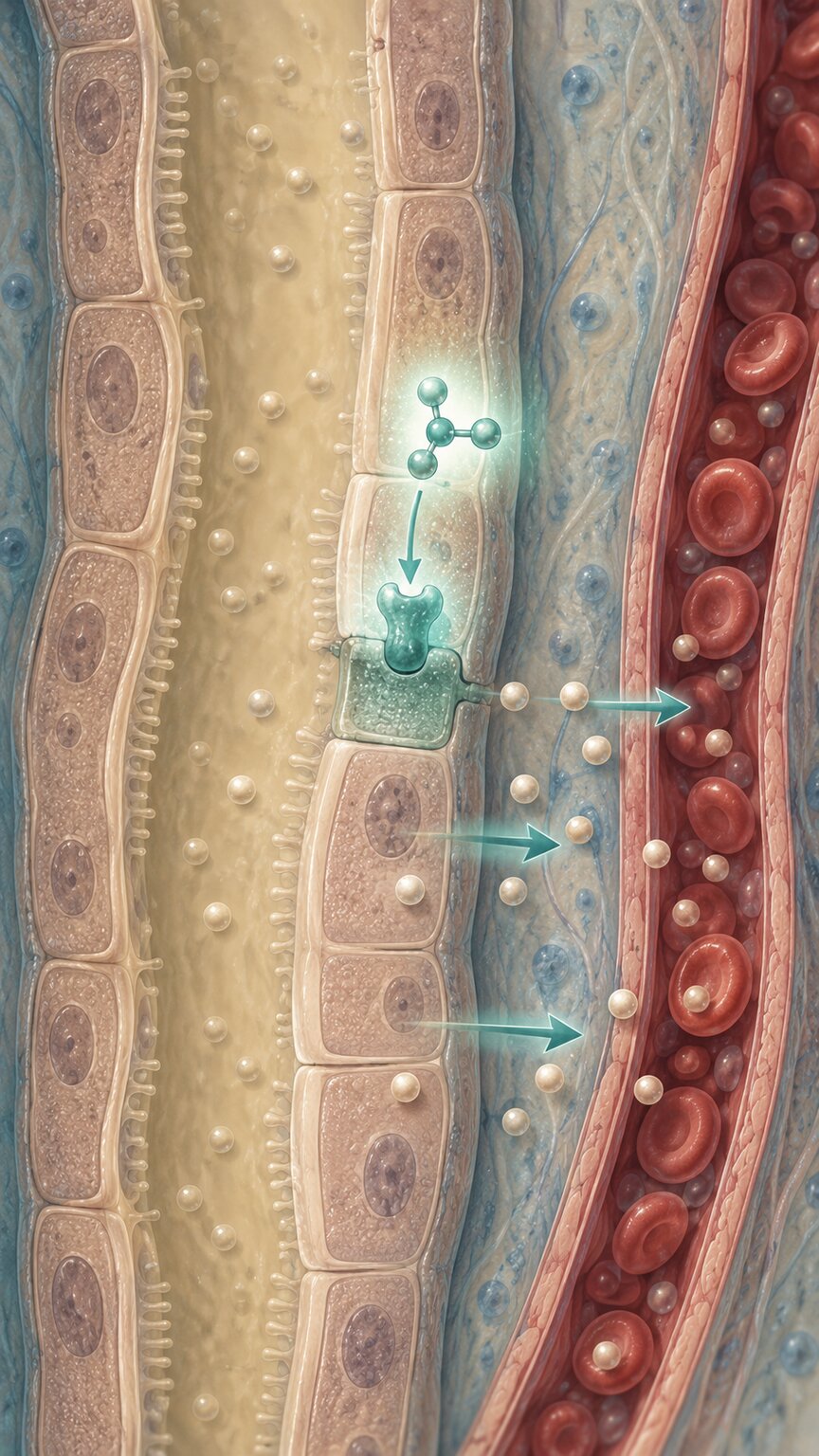
This is the single biggest reason BUN and creatinine don't always move together. When the body is conserving water — during dehydration, low blood pressure, or reduced blood flow to the kidneys — vasopressin rises, urea reabsorption increases, and BUN climbs disproportionately compared to creatinine, even though true filtration capacity hasn't necessarily changed at all. Creatinine has no equivalent hormone-driven reabsorption step working against it, which is exactly why it stays the more stable, muscle-tied number while urea gets pulled in multiple directions depending on hydration and hormonal state.
This urea reabsorption isn't a side effect the kidney merely tolerates — it's actively useful. The recycled urea gets deposited deep in the innermost part of the kidney, where it helps create a concentration gradient that the kidney relies on to pull water back out of urine before it's excreted, part of a broader system known as countercurrent multiplication. In other words, the very trait that makes BUN a less "pure" kidney-function marker than creatinine — its willingness to be pulled back into the body — is also a deliberate piece of how the kidney concentrates urine in the first place. It's a reminder that urea isn't just inert waste passing through; the body puts it to work on the way out.
What Counts as Normal — and Why Diet Moves This Number More Than Any Other Kidney Marker
According to Mayo Clinic Laboratories, the standard adult reference range for BUN is roughly 8 to 24 mg/dL, though individual labs may report slightly different cutoffs depending on their specific assay. Because urea production is directly tied to how much protein your body is metabolizing, diet has an outsized effect on this number compared to almost any other routine kidney marker. People following very high-protein diets — including some ketogenic or carnivore-style eating patterns, and serious strength athletes consuming large amounts of meat, eggs, and protein supplements — can genuinely run BUN toward the upper end of normal, or modestly above it, with completely healthy kidneys underneath. On the other end, people eating very little protein, including some vegans, older adults with reduced appetite, or anyone on a medically restricted low-protein diet, often run BUN toward the lower end simply because there's less nitrogen being processed in the first place.
Age adds a further wrinkle. BUN tends to drift upward gradually over a normal lifespan, partly because kidney filtration naturally slows with age and partly because muscle and dietary patterns shift as well, meaning a result that would prompt a second look in a 25-year-old can be entirely unremarkable in someone in their 70s. This is one more reason a lab value is best read against your own history and your own body rather than a single fixed cutoff applied identically to every adult regardless of age.
The Most Dramatic, Least Expected Cause of a High BUN: Bleeding Inside the Gut
One of the more striking facts about BUN, and one most people have never heard, is that bleeding inside the digestive tract can spike this number sharply — sometimes before any other symptom makes the bleeding obvious. When blood enters the intestines, whether from a bleeding ulcer, esophageal varices, or another source of upper gastrointestinal bleeding, the body's own digestive enzymes break down the protein in that blood almost exactly as they would break down a protein-rich meal. Those amino acids get absorbed into circulation, travel to the liver, and are converted into urea through the same urea cycle described earlier — effectively turning internal bleeding into an unplanned, sudden protein load.

This effect is compounded by blood loss itself: significant bleeding lowers blood volume and blood pressure, which reduces blood flow reaching the kidneys and triggers the same vasopressin-driven urea reabsorption described earlier, pushing BUN even higher on top of the added protein load. Clinicians specifically watch for a BUN-to-creatinine ratio that's disproportionately elevated in this setting, since it can help distinguish upper gastrointestinal bleeding from other causes of similar symptoms, sometimes before imaging or endoscopy confirms the source. This is part of why an unexpectedly high BUN, especially alongside dark or tarry stools, fatigue, or lightheadedness, is a combination worth taking seriously rather than dismissing as a diet or hydration issue.
Interestingly, this effect is far more pronounced with bleeding from the upper digestive tract — the stomach and the first part of the small intestine — than with bleeding lower down, closer to the colon. Blood that stays in the upper gut for longer has more time and more digestive contact to be broken down and absorbed as protein before it moves on, while blood entering lower in the tract passes through more quickly with less opportunity for that absorption to happen. In emergency settings, a markedly elevated BUN-to-creatinine ratio in someone with gastrointestinal symptoms is actually one of the clues doctors use to make an educated guess about where the bleeding is coming from before any camera or scan confirms it directly.
Dehydration and the Hormone That Makes It Worse
Ordinary dehydration is a far more common cause of an elevated BUN than gastrointestinal bleeding, and it works through the exact mechanism described earlier: as the body senses reduced fluid volume, vasopressin rises, the kidneys reabsorb more water and more urea along with it, and BUN climbs — often more sharply than creatinine, since creatinine isn't subject to that same active reabsorption step. This pattern, where BUN rises out of proportion to creatinine, is often referred to as prerenal azotemia, meaning the shift is happening "before" the kidney tissue itself, driven by blood flow and hormonal signaling rather than actual kidney damage. It's also one of the most reversible causes on this entire list — rehydrating and retesting is frequently all it takes to see the number return to baseline.
BUN as an Early Warning Sign in Heart Failure
Outside of kidney and digestive contexts, BUN has earned a specific, well-documented role in cardiology. In heart failure, reduced pumping efficiency lowers blood flow to the kidneys in a similar way to dehydration, and the resulting drop in perceived blood volume triggers the same vasopressin response, driving urea reabsorption upward. Research on hospitalized heart failure patients has found that BUN correlates strongly with short- and long-term mortality risk, with some large database analyses identifying a BUN of 43 mg/dL or higher as the single strongest predictor of in-hospital death among the standard lab values collected on admission. Other studies estimate that each one-unit increase in BUN corresponds to roughly a 2% rise in mortality risk, and that patients with clearly elevated BUN carry up to 1.5 times the risk of patients with normal levels.

What makes BUN so useful in this setting isn't that it's a heart test — it's that it captures two things happening at once, reduced blood flow and a hormone surge, both of which reflect exactly how strained the cardiovascular system has become. Because of this, doctors increasingly look at composite markers like the BUN-to-creatinine ratio or the BUN-to-albumin ratio in heart failure patients, since combining BUN with another value helps separate a hydration-driven bump from a more serious hemodynamic problem.
When BUN Climbs Very High: Uremia
The word "uremia," literally meaning urea in the blood, comes directly from this test, and it describes the cluster of symptoms that can appear when waste products build up to a genuinely dangerous degree, almost always in the setting of significant, often advanced kidney impairment. Early symptoms tend to be vague and easy to attribute to something else entirely — persistent fatigue, a reduced appetite, mild nausea, and a distinctive metallic taste in the mouth that many people describe unprompted. As waste buildup becomes more severe, symptoms can progress to persistent itching, confusion, difficulty concentrating, and in the most serious cases, significant changes in alertness.
It's worth being precise about what BUN is and isn't doing here: a very high BUN is a marker of this broader toxin buildup, not the direct single cause of every symptom, since uremia reflects the accumulation of many waste products the kidneys would normally clear, not urea alone. Even so, because BUN is so easy to measure and tracks reasonably well with overall toxin buildup, it's historically been one of the values clinicians watch most closely when deciding how urgently advanced kidney failure needs to be addressed, including when to start dialysis. For the overwhelming majority of people reading a routine BUN result, this level of severity is nowhere close to relevant — but it explains why the test has carried outsized clinical weight for over a century.
When the Liver, Not the Kidneys, Is Behind a Low Number
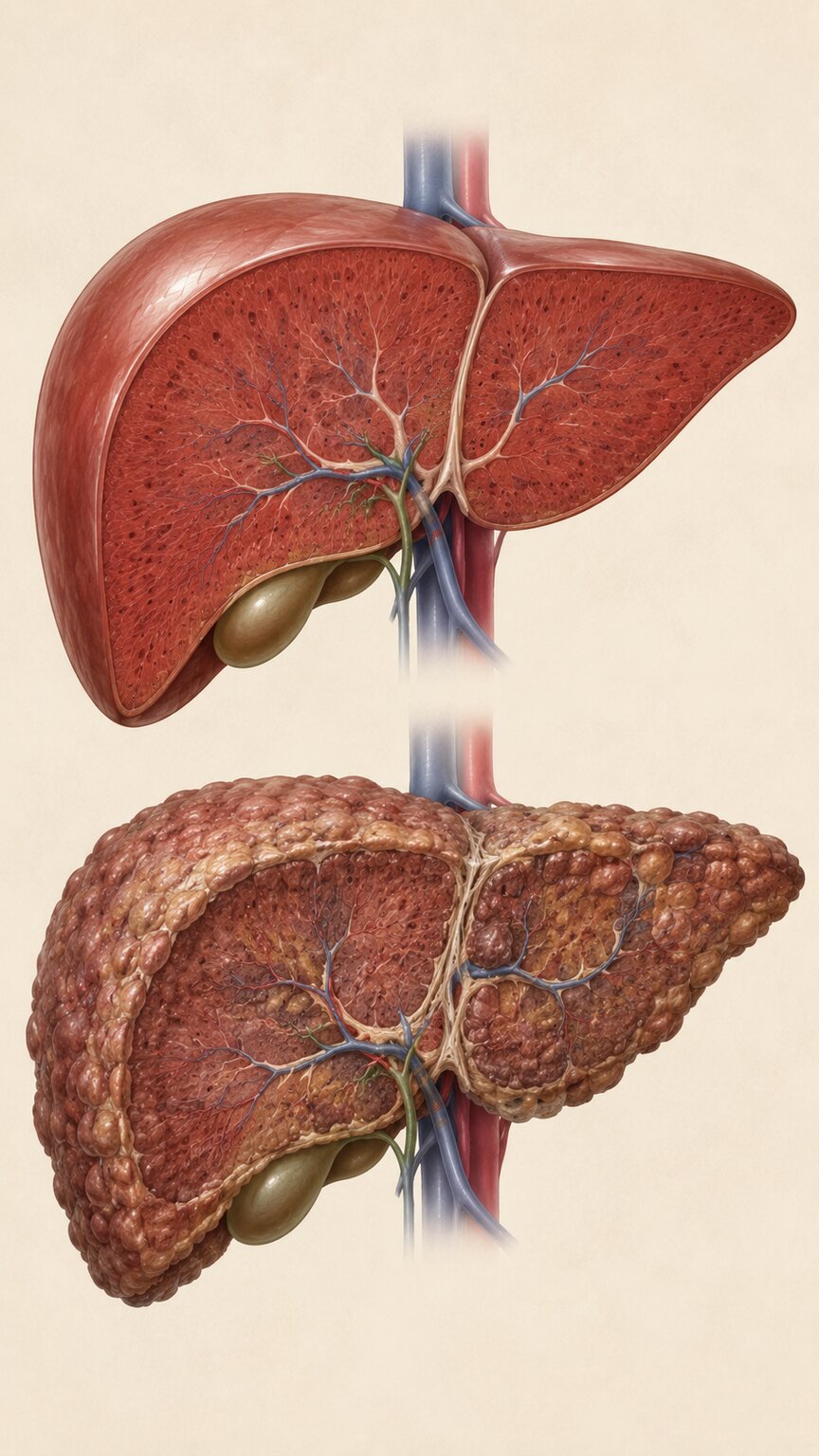
Because urea is manufactured almost exclusively in the liver, significant liver disease can lower BUN in a way that has nothing to do with kidney function at all. In advanced cirrhosis or severe hepatic impairment, the liver's capacity to run the urea cycle efficiently declines, meaning less ammonia gets converted into urea in the first place — so there's simply less of it available to show up on a blood test, regardless of how well the kidneys themselves are filtering. This creates a genuinely tricky clinical situation: a person with significant liver disease and early kidney impairment can end up with a BUN that looks reassuringly normal or even low, effectively masking a kidney problem that a creatinine-based eGFR would catch on its own. It's one of several reasons doctors treat BUN as a piece of a larger picture rather than a standalone verdict, especially in anyone with known liver disease.
Beyond outright liver disease, a handful of other everyday situations reliably lower BUN. A genuinely low-protein diet, whether by choice or medical necessity, reduces the raw material available for urea production. Overhydration dilutes the blood generally, pulling BUN down alongside sodium and other values. Pregnancy increases blood volume and kidney filtration substantially, which tends to lower BUN throughout a healthy pregnancy in the same way it lowers creatinine. None of these situations are dangerous on their own — a low BUN in isolation, without symptoms like confusion, fatigue, or swelling, is rarely something to worry about, and is far less clinically urgent than a low BUN would need to be paired with other findings before it means anything on its own.
Medications and Other Non-Kidney Influences
Certain medications shift BUN independent of kidney function by changing how much protein the body is actively breaking down. Corticosteroids, used for everything from asthma flares to autoimmune conditions, increase protein catabolism — the breakdown of the body's own tissue — which raises the amount of nitrogen waste generated and can push BUN upward during a course of treatment. Some older-generation tetracycline antibiotics have a similar anti-anabolic effect, tipping the body's protein balance toward breakdown rather than repair. These effects are typically modest and temporary, but they're worth mentioning to a doctor if a BUN result looks unexpectedly high during a period of steroid use or antibiotic treatment, since the explanation may have nothing to do with the kidneys at all.
A different group of medications affects BUN indirectly, through blood volume and kidney blood flow rather than protein metabolism. Diuretics, commonly prescribed for high blood pressure or fluid retention, work by prompting the kidneys to excrete more water — useful and often necessary, but capable of nudging the body toward the same volume-depleted, vasopressin-driven state described earlier if the dose runs ahead of how much fluid someone is taking in. ACE inhibitors and ARBs, two of the most widely prescribed blood pressure medication classes and genuinely protective for many kidney conditions over the long run, can also cause a modest, expected rise in both BUN and creatinine shortly after starting or increasing the dose, particularly if someone is even mildly dehydrated at the same time. Doctors generally anticipate this and check labs accordingly rather than treating a small, expected bump as a reason to stop a medication that's doing real long-term good.
Reading BUN Alongside Creatinine
Because BUN is so much more reactive to diet, hydration, and hormones than creatinine, the two are almost never interpreted separately — the relationship between them, expressed as a ratio, often tells a clearer story than either number alone. A ratio in the usual 10:1 to 20:1 range suggests both values are moving together for a similar reason. A ratio climbing meaningfully above that range — the pattern seen in dehydration, heart failure, high-protein intake, corticosteroid use, or gastrointestinal bleeding — points toward urea being pulled up by something other than the kidneys losing filtration capacity. A ratio drifting toward the lower end, especially with a low BUN specifically, points more toward reduced production: a low-protein diet, liver disease, or overhydration diluting the numbers generally. Neither pattern is a diagnosis on its own — the ratio simply narrows down which direction to look, giving a clinician a head start on the right follow-up question rather than an answer in itself.
One Elevated Result vs. a Real Trend
As with any kidney-related lab value, a single unexpected BUN result is rarely, on its own, a reason for alarm. A heavy protein dinner the night before, a poorly hydrated morning before the blood draw, or a short course of steroids can all push the number upward temporarily without reflecting any lasting change in kidney function. What matters more is whether an abnormal result persists on a repeat test taken under more typical conditions, and whether it's trending in a consistent direction over multiple visits rather than bouncing around within a range that roughly matches your own baseline. A doctor reading a single BUN in isolation, without that context, is working with significantly less information than one comparing it against your history.
This is especially true because BUN, more than almost any other routine lab value, is genuinely expected to vary from visit to visit in healthy people, simply because diet and hydration vary from day to day. A modest fluctuation between two otherwise normal results usually reflects exactly that kind of ordinary variability rather than anything progressing. What's far more informative is a pattern — the same direction, sustained across several tests, ideally interpreted alongside creatinine and eGFR rather than viewed in isolation.
What to Actually Do With Your Number
If your BUN comes back outside the expected range, the most useful first step is usually to think through what might explain it in the day or two before the test — a big protein-heavy meal, a hard workout without enough fluids, a new medication, or simply not drinking much water that morning. If none of that applies and the number is significantly elevated, especially alongside dark or tarry stools, unusual fatigue, or lightheadedness, that combination is worth bringing to a doctor's attention promptly rather than waiting for a routine follow-up, given the possibility of gastrointestinal bleeding described earlier. For anyone managing heart failure, a rising BUN over successive visits is worth flagging specifically, since it's one of the more sensitive early indicators clinicians use to judge how well the heart and kidneys are coping together, often changing before more obvious symptoms do.

Beyond a single result, it's reasonable to ask whether creatinine and eGFR were checked alongside BUN, since the two together give a far more complete picture than BUN alone ever could. If you're on a very high-protein diet or supplementing heavily with creatine or protein powder, mentioning that to whoever is interpreting your results can save a round of unnecessary follow-up testing. And if you have known liver disease, it's worth specifically asking whether your BUN might be under-representing your true kidney function, given how directly liver health feeds into how much urea your body can produce in the first place.
Finally, if you're preparing for a blood draw and want the most representative baseline possible, the same commonsense preparation that helps with creatinine applies here too: stay normally hydrated, avoid an unusually large protein-heavy meal the night before if you can help it, and mention any recent steroid use, new blood pressure medications, or gastrointestinal symptoms to whoever is drawing your blood or ordering the panel. None of this is about gaming the result — it's about making sure the number your doctor sees actually reflects your typical day, rather than an unusual one.
Frequently Asked Questions
Can eating a lot of protein the day before a blood test really raise my BUN?
Yes. Urea production rises directly with how much protein your body is metabolizing, so a very high-protein meal or a heavy protein-supplement day can measurably raise BUN, sometimes into the mildly elevated range, without any underlying kidney problem. This effect is far more pronounced for BUN than for creatinine.
Why would a doctor worry about a high BUN together with dark stools?
Dark or tarry stools can be a sign of bleeding in the upper digestive tract, and digested blood is absorbed and processed almost exactly like a protein meal, which can sharply raise BUN. A high BUN alongside that symptom is a combination doctors take seriously, since together they can point toward gastrointestinal bleeding that hasn't been diagnosed yet.
Is a low BUN ever something to worry about?
On its own, a mildly low BUN is usually explained by a low-protein diet, overhydration, or pregnancy, and typically isn't concerning. It becomes more worth investigating when it's persistent, unexplained by diet or hydration, or accompanied by symptoms like fatigue, confusion, or swelling, since those can point toward significant liver disease or malnutrition.
Conclusion
BUN is one of the more revealing numbers on a routine lab panel precisely because it isn't tied to just one thing — it moves with diet, hydration, hormones, liver health, cardiovascular strain, and, in less common but important cases, bleeding you might not yet know about. That sensitivity is sometimes framed as a weakness compared to creatinine's steadiness, but it's really the opposite: it's what allows one small vial of blood to carry information about your gut, your heart, your liver, and your kidneys all at once, provided it's read with the right context rather than against a single flat number. That sensitivity is exactly what makes it valuable when it's read in context, alongside creatinine, your recent history, and how the number has changed over time, rather than judged in isolation against a single reference range. If your BUN ever comes back unexpectedly high or low, the most useful next step is rarely to guess — it's a conversation with a healthcare provider who can weigh the number against everything else going on in your body at the time.
Still Not Sure What Your Results Mean?
Upload your labs and get a complete, visual, plain-language interpretation of every biomarker — delivered to your inbox in under 15 minutes.
Get My ReportThis article is for educational purposes only and does not constitute medical advice. Always consult your healthcare provider regarding your specific lab results.