
Elevated Uric Acid Doesn't Always Cause Gout Symptoms
If your bloodwork came back with an elevated uric acid level and you've never had a single swollen, painful joint in your life, you're not an exception — you're actually the more common outcome. Research following large groups of people with high uric acid over years has consistently found that the majority never develop a gout attack at all, sometimes for a decade or more, sometimes ever. This isn't because the number on your lab report is wrong or meaningless; it's because gout requires more than just a high uric acid level to actually happen, and understanding the real gap between "elevated" and "symptomatic" is what separates unnecessary worry from genuinely useful awareness of what this specific result does, and doesn't, tell you about your body right now.
This article walks through exactly what has to happen, biologically, between a high number on a lab report and an actual gout attack — and why that gap is wide and real enough that most people never cross it at all.
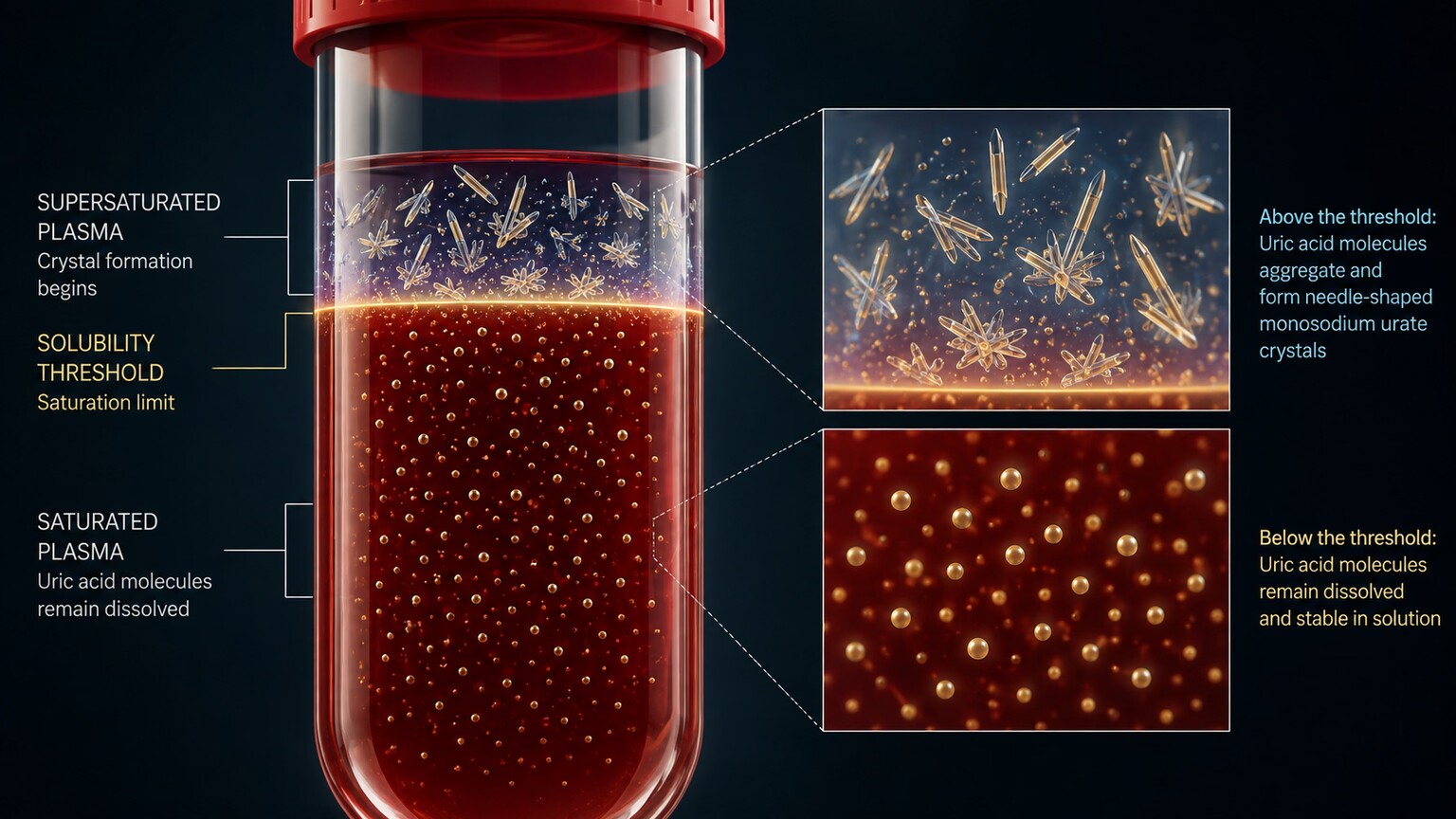
Figure 1. Uric acid can only stay dissolved in blood up to a specific concentration — beyond that solubility threshold, needle-shaped monosodium urate crystals can begin forming, though crystal formation alone doesn't guarantee a gout attack will follow.
Why Uric Acid Has to Cross a Threshold Before Anything Happens
Uric acid is a waste product created when your body breaks down purines, compounds found in your own cells and in certain foods. Normally, it dissolves completely in your blood and gets filtered out through your kidneys. But uric acid has a specific physical limit to how much of it can stay dissolved in liquid at body temperature — a solubility threshold, generally cited around 6.8 mg/dL. Below that point, uric acid stays fully dissolved no matter how close it gets to the limit. Cross it, and the excess uric acid can begin forming needle-shaped monosodium urate crystals, the same crystals responsible for a gout attack when they trigger inflammation.
It's worth being precise about what "crossing the threshold" actually means in practice, since it's easy to picture this as an instant, all-or-nothing switch when the reality is more gradual. Uric acid concentration doesn't need to sit permanently above 6.8 mg/dL for crystal formation to become possible — even brief excursions above that level, during a particularly dehydrated stretch of a day or after a purine-heavy meal, can create a temporary window where crystal formation is chemically favorable, even in someone whose average, typically measured level runs somewhat lower. This is part of why a single lab draw, capturing one moment in time, can understate how often a person's uric acid actually spends time above the solubility threshold across a normal day or week.
This threshold explains why "elevated" on a lab report doesn't automatically mean "actively causing problems" — many people walk around for years with a level above 6.8 mg/dL, meaning crystal formation is at least biologically possible, without ever having enough crystals accumulate in a joint, or without those crystals ever triggering the specific immune response that produces an actual gout attack. The threshold is a necessary condition for gout, not a guarantee of it.
It's worth understanding why this specific number, 6.8 mg/dL, exists at all rather than uric acid simply staying dissolved indefinitely at any concentration, the way sugar dissolves in water only up to a point and then simply won't dissolve any further, however much stirring or time is given to it. Uric acid's chemical structure gives it a genuinely limited capacity to remain in solution once concentration climbs high enough, a physical property of the molecule itself rather than an arbitrary medical cutoff. Temperature also plays a meaningful role in this threshold, which is part of why gout attacks classically favor cooler, more peripheral joints like the big toe — body temperature runs slightly lower at the extremities than in the body's core, and uric acid's solubility drops as temperature drops, making crystal formation modestly more likely to occur first in exactly the joints gout is famous for affecting.
Crystals Can Form Silently, Without Ever Causing an Attack
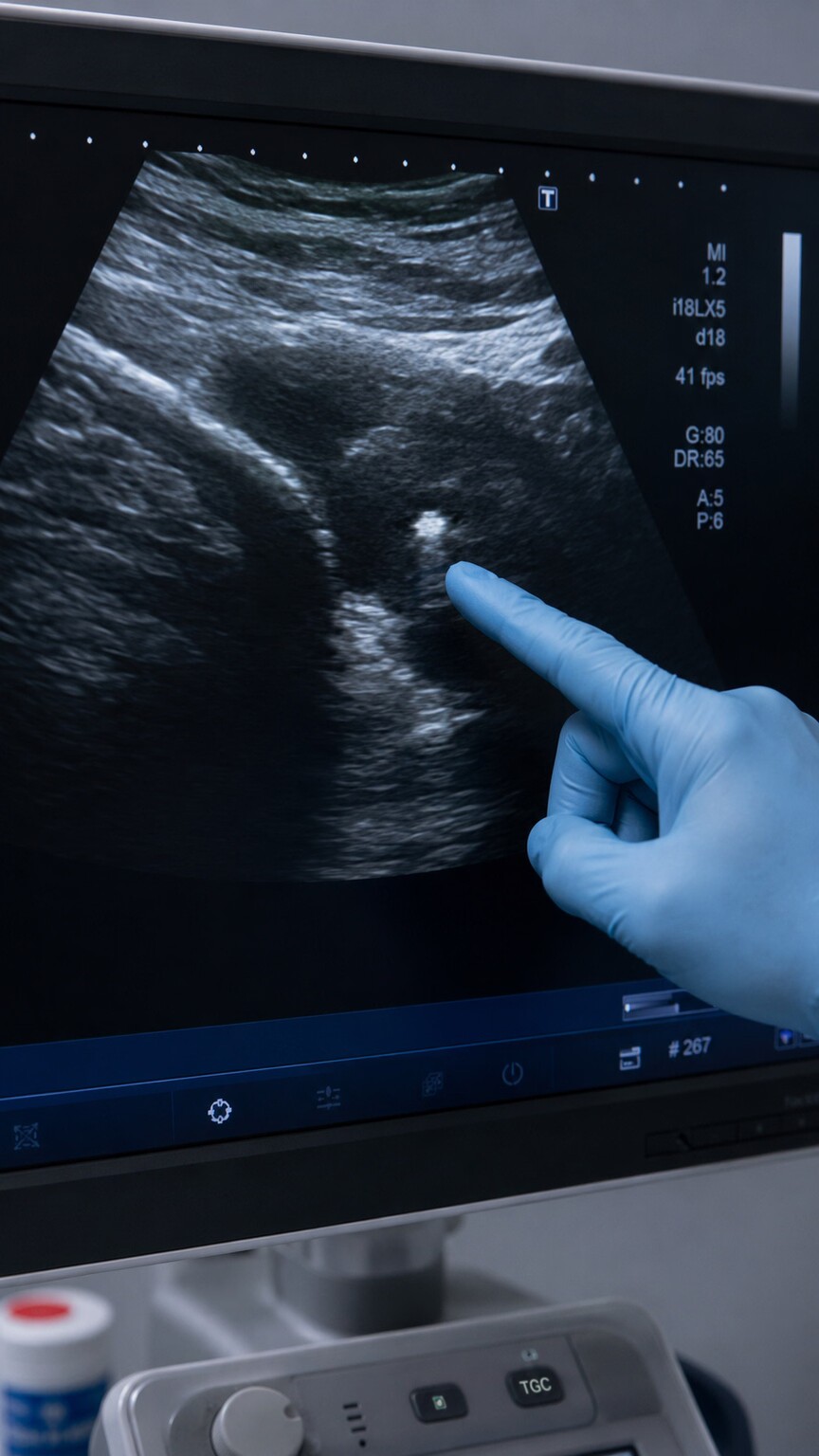
Figure 2. Advanced imaging techniques have found monosodium urate crystal deposits in joints of people with no history of gout symptoms at all, confirming that crystal formation and a clinical gout attack are genuinely separate events.
This isn't just theoretical — imaging studies using ultrasound and a more advanced technique called dual-energy CT have directly confirmed that monosodium urate crystals can and do accumulate in joints of people who have never reported a single gout symptom. These crystal deposits are found incidentally, often during imaging ordered for a completely unrelated reason, revealing a genuinely silent buildup that the person had no way of knowing about without this specific kind of scan.
This finding reshaped how researchers think about the relationship between uric acid and gout: crystal formation and a clinical gout attack are two separate events, connected but not automatically linked. Crystals sitting quietly in joint tissue, without triggering the specific inflammatory cascade a true gout attack requires, produce no pain, no swelling, and no redness — nothing a person would notice on their own, even though the underlying crystal deposition is real and detectable with the right tool.
One study that helped establish this distinction scanned the knee joints of people with sustained asymptomatic hyperuricemia and found detectable urate crystal deposits in a genuinely substantial minority of them — individuals who, by definition, had never reported a single gout symptom in their lives. This kind of finding is exactly why researchers now distinguish between three genuinely different clinical states rather than treating "high uric acid" as one uniform category: asymptomatic hyperuricemia with no detectable crystals at all, asymptomatic hyperuricemia with detectable but inactive crystal deposits, and clinical gout, where crystals have actually triggered a symptomatic inflammatory attack. Someone can move between the first two categories without ever reaching the third, sometimes for their entire life, which is precisely the population this article is centered on.
Already have a uric acid number from a recent test, but not sure whether it's actually low, borderline, or nothing to think twice about? Enter it and see exactly where it falls in seconds.
🧮 Try the Free CalculatorWhy Some People Never Get Symptoms Despite High Levels
What actually determines whether crystals sitting in a joint trigger a full inflammatory attack, rather than sitting there quietly indefinitely, comes down to your immune system's specific response to them — and that response varies meaningfully from person to person. A gout attack happens when immune cells called neutrophils recognize the crystals as a threat and release inflammatory signaling molecules in response, producing the sudden, intense pain, swelling, and redness a classic gout attack is known for. Some people's immune systems appear to tolerate the presence of these crystals far better than others, for reasons that aren't yet fully understood but likely involve genetic variation in exactly how aggressively the innate immune system reacts to crystalline material in general.
Genetics also plays a documented role in a different way: certain gene variants affecting how efficiently the kidneys excrete uric acid in the first place help explain why some people run persistently elevated levels for years without symptoms, while others with a similar level develop gout relatively quickly. This individual variation is part of why uric acid level alone, even well above the solubility threshold, has never been considered a reliable predictor of exactly when, or whether, a specific person will develop their first gout attack.
The specific immune mechanism involved centers on a structure called the NLRP3 inflammasome, a molecular complex inside certain immune cells that acts as a kind of internal alarm system, capable of detecting crystalline material like monosodium urate and, when activated, triggering the release of a powerful inflammatory signaling molecule called interleukin-1 beta. This is the actual molecular switch that turns a quiet crystal deposit into a raging, painful gout attack, and research has found genuine variation between individuals in how easily this specific alarm system gets triggered — some people's inflammasomes appear to have a notably higher activation threshold than others, requiring a larger or more disruptive crystal event before firing off the full inflammatory cascade a gout attack represents.
This same inflammasome pathway, interestingly, is shared with several other inflammatory conditions, and medications originally developed to block this pathway for other diseases have since found genuine use in treating acute gout attacks directly, offering an alternative for patients who can't tolerate more traditional gout medications. Understanding that a specific, identifiable molecular switch — not simply "how much uric acid is present" — determines whether a crystal deposit becomes a clinical attack helps explain why two people with nearly identical uric acid levels and nearly identical crystal burden on imaging can have completely different lived experiences, one entirely symptom-free and the other suffering recurrent, debilitating attacks.
Is "Silent" High Uric Acid Actually Harmless?
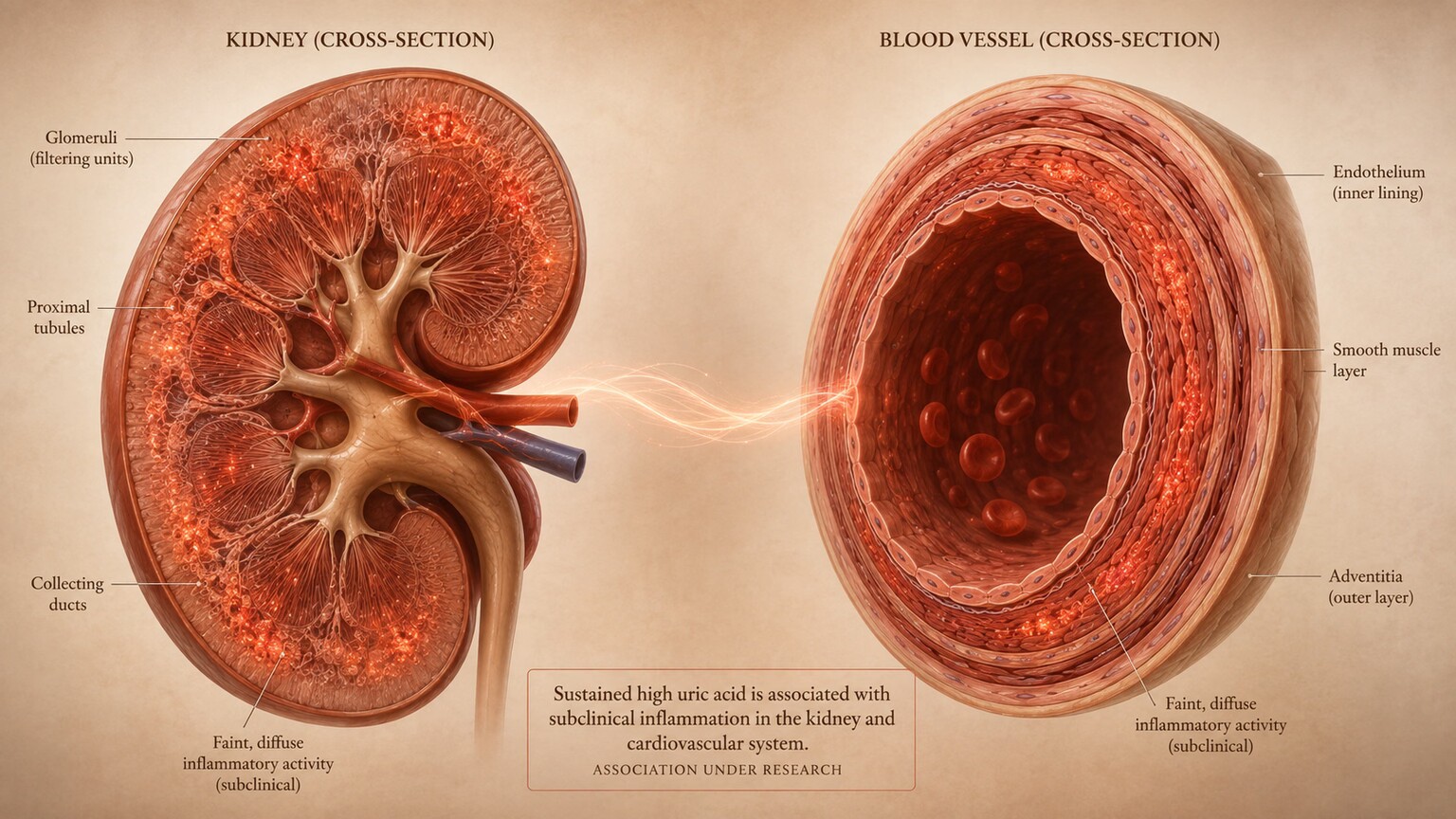
Figure 3. Research has associated sustained asymptomatic hyperuricemia with an increased risk of kidney disease and cardiovascular problems, though whether uric acid directly causes this damage or simply travels alongside other risk factors remains genuinely debated.
This is where the research becomes genuinely more complicated, and where "asymptomatic" shouldn't be casually equated with "risk-free." Large population studies have found that people with sustained elevated uric acid, even without a single gout symptom, carry a statistically higher risk of chronic kidney disease and certain cardiovascular problems compared to people with normal levels. Some researchers believe uric acid itself contributes directly to this risk, potentially through low-grade vascular inflammation and effects on blood vessel function that don't require a full gout attack to cause gradual damage.
Other researchers argue that uric acid is more often a marker riding alongside the actual culprits — elevated uric acid frequently travels together with obesity, high blood pressure, insulin resistance, and kidney disease itself, all of which independently raise cardiovascular and kidney risk on their own. Untangling whether uric acid is a genuine, independent contributor to this risk, or simply a bystander correlated with the real underlying drivers, remains an active, unresolved area of research — which is exactly why the question of whether to treat asymptomatic high uric acid at all remains genuinely controversial rather than settled.
This same "cause or bystander" question shows up throughout medicine whenever a lab value correlates strongly with a disease outcome without a clean, proven causal mechanism connecting the two, and uric acid happens to be one of the clearer, more actively studied examples of it in current research.
Randomized controlled trials, the gold-standard method for actually testing whether lowering uric acid changes real health outcomes rather than simply changing the number on a lab report, have produced genuinely mixed and somewhat disappointing results so far. Several trials specifically designed to test whether urate-lowering medication slows the progression of chronic kidney disease in people with elevated uric acid have failed to show a clear, consistent benefit, despite the strong observational association between the two. This gap between observational association and interventional proof is a recurring pattern in medical research more broadly, and it's exactly the kind of evidence gap that keeps this specific question open rather than settled — a strong correlation seen in population studies doesn't automatically mean that intervening on one side of that correlation will meaningfully change the other.
Cardiovascular research tells a similarly unresolved story. Some studies have found modestly reduced blood pressure and improved blood vessel function in people whose uric acid was lowered with medication, hinting at a possible genuine causal role. Others have found no meaningful difference in actual cardiovascular events — heart attacks, strokes — between treated and untreated groups with similar baseline uric acid levels, suggesting the earlier association may be explained largely by the other risk factors that tend to travel alongside high uric acid rather than uric acid itself. Large, definitive trials capable of settling this question conclusively are still ongoing in several research centers, which is part of why current clinical guidance remains appropriately cautious rather than definitively one way or the other.
Should Asymptomatic High Uric Acid Be Treated?

Figure 4. Most major rheumatology guidelines currently recommend against routinely treating elevated uric acid in someone who has never had a gout attack, reserving urate-lowering medication for after symptoms actually appear.
Given this uncertainty, most major rheumatology guidelines, including those from the American College of Rheumatology, currently recommend against routinely starting urate-lowering medication in someone with elevated uric acid who has never had a gout attack, kidney stones, or visible tophi (crystal deposits large enough to form a lump under the skin). The reasoning is straightforward: the medications used to lower uric acid carry their own real costs, potential side effects, and require ongoing monitoring, and the evidence that treating asymptomatic hyperuricemia meaningfully prevents future kidney or cardiovascular problems isn't yet strong or consistent enough to justify starting a lifelong medication in someone who may never develop a single symptom in the first place.
This "treat the symptom, not the number" philosophy reflects a broader principle in modern medicine worth understanding on its own terms: a lab value existing outside a reference range is not, by itself, automatically sufficient justification for treatment — the actual justification has to come from demonstrated, meaningful benefit to the patient's real, lived health outcomes, weighed honestly against the real costs and risks of that treatment. Gout guidelines apply this principle unusually explicitly compared to some other areas of medicine, precisely because the asymptomatic-versus-symptomatic distinction in gout is so well characterized and so central to how the disease actually behaves, giving clinicians a genuinely clear line to draw rather than a vaguer judgment call.
This guidance isn't universal or permanent, though, and it's worth knowing it varies somewhat by clinical situation. Someone with very high uric acid alongside significant kidney disease, or someone about to start chemotherapy that could rapidly release large amounts of uric acid into the bloodstream (a genuine medical emergency called tumor lysis syndrome), may reasonably be treated preventively even without a gout attack ever having occurred, since the calculation of risk versus benefit shifts considerably in those specific, higher-stakes scenarios.
This guidance has also genuinely evolved over time, and it's worth knowing it may continue to shift as ongoing research clarifies the questions still left open. Some rheumatology societies outside the United States have adopted somewhat more proactive stances, particularly for people with very high uric acid levels (generally cited above roughly 9 to 10 mg/dL) combined with multiple additional cardiovascular risk factors, reasoning that the potential benefit-to-risk ratio may tip differently in that specific higher-risk subgroup even without a formal diagnosis of gout. This isn't a universally accepted position, and it illustrates that "should asymptomatic hyperuricemia be treated" isn't a single yes-or-no question with one settled answer, but a genuinely graded clinical judgment call that reasonably differs based on how high the level is, what else is going on with a person's health, and which specific guideline a given physician is following.
It's also worth understanding what "treatment" actually involves in this conversation, since the term can sound more intimidating than the reality for most people who do end up treating an elevated level. The most commonly used medications work by either reducing how much uric acid the body produces in the first place or increasing how efficiently the kidneys clear it from the bloodstream, both generally well-tolerated once titrated to an appropriate dose, though like any medication they carry some risk of side effects and do require periodic monitoring. For someone who ultimately falls into a category where treatment does make sense, this isn't a dramatic intervention — it's a manageable, generally low-burden addition to a person's routine care, which is worth knowing so the treatment conversation itself doesn't feel more alarming than it needs to.
What Actually Triggers a First Gout Attack
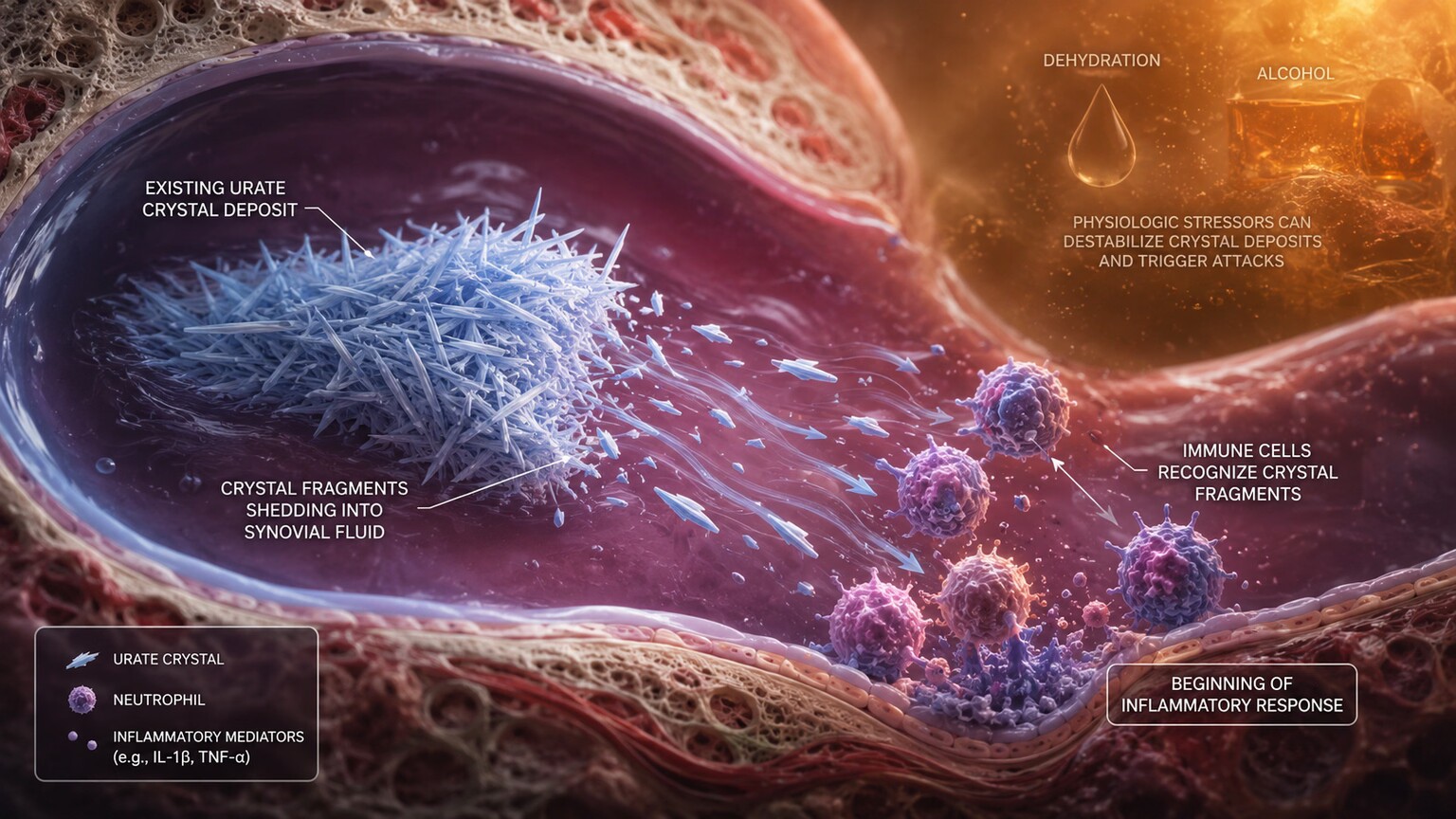
Figure 5. A first gout attack is often triggered not by a slow, steady high level, but by a relatively rapid change in uric acid concentration — either up or down — that destabilizes existing crystal deposits.
One of the more counterintuitive findings in gout research is that a sudden change in uric acid concentration, in either direction, appears to be a more reliable trigger for a first attack than simply sustaining a high but stable level over time. Dehydration, heavy alcohol consumption, a large meal rich in purines, or physical trauma to a joint can each cause uric acid to spike relatively quickly, and that rapid rise is thought to be more provocative to the immune system than the same level reached gradually. Perhaps more surprisingly, a rapid drop in uric acid, such as what happens shortly after starting urate-lowering medication, can also trigger an attack, since existing crystal deposits can become unstable and shed material into the joint as the surrounding fluid's uric acid concentration shifts.
This explains why someone can carry a stable, elevated uric acid level for years without incident, then experience their first gout attack after a weekend of dehydration and heavy drinking, or after starting treatment specifically meant to lower their level. The trigger, in both cases, is the change itself, layered on top of an already-elevated baseline that had been sitting quietly below the threshold of causing a symptomatic attack until that specific destabilizing event occurred.
This crystal-shedding effect during treatment initiation is well-documented enough that it has a specific, formally named clinical response built around it: doctors starting a patient on urate-lowering medication for the first time often prescribe a short course of a separate anti-inflammatory medication alongside it, specifically to blunt the inflammatory response during this vulnerable early window while existing crystal deposits are actively shrinking and shedding material. This preventive step, sometimes called gout flare prophylaxis, is a direct, practical application of the same rapid-change mechanism this section has described — acknowledging that starting treatment, while ultimately beneficial for reducing future crystal burden, carries its own short-term risk of triggering exactly the kind of attack the treatment is meant to prevent in the long run.
Physical trauma to a joint deserves its own specific mention among gout triggers, since it's a genuinely underappreciated one. A joint that's been recently injured, or even one that's simply been used more intensively than usual — a long hike, an unaccustomed bout of exercise, a full day spent on your feet — can experience enough local tissue disruption to destabilize nearby crystal deposits, even without any change in overall blood uric acid concentration at all. This is part of why a first gout attack sometimes seems to come "out of nowhere" in someone who hadn't changed their diet, hydration, or alcohol intake at all — the trigger was mechanical and local rather than systemic, a detail easy to overlook when searching for an explanation after the fact, especially when every other obvious lifestyle factor appears to have stayed perfectly consistent in the days beforehand.
What to Actually Do If Your Level Is High but You Feel Fine
If your own uric acid came back elevated and you've never had joint symptoms, the most useful next steps are less about immediate treatment and more about informed monitoring and addressing modifiable contributing factors. Talking with your doctor about your specific level relative to the solubility threshold, your kidney function, and any relevant family history of gout gives a more complete picture than the single number alone. Addressing factors known to raise uric acid and independently affect cardiovascular and kidney health — maintaining a healthy weight, moderating alcohol intake, staying well hydrated, and managing blood pressure and blood sugar if either is also elevated — is reasonable regardless of whether medication is ultimately warranted, since these steps carry their own independent health benefits beyond uric acid specifically.
Staying consistently well hydrated deserves particular emphasis given everything covered earlier about rapid destabilizing triggers — since dehydration is one of the more common, genuinely avoidable triggers for a first gout attack, making sure fluid intake stays reasonably steady, especially around physical exertion, hot weather, or alcohol consumption, is a simple, low-cost habit that directly addresses one of the specific mechanisms this article has spent considerable time explaining, rather than a vague, generic piece of health advice disconnected from the actual biology involved. This single habit, more than any other lifestyle change discussed here, maps most directly onto the specific trigger mechanism this article has focused on throughout.
It's also worth knowing what symptoms would actually change this calculation, so you know what to watch for rather than worrying in the abstract: sudden, severe joint pain and swelling, especially in the big toe, ankle, or knee, that comes on rapidly, often overnight, is the classic presentation worth bringing to a doctor promptly if it ever occurs, since that's the point where the conversation shifts from monitoring an asymptomatic number to actively managing a diagnosed condition.
It's worth specifically asking your doctor how your particular level compares not just to the general population reference range, but to the 6.8 mg/dL solubility threshold discussed throughout this article, since that's the more clinically meaningful benchmark for understanding your own crystal-formation risk specifically, rather than simply whether you fall inside or outside a standard lab reference range built around population averages rather than this specific biological threshold. Asking this question directly often produces a more genuinely useful, individualized answer than a generic "your number is high" summary would on its own.
If you do have known risk factors that shift the risk-benefit calculation discussed earlier — significant kidney disease, a very high level combined with multiple cardiovascular risk factors, or an upcoming medical situation like chemotherapy that carries its own uric acid risk — it's worth explicitly raising these with your doctor rather than assuming a generic "no treatment without symptoms" rule automatically applies to your specific situation. The guidelines described in this article represent a reasonable default for an otherwise healthy person, not an inflexible rule meant to apply identically to everyone regardless of their broader health context, and your own doctor is best positioned to judge where you personally fall relative to that default.
A Worked Example: Fifteen Years Silent, Then One Weekend
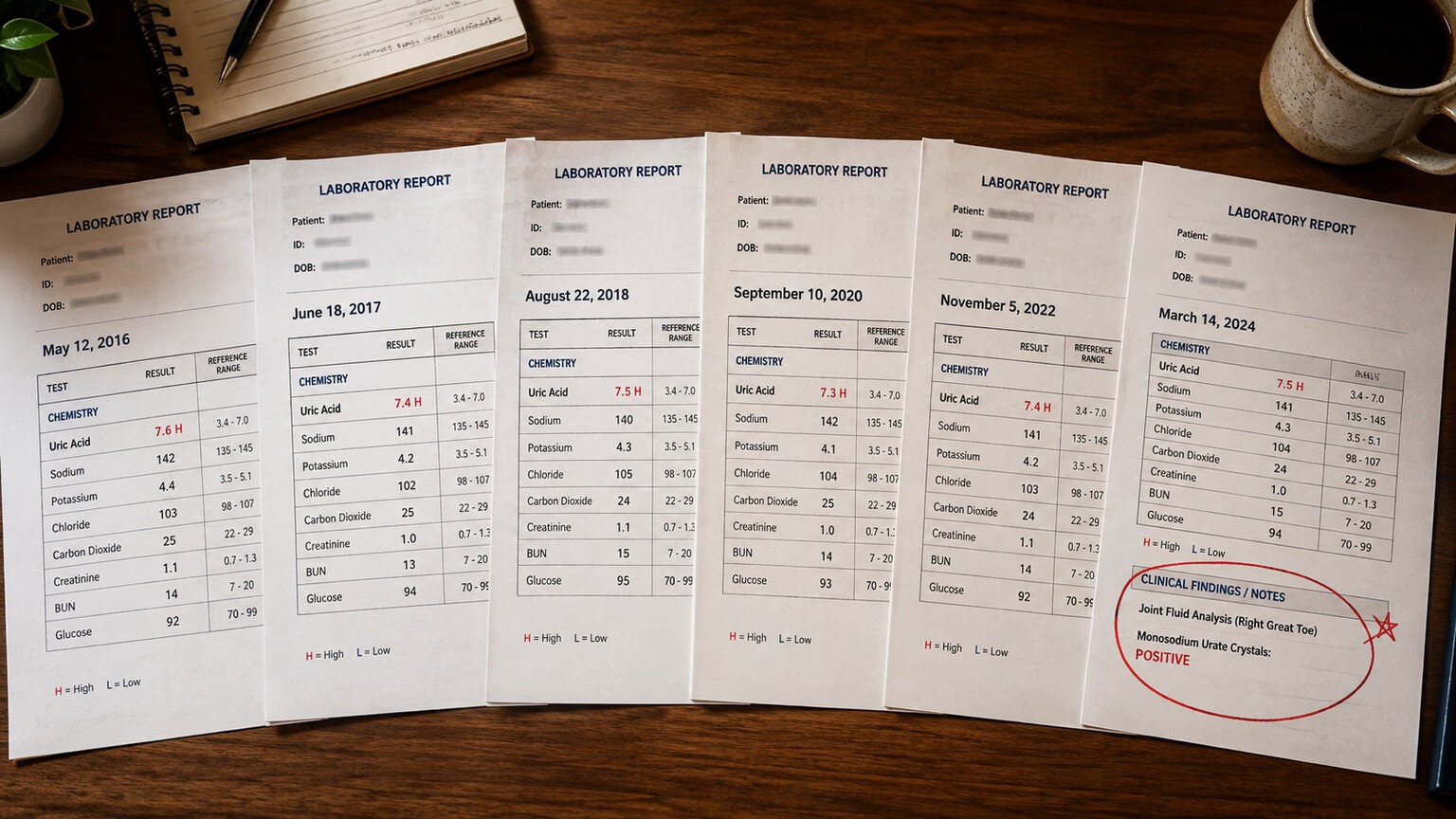
Figure 6. A stable, elevated uric acid level can sit unchanged across many years of routine bloodwork before a specific destabilizing event finally triggers a first symptomatic attack.
Picture someone whose routine annual bloodwork has shown a uric acid level of roughly 7.8 mg/dL, consistently, for fifteen consecutive years. Each year, the number gets flagged as high on the report, and each year, nothing happens — no joint pain, no swelling, nothing a doctor or the patient themselves would ever connect to that specific number. Under current guidelines, no medication was ever started, since there was no gout attack, no kidney stones, and no visible tophi to justify it, exactly the reasoning covered earlier in this article.
Then, during a hot summer weekend involving a long hike with inadequate water intake, a barbecue with more red meat and beer than usual, and a night of poor sleep, this same person wakes up at 3 a.m. with their big toe throbbing, swollen, and hot to the touch — a textbook first gout attack, after fifteen years of an elevated but entirely quiet number. Nothing about their uric acid level itself changed dramatically that weekend compared to their stable fifteen-year baseline; what changed was the combination of dehydration, purine load, and alcohol all converging at once, producing exactly the kind of rapid destabilizing shift described earlier in this article as the more reliable trigger for a first attack than a stable elevated level alone.
This worked example illustrates the entire arc this article has walked through: a real, measurable, persistently elevated number; fifteen years of genuine biological quiet despite that number; a reasonable, guideline-consistent decision not to treat it in the absence of symptoms; and finally, a specific, identifiable trigger event that turned a silent lab value into an acute, painful, unmistakable clinical event literally overnight. None of these four pieces contradicts any of the others — together, they're exactly how gout actually tends to unfold in real people, rather than the misleadingly simple "high number equals disease" story it's often reduced to.
What happens next in this scenario is worth walking through as well, since it illustrates how the earlier "should asymptomatic hyperuricemia be treated" question resolves once an actual attack has occurred. After this first attack, the clinical picture has genuinely changed — this person is no longer asymptomatic by definition, and the same guidelines that recommended against treatment for fifteen years now generally support starting urate-lowering medication, precisely because a documented gout attack is one of the specific triggers that shifts the risk-benefit calculation described earlier in this article. The fifteen years of watchful, medication-free monitoring weren't a missed opportunity or a mistake — they were the appropriate response for that entire span, right up until the clinical picture itself changed, at which point the calculation, quite reasonably, changed right along with it.
Frequently Asked Questions
If my uric acid is high, will I definitely get gout eventually?
No. Research following people with elevated uric acid over years has found that most never develop a gout attack at all. A high level makes crystal formation biologically possible, but it doesn't guarantee a symptomatic attack will ever occur.
Can uric acid crystals form without causing any symptoms?
Yes. Imaging studies using ultrasound and dual-energy CT have found monosodium urate crystal deposits in joints of people with no history of gout symptoms, confirming that crystal formation and a clinical attack are genuinely separate events.
Should I take medication to lower my uric acid if I've never had a gout attack?
Most current guidelines recommend against it for otherwise healthy people, since the evidence that treating asymptomatic high uric acid prevents future problems isn't strong enough to justify the costs and risks of lifelong medication. Certain higher-risk situations are exceptions worth discussing with your doctor.
Is elevated uric acid without gout symptoms completely harmless?
Not necessarily. It's been associated with increased risk of kidney disease and cardiovascular problems in some research, though whether uric acid directly causes this risk or simply travels alongside other risk factors like obesity and high blood pressure remains genuinely debated.
What actually triggers a first gout attack?
A relatively rapid change in uric acid concentration, in either direction, appears to be a stronger trigger than a stable high level alone. Dehydration, heavy alcohol intake, and even starting urate-lowering medication can each destabilize existing crystal deposits and provoke an attack.
Why do doctors sometimes prescribe anti-inflammatory medication when starting gout treatment?
Because urate-lowering medication can cause existing crystal deposits to shrink and shed material as they dissolve, temporarily increasing the risk of a gout flare during the first weeks of treatment. A short course of anti-inflammatory medication alongside it helps blunt that early risk.
What is the NLRP3 inflammasome and why does it matter for gout?
It's a molecular alarm system inside certain immune cells that detects crystalline material and triggers the inflammatory cascade responsible for a gout attack. Individual variation in how easily this system activates helps explain why some people with crystal deposits never experience a symptomatic attack.
Can imaging detect gout-related crystals before any symptoms appear?
Yes. Ultrasound and dual-energy CT scans have both been used to detect monosodium urate crystal deposits in joints of people with no history of gout symptoms, confirming that crystal deposition and a symptomatic attack are genuinely separate, distinguishable events. These scans are typically ordered for research or when a diagnosis is already uncertain, not as routine screening for otherwise healthy people.
Conclusion
An elevated uric acid level on a lab report is a real, meaningful finding, but it isn't a diagnosis of gout, and it isn't a guarantee that a gout attack is coming. Crystal formation, individual immune response, and the specific triggers that destabilize existing deposits all sit between "elevated number" and "actual attack," which is exactly why most people with high uric acid go their entire lives without a single symptomatic episode. Understanding that gap changes what an elevated result should actually prompt: not automatic alarm, but an informed conversation about your specific risk factors, your kidney and cardiovascular health more broadly, and what symptoms would genuinely warrant bringing this number back into focus.
This same lesson extends beyond uric acid specifically: a lab value crossing into "abnormal" territory tells you a biological threshold has been crossed, not that a specific clinical event is now inevitable. The distance between a crossed threshold and an actual symptomatic disease is where genetics, individual immune response, and specific triggering events all do their own separate work — and reading a lab report with that distinction in mind is a genuinely useful habit that applies well beyond this one biomarker, worth carrying into how you interpret almost any flagged value you'll ever come across.
If there's one habit worth taking away from this article, it's this: the next time an "elevated" result shows up on any panel, not just uric acid, ask what specifically has to happen between that number and an actual symptom before assuming the two are the same thing — that single question is usually the fastest, most reliable route to an accurate, appropriately calibrated level of concern rather than an unnecessary, anxious overreaction to a single number sitting alone and unexplained on a printed page.
Still Not Sure What Your Results Mean?
Upload your labs and get a complete, visual, plain-language interpretation of every biomarker — delivered to your inbox in under 15 minutes.
Get My ReportThis article is for educational purposes only and does not constitute medical advice. Always consult your healthcare provider regarding your specific lab results.