
Understanding What Your Uric Acid Level Really Means
Uric acid is one of the few lab values with a genuinely strange backstory: it's a waste product every other mammal on Earth breaks down further, but humans lost the enzyme to do that millions of years ago, leaving us walking around with uric acid levels three to ten times higher than most other animals. That evolutionary quirk is directly responsible for gout, a meaningful share of kidney stones, and a number that swings with diet, alcohol, fasting, weight loss, and even the medications you take for unrelated conditions. None of that makes the test complicated to understand once you know the story behind it. Here's what uric acid actually is, why your body can't simply get rid of more of it, and what a high or low result is actually trying to tell you.
Already have a uric acid number from a recent test, but not sure if it's actually good or bad for you? Just plug it in and see instantly.
🧮 Try the Free CalculatorWhat Uric Acid Actually Is — and the Enzyme Humans Don't Have
Uric acid is the final breakdown product of purines, a class of molecules that form part of the genetic material inside every cell in your body, along with a smaller contribution from purines in certain foods. As old cells break down and DNA and RNA get recycled, purines are processed through a series of steps that end with an enzyme called xanthine oxidase converting them into uric acid. In almost every other mammal, that's not the end of the road: a second enzyme called uricase breaks uric acid down further into a much more water-soluble compound called allantoin, which is easily excreted with little risk of ever building up.
Humans, along with other great apes, lost the ability to do this. Sometime during the early Miocene period, roughly 17 million years ago, a series of mutations disabled the uricase gene in our ancestral lineage, and it has remained switched off in every human since — what geneticists call a pseudogene, a once-functional gene still present in our DNA but permanently broken. As a direct result, uric acid levels in humans run three to ten times higher than in most other mammals, and we're left relying entirely on the kidneys and digestive tract to clear a molecule nearly every other species simply dissolves away. Some researchers believe this evolutionary trade-off may not have been purely bad luck — uric acid is also a natural antioxidant, and higher levels may have offered some ancestral benefit — but the downside is the one most people experience directly: gout and kidney stones exist, in large part, because of this one missing enzyme.
This is also why uric acid medications aimed at lowering the number work by targeting xanthine oxidase specifically. Because that enzyme sits at the very last controllable step before uric acid is formed, blocking it reduces production at the source rather than trying to compensate downstream — a cleaner intervention point than trying to somehow restore a functional uricase gene humans no longer carry. It's a useful example of how understanding exactly where a molecule comes from can point directly to where medicine can intervene.
Where Uric Acid Actually Goes: Kidneys and Gut Together
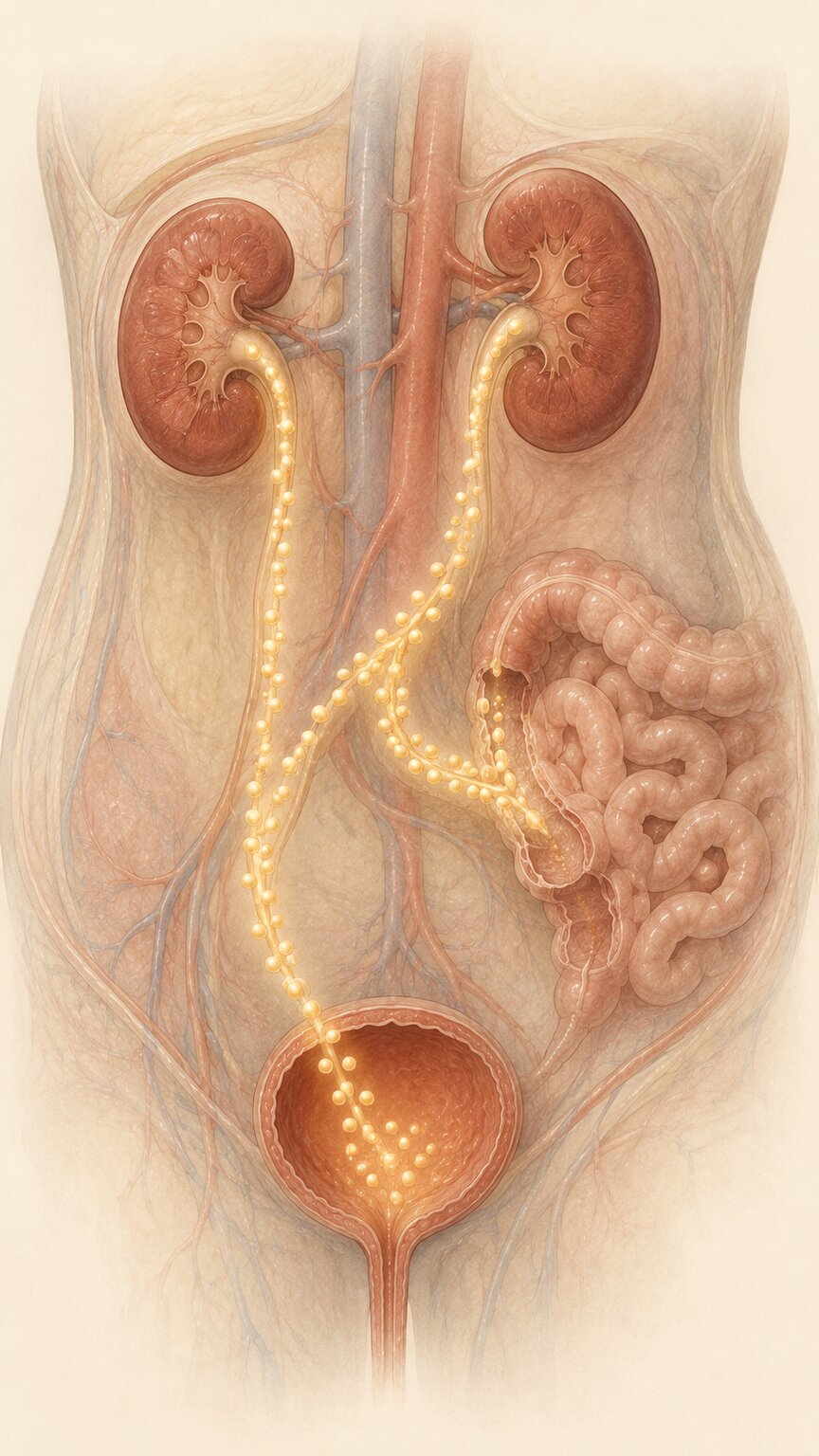
Most people assume uric acid, like other waste products discussed alongside it on a metabolic panel, leaves the body exclusively through the kidneys. In reality, roughly two-thirds of the uric acid your body clears each day is filtered out by the kidneys into urine, while the remaining third is broken down by bacteria living in your gut and eliminated through the digestive tract. This dual pathway matters clinically: someone with significant kidney impairment can partially compensate through increased gut elimination, and conditions affecting gut bacteria or digestive health can shift more of the burden back onto the kidneys. It's also why uric acid, unlike creatinine, can't be interpreted as a pure kidney-function marker on its own — a normal level doesn't guarantee normal kidney filtration, and an abnormal level doesn't always point back to the kidneys as the cause.
Within the kidneys specifically, uric acid handling is more complex than simple filtration. Specialized transport proteins, including one called URAT1, actively reabsorb a large share of filtered uric acid back into the bloodstream rather than letting it pass into urine — a strong hint, according to some researchers, that the body treats uric acid as something worth holding onto rather than pure garbage. This reabsorption step is also where several medications exert their effect, either blocking it to lower uric acid or, in some cases, unintentionally enhancing it and raising uric acid as a side effect. A related transporter called GLUT9, better known for moving glucose in and out of cells, does double duty as one of the main gateways for uric acid to cross back into the bloodstream from the kidney's filtering tubules, and it's an active area of genetic research, since inherited variations in how well GLUT9 functions appear to explain a meaningful share of why uric acid levels run naturally higher in some families than others, independent of diet entirely.
What Counts as Normal — and Why Men and Women Differ
Reference ranges vary modestly between labs, but a commonly cited standard puts normal uric acid at roughly 3.4 to 7.0 mg/dL for adult men and 2.4 to 6.0 mg/dL for adult women. That sex difference exists because estrogen has a mild uricosuric effect, meaning it helps the kidneys excrete more uric acid, which keeps premenopausal women's levels lower on average. After menopause, when estrogen declines, women's uric acid levels tend to drift upward and gradually close much of that gap with men, which is part of why gout, historically thought of as a disease that mostly affects men, becomes meaningfully more common in women after their 60s.
When Uric Acid Crystallizes: The Gout Story
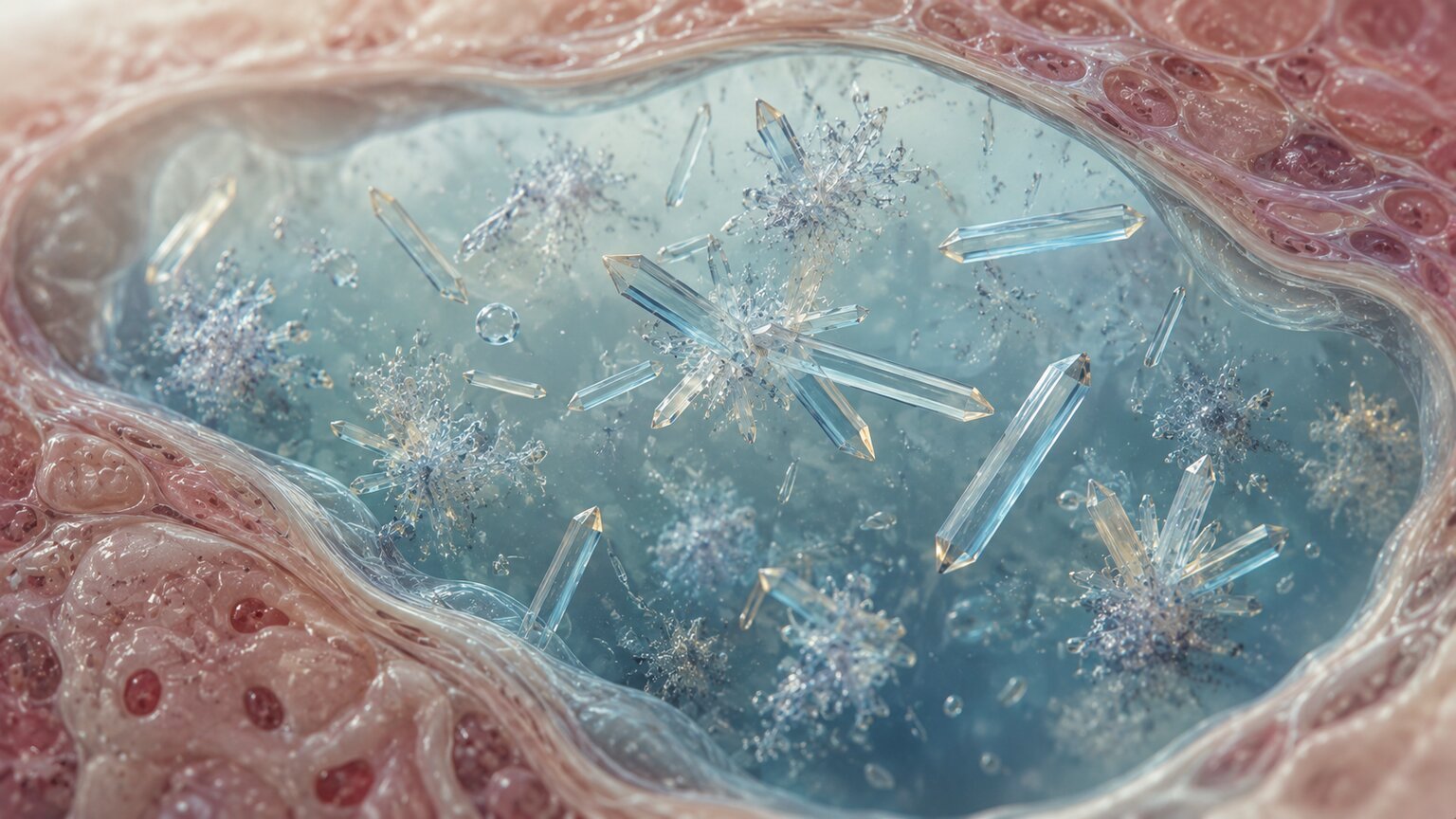
Uric acid's solubility in blood has a ceiling, generally cited at around 6.8 mg/dL at normal body temperature — above that point, blood is technically supersaturated with urate, and the conditions exist for it to precipitate out as solid crystals. Those crystals take on a distinctive needle-like shape called monosodium urate, and when they form inside a joint, the immune system reacts to their sharp, foreign structure as though it were an infection, triggering the sudden, intense inflammation, swelling, and pain recognized as a gout attack.

Crystals form more readily at lower temperatures and in more acidic conditions, which is a major reason gout so classically strikes the big toe: it's one of the coolest, most peripheral joints in the body, especially overnight, and frequently carries minor wear-and-tear that makes crystal formation there even more likely. This is why gout attacks so often begin in the middle of the night or first thing in the morning, seemingly out of nowhere, in a joint that felt completely fine the evening before.
Treating an acute attack and managing gout long term are two genuinely different tasks. In the moment, NSAIDs, colchicine, or a short course of corticosteroids are used to calm the immediate inflammation, chosen based on what a person can tolerate rather than any effect on uric acid itself. Long-term prevention is a separate strategy entirely, usually built around a xanthine oxidase inhibitor like allopurinol or febuxostat, taken daily to keep uric acid consistently below the crystallization threshold rather than reacting to flares as they happen. One counterintuitive wrinkle: starting that long-term therapy can briefly trigger a flare of its own, as shifting crystal deposits mobilize during the drop in uric acid, which is why a low dose of colchicine is often prescribed alongside it for the first several months. Left uncontrolled over years, gout can progress to chronic tophaceous gout, where visible, chalky deposits of urate crystals called tophi build up around joints and, in advanced cases, can break down skin or become infected — a stage that's now uncommon in places with good access to care, precisely because effective long-term treatment exists.
Elevated Uric Acid Without Gout — The More Common Situation
It's worth being clear that most people with uric acid above the statistical normal range never develop gout at all. Crystal formation depends on more than the number on a lab report; local joint temperature, hydration, acidity, and simple chance all play a role, which is why two people with an identical uric acid level can have completely different experiences. Because of this, the 2020 American College of Rheumatology guidelines specifically recommend against starting uric-acid-lowering medication in someone with elevated uric acid but no history of gout flares, visible crystal deposits, or joint damage — even in people who also have kidney disease, high blood pressure, or a history of kidney stones. Treating the number in isolation, without symptoms, hasn't been shown to provide a clear benefit, and comes with its own costs and potential side effects.
The Other Side of the Story: Uric Acid as an Antioxidant
It's easy to think of uric acid purely as a problem waiting to happen, but a growing body of research suggests the picture is more nuanced. Uric acid is one of the most abundant antioxidants circulating in human blood, capable of neutralizing damaging reactive oxygen species and binding metal ions that would otherwise contribute to oxidative stress. Some researchers argue this antioxidant role may be part of why the uricase mutation persisted in our ancestors in the first place, rather than being purely a liability that evolution simply failed to correct.
The clearest evidence for a genuine upside comes from Parkinson's disease research. Multiple large studies have found that people with naturally higher uric acid levels have a measurably lower risk of developing Parkinson's disease, and among people who already have it, higher urate is associated with slower disease progression — a relationship strong and consistent enough that researchers have investigated urate itself as a potential neuroprotective therapy. None of this changes the practical advice for someone with gout or kidney stones, where the risks of high uric acid clearly outweigh any antioxidant benefit, but it's a useful reminder that a single lab value being "high" isn't automatically the same as it being purely harmful.
The Kidney Stone Connection
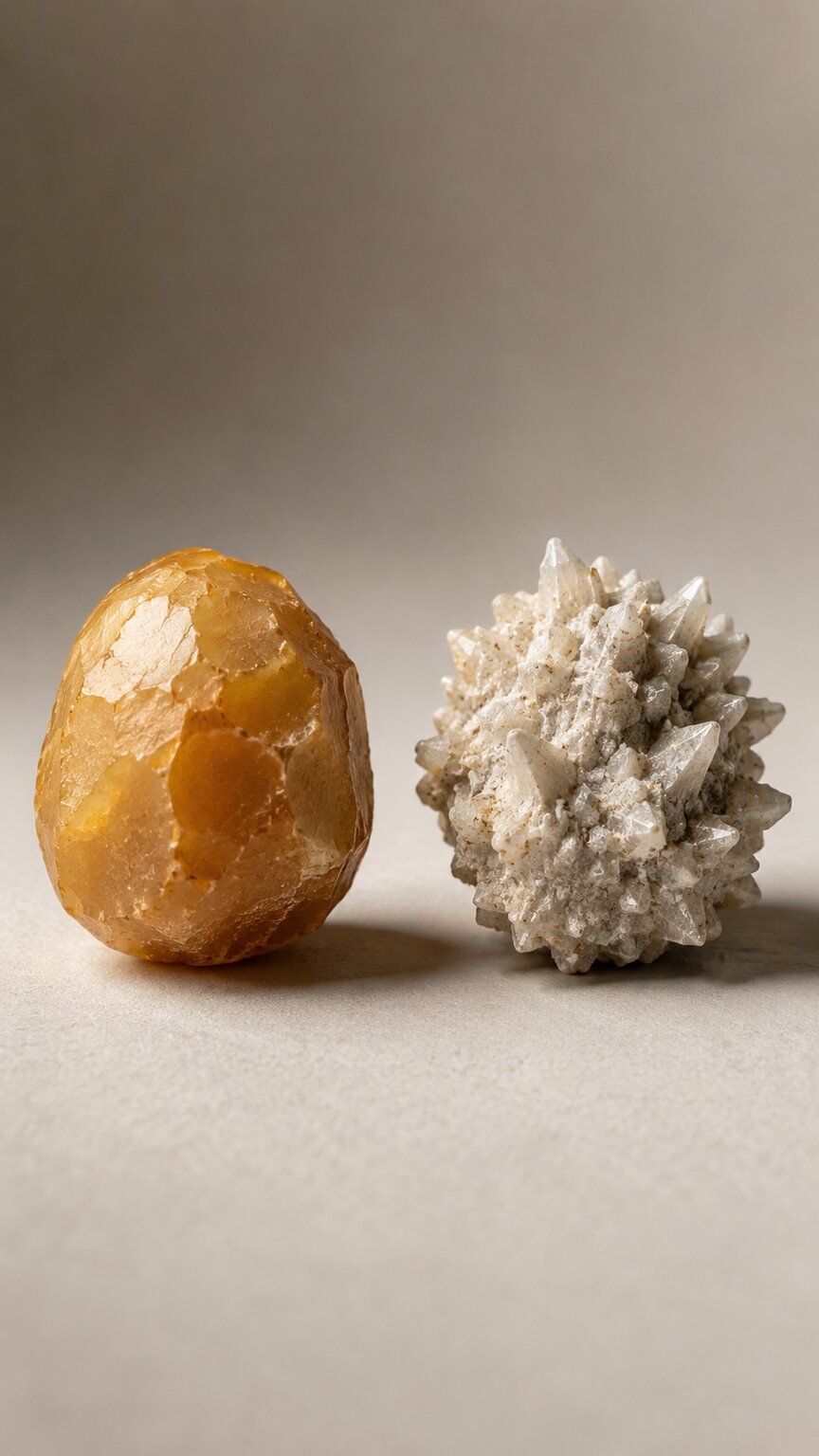
Beyond joints, uric acid can also crystallize directly in the urinary tract, forming a distinct type of kidney stone. Unlike the more common calcium oxalate stones, uric acid stones are radiolucent, meaning they're often invisible on a standard X-ray and require a CT scan or ultrasound to detect. The single biggest driver of uric acid stone formation isn't actually how much uric acid is in the urine — it's how acidic that urine is. Uric acid becomes dramatically less soluble as urine pH drops below about 5.5, and stone formation can often be prevented even in people who excrete a lot of uric acid, simply by keeping urine less acidic.
A diet heavy in animal protein is one of the main contributors to this overly acidic urine, both by supplying purines directly and by increasing the acid load the kidneys have to buffer and excrete. This is part of why uric acid stones cluster so strongly with the same risk factors as metabolic syndrome — obesity, type 2 diabetes, and insulin resistance all impair the kidney's ability to properly buffer urine, independent of how much uric acid is actually being produced.
This is also why uric acid stones are managed somewhat differently from other kidney stone types. Rather than focusing primarily on reducing how much uric acid the body makes, treatment often centers on making urine less acidic, commonly with a prescribed alkalinizing agent such as potassium citrate, alongside increased fluid intake to keep urine dilute. For many people, this approach alone is enough to prevent new stones from forming, even without significantly changing uric acid production itself — a good example of how understanding the actual mechanism behind a problem can lead to a more targeted, less disruptive solution than treating the lab number in isolation.
Diet and Alcohol: Purines, Beer, and Sugar
Certain foods are classic, well-documented triggers for elevated uric acid because they're unusually rich in purines themselves — organ meats, red meat, anchovies, sardines, and shellfish are the most frequently cited examples. Alcohol adds a second, compounding effect: beer specifically contributes purines of its own from the brewing process, and alcohol in general also interferes with the kidney's ability to excrete uric acid efficiently, meaning a night of drinking can raise levels through two separate mechanisms at once rather than just one.
Sugar, particularly the fructose found in sweetened beverages and high-fructose corn syrup, works through an entirely different and less intuitive mechanism. Unlike glucose, fructose is processed by an enzyme called fructokinase that has no natural brake on how fast it works, rapidly using up the cell's available energy currency, ATP. As ATP is depleted, a separate enzyme called AMP deaminase gets activated as part of the cellular fallout, and that pathway happens to dead-end in — uric acid. In effect, fructose doesn't need to contain any purines at all to raise uric acid; the sugar itself triggers the same production pathway as a byproduct of how the liver processes it, which is one reason sugary drinks carry a surprisingly strong, independent association with both gout and elevated uric acid in research.
The Fasting Paradox: Why "Doing Everything Right" Can Raise This Number
One of the more counterintuitive patterns with uric acid is that fasting, rapid weight loss, and very low-carbohydrate or ketogenic diets can all raise it, at least temporarily — even though these are often considered generally healthy behaviors. The explanation lies with ketones, the alternative fuel molecules the body produces when carbohydrate intake drops significantly. Ketone bodies share the same kidney transport proteins uric acid relies on for excretion, and when ketone levels rise, they directly compete with uric acid for those transporters, temporarily reducing how efficiently the kidneys can clear it. Research has found that even mild ketosis can raise uric acid by roughly 0.5 to 1.0 mg/dL through this transport competition alone, independent of anything else going on metabolically.

This effect is almost always temporary, resolving once normal eating and carbohydrate intake resume, and it doesn't mean fasting or low-carb eating is unsafe for most people. But it does explain a pattern that occasionally confuses people doing everything "right": a genuinely healthy stretch of weight loss can coincide with a uric acid reading that looks worse than before, purely as a side effect of ketosis rather than any underlying problem. It's also why gout flares are occasionally reported after starting newer weight-loss medications that produce rapid fat loss, a pattern researchers are actively studying as these drugs have become more widely used.
Uric Acid and Metabolic Syndrome
Beyond diet and fasting, uric acid has a well-established relationship with insulin resistance, the reduced sensitivity to insulin that underlies type 2 diabetes and metabolic syndrome more broadly. Insulin itself acts on the kidneys to reduce uric acid excretion, so as insulin resistance develops and the body compensates by producing more insulin, uric acid tends to rise in step with it. This is part of why elevated uric acid so frequently travels together with obesity, high blood pressure, and fatty liver disease in the same person, and why some researchers now debate whether uric acid is simply a marker of these conditions or an active contributor to them. That debate hasn't been fully settled, but the practical takeaway is the same either way: a persistently high uric acid result is a reasonable prompt to also look at blood sugar, blood pressure, and cholesterol, rather than treating it as an isolated finding.
Fatty liver disease fits into this same cluster in a particularly direct way. A liver already burdened with excess fat tends to process fructose more aggressively, and some research suggests uric acid itself may accelerate fat accumulation in liver cells, creating a feedback loop where each condition can worsen the other. None of this means uric acid single-handedly causes metabolic disease, but it does explain why clinicians increasingly treat an elevated result as one thread in a larger metabolic picture rather than a standalone number to chase down on its own.
Medications That Move Uric Acid Up or Down
Several common medications shift uric acid independent of diet or kidney disease. Thiazide diuretics, widely prescribed for high blood pressure, increase how much uric acid the kidneys reabsorb, and studies have measured average increases of roughly 0.8 to 1.5 mg/dL depending on the dose. Low-dose aspirin, by contrast, has only a negligible effect and generally doesn't need to be stopped or adjusted because of uric acid concerns. Interestingly, one blood pressure medication stands apart from the rest: losartan, unlike other drugs in its class, has a distinct, well-documented uricosuric effect, meaning it actively helps the kidneys excrete more uric acid rather than retain it — a genuinely unique quirk of that specific medication rather than a class-wide effect, which is why it's sometimes specifically chosen for people who have both high blood pressure and gout or elevated uric acid.

On the treatment side, medications specifically used to lower uric acid, such as allopurinol and febuxostat, work by directly inhibiting xanthine oxidase, the same enzyme responsible for producing uric acid in the first place — essentially throttling production at the source rather than trying to push more of it out through the kidneys. Probenecid, an older medication, takes the opposite approach, directly blocking the URAT1 transporter responsible for reabsorbing uric acid back into the blood and pushing more of it out through urine instead — a genuinely different mechanism from allopurinol that makes it a useful alternative for people who can't tolerate xanthine oxidase inhibitors, though it's used less often today given the availability of newer options and its reduced effectiveness in people with significant kidney impairment.
When It's Low
Low uric acid is far less common and generally less clinically significant than high uric acid, but it does have recognized causes. Certain rare genetic conditions affecting kidney tubule transport, some medications, and significant liver disease can all lower uric acid production or increase how much the kidneys excrete. It's occasionally seen alongside conditions like SIADH, a hormonal imbalance affecting fluid regulation, and in a rare inherited condition called xanthinuria, in which the enzyme that produces uric acid is itself deficient. For most people, an isolated low uric acid reading with no symptoms isn't something that requires action, though a doctor may want to understand the cause if it's persistent or paired with other abnormal findings.
What to Actually Do With Your Number
If your uric acid comes back elevated but you've never had a gout flare, joint pain, or a kidney stone, current guidelines generally don't call for starting medication based on the number alone — it's more useful as a piece of context than a verdict. It's still worth mentioning to a doctor, particularly alongside recent alcohol intake, a period of fasting or rapid weight loss, a new blood pressure medication, or a diet heavy in red meat and shellfish, since any of those can explain a result without indicating a lasting problem. If you have experienced a gout flare, or if a kidney stone has been identified as uric acid in composition, that changes the calculation meaningfully, and ongoing monitoring alongside dietary changes or medication becomes far more relevant.
For anyone who has had a gout flare or a uric acid stone, it's also worth asking specifically what target number your provider is working toward, since long-term management is usually guided by a specific goal rather than simply "lower is better." Many guidelines aim for uric acid below 6.0 mg/dL in people with a history of gout, and below an even lower threshold for those with visible tophi, since staying consistently under the crystallization point is what actually prevents new attacks and allows existing deposits to slowly dissolve over time.

Staying well hydrated helps the kidneys clear uric acid more efficiently and is one of the simplest, lowest-risk habits available regardless of the underlying cause. Some people also look to tart cherries and cherry extract, which have modest supporting research for reducing gout flare frequency, though they're a complement to medical care rather than a substitute for it in anyone with a confirmed diagnosis. As with any kidney-related marker, the most useful next step with an unexpected result is rarely to guess at the cause alone — it's a conversation with a healthcare provider who can weigh the number against your symptoms, your diet, and your medications together.
Frequently Asked Questions
If my uric acid is high but I've never had gout, do I need treatment?
Generally, no. Current American College of Rheumatology guidelines specifically recommend against starting uric-acid-lowering medication for elevated levels alone, without a history of gout flares or visible crystal damage, even in people with related conditions like kidney disease or high blood pressure.
Can fasting or a low-carb diet really make my uric acid go up?
Yes. Ketone bodies produced during fasting or very low-carbohydrate eating compete with uric acid for the same kidney transport proteins, temporarily reducing excretion. The effect is usually modest and reverses once normal eating resumes, and it doesn't mean the diet itself caused lasting harm.
Why does gout almost always start in the big toe?
Uric acid crystals form more easily in cooler, more acidic environments, and the big toe joint is one of the coolest, most peripheral joints in the body, especially overnight. Minor everyday wear on that joint likely adds to the effect, which together explains why gout attacks so often begin there.
Because so much of uric acid's story is tied to genetics, diet, and metabolic health rather than kidney damage alone, it's also one of the more useful early prompts for a broader lifestyle conversation. Gradual weight loss, moderating alcohol and sugary drink intake, and staying consistently hydrated tend to help uric acid the same way they help blood pressure, blood sugar, and cholesterol — not as a quick fix, but as changes that address several related risks at once rather than chasing one number in isolation.
Conclusion
Uric acid is a genuinely unusual biomarker — a byproduct every other mammal disposes of easily, that humans are stuck managing because of a mutation millions of years in our past. That backstory explains almost everything practical about the test: why the number swings with diet and alcohol, why fasting and weight loss can paradoxically raise it, why gout targets the big toe specifically, and why most people with an elevated result never develop symptoms at all. Read in isolation, a single uric acid number says relatively little; read alongside your symptoms, your diet, your medications, and your broader metabolic health, it becomes one of the more genuinely informative values on a routine panel. If your result looks unexpected, the most useful next step is the same as always — a conversation with a healthcare provider who can put the number in context.
Still Not Sure What Your Results Mean?
Upload your labs and get a complete, visual, plain-language interpretation of every biomarker — delivered to your inbox in under 15 minutes.
Get My ReportThis article is for educational purposes only and does not constitute medical advice. Always consult your healthcare provider regarding your specific lab results.