
What Causes Uric Acid Levels to Rise?
A rising uric acid number almost always comes down to one of two things going wrong: your body is making more of it than usual, or your kidneys are getting rid of less of it than usual — and often, it's both at once. Think of it like a sink with the tap running and the drain partly clogged. Diet, alcohol, sugar, dehydration, certain medications, rapid weight loss, and even a handful of rare genetic conditions can each turn up the tap, slow the drain, or do both simultaneously. None of these causes are mysterious once you separate them into that framework, and most of them are things you can actually spot in your own daily routine. Here is every major cause behind a rising uric acid level, organized by exactly how it pushes the number up.
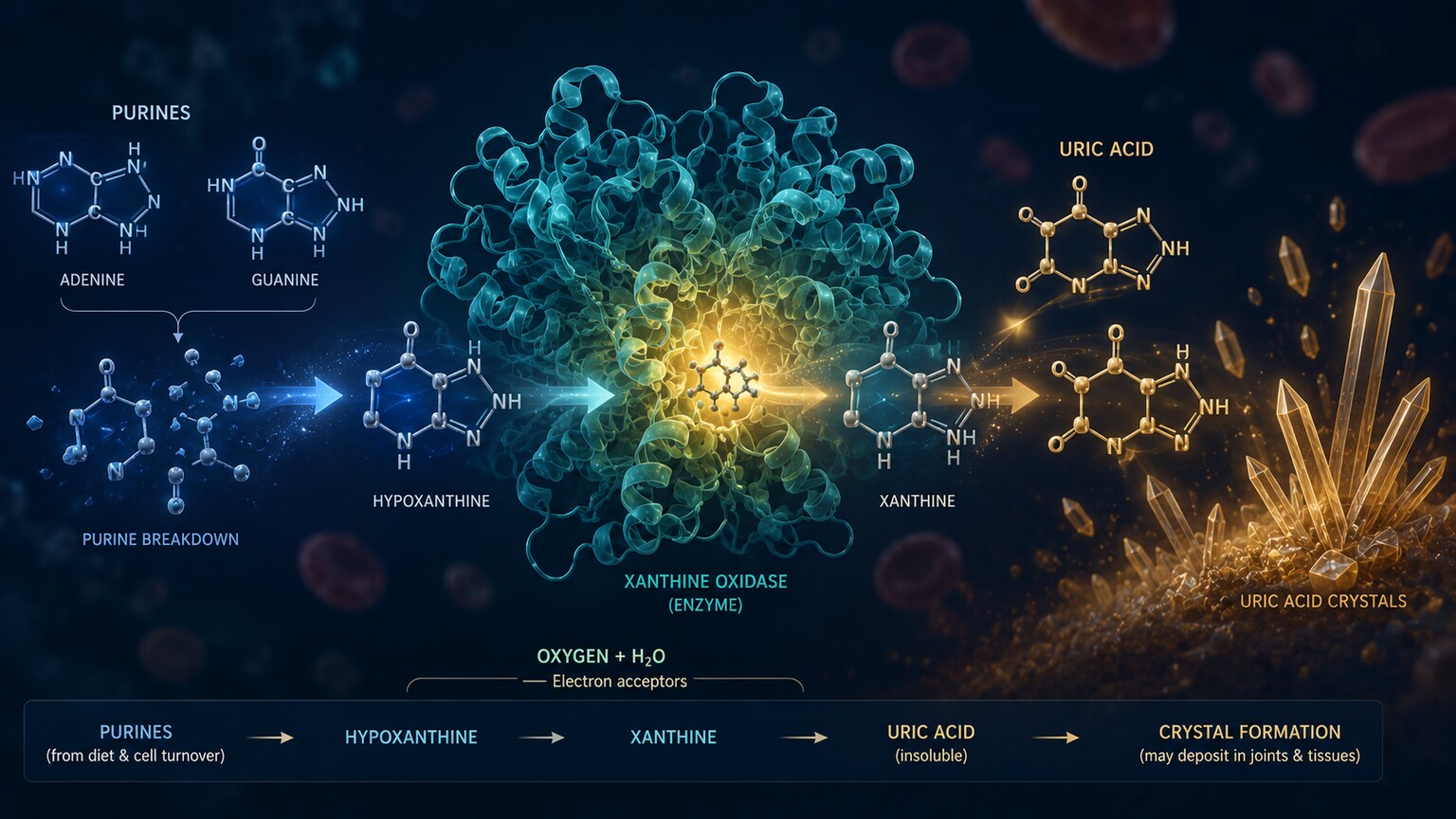
Figure 1. Xanthine oxidase converts purine byproducts into uric acid — the final, unavoidable step in a pathway every rising cause in this article eventually feeds into.
Already have a uric acid number from a recent test, but not sure whether it's actually a problem? Enter it and see exactly where it falls in seconds.
🧮 Try the Free CalculatorThe Two-Faucet System: Overproduction and Underexcretion
Before getting into individual causes, it helps to understand the plumbing behind the number. Uric acid is formed constantly as a natural byproduct of purine breakdown — purines being building blocks found in your own DNA and RNA, as well as in certain foods. Roughly two-thirds of what your body makes each day leaves through the kidneys in urine, and the remaining third is broken down by gut bacteria and eliminated through digestion. When uric acid climbs, clinicians generally sort the cause into one of three buckets: the body is producing too much of it (overproduction), the kidneys aren't clearing enough of it (underexcretion), or a mix of both is happening at the same time. Roughly nine out of every ten cases of chronically elevated uric acid trace back primarily to underexcretion rather than overproduction — the kidneys, not a runaway factory of purines, are usually the weaker link. That single fact reframes almost everything below: many "high uric acid" causes aren't really about making more of it, they're about the drain running slower than it should.
Doctors sometimes tease the two categories apart using a 24-hour urine collection: if someone excretes a large amount of uric acid in a day, the problem likely sits upstream at production; if they excrete very little despite a high blood level, the bottleneck is downstream at the kidney itself. In practice this test is used sparingly, usually reserved for people with recurring kidney stones or gout at an unusually young age, since most everyday causes of a rising number can be identified simply by looking at diet, hydration, medications, and recent health changes rather than ordering a specialized collection. Still, keeping the overproduction-versus-underexcretion split in mind while reading through the causes below makes it much easier to see why such different-seeming triggers — a beer, a heat wave, a new blood pressure pill, a crash diet — can all move the same number in the same direction.
Diet: The Purine-Rich Foods That Push Levels Up
The most familiar cause is also the most literal one — eating foods that are themselves rich in purines, which your body then has to process into uric acid. Organ meats such as liver, kidney, and sweetbreads sit at the very top of the purine-content list, followed closely by game meats, anchovies, sardines, mussels, and scallops. Red meat in general contributes a meaningful purine load as well, though usually less dramatically than organ meats or certain seafood. When you eat these foods, your digestive system breaks down their cellular material, releasing the purines they contain, which then travel to the liver to be converted into uric acid through the same xanthine oxidase pathway shown above. A single indulgent meal heavy in shellfish and red meat can measurably bump uric acid within hours, which is part of why some people notice a pattern between certain dinners and joint discomfort the next morning.
It's worth noting that not all high-protein foods behave the same way. Dairy products, despite containing protein, have actually been associated with slightly lower uric acid levels in research, and most vegetables — even purine-containing ones like spinach and asparagus — don't appear to raise uric acid the way animal-derived purines do, likely because plant purines are processed somewhat differently by the body. This is one of the more counterintuitive findings in uric acid research: the source of the purine seems to matter as much as the total amount.
Portion size and frequency compound the effect in a way that's easy to underestimate. A single serving of liver pâté or a plate of mussels once in a while rarely does more than produce a brief, self-limiting bump that the kidneys clear within a day or two. The bigger concern is a dietary pattern — organ meats, shellfish, or heavy red meat appearing on the plate several times a week, month after month — because each meal adds to a baseline that the kidneys never fully get a chance to reset before the next load arrives. This is why two people who both "occasionally eat shrimp" can have very different uric acid trajectories depending on whether that occasional meal happens once a month or three times a week, and why food diaries are often more useful to a doctor than a single dietary recall taken at an office visit.
Alcohol's Two-Pronged Effect
Alcohol deserves its own category because it raises uric acid through two separate mechanisms working at the same time rather than just one. Beer is the clearest example: brewer's yeast used in fermentation is itself extremely purine-dense, so beer supplies a direct purine load the way food does — and this effect is strong enough that beer raises uric acid noticeably more than an equivalent amount of alcohol from spirits. But the second mechanism applies to all forms of alcohol equally, beer, wine, or liquor: as your liver metabolizes alcohol, it generates a byproduct called lactate, which competes with uric acid for the same excretion pathway in the kidneys. With lactate flooding that shared route, less uric acid gets cleared, and it backs up in the bloodstream regardless of whether the drink itself contained any purines at all. That's why even purine-light alcohol, like a glass of vodka, can still measurably raise uric acid — the interference happens at the kidney, not at the dinner plate.
Sugar and Fructose: Raising Uric Acid Without Any Purines Involved
One of the least intuitive causes on this list doesn't involve purines at all. Fructose — the sugar found naturally in fruit but present in far larger, more concentrated amounts in sodas, fruit juices, and high-fructose corn syrup — triggers uric acid production through an entirely separate route inside liver cells. Unlike glucose, which is metabolized in a tightly regulated, energy-neutral way, fructose is processed by an enzyme called fructokinase that has essentially no internal brake. Fructokinase burns through the cell's energy currency, a molecule called ATP, extremely quickly. As ATP stores crash, the cell triggers a backup pathway to recycle what's left of it, and that backup pathway happens to dead-end directly in uric acid production. In effect, your liver manufactures new uric acid as a side effect of processing sugar, with no purine-containing food anywhere in the picture.
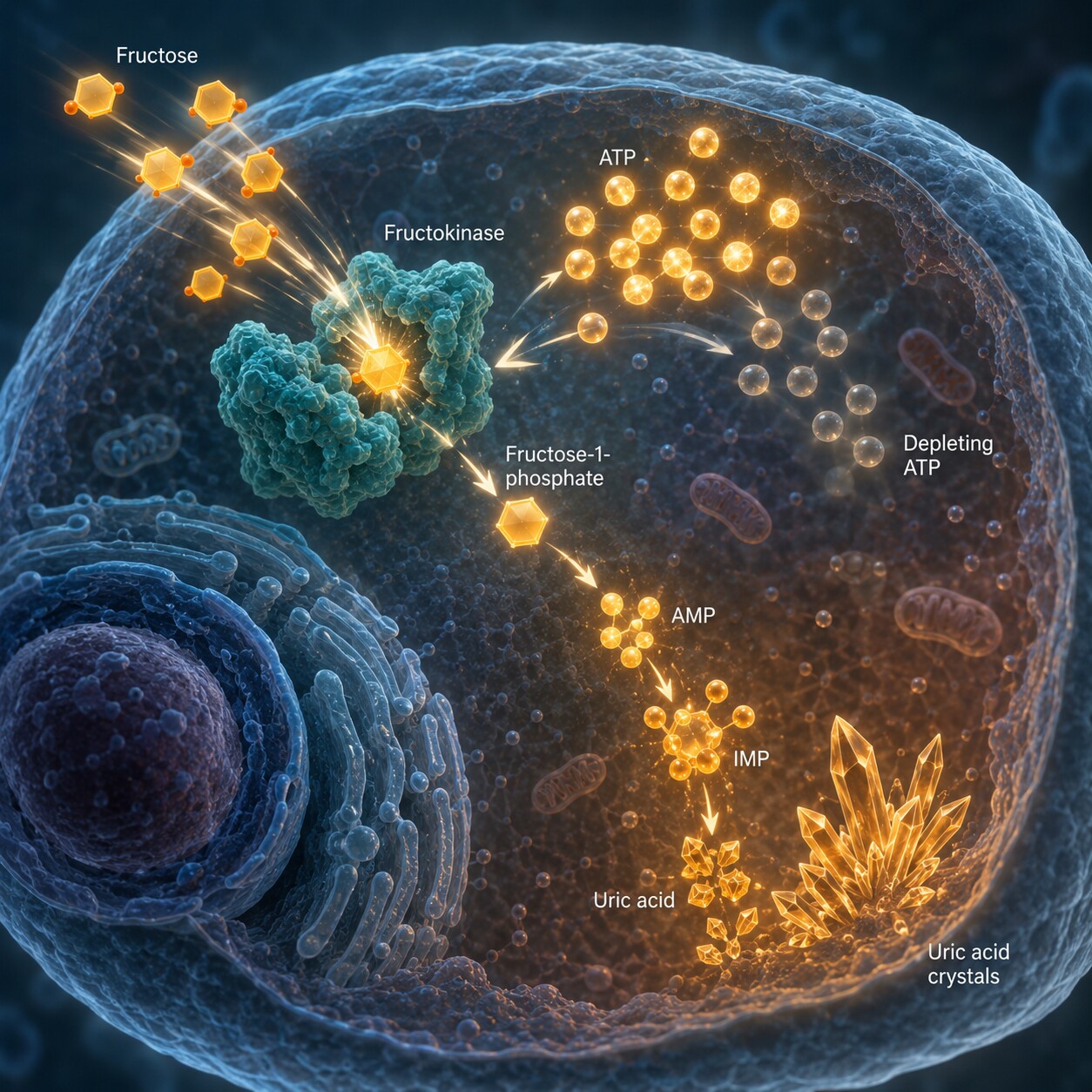
Figure 2. Inside a liver cell, fructokinase processes fructose so quickly that ATP reserves crash, and the cell's backup recycling pathway ends in uric acid rather than usable energy.
This pathway explains why sugary sodas carry a surprisingly strong, independent association with elevated uric acid and gout risk in large population studies — an association that holds up even after researchers control for body weight, total calorie intake, and purine-rich food consumption. It also explains why fruit itself is a much smaller concern than sugary beverages despite also containing fructose: whole fruit delivers that fructose slowly, wrapped in fiber and water, producing a far gentler rise than a can of soda delivers in a few swallows. The concentration and speed of fructose delivery, not just its presence, is what seems to matter most for how hard this pathway gets activated.
Fruit juice occupies an awkward middle ground worth calling out specifically. Because juicing removes the fiber and pulp that slow digestion, a glass of apple or grape juice delivers its fructose almost as quickly as a soda does, even though it's often perceived as the "healthy" choice at breakfast. Agave nectar, marketed for years as a diabetic-friendly sweetener because of its low glycemic index, is actually one of the most fructose-concentrated sweeteners commonly sold, running as high as 85% fructose by weight — a detail that surprises most people reaching for it specifically to be health-conscious. None of this means fruit or natural sugars need to be avoided; it simply means the packaging and speed of delivery matter as much as the ingredient list.
Dehydration and Intense Physical Exertion
Water plays a bigger role in this story than most people expect, because uric acid excretion depends heavily on how much fluid is moving through the kidneys. When you're dehydrated, urine becomes more concentrated, and the kidneys respond by reabsorbing more sodium and water back into the bloodstream — a process that, through a shared transport system, also pulls more uric acid back in along with it rather than letting it pass out in urine. A hot afternoon spent working outside without enough water, a bout of stomach illness, or simply forgetting to drink enough on a busy day can all produce a short-term spike in uric acid purely through this concentration effect, with nothing else going on.

Figure 3. Heavy sweating concentrates urine and prompts the kidneys to reabsorb more uric acid, while intense muscle exertion adds purines of its own from cell turnover.
Intense or unaccustomed exercise adds a second layer on top of dehydration. Vigorous physical exertion, particularly the kind that causes real muscle breakdown — sprinting, heavy lifting, or a workout well beyond your normal routine — releases purines from damaged muscle tissue directly into the bloodstream, exactly the way any tissue breakdown does. At the same time, hard exercise generates lactate, which, just like the lactate produced from metabolizing alcohol, competes with uric acid for the same kidney excretion pathway. The combination of muscle-derived purines and lactate-blocked excretion is why some people notice a joint flare a day or two after an unusually intense workout, particularly if that workout also left them dehydrated. This isn't a reason to avoid exercise — regular, moderate physical activity is broadly protective for long-term uric acid and metabolic health — it's specifically the sudden, dehydrated, muscle-damaging kind of exertion that causes the short-term spike.
Climate and occupation play a related, often overlooked role in this same category. People who work outdoors in hot weather — construction, agriculture, landscaping — face a chronic, repeated version of the dehydration-and-exertion combination described above, day after day through a hot season, rather than a single isolated episode. Research into occupational kidney health has specifically flagged outdoor manual labor in hot climates as a risk factor for both dehydration-related kidney strain and elevated uric acid, sometimes grouped together with a broader pattern researchers call heat-stress nephropathy. For anyone in this situation, consistent fluid intake throughout the workday, not just when thirst becomes noticeable, is one of the more directly modifiable pieces of this entire list.
Rapid Weight Loss, Fasting, and Very Low-Carbohydrate Diets
Fasting and aggressive low-carbohydrate eating raise uric acid through a mechanism that has nothing to do with purines or dehydration directly. When carbohydrate intake drops significantly, the body shifts toward burning fat for fuel and produces ketone bodies as an alternative energy source. Ketones happen to share the exact same kidney transport proteins that uric acid relies on to be excreted, and when ketone levels rise, they crowd out uric acid at that shared transporter, temporarily reducing how much gets cleared. Research measuring this effect has found that even mild, early ketosis can raise uric acid by roughly half a point to a full point on the standard mg/dL scale, purely through this transport competition — before accounting for anything else happening metabolically.
This is also compounded by the sheer speed of weight loss itself. Rapid breakdown of body tissue during aggressive dieting, particularly in the first one to two weeks of a very low-calorie or ketogenic plan, releases cellular material — including purines — faster than the body typically processes it during stable weight maintenance. That's why a person can be doing everything considered "healthy" — cutting carbs, losing weight quickly, eating cleaner overall — and still see a uric acid number that looks temporarily worse than before they started. The effect is well documented and, in the vast majority of cases, resolves on its own within a few weeks as the body adapts and weight loss slows to a steadier pace.
When the Body Itself Overproduces: Rapid Cell Turnover
So far, every cause described involves something coming in from outside the body — food, drink, sugar, water balance — or a shift in kidney handling. But uric acid can also rise because the body's own cells are breaking down and being replaced far faster than normal, releasing a flood of internal purines that have nothing to do with diet at all. Psoriasis is a good everyday example: skin cells in psoriatic plaques turn over roughly ten times faster than normal skin, and that accelerated cell death and replacement generates a steady, elevated purine load that shows up as chronically higher uric acid in many people with more extensive psoriasis.
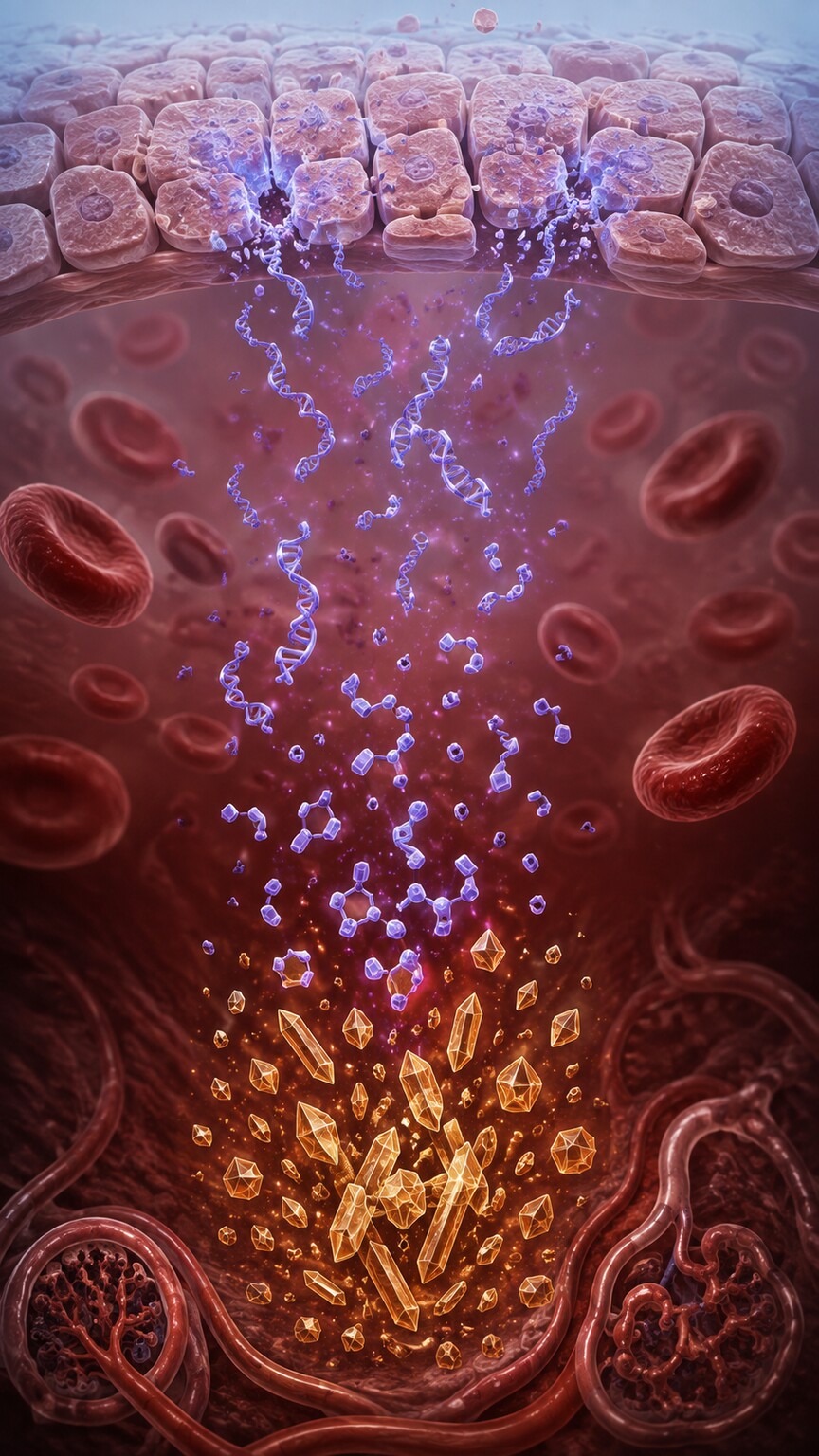
Figure 4. Conditions that accelerate cell turnover — from psoriasis to certain blood disorders — flood the bloodstream with the same purine-rich genetic material diet contributes from food.
Conditions affecting the blood and bone marrow follow the same logic on a larger scale. Hemolytic anemias, in which red blood cells are destroyed faster than they can be replaced, and blood cancers or their treatments, which can cause massive numbers of cancer cells to die off rapidly, both release enormous amounts of purine-rich genetic material at once. In its most extreme form, this is called tumor lysis syndrome, a medical emergency in which chemotherapy causes so many cancer cells to die within hours that uric acid spikes dramatically enough to threaten the kidneys directly — a scenario doctors specifically anticipate and premedicate against before starting certain cancer treatments, precisely because this cause-and-effect relationship is so well understood and so fast-acting.
Even outside of disease, ordinary tissue injury follows the same principle on a much smaller scale. Surgery, significant burns, and severe crush injuries all destroy large numbers of cells at once, and the purine-rich material inside those cells has to go somewhere — much of it ends up processed into uric acid over the following days. This is part of why hospitalized patients recovering from major trauma or surgery are sometimes found to have elevated uric acid on routine bloodwork with no dietary explanation at all: the cause isn't anything they ate, it's the cellular cleanup already underway from the injury itself. Radiation therapy for cancer produces a milder, more gradual version of the same effect, since it also kills cells over the course of treatment, just more slowly than chemotherapy typically does.
Genetic and Enzyme-Based Causes
A small number of people have uric acid problems rooted directly in their genes rather than in diet, hydration, or disease. The most extreme example is Lesch-Nyhan syndrome, a rare inherited condition in which a key recycling enzyme for purines is almost completely absent, forcing the body to break down far more of its purine supply into uric acid than it would otherwise need to — resulting in uric acid levels so high they can cause gout and kidney stones in early childhood, decades before either would normally be expected. A related but milder condition, PRPP synthetase overactivity, involves a single overactive enzyme early in the purine production pathway, generating excess purine building blocks and, downstream, excess uric acid, again largely independent of diet.
Far more common than either of those are subtler genetic variations affecting the kidney's uric acid transport proteins themselves — genes like SLC2A9 and ABCG2, which help control how efficiently the kidneys reabsorb or excrete uric acid. Certain inherited variants in these genes are well established in large genetic studies to explain a meaningful share of why uric acid runs naturally higher in some families than others, entirely apart from what anyone in that family eats or drinks. This is part of why two people who share nearly identical diets and body weights can still land on very different points on the uric acid scale — some of that difference was decided before either of them ever chose a meal. Genome-wide association studies looking at tens of thousands of participants have consistently ranked variants in ABCG2 among the strongest single genetic predictors of gout risk identified so far, on par with many well-known dietary factors, which is part of why family history of gout is taken seriously as a risk factor even in people who eat carefully and drink little.
Sex, Age, and Hormonal Shifts
Uric acid doesn't sit at the same baseline for everyone, and a meaningful part of that difference comes down to hormones rather than any of the causes above. Estrogen has a mild uricosuric effect, meaning it helps the kidneys excrete more uric acid, which is why premenopausal women typically run lower levels than men of the same age. After menopause, as estrogen declines, that protective effect fades and uric acid tends to drift upward, often closing much of the gap with men within a decade or so. This is a purely hormonal shift, not a dietary one, and it explains why some women notice their uric acid climbing in their fifties despite no meaningful change in what they eat or how much they weigh. Testosterone moves in the opposite direction, mildly encouraging uric acid retention, which is one contributing reason gout has historically been considered more common in men, particularly in mid-adulthood before menopause narrows that gap from the other side. Pregnancy adds its own temporary wrinkle: uric acid typically dips in early pregnancy as blood volume expands and kidney filtration increases, but it can rise again in the third trimester, and a sharp late-pregnancy increase is one of the recognized warning signs doctors watch for as part of preeclampsia screening.
Medications That Can Push Uric Acid Higher
Several commonly prescribed medications raise uric acid as a side effect, independent of diet, hydration, or kidney disease. Thiazide diuretics, widely used for high blood pressure, are the best-documented example: they increase how much uric acid the kidneys reabsorb back into the blood, and studies have measured average increases in the range of roughly 0.8 to 1.5 mg/dL depending on the dose used. Loop diuretics, often prescribed for heart failure or fluid retention, work through a related mechanism and carry a similar effect. Low-dose aspirin, somewhat counterintuitively, has also been shown to modestly raise uric acid — a genuinely dose-dependent effect, since higher doses of aspirin actually help the kidneys excrete more uric acid, while the low doses commonly used for heart protection tend to do the opposite.

Figure 5. Thiazide and loop diuretics — common blood pressure and fluid-retention medications — reduce how much uric acid the kidneys release into urine.
Other medications linked to rising uric acid include niacin at the doses used for cholesterol management, the anti-rejection drug cyclosporine used after organ transplants, and pyrazinamide, an antibiotic used to treat tuberculosis. Certain chemotherapy agents also raise uric acid indirectly, not through a direct kidney effect but through the rapid cell death described in the tumor lysis section above — a reminder that the same medication can sometimes raise uric acid through more than one mechanism depending on what it's actually doing inside the body. None of these medications are automatically a reason to stop treatment — in most cases the benefit of the medication far outweighs a modest uric acid increase — but they're worth mentioning to a doctor if a rising uric acid trend coincides with starting a new prescription, since the timing itself is often the clearest clue. A simple habit that helps here: whenever a new prescription is started, jotting down the date somewhere easy to find later turns "my uric acid went up sometime this year" into "my uric acid went up about three weeks after I started my new blood pressure medication" — the second version is far more useful information for a doctor to act on than the first.
Underlying Health Conditions Linked to Rising Uric Acid
Beyond single causes, several chronic health conditions are consistently associated with higher uric acid, usually because they affect kidney handling, insulin signaling, or both at once. Obesity and insulin resistance are among the strongest: insulin itself acts on the kidneys to reduce uric acid excretion, so as insulin resistance develops and the body compensates with higher insulin output, uric acid tends to climb in step with it. This is a major reason elevated uric acid so often shows up alongside high blood pressure, abnormal cholesterol, and fatty liver disease in the same person — they frequently share this same underlying insulin-driven mechanism rather than being coincidental.
Chronic kidney disease creates a more direct relationship: as kidney function declines, the filtering capacity that clears uric acid declines right along with it, so uric acid tends to rise as a natural consequence of reduced kidney reserve, even without any change in diet. Hypothyroidism, an underactive thyroid, has also been linked to modestly elevated uric acid, likely related to its broader slowing effect on kidney blood flow and filtration. Obstructive sleep apnea is a newer addition to this list, with research suggesting the repeated drops in oxygen during sleep may independently raise uric acid production, separate from the weight-related factors that often accompany sleep apnea. Lead exposure, though far less common today than in past decades, remains a recognized cause of a distinct condition called lead nephropathy, in which lead accumulation damages the kidney's ability to excrete uric acid specifically, producing a pattern sometimes still referred to informally as "saturnine gout."
Metabolic syndrome ties several of these threads together into a single, self-reinforcing cluster rather than a list of separate coincidences. High blood pressure, abdominal obesity, elevated triglycerides, and insulin resistance tend to travel together, and uric acid rises alongside all of them for overlapping reasons: insulin resistance reduces kidney excretion directly, a fatty liver processes fructose more aggressively and produces more uric acid as a byproduct, and excess body fat itself generates low-grade inflammation that further impairs how efficiently the kidneys handle uric acid. Some researchers have gone further and proposed that uric acid isn't just a passenger riding along with metabolic syndrome, but may actively contribute to it — animal studies suggest uric acid can promote fat storage in liver cells and interfere with the blood vessel lining's ability to respond normally to insulin. That specific question, whether uric acid is a cause or simply a marker of metabolic disease, remains genuinely unsettled in the research community, but from a practical standpoint it changes very little: a persistently rising uric acid number is a reasonable prompt to look at blood pressure, blood sugar, and waist circumference together, rather than treating it as an isolated curiosity.

Figure 6. Most day-to-day causes of rising uric acid — purine-rich food, alcohol, sugar, and certain medications — act on the same handful of shared pathways rather than independent mechanisms.
Putting It Together: Reading Your Own Rising Trend
Because so many of these causes stack on top of each other, a single rising uric acid result rarely has just one explanation, and figuring out which one applies to you is usually a matter of looking at timing rather than guessing from the number alone. A spike that shows up right after a weekend of shellfish, beer, and little water points toward diet and dehydration acting together. A gradual upward drift over months, with no obvious dietary trigger, points more toward a slower-moving cause — weight gain, a new blood pressure prescription, or emerging insulin resistance. A sudden jump that coincides with starting a rapid weight-loss plan is very likely the ketone-competition effect described earlier, and one that typically settles back down within a few weeks. Keeping a rough mental timeline of diet, new medications, hydration, and any recent illness or intense exercise before a test is often more useful than the number itself, because it tells you and your doctor which faucet was running, or which drain was clogged, at the moment your blood was drawn.
It also helps to remember that uric acid moves on different timescales depending on which cause is behind it. Dehydration and a single heavy meal can shift the number within hours, and both tend to resolve just as quickly once normal eating and drinking resume — which is why doctors sometimes ask a patient to repeat a borderline result after a few days of normal hydration before drawing any conclusions. Medication effects and slow-building conditions like insulin resistance or hypothyroidism, by contrast, tend to nudge the number upward gradually over weeks to months, and they don't reverse until the underlying cause is actually addressed. Genetic causes sit at yet another timescale entirely: they set a baseline that's present from birth and don't meaningfully change day to day at all, which is why someone with a strong family history of gout might run persistently in the higher end of normal their whole life without any single identifiable trigger ever being found. Recognizing which timescale a change fits into is often the fastest way to separate a one-off blip worth ignoring from a genuine trend worth discussing with a doctor.
Frequently Asked Questions
Is overproduction or underexcretion the more common cause of high uric acid?
Underexcretion is far more common. Roughly nine out of ten people with chronically elevated uric acid have kidneys that aren't clearing it efficiently enough, rather than a body that's genuinely overproducing it. This is why so many causes on this list — dehydration, alcohol, certain medications, ketosis — work by slowing the kidney's excretion rather than ramping up production.
Can stress or lack of sleep raise uric acid?
Indirectly, yes. Poor sleep, and specifically obstructive sleep apnea, has been linked to independently elevated uric acid, likely through repeated dips in blood oxygen during the night. Chronic stress doesn't have as direct a documented mechanism, but it often coincides with poor diet, dehydration, and disrupted sleep, all of which do have real effects on the number.
If my uric acid rose after starting a new medication, should I stop taking it?
Not without talking to your doctor first. Medications like thiazide diuretics are prescribed because their benefits — usually blood pressure or fluid control — outweigh a modest uric acid increase for most people. Mention the timing to your doctor rather than stopping on your own; they can weigh whether an adjustment makes sense for your specific situation.
How quickly can uric acid actually change — hours, days, or weeks?
It depends entirely on the cause. Dehydration and a single purine-heavy meal can shift the number within hours and typically resolve just as fast once normal eating and drinking resume. Medication effects, weight changes, and conditions like insulin resistance move much more slowly, usually over weeks to months, and won't reverse until the underlying cause itself is addressed.
Because so many everyday causes overlap with each other, small, sustainable changes tend to move the number more reliably than trying to eliminate any single trigger completely. Staying consistently hydrated throughout the day, rather than trying to catch up with a large glass of water right before a lab draw, gives the kidneys a steady, adequate flow to work with rather than the concentrated, low-volume urine that encourages uric acid reabsorption. Spacing out purine-rich meals instead of cutting them out entirely tends to be more sustainable long-term than an all-or-nothing approach, and the same is true of alcohol — moderating frequency generally matters more than switching between beer, wine, and spirits, since the lactate-competition mechanism applies to all three. None of these adjustments require dramatic lifestyle changes; they simply take advantage of how the underlying plumbing actually works.
Conclusion
Nearly every cause of rising uric acid fits into the same simple framework: something is adding more purines into the system, something is slowing down how efficiently the kidneys clear them, or both are happening together. Diet, alcohol, and sugar work mostly on the production side and on the kidney's shared excretion pathways at once; dehydration, certain medications, fasting, and a handful of chronic health conditions work mostly by narrowing the drain. Rare genetic causes sit outside both categories entirely, dictating a person's baseline before diet or lifestyle ever enter the picture. Understanding which of these applies to a specific rising trend turns a confusing lab result into a much more manageable, specific conversation — one that's far more useful to have with a healthcare provider than trying to interpret the number alone. Most people will recognize themselves somewhere in this list — a heavy weekend, a new prescription, a stretch of poor sleep, a family history that's always run a little high — and that recognition alone is often the most useful outcome a lab report can offer.
Still Not Sure What Your Results Mean?
Upload your labs and get a complete, visual, plain-language interpretation of every biomarker — delivered to your inbox in under 15 minutes.
Get My ReportThis article is for educational purposes only and does not constitute medical advice. Always consult your healthcare provider regarding your specific lab results.