
Why Is My Uric Acid High Despite Eating Healthy?
It's a genuinely frustrating result to see: you've cut back on red meat, you barely drink, you cook most of your meals from scratch — and your uric acid still comes back high. The honest answer is that diet is only ever a partial lever on this number, and for most people it's a smaller one than they assume. Roughly two-thirds of the uric acid circulating in your blood isn't determined by what you ate this week at all; it's determined by how efficiently your kidneys clear it, a process shaped heavily by genetics, hormones, hydration, body composition, and even medications that have nothing to do with purine-rich food. Someone can eat an admirably clean diet and still run high because the "drain" — the kidney's excretion machinery — was never the thing they changed. Understanding which of these non-dietary forces is actually driving your number is usually far more useful than auditing your grocery list one more time.
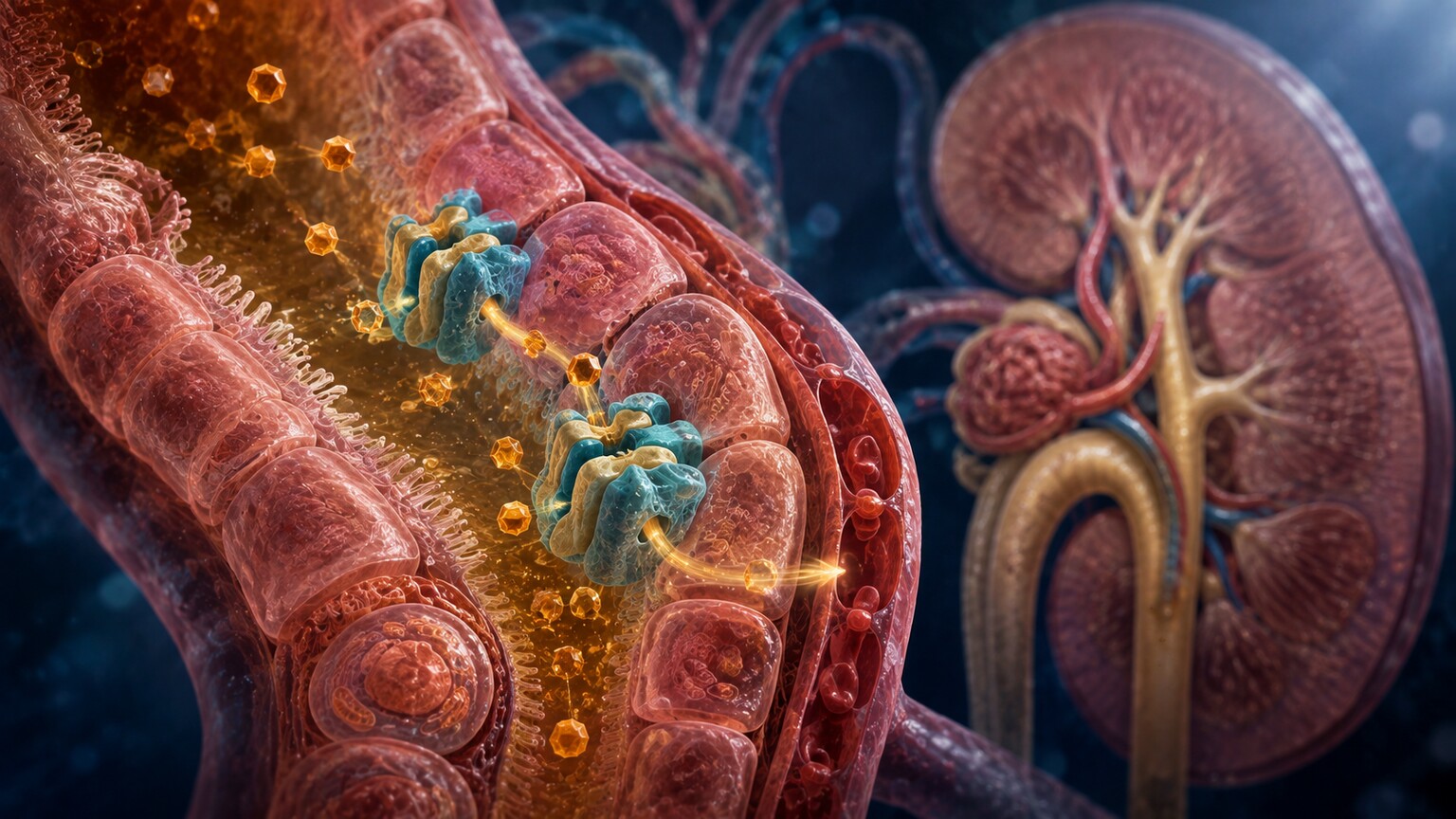
Figure 1. URAT1 and GLUT9, two transport proteins in the kidney's tubules, pull uric acid back into the blood instead of letting it pass into urine — a process diet has almost no influence over.
Already have a uric acid number from a recent test, but not sure whether it's actually a problem? Enter it and see exactly where it falls in seconds.
🧮 Try the Free CalculatorThe 90/10 Split: Why Diet Was Never the Main Lever
To understand why a clean diet can still leave you with a high number, it helps to know where uric acid actually comes from in the first place. Your body produces uric acid constantly as a byproduct of breaking down purines — molecules found in your own cells' DNA and RNA, not just in food. In fact, the purines your own body turns over every day from normal cell death and replacement generate roughly two-thirds of your total uric acid load, while food contributes the remaining third. That ratio alone should reframe the whole question: even a person eating a textbook-perfect diet is still manufacturing the majority of their uric acid internally, from processes that have nothing to do with a fork.
The second and arguably more important piece of the puzzle is what happens after uric acid is made. Once it enters the bloodstream, roughly two-thirds of it leaves the body through the kidneys, filtered out into urine. Clinical research consistently finds that when someone's uric acid runs chronically high, the more common explanation — accounting for somewhere around 90 percent of cases — isn't that they're producing too much, it's that their kidneys aren't clearing enough. In other words, the "drain" is partially clogged far more often than the "tap" is running too hard. This is precisely why a genuinely careful eater can still end up with an elevated number: they turned down the tap as far as it reasonably goes, but the drain was never the part diet could fix.
This distinction matters clinically, too. Doctors sometimes separate the two categories using a 24-hour urine collection: if a large amount of uric acid shows up in the urine over a full day, the problem more likely sits upstream, at production; if very little shows up despite a high blood level, the bottleneck is downstream, at the kidney itself. In practice this specific test is reserved for people with recurring gout at an unusually young age or repeated uric acid kidney stones, since for most people the overproduction-versus-underexcretion split can be reasonably inferred just by ruling out obvious dietary triggers and looking at the factors covered in the rest of this article. Still, it's worth internalizing which side of that split most elevated results fall on, because it explains, mathematically, why "I already cut back on the obvious foods" so often isn't the end of the story.
Your Genetic Baseline: The Kidney Transporters You Didn't Choose

Figure 2. Inherited variants in genes like SLC2A9 and ABCG2 set how efficiently the kidneys handle uric acid — a baseline established before diet ever enters the picture.
Large genetic studies involving tens of thousands of participants have identified specific genes — most prominently SLC2A9 and ABCG2 — that directly control how efficiently the kidneys reabsorb or excrete uric acid. People who inherit certain variants of these genes simply run higher baseline levels than people who don't, independent of body weight, activity level, or diet quality. ABCG2 in particular functions as an exporter that pumps uric acid into urine; a reduced-function variant of this single gene can be enough, on its own, to meaningfully raise someone's resting uric acid level for their entire life. This isn't a rare curiosity — variants in ABCG2 are consistently ranked among the strongest individual genetic predictors of gout risk identified in genome-wide association studies, on par with many well-known dietary risk factors.
This is why family history carries so much weight in this conversation. If a parent or sibling has dealt with gout or a chronically elevated uric acid reading, there's a real chance that some of your own number was decided well before you ever chose a meal. Two people can eat nearly identical diets, weigh the same, and exercise the same amount, yet land in very different places on the uric acid scale simply because their kidney transporters were built differently. None of this means diet is irrelevant — it still matters at the margins — but it does mean that "I eat healthy" and "my uric acid should be normal" are not the same promise, and expecting one to guarantee the other sets up exactly the kind of confusing, healthy-but-still-high result this article exists to explain.
Population-level research adds another layer to this picture: baseline uric acid distributions differ measurably between ethnic groups, independent of diet or body weight. Studies of Māori and Pacific Islander populations, for instance, have repeatedly found higher average uric acid levels and higher gout prevalence than in populations of European descent, even after researchers control for diet, alcohol intake, and body mass index. Similar population-level differences have been documented in other groups as well. The leading explanation isn't a single gene but a cluster of inherited variants across multiple uric acid transport genes that are simply more common in some ancestral populations than others — a reminder that "normal" baseline uric acid was never meant to be a single universal number, and that a result sitting at the higher end of a lab's reference range can be entirely unremarkable for one person's genetic background while genuinely worth investigating for another's.
The "Healthy" Foods That Are Quietly Loaded With Fructose

Figure 3. Smoothies, dried fruit, honey, and agave concentrate fructose into a fast-absorbing dose — a mechanism that raises uric acid without a single gram of purine involved.
Here's where a lot of genuinely well-intentioned eating goes sideways: fructose raises uric acid through a completely separate pathway from purines, and several foods people specifically choose because they feel virtuous are concentrated fructose sources. Inside liver cells, an enzyme called fructokinase processes fructose so rapidly and with so little internal regulation that it depletes the cell's energy currency, a molecule called ATP, faster than the cell can replenish it. When ATP crashes, the cell activates a backup recycling pathway to salvage what's left — and that backup pathway dead-ends directly in uric acid production. No purine-rich food needs to be anywhere in the picture for this to happen; it's a side effect of processing the sugar itself.
The foods that trigger this most efficiently are the ones that deliver fructose quickly and in concentrated form, stripped of the fiber that would otherwise slow it down. A morning smoothie packed with two or three servings of fruit, a handful of dried mango or dates as an afternoon snack, a spoonful of "natural" sweeteners like honey or agave in tea or coffee — all of these read as textbook healthy choices, and in most other respects they are. But agave nectar specifically runs as high as 85 percent fructose by weight, higher than table sugar, despite being marketed for years as the diabetic-friendly option. Fruit juice behaves almost identically to soda in this one narrow respect, since juicing removes the pulp and fiber that would normally slow digestion. Whole fruit eaten as fruit — an apple, a pear, a bowl of berries — delivers the same fructose far more slowly and gently, which is part of why it doesn't carry the same association with elevated uric acid that concentrated, juiced, or dried versions do.
None of this is an argument to avoid fruit. It's a reminder that "contains fruit" and "low-impact on uric acid" aren't automatically the same thing, and that a diet can look clean on a nutrition label while still quietly running this specific pathway several times a day.
Large population studies bear this out in a way that's easy to underestimate: sugary sodas carry a surprisingly strong, independent association with elevated uric acid and gout risk, one that holds up even after researchers statistically control for body weight, total calorie intake, and how much purine-rich meat or seafood a person eats. That independence is the key detail — it means the fructose pathway isn't simply riding along with an otherwise poor diet, it's doing measurable work on its own. For someone who has already cut out soda and fast food specifically because they know those are unhealthy, it can be genuinely surprising to learn that a daily "healthy" smoothie or a habit of stirring honey into tea several times a day may be quietly running the same biochemical pathway, just wearing a more virtuous label.
What About the Occasional Glass of Wine or Weekend Seafood?
Many people who describe their diet as healthy don't mean strictly purine-free — they mean moderate, balanced, and mostly whole foods, with the occasional glass of wine or a seafood dinner on the weekend. It's worth being precise about how much these occasional exposures actually move the needle, because the answer is more forgiving than a lot of general advice implies. A single meal built around shellfish or a modest amount of red meat typically produces a brief, self-limiting rise in uric acid that a functioning kidney clears within a day or two — it's the sustained, repeated pattern that accumulates into a real baseline shift, not an isolated indulgence. The distinction between "a glass of wine at dinner twice a week" and "a six-pack most evenings" is enormous physiologically, even though both technically fall under the umbrella of "drinks alcohol."
Alcohol does deserve a specific mention here, though, because it raises uric acid through two separate mechanisms rather than one, and the second mechanism applies even to genuinely moderate drinking. Beer supplies a direct purine load from the brewer's yeast used in fermentation, which is why it tends to raise uric acid more than an equivalent amount of alcohol from wine or spirits. But separately, as the liver metabolizes any form of alcohol, it produces a byproduct called lactate, which competes with uric acid for the same kidney excretion pathway — meaning even a glass of wine, which contains negligible purines itself, can still modestly interfere with uric acid clearance simply because of how the liver processes the alcohol. For someone whose diet is otherwise excellent, this is one of the more likely small contributors hiding in an otherwise clean routine, less because of what's in the glass and more because of how the liver has to handle it.
Insulin Resistance in a Lean Body: The Overlooked Metabolic Driver
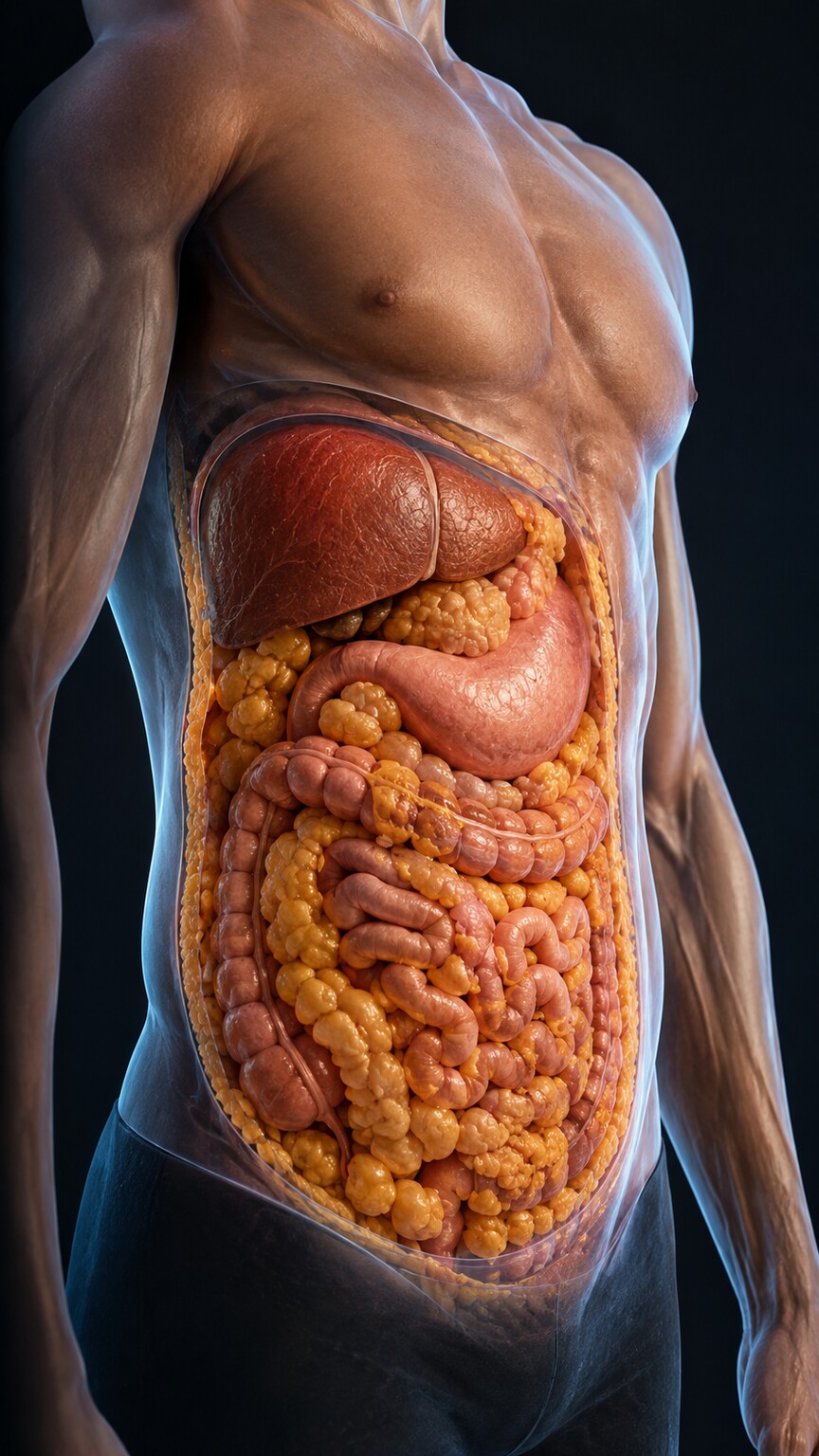
Figure 4. A normal-weight body can still carry meaningful visceral fat around the organs, driving the same insulin-related uric acid retention seen in obesity — invisible on a bathroom scale.
One of the most counterintuitive findings in this whole area is that you don't need to be overweight for insulin resistance to be pushing your uric acid up. Insulin itself acts directly on the kidneys to reduce how much uric acid they excrete, so as insulin resistance develops — meaning your cells respond less efficiently to insulin's signal, prompting the body to produce more of it to compensate — the kidneys retain more uric acid right along with it. This can happen in someone who looks lean on the outside but carries a disproportionate amount of visceral fat, the metabolically active fat that wraps around internal organs rather than sitting under the skin. Researchers sometimes describe this body type informally as "TOFI" — thin outside, fat inside — and it's genuinely common in people who look fit but have a family history of type 2 diabetes, a sedentary desk-based routine layered on top of otherwise good eating, or a diet that's clean in ingredient quality but still fairly high in refined carbohydrates.
This matters because a person in this situation can pass every visual and dietary checkbox — normal weight, vegetables at most meals, minimal processed food — and still have an insulin-driven uric acid elevation that no amount of dietary "cleanliness" alone will fix, because the actual problem is a metabolic signaling issue, not a food-quality issue. It's also part of why uric acid so often travels in a package with high blood pressure, unfavorable cholesterol numbers, and fatty liver findings even in people who aren't clinically obese; all of these share the same underlying insulin-resistance thread. If a lab report shows a high uric acid number alongside borderline blood sugar, elevated triglycerides, or a fatty liver finding on imaging, that combination is a stronger clue toward this mechanism than diet quality alone ever could be.
Some researchers have gone a step further and proposed that uric acid isn't just a passive passenger riding along with insulin resistance, but may actively contribute to it in a feedback loop. Animal studies suggest uric acid can promote fat storage inside liver cells and interfere with the blood vessel lining's normal response to insulin, which would mean the elevated number and the metabolic dysfunction reinforce each other rather than one simply following the other. Whether uric acid is a cause or purely a marker of this process remains genuinely unsettled in the research community, but from a practical standpoint the distinction changes very little for someone trying to make sense of their own result: a persistently high uric acid number in a lean, active, healthy-eating person is a reasonable prompt to also look at fasting insulin, waist circumference, and liver enzymes together, rather than treating the uric acid reading as an isolated, unexplained curiosity.
Dehydration and the Exercise Habits That Feel Like the Healthy Choice
It's a genuine irony that some of the habits people adopt specifically to be healthier — intense training, low-carbohydrate eating, sweating it out — can independently push uric acid upward through mechanisms that have nothing to do with food quality. Uric acid excretion depends heavily on urine volume and concentration. When you're dehydrated, whether from an intense workout, a hot climate, or simply under-drinking through a busy day, your kidneys respond by reabsorbing more water and sodium back into the bloodstream, and uric acid gets pulled back in along that same shared pathway rather than passing out in urine. A demanding training block, especially one that includes hot-weather cardio or long sessions without adequate fluid replacement, can produce this effect repeatedly, week after week, even in someone whose meals are impeccable.

Figure 5. Intense exercise concentrates urine and releases purines from muscle turnover at the same time — a double effect that can raise uric acid regardless of diet quality.
Vigorous exercise adds a second layer on top of dehydration alone: real muscle exertion, especially the kind that causes measurable muscle breakdown, releases purines directly from damaged tissue into the bloodstream, exactly the way any cell turnover does. At the same time, hard exercise generates lactate, which competes with uric acid for the same kidney excretion pathway, temporarily reducing how much gets cleared. Separately, very low-carbohydrate or ketogenic eating — often adopted precisely because it's seen as a disciplined, healthy choice — produces ketone bodies that share the exact same kidney transport proteins uric acid relies on, crowding it out at that shared transporter. Research measuring this specific interaction has found that even mild, early ketosis can raise uric acid by roughly half a point to a full point on the standard mg/dL scale. None of this is a reason to stop exercising or to avoid low-carbohydrate eating; it's simply a reminder that "healthy" and "uric-acid-lowering" aren't automatically synonymous, and that consistent hydration matters as much as the training or eating plan itself.
Hormonal Shifts That Move the Number Without Touching a Meal
Your baseline uric acid isn't fixed across your lifetime — it shifts with hormones in ways that have nothing to do with what's on your plate. Estrogen has a mild uricosuric effect, meaning it helps the kidneys excrete more uric acid, which is why premenopausal women typically run measurably lower levels than men of a similar age. As estrogen declines after menopause, that protective effect fades, and uric acid tends to drift upward over the following years, often closing much of the gap with male levels within a decade. A woman who has eaten consistently well for years can watch her uric acid climb through her fifties for this reason alone, with no meaningful change in her diet, exercise routine, or weight to explain it.
Testosterone moves in the opposite direction, mildly encouraging uric acid retention in the kidneys, which is part of why gout has historically been considered more common in men, particularly during mid-adulthood. Thyroid function plays a role too: an underactive thyroid, even a mild or subclinical case that hasn't yet produced obvious symptoms, has been linked to modestly elevated uric acid, likely tied to its broader slowing effect on kidney blood flow and filtration rate. None of these hormonal shifts show up on a food diary, and none of them respond to eating more vegetables — they're a separate axis entirely, running in parallel to whatever is happening at the dinner table.
Pregnancy adds its own temporary hormonal wrinkle worth knowing about, since it moves in a direction opposite to what many people expect. Uric acid typically dips in early pregnancy as blood volume expands and kidney filtration increases to support the growing demands of pregnancy, but it can rise again later, particularly in the third trimester. A sharp late-pregnancy increase is one of the recognized warning signs doctors specifically watch for as part of preeclampsia screening, which is why prenatal panels track it even in people whose diet and weight gain have been entirely appropriate — in this context, the number is doing an important job that has nothing to do with what was eaten that week.
Medications That Raise Uric Acid Without Anyone Suspecting Them
A surprising number of commonly prescribed medications raise uric acid as a documented side effect, and because they're often taken for entirely unrelated reasons, the connection is easy to miss. Thiazide diuretics, one of the most widely used blood pressure treatments, increase how much uric acid the kidneys reabsorb back into the blood, with studies measuring average increases in the range of roughly 0.8 to 1.5 mg/dL depending on the dose. Low-dose aspirin, taken by many people specifically for heart protection, has a genuinely counterintuitive, dose-dependent effect: while higher doses of aspirin actually help the kidneys excrete more uric acid, the low doses commonly used for cardiovascular prevention tend to modestly raise it instead.
Niacin at the doses used for cholesterol management, the anti-rejection drug cyclosporine prescribed after organ transplants, and certain immunosuppressants can all contribute as well. None of these medications are typically something to stop on your own — in the overwhelming majority of cases, the benefit of the treatment clearly outweighs a modest uric acid increase — but if a rising trend on repeat testing lines up with when a new prescription started, that timing is worth mentioning to whoever prescribed it. It's also one of the clearest examples of why a high uric acid result can appear in someone whose diet genuinely has nothing to do with the number at all.
Sleep, Stress, and Other Overlooked Contributors
Sleep quality has emerged as a more independent factor in uric acid regulation than most people expect. Obstructive sleep apnea, in particular, has been associated with elevated uric acid in multiple studies, with researchers proposing that the repeated drops in blood oxygen during interrupted breathing episodes trigger metabolic stress responses that independently raise production, separate from any weight-related factors that often accompany sleep apnea. This means someone with undiagnosed or poorly controlled sleep apnea can have an elevated uric acid reading that has essentially nothing to do with diet, exercise, or genetics, and everything to do with what's happening — or not happening — during the night.
Chronic psychological stress doesn't have as direct or well-established a mechanism, but it rarely travels alone: poor sleep, disrupted eating patterns, and reduced physical activity often cluster around periods of high stress, and each of those secondary effects does have a real, documented influence on uric acid. Anyone whose diet has stayed genuinely consistent but whose sleep or stress levels have shifted significantly has a reasonable, evidence-backed reason to consider those factors as part of the explanation, rather than assuming the food itself must be the culprit.
Underlying Conditions That Can Coexist With an Excellent Diet
Some medical conditions raise uric acid through mechanisms that have nothing to do with eating habits at all, and a person can be managing their diet carefully while an unrelated condition quietly does the opposite in the background. Chronic kidney disease is the most direct example: as kidney filtering capacity gradually declines, for any reason, its ability to clear uric acid declines right along with it, so uric acid rises as a natural consequence of reduced kidney reserve rather than anything on a plate. This is part of why uric acid is often tracked alongside creatinine and eGFR in people with any degree of reduced kidney function — the same organ handles both, and a declining trend in one is a reasonable prompt to look more closely at the other.
Conditions that speed up how quickly the body's own cells are replaced can have a similar, diet-independent effect, because faster cell turnover means faster release of the purine-rich genetic material inside those cells. Psoriasis is a well-documented example: skin cells in psoriatic plaques turn over roughly ten times faster than normal skin, and that accelerated turnover generates a steady, elevated purine load that shows up as chronically higher uric acid in many people with more extensive psoriasis, entirely apart from what they eat. Certain blood disorders that involve faster-than-normal red blood cell turnover follow the same underlying logic on a different tissue. None of these conditions are common explanations for a mildly elevated result in an otherwise healthy person, but they're worth knowing about specifically because they illustrate, concretely, that "high uric acid" and "poor diet" are not interchangeable ideas — the body can generate this exact lab finding through pathways diet was never involved in from the start.
Reading Your Own Result: What to Actually Look At
Because so many of these forces can operate independently of diet, the most useful next step usually isn't scrutinizing another week of meals — it's looking at the pattern around the number itself. A persistently high result across multiple tests, with no dietary explanation, is a reasonable prompt to ask about family history of gout or kidney stones, since a genetic baseline doesn't show up on a single test but does show up as a consistent pattern over time. A number that climbed gradually alongside a new blood pressure prescription, a period of intense training, or a stretch of poor sleep points toward one of the mechanisms described above rather than anything nutritional. And a result that seems high despite months of consistent healthy eating is, statistically, more likely to reflect kidney handling, hormones, or genetics than a food you haven't yet identified.
It's also worth remembering that a single elevated reading isn't automatically a diagnosis of anything. Hydration status on the day of the blood draw, recent exercise, and even the time of day can all nudge the number slightly. What matters more clinically is the trend across repeat testing and whether it's accompanied by symptoms like joint pain or swelling, rather than any one isolated result taken in a vacuum.
It also helps to keep in mind that different causes move on very different timescales, and matching a result to the right timescale is often the fastest way to make sense of it. Dehydration or a single indulgent meal can shift the number within hours, and both tend to resolve just as quickly once normal eating and drinking resume — which is why a doctor may simply ask to repeat a borderline result after a few days of normal hydration before drawing any conclusions. Medication effects, hormonal shifts like menopause, and slow-building conditions like insulin resistance tend to nudge the number upward gradually over weeks to months, and they don't reverse until the underlying driver itself is addressed. Genetic causes sit at an entirely different timescale: they set a baseline present from birth that doesn't meaningfully change day to day at all, which is exactly why someone with a strong family history of gout can run persistently in the higher end of normal their whole life without a single identifiable dietary trigger ever turning up.
What Actually Helps When Diet Was Never the Real Lever
If diet is already in good shape, the most productive changes usually live in the categories covered above rather than in further food restriction. Hydration is the single most modifiable factor for most people: drinking consistently throughout the day, rather than a large glass right before a blood draw, gives the kidneys steady, adequate urine flow to work with instead of the concentrated, low-volume urine that encourages uric acid reabsorption. This matters even more for anyone who trains intensely, works outdoors in heat, or has adopted a low-carbohydrate eating pattern, since all three independently increase the demand on hydration to keep uric acid clearance efficient.
Beyond hydration, the highest-yield conversation is usually with a doctor rather than with a grocery list. Bringing a genuine family history of gout or kidney stones into that conversation helps a clinician weigh how much of the picture is likely genetic. Mentioning any new medications — even ones started for blood pressure, heart protection, or cholesterol — lets a doctor consider whether timing lines up with a rising trend. And if sleep has been poor, loud snoring is present, or a partner has noticed breathing pauses at night, raising the possibility of sleep apnea screening is a reasonable, evidence-based step that has nothing to do with food at all. Retesting after addressing one of these factors, rather than after another round of dietary changes, is often what finally moves a stubbornly high number.
Frequently Asked Questions
If my diet is genuinely clean, should I still worry about a high uric acid result?
It's worth discussing with a doctor rather than dismissing, but it's not automatically alarming. Since diet only accounts for roughly a third of total uric acid load, a clean diet with a persistently high number is actually a useful clue that points toward genetics, kidney excretion, hormones, or another non-dietary cause worth exploring.
Can a lean, physically active person really have insulin resistance?
Yes. Visceral fat surrounding internal organs can be present in someone who looks lean, sometimes called "thin outside, fat inside." This fat is metabolically active and can drive the same insulin-related uric acid retention seen in obesity, independent of body weight or visible fitness.
Does fruit count against me the same way sugary drinks do?
Not exactly. Whole fruit delivers fructose slowly, wrapped in fiber and water, producing a much gentler effect than concentrated sources like fruit juice, dried fruit, smoothies, or added sweeteners like honey and agave, which deliver fructose quickly and in a more concentrated dose.
Should I ask about genetic testing if uric acid runs high in my family?
Routine genetic testing isn't typically necessary for everyday elevated uric acid. But mentioning a strong family history of gout or kidney stones to a doctor is useful context, since it can shift the conversation away from diet alone and toward kidney function or inherited transporter variants.
Does the occasional glass of wine or a seafood dinner really matter if the rest of my diet is clean?
Usually not much. A single meal with moderate purine-rich food or alcohol typically causes only a brief, self-limiting rise that a functioning kidney clears within a day or two. It's the frequency and consistency of a pattern, not one isolated indulgence, that meaningfully shifts a baseline over time.
Conclusion
A high uric acid result alongside a genuinely healthy diet isn't a contradiction — it's a reflection of how the system actually works. Diet controls roughly a third of the equation, while genetics, kidney excretion efficiency, hormones, hydration, medications, sleep, and even lean-body insulin resistance make up the rest, and any one of them can outweigh a well-managed plate on its own. Rather than treating this as a failure of willpower or a sign that something in the diet must be hidden and unaccounted for, it's more accurate — and more useful — to treat it as a signal to look at the parts of the system that food was never going to fix in the first place. Bringing family history, medication timing, sleep patterns, and hydration habits into the conversation with a healthcare provider almost always explains more than another round of dietary self-scrutiny ever will.
Still Not Sure What Your Results Mean?
Upload your labs and get a complete, visual, plain-language interpretation of every biomarker — delivered to your inbox in under 15 minutes.
Get My ReportThis article is for educational purposes only and does not constitute medical advice. Always consult your healthcare provider regarding your specific lab results.