
Why Is My Uric Acid Level Low?
Almost everything written about uric acid is about it being too high — gout, kidney stones, cardiovascular risk. So when a lab report comes back the other direction, with uric acid sitting below the reference range instead of above it, it can feel like there's no explanation available anywhere. There is, and in most cases it isn't dangerous at all. A low uric acid, medically called hypouricemia, usually traces back to one of a short list of causes: the kidneys are simply clearing more of it than usual (often because of a condition called SIADH, or from certain medications, including drugs used to treat gout itself), the liver is making less of it to begin with, or — in a smaller number of people — a genetic quirk in how the kidneys handle uric acid causes it to leak into the urine far faster than the body can replace it. That last group is the one worth paying real attention to, because it's the rare case where a low number, counterintuitively, is tied to a real physical risk rather than being purely reassuring.
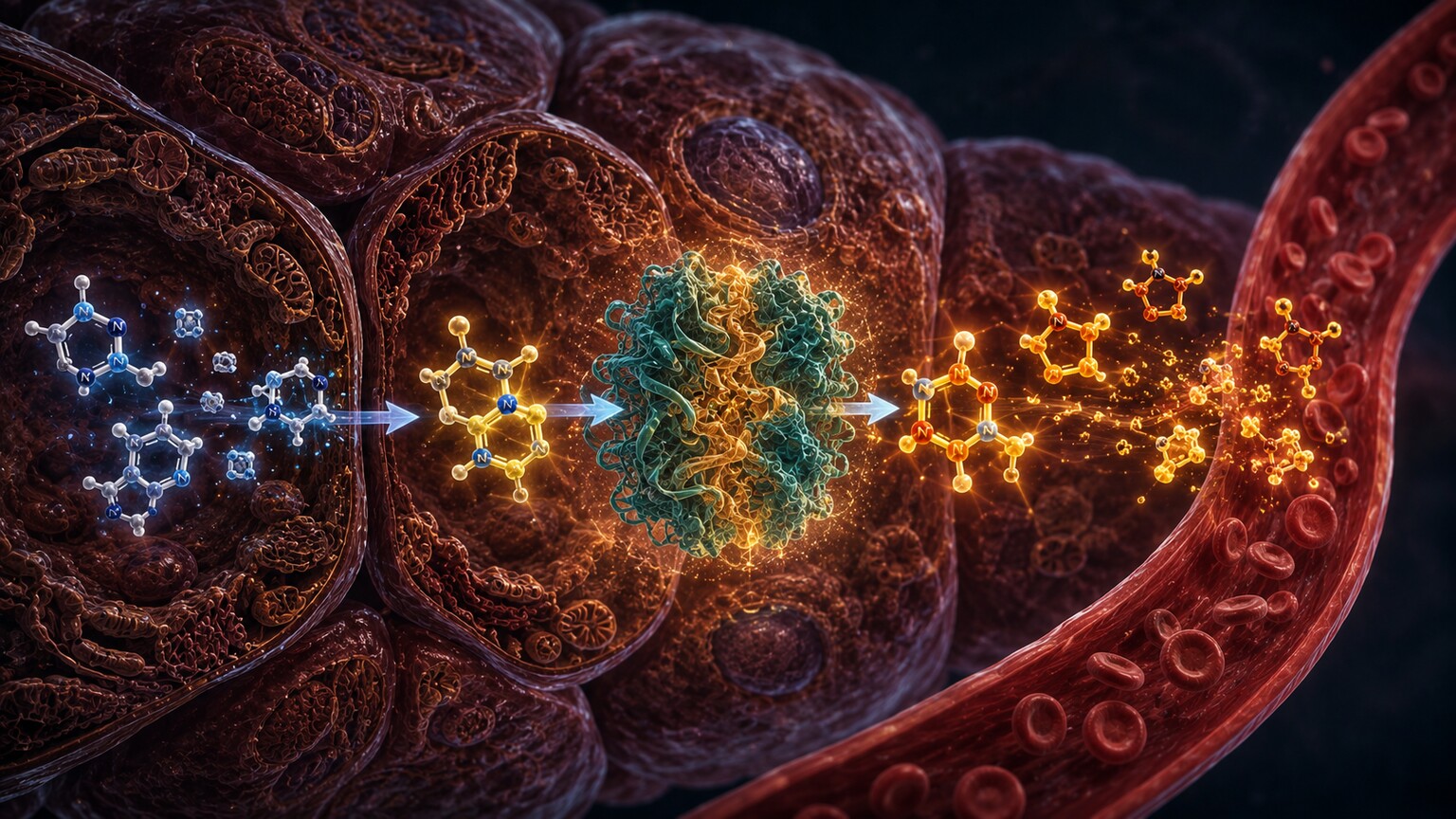
Figure 1. The liver enzyme xanthine oxidase converts purine breakdown products into uric acid; anything that slows this enzyme or reduces the raw material feeding it lowers how much uric acid the body makes in the first place.
What Uric Acid Actually Is — And Why the Body Bothers Making It
Before a low number can make sense, it helps to know what uric acid is doing in your blood in the first place. Every cell in your body contains DNA and RNA, and both are built from building blocks called purines. Cells are constantly dying and being replaced — skin, blood cells, the lining of your gut — and when they die, their purines get broken down and recycled. The very last step of that breakdown process happens mostly in the liver, where an enzyme called xanthine oxidase converts a molecule called xanthine into uric acid. From there, uric acid dissolves into your bloodstream and eventually leaves the body, roughly two-thirds of it filtered out by the kidneys into urine, with the rest cleared through the digestive tract.
You also make a smaller amount of uric acid from purines in food — organ meats, certain seafood, beer — which is why diet gets so much attention when uric acid runs high. But the majority of your uric acid, day to day, comes from your own cells turning over, not from what you ate for dinner. That matters here because it means a low level is rarely a "you're just not eating enough purines" situation. Diet can nudge uric acid down modestly (a vegetarian or vegan pattern tends to run slightly lower, for instance), but on its own it almost never pushes someone below the normal range. When uric acid is genuinely low, the more common explanations sit somewhere else in this pathway: either the liver isn't producing as much to start with, or the kidneys are clearing out more than they should.
It's also worth knowing that uric acid isn't just metabolic waste your body is trying to get rid of. It's the single largest contributor to your blood's total antioxidant capacity — it neutralizes damaging free radicals and helps protect cells from oxidative stress, a role that becomes relevant later when researchers ask whether chronically low levels carry any downside of their own. So while a high uric acid gets blamed for causing problems, a very low one occasionally raises a different, quieter question: is this person's body getting slightly less of a protective molecule it would otherwise have?
There's also a rare production-side cause worth naming directly, separate from anything to do with the kidneys: hereditary xanthine oxidase deficiency, sometimes called classic xanthinuria. In this genetic condition, the liver enzyme described above either doesn't work at all or works at a small fraction of its normal capacity, so xanthine simply never gets converted into uric acid in the first place. People with this condition can have blood uric acid levels close to zero, essentially undetectable, while the xanthine that would have become uric acid builds up instead and is excreted directly in urine. In most people this causes no problems whatsoever and is discovered only by chance. In a minority, that excess xanthine can crystallize in the kidneys or urinary tract, forming a type of kidney stone that standard stone analysis sometimes misidentifies unless a lab specifically knows to look for it. It's an important condition to be aware of mainly because it illustrates the same broader theme running through this whole topic: a uric acid level near zero isn't automatically alarming, but it is a piece of information a doctor will usually want to place correctly rather than ignore.
What Actually Counts as "Low," and Why Many Labs Don't Even Flag It
Reference ranges vary somewhat by lab and by the specific assay used, but as a general guide, most labs consider a normal uric acid to fall between roughly 3.5 and 7.2 mg/dL in men and 2.6 to 6.0 mg/dL in women, with women typically running lower because estrogen has a mild uricosuric effect — meaning it helps the kidneys excrete a bit more uric acid, which is also part of why women's uric acid tends to rise after menopause. A result is usually flagged as low, or hypouricemic, once it drops below roughly 2.0 to 2.5 mg/dL, though the exact cutoff differs from lab to lab, and some reports will simply print the number without a "Low" flag at all if it's only modestly under the bottom of the range.
This is a genuinely important distinction to sit with: a value that's a few tenths of a point under the reference range is a very different situation from a value that's near zero. Mild, borderline-low results are common, usually incidental, and often not worth chasing down at all — the same way a slightly low but otherwise unremarkable white blood cell count on an annual physical rarely triggers a workup by itself. Values that are dramatically low, especially under about 1.0 mg/dL, are the ones that more reliably point toward one of the specific mechanisms described further down this article, and are far more likely to prompt a doctor to ask follow-up questions or order additional tests.
One more piece of context that's easy to miss: unlike a high uric acid, which most people find out about because it caused a gout flare or a painful kidney stone, a low uric acid almost never causes symptoms of its own. It's discovered incidentally, tucked into a basic metabolic panel or a comprehensive panel ordered for an entirely unrelated reason. That's exactly why so many people encounter this result with no context at all — nothing hurt, nothing prompted the test, and suddenly there's a number on a page with no obvious story attached to it.
The Most Common Explanation: SIADH and the Kidneys Clearing Too Much
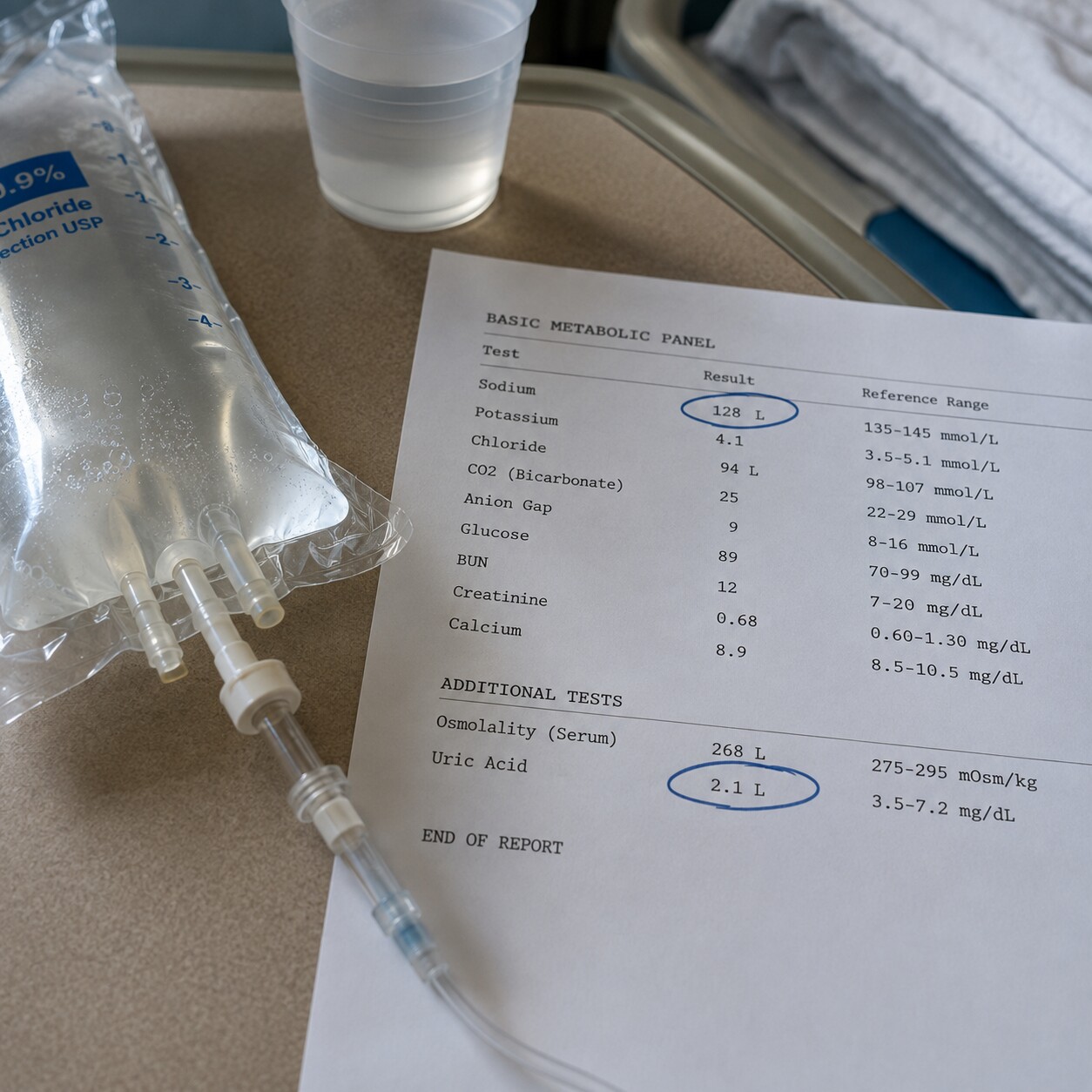
Figure 2. In SIADH, the body retains excess free water, expanding blood volume and diluting sodium; the kidneys respond by clearing more uric acid into the urine, producing the low sodium plus low uric acid pattern seen on this panel.
If a doctor is actively investigating a low uric acid rather than just noting it in passing, the condition at the top of the list is almost always SIADH — the syndrome of inappropriate antidiuretic hormone secretion. It's a mouthful, but the mechanism is fairly intuitive once you walk through it. Antidiuretic hormone, also called vasopressin, is the signal your brain sends to your kidneys telling them to hold onto water. In SIADH, that signal gets sent even when the body doesn't need it — often because of certain medications, lung conditions, brain injury, or being on the wrong end of a hormone-secreting tumor — so the kidneys keep reabsorbing water they should be letting go of.
The direct result is a mildly expanded blood volume and diluted sodium, which is why SIADH is one of the classic causes of hyponatremia, or low blood sodium. But the expanded volume also does something to uric acid handling specifically: it triggers changes in the kidney's proximal tubule — the section of the kidney's filtering unit responsible for reabsorbing most filtered uric acid back into the blood — that reduce how much gets reabsorbed. The transport proteins responsible for pulling uric acid back out of the urine and into the bloodstream become less active under these volume-expanded conditions, so more uric acid than usual ends up staying in the urine and leaving the body. The net effect on a blood test is a uric acid that drops, often into the 1.0 to 2.0 mg/dL range, sitting right alongside a low sodium result.
This combination is clinically useful precisely because it helps sort out different causes of low sodium from one another. Hyponatremia has several possible explanations, and some of them — like heart failure or dehydration — actually tend to raise uric acid rather than lower it, because those conditions reduce blood flow to the kidneys and cause uric acid to be reabsorbed more aggressively as the body tries to conserve fluid. So when a doctor sees low sodium next to a low uric acid, it points fairly specifically toward SIADH rather than those other explanations, and when uric acid is normal or high next to low sodium, it points away from SIADH. This is one of the more elegant, low-cost diagnostic clues in routine lab work: two numbers on the same basic panel, interpreted together, can meaningfully narrow down what's actually going on before any additional imaging or specialty testing is ordered.
Already have a uric acid number from a recent test, but not sure whether it's actually low, borderline, or nothing to think twice about? Enter it and see exactly where it falls in seconds.
🧮 Try the Free CalculatorMedications That Push Uric Acid Down
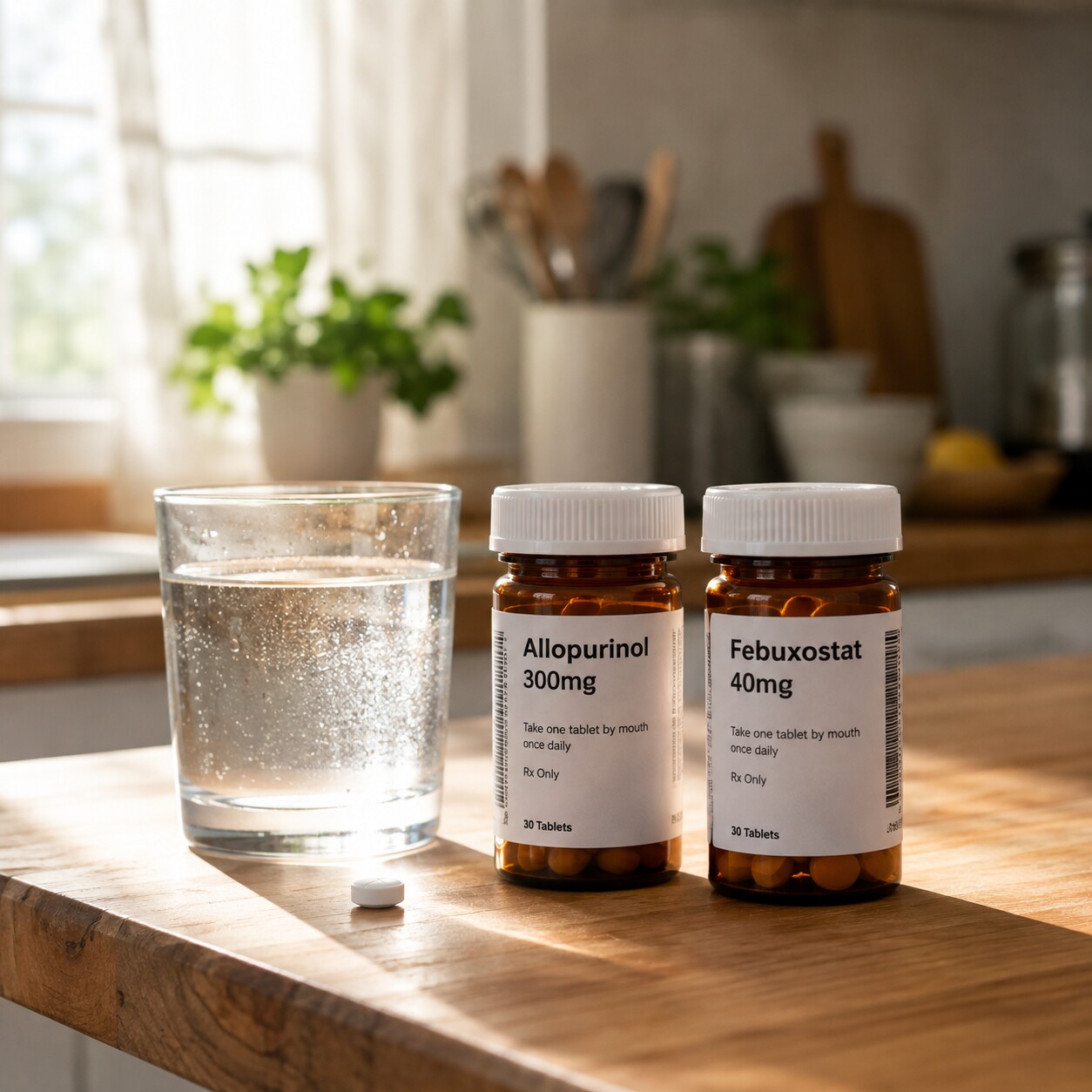
Figure 3. Xanthine oxidase inhibitors such as allopurinol and febuxostat directly block the enzyme that produces uric acid — the single most common reason someone already being treated for gout sees a low result.
By far the most common reason a person's uric acid comes back low isn't a mysterious hormonal syndrome at all — it's a medication they're already taking on purpose to lower it. Allopurinol and febuxostat, the two most widely prescribed drugs for gout, work by directly blocking xanthine oxidase, the same liver enzyme described earlier that converts xanthine into uric acid. If someone is on one of these medications and their follow-up labs show uric acid in the low-normal or below-normal range, that's usually the treatment working exactly as intended, not a new problem. Doctors generally aim for a target range well below the traditional "normal" cutoff in people being actively treated for gout — often under 6.0 mg/dL, and sometimes under 5.0 mg/dL for people with more severe or long-standing disease — specifically because getting uric acid low enough helps dissolve existing crystal deposits and prevents new ones from forming.
Beyond dedicated gout medications, a handful of other common drugs have a uricosuric side effect, meaning they help the kidneys excrete more uric acid as an incidental part of what they're actually prescribed for. Losartan, a blood pressure medication in the ARB (angiotensin receptor blocker) class, is unusual among its peers in that it has a modest uric-acid-lowering effect baked into its chemistry, which is sometimes even used as a reason to specifically choose it for someone with both high blood pressure and elevated uric acid. Fenofibrate, used to manage high triglycerides, has a similar uricosuric effect. High-dose aspirin — well above the low doses used for heart protection, more in the range historically used for pain or inflammation — also lowers uric acid by increasing how much the kidneys excrete, which is the opposite of what low-dose aspirin does; low-dose aspirin actually tends to raise uric acid slightly, one of those confusing dose-dependent quirks that makes this particular topic easy to get backwards.
If a low uric acid shows up on a panel, one of the simplest and most productive first steps is often just reviewing the full medication list — including over-the-counter drugs and supplements — with a pharmacist or doctor, since this single step resolves a meaningful share of cases without needing any further testing at all.
Fanconi Syndrome and Other Proximal Tubule "Leaks"
The kidney's proximal tubule doesn't just handle uric acid — it's also responsible for reabsorbing glucose, phosphate, amino acids, and bicarbonate that would otherwise be lost in urine. When something damages this section of the kidney broadly, all of those substances can start leaking out together in a pattern called Fanconi syndrome, and uric acid loss is simply one piece of that larger picture. Someone with Fanconi syndrome typically doesn't just have a low uric acid in isolation — they'll often also show glucose in the urine despite normal blood sugar, low blood phosphate, mild metabolic acidosis from bicarbonate loss, and sometimes amino acids showing up in urine testing that normally wouldn't be there.
Fanconi syndrome has a range of causes. In children, it's often inherited — cystinosis, a rare genetic disorder in which the amino acid cystine accumulates and damages the tubules, is the most common cause in that age group. In adults, it's more frequently acquired: certain chemotherapy drugs, the HIV medication tenofovir, the antiepileptic drug valproate, and heavy metal exposure (particularly lead or cadmium) are all recognized causes. Multiple myeloma, a cancer of plasma cells, can also damage the proximal tubule when abnormal light-chain proteins accumulate and injure it directly. Wilson's disease, a genetic disorder of copper metabolism, produces a similar pattern of proximal tubule injury from copper deposition, and a low uric acid is sometimes one of the earlier clues that leads a clinician toward that diagnosis in a younger patient with unexplained liver or neurological symptoms.
The reason this category matters clinically is less about the uric acid number itself and more about what it's a signal for. A low uric acid found alongside glucose in the urine, low phosphate, or unexplained mild acidosis is a pattern worth flagging to a doctor specifically because it can be one of the earliest, most accessible clues to conditions like Fanconi syndrome that might otherwise go unnoticed until they've progressed further.
When the Kidneys Were Simply Built to Waste Urate — Hereditary Renal Hypouricemia
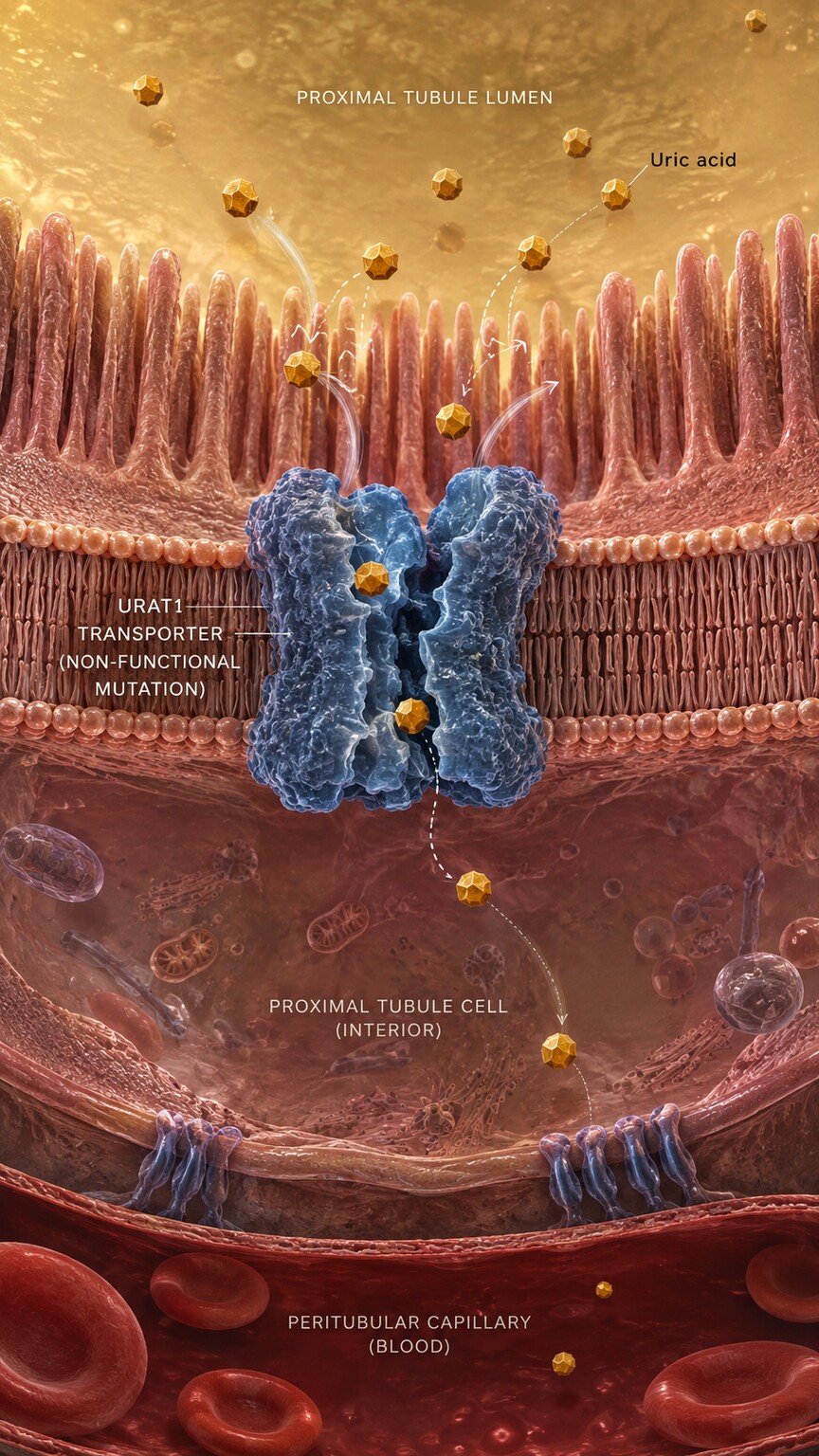
Figure 4. In hereditary renal hypouricemia, a mutated URAT1 transporter on the proximal tubule fails to pull filtered uric acid back into the blood, so it spills into the urine in far larger amounts than normal.
There's one cause of low uric acid that stands apart from the rest, because it isn't triggered by illness, fluid status, or medication — it's simply how a person's kidneys were built from birth. Hereditary renal hypouricemia is a genetic condition caused by mutations in one of two transport proteins, most often a gene called SLC22A12, which codes for a protein called URAT1, or less commonly a gene called SLC2A9, which codes for a protein called GLUT9. Both of these transporters sit on the surface of proximal tubule cells and are responsible for reclaiming uric acid after it's filtered out of the blood, pulling it back in before it can be lost in urine.
When one of these transporters doesn't work properly, the kidney simply can't reabsorb uric acid the way it's supposed to, and a much larger share of it — sometimes 90 percent or more of what's filtered, compared to roughly 90 percent normally being reabsorbed rather than excreted — passes straight through into the urine instead. The result is a blood uric acid that can run extremely low, sometimes under 1.0 mg/dL, paired with a urine uric acid concentration that's dramatically higher than normal for the amount of uric acid actually in the blood. This condition is more common in certain populations, including people of Japanese descent, where population screening studies have found it in roughly 0.2 to 0.3 percent of the general population, and in Ashkenazi Jewish populations, where a specific URAT1 mutation is more prevalent.
Most people with hereditary renal hypouricemia have no symptoms at all and are only discovered incidentally, the same way many low uric acid results are found in general. But this is the one situation in this entire article where the underlying mechanism creates its own distinct downstream risk, which is worth understanding on its own terms.
The Surprising Danger of a "Too Low" Number — Exercise-Induced Kidney Injury

Figure 5. Because so much uric acid is diverted into the urine rather than staying in the blood in renal hypouricemia, intense anaerobic exercise like sprinting can trigger a sudden, painful drop in kidney function.
Here's the genuinely counterintuitive part: in most of medicine, "too little" of something considered a risk factor at high levels would simply be reassuring. Uric acid, at least in people with the hereditary form of renal wasting described above, doesn't work that way. Because so much uric acid is being funneled into the urine instead of staying in the blood, the concentration of uric acid inside the kidney's tubules — not the blood, the tubules themselves — becomes unusually high, especially during and immediately after intense physical exertion.
During short, intense bursts of anaerobic exercise like sprinting, the kidneys briefly become more oxygen-starved and the local environment inside the tubules becomes more acidic. Under those specific conditions, the huge amount of uric acid being excreted can precipitate out and form crystals or plugs directly inside the tubules, temporarily obstructing them and triggering a sudden, sharp episode of acute kidney injury — flank or lower back pain, nausea, and a measurable, if usually reversible, drop in kidney function that shows up within hours of a hard workout. This specific phenomenon, sometimes called exercise-induced acute kidney injury, has been well documented in case reports and small case series, disproportionately in young, otherwise healthy people with hereditary renal hypouricemia who had no idea they had the condition until a sprint workout, a soccer match, or a track meet sent them to an emergency room with sudden flank pain.
The reversible nature of these episodes is genuinely reassuring — kidney function in documented cases has consistently recovered, usually within days, with rest and hydration. But it's exactly why an unexplained, markedly low uric acid discovered on a routine panel is worth a conversation with a doctor rather than a shrug, particularly for anyone who trains hard, plays competitive sports, or has ever had an unexplained episode of flank pain and nausea after intense exercise. Knowing the underlying cause ahead of time changes nothing about day-to-day life for most people, but it does mean recognizing the warning signs early and staying well hydrated around intense training sessions, rather than being blindsided by a mysterious pain with no obvious explanation.
Other Everyday and Less Common Explanations
Beyond the mechanisms above, a handful of other situations can produce a low uric acid, most of them temporary, benign, and specific to a particular life stage or circumstance rather than an ongoing condition to manage:
Pregnancy — uric acid naturally drops during the first half of a normal pregnancy, largely because pregnancy increases blood flow to the kidneys and the rate at which they filter blood, which clears more uric acid out along with everything else. This is expected and not a cause for concern on its own. It's actually the reverse pattern — a uric acid that rises later in pregnancy, particularly in the third trimester — that draws medical attention, since a rising uric acid is one of several markers doctors track when evaluating for preeclampsia.
Diet, malnutrition, and low protein intake — a sustained very-low-protein or vegan diet can modestly lower uric acid, since animal-based purines contribute meaningfully to the overall load. More significantly, general malnutrition, prolonged fasting states, or reliance on total parenteral nutrition (intravenous feeding, used when someone can't eat normally for an extended period) can lower uric acid production simply because there isn't enough raw material and normal metabolic turnover to generate it.
Advanced liver disease — since the liver is where most uric acid is actually manufactured, significant liver dysfunction (advanced cirrhosis, for example) can reduce the liver's capacity to produce it, alongside the many other metabolic functions that decline in severe liver disease.
Overhydration and IV fluids — receiving large volumes of intravenous fluids, whether during a hospital stay or from aggressive fluid resuscitation, can dilute blood uric acid the same way it dilutes sodium, producing a temporarily low result that isn't reflective of the body's actual uric acid handling and typically corrects once fluid balance normalizes.
Certain cancers and their treatments — some cancer chemotherapy regimens, along with radiation therapy, can suppress the normal cell turnover that generates uric acid, and certain cancers themselves have been associated with lower baseline levels through mechanisms that aren't fully understood.
HIV and its treatment — HIV infection itself, along with several antiretroviral medications used to treat it, has been associated with lower uric acid levels in various studies, likely through a mix of the direct kidney tubule effects some of these drugs have (tenofovir being the most notable, as mentioned earlier under Fanconi syndrome) and broader changes in nutrition and metabolism that can accompany chronic infection.
Contrast dye and recent imaging studies — the iodinated contrast dye used for CT scans has a mild, temporary uricosuric effect in some people, meaning a uric acid drawn in the days immediately following a contrast-enhanced scan can read slightly lower than a person's usual baseline, an easy detail to overlook if the timing of a recent scan doesn't come up in conversation.
Most of these explanations share a common thread: they're either expected and temporary (pregnancy, a course of IV fluids) or they come with other, more obvious signs that a doctor would already be evaluating (malnutrition, advanced liver disease, active cancer treatment). It's genuinely uncommon for any of these to be the sole, hidden explanation behind an otherwise unremarkable low uric acid result in someone who feels well.
How Doctors Actually Sort Out Which Cause It Is
When a low uric acid does warrant a closer look — because it's dramatically low, because it shows up with other abnormal findings, or because someone has had an unexplained episode of exercise-related flank pain — the workup is usually more straightforward than people expect, and it doesn't start with an expensive scan. The single most useful next test is often a simple one: measuring uric acid in a urine sample alongside the blood level, then calculating what's called the fractional excretion of uric acid, or FEUA. This number essentially answers one question — of all the uric acid that reached the kidneys to be filtered, what percentage actually ended up in the urine instead of being reabsorbed back into the blood?
In a person with a normal-functioning proximal tubule, that figure typically sits somewhere around 6 to 10 percent — the kidneys are efficient at reclaiming uric acid, which is exactly why it doesn't all disappear into urine constantly. A low FEUA, one that's still low or unremarkable despite a low blood level, points toward an underproduction problem — the liver simply isn't making as much to begin with, which fits with causes like advanced liver disease, malnutrition, or xanthine oxidase deficiency. A high FEUA, often well above 10 or even 15 percent, tells a very different story: the kidneys are filtering a normal or even reduced amount of uric acid but failing to reabsorb it properly, which fits with SIADH, Fanconi syndrome, uricosuric medications, and hereditary renal hypouricemia, where FEUA can climb dramatically higher than in any of the other categories.
This single calculation, done from one blood draw and one urine sample collected around the same time, does most of the work of narrowing a long list of possible causes down to a much shorter one. From there, the rest of the workup follows logically from whichever direction the FEUA points: a basic metabolic panel to check sodium and kidney function if SIADH is suspected, a urinalysis checking for glucose and protein if Fanconi syndrome is on the list, a medication review if a uricosuric drug seems likely, or, in a young athletic person with a very high FEUA and no other explanation, genetic testing for URAT1 or GLUT9 mutations to confirm hereditary renal hypouricemia. None of this typically needs to happen urgently or all at once — for most people with a mild, isolated low result and no other symptoms, a doctor may reasonably choose to simply repeat the test in a few months rather than pursue any of this further, since a large share of mild cases turn out to be transient and never recur.
Is a Low Uric Acid Level Actually Something to Worry About?
For the large majority of people who see a low number on a lab report, the honest answer is no — not urgently, and often not at all. Unlike a high uric acid, which has decades of research tying it directly to gout, kidney stones, and cardiovascular risk, a low uric acid on its own has never been shown to cause disease in the same direct way. Most cases trace back to a medication working as intended, a temporary fluid shift, or a mild, incidental finding with no other lab abnormalities attached to it — situations that call for context, not alarm.
Where it's worth a genuine conversation with a doctor is when a low result shows up alongside other clues: low sodium (raising the question of SIADH), glucose or protein in the urine despite normal blood sugar (raising the question of Fanconi syndrome), a family history of kidney problems or unexplained flank pain after intense exercise (raising the question of hereditary renal hypouricemia), or when the number is dramatically low — well under 1.0 mg/dL — rather than just modestly under the reference range. In any of those situations, a doctor can usually clarify what's going on with a small, targeted set of follow-up tests: repeating the uric acid alongside sodium and kidney function, checking a urine uric acid level to see how much is being excreted relative to the blood level, or reviewing the medication list for a uricosuric drug that might explain everything on its own.
There's also an emerging area of research worth mentioning honestly, without overstating it: because uric acid is a significant natural antioxidant, some studies have found associations between chronically low uric acid levels and a modestly higher risk of certain neurodegenerative conditions, including Parkinson's disease and multiple sclerosis, in population-level data. This research is observational, meaning it shows a correlation rather than proof that low uric acid itself causes these conditions, and it hasn't changed how doctors approach an individual low result found on a routine panel. It's included here for completeness, not as a reason for concern — the vast majority of people with a low uric acid never develop either condition, and the research in this space is still actively evolving.
Frequently Asked Questions
Is a low uric acid level dangerous?
For most people, no. A mildly low uric acid rarely causes any symptoms and often reflects something benign, like a medication or a temporary fluid shift. The one clear exception is hereditary renal hypouricemia, where a very low blood level paired with excessive urinary loss can occasionally trigger a reversible episode of acute kidney injury during intense exercise, so a markedly low number in an athletic person is worth mentioning to a doctor.
Can I lower — or raise — my uric acid just by changing my diet?
Diet has a modest effect at best. Since most uric acid comes from your own cells breaking down rather than from food, a low-purine or vegan diet might nudge levels down slightly, but it's rarely the main reason someone's uric acid is genuinely low. If a diet-driven explanation is suspected, a doctor will usually still look for a medication, fluid, or kidney-related cause first.
My uric acid is low and my sodium is also low — what does that mean?
This specific combination is a recognized pattern that points toward SIADH, a condition where the body retains too much water, dilutes sodium, and also causes the kidneys to excrete more uric acid than usual. It's one of the more useful diagnostic clues in routine bloodwork and is generally something your doctor will want to investigate rather than dismiss.
Should I stop my gout medication if my uric acid comes back low?
Not without talking to your doctor first. If you're being treated for gout, a low-normal or slightly below-range uric acid is often the goal of treatment, not a problem — it's what allopurinol or febuxostat are designed to do. Stopping the medication on your own can allow uric acid to climb back up and increase the risk of a gout flare.
What test can tell my doctor whether a low uric acid is from underproduction or the kidneys wasting it?
A test called fractional excretion of uric acid, or FEUA, compares how much uric acid shows up in a urine sample against how much is in the blood at the same time. A low FEUA points toward the liver simply making less uric acid, while a high FEUA points toward the kidneys failing to reabsorb it properly, which narrows down the list of likely causes considerably.
Conclusion
A low uric acid result almost always has a straightforward explanation once it's looked at in context — a medication doing its job, a temporary fluid shift, or a hormonal condition like SIADH that shows up alongside other clues on the same panel. It very rarely signals danger on its own, which sets it apart from a high uric acid in an important way. The one situation genuinely worth flagging is a markedly low, unexplained result in someone who trains hard or has had unexplained pain after intense exercise, since that's the pattern most associated with a genetic quirk in how the kidneys handle uric acid. For everyone else, a low number found on a routine panel is usually a piece of context to mention at your next appointment, not a reason to worry between now and then.
Still Not Sure What Your Results Mean?
Upload your labs and get a complete, visual, plain-language interpretation of every biomarker — delivered to your inbox in under 15 minutes.
Get My ReportThis article is for educational purposes only and does not constitute medical advice. Always consult your healthcare provider regarding your specific lab results.