Elevated Bilirubin Doesn't Always Signal Liver Disease
Bilirubin has an outsized reputation as a liver marker, largely because of its most visible, dramatic effect: jaundice, the yellowing of skin and eyes that most people associate immediately with serious liver failure. That association isn't wrong, exactly, but it's incomplete in a way that causes a lot of unnecessary worry. Bilirubin isn't manufactured by the liver at all — it's a breakdown product of old red blood cells, and the liver's actual job is simply to process and clear it once it's already been made elsewhere in the body. That distinction turns out to matter enormously, because it means an elevated bilirubin result can reflect something happening upstream of the liver entirely, something happening in the liver itself, or something happening downstream in the bile ducts — three genuinely different categories of explanation that a single number can't distinguish on its own. This article walks through where bilirubin actually comes from, why some of its most common causes have nothing to do with liver damage at all, and how a deeper look at the number — not just whether it's high, but which specific type is elevated — tells the real story.
Where Bilirubin Actually Comes From
Every red blood cell in your body carries hemoglobin, the protein responsible for transporting oxygen, and every red blood cell has a natural lifespan of roughly 120 days before it's retired and broken down, primarily by your spleen. When a red blood cell is broken down, its hemoglobin is disassembled, and the iron-containing core of that molecule, called heme, gets converted through a couple of chemical steps into bilirubin — a yellow-orange pigment that's actually responsible for the yellow color of bruises as they heal, since the same breakdown process happens locally in bruised tissue. This initial form of bilirubin, called unconjugated or indirect bilirubin, isn't water-soluble, so it can't simply dissolve into your blood plasma the way many other substances do — it needs to hitch a ride on a carrier protein called albumin to travel through the bloodstream to its next destination: the liver.
The Liver's Actual Job: Processing, Not Producing
Once unconjugated bilirubin, riding on albumin, reaches the liver, liver cells take it up and perform a chemical transformation called conjugation, attaching a sugar molecule called glucuronic acid to the bilirubin, which converts it into a water-soluble form called conjugated or direct bilirubin. This transformation matters enormously, because it's what allows bilirubin to be excreted — conjugated bilirubin gets released into bile, travels down the bile ducts into the intestine, and from there, bacteria in the gut convert it into compounds that give stool its characteristic brown color, with a small remaining portion reabsorbed and eventually excreted through urine, contributing to urine's normal yellow tint as well. Understanding this full journey — production in the spleen, transport in the blood, conjugation in the liver, and excretion through bile — is exactly what makes clear why an elevated bilirubin result can't be assumed to mean liver damage by default, in the same way that a delayed package doesn't automatically mean the delivery truck broke down, when the actual holdup could just as easily be at the warehouse, the sorting facility, or the final mile of the route. A problem at any single step along that journey can raise blood bilirubin levels, and only one of those steps actually involves the liver being damaged or diseased.
Curious what the rest of your liver panel is telling you? Upload your results and get a complete, plain-language breakdown in under 15 minutes.
Analyze My ResultsWhy Direct vs. Indirect Bilirubin Is the Single Most Important Distinction
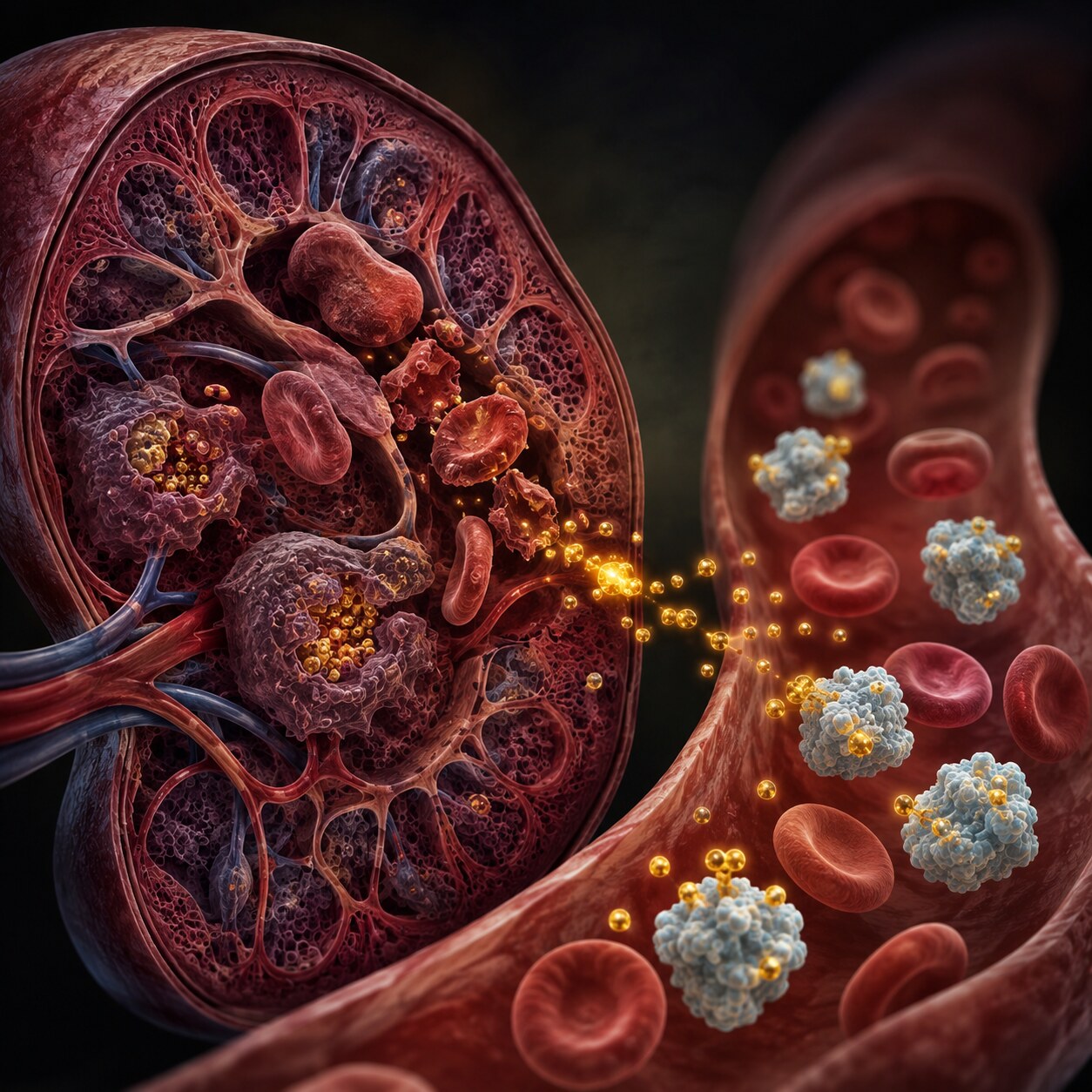
Figure 1. The spleen breaking down aged red blood cells and releasing unconjugated bilirubin, bound to albumin, into the bloodstream for delivery to the liver.
A total bilirubin result on its own is genuinely limited in what it can tell a doctor, which is exactly why any meaningfully elevated total bilirubin gets fractionated — broken down into how much is unconjugated (indirect) versus conjugated (direct) — before drawing any conclusions. This split maps directly onto the journey described above: a predominantly indirect elevation points toward a problem upstream of or at the liver's conjugation step, meaning either too much bilirubin is being produced for the liver to keep up with, or the liver's conjugation machinery itself isn't working efficiently. A predominantly direct elevation, by contrast, points toward a problem downstream of conjugation — the liver has successfully processed the bilirubin, but something is preventing it from being properly excreted into bile and out of the body, whether that's genuine liver cell damage or a physical blockage somewhere in the bile duct system. This single distinction is the primary tool doctors use to sort an elevated bilirubin result into one of several genuinely different diagnostic categories before ordering any further testing, and it's the reason this article is organized the way it is — indirect causes first, since they're the ones most likely to have nothing to do with liver disease at all, followed by direct causes, which are where genuine liver and biliary pathology actually shows up.
Hemolysis: Too Much Production for a Perfectly Healthy Liver
One of the most significant non-liver causes of elevated bilirubin is hemolysis — the premature, accelerated destruction of red blood cells, happening faster than the normal 120-day turnover rate. Hemolysis can be triggered by inherited conditions affecting red blood cell structure, autoimmune diseases where the immune system mistakenly attacks red blood cells, certain infections, some medications, and mechanical causes like a faulty heart valve physically damaging cells as blood passes through it. When red blood cells break down faster than normal, the spleen produces unconjugated bilirubin at a rate that can genuinely outpace even a completely healthy liver's conjugation capacity, since that capacity, while substantial, isn't infinite. The result is a predominantly indirect (unconjugated) bilirubin elevation occurring in someone whose liver is functioning perfectly normally — the liver isn't the problem at all, it's simply being asked to process more raw material than usual. This is exactly why an elevated bilirubin found alongside other signs of red blood cell destruction, like a low hemoglobin, an elevated reticulocyte count reflecting the bone marrow's compensatory response, or elevated LDH, points a doctor toward investigating hemolysis rather than liver disease, even though the finding technically appears on what's often called a "liver panel."
Gilbert's Syndrome: A Common, Benign Genetic Variant
Gilbert's syndrome is, by a wide margin, the most common cause of a mild, isolated, predominantly indirect bilirubin elevation in an otherwise completely healthy person, affecting somewhere between 3% and 10% of the general population depending on the specific group studied — common enough that most people who have it never even know, since it typically causes no symptoms at all. The condition stems from a genetic variation that reduces the activity of UGT1A1, the specific liver enzyme responsible for the conjugation step described earlier, typically to somewhere between 10% and 30% of normal activity. This reduced enzyme activity isn't severe enough to cause any real functional problem under most circumstances, but it does mean the liver's conjugation capacity runs closer to its ceiling than in someone with normal enzyme levels, which is exactly why bilirubin in someone with Gilbert's syndrome tends to fluctuate noticeably and can spike higher, sometimes visibly enough to cause mild, temporary yellowing of the eyes, during specific triggers: fasting or skipping meals, physical stress, dehydration, intense exercise, and common illnesses like a cold or flu. Gilbert's syndrome is considered a benign variant rather than a disease — it requires no treatment, carries no long-term health consequences, and is typically diagnosed through this exact pattern: a mildly elevated, predominantly indirect bilirubin, with every other liver test completely normal, in someone with no other explanation for the finding.
Why Fasting Specifically Raises Bilirubin
The fasting-related trigger mentioned above deserves its own closer look, since it's a genuinely well-documented, mechanistically specific phenomenon relevant to far more people than just those with Gilbert's syndrome, even if the effect is most pronounced in that group. Fasting appears to reduce bilirubin's uptake into liver cells and can also modestly slow the conjugation process itself, through mechanisms tied to reduced caloric intake affecting liver cell metabolism more broadly. In someone with entirely normal UGT1A1 enzyme activity, this effect is usually small enough to stay within the normal reference range or produce only a very mild elevation. In someone with the reduced baseline enzyme capacity of Gilbert's syndrome, however, that same fasting-related dip in processing efficiency can be enough to push bilirubin clearly above the normal range, sometimes dramatically so during an extended fast. This is exactly why a bilirubin test drawn after a long period without eating, or in someone who has been unable to eat normally due to illness, can look more alarming than it actually is, and why a doctor investigating a new, isolated bilirubin elevation will often ask directly about recent fasting or illness before assuming something more serious is happening.
Neonatal Jaundice: The Same Mechanism, in a Different Life Stage

Figure 2. A newborn undergoing standard phototherapy, a common, non-invasive treatment that helps an immature liver enzyme system break down excess bilirubin more efficiently.
Newborns are, statistically, the population most likely to have a visibly elevated bilirubin, and the mechanism behind this common, usually harmless finding maps directly onto the same enzyme system discussed in the Gilbert's syndrome section above. A newborn's liver hasn't fully matured yet, and UGT1A1 enzyme activity is naturally low at birth, gradually ramping up to full adult levels over the first couple of weeks of life. At the same time, newborns have a higher red blood cell turnover rate than adults, producing more bilirubin at exactly the moment the liver is least equipped to process it efficiently. This combination — high production, low processing capacity — is precisely why the majority of healthy newborns develop some degree of visible jaundice within the first few days of life, a phenomenon so common it's considered a normal, expected part of early development rather than a disease in the vast majority of cases. Because bilirubin at very high levels can, in rare and severe cases, cross into a newborn's developing brain and cause lasting harm, healthcare providers monitor newborn bilirubin closely and use specific age-in-hours-based thresholds to decide when treatment, typically phototherapy using a specific wavelength of blue light that helps break bilirubin down into a form the body can excrete more easily, is warranted — a precaution built around the immaturity of a normal, developing system, not evidence of liver disease in the newborn.
Ineffective Erythropoiesis and Other Production-Side Causes
Beyond straightforward hemolysis, certain conditions affecting how red blood cells are made in the bone marrow in the first place can also raise bilirubin through a related but distinct mechanism called ineffective erythropoiesis. In these conditions, red blood cells or their precursors are destroyed inside the bone marrow before they even reach full maturity and enter circulation, meaning heme breakdown, and the resulting bilirubin production, happens earlier and more extensively in the cell's lifecycle than normal. Certain inherited blood disorders, some vitamin deficiencies severe enough to disrupt normal red blood cell maturation, megaloblastic anemia among them, and specific bone marrow conditions can all produce this pattern. Like classic hemolysis, this mechanism produces a predominantly indirect bilirubin elevation and, again, reflects a problem with how red blood cells are being produced and broken down rather than any dysfunction in the liver itself — one more entry in the growing list of ways an elevated bilirubin can originate entirely outside the organ most people immediately associate it with, and one more reason a hematologist, not a liver specialist, is sometimes the right doctor to sort out an indirect-predominant result once the more common explanations have already been ruled out.
When Direct Bilirubin Is the One That's Elevated: Obstruction
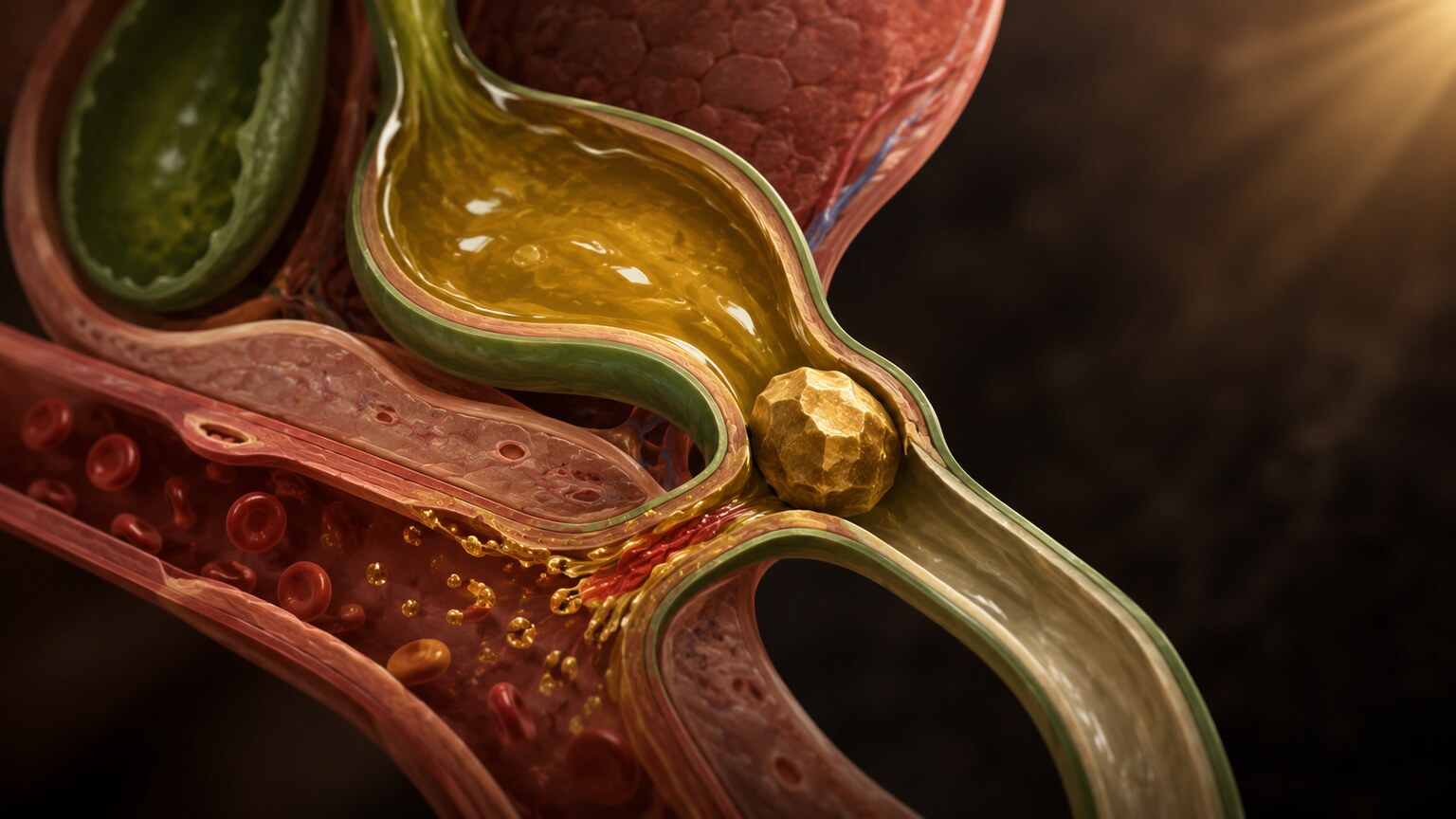
Figure 3. A gallstone lodged in the common bile duct, physically obstructing the outflow of bile and causing already-conjugated bilirubin to reflux back into the bloodstream.
This is where the picture genuinely shifts, and where the fractionation discussed earlier does its most important diagnostic work. A predominantly direct (conjugated) bilirubin elevation means the liver has already successfully done its conjugation job — the bilirubin has been made water-soluble and prepared for excretion — but something is preventing it from actually leaving the body through bile as intended. A gallstone lodged in the common bile duct is one of the most common and most mechanically straightforward causes: the stone physically blocks the duct, bile and its conjugated bilirubin content back up, and it eventually spills back into the bloodstream instead of reaching the intestine. Tumors of the pancreas or bile ducts themselves, and strictures or scarring from prior surgery or inflammation, can produce the same physical obstruction through a different underlying cause. This category, broadly called obstructive or post-hepatic jaundice, often comes with a distinctive symptom pattern that reflects the mechanism directly: pale, clay-colored stools, since bilirubin normally gives stool its brown color and isn't reaching the intestine to do so, and dark, tea-colored urine, since the backed-up conjugated bilirubin, being water-soluble, gets filtered out through the kidneys instead. This symptom pattern is genuinely useful clinically, since it points toward an obstruction even before imaging confirms the specific cause.
When Direct Bilirubin Is Elevated Because the Liver Itself Is Injured
The other major cause of a predominantly direct bilirubin elevation is genuine hepatocellular injury — damage to liver cells themselves, from viral hepatitis, alcohol-related liver damage, certain medications and toxins, autoimmune liver disease, or fatty liver disease that has progressed to active inflammation. When liver cells are damaged, their ability to properly transport already-conjugated bilirubin out into bile becomes impaired, even though the conjugation step itself may still be working reasonably well, causing conjugated bilirubin to leak back into the bloodstream rather than reaching the intestine as intended. This is the category that most closely matches the assumption most people make when they hear "elevated bilirubin" — genuine liver disease — and it's precisely why this article has spent so much time establishing everything that has to be ruled out or considered first. In this setting, bilirubin elevation almost never travels alone: it's typically accompanied by clearly abnormal liver enzymes like ALT and AST, which reflect direct liver cell injury, giving doctors a much fuller, more specific and more actionable picture than bilirubin could ever provide entirely by itself.
Medications That Interfere With Bilirubin Processing
Several medications can raise bilirubin through mechanisms that don't reflect genuine liver injury at all, instead interfering directly with the transport or conjugation machinery discussed throughout this article. Certain protease inhibitor medications used in HIV treatment, most notably atazanavir, are well known for competitively inhibiting the same UGT1A1 enzyme responsible for conjugation, producing a Gilbert's-syndrome-like pattern of mild, predominantly indirect bilirubin elevation as a recognized, generally harmless side effect that clinicians specifically watch for and expect rather than treat as a sign of liver damage. Rifampin, an antibiotic used for tuberculosis and certain other infections, can interfere with bilirubin's uptake into liver cells through a separate mechanism, producing a similar, usually reversible elevation. Certain other medications, including some antibiotics and anti-inflammatory drugs in less common circumstances, have been associated with a more genuine hepatocellular pattern of injury in rare cases, which is exactly why a full, current medication list is one of the very first things reviewed whenever an elevated bilirubin doesn't have an obvious, more common explanation — distinguishing a benign, mechanism-specific medication effect from a rarer but genuine drug-induced liver injury changes the entire course of action that follows.
Recognizing Jaundice, and What the Pattern Can Suggest
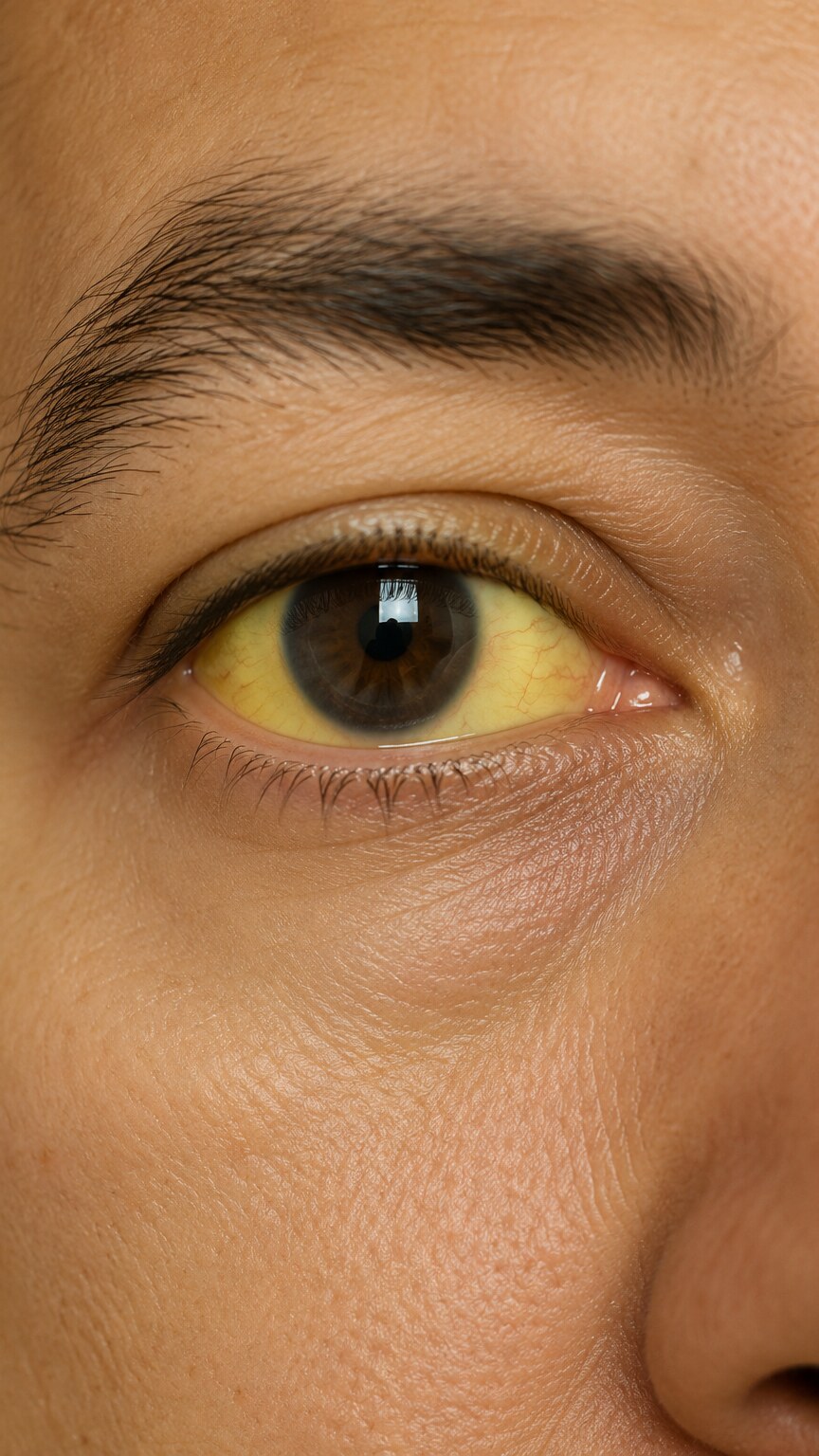
Figure 5. Mild scleral icterus — a visible yellow tint to the whites of the eyes — the earliest and most clinically recognizable sign that bilirubin has risen meaningfully above the normal range.
Jaundice, the visible yellowing of skin and the whites of the eyes, becomes noticeable once bilirubin climbs meaningfully above the normal range — typically around two to three times the upper limit of normal, though this varies somewhat by individual and skin tone, with the whites of the eyes (the sclera) often showing the change earliest and most clearly, since that tissue has a particular affinity for binding bilirubin. Jaundice itself is a sign, not a diagnosis — it simply confirms that bilirubin is elevated enough to be visible, without indicating which of the many mechanisms discussed throughout this article is responsible. What accompanies the jaundice tells the more useful story: jaundice with normal-colored stool and urine, and a general sense of feeling otherwise well, points toward one of the indirect, upstream causes like hemolysis or Gilbert's syndrome. Jaundice paired with pale stool and dark urine points toward obstruction. Jaundice paired with fatigue, abdominal discomfort, and other signs of feeling generally unwell points more toward genuine hepatocellular injury. None of this replaces an actual blood test and fractionation, but it's a genuinely useful set of clues that both patients and clinicians can use to start narrowing down the likely category before any lab work even comes back.
Reading a Fractionated Result: A Practical Walkthrough
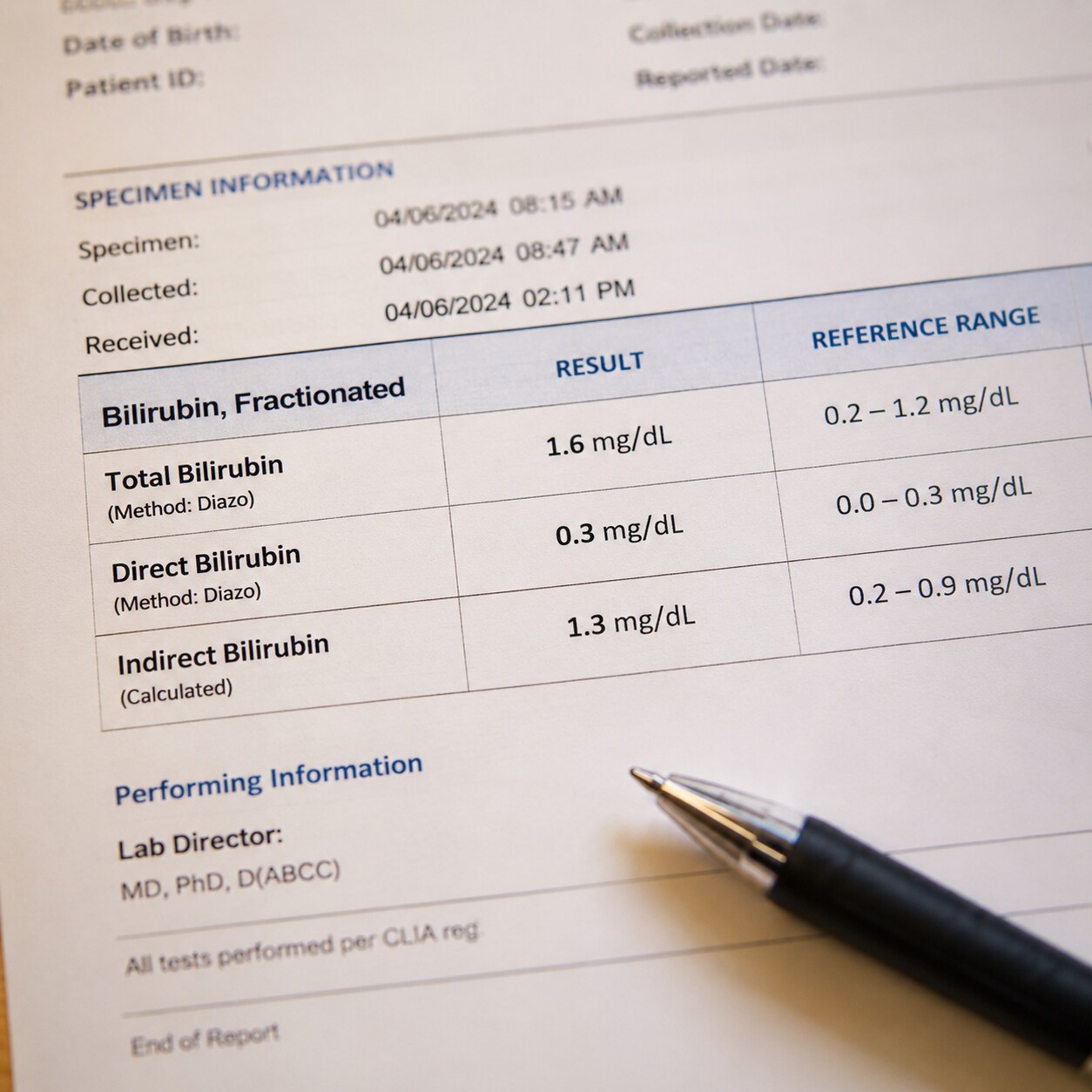
Figure 4. A fractionated bilirubin panel reporting total, direct, and indirect values separately — the single calculation that determines which diagnostic pathway a workup follows.
Putting the whole framework together, here's how a doctor genuinely reads a fractionated bilirubin panel in practice. If total bilirubin is elevated and the direct fraction makes up a small minority of that total — generally less than around 20% — the elevation is predominantly indirect, and the workup shifts toward the upstream causes covered earlier: a blood smear and reticulocyte count to check for hemolysis, a review of recent fasting or illness, family history suggestive of Gilbert's syndrome, and a current medication list. If the direct fraction makes up a substantial portion of the total, the workup shifts toward the downstream causes: liver enzymes to assess for hepatocellular injury, and imaging, typically an ultrasound as a first step, to look directly for a gallstone, mass, or other physical obstruction in the bile duct system. This one calculation — what percentage of the total is direct versus indirect — is genuinely the fork in the road that determines nearly everything about how the rest of the workup proceeds, which is exactly why a lab report listing only a total bilirubin, without the fractionated breakdown, tells a doctor comparatively little on its own once that total climbs meaningfully outside the normal range.
Why Bilirubin Is Never Interpreted Completely Alone
Even with fractionation, bilirubin is almost always read alongside a broader liver panel rather than in total isolation, because the other values on that panel each illuminate a different part of the same system. ALT and AST reflect damage to liver cells themselves, rising when hepatocytes are actively injured. Alkaline phosphatase (ALP) and GGT rise specifically with bile duct problems and obstruction, complementing what direct bilirubin already suggests. Albumin and a clotting-related measurement called the INR reflect the liver's actual functional capacity — its ability to manufacture essential proteins — rather than injury or obstruction specifically, offering a sense of how well the liver is currently performing its broader job beyond just processing bilirubin. Together, this panel of values, read as a pattern rather than a list of isolated numbers, is what actually lets a doctor distinguish confidently between a benign, harmless cause of elevated bilirubin and one that genuinely requires further investigation or treatment — a distinction that bilirubin, as capable and informative as it is, was never designed to make entirely on its own.
What ties every mechanism in this article together is a single, useful mental model: think of bilirubin less as a direct measure of liver health and more as a measure of balance between production, processing, and excretion across an entire multi-step system, one in which the liver is an important but far from exclusive participant. A number that's high because production has outpaced an entirely healthy liver's capacity tells a genuinely different story than a number that's high because the liver itself, or the path leading out of it, has become obstructed or damaged. Holding onto that distinction — production versus processing versus excretion — is what turns an intimidating, easily misread lab value into something considerably more specific and considerably less frightening the next time it shows up on a routine panel, and it's the same distinction worth bringing up directly with a doctor the next time this particular result needs explaining, rather than assuming the worst before that fuller conversation with a doctor even happens.
When an Elevated Bilirubin Genuinely Warrants Urgent Attention
While a great deal of this article has focused on reassuring, benign explanations, it's worth being direct about the situations that do warrant prompt medical attention rather than a wait-and-see approach. A rapidly rising bilirubin, particularly one accompanied by significant abdominal pain, fever, confusion, or a rapid heart rate, can indicate a serious, evolving process like ascending cholangitis, a dangerous infection that can develop behind an obstructed bile duct, or acute liver failure, both of which require urgent evaluation. Jaundice appearing suddenly in someone who was previously well, especially alongside pale stools and dark urine suggesting a new obstruction, deserves prompt medical attention rather than assuming a benign cause like Gilbert's syndrome, which typically has a longer, more fluctuating history rather than a sudden, dramatic onset. The reassuring message of this article — that many causes of elevated bilirubin are benign — was never meant to suggest that every case can be safely assumed to be one of them without appropriate evaluation; it's meant to explain why a doctor doesn't panic at the first sign of an elevated number, while still taking the full clinical picture seriously enough to catch the genuinely urgent cases when they occur. If in doubt, treating a jaundice-related symptom as worth a same-day call to a doctor rather than a wait-and-see approach at home is always the safer path, since the cost of a quick evaluation that turns out to be benign is far lower than the cost of delaying evaluation for something that genuinely needed prompt attention.
Other Inherited Bilirubin-Processing Syndromes Beyond Gilbert's
Gilbert's syndrome is by far the most common inherited variant affecting bilirubin, but it sits on a spectrum alongside several rarer conditions that affect the same general processing pathway to different degrees, and understanding where they fall on that spectrum helps put Gilbert's own mildness into perspective. Crigler-Najjar syndrome involves a far more severe deficiency of the same UGT1A1 enzyme responsible for conjugation, and its more serious form involves almost no functional enzyme activity at all, producing dangerously high unconjugated bilirubin levels from infancy that require ongoing, active management, including phototherapy, throughout life — a genuinely different clinical situation from Gilbert's syndrome's mild, fluctuating, treatment-free course, even though both conditions affect the exact same enzyme. Dubin-Johnson syndrome and Rotor syndrome, by contrast, affect the transport step that moves already-conjugated bilirubin out of liver cells into bile, producing a predominantly direct bilirubin elevation despite both being entirely benign, harmless genetic conditions with no impact on liver health or life expectancy. These conditions are considerably rarer than Gilbert's syndrome, but they're worth knowing about specifically because they illustrate a broader point this entire article has been building toward: even within the category of inherited, genetic causes of abnormal bilirubin, the specific step in the pathway that's affected determines both which fraction of bilirubin rises and how seriously the condition needs to be taken, rather than "genetic cause" functioning as a single, uniform category of concern.
How Long an Elevated Bilirubin Typically Takes to Resolve
The expected timeline for a bilirubin result to normalize varies enormously depending on which underlying mechanism is actually driving it, and knowing roughly what to expect helps set realistic expectations for anyone tracking a follow-up result. A fasting-related or illness-related spike, including in someone with Gilbert's syndrome, typically resolves within days once normal eating resumes and the triggering illness passes, since the underlying mechanism is a temporary dip in processing capacity rather than any lasting change. A bilirubin elevation from hemolysis generally improves once the underlying cause of the accelerated red blood cell destruction is identified and addressed, which can range from days to weeks depending on the specific condition involved. Newborn jaundice typically peaks within the first three to five days of life and resolves on its own within one to two weeks as the liver's enzyme system matures, though phototherapy can accelerate this process when levels climb high enough to warrant it. An obstruction-related elevation generally doesn't improve at all until the physical blockage itself is addressed, whether through a procedure to remove a gallstone or treatment targeting a mass or stricture, which is exactly why obstructive causes are managed with a fundamentally different urgency and approach than the more self-limited causes discussed elsewhere in this article — the bilirubin isn't going to trend downward on its own no matter how much time passes, since the actual physical barrier to excretion hasn't gone anywhere until a procedure or treatment physically removes it.
Frequently Asked Questions
Why does the liver get blamed for bilirubin when it doesn't even produce it?
Bilirubin is produced when old red blood cells break down, mostly in the spleen. The liver's job is to process and clear it from the blood, not create it, which is why so many causes of elevated bilirubin actually have nothing to do with liver damage.
What's the difference between direct and indirect bilirubin, and why does it matter?
Indirect (unconjugated) bilirubin hasn't yet been processed by the liver; direct (conjugated) bilirubin has. A predominantly indirect elevation points toward causes before or at the liver, like hemolysis or Gilbert's syndrome, while a direct elevation points toward liver injury or bile duct obstruction.
Is Gilbert's syndrome dangerous?
No. Gilbert's syndrome is a common, benign genetic variant affecting a liver enzyme involved in bilirubin processing. It requires no treatment, carries no long-term health risks, and typically causes only mild, fluctuating bilirubin elevation.
Why is jaundice so common in newborns?
A newborn's liver enzyme responsible for processing bilirubin is naturally immature at birth, while red blood cell turnover is higher than in adults. This combination of high production and low processing capacity is a normal, usually harmless part of early development.
What symptoms suggest an elevated bilirubin needs urgent attention?
Sudden jaundice with significant abdominal pain, fever, confusion, pale stools, or dark urine suggests a process like bile duct obstruction or infection that warrants prompt medical evaluation rather than a wait-and-see approach.
How Imaging Fits Into the Workup
Once fractionation and the broader liver panel have pointed a workup in a particular direction, imaging often becomes the next practical step, particularly whenever an obstructive cause is genuinely suspected. Abdominal ultrasound is typically the first imaging test ordered, since it's non-invasive, widely available, doesn't involve radiation, and is genuinely quite good at detecting gallstones and revealing whether the bile ducts themselves appear dilated — a telltale sign of a blockage somewhere downstream. If ultrasound findings are inconclusive but suspicion for obstruction remains high, more detailed imaging like an MRCP, a specialized MRI technique that produces a detailed map of the bile duct system, or a CT scan, can pinpoint the exact location and nature of a blockage with considerably more precision. For cases where hemolysis is suspected instead, imaging plays essentially no role at all, and the workup instead centers entirely on blood tests — a reticulocyte count, a blood smear examined under a microscope for the characteristic appearance of damaged red blood cells, and sometimes more specialized testing depending on what the initial results suggest. This divergence in approach — imaging-heavy for suspected obstruction, blood-test-heavy for suspected hemolysis — is itself a direct, practical consequence of the direct-versus-indirect fractionation discussed throughout this article, since it's precisely that first split that tells a doctor which of these two very different diagnostic paths to even begin walking down.
A Word on At-Home and Direct-to-Consumer Bilirubin Testing
As direct-to-consumer lab testing has become more widely available, bilirubin is often included as one line item within a broader liver panel someone might order on their own, outside a clinical visit prompted by symptoms. Interpreting an isolated, mildly elevated bilirubin found this way benefits enormously from everything covered in this article — before assuming the worst, it's worth honestly considering whether the sample was drawn after a period of reduced eating, during a minor illness, or shortly after unusually intense exercise, any of which can produce a mild, temporary elevation with no real significance behind it. A single mildly elevated result with an otherwise normal liver panel and no symptoms is a reasonable thing to mention to a doctor for guidance on whether simply rechecking it after resuming normal eating and resolving any recent illness is appropriate, rather than triggering immediate alarm. A result that's more significantly elevated, that comes with other abnormal liver values, or that appears alongside any of the concerning symptoms discussed earlier in this article, is worth bringing to a doctor for proper fractionation and follow-up rather than trying to fully interpret in isolation — direct-to-consumer testing is genuinely useful for surfacing a finding worth discussing, but it was never meant to replace the fuller clinical picture a doctor builds through fractionation, a complete panel, and, when needed, imaging.
Conclusion
Bilirubin's journey through the body — from red blood cell breakdown, through the bloodstream, into the liver for conjugation, and finally out through bile — means an elevated result can reflect a disruption at any one of several genuinely different points along that path, and only one of those points actually involves liver damage. Hemolysis, Gilbert's syndrome, fasting, and newborn physiology can all raise bilirubin without a single unhealthy liver cell involved, while true hepatocellular injury and bile duct obstruction represent the categories where liver and biliary disease genuinely explain the finding. Fractionating the result into direct and indirect components, and reading it alongside the rest of a liver panel rather than in isolation, is what actually separates these possibilities — which is exactly why an elevated bilirubin, on its own, was never meant to be read as an automatic verdict on the health of your liver.
Still Not Sure What Your Results Mean?
Upload your labs and get a complete, visual, plain-language interpretation of every biomarker — delivered to your inbox in under 15 minutes.
Get My ReportThis article is for educational purposes only and does not constitute medical advice. Always consult your healthcare provider regarding your specific lab results.