What Does a High Bilirubin Level Mean?
Bilirubin is one of the few substances on a standard lab panel that your body produces on purpose, every single day, as a routine byproduct of recycling old red blood cells — somewhere around 80% of it comes directly from ordinary hemoglobin breakdown, a process happening continuously and reliably behind the scenes whether or not anyone is actively paying attention to it or has any reason to think about it at all. An elevated result doesn't automatically point to one specific problem the way some other lab values do, because bilirubin can rise for genuinely different reasons happening at three completely different points in the body: too much of it being produced in the first place, the liver struggling to process what's produced, or a blockage preventing it from ever leaving the body once it's already been processed. Gilbert syndrome, a common and entirely benign genetic condition, accounts for a large share of otherwise unexplained mild elevations, found in an estimated 4% to 16% of the general population depending on ethnicity, and simple, everyday fasting can independently double a person's bilirubin level within a single day without anything genuinely being wrong at all in the underlying picture. This article walks carefully through exactly how bilirubin is made from start to finish, why doctors deliberately split it into two entirely distinct lab measurements rather than simply reporting a single combined number, the specific causes behind each of the three broad categories of elevation, and, ultimately, what determines whether a given result is something genuinely worth quietly monitoring over time or something that instead calls for prompt, timely action.
Where Bilirubin Actually Comes From
Understanding this origin story matters because it reframes what "elevated bilirubin" fundamentally represents: not a substance your body is accidentally producing by mistake, but the natural output of a housekeeping process that runs constantly and reliably in every healthy person, day in and day out, regardless of diet, activity, or anything else going on in life. What actually varies between a normal result and an elevated one isn't usually whether this process is happening at all, since it always is, but rather whether the underlying rate of production, the efficiency of hepatic processing, or the physical ability to excrete the finished product has shifted meaningfully out of its usual, well-balanced equilibrium.
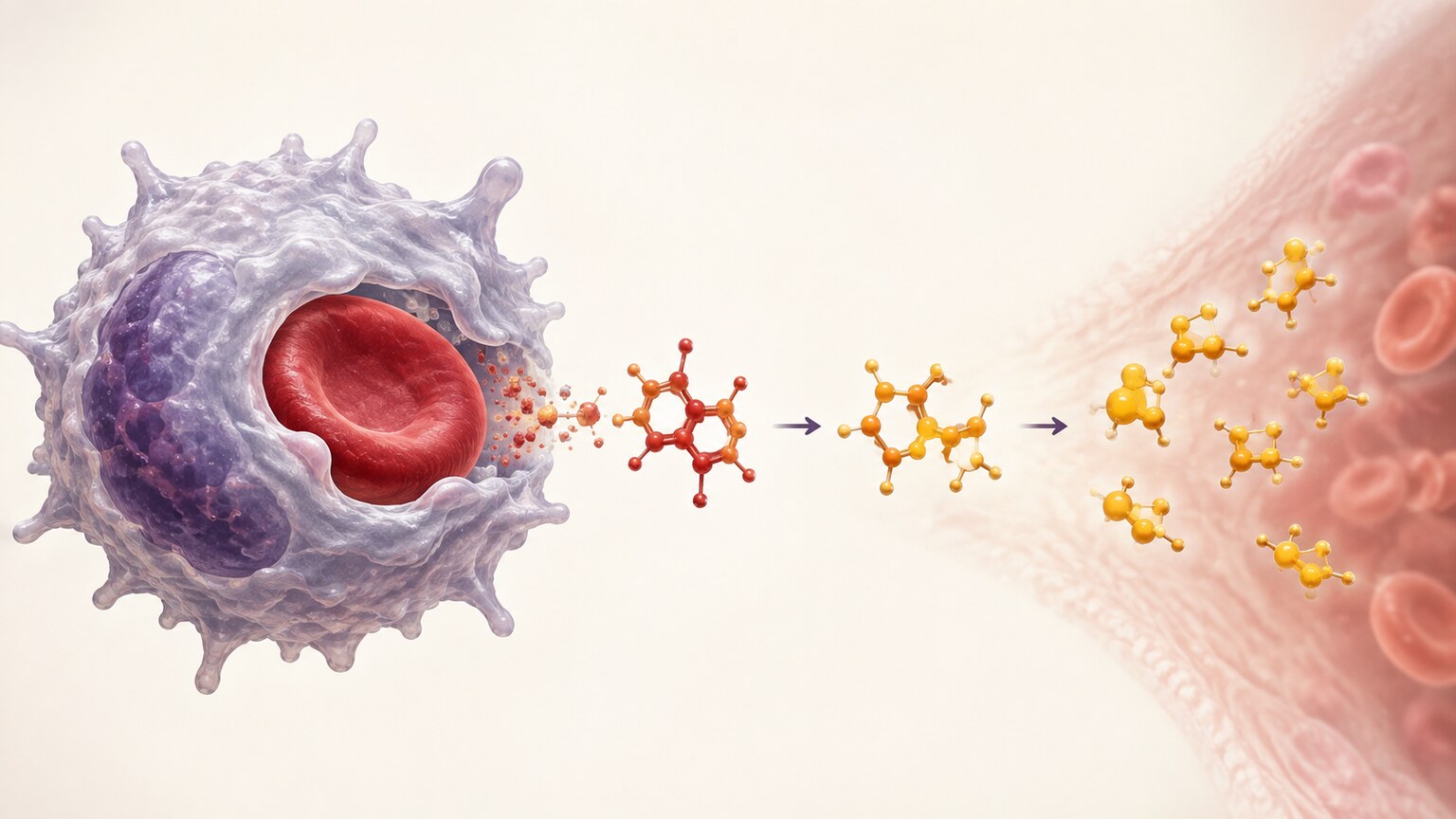
Bilirubin begins its life as a byproduct of an entirely normal, continuous process that never really stops: your body breaks down billions of aging red blood cells every single day, and specialized cells called macrophages, largely concentrated in the spleen but also found scattered throughout the liver and bone marrow, are responsible for identifying and clearing them out once they've reached the end of their roughly 120-day functional lifespan. When a red blood cell is broken down, the hemoglobin it was carrying gets systematically dismantled into its component parts — the protein portion, called globin, gets recycled into ordinary amino acids for reuse elsewhere in the body, while the heme portion, the iron-containing structure directly responsible for actually carrying oxygen throughout the bloodstream, is converted through a short, well-characterized enzymatic pathway into bilirubin itself, step by careful step. Roughly 80% of the bilirubin your body produces on any given day traces back directly to this red blood cell recycling process, while the remaining 20% comes from the breakdown of other heme-containing proteins found throughout the body, including myoglobin in muscle tissue and certain enzymes involved in cellular respiration and metabolism. This newly formed bilirubin is technically classified as a waste product destined for elimination, but a genuinely useful one in small quantities along the way — some research suggests it has meaningful antioxidant properties while it briefly circulates — and the entire downstream system exists specifically to package, transform, and remove it from the body efficiently once it's served whatever limited biological purpose it has to offer.
Unconjugated vs. Conjugated: Why the Distinction Matters So Much
Think of this two-step process as roughly analogous to a package that arrives at a sorting facility in a form that can't yet be delivered — it first has to be relabeled and repackaged into a deliverable format before it can move on to its final destination. Bilirubin follows exactly this same basic underlying logic: production happens in one place, transformation into a genuinely deliverable form happens specifically at the liver, and final delivery out of the body happens somewhere further downstream still, past the liver entirely. A genuine breakdown occurring at any one of these three distinct stages produces a measurably different laboratory signature, which is precisely why the unconjugated-versus-conjugated split carries so much diagnostic weight rather than being a minor technical detail.
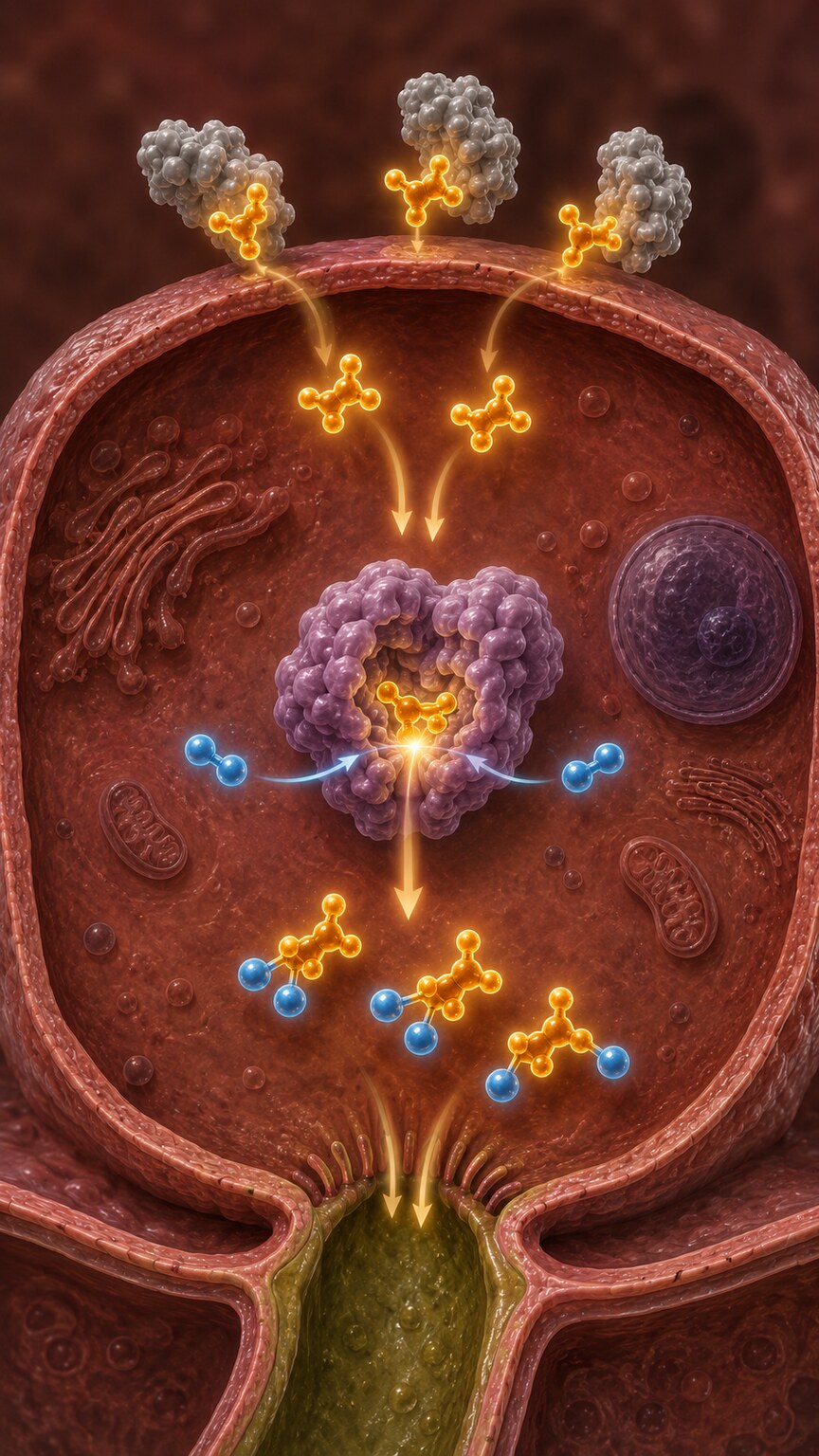
When bilirubin first forms, immediately after being released from a breaking-down red blood cell, it exists in a form called unconjugated bilirubin, which is genuinely not water soluble in this initial state and physically cannot be directly excreted from the body in the form it starts out in. Because it can't dissolve in water, unconjugated bilirubin has to travel through the bloodstream bound tightly to a carrier protein called albumin, which ferries it along through general circulation until it eventually reaches the liver, the only organ equipped to do anything further with it. Once it arrives at the liver, specialized liver cells called hepatocytes perform a specific chemical transformation called conjugation, attaching two molecules of glucuronic acid onto the bilirubin using a dedicated enzyme called UGT1A1, converting it into what's known as conjugated bilirubin — a genuinely water-soluble form that can now be actively excreted into bile and eventually eliminated through the digestive tract along with the rest of the body's normal waste. A standard lab panel typically reports both a total bilirubin figure and a breakdown of exactly how much of that total is unconjugated (sometimes labeled indirect on a report) versus conjugated (sometimes labeled direct), and this specific split is genuinely one of the single most useful diagnostic clues available on the entire panel, since a predominantly unconjugated elevation points toward problems occurring before the liver has had any chance to process the bilirubin at all, while a predominantly conjugated elevation points instead toward problems occurring after processing, once the liver has already successfully done its job and something downstream has gone wrong instead.
Curious what your own liver panel or bilirubin result actually means? Upload your labs and get a complete, plain-language breakdown in under 15 minutes.
Analyze My ResultsPrehepatic Causes: When Too Much Bilirubin Is Being Made
The first broad category of elevated bilirubin involves the production side of the equation entirely, rather than any actual problem with the liver itself, and doctors specifically refer to this as a prehepatic cause, meaning the underlying problem originates before bilirubin ever even reaches the liver for processing in the first place. The most common driver in this category is hemolysis, an accelerated, faster-than-normal rate of red blood cell destruction that genuinely overwhelms the liver's ordinary processing capacity, even though the liver itself, mechanically speaking, is working completely normally and hasn't been damaged in any way. This accelerated breakdown can happen for a genuinely wide range of underlying reasons: certain inherited conditions that make red blood cells structurally more fragile than normal and prone to premature rupture, autoimmune conditions in which the immune system mistakenly identifies and attacks the body's own red blood cells as though they were foreign invaders, mismatched blood transfusions triggering a similar immune reaction, certain infections, some medications, or even a large internal hematoma slowly being reabsorbed by the body over days, releasing a concentrated surge of hemoglobin that needs to be processed essentially all at once rather than gradually. Because the liver in these particular cases genuinely hasn't had a proper chance to conjugate the excess bilirubin flooding in yet, prehepatic causes characteristically and reliably produce a predominantly unconjugated elevation on lab testing, with the conjugated bilirubin fraction typically remaining largely normal throughout.
Hepatic Causes: When the Liver Itself Struggles to Keep Up
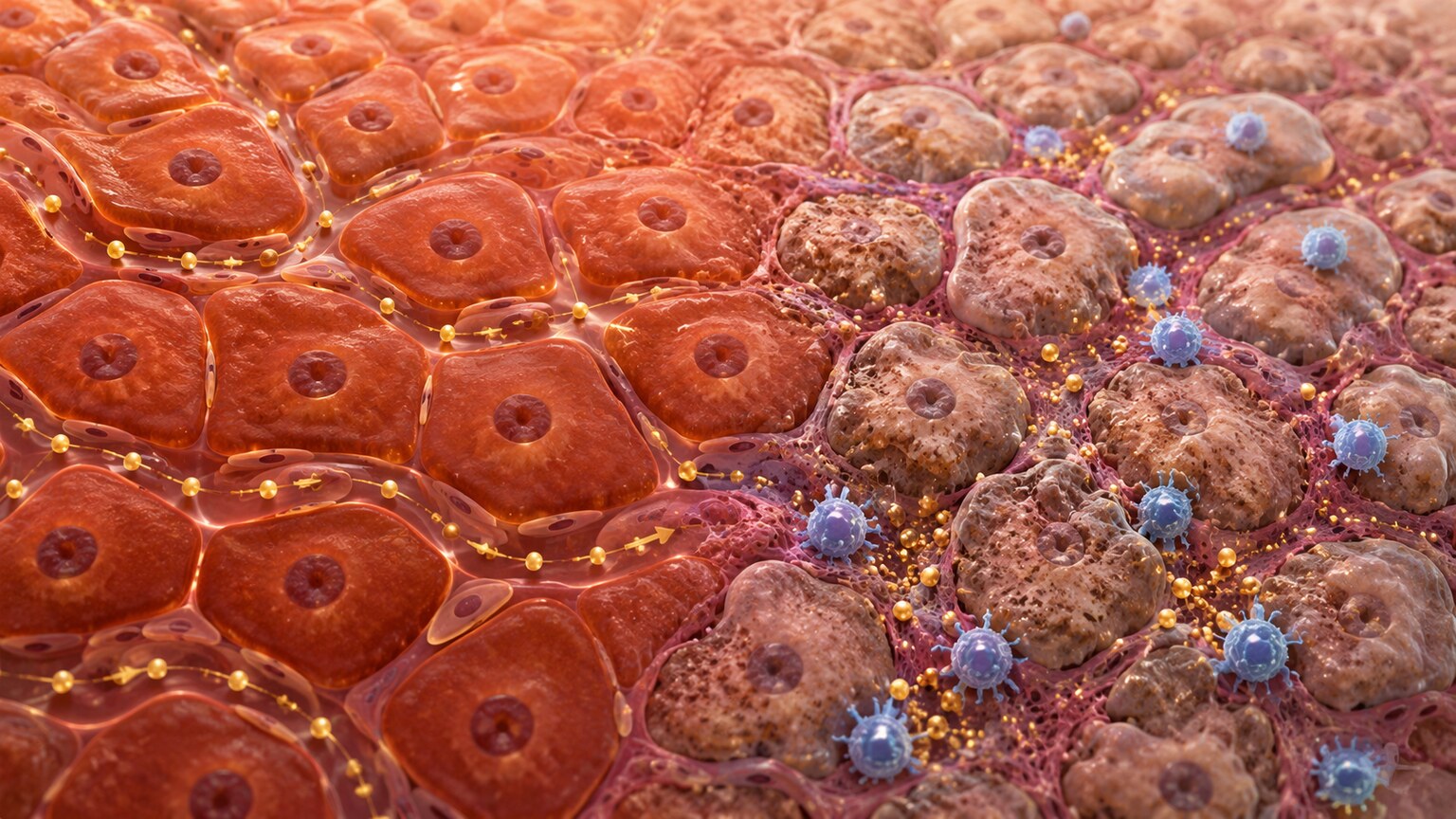
The second broad category involves the liver itself genuinely being unable to properly take up, conjugate, or excrete bilirubin the way it normally would, whether that's because liver cells have become inflamed, physically damaged, or otherwise genuinely dysfunctional at a cellular level. Viral hepatitis, alcohol-related liver injury accumulated over time, autoimmune liver disease, certain medication reactions ranging from common over-the-counter drugs to prescription medications, and more advanced conditions like cirrhosis can all interfere meaningfully with the liver's ability to process bilirubin at any one of several distinct steps along the pathway — taking it up from the bloodstream in the first place, conjugating it properly with glucuronic acid once inside the cell, or actively transporting the finished, conjugated bilirubin molecule out into bile for eventual elimination. Hepatic causes can produce elevations in either unconjugated or conjugated bilirubin specifically, or quite often a genuine mix of both simultaneously, depending entirely on exactly which step in the liver's multi-stage processing pathway is being disrupted and how severely that particular step has been affected. This category is typically accompanied by other clearly abnormal findings on a broader liver panel run at the same time, such as elevated liver enzymes like ALT and AST reflecting actual cellular injury, which is a meaningful part of why bilirubin is rarely, if ever, interpreted as a completely standalone value in isolation once a hepatic cause is genuinely suspected.
Posthepatic Causes: When Bilirubin Can't Get Out
The third and final category involves a genuine physical blockage occurring somewhere along the specific path bile takes after leaving the liver, preventing already-conjugated bilirubin from ever reaching the intestine the way it normally, smoothly would. Gallstones are by far the most common and generally benign cause of this particular kind of obstruction, fully capable of lodging directly in the bile duct and physically blocking the flow of bile downstream, but tumors growing near the bile ducts, scarring or strictures narrowing the duct itself, and direct inflammation of the bile ducts, a condition called cholangitis, can all produce essentially the same basic downstream effect through different underlying mechanisms. Because the liver has already fully completed its job of conjugating the bilirubin before this blockage ever comes into play, posthepatic causes characteristically and reliably produce a predominantly conjugated elevation on lab testing, with the backed-up, unable-to-escape bilirubin eventually spilling back into general circulation once bile flow becomes sufficiently obstructed to overwhelm the system's normal capacity. This particular category is also the one most classically and reliably associated with visible jaundice, unusually pale or clay-colored stools (since bilirubin is normally what gives stool its typical brown color in the first place), and noticeably dark urine, since some of the now water-soluble conjugated bilirubin ends up getting filtered out directly by the kidneys instead of following its intended, normal path through the digestive tract as designed.
Gilbert Syndrome: The Most Common Benign Cause of All
Many people quietly carrying this variant go through their entire lives without ever knowing it at all, since it produces no symptoms in the vast majority of cases beyond the occasional mildly elevated lab value, and it's often only discovered entirely incidentally when routine bloodwork happens to be drawn during one of the periods when bilirubin is already running slightly higher than usual for some other completely unrelated reason at the same time.

Before assuming an elevated bilirubin result must automatically fall into one of the three broader categories described above, it's genuinely worth knowing about Gilbert syndrome specifically, since it turns out to be the single most common explanation for an isolated, otherwise unexplained mild elevation encountered on routine testing. Gilbert syndrome is caused by a genuinely common genetic variant affecting the UGT1A1 gene, the exact same gene responsible for producing the enzyme that conjugates bilirubin in the liver in the first place. This particular variant, involving an extra repeated sequence inserted into a regulatory region of the gene called the promoter, meaningfully reduces the enzyme's overall activity level without eliminating its function entirely, meaning the liver still conjugates bilirubin, just noticeably more slowly and less efficiently than it normally would, rather than failing to do so at all. The practical result is a mild, predominantly unconjugated elevation that tends to fluctuate over time in a fairly characteristic way — sometimes appearing clearly on a lab report and sometimes not appearing at all on a different day, often triggered or meaningfully worsened by factors like an active infection, dehydration, low-calorie dieting, extreme physical exercise, or simple everyday fasting. Gilbert syndrome is found in an estimated 4% to 16% of the general population depending heavily on ethnicity and which specific population study is being referenced, and it's generally not associated with an increased risk of progressive liver disease or mortality, and typically requires no treatment — it's considered a benign genetic quirk of ordinary bilirubin metabolism rather than a disease in any meaningful clinical sense.
Why Fasting Alone Can Meaningfully Raise Bilirubin
Given how common Gilbert syndrome is, and how strongly fasting can independently amplify its already fluctuating baseline, the two factors together genuinely explain a large share of the mild, incidentally discovered bilirubin elevations that reliably show up on routine bloodwork drawn first thing in the morning, before a person has had any chance to eat anything at all that day.

One of the more genuinely surprising, well-documented triggers for a temporarily elevated bilirubin result turns out to be something as simple and ordinary as not having eaten recently. Research has found that a full 24-hour fast can more than double total serum bilirubin concentrations in both otherwise healthy individuals and in people with Gilbert syndrome specifically, with a clinically meaningful, measurable rise typically beginning somewhere after around 12 hours into the fasting period rather than appearing immediately. The underlying mechanism appears to involve a genuine, temporary decrease in hepatic clearance of bilirubin during fasting states specifically, rather than any actual increase in production during that same window, meaning the liver's own processing capacity itself temporarily slows down and becomes measurably less efficient when the body simply hasn't taken in food for an extended stretch of time. This effect is significant and well-documented enough that it's considered a genuine, well-recognized confounding factor that clinicians specifically account for when interpreting an individual bilirubin result, and it's a meaningful part of why a mildly elevated bilirubin discovered incidentally on a fasting blood panel, particularly one that fully resolves on a simple repeat test taken later after normal eating has resumed, so often turns out to be nothing more than this ordinary, entirely benign physiological response rather than any genuine sign of an underlying problem worth pursuing further.
Why Newborn Jaundice Is So Common, and Usually So Harmless
This developmental example also offers a useful, concrete illustration of a broader theme running throughout this entire article: elevated bilirubin frequently reflects a genuine, temporary mismatch between production and processing capacity, rather than damage to any organ, and recognizing that specific distinction clearly is often the single most reassuring piece of the entire diagnostic picture.
Elevated bilirubin isn't only an adult phenomenon — more than two-thirds of all newborns develop some visible degree of jaundice within their very first days of life, making it genuinely one of the single most common clinical findings in the entire newborn period rather than any kind of rare, unusual complication requiring alarm. The underlying mechanism here draws directly and quite neatly on everything already described earlier in this article: newborns are actively breaking down a relatively large volume of red blood cells shortly after birth as their circulation adjusts, producing bilirubin at a genuinely higher rate than an older infant or adult would, while at the exact same time, the UGT1A1 enzyme system responsible for conjugating that bilirubin remains genuinely immature and simply hasn't yet reached its full functional capacity. This specific combination of increased production alongside temporarily reduced processing capacity is exactly the same "too much coming in, not enough capacity to process it" pattern already seen in Gilbert syndrome, just occurring here for developmental reasons rather than genetic ones, and it typically resolves entirely on its own within the first couple of weeks of life as the newborn's liver enzyme systems mature. In the smaller share of cases where bilirubin climbs high enough to cross established, carefully calibrated treatment thresholds — thresholds that are themselves adjusted based on exactly how many hours old the infant happens to be — the standard, well-established treatment is phototherapy, a genuinely elegant, entirely non-invasive solution that uses specific wavelengths of visible light to transform bilirubin sitting right in the skin itself into water-soluble forms that can then be eliminated without ever needing to be conjugated by the liver at all in the first place, effectively giving the newborn's still-immature liver a temporary, entirely external assist while its own enzyme systems gradually finish catching up naturally on their own.
How Doctors Judge Severity: From Subclinical to Visible Jaundice
None of this is meant to suggest that every elevated bilirubin result should be assumed benign without any further thought — the point being made here is simply that context, magnitude, and pattern all matter enormously before drawing any firm conclusion, and the same underlying number can mean something entirely different depending on all three of these surrounding factors taken together.
Normal total bilirubin in adults typically falls somewhere between 0.2 and 1.3 mg/dL, a genuinely narrow window given how much bilirubin the body is constantly producing and processing behind the scenes every single day, and results above this established range are generally categorized by how far they extend beyond it, since the actual degree of elevation itself carries real, meaningful clinical significance rather than functioning as a simple binary normal-or-abnormal cutoff. Visible jaundice — a genuine yellowing of the skin and the whites of the eyes caused by bilirubin pigment physically depositing in tissue throughout the body — typically doesn't become noticeable to the naked eye until bilirubin climbs to somewhere around 2 to 3 mg/dL, meaning a mild, technically abnormal elevation can genuinely exist on a lab report for some time before it ever becomes visually apparent to the person carrying it, let alone to people around them who might otherwise notice something was off. Beyond that specific visible threshold, clinical classification systems generally describe progressively higher ranges using terms like mild, moderate, or severe jaundice, with the raw magnitude of elevation, the observed trend across repeat testing over time, and the specific pattern of unconjugated versus conjugated bilirubin all factoring together into how urgently an underlying cause actually needs to be identified and meaningfully addressed by a doctor.
What Typically Happens After an Elevated Result
Having now walked carefully through the underlying biology and the major categories of possible causes, it's genuinely worth turning to the more practical question of what actually happens next once a result comes back visibly abnormal. It's worth emphasizing that the specific combination of findings, rather than any single isolated data point taken alone, is what actually drives the diagnostic process forward from here. A predominantly unconjugated elevation paired with a completely normal complete blood count and no signs of active hemolysis, for instance, points fairly strongly back toward something benign like Gilbert syndrome or recent fasting, whereas that exact same unconjugated pattern paired instead with anemia and other laboratory markers of active red blood cell destruction points more strongly toward genuine hemolysis requiring its own dedicated, focused workup. Context, in other words, genuinely does most of the real diagnostic work here — the bilirubin number by itself, standing alone, rarely tells the complete underlying story on its own.
When bilirubin comes back elevated on a routine panel, the practical next step usually involves carefully looking at the overall pattern of the result rather than fixating on the single isolated number by itself. A doctor will typically check whether the elevation is predominantly unconjugated or conjugated, review the rest of a standard liver panel for any signs of active liver injury like elevated ALT and AST, and consider ordering a complete blood count specifically to look for direct evidence of hemolysis if an unconjugated pattern happens to be present on the initial result. Additional history taken directly and carefully from the patient — recent fasting or dieting, alcohol use, any new medications started recently, exposure to anyone else who's been sick, a family history of similar findings on past bloodwork, or classic hemolysis symptoms like unexplained fatigue and unusually dark urine — often narrows the realistic list of likely causes considerably before any further, more invasive testing even becomes necessary. In many genuinely common cases encountered in everyday practice, particularly with a mild, isolated, predominantly unconjugated elevation showing up in an otherwise healthy person with no other concerning symptoms, a doctor may decide that a simple repeat test performed after normal eating and adequate hydration is enough to resolve the question, without pursuing further testing right away.
Frequently Asked Questions
What does it mean if my bilirubin is high?
It means bilirubin, a byproduct of normal red blood cell breakdown, is elevated for one of three broad reasons: too much is being produced, the liver is struggling to process it, or a blockage is preventing it from leaving the body.
What's the difference between unconjugated and conjugated bilirubin?
Unconjugated bilirubin hasn't yet been processed by the liver and isn't water soluble. Conjugated bilirubin has been chemically modified by the liver into a water-soluble form that can be excreted through bile.
Is Gilbert syndrome dangerous?
No. Gilbert syndrome is a common, benign genetic condition affecting bilirubin metabolism, found in roughly 4% to 16% of people, and it carries no increased risk of liver disease or mortality.
Can not eating actually raise bilirubin levels?
Yes. A 24-hour fast can more than double bilirubin levels in healthy people, due to temporarily decreased liver clearance, which is why fasting status matters when interpreting a bilirubin result.
At what bilirubin level does jaundice become visible?
Visible yellowing of the skin and eyes typically doesn't appear until bilirubin reaches roughly 2 to 3 mg/dL, meaning a mild elevation can exist on a lab report before becoming visually noticeable.
Why is jaundice so common in newborns?
Newborns break down red blood cells at a higher rate while their liver's bilirubin-conjugating enzyme system is still immature, a temporary mismatch that affects more than two-thirds of newborns and usually resolves on its own.
Conclusion
A high bilirubin result covers genuinely different territory depending on exactly where in the body the underlying problem actually sits — too much bilirubin being produced in the first place through accelerated red blood cell breakdown, a liver genuinely struggling to conjugate or excrete what's already been produced, or a physical blockage somewhere downstream preventing already-processed bilirubin from ever leaving the body as intended. The unconjugated-versus-conjugated split reported on most standard lab panels is genuinely the single most useful clue available for narrowing down which of these three categories most likely applies in any given case, and common, entirely benign explanations like Gilbert syndrome, recent fasting, and even ordinary newborn physiology together account for a substantial, genuinely reassuring share of the mild, isolated elevations people actually encounter on routine testing throughout life. Understanding this overall framework turns an otherwise unfamiliar, slightly alarming-sounding lab value into a concrete, structured starting point for asking the right follow-up questions, rather than leaving it as an isolated number sitting on a page without any real context attached to it.
Still Not Sure What Your Results Mean?
Upload your labs and get a complete, visual, plain-language interpretation of every biomarker — delivered to your inbox in under 15 minutes.
Get My ReportThis article is for educational purposes only and does not constitute medical advice. Always consult your healthcare provider regarding your specific lab results.