
What Causes Liver Enzymes to Rise Suddenly?
A sudden spike in liver enzymes almost always means one thing: something has irritated, injured, or blocked part of your liver system fast enough that cells are leaking their contents into your bloodstream faster than your body can clear them. The most common culprits are things you can actually name and rule in or out one by one — a medication (acetaminophen tops the list by a wide margin), a viral infection, a heavy drinking episode, a gallstone blocking the tube that drains bile out of your liver, a sudden drop in blood flow to the liver during a medical crisis, or, surprisingly often, nothing wrong with your liver at all but a hard workout that spilled the same enzymes out of your muscles instead. The pattern of which enzymes rose, by how much, and how fast they came down tells a trained eye almost as much as an ultrasound would. This article walks through each of those causes in plain language, explains what the four enzymes doctors actually look at are measuring, and lays out what usually happens next once a result like this lands on a lab report.
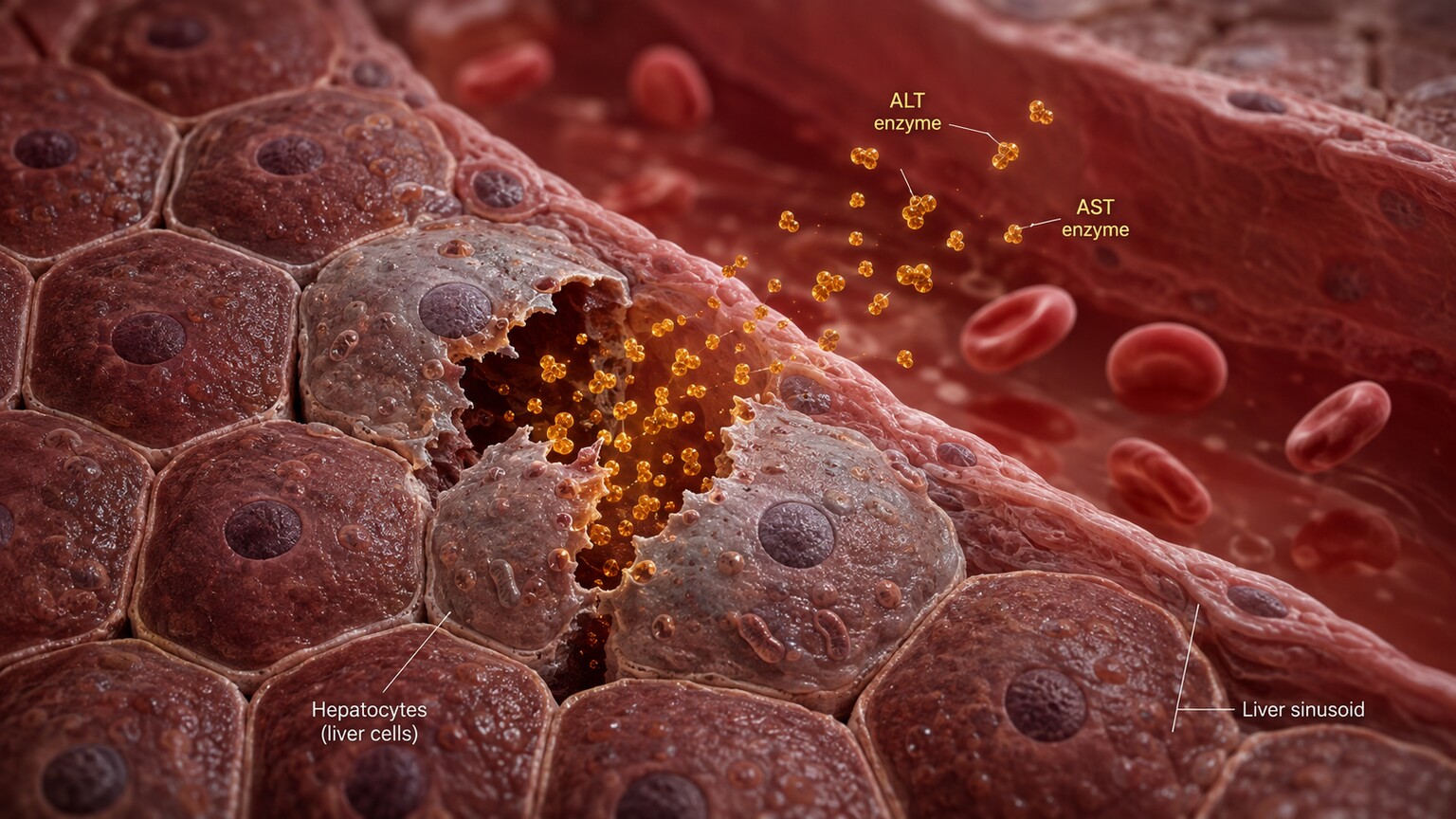
Figure 1. When liver cells (hepatocytes) are injured, ALT and AST leak out of the damaged cell membrane and into the bloodstream, which is exactly what a blood test is measuring.
Curious what the rest of your liver panel is actually telling you? Upload your results and get a complete, plain-language breakdown in under 15 minutes.
Analyze My ResultsWhat "Liver Enzymes" Actually Means
An enzyme is just a protein whose job is to speed up a specific chemical reaction inside a cell. Your liver cells are packed with thousands of different enzymes doing everything from breaking down medications to building cholesterol, but a standard liver panel only measures a handful of them — the ones that happen to be easy to detect in blood and reliably tied to specific kinds of liver trouble. When people say "liver enzymes are high," they're almost always talking about four tests: ALT, AST, ALP, and GGT. Each one is a different kind of smoke detector, wired to a different part of the building.
ALT (alanine aminotransferase) lives almost exclusively inside liver cells, which makes it the most liver-specific of the four. When ALT is elevated, the leading explanation is that liver cells themselves are being damaged or stressed, spilling their contents into the blood the same way a bruised piece of fruit leaks juice through a broken skin. AST (aspartate aminotransferase) measures something very similar, but it's also present in meaningful amounts in your heart, skeletal muscle, kidneys, and red blood cells — so a high AST on its own doesn't point at the liver as confidently as a high ALT does. ALP (alkaline phosphatase) is a different animal entirely: it's concentrated in the cells lining your bile ducts (the tubes that carry digestive fluid out of the liver) and in bone, so a rise in ALP often signals a blockage or backup somewhere in that drainage system rather than damage to liver cells directly. GGT (gamma-glutamyl transferase) is also concentrated in the bile ducts and is notably sensitive to alcohol and many medications, which makes it useful for confirming whether an ALP elevation is coming from the liver or the bones, since GGT stays normal in bone conditions but rises alongside ALP when the bile ducts are involved.
Think of it like a factory with two separate alarm systems. ALT and AST are smoke detectors mounted directly on the production floor — they go off when the workers (liver cells) themselves are getting hurt. ALP and GGT are more like alarms on the loading dock and delivery trucks (the bile ducts) — they go off when shipments (bile) can't get out the door, even if the factory floor itself is perfectly fine. A lab report that shows ALT and AST sky-high but ALP and GGT only mildly elevated is telling a very different story than one where it's the reverse, and doctors read that pattern before they read the raw numbers.
It helps to understand what these enzymes are doing when everything is working normally, because that's what makes their appearance in blood such a useful warning sign in the first place. ALT and AST both participate in a process called transamination, which is essentially how your liver shuffles nitrogen between different molecules — a routine housekeeping task tied to how your body processes protein and produces energy. Neither enzyme is supposed to be floating freely in your bloodstream in any significant quantity; they're supposed to stay tucked inside the cell doing their job. The only reliable way a meaningful amount of either one ends up in a blood draw is if the cell membrane holding them in has been damaged enough to become leaky, which is precisely why even a modest ALT elevation is taken seriously rather than dismissed as noise. ALP, by contrast, is normally involved in transporting molecules across cell membranes and is tethered to the outer surface of cells lining the bile ducts (and, separately, of bone-forming cells) rather than existing purely inside the cell — which is part of why ALP elevations tend to reflect pressure or irritation at that surface rather than outright cell death. GGT plays a role in recycling glutathione, the very antioxidant compound discussed later in this article that becomes so critical during an acetaminophen overdose, and its concentration in liver and bile duct tissue is what makes it doubly useful: sensitive enough to catch even mild alcohol or medication exposure, yet specific enough to confirm whether a rising ALP is coming from the liver rather than growing bone (which matters in growing teenagers, for instance, whose ALP is often naturally elevated for entirely benign reasons).
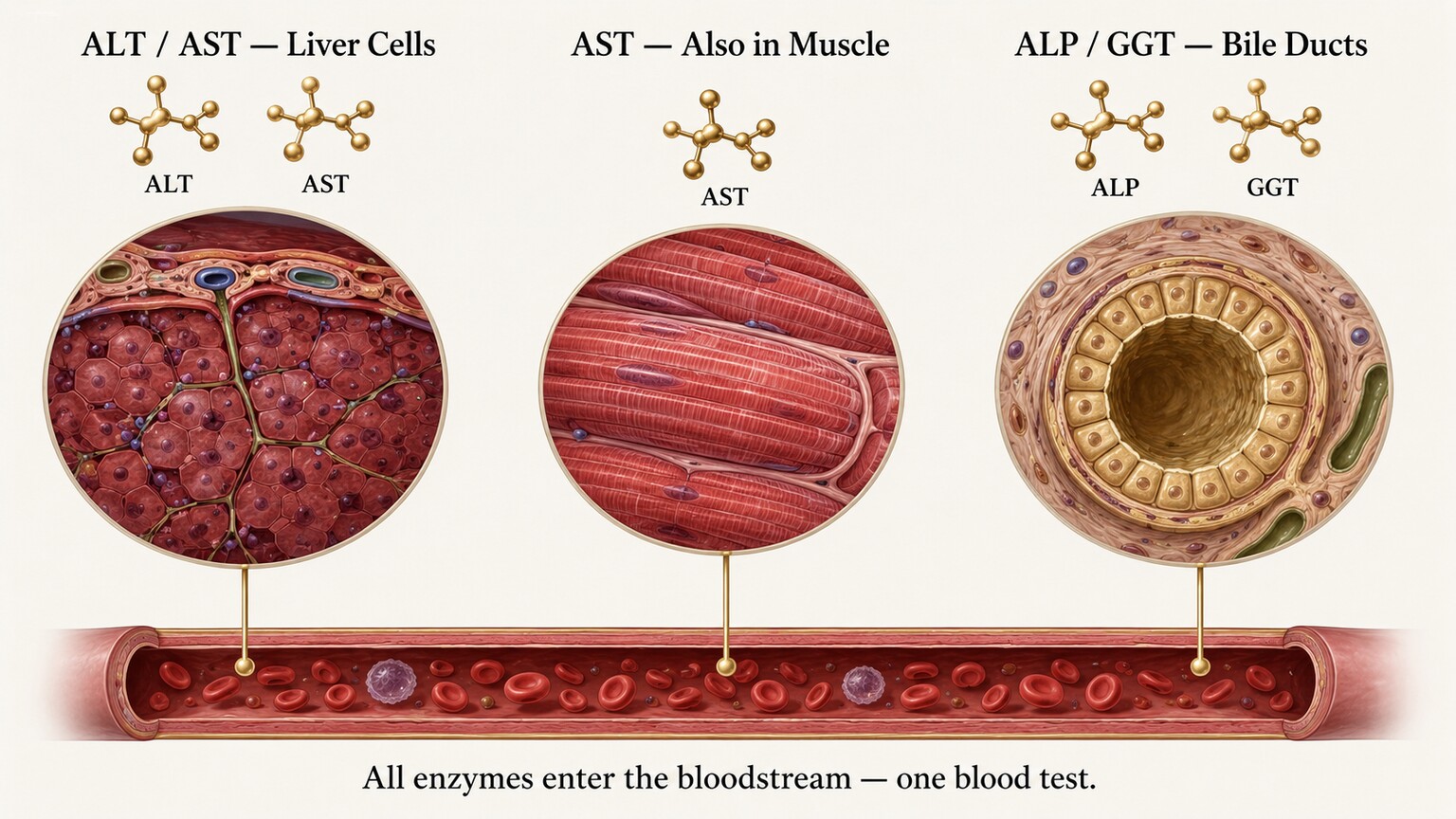
Figure 2. ALT is almost exclusively liver-derived, AST is shared with muscle and heart tissue, and ALP and GGT both originate mainly from the cells lining the bile ducts.
What Counts as "Sudden," and How High Is "High"?
Doctors generally describe a liver enzyme change as acute, or sudden, when it develops over hours to a few weeks, as opposed to chronic elevations that build slowly over months or years and are usually caused by things like ongoing fatty liver disease or long-term alcohol use. A truly sudden spike — enzymes that were normal a few weeks ago and are now sharply elevated — narrows the list of likely causes considerably, because slow-building conditions simply don't move that fast.
How labs describe the severity of an elevation is usually expressed as a multiple of the upper limit of normal (ULN), the highest number a lab still considers within a healthy range for that particular test. A mild elevation is typically less than five times the ULN, a moderate elevation falls somewhere between five and fifteen times the ULN, and a marked or severe elevation is anything above fifteen times the ULN, sometimes reaching into the thousands for ALT and AST during the most dramatic acute injuries. The specific causes covered in this article tend to cluster at different points on that scale: viral hepatitis and drug reactions often produce moderate-to-marked elevations, alcohol-related increases are usually milder, and the two most extreme causes — a severe acetaminophen overdose and a sudden drop in blood flow to the liver — are the ones capable of pushing ALT and AST into the thousands within a day or two.
Speed of onset and speed of recovery both matter just as much as the peak number. An enzyme level that shoots up within 24 to 48 hours and then falls by half every couple of days points toward a short, sharp insult that has already stopped — something like a brief interruption in blood flow. A level that climbs more gradually over one to two weeks and stays elevated points toward an ongoing process, like an active viral infection or a medication that's still being taken. This is one of the main reasons a single high reading is rarely the end of the story; repeat testing over the following days is what actually tells the pattern apart.
Acetaminophen and Other Medications — The Single Most Common Cause of a Sudden, Severe Spike
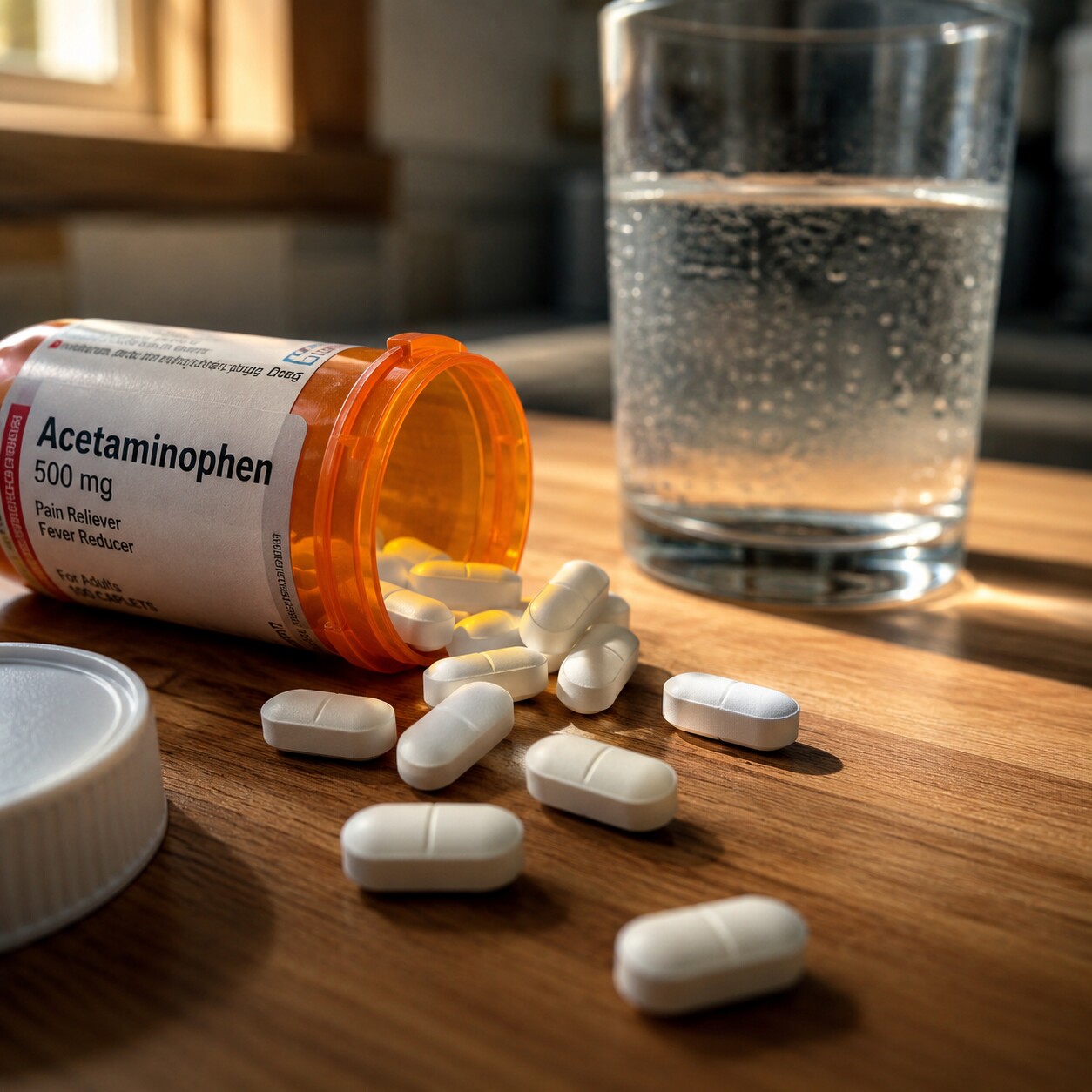
Figure 3. Acetaminophen, found in Tylenol and hundreds of combination cold and pain products, is metabolized by the liver into a byproduct that becomes toxic once the liver's protective buffer runs out.
Drug-induced liver injury is the leading cause of sudden, severe liver enzyme elevation seen in emergency departments, and acetaminophen (the active ingredient in Tylenol and dozens of combination cold, flu, and pain products) is by far the most common single drug responsible. Your liver processes the vast majority of acetaminophen safely, but a small fraction gets converted into a byproduct called NAPQI, which is genuinely toxic to liver cells. Under normal circumstances, a molecule called glutathione neutralizes NAPQI as fast as it's produced. The problem starts when someone takes more acetaminophen than the liver's glutathione reserves can keep up with — either from a single large overdose or, less obviously, from taking multiple products that each contain acetaminophen without realizing the doses were stacking on top of each other, which happens more often than people expect with combination cold medicines. Once glutathione is depleted, NAPQI accumulates and starts directly damaging liver cells, and ALT and AST can climb into the thousands within one to three days.
Acetaminophen isn't the only medication capable of doing this. Certain antibiotics, several anti-seizure medications, some cholesterol-lowering statins, and a number of other prescription drugs have well-documented potential to cause acute liver injury in a susceptible person, even at normal prescribed doses — a phenomenon called idiosyncratic drug-induced liver injury, where the reaction has more to do with an individual's own metabolism and immune response than with the dose itself. This kind of reaction is unpredictable and can't reliably be screened for in advance, which is part of why doctors ask so specifically about every medication, supplement, and recent dose change when liver enzymes come back unexpectedly high. Recreational drugs, including certain stimulants, have also been linked to acute liver injury in documented cases.
What makes medication-related injury especially important to catch early is that it's one of the few causes on this list where a specific antidote exists. N-acetylcysteine, given intravenously or by mouth, essentially refills the liver's glutathione supply and can prevent progression to liver failure if given early enough after an acetaminophen overdose — which is exactly why anyone who suspects they've taken too much acetaminophen, intentionally or not, should seek emergency care immediately rather than waiting to see if symptoms develop.
Viral Hepatitis — When an Infection Inflames the Liver Overnight
Several viruses target the liver specifically, and an acute infection with any of them can cause enzyme levels that were completely normal a month ago to jump into the moderate-to-severe range within a couple of weeks. Hepatitis A, typically spread through contaminated food or water, is the classic cause of a sudden spike in a previously healthy person and usually resolves on its own over several weeks without causing lasting liver damage. Hepatitis B and hepatitis C, usually transmitted through blood or other body fluids, can also present with an acute flare of high enzymes when the infection is new, though both are more concerning for their potential to become chronic infections if the body doesn't clear the virus on its own. Less commonly, hepatitis E — more often associated with travel to certain regions or, in some cases, undercooked pork products — and even viruses not usually thought of as "liver viruses," like Epstein-Barr virus (the cause of mono) or cytomegalovirus, can produce a meaningful bump in liver enzymes as part of a broader infection.
The telltale accompanying symptoms of viral hepatitis often include fatigue that feels disproportionate to anything else going on, nausea, a loss of appetite, mild fever, dark urine, and sometimes a yellowing of the skin or the whites of the eyes called jaundice, which shows up when a related substance called bilirubin also starts building up in the blood. Not everyone develops jaundice, and some people with acute viral hepatitis have few symptoms at all beyond feeling generally run-down, which is part of why the diagnosis is often made through blood testing rather than symptoms alone. When a doctor suspects a viral cause, the workup typically includes a specific panel of antibody and antigen blood tests for each hepatitis virus, since the treatment and expected course differ meaningfully between them — hepatitis A generally just needs supportive care and time, while hepatitis B and C sometimes require closer monitoring or antiviral treatment depending on how the infection behaves over the following months.
A Heavy Drinking Episode — How Alcohol Spikes Enzymes Within Days

Figure 4. Discomfort under the right ribs the morning after heavy drinking often corresponds to an inflamed, enlarged liver reacting to acute alcohol exposure.
Alcohol is directly toxic to liver cells once your body's capacity to metabolize it is exceeded, and it doesn't take years of daily drinking to see it show up on a blood test — a single episode of heavy or binge drinking can raise liver enzymes within 24 to 72 hours. Alcohol is broken down primarily in the liver through a couple of different enzyme pathways, and the byproducts of that process, especially a compound called acetaldehyde, directly damage liver cell membranes and interfere with the liver's normal metabolism of fats, which is why heavy drinking so often causes fat to accumulate in liver cells (alcohol-related fatty liver) at the same time enzymes are rising.
One pattern doctors specifically look for is the ratio between AST and ALT. In most other causes of liver injury, ALT tends to be higher than AST, because ALT is more liver-specific and accumulates more readily inside liver cells. With alcohol-related injury, that pattern often flips: AST is frequently higher than ALT, sometimes by a ratio of two to one or more. Part of the explanation is that heavy alcohol use depletes vitamin B6, which liver cells need to produce ALT efficiently, while AST production isn't affected the same way — so the AST:ALT ratio itself becomes a useful clue about whether alcohol is the likely trigger, even before a person volunteers their drinking history. GGT, the bile-duct-associated enzyme discussed earlier, is also particularly sensitive to alcohol and often rises alongside AST, reinforcing the same pattern.
It's worth being clear about scale here: alcohol-related enzyme elevations from even a fairly significant drinking episode are usually mild to moderate — a few times the upper limit of normal rather than the dramatic thousands-range spikes seen with acetaminophen overdose or a sudden drop in blood flow to the liver. A very high enzyme level in someone who's been drinking heavily should prompt a doctor to look for a second cause layered on top, such as a medication interaction or an unrelated infection, rather than assuming alcohol alone explains an extreme number.
There's also an important distinction between this kind of short-term spike and the slower, more chronic enzyme pattern seen in long-term heavy drinkers who go on to develop alcoholic hepatitis or alcohol-related cirrhosis over years. A single heavy drinking episode in someone whose liver was otherwise healthy typically produces a brief, self-limited bump that resolves within one to two weeks of abstaining, with no lasting damage detectable afterward. Repeated heavy drinking over months or years, by contrast, can progress through a recognizable sequence — starting with fat accumulating in liver cells, then progressing to inflammation and cell injury (alcoholic hepatitis), and in the most severe long-term cases, scarring that permanently changes the liver's architecture (cirrhosis). The sudden spike discussed in this section is really describing the earliest link in that chain, which is also the point at which the liver has the greatest capacity to fully recover if drinking stops. This is one of the more reassuring facts in hepatology: unlike scar tissue, which generally doesn't reverse, the fatty buildup and cellular inflammation behind an acute alcohol-related enzyme spike are usually fully reversible with abstinence, which is exactly why doctors treat an isolated episode so differently from a pattern that's been building for years.
Curious what the rest of your liver panel is actually telling you? Upload your results and get a complete, plain-language breakdown in under 15 minutes.
Analyze My ResultsA Blocked Bile Duct — When Gallstones Cause a Very Different Pattern
Not every sudden spike comes from damaged liver cells. Sometimes the liver cells themselves are perfectly healthy, but the tube carrying bile out of the liver and gallbladder into the small intestine — the common bile duct — gets physically blocked, most often by a gallstone that has migrated out of the gallbladder and lodged in the duct. Bile is a digestive fluid the liver produces continuously, and when it has nowhere to go, pressure builds up backward through the entire bile duct system, injuring the duct-lining cells and eventually the liver cells behind them.
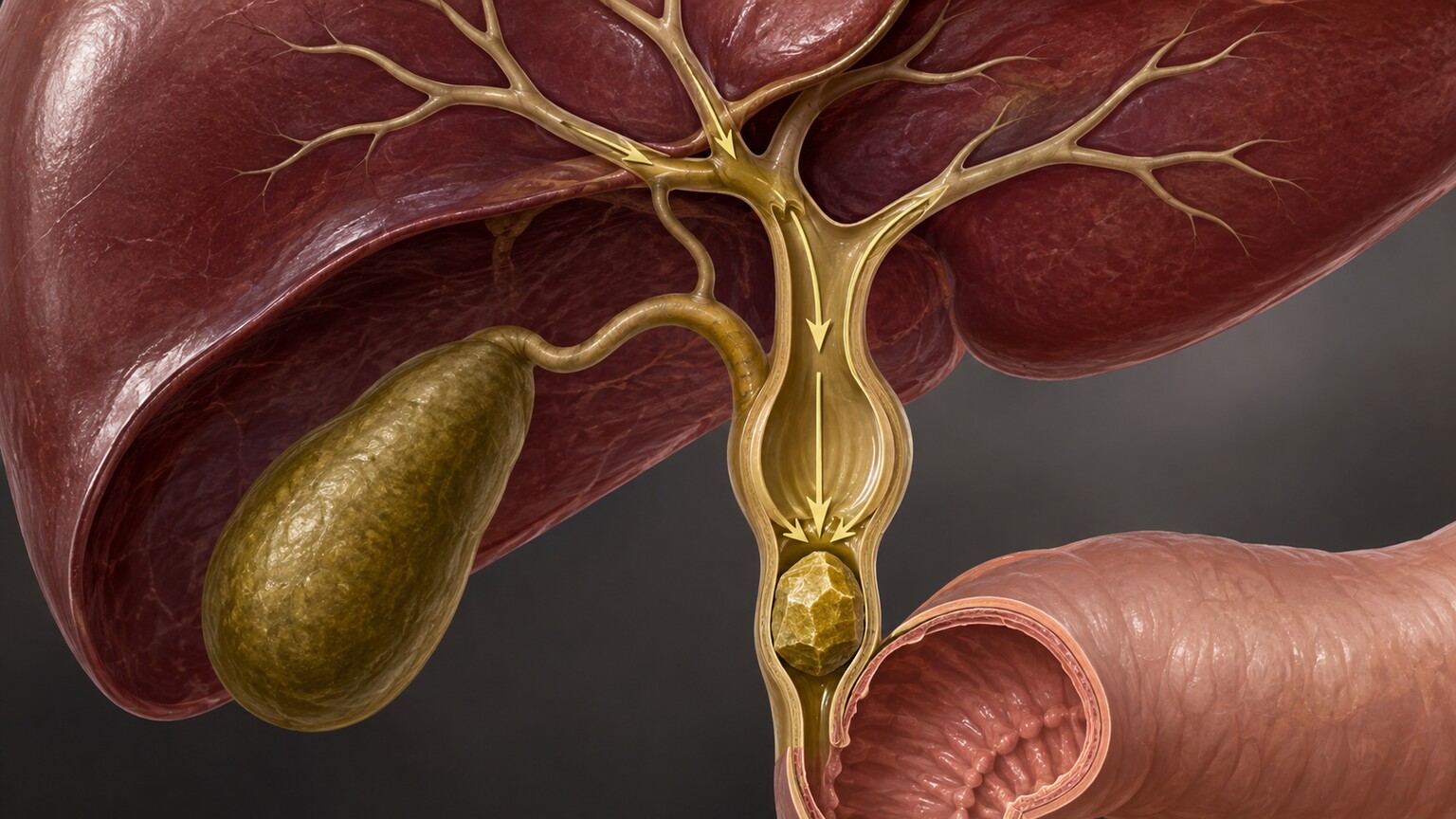
Figure 5. A gallstone lodged in the common bile duct backs up bile pressure through the entire drainage system, raising ALP and GGT first and often bilirubin soon after.
This is exactly the scenario where the enzyme pattern described earlier becomes clinically useful. In a blocked bile duct, ALP and GGT typically rise first and rise the most, since those two enzymes are concentrated in the duct-lining cells directly under pressure. ALT and AST can also climb, sometimes sharply if the blockage is sudden and complete, but the ALP-and-GGT-dominant pattern — especially combined with a rising bilirubin level and the visible yellowing it causes — points doctors toward the bile ducts rather than the liver cells themselves as the primary problem. The classic symptom that goes with this is pain in the upper right abdomen, often after eating a fatty meal (since fat digestion is what triggers the gallbladder to contract and push a stone toward the duct), sometimes accompanied by nausea, dark urine, and pale or clay-colored stools, since bile is normally what gives stool its brown color.
Because this cause is mechanical rather than purely chemical, it's usually confirmed with imaging — an abdominal ultrasound is often the first step, since it's quick, doesn't involve radiation, and is good at spotting both gallstones and a dilated bile duct. If a stone is confirmed to be stuck in the duct itself rather than just sitting in the gallbladder, the definitive treatment is typically a procedure called ERCP (endoscopic retrograde cholangiopancreatography), where a specialist removes the stone through an endoscope, relieving the blockage and allowing both bile flow and enzyme levels to normalize, often within days.
Ischemic Hepatitis — The Most Dramatic Spike of All
Sometimes called "shock liver," ischemic hepatitis happens when the liver's blood supply is suddenly and significantly reduced, starving liver cells of the oxygen they need and causing widespread, rapid cell injury. This can happen during an episode of very low blood pressure from any cause — severe blood loss, a major heart attack, sepsis, or a serious allergic reaction — or in people with underlying heart failure whose heart simply isn't pumping enough blood forward to keep the liver adequately perfused, sometimes triggered by something as seemingly unrelated as a bad respiratory infection that puts extra strain on an already weakened heart.
What sets ischemic hepatitis apart from every other cause discussed here is the sheer speed and size of the spike: ALT and AST can rise into the thousands, sometimes tens of thousands, within just 24 to 48 hours of the triggering event — among the highest liver enzyme values seen in medicine. Just as distinctively, once blood flow is restored, these levels tend to fall extremely fast too, often dropping by half every one to two days and returning close to normal within one to two weeks, unlike the slower resolution typical of viral hepatitis or drug-induced injury. This rapid rise-and-fall signature, combined with a clear preceding event involving low blood pressure or poor heart function, is usually enough for doctors to recognize the pattern even before additional testing confirms it. Because ischemic hepatitis is a consequence of a separate, more urgent medical crisis rather than a standalone liver problem, treatment is focused on stabilizing blood pressure and heart function — once the underlying cause is corrected, the liver itself typically has excellent capacity to recover on its own.
Intense Exercise and Muscle Injury — A Surprising Non-Liver Cause

Figure 6. Skeletal muscle contains both AST and, to a lesser extent, ALT, so intense or unaccustomed exercise can elevate both enzymes without any liver injury at all.
One of the more counterintuitive causes of a sudden liver enzyme spike doesn't involve the liver at all. AST, as discussed earlier, is present in significant amounts in skeletal muscle, and ALT, while more liver-specific, is also found there in smaller quantities. An unusually intense workout, a new exercise program taken up too aggressively, a long endurance event like a marathon, or any activity that causes real muscle breakdown can release enough of these enzymes from muscle tissue to raise blood levels noticeably, sometimes into the moderate range, within a day or two of the activity.
In its more extreme form, this same mechanism becomes rhabdomyolysis — a condition where a large amount of muscle tissue breaks down rapidly, releasing not just AST and ALT but also a muscle-specific enzyme called creatine kinase (CK), usually in vastly larger amounts than AST or ALT rise. This is the detail that actually distinguishes muscle-related enzyme elevation from true liver injury on a lab report: when CK is also drawn and comes back sharply elevated, especially disproportionately higher than the AST/ALT rise, that points strongly toward muscle rather than liver as the source, and a repeat liver panel a few days after resting typically confirms the enzymes were never a liver problem to begin with. This is precisely why doctors often ask about recent exercise, physical labor, or muscle soreness when an unexplained AST elevation shows up without a matching rise in ALT, ALP, or GGT — because a muscle source explains that particular pattern far better than a liver source would.
Herbal Supplements and "Natural" Products That Can Spike Enzymes
Products marketed as natural or herbal are not automatically liver-safe, and a growing share of drug-induced liver injury cases traced by researchers involve dietary supplements rather than prescription medications. High-dose green tea extract, certain weight-loss and bodybuilding supplements, some multi-ingredient "detox" or "liver cleanse" products (an especially ironic category), and herbal remedies like kava have all been documented causes of acute liver injury severe enough to require hospitalization in some cases. Part of what makes supplements a uniquely tricky category is that they're regulated far less rigorously than prescription drugs, dosages can vary meaningfully between batches or brands, and many people don't think to mention supplements when a doctor asks "what medications are you taking," simply because they don't categorize them as medication in their own mind.
This is exactly why a thorough evaluation of a sudden enzyme spike always includes a specific, direct question about every supplement, vitamin, protein powder, and over-the-counter product taken in the weeks leading up to the abnormal result — not just prescription medications. If a supplement is suspected, stopping it and rechecking enzymes over the following one to two weeks is usually the first and most informative step, since levels typically start improving once the offending product is removed, similar to how enzymes respond after any other medication-related injury resolves.
What Doctors Do Next — Tracking the Pattern, Not Just the Number
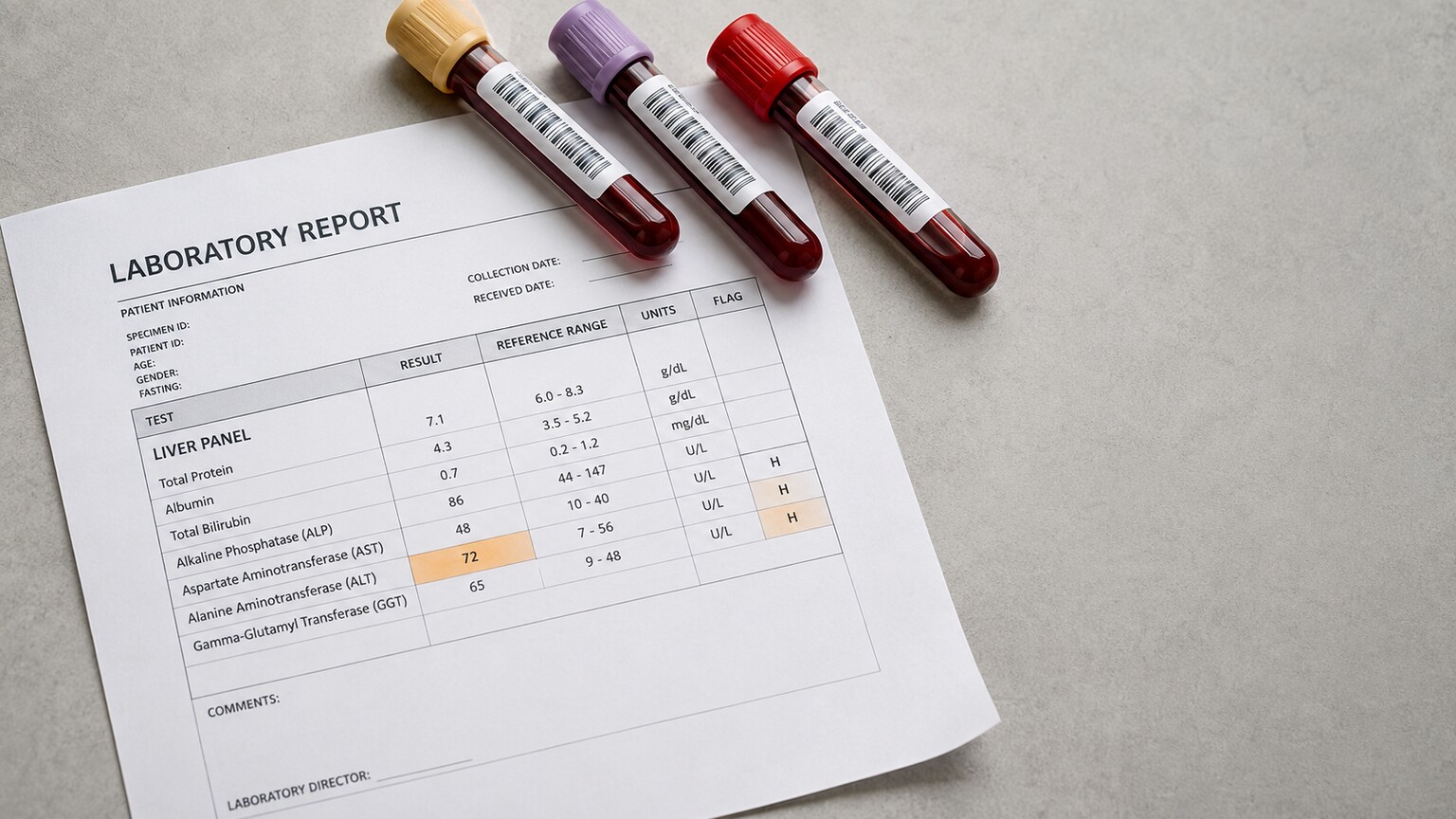
Figure 7. A repeat liver panel a few days after the first abnormal result reveals whether the trend is rising, falling, or holding steady — information a single reading can't provide on its own.
A single abnormal liver enzyme result is rarely treated as a final diagnosis by itself. The first thing a doctor typically does is figure out exactly which enzymes are up and by how much, since, as this article has covered, an ALT/AST-dominant pattern points toward liver cell injury while an ALP/GGT-dominant pattern points toward the bile ducts. From there, a detailed history usually does more diagnostic work than any single additional test: recent medications and supplements, alcohol intake, recent travel, exposure to anyone with hepatitis, unusual symptoms like abdominal pain or jaundice, and recent unaccustomed exercise are all standard questions, because each cause covered above leaves a slightly different trail in a person's recent history.
Depending on what that history suggests, follow-up testing might include a hepatitis panel, a bilirubin level, an abdominal ultrasound to look at the liver, gallbladder, and bile ducts directly, or a creatine kinase level if muscle injury seems more likely than liver injury. Just as importantly, a repeat liver panel drawn a few days to a week later shows the trajectory — whether enzymes are climbing (suggesting an ongoing process that needs more urgent attention), falling (suggesting the trigger has already resolved), or holding steady at a moderate level (which might prompt a broader workup for less common causes, including autoimmune liver conditions). This trend, more than the single number that started the conversation, is usually what actually determines next steps.
It's also worth understanding what a doctor is weighing when they decide how urgently to act on a result like this. A moderate elevation with a clear, benign explanation already in hand — say, a weekend of heavier-than-usual drinking in someone who otherwise feels fine — often just needs a repeat test in a couple of weeks to confirm it's trending back down, with no further workup unless it isn't. A marked or severe elevation, especially one that shows up alongside jaundice, confusion, easy bruising, or significant abdominal pain, is treated very differently, since those additional symptoms can signal that the liver's ability to perform its other jobs — clotting blood, clearing toxins, maintaining blood sugar — is starting to be affected, not just its enzyme output. This is really the underlying logic behind almost every question a doctor asks after a surprising lab result: they're not just trying to name the cause, they're trying to figure out how much load the liver is actually still able to carry while that cause gets identified and addressed.
Frequently Asked Questions
How high do liver enzymes need to be before it's an emergency?
There's no single universal cutoff, but ALT or AST levels in the hundreds to thousands, especially combined with symptoms like jaundice, severe abdominal pain, confusion, or a known recent acetaminophen overdose, warrant emergency evaluation rather than waiting for a routine follow-up appointment. Even moderate elevations deserve prompt medical attention if they come with concerning symptoms, since the number alone doesn't capture how quickly a situation might be changing.
Can liver enzymes rise suddenly with no symptoms at all?
Yes, and it happens fairly often, especially with milder elevations from a recent drinking episode, a new supplement, or unaccustomed exercise. Many people only find out through a routine blood test drawn for an unrelated reason. The absence of symptoms doesn't rule out a cause worth investigating, particularly if the elevation is moderate to severe or if it doesn't improve on repeat testing.
How quickly do liver enzymes return to normal once the cause is addressed?
It varies significantly by cause. Ischemic hepatitis can normalize within one to two weeks once blood flow is restored. Alcohol- and exercise-related elevations often improve within days to two weeks of stopping the trigger. Viral hepatitis A typically resolves over several weeks. Drug-induced injury timing depends on the specific medication and how quickly it's stopped, but improvement is usually seen within one to two weeks of discontinuation in most cases.
Does a high AST always mean a liver problem?
No. Because AST is also present in heart and skeletal muscle tissue, an isolated AST elevation without a matching rise in ALT can point toward muscle injury, intense exercise, or even a cardiac event rather than the liver. This is exactly why AST is rarely interpreted alone — it's almost always considered alongside ALT, and sometimes alongside a muscle-specific test like creatine kinase, to figure out which tissue it's actually coming from.
Is it possible for more than one cause to be happening at the same time?
Yes, and this is more common than people assume. Someone taking a new medication who also drinks alcohol regularly, or a person with an existing case of fatty liver who then takes acetaminophen for a headache, can have overlapping factors contributing to the same result. This is part of why a thorough history covering medications, alcohol, supplements, and recent activity all at once matters more than looking for a single explanation.
Conclusion
A sudden jump in liver enzymes is a signal, not a diagnosis by itself — and which of the four main enzymes moved, by how much, and how the trend behaves over the following days usually says more than the first number ever could. Acetaminophen and other medications, viral hepatitis, a heavy drinking episode, a blocked bile duct, a sudden drop in blood flow to the liver, and even an unusually hard workout can each produce a pattern specific enough for a trained eye to recognize, which is exactly why a careful history and a repeat test are almost always part of the picture rather than the first result standing alone. If you've recently had a lab result come back with elevated liver enzymes, the most useful next step is usually a direct conversation with a healthcare provider about exactly what's changed recently — medications, alcohol, supplements, symptoms, or activity — since that context is often what turns an unexplained number into a clear and manageable answer.
Still Not Sure What Your Results Mean?
Upload your labs and get a complete, visual, plain-language interpretation of every biomarker — delivered to your inbox in under 15 minutes.
Get My ReportThis article is for educational purposes only and does not constitute medical advice. Always consult your healthcare provider regarding your specific lab results.