
Why Are My Liver Enzymes High Despite Not Drinking Alcohol?
Alcohol is such a well-known, widely discussed cause of elevated liver enzymes that it's easy to assume a high ALT or AST result must automatically mean a clinician suspects drinking — but alcohol is genuinely just one entry on a long, well-documented list of things that can damage or stress liver cells enough to leak these enzymes into the bloodstream, and for a large share of people with elevated results today, it isn't even the most statistically likely explanation. In fact, the single most common cause of mildly to moderately elevated liver enzymes in Western populations right now is a condition that has nothing to do with drinking at all: metabolic dysfunction-associated fatty liver disease, a buildup of fat in liver cells driven by insulin resistance, obesity, and related metabolic factors. Beyond that, medications and supplements, viral hepatitis, autoimmune disease, inherited iron and copper overload conditions, celiac disease, thyroid dysfunction, and even a muscle source unrelated to the liver at all can each independently explain an elevated result. This article walks through that full differential in the order clinicians typically work through it, so a "not an alcohol problem" result stops feeling like an unexplained mystery and starts looking like a specific, investigable pattern.
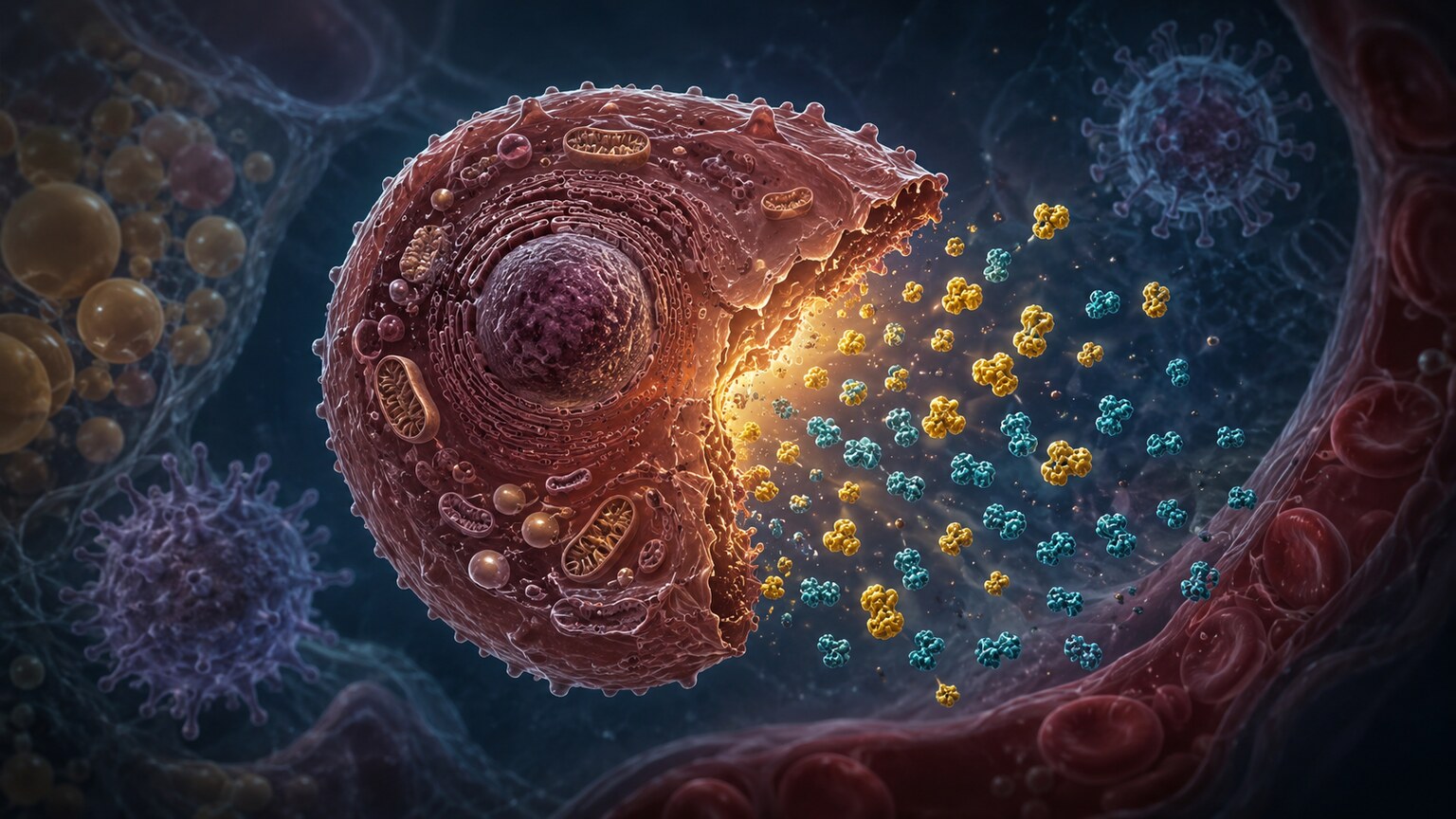
Figure 1. ALT and AST are enzymes that normally work inside liver cells; they only appear in meaningful amounts in blood once cell membranes are damaged enough to leak their contents, regardless of what actually caused that damage.
What Elevated Liver Enzymes Actually Mean
ALT (alanine aminotransferase) and AST (aspartate aminotransferase) are enzymes that live inside liver cells, where they help the cell carry out normal metabolic chemistry. Under healthy conditions, only a small, steady trickle of these enzymes makes it into the bloodstream, which is why standard reference ranges for both sit fairly low. When liver cells are stressed, inflamed, or actively dying, their outer membranes become more permeable or rupture outright, and the enzymes that were previously contained inside spill out into circulation in much larger quantities — which is exactly what a blood test is detecting when it reports an elevated ALT or AST.
The critical thing to understand is that this mechanism — cell membrane damage leading to enzyme leakage — is completely nonspecific to alcohol. Anything capable of injuring liver cells produces the same basic laboratory signature, whether that injury comes from excess fat accumulation, a virus, a misdirected immune attack, a toxic buildup of a metal the body can't properly clear, or a medication the liver has to process. This is precisely why ruling out alcohol as a cause doesn't actually narrow the list of possibilities very much on its own — it simply means the search moves on to the many other things capable of producing an identical pattern on a lab report.
It's also worth understanding why alcohol became so strongly associated with liver enzyme elevation in the first place, since that history helps explain why the assumption persists even as the underlying epidemiology has shifted. For decades, heavy alcohol use genuinely was one of the most common causes of liver enzyme elevation seen in general medical practice, and alcohol-related liver injury produces a fairly recognizable pattern — an AST-to-ALT ratio that often exceeds 2:1, unlike most of the other causes on this list, which typically produce a higher ALT than AST. That historical prominence, combined with a genuinely distinct laboratory signature in classic cases, is part of why alcohol still comes up early in conversations about liver enzymes even though, population-wide, metabolic fatty liver disease has now overtaken it as the leading cause in many regions. Knowing this AST-to-ALT pattern is itself diagnostically useful: a clinician looking at a result where AST is roughly twice ALT will still consider alcohol as a possibility even in someone who reports not drinking, simply because that specific ratio is uncommon enough in the other causes discussed throughout this article that it's worth a closer, more direct conversation about drinking habits, recognizing that self-reported alcohol intake isn't always complete or accurate.
The Most Common Cause Today Isn't Alcohol at All — Metabolic Fatty Liver Disease
Metabolic dysfunction-associated fatty liver disease, often abbreviated MASLD and previously known as non-alcoholic fatty liver disease (NAFLD), has become the single most common cause of mildly elevated liver enzymes in adults across much of the world, closely tracking the broader rise in obesity, insulin resistance, and type 2 diabetes. The condition develops when the liver accumulates excess fat within its own cells — often driven by the same insulin resistance responsible for other markers like elevated triglycerides and reduced HDL cholesterol discussed elsewhere on this site — and that fat accumulation alone can be enough to stress liver cells and produce a persistent, usually mild-to-moderate elevation in ALT and, to a lesser extent, AST.
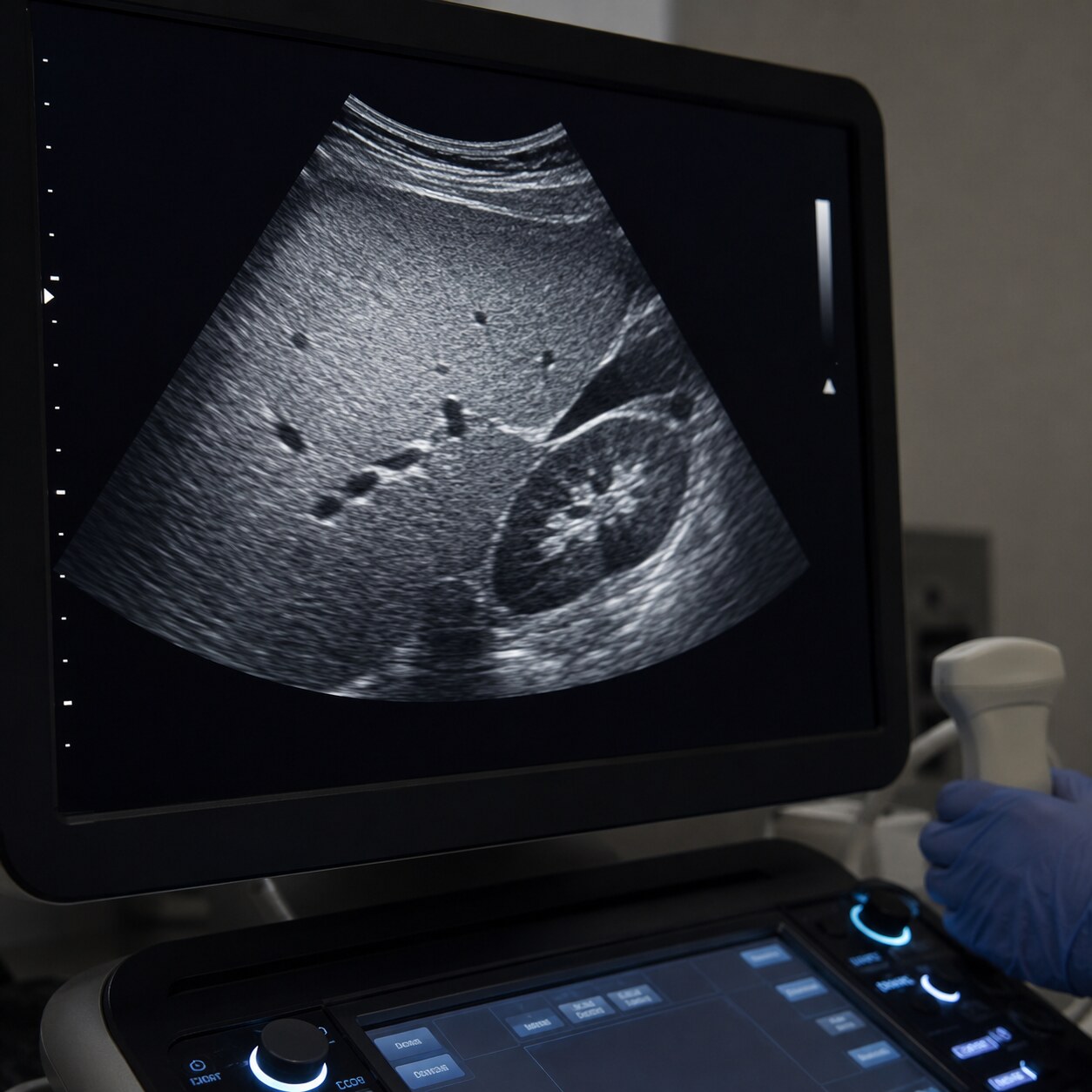
Figure 2. On ultrasound, a fatty liver appears noticeably brighter than the surrounding kidney tissue, one of the simplest ways this common, non-alcoholic condition is first identified.
What makes this diagnosis genuinely tricky for patients is that it usually produces no symptoms at all in its earlier stages — many people first learn they have it only after an elevated liver enzyme result prompts an ultrasound, which typically shows a liver that appears brighter than normal due to the fat content within it. Risk factors mirror those for metabolic syndrome broadly: excess weight, particularly around the abdomen, type 2 diabetes or prediabetes, elevated triglycerides, and high blood pressure all raise the likelihood of this diagnosis considerably, though it can occasionally appear in people who don't fit the typical risk profile as well. Left unaddressed over many years, a subset of people with fatty liver disease can progress to a more inflamed, more damaging form of the condition and eventually to significant scarring, which is exactly why an elevated enzyme result prompting this diagnosis is worth taking seriously and addressing through weight management, blood sugar control, and the same broader metabolic interventions that improve cardiovascular risk factors, even though the condition itself often causes no day-to-day symptoms whatsoever.
The renaming from NAFLD to MASLD in recent years reflects a genuinely important shift in how researchers and clinicians think about this condition, worth understanding briefly since it can otherwise seem like an arbitrary terminology change. The older name, non-alcoholic fatty liver disease, defined the condition by what it wasn't — not alcohol-related — rather than by what actually caused it. The newer terminology instead centers the condition on its real driver: metabolic dysfunction, meaning insulin resistance and its downstream effects on how the body processes and stores fat. This shift matters practically because it reframes the condition from a diagnosis of exclusion into a specific, actively treatable metabolic disease with a clear mechanistic target, and it's part of why current management increasingly focuses on directly improving insulin sensitivity — through weight loss, structured exercise, and in some cases specific medications originally developed for diabetes — rather than framing treatment simply as "cutting out what you're not even doing" for someone who was never a heavy drinker in the first place.
Distinguishing straightforward fatty liver from its more aggressive form, sometimes called metabolic dysfunction-associated steatohepatitis (MASH), generally requires more than blood tests and an ultrasound alone. While simple fat accumulation without significant inflammation tends to carry a relatively favorable long-term outlook, the inflamed form carries meaningfully higher risk of progressing toward fibrosis and, eventually, cirrhosis over years to decades. Newer, noninvasive tools — including specialized ultrasound techniques that measure liver stiffness as an indirect marker of scarring, and various blood-based scoring systems that combine several lab values into a single risk estimate — have increasingly reduced how often a liver biopsy is actually needed to make this distinction, though biopsy remains the most definitive method when noninvasive testing leaves genuine uncertainty about how advanced the condition has become.
Medications and Supplements — A Surprisingly Long List of Everyday Culprits
A remarkably wide range of medications and dietary supplements are capable of raising liver enzymes, and many of them are things people take regularly without any awareness of this potential effect. Acetaminophen (paracetamol), one of the most commonly used over-the-counter pain relievers, is directly toxic to the liver at high doses and can meaningfully affect enzyme levels even at doses closer to the recommended maximum when taken consistently over time, particularly when combined with other liver-stressing factors.

Figure 3. A careful review of every medication and supplement in the cabinet — not just prescriptions — is a standard early step in investigating unexplained liver enzyme elevation.
Statins, used widely to manage cholesterol, are well known for causing modest, usually harmless liver enzyme elevations in a portion of users, which is part of why routine liver monitoring was historically built into statin prescribing guidance. Certain antibiotics, some antifungal medications, and several anti-seizure medications carry their own documented risk of liver enzyme elevation, and long-term regular use of NSAIDs like ibuprofen can contribute as well. Herbal and dietary supplements deserve particular attention precisely because they're so often overlooked in a standard medication history — products containing kava, high-dose green tea extract, certain bodybuilding and weight-loss supplements, and some traditional or herbal remedies manufactured without rigorous quality control have all been specifically linked to liver injury significant enough to raise enzymes, occasionally severely. Because supplements aren't regulated with the same rigor as prescription medications in many places, anyone investigating unexplained liver enzyme elevation is generally asked to list every single product they take regularly, not just prescribed medications, since the supplement aisle is a genuinely common and easily missed source of the problem.
The general medical term for this entire category — liver injury caused by a medication, supplement, or other ingested substance — is drug-induced liver injury, and it's worth knowing that this category actually breaks down into two meaningfully different patterns. Some substances cause predictable, dose-dependent injury, where risk rises in a fairly linear way with the amount taken, as with acetaminophen. Others cause idiosyncratic injury, where only a small, genetically or otherwise predisposed subset of people react badly to an otherwise typical dose, making the reaction essentially impossible to predict for any given individual in advance — a pattern more typical of many of the antibiotic, herbal, and supplement-related cases mentioned above. Because idiosyncratic reactions can occur even after months of taking something without any prior problem, a substance a person has used safely for a long stretch of time isn't automatically ruled out as the current cause, which is part of why a truly complete history covering everything taken over the preceding several months, not just what's being taken right now, matters so much when this category is being investigated.
The general management approach for a medication or supplement suspected of causing liver enzyme elevation is refreshingly direct compared to several of the other causes on this list: stopping the suspected product, under medical guidance rather than independently for anything prescribed, and rechecking enzyme levels a few weeks later. A clear, meaningful improvement after stopping a specific product is itself considered reasonably strong evidence that it was, in fact, the cause, even without more invasive testing — one of the more satisfying diagnostic patterns on this entire list, since it turns removing a single variable into both the test and, often, the entire treatment at the same time.
Already have an ALT or AST number from a recent test, but not sure if it's actually good or bad for you? Just plug it in and see instantly.
🧮 Try the Free CalculatorViral Hepatitis You Might Not Know You Have
Chronic viral hepatitis, particularly hepatitis B and hepatitis C, is capable of causing years or even decades of ongoing liver inflammation and enzyme elevation with essentially no noticeable symptoms until the disease has progressed significantly. Both viruses can be acquired long before someone ever has a liver enzyme test drawn — through blood exposure, certain medical procedures performed decades ago before modern screening standards, or other routes — and because chronic infection often causes no acute illness at the time of exposure, someone can carry either virus for years without any reason to suspect it.
This is exactly why viral hepatitis screening, through blood tests looking for antibodies and viral genetic material, is a standard, early part of investigating unexplained liver enzyme elevation regardless of a person's perceived risk factors, since the absence of an obvious exposure history doesn't reliably rule either virus out. The encouraging part of this particular cause is that both conditions are now highly treatable — hepatitis C, in particular, can be cured in the large majority of cases with a course of modern oral antiviral medication, and hepatitis B, while not curable in the same sense, can typically be well controlled with long-term antiviral treatment that substantially reduces ongoing liver damage and enzyme elevation. Identifying either virus as the cause of an elevated enzyme result is, in that sense, one of the more actionable and treatable findings on this entire list.
It's worth mentioning that hepatitis A, the third common form, behaves quite differently from B and C in this context and is generally not part of this discussion in the same way. Hepatitis A causes an acute, short-term infection, typically from contaminated food or water, that resolves completely within weeks to a couple of months without becoming a chronic, ongoing condition — meaning it's a plausible explanation for a sudden, recent spike in liver enzymes tied to a specific illness, but not a realistic explanation for enzymes that have been quietly elevated for months or years without an obvious acute illness in between. This distinction between acute, self-resolving viral causes and the chronic, silently persistent forms is itself a useful diagnostic clue: the pattern and duration of elevation, not just the presence of a positive viral test, helps clarify which specific virus, if any, is actually responsible.
When the Immune System Attacks the Liver — Autoimmune Hepatitis and Related Conditions
In autoimmune hepatitis, the immune system mistakenly identifies liver tissue as a threat and mounts a sustained inflammatory attack against it, producing ongoing cell damage and enzyme elevation through a completely different mechanism than any of the causes discussed so far. This condition can develop at essentially any age, though it's diagnosed more frequently in women, and it sometimes appears alongside other autoimmune conditions — autoimmune thyroid disease, celiac disease, and type 1 diabetes among them — reflecting a broader tendency toward immune-mediated disease in some individuals.

Figure 4. Diagnosing autoimmune hepatitis typically requires a specific antibody panel, since the enzyme elevation it produces looks identical, on its own, to many of the other causes on this list.
Diagnosing autoimmune hepatitis specifically requires looking beyond the enzyme numbers themselves toward a specific panel of autoimmune antibodies, elevated immunoglobulin levels, and, often, a liver biopsy showing a characteristic pattern of immune cell infiltration that helps distinguish it from other causes of liver inflammation. Related autoimmune liver conditions, including primary biliary cholangitis and primary sclerosing cholangitis, affect the liver's bile ducts specifically rather than liver cells directly, and while they more classically raise a different enzyme called alkaline phosphatase, they can produce ALT and AST elevation as well, particularly as they progress. Because autoimmune liver disease generally requires immune-suppressing treatment rather than the lifestyle changes appropriate for fatty liver disease or simple discontinuation appropriate for a medication-related cause, correctly identifying this category matters enormously for choosing the right treatment path.
Left untreated, autoimmune hepatitis can progress toward significant scarring over a period of months to a few years, considerably faster than the slow, multi-decade timeline typical of untreated fatty liver disease, which is part of why prompt recognition matters more urgently here than for several of the other causes discussed in this article. Fortunately, autoimmune hepatitis generally responds well to treatment once correctly identified — most people achieve meaningful control of the disease with corticosteroids and other immune-modulating medications, often needing to stay on some form of maintenance treatment long-term to keep the disease from flaring again, but with liver enzyme levels and liver function typically remaining stable and healthy for years once the right treatment regimen has been established. This combination — a condition that can progress relatively quickly if missed, but that responds reliably well to treatment once found — is exactly why it sits fairly high on the list of things a clinician wants to actively rule in or out rather than leave as an open question, particularly if initial screening for the more common causes hasn't produced a clear answer.
Inherited Conditions That Silently Damage the Liver
Two genetic conditions deserve specific mention because they're relatively underrecognized, frequently misdiagnosed for years, and directly treatable once identified. Hereditary hemochromatosis is an inherited condition that causes the body to absorb and store too much iron from a normal diet, and over years to decades, that excess iron accumulates in the liver — along with the heart, pancreas, and joints — at levels toxic enough to cause ongoing cell damage and enzyme elevation. Because early hemochromatosis often causes only vague symptoms like fatigue and joint pain, if any symptoms at all, it's frequently discovered only after routine bloodwork reveals both elevated liver enzymes and elevated iron studies, sometimes in someone who has been quietly accumulating excess iron for most of their adult life without any reason to suspect it.

Figure 5. Both hemochromatosis and Wilson's disease are inherited conditions, which is why a family history of unexplained liver disease is a specific detail worth raising during a workup.
Wilson's disease is a rarer but similarly important inherited condition, in this case causing toxic copper accumulation rather than iron, most often diagnosed in children, teenagers, and young adults, though it can occasionally present later in life as well. Because it's genuinely rare, Wilson's disease isn't part of routine screening for everyone with elevated liver enzymes, but it's specifically considered in younger patients with unexplained enzyme elevation, especially when neurological or psychiatric symptoms are also present, since excess copper affects the brain as well as the liver. Both conditions are inherited in a pattern that means close relatives can also be affected without knowing it, which is why a positive diagnosis in one family member often prompts screening recommendations for siblings and children as well — and both are genuinely treatable once identified, through regular blood removal for hemochromatosis or copper-binding medication for Wilson's disease, making early identification particularly valuable before either condition causes irreversible organ damage.
Hemochromatosis in particular illustrates why simply asking about family history isn't always enough to catch an inherited condition on its own. Because the gene variants responsible for hereditary hemochromatosis are inherited in a pattern requiring two copies — one from each parent — to cause significant disease, a person can carry a single copy without ever developing meaningful iron overload themselves, meaning the condition can seem to "skip" a generation or appear only in some siblings within the same family despite a shared genetic background. This variability in who actually develops significant disease, even among genetically similar relatives, is part of why hemochromatosis is investigated through direct iron studies — measuring blood levels of ferritin and a value called transferrin saturation — rather than relying on family history alone to decide who should be screened, since a family history negative for known liver disease doesn't reliably rule the condition out in any given individual.
Both hemochromatosis and Wilson's disease share one more important characteristic worth emphasizing: the earlier either is identified, the more effectively ongoing organ damage can be prevented entirely. Someone diagnosed with hemochromatosis before significant iron accumulation has occurred can often expect an essentially normal life expectancy with regular treatment, while a diagnosis delayed until after significant liver scarring or heart involvement has already developed carries a meaningfully different, more complicated outlook. This timing-sensitive quality is exactly why these two inherited conditions, despite being individually rare, are taken seriously enough to warrant specific, targeted testing whenever the broader clinical picture — age, family history, or the specific pattern of enzyme elevation — makes either one a reasonable possibility.
Surprising Non-Liver Explanations — Celiac Disease, Thyroid Dysfunction, and Muscle Source
Not every cause of elevated ALT or AST actually originates in the liver, or even reflects liver disease at all, and this category is often the most surprising one for patients working through this list. Celiac disease, an autoimmune reaction to gluten that primarily damages the small intestine, has a well-documented and somewhat unexpected association with mildly elevated liver enzymes, sometimes appearing before any digestive symptoms are noticeable at all — the exact mechanism isn't fully understood, but the enzymes typically normalize once a strict gluten-free diet is properly established, making this one of the more reversible causes on this entire list once correctly identified.

Figure 6. Celiac disease can raise liver enzymes even without noticeable digestive symptoms, and enzyme levels typically normalize once a strict gluten-free diet is properly established.
Thyroid dysfunction, both an underactive and an overactive thyroid, can independently affect liver enzyme levels through the thyroid's broad influence on overall metabolic rate and liver blood flow, and enzymes often normalize once thyroid hormone levels are brought back into a healthy range through appropriate treatment. Perhaps the most conceptually surprising item on this list is that AST specifically isn't unique to the liver at all — it's also present in significant quantities in skeletal muscle and heart muscle, meaning recent intense exercise, a muscle injury, or a cardiac event can all raise AST without any liver involvement whatsoever. This is precisely why AST elevation is always interpreted alongside ALT, which is far more liver-specific — an isolated AST elevation with a completely normal ALT points a clinician toward investigating muscle as the source rather than the liver, while elevation in both enzymes together points more convincingly toward a genuinely hepatic cause.
When muscle is suspected as the actual source of an isolated AST elevation, confirming that suspicion is usually straightforward: a separate blood test measuring creatine kinase, an enzyme far more specific to muscle tissue than AST, will typically also be elevated if muscle really is the underlying source, while it stays within a normal range if the liver is genuinely involved instead. A recent history of unusually intense exercise, a new weightlifting routine, a significant fall or muscle injury, or even a recent intramuscular injection can all be enough to transiently raise AST through this exact mechanism, and simply repeating the test after a period of rest, away from any of these triggers, is often enough to clarify whether the original elevation was ever a liver issue at all. This muscle-source possibility is one of the more reassuring items on this entire list precisely because it can mean the liver was never actually involved in the first place — the entire finding traces back to something as ordinary as a hard workout.
How Doctors Work Through This List — The Actual Diagnostic Order
Given how many possible explanations exist, working through unexplained liver enzyme elevation follows a fairly structured, logical sequence rather than testing for everything simultaneously. The process typically starts with a detailed history — every medication and supplement taken, family history of liver or autoimmune disease, risk factors for viral hepatitis, and metabolic risk factors like weight, blood sugar, and cholesterol — paired with a repeat blood draw to confirm the elevation is real and consistent rather than a one-off lab variation. From there, an ultrasound is commonly used early on, since it's noninvasive, widely available, and can readily identify fatty liver disease, which, as discussed earlier, accounts for a substantial share of cases. Blood tests for viral hepatitis, iron studies, thyroid function, and celiac antibodies are typically bundled together as a reasonably efficient initial panel, since they're all relatively inexpensive and collectively cover several of the more common causes at once.
If this initial round of testing doesn't produce a clear answer, or if the pattern of elevation looks atypical for the more common causes, the workup expands to more specific testing — autoimmune antibody panels, copper studies for suspected Wilson's disease in the right age group, and occasionally a liver biopsy, which remains the most direct way to examine liver tissue itself when blood testing and imaging haven't provided a clear enough picture. This stepwise approach exists specifically because so many of these conditions produce an identical basic laboratory signature — elevated ALT and AST — while requiring completely different treatments, meaning getting the diagnosis right matters far more than simply confirming that the enzymes are, in fact, elevated.
The specific pattern and degree of enzyme elevation also helps guide how quickly this whole process unfolds. Mild elevation, generally under two to three times the upper limit of normal, is usually worked through at a measured, outpatient pace over weeks to a couple of months, since most of the causes producing this level of elevation aren't acutely dangerous and benefit more from a careful, systematic evaluation than from urgency. Elevation that's substantially higher, particularly if it develops suddenly or comes with symptoms like jaundice, significant abdominal pain, or confusion, is treated with considerably more urgency, since that combination can indicate a more acute, faster-moving process — a severe drug reaction, an acute viral infection, or a sudden autoimmune flare — that benefits from prompt evaluation rather than the slower, methodical pace appropriate for a mild, incidentally discovered elevation.
Frequently Asked Questions
What's the single most likely cause if I don't drink and don't take any regular medications?
Metabolic fatty liver disease is the most statistically likely explanation for the majority of adults in this exact situation, particularly when other metabolic risk factors like excess weight, elevated triglycerides, or borderline blood sugar are also present at the same time. That said, viral hepatitis and thyroid dysfunction are both common enough, and genuinely easy enough to screen for with a simple blood test, that they're typically checked early on regardless of whether fatty liver disease already seems like the most likely explanation.
Can stress or a recent illness temporarily raise liver enzymes?
Yes, though this is less common than the causes described above. Significant physical stress, certain viral illnesses unrelated to hepatitis specifically, and dehydration can all produce mild, usually temporary liver enzyme elevation that resolves on its own, which is one reason a single mildly elevated result is often simply repeated a few weeks later before extensive investigation begins.
How long can a condition like fatty liver disease or hemochromatosis go undetected?
Potentially for many years, sometimes even decades, since both conditions typically progress along a slow, gradual timeline and often cause no noticeable symptoms at all until relatively late in their course. This is exactly why they're so frequently discovered entirely incidentally, through routine bloodwork ordered for a completely unrelated reason, rather than through symptoms that actually prompted someone to seek care specifically for a liver problem in the first place.
Should I stop taking my supplements before getting retested?
Don't stop any prescribed medication without first talking to the prescribing provider, but it's reasonable and often genuinely useful to make a complete list of every supplement you take and share it directly with whoever is investigating the elevated result, since they can advise on which, if any, might reasonably be paused before a repeat test.
Can liver enzymes be elevated with no identifiable cause at all?
Yes, occasionally this genuinely does happen. Even after a thorough, complete workup, a small percentage of cases still don't reveal a clear explanation despite careful testing for every single cause covered throughout this article. In this particular situation, clinicians typically continue periodic monitoring over time instead, since a pattern that remains stable and mild without any of the recognized causes being present is generally considered meaningfully lower risk than a pattern that continues climbing progressively higher over time.
Does having elevated liver enzymes always mean the liver is being permanently damaged?
No, not necessarily at all. Many of the causes discussed throughout this article, including several common medications, celiac disease, and thyroid dysfunction, produce enzyme elevation that fully and completely resolves once the underlying cause has been correctly identified and properly addressed, without leaving behind any lasting liver damage whatsoever. Persistent, untreated elevation sustained over many years is really what carries the greater long-term risk of eventually progressing toward lasting scarring, which is exactly why identifying the true underlying cause as promptly as possible matters so much in practice.
Conclusion
Elevated liver enzymes without alcohol involved aren't an unexplained anomaly — they're a signal pointing toward one of a genuinely well-defined list of causes, from the now-common metabolic fatty liver disease, to medications and supplements, viral hepatitis, autoimmune disease, inherited iron or copper overload, celiac disease, thyroid dysfunction, or even a muscle source entirely separate from the liver. What all of these share is that each one produces a nearly identical basic laboratory pattern while requiring a completely different approach to treatment, which is exactly why working through this list systematically, rather than assuming any single explanation, is the right way to turn a confusing lab result into an actual, actionable diagnosis.
If there's one practical takeaway worth carrying away from this entire list, it's that a genuinely complete history — every medication, every supplement, family history on both sides, recent travel, recent exercise, and any subtle symptoms that might otherwise seem unrelated to the liver at all — does more to narrow this list quickly than almost any single blood test could accomplish on its own. Most of the causes covered here are either fully treatable, fully reversible, or at minimum manageable well enough to prevent further damage once correctly identified, which means the real work in a case like this lies less in worrying about the number itself and more in patiently, systematically finding out exactly which of these genuinely different explanations happens to be the right one.
Still Not Sure What Your Results Mean?
Upload your labs and get a complete, visual, plain-language interpretation of every biomarker — delivered to your inbox in under 15 minutes.
Get My ReportThis article is for educational purposes only and does not constitute medical advice. Always consult your healthcare provider regarding your specific lab results.