
Chronic Inflammation Can Quietly Lower Your Albumin
Most explanations for a low albumin reading point straight to the liver or the kidneys — and for good reason, since albumin is manufactured in the liver and can leak out through damaged kidneys. But there's a third cause that catches a lot of people off guard, precisely because nothing is actually broken: your liver and kidneys can both be working perfectly, and your albumin can still drift downward simply because your body has been quietly fighting some form of long-running inflammation for weeks or months. This isn't a side effect or a malfunction — it's a deliberate, purposeful decision your liver makes under inflammatory conditions, redirecting its protein-manufacturing resources away from albumin and toward a different set of proteins your immune system actually needs in that moment. Understanding this mechanism changes how you should read a low albumin result entirely: instead of immediately worrying about liver or kidney damage, the more useful first question is often simply, "is something inflammatory going on in my body right now, even something I haven't fully connected to a diagnosis yet?"
This distinction matters more than it might first appear, because the three explanations point toward completely different next steps: a liver-synthesis problem warrants liver imaging and function testing, a kidney-loss problem warrants a urine protein test, and an inflammation-driven problem warrants looking for the actual source of ongoing immune activity — three very different directions from the exact same single number on a page.
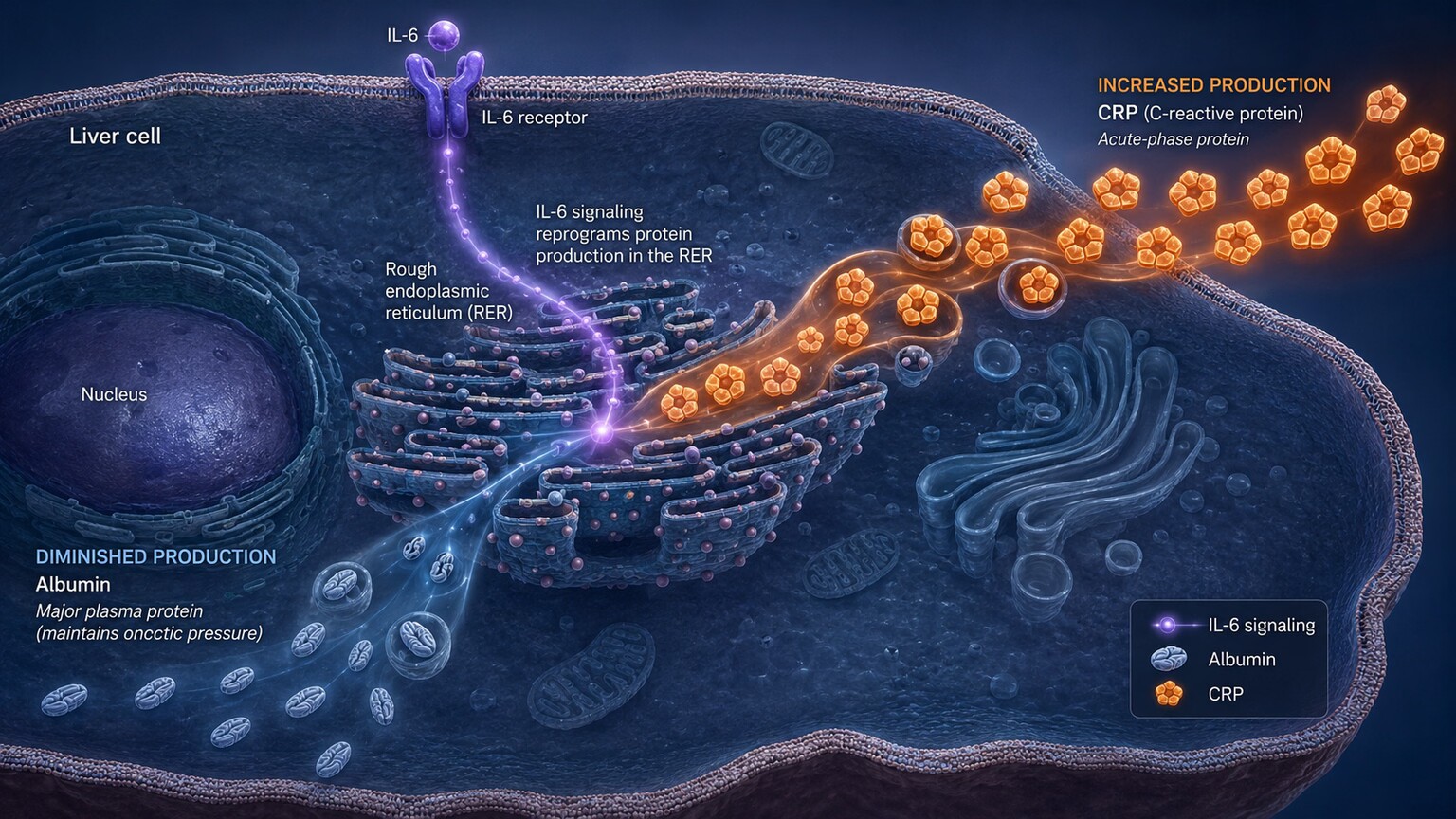
Figure 1. Under sustained inflammatory signaling, liver cells scale back albumin production and redirect the same manufacturing resources toward acute-phase proteins like CRP and fibrinogen.
Albumin Is a "Negative Acute-Phase Reactant" — What That Actually Means
To understand why inflammation lowers albumin, it helps to understand what an "acute-phase reactant" actually is in the first place. When your immune system detects a threat — an infection, an injury, ongoing autoimmune activity, even a chronic low-grade condition — it releases signaling molecules called cytokines, with one called interleukin-6 (IL-6) playing a starring role. These cytokines travel to the liver and essentially issue new manufacturing instructions: ramp up production of a specific set of proteins the immune system needs right now, like C-reactive protein (CRP) and fibrinogen, both of which help coordinate the inflammatory and clotting response. These are called "positive" acute-phase reactants, because their levels rise during inflammation.
Albumin sits on the opposite side of that same instruction set — it's classified as a "negative" acute-phase reactant, meaning its production is deliberately scaled back during the exact same inflammatory signaling that ramps up CRP and fibrinogen. This isn't the liver failing to keep up with demand; it's the liver actively reallocating its finite protein-manufacturing capacity, the same limited factory floor, toward the proteins the immune system has flagged as the current priority. Albumin production isn't the only thing being deprioritized this way — transferrin, the protein that transports iron, behaves similarly — but albumin's drop is the one most likely to show up clearly on a standard blood panel, since it's checked so routinely.
The specific molecular switch behind this reallocation is worth understanding, because it explains why the effect is so consistent across such different underlying diseases. IL-6 binds to receptors on the surface of liver cells and activates a signaling cascade inside the cell that changes which genes get actively transcribed into new proteins. That cascade turns up the genes responsible for CRP and fibrinogen while simultaneously turning down the gene responsible for albumin — the same single hormonal signal producing two opposite effects on two different genes inside the same cell, at the same time. Because IL-6 is such a common, generic downstream signal — released in response to nearly any sustained inflammatory trigger, whether autoimmune, infectious, or malignant in origin — this same albumin-suppressing effect shows up across an unusually wide range of otherwise completely different diseases, which is exactly why albumin functions as such a broad, non-specific marker rather than pointing toward any one particular diagnosis on its own.
How Fast and How Far Albumin Can Actually Drop
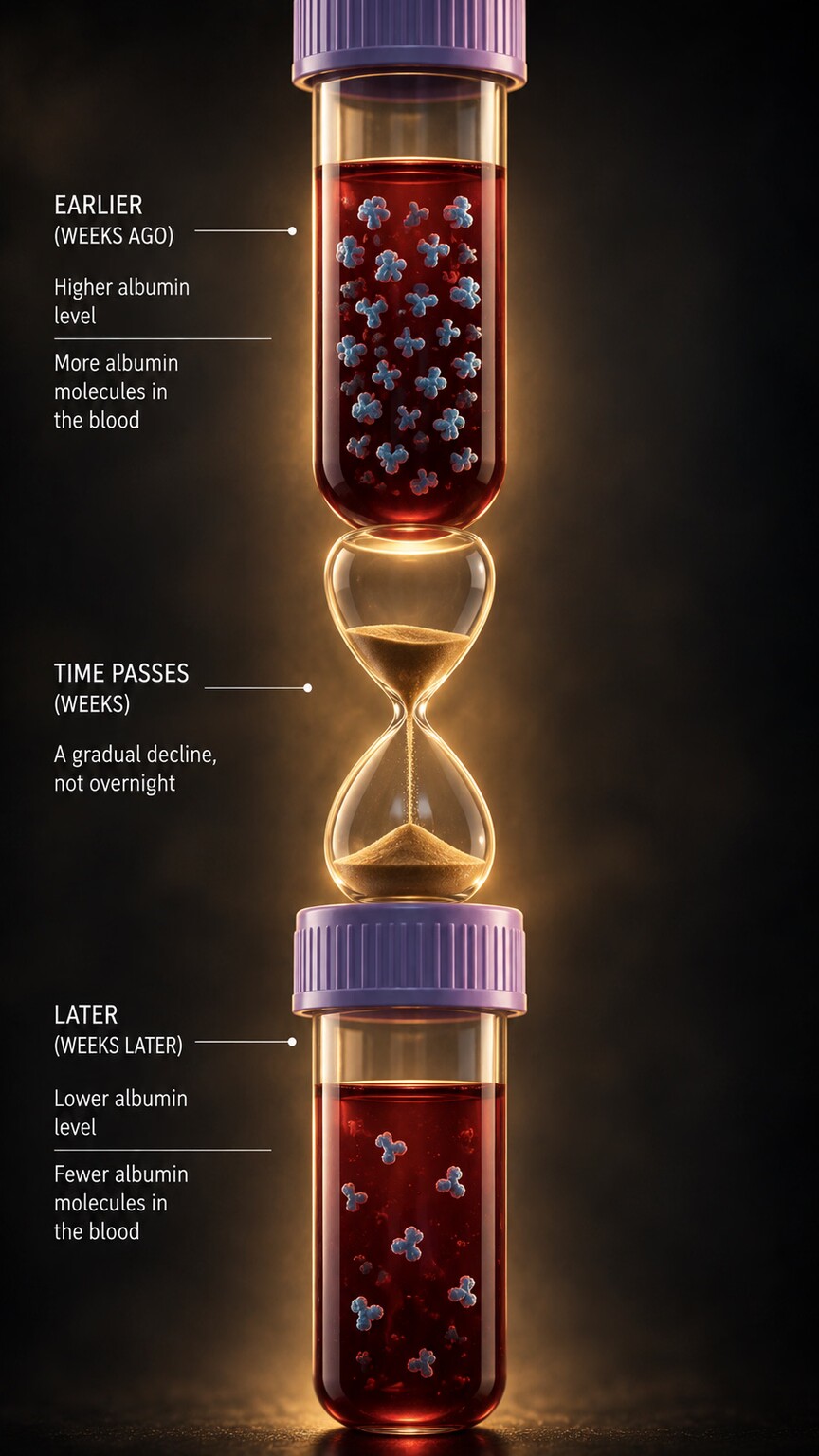
Figure 2. Because albumin circulates in the blood for roughly three weeks before being broken down, a drop from reduced production takes time to fully show up on a lab report.
One detail that trips people up is timing: albumin doesn't crash the moment inflammation starts, because it's a remarkably long-lived protein once it's already in your bloodstream, with a half-life of around 18 to 20 days. That means even if your liver stopped making any new albumin today, the albumin already circulating would only decline gradually, dropping by roughly half over about three weeks rather than disappearing overnight. This is precisely why albumin is considered a poor marker for anything acute or fast-moving — a bad infection that resolves in five days may barely nudge your albumin at all, while inflammation that persists for months, even at a low simmering level, gradually pulls the number down in a way that becomes clearly visible on a routine panel.
This slow-moving nature is exactly why chronic, ongoing inflammatory conditions are far more likely to produce a visibly low albumin than sudden, short-lived ones. Someone with a week-long cold is unlikely to see any real change. Someone with inflammatory bowel disease that's been quietly active for four months, or rheumatoid arthritis that's been under-treated for a year, is a much more plausible candidate for a meaningfully reduced albumin — not because the inflammation is necessarily more severe at any single moment, but because it's had enough sustained time to actually move a protein this slow-changing.
There's an important exception worth flagging, though, because it complicates the otherwise tidy "only chronic conditions matter" rule above: genuinely severe acute illness — a serious systemic infection like sepsis, a major trauma, extensive burns, or a critical illness requiring intensive care — can still produce a dramatic albumin drop within just a few days, despite lasting nowhere near as long as the chronic conditions described elsewhere in this article. This happens through a different, additional mechanism layered on top of the reduced-production effect: in severe acute illness, the tiny blood vessels throughout the body become measurably more permeable, or "leaky," allowing existing albumin to shift out of the bloodstream and into surrounding tissue far faster than the slow, three-week half-life would otherwise predict. This is precisely why albumin is tracked closely in intensive care settings despite the "slow marker" reputation described above — the reduced-production mechanism from ordinary chronic inflammation and the vascular-leak mechanism from severe acute illness are two genuinely different processes that happen to produce a similar-looking low number, and telling them apart matters enormously for how urgently a low result should be treated.
Curious what the rest of your own results are really telling you? Upload them and get a complete, plain-language breakdown in under 15 minutes.
Analyze My ResultsWhich Chronic Conditions Do This Most Reliably
Several categories of chronic inflammatory conditions are particularly well known for producing this pattern. Inflammatory bowel diseases like Crohn's disease and ulcerative colitis are classic examples, since the gut lining stays under near-constant inflammatory stress during active disease, sustaining exactly the kind of prolonged cytokine signaling needed to meaningfully suppress albumin over time. Rheumatoid arthritis and other autoimmune joint conditions behave similarly, with ongoing joint inflammation acting as a steady, continuous trigger for the same liver-level reallocation. Chronic infections that the body hasn't fully cleared — certain long-running bacterial infections, tuberculosis, some viral infections — can produce the same effect through sustained, rather than acute, immune activation.
Chronic kidney disease and certain cancers also frequently show this pattern, though often through a combination of mechanisms rather than inflammation acting entirely alone — chronic kidney disease can both allow direct albumin loss into urine and sustain a background inflammatory state, while some cancers drive genuinely significant, sustained inflammatory signaling as part of the disease process itself. This overlap is exactly why a low albumin reading, on its own, can't distinguish between these different underlying categories — it simply signals that something has been going on long enough and intensely enough to move this particular, slow-changing number, with the specific cause requiring further evaluation beyond the albumin result alone.
Lupus and other systemic autoimmune conditions belong on this list too, and are worth calling out specifically because the inflammation involved isn't always confined to one obvious location the way it is with a single inflamed joint or a clearly localized gut condition — systemic autoimmune disease can generate sustained cytokine signaling from multiple tissues simultaneously, which sometimes produces a more pronounced albumin suppression than a single-organ inflammatory condition of similar apparent severity. Chronic infections deserve a similar callout: HIV that isn't well controlled with treatment, longstanding hepatitis C, and certain persistent bacterial infections like endocarditis can all sustain the same kind of prolonged cytokine activation, distinct from a brief, self-limited infection that clears within days and never has time to meaningfully affect a protein this slow to change. Even obesity, increasingly understood to involve a genuine low-grade chronic inflammatory state driven by inflammatory signaling from fat tissue itself, has been associated with modestly lower average albumin levels in some research, illustrating just how broadly this single mechanism can reach beyond the more obviously "inflammatory" conditions people usually think of first.
How This Differs From a Low Albumin Caused by Poor Nutrition

Figure 3. Poor protein intake and chronic inflammation both lower albumin, but through entirely different mechanisms — one from a lack of raw material, the other from the liver deliberately deprioritizing production.
Albumin's other well-known cause of decline — inadequate protein intake — is often mentally lumped together with inflammation as though they're variations of the same problem, but the underlying mechanisms are genuinely different, and telling them apart matters for figuring out what to actually do next. A nutritional cause reflects a raw-material shortage: the liver has plenty of manufacturing capacity and no reason to redirect it, but simply doesn't have enough dietary protein building blocks (amino acids) available to keep production at a normal pace. An inflammatory cause is the opposite situation entirely — raw materials may be perfectly adequate, but the liver has actively chosen, in response to cytokine signaling, to run its albumin production line at reduced capacity on purpose.
One practical way this distinction shows up clinically is through CRP, the positive acute-phase reactant mentioned earlier. Because CRP rises through the exact same cytokine signaling that suppresses albumin, a low albumin paired with an elevated CRP strongly suggests an inflammatory cause is at least contributing, since both numbers are being driven in opposite directions by the same underlying process. A low albumin with a normal, unremarkable CRP points more toward a nutritional or liver-synthesis explanation instead, since the inflammatory signaling pathway responsible for the paired pattern doesn't appear to be active. This single pairing — albumin down, CRP up — is one of the more useful two-value combinations in a routine panel precisely because it points toward mechanism, not just magnitude.
It's also worth noting that these two mechanisms aren't mutually exclusive, and in real-world cases they frequently overlap in ways worth understanding. Someone with a chronic inflammatory bowel condition often also struggles with genuinely reduced dietary intake, either because the condition itself causes appetite loss and nausea, or because the inflamed gut lining is less efficient at actually absorbing the protein that is eaten, even when intake looks adequate on paper. In this kind of overlapping case, both mechanisms are pulling albumin downward simultaneously — reduced raw material availability from poor absorption, compounding a liver that's already been instructed to deprioritize albumin production due to ongoing inflammatory signaling — which is part of why albumin can sometimes drop to levels more dramatic than either mechanism alone would typically produce, and why addressing only one side (say, nutritional supplementation without also treating the underlying inflammation) often produces a disappointingly incomplete recovery in albumin levels.
Why This Matters Beyond Just the Number Itself
A low albumin from chronic inflammation isn't just an interesting lab curiosity — it has real, practical consequences worth understanding. Albumin is the single largest protein circulating in your blood by concentration, and one of its core jobs is maintaining oncotic pressure, the force that keeps fluid inside your blood vessels rather than leaking out into surrounding tissue. When albumin runs meaningfully low for a sustained period, that fluid-holding function weakens, which is part of why chronic inflammatory conditions with persistently low albumin are sometimes accompanied by mild swelling, particularly in the ankles and lower legs, even when the kidneys and heart are both functioning normally.
Albumin also acts as a transport vehicle for a wide range of substances in the blood, including many medications, hormones, and fatty acids, binding to them and carrying them through circulation. A meaningfully reduced albumin level can change how strongly certain medications bind and how much of an unbound, active drug is circulating at a given dose — a detail that becomes clinically relevant for anyone on medications sensitive to this effect, and part of why a doctor managing a chronic inflammatory condition keeps an eye on albumin over time, not just as an isolated data point but as a marker with genuine downstream physiological consequences.
Less widely known is that albumin also functions as one of the blood's major antioxidant reserves, thanks to a single reactive site on its surface that can neutralize damaging free radicals and other reactive molecules circulating in the bloodstream, a role that becomes more physiologically significant precisely during the kind of sustained inflammatory states that also happen to be suppressing albumin's production. This creates a somewhat unfortunate feedback dynamic: the exact circumstances that most increase the body's need for albumin's antioxidant buffering capacity are the same circumstances actively reducing how much albumin is available to provide it, a detail researchers studying chronic inflammatory disease have found genuinely relevant to understanding why prolonged inflammation can compound on itself over time rather than simply staying at one steady, contained level.
What Doctors Actually Look For to Confirm This Explanation
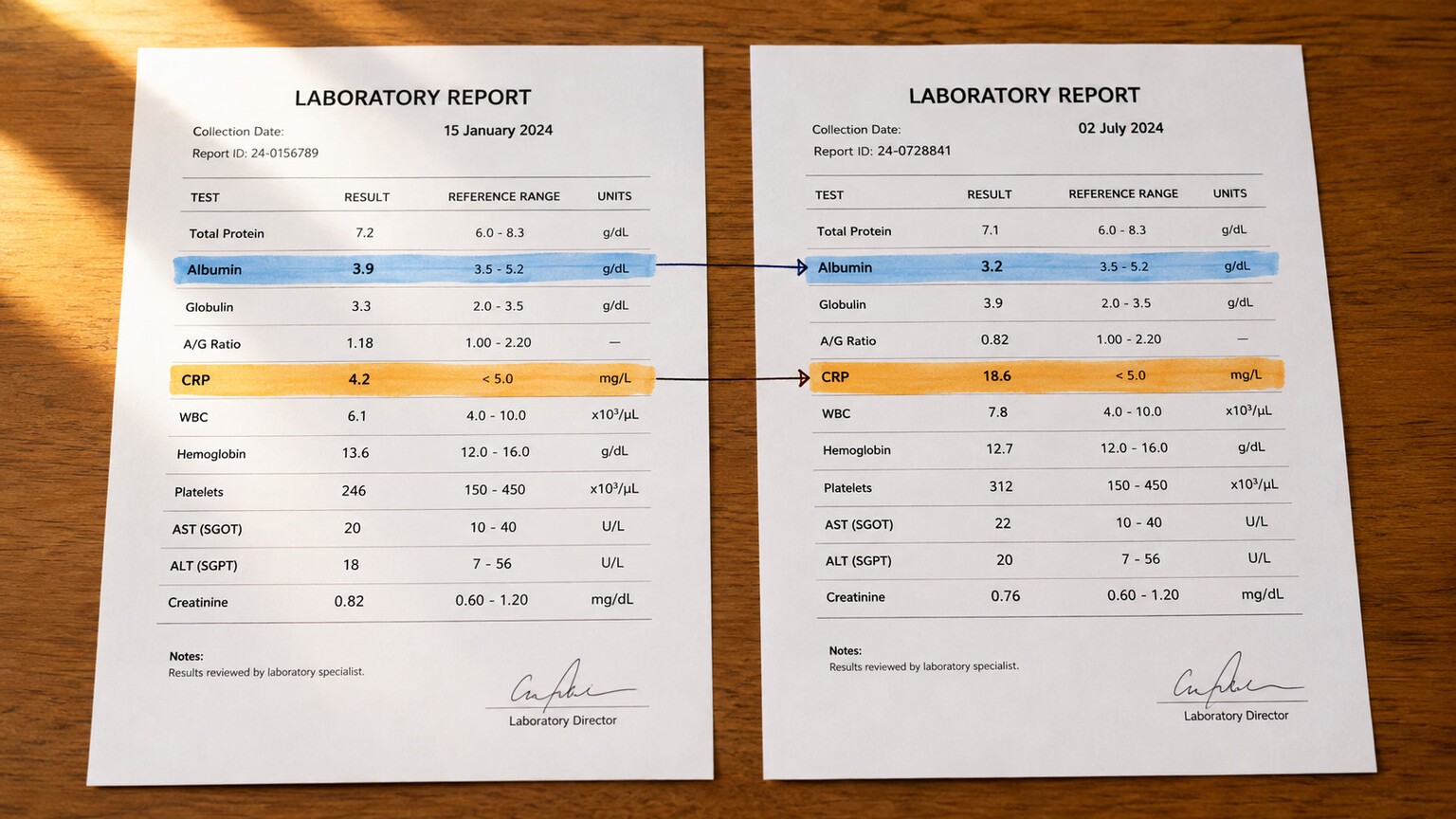
Figure 4. Watching albumin and CRP move in opposite directions across two or more reports over several months is one of the clearest confirmations that inflammation, not nutrition or liver damage, is driving the decline.
Beyond the albumin-CRP pairing already described, a doctor working through a low albumin result will typically want a fuller inflammatory picture before settling on inflammation as the explanation. ESR (erythrocyte sedimentation rate), another marker that rises during sustained inflammation, often gets checked alongside CRP since the two don't always move in perfect lockstep and together provide a more complete picture. Liver function tests — ALT, AST, and markers of liver synthetic function — help rule out the liver simply being damaged and unable to produce albumin at all, a different problem entirely from the liver choosing to deprioritize it. A urine test checking for protein loss helps rule out the kidneys as the primary driver, since kidney-related albumin loss requires a completely different explanation and workup than an inflammation-driven production decrease.
Trend over time matters just as much here as it does with any other lab pattern discussed elsewhere on this site: a single low albumin reading is far less informative than watching albumin and CRP move in opposite directions across two or three reports spaced weeks or months apart. A steadily falling albumin paired with a steadily rising or persistently elevated CRP, tracked across a real time span rather than a single snapshot, is considerably more convincing evidence of an ongoing inflammatory process than either value alone could ever provide.
ESR deserves a brief note of its own here too, since it doesn't always track CRP perfectly and can occasionally tell a slightly different part of the story. ESR measures how quickly red blood cells settle in a test tube over one hour, a value that rises when certain proteins — including some of the same acute-phase proteins CRP represents — make red blood cells clump together and fall faster. Because ESR responds more slowly to a changing inflammatory state and is influenced by a few additional factors unrelated to inflammation, such as anemia and advancing age, it's generally treated as a secondary confirmation alongside CRP rather than a replacement for it, most useful when the two are checked together and interpreted as a pair rather than either being read entirely on its own.
Ferritin is a third marker worth mentioning in this same conversation, since it behaves as a positive acute-phase reactant much like CRP does, rising during inflammation independent of its more commonly known role reflecting iron storage. This creates a genuinely useful, if slightly counterintuitive, diagnostic wrinkle: someone with chronic inflammation can show a normal or even elevated ferritin despite having relatively low iron stores, because the inflammatory component of ferritin's behavior is temporarily masking the iron-storage signal underneath it. Seeing low albumin, elevated CRP, and an unexpectedly elevated (rather than low) ferritin together is a recognizable inflammatory pattern in its own right, and part of why a doctor investigating unexplained fatigue or anemia alongside a low albumin will often interpret ferritin cautiously rather than at face value, checking additional iron markers like transferrin saturation to get a clearer picture underneath the inflammatory noise.
Beyond specific companion markers, the broader diagnostic approach to an inflammation-suspected low albumin usually involves a systematic review of possible sources rather than jumping straight to imaging or invasive testing. A careful history covering joint pain, digestive symptoms, unexplained fevers, skin changes, recent or recurring infections, and known autoimmune conditions in the family often narrows the list of likely culprits considerably before any additional blood work is even ordered, since chronic inflammatory conditions typically announce themselves through some combination of symptoms well before they've been running long enough to noticeably move albumin. This is exactly why bringing a clear, honest symptom history to an appointment investigating a low albumin is so valuable — the albumin and CRP values tell you that something inflammatory is likely happening, but the symptom pattern is usually what actually points toward which specific condition is responsible.
Why Hospitals Use Albumin to Predict Recovery, Not Just Diagnose Disease
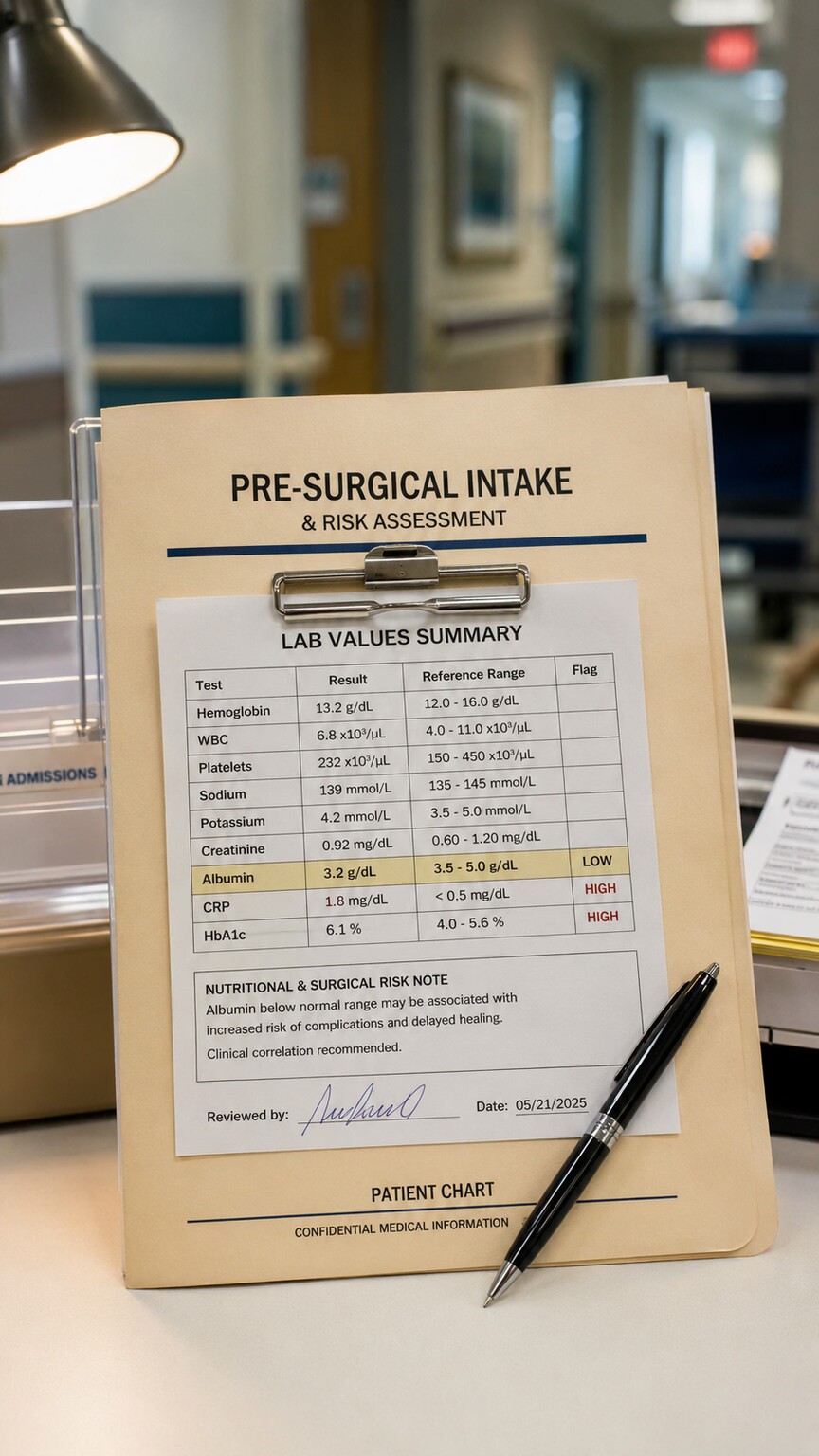
Figure 5. Because low albumin reflects the cumulative burden of chronic inflammation and reduced physiological reserve, hospitals routinely use it to help estimate surgical and recovery risk, not only to investigate liver or kidney function.
One of the reasons albumin gets checked so routinely, even in settings that have nothing to do with liver or kidney concerns, is that it has turned out to be a surprisingly reliable predictor of how well someone will tolerate a major stressor like surgery, a hospital admission, or a serious illness. Pre-surgical risk calculators used across many hospital systems include albumin as one of their inputs, precisely because a low level, whatever its cause, tends to correlate with a harder recovery, a higher chance of wound-healing complications, and a longer hospital stay. This isn't because low albumin directly causes those outcomes in every case — it's more that a low albumin is often a downstream marker of exactly the kind of chronic inflammatory burden, or reduced physiological reserve, that independently makes recovery from any major stressor harder.
This is a genuinely useful way to think about albumin more broadly: it functions less like a single-disease marker and more like a general gauge of how much chronic inflammatory or nutritional strain your body has been under recently. A younger, otherwise healthy person with a well-controlled chronic condition and a normal albumin going into surgery carries meaningfully different risk than someone of the same age whose albumin has been quietly declining for months due to poorly controlled inflammation — even if neither person has any diagnosed liver or kidney disease at all. This is exactly why a low albumin, however it's discovered, is worth taking seriously as a signal to address the underlying cause, not simply a number to note and move past.
This same logic extends to oncology, where albumin has been studied extensively as part of broader prognostic scoring systems used alongside imaging and biopsy results, precisely because a declining albumin in someone undergoing cancer treatment can reflect the cumulative inflammatory burden of the disease process itself, independent of what a scan alone would show. None of this means a low albumin should be read as an ominous finding in isolation — plenty of low-albumin cases trace back to a well-defined, treatable inflammatory condition with an excellent outlook once addressed — but it does explain why clinicians across such different specialties, from surgery to oncology to intensive care, have all converged on checking this one unassuming protein as part of assessing how much physiological reserve a person actually has to draw on.
Can a Low Albumin From Inflammation Reverse Itself?
Yes, and this is genuinely good news buried inside what can otherwise feel like a discouraging result: because the underlying mechanism is the liver actively choosing to deprioritize albumin production rather than losing the physical capacity to make it, successfully treating the underlying inflammatory condition typically allows albumin to recover, gradually, over the following weeks to months. Someone whose inflammatory bowel disease finally responds well to treatment, or whose rheumatoid arthritis moves into remission, will generally see albumin climb back toward their personal normal range as the cytokine signaling driving the suppression fades and the liver's production line shifts back toward its usual output.
The same slow half-life that makes albumin sluggish to fall also makes it sluggish to recover — improvement typically takes weeks, not days, even after inflammation is well controlled, which is worth knowing so that an early follow-up test showing only a small rise isn't mistaken for a treatment failure. A gradually climbing albumin over several months of good inflammatory control is the expected, reassuring recovery pattern, not a sign that something else needs to be tried.
It's also worth setting realistic expectations about how completely albumin recovers, since the answer genuinely depends on whether the underlying inflammatory condition can be fully controlled or only partially managed. Someone whose inflammatory bowel disease achieves true remission, with the gut lining actually healing rather than just symptoms improving, will typically see albumin return close to their original personal baseline over several months. Someone with a chronic condition that can be well controlled but not fully eliminated — many forms of rheumatoid arthritis and lupus fall into this category with modern treatment — may see albumin climb substantially and then plateau at a level that's improved but still sits slightly below where it was before the condition ever started, reflecting the small amount of ongoing background inflammatory activity that persists even under otherwise good control. Neither outcome should be treated as a failure on its own; the more useful question is always whether albumin is trending in the right direction relative to how well the underlying condition itself is being managed, rather than expecting it to hit one universal target number regardless of the specific disease involved.
A Worked Example: Reading Albumin and CRP Together
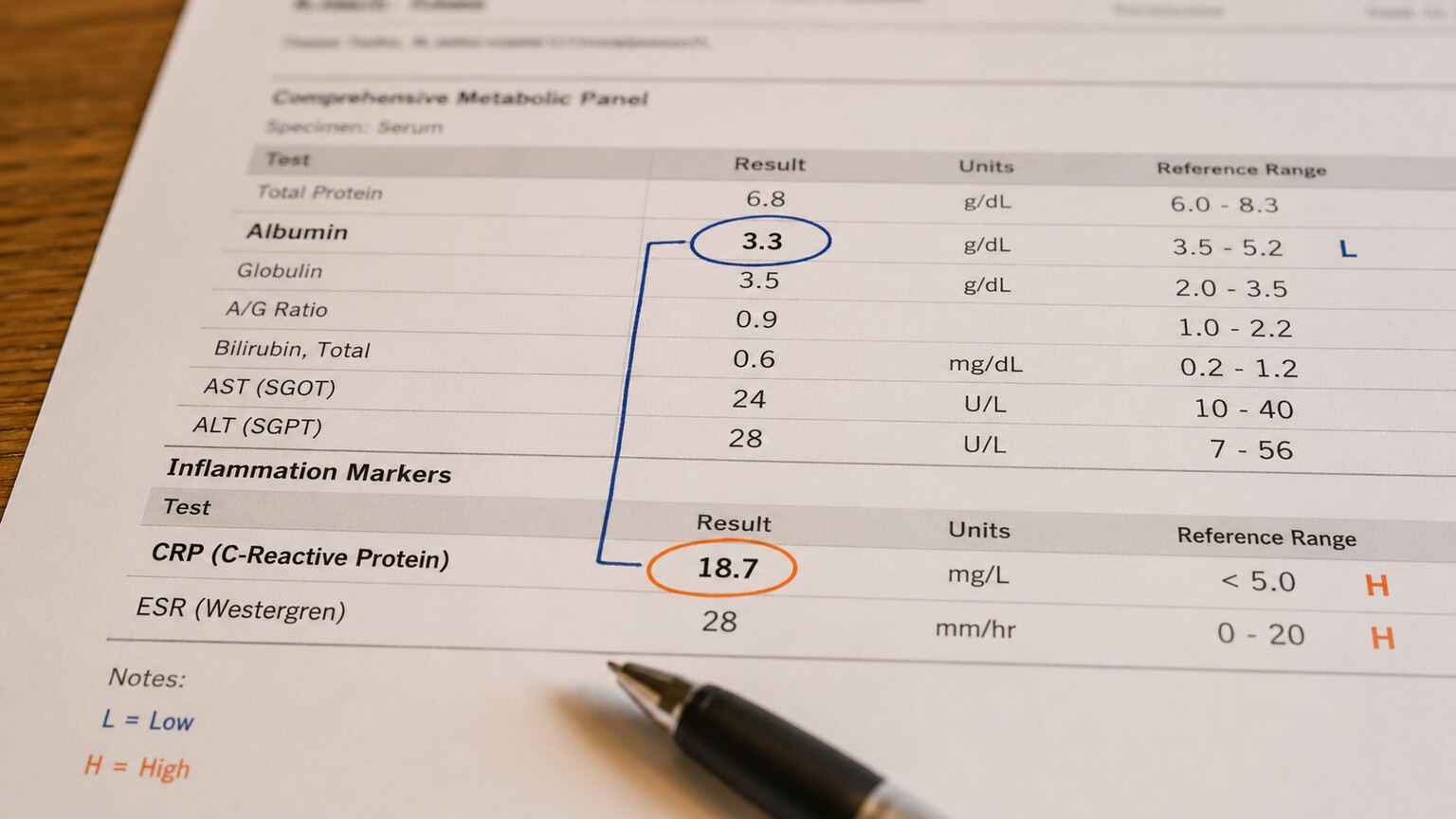
Figure 6. Reading albumin and CRP as a pair, rather than as two separate isolated rows, is what actually reveals whether an inflammatory process is driving a low result.
Applying this reasoning to an actual report makes the whole approach click far more than any abstract explanation can. Picture someone in their forties with joint pain who's had blood work done twice, six weeks apart. On the first report, albumin sits at 3.6 g/dL, just below the typical 3.5–5.0 g/dL reference range's comfortable middle, alongside a CRP of 18 mg/L, moderately elevated. Six weeks later, with joint pain still present and untreated, the follow-up shows albumin down further to 3.3 g/dL and CRP up to 26 mg/L. Read as two separate rows, this could look like two unrelated, mildly concerning trends. Read as a pair, moving in opposite directions together over the same six-week window, it tells a single, coherent story: an inflammatory process is active, ongoing, and if anything intensifying, with the liver's negative acute-phase response to that inflammation showing up clearly in the falling albumin.
The useful next step in this scenario isn't a liver ultrasound or a kidney workup — it's identifying and addressing the actual source of inflammation the CRP and albumin are both responding to, in this case the ongoing joint pain, which points toward a rheumatologic evaluation as the more directly relevant next step. If that same person's joint symptoms are eventually diagnosed and treated, a repeat panel a few months later showing albumin climbing back toward 4.0 g/dL alongside a CRP settling back toward normal would be the expected, reassuring confirmation that the original explanation — chronic inflammation, not liver or kidney disease — was correct all along.
Now contrast that with a second, superficially similar case: albumin at 3.4 g/dL, but CRP completely normal at 2 mg/L, in someone reporting several months of intentional dietary restriction and unintended weight loss, with no joint pain, digestive symptoms, or other inflammatory complaints. Here the pairing points the other direction entirely — a normal CRP alongside a low albumin is far more consistent with inadequate protein intake than with an active inflammatory process, redirecting the useful next step toward a dietary and nutritional evaluation rather than a search for hidden inflammation. Same starting complaint, same single flagged value, two completely different underlying stories — again, exactly the value of reading albumin alongside CRP rather than in isolation.
Frequently Asked Questions
Does a low albumin always mean liver or kidney disease?
No. Chronic inflammation alone, with a completely healthy liver and kidneys, can lower albumin through a deliberate production shift rather than any organ damage. Checking CRP alongside albumin, and ruling out protein loss in urine, helps distinguish between these different causes.
How is a nutritional cause of low albumin different from an inflammatory one?
A nutritional cause reflects a shortage of raw protein building blocks with normal liver capacity intact. An inflammatory cause reflects the liver deliberately redirecting normal manufacturing capacity away from albumin in response to cytokine signaling. A low albumin with a normal CRP points toward nutrition or liver synthesis; a low albumin with an elevated CRP points toward inflammation.
How long does it take for inflammation to actually lower albumin?
Because albumin has a half-life of roughly 18 to 20 days, a meaningful drop generally requires weeks to months of sustained inflammation, not a short-lived illness. This is why chronic conditions like inflammatory bowel disease or rheumatoid arthritis are far more likely to produce a visibly low albumin than a brief infection.
Will my albumin go back to normal once the inflammation is treated?
Usually, yes. Because the mechanism is a deliberate production shift rather than lost capacity, effectively treating the underlying inflammatory condition typically allows albumin to recover gradually over the following weeks to months, following the same slow timeline as its original decline.
What symptoms might go along with an inflammation-related low albumin?
Because albumin helps keep fluid inside blood vessels, a meaningfully low level can contribute to mild swelling, particularly in the ankles and lower legs, along with whatever symptoms the underlying inflammatory condition itself is producing.
Can a severe short-term illness lower albumin too, even though it's usually described as a slow marker?
Yes. Severe acute illness, such as sepsis or major trauma, can drop albumin within days through a different mechanism — increased vascular permeability that allows albumin to leak out of the bloodstream into surrounding tissue — separate from the slower, production-based decline caused by ordinary chronic inflammation.
Should I be worried if my albumin is only slightly below normal?
A mildly low albumin with no other abnormal markers and no symptoms is often not urgent, but it's still worth mentioning to your doctor, especially alongside a slightly elevated CRP or a chronic symptom you haven't yet connected to an inflammatory cause. Tracking the trend over your next one or two routine panels is a reasonable, low-pressure way to see whether it's stable or continuing to move.
Conclusion
A low albumin result doesn't automatically mean something is wrong with your liver or kidneys — it can just as easily mean your body has been managing some form of chronic inflammation for long enough to make itself visible on a routine panel, through a genuinely deliberate, well-understood biological trade-off rather than any organ malfunction. Pairing albumin with CRP, thinking about how long any potential trigger has actually been present, and tracking both values together over more than one report are the practical tools that turn a single confusing number into a real, answerable clue about what's actually going on in your body.
What makes this particular mechanism worth understanding, beyond the specific case of albumin itself, is what it reveals about how the body actually behaves during illness: your liver isn't a passive organ simply reflecting damage when something goes wrong elsewhere — it's an active participant, constantly rebalancing its own output in direct response to signals from your immune system, prioritizing what the moment calls for even at the expense of a protein it would otherwise keep producing at a steady, unremarkable rate. Recognizing that trade-off is what turns a low albumin from an unexplained, slightly worrying number into a genuinely legible signal — one that, read correctly alongside the rest of your panel, points you and your doctor toward the right next question instead of the wrong one.
If you take away one habit from this article, let it be this: the next time albumin shows up low on a report, glance one row up or down for CRP before assuming the worst about your liver or kidneys. That single comparison, taking seconds to make, is often the fastest way to tell whether you're looking at organ damage or simply the visible signature of your immune system doing exactly what it's supposed to do.
Still Not Sure What Your Results Mean?
Upload your labs and get a complete, visual, plain-language interpretation of every biomarker — delivered to your inbox in under 15 minutes.
Get My ReportThis article is for educational purposes only and does not constitute medical advice. Always consult your healthcare provider regarding your specific lab results.