
Why Did My Doctor Order a Total Protein Test?
If you're looking at a lab report and wondering why "total protein" is sitting there among a dozen other values you didn't specifically ask for, the honest answer is that almost nobody orders this test in isolation. Total protein is one of those quiet, background values that gets bundled automatically into several different standard panels — a comprehensive metabolic panel, a liver panel, a pre-surgical workup — precisely because it's cheap, fast, and genuinely useful as a broad screening signal, even though it's rarely the specific reason a visit was scheduled in the first place. Understanding the handful of concrete situations that actually trigger this test being included gives you a much clearer picture of why it showed up on your particular report, and what it's actually contributing to the bigger picture your doctor is building.

Figure 1. Total protein isn't a single molecule — it's the combined sum of albumin and globulin, two genuinely different protein families that happen to get measured together as one convenient screening number.
What Total Protein Actually Measures
Total protein adds together two distinct categories of protein circulating in your blood: albumin, a single protein manufactured entirely by the liver that makes up roughly half of your blood's total protein content, and globulin, a broader category covering dozens of different proteins made by the liver and the immune system, including antibodies. Because these two categories are produced by different sources and respond to different situations, a single combined number is deliberately a blunt, first-pass screening tool rather than a precise diagnostic value on its own — its real usefulness lies in flagging that something in this general protein system might be worth a closer look, not in pinpointing exactly what that something is.
This is exactly why total protein so rarely gets ordered by itself: on its own, an abnormal result tells you only that either albumin, globulin, or both have shifted somewhere in the body, without telling you which one moved or precisely why. It functions best as the first tripwire in a broader two-step diagnostic process, where a normal result generally ends the inquiry there, and an abnormal one prompts breaking the combined number down into its two underlying components for a more specific, actionable answer.
Albumin does more than simply sit in the bloodstream waiting to be measured. It's the single largest contributor to what's called oncotic pressure, the osmotic force that keeps fluid from leaking out of blood vessels and pooling in surrounding tissue. When albumin drops significantly, that pressure gradient weakens, and fluid begins seeping into the interstitial space instead of staying contained in circulation — which is precisely why chronically low albumin so often shows up clinically as visible swelling in the legs, ankles, or abdomen rather than as a symptom anyone would immediately connect to a blood protein number. Albumin also acts as a transport vehicle, ferrying hormones, medications, calcium, and bilirubin through the bloodstream bound to its surface, which is part of why unusually low albumin can quietly change how certain medications behave in the body even when the drug dose itself hasn't changed.
Globulin, in contrast, is really an umbrella term for a much more varied cast of proteins. It includes the immunoglobulins your immune system produces as antibodies, transport proteins that carry iron and copper, and clotting factors involved in stopping bleeding. Because this category responds so directly to immune activity, globulin levels tend to rise during infections, chronic inflammatory conditions, and certain blood cancers affecting antibody-producing cells — which is a large part of why an elevated total protein, once fractionated, so often points toward the immune system rather than the liver.
Labs typically report total protein in grams per deciliter, and the standard adult reference range generally falls somewhere between about 6.0 and 8.3 g/dL, though the exact cutoffs vary slightly from one laboratory to the next depending on the analyzer and methodology used. This is a reminder worth keeping in mind whenever comparing results across different labs or providers: the number itself means little without the specific reference range printed alongside it on that particular report, since a value considered normal at one lab could technically sit just outside another lab's slightly different cutoff.
Bundled Into Nearly Every Routine Metabolic Panel
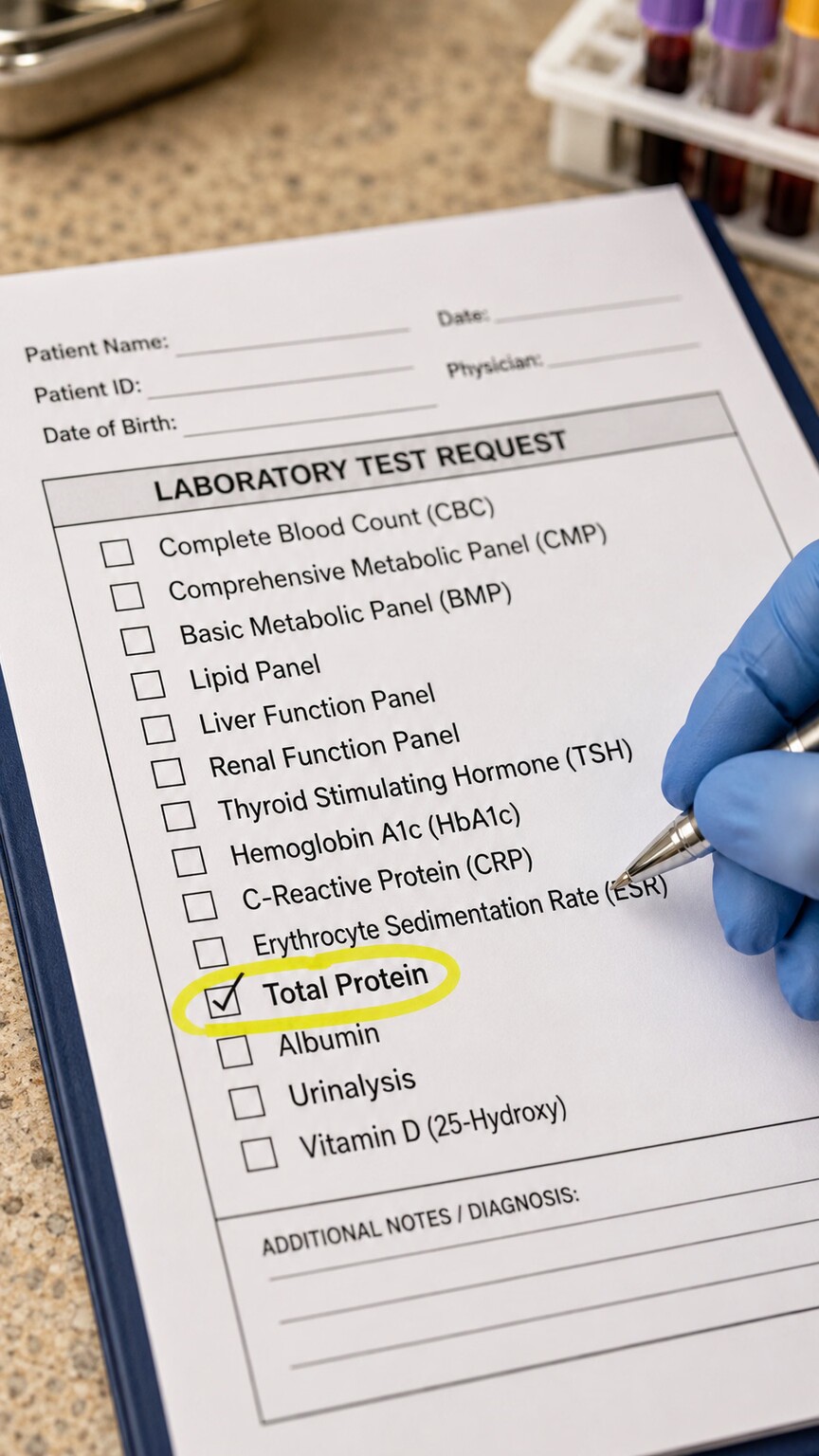
Figure 2. Total protein is a standard included component of a comprehensive metabolic panel and liver panel, which is why it appears on so many routine blood draws regardless of the specific reason for the visit.
The single most common reason total protein shows up on your report is simply that it's a default, pre-included component of a comprehensive metabolic panel (CMP) and, separately, of a standard liver function panel — two of the most frequently ordered blood test bundles in all of routine medicine. When a doctor orders "a CMP" for an annual physical, a pre-appointment check-in, or a general symptom workup, they're not individually selecting each of the roughly fourteen values that panel contains; they're ordering one pre-assembled bundle that happens to include total protein by default, alongside kidney markers, liver enzymes, electrolytes, and blood sugar.
This bundling exists because these particular values are cheap to run together from the same blood draw and collectively provide a broad first-pass screen across several organ systems at once. Total protein's inclusion reflects its role as part of that broad net — not because anyone specifically suspected a protein-related problem, but because casting that wide a net occasionally catches something relevant that a narrower, more targeted set of tests would have missed entirely.
From a purely practical standpoint, modern lab analyzers process an entire metabolic panel from a single small blood sample in one automated run, meaning the marginal cost of adding one more value like total protein to that run is negligible compared to the cost of running a separate blood draw and a separate lab order later, if that same information turned out to be needed. This is a large part of why panels have historically been built as bundles rather than as menus of individually selected tests — it's far more efficient, both for the patient and for the healthcare system, to gather a wide baseline of information in one draw than to repeatedly reorder single tests reactively as each new question comes up.
It's also worth understanding that which specific panel gets ordered can shift this picture slightly. A basic metabolic panel, which is a narrower cousin of the comprehensive version, typically does not include total protein or liver enzymes at all — it focuses mainly on kidneys, electrolytes, and blood sugar. So if you've had bloodwork before without ever seeing a total protein value, and now suddenly you do, it's often simply because this particular visit called for the more complete comprehensive panel or an actual liver panel, rather than any change in your underlying health.
Insurance and billing considerations play a quieter role in this decision as well. A comprehensive metabolic panel is typically billed and reimbursed as a single bundled unit rather than as fourteen individually billed tests, which makes it the more cost-effective and administratively simpler choice for a clinician ordering routine screening bloodwork, compared with hand-selecting only the handful of values that seem most relevant to a specific visit. This administrative reality is part of why total protein so often rides along even into visits that have nothing to do with liver, kidney, or nutritional concerns at all — it's simply part of the standard, pre-assembled package.
Curious what your own liver panel or total protein result actually means? Upload your labs and get a complete, plain-language breakdown in under 15 minutes.
Analyze My ResultsPre-Surgical and Hospital Admission Screening
Total protein, and albumin specifically, plays a genuinely important and deliberate role in pre-surgical evaluation, since low protein levels are a well-documented predictor of poor wound healing and higher surgical complication risk. Anyone scheduled for a significant procedure is likely to have this value checked specifically as part of surgical clearance bloodwork, not as an incidental bundled extra but as a genuinely load-bearing piece of the pre-operative risk assessment, since a surgical team planning a procedure benefits from knowing ahead of time whether a patient's protein status might complicate recovery.
Hospital admission for any significant illness follows similar logic: total protein and albumin are commonly checked on admission specifically because low levels correlate with worse outcomes across a wide range of hospitalized conditions, giving the care team an early signal about a patient's overall nutritional and physiological reserve heading into treatment, independent of whatever the primary admitting diagnosis happens to be.
Surgical teams also use pre-operative albumin as one input into broader risk-scoring tools that estimate the likelihood of post-surgical complications like infection, delayed wound closure, or extended hospital stay. A markedly low value doesn't automatically cancel or delay a planned procedure, but it does often prompt a conversation about optimizing nutritional status beforehand when time allows, or adjusting the post-operative care plan to account for the added risk — closer wound monitoring, a longer expected recovery window, or nutritional support started earlier than it otherwise would be.
The timing of this pre-surgical bloodwork matters too. For elective procedures scheduled weeks or months in advance, catching a low albumin early enough leaves room for meaningful intervention — a referral to a dietitian, targeted nutritional supplementation, or addressing an underlying condition that's been quietly interfering with protein status. For urgent or emergency procedures, that same low value can't be corrected beforehand, but it still gives the surgical and anesthesia teams valuable advance information about which patients face a higher baseline risk, allowing them to plan the perioperative approach accordingly even when the timeline doesn't allow for optimization.
This same logic extends to critically ill patients in intensive care settings, where protein status is frequently rechecked at intervals throughout a hospital stay rather than measured just once on admission. A protein level that starts adequate but trends downward over several days of hospitalization can be an early signal that a patient's metabolic demands have outpaced their nutritional intake, prompting adjustments to feeding support well before more visible signs of decline would otherwise appear.
It's worth noting that albumin specifically has a relatively long half-life in the bloodstream, typically cited at around three weeks, which means it responds slowly to acute changes and reflects protein status over a period of weeks rather than the last day or two. This is exactly why a single albumin drawn during a brief acute illness doesn't necessarily reflect that illness itself, but rather a patient's baseline nutritional reserve heading into it — a distinction that matters clinically, since a low value discovered on hospital admission is often a sign of a pre-existing, slower-developing nutritional deficit rather than something the current illness caused within the past day.
Monitoring Nutritional Status in Chronic Illness

Figure 3. Total protein is frequently rechecked periodically in people with chronic illness, advanced age, or conditions that raise nutritional risk, since declining protein status can be an early, otherwise silent warning sign.
For people managing ongoing chronic conditions — cancer, chronic kidney disease, inflammatory bowel disease, or simply advanced age with reduced appetite and food intake — total protein often gets periodically rechecked as part of routine follow-up specifically to monitor nutritional status over time. Declining protein levels in this context can be one of the earliest, most objective signals that a person's nutritional intake or absorption has started to fall behind their body's needs, often before more obvious symptoms like unintentional weight loss become apparent.
This monitoring role is part of why total protein sometimes appears on a report with no accompanying explanation beyond "routine follow-up" — for someone already being actively managed for a chronic condition, this value is one of several quiet indicators a care team tracks in the background across multiple visits, becoming clinically meaningful primarily through its trend over time rather than any single isolated result.
Cancer care is a particularly clear example of this dynamic. Chemotherapy and radiation can both reduce appetite and interfere with the body's ability to absorb or utilize protein effectively, and the disease process itself often increases metabolic demand well beyond what a typical diet supplies. Oncology teams frequently track total protein and albumin across treatment cycles not because either value diagnoses cancer or measures treatment response directly, but because a downward trend can flag a patient who needs nutritional intervention — supplements, a feeding tube, or a dietitian referral — before malnutrition itself becomes a barrier to completing planned treatment.
Inflammatory bowel disease follows a related but distinct pattern: active flares of Crohn's disease or ulcerative colitis can directly damage the intestinal lining responsible for absorbing protein from food, meaning total protein and albumin sometimes drop specifically because the gut has temporarily lost some of its absorptive capacity, independent of how much protein a person is actually eating. In this context, a declining total protein during a flare, followed by recovery once inflammation is controlled, can itself serve as one small piece of evidence that a treatment plan is working.
Advanced age introduces its own version of this same risk, even in the absence of any single diagnosed chronic condition. Appetite naturally tends to decline with age, medications can interfere with taste or digestion, and dental issues or difficulty swallowing can quietly reduce overall food intake over months or years without ever being flagged as a specific complaint during a routine visit. Because of this, total protein and albumin are commonly included in the periodic bloodwork ordered for older adults specifically as a low-cost, objective check against this kind of slow, easily overlooked nutritional decline — one more reason this value can appear on a report with no dramatic explanation beyond simply being part of standard care for this age group.
Screening for Liver and Kidney Disease
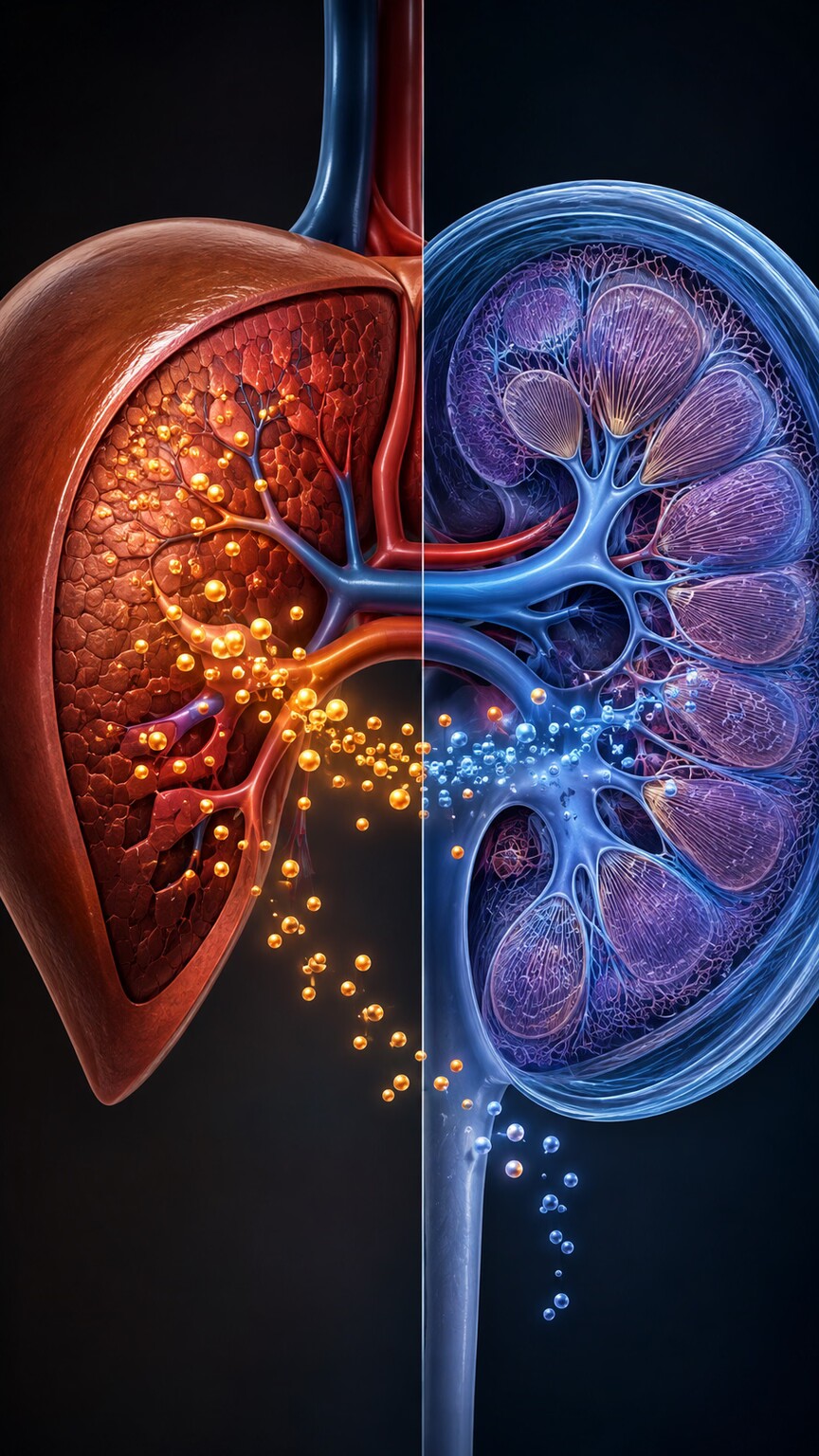
Figure 5. Because albumin is manufactured exclusively by the liver and can be lost through damaged kidneys, total protein functions as an early, general screening signal for both organ systems at once.
Because albumin is made exclusively by the liver and both albumin and certain globulins can be lost through damaged kidneys, total protein serves a genuine screening function for both organ systems, which is exactly why it's a standard component of liver panels specifically, separate from its inclusion in the broader metabolic panel already discussed. A low total protein discovered on an otherwise routine panel can be the first hint of an underlying liver synthetic problem or a kidney condition allowing protein to leak into urine, sometimes well before other, more specific markers for either organ have moved enough to be individually flagged.
This is precisely why a doctor investigating unexplained swelling, unexpected fatigue, or any other symptom with a plausible connection to liver or kidney function will often specifically ensure total protein is included in the workup, even if it wasn't automatically bundled into whatever panel was initially ordered, since it functions as a genuinely useful early screening layer for exactly these two organ systems.
On the liver side, total protein is typically interpreted alongside other synthetic function markers rather than in isolation, since the liver produces not only albumin but also the clotting factors measured by prothrombin time. A pattern of low total protein alongside a prolonged clotting time paints a more convincing picture of impaired liver synthetic function than either value would on its own, which is part of why liver panels tend to bundle several complementary markers together instead of relying on any single one.
On the kidney side, the relevant mechanism is different: it isn't that the kidneys fail to help make protein, but that a damaged filtering system can start allowing protein — particularly albumin, given its relatively small molecular size — to leak out of the blood and into urine, a condition called proteinuria. In advanced or long-standing cases, enough protein loss through urine can eventually lower the blood's total protein level as well, at which point a routine metabolic panel picking up a low total protein can be the detail that prompts a urine protein test to confirm the kidney connection directly.
This dual-organ screening role is exactly why total protein tends to get specifically re-ordered, rather than just passively bundled, whenever a patient's history already includes a known liver or kidney condition. Someone with a prior cirrhosis diagnosis or established chronic kidney disease is likely to have this value checked at essentially every routine visit going forward, not because a new problem is suspected each time, but because it's one of the simplest, cheapest ways to keep an ongoing eye on whether either organ system's status is meaningfully drifting between more detailed specialist evaluations.
It also explains why total protein sometimes gets added mid-visit to a panel that didn't originally include it. If a patient mentions new leg swelling, unexplained fatigue, or foamy-looking urine during an otherwise routine appointment, a doctor may specifically request total protein and a related urine protein check be added to whatever bloodwork was already planned, precisely because those particular symptoms sit right at the intersection of what this value is good at flagging for both organ systems at once.
Prenatal Panels and Pregnancy-Specific Monitoring

Figure 4. Blood protein levels naturally shift throughout a healthy pregnancy, and total protein is commonly monitored as part of prenatal bloodwork, particularly when preeclampsia risk is being evaluated.
Pregnancy introduces its own specific reason for checking total protein: normal pregnancy physiology causes blood volume to expand significantly, naturally diluting protein concentration even in a completely healthy pregnancy, which means reference ranges and interpretation shift meaningfully compared to a non-pregnant baseline. Beyond this normal physiological dilution, total protein and albumin specifically are monitored more closely when there's concern about preeclampsia, a pregnancy complication involving high blood pressure and, notably, protein loss into urine, making blood protein levels a genuinely relevant piece of that specific monitoring picture.
This is exactly why someone who has never had this test flagged before pregnancy might suddenly see it checked repeatedly across prenatal visits — it's a deliberate, pregnancy-specific monitoring pattern rather than a generic repeated test, tied directly to the unique physiology and risk profile pregnancy introduces.
Preeclampsia screening specifically tends to rely on a urine protein measurement — either a dipstick test or a more precise urine protein-to-creatinine ratio — as the primary tool, with blood total protein serving a supporting rather than a leading role in that particular evaluation. Even so, a pregnant patient with unexplained swelling, a sudden blood pressure rise, or other preeclampsia-suggestive symptoms will often have blood total protein checked alongside the urine testing, simply because a low blood level combined with elevated urine protein loss reinforces the same underlying picture from two different angles.
Later in pregnancy, total protein and albumin can also dip simply as blood volume continues expanding toward its third-trimester peak, which is a normal, expected physiological pattern rather than a warning sign on its own. This is a large part of why prenatal lab interpretation generally uses pregnancy-adjusted reference ranges rather than the standard non-pregnant range — a result that would be flagged as abnormal outside of pregnancy can be entirely unremarkable within it.
This dilution effect follows a fairly predictable trajectory across the three trimesters. Blood volume expansion begins early, accelerates through the second trimester, and generally peaks somewhere around 32 to 34 weeks before leveling off heading into delivery. Total protein and albumin tend to reach their lowest point during that same window, then gradually climb back toward pre-pregnancy levels over the weeks following delivery as blood volume contracts back down. A clinician reviewing a pregnant patient's prenatal panel is generally comparing the result against this expected trajectory rather than against a single fixed cutoff, which is part of why the same numeric value might be interpreted differently depending on exactly which week of pregnancy it was drawn during.
Multiple pregnancies — twins or higher-order multiples — tend to produce an even more pronounced version of this same dilution effect, since blood volume expansion scales up further to support more than one developing fetus. Someone carrying twins may see a lower total protein value than someone at the same gestational week carrying a single pregnancy, purely as an expected consequence of the additional physiological demand, rather than as any indication of a problem.
What Happens Next If Total Protein Comes Back Abnormal
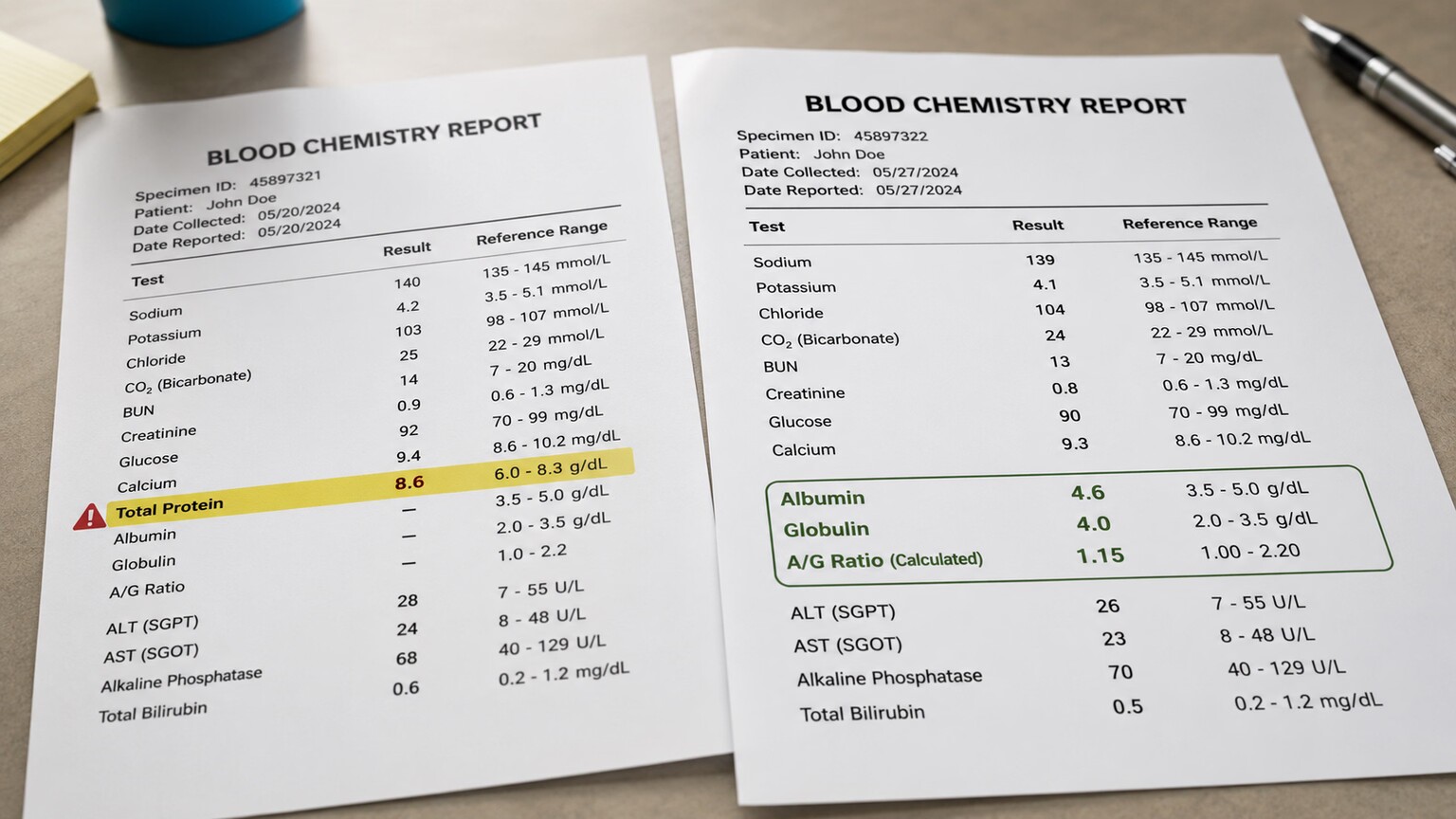
Figure 6. An abnormal total protein result typically prompts fractionation into its two component values, albumin and globulin, since that breakdown is what actually narrows down the likely underlying cause.
Once total protein comes back outside its normal range, the natural next step is exactly the fractionation process this article has been building toward: breaking the single combined number into its separate albumin and globulin components, then examining the ratio between them. A low total protein driven mainly by low albumin points toward liver synthesis problems, kidney protein loss, malnutrition, or the chronic inflammation mechanism covered in more depth elsewhere on this site. A high total protein driven mainly by elevated globulin points toward chronic infection, an active immune or inflammatory process, or, in rarer cases, a condition affecting antibody-producing cells specifically.
How quickly this next step happens depends heavily on the size of the abnormality and the surrounding clinical picture. A total protein that's only slightly outside the reference range, in an otherwise asymptomatic patient with an unremarkable history, is often handled unhurriedly, with fractionation ordered as a routine follow-up rather than an urgent one. A markedly abnormal value, or one accompanied by relevant symptoms like unexplained weight loss, persistent swelling, or recurrent infections, tends to move through that same fractionation step considerably faster, sometimes on the very same visit rather than waiting for a separate follow-up appointment.
This is why total protein functions best as a screening starting point rather than an endpoint — a flagged result is genuinely useful information, but it's the beginning of a more specific conversation about what's actually happening, not the conclusion of one.
That fractionation step is also where the albumin-to-globulin, or A/G, ratio gets calculated automatically, giving a doctor a single number that summarizes which of the two components is driving the abnormality — this ratio has its own dedicated logic covered in more depth elsewhere on this site, but the short version is that it's the deciding factor in which direction the next round of testing heads: toward the liver and kidneys, or toward the immune system.
It's worth emphasizing that a single abnormal total protein result, especially a mild one, is far more often followed by a simple repeat test than by an extensive workup. Lab values naturally fluctuate slightly from one draw to the next due to hydration status, the exact timing of the blood draw, and normal day-to-day variation, so a borderline result sitting just outside the reference range is frequently confirmed — or resolved — with nothing more than a second measurement a few weeks later.
Hydration status specifically deserves its own mention, since it's one of the most common, entirely benign causes of a total protein result shifting from one visit to the next. Significant dehydration concentrates the blood, which can push total protein artificially high without any actual increase in the amount of protein circulating in the body, while overhydration can dilute it in the opposite direction. This is part of why a clinician noticing an unexpected total protein shift will often first ask simple questions about recent fluid intake, illness involving vomiting or diarrhea, or unusually vigorous exercise before pursuing a more involved explanation — the mundane cause is, statistically, far more likely than the concerning one.
Protein electrophoresis is the more detailed laboratory technique used when a simple albumin-globulin fractionation isn't specific enough on its own, typically reserved for cases where the globulin elevation is more pronounced or where a plasma cell disorder is genuinely suspected. This technique separates the globulin fraction into its finer sub-components and can reveal a distinctive spike pattern associated with a single overproducing antibody-producing cell line — a finding that, while relatively uncommon, is precisely the kind of specific answer that a simple total protein value could never provide on its own, and illustrates just how far the diagnostic path can extend from that first, unremarkable-looking flagged number on a routine panel.
A Worked Example: From Routine Panel to Flagged Result
Consider a fairly ordinary, realistic scenario: a 58-year-old having a comprehensive metabolic panel drawn as part of an entirely routine, uneventful annual physical, with no specific complaints prompting the visit beyond standard preventive care. Every value on the panel comes back within range except total protein, which is flagged slightly low at 5.9 g/dL against a typical reference range starting around 6.0 to 6.4 g/dL depending on the lab. Nothing else on the panel — kidney markers, liver enzymes, electrolytes — is flagged at all, and the patient feels entirely well.
Because this is a mild, isolated abnormality with no accompanying symptoms, the most likely first move is simply repeating the test in four to six weeks rather than launching immediately into a broader workup. If the repeat value comes back normal, or close enough to be within normal lab-to-lab variation, the episode is reasonably attributed to routine fluctuation and no further action is taken. This outcome is, statistically, the single most common resolution to a mildly flagged total protein on an otherwise unremarkable panel.
Suppose instead the repeat value comes back low again, now at 5.8 g/dL. At this point, the next logical step is fractionation — breaking the number into its albumin and globulin components along with the A/G ratio. The results show albumin at 3.2 g/dL, on the low end but not dramatically so, with globulin essentially normal at 2.6 g/dL, giving an A/G ratio of roughly 1.2, still technically within normal range but at its lower edge. This particular pattern, driven mainly by a modestly low albumin rather than an elevated globulin, shifts the conversation toward the liver-and-kidney and nutritional-status explanations covered earlier in this article, rather than toward an infectious or immune cause.
From here, a reasonable next step is a short, targeted set of follow-up questions and tests: a quick review of recent weight trends and appetite, a kidney-focused urine protein test to rule out early proteinuria, and possibly a repeat liver panel to check whether other liver-related markers have shifted in tandem. If everything else comes back reassuring and the patient's history reveals nothing concerning, a mildly low albumin in an otherwise healthy 58-year-old may simply be tracked over time at the next routine visit rather than pursued more aggressively — illustrating, end to end, how a single flagged screening value moves from an incidental finding, through a logical decision tree, to either reassurance or a more targeted diagnosis, without ever having been the primary reason the original blood draw was ordered in the first place.
Frequently Asked Questions
Is total protein usually ordered as its own separate test?
Rarely. It's almost always bundled automatically into a comprehensive metabolic panel or a standard liver panel, both frequently ordered for routine screening reasons unrelated to any specific concern about protein levels.
Why is total protein checked before surgery?
Low protein levels, particularly low albumin, are a well-documented predictor of poor wound healing and higher surgical complication risk, making this value a genuinely useful part of pre-operative risk assessment.
Why does my doctor keep rechecking my total protein even though I feel fine?
For people managing chronic illness or advanced age, total protein is often periodically monitored as an early, objective indicator of nutritional status, since declining levels can signal a problem before more obvious symptoms appear.
Does pregnancy change how total protein is interpreted?
Yes. Normal pregnancy causes blood volume expansion that naturally dilutes protein concentration, and total protein is also monitored more closely when preeclampsia risk, which involves protein loss into urine, is being evaluated.
What happens after an abnormal total protein result?
The value is typically broken down into its two components, albumin and globulin, and the ratio between them, since that fractionation is what actually narrows down the likely underlying cause rather than the combined number alone.
Conclusion
Total protein rarely gets ordered for its own sake — it shows up on your report because it's a standard, low-cost component of the routine panels doctors reach for constantly: metabolic panels, liver panels, pre-surgical workups, chronic disease monitoring, and prenatal care. Understanding which of these specific contexts applies to your own situation explains not just why the test appeared on your report, but what role it's actually playing in the broader picture your doctor is building, and what a flagged result would reasonably lead to next.
If there's one single takeaway worth carrying away from everything covered in this article, it's that a single total protein value, sitting quietly alone on a page next to a dozen other numbers, is almost never the whole story on its own. Its real value comes from context — which panel it arrived on, what else was checked alongside it, how it compares to your own prior results over time, and, if it's abnormal, what its two component parts turn out to be once broken apart. Approached that way, total protein stops looking like an arbitrary, unexplained line item and starts looking like exactly what it is: a quiet, efficient screening tool doing background work across nearly every routine blood draw you'll ever have.
Still Not Sure What Your Results Mean?
Upload your labs and get a complete, visual, plain-language interpretation of every biomarker — delivered to your inbox in under 15 minutes.
Get My ReportThis article is for educational purposes only and does not constitute medical advice. Always consult your healthcare provider regarding your specific lab results.