
Why Is My Globulin Level Elevated?
If you've just looked at a lab report and seen the word "globulin" flagged high, the most useful thing to know right away is this: globulins are not one single substance, they're an entire category of blood proteins, most of which are made by your immune system. So an elevated globulin level is less like a single warning light on a dashboard and more like a smoke alarm — it tells you something is generating activity, but it doesn't, by itself, tell you whether that activity is a candle, a kitchen mishap, or an actual fire. In the vast majority of cases, high globulins reflect something ordinary and often temporary: your body fighting off an infection, managing chronic inflammation, or simply being mildly dehydrated when the blood was drawn. In a smaller number of cases, it's the first clue pointing toward an autoimmune condition, chronic liver disease, or — rarely — a bone marrow disorder called a monoclonal gammopathy. This article walks through exactly what globulins are, why your body makes more of them, and how doctors figure out which explanation applies to you.
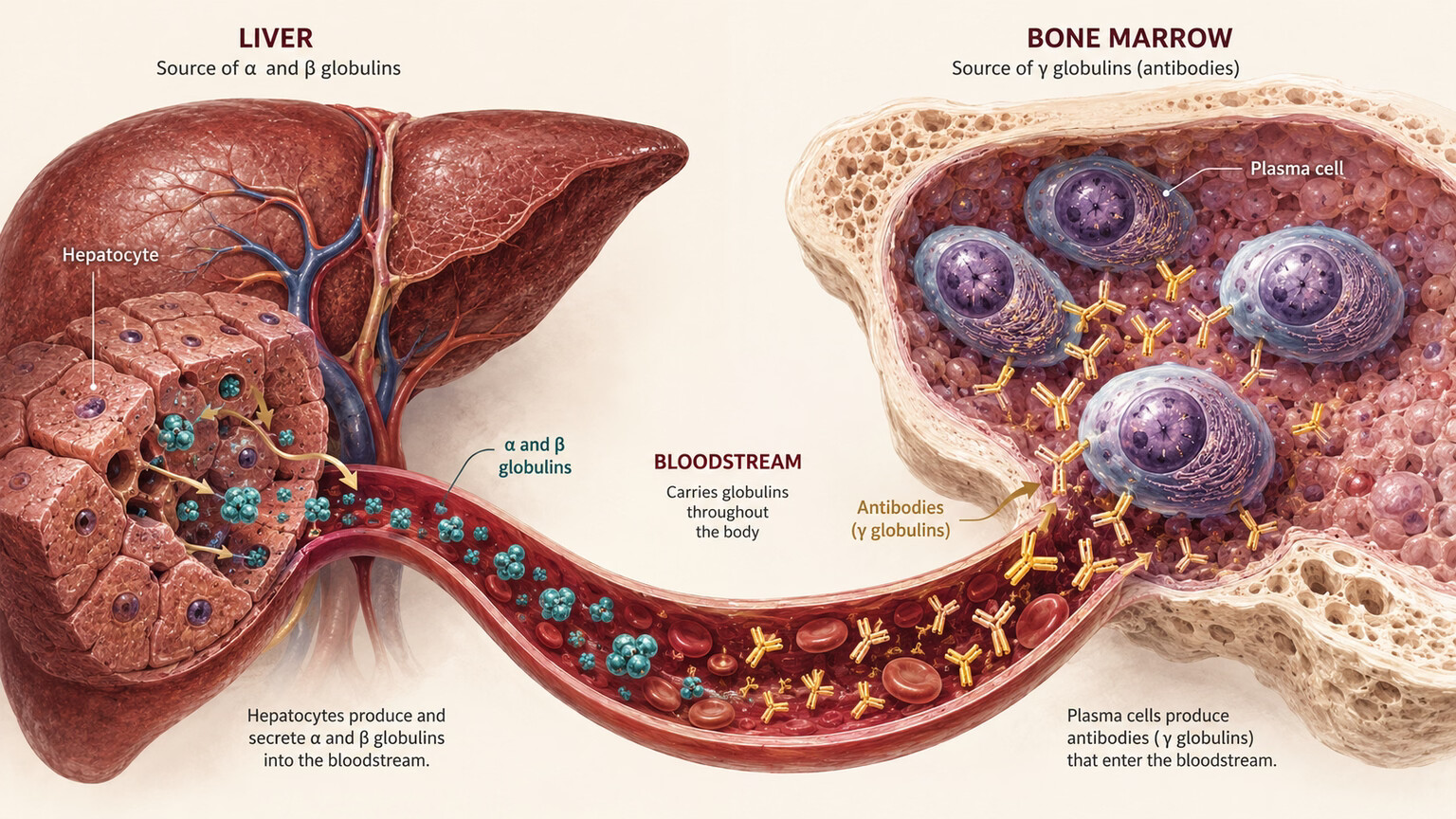
Figure 1. Globulins come from two different sources: the liver manufactures alpha and beta globulins, while plasma cells of the immune system produce gamma globulins, or antibodies.
What Globulins Actually Are — and Why "Elevated" Doesn't Mean One Thing
Blood is full of protein, and when a lab measures your "total protein," it's really adding together two very different families: albumin and globulins. Albumin is a single, well-defined protein made exclusively by the liver, and its main job is to act like a sponge that holds water inside your blood vessels — think of it as the protein that keeps your blood volume properly plump and pressurized, and also as a delivery truck that ferries hormones, medications, and other molecules through the bloodstream. Globulin, on the other hand, isn't one protein at all. It's a catch-all term for dozens of different proteins that share certain physical properties in a lab test, but that do very different jobs in your body. Because globulin is measured as a single number on most panels — usually calculated simply as total protein minus albumin — an elevated result is really an elevated sum of several different categories, and figuring out which category is driving the number up is the entire diagnostic exercise.
Laboratory scientists typically split globulins into three main groups based on how they migrate when a blood sample is run through an electrical field, a technique called protein electrophoresis. The first group, alpha globulins, includes proteins like alpha-1 antitrypsin (which protects lung tissue) and haptoglobin (which mops up free hemoglobin released when red blood cells break down). The second group, beta globulins, includes transferrin, the protein that carries iron through your bloodstream, along with some complement proteins involved in immune defense. The third and often most clinically important group, gamma globulins, is made up almost entirely of immunoglobulins — the technical name for antibodies, the Y-shaped proteins your immune system manufactures to recognize and neutralize specific invaders like viruses, bacteria, or even your own tissue in autoimmune disease. When a doctor sees an elevated total globulin and wants to know why, the very next question is which of these three buckets — alpha, beta, or gamma — is actually responsible, because each one points toward a completely different part of the body.
It helps to picture your bloodstream as a busy office building. Albumin is the building's plumbing and delivery infrastructure — quiet, steady, always working in the background. Globulins are more like the building's security and communications staff: normally a modest crew, but one that expands rapidly and visibly the moment something unusual is happening, whether that's a genuine security threat (an infection), an ongoing labor dispute (chronic inflammation), or a false alarm from a malfunctioning fire panel (a lab artifact from dehydration). An elevated globulin result is the equivalent of noticing more security staff milling around than usual — informative, worth investigating, but not itself a diagnosis.
What Counts as "Elevated" — Reading the Reference Range Correctly
Before diving into causes, it helps to understand what the number on your report is actually being compared against. Most laboratories report a normal total globulin range of roughly 2.0 to 3.5 grams per deciliter (g/dL), though the exact cutoffs vary slightly from lab to lab depending on the equipment and population used to establish that lab's own reference interval — which is why the same blood sample tested at two different labs can occasionally show slightly different "normal" boundaries even though nothing about the blood itself has changed. This is also why comparing a result from one lab visit to a result from a different facility months later isn't always a clean apples-to-apples comparison; whenever possible, it's more reliable to track your globulin trend using results from the same lab over time.
It's also worth understanding how the number is usually calculated in the first place. On most standard metabolic panels, globulin isn't measured directly — it's derived by subtracting your albumin result from your total protein result. That means any error or unusual fluctuation in either of those two underlying numbers ripples directly into the calculated globulin value. If your albumin happens to be measured slightly low for an unrelated reason, your calculated globulin will appear slightly higher than your body's true globulin production would suggest, even though nothing about your antibody-producing cells has changed at all. This is one more reason a single, mildly elevated globulin reading is rarely treated as an urgent finding on its own — the number carries a bit of built-in measurement noise that a repeat test, and sometimes a direct protein electrophoresis measurement, helps to resolve.
A mildly elevated result, generally meaning a value that sits just above the top of the reference range, is handled very differently by most doctors than a markedly elevated one, say a globulin level pushing past 4.0 or 4.5 g/dL. The magnitude of the elevation is itself a clue: small, borderline elevations are disproportionately caused by the mundane explanations covered in this article — a recent cold, mild dehydration, a chronic but well-controlled inflammatory condition — while larger, more dramatic elevations more often warrant a closer look with electrophoresis sooner rather than later, specifically to rule out a monoclonal process. None of this means a markedly high number is automatically bad news; it simply means your doctor will likely move a bit faster to identify the specific cause rather than waiting for a routine recheck.
How Your Body Actually Makes These Proteins

Figure 2. Inflammatory signals such as interleukin-6 travel from injured or infected tissue to the liver, instructing it to ramp up production of acute-phase globulins within hours.
To understand why globulins rise, it helps to know where each type is actually manufactured, because the two main sources respond to completely different triggers. Alpha and beta globulins are made in the liver, the same organ responsible for albumin, clotting factors, and dozens of other blood proteins. The liver doesn't produce these at a fixed, constant rate — it adjusts output in response to chemical messengers called cytokines, particularly one called interleukin-6, which is released by immune cells whenever there's tissue injury, infection, or ongoing inflammation anywhere in the body. Within hours of an inflammatory trigger, the liver shifts into a different production mode, dialing up so-called "acute-phase proteins," several of which are alpha and beta globulins, while simultaneously dialing down albumin production. This is actually why doctors sometimes see both a mild globulin rise and a mild albumin drop on the same panel during illness — it's the same liver, responding to the same signal, moving resources in two directions at once.
Gamma globulins follow an entirely different production story. These are made by plasma cells, a specialized type of white blood cell that lives mainly in your bone marrow, lymph nodes, and spleen. Plasma cells are the mature, antibody-manufacturing form of B lymphocytes, one of the two major branches of your adaptive immune system. When your immune system encounters something it recognizes as foreign — a virus, a bacterium, a vaccine antigen, or, in autoimmune disease, a mistakenly-targeted piece of your own tissue — certain B cells are selected and transformed into plasma cells devoted to churning out enormous quantities of one specific antibody, day and night, for as long as that immune response is active. A healthy immune system might have plasma cells actively defending against dozens of past exposures at once, each contributing a small amount of antibody to your total gamma globulin pool. Chronic infections, autoimmune diseases, and certain bone marrow cancers all raise gamma globulin levels, but through very different mechanisms — which is precisely why an elevated result on its own is only the starting point of the investigation, not the end of it.
Curious what the rest of your protein panel is really telling you? Upload your results and get a complete, plain-language breakdown in under 15 minutes.
Analyze My ResultsChronic Inflammation and Infection: the Most Common Reason Globulins Rise
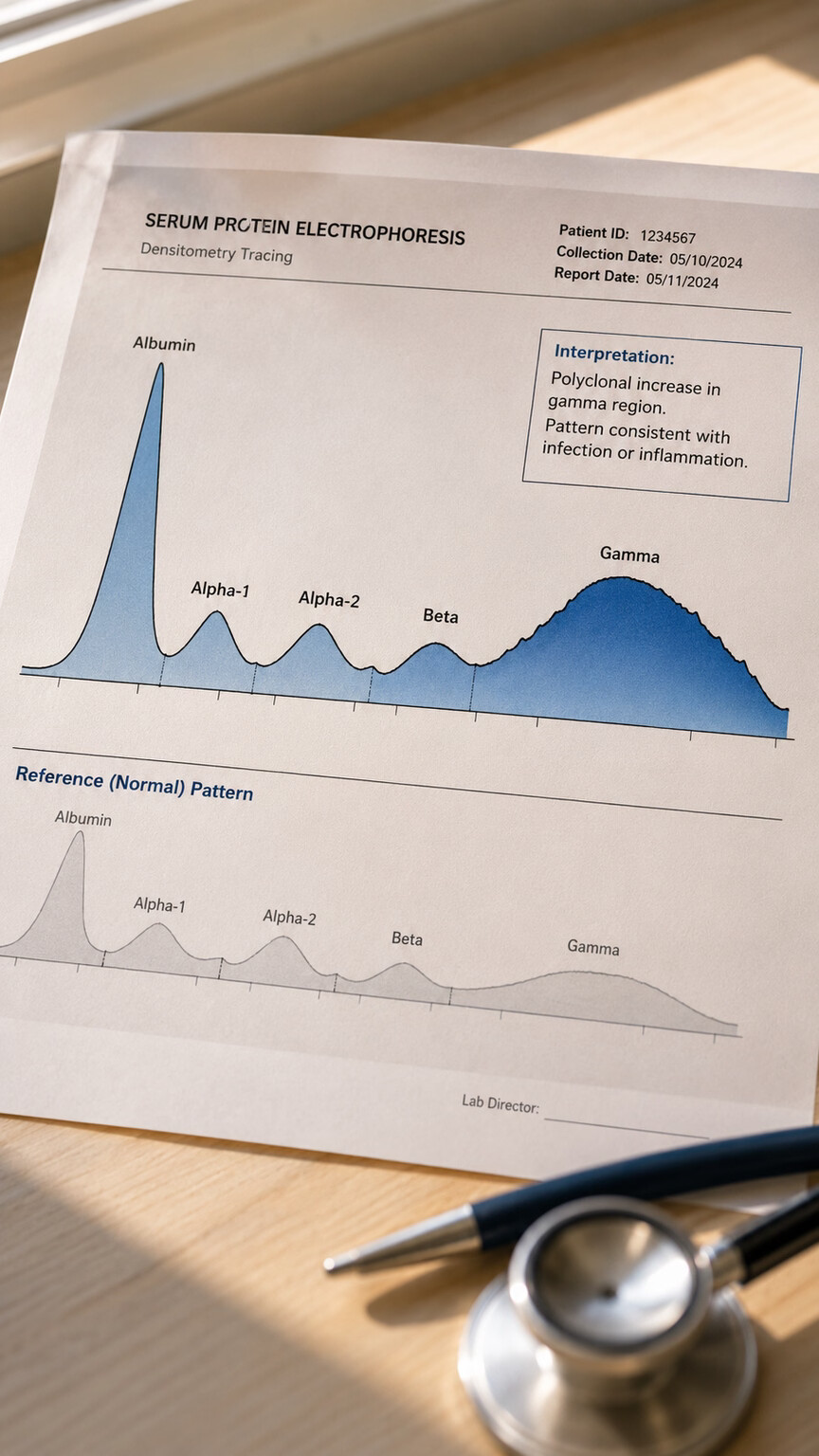
Figure 3. A serum protein electrophoresis tracing showing a broad, diffuse elevation across the gamma region — the pattern typically seen with chronic infection or generalized inflammation, called a polyclonal gammopathy.
By a wide margin, the single most common reason someone's globulin level comes back elevated is an ongoing inflammatory or infectious process, and it doesn't need to be dramatic. A lingering sinus infection, a slow-healing skin wound, chronic bronchitis, a urinary tract infection that's been simmering for weeks, dental infections, or even a recent bout of the flu can all nudge globulins upward. Long-standing infections tend to produce a more sustained elevation than brief ones, because the immune system keeps a larger standing army of plasma cells active for as long as the threat persists. Chronic conditions like inflammatory bowel disease, chronic obstructive pulmonary disease with frequent flare-ups, or long-term skin conditions like psoriasis can produce the same effect through ongoing low-grade inflammation rather than active infection.
When this is the underlying cause, the pattern on protein electrophoresis is usually described as "polyclonal" — meaning the elevation is spread broadly across many different antibody types rather than concentrated in one narrow spike. That distinction matters enormously to a doctor reading the report, because a broad, diffuse rise is exactly what you'd expect from an immune system responding to a real but non-specific threat, engaging many different antibody-producing cell lines at once. This is reassuring in a specific, technical sense: it's the pattern of an immune system doing its normal job on a larger-than-usual scale, not the pattern of a single rogue cell line taking over. Most people in this category have other clues pointing to the cause already — a cough, joint pain, a skin rash, recurring fevers — and the elevated globulin simply confirms that something is actively engaging the immune system, rather than being the first and only sign of a problem.
It's also worth knowing that some of this elevation can be surprisingly persistent. After a significant infection resolves, globulin levels don't always snap back to baseline immediately — plasma cells that were built up during the illness can continue producing antibody for weeks or occasionally months afterward, gradually declining as the immune response stands down. This is one reason doctors often prefer to recheck a mildly elevated globulin result a few weeks later rather than reacting to a single number, especially if the person felt sick recently or has a known chronic inflammatory condition.
Autoimmune Diseases and Elevated Globulins

Figure 4. Swollen, inflamed joints, as seen in rheumatoid arthritis, reflect the same immune overactivity that drives up gamma globulin levels in autoimmune disease.
When the immune system's antibody factories turn against the body's own tissue instead of an outside invader, the result is an autoimmune disease — and several of the most common ones are well known for producing an elevated globulin level. Rheumatoid arthritis, in which the immune system attacks the lining of joints, is one of the more frequent culprits; the persistent joint inflammation drives sustained plasma cell activity, and blood tests often show elevated globulins alongside inflammatory markers and rheumatoid factor, an antibody that itself belongs to the globulin family. Systemic lupus erythematosus, a disease in which the immune system can attack skin, joints, kidneys, and other organs simultaneously, is another common cause and often produces one of the more pronounced globulin elevations seen outside of blood cancers, because lupus tends to trigger broad, sustained antibody production across many organ systems at once.
Sjögren's syndrome, a condition that primarily attacks the glands responsible for producing tears and saliva, leaving people with chronically dry eyes and dry mouth, is particularly notable here — it's associated with some of the highest polyclonal gamma globulin elevations of any autoimmune disease, sometimes dramatically so, and an unexplained high globulin level in someone with persistent dry eyes and dry mouth is a classic clue that leads doctors to test for it. Autoimmune hepatitis, in which the immune system attacks liver cells directly, also raises globulins substantially, both through general immune activation and because it damages the liver's ability to regulate its own protein output. Scleroderma and mixed connective tissue disease can produce a similar, if usually milder, pattern.
What ties all of these conditions together, from a lab standpoint, is that the antibody elevation is still typically polyclonal — broad and diffuse, reflecting a widespread immune assault rather than a single abnormal cell line — even though the underlying disease is quite different from a garden-variety infection. This is why globulin elevation alone can't distinguish "you have a chronic infection" from "you have lupus"; the pattern on electrophoresis looks similar in both cases, and it's the accompanying symptoms, physical exam findings, and specific autoimmune antibody tests (like ANA, anti-dsDNA, or anti-Ro/La antibodies) that ultimately separate one explanation from another. If you have joint pain, unexplained rashes, dry eyes or mouth, or fatigue alongside an elevated globulin result, mentioning those symptoms explicitly to your doctor is often what moves the workup in the right direction faster than the lab number alone ever could.
Monoclonal Gammopathy and Multiple Myeloma — the Possibility Doctors Rule Out Carefully
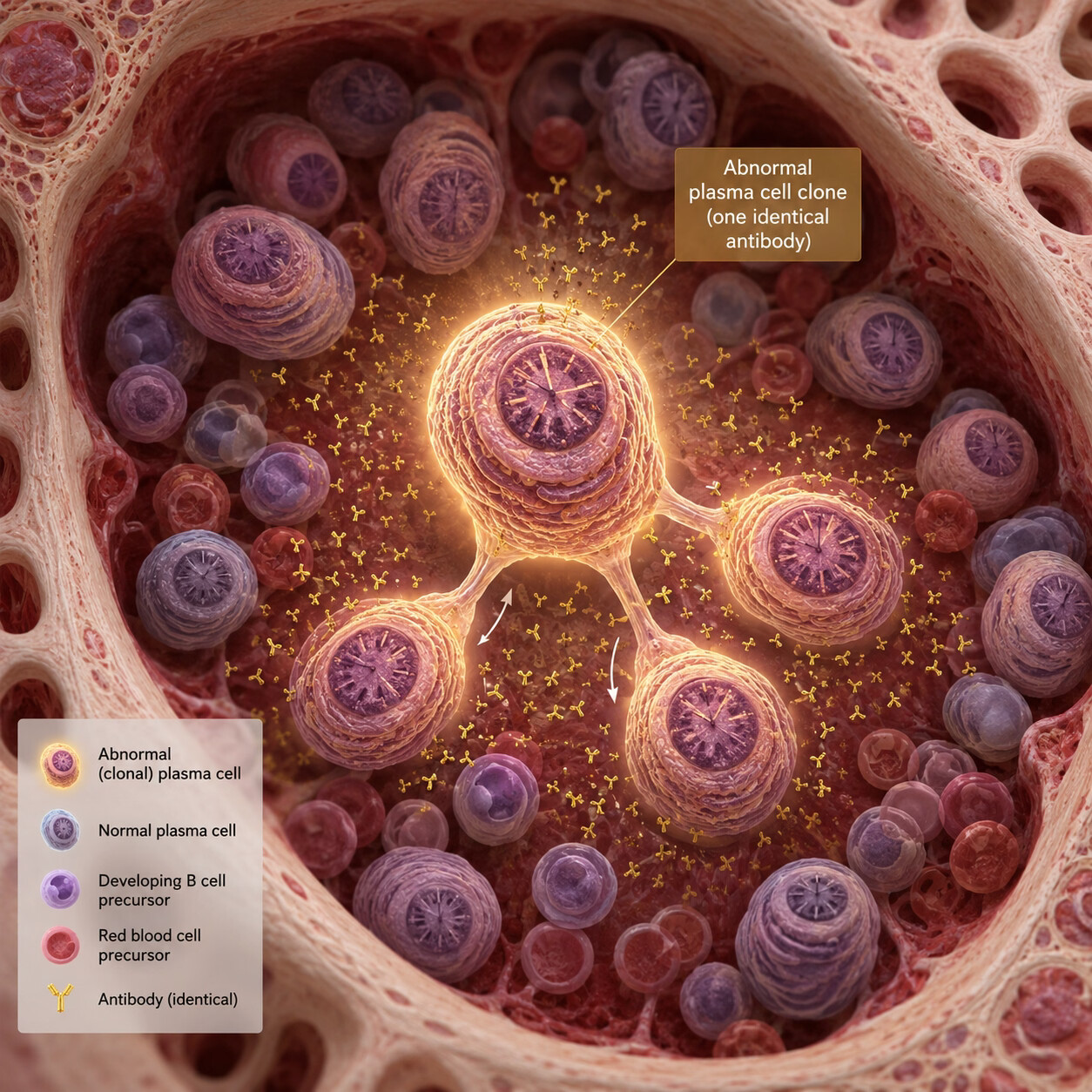
Figure 5. In a monoclonal gammopathy, a single plasma cell clone multiplies abnormally in the bone marrow, flooding the blood with one identical antibody instead of the usual broad mixture.
This is the possibility that understandably worries people most when they see "elevated globulin" on a report, and it deserves a clear, honest explanation rather than either dismissal or alarm. In a small number of cases, an elevated gamma globulin level isn't caused by many different plasma cells each contributing a little antibody — it's caused by a single plasma cell that has begun dividing uncontrollably, producing enormous quantities of one identical antibody. This is called a monoclonal gammopathy, and on electrophoresis it shows up as a sharp, narrow spike rather than the broad, smeared elevation seen with infection or autoimmune disease — a pattern doctors can usually recognize on sight.
The most common form of this, especially in older adults, is called MGUS — monoclonal gammopathy of undetermined significance — a condition in which this abnormal antibody spike is present but the plasma cell clone is small, stable, and causing no organ damage. MGUS is surprisingly common: it's found in roughly 3% of people over age 50 and becomes more frequent with age, and importantly, the great majority of people with MGUS never progress to anything more serious — it's typically monitored with periodic blood tests rather than treated. Multiple myeloma, a cancer of plasma cells, is the more serious condition on this same spectrum, in which the abnormal clone grows large enough to crowd out normal bone marrow function, weaken bones, and impair kidney function. It's important to keep the numbers in perspective: myeloma is a real but relatively uncommon disease, and the vast majority of elevated globulin results — even markedly elevated ones — turn out to be from infection, inflammation, or autoimmune disease rather than a plasma cell cancer.
Because the stakes of missing this diagnosis are real, though, doctors take a methodical approach whenever globulins are significantly elevated or the electrophoresis pattern looks narrow rather than broad. The follow-up typically includes serum protein electrophoresis with immunofixation (which identifies exactly which antibody type is spiking), a free light chain assay, and sometimes a 24-hour urine test or bone marrow biopsy if the picture warrants it. Red flags that push doctors to investigate more urgently include new bone pain, unexplained anemia, elevated calcium levels, or declining kidney function alongside the globulin elevation — the well-known "CRAB" criteria (calcium, renal, anemia, bone) used to evaluate for myeloma. If none of those accompanying features are present and the pattern on electrophoresis is broad rather than spiked, a monoclonal process is unlikely to be the explanation, and your doctor will typically look toward the far more common causes first.
Chronic Liver Disease and Elevated Globulins
The liver's relationship with globulins is a bit paradoxical: it's the organ that makes alpha and beta globulins, yet chronic liver disease is also one of the more common reasons gamma globulins climb — through an entirely different mechanism. In cirrhosis, the advanced scarring that follows years of liver damage from causes like chronic hepatitis, fatty liver disease, or long-term heavy alcohol use, blood flow through the liver becomes obstructed. Some of that blood, along with the bacteria and bacterial fragments normally filtered out by the liver's specialized immune cells, gets rerouted around the damaged liver tissue instead of being cleaned by it. This chronic, low-level exposure of the immune system to material it would normally never see stimulates ongoing antibody production, driving gamma globulins up over time even though the underlying problem is structural liver damage, not an infection or autoimmune disease in the usual sense.
This pattern is actually clinically useful. When cirrhosis is advanced enough, doctors sometimes see a distinctive finding on protein electrophoresis called "beta-gamma bridging," where the beta and gamma globulin peaks merge into one continuous band instead of staying separate — a visual pattern strongly associated with cirrhosis that can support the diagnosis even before other liver tests confirm it. Combined with a low albumin level (since a scarred, damaged liver produces less of it) and a high globulin level, this pattern of an inverted albumin-to-globulin ratio is one of the classic laboratory signatures doctors look for when chronic liver disease is suspected. If you have a history of hepatitis, heavy alcohol use, or fatty liver disease and your globulin is elevated while your albumin trends low, this liver-driven mechanism is a very reasonable explanation worth discussing directly with your doctor, alongside liver enzyme testing and possibly imaging.
Dehydration: a Deceptively Simple Explanation

Figure 6. Being mildly dehydrated at the time of a blood draw concentrates every protein in the sample, including globulins, without any change in the body's actual protein production.
Before chasing any of the explanations above, it's worth ruling out the simplest one, because it's more common than most people expect: hydration status at the moment of the blood draw. Globulins, like albumin and most other blood components, are measured as a concentration — a certain amount of protein per volume of blood plasma. If you showed up to your blood draw having skipped water that morning, exercised heavily beforehand, or were mildly dehydrated for any other reason, the actual volume of liquid plasma in your blood sample is reduced, while the total amount of protein floating in it stays the same. The math of concentration means every protein level, globulin included, reads artificially high — not because your body made more, but because there's less water to dilute it in.
This effect is usually modest, typically nudging results up by a small percentage rather than pushing a normal value dramatically out of range, but in someone whose "true" globulin level sits right at the upper edge of normal, dehydration alone can be enough to tip the number into the flagged category. It's a big part of why doctors are often not alarmed by a single, mildly elevated globulin result found incidentally on routine bloodwork, especially in someone who felt fine, hadn't been drinking much water, or had just finished a workout. The standard next step in a case like this is simple and low-stakes: repeat the test on a different day under normal, well-hydrated conditions, and see whether the elevation persists. If it normalizes, dehydration (or a similarly transient factor) was very likely the explanation all along, and no further workup is usually needed.
What Symptoms Might Come Along With an Elevated Globulin Level
Because globulin elevation is a downstream consequence of so many different underlying processes, there's no single symptom pattern that goes along with it — instead, the accompanying symptoms tend to belong to whatever condition is actually driving the number up, and paying attention to them is often more useful diagnostically than the globulin value itself. Someone whose elevation comes from a lingering infection might notice low-grade fevers, fatigue, night sweats, or a symptom tied to the specific site of infection, like a productive cough, sinus pressure, or urinary discomfort. Someone whose elevation stems from autoimmune disease more often reports joint pain and stiffness, a facial rash that worsens with sun exposure, persistent dry eyes and dry mouth, or unexplained hair thinning — symptoms that can develop gradually enough that people attribute them to aging or stress rather than recognizing them as a pattern.
When chronic liver disease is the underlying driver, symptoms often lag well behind the lab abnormality, since the liver has substantial reserve capacity and can compensate for a long time before symptoms become obvious. When they do appear, they tend to include fatigue, itchy skin, easy bruising, swelling in the legs or abdomen, and in more advanced cases, a yellowish tint to the skin or eyes from bilirubin buildup. In the far less common scenario of a monoclonal gammopathy progressing toward myeloma, the symptoms to watch for are more specific: new or worsening bone pain, especially in the back or ribs, unexplained fatigue from anemia, increased thirst and urination from elevated calcium, or unusual susceptibility to infections because the abnormal plasma cell clone crowds out the bone marrow's ability to produce normal, functional antibodies alongside its own.
It's worth stressing that having none of these symptoms is itself meaningful information. A large share of elevated globulin results are picked up incidentally, on routine bloodwork ordered for an entirely unrelated reason, in people who feel completely well. When that's the situation — no fevers, no joint pain, no unexplained weight loss, no bone pain, no skin changes — the odds strongly favor one of the more benign, self-limited explanations, and a reasonable, low-anxiety next step is usually a repeat test in a few weeks rather than an immediate deep dive into specialist referrals.
How Doctors Actually Investigate an Elevated Globulin Result
When a globulin result comes back high, the diagnostic path a doctor follows is fairly systematic, and understanding it can make the process feel far less mysterious. The first and most important step is almost always repeating the total protein and albumin/globulin panel, ideally with attention to hydration, to confirm the elevation is real and not a one-time fluke. If it's confirmed, the next step is usually serum protein electrophoresis (SPEP), the test that separates all of these different protein categories into visual bands on a strip, showing at a glance whether the elevation is broad and diffuse (polyclonal, suggesting infection, inflammation, autoimmune disease, or liver disease) or narrow and sharp (monoclonal, prompting further evaluation for a plasma cell disorder).
From there, the workup branches based on what the SPEP shows and what other clues are present. A polyclonal pattern accompanied by joint pain, rash, or dry eyes prompts autoimmune antibody testing (ANA, rheumatoid factor, and related panels). A polyclonal pattern with abnormal liver enzymes or a history of alcohol use or hepatitis prompts liver-focused testing and possibly imaging. A polyclonal pattern with no other symptoms at all is often simply monitored with a repeat test in a few weeks to months. A monoclonal, narrow-spike pattern prompts immunofixation electrophoresis to identify the exact antibody type, a serum free light chain assay, and additional blood counts and kidney function tests to check for the red-flag features associated with myeloma. Throughout this process, the goal isn't to chase the globulin number itself but to identify the underlying condition producing it — the globulin level is a signal, and good medicine treats the source of the signal, not the signal in isolation.
What the Albumin-to-Globulin (A/G) Ratio Adds to the Picture
Most comprehensive metabolic panels don't just report globulin on its own — they also calculate the albumin-to-globulin ratio, often abbreviated A/G ratio, which divides your albumin level by your globulin level. A normal A/G ratio typically falls somewhere between about 1.1 and 2.5, meaning a healthy person usually has noticeably more albumin circulating than globulin. This ratio matters because it captures a pattern that the globulin number alone can miss: it's possible to have globulin technically within the normal range while the A/G ratio is still abnormal, if albumin has dropped at the same time — exactly the pattern seen in chronic liver disease, where a struggling liver produces less albumin while inflammation-driven globulin production climbs. A low A/G ratio, even with a "normal" globulin number, is often a more sensitive early clue to chronic liver disease or a chronic inflammatory state than the globulin level viewed by itself, which is part of why doctors read these two numbers together rather than in isolation.
Lifestyle Factors and Medications That Can Nudge Globulin Levels
Beyond disease processes, a handful of everyday factors can shift globulin readings in ways worth knowing about before assuming the worst. Smoking is one of the more consistently documented influences — long-term tobacco use is associated with chronically elevated globulin levels, likely reflecting the low-grade, persistent airway and systemic inflammation that smoking generates. This effect tends to be gradual and cumulative rather than something that shows up after a single cigarette, but it's a meaningful contributor in long-term smokers whose globulin runs consistently high without any other clear explanation, and it's one of the few causes on this list that a person has real, direct control over.
Certain medications can also influence the result, sometimes by affecting the immune system directly and sometimes by altering how the liver processes proteins. Estrogen-containing medications, including some hormonal contraceptives and hormone replacement therapy, have been associated with modest shifts in liver-produced proteins, including some globulin fractions. Long-term use of certain anti-seizure medications and some antibiotics has occasionally been linked to changes in globulin levels as well, generally as a minor side effect rather than a dangerous one. Recent vaccination is another frequently overlooked factor — because vaccines work by deliberately stimulating antibody production, it's entirely normal for gamma globulin levels to tick upward for some weeks following a vaccine, particularly a booster dose, and this is a harmless, expected immune response rather than something to be concerned about.
Pregnancy also deserves a specific mention, since it produces one of the more universal, expected shifts in protein levels of any physiologic state. As pregnancy progresses, blood plasma volume expands considerably to support the growing fetus and placenta, which dilutes albumin and can shift the albumin-to-globulin balance somewhat even without any underlying illness. At the same time, a healthy pregnancy involves substantial immune system adaptation, and mild globulin elevation is a recognized, generally unconcerning finding in this context. Obstetric providers are well accustomed to interpreting protein panels differently during pregnancy than they would outside of it, so a result that might prompt more investigation in a non-pregnant adult is often simply noted and monitored as a normal part of prenatal bloodwork.
Frequently Asked Questions
Should I be worried if my globulin level is only slightly elevated?
Not usually, especially if it's a mild, isolated finding with no other abnormal results or symptoms. Mild elevations are frequently caused by a recent infection, ongoing low-grade inflammation, or simply being a bit dehydrated at the time of the draw. Doctors typically start with a repeat test before pursuing any deeper workup.
What's the difference between a polyclonal and monoclonal globulin elevation?
Polyclonal means many different antibody-producing cells are each contributing a small amount to the elevation, which is the pattern seen with infection, autoimmune disease, and liver disease. Monoclonal means a single abnormal plasma cell clone is responsible for a sharp, narrow spike of one identical antibody, which prompts evaluation for conditions like MGUS or multiple myeloma. The two patterns look distinctly different on protein electrophoresis.
Can stress or lack of sleep raise globulin levels?
There's no strong evidence that everyday stress or short-term sleep loss meaningfully raises globulin levels the way infection or inflammation does. What can genuinely move the number is hydration status, recent illness, and chronic conditions — if you're concerned, the most reliable step is a repeat test under normal, well-rested, well-hydrated conditions.
Does an elevated globulin level always mean I need a bone marrow biopsy?
No. A bone marrow biopsy is reserved for cases where protein electrophoresis and follow-up blood work suggest a monoclonal process with concerning features, such as anemia, kidney impairment, high calcium, or bone pain. The large majority of elevated globulin results never reach that point, since infection, inflammation, and autoimmune disease are far more common explanations.
Conclusion
An elevated globulin result is genuinely informative, but it's also genuinely incomplete on its own — it tells you your immune system, your liver, or both are doing more work than usual, without telling you exactly why. Most of the time, the explanation turns out to be something ordinary and self-limited: a recent infection, a chronic but manageable inflammatory condition, or nothing more dramatic than having skipped water before your blood draw. Less commonly, it's an early signal pointing toward autoimmune disease or chronic liver disease, both of which are very manageable once identified. Rarely, it's the first clue toward a plasma cell disorder, which is exactly why doctors don't ignore persistently elevated or sharply spiked results — they investigate them systematically, using tools like protein electrophoresis and the A/G ratio to narrow down the true cause rather than guessing from the number alone. If your globulin came back high, the most productive next step isn't to panic over the word "elevated" — it's to have a direct conversation with your doctor about repeating the test, reviewing your full panel together, and deciding whether further evaluation genuinely makes sense for your specific situation.
Still Not Sure What Your Results Mean?
Upload your labs and get a complete, visual, plain-language interpretation of every biomarker — delivered to your inbox in under 15 minutes.
Get My ReportThis article is for educational purposes only and does not constitute medical advice. Always consult your healthcare provider regarding your specific lab results.