
Understanding VLDL and What It Adds to Your Lipid Panel
Most people scan a lipid panel for three numbers — total cholesterol, LDL, and HDL — and barely notice the line that says VLDL. That's understandable, since it's usually the smallest number on the page and almost never gets its own explanation from a doctor in a routine visit. But VLDL, short for very low-density lipoprotein, is doing something the other numbers on that page aren't: it's the primary vehicle your body uses to move fat, specifically triglycerides, through your bloodstream, and it's also the starting material your liver uses to eventually build LDL, the "bad cholesterol" particle most people already worry about. Understanding VLDL means understanding where a big chunk of your cardiovascular risk actually originates, well before it shows up as an elevated LDL number. This article walks through what VLDL is, how your liver makes it, why most labs calculate it instead of measuring it directly, what a high result actually means, and what genuinely moves the number in a healthier direction.
What "VLDL" Actually Means — and What It's Carrying
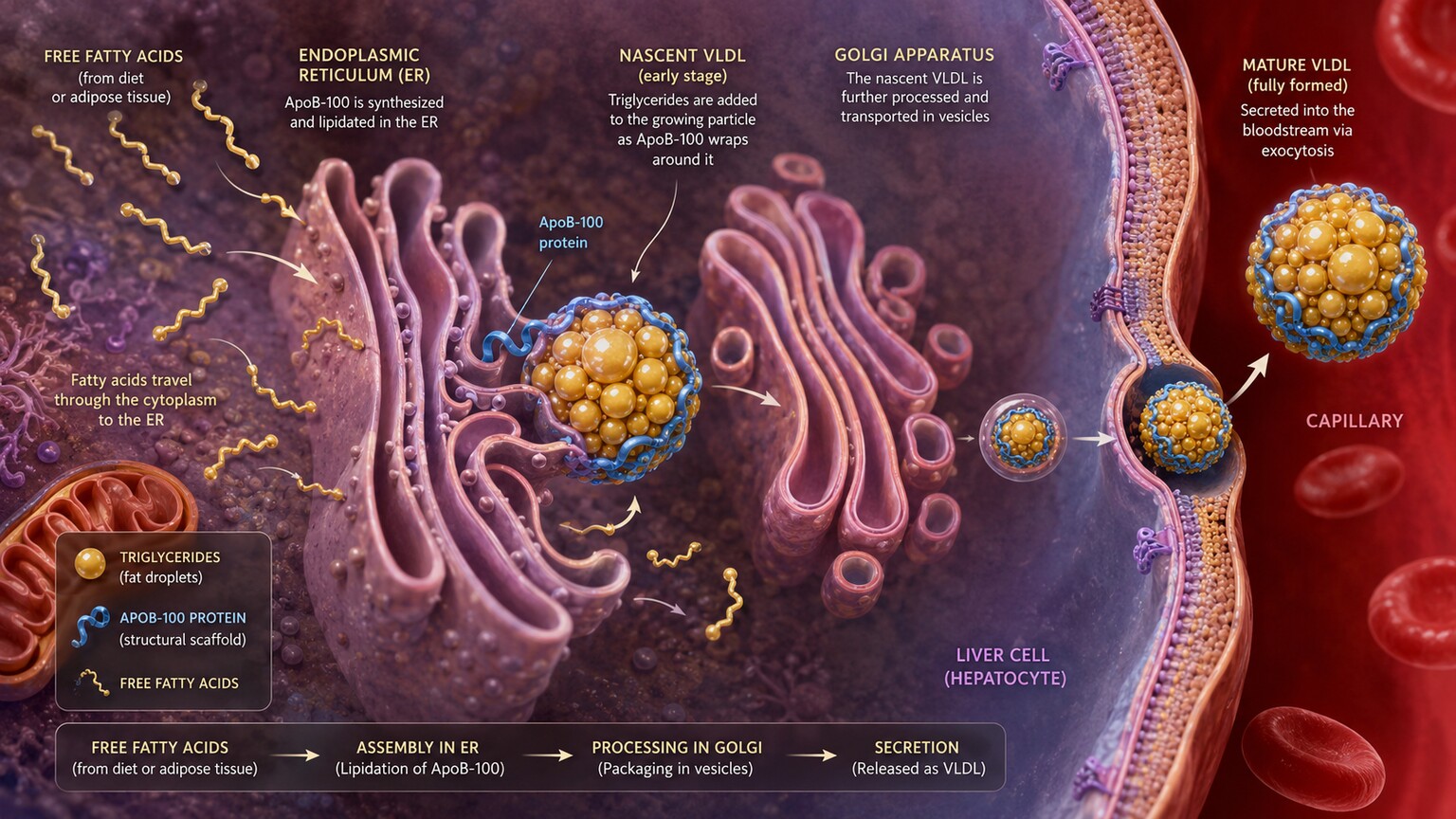
Figure 1. Inside the liver cell, triglycerides are packaged into a VLDL particle around a structural protein called apoB-100 before being released into the bloodstream.
Fat and water don't mix — that's just basic chemistry, and it creates a real logistical problem for your body, since blood is mostly water and fat needs to travel through it constantly. The body's solution is to wrap fat inside spherical transport particles called lipoproteins, which have a water-friendly outer shell and a fat-friendly interior, letting them move through the bloodstream the way a boat lets cargo cross water without getting the cargo itself wet. "Very low-density" refers to how much fat, relative to protein, is packed into the particle — VLDL is stuffed almost entirely with fat, which makes it lighter and less dense than particles like LDL or HDL that carry proportionally more protein and less fat.
The specific fat VLDL is built to carry is called a triglyceride — a molecule made of three fatty acid chains attached to a glycerol backbone, and it's the primary form in which your body stores and transports energy from fat. This is the single most important thing to remember about VLDL: while LDL and HDL are mostly thought of as cholesterol carriers, VLDL's main cargo is triglycerides, not cholesterol, even though it does carry a modest amount of cholesterol too. A standard lipid panel's "VLDL" number is really an estimate of how much cholesterol is riding along inside your VLDL particles, used as a stand-in for the particles themselves, which is a detail that becomes important later in this article.
Where VLDL Comes From: the Liver's Fat-Packaging System
VLDL is manufactured almost exclusively by the liver, using two sources of raw material: fatty acids that arrive from fat tissue elsewhere in the body, and fatty acids the liver makes itself from excess carbohydrates and sugar through a process called de novo lipogenesis — literally, "new fat creation." Inside the liver cell, these fatty acids are converted into triglycerides and packaged together with cholesterol, other fat molecules called phospholipids, and a large structural protein called apolipoprotein B-100 (apoB-100 for short), which acts like the scaffolding that holds the whole particle together and gives it a shape stable enough to survive traveling through the bloodstream. Once fully assembled, the VLDL particle is secreted directly into the blood, ready to deliver its triglyceride cargo to tissues throughout the body that need it for energy or storage.
This liver-based origin point matters because it means VLDL production is directly tied to how your liver is handling fuel at any given moment. A liver that's receiving more incoming fatty acids than it needs, or one that's being pushed to convert excess sugar and refined carbohydrates into new fat, tends to ramp up VLDL production and secretion — which is part of why diet, alcohol intake, and how well insulin is working all end up influencing this specific number, a connection explored in more depth further down.
The Life Cycle of a VLDL Particle — From Liver to LDL
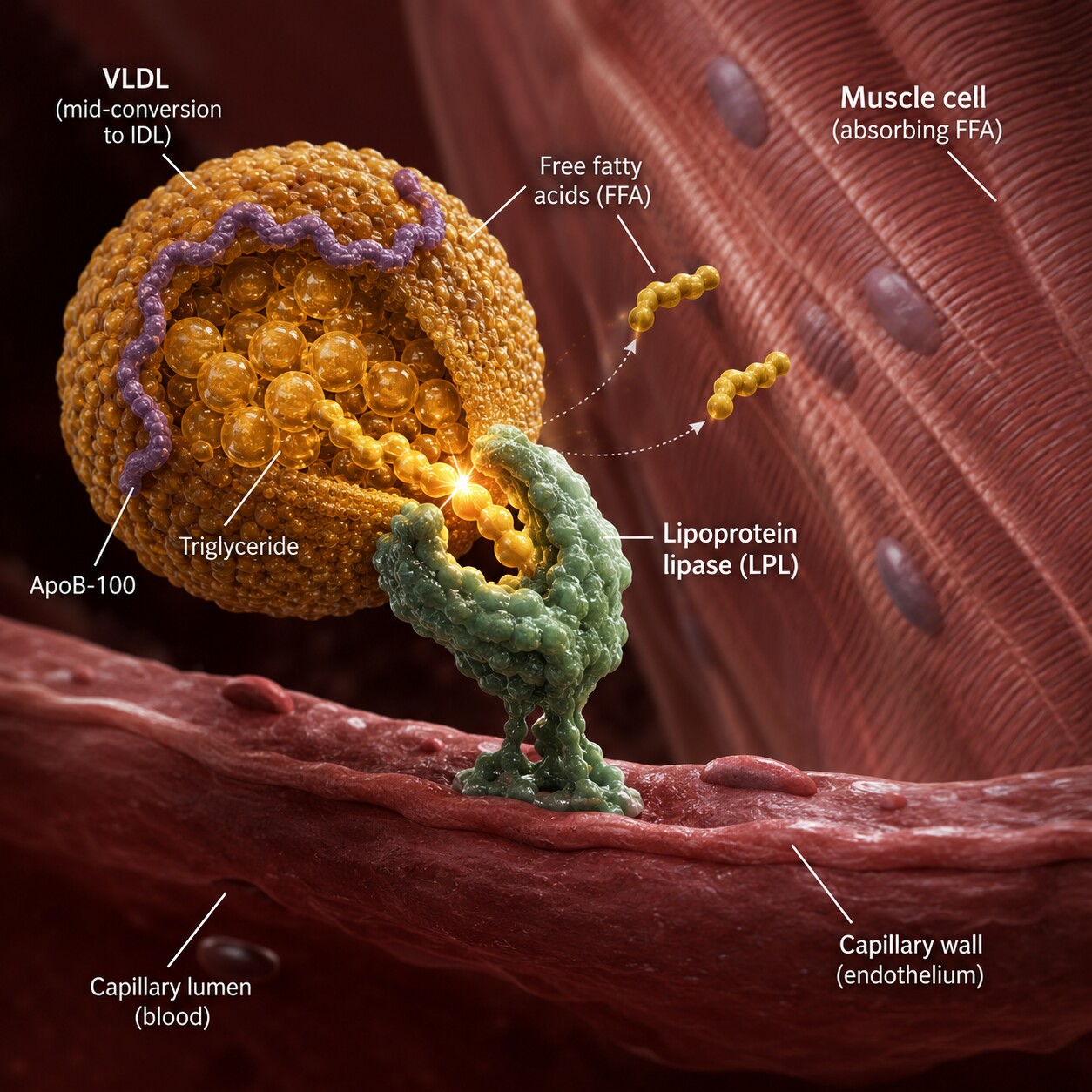
Figure 2. The enzyme lipoprotein lipase, anchored on capillary walls in muscle and fat tissue, strips triglycerides from VLDL particles, gradually shrinking them into IDL and then LDL.
A VLDL particle doesn't stay a VLDL particle for its whole life in circulation — it's really the first stage in a chain of transformations. As VLDL travels through the bloodstream, it reaches capillaries in muscle and fat tissue, where an enzyme called lipoprotein lipase sits anchored to the capillary wall like a checkpoint. This enzyme breaks the triglycerides inside the VLDL particle down into free fatty acids, which are then absorbed by the surrounding muscle or fat cells to be burned for energy or stored. As the particle loses triglycerides through this process, it also loses size and mass, and its relative proportion of cholesterol increases — the particle is shrinking and, in the process, transforming.
After enough triglyceride has been stripped away, what's left is called an intermediate-density lipoprotein, or IDL — quite literally, a particle at an intermediate stage between VLDL and its final destination. Some IDL particles are cleared directly by the liver, while others continue losing triglyceride and gaining relative cholesterol content until they become LDL, the particle most people already know as "bad cholesterol." This is a genuinely important fact that rarely gets explained clearly: a meaningful share of the LDL circulating in your blood didn't start out as LDL at all — it started as a VLDL particle made by your liver, and became LDL only after handing off its triglyceride cargo along the way. A liver producing an excess of VLDL isn't just raising your triglycerides in isolation; over time, it's also feeding more raw material into the pipeline that produces LDL.
Why Most Labs Calculate VLDL Instead of Measuring It Directly
Here's something that surprises a lot of people reading their own lab report closely: on a standard lipid panel, the VLDL number usually isn't measured directly at all — it's calculated using a simple formula, dividing your triglyceride result by five (VLDL cholesterol ≈ triglycerides ÷ 5). This shortcut, known as the Friedewald equation (originally developed to estimate LDL, with VLDL as one of its components), works because of a fairly consistent, well-studied ratio between the amount of triglyceride and the amount of cholesterol typically found inside a normal VLDL particle. Since directly measuring VLDL requires more specialized, more expensive lab techniques like ultracentrifugation, most routine panels rely on this calculated estimate instead, and for most people, most of the time, it's accurate enough to be clinically useful.
The catch is that this formula depends on that triglyceride-to-cholesterol ratio staying roughly constant, and it doesn't always hold. This is exactly why a physician reviewing your results needs to know your triglyceride level alongside your VLDL number, not just the VLDL number by itself — a detail that becomes critical in the "unreliable calculations" section further down this article.
Curious what the rest of your lipid panel is telling you? Upload your results and get a complete, plain-language breakdown in under 15 minutes.
Analyze My ResultsWhat a Normal, Borderline, and High VLDL Result Looks Like
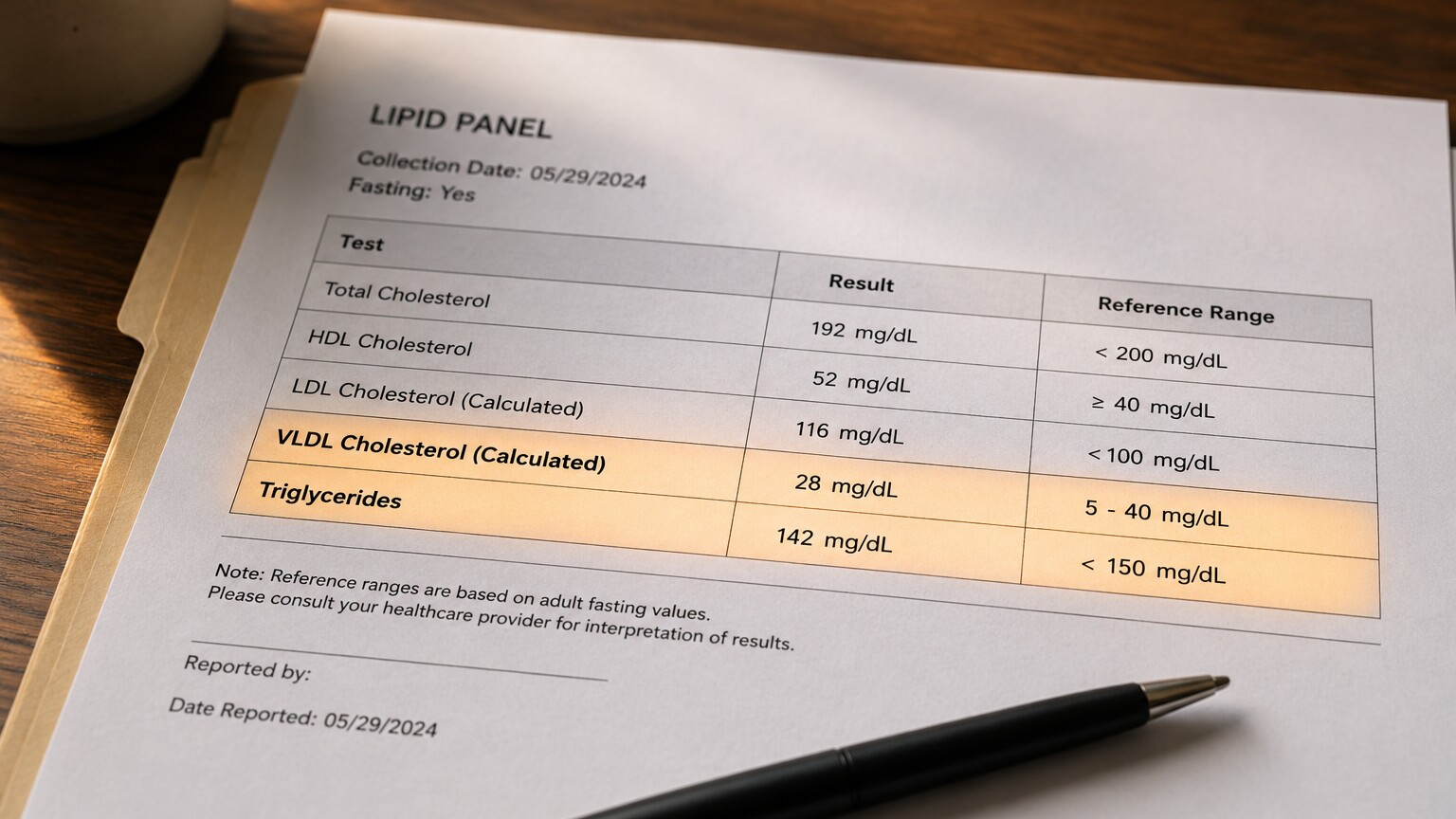
Figure 3. A calculated VLDL cholesterol result under roughly 30 mg/dL is generally considered within the optimal range on most standard lipid panels.
Reference ranges can vary slightly between labs, but most standard panels consider a calculated VLDL cholesterol under about 30 milligrams per deciliter to be optimal, with results climbing into a borderline-high range from roughly 31 to 40, and a high range above that. Because the number is derived directly from triglycerides, it tracks the same clinical triglyceride categories most people are more familiar with: a triglyceride level under 150 mg/dL is considered normal, 150 to 199 is borderline-high, 200 to 499 is high, and 500 or above is very high, at which point the pancreatitis risk discussed later in this article becomes a genuine concern rather than a distant one.
It's worth remembering that these numbers are meant to be read fasting, typically after eight to twelve hours without food, since a recent meal — especially one with any fat in it — temporarily raises triglycerides and, by extension, calculated VLDL, as the body processes newly absorbed dietary fat through a related but separate transport particle called a chylomicron. A non-fasting result showing an elevated VLDL isn't necessarily wrong, but it's harder to interpret cleanly, which is why most doctors still request fasting labs specifically when triglycerides and VLDL are a focus of the visit.
What a High VLDL Number Actually Means
Because VLDL cholesterol is calculated directly from your triglyceride level, an elevated VLDL result is, practically speaking, another way of saying your triglycerides are elevated — the two numbers move together by mathematical design. The real question worth asking is why your triglycerides, and by extension your VLDL, are running high in the first place. The most common driver by far is insulin resistance, a state where the body's cells don't respond normally to insulin's signal to take up glucose from the blood. When this happens, the liver ends up with more incoming fuel — both glucose it converts into fat and fatty acids arriving from resistant fat tissue — than it can use, and it responds by manufacturing and secreting more VLDL particles to move that extra fat out into circulation. This is precisely why elevated triglycerides and VLDL are considered an early, sensitive marker of insulin resistance, sometimes showing up on a lipid panel years before blood sugar itself becomes abnormal enough to diagnose prediabetes or type 2 diabetes.
Diet plays a directly compounding role on top of this: excess intake of refined carbohydrates, added sugars, and alcohol all get converted by the liver into new fat through that de novo lipogenesis pathway described earlier, feeding more raw material into VLDL production regardless of how well or poorly insulin is working. This is part of why someone can have a completely normal body weight and still show elevated triglycerides and VLDL if their diet is heavy in refined starches, sugary beverages, or regular alcohol consumption — the liver doesn't need someone to be overweight to be pushed into overproducing VLDL, though excess weight, particularly visceral fat around the abdominal organs, makes the problem substantially more likely and more severe.
VLDL Cholesterol vs. VLDL Particles — a Distinction Worth Knowing
The VLDL number on your standard lipid panel measures the cholesterol content inside your VLDL particles, used as an indirect stand-in for how many VLDL particles you actually have circulating — but these two things don't always track together perfectly. Some people have VLDL particles that are smaller and more numerous, each carrying relatively less cholesterol, while others have fewer, larger particles each carrying more; two people can have an identical calculated VLDL cholesterol number while having meaningfully different actual particle counts, and particle count is what matters more directly for cardiovascular risk, since each individual particle represents a chance to deposit its contents into an artery wall.
This is exactly why some physicians order an additional test called apolipoprotein B (apoB) for people whose triglycerides run high or whose overall risk picture is unclear from a standard panel alone — since every VLDL, IDL, and LDL particle carries exactly one molecule of apoB-100 on its surface, measuring apoB directly counts the actual number of these potentially artery-damaging particles, rather than estimating from their cholesterol cargo. For most people with a straightforward, unremarkable lipid panel, this level of additional testing isn't necessary — but for anyone with high triglycerides alongside a "normal-looking" LDL number, apoB can reveal a particle burden that the standard calculated numbers were quietly underselling.
Major cardiology guidelines have increasingly recognized this gap, and apoB testing has moved from a specialty or research tool toward something more routinely considered for people with diabetes, obesity, high triglycerides, or a personal or family history of early heart disease that doesn't seem to be fully explained by their standard LDL number. It's a fairly simple blood test, doesn't require fasting the way a triglyceride measurement does, and a single apoB value under about 90 milligrams per deciliter is generally considered a reasonable target for most people at average cardiovascular risk, with lower targets recommended for those already at higher risk.
Why VLDL Matters for Heart Disease Risk Beyond LDL
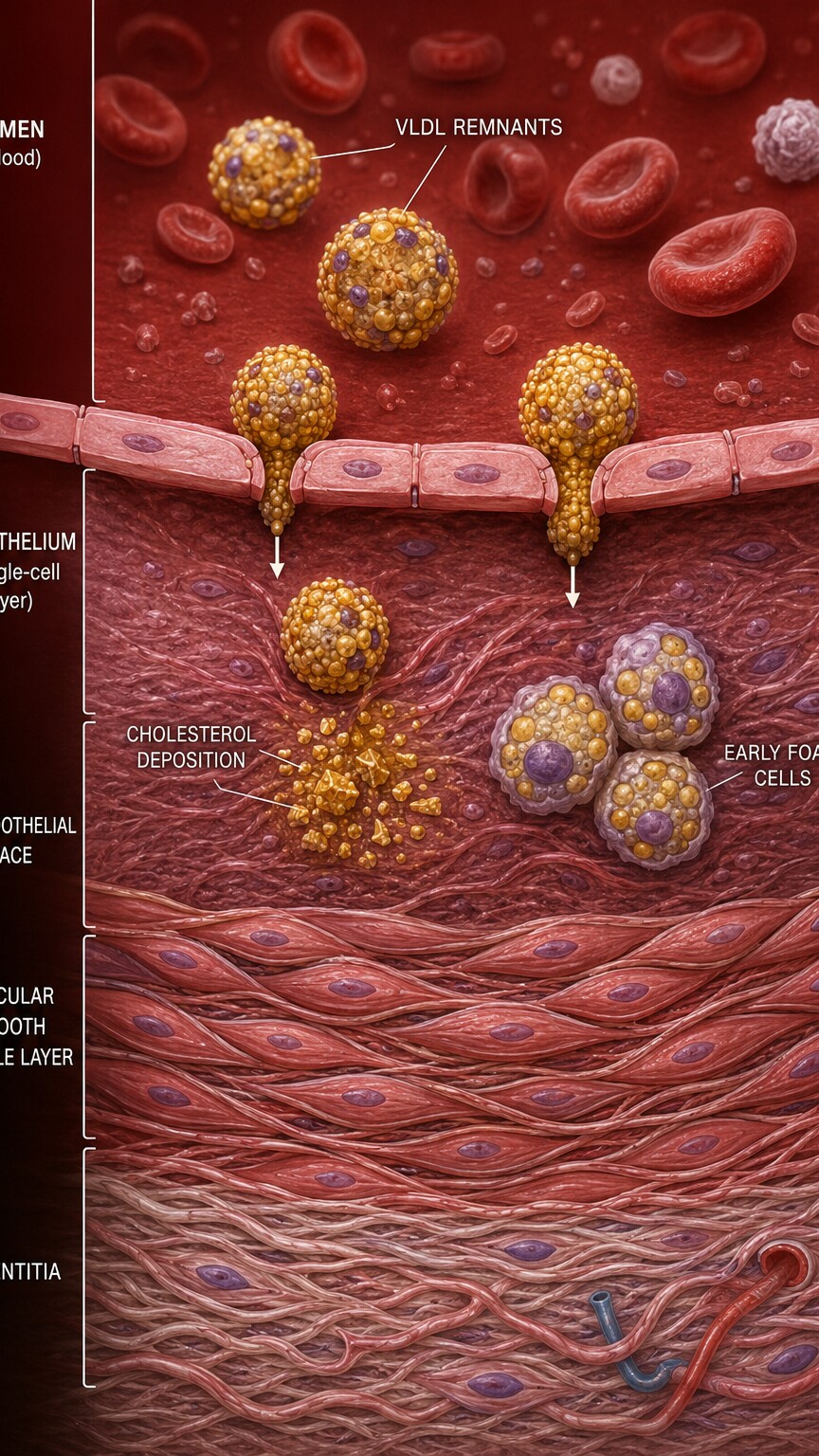
Figure 4. Triglyceride-rich VLDL remnant particles are small enough to slip through the artery wall's endothelial lining, where they can be trapped and contribute to early plaque formation.
For decades, LDL got almost all of the attention in cardiovascular risk conversations, but research over the past twenty years has built a strong case that VLDL and its remnant particles (the IDL-stage particles left behind after triglyceride removal) deserve real attention in their own right, not just as a stepping stone to LDL. VLDL remnants are small enough to pass through the lining of an artery wall the same way LDL particles do, and once trapped there, they can deposit their cholesterol content directly into the developing plaque, contributing to atherosclerosis independent of whatever your LDL number happens to show. This combined contribution from LDL, VLDL, and their remnants is increasingly captured by a measurement called "remnant cholesterol" or reflected in "non-HDL cholesterol," both of which some cardiologists now consider more informative than LDL alone for people with elevated triglycerides.
VLDL and elevated triglycerides also travel with two other changes that compound cardiovascular risk together, a pattern often called atherogenic dyslipidemia: low HDL cholesterol (since the same metabolic processes that raise triglycerides tend to lower "good" HDL cholesterol at the same time) and a shift toward small, dense LDL particles, which are considered more prone to penetrating and lodging in artery walls than larger, more buoyant LDL particles. Someone with this specific triad — high triglycerides, low HDL, small dense LDL — can carry meaningfully elevated cardiovascular risk even when their total cholesterol and standard LDL numbers look unremarkable on paper, which is a major reason a lipid panel needs to be read as a full picture rather than any single line item in isolation.
VLDL as Part of the Metabolic Syndrome Picture
Elevated VLDL and triglycerides rarely show up in complete isolation — they're frequently one piece of a broader cluster of related findings that doctors group together under the term metabolic syndrome. This diagnosis is made when someone has at least three of five specific criteria: elevated triglycerides (typically 150 mg/dL or higher), low HDL cholesterol, elevated blood pressure, elevated fasting blood sugar, and increased waist circumference reflecting excess abdominal fat. Because all five of these criteria trace back to the same underlying thread of insulin resistance discussed earlier in this article, an elevated VLDL result is often one of the first dominoes a doctor will check when metabolic syndrome is suspected, alongside blood pressure and fasting glucose. Being told you meet criteria for metabolic syndrome can sound alarming, but it's better understood as an early warning system — a signal that several related processes are heading in an unhealthy direction together, at a point where lifestyle changes still have a strong chance of reversing the pattern before it progresses to type 2 diabetes or clinically significant heart disease.
This is also why a doctor who sees an elevated VLDL result on an otherwise routine lipid panel will often ask about waist circumference, recent blood pressure readings, and family history of diabetes, even if the original reason for ordering the panel had nothing to do with diabetes risk specifically. The lipid panel, in this sense, can function as an early messenger for a broader metabolic conversation that a patient might not have expected to have that day.
What Causes VLDL and Triglycerides to Rise
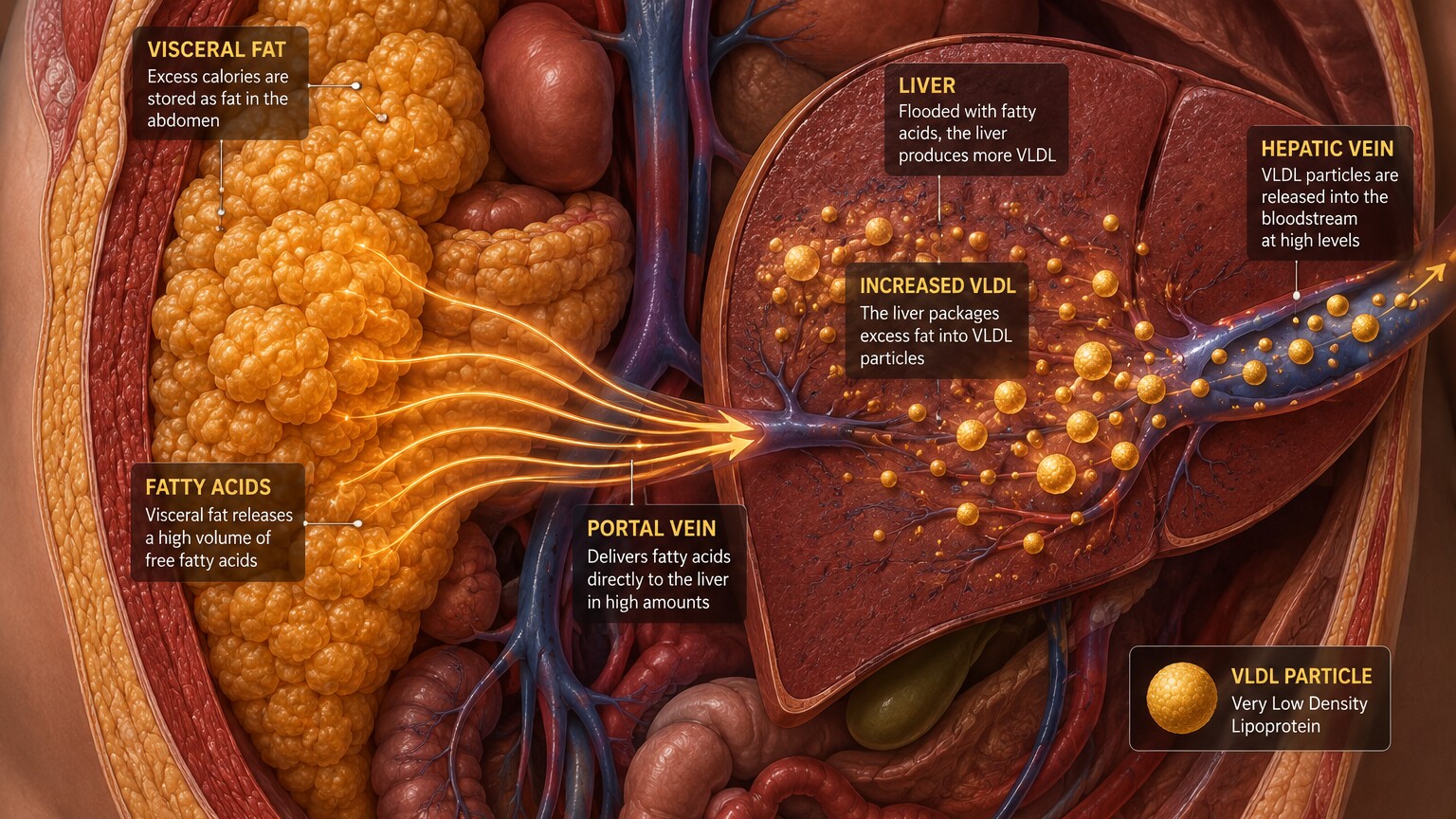
Figure 5. Visceral fat surrounding the abdominal organs releases a steady stream of fatty acids directly into the liver, driving excess VLDL production even before blood sugar becomes abnormal.
Beyond the insulin resistance and dietary drivers already discussed, several other factors can independently push VLDL and triglycerides upward, and a doctor investigating an unexpectedly high result will usually work through this list. Uncontrolled or poorly managed type 2 diabetes intensifies the same insulin-resistance mechanism described earlier, often to a much greater degree. An underactive thyroid, called hypothyroidism, slows the rate at which the body clears fat particles from the bloodstream, allowing triglycerides and VLDL to accumulate even without any change in production. Chronic kidney disease alters how the body handles fat metabolism broadly and is a well-documented cause of elevated triglycerides. Certain medications — including some forms of estrogen therapy, corticosteroids like prednisone, some beta-blockers, and certain diuretics — can raise triglycerides as a side effect, which is why a thorough medication review is a standard part of investigating an abnormal lipid panel.
Genetics also plays a meaningful role for some people. Familial combined hyperlipidemia and familial hypertriglyceridemia are inherited conditions in which the body either overproduces VLDL or under-clears it from the bloodstream, and they run in families independent of diet or lifestyle — someone with a strong family history of high triglycerides or early heart disease, despite otherwise healthy habits, may be dealing with one of these genetic patterns and can benefit from a more targeted workup rather than lifestyle changes alone. A rarer inherited condition called familial dysbetalipoproteinemia, sometimes called type III hyperlipoproteinemia, involves a specific genetic variant in apoE, a different apolipoprotein involved in clearing VLDL remnants from the bloodstream; people with this condition accumulate remnant particles at unusually high levels and face a substantially elevated cardiovascular risk relative to their triglyceride number alone, which is part of why unusual or unexplained lipid patterns sometimes prompt more specialized genetic or lipoprotein testing rather than being treated as a standard case.
Pancreatic conditions and certain autoimmune diseases can also contribute, though less commonly than the causes above. Nephrotic syndrome, a kidney condition marked by significant protein loss in the urine, is well documented as a cause of elevated triglycerides and VLDL through its broad disruptive effects on how the liver regulates fat production. Excess alcohol use severe enough to cause fatty liver disease compounds the problem in a self-reinforcing way, since a fattier liver tends to produce more VLDL, which in turn contributes further to fat accumulation in the liver itself — a cycle that's part of why addressing alcohol intake specifically, rather than diet alone, is sometimes the single most impactful change available to someone with this particular pattern.
How to Lower VLDL and Improve Your Overall Lipid Panel
Because VLDL and triglycerides respond directly and often quickly to changes in diet and lifestyle, this is one of the more genuinely responsive parts of a lipid panel to work on. Reducing added sugar and refined carbohydrates — white bread, pastries, sugary drinks, and similar foods — cuts directly into the raw material the liver converts into new fat for VLDL production, and people frequently see meaningful drops in triglycerides within just a few weeks of consistent change. Limiting alcohol intake matters for the same reason, since alcohol is processed by the liver in a way that strongly favors new fat production; for some people with significantly elevated triglycerides, even moderate regular drinking can be enough to keep the number elevated. Regular aerobic exercise improves how efficiently muscle tissue clears triglycerides from the blood via lipoprotein lipase, the same enzyme discussed earlier, working through an entirely separate mechanism from diet changes alone. Weight loss, when relevant, addresses the insulin resistance and visceral fat that often sit underneath a high VLDL result in the first place, frequently producing improvement across the whole lipid panel rather than triglycerides alone.
Omega-3 fatty acids, found in fatty fish like salmon, sardines, and mackerel, or taken as a concentrated supplement, have a well-documented triglyceride-lowering effect and are sometimes specifically recommended for this purpose. When lifestyle changes aren't enough on their own, particularly with significantly elevated triglycerides, medications called fibrates are often the first-line pharmaceutical option, since they work specifically on triglyceride and VLDL metabolism rather than targeting LDL the way statins do. Statins, while primarily prescribed for LDL, also produce a modest reduction in triglycerides and are frequently part of the overall treatment plan when both LDL and triglycerides need attention together. Prescription-strength omega-3 formulations are another option for significant elevations, and niacin, once commonly used for this purpose, has fallen out of favor in recent years after research raised questions about its overall benefit and side-effect profile compared to newer options.

Figure 6. Omega-3-rich foods and reduced intake of refined carbohydrates and sugar both directly lower how much triglyceride-carrying VLDL the liver needs to produce and release.
It's worth noting that these dietary and lifestyle changes tend to move triglycerides and VLDL faster and more dramatically than they move LDL, which is one of the more encouraging aspects of working on this specific part of a lipid panel. Someone who cuts back significantly on alcohol and refined sugar can sometimes see their triglycerides drop by 20% to 50% within a month or two, a pace of improvement that's genuinely unusual compared to most other lab values people track over time. This rapid responsiveness is also useful diagnostically: if triglycerides and VLDL don't budge meaningfully despite serious, sustained lifestyle changes, that's a signal worth bringing back to a doctor, since it raises the likelihood of an underlying driver — a thyroid problem, a medication effect, or a genetic pattern — that diet and exercise alone won't fully resolve.
When Very High Triglycerides Make the VLDL Calculation Unreliable
The calculated VLDL formula described earlier — triglycerides divided by five — depends on a fairly stable relationship between triglyceride and cholesterol content inside the VLDL particle, and that relationship breaks down once triglycerides climb very high, generally above 400 to 500 milligrams per deciliter. At these elevated levels, the ratio of triglyceride to cholesterol inside VLDL particles shifts in ways the simple formula wasn't designed to account for, which means both the calculated VLDL and the calculated LDL on a standard panel become unreliable and shouldn't be trusted at face value. In this situation, labs typically report LDL and VLDL as "unable to calculate" or flag the result with a note, and a doctor will usually rely on total cholesterol, HDL, and non-HDL cholesterol (total cholesterol minus HDL, which doesn't depend on the same formula) instead, or order a direct measurement of LDL through a specialized method.
Triglycerides in this very high range deserve attention for a reason beyond calculation accuracy: significantly elevated triglycerides, generally above 500 to 1,000 milligrams per deciliter, carry a real risk of triggering acute pancreatitis, a sudden and serious inflammation of the pancreas that can be a genuine medical emergency. This is a different and more urgent concern than the gradual, long-term cardiovascular risk discussed throughout most of this article, and it's why a triglyceride result in this range typically prompts more immediate treatment, sometimes including medication started right away rather than waiting to see how lifestyle changes alone might help over the following months.
VLDL During Pregnancy — a Normal Exception to the Usual Rules
Pregnancy is one of the few situations where a rising VLDL and triglyceride level is an expected, normal physiological change rather than a warning sign. Rising estrogen and other pregnancy hormones drive the liver to increase VLDL production substantially, particularly in the second and third trimesters, since the growing fetus and placenta depend on an increased availability of circulating fat and energy. It's common for triglycerides to roughly double, and sometimes triple, by the third trimester compared to pre-pregnancy levels, and this shift generally reverses on its own within weeks to a few months after delivery as hormone levels return to their pre-pregnancy baseline.
Because of this expected shift, standard non-pregnant reference ranges for VLDL and triglycerides don't directly apply during pregnancy, and routine lipid panels aren't typically part of standard prenatal care unless there's a specific reason for concern, such as a personal or family history of very high triglycerides or pancreatitis. In the rare cases where triglycerides climb to a severely elevated range during pregnancy, the pancreatitis risk discussed earlier in this article becomes a more immediate concern, and this is managed directly by an obstetrician alongside a specialist, since standard triglyceride-lowering medications aren't all considered safe to use during pregnancy.
How Often VLDL and Triglycerides Should Be Rechecked
For someone with a normal, unremarkable result, VLDL and triglycerides are typically rechecked whenever the rest of a routine lipid panel is repeated — commonly every four to six years for adults at low cardiovascular risk, per general screening guidelines, though this interval shortens considerably for anyone with risk factors like a family history of heart disease, diabetes, or a previous abnormal result. For someone actively working to lower an elevated result through diet and lifestyle changes, a recheck at eight to twelve weeks is a common and reasonable timeframe, since it's long enough for genuine dietary changes to show a measurable effect on triglycerides but not so long that months go by without feedback on whether a given approach is actually working. Anyone started on medication specifically for elevated triglycerides will typically be rechecked on a similar timeline to confirm the medication is having the intended effect before settling into a longer-term monitoring schedule.
Frequently Asked Questions
Is VLDL the same thing as "bad cholesterol"?
Not exactly. LDL is the particle most commonly called "bad cholesterol," but VLDL is its precursor — the liver releases VLDL first, and after it delivers most of its triglyceride cargo to tissues, it gradually transforms into LDL. Elevated VLDL contributes to cardiovascular risk both directly, through its remnant particles, and indirectly, by feeding the process that generates more LDL.
Why is my VLDL number just my triglycerides divided by five?
Most standard lipid panels calculate VLDL cholesterol rather than measuring it directly, using the Friedewald equation, which estimates VLDL cholesterol as triglycerides divided by five based on a well-studied typical ratio between the two. This calculation is accurate for most people but becomes unreliable when triglycerides rise above roughly 400 milligrams per deciliter.
Can I have high VLDL with normal LDL and total cholesterol?
Yes, and it's a fairly common pattern, particularly with insulin resistance or a diet high in refined carbohydrates and alcohol. Because VLDL is calculated from triglycerides rather than total or LDL cholesterol, it can be elevated even when the rest of the standard panel looks unremarkable, which is why triglycerides deserve attention on their own rather than being read only in the shadow of LDL.
What's the fastest way to lower VLDL?
Reducing added sugar, refined carbohydrates, and alcohol intake tends to produce the fastest and most noticeable improvement, often within a few weeks, since these directly reduce the raw material the liver converts into new fat for VLDL production. Regular aerobic exercise and, when relevant, weight loss provide additional, complementary improvement through separate mechanisms.
Does a high VLDL level mean I need medication?
Not always, but that's a decision for your doctor to make based on your full picture. Mild to moderate elevations are often managed with diet and lifestyle changes alone, since triglycerides and VLDL tend to respond quickly to these adjustments. Medication, typically a fibrate or prescription omega-3, is more often considered for significant elevations, particularly when lifestyle changes haven't been enough or when triglycerides are high enough to raise pancreatitis risk.
Is it normal for VLDL and triglycerides to rise during pregnancy?
Yes. Rising estrogen and other pregnancy hormones drive the liver to increase VLDL production substantially, and it's common for triglycerides to roughly double or triple by the third trimester. This is an expected physiological change that generally reverses on its own within a few months after delivery.
How does VLDL relate to metabolic syndrome?
Elevated triglycerides, and by extension VLDL, is one of the five criteria used to diagnose metabolic syndrome, alongside low HDL, elevated blood pressure, elevated fasting blood sugar, and increased waist circumference. Because all five trace back to insulin resistance, an elevated VLDL result often prompts a doctor to check the other four as well.
Conclusion
VLDL might be the smallest, least-discussed number on a standard lipid panel, but it reflects something genuinely important: how your liver is handling the fat and fuel moving through your body at this moment, and how much of that fat-carrying traffic is contributing to the plaque-forming process inside your arteries. A high VLDL result is really a high triglyceride result wearing a different name, and it's frequently one of the earliest visible signs of insulin resistance, showing up well before other markers catch up, sometimes years before fasting glucose or hemoglobin A1c drift out of the normal range. The encouraging part is that VLDL and triglycerides respond to diet and lifestyle changes faster than almost any other number on a lipid panel, which means this specific line item — easy to skip past on a lab report — is also one of the more directly actionable ones once you understand what it's actually measuring.
If your own results show an elevated VLDL or triglyceride level, the most productive next step is a conversation with your doctor about which of the drivers discussed in this article — diet, insulin resistance, alcohol, a thyroid issue, a medication, or a genetic pattern — is most likely at play for you specifically, rather than assuming the number in isolation tells the whole story.
Still Not Sure What Your Results Mean?
Upload your labs and get a complete, visual, plain-language interpretation of every biomarker — delivered to your inbox in under 15 minutes.
Get My ReportThis article is for educational purposes only and does not constitute medical advice. Always consult your healthcare provider regarding your specific lab results.