
Why Would a Doctor Order an ApoB Test Alongside Cholesterol?
A standard cholesterol panel tells you how much cholesterol is riding around in your blood. An apolipoprotein B test — usually shortened to "ApoB" — tells you something the standard panel can't: how many of the specific particles that actually cause heart disease are in your blood, counted as a single number. Those two things sound like they should always agree, and most of the time they roughly do. But in a meaningful minority of people — often the ones with a family history of early heart attacks, or with high triglycerides, or with prediabetes or a larger waistline — they disagree, and when they disagree, the particle count turns out to be the better predictor of what happens to your arteries over the next couple of decades. That gap is the entire reason a doctor adds ApoB to an order that already includes cholesterol: not to replace the familiar numbers, but to check whether those numbers are telling the whole story for you specifically. This article explains what ApoB is actually measuring, the exact situations that prompt a doctor to order it, what your result means once it comes back, and how it fits together with the LDL, HDL, and triglyceride numbers you already know.
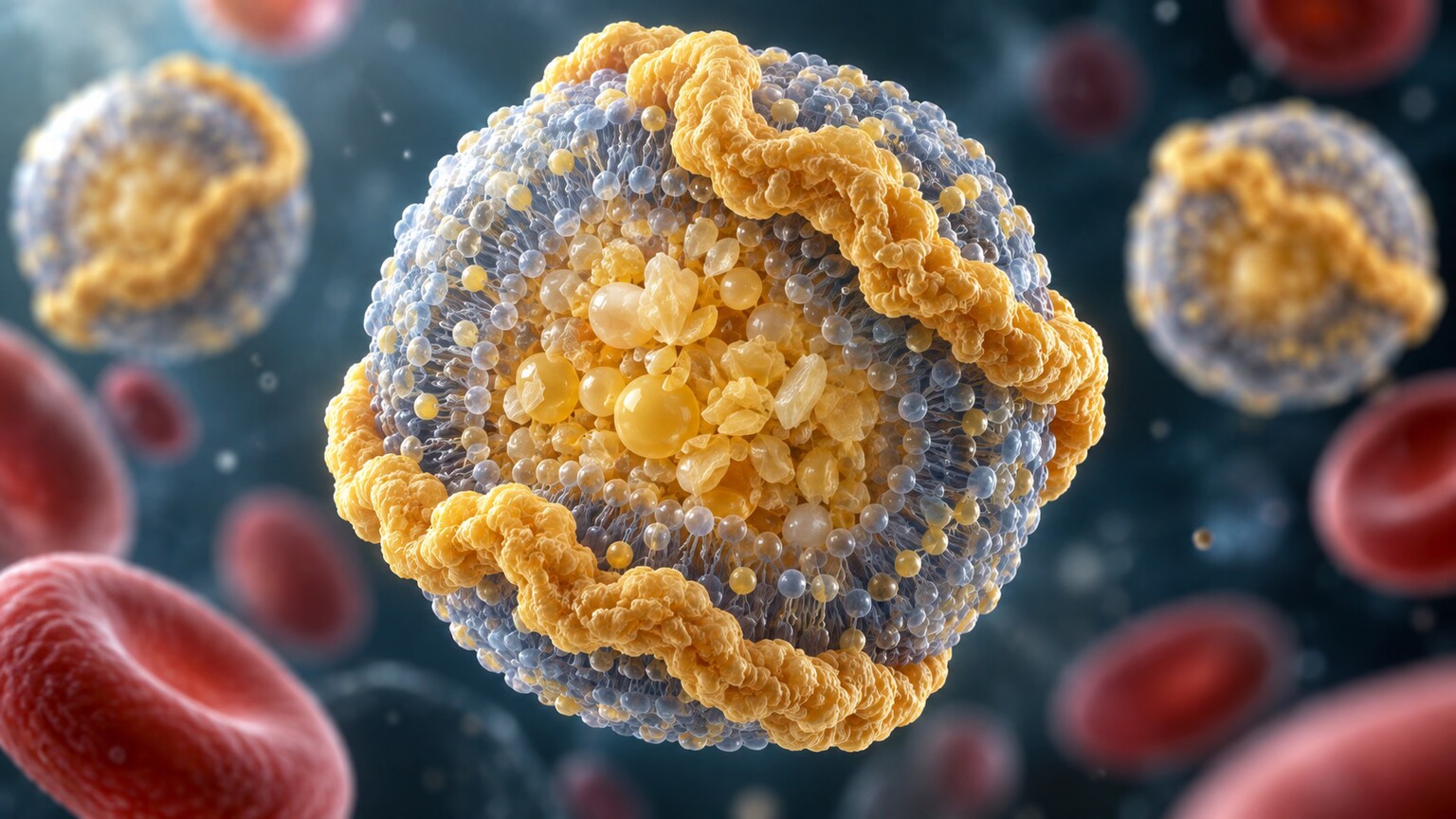
Figure 1. Every LDL, VLDL, IDL, and Lp(a) particle carries exactly one apolipoprotein B molecule wrapped around its surface, so the total ApoB concentration in blood is a direct count of these particles.
What ApoB Actually Is — One Protein, One Particle
To understand why this test exists, it helps to picture what cholesterol is actually doing in your bloodstream. Cholesterol is a waxy, fat-like substance your body needs for building cell membranes, making hormones, and producing vitamin D. But cholesterol and fat don't dissolve in blood, which is mostly water — so the body packages them inside tiny spherical carriers called lipoproteins, essentially microscopic delivery trucks with a water-friendly shell and a fatty cargo hold. Your lab's "LDL cholesterol" number is an estimate of how much cholesterol is being carried inside the low-density lipoprotein trucks specifically.
Here is the key fact the ApoB test is built on: every one of the lipoprotein particles that can get stuck in an artery wall and start a plaque carries exactly one copy of a large structural protein called apolipoprotein B. This protein is enormous — one of the longest single protein chains the human body makes — and it wraps around the outside of the particle like a belt holding a suitcase closed. It is present in a fixed one-to-one ratio: one ApoB molecule per particle, always, whether that particle is an LDL, a VLDL (very-low-density lipoprotein), an IDL (intermediate-density lipoprotein), or a lipoprotein(a) particle. It never comes in pairs, and a particle never has zero.
Because of that one-to-one relationship, measuring the total amount of ApoB protein in a sample of blood is arithmetically the same as counting all of those artery-relevant particles at once. If your ApoB is 100 milligrams per deciliter (a unit that just means how many milligrams of the protein are dissolved in each tenth of a liter of blood), that number corresponds to a specific total particle count. A higher ApoB means more particles; a lower ApoB means fewer. It doesn't matter how much cholesterol each individual particle happens to be carrying — ApoB is counting the trucks, not weighing the cargo.
The one important carrier ApoB does not count is HDL, the "good" cholesterol particle. HDL uses a completely different structural protein (apolipoprotein A-1), and HDL particles generally pull cholesterol away from artery walls rather than depositing it. So ApoB is, in effect, a clean tally of only the harmful side of the ledger — every particle that can contribute to plaque, and none of the ones that don't.
Why Counting Particles Beats Weighing Cholesterol
If cholesterol carriers were all identical, counting particles and measuring cholesterol would give you the same information, and there would be no reason for two tests. The reason both exist is that the particles are not identical — they vary a lot in how much cholesterol each one is carrying.
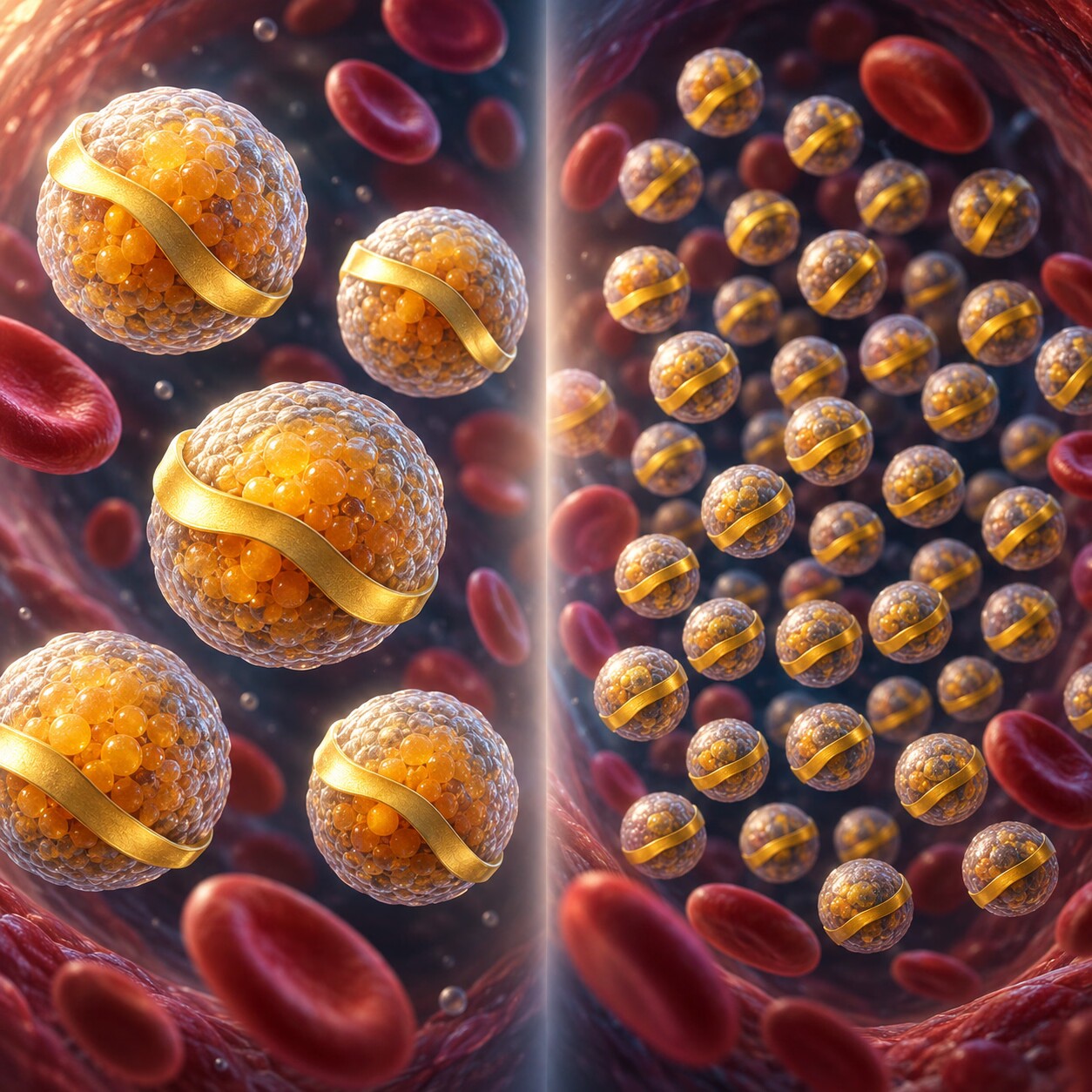
Figure 2. Two blood samples can carry an identical amount of LDL cholesterol while containing very different numbers of particles: a few large, cholesterol-rich particles on the left, or many small, cholesterol-poor particles on the right.
Think of it like moving the same total volume of water across a river. You could do it with a handful of large barrels, or with dozens of small buckets. If someone only tells you the total gallons of water moved, you have no idea whether it took four barrels or forty buckets. LDL cholesterol is the "total gallons" measurement. ApoB is the "how many containers" measurement.
This matters for your arteries because of how a plaque actually starts. An atherosclerotic plaque begins when a lipoprotein particle crosses the thin inner lining of an artery (the endothelium) and gets trapped in the wall underneath, where sugar-protein molecules called proteoglycans grab onto the ApoB protein and hold the particle in place. Once trapped, the particle is chemically modified, the immune system responds, and over years that spot builds into a plaque. The critical detail is that this is fundamentally a particle event: what determines your risk over time is roughly how many particles cross into and get retained in the wall, not how much cholesterol each one was carrying when it did. A small, cholesterol-poor particle that gets trapped still starts the same process as a large, cholesterol-rich one.
So a person with many small particles can have a "normal" LDL cholesterol number — because each small particle contributes only a little cholesterol to the total — while actually having a high particle count and a genuinely elevated risk. Their standard panel looks reassuring; their ApoB does not. Conversely, someone with a few large, fluffy particles can have a somewhat high LDL cholesterol number but a lower-than-expected particle count and a better outlook than their cholesterol number suggests. In both cases, the ApoB is describing the situation more accurately than the cholesterol mass is.
The Discordance Problem — When Your Numbers Disagree
Researchers use the word "discordance" for the situation where your LDL cholesterol and your particle count land in different risk categories — one looks fine, the other doesn't. Studies that have measured both in the same people repeatedly find that when the two disagree, the particle count (measured as ApoB) is the one that tracks with actual cardiovascular events. In other words, when your cholesterol number and your ApoB tell different stories, believe the ApoB.
Discordance isn't random. It clusters in people with a specific metabolic pattern: elevated triglycerides, lower HDL, a larger waist circumference, insulin resistance, prediabetes or type 2 diabetes, and non-alcoholic fatty liver. This combination pushes the liver to produce triglyceride-rich particles and shifts the whole LDL population toward being smaller and more numerous. Someone with this pattern can have an LDL cholesterol of, say, 110 milligrams per deciliter — which most people would read as only mildly elevated — while their ApoB sits at a level that corresponds to a particle count seen in people with much higher cholesterol numbers. The standard panel systematically under-represents their risk, and ApoB is what catches it.
The opposite pattern — a reassuring ApoB despite a mediocre cholesterol number — is less common but does happen, often in lean, metabolically healthy people whose LDL particles run large. It's genuinely useful information, because it can mean the cholesterol number alone was overstating the concern.
Have an ApoB result sitting on your panel next to your LDL and HDL, and not sure how they fit together? Upload your results and get a complete, plain-language breakdown in under 15 minutes.
Analyze My ResultsEvery Situation That Prompts a Doctor to Add ApoB
A doctor doesn't order ApoB on every routine physical — a standard lipid panel is enough for most people whose numbers and risk factors line up cleanly. ApoB gets added when something about the picture suggests the standard numbers might be misleading, or when a more precise particle count would change a decision. These are the specific triggers.
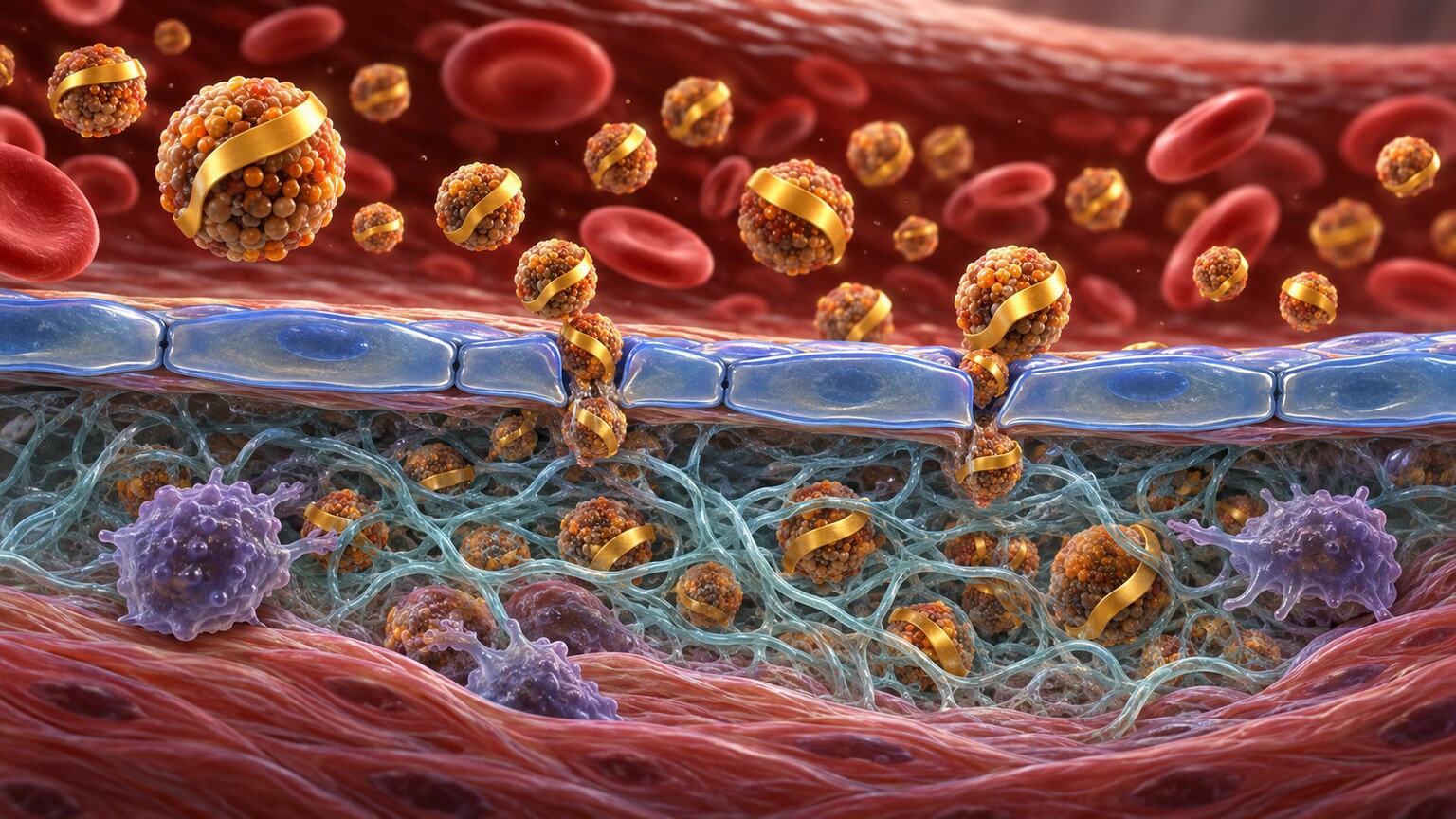
Figure 3. Plaque formation is driven by how many ApoB-carrying particles cross the endothelium and become trapped in the artery wall, which is why a direct particle count refines risk beyond cholesterol mass alone.
Elevated triglycerides. This is the single most common reason. Once triglycerides climb above roughly 150 milligrams per deciliter — and especially above 200 — the calculated LDL cholesterol number on a standard panel becomes progressively less reliable, and the odds that particle count and cholesterol mass have diverged go up sharply. A doctor seeing high triglycerides will often add ApoB (or non-HDL cholesterol, discussed below) to get a truer read.
A metabolic-syndrome picture. Prediabetes, type 2 diabetes, a waist measurement in the higher range, low HDL, or fatty liver on an ultrasound — any of these, alone or combined, flags the exact physiology that produces small, numerous particles. In people with diabetes in particular, several professional guidelines now specifically recommend ApoB (or non-HDL) rather than LDL cholesterol as the number to track.
A personal or family history of early heart disease. If you had a heart attack or stent in your forties, or a parent or sibling did, and your standard cholesterol numbers don't obviously explain it, ApoB can reveal that a high particle count was the missing piece. This is also relevant when familial hypercholesterolemia — an inherited condition that raises LDL from birth — is suspected, since ApoB helps confirm the particle burden.
Borderline standard numbers plus other risk factors. When someone's LDL cholesterol is in a gray zone — not clearly high, not clearly fine — and they also smoke, have high blood pressure, or have a strong family history, the decision about whether to start a cholesterol-lowering medication can genuinely go either way. An ApoB that comes back clearly elevated tips that decision toward treating; one that comes back low can support watchful waiting.
Already on a statin, to judge residual risk. Statins lower LDL cholesterol effectively, but some people remain at elevated risk even with a "good" LDL number on treatment — often because their particle count hasn't dropped as much as their cholesterol mass has. Checking ApoB on treatment shows whether the particle burden has actually come down to target, or whether more aggressive therapy is warranted.
A confusing or contradictory lipid panel. Sometimes the numbers just don't hang together — an LDL that seems too low for the total cholesterol, or results that swing between visits. ApoB is a more standardized, directly measured value that doesn't depend on a calculation, so it can cut through the noise.
What Your ApoB Number Actually Means
ApoB is reported in milligrams per deciliter, the same unit as your cholesterol numbers, which makes it easy to misread as "just another cholesterol value." It isn't — it's a particle count expressed in mass units. The interpretation depends heavily on your overall cardiovascular risk, but the general framework used by lipid specialists looks roughly like this.

Figure 4. A family history of heart attacks or stents before age 55 in men or 65 in women is one of the clearest reasons a doctor adds ApoB, since an inherited high particle count can hide behind ordinary-looking cholesterol numbers.
For someone at average risk with no established heart disease, an ApoB below roughly 90 milligrams per deciliter is generally considered acceptable, and a value around 80 or below is often the goal for anyone actively trying to lower risk. For a person who already has cardiovascular disease or is at high risk because of diabetes plus other factors, the target drops — many lipid specialists aim for an ApoB below about 65 milligrams per deciliter, and for the very highest-risk patients, below 50. These are approximate thresholds, not hard cutoffs, and the exact target your doctor sets will be personalized. An ApoB in the 100s, and certainly above 120, represents a high particle burden regardless of risk category.
Two things are worth keeping in mind when you read the number. First, because ApoB and LDL cholesterol usually move together, a normal LDL with a clearly elevated ApoB is the finding that changes management — it's the discordance the test was ordered to catch. Second, a single ApoB is a snapshot; like cholesterol, it can shift modestly with recent illness, major weight change, or a new medication, so an unexpected result is usually confirmed with a repeat test before acting on it.
One useful feature of ApoB is that it does not require fasting. The particle count is stable whether you've eaten recently or not, unlike the triglyceride and calculated-LDL numbers on a standard panel, which do shift after a meal. That's part of why some clinicians favor ApoB as a monitoring number — it's one less variable to control for.
ApoB vs. Non-HDL Cholesterol vs. LDL Particle Number
ApoB isn't the only way to get past the limitations of plain LDL cholesterol. It helps to know how it relates to the two alternatives you might also see on a panel or hear a doctor mention.
Non-HDL cholesterol is simply your total cholesterol minus your HDL cholesterol. Because it captures the cholesterol in every particle type except HDL — LDL, VLDL, IDL, and Lp(a) — it's a rough proxy for the harmful particle burden, and it's free: it can be calculated from a standard panel with no extra test. Non-HDL cholesterol tracks ApoB fairly closely for most people, and for that reason many guidelines treat it as an acceptable, no-cost first step. Where it falls short is exactly the discordant cases — the person with small, cholesterol-poor particles — because it's still measuring cholesterol mass, just from more particle types. ApoB is the more precise version of the same idea.
LDL particle number (LDL-P), usually measured by a technology called nuclear magnetic resonance, is a direct count of LDL particles specifically. It answers nearly the same question as ApoB and correlates strongly with it. The practical differences: ApoB also counts VLDL and IDL and Lp(a) particles, not just LDL, so it captures a slightly broader picture; ApoB is measured by a widely available, well-standardized method; and ApoB is generally cheaper and more likely to be covered by insurance. Most lipid specialists today, given a choice, reach for ApoB.
There's also lipoprotein(a), often written Lp(a), which is a specific, genetically determined particle that carries its own extra protein on top of ApoB. ApoB includes Lp(a) particles in its total count but can't tell you how much of your particle burden is coming from Lp(a) specifically. Because Lp(a) is an independent, inherited risk factor that most people should have measured once in their life, it's often ordered alongside ApoB rather than instead of it.
What Actually Happens Inside the Artery — Why Particle Count Is the Driver
It's worth spending a moment on the biology, because it explains why the particle-count framing isn't just a statistical preference — it reflects the physical mechanism of the disease.

Figure 5. The ApoB protein is the exact molecular hook that proteoglycan strands in the artery wall bind to; retention of ApoB-carrying particles at that spot is the initiating step of atherosclerosis.
The inner lining of a healthy artery lets small amounts of lipoprotein particles pass in and out of the wall continuously — this is normal traffic. Trouble starts when particles enter faster than they leave and begin to accumulate. The more particles circulating in the blood, the higher the concentration gradient pushing them into the wall, and the more of them get retained there. The ApoB protein on each particle is literally the binding site: strands of proteoglycan in the artery wall latch onto specific positively charged regions of the ApoB chain, pinning the particle in place. A particle that would otherwise have drifted back out instead stays, gets oxidized and chemically altered, and sends out signals that recruit immune cells. Those immune cells engulf the trapped particles, become foam cells, and form the fatty streak that is the earliest visible stage of a plaque.
Because every step of this cascade is triggered by a retained particle, the total number of particles you expose your artery walls to — integrated over years and decades — is the master variable. This is why cardiovascular risk is often described as a function of "particle-years," similar to how lung cancer risk is described in "pack-years" of smoking. A modestly elevated particle count sustained for thirty years does more cumulative damage than a sharply elevated one for three. It's also why lowering ApoB earlier in life, when the exposure clock is still running slow, has an outsized long-term payoff compared to waiting until a plaque has already formed.
The cholesterol inside each particle still matters — it's what makes the trapped particles inflammatory and what physically bulks out the growing plaque — but it's downstream of the particle getting stuck in the first place. That's the sense in which ApoB captures the more fundamental quantity.
What You Can Do About a High ApoB
If your ApoB comes back elevated, the reassuring news is that the levers for lowering it are the same well-established ones used to lower LDL cholesterol — because reducing the number of ApoB particles and reducing LDL cholesterol are, mechanistically, the same project approached from two measurement angles.
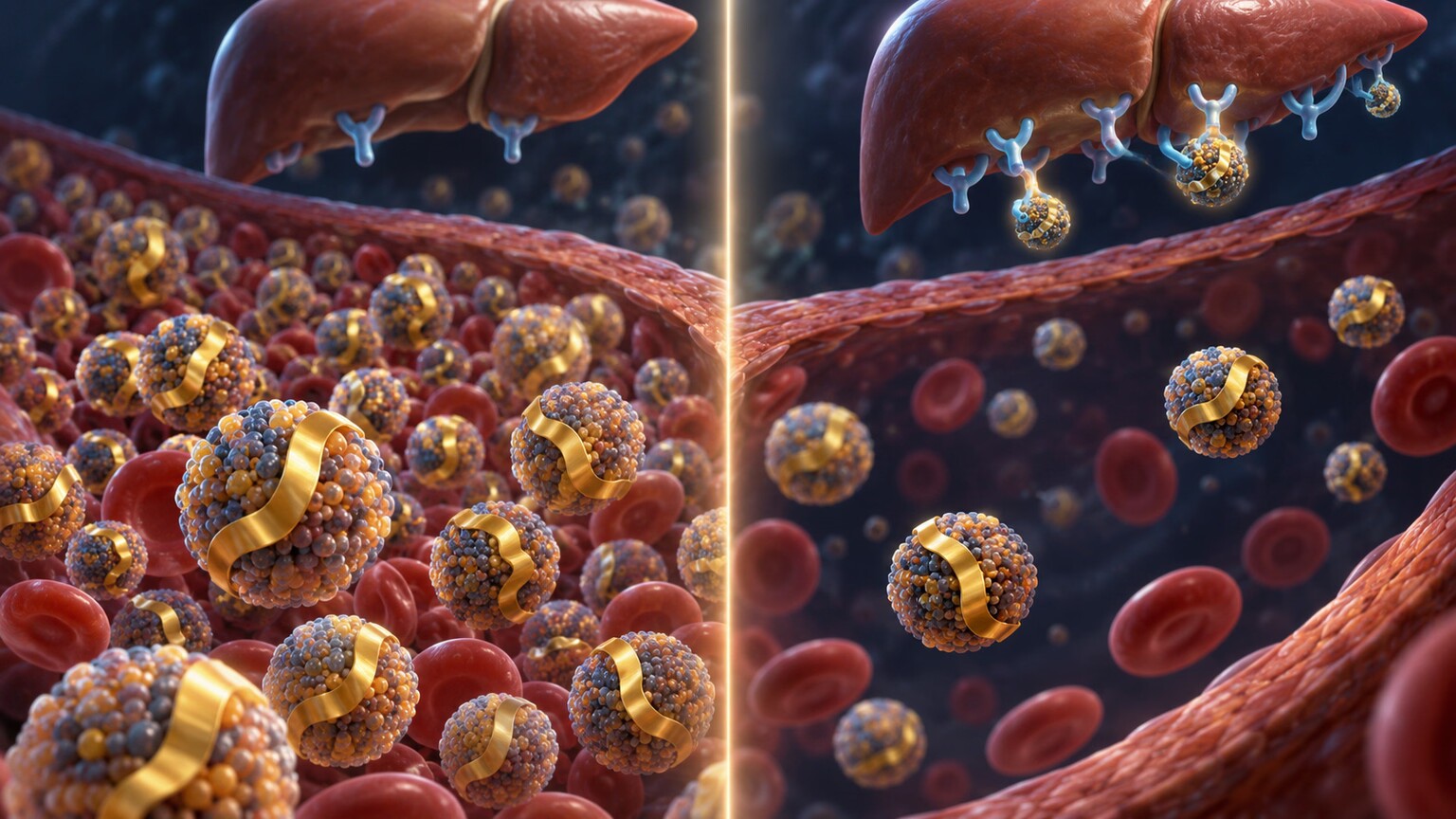
Figure 6. Statins, ezetimibe, and PCSK9 inhibitors all work by increasing the liver's clearance of ApoB-carrying particles from the blood, directly lowering the circulating particle count over weeks to months.
Diet and body composition. Reducing saturated fat intake lowers LDL particle production; losing excess weight and reducing refined carbohydrate and alcohol intake lowers triglyceride-rich particle production, which is often the bigger driver of a high particle count in people with the metabolic pattern described earlier. Increasing soluble fiber and physical activity both help modestly. For someone whose high ApoB is being driven by insulin resistance, improving that underlying metabolic health can meaningfully shift the particle picture.
Statins remain the first-line medication. They work by prompting the liver to pull more ApoB particles out of circulation, which lowers both the particle count and the cholesterol mass. Ezetimibe, often added to a statin, reduces cholesterol absorption from the gut and further lowers particle count. PCSK9 inhibitors, injectable medications used for higher-risk patients or those who can't tolerate statins, produce large reductions in ApoB by dramatically increasing the liver's particle-clearing capacity. For people whose main problem is very high triglycerides, other medications aimed at that specific issue can also bring the particle count down.
Rechecking. After a change in diet or a new medication, ApoB is typically rechecked in about 6 to 12 weeks — long enough for the particle count to reach a new steady state. Once you're at target, it's usually monitored once a year, or more often if your treatment or health situation is changing. Because ApoB doesn't require fasting, this monitoring is a little more convenient than tracking a full fasting lipid panel each time.
The goal of all of this is not to chase a number for its own sake — it's that a lower sustained particle count means fewer particles crossing into your artery walls each year, which over the long run is what slows or halts the progression of plaque.
How the ApoB Test Is Actually Run in the Lab
Part of what makes ApoB attractive as a clinical number is that it's measured directly and by a well-standardized method, rather than estimated from a formula. Your "LDL cholesterol" on a standard panel is usually not measured at all — it's calculated by taking your total cholesterol, subtracting your HDL cholesterol, and subtracting an estimate of the cholesterol in your triglyceride-rich particles. That calculation was good enough for decades, but it drifts away from the truth when triglycerides are high or LDL is very low. ApoB sidesteps all of that.

Figure 7. An ApoB immunoassay uses antibodies that latch onto the ApoB protein; the resulting cloudiness of the sample is proportional to how much ApoB is present, giving a direct particle-related measurement rather than a calculated estimate.
The measurement itself uses an approach called immunoturbidimetry or immunonephelometry. In plain terms: the lab adds antibodies — proteins designed to stick specifically to human ApoB — to a small amount of your blood serum. Each antibody grabs an ApoB molecule, and because ApoB sits on the surface of whole lipoprotein particles, the antibodies effectively clump the particles together into tiny aggregates. Those aggregates make the sample slightly cloudy, and the more ApoB present, the cloudier it gets. An analyzer shines a light through the sample and measures exactly how much of that light is scattered or blocked, then converts that reading into a concentration in milligrams per deciliter. The whole process is automated, runs on the same chemistry analyzers most labs already have, takes minutes, and has been standardized against internationally agreed reference materials so that a result from one lab means the same thing as a result from another.
That standardization is a quiet but real advantage. LDL particle number measured by nuclear magnetic resonance, by contrast, is available from fewer labs and its numeric scale isn't fully harmonized across methods, so a value has to be interpreted against the specific method's reference range. ApoB's numbers travel better between labs and over time, which matters when you're tracking a trend across years.
Cost and logistics are modest. ApoB is an inexpensive add-on to a blood draw you're likely having anyway, it uses the same tube of blood as your lipid panel, and — as noted — it doesn't require fasting. Insurance coverage varies by region and plan but has been broadening as guidelines increasingly name ApoB as a preferred risk marker. If you're paying out of pocket, it's typically in the same low range as other routine chemistry tests, far below the cost of specialized genetic or imaging tests.
ApoB Across a Lifetime — Why the Timing of the Number Matters
One idea that reframes how to think about an ApoB result is that cardiovascular risk behaves less like a light switch and more like a slowly filling reservoir. The damage isn't done by your particle count on any single day; it's done by the total exposure — how many particles have crossed into your artery walls, summed across every year you've been alive. A commonly used shorthand is "particle-years," directly analogous to "pack-years" in smoking: the product of how high your particle count has been and how long it's been that way.
This has a few practical consequences. It explains why a person can have decades of only mildly elevated numbers and still develop significant disease — the modest excess simply had a very long time to accumulate. It explains why early-onset heart disease in a family often points to a lifelong high particle count, present since childhood, rather than something that developed in middle age. And it explains why lowering ApoB earlier delivers a disproportionately large lifetime benefit: every year you shave particles off the running total is a year that never contributes to the reservoir. A large body of genetic research supports this — people who inherit gene variants that keep their ApoB particle count low from birth have dramatically lower lifetime rates of heart disease than people who lower the same number by the same amount but only starting in their fifties.
None of this means a high ApoB discovered later in life isn't worth treating — it very much is, because slowing further accumulation still changes the trajectory. But it does mean that if you're young, have a family history, and find out your particle count is high, that information is more actionable than it might feel, precisely because the exposure clock is still early.
Why ApoB Isn't Ordered for Everyone
Given how useful ApoB is, a fair question is why it isn't just part of every routine panel. A few practical reasons. For the majority of people, the standard lipid panel and a simple non-HDL cholesterol calculation give the same answer ApoB would, at no extra cost — so the incremental value is small unless there's a specific reason to suspect discordance. Insurance coverage for ApoB, while improving, is still less consistent than for a basic panel in some settings. And medical practice changes slowly: LDL cholesterol has decades of trial evidence and familiarity behind it, and many clinicians reserve ApoB for the cases where it clearly adds something. That balance is shifting — several major guidelines now endorse ApoB as a preferred risk marker, especially in people with diabetes or high triglycerides — but it explains why the test is added selectively rather than run by default.
If you think your situation fits one of the triggers described earlier — high triglycerides, a metabolic-syndrome pattern, a strong family history, borderline numbers with other risk factors, or wanting to judge residual risk on a statin — it's a reasonable thing to raise with your doctor. It's an inexpensive blood test, it doesn't require fasting, and in the right person it can change a real decision about whether and how aggressively to treat.
Frequently Asked Questions
Is ApoB better than an LDL cholesterol test?
For predicting long-term cardiovascular risk, ApoB is generally at least as good as LDL cholesterol and better in the specific situations where the two disagree — mainly people with high triglycerides, insulin resistance, or a metabolic-syndrome pattern. It doesn't replace the standard panel, which still gives useful information about HDL and triglycerides; it adds a more precise particle count on top of it.
Do I need to fast before an ApoB test?
No. The ApoB particle count is stable whether or not you've eaten recently, which is one of its practical advantages over the triglyceride and calculated-LDL numbers on a standard panel, both of which shift after a meal. If ApoB is being drawn as part of a full lipid panel, your doctor may still ask you to fast for the other values.
My LDL cholesterol is normal but my ApoB is high. What does that mean?
This is the classic discordant result and the exact finding ApoB is ordered to catch. It usually means you have a large number of small, cholesterol-poor particles — each contributing little to the LDL cholesterol total but each still able to enter and get trapped in an artery wall. In this situation, the ApoB is considered the more accurate reflection of your risk, and it often shifts the decision toward treatment.
What's a good ApoB number?
It depends on your overall risk. For someone at average risk, below roughly 90 milligrams per deciliter is generally acceptable and around 80 or below is a common goal. For someone with established heart disease or diabetes plus other risk factors, many specialists aim for below about 65, and below 50 for the highest-risk patients. Your doctor will set a personalized target rather than using a single universal cutoff.
If I'm already on a statin, is there any point in checking ApoB?
Yes. Statins lower cholesterol mass and particle count, but not always to the same degree in every person. Checking ApoB on treatment tells you whether your particle burden has actually reached target, which is what determines residual risk. If your LDL cholesterol looks good on a statin but your ApoB is still elevated, that can be a reason to intensify treatment.
Is ApoB the same as non-HDL cholesterol?
They measure closely related things but aren't identical. Non-HDL cholesterol is the cholesterol carried in every particle except HDL, calculated for free from a standard panel. ApoB is a direct count of those same particles. For most people the two agree well, which is why non-HDL is often used as a no-cost first step. ApoB is the more precise version and pulls ahead specifically in people whose particles are small and cholesterol-poor, where non-HDL still slightly understates the particle burden.
Can lifestyle changes alone lower a high ApoB?
Often, at least partly. Reducing saturated fat, losing excess weight, cutting refined carbohydrate and alcohol, adding soluble fiber, and increasing physical activity can all lower particle production, and the effect is largest when a high ApoB is being driven by insulin resistance and high triglycerides. Whether lifestyle alone is enough depends on how high the starting number is and your overall risk; for people with established disease or a very high particle count, medication is usually added rather than waited on.
Conclusion
A standard cholesterol panel measures how much cholesterol is in your blood; an ApoB test measures how many artery-relevant particles are carrying it. Those numbers agree for most people, but when they don't — and they most often don't in people with high triglycerides, insulin resistance, a metabolic-syndrome pattern, or a family history of early heart disease — the particle count is the better predictor of what will happen to your arteries over the coming decades. That's the whole reason a doctor adds ApoB to an order that already has cholesterol on it: to check whether the familiar numbers are telling the full story for you specifically, or whether a high particle count is hiding behind a reassuring-looking LDL.
If your ApoB comes back elevated, the path forward is the same well-worn one used for lowering LDL — diet and metabolic health first, then statins, ezetimibe, or PCSK9 inhibitors as needed — with the number rechecked after any change and monitored once you're at target. The underlying goal never changes: fewer particles crossing into your artery walls each year, sustained over the long run, is what actually slows the disease. ApoB is simply a more direct way of measuring the thing that matters.
Still Not Sure What Your Results Mean?
Upload your labs and get a complete, visual, plain-language interpretation of every biomarker — delivered to your inbox in under 15 minutes.
Get My ReportThis article is for educational purposes only and does not constitute medical advice. Decisions about cholesterol testing and treatment should be made with your healthcare provider based on your complete cardiovascular risk profile. Always consult your healthcare provider regarding your specific lab results.