
Dehydration Can Significantly Shift Your Electrolyte Results
Yes — dehydration can meaningfully change the numbers on an electrolyte panel, sometimes enough to make results look concerning even when nothing is structurally wrong with your kidneys, hormones, or heart. The reason comes down to basic chemistry: electrolytes like sodium, potassium, chloride, and bicarbonate are measured as concentrations — the amount of each dissolved in a fixed volume of blood — not as the total amount circulating in your body. When you lose more water than salt, which is exactly what happens during a long day in the heat, an intense workout, a stomach virus, or simply not drinking enough, the same amount of dissolved electrolyte ends up packed into a smaller volume of fluid, and the concentration on your lab report climbs even though your body hasn't gained any extra sodium or potassium at all. The reverse can also happen: losing fluid that's rich in one particular electrolyte, the way vomiting or diarrhea does, can push a number down instead of up. Because the direction of the shift depends entirely on what kind of fluid left your body and how, a dehydration-related change can look almost identical to a genuine metabolic problem — which is exactly why understanding the mechanism matters before assuming the worst about a single abnormal number.
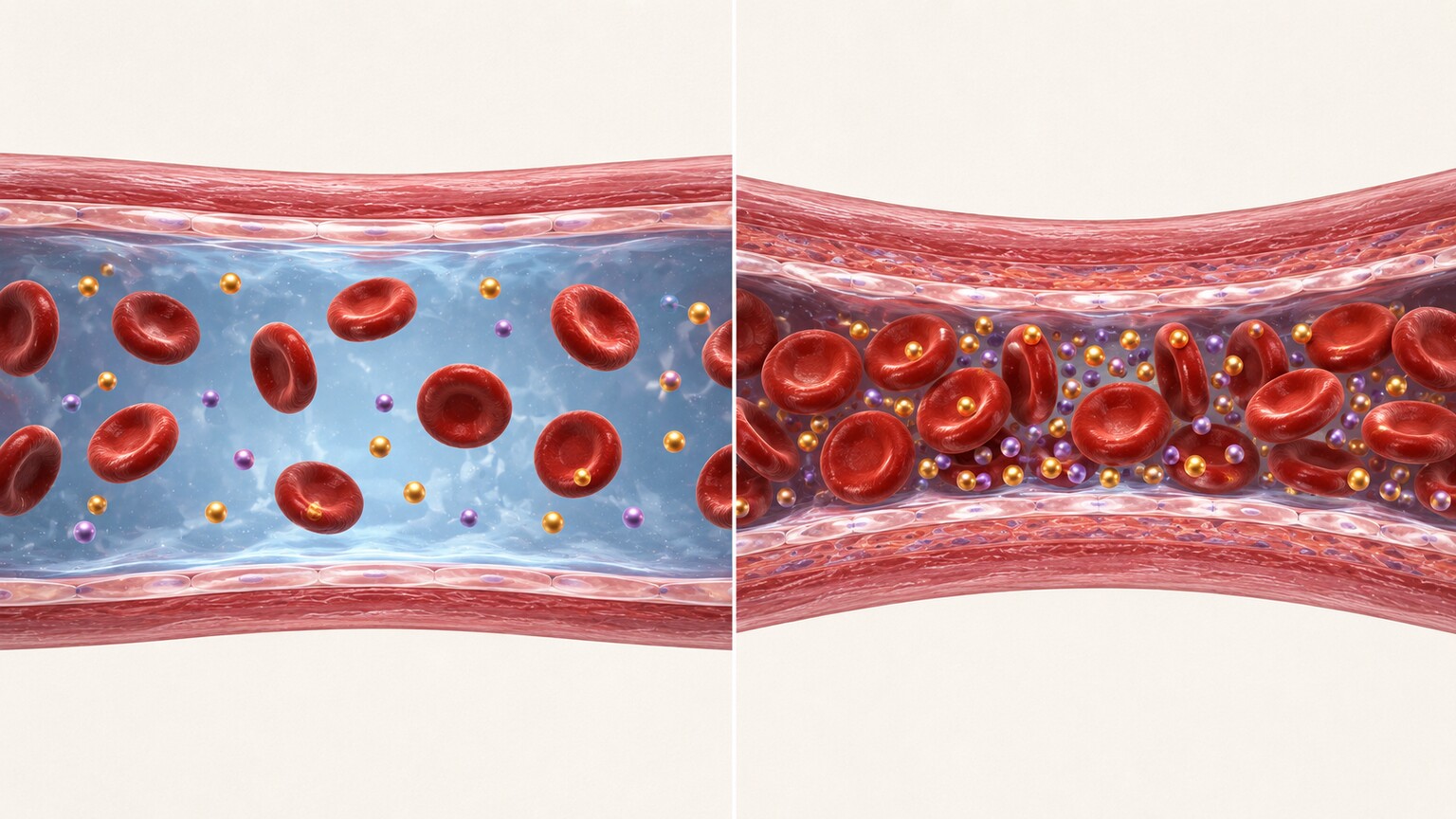
Figure 1. As plasma water volume falls, the same quantity of dissolved sodium and potassium becomes packed into a smaller volume of blood, raising their measured concentration without any true gain.
Curious what the rest of your metabolic panel is telling you beyond electrolytes? Upload your results and get a complete, plain-language breakdown in under 15 minutes.
Analyze My ResultsWhat Your Electrolyte Panel Is Actually Measuring
Electrolytes are simply minerals that carry a small electrical charge once they're dissolved in your body's fluids — sodium, potassium, chloride, and bicarbonate being the four that show up on a standard metabolic panel. These charged particles aren't just background chemistry; they're what allow your nerves to fire, your muscles (including your heart) to contract on cue, and your cells to keep the right balance of fluid inside versus outside their walls. A basic or comprehensive metabolic panel measures each of these in your serum, which is just the straw-colored liquid portion of your blood left over once the red and white blood cells and clotting factors are removed. Typical reference ranges — though they vary slightly from lab to lab — sit around 135 to 145 for sodium, 3.5 to 5.0 for potassium, 96 to 106 for chloride, and 23 to 29 for bicarbonate (sometimes labeled CO2 on your report), all in the standard units your lab report uses.
A useful way to picture this is a pot of soup. The amount of salt you actually added to the pot is one thing; how salty the soup tastes when you dip a spoon in is another thing entirely, because that depends just as much on how much water is in the pot. Add the same tablespoon of salt to a small saucepan versus a large stockpot, and the second bowl will taste far less salty — not because there's less salt, but because it's diluted across more liquid. Your electrolyte panel works the same way: it reports concentration, the ratio of mineral to fluid, not the absolute quantity of mineral your body is holding onto. That single distinction is the key to understanding almost everything dehydration does to these numbers.
These four values are almost never ordered in isolation. They're bundled together into what's called a basic metabolic panel, often alongside glucose, calcium, and two markers of kidney function (BUN and creatinine), precisely because looking at them as a group tells a far more complete story than any single value could on its own. A doctor scanning this panel isn't just checking whether sodium sits inside its reference range; they're looking at the relationship between all of these numbers at once, since a pattern where several values move together in a predictable direction is much more informative than one number drifting slightly outside its box. This bundled approach is part of why a single flagged electrolyte on an otherwise unremarkable panel often turns out to be a minor, explainable blip rather than a sign of a standalone problem.
How Your Body Normally Keeps These Numbers Remarkably Stable
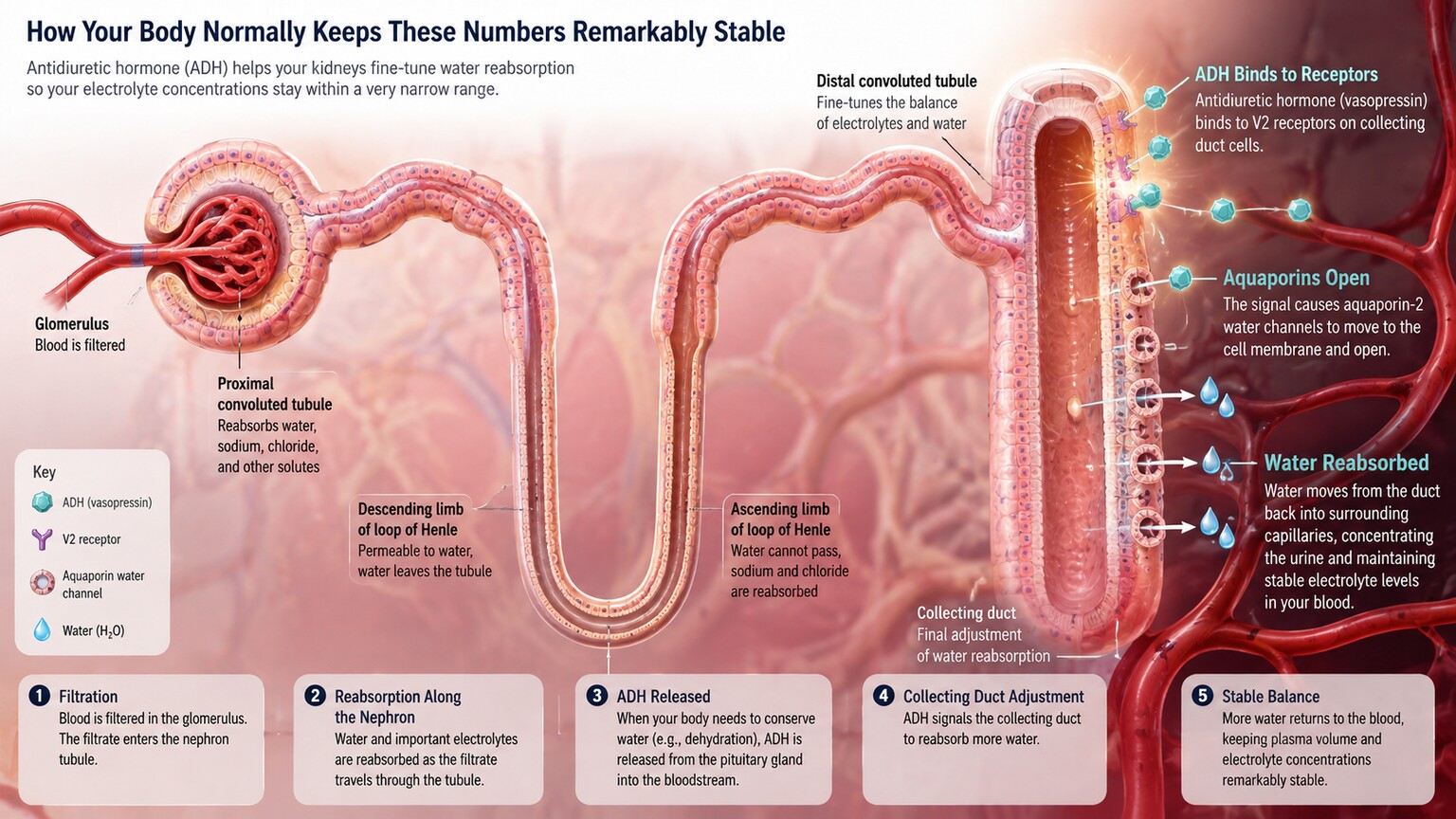
Figure 2. Antidiuretic hormone released by the pituitary signals the kidney's collecting ducts to reabsorb more water, concentrating urine and diluting the blood back toward normal.
Under ordinary circumstances, your body is remarkably good at keeping these concentrations inside a narrow window, and it does this largely without you noticing. Specialized cells in a region of the brain called the hypothalamus constantly sample how concentrated your blood is. The moment blood becomes even slightly more concentrated than normal — exactly what starts happening as you lose water — those cells trigger two things at once: the sensation of thirst, nudging you to drink, and the release of a hormone called antidiuretic hormone (also known as vasopressin) from the pituitary gland. That hormone travels to the kidneys and tells the collecting ducts, the final stretch of plumbing urine passes through before leaving the body, to pull more water back into the bloodstream instead of letting it go. The practical result is urine that becomes darker and more concentrated while your blood gets diluted back toward its target range — essentially the same corrective loop a thermostat uses to keep a room's temperature steady, just built from hormones and kidney tissue instead of a heating coil and a sensor.
A second system, involving a hormone called aldosterone from the adrenal glands, works alongside this to manage sodium and potassium specifically, encouraging the kidneys to hold onto sodium (and water along with it) while releasing potassium when the body senses it's short on fluid volume. Both systems are effective at correcting small, everyday fluid deficits — the mild dehydration from skipping a glass of water here or there rarely shows up clearly on a lab report, precisely because these buffers absorb it. A measurable shift on an electrolyte panel generally means fluid loss has been large enough, fast enough, or gone on long enough that these compensating systems have been pushed hard, or that access to replacement water has been limited in some way.
The Core Mechanism: How Losing Water Concentrates What's Left
The clearest and most common way dehydration shows up on an electrolyte panel is through a process lab professionals call hemoconcentration — literally, the blood becoming more concentrated. Picture a glass of lemonade sitting out on a hot day: as the water evaporates, the sugar and lemon flavor left behind become more intense, even though not a single grain of sugar was added. Your bloodstream behaves the same way when you lose "free water" — fluid loss that isn't matched by an equal loss of salt — through sweating without adequate replacement, a prolonged fever, or simply not drinking enough over the course of a day. Sodium is the dominant electrolyte in the fluid surrounding your cells, so it's usually the first and most noticeably affected number when this kind of water-only deficit occurs; even a deficit of a liter or two of body water can nudge serum sodium up by several points.
One helpful clue that a high reading reflects concentration rather than a true excess is that other values on the same blood draw often rise in step with it. Hematocrit, the percentage of your blood that's made up of red blood cells, and total protein both tend to climb during genuine dehydration for the identical reason — less plasma fluid to dilute the same cells and proteins. When a clinician sees sodium, hematocrit, and total protein all sitting a little high on the same panel, that pattern points toward a fluid problem rather than a true electrolyte disorder far more convincingly than any single number could on its own.
Not All Dehydration Looks the Same on a Lab Report
It would be simpler if "dehydrated" always meant "sodium goes up," but that isn't quite how it works, because what matters isn't just that water was lost — it's what was lost alongside it. Losing pure water, or fluid that's more dilute than your blood, concentrates sodium and tends to push it upward; this is the classic pattern behind an elevated sodium reading. Losing fluid that closely matches the salt concentration of your blood — a pattern seen with some forms of heavy sweating — can shrink your total fluid volume substantially while leaving sodium's concentration close to normal, since roughly proportional amounts of water and salt left together. And in a pattern that surprises a lot of people, it's entirely possible to be dehydrated with a low sodium reading, which typically happens when someone loses salt-containing sweat over a long period and then replaces only the water, not the salt — a well-documented issue among endurance athletes who drink large volumes of plain water during long races without adequately replacing electrolytes.
This is why the phrase "dehydration can shift your electrolyte results" doesn't point in one single direction. The size and direction of the shift depends on the composition of what left the body and what, if anything, was used to replace it — which is also why a lab result alone, without knowing the story behind it, can only tell part of the picture.
Why Lab Reference Ranges Assume You're Reasonably Well Hydrated
It's easy to treat the reference range printed next to your result as some kind of fixed, universal boundary — a line in the sand that separates "fine" from "not fine." In reality, those ranges were established by measuring electrolyte concentrations across large groups of generally healthy people under ordinary, everyday conditions, which implicitly assumes a reasonably typical hydration status at the moment the blood was drawn. The range isn't wrong, but it was never built to account for someone who just finished a hot, sweaty shift of manual labor, spent the night vomiting, or hadn't had anything to drink since the previous afternoon.
This is part of why the same numeric result can mean something different depending entirely on the circumstances surrounding the draw. A sodium of 146, just a hair above a typical upper limit of 145, means something fairly different in a person who walked into a routine annual physical after a normal breakfast than it does in a person who just spent three hours running in ninety-degree heat without much to drink. The number is identical; the story behind it is not. Reference ranges are a genuinely useful statistical tool, but they work best as a starting point for a conversation about context, not as an automatic verdict on their own.
Sodium: The Electrolyte Most Directly Tied to Your Water Balance
Because sodium concentration is essentially a measure of how much water is present relative to how much sodium your body is holding, it's the electrolyte most sensitive to dehydration and the one most likely to move first and most visibly. A result above the typical upper limit is called hypernatremia, and when it's caused by simple water deficit, it usually develops gradually — over many hours to a couple of days of inadequate fluid intake, heavy unreplaced sweating, prolonged fever (which increases water loss through the skin and lungs), or in some cases, excessive urination from poorly controlled diabetes pulling extra water out through the kidneys along with sugar.
Mild elevations, the kind seen with everyday dehydration, are frequently symptom-free or produce only vague thirst and dry mouth. More significant elevations can bring on lethargy, irritability, muscle twitching, and — if the deficit is large and develops quickly — confusion, since brain cells are sensitive to shifts in the concentration of the fluid surrounding them. It's worth noting that access to water matters enormously here: people who can't easily reach for a drink on their own, including infants, people with advanced dementia, and those who are bedbound or acutely ill in a hospital, are disproportionately represented among cases of clinically significant hypernatremia, since the normal thirst-and-drink response that corrects mild dehydration in a healthy adult simply can't complete its loop.
How quickly the deficit developed matters just as much as how large it is. A slow, gradual water shortfall that builds up over several days gives the brain time to adjust to the more concentrated environment, so even a fairly high sodium reading may cause surprisingly few symptoms. A rapid shift covering the same distance — say, from a single severe episode of heat exhaustion over a few hours — is tolerated far less well, precisely because the brain hasn't had time to adapt. This is also why doctors are cautious about correcting a high sodium level too quickly with intravenous fluids when it has built up gradually: bringing it down too fast can be just as disruptive to brain cells as the original rise, which is a good example of why this kind of correction is something managed carefully by a clinician rather than something to attempt on your own.
Potassium: Why Dehydration Can Push It Either Direction
Potassium's relationship with dehydration is less straightforward than sodium's, because two different forces are pulling on it at the same time, sometimes in opposite directions. On one hand, the same hemoconcentration effect that raises sodium will, in theory, nudge potassium's concentration upward too, since it's dissolved in the same shrinking pool of plasma. On the other hand, real volume depletion activates a hormonal cascade — the renin-angiotensin-aldosterone system — that specifically instructs the kidneys to hold onto sodium and water while releasing more potassium into the urine in exchange. Over a period of sustained fluid loss, that potassium-wasting effect can be strong enough to cancel out or even overpower the concentrating effect, leaving a final reading that's normal, or occasionally even low, in someone who is clearly, measurably dehydrated.
Direct losses add another layer on top of this hormonal push. Vomiting and diarrhea don't just remove water — the fluid they carry out of the body is often disproportionately rich in potassium compared to blood, so significant gastrointestinal illness can produce a genuine potassium deficit that has nothing to do with concentration effects at all. There's also a practical, lab-technical wrinkle worth knowing about: in dehydrated patients, veins can be harder to access, and a difficult blood draw occasionally damages red blood cells in the collection tube, spilling their internal potassium into the sample and producing an artificially high reading called pseudohyperkalemia — a lab artifact, not a true reflection of what's circulating in the body, and one reason an unexpectedly high potassium result is sometimes simply repeated before anyone acts on it.
Because potassium plays such a direct role in how the heart's electrical system fires, both a real deficit and a falsely elevated lab artifact are taken seriously rather than assumed away, even when dehydration offers a tempting, simple explanation. In practice, this usually means a doctor faced with an unexpected potassium result during an episode of dehydration will weigh the whole picture — how the sample was drawn, whether hemolysis was noted on the report, whether vomiting or diarrhea was part of the story, and whether an ECG shows any of the telltale electrical changes associated with a true potassium abnormality — rather than accepting or dismissing the number in isolation.
Chloride, Bicarbonate, and the Anion Gap Under Fluid Loss
Chloride tends to track fairly closely alongside sodium, since the two are frequently lost or retained together, but it has its own separate story when vomiting is involved. The fluid your stomach makes is rich in hydrochloric acid, so prolonged or severe vomiting doesn't just cause water loss — it strips away chloride and acid specifically, which can produce a distinctly low chloride reading alongside a rise in bicarbonate as the body's overall acid-base balance shifts toward the alkaline side, a pattern doctors call contraction alkalosis. Simple volume loss on its own, separate from vomiting, can also nudge bicarbonate upward through the same concentrating effect described earlier, since shrinking the fluid volume concentrates whatever bicarbonate remains dissolved in it.
Diarrhea pulls in the opposite direction. Intestinal fluid, particularly from the lower gut, is relatively rich in bicarbonate, so significant diarrhea tends to lower bicarbonate and push the body's acid-base balance toward the acidic side instead — the reverse pattern from vomiting, despite both conditions causing the same basic problem of fluid loss. Doctors sometimes also calculate what's called the anion gap from these same four numbers (roughly sodium minus the sum of chloride and bicarbonate), which reflects unmeasured acids floating around in the blood. Dehydration by itself typically doesn't move this gap much, unless fluid loss has become severe enough to also cause poor blood flow to tissues, which can generate lactic acid and widen the gap — a sign that the underlying dehydration has crossed into more serious territory rather than a routine, mild fluid deficit.
Vomiting, Diarrhea, and Heavy Sweating: When the Fluid You Lose Carries Electrolytes With It
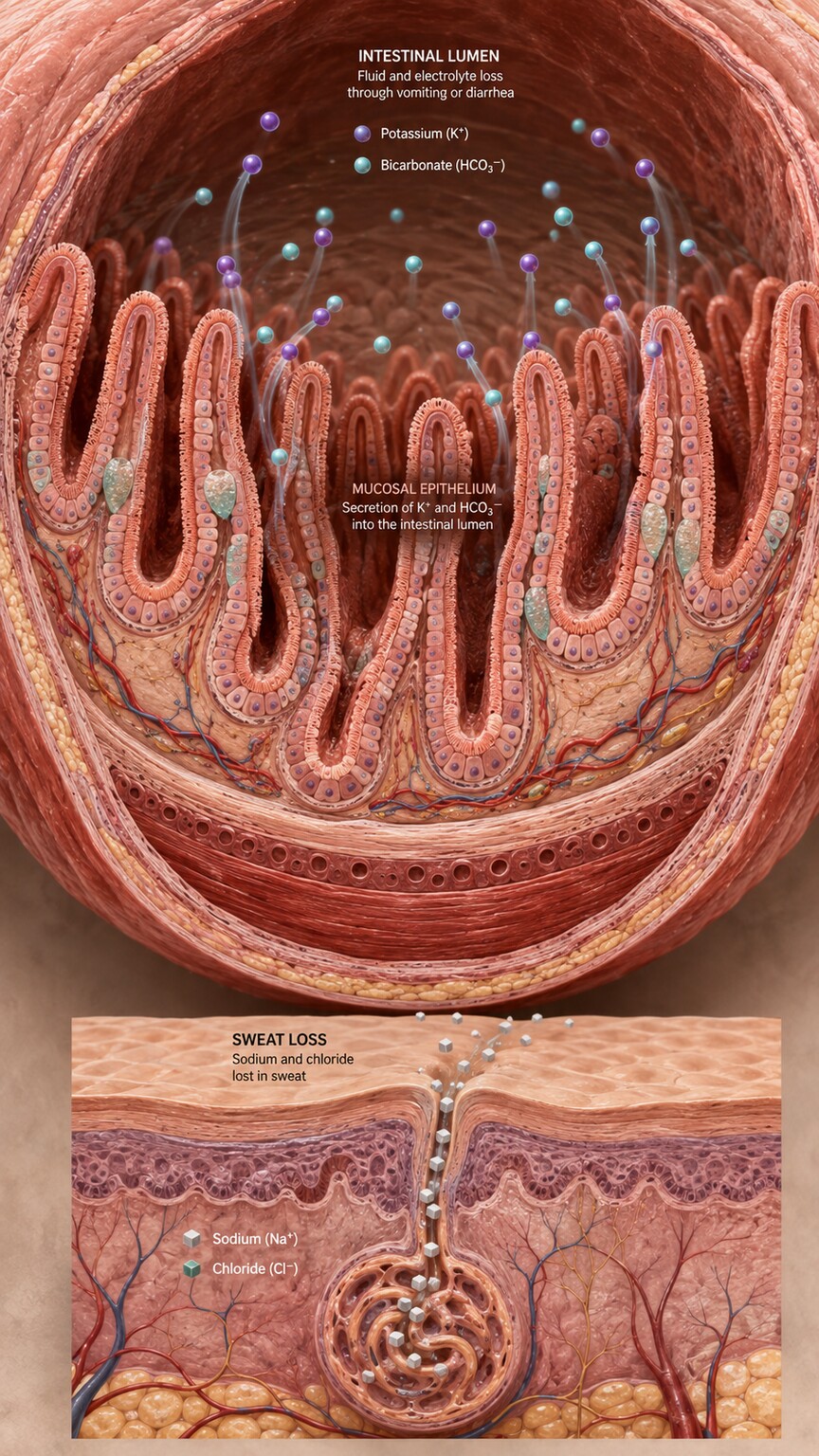
Figure 3. Vomiting removes hydrochloric acid and chloride from the stomach, while diarrhea removes potassium- and bicarbonate-rich fluid from the intestine — pulling chloride, potassium, and bicarbonate in different directions.
It's worth stepping back and looking at these three everyday scenarios side by side, because each one produces a genuinely distinct electrolyte fingerprint, not just a generic "dehydrated" label. Vomiting mainly costs you stomach acid and chloride, tilting the panel toward high bicarbonate and low chloride. Diarrhea mainly costs you intestinal fluid rich in potassium and bicarbonate, tilting the panel the opposite way, toward low bicarbonate and often low potassium. Sweat sits somewhere in between: it's mostly water with a meaningful amount of sodium and chloride and a smaller amount of potassium, but the exact composition varies quite a bit from person to person and even changes for the same person over time.
That last point deserves its own mention, because it's a genuinely interesting piece of physiology: people who are well acclimatized to heat — someone who's spent weeks training or working outdoors in a hot climate — actually lose less sodium per liter of sweat than someone facing the same heat for the first time, because the sweat glands themselves adapt to reclaim more sodium before it reaches the skin's surface. An unacclimatized person doing hard physical work in the heat can lose a genuinely large amount of sodium chloride through sweat over several hours, enough to contribute to a real electrolyte deficit on top of simple fluid loss — which is part of why heat illness and dehydration are so often discussed together, and why sports medicine guidance around electrolyte replacement, not just water replacement, exists in the first place.
Who's Most Likely to See a Dehydration-Skewed Result

Figure 4. Reduced thirst sensation and slower recognition of fluid needs make older adults more likely to reach a level of dehydration that visibly shifts an electrolyte panel.
Some groups of people run into dehydration-related electrolyte shifts far more often than others, largely because the normal safety systems described earlier aren't working at full strength for them. Older adults are a leading example: the sensation of thirst blunts noticeably with age, and aging kidneys are somewhat less efficient at concentrating urine to conserve water even when antidiuretic hormone tells them to, meaning an older adult can be running a real fluid deficit for a while before ever feeling thirsty enough to do something about it. Infants and young children carry a higher proportion of their body weight as water and lose it proportionally faster through fever, vomiting, or diarrhea, while also being entirely dependent on a caregiver to notice the problem and respond.
People with poorly controlled diabetes face a distinct mechanism: very high blood sugar pulls extra water out through the kidneys along with the excess glucose, a process called osmotic diuresis, which can drive dehydration and an elevated sodium reading independent of anything related to diet or climate. Anyone taking diuretic medications, prescribed specifically to make the kidneys release more fluid, is walking a deliberately narrower margin between "working as intended" and "too much fluid loss," which is part of why these medications are typically monitored with periodic blood work. And endurance athletes, outdoor laborers, and anyone dealing with an acute stomach bug round out the group most likely to show a clear dehydration signature on a same-day lab draw.
How Doctors Tell Dehydration Apart From a True Electrolyte Disorder
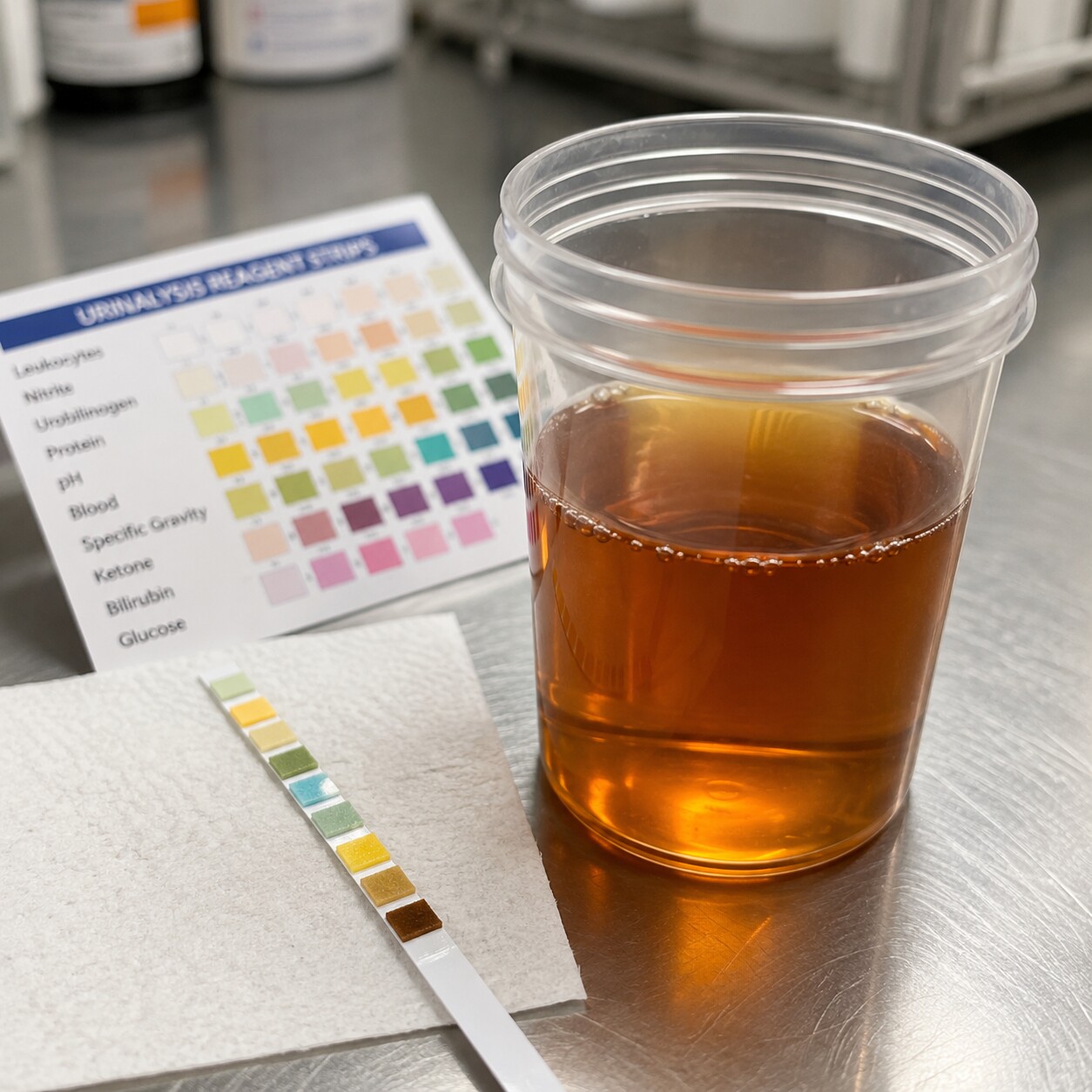
Figure 5. Dark, concentrated urine with a high specific gravity is one of the most practical bedside clues that dehydration, rather than a primary electrolyte disorder, is behind an abnormal panel.
Because a single number can't reveal its own cause, clinicians lean on a handful of practical tools to figure out whether dehydration explains an abnormal electrolyte result, or whether something else deserves a closer look. The single most useful step is often simply repeating the panel after a period of rehydration; if the numbers move back toward normal once fluid intake improves, that's strong evidence the original result was a hydration effect rather than a persistent disorder. The ratio between BUN (a waste product filtered by the kidneys) and creatinine is another classic clue — dehydration tends to push this ratio disproportionately high, since slower urine flow gives the kidneys more opportunity to reabsorb BUN passively along with water, a pattern that's less pronounced with most other kidney problems.
Urine itself offers a remarkably direct clue: a concentrated, dark urine sample with a high specific gravity (a simple measure of how much dissolved material is packed into it) generally means the kidneys are actively working hard to conserve water, exactly what's expected during genuine dehydration. Physical findings help round out the picture — reduced skin elasticity, dry mucous membranes inside the mouth, and a drop in blood pressure specifically upon standing up (called orthostatic hypotension) are all classic bedside signs of volume depletion that a lab number alone can't provide. Taken together with the hemoconcentration clues mentioned earlier — a slightly elevated hematocrit and total protein riding alongside the electrolyte changes — this combination of information lets a clinician distinguish a hydration-driven blip from a true, ongoing electrolyte disorder far more reliably than any single test in isolation.
Symptoms That Overlap Between Dehydration and Electrolyte Imbalance
Part of what makes this topic genuinely confusing for patients is that dehydration and true electrolyte disorders can produce nearly identical symptoms, since in a sense they're two sides of the same coin. Fatigue, headache, muscle cramps, dizziness upon standing, and a general sense of feeling "off" show up with both mild dehydration and mild sodium or potassium imbalances of almost any cause. More pronounced symptoms — confusion, significant muscle weakness, an irregular heartbeat, or in severe cases seizures — can likewise appear whether the underlying driver is pure fluid loss or a separate hormonal, kidney, or medication-related problem affecting electrolytes directly.
This overlap is exactly why symptoms alone were never meant to be a diagnostic tool on their own — they're a prompt to get evaluated, not a way to self-diagnose which specific mechanism is at play. The reassuring side of this is that the more common scenario, by a wide margin, is the milder one: everyday dehydration from a hot day, a workout, or a short-lived stomach bug that resolves completely with fluids and doesn't require any specific treatment directed at the electrolytes themselves, since correcting the underlying fluid deficit corrects the numbers right along with it.
What to Do If You Suspect Dehydration Skewed Your Results
If you're looking at an abnormal electrolyte result and you know you were significantly dehydrated around the time of the blood draw — sick with vomiting or diarrhea, coming off a long run in the heat, or simply hadn't had much to drink that day — that context is genuinely useful information, and it's worth mentioning directly to whoever ordered the test rather than assuming it's obvious from the number alone. A reasonable next step, when your doctor agrees it's appropriate, is often as simple as rehydrating and rechecking the panel; because hydration-driven shifts tend to correct themselves once fluid balance is restored, a repeat test that comes back normal is itself useful confirmation of what was going on.
At the same time, it's important not to wave away symptoms that go beyond ordinary thirst and tiredness. Confusion, fainting, a very rapid or irregular heartbeat, an inability to keep any fluids down, or a high fever that isn't responding to basic measures are all reasons to seek prompt medical care rather than waiting to see if things settle on their own. Severe dehydration is a genuine medical concern in its own right, independent of what it does to a lab report, and the electrolyte panel is best thought of as one piece of information a clinician uses alongside how you're actually feeling and functioning — not a replacement for that judgment.
Does What You Drink to Rehydrate Actually Matter?
Given everything above, it follows that not every rehydration strategy corrects an electrolyte panel the same way — and this is a place where well-meaning instinct can occasionally work against you. Plain water is excellent for correcting a pure water deficit, the kind behind a high sodium reading, but it does nothing to replace lost sodium, potassium, or chloride, and drinking large volumes of it after a big salt-losing event like heavy sweating or a bout of diarrhea can, in a genuinely unlucky scenario, dilute sodium down toward the low end rather than restoring balance. This is precisely the mechanism behind exercise-associated hyponatremia occasionally reported in marathon and ultramarathon runners who drink aggressively during a race without any electrolyte replacement at all.
Oral rehydration solutions — the mix of water, a modest amount of sugar, and a specific ratio of sodium and potassium salts used worldwide to treat dehydration from diarrheal illness — exist precisely to solve this problem. The World Health Organization's standard formula was developed and refined over decades specifically because it replaces water and electrolytes in roughly the proportions the body actually lost them, and a small amount of glucose in the mix meaningfully improves how well the intestine absorbs both the water and the sodium alongside it. For everyday, mild dehydration from a hot day or a normal workout, plain water paired with a normal diet is usually entirely sufficient, since most people naturally take in enough sodium and potassium through food over the course of a day to cover ordinary losses. It's really the more significant scenarios — prolonged vomiting or diarrhea, extended heavy sweating, or any dehydration severe enough to have already shown up clearly on a lab report — where the specific composition of what you drink starts to matter as much as how much of it you drink.
Frequently Asked Questions
Can drinking a lot of water right before a blood test throw off my electrolyte results?
A single glass of water shortly before a routine draw isn't going to meaningfully change anything. Drinking an unusually large volume in a short window can transiently dilute sodium slightly, which is one reason labs generally don't recommend excessive water loading immediately before testing — but this is a minor effect compared to the shifts caused by genuine, sustained fluid loss described throughout this article.
If my sodium is only mildly high and I know I was dehydrated, do I need more testing?
That's a decision for whoever ordered the test, but a mild elevation with an obvious, recent dehydration story is often managed with simple rehydration and a repeat check rather than an extensive workup. Larger elevations, symptoms beyond mild thirst, or results that don't normalize after rehydration are what typically prompt a closer look for another underlying cause.
Why did my potassium come back normal even though I had bad diarrhea for two days?
This happens more often than people expect. Hemoconcentration from fluid loss can mask a real, ongoing potassium deficit from diarrhea, or the loss simply hasn't been large enough yet to overcome that concentrating effect. Doctors sometimes recheck potassium after rehydration specifically because the "true" underlying level can look different once the concentrating effect is no longer competing against it.
How much dehydration does it actually take to change these numbers?
It varies by electrolyte and by what caused the fluid loss. Everyday mild dehydration, like not drinking quite enough water on an ordinary day, usually produces only small, often clinically insignificant shifts. More substantial fluid loss — a couple of days of vomiting or diarrhea, an endurance race in the heat, or heat-related illness — is what tends to produce the larger, more clearly abnormal changes that stand out on a standard panel.
Is it better to drink plain water or a sports drink when I'm dehydrated?
It depends on how you became dehydrated. For everyday mild dehydration, plain water plus normal meals is usually enough, since food supplies the sodium and potassium needed to restore balance. For more significant losses — prolonged diarrhea, heavy sustained sweating, or vomiting — a solution that specifically replaces sodium and potassium alongside water, such as an oral rehydration solution, tends to correct the deficit more completely than water alone.
Conclusion
Dehydration is one of the most common, and most commonly overlooked, explanations behind an electrolyte panel that suddenly looks abnormal. Because these tests report concentration rather than total quantity, losing water without losing a matching amount of salt concentrates whatever electrolyte is already there, while losing electrolyte-rich fluid from vomiting, diarrhea, or heavy sweating can just as easily push a number down — meaning the same underlying event, dehydration, can produce results that look very different depending on exactly what was lost. None of this makes an abnormal result something to dismiss outright, but it's a genuinely important piece of context to bring into the conversation with whoever ordered the test, alongside how you were feeling, what you'd been doing, and whether the number moves back toward normal once you've had a chance to properly rehydrate.
Still Not Sure What Your Results Mean?
Upload your labs and get a complete, visual, plain-language interpretation of every biomarker — delivered to your inbox in under 15 minutes.
Get My ReportThis article is for educational purposes only and does not constitute medical advice. Always consult your healthcare provider regarding your specific lab results.